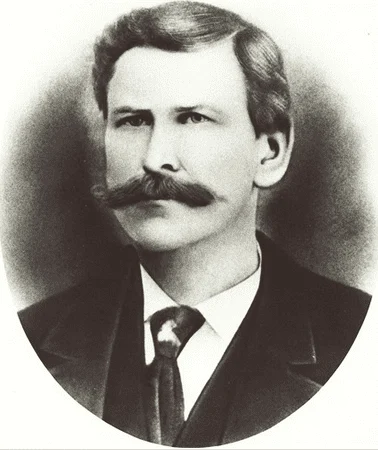
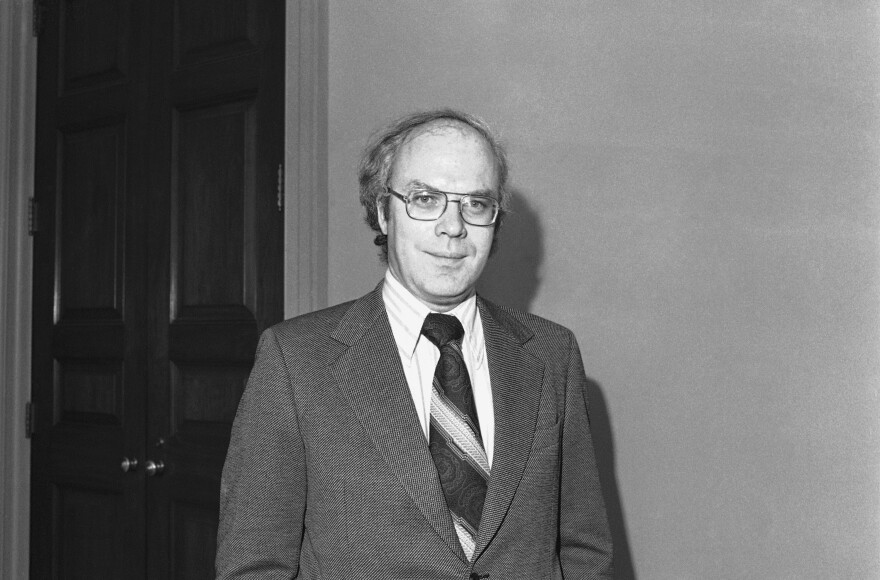
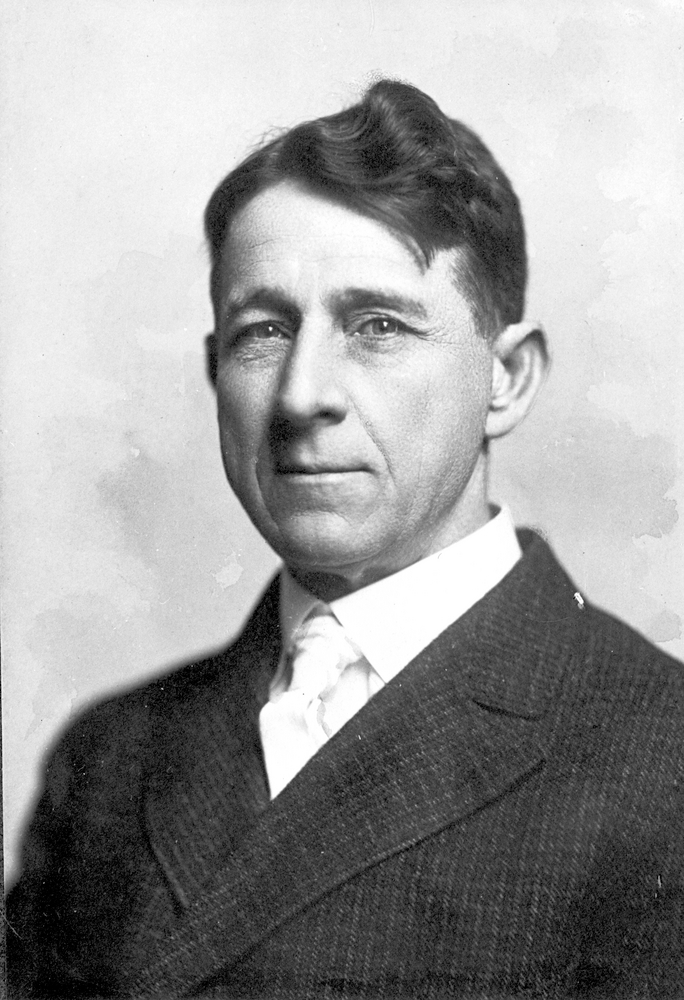
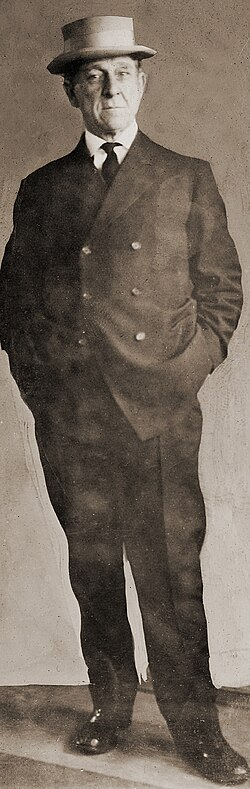
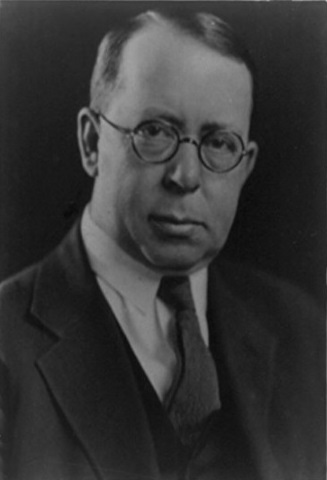
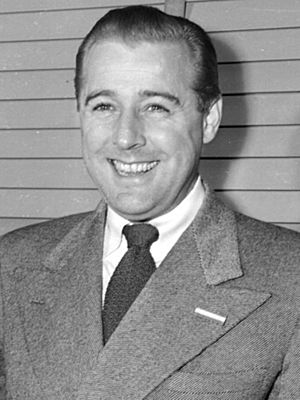
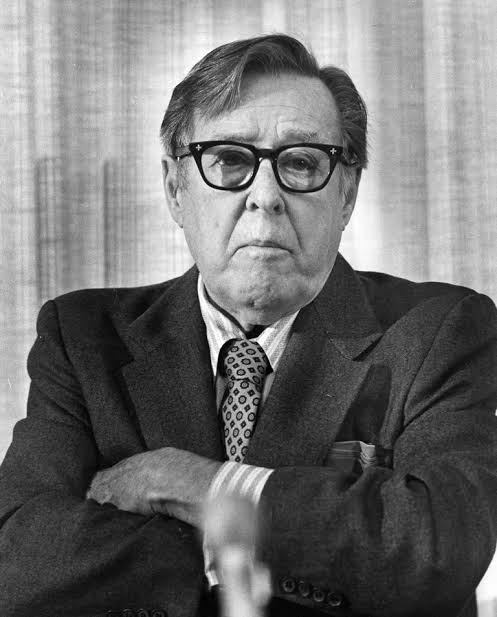
Although Prohibition was nationally repealed in 1933, there were states that held on to it much longer. 1952, Mississippi was one of those states and had been the first to adopt it in 1908 and the first to ratify the national amendment in 1918. The debate in 1952 was on to keep or repeal it, and a 29-year-old state legislator, Noah S. “Soggy” Sweat Jr. (1922-1996), had the idea of how to approach this contentious issue as he was reaching the end of his five-year term in the state House. He delivered the following speech before the Mississippi State Legislature on April 4, 1952:
“My friends, I had not intended to discuss this controversial subject at this particular time. However, I want you to know that I do not shun controversy. On the contrary, I will take a stand on any issue at any time, regardless of how fraught with controversy it might be. You have asked me how I feel about whiskey. All right, this is how I feel about whiskey:
If when you say whiskey you mean the devil’s brew, the poison scourge, the bloody monster, that defiles innocence, dethrones reason, destroys the home, creates misery and poverty, yea, literally takes the bread from the mouths of little children; if you mean the evil drink that topples the Christian man and woman from the pinnacle of righteous, gracious living into the bottomless pit of degradation, and despair, and shame and helplessness, and hopelessness, then certainly I am against it.
But, if when you say whiskey you mean the oil of conversation, the philosophic wine, the ale that is consumed when good fellows get together, that puts a song in their hearts and laughter on their lips, and the warm glow of contentment in their eyes; if you mean Christmas cheer; if you mean the stimulating drink that puts the spring in the old gentleman’s step on a frosty, crispy morning; if you mean the drink which enables a man to magnify his joy, and his happiness, and to forget, if only for a little while, life’s great tragedies, and heartaches, and sorrows; if you mean that drink, the sale of which pours into our treasuries untold millions of dollars, which are used to provide tender care for our little crippled children, our blind, our deaf, our dumb, our pitiful aged and infirm; to build highways and hospitals and schools, then certainly I am for it.
This is my stand. I will not retreat from it. I will not compromise” (Marquez).
He managed to simultaneously please and antagonize both sides of the issue. Sweat recounted that it had taken him two months to write the brief speech, and it has since been legendary in Mississippi politics as well as of the United States. This speech gave rise to the logical fallacy, “If-by-Whiskey”, which is defined by Logically Fallacious as:
“A response to a question that is contingent on the questioner’s opinions and makes use of words with strong connotations. This fallacy appears to support both sides of an issue — a tactic common in politics.”
After his stint in the state legislature, Sweat served as district attorney for two terms, and from 1966 to 1974 he was a circuit judge. The position, incidentally, that won in 1952 was continuing Prohibition; Mississippi was the final state to repeal it, doing so in 1966!
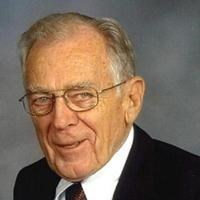
Dr. Lloyd W. Bailey (1928-2020), the Nixon elector who prompted the first Congressional vote to disapprove of an electoral vote cast.
Ever since the Electoral College was created, there have been numerous criticisms and real or possible pitfalls pointed out. Indeed, in my area, there are quite a few critics. One of the potential pitfalls are the electors themselves, and whether their votes will be in comport with the will of the people. I say for this one that it is a “potential” pitfall as no elector’s independent decision has changed the outcome of a presidential election. There have been a few famous instances of faithless electors as well as efforts to curb the phenomenon.
The 1968 election was a three-way race between Republican Richard Nixon, Democrat Hubert Humphrey, and American Independent George Wallace. Wallace had no realistic chance of winning the election, but he did have a chance of serving as kingmaker, and that is what his campaign was shooting for. Had Wallace been able to serve as a kingmaker, he could have extracted a pledge from the winning candidate that would have hindered the progression of civil rights in the South. The Wallace campaign got just a little closer to this potential outcome when Dr. Lloyd W. Bailey, an elector pledged to Nixon, cast his vote for Wallace. This had no chance of changing the election, and Bailey said that if his vote would have changed the election, he would have stuck with Nixon. This was a big news story at the time, and created the best political environment in history for the repeal of the Electoral College. At the start of 1969, Rep. James G. O’Hara (D-Mich.) filed the first ever objection to an electoral vote in history. Sen. Edmund Muskie (D-Me.) did likewise for the Senate. Their hope in this matter was to discourage future faithless electors by invalidating this vote and to uphold “the integrity of this election under the present system and to effectively dramatize the dangers of continuing to operate under this outmoded, haphazard and undemocratic method of electing a President” ( They had the backing of the chairman of the House Judiciary Committee, Emanuel Celler (D-N.Y.). He spoke in favor of the objection, stating, “Whether or not electors are pledged, whether or not they are named, whether or not their names appear on the ballot, whether or not the law provides sanctions if they should fail to vote in accordance with the electorate’s wishes, the universal – and I say “universal” – understanding in the United States today and in the 20th century particularly is that the electoral college exercises a ministerial, an agency function and effectuates the expressed wishes of the people. Indeed most electors consider themselves irrevocably committed to support the presidential candidate on whose ticket they were elected or on which they were elected” and concluded, “…I intend to support the proposed challenge to the vote cast by the elector from North Carolina. I do so recognizing that the disposition of this challenged vote will not affect the result of the presidential election. However, I believe it most appropriate and essential that the Congress give effect to the view now held by the overwhelming majority of our people that when the vote of an electorate is cast for President, it shall not be nullified or abrogated by any elector” (Congressional Record, 149). However, the ranking Republican on the House Judiciary Committee, William McCulloch of Ohio, was in opposition. He argued, “Today, the objectors ask us to circumvent the [constitutional] amending process. They ask us to do what we have criticized so often before—to read into the Constitution what we wish the law to be. . . . They ask us to adopt a view which not only differs from but which is diametrically opposed to the way the Constitution was written” and held that Congress should only engage in objections in instances in which two returns were received, such as in the 1876 election (U.S. House).
Congress voted on both the O’Hara and Muskie resolutions, but both failed, the O’Hara objection 169-229 and the Muskie objection 33-58. Interestingly, House Minority Leader Gerald Ford (R-Mich.) supported O’Hara’s objection, as did many Michiganders. Maine’s delegation joined Muskie in support as well.
The Ideology of the Vote
Nearly all of the most conservative members of Congress agreed with McCulloch’s objection and voted against. There were also, even more interestingly, some very liberal legislators who voted against the objection, such as California’s Philip Burton. However, the liberal Americans for Democratic Action considered voting for the objections to be the liberal position. All black politicians save for Senator Edward Brooke (R-Mass.), who happened to be the only black Republican legislator at the time, voted for the objection.
The vote is detailed here, with lifetime ACA agreement rates for legislators:
Counting Electoral Votes – Joint Session of the House and Senate Held Pursuant to the Provisions of Senate Concurrent Resolution 1. (1969, January 6). Congressional Record, 145-172.
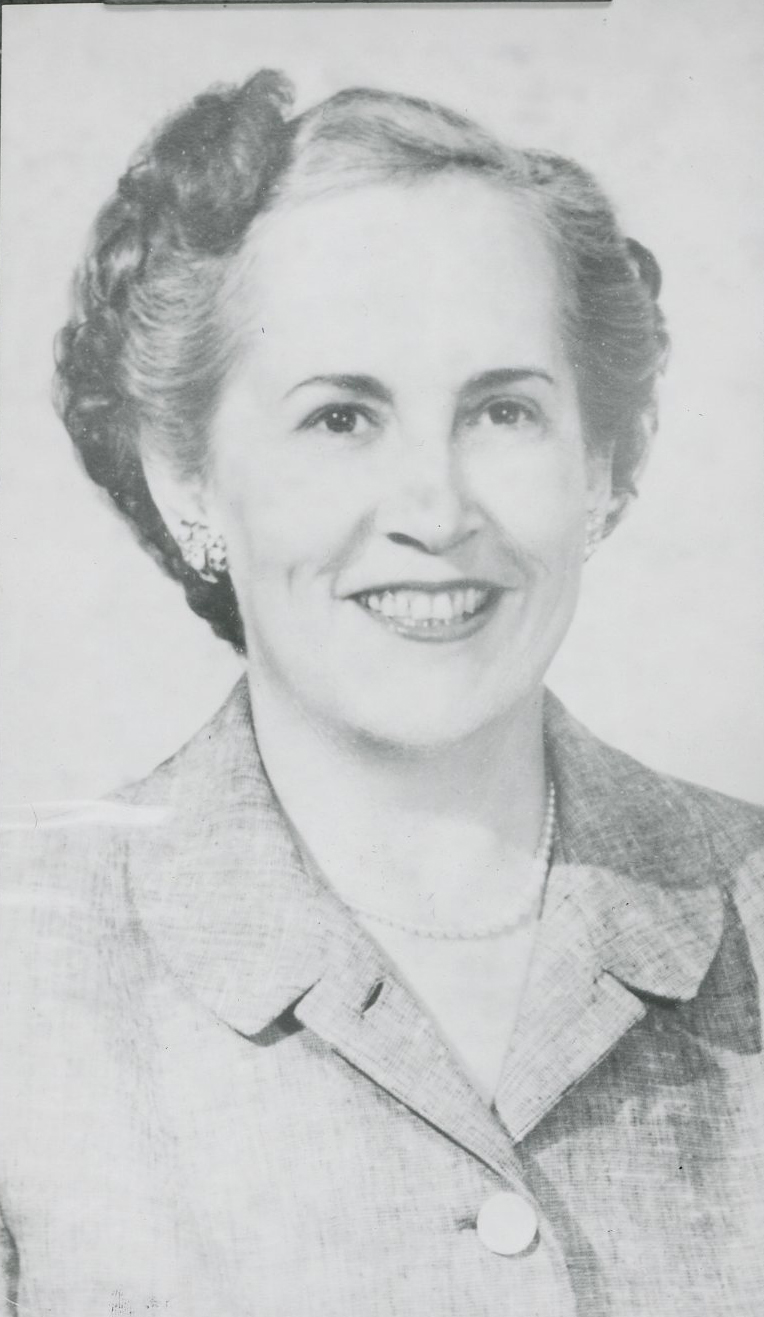
That Oregon today votes Democratic seems to go without saying, but it didn’t used to be this way. Indeed, the state had a considerable history of Republican voting, and for most of FDR’s presidency, both of its senators were Republicans. From 1943 to 1953, the entire delegation to Congress from Oregon was Republican. However, just because one was a Republican, it far from automatically meant that a conservative line was followed, and this proved quite true with Senator Wayne Morse, who broke the Republican unity when he switched to Independent in 1953. Morse was a liberal, and he was popular. Liberalism was starting to gain traction in the state, and the liberal position was popular on some issues in the state, such as public ownership of power. The Republicans and President Eisenhower had moved hard in the direction of private ownership of power, and that rubbed many Oregonians the wrong way. Enter Edith Starrett Green (1910-1987).
In the 1950s, Green was an outsider in multiple ways. First, she was a Democrat, and second, there had only been one woman previously elected to represent the state in Congress in Portland’s Nan Honeyman, and she had lost reelection after one term. Green had been a teacher by profession in her younger years, teaching public school in Salem from 1930 to 1941 and afterwards was a lobbyist for the Oregon Education Association and director of the Oregon Congress of Parents and Teachers. It probably goes without saying that in her career her big emphasis would be on education. In 1952, Green made her first run for public office by running for Secretary of State. Although she lost, she had lost narrowly in a good Republican year. In 1954, Green set her eyes on the Portland-based 3rd district. Its representative during that time was Homer D. Angell, who had defeated Honeyman back in 1938 and was moderate and pro-organized labor, having voted against the Taft-Hartley Act in 1947. However, by 1954, he was 79 years old and got defeated for renomination by 41-year-old Tom McCall, who would later be elected governor. Despite a fresh face, voter support for the GOP was declining and it was a midterm, which tends to work against the president’s party. Green defeated McCall with 52% of the vote, and had little trouble winning her district afterwards, even though Portland voted for Nixon in 1960.
Congresswoman Green
As a member of Congress, she started out as a New Deal liberal, much as Nan Honeyman had been, and called for an equal pay law (which would be enacted in 1963). From 1955 to 1964, she only dissented with the liberal Americans for Democratic Action (ADA) twice (she opposed flood control funding and a foreign aid increase in 1957). She strongly supported the civil rights laws of the 1950s and 1960s, but was the only woman to oppose an effort to tack on sex as a protected class to the Civil Rights Act of 1964. Green believed that this could kill the bill and that separate legislation should address sex discrimination, stating, “For every discrimination that I have suffered, the Negro woman has suffered ten times that amount of discrimination” (O’Dea, 288-289). She strongly supported New Frontier and Great Society programs but she notably dissented on the bill repealing the “right to work” section of the Taft-Hartley Act in 1965, a bit of a sign of things to come. That year, as chairwoman of the subcommittee on higher education, Green introduced the Higher Education Act of 1965, which was easily adopted during the Great Society Congress and was part of President Johnson’s efforts to use the federal government to the betterment of education. Green had also played major roles in drafting the National Defense Education Act in 1958 and the Higher Education Facilities Act in 1963. However, Green’s politics would increasingly diverge from the national Democratic line.
The Nixon Years: A Turn to the Right
Beginning in the latter part of the Johnson Administration, Green started dissenting with the liberal line a bit more and even moved a bit to the right on her signature issue of education. She started supporting measures giving states more authority and in 1969 she proposed a substitute to extending the Elementary and Secondary Education Act backed by the Nixon Administration which reduced the length of its extension from five to two years, thus funding for the law would come for review by Congress sooner. Green became increasingly skeptical of the efficacy of numerous federal social programs, and in 1969 was one of the sponsors of a proposal, opposed by the Nixon Administration, to transfer functions of numerous anti-poverty programs to the states. Indeed, her increasing skepticism of the federal role in education led her to coin the term “educational-industrial complex” to critique extensive federal involvement in education (Hunter). One issue Green continued to remain liberal on among others was in her opposition to the Vietnam War. In 1967, she had been one of only 18 representatives to support an amendment giving the sense of Congress that bombing of North Vietnam should come to an end. In 1972, she sponsored with Sen. Birch Bayh (D-Ind.) and Rep. Patsy Mink (D-Haw.) a lasting achievement in Title IX, banning sex discrimination in educational institutions receiving federal funding.
In 1974, Green opted to retire from Congress. Evaluations on her stand as rather similar; she sided with ADA 71% of the time, the conservative Americans for Constitutional Action 25% of the time, and her DW-Nominate score is -0.243, all indicating moderate liberalism for her overall career. Her activities after her career focused primarily on education, serving as a member of the State Board of Higher Education and taught at Warner Pacific College. Demonstrating further how much had politically changed in twenty years, Green endorsed President Ford in 1976 and served as co-chairwoman for “National Democrats for Gerald Ford”. In 1981, President Reagan tapped Green to serve on the President’s Commission on White House Fellowships. She died of cancer on April 21, 1987, at the age of 77. To this day, Edith Green is the most impactful female federal legislator that Oregon has elected.
References
ADA Voting Records. Americans for Democratic Action.
Hunter, M. (1981, April 3). Cuts in U.S. Aid to Education to Have Wide Impact. The New York Times.
Retrieved from
O’Dea, S. (2006). From suffrage to the Senate: America’s political women: an encyclopedia of leaders, causes & issues (2nd ed.), Vol 1. Millerton, NY: Gray House Publishing.
The 1912 election was highly impactful on the Congressional level, with a number of prominent incumbents being turned out and the entrance of the Progressive Party in Congress. The majorities the Democrats got in the House and Senate ensured that much of President Wilson’s progressive agenda would be passed in his first two years. I will write a separate post about the 1912 presidential election, as that deserves one.
The House
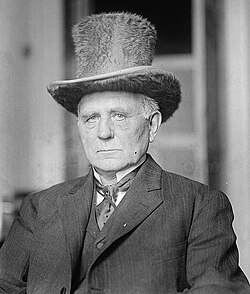
Champ Clark (D-Mo.), Speaker of the House
This election was a boon for the Democrats, as Republicans lost 28 seats while Democrats gained 62. The Democrats won a lot of the new seats added from the 1910 census, while the newly formed Progressive Party won 10 seats. Part of the reason Republicans took significant losses was because of the third-party Progressive candidates.
In California, Republican William Kent in the 1st district opted to run for reelection as an Independent and won, while Republican James Needham lost reelection to Democrat Denver Church in the 7th district. Republican William Stephens, now in the 10th district, ran for reelection as a Progressive and won. In the 11th district, Republican Sylvester Smith’s retirement resulted in the election of Democrat William Kettner.
In Connecticut, Democrats had a clean sweep of the delegation, although the wins all around were close. In the 1st district, future Democratic Senator Augustine Lonergan succeeded retiring Republican E. Stevens Henry, Republican John Q. Tilson lost reelection to Democrat Thomas L. Reilly in the 3rd district, and Republican Ebenezer J. Hill lost to Democrat Jeremiah Donovan. Tilson and Hill would win back their seats in 1914, with Tilson later serving as majority leader.
Democrats won Delaware’s sole district with Franklin Brockson, succeeding retiring Republican William Heald.
In Illinois, ten Republicans lost reelection; William Wilson of the 3rd district to Democrat George Gorman, George Foss of the 10th district to Progressive Charles Thomson, Charles Fuller of the 12th district to Progressive William Hinebaugh, James McKinney of the 14th district to Democrat Clyde Tavenner, George W. Prince of the 15th district to Democrat Stephen Hoxworth, John Sterling of the 17th district to Democrat Louis FitzHenry, Joe Cannon of the 18th district to Democrat Frank O’Hair, William B. McKinley of the 19th district to Democrat Charles Borchers, William Rodenberg of the 22nd district to Democrat William Baltz, and Napoleon Thistlewood tof the 25th district to Democrat Robert Hill. Republicans did, however, unseat Democrat Lynden Evans in the Chicago-based 9th district with Fred Britten. The most notable loss was of course Joe Cannon, who had been House Speaker from 1903 to 1911. Wilson, Foss, Fuller, Sterling, Cannon, McKinley, and Rodenberg would be returned to office in the 1914 election.
In Indiana, the state’s sole Republican representative, Edgar Crumpacker of the 10th district, lost reelection to Democrat John B. Peterson. However, the district would return to form with the election of William Wood in 1914.
In Iowa, two seats flipped to the Democrats with Republican Charles E. Pickett losing reelection to Democrat Maurice Connolly in the 3rd district. In the 6th district, Republican Nathan Kendall withdrew from reelection, with Democrat Sanford Kirkpatrick succeeding him. However, Republicans still had 8 of 11 districts; Iowa was still a strong Republican state despite Woodrow Wilson’s win.
In Kansas, Republicans Fred Jackson, Rollin Rees, and Isaac Young lost reelection in the 4th, 5th, and 6th districts to Democrats Dudley Doolittle, Guy Helvering, and John Connelly respectively. Democrats would interestingly hold a majority of the Kansas delegation until the 1918 election, making the Wilson presidency the height of power for Democrats in Kansas. .
In Kentucky, although no changes occurred in the state’s partisan composition, future Senate Majority Leader and Vice President Alben W. Barkley won in the at-the-time strongly Democratic 1st district.
In Maine, Republicans actually regained some ground; Democrat Samuel Gould lost reelection to Republican Forrest Goodwin in the 3rd district, leaving Republicans with a 3-1 edge in the state delegation.
In Maryland, Republicans lost their sole representative in Thomas Parran of the 5th district, with Democrat Frank O. Smith winning.
In Massachusetts, Republican Samuel W. McCall of the 8th district was succeeded by Democrat Frederick Deitrick while Republican Robert O. Harris in the 14th district lost reelection to Democrat Edward Gilmore. However, Republican Samuel Winslow defeated Democratic incumbent John Thayer in the 4th district.
In Michigan, Republicans William Wedemeyer, George A. Loud, and H. Olin Young of the 2nd, 10th, and 12th districts lost reelection to Democrat Samuel Beakes, Progressive Roy Woodruff, and Progressive William J. MacDonald respectively. Although Loud would regain his seat in 1914, Woodruff would later be elected as a Republican in 1920 and serve until 1953, with him becoming extremely conservative by FDR’s second term. In Michigan’s 5th district, however, Democrat Edwin Sweet lost reelection to Republican Carl Mapes.
In Missouri, Republican Leonidas C. Dyer of the 12th district appeared to have won reelection, but in 1914 the result was overturned and his opponent, Democrat Michael Gill, was seated for the rest of the session. Dyer would win his seat back in 1914.
In Montana, Republican Charles Pray lost reelection, and since Montana added a district, Democrats Tom Stout and John M. Evans were elected at-Large.
In New Hampshire, both of the state’s Republican representatives, Cyrus Sulloway and Frank Currier, went down to defeat by Democrats Eugene Reed and Raymond Stevens. Republicans would regain both seats in 1914, with Sulloway returning.
In New Jersey, Democrats nearly swept the board, with the only Republican remaining to represent the state was William Browning of the 1st district. In the 2nd district, Republican John Gardner lost reelection to Democrat J. Thompson Baker and in the 4th Republican Ira Wood retired and was succeeded by Democrat Allan B. Walsh, He would, however, be joined by two Republicans during the 63rd Congress: Republican Dow Drukker would win a special election in the 7th district following the death of Democrat Robert G. Bremner and Republican R. Wayne Parker would be seated for the lame-duck session of Congress after Democratic incumbent Walter I. McCoy opted to resign to accept an appointment as a justice of the Washington D.C. Supreme Court.
In New York, Progressive Walter Chandler succeeded retiring Republican John Andrus in the 19th district, while Democrats Henry Bruckner and Joseph Goulden succeeded departing Republicans in the 22nd and 23rd districts. In the 25th district, Republican Theron Akin, who came to identify himself as a “Progressive Republican”, lost the Progressive nomination to John C. Bucher, who lost to Democrat Benjamin Taylor. In the 35th and 40th districts, Republicans Michael Driscoll and James Simmons lost reelection to Democrats John Clancy and Robert H. Gittins respectively.
In Ohio, the House Republican delegation was already in bad shape at only five representatives and it was shrunk to three. Future Speaker of the House Nicholas Longworth lost reelection to Democrat Stanley Bowdle in the 1st district as did Republicans Edward L. Taylor and L.Paul Howland in the 12th and 22nd districts to Democrats Clement Brumbaugh and William Gordon respectively. However, Republican Simeon Fess gained an open Democratic seat in the 6th district.
In Pennsylvania, although Roosevelt won the state, Democrats made gains down-ticket given the Republican-Progressive split, including Democrat J. Washington Logue winning an open Republican seat in the 6th district, which was part of the at-the-time Republican stronghold of Philadelphia. Seven Republicans outside of Philadelphia lost reelection: Charles Bowman of the 11th district to Democrat John J. Casey, Benjamin K. Focht of the 17th district to Democrat Franklin Dershem, Jesse Hartman of the 19th district to Democrat Warren Bailey, Daniel Lafean in the 20th district to Democrat Andrew Brodbeck, Charles Matthews in the 24th district to Progressive Henry Temple, and Peter Speer in the 28th district to Progressive Willis Hulings. Another notable defeat was progressive-leaning Republican Melville Kelly’s primary defeat of John Dalzell in the 30th district; Dalzell had been one of Speaker Joe Cannon’s (R-Ill.) top conservative lieutenants on the Rules Committee. Democrats also lost two seats; William B. Wilson in the 15th district to Republican Edgar Kiess, and Curtis H. Gregg in the 22nd district to Republican Abraham Keister. Wilson would serve as Woodrow Wilson’s Secretary of Labor for the entirety of his presidency.
In Rhode Island, Democrats came out with a 2-1 delegation; Rhode Island was given an additional Congressional district from the 1910 census, with future Senator Peter Gerry succeeding the late Republican George Utter in the 2nd district.
Although no partisan changes occurred in the at-the-time solidly Democratic Texas, Sam Rayburn was elected to his first term this year. He was the longest serving House Speaker in American history and one of its most consequential, serving from 1940 to 1947, 1949 to 1953, and from 1955 until his death in 1961.
In Washington, two more seats were added, and these at-Large districts were won by Progressives James Bryan and Jacob Falconer, following the vote of the state for Roosevelt. However, Republican Stanton Warburton in the 2nd district, who had chosen to run for reelection as a Progressive, lost to Republican Albert Johnson.
In West Virginia, although Wilson won the state, the down-ticket results did not work out so well for Democrats, as Adam Littlepage of the 3rd district and John M. Hamilton of the 4th district lost reelection to Republicans Samuel Avis and Hunter Moss Jr. However, Littlepage would regain his seat in the 1914 election.
In Wisconsin, the elections were a bit quirky.
In the 4th district, Republican William Cary ran for reelection on a “non-partisan” line and won the Democratic nomination and won.
In the 5th district, Republican William Stafford won back his seat from Socialist Victor Berger. Stafford and Berger would duke it out for this district, with Berger being defeated for the last time by Stafford in 1928.
Republican James Davidson of the 6th district lost reelection to Democrat Michael Reilly, but he would win his seat back in 1916.
Republican Elmer Morse was placed in the same district as Democrat Thomas Konop in the 9th and lost the election.
The Senate
The Democrats would gain four seats in the Senate while Republicans lost seven. There were notably a few elections in which there were public referendums that although were not legally binding, the state legislatures chose to honor the results.
Majority Leader John W. Kern (D-Ind.), who was William Jennings Bryan’s running mate in 1908.
In Colorado, retiring Republican Simon Guggenheim was succeeded by Democrat John F. Shafroth.
In Delaware, Republican Harry A. Richardson lost reelection to Democrat Willard Saulsbury Jr.
In Illinois, the Senate election was a bit of a mess; the aging Republican Shelby Cullom, who had first been elected to Congress in 1864, lost renomination and Republican William Lorimer had been been voided in 1912 due to corruption. An agreement was reached in the Illinois legislature to elect Democrat J. Hamilton Lewis and Republican Lawrence Y. Sherman.
In Kansas, Democrat William Howard Thompson won the Senate election after Republican Charles Curtis was defeated for renomination by Walter R. Stubbs. Thompson would be the second-to-last Democrat to represent the state in the Senate.
In Maine, Republicans would have one of their few victories, as Democrat Obadiah Gardner, specially appointed to the Senate in 1911, lost the election to Republican Edwin Burleigh.
In Montana, Republican Joseph Dixon opted to run for reelection as a Progressive, but lost to Democrat Thomas J. Walsh, who would serve in the Senate for twenty years as a progressive crusader and would die just before he could become FDR’s attorney general.
In New Hampshire, a vacant Republican seat was won by Democrat Henry Hollis.
In New Jersey, Republican Frank Briggs lost reelection to Democrat William Hughes.
In Oregon, Republican Jonathan Bourne opted to run for reelection as a member of the “Popular Government Party”, but lost to Democrat Harry Lane.
In Tennessee, Democrats regained a seat that was only held by Republican Newell Sanders as he was an interim appointment. The victor, John K. Shields, would later prove a royal pain in the neck for President Wilson.
In West Virginia, in keeping with that state’s down-ticket trend, Democratic appointee Clarence Watson lost the election to Republican Nathan Goff Jr., who had been Secretary of the Navy during the Hayes Administration.
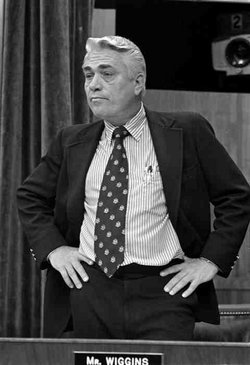
The year 1966 constituted a backlash against the policies of the Johnson Administration, and some incumbents went down who were thought to be in good shape in their districts. Republican attorney and mayor of El Monte Charles Edward Wiggins (1927-2000) challenged incumbent Democrat Ronald B. Cameron in the 25th district in Orange County. Cameron had previously defeated Republican John Rousselot in 1962, as he had attracted great controversy for being a prominent member of the John Birch Society. However, Wiggins could not be painted in the same light, and on Election Day 1966 he ousted Cameron by 5 points. This would be Wiggins’ toughest election as he would prove popular in his district.
Wiggins on Policy
At first, it may have seemed like Wiggins was going to be an extreme conservative; in 1967 the liberal Americans for Democratic Action found him in agreement on none of the 15 votes they had tallied as most important, and this included a civil rights bill that had the support of all but 25 Republicans. However, he would prove that he had more layers than just ultra-conservative; as a member of the House Judiciary Committee he was involved in the consideration of Constitutional amendments, and he was regularly against further amendments; in 1971, he was one of 19 representatives to vote against the 18-year-old vote and one of 24 to vote against the Equal Rights Amendment, but in the same year he also voted against the School Prayer Amendment. In 1978, Wiggins voted against an amendment letting Washington D.C. elect representatives. However, this didn’t mean he was against autonomy for D.C., as in 1973 he voted for the law permitting D.C. to elect its own mayor and city council. He also wasn’t opposed to all efforts to amend the Constitution; in 1969 he voted in favor of an amendment scrapping the Electoral College. His political stances had some variance; although in 1969 he supported killing the Philadelphia Plan (affirmative action precursor) he also supported expanding the government’s ability to enforce anti-discrimination laws in 1971. Wiggins was a staunch supporter of President Nixon’s policy on Vietnam and although he was in opposition to most anti-poverty programs, he did support the creation of the Legal Services Corporation to help provide legal assistance to the poor. In 1974, he was one of 48 representatives to vote against the Federal Election Campaign Act Amendments in 1974, which provided for federal funding of presidential campaigns, limitations on campaign contributions, and the establishment of the Federal Election Commission. On economics, Wiggins supported free market approaches to policy and was in opposition to price control on gas. He was also fiscally conservative, voting to sustain the vetoes of Presidents Nixon and Ford on spending. However, Wiggins backed a few hot-button positions unpopular with rank and file conservatives, such as voting for the New York City bailout in 1975, against the Hyde Amendment in 1976, and his support for the Panama Canal Treaties. He also went against President Ford on voting to override his veto of the bill providing for national standards for strip mining in 1975. Wiggins opposed the 1975 Voting Rights Act extension and led the push for an alternative formula for coverage under the act, one more lenient than what existed, namely he called for a standard of coverage based on minority turnout rates.
Wiggins and Watergate
Wiggins was one of the three leaders of the defense of the Nixon Administration during the Watergate hearings. Their strategy, per The New York Times (2000) was “…to construe the evidence as narrowly as possible, require ironclad proof and propose benign explanations of information damaging to the president” (Pace). However, upon the release of the Watergate tapes, he changed his mind and supported impeachment, but wanted the president to resign to avoid dragging things out. Wiggins lamented where he had to stand, stating, “Such a conclusion was a sad and personally wrenching one for me to reach, because I regarded–and still do regard–myself as a friend of the president and his family and one still willing, proudly, to claim his achievements” (Nelson & Weinstein). Although Wiggins’ defense of Nixon certainly harmed his political prospects, he nonetheless prevailed in reelection in 1974, winning by 15 points. In 1978, Wiggins opted to retire to private legal practice, and he was succeeded by the much more conservative William Dannemeyer. His DW-Nominate score is a 0.359, he was in agreement with the conservative Americans for Constitutional Action 79% of the time, and in agreement with the liberal Americans for Democratic Action 15% of the time. However, he was not out of government for good.
Judge Wiggins
In 1984, President Reagan tapped Wiggins to the 9th Circuit Court of Appeals, and he issued some substantive rulings. In 1994, he upheld the military’s “Don’t Ask, Don’t Tell” policy in Holmes v. California National Guard, finding that it was not in violation of the 1st and 5th Amendments (Nelson & Weinstein) In 1996, Wiggins assumed senior status (semi-retirement for judges). In 1998, he testified before Congress during the Clinton impeachment hearings and urged a “nay” vote as he found the charges too vague (Pace). He was in poor health in his last years, suffering from diabetes and heart disease, dying on March 2, 2000 at the age of 72.
Conclusion
The inclusion of Wiggins may seem odd, but in truth on most matters he was conservative and was a man who thought for himself, unafraid to take unpopular positions, whether in opposition to consensus or his party’s preferences. I tremendously value the latter, which is why the current era of politics is disturbing to me. Pardon the late aside, but I see two political cults present in American politics: the Cult of Trump and the Cult of Social Justice, the latter which seems to be increasingly going mask off in its favorability to communism, and the former which tries very very hard to form a greater ideological philosophy from whatever President Trump wishes. The truth about President Trump is that although yes he is a man of the right, he is also temperamental and often acts based on his whims, whether for good or ill. Seeing people twist like pretzels in justification for some of the things he does (such as imposing tariffs so broad and slipshod that they included islands with penguins rather than humans as residents) is simultaneously amusing and disheartening. Choose systems and philosophies, not men, and don’t insist on 100% agreement with you as it is not realistic, and there is also a non-zero chance that you are wrong (GASP!). President Reagan was right when he said that someone who is 80% your friend and ally in politics is not 20% your enemy. Use your own brains, people! Don’t merely be a mouthpiece for others.
Bonus:
Wiggins’ press conference explaining his position on Watergate after the release of the Watergate tapes:
References
ADA Voting Records. Americans for Democratic Action.
New York is not a place particularly known for its conservatism, but in the time of the election of attorney and local Republican leader John Taber (1880-1965) to Congress in 1922 representing Auburn in the Finger Lakes region, there were many conservatives representing the state, notably Senator James W. Wadsworth Jr. Although the power of conservatism in New York would decline over time, especially with the rise of FDR, Taber’s old-school Republicanism would go mostly unchanged.
The 1920s were a time in which he was truly in his element and he stuck staunchly to the cost-conscious vetoes of President Calvin Coolidge. His orientation was strongly pro-business and lassiez-faire. However, Taber did interestingly vote for the Child Labor Amendment in 1924, which if enacted would have given Congress the power to regulate and abolish child labor. The upholding of the Fair Labor Standards Act (which Taber twice voted against) by the Supreme Court took the wind out of the sails of this amendment. Indeed, this amendment had quite a regional focus and the legislation that supporters of child labor legislation pushed was unlikely to change New York labor laws. After all, the Keating-Owen Act of 1916 for child labor, which was struck down by the Supreme Court, had no impact on New York’s labor laws.
Responding to Liberal Governance
Taber’s opposition to the New Deal was practically absolute, opposing all First 100 Days laws except the Economy Act, but his commitment to reduced spending on a couple occasions placed him on the same page as the Roosevelt Administration, such as him being one of eight Republicans to oppose the Steiwer-Cutting Amendment in 1933 for reviewing veterans benefit cuts. Republicans in general were in support of Steiwer-Cutting as they prioritized veterans benefits over New Deal spending. He also twice voted to sustain President Roosevelt’s vetoes of veterans’ bonus bills. In 1938, Taber stood out for his motion to to recommit that defeated FDR’s reorganization plan, an indicator that FDR couldn’t simply do whatever he wanted, even with the most strongly Democratic Congress. He also was one of 33 representatives to vote against Social Security. Taber warned, “Never in the history of the world has any measure been brought in here so insidiously designed so as to prevent business recovery, to enslave workers, and to prevent any possibility of the employers providing work for the people” (CBS) Although this was hyperbolic rhetoric, the Social Security tax that was imposed was one of the factors behind the Roosevelt Recession of 1937-1938 as the tax began in 1937 and benefits were not paid out on Social Security until 1940. Taber was also known as the “Watchdog of the Treasury” for his efforts to hold down expenditures and got the nickname “Meat Ax” for once declaring on the federal budget, “I’m going to cut it with a meat ax” (Cooke). His efforts got him criticism from the Truman Administration, but he also attracted admiration, even from opponents. One opponent stated, “No man has served Congress with greater distinction…Without his watchful eye the public debt would be $10 billion higher” (Cooke). His attitude towards spending was take-no-prisoners, “We’re not going to use a knife to cut down Federal appropriations, we’re going to use a sledgehammer” (The New York Times). Taber often worked to this end together with Appropriations Chairman Clarence Cannon (D-Mo.), who was often highly committed to budget cutting regardless of the wishes of president or party. This didn’t mean things were always peachy between them; in 1945 he and Cannon had an argument that escalated to Cannon punching Taber in the face (Henry).
Shouting to Cure Deafness
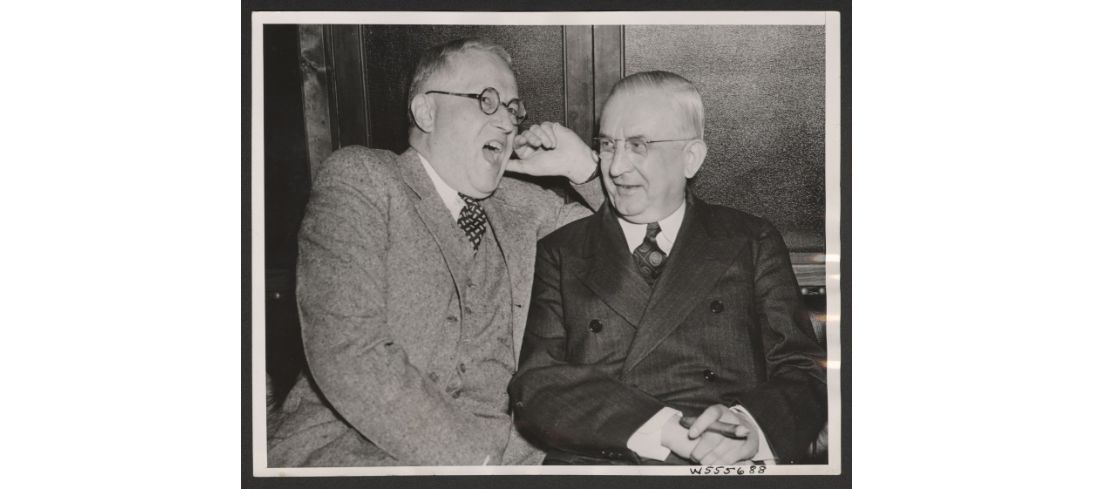
Among other things, Taber was known for his brassy, booming voice, and with this voice as well as a new amplification system in the House, resulted in a rather incredible event. On May 9, 1940, Taber, holding the microphone close to his mouth, was denouncing efforts to amend the Fair Labor Standards Act when Rep. Leonard Schuetz (D-Ill.) felt rather dizzy and had to leave the chamber to sit on a bench, and for the first time in his entire life was able to hear out of his left ear, and even better than in his right ear (The New York Times, 1940).
Taber and Schuetz “recreating” the incident for the press.
Foreign Policy
Although on domestic policy he was strongly to the right, he was open to foreign aid and could not be counted as among the die-hard non-interventionists before World War II. Indeed, in the postwar era, he supported aid to Greece and Turkey and the Marshall Plan. This support, however, was not without careful eye to spending, and he was well-positioned to keep a careful eye on spending given that for many years he was the leading Republican on the House Appropriations Committee. During the Republican 80th and 83rd Congresses, Taber was the chairman, and used his post to push forward strong domestic budget cuts and was considered among the top figures in the House GOP. During his time to cut budgets in a significant way was known as “Taberizing” (The New York Times).. However, even he could on occasion be persuaded that there was such a thing as too much “Taberizing”, which is what President Eisenhower accomplished in getting Taber to call for reversing foreign aid cuts in 1956. Indeed, during the Eisenhower Administration, he was backing Administration-sponsored increases in foreign aid. However, this enthusiasm didn’t carry over to President Kennedy’s foreign aid packages and he proved as much of a foe of the Kennedy Administration as he had the Truman Administration.
Civil Rights
Although John Taber supported anti-lynching legislation twice, he repeatedly voted against legislation to ban poll taxes. He also voted against the Civil Rights Acts of 1957 and 1960. However, Taber did vote for the 24th amendment in 1962, barring the poll tax in federal elections and primaries. He also multiple times voted for anti-segregation amendments.
The End
Although it was thought that Taber might retire in 1958 as he didn’t want to stick around too long, many legislators lean to staying in the game. However, by 1962, he was 82 years old, and he was redistricted into the same district as Democrat Sam Stratton. Given the redistricting and his age, Taber opted not to go for another term. His DW-Nominate score stands at 0.558, he agreed with the liberal Americans for Democratic Action 13% of the time from 1947 to 1962, and agreed 93% of the time with the conservative Americans for Constitutional Action from 1957 to 1962. He passed away in a nursing home on November 22, 1965 at the age of 85.
References
ADA Voting Records. Americans for Democratic Action.
On August 9, 1974, President Richard Nixon became the first and so far only president to resign office after the Watergate tapes proved that he initiated a cover-up of the Watergate burglary, thus he was guilty of obstruction of justice. Republicans suffered the electoral consequences in the 1974 midterms, with Democrats winning 48 seats. The result was a strongly liberal Congress with the freshmen being known as “Watergate Babies”. Although the new Congress blocked further military assistance to South Vietnam, they were limited in their ability to act as President Ford vetoed 66 bills, of which 12 were overridden. However, the 1974 midterms produced fundamental changes in the Democratic Party and constituted the beginning of the end of the influence of conservative Democrats, as the Democratic Party made it clear through their ousters of several committee chairmen that seniority alone no longer determined whether one would get a chairmanship. This either motivated retirements or legislators significantly changing their voting behavior to get on the good side of liberal Democrats.
Patrick Leahy’s (D-Vt.), the longest serving of the Democrats among the 1974 freshmen.
The significant results were as follows…
House
Although Arkansas had no change, future President Bill Clinton came within 4 points of defeating Republican John Paul Hammerschmidt, who represented Bentonville, Fayetteville, and Rogers, for reelection.
In California, Republican incumbents Bob Mathias and Victor Veysey lost to Democrats John Hans Krebs and James F. Lloyd respectively. The 13th district saw Republican Charles Gubser retire and be succeeded by Democrat Norman Y. Mineta, while in the 34th district Republican Craig Hosmer retired and Democrat Mark W. Hannaford succeeded him.
In Colorado’s 2nd district, which included the city of Boulder, was increasingly waving its liberal flag with future Senator Tim Wirth defeating five-term Republican incumbent Donald G. Brotzman for reelection. The 2nd hasn’t been represented by a Republican since.
In Connecticut’s 2nd district, Democrat Chris Dodd, son of the late Senator Thomas Dodd, succeeded retiring Republican Robert Steele.
In Florida’s 5th district, one of the few Republican gains occurred, with Republican Richard Kelly succeeding retiring Democrat Bill Gunter. Kelly would later be one of the members of Congress implicated in the Abscam Scandal.
In Georgia’s 4th district, Democrat Elliott Levitas defeated four-term incumbent Republican Benjamin Blackburn for reelection. This brought Georgia back to its traditional all-Democratic delegation.
In Illinois’ 3rd district, Democrat Marty Russo defeated Republican Robert Hanrahan for reelection and Democrat Abner J. Mikva defeated Republican Samuel H. Young for reelection in the 10th district. In the 15th, 40-year incumbent and Republican whip Leslie Arends retired, his successor being Democrat Tim Lee Hall. Hall would only hold the seat for one term before the district reverted to its traditional Republicanism.
In Indiana, Republicans were left with only two seats after election night. Losing were Republican Earl Landgrebe of the 2nd district who had famously refused to support impeachment of President Nixon after the release of the Watergate tapes, Democrat Floyd Fithian defeating him by 22 points. By contrast, he had won reelection by over 9 points. In the 6th district, 12-term incumbent William G. Bray lost reelection to Democrat David W. Evans by almost 5 points. Republicans Roger Zion, David Dennis, and William Hudnut were defeated by Philip Hayes, Philip Sharp, and Andrew Jacobs Jr. in the 8th, 10th, and 11th districts.
In Iowa, the results went south for Republicans, but the election did see the election of Chuck Grassley, currently the longest serving federal politician, for his first term in the House, succeeding the legendary skinflint H.R. Gross, but Republicans William J. Scherle and Wiley Mayne lost reelection to Democrats Tom Harkin (who would be elected to the Senate in 1984) and Berkley Bedell in the 5th and 6th districts respectively.
In Louisiana, only one change occurred, and that was due to Democrat John Rarick losing renomination to radio host Jeff LaCaze. Rarick was extremely conservative, never supported a civil rights measure, and had had ties with the KKK. LaCaze was much more liberal, but the 6th district was conservative, thus Republican W. Henson Moore won the open seat.
In Maine, the 1st district was a bit of a surprise as Republican David F. Emery defeated Democrat Peter Kyros, who had been first elected in 1966, for reelection by under half a point.
In Maryland, Republican Lawrence Hogan of the 5th district (father of former Governor Larry Hogan) sought to run for governor and retired, with Democrat Gladys Spellman winning the district.
In Massachusetts’ 5th district, future Senator Paul Tsongas defeated Republican Paul W. Cronin by 21 points. Cronin was the last Republican to represent the district.
In Michigan’s 6th district, Republican Charles Chamberlain opted not to run again, with Democrat Milton Carr succeeding him. In the 18th district, Republican Robert J. Huber, an ultra-conservative, lost reelection to Democrat James Blanchard by nearly 19 points.
In Minnesota’s 6th district, Democrat Richard Nolan won the election succeeding retiring Republican John M. Zwach.
In Montana’s 1st district, future Democratic Senator Max Baucus defeated Republican Richard Shoup for reelection.
In Nevada’s at-Large district, Democrat James Santini defeated Republican David Towell for reelection.
In New Hampshire, Democrat Norman D’Amours succeeded Republican Louis Wyman, who had retired to run for the Senate.
In New Jersey, Republicans John Hunt, Charles Sandman, William B. Widnall, and Joseph J. Maraziti lost reelection to Democrats James J. Florio, William J. Hughes, Andrew Maguire, and Helen S. Meyner in the 1st, 2nd, 7th, and 13th districts respectively.
In New York, Republicans James Grover, Angelo Roncallo, and Carleton J. King lost reelection to Democrats Thomas Downey, Jerome Ambro, and Edward W. Pattison of the 2nd, 3rd, and 29th districts respectively. Retiring Republicans Howard Robison and Henry P. Smith of the 27th and 36th districts respectively were succeeded by Democrats Matthew McHugh and John J. LaFalce.
In North Carolina, Republicans Wilmer Mizell and Earl Ruth of he 5th and 8th districts went down to defeat against Democrats Stephen Neal and Bill Hefner. Hefner would serve in Congress until 1999.
In Ohio’s 1st district, Democrat Tom Luken lost reelection by 2 points to Republican Bill Gradison. However, Luken would run in the 2nd district in 1976 and win, and represented the district until 1991. Democrat Ronald Mottl succeeded Republican William Minshall in the 23rd district.
In Oklahoma’s 6th district, Republican John Newbold “Happy” Camp lost reelection to Democrat Glenn English by 9 points. Did he live up to his nickname on election day?
In Oregon, Democrats won all House seats, with incumbent Republican Wendell Wyatt of the 1st district retiring and being succeeded by Les AuCoin and Democrat Jim Weaver defeating Republican John Dellenback for reelection in the 4th district.
In Pennsylvania, in the 7th district Republican Lawrence G. Williams lost renomination and was succeeded by Democrat Robert W. Edgar while Democrat Frank Clark of the 25th district lost reelection to Republican Gary Myers.
In South Carolina, Republican Edward Young of the 6th district lost reelection to Democrat John Jenrette. Jenrette would later be implicated in the Abscam Scandal.
In South Dakota, Republicans scored a victory with Larry Pressler’s defeat of incumbent Democrat Frank Denholm in the 1st district.
In Tennessee, Republicans LaMar Baker and Dan Kuykendall lost reelection in the 3rd and 8th districts to Marilyn Lloyd and Harold Ford respectively. Ford was the first ever black representative from Tennessee and served until 1997.
In Texas’s 13th district, Republican Bob Price lost reelection to Democrat Jack Hightower.
In Virginia, Republicans Stan Parris and Joel Broyhill of the 8th and 10th districts respectively lost reelection to Democrats Herb Harris and Joe Fisher, a distinct shift from conservative to liberal representation as Harris and Fisher were of the national rather than Southern Democrat variety.
In Wisconsin, Republicans Vern Thomson and Harold Froehlich of the 3rd and 8th districts lost reelection to Democrats Alvin Baldus and Robert John Cornell respectively. Thomson had once been Wisconsin’s governor and been in Congress since 1961.
In the Senate, Republicans lost a net of four seats, not as terrible as it might have been given the national atmosphere, and three Republican incumbents won narrow reelections in Kansas’s Bob Dole (who won by two points), North Dakota’s Milton Young (who won by only 186 votes), and Oklahoma’s Henry Bellmon (who won by half a point), Also of note is that 30-year incumbent J. William Fulbright of Arkansas lost renomination to Governor Dale Bumpers by a 30 point margin. Bumpers was 20 years younger and popular while Fulbright, the chairman of the Senate Foreign Relations Committee, to many represented the Washington establishment and was out of touch.
In Colorado, Republican Peter Dominick, whose physical and psychological health was deteriorating due to an at-the-time un-diagnosed multiple sclerosis, lost reelection to future Democratic presidential contender Gary Hart by 18 points.
In Florida, Democrat Richard Stone succeeded the retiring Republican Edward Gurney.
In Kentucky, Republican Marlow Cook lost reelection to Democrat Wendell Ford. Cook was not unpopular and would have likely won reelection had the Democrats not nominated Ford, a highly popular governor.
In Nevada, Republicans scored a victory when Republican Paul Laxalt succeeded retiring Democrat Alan Bible. He defeated future Senator Harry Reid by less than half a point.
In New Hampshire, Democrat John A. Durkin narrowly defeated Republican Louis C. Wyman to succeed Republican Norris Cotton. It was one of the closest races in Senate history, with Cotton temporarily holding his seat once more until the outcome was determined.
In Vermont, Democrat Patrick Leahy defeated Republican Congressman Richard Mallary to succeed retiring Republican Senator George Aiken. Leahy was the first ever Democrat elected to the Senate from Vermont since the establishment of the Republican Party, and would remain in office until 2023.
In the early 20th century, a progressive wave swept the nation, a belief that government could, in some way or another, be used to improve society and reform politics. This wave far from missed Oregon and one of the most significant reformers in the state was Harry Lane (1855-1917). Lane was well-positioned to push reform, being a member of one of the state’s foremost political families: his grandfather, Joseph Lane, was a Confederate sympathizer who was briefly senator and candidate for vice president on the Southern Democratic ticket in 1860, and Lane County, Oregon, is named after him. His uncle, Lafayette Lane, was a Democratic member of the House from 1875 to 1877.
Attending Willamette University in Salem, he graduated in 1876 and two years later earned a medical degree from Williamette University College of Medicine. His postgrad work was with the College of Physicians and Surgeons in New York City. After Lane’s time there, he returned to Portland and opened up a prestigious medical practice, becoming the president of several medical societies.
In 1887, Governor Sylvester Pennoyer appointed Lane to head up the Oregon State Insane Asylum, and there he soon made waves as he was horrified by the deplorable conditions there and the abuse inmates suffered. His efforts to ferret out corruption in the system did not win him friends in the political realm and Pennoyer eventually forced him to step down in 1891. He became an advocate for public health, seeking to reduce the spread of contagious diseases, especially tuberculosis and would provide medical care free of charge for indigent patients, which won him a good deal of support for a political career. In 1902, Lane ran for the Oregon State Senate as an independent who supported direct democracy measures including initiative, referendum, and recall. Although unsuccessful, in 1904, Lane ran for mayor of Portland and won, serving two terms. During this time, he frequently battled with the Portland City Council, often at best serving as a veto pen. Lane notably proposed the creation of the annual Portland Rose Festival in 1907, which happens to this day, and was an advocate for the advancement of women. In 1905, Lane hosted a national convention for women’s suffrage and in 1908, he appointed Lola Baldwin as the first female police officer in American history. In 1912, Lane ran for the Senate, and a non-binding popular referendum between six candidates placed him in first at 30% of the vote, defeating conservative Republican Ben Selling by a little over a point.
Although the Oregon State Legislature in 1913 was solidly Republican, they saw fit to honor the result of the referendum. This was praised in the Cincinnati Post (1913), “Again take off your hat to Oregon!Again that State stands forth as a splendid example of government by the people. Again she puts her heel on the snake vile partizanism [the author’s word for what we call “partisanship”]. Again she demonstrates that there is honor in politics and thereby refutes the declaration that aims cannot be attained save through violence and anarchy.
In a popular primary the people of Oregon declared for a Democrat for U.S. Senator, Harry Lane. Oregon’s Legislature is strongly Republican, but that body almost unanimously voted the Democrat, Lane, into the Senate.
Whether Lane proves good, bad, or indifferent, the people of Oregon have got what they want, which is self-government” (4).
Senator Lane
As a senator, Lane was a supporter of numerous progressive causes. He was an early supporter of women’s suffrage as were many politicians of the West, and supported Prohibition. Lane staunchly supported breaking up monopolies, government ownership of utilities, and opposed imperialism. He also sought to reform relations between Americans and American Indians, him regarding trying to make them farmers a fundamentally flawed plan and deploring past and present ill-treatment, in this case much in contrast to his grandfather. A lot of President Wilson’s agenda got his approval in the first two years, although the same could be said for most of his Democratic colleagues. However, Lane had a conservative side to him and this was in his opposition to high taxes and high spending, and he detested waste. The Edgerton Earth (1916) described his opposition, “Senator Harry Lane of Oregon has an abhorrence of waste that amounts to almost an obsession. A needless expenditure of money gets under his cuticle like a woodtick and makes his life a burden. It isn’t that he is a tightwad either. In his personal affairs he spends with as little heed as anybody; but when it comes to wasting government funds – the very funds that a great many great legislators love to spend with much reckless abandon – Lane is a miser, watching every penny like a terrier dog watching a rat hole” (4). An example of this was on February 24, 1917, he was one of three Democrats to vote against a measure increasing the pay of government employees. In 1914, he was one of only two Senate Democrats to join a unified GOP in opposition to the Emergency Internal Revenue Tax Act, which raised numerous domestic taxes in response to declining tariff revenues from the outbreak of World War I. Lane expressed his opposition, “I think that more than $100,000,000 could easily be chopped off and the affairs of the Government conducted just as well as they are now. I do not feel we have the right to levy additional taxes as though we were in the midst of unexampled prosperity. I believe it is unbusinesslike and unpatriotic. I think it is gross carelessness” (The Cincinnati Enquirer, 5). There were also numerous other occasions in which he voted with the Republicans on tax issues, such as when he was the only Democrat to vote for Senator Lodge’s (R-Mass.) unsuccessful amendment on February 28, 1917, assessing the highest tariffs on nations in which their goods were produced with child labor not in comport with the Keating-Owen Act of 1916. Indeed, Lane’s independence was admired by many but by the end of his life he became reviled for it.
Lane and World War I
Another way in which Lane was independent was him being one of six senators to vote against declaring war on Germany for their resumption of unrestricted submarine warfare. Only two of the six senators would be reelected. Lane had cast his vote on April 4, 1917, against doctor’s orders as by this time he had for years been suffering from chronic kidney disease and by this time had advanced arteriosclerosis (Johnston, 42). An editorial in The Oregonian blasted him, “Next to being ashamed of Harry Lane for what he has done … the people of Oregon are ashamed of themselves for having sent Harry Lane to the United States Senate” (MacColl, 137-138). There were loud calls for his recall, but his foes would not get to have the pleasure of voting against him, as he died only seven weeks after his vote, on May 23rd while recuperating in San Francisco at the age of 61 from a stroke. His vote against declaring war was the last he cast and the last vote that Lane made his position known on was in support of Senator Hiram Johnson’s (R-Calif.) amendment to the Espionage Act to strike a section prescribing rules for publicizing information regarding U.S. military operations in wartime on May 12th. His DW-Nominate score is a -0.154, which is quite a bit less liberal than you might have thought. Lane would be succeeded by Republican Charles McNary, who would become one of the most prominent national politicians from Oregon as Senate Republican leader and nominee for vice president in 1940.
Johnston, R.D. (2003). The radical middle class: populist democracy and the question of capitalism in progressive era Portland, Oregon. Princeton, NJ: Princeton University Press.
Kennedy, T.G. (2021, October 18). Portland Mayor Harry Lane. Medium.
There was a certain ethos in the political scene of the Progressive Era that was strongly geared towards reform and a strong sense of right and wrong. This was characteristic of Michigan’s Louis Convers Cramton (1875-1966), who frequently stood for reform in his day, albeit in a Republican framework.
Cramton graduated with a law degree from the law department of the University of Michigan at Ann Arbor in 1899 and was admitted to the bar that year, but moved away from law in 1905 to take up journalism, publishing the Lapeer County Clarion until 1923. He also served as law clerk of the Michigan Senate for three terms as well as Michigan deputy commissioner of railroads in 1907 and secretary of the Michigan Railroad Commission from 1907 to 1909. These roles in state government got him a sufficient resume to run for state office. In 1909, Cramton was elected to the Michigan State House, where he served a term. In 1910, he ran for the Republican nomination for Congress from the 7th district, but lost. Cramton tried again in 1912 when incumbent Henry McMorran was retiring and prevailed as well as won the election.
Congressman Cramton
As a member of Congress, the newly elected Cramton found himself to sometimes be in support of President Wilson’s New Freedom agenda. For instance, he voted for the Federal Reserve Act, the first version of the Clayton Anti-Trust Act (although he voted against the final version), curbing speculation in cotton futures, and legislation expanding the power of the Interstate Commerce Commission. Cramton was also an early supporter of women’s suffrage. However, to the consternation of organized labor, he supported bonuses in Navy funding bills to encourage efficiency and again crossed them in his opposition to the Howell-Barkley bill in 1924. He was also a loyal Republican on the issues of tariffs and income taxes, and his record did seem to get more conservative after the Wilson Administration. Cramton nonetheless consistently supported veterans’ bonus measures. In 1920, he managed California Senator Hiram Johnson’s unsuccessful bid for the Republican presidential nomination (Port Huron Times Herald). In 1922, he voted for the Dyer Anti-Lynching bill and was known as a strong proponent of funding for the historically black Howard University, which would award him an honorary Doctor of Laws degree in 1945. Cramton’s foremost achievements in Congress were the establishment of several national parks, including Isle Royale National Park in Lake Superior. He also wrote legislation establishing the George Washington Memorial Parkway in Virginia and Maryland and the restoration of historical monuments at Williamsburg, Jamestown, and Yorktown, Virginia. Cramton also lent his strong support to the creation of the National Park Service in 1916, thus becoming known as the “godfather of national parks” (Detroit Free Press).
Cramton and 1920s Law Enforcement
If there was an individual in the House who stood strongest for Prohibition on the Republican side of the aisle, it was Cramton, known as a Congressional spokesman for the Anti-Saloon League. In 1926, he sponsored a bill to establish bureaus of prohibition and customs in the Treasury Department. However, by 1930, support for Prohibition had dried up considerably, and Cramton faced a strong primary challenger in Jesse P. Wolcott, who ran as an opponent of Prohibition. Wolcott narrowly edged out Cramton in an anti-Prohibition wave that swept the state, with a recount occurring in Lansing before the result was finalized. Cramton’s DW-Nominate score stands at a 0.49, which is quite a bit more conservative than you might have thought given my description of his record.
Out of Office
President Hoover found use for Cramton, appointing him to be a special assistant to the Secretary of the Interior, where he conducted studies that resulted in the creation of the Lake Mead National Recreation Area. In 1934, Cramton was elected a state circuit judge, where he served until his loss of reelection in November 1941. Although Cramton was out of the national political picture during the Roosevelt years, he did reminisce in retirement, “As a Republican, I never cared for Franklin D. Roosevelt, but if it wasn’t for his social security program I would be worse off today” (Detroit Free Press). Indeed, in his last years, Cramton was not a wealthy man, his only income being from Social Security and a small pension for his service in Michigan’s state House. Speaking of…
Second Act
In 1948, Cramton made a comeback when at the age of 73 he was again elected to the Michigan State House. In 1951, he succeeded in getting a key anti-crime tool reinstated in Michigan law, the one-man grand jury rather than the three-man jury that got tried and proved ineffective, and he had the support of most Republicans and some Democrats (Kulsea). He was quite the active legislator and strongly pushed for an anti-discrimination law in 1952, but was troubled when many of his fellow Republicans were unwilling to give him the backing that he had received for his anti-crime measure in the previous year, with half of them walking out when he rose up to speak on the matter. Cramton teared up at this, “I am becoming more at home on this side (Democratic) of the House than on the Republican. I have supported the Republican party for half a century. I never thought I would wee the time that Republicans would leave their seats rather than hear a Republican discuss the vital question of human rights” (Kulsea). His great concern for civil rights was interesting given that his district was almost entirely white. In 1955, Cramton succeeded in getting his state’s Fair Employment Practices Act into law, which he authored. Although Cramton had not always agreed with Senator Robert La Follette during his lifetime, he did admire the man and stated to a newsman regarding the senator’s autobiography, “Read it and enjoy it and remember that this country and this government came from the work of men like LaFollette. Everyone should struggle for more representative government, and cheer on those fighting for that cause” (Kulsea). By the time Cramton was 84 in 1960, his health was declining so he finally retired from politics. The following year, Howard University dedicated a school after him for his strong advocacy for the university and black education. Cramton lived just long enough to see passage of the Civil Rights Act of 1964 and the Voting Rights Act of 1965, dying on June 23, 1966 at the age of 90. Although in some ways, he was distinctly conservative, he had a certain social awareness and moral certitude that was characteristic of the Progressive Era, making him a bit of a mixed figure. His son, Louis K. Cramton, also served in the Michigan House as a Republican, from 1971 to 1981.
In 1936, liberal Marion Zioncheck of Seattle, perhaps having cracked under the strain of hard work in Congress, began displaying numerous symptoms of mental illness. However, he knew that the public would not be interested in him having another term, thus he chose not to run and endorsed his friend, Warren Grant Magnuson (1905-1989). Sadly, Zioncheck committed suicide before the end of his term. Magnuson picked up where his friend left off.
Interestingly, although Magnuson’s official birth date is April 12, 1905, he was born to parents that he never knew, and it is possible that this isn’t his real birth date. As an infant he was adopted by William and Emma Magnuson, who named him Warren. He would play football in high school and earned a Bachelor of Laws from the University of Washington School of Law. He was always a Democrat, campaigning for Al Smith in 1928 and backing A. Scott Bullitt’s run for governor, but the time for Democrats had not quite come yet. With the Great Depression, Magnuson and the Democrats soared, with him serving as as special prosecutor of King County, and from 1933 to 1935 he was in the Washington State House, and from 1934 to 1936 was elected prosecutor of King County.
As noted in previous posts, Washington was a state particularly associated with the political left in the 1930s, even radically so. After his election to Congress in 1936, Magnuson was almost entirely faithful to the New Deal and to FDR’s foreign policy with the sole exception of his vote against military conscription in 1940. He also voted against the Reciprocal Trade Act extension that year, and he was not alone among Washington Democrats in regarding trade policy as harming the state’s lumber industry. Magnuson was also quick to have an achievement while in office; in 1937, he was a one of the sponsors of the National Cancer Institute Act. Magnuson briefly served his country in the Navy during World War II, but chose to stay in office after President Roosevelt in 1942 ordered legislators to either choose to serve in Congress or the military. In 1943, Magnuson sponsored the law repealing the Chinese Exclusion Act after Madame Kai Shek delivered a speech before Congress in which she noted the contradiction of having China as an ally while refusing to admit its people. On November 13, 1944, Senator Homer T. Bone resigned as he had been confirmed for a federal judgeship and Magnuson was elected in a special election to finish his term on December 14, 1944. He had faced Tacoma Mayor Harry P. Cain, would join him in the Senate with his victory in the 1946 election. Magnuson proved a strong supporter of President Truman and the Fair Deal and was a firm friend of organized labor and a foe of Republican-backed tax reduction. However, he would differ in his support of a wool tariff in 1947.
In 1955, Magnuson became the chairman of the Senate Commerce Committee. In this post he weighed in heavily on regulating the market, pushing for consumer protection laws, auto safety laws, and other measures. He was critical in limiting oil tankers traveling through the Puget Sound. Even though President Eisenhower won Washington in his reelection bid, Magnuson was so popular at the time that he won all counties against former Republican Governor Arthur B. Langlie. He was not only popular with the voters, but also his colleagues given his amiable and agreeable nature. Magnuson also was a bit of a party guy, having being a hard drinker and having numerous girlfriends since his divorce from his first wife in 1935 until settling in 1964. His colleague, Scoop Jackson, would from time to time lecture him, “Maggie, you gotta live a better life!” (Scott) From 1955 to 1959, the conservative Americans for Constitutional Action gave him a 15% for how often he sided with their positions. His strongest area of conservatism was his support for some foreign aid cuts and an occasional anti-communist amendment in foreign policy.
Magnuson was a strong supporter of the New Frontier, and although he was no less or more liberal by 1962, he attracted a strong challenge in Republican Richard G. Christensen, a Lutheran minister, who held him to less than a five point margin. He also proved a strong supporter of the Great Society, and played a significant role in the passage of the Public Broadcasting Act of 1967. Magnuson was, unsurprisingly, a strong supporter of civil rights and helped get the Civil Rights Act of 1964 to passage. In 1968, Magnuson faced Republican State Senator and future Congressman Jack Metcalf for reelection, but he won by nearly 30 points. The following ad certainly helped:
A Power Team: Maggie and Scoop
Magnuson was commonly nicknamed “Maggie”, which dated to his high school football football, but he was not fond of the nickname and friends would not refer to him by that name. He and Henry “Scoop” Jackson represented Washington together for 28 years, and although the two men roughly shared the same ideological space, they could have some differences. For instance, on the Vietnam War, Magnuson differed from Jackson as he was a dove, voting for the Cooper-Church Amendment and the McGovern-Hatfield “End the War” Amendment in 1970. During the Eisenhower Administration, Magnuson had been more likely to favor foreign aid cuts than Jackson, but largely agreed with him on getting tough on crime, voting with him on “no knock” warrants in 1970 as well as reinstatement of the death penalty in 1974. Both of them also strongly aligned on keeping federal funding for the Supersonic Transport, a Boeing project.
The Apex of Power
In 1974, Magnuson won reelection by over 24 points, once again against Jack Metcalf. The following year, he would collaborate with Senator Frank Moss (D-Utah) to pass the Magnuson-Moss Warranty Act, which sets certain standards for products that have warranties to prevent warranties that are misleading to consumers. In the next year, he collaborated with Senator Ted Stevens (R-Alaska) to pass the Magnuson-Stevens Fishery Conservation Management Act, With the election of President Jimmy Carter, Magnuson would reach the height of his power; after Senator John McClellan (D-Ark.) died in 1977, he moved from Commerce to Appropriations. As chairman of the Appropriations Committee, he steered a lot of federal money to Washington, as senators usually do for their home states. Vice President Walter Mondale joked, “He is scrupulously fair with federal funds; one half for Washington state, one half for the rest of the country” (Scott). He was also President Pro Tem after the retirement of James Eastland (D-Miss.). In 1980, Magnuson opposed the scope of trucking deregulation proposed by the Carter Administration, and wanted to maintain stronger standards for trucking certificates to be given out, but his effort to do so failed.
Although Magnuson had overwhelmingly won in 1974, six years and a Republican officeholder made a difference. By 1980, he was a 75-year-old diabetic and he looked it, but worse was this time it was the Democrats who were saddled with an unpopular president; Carter had not won Washington in 1976. Although he got advice to retire, he did not heed it (Saxon). The result was Republican Slade Gorton, who was quite a contrast to Magnuson, being thin and 23 years younger, defeating him by over seven points. From 1947 to 1980, Magnuson sided with the liberal Americans for Democratic Action 78% of the time and the conservative Americans for Constitutional Action 13% of the time from 1955 to 1980. His DW-Nominate score stands at -0.325, thus he overall stands as a little bit more liberal than his colleague, Scoop Jackson. Despite Magnuson’s apparently worse health than Scoop’s with his diabetes causing him increasing health problems in his last years, he’d outlive him by six years, succumbing to advanced diabetes and heart failure on May 20, 1989 at the age of 84. To this day, Magnuson is Washington’s longest serving senator and also the longest serving incumbent to be defeated for reelection.
References
ADA Voting Records. Americans for Democratic Action.