There was a certain ethos in the political scene of the Progressive Era that was strongly geared towards reform and a strong sense of right and wrong. This was characteristic of Michigan’s Louis Convers Cramton (1875-1966), who frequently stood for reform in his day, albeit in a Republican framework.
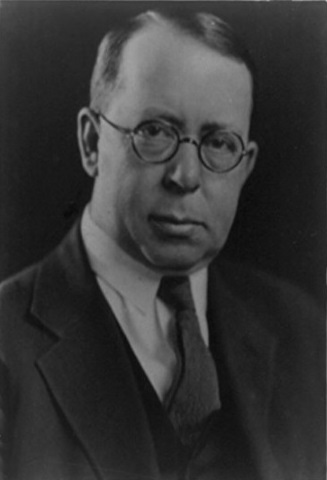
Cramton graduated with a law degree from the law department of the University of Michigan at Ann Arbor in 1899 and was admitted to the bar that year, but moved away from law in 1905 to take up journalism, publishing the Lapeer County Clarion until 1923. He also served as law clerk of the Michigan Senate for three terms as well as Michigan deputy commissioner of railroads in 1907 and secretary of the Michigan Railroad Commission from 1907 to 1909. These roles in state government got him a sufficient resume to run for state office. In 1909, Cramton was elected to the Michigan State House, where he served a term. In 1910, he ran for the Republican nomination for Congress from the 7th district, but lost. Cramton tried again in 1912 when incumbent Henry McMorran was retiring and prevailed as well as won the election.
Congressman Cramton
As a member of Congress, the newly elected Cramton found himself to sometimes be in support of President Wilson’s New Freedom agenda. For instance, he voted for the Federal Reserve Act, the first version of the Clayton Anti-Trust Act (although he voted against the final version), curbing speculation in cotton futures, and legislation expanding the power of the Interstate Commerce Commission. Cramton was also an early supporter of women’s suffrage. However, to the consternation of organized labor, he supported bonuses in Navy funding bills to encourage efficiency and again crossed them in his opposition to the Howell-Barkley bill in 1924. He was also a loyal Republican on the issues of tariffs and income taxes, and his record did seem to get more conservative after the Wilson Administration. Cramton nonetheless consistently supported veterans’ bonus measures. In 1920, he managed California Senator Hiram Johnson’s unsuccessful bid for the Republican presidential nomination (Port Huron Times Herald). In 1922, he voted for the Dyer Anti-Lynching bill and was known as a strong proponent of funding for the historically black Howard University, which would award him an honorary Doctor of Laws degree in 1945. Cramton’s foremost achievements in Congress were the establishment of several national parks, including Isle Royale National Park in Lake Superior. He also wrote legislation establishing the George Washington Memorial Parkway in Virginia and Maryland and the restoration of historical monuments at Williamsburg, Jamestown, and Yorktown, Virginia. Cramton also lent his strong support to the creation of the National Park Service in 1916, thus becoming known as the “godfather of national parks” (Detroit Free Press).
Cramton and 1920s Law Enforcement
If there was an individual in the House who stood strongest for Prohibition on the Republican side of the aisle, it was Cramton, known as a Congressional spokesman for the Anti-Saloon League. In 1926, he sponsored a bill to establish bureaus of prohibition and customs in the Treasury Department. However, by 1930, support for Prohibition had dried up considerably, and Cramton faced a strong primary challenger in Jesse P. Wolcott, who ran as an opponent of Prohibition. Wolcott narrowly edged out Cramton in an anti-Prohibition wave that swept the state, with a recount occurring in Lansing before the result was finalized. Cramton’s DW-Nominate score stands at a 0.49, which is quite a bit more conservative than you might have thought given my description of his record.
Out of Office
President Hoover found use for Cramton, appointing him to be a special assistant to the Secretary of the Interior, where he conducted studies that resulted in the creation of the Lake Mead National Recreation Area. In 1934, Cramton was elected a state circuit judge, where he served until his loss of reelection in November 1941. Although Cramton was out of the national political picture during the Roosevelt years, he did reminisce in retirement, “As a Republican, I never cared for Franklin D. Roosevelt, but if it wasn’t for his social security program I would be worse off today” (Detroit Free Press). Indeed, in his last years, Cramton was not a wealthy man, his only income being from Social Security and a small pension for his service in Michigan’s state House. Speaking of…
Second Act
In 1948, Cramton made a comeback when at the age of 73 he was again elected to the Michigan State House. In 1951, he succeeded in getting a key anti-crime tool reinstated in Michigan law, the one-man grand jury rather than the three-man jury that got tried and proved ineffective, and he had the support of most Republicans and some Democrats (Kulsea). He was quite the active legislator and strongly pushed for an anti-discrimination law in 1952, but was troubled when many of his fellow Republicans were unwilling to give him the backing that he had received for his anti-crime measure in the previous year, with half of them walking out when he rose up to speak on the matter. Cramton teared up at this, “I am becoming more at home on this side (Democratic) of the House than on the Republican. I have supported the Republican party for half a century. I never thought I would wee the time that Republicans would leave their seats rather than hear a Republican discuss the vital question of human rights” (Kulsea). His great concern for civil rights was interesting given that his district was almost entirely white. In 1955, Cramton succeeded in getting his state’s Fair Employment Practices Act into law, which he authored. Although Cramton had not always agreed with Senator Robert La Follette during his lifetime, he did admire the man and stated to a newsman regarding the senator’s autobiography, “Read it and enjoy it and remember that this country and this government came from the work of men like LaFollette. Everyone should struggle for more representative government, and cheer on those fighting for that cause” (Kulsea). By the time Cramton was 84 in 1960, his health was declining so he finally retired from politics. The following year, Howard University dedicated a school after him for his strong advocacy for the university and black education. Cramton lived just long enough to see passage of the Civil Rights Act of 1964 and the Voting Rights Act of 1965, dying on June 23, 1966 at the age of 90. Although in some ways, he was distinctly conservative, he had a certain social awareness and moral certitude that was characteristic of the Progressive Era, making him a bit of a mixed figure. His son, Louis K. Cramton, also served in the Michigan House as a Republican, from 1971 to 1981.
References
Cramton, Louis Convers. Voteview.
Retrieved from
https://voteview.com/person/2144/louis-convers-cramton
Ex-Congressman Louis Cramton Is Dead At 90. (1966, June 24). Port Huron Times Herald, 1.
Retrieved from
https://www.newspapers.com/image/209694394
Kulsea, W.C. (1966, June 29). Louis C. Cramton: Man Far Ahead Of His Time. The Saginaw News, 18.
Retrieved from
https://www.newspapers.com/image/1108860225
Louis C. Cramton. (1966, June 29). Detroit Free Press, 6.
Retrieved from
https://www.newspapers.com/image/97895591
Louis C. Cramton; Was Called The Godfather of U.S. Parks. (1966, June 25). Detroit Free Press, 2.
Retrieved from

