In 1936, liberal Marion Zioncheck of Seattle, perhaps having cracked under the strain of hard work in Congress, began displaying numerous symptoms of mental illness. However, he knew that the public would not be interested in him having another term, thus he chose not to run and endorsed his friend, Warren Grant Magnuson (1905-1989). Sadly, Zioncheck committed suicide before the end of his term. Magnuson picked up where his friend left off.
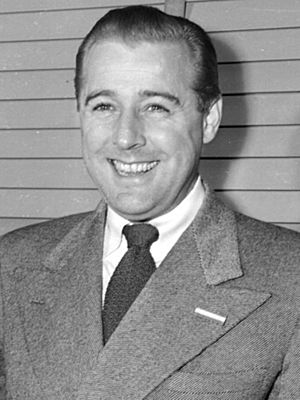
Interestingly, although Magnuson’s official birth date is April 12, 1905, he was born to parents that he never knew, and it is possible that this isn’t his real birth date. As an infant he was adopted by William and Emma Magnuson, who named him Warren. He would play football in high school and earned a Bachelor of Laws from the University of Washington School of Law. He was always a Democrat, campaigning for Al Smith in 1928 and backing A. Scott Bullitt’s run for governor, but the time for Democrats had not quite come yet. With the Great Depression, Magnuson and the Democrats soared, with him serving as as special prosecutor of King County, and from 1933 to 1935 he was in the Washington State House, and from 1934 to 1936 was elected prosecutor of King County.
As noted in previous posts, Washington was a state particularly associated with the political left in the 1930s, even radically so. After his election to Congress in 1936, Magnuson was almost entirely faithful to the New Deal and to FDR’s foreign policy with the sole exception of his vote against military conscription in 1940. He also voted against the Reciprocal Trade Act extension that year, and he was not alone among Washington Democrats in regarding trade policy as harming the state’s lumber industry. Magnuson was also quick to have an achievement while in office; in 1937, he was a one of the sponsors of the National Cancer Institute Act. Magnuson briefly served his country in the Navy during World War II, but chose to stay in office after President Roosevelt in 1942 ordered legislators to either choose to serve in Congress or the military. In 1943, Magnuson sponsored the law repealing the Chinese Exclusion Act after Madame Kai Shek delivered a speech before Congress in which she noted the contradiction of having China as an ally while refusing to admit its people. On November 13, 1944, Senator Homer T. Bone resigned as he had been confirmed for a federal judgeship and Magnuson was elected in a special election to finish his term on December 14, 1944. He had faced Tacoma Mayor Harry P. Cain, would join him in the Senate with his victory in the 1946 election. Magnuson proved a strong supporter of President Truman and the Fair Deal and was a firm friend of organized labor and a foe of Republican-backed tax reduction. However, he would differ in his support of a wool tariff in 1947.
In 1955, Magnuson became the chairman of the Senate Commerce Committee. In this post he weighed in heavily on regulating the market, pushing for consumer protection laws, auto safety laws, and other measures. He was critical in limiting oil tankers traveling through the Puget Sound. Even though President Eisenhower won Washington in his reelection bid, Magnuson was so popular at the time that he won all counties against former Republican Governor Arthur B. Langlie. He was not only popular with the voters, but also his colleagues given his amiable and agreeable nature. Magnuson also was a bit of a party guy, having being a hard drinker and having numerous girlfriends since his divorce from his first wife in 1935 until settling in 1964. His colleague, Scoop Jackson, would from time to time lecture him, “Maggie, you gotta live a better life!” (Scott) From 1955 to 1959, the conservative Americans for Constitutional Action gave him a 15% for how often he sided with their positions. His strongest area of conservatism was his support for some foreign aid cuts and an occasional anti-communist amendment in foreign policy.
Magnuson was a strong supporter of the New Frontier, and although he was no less or more liberal by 1962, he attracted a strong challenge in Republican Richard G. Christensen, a Lutheran minister, who held him to less than a five point margin. He also proved a strong supporter of the Great Society, and played a significant role in the passage of the Public Broadcasting Act of 1967. Magnuson was, unsurprisingly, a strong supporter of civil rights and helped get the Civil Rights Act of 1964 to passage. In 1968, Magnuson faced Republican State Senator and future Congressman Jack Metcalf for reelection, but he won by nearly 30 points. The following ad certainly helped:
A Power Team: Maggie and Scoop
Magnuson was commonly nicknamed “Maggie”, which dated to his high school football football, but he was not fond of the nickname and friends would not refer to him by that name. He and Henry “Scoop” Jackson represented Washington together for 28 years, and although the two men roughly shared the same ideological space, they could have some differences. For instance, on the Vietnam War, Magnuson differed from Jackson as he was a dove, voting for the Cooper-Church Amendment and the McGovern-Hatfield “End the War” Amendment in 1970. During the Eisenhower Administration, Magnuson had been more likely to favor foreign aid cuts than Jackson, but largely agreed with him on getting tough on crime, voting with him on “no knock” warrants in 1970 as well as reinstatement of the death penalty in 1974. Both of them also strongly aligned on keeping federal funding for the Supersonic Transport, a Boeing project.
The Apex of Power
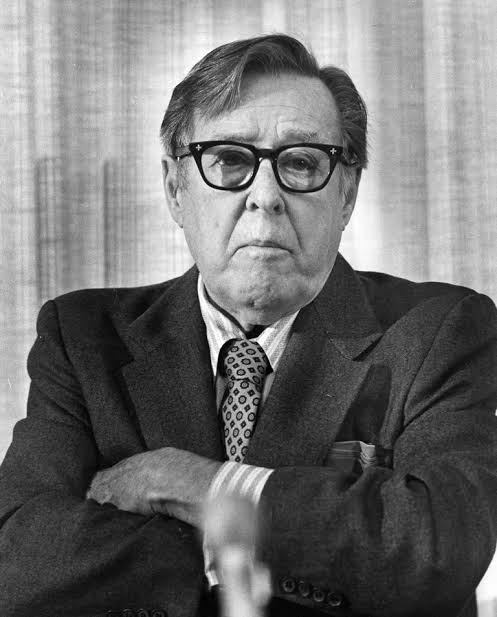
In 1974, Magnuson won reelection by over 24 points, once again against Jack Metcalf. The following year, he would collaborate with Senator Frank Moss (D-Utah) to pass the Magnuson-Moss Warranty Act, which sets certain standards for products that have warranties to prevent warranties that are misleading to consumers. In the next year, he collaborated with Senator Ted Stevens (R-Alaska) to pass the Magnuson-Stevens Fishery Conservation Management Act, With the election of President Jimmy Carter, Magnuson would reach the height of his power; after Senator John McClellan (D-Ark.) died in 1977, he moved from Commerce to Appropriations. As chairman of the Appropriations Committee, he steered a lot of federal money to Washington, as senators usually do for their home states. Vice President Walter Mondale joked, “He is scrupulously fair with federal funds; one half for Washington state, one half for the rest of the country” (Scott). He was also President Pro Tem after the retirement of James Eastland (D-Miss.). In 1980, Magnuson opposed the scope of trucking deregulation proposed by the Carter Administration, and wanted to maintain stronger standards for trucking certificates to be given out, but his effort to do so failed.
Although Magnuson had overwhelmingly won in 1974, six years and a Republican officeholder made a difference. By 1980, he was a 75-year-old diabetic and he looked it, but worse was this time it was the Democrats who were saddled with an unpopular president; Carter had not won Washington in 1976. Although he got advice to retire, he did not heed it (Saxon). The result was Republican Slade Gorton, who was quite a contrast to Magnuson, being thin and 23 years younger, defeating him by over seven points. From 1947 to 1980, Magnuson sided with the liberal Americans for Democratic Action 78% of the time and the conservative Americans for Constitutional Action 13% of the time from 1955 to 1980. His DW-Nominate score stands at -0.325, thus he overall stands as a little bit more liberal than his colleague, Scoop Jackson. Despite Magnuson’s apparently worse health than Scoop’s with his diabetes causing him increasing health problems in his last years, he’d outlive him by six years, succumbing to advanced diabetes and heart failure on May 20, 1989 at the age of 84. To this day, Magnuson is Washington’s longest serving senator and also the longest serving incumbent to be defeated for reelection.
References
ADA Voting Records. Americans for Democratic Action.
Retrieved from
Magnuson, Warren Grant. Voteview.
Retrieved from
https://voteview.com/person/5913/warren-grant-magnuson
Saxon, W. (1989, May 21). Warren G. Magnuson Dies at 84; Held Powerful Positions in Senate. The New York Times.
Retrieved from
Scott, K. (2017, August 9). Opinion: Our Senior-Junior Senator. The Wenatchee World.
Retrieved from
Van Dyk, T. (2005, April 13). Warren Magnuson was one of a kind. Seattle Post-Intelligencer.
Retrieved from

