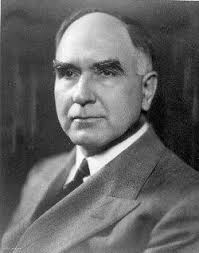
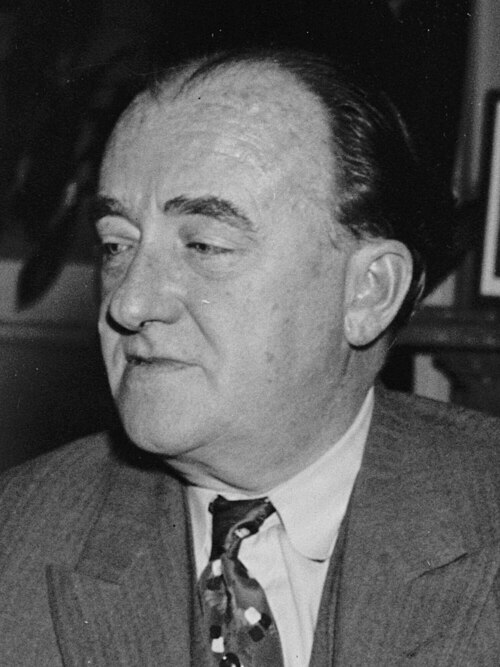
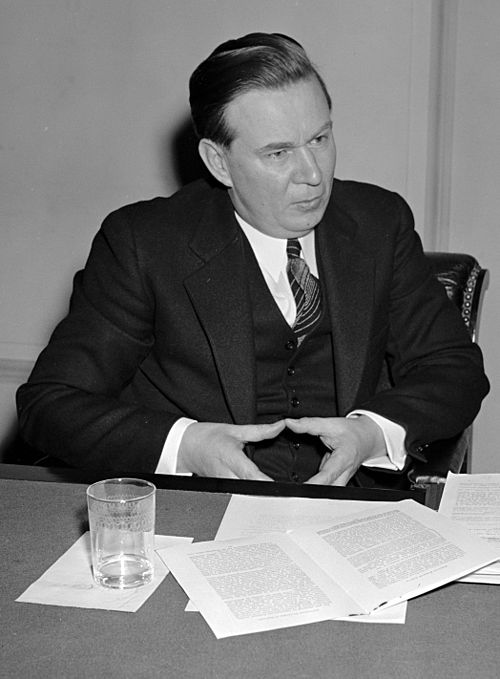
On July 20, 1930, Congressman Edgar R. Kiess died in office, and Robert Fleming Rich (1883-1968), general manager of his family’s firm, Woolrich Woolen Mills (which still exists today), ran and won the election to replace him. He had been active in Republican politics for quite some time and had been a delegate to the 1924 Republican National Convention. He was from the start committed to holding the line on spending.
Rich opposed nearly every New Deal law; the only significant law he supported that was liberal was the Revenue Act of 1935 as a way to raise revenue in the midst of all the spending. This means that he was in opposition to numerous New Deal reforms that stuck, such as Social Security and the federal minimum wage. If FDR was in agreement with Rich, it was mostly because he had taken a stand that to Rich was conservative. For example, he voted for the Economy Act in 1933, against overriding President Roosevelt’s 1935 and 1936 vetoes of veterans’ bonus legislation, and voted against the third Frazier-Lemke farm mortgage bill in 1936. Rich was most known for consistently asking “Where are we gonna get the money?” for various New Deal spending programs, and others would join in but humorously, as all knew the money printing press (Manion). His reputation as a “watchdog of the Treasury” was difficult to match in his day.
Rich was no more accommodating to the Roosevelt Administration on foreign policy; indeed he was if anything even more in opposition than on domestic issues. Regarding Lend-Lease, Rich stated, “I do not care what the people in my district think. If I received a telegram tomorrow from everybody in my district wanting me to vote for this bill, I would resign my job in Congress before I would vote for it” (Congressional Record). Part of his strong opposition was his uncompromising stand against communism. The considered the notion of the US allying with the USSR as the equivalent of getting “in bed with a rattlesnake and a skunk” (McMeekin, 350). As an eastern businessman, he was also fiercely against the tariff-lowering agenda of the Roosevelt Administration.
In 1942, Rich opted not to run for reelection as his home district was split in two with redistricting (Mallon). House Minority Leader Joe Martin (R-Mass.) praised him thusly, “We may have differed with him on occasion, but no one ever questioned his courage, integrity, or his zeal to work for what he believed was best for hist country” and added, “As a result of his tireless industry and his ceaseless watchfulness, he has saved the taxpayers hundreds of millions of dollars. We regret to see him go, because we need more than one “watchdog of the Treasury” as we move toward the abyss of wild inflation and national bankruptcy” (Mansfield Advertiser). Not all were sorry to see him leave. The left-wing New Republic (1942) wrote, “A glance at The New Republic’s voting-record chart will show that Rich has a perfect minus score both on foreign and domestic issues. For twelve years he has been the loudest critic of all things decent in the whole big House. He is the owner of the company town of Woolrich, an open-shopper and a mean opponent of social progress. Getting rid of him means more than just getting rid of a reactionary Republican vote” (763). That year, he was also one of only four House Republicans to vote against banning the poll tax in federal elections. Rich would also oppose anti-poll tax legislation in 1945, 1947, and 1949. Not all was negative for him on civil rights, however; in 1937 and 1940 he voted for anti-lynching legislation and in 1946 he voted for the anti-segregation Powell amendment to the school lunch bill.
Rich was not satisfied with being out of Congress for long, and in 1944 he ran again and won. He proved no less opposed to the Truman Administration than he was to the Roosevelt Administration. In 1946, he led the successful push to kill the construction of a government-run phosphate fertilizer plant at or near Mobile, Alabama as part of the Tennessee Valley Authority. That year, in a rare siding with the liberal position, he opposed the Tidelands bill. From 1947 to 1950, Rich was only in agreement with the liberal Americans for Democratic Action 2% of the time; the one vote he sided with them on was his vote to kill the Rankin pension bill in 1949, which was devised at least in part to hamstring President Truman’s push to expand Social Security. That means he opposed aid to Greece and Turkey and the Marshall Plan and supported all domestic priorities of the conservative 80th Congress. In 1950, Rich voted against admitting Hawaii and Alaska as states. That year, he opted to retire for good, wanting to focus on his business. His DW-Nominate score is a 0.664, being in the top 5 conservatives for almost his entire time in the House.
Rich vs. the Majority
Some examples of Rich taking stances against the overwhelming majority included:
On April 19, 1935, he paired against Social Security, which only 33 representatives voted against.
On May 23, 1940, he was one of 21 representatives to vote against a compromise work relief appropriations measure.
On December 18, 1945, he was one of 15 representatives to vote against US participation in the UN.
On April 18, 1946, he was one of 20 representatives to vote for a motion to kill extending price control legislation.
On May 23, 1946, he was one of 41 representatives to vote against membership and participation in UNESCO.
On February 9, 1949, he was one of 69 representatives to vote against extending the Reciprocal Trade Act.
On August 11, 1949, he was one of 35 representatives to vote against a compromise bill increasing the minimum wage.
On October 3, 1949, he was one of 42 representatives to vote against extending and increasing funding for hospital construction.
On August 26, 1950, he was on the only representative to vote against a supplemental appropriations bill.
On December 5, 1950, Rich was one of 20 representatives to vote against extending the excess corporate profits tax.
After Politics
Rich continued his business pursuits in retirement, and served as president of Woolrich Woolen Mills from 1959 to 1964, chairman of its Board of Directors from 1964 to 1966, and finally entered semi-retirement in 1966 by stepping down to honorary chairman. He died on April 29, 1968, at the age of 84.
References
87 Cong. Rec. (Bound) – Volume 87, Part 1 (January 3, 1941 to February 18, 1941), 561.
ADA Voting Records. Americans for Democratic Action.
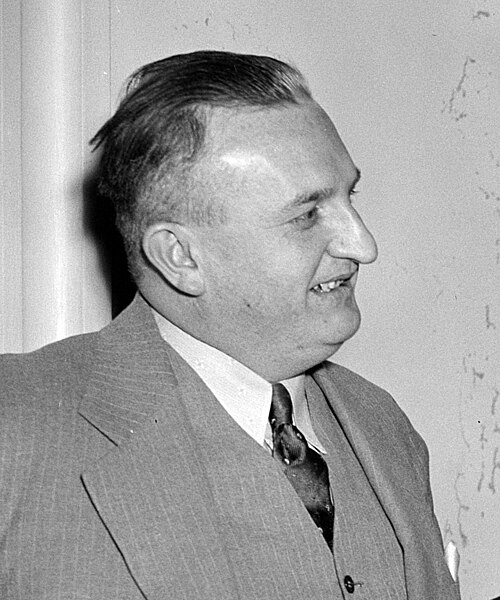
Rural Ohio is not generally known as a friendly place for liberalism, but during the New Deal, it certainly was, and Roosevelt was popular in many rural places in his first term, Marion, Ohio, included. However, Roosevelt’s popularity was taxed by the Roosevelt recession and the perception that he was trying to become a dictator through certain power-grabbing pushes as the “court packing plan” and his 1938 executive reorganization that got defeated by Congress. In this political context, Republicans came back in the North, and Frederick Cleveland Smith (1884-1956) of Marion was among them. Smith had served as mayor of Marion from 1935 to 1939 and had been a practicing osteopathic physician since 1908. Although Marion’s history was largely Republican, it was possible for Democrats to win there for a while, and the Democrat he defeated for reelection by nine points, Thomas B. Fletcher, had in total represented the district for ten years, from 1923 to 1927 and from 1933 to 1939.
Smith vs. The New Deal
Smith was a dedicated, uncompromising opponent of the New Deal and its works. So known he was for this that the press dubbed him “No No Smith”, which he enthusiastically embraced (The Marion Star). Had he served in the future, he would have definitely been nicknamed “Dr. No”. The liberal Union for Democratic Action identified Smith as among the obstructionists they wanted defeated in the 1942 election, profiling him thusly, “His isolationist position extends back to the last war, and his anti-New Deal position extends back to its beginning. Smith thinks of himself in the old Ohio Republican tradition of McKinley and the rest and holds what might be called a McKinley gold bias. He votes regularly in the interest of the private-power companies and thus to the benefit of his friends in the Marion Reserve Power Company. He operates the Smith Clinic for male diseases, which is not looked upon without criticism by other members of the Ohio medical profession. He finds time in the Congress to introduce numerous measures for the benefit of Dr. Tucker’s Asthma Specific, a patent medicine made in his district which has had difficulties because of the pure-food-and-drug laws” (The New Republic, 710). In 1939, Smith introduced a bill to exempt a Mount Gilead, Ohio, laboratory from an incoming pure food and drug law against mail prescribing. He spoke on behalf of the medicine’s effectiveness as did numerous other members of Congress, stating, “A Food and Drugs Act passed last year would compel firms of this sort to cease prescribing by making a diagnosis through the mails….I have practiced medicine for a good many years and have myself prescribed this remedy many times….I know physicians who use it themselves. Just before I left for Washington one of my colleagues told me he hoped they would not take this remedy away from the people. This colleague of mine has since died. He used this remedy himself [laughter]—not from the remedy” (Time Magazine). Smith was such a pain for Union for Democratic Action that they found absolutely nothing to like about his record from 1939 to 1945. However, its successor organization, Americans for Democratic Action, would find him siding with their positions 13% of the time from 1947 to 1950, although this is due to him objecting to certain measures not being strong enough from a conservative standpoint. On civil rights, you might think that Smith was also simply also a no-man, but this wasn’t necessarily so; he voted for the 1940 anti-lynching bill and for the 1946 anti-segregation Powell Amendment to that year’s school lunch bill. However, he also paired against the 1949 bill banning the poll tax.
Smith vs. Internationalism
Smith compromised no more, and arguably even less, with the Roosevelt Administration on foreign policy than he did on domestic policy. Not only did he join the majority of Republicans in opposing Lend-Lease in 1941, he was also one of 55 representatives to vote against the first appropriation, which had attracted a lot more Republican support as it was a vote on simply aiding Britain rather than granting new powers to the Roosevelt Administration. During World War II, Smith voted against Lend Lease appropriations despite them getting near unanimous support. In 1943, he was one of 29 representatives to vote against the Fulbright Resolution, an official statement of the House in favor of the formation of a United Nations. Smith argued against it thusly, “I am impelled to vote against the Fulbright resolution that Congress favor the setting up of international machinery with power to establish and maintain peace among the nations of the world. It seems to me the lower House is attempting here to perform a function which does not properly belong to it. The subject matter of this resolution deals specifically with treaties. The Constitution definitely vests in the President the “power to make treaties,” but only “by and with the advice and consent of the Senate, provided two-thirds of the Senators present concur.” I think this is sufficient reason for voting against this resolution” (Congressional Record, 7708). Smith would not change with the end of World War II, and voted against aid to Greece and Turkey in 1947 and the Marshall Plan in 1948.
Smith vs. The Majority
If there were a small minority of conservatives taking a position, chances are really good Smith was among them, and on occasion voted against major GOP legislation as he thought it too accommodating to the New Deal, such as with the House version of the Taft-Hartley Act (he had previously voted for other bills curbing organized labor). Some examples of his dissents include:
On March 10, 1943, Smith was one of 6 representatives to oppose extending Lend-Lease for one year.
On May 21, 1943, Smith paired against Lend-Lease funding, a measure that 4 representatives voted against.
On April 19, 1944, Smith was one of 21 representatives to vote against extending Lend-Lease for one year.
On December 18, 1945, Smith was one of 15 representatives to vote against appointing representatives to the UN and its organizations.
On March 7, 1946, Smith was one of 24 representatives to vote against a housing bill that was considerably compromised in its liberalism by conservative limiting amendments, including his own to limit the power of the housing expediter.
On April 2, 1946, Smith was the only representative to vote against a bill for temporary additional compensation for postmasters and employees of the postal service.
On April 18, 1946, Smith was one of 20 representatives to support a motion to recommit the price control bill to immediately end all controls.
On August 7, 1948, he was one of 9 representatives to vote against the resolution considering accepting the Senate amendment to that year’s housing bill.
On August 11, 1949, he paired against a compromised increasing of the minimum wage, which 35 representatives voted against.
On December 5, 1950, he paired against extending the excess profits tax, which 20 representatives voted against.
Congressman Smith did on a few occasions vote against nearly all Republicans in the 80th Congress, but this was out of a refusal to accept compromise, such as his vote against the Wolcott Housing Bill in 1948, which did not include any public housing and a vote for was considered by the liberal Americans for Democratic Action against their position.
In 1947, Smith’s health began to decline, which resulted in frequent absences that year and in 1949 and 1950. Reading the writing on the wall by 1950, he opted to retire. In his retirement announcement, he stated, “I wish to announce that I shall not seek the nomination for re-election to Congress at the coming primary, and want to take this opportunity to than the citizens of this Congressional District, the 8th Ohio, for the splendid cooperation and loyal support they have given me throughout all the years of my service in striving to stop the growth of political power, which I have always regarded as Communism, or dictatorship by another name. To the extent that my health permits I shall, during the remainder of my term, continue to pursue the same course as I have in the past, perhaps stressing more than I have heretofore, if that be possible, the gravity of the situation that now menaces the way of life our fathers bequeathed us” (The Marion Star). He was among the representatives that anarcho-capitalist theorist Murray Rothbard (1950) was sad to see leave and his DW-Nominate score was a whopping 0.92, making him the most conservative individual to serve during the Roosevelt Administration per that measurement. His health continued to decline after his retirement and he died on July 16, 1956, at the age of 71 at Marion General Hospital.
References
A Congress to Win The War. (1942, May 18). The New Republic.
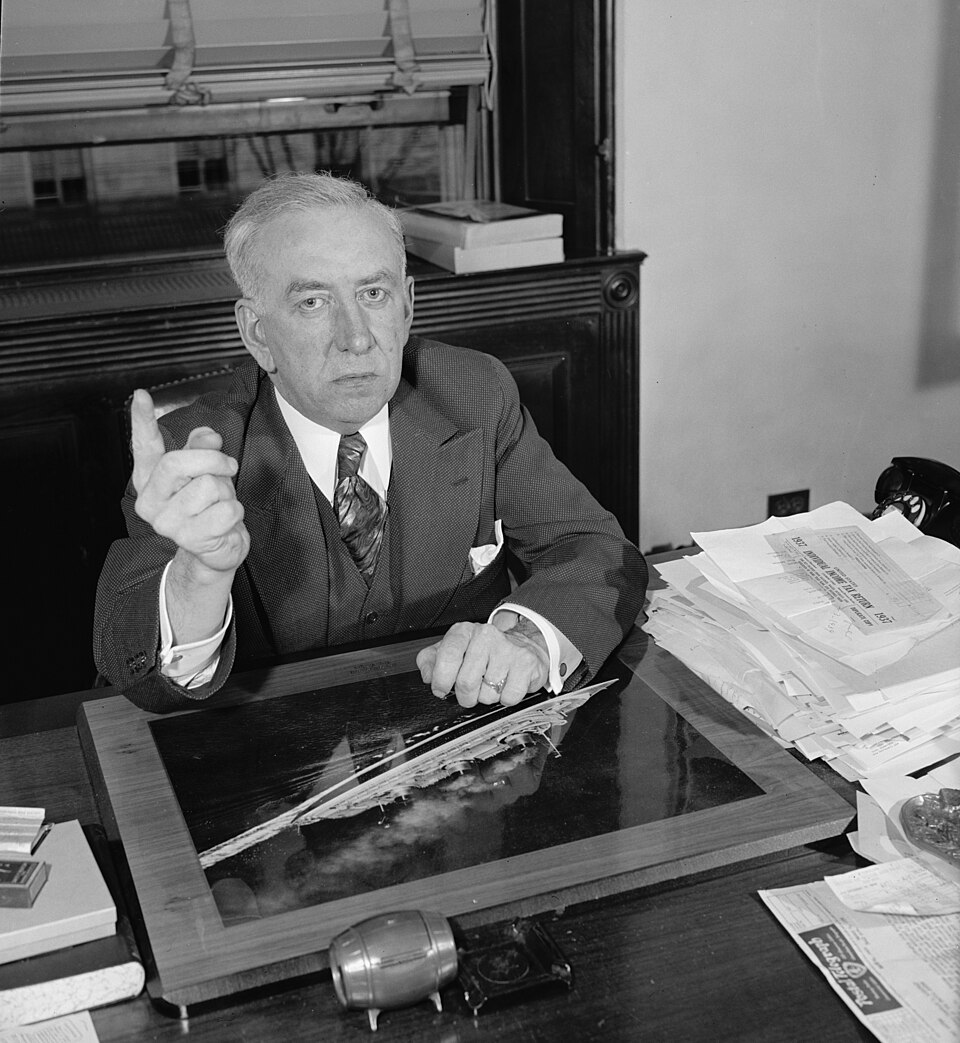
Today, Washington is regarded as among the most liberal states in the nation. Indeed, according to the most recent Cook Partisan Voting Index, the state is the 6th most Democratic in the nation. The last time the state voted for a Republican governor was in 1980, the last time for a Republican for president was in 1984, and the last time its people voted for a Republican senator was 1994. The election of Katie Wilson as Seattle’s mayor has far from lessened its reputation and However, is this the most liberal period in the state’s history? Perhaps not…and one of the foremost representatives of the state’s strongly liberal politics during the Roosevelt Administration was John Main Coffee (1897-1983).
Coffee’s involvement in politics began when he came to work on the campaign of Democrat Clarence Dill in 1922, who was running against progressive-turned-conservative Republican Miles Poindexter. 1922 was a good year for Democrats and Poindexter’s pronounced shift to the right was not appreciated by voters, thus Dill won. He subsequently worked as Dill’s chief of staff. He ultimately decided to return to Tacoma to pursue a legal career. Although Republicans dominated Washington’s politics during the 1920s, the Great Depression brought about a massive change of fortune for Democrats, and Coffee was active in the implementation of the New Deal in Washington, serving as secretary for the Advisory Board of the National Recovery Administration and served as the appraiser for the Pierce County State Inheritance Tax & Escheat Division (Hill). A greater opportunity would come for him by 1936.
On January 10, 1936, Congressman Wesley Lloyd of Tacoma died suddenly of a heart attack. In his place, Coffee was elected to Congress as a staunch supporter of the New Deal. Roosevelt sailed to a landslide victory as did Coffee. As a member of Congress, Coffee was firmly in support of organized labor, more New Deal programs, the Fair Labor Standards Act, and civil rights legislation. Believe it or not, the latter was not a guarantee for Washington Democrats to support at the time; Charles Leavy of the 5th district twice voted against anti-lynching legislation and Knute Hill of the 4th supported the 1937 bill but opposed the 1940 bill. The only area on domestic legislation in which he dissented from the liberal line occasionally was in regard to agriculture. Although much of the nation shifted to the right in the 1938 midterms, Coffee and other Washington Democrats sailed to reelection. He represented a district in which unions were strong and his constituents loved the New Deal. Coffee was unfailing in his defense of the power of organized labor that had been established with the Wagner Act and stood as a strong opponent of the Dies Committee, which was primarily investigating communism and communists in the United States. For a time, the most significant organization within Washington’s Democratic Party, and one that was backing Coffee, was the Washington Commonwealth Federation (WCF), which had become increasingly communist-dominated after 1938 when numerous non-communist members departed in opposition to communist influence. Some leaders of the group included Hugh De Lacy, a secret communist who would serve in the House during the 79th Congress (1945-1947) and executive Secretary Howard Costigan, who had secretly joined the Communist Party after the WCF lifted the ban on membership. Such men pushed to align WCF’s stances with those of the Communist Party, and by extension with Moscow. Coffee would have a long record of opposing domestic anti-communist measures, and although he was not among the four representatives to vote against the Smith Act (Alien Registration Act) on final passage, he was one of 48 to vote to recommit the bill without instructions (thus killing it) on July 29, 1939.
Non-Interventionist
Although left-wing domestic policies were popular in Washington during the Roosevelt Administration, Washingtonians were not as pro-Administration on foreign policy. Although Coffee voted for repealing the arms embargo in 1939, he voted against the peacetime draft in 1940, against Lend-Lease in 1941, against extending the peacetime draft, and against the repeal of the bar on U.S. ships entering belligerent ports. Something to bear in mind is that the WCF had been following the Soviet line on foreign policy, thus after the 1939 Molotov-Ribbentrop Pact, they were pushing messaging that FDR was a warmonger for trying to get involved. This messaging promptly changed after Operation Barbarossa, in line with Moscow. After Pearl Harbor, Coffee was once again in near full accord with liberal opinion. In the 78th Congress, Coffee did not differ from the position of Union for Democratic Action at all, and the only dissents he had had with them before were on foreign policy.
In 1944, Coffee read excerpts on the floor of the House from love letters Connecticut businesswoman and tax protestor Vivien Kellems had written to Count Friedrich Carl von Zedlitz in Argentina, who was on a British blacklist and suspected of being a Nazi agent. He charged, “Miss Kellems poses as a patriotic citizen and yet has consistently played the Nazi game. She is today giving aid and comfort to the enemy and is a tool of the Goebbels propaganda machine. ” (McLaughlin). Ultimately no charges came out of the allegation that her correspondence amounted to treason. That year, he won reelection resoundingly against Republican Thor Tollefson, prosecutor of Pierce County, by 23 points. However, the next two years would be rough on Coffee.
Charges of Radicalism and Corruption
Tollefson ran again, and during his campaign he accused Coffee of being a member of 28 communist front groups. To rebut the charge, Coffee claimed that former chairman of the House Committee on Un-American Activities, Martin Dies (D-Tex.), told him that he would go up to Washington to campaign for him. However, a Republican operative called Dies, and he stated that he strongly disagreed with his philosophy of government and would not campaign on his behalf (Hill). He also along with Congressmen Hugh De Lacy and Charles Savage had signed a letter in to Henry Wallace in praise of his pro-Soviet foreign policy views and urged him to come and speak in Washington, to which the conservative Spokesman-Review condemned them as the “three faithful who don’t deviate in their loyalty to Russia” (Hill). Maybe he could have survived this alone, but he was also dogged on ethics.
In 1945, Coffee came to the attention of the Mead Committee investigating wartime contract expenditures when contractor Eivind Anderson testified that he had received a no-bid war contract after making a contribution to Coffee’s campaign in 1941 that amounted to $50,000 when adjusting for inflation. Chairman Mead (D-N.Y.) publicly regarded this relationship as immoral, but clarified that no money had been lost towards the war effort (Hill). The statute of limitations on any charges that could have been brought against Coffee had expired, which although it kept him out of legal jeopardy, it also blocked him from having a shot at legally clearing his name. The mood of the nation, Coffee’s ethics baggage, and the nation turning increasingly against the USSR resulted in him netting 46% of the vote against Tollefson. Coffee’s DW-Nominate score is a -0.48, or strongly liberal.
Although Coffee attempted a comeback in 1950, Tollefson was now a popular representative who had a pro-union voting record and was of the moderate to liberal wing of the Republican Party, and he netted only 38.9% of the vote. He tried one more time to beat Tollefson, in 1958. This was an excellent year for Democrats and liberals in general, thus if there was a time for him to return, it would be now. However, he only netted 46% of the vote. Coffee’s political career was now undoubtedly over. Reporter Jack Pyle of Tacoma News Tribune summed up his situation after the 1958 election thusly, he was “unbeatable up to 1946, and unelectable after that” (Hill). Coffee would continue the practice of law until his death on June 2, 1983 at the age of 86.
References
Black, G., Salter, D., and Gregory, J. (2005). Who’s Who in the Communist Party of Washington. Communism in Washington State History and Memory Project.
McLaughlin, K. (1944, April 1). Urges U.S. Study of Vivien Kellems; Coffee Says Tax Recalcitrant for Years Has Written to Nazi Agent in Argentina. The New York Times.
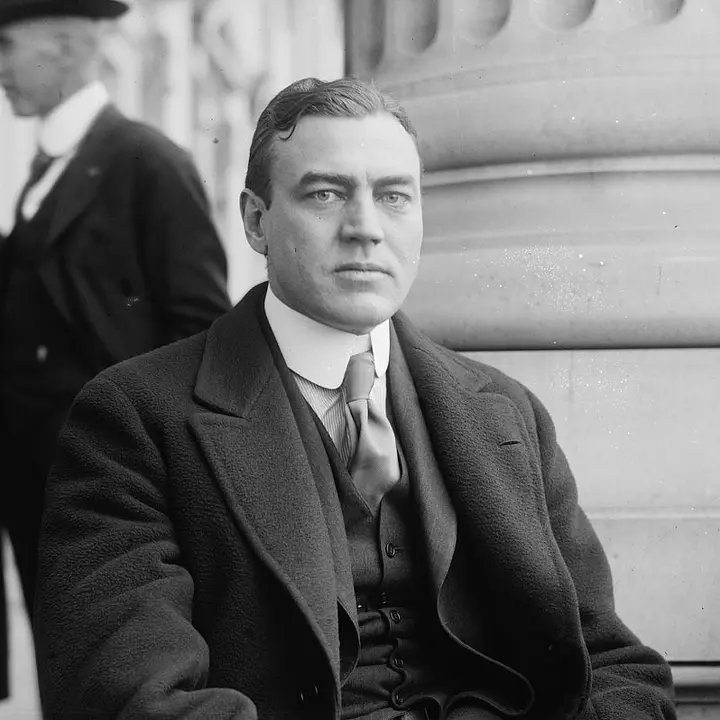
Cleveland has long been a Democratic stronghold, but this has not always guaranteed representation by people pliant to Democratic Administrations. Martin Leonard Sweeney (1885-1960) was such an individual, who although was by many metrics a Democrat, nonetheless proved a pain in the neck for FDR. As a young man, Sweeney worked for the Central Furnace Company and was part of the Longshoremen’s Union. His support for labor causes started early, having been elected a secretary of the union in 1903. In 1909, Sweeney was fired after he refused to sign a “yellow dog” contract, meaning a contract in which you agree to not be part of a union or join a union as a condition of employment. He then pursued a law degree at the Baldwin-Wallace College and upon completion started practicing law. From 1924 to 1931, he served as a municipal court judge, where he made his staunch opposition to Prohibition clear.
In 1930, Congressman Charles Mooney died, thus Judge Sweeney ran for the seat and won. Like he was as a judge, he was outspoken in his opposition to Prohibition while in Congress. Sweeney chided Congress for “behaving like a lot of old women” on the subject and stated that Prohibition was “ a crazy law, enacted by fanatics, impossible to enforce…” (Hill). This stance was consistent with the views of his constituency and fit with his Irish Catholic background. Such a background would motivate several aspects of his politics, both favorably and unfavorably to his party.
Although Sweeney was pledged to support Al Smith at the Democratic National Convention in 1932, he switched support to FDR. He proved a strong supporter of the first New Deal including all of the first 100 Days legislation, and with the exception of veterans issues, mostly agreed with FDR in his first term. However, he consistently had an independent streak, and this first showed to the detriment of his party when he lost the Democratic nomination to run for mayor of Cleveland to incumbent Ray T. Miller. Instead of being a sport and endorsing Miller, he endorsed the Republican candidate, Harry Lyman Davis. Davis won the election as enough Democrats followed Sweeney’s endorsement. He was also the foremost supporter of and Congressional spokesman for radio personality Father Charles Coughlin, who had started out supporting FDR and employing the slogan “Roosevelt or Ruin”, but Coughlin turned against FDR and, so did Sweeney. For instance, he supported the 1936 Frazier-Lemke bill, which was opposed by the Roosevelt Administration. This opposition motivated Gerald L.K. Smith, Coughlin, and Dr. Francis Townsend to form the Union Party, which ran maverick populist Republican William Lemke of North Dakota for president. Instead of endorsing Roosevelt, Sweeney endorsed Lemke (The Cleveland Plain Dealer, 13). He considered his 1936 reelection to be a mandate for independence from the Roosevelt Administration. While Sweeney did continue his support of a number of New Deal programs that he considered pro-labor, such as the Works Progress Administration, he proved one of Roosevelt’s strongest critics on foreign policy within the Democratic Party and opposed his 1938 reorganization plan as well as the excess profits tax. One area in which Sweeney stayed loyal to New Deal principles was his strong support for organized labor; he consistently opposed proposals to curb the power of unions. He also was one of Congress’s leading advocates of the Townsend Plan in 1939. Sweeney not only had trouble with Roosevelt, however, he was also independent of the Cleveland Democratic organization given his refusal to back Ray Miller in 1933, and Miller became chairman of the Cuyahoga County Democratic Party in 1938. Now, Sweeney’s chief rival had a perch of power from which to try to oust him. In 1941, his effort to run for mayor of Cleveland was again thwarted.
Sweeney and Non-Interventionism
Martin Sweeney was considered one of the foremost if not the foremost Anglophobe in Congress given his stance as an Irish patriot. In 1936, he voted against a resolution expressing condolences for the death of King George V, not out of a personal spite against the man, rather in protest of the brutal treatment of the Irish by the notorious Black and Tans under his reign (The Cleveland Plain Dealer, 13). In 1939, Sweeney loudly and rather rudely denounced King George VI and the Queen Mother while they were visiting the U.S. and sent a telegram to the former, which he read on the House floor, “. . .do you not think it is the decent thing to give some consideration to the obligation you owe the United States of America, whose assistance in the last World War made possible the continuance of Your Majesty’s government as a world power” (Hill). Indeed, among Democrats he was one of the most extreme of non-interventionists, being one of only seven House Democrats to vote for the first Lend-Lease appropriation in 1941. On September 4, 1940, Sweeney alleged in a speech before Congress that the military conscription bill being debated was an attempt to bring the U.S. into World War II on the side of Britain. This brought him into conflict with Beverly Vincent (D-Ky.), a supporter of the administration, when he finished his speech and went to sit next to him. Then, per Time Magazine (1940), ““I’d rather you would sit somewhere else,” quietly said Beverly Vincent. When Sweeney bristled, Vincent added: “You are a traitor.” Words passed. Vincent called Sweeney a son of a bitch. Sweeney swung at him. Taking careful aim and with obvious satisfaction, Beverly Vincent planted a good hard right, smack! It staggered, and silenced, Martin Sweeney. Though Congressmen not infrequently threaten one another and have been known to throw bound copies of the Record* when vexed, ancient Doorkeeper Joseph Sinnot said it was the best blow he had heard in his 50 years in the House.” Sweeney’s stances on foreign policy played well among his constituency before Pearl Harbor.
Sweeney and Antisemitism
Sweeney was, as noted, Father Coughlin’s spokesman in Congress, and his radio speeches were becoming increasingly peppered with antisemitism, including him essentially parroting the Nazi line on Kristallnacht. As part of this, journalists Drew Pearson and Robert S. Allen alleged that Sweeney and Father Coughlin opposed U.S. District Attorney Emerich Burt Freed, an old legal partner of former Senator Robert Bulkley, for judge on the federal bench for Cleveland because he was a foreign-born Jew. Sweeney sued Pearson and Allen as well as newspapers that carried their Washington Merry-Go-Round column for libel, but he lost.
Life After Pearl Harbor
After Pearl Harbor, support for Sweeney’s pre-war positions dwindled in his strongly Democratic district, and both the Roosevelt Administration and Ray Miller wanted to see him defeated. In 1942, Union for Democratic Action listed him as one of the Congressional “obstructionists” they wanted to see defeated and listed him as opposed to their stances on 11 of 15 issues in which he cast a vote, and he opposed the UDA position on all foreign policy votes. To run against Sweeney, Ray Miller selected the young Michael Feighan for a second time. Feighan ran as a 100% supporter of FDR, and denounced him as the “leader of isolationism in northern Ohio and always a welcomed speaker at local German-American bund gatherings” (Hill). The fighting Irishman would not take this lying down. He retorted, “If I was connected with Nazi propaganda, take me to jail and indict me. Then prove the charge. That’s the American way” (Hill). Unlike in 1940, in which Sweeney easily defeated Feighan, Ray Miller got his wish. Sweeney commented on his loss, “It is a difficult assignment to try to beat a combination of newspapers, Communists and misguided persons” (Time Magazine, 1942). In 1943, Sweeney once again ran for mayor of Cleveland and met defeat, this time by future Senator Frank J. Lausche. The next year, he tried for the Democratic nomination for governor but lost to Lausche again, who ironically would be way more at odds with his party than Sweeney on Capitol Hill. He then endorsed the Republican Dewey-Bricker ticket to defeat FDR. Sweeney said regarding his motivations, “When Browder [Communist Party leader] and Hillman [radical head of the CIO PAC] crawl into the Democratic party, it is time for the Jeffersonian democrats to walk out” (Hill). Sweeney tried one more time before giving up the ghost, for the Ohio State Supreme Court, a race he lost overwhelmingly.
Despite his public image as an FDR opponent, his DW-Nominate score is a -0.375. Sweeney never retired from practicing law, practicing with his son, Bob, and died in his sleep on May 1, 1960 at the age of 75. The younger Sweeney would serve one term in Congress from 1965 to 1967 and unlike his father, would not cause trouble for the Johnson Administration, being a strong supporter of the president and his Great Society programs. He was also one of the first attorneys to file an asbestos lawsuit in the nation, which would make him a millionaire (Hill). Another interesting fact about Sweeney is that his first cousin was Dr. Francis Sweeney, the prime suspect in the unsolved Cleveland Torso Murders.
P.S.: I will be archiving my 2023 content by Saturday.
References
Hill, R. The Gentleman from Ohio: Martin L. Sweeney. The Knoxville Focus.
Hamilton Fish (R-N.Y.), who supported both anti-lynching and anti-poll tax bills but opposed a federal ballot for GIs.
The phenomenon of Republicans opposing loosening voter registration laws, changing voting laws in a more representative direction, and pushing election rules to their own benefit, especially on the federal level, is not as new as people might think. Indeed, both parties have interest in pushing election rules they see as increasing the likelihood that they will win elections. During the 78th Congress, the very same one in which most Republicans voted to ban the poll tax in the House, House Republicans overwhelmingly rejected the Worley bill for uniform federal ballots for GIs, thus bypassing strict voter registration laws in numerous states. Republicans feared, and not without reason, that the GI ballots would favor FDR for the 1944 election. The vote breakdown for the bill banning the poll tax in 1943 and the Worley bill in 1944 are thus:
Poll Tax Ban: 265-110 (D 92-93; R 169-17; P 2-0; FL 1-0; ALP 1-0), 5/25/43.
Worley Bill: 168-224 (D 147-48; R 18-175; P 2-0; FL 0-1; ALP 1-0), 2/3/44.
151 House Republicans either cast a vote or paired in favor of the poll tax ban and against the Worley Bill, thus, at least among the Republican votes, indicating that they considered the Worley bill to be separate from the civil rights question. 17 opposed both, and 16 supported both. Thus, 82% of Republicans who had a measurable opinion on both, support for the poll tax ban was not based on some broader voter access expansion principle. Interestingly, no Republicans were in opposition to the poll tax ban but in support of the Worley bill. However, Southern Democrats (defined as Democrats from the former Confederate states) did have such people.
If we break down the Southern Democratic vote on both, it looks like this:
Poll Tax Ban: SD 3-83 (8 paired against)
Worley Bill: 49-42 (1 paired for, 3 against)
The three who voted to ban the poll tax also voted for the Worley Bill, while 51% of those who voted against banning the poll tax also voted for the Worley Bill. Thus, while certainly numerous Southern Democrats were thinking about the civil rights issue with GI voting, it was far from all.
On “One Man, One Vote”
The concept of “one man, one vote” came along as challenges to legislative apportionment came before the courts. Urban areas were increasingly liberal and growing in population, which made traditional legislative setups that weren’t based on population more disproportionate. This matter at around the time that civil rights was becoming more of a national focus. The Civil Rights Act of 1964 was a comprehensive bill that had a voting rights section, thus it stands as the closest comparison to a bill denying the Supreme Court jurisdiction over legislative apportionment cases. The house votes were as follows:
Civil Rights Act of 1964: 289-126 (D 153-91; R 136-35), 7/2/64.
State Legislative Reapportionment Bill: 218-175 (D 96-140; R 122-35), 8/19/64.
With only four exceptions, the Republicans who opposed the Civil Rights Act of 1964 also opposed the reapportionment bill. These were Republicans in states historically dominated by Democrats in Florida’s Bill Cramer, Kentucky’s Gene Snyder, Oklahoma’s Page Belcher, and Tennessee’s Bill Brock. The Civil Rights Act of 1964 also had a roll call vote in the Senate as did a motion to table a rider to a foreign aid bill authorizing temporary stays for federal court orders for immediate population-based reapportionment of state legislatures.
Senate
Civil Rights Act of 1964: 73-27 (D 46-21; R 27-6),
Table Reapportionment Rider: 38-49 (D 32-23; R 6-26), 9/10/64.
Unlike in the former case, no Republicans who opposed the Civil Rights Act of 1964 supported tabling the reapportionment amendment.
Senate
In 1965, the very same group of Republican senators who voted for the Voting Rights Act of 1965 30-2 voted 29-3 for a constitutional amendment permitting the redistricting of state legislatures on grounds other than population, which would directly overturn the 1962 Supreme Court decision Baker v. Carr and the 1964 Supreme Court decisions Reynolds v. Sims and Wesberry v. Sanders. This would serve to strengthen the power of the Republican vote in many places, and the central advocate behind this proposal was Minority Leader Everett Dirksen (R-Ill.), who was concerned about Chicago dominating Illinois politics, which to this day it does. 27 of 32, or 84% of Republican senators were in support of both the Voting Rights Act and a Constitutional amendment to undo “One Man, One Vote” Supreme Court decisions.
The GOP on Postcard Voter Registration
In 1973, the Senate voted 57-37 for Gale McGee’s (D-Wyo.) postcard voter registration legislation, with Democrats voting for 45-7 and Republicans voting 12-28 against. Conservative James Buckley of New York and Independent Harry Byrd Jr. of Virginia also voted against. In 1974, Representative John Dent (D-Penn.) proposed a similar bill, but it failed to be considered 197-204: D 176-44; R 21-160. This means that 70% of Senate Republicans and 88% of House Republicans opposed postcard voter registration, the failure of which to be enacted could be considered sustaining “voter suppression”. In fact, the following Republicans voted for the Voting Rights Act and voted against postcard voter registration:
John Rhodes (Ariz.), Don Clausen (Calif.), Charles Gubser (Calif.), Burt Talcott (Calif.), Delwin Clawson (Calif.), Alphonzo Bell (Calif.), Craig Hosmer (Calif.), Bob Wilson (Calif.), Don Brotzman (Colo.), Ed Derwinski (Ill.), Robert McClory (Ill.), Leslie Arends (Ill.), John Anderson (Ill.), Robert Michel (Ill.), Paul Findley (Ill.), William Bray (Ind.), Garner Shriver (Kan.), Joe Skubitz (Kan.), Tim Carter (Ky.), Edward Hutchinson (Mich.), Charles Chamberlain (Mich.), Al Cederberg (Mich.), William Broomfield (Mich.), Al Quie (Minn.), Ancher Nelsen (Minn.), David Martin (Neb.), Peter Frelinghuysen (N.J.), William Widnall (N.J.), James Grover (N.Y.), John Wydler (N.Y.), Howard Robison (N.Y.), Carleton King (N.Y.), Frank Horton (N.Y.), Barber Conable (N.Y.), Henry Smith (N.Y.), Donald Clancy (Ohio), Del Latta (Ohio), John Stanton (Ohio), Samuel Devine (Ohio), John Ashbrook (Ohio), William Minshall (Ohio), Wendell Wyatt (Ore.), Joseph McDade (Penn.), Herman Schneebeli (Penn.), George Goodling (Penn.), Vernon Thomson (Wis.)
The major change in voting laws really began in 1993 with the “Motor Voter” bill. This proposal had been vetoed in 1992 by President George Bush, but with a new Democratic President Bill Clinton, he signed into law the bill as one of his first priorities, which provisions included that states were required to permit voter registration at DMVs, permit registration to vote by mail, and required states to allow people to register to vote at welfare offices. The House passed the bill on a vote of 259-160 on February 4, 1993, with 237 Democrats and 21 Republicans, and one Independent (Bernie Sanders) voting for while 14 Democrats and 146 Republicans voted against. The Senate passed the bill on a vote of 62-37 on March 17, 1993, 57 Democrats and 5 Republicans voted for while 37 Republicans voted against. All five were of the moderate to liberal wing of the party. Future presidential candidate John McCain (R-Ariz.) was among the votes against while future President Joe Biden (D-Del.) was a vote for.
The truth about calling what the GOP is pushing “voter suppression” is that they are pushing against certain policy changes or reversing certain modern ones, in other words, bringing voter registration and voting laws closer to where they were before Motor Voter. This is not a new phenomenon or evidence of some burgeoning “authoritarianism” in the GOP, rather if you believe that to be “authoritarianism” then the GOP has long been this way. In conclusion, for Republicans the question of voting rights on race was indeed a separate consideration from an overall broadening of the franchise.
References
A bill to establish national voter registration procedures for Federal elections, and for other purposes. Voteview.
H.R. 7152. Civil Rights Act of 1964. Adoption of a Resolution (H.Res. 789) Providing for House Approval of the Bill as Amended by the Senate. Voteview.
To Agree to H Res. 929, Rule for Consideration of H.R. 8053, to Establish Within the Bureau of the Census a Voter Registration Administration to be Administered Through the Postal Service. Voteview.
To Pass H.R. 7, a Bill to Make Unlawful the Requirement for Payment of a Poll Tax as a Prerequisite for Voting in a Primary or Other Election of National Office-Holders. Voteview.
To Pass S.J. Res. 66, a Proposal for a Constitutional Amendment Permitting Apportionment of One House of a Bicameral State Legislature Using Population, Geography, and Political Subdivisions as Factors. Voteview.
To Recommit S. 1285, The Soldiers Voting Bill, with Instructions to Substitute the “Worley Bill”, Which Provides that a Federal Ballot be Automatically Issued to Each Soldier Serving Overseas. Voteview.
In 1934, Speaker of the House Henry T. Rainey of Illinois died, and taking his place was Rules Committee Chairman Jo Byrns of Tennessee. Because since 1910 the Speaker of the House was not allowed to simultaneously chair committees, this post went to John Joseph O’Connor (1885-1960) of New York City.
A lawyer by profession, O’Connor’s first public office was as State Assemblyman from 1921 to 1923, and he was then elected to Congress to fill the vacancy left by the death of William Bourke Cockran, who had been Winston Churchill’s American mentor who I’ve already covered. During the 1920s, there wasn’t much in O’Connor’s voting record that would indicate that he would give FDR problems, indeed he differed little from other New York Democrats in his voting behavior. O’Connor was a strong supporter of Al Smith for the 1928 election, and likewise backed Smith in 1932.
O’Connor backed all of the First 100 Days legislation, but a warning sign of difficulties ahead may have been his vote against the tax-raising Revenue Act of 1934. One of the issues O’Connor could have been considered conservative on was ironically one in which he was in accord with President Roosevelt; his votes against veterans bonus bills in 1934 and 1935.
The 74th Congress provided a lot of work for O’Connor, as not only was he the chairman of the Rules Committee, he also had to perform the duties of Majority Leader William B. Bankhead of Alabama for weeks at a time as he was in ill health. It turns out Speaker Jo Byrns of Tennessee was in poor health too, and he died in 1936. O’Connor was a major contender for majority leader, but two things went against him despite him being the brother of his former law partner and his insistence that he was a New Dealer: 1. O’Connor had fought against the “death sentence” clause of the Public Utilities Holding Company Act as too punitive, and 2. He was a Tammany Hall man. Sam Rayburn of Texas, by contrast, was not a Tammany Hall man and he sponsored the Public Utilities Holding Company Act. Rayburn won the post. The key to Rayburn’s victory was the votes of the Pennsylvania Democratic delegation, whose direction in this matter was determined by Senator Joseph Guffey, a staunch supporter of the New Deal. O’Connor was initially sour in defeat, remarking, “The country got along pretty well when there were no Democrats from Pennsylvania” (Time Magazine, 1936).
In 1937, O’Connor again irked FDR with his vocal opposition to the court-packing plan and in the following year he opposed his executive reorganization plan, which was killed in the House. These two issues, as well as the “Death Sentence” clause, were seen as part of the litmus test for loyalty to the New Deal program, and O’Connor was thus targeted for defeat. However, O’Connor had voted for most of the New Deal, and the highly esteemed Senator Robert F. Wagner, known as a New Dealer, had voted to kill the court packing plan and voted against the 1938 reorganization plan. Indeed, O’Connor’s record in most respects matched that of Wagner. One way he certainly stood out negatively for New Dealers was his lone stand among New York Democrats in his vote for an investigation into sit-down strikes in 1937. Although he was reported as in opposition to the Fair Labor Standards Act, none of his votes reflect this, including him voting against the successful motion to recommit the first version of the bill, which was stronger than the version that reached the president’s desk in 1938. In 1937, O’Connor called for a special session of Congress in the wake of the “Roosevelt Recession” for tax relief to restore business confidence and curb their fear of government. He stated, “We are picking on them, abusing them and snooping on them. Yet the only place anybody can get a job is from a private employer. The employers won’t do anything while living under the fear of the Government, with taxes, snooping and so on to harass them” (Pittsburgh Post Gazette). In 1938, he voted to strike a proposed excess profits tax from that year’s Revenue Act, but more Democrats than not voted to strike it too.
Roosevelt stated of him that he was “one of the most effective obstructionists in the lower house. Week in and week out O’Connor labors to tear down New Deal strength, pickle New Deal legislation” (The American Presidency Project). O’Connor protested that he had been a New Dealer and that the only vote he had cast against a major New Deal proposal was the executive reorganization bill (the court-packing plan didn’t come to a vote in the House). This protestation didn’t stop the Democratic base from heeding Roosevelt; he was the one major scalp that FDR got from his effort to purge his party of dissidents, getting his preferred man of James H. Fay, a World War I veteran who had lost his leg. O’Connor then switched parties and ran for reelection as a Republican but lost by five points…the party label mattered more than the man in 1938. Ironically, O’Connor’s insistence that he was a New Dealer had mostly been on point. He had supported all of the “First 100 Days” legislation, had voted for pretty much everything except the Revenue Act of 1934 and FDR’s 1938 reorganization plan. O’Connor even backed the final version of the Public Utilities Holding Company Act despite it containing the “Death Sentence” clause. Indeed, O’Connor’s obituary noted that he “had had a major hand in promoting much of the landmark legislation of the New Deal” (Daily Press). His ouster reminds me in some way of Liz Cheney’s 2022 ouster; she had voted most of the time with Republicans, its just that she crossed the head honcho, like O’Connor crossed the head honcho of his day. Indeed, although FDR identified O’Connor as one of the most effective “obstructionists”, his DW-Nominate score is a -0.466.
After his time in Congress, he resumed his legal career. O’Connor also supported America First causes and represented Rep. Hamilton Fish’s (R-N.Y.) aide, George Hill, when he was being prosecuted for perjury for claiming under oath that he didn’t have a role in a franking scheme with German propaganda agents George Sylvester Viereck and Prescott Dennett and that he didn’t know Viereck. O’Connor died while hospitalized on January 26, 1960. Of all FDR’s targets in the 1938 purge, O’Connor was easily the most ideologically loyal, but that he wouldn’t do everything FDR wanted was enough to get him the boot.
References
Democratic Leader Urges Quick Tax Cut as Job Aid. (1937, November 13). Pittsburgh Post-Gazette, 1.
James Loeb (right), executive director of Union for Democratic Action. He would later serve as executive secretary for Americans for Democratic Action.
The last time I wrote of Union for Democratic Action-New Republic’s coverage of the 78th Congress, they included many more issues for 1943 than they do in this version. They condensed what they thought were the most relevant votes, and substituted original passage of the Smith-Connally Act for an amendment prohibiting union contributions to campaigns. I am including the release for May 1944 and for February 1945. In the May 1944 edition, UDA also publicizes what they stand for as “Progressivism”. Their platform stands for a postwar peacekeeping international organization, aid to war-torn countries, countering monopolies, expanding Social Security, public ownership of industries as far as needed to keep up with full production of goods, supports maintenance of price and rent controls demand stops exceeding supply, an active role for government in preventing agricultural prices from declining, more public ownership of power generation and distribution in the name of “ending economic colonialism”, ending all types of discrimination, and vigorous enforcement of the Wagner Labor Relations Act. A revealing passage that outlines their philosophy is, “American progressives deny that political and economic democracy are incompatible with each other, or that nations must make a choice between security and freedom. We insist on the contrary that either of these types of democracy is meaningless without the other and that true freedom is only possible where security exists” (The New Republic, 646).
The votes they considered most important for classifying progressivism included 13 votes from 1943, 10 votes from 1944, and 1 vote from 1945. The last six were added as a supplement in 1945:
1. Extending the Dies Committee
Adoption of the resolution extending the Dies Committee for the 78th Congress to investigate subversion.
Passed 302-94 (D 121-78; R 180-13; P 1-1; FL 0-1; ALP 0-1), 2/10/43. A “nay” is the liberal position.
2. End the Home Owners’ Loan Corporation
Rep. Everett Dirksen (R-Ill.) amendment, ending the HOLC, which during the Great Depression took control of over a million mortgages in the name of saving homes and lending institutions. Although adopted by the House, this provision was stricken in conference in the final bill.
Adopted 224-159 (D 37-156; R 186-0; P 0-2; FL 1-0; ALP 0-1). A “nay” is the liberal position.
3. Lift Wage Freeze
Passage of the debt limit extension bill that included a rider by Rep. Wesley Disney (D-Okla.) to lift the limitation of $25,000 a year after taxes for salaries, and permit salaries as high as were paid on December 7, 1941.
Passed 268-129 (D 81-113; R 187-12; P 0-2; FL 0-1; ALP 0-1), 3/12/43. A “nay” is the liberal position.
4. Extend the Reciprocal Trade Act
Passage of the bill extending the Reciprocal Trade Act, with an added limitation that a presidential proclamation cannot increase or reduce a tariff by more than 50% or transfer any commodities from dutiable to free list.
Passed 343-65 (D 196-11; R 145-52; P 1-1; FL 0-1; ALP 1-0), 5/13/43. A “yea” is the liberal position.
5. Poll Tax Ban
Passage of the bill banning the poll tax in federal elections and primaries.
Passed 265-110 (D 92-93; R 169-17; P 2-0; FL 1-0; ALP 1-0), 5/25/43. A “yea” is the liberal position.
6. Prohibition on Organized Labor Contributions to Political Campaigns
Rep. Forest Harness (R-Ind.) amendment to the Smith-Connally Act, prohibiting organized labor from contributing to political campaigns, thus matching the Tillman Act’s prohibition on corporations contributing to political campaigns.
Adopted 238-136 (D 98-91; R 140-41; P 0-2; FL 0-1; ALP 0-1), 6/4/43. A “nay” is the liberal position.
7. Require Business Experience for Price Control Regulation
Rep. Everett Dirksen (R-Ill.) amendment, requiring all officials involved in the issuance of price controls have five years of business experience.
Adopted 188-144 (D 24-141; R 162-2; P 2-0; FL 1-0; ALP 0-1), 6/14/43. A “nay” is the liberal position.
8. Increase Soil Conservation Funds
Rep. Hampton Fulmer (D-S.C.) amendment, increasing funds for soil conservation by $100 million.
Adopted 185-175 (D 166-15; R 15-160; P 2-0; FL 1-0; ALP 1-0), 6/22/43. A “yea” is the liberal position.
9. Block Incentive Payments for Farmers
Rep. Harold Cooley (D-N.C.) amendment, concurring with a Senate amendment providing that appropriations for the Agricultural Adjustment Administration may only be used for payments for compliance with soil-building and water construction measures.
Defeated 166-177 (D 151-16; R 11-161; P 2-0; FL 1-0; ALP 1-0), 6/22/43. A “yea” is the liberal position.
10. Rural Electrification Funds Increase
Rep. John Rankin (D-Miss.) amendment to increase funds for the Rural Electrification Administration from $20 million to $30 million.
Defeated 167-193 (D 114-61; R 50-132; P 2-0; FL 1-0; ALP 1-0), 6/23/43. A “yea” is the liberal position.
11. Smith-Connally Act Veto Override
Passage, over President Roosevelt’s veto, of the bill permitting the government to seize and operate war industries in which there was a strike.
Veto overridden 244-108 (D 114-67; R 130-37; P 0-2; FL 0-1; ALP 0-1), 6/25/43. A “nay” is the liberal position.
12. Fulbright Resolution
Adoption of the Fulbright (D-Ark.) resolution expressing the House’s support for the creation of an international peacekeeping organization.
Passed 360-29 (D 193-3; R 163-26; P 2-0; AL 1-0; ALP 1-0), 9/21/43. A “yea” is the liberal position.
13. Defeat Disney Resolution
Rep. George Bates (R-Mass.) motioned to recommit the Disney (D-Okla.) Resolution, which stripped the Office of Price Administration from authority to regulate oil prices to Interior Secretary Harold L. Ickes as Petroleum Administrator.
Defeated 129-206 (D 90-68; R 36-137; P 2-0; FL 0-1; ALP 1-0), 12/13/43. A “yea” is the liberal position.
14. Funds for UNRRA
Passage of the bill appropriating $1.35 billion for the United Nations Relief and Rehabilitation Administration to be used for post-war recovery.
Passed 338-54, 1/25/44. A “yea” is the liberal position.
15. Uniform Federal Ballot for Soldiers
Motion to recommit the Soldiers’ Vote Bill and report back the Worley (D-Tex.) bill, providing for a uniform federal ballot for all eligible soldiers.
Defeated 168-224 (D 147-48; R 18-175; P 2-0; FL 0-1; ALP 1-0), 2/3/44. A “yea” is the liberal position.
16. Reduced Tax Increase
Adoption of the conference report of the bill providing for a reduced tax increase from the Roosevelt Administration’s request.
Adopted 237-101 (D 92-66; R 145-32; P 0-2; FL 0-1; ALP 0-1), 2/7/44. A “nay” is the liberal position.
17. Commodity Credit Corporation Bill Veto Override
Passage, over President Roosevelt’s veto of the Commodity Credit Corporation, which brought an end to most food subsidies by June 30th.
Veto sustained 226-151 (D 58-130; R 166-19; P 1-1; FL 1-0; ALP 0-1), 2/18/44. A “nay” is the liberal position.
18. Revenue Act Veto Override
Passage, over President Roosevelt’s veto, of the bill providing for a reduced tax increase from the Roosevelt Administration’s request.
Veto overridden 299-95 (D 99-89; R 199-3; P 0-2; FL 1-0; ALP 0-1), 2/24/44. A “nay” is the liberal position.
19. Judicial Review for Price Control
Rep. Everett Dirksen (R-Ill.) amendment, providing for a change in judicial review for price control, expanding potential interpretations of decisions rather than uniform jurisdiction through the Emergency Court of Appeals. However, this amendment was dropped in conference.
Adopted 200-181 (D 63-122; R 142-56; P 0-2; FL 1-0; ALP 0-1), 6/14/44. A “nay” is the liberal position.
20. Exempt Insurance from Anti-Trust Laws
Passage of the Bailey (D-N.C.)-Walter (D-Penn.) bill in response to the Supreme Court’s ruling that the Sherman Anti-Trust Act covered insurance companies as insurance constituted interstate commerce, overruling an 1869 decision that ruled that insurance did not constitute interstate commerce. This bill would also have the effect of halting a Justice Department suit against 200 fire-insurance companies for boycotting and monopoly. Although the Senate would not pick up this bill this session, this would become law in 1945.
Passed 283-54 (D 118-51; R 165-1; P 0-1; ALP 0-1), 6/22/44. A “nay” is the liberal position.
21. Travel Allowance to War Workers
Rep. Robert Doughton (D-N.C.) motion, refusing to concur with the Senate on a travel allowance to workers who travel long distances to work in defense industries.
Adopted 239-91 (D 95-69; R 144-20; P 0-1; ALP 0-1), 9/18/44. A “nay” is the liberal position.
22. Unemployment Insurance for Federal Workers
Rep. Robert Doughton (D-N.C.) motion, refusing to concur with the Senate on providing unemployment insurance for federal workers during the transition from wartime to peacetime.
Adopted 174-154 (D 67-100; R 107-55; P 0-1; ALP 0-1), 9/18/44. A “nay” is the liberal position.
23. Social Security Freeze
Passage of the bill freezing payroll taxes at 1%.
Passed 262-72 (D 96-63; R 165-6; P 0-2; FL 1-0; ALP 0-1), 12/5/44. A “nay” is the liberal position.
24. Permanent House Committee on Un-American Activities
Rep. John Rankin (D-Miss.) resolution, permanently extending the House Committee on Un-American Activities to investigate subversion.
Passed 208-186 (D 70-150; R 138-34; P 0-1; ALP 0-1), 1/3/45. A “nay” is the liberal position.
In the first section, the first 18 votes, the following representatives agree with UDA on all issues:
Ford, D-Calif.
Holifield, D-Calif.
Izac, D-Calif.
Outland, D-Calif.
Voorhis, D-Calif.
Cochran, D-Mo.
Buckley, D-N.Y.
Cappozzoli, D-N.Y.
Fitzpatrick, D-N.Y.
Heffernan, D-N.Y.
Kennedy, D-N.Y.
Klein, D-N.Y.
O’Toole, D-N.Y.
Marcantonio, ALP-N.Y.
Crosser, D-Ohio
Feighan, D-Ohio
Kirwan, D-Ohio
Furlong, D-Penn.
Murphy, D-Penn.
Snyder, D-Penn.
Wright, D-Penn.
Fogarty, D-R.I.
Granger, D-Utah
Coffee, D-Wash.
Jackson, D-Wash.
Magnuson, D-Wash.
Dilweg, D-Wis.
McMurray, D-Wis.
James Wright (D-Penn.) and John Fogarty (D-R.I.) get one wrong and Charles Buckley (D-N.Y.) and LaVern Dilweg (D-Wis.) get two wrong in the supplement.
Very few representatives bottom out at zero given the inclusion of the Fulbright Resolution and the vote to ban the poll tax. The few who did were:
Scrivner, R-Kan.*
Hoffman, R-Mich.
Woodruff, R-Mich.
Knutson, R-Minn.
Reed, R-N.Y.
Smith, R-Ohio
Brumbaugh, D-Penn.*
* – Errett P. Scrivner and D. Emmert Brumbaugh were only serving in 1944.
The Senate record includes 1 vote from 1942, 9 votes from 1943, and 13 votes from 1944.
1. Cloture Vote on the Poll Tax Ban
Motion to invoke cloture (end debate) on the bill banning the poll tax in federal elections.
Defeated 37-41 (D 21-31; R 14-10; I 1-0; P 1-0), 11/23/42. A “yea” is the liberal position.
2. Farm Labor Deferments
Passage of the Bankhead (D-Ala.) bill, deferring the draft for agricultural workers who could work substantially full-time, making no difference between essential and non-essential workers.
Passed 50-24 (D 22-15; R 27-9; P 1-0), 3/17/43. A “nay” is the liberal position.
3. Restore Appropriations for National Resources Planning Board
Sen. Kenneth McKellar (D-Tenn.) amendment, restoring $534,000 for the National Resources Planning Board.
Rejected 31-43 (D 26-17; R 4-26; P 1-0), 5/27/43. A “yea” is the liberal position.
4. Reduce Executive Authority for Trade Agreements
Sen. Joseph C. O’Mahoney (D-Wyo.) amendment, requiring Congressional approval for foreign trade agreements.
Defeated 31-50 (D 12-37; R 18-13; P 1-0), 6/1/43.
5. Increase Funds for Soil Conservation
Adoption of the amendment increasing by $100 million funds for soil conservation.
Adopted 49-20 (D 34-8; R 14-12; P 1-0), 6/7/43. A “yea” is the liberal position.
6. No Loan Power for Farm Security Administration
Sen. Harry Byrd (D-Va.) amendment, stripping the authority of the Farm Security Administration to issue loans to small farmers.
Defeated 25-53 (D 9-37; R 16-15; P 0-1), 6/10/43. A “nay” is the liberal position.
7. Smith-Connally Act Veto Override
Passage, over President Roosevelt’s veto, of the bill permitting the government to seize and operate war industries in which there was a strike.
Veto Overridden 56-25 (D 29-19; R 27-5; P 0-1), 6/25/43. A “nay” is the liberal position.
8. Ban Roll Back Prices to Small Producers
Adoption of the amendment prohibiting funds for paying roll back prices, or subsidies, to small producers and processors.
Adopted 39-37 (D 15-32; R 24-4; P 0-1), 6/26/43. A “nay” is the liberal position.
9. Restore Ban on Roll Back Prices
Sen. Millard Tydings (D-Md.) amendment, restoring the amendment prohibiting roll back prices. President Roosevelt had vetoed an earlier Commodity Credit Corporation bill with this subsidy ban.
Adopted 36-28 (D 19-19; R 17-8; P 0-1), 7/6/43. A “nay” is the liberal position.
10. Connally Resolution
Adoption of the Connally (D-Tex.) Resolution, expressing support for a peacekeeping international organization.
Passed 85-5 (D 51-2; R 34-3), 11/5/43. A “yea” is the liberal position.
11. Co-Op and Union Income Reports
Sen. Champ Bennett Clark (D-Mo.) amendment, striking a requirement for farm cooperatives and labor unions to submit income tax returns, which were exempt.
Defeated 34-43 (D 26-22; R 7-21; P 1-0), 1/18/44. A “yea” is the liberal position.
12. Uniform Federal GI Ballot
Adoption of Majority Leader Alben Barkley’s (D-Ky.) amendment providing for a federal ballot in cases in which states lack an absentee voting law.
Adopted 46-40 (D 35-17; R 10-21; P 1-0), 2/8/44. A “yea” is the liberal position.
13. Expanded Subsidy Amendment to Commodity Credit Corporation Bill
Sen. Francis Maloney (D-Conn.) amendment, providing for agricultural subsidies up to $1.5 billion for enhancing production.
Defeated 26-49 (D 24-19; R 2-29; P 0-1), 2/9/44. A “yea” is the liberal position.
14. End Most Food Subsidies After June 30th
Passage of the Commodity Credit Corporation extension, ending most food subsidies after June 30, 1944.
Passed 43-28 (D 25-25; R 17-3; P 1-0), 2/11/44. A “nay” is the liberal position.
15. UNRRA Bill
Passage of the bill appropriating $1.35 billion for postwar reconstruction of Europe.
Passed 47-14 (D 30-7; R 16-7; P 1-0), 2/17/44. A “yea” is the liberal position.
16. Override Veto of Revenue Act
Passage, over President Roosevelt’s veto, of the revenue bill which provided less in taxation than requested by the Roosevelt Administration.
Veto overridden 72-14 (D 39-13; R 32-1; P 1-0), 2/25/44. A “nay” is the liberal position.
17. Limit TVA Appropriations Based on Quarterly Receipts
Sen. Kenneth McKellar (D-Tenn.) amendment, requiring the Tennessee Valley Authority to turn all of its receipts quarterly into the Treasury, then an appropriation gets made for TVA.
Adopted 39-26 (D 21-15; R 18-10; P 0-1), 3/24/44.
18. Restore Funds for FEPC
Sen. C. Douglass Buck (R-Del.) amendment, restoring funding for the Fair Employment Practices Committee, which curbs racial discrimination in war industries.
Adopted 36-22 (D 11-20; R 24-2; P 1-0), 3/24/44. A “yea” is the liberal position.
19. End Debate on the Poll Tax Ban
Motion to invoke cloture and thus end debate on banning the poll tax in federal elections and primaries.
Defeated 36-44 (D 17-31; R 18-13; P 1-0), 5/15/44. A “yea” is the liberal position.
20. Block Further Unemployment Benefits for War Workers
Sen. Walter George (D-Ga.) amendment, blocking increasing unemployment benefits for war workers laid off in the transition period to peacetime.
Adopted 49-25 (D 23-22; R 26-3), 8/11/44. A “nay” is the liberal position.
21. Require Selling of Public Power for Private Distribution
Sen. Josiah Bailey (D-N.C.) amendment to the flood control bill, blocking all public distribution of power generation by requiring any public generation to be sold to private companies.
Defeated 27-42 (D 12-28; R 15-13; P 0-1), 11/28/44. A “nay” is the liberal position.
22. Social Security Freeze
Passage of the bill freezing payroll taxes at 1%.
Passed 47-19 (D 21-15; R 26-3; P 0-1), /12/8/44. A “nay” is the liberal position.
23. Clayton Nomination
Confirmation of Will Clayton, aide to Commerce Secretary Jesse Jones, as Assistant Secretary of State. Jones was known as a conservative voice within the Roosevelt Administration.
Confirmed 52-19 (D 29-11; R 23-7; P 0-1), 12/19/44. A “nay” is the liberal position.
Among senators, the following did not disagree with UDA once:
Tunnell, D-Del.
Mead, D-N.Y.
Wagner, D-N.Y.
Guffey, D-Penn.
Green, D-R.I.
Murdock, D-Utah
Wallgren, D-Wash.
Theodore Green (D-R.I.) and Mon Wallgren (D-Wash.) do get one wrong in the supplementary final five votes.
Only Hiram Johnson (R-Calif.) gets nothing right by UDA standards in the first 18 votes, but he gets three right in the supplementary last five. The inclusion of two civil rights issues as well as the Connally Resolution precludes all but Johnson from getting nothing right in the original 1944 release.
Overall, this is a much more solid release and vote selection than their 1942 release, which bungled in covering domestic and foreign policy issues equally and thus obscured the domestic progressiveness of those who opposed interventionism and obscured the domestic conservatism of those on the Democratic side (and a pool of dissenters on the Republican side) who stood for interventionism. Their successor organization, Americans for Democratic Action, would further improve upon vote selection in their ratings.
References
A Congress to Win the War and the Peace. (1944, May 5). The New Republic, 110 (19), 643-58.
I’d already written a post earlier about UDA-New Republic ratings from 1943, but I have found through a search of newspapers.com more information on the organization, the first vote guide they put out.
In 1942, Union for Democratic Action published through the left-wing The New Republic a pamphlet for voters led in crafting by former Representative Thomas Amlie of Wisconsin, who I already covered as a major example of a genuine RINO (Republican in Name Only), which he was during his first term. In the House and Senate he and his team tabulated 20 votes, 10 domestic, and 10 foreign by which to judge them. On its back, the upcoming 1942 election was proclaimed to be the most important in the nation’s history. Gee, how many have times have we heard that one before?
The House criterion for votes presents an issue as one of the twenty is not a roll call vote, rather a teller vote on whether to adopt FDR’s proposed $875 million WPA bill, which the House rejected 137-226 on January 13, 1939. They count the vote based on a reconstruction based on witness accounts as well as how legislators said they voted. This reconstruction was done by labor leader John L. Lewis’s Labor’s Non-Partisan League, but most troubling for my analysis, however, is that because they are so focused on making this relevant for 1942, they don’t tabulate the vote for representatives who left office in 1940. Thus, in order to reconstruct the vote myself I must find more sources…if I do reconstruct it I’ll update this post. It is rather compelling that there’s a vote so relevant but only done by voice vote that a labor group reconstructed it. There was, incidentally, a recorded Senate vote in which the $875 million bill was rejected by one vote. This, as well as reporting on the House vote indicates House GOP opposition to the $875 million bill to be overwhelming and one of the earliest victories of the Conservative Coalition.
The House roll call votes they count are, and I am going to put these in chronological order:
1. Fortification of Guam
Delete $5 million for fortification of Guam.
Adopted 205-168 (D 64-152; R 138-15; P 2-0; FL 1-0; AL 01), 2/39.
A “nay” is the liberal position.
2. Cut Military Plane Spending
Reducing funds for airplane construction by the military by $37 million.
Rejected 150-217 (D 3-207; R 145-8; P 2-0; FL 0-1; AL 0-1), 6/22/39.
A “nay” is the liberal position.
3. RFC Bond Authority
Motion to consider the bill providing the Reconstruction Finance Corporation authority to issue bonds.
Rejected 167-193: D 164-47; R 0-146; P 2-0; AL 1-0, 8/1/39.
A “yea” is the liberal position.
4. Continue Arms Embargo
Rep. James Shanley (D-Conn.) amendment to the Neutrality Act amendments, retaining the arms embargo.
Defeated 181-243, 11/2/39.
A “nay” is the liberal position.
5. Neutrality Revision
Passage of the bill repealing the arms embargo, a weakening of the Neutrality Acts.
Passed 244-171, 11/3/39.
A “yea” is the liberal position.
6. National Youth Administration
Amendment to the Department of Labor, Federal Security Administration, and related agencies, increasing funds for the National Youth Administration.
Adopted 218-159 (D 183-42; R 31-117; P 2-0; FL 1-0; AL 1-0), 3/28/40.
A “yea” is the liberal position.
7. Food Stamp Plan
Reduce funds for the food stamp plan, providing surplus food to the needy, from $85 million to $72.7 million.
Rejected 173-191 (D R 17-105), 5/9/40.
A “yea” is the liberal position.
8. Wagner Act Amendments
Passage of the Smith (D-Va.) amendments to the Wagner Act, which sought to limit the power of organized labor.
Passed 258-129 (D 116-112; R 142-14; P 0-1; FL 0-1; AL 0-1), 6/7/40.
A “nay” is the liberal position.
9. Conscription Bill
Passage of the bill instituting a peacetime draft for military preparedness.
Passed 263-149 (D 211-33; R 52-112; P 0-2; FL 0-1; AL 0-1), 9/7/40.
A “yea” is the liberal position.
10. Lend-Lease
Passage of the bill authorizing the U.S. to lend ships to Britain.
Passed 260-165 (D 236-25; R 24-135; P 0-3; FL 0-1; AL 0-1), 2/6/41.
A “yea” is the liberal position.
11. First Lend-Lease Appropriation
Passed 336-55 (D 231-6; R 104-45; P 0-3; FL 1-0; AL 0-1), 3/19/41.
A “yea” is the liberal position.
12. Property Seizure Bill
Passage of the bill authorizing the President to acquire property, with compensation, as needed for the national defense.
Passed 240-133 (D 215-11; R 25-122; P 0-3; AL 1-0), 08/05/41.
A “yea” is the liberal position.
13. Draft Extension
Passage of the bill extending the draft for an additional 18 months, the closest major vote of the session.
Passed 203-202 (D 182-65; R 21-133; P 0-3; AL 0-1), 8/12/41.
A “yea” is the liberal position.
14. Ban on Arming Ships Repeal
Adopted 259-138 (D 219-21; R 39-113; P 0-3; FL 0-1; AL 1-0), 10/17/41.
A “yea” is the liberal position.
15. Lifting Belligerent Port and Combat Zone Ban
Passed 212-194 (D 189-53; R 22-137; P 0-3; FL 0-1; AL 1-0) , 11/13/41.
A “yea” is the liberal position.
16. Vinson Anti-Strike Bill
Passage of the Vinson (D-Ga.) Anti-Strike bill, which includes the Smith (D-Va.) amendments placing numerous restrictions on organized labor activities.
Passed 252-136 (D 129-108; R 123-24; P 0-3; AL 0-1), 12/3/41.
A “nay”’ is the liberal position.
17. Price Control Limitation
Rep. Jesse Wolcott (R-Mich.) amendment, strike authorization for creation of the Office of Price Administration to issue and revoke licenses and provide for a board of review.
Rejected 189-210 (D 36-204; R 149-6; P 3-0; FL 1-0; , 1/6/42.
A “nay” is the liberal position.
18. Continue the Dies Committee
Adoption of the resolution extending the life of the investigative Dies Committee, which investigates communist and fascist, among other “un-American” activities.
Passed 331-46 (D 183-41; R 145-3; P 3-0; FL 0-1; AL 0-1), 3/11/42.
A “nay” is the liberal position.
19. Increase Funds for Public Power Projects
Adoption of the amendment providing $24 million in funds for the Table Rock and Bull Shoals public power projects.
Defeated 117-202 (D 110-76; R 3-126; P 3-0; AL 1-0), 3/27/42.
A “yea” is the liberal position.
Senate
Unlike the House, in which the votes go back to 1939, the Senate goes back to 1937 to account for a full term of senators up for reelection in 1942. This is the same thing that the conservative Americans for Constitutional Action did for their first set of ratings, which like UDA’s, were designed to influence voters for an upcoming election. Rather peculiarly, only foreign policy issues are counted for the 1941 Senate and the same goes for all but one of the House votes.
The following 29 legislators were singled out by Union for Democratic Action as obstructionists for defeat in the 1942 election, among them 18 Republicans and 11 Democrats.
1. Gilbertsville Dam
Adoption of the amendment appropriating funds for the Gilbertsville Dam as part of the Tennessee Valley Authority.
Adopted 46-29 (D 40-20; R 3-9; FL 1-0; P 1-0; I 1-0), 5/12/37.
A “yea” is the liberal position.
2. Recommit (Defeat) Court Packing Plan
Passed 70-20 (D 53-18; R 16-0; FL 1-1; I 0-1; P 0-1), 7/22/37.
A “nay” is the liberal position.
3. Housing Act Restriction
Sen. Harry Byrd (D-Va.) amendment limiting the housing bill’s costs to $4000 a unit.
Adopted 40-39 (D 26-37; R 13-0; FL 1-1; P 0-1), 8/4/37.
A “nay” is the liberal position.
4. Reorganization Plan
Adoption of FDR’s reorganization plan, which centralized more power in the executive. Although it passed here, it was defeated in the House.
Passed 49-42 (D 47-26; R 0-14; FL 0-2; P 1-0; I 1-0), 3/28/38.
A “yea” is the liberal position.
5. Roosevelt Administration WPA Measure
Sen. Kenneth McKellar (D-Tenn.) proposed to adopt the Roosevelt Administration figure of $875,000 for the Works Progress Administration.
Defeated 46-47 (D 41-26; R 2-20; FL 1-1; P 1-0; I 1-0), 1/27/39.
A “yea” is the liberal position.
6. Surtax on Incomes Starting at $3000 Instead of $4000
Sen. Robert La Follette Jr. (P-Wis.) amendment, providing for a more proportional tax system.
Defeated 38-38 (D 23-32; R 11-6; FL 2-0; P 1-0; I 1-0), 6/22/39.
A “yea” is the liberal position.
7. Delete RFC Loan for Railroads
Sen. Burton Wheeler (D-Mont.) amendment to the Public Works bill, deleting a Reconstruction Finance Corporation loan to railroads.
Adopted 45-32 (D 23-31; R 19-0; FL 2-0; P 0-1; I 1-0), 7/28/39.
A “nay” is the liberal position.
8. Resume Mandatory Arms Embargo
Rejected 33-60 (D 14-52; R 17-7; FL 2-0;P 1-0; I 0-1), 10/27/39.
A “nay” is the liberal position.
9. Passage of the Arms Embargo Repeal
Passed 63-30 (D 54-12; R 8-16; FL -1; P 0-1; I 1-0), 10/27/39.
A “yea” is the liberal position.
10. Cut Civilian Conservation Corps
Reduce funds for Civilian Conservation Corps camps by $25 million.
Defeated 14-43 (D 11-33; R 3-8; FL 0-1; P 0-1), 4/25/40.
A “nay” is the liberal position.
11. Labor Anti-Spy Bill
Passage of the bill stopping certain oppressive labor practices, such as employing spies within unions.
Passed 47-20 (D 37-14; R 7-6; FL 1-0; P 1-0; I-0), 5/27/40.
A “yea” is the liberal position.
12. Conscription Bill
Passage of the bill instituting a peacetime draft for military preparedness.
Passed 58-31 (D 50-17; R 8-10; FL 0-2;P 0-1; I 0-1), 8/28/40.
A “yea” is the liberal position.
13. Tax-Exempt Securities
Sen. Prentiss Brown (D-Mich.) amendment, stopping further issuing of tax-exempt securities.
Defeated 30-44 (D 19-34; R 8-10; FL 1-0; P 1-0; I 1-0), 9/19/40.
A “yea” is the liberal position.
14. Restrict Armed Forces to Western Hemisphere
Amendment to the Lend-Lease bill, restricting deployment of US forces to the Western Hemisphere.
Rejected 38-51 (D 12-48; R 25-2; P 1-0; I 0-1, 3/7/41.
A “nay” is the liberal position.
15. Substitute Loan for Lend-Lease
Amendment substituting Lend-Lease with a $2 billion loan to Britain.
Rejected 33-56 (D 13-48; R 19-7; P 1-0; I 0-1), 3/8/41.
A “nay” is the liberal position.
16. Lend-Lease Bill
Passed 60-31 (D 49-13; R 10-17; P 0-1; I 1-0), 3/8/41.
A “yea” is the liberal position.
17. No Transfer of Axis Ships to Great Britain
Amendment barring transfer of Axis ships to Great Britain.
Rejected 38-43 (D 15-39; R 22-3; P 1-0; I 0-1), 5/15/41.
A “nay” is the liberal position.
18. Extend Military Draft for 18 Months
Passed 45-30 (D 38-16; R 7-13; P 0-1), 8/7/41.
A “yea” is the liberal position.
19. Retain Belligerent Port and Combat Zone Bans
Defeated 38-49 (D 15-43; R 22-5; P 1-0; I 0-1), 11/7/41.
A “nay” is the liberal position.
20. Neutrality Act Revision
Passage of the bill repealing sections 3 and 6 of the Neutrality Act of 1939.
Passed 50-37 (D 43-15; R 6-21; P 0-1; I 1-0), 11/7/41.
A “yea” is the liberal position.
Not only was this offered as a guide for the voters, but UDA also highlighted three senators and twenty-six representatives who were up for reelection as key obstructionists of President Roosevelt’s agenda. These were:
Senate
C. Wayland “Curly” Brooks, R-Ill. – Staunch non-interventionist and domestic conservative.
Arthur Capper, R-Kan. – Longtime advocate for agriculture, his record was once supportive of the New Deal but had since moved to the right.
W. Lee “Pappy” O’Daniel, D-Tex.
House
Joe Starnes, D-Ala. – For his role on the House Committee on Un-American Activities.
Leland M. Ford, R-Calif. – Although Ford was an interventionist, he was one of the staunchest opponents of FDR on domestic issues.
Eugene Cox, D-Ga. – Cox was a prominent member of the House Rules Committee and a key figure in the Conservative Coalition.
Everett Dirksen, R-Ill. – Although considered an effective figure, that’s part of why he makes the list as a foe of FDR’s domestic and foreign policies. From 1959 to 1969 he would lead the Senate Republicans.
Stephen A. Day, R-Ill. – Prominent non-interventionist who published speeches through Flanders Hall, which was run by the Nazis’ top paid agent in the US, George Sylvester Viereck.
William P. Lambertson, R-Kan. – A rural progressive turned staunch conservative.
Thomas Winter, R-Kan. – A a strong opponent of the president on domestic and foreign policy.
Paul Shafer, R-Mich. – A representative taking after Clare Hoffman in his sheer opposition to the Roosevelt Administration.
Clare Hoffman, R-Mich. – A man whose record is described as almost 100% bad by UDA.
Harold Knutson, R-Minn. – Minnesota’s staunchest foe of President Roosevelt’s agenda.
John Rankin, D-Miss. – A staunch bigot who shifted right on numerous issues, but still was a strong supporter of public power.
Dewey Short, R-Mo., a staunch conservative known for his strong oratory against he Roosevelt Administration, in particular on the draft.
James F. O’Connor, D-Mont., for his allegiance to Senator Burton K. Wheeler and his non-interventionism.
Harry B. Coffee, D-Neb., who had been voting like a Republican.
J. Parnell Thomas, R-N.J., a prominent member of the House Committee on Un-American Activities.
William B. Barry, D-N.Y., for his status as a non-interventionist Democrat who spoke at America First events.
Hamilton Fish, R-N.Y., for his leading role in opposition to the Roosevelt Administration who had been careless in his connections.
Frederick C. Smith, R-Ohio, a conservative traditionalist in the mold of McKinley.
Martin Sweeney, D-Ohio, for his non-interventionism and having been the House’s leading supporter of Father Charles Coughlin.
James Van Zandt, backed by railroad interests and a consistent pusher of America First.
Charles Faddis, D-Penn. -For his increasingly rightist stances on domestic issues.
Karl Mundt, R-S.D., prominent non-interventionist.
Martin Dies, D-Tex. – For his leading the House Committee on Un-American Activities.
Howard W. Smith, D-Va. – Another Southern Democrat on the Rules Committee who pushed legislation to limit the power of organized labor.
Frank Keefe, R-Wis. – A staunch foe of the Roosevelt Administration on domestic and foreign policy.
Joshua L. Johns, R-Wis. – Another staunch Midwestern non-interventionist first elected by the splitting of the Democratic and Progressive votes.
Most of these people, including all of the senators, were returned to office in 1942. The successor organization, Americans for Democratic Action, would be a lot more successful in advancing liberal causes.
The approach of balancing out domestic and foreign votes met with criticism from another liberal, Morris H. Rubin of The Progressive magazine. He critiqued that Democrats with opposition records to the New Deal and organized labor were faring better than certain progressives because of foreign policy and that the release of this serves to divide real progressives. Although he opposes inclusion of foreign policy votes, which I don’t agree with, I largely concur with his criticism. I think UDA’s selection is over-weighted to the inclusion of foreign policy issues by making matters 50-50. Although a UDA representative in response held that the foreign policy records of a number of progressives served to cause division and denied that these scorecards were meant to be averaged out, I think the presentation of pluses and minuses gives ammo to this interpretation. This overall constitutes an early, flawed, and largely unsuccessful effort to bolster President Roosevelt. Yet, it is an interesting look at the issues the staunchly left among FDR’s backers found to be most important. There is more to say about UDA, but I will leave that for later.
References
A Congress to Win The War. (1942, May 18). The New Republic.