Leverett Saltonstall: Collegiality and Compromise

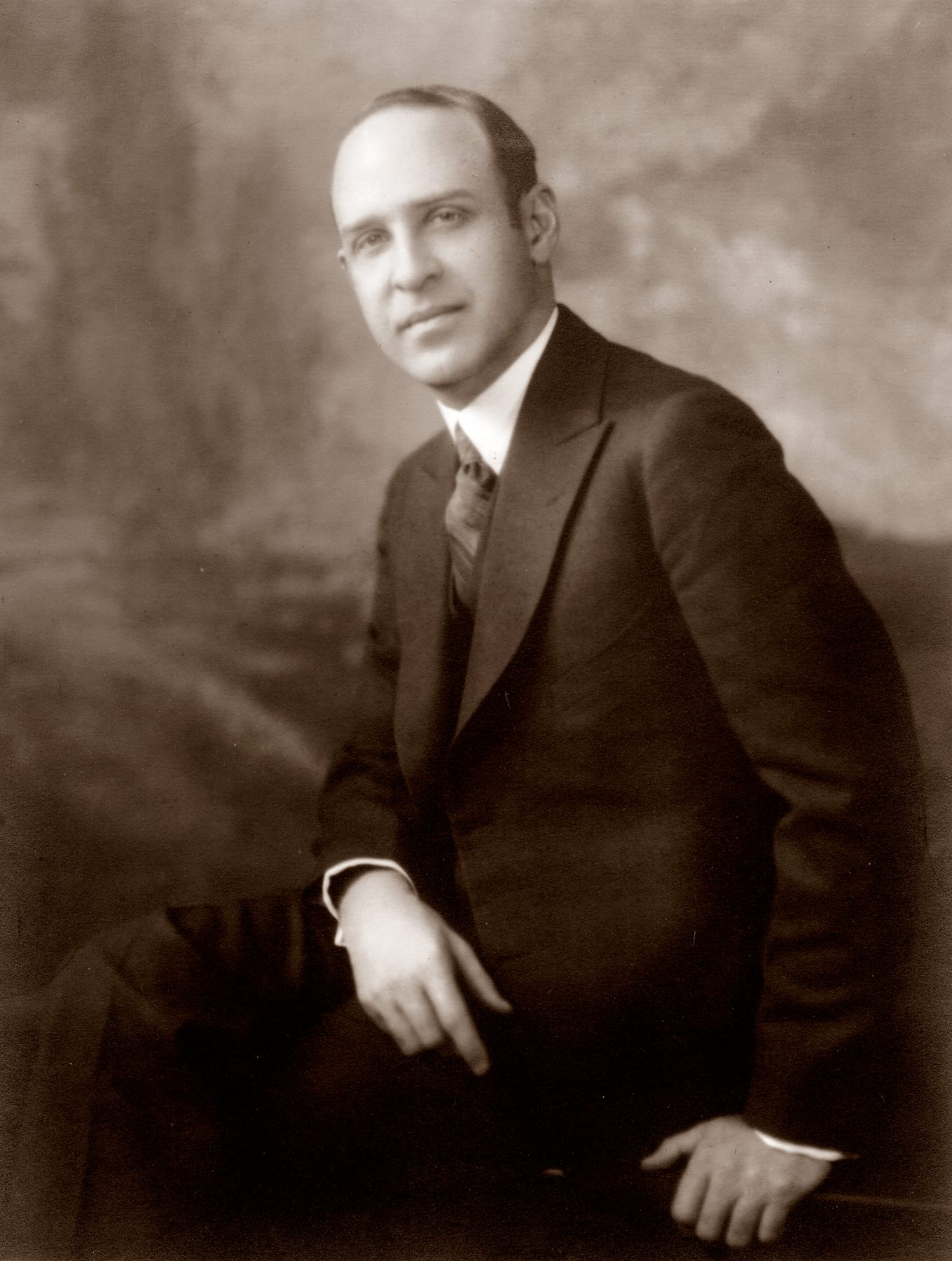
For all the disagreements out there, I think we can all agree that we live in highly disagreeable times. The “culture war” is at fever pitch, partisanship is the highest its been since the era of the War of the Rebellion, and we have numerous political figures I will charitably call publicity hounds (I have worse words for them, but I will not express them here). This is a consequence of the long-standing effort across the board to have ideologically responsible parties. Although I am inclined to also point the finger at primaries, I am not as certain about it as a factor. Primaries have produced outcomes in the GOP that I have both agreed and disagreed with on grounds of “electability”. And the truth is that there are times in which primary voters have had some great hits over the party establishment choices (Marco Rubio, Ted Cruz) and horrific misses (Christine O’Donnell, Roy Moore). One figure whose politics deeply contrast with today in tone and in ideological purity is Leverett Saltonstall (1892-1979), a Massachusetts Republican.

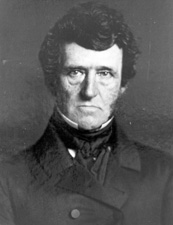
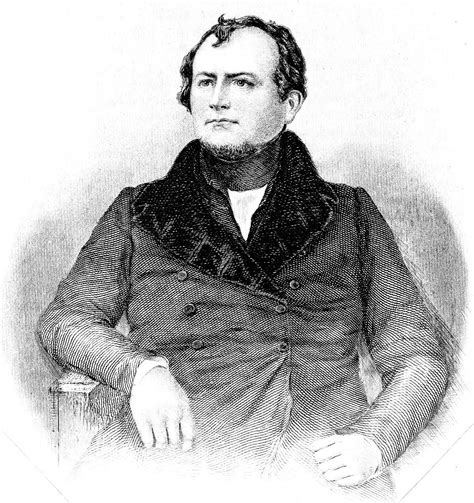
Saltonstall came from one of the oldest families in Massachusetts and one that had a history of political involvement; his great-grandfather Leverett Saltonstall I (1783-1845) had been a prominent Whig politician in his day. Leverett began his political career as an alderman of Newton, which led to his election to the Massachusetts House of Representatives in 1922, where from 1929 to 1937 he served as its speaker. In 1938, Saltonstall ran for governor. Jim Curley, who had been governor from 1935 to 1937, was a highly corrupt figure who had run for the office to avoid going to prison, but he had a fan base particularly among Boston’s ethnic Irish population, who held a grudge against the Boston Brahmins (wealthy WASPs). Although Saltonstall was a Brahmin, he was also of Irish descent, so he was in both worlds and could appeal to both camps. Curley blundered when he revived an old description of him by referring to him as “a man with a Harvard accent and a South Boston face”, which Saltonstall repeatedly used to his advantage, adding, “I’ll have the same face after election that I have before election” (Weeks, xiii). 1938 was a good year for Republicans and Saltonstall was the right sort of Republican, winning the election.

Saltonstall’s tenure as governor was ethically squeaky clean, a pleasant contrast to the grafting ways of Curley. He also managed to eliminate most of the state’s deficit, successfully mediated a major Teamster’s Union strike, and established an interfaith committee to curb discrimination (Blair). Saltonstall also had the benefit of having a craggy but trustworthy face. He would sometimes quote a limerick to describe his appearance,

“For beauty I am not a star.

There are others more handsome by far,

But my face, I don’t mind it,

For I am behind it,

It’s the people in front that I jar” (Blair).

In 1944, Saltonstall ran for the Senate to complete the term of Henry Cabot Lodge Jr., who had resigned to fight in World War II. By this time, he was popular with Republicans and Democrats alike and won the election with 64% of the vote, even winning the Democratic stronghold of Boston.  

In the Republican 80th Congress, he supported much of the party’s conservative economic agenda, but voted internationalist and in favor of more refugees being admitted to the US. Saltonstall also supported the Taft-Ellender-Wagner housing bill, which included public housing. Although he didn’t sponsor much legislation, his contributions came in the form of adding amendments to legislation, thus he was a bit of a behind-the-scenes player (Blair). In hearings on controversial issues, Saltonstall wouldn’t ask questions meant to solicit a specific answer or to grandstand, he would do so to find out information so he could better make decisions. Despite his nickname being “Salty”, he couldn’t have been further from it. Saltonstall was known for his unfailing courtesy and manners and this made him one of the most agreeable legislators on Capitol Hill. This set him up for being part of the Republican leadership, but he had to win reelection first.

In 1948, he pulled off another win for a full term, even though President Truman won by over ten points in Massachusetts that year. In 1949, Saltonstall was elected party whip, serving until 1957. As whip, he was able to effectively appeal to both the conservative and moderate to liberal wings of the party. From 1957 to 1967, he served as the chairman of the Republican Conference.

Although an internationalist, Saltonstall voted against Point IV aid in 1950, granting foreign aid to nations on the basis of being poor rather than recovering from post-war damage. He was strongly for Eisenhower, and indeed he was one of the figures Saltonstall respected most. In 1954, he voted to censure Senator Joseph McCarthy (R-Wis.). That year, Saltonstall had a close shave against Treasurer and Receiver-General Foster Furcolo, prevailing by 1.5% in an election that lost the GOP the Senate.

While he could be conservative on numerous issues regarding budgets and organized labor, he also was supportive of increasing the minimum wage, internationalism, and opposed certain domestic anti-communist policies such as maintaining a student loyalty oath on college campuses and giving states a broad authority to crack down on subversive organizations. Americans for Constitutional Action gave him a 69% for their first ratings, which covered his record from 1955 to 1959. Saltonstall’s DW-Nominate score was a 0.175, suggesting moderation.

While in 1960 John F. Kennedy had his third best performance in Massachusetts, Saltonstall won reelection by around 13 points. Interestingly, although he remained having clean hands, his campaign manager was Chuck Colson. Colson, who would gain infamy in the Watergate Scandal as Nixon’s “hatchet man”, was ruthless and behind his boss’s back, concocted a “grassroots” movement of voters who wished to split their tickets to vote for Kennedy and Saltonstall, which surely assisted in at least the margin of his victory (Massachusetts Historical Society).

On civil rights, Saltonstall was supportive, backing both the Civil Rights Act of 1964 and the Voting Rights Act of 1965. However, he also was a supporter of state’s rights, and voted for the Anderson-Aiken Amendment to the Civil Rights Act of 1957, which struck out the section that granted the attorney general authority to initiate lawsuits in civil rights cases, which numerous senators outside the South thought went too far beyond protection of voting rights (Douglas).

Saltonstall had a mixed record on the Great Society. While he voted against the Economic Opportunity Act of 1964 and had voted against Medicare proposals in 1960, 1962, and 1964, he did vote for Medicare in 1965 and supported the Elementary and Secondary Education Act, providing federal aid to schools. In 1966, Saltonstall voted for both of Minority Leader Everett Dirksen’s (R-Ill.) proposals to amend the Constitution. First, to allow legislative districts in states to not solely be based in population, and second, to permit teacher led prayer in public schools.

Although Saltonstall was still in good health in 1966 and probably could have capably served another term, at 74 he wished to retire before he declined. As he explained, “I wanted to quit when I was still doing the job rather than just fade away in the Senate…Too many of my Senate colleagues overdid it. They stayed on too long – napping through committee hearings when they should have packed up and gone home” (Blair). Saltonstall lived 12 years after his final day in the Senate, and in 1971 published his autobiography written with Edward Weeks of Atlantic Monthly, titled Autobiography of Leverett Saltonstall; Massachusetts Governor, U.S. Senator, and Yankee Icon. He died on June 17, 1979 of congestive heart failure.

Saltonstall was the right sort of Republican that the GOP could run in Massachusetts statewide at the time, and although he certainly fits the characterization of a “Country Club Republican”, his record was golden by conservative standards compared to his Republican successor, Ed Brooke. Among the characters I have covered, I admit a great admiration for Saltonstall, even though his politics fall a bit short of mine on the conservative scale. He played the game of politics honorably and won. We should hope for the same for all our office seekers.

References

Blair, T. Saltonstall, Leverett. Harvard Square Library.

Retrieved from

Douglas, P.H. (1957, December). The Right to Vote. The Atlantic.

Retrieved from

https://www.theatlantic.com/magazine/archive/1957/12/the-right-to-vote/642205

Object of the Month: The Next Four Years. (2020, September). Massachusetts Historical Society.

Retrieved from

https://www.masshist.org/object-of-the-month/objects/september-2020

Saltonstall, Leverett. Voteview.

Retrieved from

https://www.voteview.com/person/8185/leverett-saltonstall

Weeks, E. (2015). Preface to The autobiography of Leverett Saltonstall: Massachusetts governor, U.S. senator, and Yankee icon. Lanham, MD: Rowman & Littlefield.

Retrieved from

RINOs from American History #16: Claudine Schneider


Congressman Eddie Beard (D-R.I.) was a bit of an unusual fellow. In his first campaign for Congress in 1974, he was a 34-year-old house painter and he often campaigned in painter’s clothes to appeal to working class voters, against the wishes of the Democratic establishment who thought him a “grandstander” and a “loudmouth” (Szkotak). Despite opposition from the Democratic establishment, he defeated incumbent Robert O. Tiernan in the primary in the Providence-based 2nd district. However, the 1978 election saw a compelling alternative come in the form of Claudine Schneider (1947- ). Interestingly, she had been a Democrat until then, but the GOP offered her more for a political career. Although Schneider lost that year, she lost by only 5 points. Beard had won reelection in 1976 with 76.5% of the vote. The 1980 election was different, as Beard was increasingly harmed by his propensity to be “quarrelsome and ill-informed” and Schneider had gained publicity by hosting a public affairs TV program and enhanced her appeal with ethnic Italians by taking Italian lessons (Wasniewski, 611). Although Jimmy Carter won Rhode Island, Carter’s victory in the state was not enough to save Beard, and Schneider won the election by over 10 points, making her the first Republican elected to the House from Rhode Island since 1938.

Congresswoman Schneider

Schneider supported a number of Reagan’s budget and tax policies in 1981 but she also voted favorably on many policies typically opposed by conservatives, such as arts funding, the Legal Services Corporation, food stamps, and the use of busing as a means of desegregation. Schneider also opposed the Reagan Administration on funding of military priorities such as the B-1 Bomber and the MX-Missile. In 1983, Schneider was the only Republican in the House that Americans for Democratic Action scored as a liberal, meaning she voted liberal on at least 14 of 20 of their selected votes (Associated Press). She was foremost an advocate for environmental issues and was an early proponent of climate change legislation. One of her major victories in Congress was defeating the Clinch River Breeder Reactor in 1983, which was strongly supported by the Reagan Administration and the GOP leadership and opposed by environmentalists. Schneider said of the reactor that it was “a confederacy of corporate issues” (Wasniewski, 612). Her DW-Nominate score was an unusually low -0.026 and she had an average of 21% by Americans for Constitutional Action for her first four years in Congress. Schneider opposed President Reagan’s position 75% of the time and became extremely popular in her district, whose voters were largely against Reagan and in 1988 she won reelection with 72.1% of the vote, the highest for any Republican since 1878 (Wasniewski, 612). However, this came at the cost of being passed over for committee assignments best suited to her specialty.

Schneider in 1989 originated a joke about Dan Quayle which was mistaken by a number of publications as one of his gaffes, “I was recently on a tour of Latin America, and the only regret I have was that I didn’t study Latin harder in school so I could converse with those people” (O’Connell). Given her popularity in her district, Republicans saw her as a top contender to take on Democratic Senator Claiborne Pell. Pell had been in office since 1961, and perhaps it was time for a change in Rhode Island. However, he had high favorables in Rhode Island overall, and many Democratic voters, although they liked Schneider, didn’t want to risk the Senate being majority Republican, and Pell won reelection with ease (Wasniewski, 614).


Post-Career

After her career in Congress, Schneider was further involved in the environmental movement. She also accepted a teaching position at the John F. Kennedy School of Government at Harvard University and served on the Competitiveness Policy Council during the Clinton Administration (Wasniewski, 614). Although her Congressional career has long passed, she isn’t quite history. Schneider has lately been critical of GOP environmental policy and in a 2019 interview she asserted that they had been “bought off by the fossil fuel industry” (Bologna & Borchers). She endorsed Democrat Seth Magaziner in his campaign for Congress in 2022 and as a resident of Colorado was one the plaintiffs in the case to remove Donald Trump from the ballot.

References

Bologna, J. & Borchers, C. (2019, April 28). How The GOP Became The Party To Oppose Climate Change Legislation. WBUR.

Retrieved from

https://www.wbur.org/radioboston/2019/04/25/gop-climate-change

Liberal Vote Gains in House. (1983, December 28). Associated Press.

Retrieved from

O’Carroll, E. (2011, June 3). Political misquotes: The 10 most famous things never actually said. The Christian Science Monitor.

Retrieved from

https://www.csmonitor.com/USA/Politics/2011/0603/Political-misquotes-The-10-most-famous-things-never-actually-said/I-was-recently-on-a-tour-of-Latin-America-and-the-only-regret-I-have-was-that-I-didn-t-study-Latin-harder-in-school-so-I-could-converse-with-those-people.-Dan-Quayle

Schneider, Claudine. Voteview.

Retrieved from

https://voteview.com/person/14857/claudine-schneider

Szkotak, S. (1981, December 20). Eddie Beard — Ex-congressman, now a saloon keeper. Champion of the working class plans ‘one more shot’ at political office. UPI.

Retrieved from

https://www.upi.com/Archives/1981/12/20/Eddie-Beard-Ex-congressman-now-a-saloon-keeperChampion-of-the-working-class-plansone-more-shot-at-political-office/2648377672400/

Wasniewski, M.A. (ed.). (2006). Women in Congress, 1917-2006, 611-614. Washington D.C.: U.S. Government Printing Office.

Civil Rights in 1950

Majority Leader Scott Lucas (D-Ill.), who led the pushes on both army desegregation and the FEPC.

In 1950, the Senate took on two issues on civil rights that had been pushed by President Truman. The first was army desegregation and the second was on a proposal for a permanent Fair Employment Practices Committee (FEPC), the purpose of which was to curb employment discrimination based on race.

Analyzing the Votes

Senator Richard Russell (D-Ga.), the leader of the Southern Democratic faction, managed to include an amendment to the draft bill allowing “voluntary” segregation in units. This had the potential to seriously undermine President Truman’s desegregation of the army, and Majority Leader Scott Lucas’s (D-Ill.) motion to delete the amendment carried 42-29 on June 12th. Democrats voted 25-16 against Lucas’s motion and Republicans voted 26-4 for. One might trot out the old “party switch” talking point, but the votes for defeating the Russell Amendment included most of the GOP conservatives too. There were also a few votes outside of the South from Democrats in Carl Hayden of Arizona as well as Lester Hunt and Joseph O’Mahoney of Wyoming. The Republicans who favored keeping Russell’s amendment included Chan Gurney of South Dakota, the ranking Republican on the Armed Services Committee, as well as westerners Zales Ecton of Montana, Guy Cordon of Oregon, and Arthur Watkins of Utah. I am curious, what was with some westerners and supporting this amendment anyway? You also had many high-profile conservatives voting for, such as William Jenner of Indiana, Kenneth Wherry of Nebraska, and John Bricker and Robert Taft of Ohio.

The Fair Employment Practices Committee bill had a bit of a different thing going on as it involved in the invoking of cloture, or ending debate. The vote to end debate failed 55-39, with the vote going against ending debate 27-22 by Democrats and for ending debate 33-6 from Republicans. Interestingly, the number of Senate Republicans who would vote against the Civil Rights Act of 1964 would also be six. Of the GOP senators who voted against this year, Milton Young of North Dakota and Karl Mundt of South Dakota would later vote for the Civil Rights Act of 1964, vote to retain Title II (public accommodations), but support striking Title VII (employment discrimination). In Arizona and Nevada, senators had a long history of not voting to end debate in case legislation targeting their state was on the table and they wished to filibuster. Indeed, all senators from Arizona and Nevada voted against. This does not necessarily indicate opposition to civil rights. Hayden, for instance, voted against ending debate on the Civil Rights Act of 1964 but voted for the bill and voted to keep in Titles II and VII, the most debated parts of the measure. Nevada’s Pat McCarran and George Malone both voted to kill the Russell Amendment to hinder army desegregation, but Malone would also be one of the Republicans who voted to strike Title III from the Civil Rights Act of 1957 and for a jury trial amendment. Had Malone won reelection in 1958 and survived until 1964, I find it quite possible that he would have voted against the Civil Rights Act of 1964.

Interestingly, only two Senate Republicans took the side of the South on both votes: Zales Ecton of Montana and Chan Gurney of South Dakota. People who would later be thought of as civil rights liberals in the South such as Estes Kefauver of Tennessee and Lyndon B. Johnson of Texas vote against both. You also see a curious left/right intersection on civil rights here, as some of the most left-wing senators vote alongside some of the most right-wing senators (of the North, anyway) in favor.

Interestingly, for the FEPC vote, Senator Kenneth Wherry (R-Neb.) says of it, “…I do not believe in the FEPC legislation in the form which it is now before the Senate. I am sincere about that. But I will state that I believe the time has come when we should terminate debate and agree to a motion to take up. I think, however, that the Members of the Senate should write an FEPC bill which will be acceptable in the four corners of the United States. On that basis, I am perfectly willing to vote for cloture, in order to bring the measure before the Senate, and enable it to perfect such a bill” (Congressional Record, 9979). Since Wherry was one of the Senate’s strongest conservatives and a good representative of the strongly conservative, there may have been quite a few more conservative Republicans who didn’t like the bill as presented, but wanted to give the measure a chance to be considered so it could be crafted more to their liking. Wherry’s support for cloture may have been of importance in winning as many conservative Republican votes as it did. The Democratic Party of 1950 in the Senate is fundamentally more split on civil rights and on the negative side, although a significant part of this is that Republicans had seats in states that would later elect staunchly pro-civil rights Democrats. The states of Indiana, Michigan, Missouri, Ohio, and Wisconsin all had two Republican senators in 1950, but by 1964 all the senators were Democrats. In none of those states were there “nays” for on striking the Russell Amendment nor on the FEPC. That’s right, folks, Joseph McCarthy voted for the FEPC! It may sound strange to some, but the whole conflating of civil rights and communism was primarily a John Birch Society and a Southern thing. McCarthy was also a bit less conservative than people might think he was given his rhetoric. Interestingly, Scott Lucas would lose reelection that year, and his successor, Everett Dirksen, would be minority leader in the 1960s, being a leading figure in the Senate push for the Civil Rights Act of 1964.

Oh, yes, and the votes I have analyzed with DW-Nominate Scores:

References

Federal Fair Employment Practice Act – Cloture Motion. (1950, July 12). Congressional Record. Washington, D.C.: Government Printing Office.

Retrieved from

Hayden, Carl Trumbull. Voteview.

Retrieved from

https://www.voteview.com/person/4227/carl-trumbull-hayden

Malone, George Wilson. Voteview.

Retrieved from

https://www.voteview.com/person/5944/george-wilson-malone

Mundt, Karl Earl. Voteview.

Retrieved from

https://www.voteview.com/person/6796/karl-earl-mundt

Young, Milton Ruben. Voteview.

Retrieved from

https://www.voteview.com/person/10450/milton-ruben-young

Alben Barkley – “The Veep”: Part 2


Barkley at the DNC

Barkley had as a senator become quite valuable for his oratory as well as advocacy for progressive positions, and this set him up for prime time. Barkley delivered the keynote address at the 1932 Democratic National Convention in which he condemned the Republican rule of the 1920s and called for the repeal of Prohibition, not because he personally disliked Prohibition, rather because the public wanted it. His speech was, to say the least, well received.

After FDR’s election, Barkley was one of the point men for pushing New Deal legislation, including the Agricultural Adjustment Act and the National Industrial Recovery Act, key parts of the New Deal.  In 1934, Barkley, who had one of the most faithful records in supporting the first New Deal, went on the radio to defend it against the attacks of GOP chairman Henry Fletcher (Ghaelin, 76).  He participated heavily in campaigning in the midterms, which saw one of the few times in which the president’s party gained rather than lost seats.

Barkley’s record as one of the most loyal Democrats in the Senate to Roosevelt was noticed, and he would again in 1936 give the keynote address at the Democratic National Convention. Frustrated with the Supreme Court’s decisions striking down multiple New Deal laws, he rhetorically asked in this address, “Is the court beyond criticism? May it be regarded as too sacred to be disagreed with?” (Ghaelin, 76) This foreshadowed Barkley’s support of FDR’s “court packing plan”, following the lead of Majority Leader Joe Robinson (D-Ark.) in support. However, Robinson died on July 14, 1937, of a heart attack, which may have been in part attributable to the strain of pushing forward this plan. Roosevelt publicly declared neutrality for the following majority leader race, but made it clear that he supported Barkley in his letter to him in which he called on him to continue Robinson’s fight for the court packing plan, starting “My Dear Alben”. This letter became a subject of ridicule among his opponents with them derisively referring to him as “Dear Alben” to highlight his seemingly subordinate status, much to Barkley’s embarrassment (U.S. Senate). Barkley was up against Mississippi’s Pat Harrison, who although he had a history of progressive voting was growing more conservative and had opposed the court packing plan. Worse yet for FDR, Harrison if elected would leave his post as chairman of the Senate Finance Committee and his successor would be Utah’s William H. King, who was of the party’s conservative wing and become quite antagonistic to the New Deal (Hill). Harrison had plenty of loyalists and had managed to sway future President Harry S. Truman to vote for him, but FDR rallied his loyalists as well. The deciding vote was that of Theodore Bilbo of Mississippi. Harrison despised Bilbo and the feeling was mutual, and Bilbo conditioned supporting him on Harrison personally asking him. When told of this, Harrison thought for a moment, and then replied, “You tell that son-of-a-bitch I wouldn’t speak to him if it meant the presidency of the United States!” (Hill)

Barkley as Majority Leader

Despite him having been favored by Roosevelt and initially backing the court packing plan, on July 22, 1937, he voted with 69 other senators to kill the plan, at that point such a vote was a simple acknowledgement of political reality. Barkley’s start as majority leader was not the easiest, as he had to contend with an anti-lynching bill introduced by Republicans and attempted to adjourn the Senate, but Republicans agreed to shelve the bill after Barkley promised that it would be considered in the next session (Ghaelian, 78). Although Barkley was true to his word and pushed for anti-lynching legislation, the measure fell to defeat. He also in August 1937 lost on a parliamentary motion by Minority Leader Charles McNary (R-Ore.) to recess, concluding the first session of the 75th Congress (U.S. Senate). However, he won over his Democratic colleagues and proved easier to get along with than his predecessor, who could be a bully and tough as nails. Rather than intimidation or coercion, he used persuasion to move along legislation plus many an amusing story, like another man who was born in Kentucky…Abraham Lincoln. As Barkley himself said, “A good story is like a fine Kentucky bourbon. It improves with age and, if you don’t use it too much, it will never hurt anyone” (U.S. Senate). Barkley’s talent for persuasion as well as negotiation made him quite valuable to FDR and the Democrats.

The 1938 Democratic Primary & Controversies

In 1938, Barkley drew a significant challenger in the primary in Governor A.B. “Happy” Chandler. Chandler was to Barkley’s right, being less supportive of the New Deal, and Roosevelt went to Kentucky to campaign for Barkley. During the campaign, allegations over the use of Works Progress Administration (WPA) workers to boost Barkley arose. In Kentucky, there were 72,000 people employed for numerous projects, great and small, and would ultimately over eight years employ 8.5 million people at a cost of $11 billion (Myers, 31-32). On May 27, 1938, Chandler’s campaign manager alleged in an open letter that “every federal relief agency in Kentucky is frankly and brazenly operating on a political basis”, a claim contested by Kentucky’s WPA director George Goodman (Myers, 35). However, Chandler’s campaign wasn’t above using such tactics. Indeed, state employees were being used to try to influence voters for Chandler (Myers, 36). This race was a nailbiter, but Barkley prevailed. The truth of the matter was hit upon after an investigation by journalist Thomas L. Stokes that uncovered that federal WPA employees were working extensively to intervene on behalf of Barkley while Kentucky state employees were doing so for Chandler (Myers, 41). This resulted in the passage of the Hatch Act in 1939, which prohibited the use of civil service employees for certain political activities, with the exceptions of the president and vice president.

Barkley was a Wilsonian on foreign policy, as was Roosevelt, and he successfully pushed the Senate into passing the repeal of the arms embargo in 1939, the peacetime draft in 1940, Lend-Lease in 1941, and lifting the ban on U.S. ships carrying goods to belligerent ports.

A Break with Roosevelt

Contrary to the perception that the United States was politically united during World War II (they were on the war effort), the 78th Congress was the least friendly Congress President Roosevelt faced. Barkley in this Congress in one debate that required overcoming a filibuster ordered the arrests of senators staying absent to force them to vote, including his friend Kenneth McKellar (D-Tenn.). McKellar, a man known for his hot temper, was so resentful over this incident that he denounced him on the floor of the Senate, withdrawing his recommendation of Barkley on the Supreme Court, and after refusing to speak to him (Hill). FDR’s legislative demands were thus wearing on his legislative wheelhorse. Another contentious subject was taxation to pay for the war. President Roosevelt had asked for a $10.5 billion tax increase to pay for the war effort and restrain inflation, but the bill that was passed by the House, spearheaded by House Ways and Means Committee chairman Robert Doughton (D-N.C.) included only $2.1 billion in increases (Glass). The previous revenue bill, the Revenue Act of 1942, had been highly redistributive. Although Barkley may have wished to deliver a more substantive bill to the president, he figured this was the best bill he could deliver. Thus, he agreed to the legislation (U.S. Senate). Roosevelt in turn vetoed the bill. He, however, did not just veto it, he ripped on Congress in his veto message, denouncing the measure as a “tax relief bill providing relief not for the needy but for the greedy” and finished with “The responsibility of the Congress of the United States is to supply the Government of the United States as a whole with adequate revenue for wartime needs, to provide fiscal support for the stabilization program, to hold firm against the tide of special privileges, and to achieve real simplicity for millions of small income taxpayers. In the interest of strengthening the home front, in the interest of speeding the day of victory, I urge the earliest possible action” (Glass). This inflamed the legislators and increased support for the bill. Barkley responded by resigning in protest, denouncing Roosevelt’s veto and message as “a calculated and deliberate assault upon the legislative integrity of every member of Congress. My resignation will be tendered and my services terminated. If the Congress…has any self-respect left, it will override the veto” (U.S. Senate). Barkley, previously known as FDR’s man in the Senate, had wowed his colleagues by demonstrating independence. McKellar responded in delight, “I forgive him everything! I forgive him everything he’s ever done!” (Hill) The veto was overridden, and  Senate Democrats united the next day to unanimously elect him majority leader. Senator Elbert Thomas (D-Utah) said to journalist Allen Drury of the change in perception surrounding Barkley, “the impression was given…that he spoke to us for the President. Now that he has been unanimously elected, he speaks for us to the President” (U.S. Senate). Roosevelt hastily backtracked and apologized to Barkley, endorsing his reelection in 1944. However, Barkley would not be selected for vice president, an outcome you already certainly knew otherwise history would tell of a “President Barkley”.

A Change on Civil Rights

Although in the House, Barkley had been an opponent of civil rights legislation, he was a strong supporter, including supporting retaining the Fair Employment Practices Committee, for anti-lynching legislation, and for anti-poll tax legislation. This change closely coincided with the majority of the black vote going to Democrats. His change on this subject, an even more dramatic change than seen in his Arizona colleague Carl Hayden, was demonstrative of the Democratic Party having a solid degree of political motivation for backing civil rights legislation. To be fair, there was certainly a good deal of political motive in opposing such legislation, as undoubtedly it was unpopular in Barkley’s 1st district.

Barkley and Truman

If Barkley had a fairly good relationship with FDR despite the Revenue Act bump in the road, he had a better one with his successor, Harry S. Truman. The 1946 election had produced a Republican majority in the House and Senate for the first time since the Hoover Administration, and, like Truman, Barkley battled the domestic prerogatives of the 80th Congress while assisting Truman in passing foreign policy priorities. Americans for Democratic Action graded him perfect scores in 1947 and 1948 for defending the liberal position on key issues, including opposing the Taft-Hartley Act and opposing Republican-backed tax reduction legislation. In 1948, Truman, who had no vice president while finishing FDR’s fourth term, selected his most valuable Senate ally as his running mate. The 1948 election, which produced one of the more notable “upsets” in U.S. history, made Barkley the third vice president from Kentucky.

As VP, or as his grandson called him, “The Veep”, Barkley did his best in his function as the Senate president to help the fractured Democratic majority, but things weren’t the same without him in the driver’s seat as majority leader, and his successor, Scott Lucas of Illinois, struggled mightily to unify his divided party. In 1949, Barkley made a favorable ruling on Majority Leader Scott Lucas’s (D-Ill.) rule change to make ending debate easier. A major issue coloring that debate so to speak was the matter of civil rights, so Senator Richard Russell (D-Ga.), the leader of the Southern Democrats of the Senate, appealed, and the Senate sided with Russell 46-41. Barkley also hit the campaign trail for Democrats in both 1950 and 1952, but with the unpopularity of President Truman Democrats suffered losses, and both times their majority leaders, Scott Lucas of Illinois and Ernest McFarland of Arizona, lost reelection too. In 1952, Barkley wanted to run for president, but he bowed out after many in the party regarded him as too old at 75. How quaint!

In 1954, Barkley, now 77 years old, was up for another go at the Senate. The Democratic Party was in luck that he was up to go again, as Republican incumbent John Sherman Cooper, who was one of the most liberal Republicans in the Senate, was proving quite popular. The campaign generally revolved around the idea that Barkley was too old to run again, but he dispelled this notion by campaigning with a vigor that spoke of a considerably younger man, resuming his “Iron Man” campaign style. Barkley defeated Cooper by nine points. He then supported President Eisenhower’s nomination of Cooper as Ambassador to India and Nepal.

The Best Death in the History of American Politics?

It turned out that there was something to what the Republicans were saying about Barkley and age. On April 30, 1956, Barkley was delivering a speech at the Washington and Lee Mock Convention and referring to his willingness to sit in the back row of the Senate despite his 40 years in public office declared, “I’m glad to sit in the back row, for I would rather be a servant in the House of the Lord than to sit in the seats of the mighty” (U.S. Senate). Upon a standing ovation for his words, Barkley then collapsed, dead from a heart attack at 78. However, something that was not so great of a revelation after his death is that despite Barkley being such a proponent of more government programs through the New Deal and the Fair Deal, he had not paid income taxes for years (Hill). His death opened the door for Cooper’s return to the Senate, and indeed in the 1956 special election he won the election to finish his term.

Barkley was a figure who could be quite liberal by inclination and also showed willingness to change in how he voted, and that change was generally in a liberal direction. He was also capable of compromise and defiance if he felt the Senate’s prerogatives were being trodden on. He also serves as quite a contrast in many ways to politics as we know them now. As a Kentucky liberal his philosophy of government was favored by the state’s voters for at least most of his time in office. That Kentucky would today be represented in the Senate by Mitch McConnell and Rand Paul and that they would win reelection multiple times are developments that frankly couldn’t have been foreseen in Barkley’s lifetime. The Republicans that were elected to the Senate after Barkley’s passing, Cooper and Thruston Morton, were moderate in inclination, with Cooper siding more with liberals and Morton more with conservatives.

References

Congressional Supplement. (1948, July). Americans for Democratic Action.

Retrieved from

Ghaelian, J. (2008). Alben W. Barkley: Harry S. Truman’s Unexpected Political Asset. Kaleidoscope, 7(15).

Retrieved from

Glass, A. (2018, February 24). House overrides FDR’s Revenue Act veto, Feb. 24, 1944. Politico.

Retrieved from

https://www.politico.com/story/2018/02/24/house-overrides-fdrs-revenue-act-veto-feb-24-1944-421684

Harrison, L.H. & Klotter, J.C. (1997). A new history of Kentucky. Lexington, KY: The University Press of Kentucky.

Hill, R. Alben W. Barkley of Kentucky. The Knoxville Focus.

Retrieved from

Myers, R.M. (2018, May). “To prevent pernicious political activities”: the 1938 Kentucky Democratic primary and the Hatch Act of 1939. College of Arts & Sciences Senior Honors Theses. Paper 169.

Retrieved from

Report Card for 80th Congress. (1947). Americans for Democratic Action.

Retrieved from

Senate Leaders: Alben Barkley. U.S. Senate.

Retrieved from

https://www.senate.gov/about/origins-foundations/parties-leadership/barkley-alben.htm

Alben Barkley – “The Veep”: Part I

A young Alben Barkley in Congress, 1913.

On February 28, 2024, Senate Minority Leader Mitch McConnell announced he would be stepping down as leader at the end of the year. With his departure from political leadership, he will certainly be remembered as one of the three most influential Kentuckians in the Senate. The most remains the “Great Compromiser” Henry Clay. The Kentuckian who rivals McConnell in influence and impact is Alben William Barkley (1877-1956).

Barkley was one of those politicians, who, like Lincoln, was born in a log cabin in Kentucky. Although initially born Willie Alben Barkley, he opted to from a young age to go by “Alben William” and legally changed his name as an adult. He was raised in a religious household and this informed his opposition as an adult to betting on horse races (a difficult stance in Kentucky) as well as support for Prohibition.

Barkley got his start professionally working for Congressman Charles K. Wheeler, who at the time was supportive of free coinage of silver while he identified as a Gold Democrat. He worked without pay in exchange for access to Wheeler’s law library, where he studied and read law, being admitted to the bar in 1901. Barkley would also attend the University of Virginia School of Law.

Political Beginnings

On December 19, 1904, Barkley announced that he was running for county attorney of McCracken County. Since the region he lived was overwhelmingly Democratic, the Democratic primary was tantamount to election. He went up against incumbent Eugene A. Graves, and managed to win due to his likeability, his strong oratorical talent, and his hard work in his campaign. In 1908, Barkley mainstreamed himself with the Democratic Party by endorsing William Jennings Bryan. That year he ran for county judge, a position in Kentucky that controlled funds and patronage, so a very politically powerful role. Barkley won that contest too.

In 1912, Barkley was elected to Congress from Kentucky’s 1st district, which included Jackson Purchase, a portion of the state that had been most sympathetic to the Confederacy. While in the House, he could be thought of as a pragmatic Wilsonian progressive. Barkley would later reflect that Wilson was the “greatest statesman and greatest president” of his lifetime (U.S. Senate). Barkley’s career also reflected the significant change of the Democratic Party on race. While in the House he was quite against civil rights measures. He voted to ban interracial marriage in Washington D.C. in 1915, to ban immigration of blacks and Africans from the United States in the same year, and in 1916 he voted for segregation of Washington D.C. youth probation departments. In 1922, Barkley voted against anti-lynching legislation. Although Barkley opposed women’s suffrage in 1915, he voted for it in 1918 and 1919. His stance on civil rights would change considerably later in his career, which I will cover in the next post. Barkley also favored Prohibition and delivered speeches on behalf of the Anti-Saloon League.

Although Barkley was quite supportive of Woodrow Wilson’s New Freedom programs, although during the 1920s he wasn’t a hardline Democratic partisan in how he voted. He did, however, push strongly for measures that crossed the railroads, including the Howell-Barkley bill for labor dispute settlements and his proposal to prohibit the railroads from charging customers a Pullman car fee. Barkley also regarded the Harding Administration as well as the succeeding Republican administrations as too favorable to big business. In 1923, he said of the Harding Administration that if it had returned America to “normalcy”, “then in God’s name let us have abnormalcy” (U.S. Senate). That year, Barkley had his first and only defeat when he lost the Democratic Party nomination for governor, but better things would prove to be ahead for him.

The Senate

Barkley’s campaign style was the stuff of legends. He would put in 16 hour days and had given up to sixteen speeches a day, or as people of his time would call it, his “Iron Man Style”. Barkley went up against incumbent Richard P. Ernst, who had won by less than a point in the Republican landslide of 1920. Ernst was a conservative corporate lawyer who had voted against soldier bonuses and had refused to defend Republican Congressman John W. Langley, who had been convicted of assisting in bootlegging (Harrison & Klotter, 355). However, Ernst was not the easiest to take down even in a midterm year, but Barkley did pull off the win by over three points. Barkley got some Republican votes too, as there were Republicans unhappy that Ernst refused to defend Congressman John W. Langley, who had been convicted of assisting in bootlegging.

References

Barkley, Alben William. Voteview.

Retrieved from

https://www.voteview.com/person/437/alben-william-barkley

Harrison, L.H. & Klotter, J.C. (1997). A new history of Kentucky. Lexington, KY: The University Press of Kentucky.

Hill, R. Alben W. Barkley of Kentucky. The Knoxville Focus.

Retrieved from

Senate Leaders: Alben Barkley. U.S. Senate.

Retrieved from

https://www.senate.gov/about/origins-foundations/parties-leadership/barkley-alben.htm

Donald Rumsfeld in Congress

Today, Donald Rumsfeld is most known for his troubled time as Secretary of Defense in the George W. Bush Administration. From what I recall, two policies turned out to be of great trouble for the US in Iraq. One was the policy of “De-Baathification”, in which anyone who was in government during Saddam Hussein’s regime was barred from participating in government, which remained in place for a year. The second was that too few troops had been committed on the ground in Iraq. Both decisions came from his department. Today I wish to cover a less known part of Rumsfeld’s career, his time in Congress from 1963 to 1969.


In 1962, Congresswoman Marguerite Church, who had represented Chicago suburbs since 1951 following the death of her husband and predecessor, was calling it quits. Given this territory was staunchly Republican at the time, a 30-year-old Donald Rumsfeld (1932-2021) won easily. Interestingly, Rumsfeld had been inspired into public service by a speech from a Democrat while a student at Princeton. Illinois governor and two-time presidential candidate Adlai Stevenson II called on Princeton University students to use their education for public service (Graham).


In Congress, Rumsfeld voted in many ways as expected from someone of his district. In his first year in Congress, the conservative group I have discussed so much, Americans for Constitutional Action (ACA), saw him as a perfect representative of their preferences, giving him a 100%. However, one issue he would regularly disagree with ACA on was civil rights. During the 1960s, ACA opposed the Civil Rights Act of 1964, the Voting Rights Act of 1965, strengthening the 1964 law’s Title VII in 1966, keeping the fair housing title in the Civil Rights Act of 1966, the proposed Civil Rights Act of 1966, and adopting fair housing into the Civil Rights Act of 1968. Rumsfeld voted for all of them. After the 1964 election, Rumsfeld was one of the “Young Turks” who sought to oust Minority Leader Charles Halleck of Indiana for Gerald Ford of Michigan. Ford won 73-67, and Rumsfeld’s role in backing Ford certainly figured when Rumsfeld was nominated and confirmed as Secretary of Defense.


After the 1964 election, Rumsfeld’s record moved toward moderate as opposed to staunch conservatism, and his ACA scores would never reach an 80 after that election. He voted for foreign aid, supported funding for the arts, supported home rule for D.C., highway beautification, and for the Urban Mass Transporation Act in 1966 after supporting LBJ-backed cuts. Rumsfeld, however, was quite conservative in other ways, voting against the Economic Opportunity Act in 1964 (War on Poverty), the Appalachian Regional Development Act, rent supplements, the creation of the Housing and Urban Development Department, the Elementary and Secondary Education Act of 1965 (federal aid to education), Medicare, and the Housing and Urban Development Act of 1968. Rumsfeld also opposed the Johnson Administration’s effort to repeal the “right to work” section of the Taft-Hartley Act, an effort which would die in the Senate in one of the few victories of the Conservative Coalition in the Great Society Congress. His DW-Nominate score was a 0.369, which despite his reputation placed him to the right of most House Republicans of the time.


Rumsfeld was known for possessing a sharp wit and being combative with the Johnson Administration in ways that really mattered, such as over the “credibility gap” surrounding what the Administration was saying as opposed to the truth about the Vietnam War (Latimer). Rumsfeld in 1968 co-chaired the “Republican Truth Squad” to back Richard Nixon and rebut the Humphrey campaign. He ultimately proved a sufficiently prominent presence among Republicans that in 1969, Richard Nixon unexpectedly tapped him to head the Office of Economic Opportunity. This was an odd appointment given that Rumsfeld had been a critic of the office, and he didn’t initially want to do it, but he resigned Congress to accept the role and did what he could to make it effective. His full career is perhaps for another time.


References


Graham, B. (2021, June 30). Donald H. Rumsfeld, influential but controversial Bush defense secretary, dies at 88. The Washington Post.

Retrieved from

https://www.washingtonpost.com/local/obituaries/donald-rumsfeld-dead/2021/06/30/21a8d69a-c5dc-11df-94e1-c5afa35a9e59_story.html

Hedges, S.J. (2006, November 13). The rise and fall of Rumsfeld. The Seattle Times.

Retrieved from

https://www.seattletimes.com/nation-world/the-rise-and-fall-of-rumsfeld/

Latimer, M. (2021, June 30). The Don Rumsfeld the Obituaries Won’t Write About. Politico.

Retrieved from

https://www.politico.com/news/magazine/2021/06/30/donald-rumsfeld-what-the-world-got-wrong-497275


Rumsfeld, Donald Henry. Voteview.

Retrieved from

https://voteview.com/person/10622/donald-henry-rumsfeld

William E. Miller: An Especially Forgotten VP Nominee

There is a joke that Woodrow Wilson’s Vice President Thomas Marshall once told, “There were two brothers, one went to sea and the other became vice president. Neither was heard from again”. This joke has largely been a historical reality, and if we think the vice presidents are often forgotten, then VP nominees who don’t make it are very much so. Who outside Virginia, for instance, remembers that Hillary Clinton’s running mate was Senator Tim Kaine in 2016? Who remembers Jack Kemp was Dole’s running mate in 1996? Although Barry Goldwater was quite a memorable loser, his vice presidential nominee is very much forgotten in William Edward “Bill” Miller (1914-1983).


After serving in World War II, Miller, who had in peacetime been a lawyer, served as an assistant prosecutor in the Nuremberg Trials under Justice Robert Jackson. Although as opposed to communism as any American conservative, he would cite the Nazis as an example of ultimate evil rather than communists (McGill). Miller was first elected to Congress in 1950 after Congressman William Pfeiffer decided to step down after one term.


Miller was more known for his conservatism than his predecessor or even Pfeiffer’s predecessor, the more prominent Ham Andrews. Interestingly, his DW-Nominate score only comes out at a 0.263, which looks paltry compared to modern Republicans. However, Americans for Constitutional Action regarded him as a stronger conservative in his record. His scores adjusted to count legislative pairs are:


1957 – 80
1958 – 100
1959 – 100
1960 – 70
1961 – 100
1962 – 64
1963 – 93
1964 – 75


One of the issues Miller was most known for was as a staunch foe of public power generation, and went to bat for private power companies at Niagara Falls (The New York Times). However, Miller, consistent with New York’s largely internationalist reputation, regularly voted for foreign aid bills, although he supported some cuts. He also had a reputation for his caustic rhetoric, including referring to President Harry S. Truman as a “hatchet man”, charging President Kennedy with staging “a smoothly rehearsed crybaby performance” over the Senate defeating a Medicare bill in 1962, and stating that “There are only two businesses better off today than they were under the Republican Party. That’s the seat belt business in Texas [over LBJ’s driving]and the paint business in Washington to whitewash investigations [over the Bobby Baker scandal]” (The New York Times). Although Miller sponsored few significant laws, he was a formidable debater and this won him popularity with his Republican colleagues.


In 1956, although Miller had been a co-sponsor of the Eisenhower Administration’s proposed voting rights bill, he turned against it. It was rumored on Capitol Hill that Miller had exchanged his vote for Rules Committee Chairman Howard W. Smith (D-Va.) blocking a Senate-passed bill placing power development in the Niagara Falls region to the New York State Power Authority, but no deal was ever confirmed to have existed (The New York Times, September 6). However, this seemed to have been a one-off. Miller would assert that the 1956 bill had some unique problems and would support other civil rights measures, including the strong Civil Rights Act of 1964. In 1959, Miller voted to oust House Minority Leader Joe Martin (R-Mass.) in favor of Charles Halleck (R-Ind.), winning favor with the victorious latter. That year, he broke from New York Republican orthodoxy by announcing his support for Richard Nixon’s candidacy for the Republican presidential nomination before Governor Nelson Rockefeller had decided to drop out.


In 1961, Miller was selected as the chairman of the Republican National Committee, and was a capable leader, making many speeches and traveling across the nation to promote the Republican cause. Kentucky Senator Thruston Morton, his predecessor, said of him that “He’s done an effective job, and he’s done it on skin and bones. He’s liquidated the party’s debt and he’s run the committee well on K rations” (Time Magazine). However, his popularity in his district was declining. Miller’s popularity had taken hits for three reasons. First, his home county was economically declining, second, his interest in his district was declining, and third, Miller’s strident attacks on President Kennedy did not go over well with many of the district’s Catholic voters (The New York Times, September 6). In 1962, he had a tough reelection, winning with 52% of the vote. Miller was also on the outs with Governor Nelson Rockefeller, and he thought that his career was over so he announced he would not run for reelection in 1964 (Time Magazine). However, at the Republican National Convention Goldwater announced that Miller was his choice for running mate. This was a rather odd choice, and the conventional thought was that Goldwater would balance out the ticket by picking moderate Pennsylvania Governor William Scranton. However, Miller shared Goldwater’s philosophy for the most part and Goldwater told a group of Republican state chairmen that one of the reasons he picked him was that “he drives Lyndon Johnson nuts” (Time Magazine). The trouble is, however, that picking a VP nominee with the intent of sticking it to your opponent didn’t work in 1960 either. Goldwater was hoping that Miller’s presence on the ticket would push LBJ into a mistake, but this did not come to pass. The Goldwater-Miller ticket went down in flames, with the ticket winning only 39% of the vote and Arizona plus five Deep South states. For the latter, Goldwater’s vote against the Civil Rights Act of 1964 was enough, especially in Alabama and Mississippi.


Although after 1964 Goldwater would make a comeback to the Senate, Miller never returned to politics. He stated in retrospect, “I worked so hard as a candidate for Vice President, and it turned out so badly that I decided I’d never work again” (McGill). Although not a bad politician by any stretch, Miller stands as one of the worst picks for VP as he added nothing to the ticket. He was essentially “Goldwater Lite”. In 1975, Miller was back in the spotlight for a brief time as he featured in American Express ads. Funny enough, more people in his last years recognized him for being in the American Express ads than for his political career. On June 24, 1983, Miller died from complications of a stroke. Goldwater, at the time still in the Senate, stated that “he was one of the greatest men I have ever known and I feel his loss very deeply” (McGill). One of Miller’s children is Stephanie Miller, who fell quite far from the apple tree, being a progressive talk radio host.


When I first set to work looking into Miller, I thought that he had sacrificed a Congressional career to run for vice president. After all, his successor was a Republican. But Henry Smith was a different animal than Miller.

References


Bill Miller Am Ex Commercial. YouTube.


Retrieved from


https://www.youtube.com/watch?v=qcCKFP2AUqg


Man in the News; Goldwater’s Running Mate William Edward Miller. (1964, July 17). The New York Times.


Retrieved from


https://www.nytimes.com/1964/07/17/archives/man-in-the-news-goldwaters-running-mate-william-edward-miller.html


McGill, D.C. (1983, June 25). Ex-Rep. William Miller, 69, Dies; Goldwater’s 1964 Running Mate. The New York Times.


Retrieved from


https://www.nytimes.com/1983/06/25/obituaries/ex-rep-william-miller-69-dies-goldwater-s-1964-running-mate.html


Miller Spurned the Usual Road to Political Advancement. (1964, September 6). The New York Times.


Retrieved from


https://www.nytimes.com/1964/09/06/archives/miller-spurned-the-usual-road-to-political-advancement-bypassed.html


Miller, William Edward. Voteview.


Retrieved from


https://www.voteview.com/person/6516/william-edward-miller

Nation: Running Mate. (1964, July 24). Time Magazine.

Retrieved from

https://content.time.com/time/subscriber/article/0,33009,939010,00.html

The Man Who Beat Bush: Kent Hance

Hance and Bush, 1978.

Numerous political figures in 1978 who had been significant in the South were not staying for another term. One of them was the Appropriations Committee chairman George Mahon of Texas. He had survived the challenge to his authority in 1975, but by 1978 he was 78 years old and although still vibrant, he had been in office for over forty years and in his last reelection bid his Republican opponent had come within ten points of defeating him despite his plum position in Congress and having a conservative reputation. His district was moving more and more Republican in its presidential voting behavior (the last Democrat its voters pulled the lever for was LBJ) and Republicans thought they had a good chance of flipping the district with George W. Bush, son of the at-the-time CIA director George H.W. Bush. The man in the Democrats’ corner was State Senator Kent Hance (1942- ).

Bush campaigned against President Carter’s price controls on gas and against the federal bureaucracy and was certainly more conservative than Hance, but Hance was more politically experienced and had a few angles to attack Bush. In many places, such as his place of birth of New Haven, Connecticut, Bush’s Ivy League education would be a political benefit to him, but he was running in West Texas, and this made him vulnerable to charges that he was a rather dreaded class…an outsider. As Hance, who by contrast graduated from Texas Tech said, “In the Panhandle, if it’s Texas Tech versus Yale, Tech will beat Yale every time. That’s not even a close game” (Hart). Hance used Bush’s Yale education against him, and claimed that, despite the fact that he had grown up in and attended school in Midland, that he wasn’t a “real Texan”. There was also a lot of talk going on about his father’s and his father’s friends’ connection to the Trilateral Commission, a group that was and remains viewed with a lot of suspicion in numerous conservative quarters as an outlet for plotting world government, and it dogged him throughout the campaign to the point he lost his cool with conservative radio personality Mel Turner when he brought the subject up. Bush would have a lot of trouble shaking off this image as an outsider. Matters were not helped when Bush in his first TV ad was jogging, an exercise that was not commonplace in West Texas in 1978 (Romano and Lardner). Perhaps all this could have been overcome, except the Hance campaign had one more blow to deal.

The Hance campaign in the final days mailed thousands of letters addressed “Dear Fellow Christians” and pointed to an ad the Bush campaign had run in University Daily (a Texas Tech student newspaper) offering free beer at one of his campaign rallies (Hart). Bush disavowed any knowledge of this ad, but Hance’s campaign was able to portray him among some religious voters as corrupting the youth. Hurting Bush as well was that he declined to point out that Hance had ownership of property near Texas Tech that he leased to a bar, telling his staff, “Kent lives here. If I win, he has to come back to live. I’m not going to ruin the guy in his home town. He’s not a bad person” (Romano and Lardner). In doing so, he could have pointed to Hance as a hypocrite and potentially neutralized this attack. Hance contrasted himself to Bush in a debate 10 days before the election, that his “daddy and grandad were farmers. They didn’t have anything to do with the mess we’re in right now, and Bush’s father has been in politics his whole life” (Romano and Lardner).

The outcome of the election I already spoiled, but on Election Day, Hance prevailed 53-47%. Although Bush had done well in Midland, the voters wanted someone they saw as more authentically Texan. Bush blamed his loss on “provincialism” but learned a number of key lessons in this election (Romano and Lardner). First, know your audience, second, don’t cross Christian fundamentalists, and third, when your opponent attacks…strike back! He followed these lessons to the letter in his future campaigns, and that Congressional race was the last time he ever lost an election.

Although Hance was a win for Texas Democrats, he didn’t turn out to be much of one for the national Democrats. He proved similar to Mahon in his time in office, forming a moderately conservative record, and in 1981 he collaborated with Republican Barber Conable (R-N.Y.), the GOP’s chief man on the Ways and Means Committee, on tax reduction legislation championed by President Reagan. For national Democrats, Hance was simply the best option they had. Hance’s win only delayed Republican takeover of the district by six years as in 1984 he opted not to run for reelection to run for the Senate (he lost the primary to Lloyd Doggett, who is currently a representative) and his seat was won by Republican Larry Combest, an aide to Senator John Tower. The seat has been in Republican hands since. Given that neither of them got personal in the 1978 campaign, Hance himself would befriend Bush and switch to the GOP after his departure from the House. He would try twice to win the GOP primary for governor, in 1986 and 1990, but lost, serving instead as Texas Railroad Commissioner from 1987 to 1991. Hance would also donate to the Bush campaign for governor in 1994. From 2006 to 2014, he served as Chancellor of the Texas Tech University System. Honestly, it is interesting to ponder that if Bush had won a seat in Congress in 1978 if he would still have ended up becoming president.

References

Hance, Kent Ronald. Voteview.

Retrieved from

https://voteview.com/person/14633/kent-ronald-hance

Hart, P. (1999). Not So Great in ’78. Texas Monthly.

Retrieved from

https://www.texasmonthly.com/news-politics/not-so-great-in-78/

Romano, L. & Lardner, G. (1999, July 29). Young Bush, a Political Natural, Revs Up. The Washington Post.

Retrieved from

https://www.washingtonpost.com/wp-srv/politics/campaigns/wh2000/stories/bush072999.htm

Old Hickory’s Political Heir vs. A Most Bizarre Strategy?: The 1836 Election

A thought came to my mind recently…could I name all the major candidates of presidential elections in American history off the top of my head? I certainly couldn’t fully do so for 1836. The reason it was fuzzy to me is because there was not just one major candidate vs. another. There was much more to it than that!


In 1836, Jackson, honoring the two-term precedent, decided not to run for another term, leaving the presidency to his chosen successor, Vice President Martin Van Buren. The Whig Party had been founded since the 1832 election to oppose Jackson, and they were entering the business of fielding a presidential candidate…or should I say candidates? The Whig Party was unified on opposition to Andrew Jackson, but opposition alone doesn’t make for a long-standing coalition. Thus, the Whigs had no convention and no party platform. They also had not a whopping four candidates! The Whigs were, unofficially, hoping to throw the election to the House of Representatives by denying Van Buren a majority in the electoral college. This was not exactly planned, but simply the best that could be conceived in the circumstances. The four nominees were William Henry Harrison of Ohio, Hugh White of Tennessee, Daniel Webster of Massachusetts, and Willie Mangum of North Carolina. These represented the different groups that were in opposition to Jackson for one reason or another. Mangum, for example, also got the nomination of the Nullifier Party. Harrison snagged the nomination of the Anti-Masonic Party.

The End Result

The results were clean for Van Buren himself, who pulled off 50.8% of the popular vote and the electoral college and critically pulls off a narrow win in Pennsylvania. He wins a majority in both the North and the South. For the Whigs? Mangum only wins South Carolina, Webster his home state of Massachusetts, Hugh White his home state of Tennessee plus Georgia, but Harrison wins the rest of the states that vote Whig. There is, however, a minor wrinkle for Van Buren’s ticket. His running mate, former Kentucky Senator Richard Mentor Johnson, was quite controversial due to his slave mistress who he acknowledged as well as their daughters and his questionable claim that he killed Indian chief Tecumseh (United States Senate). Virginia’s electors refuse to cast their electoral votes for him, and thus the election is thrown to the Senate, which votes for him 33-16. However, by far the best performer among the Whigs was William Henry Harrison, and this sets him up to be the party’s candidate in the next election.

References


Blakemore, E. (2015, October 13). The Election Season That Was Weirder Than 2016. Time Magazine.

Retrieved from


https://time.com/4070370/2016-1836-presidential-election/


The Senate Elects a Vice President. United States Senate.


Retrieved from


https://www.senate.gov/about/officers-staff/vice-president/senate-elects-vice-president.htm

Clarence Kilburn: A Small-Town Banker in Congress

I guess New York Republican politicians have been a considerable subject of interest lately for me. Perhaps my mind is more on New York given the House special election for George Santos’s seat, which got reconfigured into a district that voted for Biden by 9 in 2020. The last few I covered differed a bit from conservatism and had ideological changes in their careers, but today’s Republican was pretty consistent.

In 1938, House Minority Bert Snell decided to call it quits, and elected in his place was Wallace Pierce. However, Pierce was not doing so well and died at the start of 1940. Although the son of New York state Republican politician Frederick Kilburn, Malone banker Clarence Kilburn (1893-1975) didn’t think he’d go into politics until as a prominent citizen he was approached to run for public office and was elected to Congress. He occupied an interesting place in American politics and one that would prove quite favorable post-war: conservative on domestic policy and internationalist on foreign policy. The 1950s as a political era was often inclined towards both, and the Conservative Coalition had a stronger bond on domestic than foreign policy. Although a staunch foe of the New Deal and its works, Kilburn voted for the peacetime draft as well as Lend-Lease in 1941. He recalled about the New Deal, “I didn’t think much of it. I never have thought much of it. It turned out that some stuff was good and some of it was terrible. And his packing of the Supreme Court was God awful, that’s all. Trying to pack it. He did not succeed” (Langlois & McGowan, 84). Kilburn thought a bit better of FDR personally but saw him as a political animal. He recalled that “He was a very charming kind of fellow, as far as that goes, but he was a politician first, last, and all the time. He did some great things, I admit that, but he was thinking politics all the time” (Langlois & McGowan, 84). After the war, Kilburn backed the conservative objectives of the 80th Congress but also voted for Greek-Turkish Aid and the Marshall Plan, regarding them as post-war necessities. He would support foreign aid but sometimes also supported cuts. Kilburn thought quite highly of Roosevelt’s ideological opposite, Barry Goldwater. He recounted, “I thought Goldwater was quite a good man myself. They all got after him to beat the band just because they said he was too conservative, but they didn’t study what he had said, but a lot of his stuff they adopted later on. People don’t realize that” (Langlois & McGowan, 168).


Kilburn seems from his account to be a solid conservative but also a bit pragmatic. He asserted that the Joint Economic Committee in Congress, set up by Senator Robert Taft (R-Ohio) in 1945 to study the economic issues of the nation, started out as “objective” but that it turned political when Senator Paul Howard Douglas (D-Ill.) became chairman, and then there would be majority and minority reports issued (Langlois & McGowan, 120-121). I wonder if he means that it got more distinctly liberal, as Douglas had a liberal record and was at times accused of being a socialist. Perhaps Douglas simply made it more political.


As a banker, Kilburn sat on the House Banking and Commerce Committee as the counterpart to Chairman Wright Patman (D-Tex.), who, true to the Jacksonian legacy of the Democratic Party, was an arch-antagonist of bankers. Kilburn would enjoy sparring with Patman on the matter and said of him that “he was just death to the Federal Reserve and death to banks, he hates the Federal Reserve — well, he gets up and makes some of the most ridiculous statements, you know” (Langlois & McGowan, 114). He did enjoy some interesting friendships among ideological opponents, including with East Harlem’s Vito Marcantonio. Kilburn, a self-identified conservative who was highly conscious of the use of taxpayer funds and defender of market capitalism was friends with the pro-Soviet Marcantonio. He recalled an occasion in which he drew a primary challenger, and Marcantonio offered to either speak for or against him, whichever would help him more (Langlois & McGowan, 90). Although many New York politicians were opposed to the St. Lawrence Seaway, Kilburn, like Bert Snell, was in favor. In 1954, he played a significant role in advocacy for the construction of the St. Lawrence Seaway (Langlois & McGowan, 152).


Kilburn vs. Civil Rights


Among Republicans in New York, Kilburn had without doubt the most negative record on civil rights. In 1945, he opposed banning the poll tax (a bill sponsored by Marcantonio) and the Powell Amendment to the School Lunch bill to bar racial discrimination in 1946. He would oppose banning the poll tax by legislative means twice more. Kilburn also opposed both the Civil Rights Acts of 1957 and 1960, rationalizing that despite the existence of the 15th Amendment, regulation of elections lay with the states. When interviewed in 1970, the subject came up and he said about it, “Well, I thought a lot of it was bunk and a lot of it was for demagogues” and “I didn’t think a civil rights bill, the provisions of it, would do any good. It didn’t do them any good here in New York State because everybody has the right to their own circle of friends and if they don’t want to be friends with people they don’t have to — if they don’t they don’t –whether they are black or yellow or what” (Langlois & McGowan, 139). He also outright got it wrong on lynching statistics. Kilburn asserted, “…you look back over the history of the negroes, 100 years ago and 75 years ago even, you had lynching stands up and there hasn’t been a lynching in the south for years and years. There is more lynching’s up north” (Langlois & McGowan, 139). From 1882 to 1968, the Tuskegee Institute’s data indicated that far more lynchings occurred in the South, and upon basic Google research, the few recent ones were happening in the South. However, his record wasn’t all negative: he voted against the Poff motion to recommit the Civil Rights Act of 1960 to delete the section making defiance of court orders for desegregation a crime and cast a pair for the 24th Amendment, banning the poll tax for federal elections and primaries.


Later Years


Among the issues Kilburn opposed, perhaps the greatest focus was on public housing, and in 1959 he attempted to kill public housing in the Housing Act of 1959 by inserting the Herlong (D-Fla.) substitute which contained no additional public housing and restricted urban renewal. Save for measures regarding foreign aid, Kilburn was an intractable foe of the agenda of the Kennedy and Johnson Administrations, including voting against Kennedy’s most popular bills; the overwhelmingly bipartisan passed legislation for educational TV and for job training in 1962. The taxpayer had quite a friend in Kilburn given how much he resisted most domestic spending. In 1964, although he was widely thought to be privately supporting Goldwater given that his record was most in line with his and holding back for Governor Nelson Rockefeller, he publicly expressed his thoughts that Pennsylvania’s Governor William Scranton, a centrist, would be the most electable candidate (The New York Times). That year, he opted to retire as he didn’t want to stay in office until he or his wife fell ill, and he found that he no longer had enthusiasm for serving.


In retirement, Kilburn approved of President Nixon and Vice President Agnew and echoed a grievance that may sound quite familiar today, “…he [Spiro Agnew] was taking on the television commentators who make instant…some of the[m] burn me up. I sit here and watch the president make a speech and right after he is done, five minutes the fellow knows all about it and what the answer is and where Nixon is wrong and everything. What the hell does he know about it? Nothing, cripes sake” (Langlois & McGowan, 124-125). Kilburn died on May 20, 1975.


References

Kilburn, Clarence Evans. Voteview.

Retrieved from

https://voteview.com/person/5235/clarence-evans-kilburn

Kilburn Explains His Leaving House; Dean of State’s Group Says He’s Lost ‘Excitement’. (1964, February 9). The New York Times.

Retrieved from

https://www.nytimes.com/1964/02/09/archives/kilburn-explains-his-leaving-house-dean-of-states-group-says-hes.html

Langlois, W.J. & McGowan, R. (1970, August 31). Transcript for Mr. Clarence Kilburn, Congressman. Reynoldston Research and Studies Collection.

Retrieved from

https://drive.google.com/file/d/0ByWDcVL3qJKRRlJBWHNrUW5ReXVvMF9HZFFzM3JiQQ/view?pli=1&resourcekey=0-wXdwC_cZBdVNO1GrlS-2yA

Lynchings: By State and Race, 1882-1968. The Tuskegee Institute.

Retrieved from

https://archive.tuskegee.edu/repository/wp-content/uploads/2020/11/Lynchings-Stats-Year-Dates-Causes.pdf