In response to the Great Depression, the Roosevelt Administration sought unprecedented long-term uses of federal power, and although this would prove controversial, one of the longest lasting has been in regulation of agriculture. Although the Supreme Court hindered such measures significantly in his first term, the truth was at the time FDR easily won a popularity contest against the Supreme Court and those who cautioned excessive uses of federal power; the nation was in depression and as some of the time said, “You can’t eat the Constitution”. Although President Roosevelt didn’t win his battle for court-packing, another truth was that he had already won his battle against the Supreme Court with his landslide reelection in 1936. After his win, the Supreme Court began upholding his laws regularly, and as more justices were picked by Roosevelt, the more the Supreme Court moved in the direction of his theories of government, and this was most clear when it came to interstate commerce cases.
The Background
Roscoe Filburn was a small Ohio farmer who was growing wheat and some of it was for feeding his animals, but this meant that his harvest was 12 acres more than permitted under the 1938 Agricultural Adjustment Act, and he was fined. Restrictions like this were why critics considered such policies to be “regimentation”. Filburn sued the Secretary of Agriculture, Claude Wickard, and argued that because this surplus wheat was only for feeding his animals that it never entered interstate commerce and thus his activity did not fall under the Commerce Clause. The defendant in the suit was Secretary of Agriculture Claude Wickard.
In a previous court, Filburn would have gotten a more sympathetic hearing, and he might have even won. However, the court’s composition had changed significantly since 1933. By 1942, all of the justices who were of the ‘Four Horsemen” who had voted against most of FDR’s challenged laws had either died or retired, and the only two justices who remained from before FDR’s election were Chief Justice Harlan Fiske Stone and Justice Owen Roberts. The former had been of the “Three Musketeers” who frequently voted to uphold the Roosevelt Administration’s laws while Roberts was a swing vote.
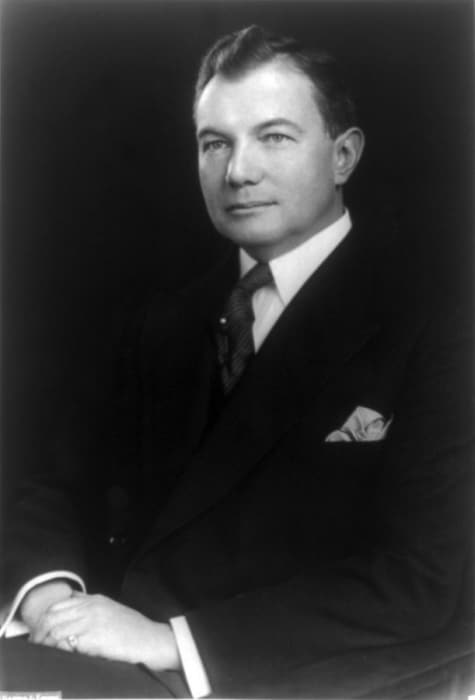
Justice Robert H. Jackson, author of the Wickard opinion.
On November 9, 1942, the court ruled for Wickard 9-0. Justice Robert H. Jackson wrote the court’s unanimous opinion, “The maintenance by government regulation of a price for wheat undoubtedly can be accomplished as effectively by sustaining or increasing the demand as by limiting the supply. The effect of the statute before us is to restrict the amount which may be produced for market and the extent as well to which one may forestall resort to the market by producing to meet his own needs. That [Filburn’s] own contribution to the demand for wheat may be trivial by itself is not enough to remove him from the scope of federal regulation where, as here, his contribution, taken together with that of many others similarly situated, is far from trivial”. In other words, non-participation in interstate commerce has an impact on interstate commerce.
This decision has become despised by conservatives, who see this decision as allowing pretty much any economic action to fall under interstate commerce. George Leef (2024) writing in the conservative publication National Review held, “The ruling shredded the concept of interstate commerce. It was as if the Founders had written the Constitution to say, “The government may impose controls of any kind on Americans who produce anything.””. Indeed, there is currently a case being heard by the Sixth Circuit of Appeals, Ream v. U.S. Department of the Treasury, by a man who wants to be able to distill bourbon in his home for personal and family consumption, which could potentially overturn Wickard.
After this decision, the Supreme Court issued no decisions that restricted Commerce Clause reach until United States v. Lopez (1995), which was a 5-4 decision on federal gun-free zone laws. Should Wickard be overturned, it will be Christmas Day for conservatives but a dire repudiation of the New Deal conception of regulatory powers.
References
Leef, G. (2024, November 20). One of the Worst Court Decisions of All Time. National Review.
Retrieved from
https://www.nationalreview.com/corner/one-of-the-worst-court-decisions-of-all-time-faces-challenge/

