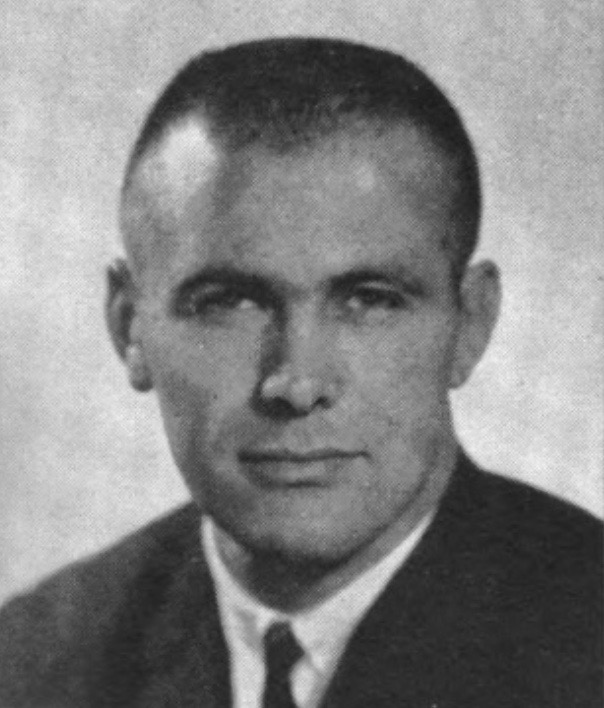
Today, Donald Rumsfeld is most known for his troubled time as Secretary of Defense in the George W. Bush Administration. From what I recall, two policies turned out to be of great trouble for the US in Iraq. One was the policy of “De-Baathification”, in which anyone who was in government during Saddam Hussein’s regime was barred from participating in government, which remained in place for a year. The second was that too few troops had been committed on the ground in Iraq. Both decisions came from his department. Today I wish to cover a less known part of Rumsfeld’s career, his time in Congress from 1963 to 1969.
In 1962, Congresswoman Marguerite Church, who had represented Chicago suburbs since 1951 following the death of her husband and predecessor, was calling it quits. Given this territory was staunchly Republican at the time, a 30-year-old Donald Rumsfeld (1932-2021) won easily. Interestingly, Rumsfeld had been inspired into public service by a speech from a Democrat while a student at Princeton. Illinois governor and two-time presidential candidate Adlai Stevenson II called on Princeton University students to use their education for public service (Graham).
In Congress, Rumsfeld voted in many ways as expected from someone of his district. In his first year in Congress, the conservative group I have discussed so much, Americans for Constitutional Action (ACA), saw him as a perfect representative of their preferences, giving him a 100%. However, one issue he would regularly disagree with ACA on was civil rights. During the 1960s, ACA opposed the Civil Rights Act of 1964, the Voting Rights Act of 1965, strengthening the 1964 law’s Title VII in 1966, keeping the fair housing title in the Civil Rights Act of 1966, the proposed Civil Rights Act of 1966, and adopting fair housing into the Civil Rights Act of 1968. Rumsfeld voted for all of them. After the 1964 election, Rumsfeld was one of the “Young Turks” who sought to oust Minority Leader Charles Halleck of Indiana for Gerald Ford of Michigan. Ford won 73-67, and Rumsfeld’s role in backing Ford certainly figured when Rumsfeld was nominated and confirmed as Secretary of Defense.
After the 1964 election, Rumsfeld’s record moved toward moderate as opposed to staunch conservatism, and his ACA scores would never reach an 80 after that election. He voted for foreign aid, supported funding for the arts, supported home rule for D.C., highway beautification, and for the Urban Mass Transporation Act in 1966 after supporting LBJ-backed cuts. Rumsfeld, however, was quite conservative in other ways, voting against the Economic Opportunity Act in 1964 (War on Poverty), the Appalachian Regional Development Act, rent supplements, the creation of the Housing and Urban Development Department, the Elementary and Secondary Education Act of 1965 (federal aid to education), Medicare, and the Housing and Urban Development Act of 1968. Rumsfeld also opposed the Johnson Administration’s effort to repeal the “right to work” section of the Taft-Hartley Act, an effort which would die in the Senate in one of the few victories of the Conservative Coalition in the Great Society Congress. His DW-Nominate score was a 0.369, which despite his reputation placed him to the right of most House Republicans of the time.
Rumsfeld was known for possessing a sharp wit and being combative with the Johnson Administration in ways that really mattered, such as over the “credibility gap” surrounding what the Administration was saying as opposed to the truth about the Vietnam War (Latimer). Rumsfeld in 1968 co-chaired the “Republican Truth Squad” to back Richard Nixon and rebut the Humphrey campaign. He ultimately proved a sufficiently prominent presence among Republicans that in 1969, Richard Nixon unexpectedly tapped him to head the Office of Economic Opportunity. This was an odd appointment given that Rumsfeld had been a critic of the office, and he didn’t initially want to do it, but he resigned Congress to accept the role and did what he could to make it effective. His full career is perhaps for another time.
References
Graham, B. (2021, June 30). Donald H. Rumsfeld, influential but controversial Bush defense secretary, dies at 88. The Washington Post.
Hedges, S.J. (2006, November 13). The rise and fall of Rumsfeld. The Seattle Times.
Retrieved from
https://www.seattletimes.com/nation-world/the-rise-and-fall-of-rumsfeld/
Latimer, M. (2021, June 30). The Don Rumsfeld the Obituaries Won’t Write About. Politico.
Retrieved from
https://www.politico.com/news/magazine/2021/06/30/donald-rumsfeld-what-the-world-got-wrong-497275
Rumsfeld, Donald Henry. Voteview.
Retrieved from
https://voteview.com/person/10622/donald-henry-rumsfeld

