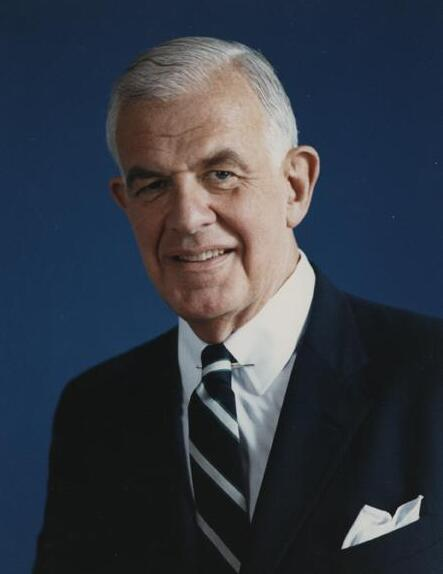
Tom Foley (D-Wash.), House Speaker.
It is two months until the midterm elections, and Democrats are hoping for a wave this year, while Republicans best hope that individual candidates count more than a general feeling against them, which is what happened in the 1990 midterms. There were some issues that were in the backdrop but none constituted an overall theme, such as a general anti-incumbent theme, voter dissatisfaction with the Savings and Loan bailout, and the 1989 Supreme Court decision Webster v. Reproductive Health Services, which upheld a Missouri law prohibiting public funding of abortions except to save the mother’s life on a 5-4 vote. Despite there being an anti-incumbent feeling, 96% of incumbents were returned to office this year, and those who lost did so for varying reasons. Thus, given that this election had no over-arching theme, commentators at the time dubbed it the “Seinfeld election” as the show Seinfeld, a new show at the time, was commonly known as a “show about nothing”. Although the overall bend was against the Republicans, it was only to a minor extent as far as midterms go. Republicans lost eight seats in the House, with Democrats taking seven and an Independent winning one. Can you guess who this Independent was? I’ll give you a hint: you know his name. If you can guess before I reveal it, kudos to you. An interesting detail is that the contrast in some cases between what the losing incumbents had won in 1988 and 1990 could be stark, and this speaks to a less partisan time.
The House Races That Flipped:
In Arkansas’ 2nd district, based in Little Rock, Republican Tommy Robinson retired to run for governor, and he was succeeded by Democrat Ray Thornton, who had previously served in Congress from the 4th district from 1973 to 1979.
In California’s 1st district, Democrat Douglas Bosco lost reelection to Republican Frank Riggs. Bosco suffered from his involvement with a failed Savings and Loan institution and Riggs was able to capitalize on this and the anti-incumbent mood. Riggs would be one of the “Gang of Seven” Republican freshmen who pushed for reforms and publicized mishandling of House institutions, such as the House Bank and the Congressional Post Office.
In California’s 17th district, Republican Chip Pashayan lost reelection to Democrat Cal Dooley. Pashayan became politically vulnerable after it was revealed that he received $26,000 in campaign funds from Lincoln Savings and Loan chairman Charles Keating, which he later returned (Barrett). By contrast, he had won reelection with 71.5% of the vote in 1988.
In California’s 44th district, Democrat Jim Bates lost reelection to Republican Duke Cunningham. In 1989, Bates had the dishonorable distinction of having been the first member of Congress to be reprimanded by the House Ethics Committee for sexually harassing female staffers (Orlando Sentinel). By contrast, Bates had won reelection with 59.7% of the vote in 1988.
In Florida’s 2nd district, the voters didn’t seem to take too kindly to incumbent Bill Grant changing his affiliation from Democratic to Republican. In 1988, he had won reelection uncontested, but this year, he lost reelection by 14 points to Democrat Pete Peterson.
Although no change happened in Georgia, this was Newt Gingrich’s closest call, coming within less than a point to defeat. By contrast, he had won reelection by almost 17 points in 1988.
In Hawaii’s 1st district, Republican Pat Saiki retired to run for the Senate, and she was succeeded by Democrat Neil Abercrombie. Abercrombie had previously briefly served in Congress.
In Idaho’s 1st district, Republican Larry Craig retired to run for the Senate, and he was succeeded by moderate Democrat Larry LaRocco, who interestingly had made his pro-choice stance a centerpiece of his campaign (CQ Press). This election produced for the first (and only time) since the 88th Congress that both of Idaho’s representatives were Democrats.
In Illinois’ 16th district based in Rockford, Republican Lynn Martin retired to run for the Senate, and he was succeeded by Democrat John W. Cox Jr. However, this one was a fluke in the normally Republican district as he was defeated for reelection in 1992.
In Indiana’s 3rd district, Republican John Hiler lost reelection to Democrat Tim Roemer. Roemer was able to capitalize on him sitting on the House Banking Committee and connected him to the savings and loan crisis.
In Maryland’s 1st district, Democrat Roy Dyson fell to scandal, as stories came about about his chief of staff, Tom Pappas, engaging in strange and abusive management practices towards male staffers came out in 1988. In addition, there were rumors that the unmarried Dyson was in a relationship with Pappas, and the latter subsequently committed suicide. He had survived reelection in 1988 against Republican Wayne Gilchrest by less than a point, and this time around Gilchrest won by 14 points. Dyson never ran for Congress again, but he had a political comeback, serving in the Maryland State Senate from 1995 until his reelection defeat in 2014.
In Minnesota’s 7th district, Republican Arlan Stangeland was caught up in personal scandal; the married Stangeland had used his Congressional credit card to make hundreds of calls to a female lobbyist. He lost reelection to Democrat Collin Peterson, who would hold the seat until 2021 in this normally Republican district given his stance as a moderate. Stangeland had won reelection in 1988 by around 9 points.
In Missouri’s 2nd district, based in the St. Louis suburbs, Republican Jack Buechner lost reelection to Democrat Joan Horn by only 54 votes. By contrast, Buechner had won reelection with over 66% of the vote in 1988. His stridency in the advocacy of his positions as well as a strong campaign against him on his anti-abortion stance helped put Horn over the top (CQ Press). This election proved a fluke, as Horn would lose reelection to Republican Jim Talent in 1992, and indeed this seat has been held by Republicans since.
In New Hampshire’s 2nd district, staunchly conservative Republican Chuck Douglas lost reelection to Democrat Richard Swett by over 5 points. His public feuding with fellow Granite Stater and Bush chief of staff John Sununu had harmed his image in the district. Douglas had won his first election in 1988 comfortably with 56.8% of the vote. The last time the district had elected a Democrat was the same year of the sinking of the Titanic.
In North Carolina’s 11th district, Democrat James M. Clarke lost reelection about 1.5% to Republican Charles Taylor. Taylor would be one of the “Gang of Seven” Republican freshmen, but by 2006 he would face allegations of impropriety surrounding his business interests, and lost reelection to Democrat Health Shuler.
Although no party change occurred in Ohio, a notable result was the loss of renomination for Republican Buz Lukens of the 8th district, who had a sex scandal involving a 16-year-old. The winner of the nomination was none other than future Speaker of the House and “Gang of Seven” member John Boehner.
In Oregon’s 5th district, Republican Denny Smith lost reelection to Democrat Michael J. Kopetski by 10 points. Smith had been a director at a failed Savings and Loan institution and was accused of having attempted to influence federal regulators (Time Magazine). The warning signs were there for Smith, as in the last election Kopetski had held him to 50.2% of the vote.
In Pennsylvania’s 18th district, Democrat Doug Walgren lost reelection to future senator and presidential contender Republican Rick Santorum by almost three points on the anti-incumbent theme and that he had lost touch with the voters (CQ Press). Santorum would also be one of the “Gang of Seven”. Walgren had first been elected in 1976 and won reelection with 62.7% of the vote in 1988; he had gotten too confident.
In Rhode Island’s 2nd district, Republican Claudine Schneider retired to run for the Senate, and she was succeeded by Democrat Jack Reed, who is currently one of the state’s senators.
In Utah’s 3rd district, retiring Republican Howard C. Nielson was succeeded by conservative Democrat Bill Orton, who won the seat by 20 points and managed to hold on to it until the 1996 election.
In Vermont, Peter Smith lost reelection to Independent Bernie Sanders by 16.5%. Smith was never in a particularly commanding position, as in his first election in 1988, he had benefited from a three-way race, as the Democrats ran a candidate who got almost 19% of the vote and he had won against Sanders by under 4 points. He had also distanced himself from the tax policies of the Bush Administration by publicly disagreeing with him at a campaign event, but this didn’t help. By contrast, this time Democratic voters rallied behind Sanders, as the Democratic nominee only netted 3% of the vote. The press of the time noted that Sanders was the first Socialist to be in Congress since Victor Berger’s 1928 defeat. Laurence Barrett of Time Magazine (1990) wrote on the new representative, “A former Socialist mayor of Burlington, Sanders has railed for years against establishments of all kinds. This fall, his populist appeal seems in sync with the times.”
In Virginia, incumbent Stan Parris of the Alexandria-based 8th district, had been known for his sharp criticisms of the Democrats and the D.C. government. As Congressional Quarterly (1990) noted, “Parris, long known for conservative bombast, wearied many with his diatribes against liberals and the District of Columbia’s government” although it also noted that “The Democrat who ousted him though, James P. Moran Jr., matched him blow for rhetorical blow”. From his 1988 election, you would think that this one would go well for him too, as he won by almost 25 points. However, Moran, who was the mayor of Alexandria, defeated him by 7 points. Another factor helping Moran was his pro-choice stance. The Democrats have not had trouble holding the district since.
In Wisconsin, Robert Kastenmeier, who had represented the Madison-based 2nd district since 1959, got overconfident in his safety and had suffered an upset by moderate Republican Scott Klug, a TV journalist who won with 53% of the vote, who convincingly made the case that Kastenmeier had lost touch with the voters (CQ Press). By contrast, he had won reelection by 17 points in 1988. Democrats have not had trouble holding this district since Klug honored his term-limits pledge and retired from office in 1999.
Gubernatorial Races
Anti-incumbent sentiment had a bit more power in gubernatorial races, in which several governors lost reelection and 15 in total changed parties. Nancy Gibbs (1990) of Time Magazine noted the increased focus on state government as product of federal policy, “Throughout the 1980s, Reaganomics shifted much of the burden of government to the states — whether for providing services or finding ways to pay for them. Incumbent members of Congress can hide from their responsibility for such steps, but sitting Governors cannot. As chief executives, they directly bear the blame for policies that affect the voters. That wrath accounts for the decisions by Connecticut’s William O’Neill and Massachusetts’ Michael Dukakis not to seek another term after imposing tax increases. Special-interest money also plays a smaller role in state races — which means that voters can more easily make themselves heard”. For conservatives, this is how federalism ought to work.
In Alaska, Alaskan Independence Party candidate Wally Hickel succeeded Democrat Steve Cowper.
In Arizona, retiring Democrat Rose Mofford was succeeded by Republican Fife Symington.
In Connecticut, retiring Democrat William O’Neill was succeeded by former Senator Lowell Weicker, who ran on the A Connecticut Party ticket.
In Florida, Republican Bob Martinez lost reelection to Democrat Lawton Chiles after breaking a promise not to raise taxes.
In Kansas, Republican Mike Hayden lost reelection to Democrat Joan Finney after breaking a promise not to raise taxes.
In Massachusetts, retiring Democrat Michael Dukakis was succeeded by Republican Bill Weld.
In Michigan, Democrat James Blanchard lost reelection to Republican John Engler.
In Minnesota, Democrat Rudy Perpich lost reelection to Republican Arne Carlson.
In Nebraska, Republican Kay Orr lost reelection to Democrat Ben Nelson.
In New Mexico, retiring Republican Garrey Carruthers was succeeded by Democrat Bruce King.
In Ohio, retiring Democrat Dick Celeste was succeeded by Republican George Voinovich, who had served as mayor of Cleveland.
In Oklahoma, retiring Republican Henry Bellmon was succeeded by Democrat David Walters.
In Rhode Island, Republican Ed DiPrete lost reelection to Democrat Bruce Sundlun due to a corruption scandal.
In Texas, retiring Republican Bill Clements was succeeded by Democrat Ann Richards. This is the last time that a Democrat has been elected governor of Texas.
In Vermont, retiring Democrat Madeleine Kunin was succeeded by Republican Richard Snelling.
Other Notes:
In Connecticut’s 5th district, Gary Franks was the first black Republican to be elected to the House since Illinois’ Oscar De Priest of Illinois had left office in 1935.
Time Magazine’s article regarding the election notes that “Most lawmakers who feel remotely threatened – as well as every House member attempting to graduate to the Senate – came out against it [the Bush Administration’s deficit-reduction package]. Braver souls who supported the unpopular combination of tax hikes and service cuts are now being savaged for their stand” (Barrett). If we want to understand why we have a debt problem in the United States, this is a part of it.
References
96 Percent of House Incumbents Re-Elected. (1990). CQ Press.
Retrieved from
https://library.cqpress.com/cqalmanac/document.php?id=cqal90-1112110#_
Barrett, L.I. (1990, October 21). Housecleaning Time? Time Magazine.
Retrieved from
https://time.com/archive/6716187/housecleaning-time
Boys-Will-Be-Boys Syndrome. (1989, October 31). Orlando Sentinel.
Retrieved from
Demos Pick Up 10 More Seats in House. (1990, November 7). Deseret News.
Retrieved from
https://www.deseret.com/1990/11/7/18889955/demos-pick-up-10-more-seats-in-house-br
Gibbs, N. (1990, November 18). “You Can’t Beat Somebody with Nobody”. Time Magazine.
Retrieved from
https://time.com/archive/6716475/you-cant-beat-somebody-with-nobody

