The 1974 Midterms: Watergate Fallout

On August 9, 1974, President Richard Nixon became the first and so far only president to resign office after the Watergate tapes proved that he initiated a cover-up of the Watergate burglary, thus he was guilty of obstruction of justice. Republicans suffered the electoral consequences in the 1974 midterms, with Democrats winning 48 seats. The result was a strongly liberal Congress with the freshmen being known as “Watergate Babies”. Although the new Congress blocked further military assistance to South Vietnam, they were limited in their ability to act as President Ford vetoed 66 bills, of which 12 were overridden. However, the 1974 midterms produced fundamental changes in the Democratic Party and constituted the beginning of the end of the influence of conservative Democrats, as the Democratic Party made it clear through their ousters of several committee chairmen that seniority alone no longer determined whether one would get a chairmanship. This either motivated retirements or legislators significantly changing their voting behavior to get on the good side of liberal Democrats.

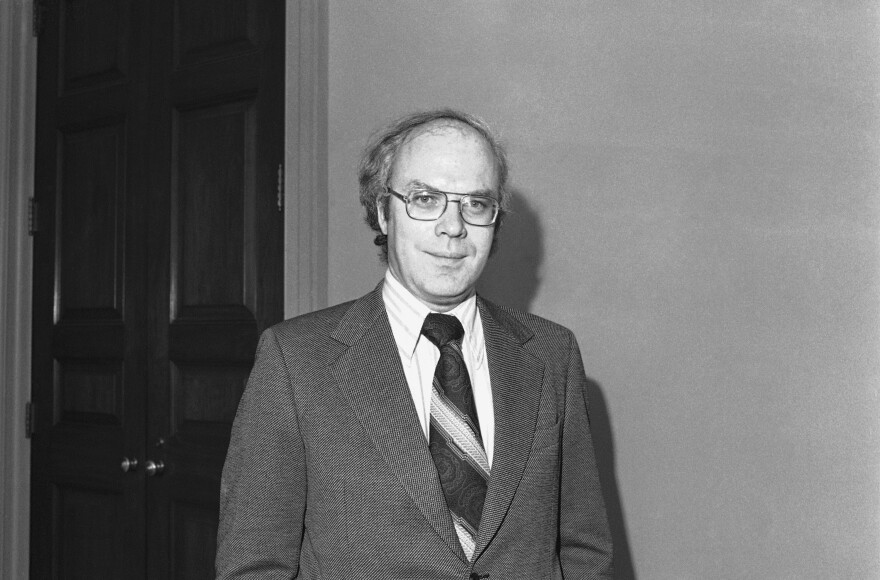
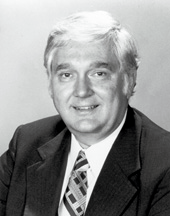
Patrick Leahy’s (D-Vt.), the longest serving of the Democrats among the 1974 freshmen.

The significant results were as follows…

House

Although Arkansas had no change, future President Bill Clinton came within 4 points of defeating Republican John Paul Hammerschmidt, who represented Bentonville, Fayetteville, and Rogers, for reelection.

In California, Republican incumbents Bob Mathias and Victor Veysey lost to Democrats John Hans Krebs and James F. Lloyd respectively. The 13th district saw Republican Charles Gubser retire and be succeeded by Democrat Norman Y. Mineta, while in the 34th district Republican Craig Hosmer retired and Democrat Mark W. Hannaford succeeded him.

In Colorado’s 2nd district, which included the city of Boulder, was increasingly waving its liberal flag with future Senator Tim Wirth defeating five-term Republican incumbent Donald G. Brotzman for reelection. The 2nd hasn’t been represented by a Republican since.

In Connecticut’s 2nd district, Democrat Chris Dodd, son of the late Senator Thomas Dodd, succeeded retiring Republican Robert Steele.

In Florida’s 5th district, one of the few Republican gains occurred, with Republican Richard Kelly succeeding retiring Democrat Bill Gunter. Kelly would later be one of the members of Congress implicated in the Abscam Scandal.

In Georgia’s 4th district, Democrat Elliott Levitas defeated four-term incumbent Republican Benjamin Blackburn for reelection. This brought Georgia back to its traditional all-Democratic delegation.

In Illinois’ 3rd district, Democrat Marty Russo defeated Republican Robert Hanrahan for reelection and Democrat Abner J. Mikva defeated Republican Samuel H. Young for reelection in the 10th district. In the 15th, 40-year incumbent and Republican whip Leslie Arends retired, his successor being Democrat Tim Lee Hall. Hall would only hold the seat for one term before the district reverted to its traditional Republicanism.

In Indiana, Republicans were left with only two seats after election night. Losing were Republican Earl Landgrebe of the 2nd district who had famously refused to support impeachment of President Nixon after the release of the Watergate tapes, Democrat Floyd Fithian defeating him by 22 points. By contrast, he had won reelection by over 9 points. In the 6th district, 12-term incumbent William G. Bray lost reelection to Democrat David W. Evans by almost 5 points. Republicans Roger Zion, David Dennis, and William Hudnut were defeated by Philip Hayes, Philip Sharp, and Andrew Jacobs Jr. in the 8th, 10th, and 11th districts.

In Iowa, the results went south for Republicans, but the election did see the election of Chuck Grassley, currently the longest serving federal politician, for his first term in the House, succeeding the legendary skinflint H.R. Gross, but Republicans William J. Scherle and Wiley Mayne lost reelection to Democrats Tom Harkin (who would be elected to the Senate in 1984) and Berkley Bedell in the 5th and 6th districts respectively.

In Louisiana, only one change occurred, and that was due to Democrat John Rarick losing renomination to radio host Jeff LaCaze. Rarick was extremely conservative, never supported a civil rights measure, and had had ties with the KKK. LaCaze was much more liberal, but the 6th district was conservative, thus Republican W. Henson Moore won the open seat.

In Maine, the 1st district was a bit of a surprise as Republican David F. Emery defeated Democrat Peter Kyros, who had been first elected in 1966, for reelection by under half a point.

In Maryland, Republican Lawrence Hogan of the 5th district (father of former Governor Larry Hogan) sought to run for governor and retired, with Democrat Gladys Spellman winning the district.

In Massachusetts’ 5th district, future Senator Paul Tsongas defeated Republican Paul W. Cronin by 21 points. Cronin was the last Republican to represent the district.

In Michigan’s 6th district, Republican Charles Chamberlain opted not to run again, with Democrat Milton Carr succeeding him. In the 18th district, Republican Robert J. Huber, an ultra-conservative, lost reelection to Democrat James Blanchard by nearly 19 points.

In Minnesota’s 6th district, Democrat Richard Nolan won the election succeeding retiring Republican John M. Zwach.

In Montana’s 1st district, future Democratic Senator Max Baucus defeated Republican Richard Shoup for reelection.

In Nevada’s at-Large district, Democrat James Santini defeated Republican David Towell for reelection.

In New Hampshire, Democrat Norman D’Amours succeeded Republican Louis Wyman, who had retired to run for the Senate.

In New Jersey, Republicans John Hunt, Charles Sandman, William B. Widnall, and Joseph J. Maraziti lost reelection to Democrats James J. Florio, William J. Hughes, Andrew Maguire, and Helen S. Meyner in the 1st, 2nd, 7th, and 13th districts respectively.

In New York, Republicans James Grover, Angelo Roncallo, and Carleton J. King lost reelection to Democrats Thomas Downey, Jerome Ambro, and Edward W. Pattison of the 2nd, 3rd, and 29th districts respectively. Retiring Republicans Howard Robison and Henry P. Smith of the 27th and 36th districts respectively were succeeded by Democrats Matthew McHugh and John J. LaFalce.

In North Carolina, Republicans Wilmer Mizell and Earl Ruth of he 5th and 8th districts went down to defeat against Democrats Stephen Neal and Bill Hefner. Hefner would serve in Congress until 1999.

In Ohio’s 1st district, Democrat Tom Luken lost reelection by 2 points to Republican Bill Gradison. However, Luken would run in the 2nd district in 1976 and win, and represented the district until 1991. Democrat Ronald Mottl succeeded Republican William Minshall in the 23rd district.

In Oklahoma’s 6th district, Republican John Newbold “Happy” Camp lost reelection to Democrat Glenn English by 9 points. Did he live up to his nickname on election day?

In Oregon, Democrats won all House seats, with incumbent Republican Wendell Wyatt of the 1st district retiring and being succeeded by Les AuCoin and Democrat Jim Weaver defeating Republican John Dellenback for reelection in the 4th district.

In Pennsylvania, in the 7th district Republican Lawrence G. Williams lost renomination and was succeeded by Democrat Robert W. Edgar while Democrat Frank Clark of the 25th district lost reelection to Republican Gary Myers.

In South Carolina, Republican Edward Young of the 6th district lost reelection to Democrat John Jenrette. Jenrette would later be implicated in the Abscam Scandal.

In South Dakota, Republicans scored a victory with Larry Pressler’s defeat of incumbent Democrat Frank Denholm in the 1st district.

In Tennessee, Republicans LaMar Baker and Dan Kuykendall lost reelection in the 3rd and 8th districts to Marilyn Lloyd and Harold Ford respectively. Ford was the first ever black representative from Tennessee and served until 1997.

In Texas’s 13th district, Republican Bob Price lost reelection to Democrat Jack Hightower.

In Virginia, Republicans Stan Parris and Joel Broyhill of the 8th and 10th districts respectively lost reelection to Democrats Herb Harris and Joe Fisher, a distinct shift from conservative to liberal representation as Harris and Fisher were of the national rather than Southern Democrat variety.

In Wisconsin, Republicans Vern Thomson and Harold Froehlich of the 3rd and 8th districts lost reelection to Democrats Alvin Baldus and Robert John Cornell respectively. Thomson had once been Wisconsin’s governor and been in Congress since 1961.

In the Senate, Republicans lost a net of four seats, not as terrible as it might have been given the national atmosphere, and three Republican incumbents won narrow reelections in Kansas’s Bob Dole (who won by two points), North Dakota’s Milton Young (who won by only 186 votes), and Oklahoma’s Henry Bellmon (who won by half a point), Also of note is that 30-year incumbent J. William Fulbright of Arkansas lost renomination to Governor Dale Bumpers by a 30 point margin. Bumpers was 20 years younger and popular while Fulbright, the chairman of the Senate Foreign Relations Committee, to many represented the Washington establishment and was out of touch.

In Colorado, Republican Peter Dominick, whose physical and psychological health was deteriorating due to an at-the-time un-diagnosed multiple sclerosis, lost reelection to future Democratic presidential contender Gary Hart by 18 points.

In Florida, Democrat Richard Stone succeeded the retiring Republican Edward Gurney.

In Kentucky, Republican Marlow Cook lost reelection to Democrat Wendell Ford. Cook was not unpopular and would have likely won reelection had the Democrats not nominated Ford, a highly popular governor.

In Nevada, Republicans scored a victory when Republican Paul Laxalt succeeded retiring Democrat Alan Bible. He defeated future Senator Harry Reid by less than half a point.

In New Hampshire, Democrat John A. Durkin narrowly defeated Republican Louis C. Wyman to succeed Republican Norris Cotton. It was one of the closest races in Senate history, with Cotton temporarily holding his seat once more until the outcome was determined.

In Vermont, Democrat Patrick Leahy defeated Republican Congressman Richard Mallary to succeed retiring Republican Senator George Aiken. Leahy was the first ever Democrat elected to the Senate from Vermont since the establishment of the Republican Party, and would remain in office until 2023.

Joseph F. Guffey: The Keystone State’s Chief New Dealer

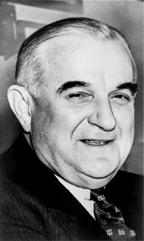
Starting with the 1860 election, Pennsylvania had an exceptionally long record of loyalty to the GOP, with Simon Cameron, a former Democrat, running the first Republican machine. This started a string of Republican state bosses and indeed the Philadelphia machine had quite a reputation for corruption. Pennsylvania did not even vote Democratic in the three-way 1912 election, rather Bull Moose Progressive Theodore Roosevelt won the state. Republicans were typically able to keep numerous working-class voters happy through tariff policies that benefited the prominent industries of state and served to raise wages but at the same time these policies raised costs of goods. Joseph Finch Guffey (1870-1959) was for many years in the minority in Pennsylvania as a Democrat. He hailed from a strongly Democratic family and made a key connection when he attended Princeton University and befriended Woodrow Wilson, whose political career he strongly supported. Guffey was both active in business and politics, being, rather unconventionally at least in the eyes of modern liberals, an oil executive, heading up the Guffey-Gillespie Oil Company beginning in 1918. He was instrumental in swaying the Pennsylvania Democratic delegation to supporting Wilson at the 1912 Democratic National Convention, much to the consternation of his party boss uncle, who was backing House Speaker Champ Clark (D-Mo.) (Hill).

Guffey in the Wilson Administration and Controversy

During World War I, President Wilson tapped Guffey to serve as Director of Sales for the Alien Property Custodian. In this position, he was responsible for managing billions. Because during the war 18,000 people had become millionaires and $20 billion had been spent on the war, Congressional Republicans reached the conclusion that there was some graft in war expenditures (Sanderlin, 465). After Attorney General Harry Daugherty dragged his feet on indictments (people who live in glass houses shouldn’t cast stones!), in 1922, Guffey was indicted on twelve counts of embezzlement by misappropriating funds he had managed. The case, however, stalled for years and in 1930 the government dropped the case as they did not believe they would be able to win a conviction. Guffey maintained his innocence for the rest of his life, and this matter, while haunting him, did not prove fatal to his political career.

The 1934 Election

Although Pennsylvania had remained loyal to Hoover in 1932 as had the black vote, FDR’s New Deal policies proved popular with both blacks and working-class voters. Republicans had been able to do well with both in the past, but the Great Depression and Roosevelt’s popularity politically taxed them, even in the Keystone State. Guffey ran for the Senate against Republican incumbent David A. Reed, who was one of the Senate’s standard-bearers of conservatism and had sponsored the Immigration Act of 1924. Governor Gifford Pinchot attacked Guffey on the basis of the 1922 indictment and declared “I can’t stand Guffey” while accusing him of obtaining a dismissal of the indictment through prominent New York State Republican Clarence H. Fay (Sanderlin, 466). The 1934 midterms proved a smashing success for the Democrats in the Keystone State as they cobbled together a coalition of working class and black voters, resulting in a net gain of eleven House seats in the state, Democrat George Earle winning the gubernatorial election to succeed Republican Gifford Pinchot, and Guffey defeating Reed by four points. Guffey’s election was the first time in sixty years that a Democrat was elected to the Senate from Pennsylvania.

Senator Guffey

He quickly became the political boss of Pennsylvania given that as senator the Roosevelt Administration funneled patronage through him as well as New Deal money. Guffey made himself known as a “100 per cent Roosevelt man” and indeed his record almost entirely reflected that (Hill). In 1935, he sponsored the Guffey-Snyder Coal Act, establishing the National Bituminous Coal Commission setting minimum prices, establish fair labor practices, and guarantee collective bargaining rights. However, this measure was struck down by the Supreme Court in Carter v. Carter Coal Co. (1936), which resulted in Guffey quickly drafting and getting passed a new law, Guffey-Vinson, in 1937 that left out the labor provisions that had resulted in the Supreme Court striking the law down. Even on questions in which Roosevelt was not so popular he sided with the administration, such as his vote against the 1935 Patman Bonus bill, his vote against killing the “court-packing plan” in 1937, and his vote for Roosevelt’s executive reorganization plan in 1938, which would be defeated in the House. There was a rare exception or two, such as in 1939 when he voted against the legalization of TVA’s purchase of Commonwealth & Southern’s southern properties. He was also known as rather politically shrewd. For instance, early in his time in the Senate, Guffey attacked Bureau of Narcotics chief Harry Anslinger for his racism; Anslinger was married to Republican former Secretary of the Treasury Andrew Mellon’s niece and his criticizing a public official for racism certainly helped his standing with black voters (Hill). Unsurprisingly, he was also a supporter of civil rights legislation. In 1936, Guffey played a key role, despite being a senator, in determining the next House majority leader. After he hosted a fine luncheon for Pennsylvania’s Democrats they held an 18-6 vote for Texan Sam Rayburn over New York’s John J. O’Connor, and then he got all but one of the remaining to back Rayburn (Time Magazine). That year, Roosevelt won Pennsylvania by 16 points, the first time a Democrat had won the state in 80 years, a testament to the success of the New Deal coalition and to Guffey’s leadership of the state party. In 1940, a majority of Pennsylvanians proved pleased with Roosevelt and Guffey, reelecting them by seven and four points respectively. Pennsylvania’s Democratic organization was functioning well. In 1943, as a member of the Senate Foreign Relations Committee, he was profiled by Isaiah Berlin in a confidential analysis for the British Foreign Office as “a noisy Administration supporter who wraps himself in the Roosevelt flag and has been advocating for a fourth term for some time. A very typical Pennsylvania politician who has decided to throw his lot in with the President and has thus become an obedient party hack not of the purest integrity. Consistently votes in the opposite direction of his fellow Senator from Pennsylvania, James Davis” (Hachey, 146). Guffey was even more supportive of Roosevelt on foreign policy than his already staunch support of his domestic agenda.

During the 78th Congress, the pro-New Deal Union for Democratic Action found nothing amiss with Guffey’s voting record. In the prior UDA release, the only two votes he got “wrong” by them out of twenty were on a progressive “ability to pay” formula in 1939 and on tax-exempt securities in 1940. In 1944, President Roosevelt once again won reelection in Pennsylvania, this time by less than three points, and Republican Senator James Davis was finally defeated by Philadelphia Democratic Congressman Francis J. Myers by less than a point.

In 1946, the national environment proved far different from that of 1934 or 1940. The Great Depression was over, World War II was over, and people were chafing under price controls, particularly on meat, which resulted in meat shortages. Guffey’s record had remained staunchly liberal if not having even gotten more so. Worse yet for him was that Pennsylvania had a popular Republican governor in Edward Martin, who represented a return to the sort of politics of Guffey’s predecessor, David A. Reed. The environment of 1946 was so bad for Democrats in Pennsylvania that it resulted in Republicans picking up nine House seats, including all of Philadelphia’s seats, and Guffey lost reelection by a whopping twenty points. By this time a man of 76, his career was over. According to DW-Nominate, Guffey had been the most liberal senator at -0.656 throughout his 12 years in the Senate save for the 79th Congress, in which he was beaten by Idaho’s Glen H. Taylor. Guffey retired to Washington D.C., where he lived as an elder Democratic statesman until his death on March 6, 1959, at the age of 88.

References

Guffey, Joseph Finch. Voteview.

Retrieved from

https://www.voteview.com/person/3872/joseph-f-guffey

Hachey, T.E. (Winter, 1973-1974). American Profiles on Capitol Hill: A Confidential Study for the British Foreign Office in 1943. The Wisconsin Magazine of History, 57(2), 141-153.

Retrieved from

Click to access bib139a.pdf

Hill, R. (2022, July 24). The Democratic Boss of Pennsylvania: Joseph F. Guffey. The Knoxville Focus.

Retrieved from

Sanderlin, W.R. (1963, October). The Indictment of Joseph F. Guffey. Pennsylvania History: A Journal for Mid-Atlantic Studies, 30(4).

Retrieved from

https://journals.psu.edu/phj/article/viewFile/22974/22743

The Congress: Leader Apparent. (1936, December 13). Time Magazine.

Retrieved from

https://time.com/archive/6756388/the-congress-leader-apparent

The 1982 Midterms: When It Looked Like Reagan Had Failed

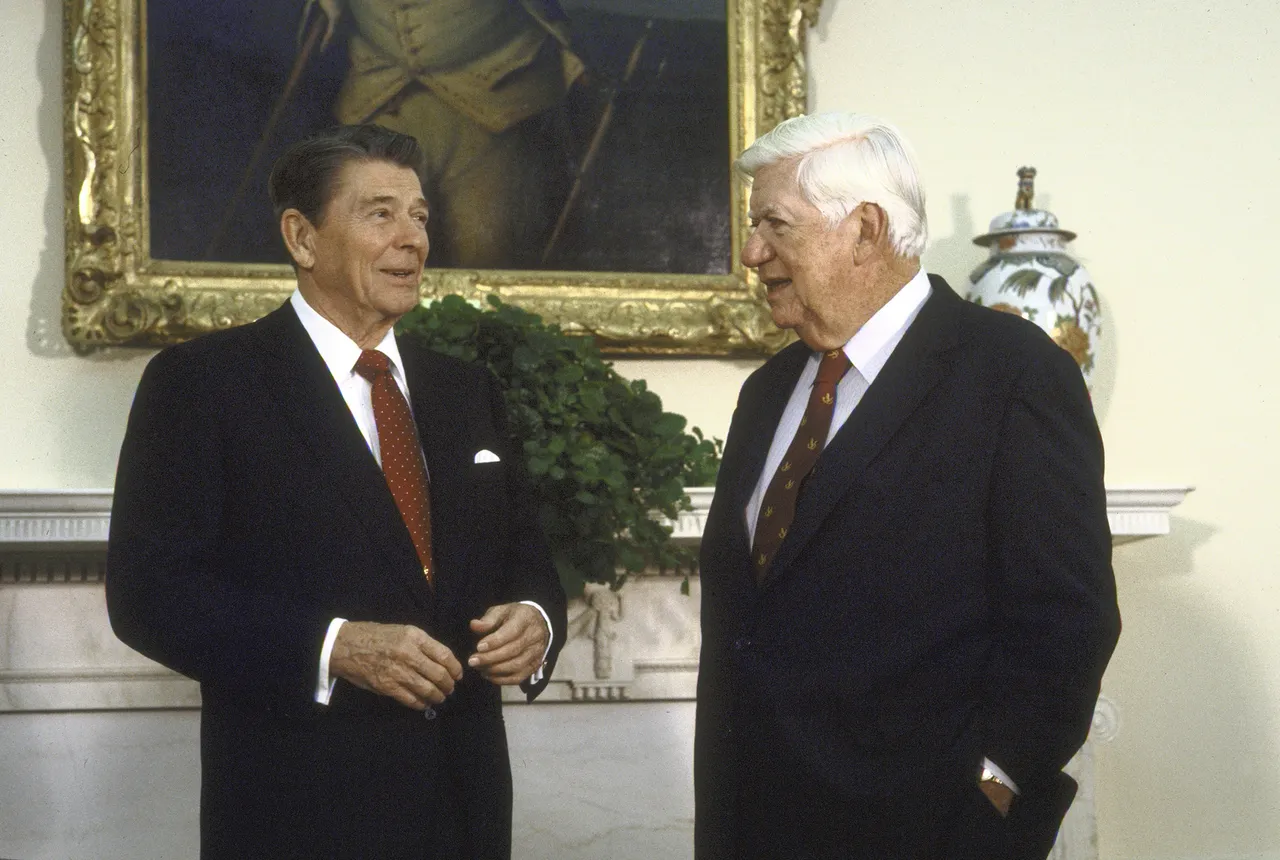
President Reagan and Speaker Tip O’Neill (D-Mass.).

As a year, 1982 served as the low point of the Reagan presidency. Much of the rhetoric of the left surrounding his legacy was also issued forth that year, as the economy was in recession with 10% unemployment due to interest rate hikes by the Federal Reserve to combat inflation, and this election was a referendum on his presidency thus far. The effect was felt in the House, with Democrats winning 26 seats, but the dynamics in the Senate did not change; Democrats reaffirmed their hold in New Jersey, with Democrat Frank Lautenberg succeeding interim Republican appointee Nicholas Brady after the resignation of Democrat Harrison Williams. The Democratic win with Jeff Bingaman defeating Republican Harrison Schmitt in New Mexico was balanced out by Republican Chic Hecht’s defeat of incumbent Howard Cannon in Nevada. In Virginia, Independent Harry Byrd Jr. was succeeded by Republican Congressman Paul Trible, but this didn’t really change anything as both Byrd and Trible were conservatives.

1982 House Losses

The 1982 midterms were successful for Democrats in the House and it was a testament to the efforts of Tony Coelho to get the Democrats back on track from their 1980 loss, which had exposed numerous ways in which the Democrats were behind in their approach on campaigning. Of the 26 Republicans who lost, 14 had first been elected in 1980.

Some notable victors this year included John McCain, who succeeded Republican House leader John Rhodes in Arizona’s 1st district, and John Kasich, who defeated Democrat Bob Shamansky for reelection. Indeed, Kasich was the only Republican to defeat a Democratic incumbent in the House that year. The current governor of Ohio, Mike DeWine, won his first term in Congress this year from Ohio’s 7th district, succeeding Bud Brown (who, just in a random bit of trivia is the father of actor Clancy Brown).

Redistricting strongly impacted this election, and it resulted in numerous incumbents having to fight within their own parties for renomination.

In Alabama, Republican incumbent Albert Lee Smith, who represented Birmingham, lost reelection to Democrat Ben Erdreich. As a former member of the John Birch Society, Smith was an increasingly poor fit for a district in which the black Democratic vote was becoming increasingly powerful. Republican Bill Dickinson of the 2nd district (Montgomery) came within a point of losing as well.

In Arizona, Democrats picked up a newly created seat with Jim McNulty. However, his Republican opponent, Jim Kolbe, would win the seat in 1984.

In California, Congressman Phil Burton succeeded in getting a redistricting scheme that benefited Democrats. This resulted in the loss of Republican Don Clausen of the 1st district, who had served since 1963, lost reelection to Democrat Douglas Bosco. His district was based in Napa Valley and Santa Rosa, which had increasingly been trending Democratic. The Democrats also gained a seat in Eastern California with Richard Lehman and a seat in Southern California with Howard Berman. Republicans lost two seats to redistricting as incumbents Bobbi Fiedler and Barry Goldwater Jr. had their districts merged; Goldwater ran unsuccessfully for the GOP Senate nomination, as well as Wayne Grisham and David Dreier’s districts merging with Dreier winning the primary. However, perhaps the most notable event was the turning out of office of the ultra-conservative John Rousselot, who had recruited a strong candidate to try to defeat Burton’s brother, John, for reelection in 1980. Rousselot had his district merged with Democrat Matthew Martinez, which resulted in him running in a majority Latino district. The famously fiery Congressman Robert “B-1 Bob” Dornan also had his district altered to make it a Democratic district, thus he made a run for the Senate. He would return to Congress in the 1984 election in another Orange County district.

In Colorado, Republicans gained the newly created 6th district. Although astronaut Jack Swigert won the election, he died less than two months later of cancer, thus Republican Daniel Schaefer ended up serving.

Connecticut was a mixed bag for the GOP. On one hand, Republican Lawrence DeNardis lost reelection in the 3rd district, but on the other, Republican Nancy Johnson won an open Democratic seat in the 6th district.

In Delaware, troubled incumbent Thomas B. Evans, alleged to have engaged in adultery, was defeated for reelection by Democrat Thomas Carper, who would eventually be the state’s governor as well as its four-term senator.

In Florida, the dynamics didn’t change as four districts were added but Democrats and Republicans won two each.

In Illinois, Paul Findley of the 20th district, who had served in office since 1961, narrowly lost reelection to Democrat Dick Durbin, who is currently in the Senate. Findley had become most known at this point as a strong critic of Israel and in his own words, “Arafat’s best friend in Congress”. Redistricting making his district more Democratic, the early 1980s recession, and AIPAC efforts to turn him out of office combined had resulted in the loss. In the 17th district, Republican Tom Railsback lost renomination for his political moderation, and was succeeded by Democrat Lane Evans. In the 4th district, Republican Ed Derwinski lost renomination to George O’Brien, whose districts had been merged. Another merging was of Republican Robert McClory’s district with that of Republican John Porter. McClory opted to retire rather than running against Porter.

In Indiana, Republican H. Joel Deckard lost reelection to Democrat Frank McCloskey, but Democrats lost a seat due to two of their districts being merged and Republicans gained a newly created seat with Danny Burton. Democrat Floyd Fithian retired from his district, which had merged with that of Republican John T. Myers, who won the election.

In Kansas, Republicans lost the seat of retiring James Jeffries, with Democrat Martha Keys winning the seat.

In Massachusetts, Republican representation was shaved down to Silvio Conte of the 1st district as Republican Margaret Heckler lost reelection by 19 points to Democrat Barney Frank; their districts had been merged. Heckler would after serve as Reagan’s Secretary of Health and Human Services. Republican representation in Massachusetts had gradually been declining since the 1940s.

In Michigan, freshman incumbent James Dunn of the 6th district lost reelection to Democrat Bob Carr, who he had defeated in 1980.

In Minnesota, Republicans Tom Hagedorn and Arlen Erdahl lost reelection to Democrats Tim Penny and Gerry Sikorski respectively.

In Mississippi, Republicans gained an open Democratic seat with the retirement of David Bowen with Webb Franklin. However, this district would not be a hold for them for that long, as the district had a high black population and by 1986 their political participation resulted in Franklin’s loss to Mike Espy. Democrats have held the district since.

In Missouri, Republicans lost a seat when Wendell Bailey’s district was merged with Democrat Ike Skelton’s, and the latter won the election.

In Nevada, the growing state added a Congressional district. With the retirement of Democrat Jim Santini, this resulted in the Las Vegas based district of the 1st, represented by Harry Reid, and the rest of the state, represented by Republican Barbara Vucanovich of the 2nd.

In New Mexico, Democrats gained the newly created 3rd district, based in Albuquerque with Bill Richardson.

In New Jersey, liberal Republican Harold Hollenbeck of the 9th district lost reelection to Democrat Robert Torricelli, who would later serve in the Senate.

In New York, the results were a wash. First-term Republican John LeBoutillier lost reelection against Democrat Robert J. Mrazek, whose districts had been merged. However, Democrat Leo Zeferetti’s district was merged with first-term Republican Guy Molinari’s, and Molinari won the election, as well as Democrat Peter Peyser’s district merging with Republican Ben Gilman’s, the latter winning the election.

In North Carolina, first term Republicans Gene Johnston of the 6th district and Bill Hendon of the 11th district lost reelection to Robin Britt and James M. Clarke respectively. Republicans would win both districts back in 1984, with Hendon returning for one more term.

In Ohio, first term Republican Ed Weber of the 9th district (Toledo) lost reelection to Democrat Marcy Kaptur, who as of writing is still in Congress!

In Oregon, Republicans gained a newly created seat with Bob Smith winning the election.

In Pennsylvania, Philadelphia’s Republican Charles Dougherty lost reelection to Democrat Robert Borski. To this day, he is the last Republican to have represented any portion of Philadelphia in Congress. Other losses for Republicans included Eugene Atkinson in the 5th district to Joe Kolter, James Coyne of the 8th district to Peter Kostmayer and James Nelligan of the 11th district to Democrat Frank Harrison. However, retiring Democrat Allen Ertel of the 17th district was succeeded by Republican George W. Gekas.

In South Carolina, Republican John Napier lost reelection to Democrat Robin Tallon.

In South Dakota, the two districts became one, and incumbent Democrat Tom Daschle defeated Republican incumbent Clint Roberts. Daschle would later lead the Democrats in the Senate.

In Texas, unlike modern population growth, Democrats gained three seats.

In Utah, a third district was added, which was won by Republican Howard C. Nielson.

In Virginia, Republican Robert Daniel of the 4th district lost reelection to Democrat Norm Sisisky. Republican William Wampler of the 9th district also lost reelection to Democrat Rick Boucher, who would serve until his loss in the Tea Party wave of 2010. The district is now the strongest Republican district in Virginia. In Virginia’s 6th district, one of the first to go Republican, retiring M. Caldwell Butler was succeeded by Democrat Jim Olin.

In Washington, Republicans gained a seat in the newly created 8th district with Rod Chandler.

In West Virginia, Democrats won all seats, with first term Republican incumbents Mick Staton turned out of office and Republican Cleve Benedict leaving to run for the Senate, which he lost easily to popular incumbent Robert Byrd. Republicans would be locked out of the West Virginia delegation until the 2000 election, which just goes to show how much states can change.


After this election, the Reagan Administration acknowledged the setback and estimated they lost 24 conservative supporters but still believed that they could secure victories sometimes in the House (Raines). Both parties though knew the ideological balance had shifted from conservatives, held up by a coalition of Republicans and Reagan Democrats, towards liberals. House Speaker Tip O’Neill (D-Mass.) summed up the House elections thusly, “It was a disastrous defeat for the President” (Raines).

References

1982 United States House of Representatives elections. Wikipedia.

Retrieved from

https://en.wikipedia.org/wiki/1982_United_States_House_of_Representatives_elections

1982 United States Senate elections. Wikipedia.

Retrieved from

https://en.wikipedia.org/wiki/1982_United_States_Senate_elections

Raines, H. (1982, November 4). Reagan Facing Demands for Compromise on Economy After 26-Seat Loss in House. The New York Times.

Retrieved from

The Nixon Midterm: 1970

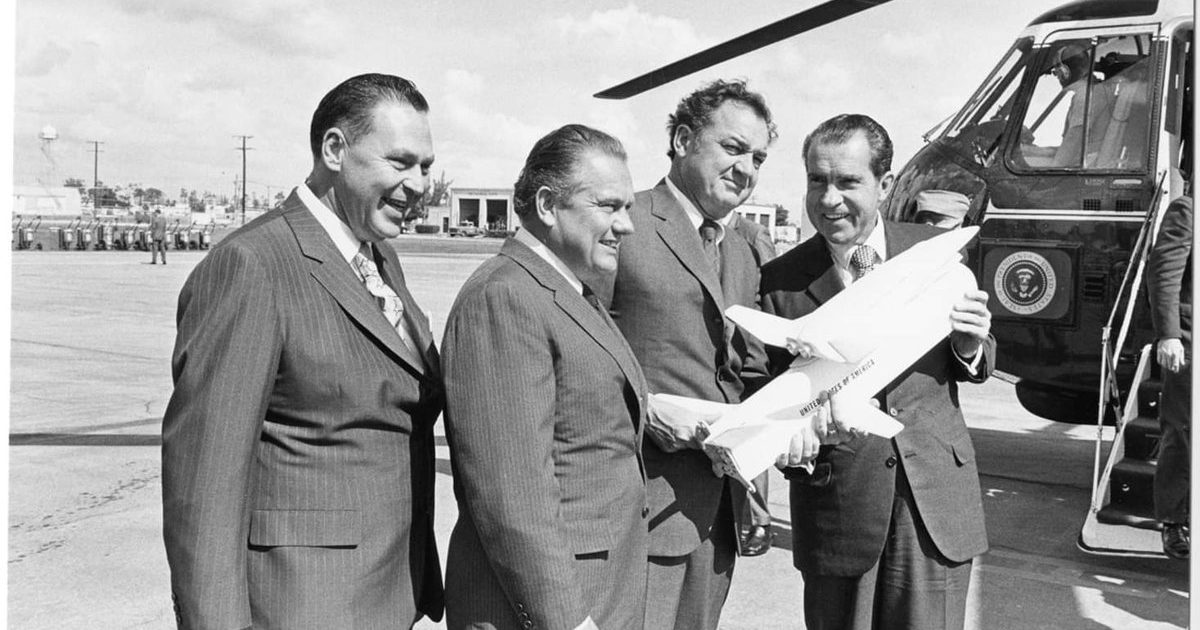
Richard Nixon campaigning in Florida, 1970.

Although the Democrats were still considerably ahead in the House, Nixon had hopes that he could defy the trend of midterms against the president’s party. He campaigned aggressively on social issues and stumped for Republican candidates across the country. Notably, the President’s Commission on Obscenity and Pornography concluded that pornography did no societal or individual harm and called for abolishing anti-obscenity laws for adults. a conclusion that the Nixon Administration as well the U.S. Senate disagreed, with the chamber voting 60-5 (notably, future presidential candidates Walter Mondale and George McGovern were among the dissenters) to disagree with the report. President Nixon railed against obscenity numerous times in 1970 and tried to connect Democrats to anti-war protesters and obscenity. Nixon stated, “So long as I am in the White House, there will be no relaxation of the national effort to control and eliminate smut from our national life” (Weaver). Vice President Spiro Agnew also went on the attack. He put the election in stark ideological terms, “One issue dominates this election: Will the radical-liberalism that controls the Senate of the United States prevail in the nation? Or will America be led into the future by the moderates, centrists and conservatives who stand behind the President of the United States?” (Time Magazine) He accused Democrats of appeasing anti-war protesters, if not being like them. Although Nixon had successfully and quietly completed school desegregation in 1970, he actively campaigned against the use of busing to achieve desegregation, an issue that had more national impact than pushing against the South’s Jim Crow system. Democrats ran against the Republicans for the increasing inflation and unemployment occurring and on the Vietnam War. The Democrats critiqued what they dubbed “Nixonomics” (Apple).

Predictions for the Senate in September from the New York Times were that Democrats would gain Senate seats in Illinois and New York, and that Republicans would gain in Florida, Ohio, and Tennessee. California, Indiana, and Vermont were considered toss-ups. Democrats were expected to hold in Maryland and Texas, although an outside risk to Maryland’s Tydings was not discounted. Time Magazine (1970), which reported closer to the election, considered Maryland and Wyoming reasonably certain holds, that Ohio and Tennessee looked like Republican pickups, and that Florida and Texas looked like Democratic holds. Time Magazine also reported that Democrats were ahead in Connecticut and Vermont with the Republican slightly ahead in Indiana.

The Results

The direction of the midterms followed historical norms in 1970, although Republicans lost less than the usual seats at 12.

Nick Begich (D-Alaska) won the open seat vacated by Republican Howard W. Pollock against future Senator Frank Murkowski. Begich along with House Majority Whip Hale Boggs (D-La.) would die in an air crash in Alaska in 1972 that was never recovered.

Jeffery Cohelan (D-Calif.), who represented Berkeley, lost renomination to staunch anti-Vietnam War socialist Ron Dellums, who won the election.

The seat vacated by John Tunney (D-Calif.) in his successful run for the Senate was won by Republican Victor Veysey.

In Colorado, Denver’s longtime Democratic representative Byron Rogers lost renomination to Craig Barnes, producing a divide among Democrats sufficient to give Republican Mike McKevitt a victory.

In Connecticut, Republican Robert Steele won the election to succeed the late Democrat William St. Onge in the 2nd district. However, this was counterbalanced by the victory of Democrat Ella Grasso in succeeding Republican Thomas Meskill in the 6th district, who left office for his successful gubernatorial run.

E. Ross Adair (R-Ind.), ranking Republican on the House Foreign Affairs Committee and one of the House’s leading critics of foreign aid, was defeated by Democrat J. Edward Roush. He had been in office for 20 years.

In Kansas, Republican Chester Mize of the 2nd district lost reelection to Democrat William R. Roy. Roy would come close to unseating Senator Bob Dole in the 1974 election.

William Cowger (R-Ky.) was defeated in the Louisville-based 3rd district by Democrat Romano Mazzoli, who would sponsor with Senator Alan Simpson (R-Wyo.) the Simpson-Mazzoli law on immigration in 1986. Cowger would die of a heart attack less than a year after his defeat at the age of 49.

In Maryland, Democrat George Fallon of the 4th district (Baltimore), who had served since 1945, lost renomination to Paul Sarbanes, who would later have a long career in the Senate. Democrat Goodloe Byron succeeded Republican J. Glenn Beall, Jr. in the 6th district, who had vacated his seat to successfully run for the Senate. This wasn’t much of a victory for Democrats, as Byron was a conservative. In the 7th district, Samuel Friedel, who had served since 1953, lost renomination to Parren J. Mitchell. Friedel was Jewish while Mitchell was black, reflecting a shift in preferences among the district’s Democrats. Mitchell won the election.

Philip J. Philbin (D-Mass.) was denied renomination by Father Robert Drinan, and lost a bid to retain his seat running as an Independent. Philbin, who had served in office since 1943, was considered insufficiently liberal and his support for the Vietnam War, despite his vote for the Cooper-Church Amendment, had cost him among young Democrats. Drinan would be the only Catholic priest to serve in Congress.

In Minnesota, Republican Odin Langen of the 7th district lost reelection to Democrat Robert Bergland.

In Montana, Democrat Arnold G. Olsen of the 1st district lost reelection to Republican Richard Shoup.

In Nebraska, Omaha’s Republican Glenn Cunningham lost renomination to John Y. McCollister, a more conservative figure, who won the election.

In New Mexico, Republican Ed Foreman of the 2nd district lost reelection to Democrat Harold Runnels. This wasn’t much of a victory for Democrats as Runnels was a conservative.

Allard Lowenstein (D-N.Y.), noted anti-Vietnam War activist who famously succeeded in making a big enough impact to influence Preisdent Johnson’s decision not to run for reelection, was defeated by Republican Norman F. Lent. Tragically, Lowenstein would be murdered in 1980 by a former protege.

Adam Clayton Powell (D-N.Y.) was defeated for renomination by Charles Rangel. Having served since 1945, voters had grown tired of his absenteeism and ethics issues.

Leonard Farbstein (D-N.Y.) was defeated for renomination by Bella Abzug, a loud feminist radical, who won the election.

Richard Ottinger (D-N.Y.), who vacated his seat to run for the Senate, was succeeded by Republican Peter Peyser. A moderate, Peyser would grow more liberal with time and eventually switched to the Democratic Party.

Martin B. McKneally (R-N.Y.), facing corruption charges, was defeated for reelection by John G. Dow, who he had defeated in 1968.

Daniel Button (R-N.Y.), the last Republican to have represented Albany in Congress, was defeated for reelection by Samuel Stratton, whose district had been merged with his.

Jack Kemp (R-N.Y.) won an open seat vacated by Democrat Richard McCarthy, who sought the Democratic Senate nomination. He would be known as a prominent supporter of individual tax cuts and would be Bob Dole’s running mate in the 1996 presidential election.

In North Dakota’s 2nd district, Republican Thomas Kleppe retired to run for the Senate and was succeeded by Democrat Arthur Link.

William H. Ayres (R-Ohio), a moderate who was the ranking Republican on the House Veterans Affairs Committee and the House Education and Labor Committee and had represented Akron for 20 years despite it being heavily unionized, was defeated for reelection by Democrat John Seiberling, who ran on an explicitly liberal and anti-Vietnam War platform. The Kent State shooting played a significant part in boosting Seiberling’s campaign against Ayres. As of 2026, Ayres is the last Republican to represent Akron.

Michael Feighan (D-Ohio), who had served in Congress since 1943, was defeated for renomination by Charles Carney, who won the election.

South Dakota was a notable surprise, with both Republican incumbents retiring and being succeeded by Democrats Frank Denholm and James Abourezk, the latter being of the George McGovern type.

In Utah, Democrat K. Gunn McKay won the election to succeed Republican Laurence J. Burton, who ran for the Senate unsuccessfully against incumbent Ted Moss.

In Virginia, retiring Democrat John O. Marsh of the 7th district was succeeded by Republican J. Kenneth Robinson. This wasn’t much of a loss for Democrats, as Marsh had been a conservative and would later switch to the GOP, serving as President Reagan’s Secretary of the Army.

In Washington, Republican Catherine May lost reelection to Democrat Mike McCormack in the 4th district. Today, Washington’s 4th, based in the east, is one of the state’s two safe Republican districts.

Henry C. Schadeberg (R-Wis.), a staunch conservative from the 1st district (which would later be represented by Paul Ryan), was defeated for reelection by over 20 points by Democrat Les Aspin, who would become known as a skeptic of military spending and would serve as President Clinton’s first Secretary of Defense.

In Wyoming, Republican John S. Wold vacated his seat to run unsuccessfully for the Senate, and was succeeded by Democrat Teno Roncalio, who had previously served during the Great Society Congress.

The Senate

Although Republicans didn’t win the Senate, they did have a net gain of two seats.

In California, Republican Senator George Murphy was defeated for reelection by Democratic Congressman John Tunney, son of pro boxer Gene Tunney. Murphy was compromised because although an operation to remove part of his larynx saved his life from throat cancer, he was rendered unable to speak above a whisper for the rest of his life, a serious disability for a U.S. senator and a sad fate for a man once renowned for his singing voice.

In Connecticut, Democrat Thomas J. Dodd was severely compromised because of his 1967 censure by the Senate for using campaign funds for personal expenses. He was defeated for renomination but tried for reelection as an Independent, which resulted in the victory of Republican Congressman Lowell P. Weicker Jr., at the time a moderate.

In Illinois, Republican Ralph Tyler Smith, seeking to finish the term of the late Senator Everett Dirksen, lost the election to Democrat Adlai Stevenson III.

In Maryland, liberal Democrat Joseph Tydings lost reelection to moderate Republican Congressman J. Glenn Beall, Jr., in a major upset. Tydings had defeated Beall’s father for reelection in 1964.

In New York, Republican Charles Goodell, who had been appointed to the Senate by Governor Nelson Rockefeller after the assassination of Robert F. Kennedy, had faced considerable headwinds in his own party. Although as a representative, Goodell had a moderately conservative record, as a senator he rivaled his fellow senator Jacob Javits in liberalism. The election was a three-way-race between Goodell, Democratic Congressman Richard Ottinger, and Conservative James L. Buckley. The Nixon Administration surreptitiously supported the election of Buckley, the only one of the candidates who supported Nixon on the Vietnam War. Because the liberal vote split between Goodell and Ottinger, Buckley was elected.

In Ohio, Republican Congressman Robert Taft Jr., grandson of President William Howard Taft, won an open Democratic seat, defeating Democrat Howard Metzenbaum. Metzenbaum would win in a rematch in 1976.

In Tennessee, Republican Congressman Bill Brock defeated Democrat Albert Gore Sr. for reelection. This was one of the major victories for the Nixon Administration given Gore’s Southern liberalism and his support for the Cooper-Church Amendment. Brock had labeled Gore “the third Senator from Massachusetts” for fundraising at a Kennedy event in Virginia (Time Magazine).

Although not a change in party for the seat, a notable election nonetheless was the Texas Senate election, which saw Democrat Lloyd Bentsen defeat Republican Congressman George H.W. Bush. In 1988, Bush would win the presidency and Bentsen would be the Democratic nominee for vice president. Democrat Vance Hartke would hold in Indiana as would Republican Winston Prouty in Vermont, and Democrat Lawton Chiles kept the Florida seat.

Notable Lasts

The election of Mike McKevitt to represent Denver would be the last time the city would elect a Republican to Congress.

The election of J. Glenn Beall, Jr. in 1970 was the last time a Republican defeated a Democratic Senate incumbent for reelection in Maryland.

This was the last election in which Utah would elect a Democrat to the Senate, reelecting Ted Moss.

In this election Wyoming would return Democrat Teno Roncalio to the House. To this day, he is the last Democrat to have represented the Bighorn State in the House and was succeeded by Dick Cheney in the 1978 midterms. This was also the last time that Wyoming’s voters would elect a Democrat to the Senate in their vote to reelect Gale W. McGee.

Overall, President Nixon and the Republicans did considerably better than average on this midterm, and shows that indeed the best defense can be a good offense. As the midterms approach, I can easily see Republicans campaigning against radicalism and trying to tie Democrats to far leftists like Hasan Piker.

References

Apple, R.W. (1970, September 13). Two Parties Pick Definitive Issues for Senate Race. The New York Times.

Retrieved from

Nation: The Republican Assault on the Senate. (1970, October 25). Time Magazine.

Retrieved from

https://time.com/archive/6838217/nation-the-republican-assault-on-the-senate

Weaver, W. (1970, October 25). Nixon Repudiates Obscenity Report as Morally Void. The New York Times.

Retrieved from

Great Conservatives from American History #27: John W. Byrnes

1944 was a disappointing year for the GOP. Although it was believed FDR was going to win reelection, it was believed for a time that Republicans would win control of the House, but instead the Democrats made gains. One of the places in which Republicans made gains, however, was in Wisconsin’s 8th district, centered in Green Bay, with Democrat LaVern Dilweg, who had played for the Green Bay Packers, losing reelection to John William Byrnes (1913-1985). He proved strongly fiscally conservative, siding wholesale with the domestic agenda of the Republican 80th Congress but willing to accept the bipartisan foreign policy that came with the postwar era, including voting for aid to Greece and Turkey and the Marshall Plan. However, he did not support foreign aid for poor nations through Point IV aid and voted for some foreign aid cuts. Byrnes also stood strongly for free market policies, supporting significant efforts to limit and end controls on prices and rents. In 1949, he was among the World War II veterans who spoke out against Rep. John Rankin’s (D-Miss.) pension bill for World War I and World War II veterans, which was intended to make the Social Security expansion proposed by President Truman fiscally impossible. Byrnes stated, “This legislation is dishonest…In ten years, our veterans will be shouldering half the nation’s tax burden…I am unalterably opposed to this bill. It is no hot potato as far as this member is concerned” (Time Magazine, 1949). In 1952 and 1953, he differed with the Conservative Coalition in its support for creating a committee to investigate tax-exempt institutions, which became known respectively as the Cox and Reece Committees. Byrnes continued his record of domestic conservatism during the Eisenhower Administration but supported increased foreign aid.

Byrnes Moves Into Leadership

In 1959, Byrnes was recognized as a strong voice on policy within the GOP with him being tapped to head up the House Republican Policy Committee. He stood as a staunch opponent of the Kennedy Administration’s domestic agenda while supporting foreign aid measures. In 1963, he rose to the position of ranking Republican on the powerful House Ways and Means Committee. An inflation hawk, he was the chief opponent in the House of the Kennedy tax reduction bill and pushed an unsuccessful proposal to cancel the tax cuts unless spending was not expected to exceed $98 billion in fiscal 1964. Byrnes also supported reducing spending to reduce the debt, being a confirmed opponent of the Keynesian approach that the Kennedy and Johnson Administrations were taking. That year, he made a risky admission; that in 1960 that after helping the Mortgage Guaranty Insurance Corporation get a favorable ruling from the IRS that he had purchased stock in the company and done so without knowing it was discounted, and subsequently moved the money to a scholarship fund (Fein). However, honesty paid off and he survived. Although he and Chairman Wilbur Mills (D-Ark.) disagreed on numerous issues regarding taxes and revenue, they had an effective working relationship and were able to produce compromises. Byrnes also opposed special loopholes and privileges in the tax code, and pushed to reduce them in his chief legislative accomplishment, the Tax Reform Act of 1969. In 1965, Byrnes would have to resign his post as head of the Republican Policy Committee due to a change in Republican rules that barred Republicans from holding both ranking positions and party leadership positions.

Byrnes and Civil Rights

Interestingly, Byrnes’ greatest difference with the civil rights position was on taxation; he was an opponent of repealing the poll tax by legislative means, and voted against doing so in 1945, 1947, and 1949. He thought this should be done by amending the Constitution, and true to this view he voted for the 24th Amendment in 1962. He would otherwise support the major civil rights laws, including the Civil Rights Act of 1964, the Voting Rights Act of 1965, and the Civil Rights Act of 1968. In 1971, Byrnes was one of 24 representatives to vote against the Equal Rights Amendment.

Byrnes and the Great Society

In 1965, Byrnes opposed Medicare being mandatory, but the Democratic majority was too great for a Conservative Coalition victory on the matter. Indeed, he was by and large an opponent of LBJ’s Great Society, opposing the Economic Opportunity Act, federal aid to education, rent subsidies, and mass transit aid. Byrnes voted against the initial version of the Social Security Act Amendments that included Medicare but voted for the conference report.

Byrnes and Nixon and the End

In 1969, Byrnes was the point man on the Revenue Act of 1969, and in some ways bent his traditional ways for President Nixon. For instance, he voted for the Family Assistance Plan in 1970 for guaranteed minimum income for families, a considerable departure from what Republicans had stood for in Democratic administrations. However, Byrnes was not simply a nodding head for Nixon. Both he and Ways and Means Committee chairman Wilbur Mills (D-Ark.) were staunchly opposed to revenue sharing, which was championed by Nixon, and Byrnes voted against. He said of the matter, “Maybe I’m old fashioned, but I believe most sincerely that with the pleasure of spending public funds there should also be the odium of collecting them” (Time Magazine, 1971). However, the objections of Byrnes and Mills weren’t enough against the pressures of the Nixon Administration and numerous governors who were wanting fiscal relief for their states. Byrnes also stood with Nixon on Vietnam War policy, opposing efforts to set timetables for troop withdrawals and opposing the Cooper-Church Amendment to pull troops from Cambodia and Laos. He opted not to run again in 1972. The interpretations of Byrnes’ record are consistent; he sided with the conservative Americans for Constitutional Action 84% of the time, the liberal Americans for Democratic Action 15% of the time, and his DW-Nominate score stands at 0.328. On January 8, 1985, Byrnes suffered a massive stroke at Central Wisconsin Airport on the way to a medical check-up and was reported to be in critical condition. He did not recover, dying four days later at the age of 71 at St. Joseph’s Hospital. The year after his death, President Ronald Reagan, who shared Byrnes’ opposition to revenue sharing, completed the program’s repeal.

References

ADA Voting Records. Americans for Democratic Action.

Retrieved from

Byrnes, John William. Voteview.

Retrieved from

https://voteview.com/person/1371/john-william-byrnes

Fein, E.B. (1985, January 14). Ex-Rep. John W. Byrnes Is Dead; Republican Was Tax Law Expert. The New York Times.

Retrieved from

John W. Byrnes, Former Representative, Dies. (1985, January 17). The Los Angeles Times.

Retrieved from

https://www.latimes.com/archives/la-xpm-1985-01-17-me-7747-story.html

The Congress: Rankin’s Revenge. (1949, February 28). Time Magazine.

Retrieved from

https://time.com/archive/6602178/the-congress-rankins-revenge/

The Nation: Pros and Cons of Revenue Sharing. (1971, January 31). Time Magazine.

Retrieved from

https://time.com/archive/6843587/the-nation-the-pros-and-cons-of-revenue-sharing/

The California Swap: A Great Political Misstep

Back in the 1950s, California had two Republican senators. What a concept, right? Their two senators were Minority Leader William F. Knowland and Thomas Kuchel. Knowland was counted among the conservatives and was a Cold War hawk, making opposition to Communist China and support of Nationalist China a signature issue. He had been a key player in pushing the Civil Rights Act of 1957 to passage, although he was unable to prevent the adoption of weakening provisions. California’s governor at the time was Goodwin “Goodie” Knight. From the late 19th century to this time, Republicans had been the dominant party in California. The last time the state had two Democratic senators was during the War of the Rebellion, and from 1896 onward, only once had a Democrat been elected governor, Cuthbert Olson, in 1938. He only served one term and is not considered one of the state’s notable governors, and had been succeeded by Republican Earl Warren, one of the state’s most notable governors and by this time chief justice. California Republicans were at the time a big tent party, having had prominent conservatives as well as progressives. Knowland as Republican leader since 1953 was one of the most prominent men in Washington.

William F. Knowland

By 1957, Knowland had his eyes set outside of the Senate. The 1958 elections were coming up, and on October 3rd, he announced he was running for governor. A popular narrative surrounding this decision is that Knowland had his eyes on the presidency and thought that being governor would be a good stepping stone to a 1960 run. He addressed this at the time, stating, “if nominated and elected, I will devote myself faithfully to the administration of the duties of the office for the term or terms to which I might be elected” but declined to issue a Sherman statement definitively ruling out a presidential run (Montgomery & Johnson, 240). Knowland’s declining to do so continued the speculation and accusations. In a 1970 interview, he denied the presidency was his motive, rather that he wanted to end his career on a high note and he wanted to return to California to be closer to his family (Frantz, 46). Knowland, however, would have to challenge popular Governor Knight for renomination, a task he felt up to. Knight initially resolved to face off Senator Knowland, however, he had secured the support of his colleague Kuchel as well as the entire Republican Congressional delegation and worse yet polling was showing he would be losing to Knowland 3 to 1 (Montgomery & Johnson, 240-241).  Knight kept out of the public eye in early November, but once he reemerged, he announced his bid for the Senate. Critics accused Knowland of masterminding the swapping of offices. However, he held that circumstances had “…opened up a false charge that this was a deal, whereby in effect I had entered into [an agreement] with Knight to get him out of the governorship and in turn get him into the senatorial race, which plagued me during the campaign” (Frantz, 45). If this is so, who or what was behind Governor Knight choosing to switch elections? The major sources were Vice President Nixon and the Chandler family, which owned the Los Angeles Times and were backing Knowland. In 1964, Knight himself identified Richard Nixon as the source of pressure for his switch, stating, “The long series of disasters which Republicans have suffered in California since 1958 can be traced to the ‘big switch’ in which I was denied financial aid unless I agreed to run for senator instead of governor” (Montgomery & Johnson, 242-243).  This switch negatively impacted the Republican ticket but in particular Knowland’s campaign. Essentially, Knowland was taking the fall for Nixon’s scheming. What’s more, Democrats had two solid candidates for both offices: Edmund “Pat” Brown and Clair Engle. Brown had been elected state attorney general in 1950 and Engle had represented the Sacramento Valley in Congress since 1943. Brown, a popular figure, ran on a platform of “responsible liberalism” and Engle could point to a significant achievement in his record in securing funds for the Central Valley irrigation project. There was also a significant statewide issue that benefited the Democrats and haunted the Republicans.

The Impact of Prop 18

An important issue in a number of states were “right to work” proposals. In California, this was Prop 18, and if enacted it would have allowed employees at a company that had a union to not join it as a condition of employment. This proposition motivated unions to go into overdrive in campaigning and getting their members out to vote. Knowland, who had repeatedly supported measures curbing the power of organized labor in the Senate, supported Prop 18 while Governor Knight opposed. Knight’s opposition as well as his record as governor did secure him some organized labor support. Knowland’s opponent, Democrat Edmund “Pat” Brown, ran heavily against Prop 18. Knight’s opponent, Democratic Congressman Clair Engle, also managed to win organized labor support.

Other Issues

Another issue for Knowland’s campaign was that he did not appear all that much in California in the early stages of the primary campaign, opting instead to campaign from Washington and worse yet, while he initially supported complete federal funding of the Trinity River portion of the Central Valley Project, he changed course and announced support or a deal involving Pacific Gas and Electric Company, in which they would construct power stations and sell the power for profit, with Pat Brown promptly taking the opposite position (Montgomery & Johnson, 243-244). Numerous missteps occurred in the Knowland campaign and there was clear disunity between Knowland and Knight. One such misstep was his wife Helen sending out copies of a pamphlet to Republican officials titled “Meet the Man Who Plans to Rule America”, a hit piece on United Auto Workers leader Walter Reuther by the extremely right-wing pamphleteer Joseph P. Kamp who had been accused of being anti-Semitic and a fascist (Montgomery & Johnson, 248-249). However, a devastating blow to the campaign came about when the disunity of the Republican ticket became official. On October 4th, Knight announced that he would not be supporting Knowland’s campaign for governor over his positions on labor issues (Montgomery & Johnson, 249). By the final weeks of the campaign, obituaries were being preemptively written for the Knowland campaign. Historically in California, the press supported Republican politicians, but the senator and Helen continued to make missteps on the campaign, and this resulted in a withdrawal of an endorsement by the San Francisco Chronicle and the endorsement of Pat Brown by the normally Republican San Francisco Examiner (Montgomery & Johnson, 252).

Results

The 1958 election resulted in Democrat Pat Brown winning 60-40 and Democrat Clair Engle winning 57-43 for the Senate. This was the real start of the rise of the Democratic Party in California. In Knowland’s home turf of Oakland, Republican Congressman John J. Allen lost reelection to Democrat Jeffery Cohelan, and Oakland would only move more and more to the left, never again being represented by a Republican. Knowland was reserved on whether he had made a mistake running for governor, stating, “Now, I don’t say that I would have been elected that year because we lost a lot of Republicans. You remember Sputnik had been put up. We had a recession on. We lost senators in the states where they didn’t even have the right-to-work issue on the ballot” (Frantz, 45). Worse yet for Republicans, Democrats managed to win control of both the State Senate and Assembly, the first time they had held both in many years. Democrats have consistently held majorities in both chambers since, the only exceptions being 1969 to 1971, when Republicans held a majority in both, and 1994 to 1996, when Republicans held a majority in the State Assembly. It is honestly hard for me to overstate how good of an election 1958 was for Democrats and liberalism and how bad it was for Republicans and conservatism. Pat Brown summed up the situation for the GOP, “The election has eliminated two people who very frankly, no matter what they say, don’t like Mr. Nixon. And I’m referring to Mr. Knowland and Mr. Knight. He’s the only one left, so you might say that helped – that left Nixon in charge of the Republican Party in California. There’s no one to challenge his leadership out here now” (Montgomery & Johnson, 258). Newly elected Clair Engle thought similarly. He stated, “Knight and Knowland were fighting like men until [Nixon] interceded and ran them in tandem” although he did not rule out a political comeback for Knowland (Montgomery & Johnson, 258)

Aftermath

Although Knowland maintained background influence in the California Republican Party and publicly through his ownership of the Oakland Tribune and supported Goldwater, Reagan, and Nixon, his political career was over. His end was tragic, he committed suicide in 1974 as he was facing financial ruin. His successor, Clair Engle, would tragically die of a brain tumor in office in 1964. Knight would try for office one more time, but lost the 1962 gubernatorial primary to Richard Nixon. Pat Brown would win another term in 1962, defeating Nixon and resulting in Nixon’s famous remark to the press, “You don’t have Nixon to kick around anymore, because, gentlemen, this is my last press conference”. Although Brown would be defeated by Ronald Reagan in 1966, his son, Jerry, would serve in multiple positions in California, most notably governor from 1975 to 1983 and again from 2011 to 2019.

References

Frantz, J.B. (1970, March 23). Oral history transcript, William F. Knowland, interview 1 (I). LBJ Presidential Library.

Retrieved from

https://discoverlbj.org/item/oh-knowlandw-19700323-1-00-05

Knight and Engle Win Labor Backing. (1958, April 15). The New York Times.

Retrieved from

Knowland Bid for Governor Fails; Engle Beats Knight in Senate Race. The Harvard Crimson.

Retrieved from

https://www.thecrimson.com/article/1958/11/5/knowland-bid-for-governor-fails-engle/

Montgomery, G.B. & Johnson, J.W. (1998). One step from the White House: the rise and fall of Senator William F. Knowland. Berkeley, CA: University of California Press.

Retrieved from

https://publishing.cdlib.org/ucpressebooks/view?docId=ft4k4005jq;chunk.id=0;doc.view=print

Nov. 7, 1962 – Richard Nixon’s “Last Press Conference”. Real Time 1960s.

Retrieved from

Pawel, M. (2018, November 6). The 1958 Governor’s Race That Launched a Dynasty. Zocalo Public Square.

Retrieved from

William Jennings Bryan Dorn: When Politicians Change

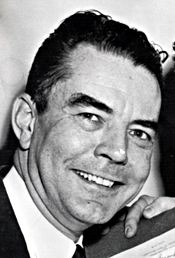
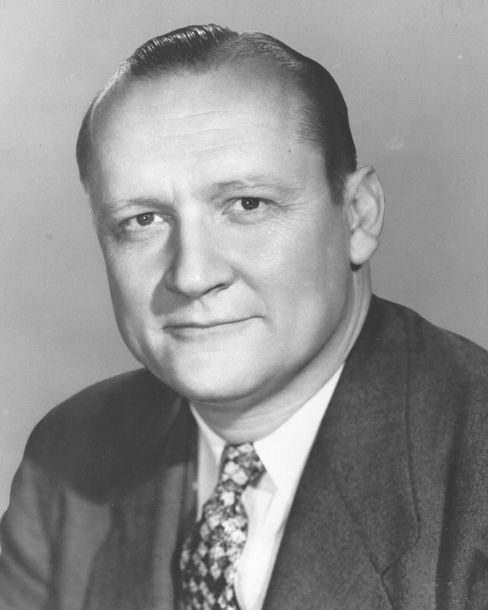
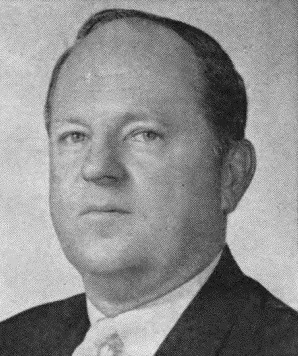
A general assumption exists that with politicians they ideologically come and go from Washington as the same people on ideological matters. Although more true today than it used to be, it is never a full guarantee. One example from the Deep South was Democrat William Jennings Bryan Dorn (1916-2005). Dorn was named after the politician William Jennings Bryan as his father wished for him to have a life in politics. He came on to the scene early, being elected to the State House in 1938 and the State Senate in 1940. His political career was interrupted by him serving in the US Army during World War II. On Dorn’s return, he sought to win election to Congress. He challenged incumbent Butler B. Hare of the 3rd district, who had served in Congress 16 years, and defeated him. Dorn proved to be to Hare’s right in his first term, and often disagreed with his party on certain key issues. Notably, he voted for Republican tax reduction bills, voted for Taft-Hartley, and even was one of the few Southern Democrats to vote against the Marshall Plan. Although only a man of 32 by the 1948 election, Dorn was highly ambitious and decided to challenge incumbent Senator Burnet R. Maybank. However, Maybank was sufficiently popular to survive Dorn’s challenge from his right. Although out of office, he wasn’t for long, and sought his old seat in 1950, now held by Hare’s son, James. This election proved to be a boon to the political right, and Dorn won renomination, tantamount to election in the at-the-time one party state of South Carolina.

Although of the right, Dorn stood out among the South Carolina House delegation in his support for public housing. However, he was opposed to price and rent controls and consistently backed foreign aid cuts. During the Eisenhower Administration, Dorn continued his opposition to foreign aid, supported releasing the regulation of natural gas prices from the Federal Power Commission, and started voting against public housing measures. He did, however, express a preference for public control over power generation and transmission, one of the ways in which many Southern Democrats remained New Dealers.

From 1961 to 1964, Dorn proved South Carolina’s foremost foe of New Frontier and Great Society measures in the House, even though his district had voted for Kennedy in 1960. This included opposing highly popular measures such as the Manpower Development and Training Act of 1962 for vocational training of the unemployed and the Educational Television Facilities Act of 1962 for the construction of public television stations for educational broadcasting. He voted against the Economic Opportunity Act of 1964, the Food Stamp Act of 1964, as well as the Elementary and Secondary Education Act and Medicare in 1965. Notably, this is contrary to South Carolina Encyclopedia’s biography on him, which depicts him as a supporter of LBJ’s anti-poverty program, which simply wasn’t so during Johnson’s time as president (Moore). Like other South Carolinian officeholders, Dorn was a segregationist and opposed every civil rights measure during the Eisenhower, Kennedy, and Johnson Administrations. Given this record quite hostile to social welfare measures and high spending, how Dorn would legislatively behave during the Nixon Administration would prove surprising if not shocking.

The Nixon Administration: Some Surprises

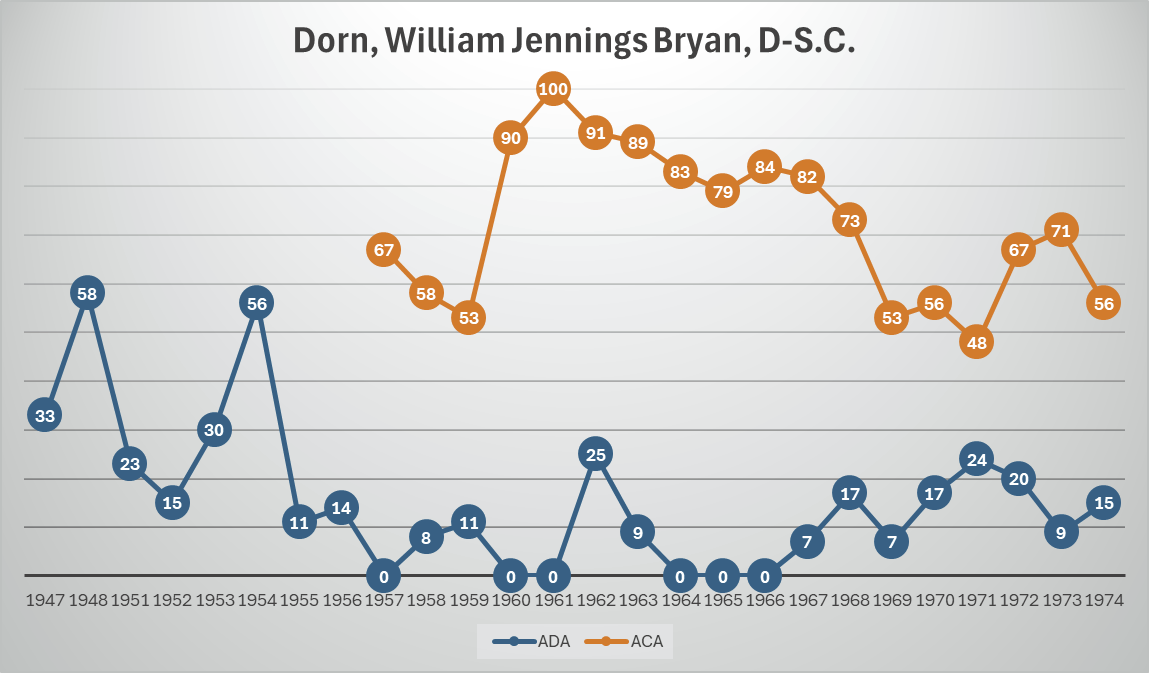
Agreement rates, ADA and ACA.

A preview of Congressman Dorn’s changes came in 1968, when he supported an open-ended appropriation for food stamps. Although this change is not nearly as represented in Americans for Democratic Action’s (ADA) ratings as opposed to Americans for Constitutional Action’s (ACA) ratings, these came in the form of how he addressed social programs and even civil rights. In 1969, Dorn opposed a conservative substitute to extending the Federal Elementary and Secondary Education Act, which he had opposed only four years before. In 1970, Dorn was the only South Carolina representative to vote for a bill for federal aid for desegregation. This absolutely floored his colleagues, especially when one considers that in other ways Dorn’s record remained in his old ways. For instance, he opposed extending the Voting Rights Act in 1970 and continued to oppose funding for the Civil Rights Commission. Dorn was also the only South Carolina representative to vote against the Equal Rights Amendment in 1971. However, he also voted against another amendment that proved even more surprising; he was also the only South Carolina representative to vote against a school prayer amendment that same year. Dorn also voted against several legislative efforts to curb busing as a means for desegregation, including Rep. Broomfield’s (R-Mich.) and Rep. Ashbrook’s (R-Ohio) 1971 proposals. Although in 1969 Dorn had supported transferring anti-poverty functions to the states, he supported extending such programs despite President Nixon’s opposition to the bill for the level of spending and for containing a provision for government daycare. He also opposed a Republican substitute to anti-poverty legislation which had a simple extension with no funding increases or government daycare program or legal services corporation the following year. The reason, however, that ADA found him still pretty conservative while ACA found him considerably less so was due to his staunchly pro-military voting record. Dorn constantly opposed defense cuts and was always supportive of President Nixon on the Vietnam War. He also voted against the War Powers Act of 1973, which was passed over President Nixon’s veto. ADA placed considerably more weight on military issues than ACA, which although far from neglectful of military spending and Vietnam, placed more weight on issues of spending and government expansion. Dorn was furthermore an advocate for veterans, and thus was well suited for his time as chairman of the Veterans’ Affairs Committee from 1973 to 1974. In 1974, Dorn opted against another term in Congress to run for governor. This certainly seemed like a good idea, after all Republicans were being dragged down by Watergate. However, South Carolina defied this trend with the election of Republican Governor James Edwards. Dorn had sided with ADA 15% of the time during his time in Congress, ACA 72% of the time, and his DW-Nominate score is -0.017. None of these criterion really reflect the notion that Dorn was a “progressive populist” as South Carolina Encyclopedia’s profile depicts him in his later career (Moore). Sure, he became a bit more liberal, but his ACA agreement never fell below 48% and he never agreed with ADA more than 58% of the time in a given year. Although DW-Nominate’s score does not look conservative at all, bear in mind that party-line procedural votes get counted and that his score is higher than any Democrat serving nationally. Dorn tried again for governor in 1978, but lost the Democratic primary. From 1980 to 1984, he did one last service for his party by serving as the chairman of the state’s Democratic Party. Perhaps aside from the shifts in his record, the most interesting thing about Dorn is that his portrayal seems a bit different from reality.

References

ADA Voting Records. Americans for Democratic Action.

Retrieved from

Dorn, William Jennings Bryan. Voteview.

Retrieved from

https://voteview.com/person/2672/william-jennings-bryan-dorn

Moore, W.V. (2016, May 17). Dorn, William Jennings Bryan. South Carolina Encyclopedia.

Retrieved from

https://www.scencyclopedia.org/sce/entries/dorn-william-jennings-bryan/

Mark Andrews: North Dakota’s Independent Voice

On July 18, 1963, 57-year-old Representative Hjalmar Nygaard, on his second term, went to see Dr. George Calver, the physician of Congress, for chest pains. However, it was too late, and he died in Dr. Calver’s office of a heart attack. This opened a vacancy in North Dakota’s 1st district. Quick to enter the race was Mark Andrews (1926-2020), a 38-year-old farmer who had run for governor the year before and narrowly lost. Some conservatives were rather suspicious of Mark Andrews, who had a moderate reputation. They did not think he was sufficiently conservative, and this resulted in the entry of John Bircher John W. Scott, who ran as an Independent. This had the potential to spoil the race for the Republicans, and it was of great help when Barry Goldwater stepped in. He endorsed Andrews’ run in a wire to him, “Your views on fiscal responsibility, less Government interference and a firm foreign policy are in accord with the sentiments of all Americans” (Time Magazine).

In Congress, Andrews proved to be in opposition to many new government programs, voting against the Economic Opportunity Act of 1964, against federal aid to education in 1965, and against Medicare. However, he was more socially liberal, supporting funding for the arts. Andrews also voted for the Civil Rights Act of 1964 and the Voting Rights Act of 1965, but would be in opposition to busing as a means of desegregation during the 1970s. On civil rights, Andrews said, “It was the right thing to do. People need to be treated with dignity” (Shaw). He was also more supportive of government intervention in agriculture than most of his fellow Republicans, but this was a popular position in the wheat-producing North Dakota. In 1966 and 1973, Andrews supported minimum wage increases, and over the president’s veto in the latter case. Despite Goldwater having backed his run, Andrews preferred Nelson Rockefeller in the 1964 Republican presidential primary (McFadden). Although North Dakotans regularly saw fit to reelect Mark Andrews, one figure who apparently did not like him was Senator Milton Young. Apparently, Young had considered retiring in 1974, but it became clear that his obvious successor was going to be Andrews, thus despite his advancing age he decided to stick around for one more term (Hill). Depending on what ideological scale you use, Andrews’ peak conservatism was either during the Johnson Administration or the Carter Administration.

By 1980, Young was 83 years old and could not go for one more term, thus Andrews ran for the Senate. He won a resounding victory, winning with 70% of the vote and all counties. As a senator, Andrews would be quite independent from President Reagan, including voting for overriding one of his vetoes on an appropriations bill in 1982 and often voting in opposition to his military policies. He did vote for some signature conservative proposals, including a Balanced Budget Amendment in 1982 and the Eagleton-Hatch Human Life Amendment in 1983. However, Andrews opposed a school prayer amendment and a reinstatement of the federal death penalty in 1984. His bipartisan approach was described by his daughter who recounted him saying in his old age, “in those days people from both parties worked together and we got things done – Quentin Burdick was a good Democrat and I was a good Republican but we were good friends and we worked together for North Dakota. This not working together is foolishness!” (The Dickinson Press, 3). Indeed, the Reagan years appear to be Andrews’ least conservative period as a legislator. Despite his independence, he faced considerable headwinds in the 1986 election. Running against him was young and popular State Tax Commissioner Kent Conrad. Conrad ran a negative campaign against Andrews, and blamed North Dakota’s struggling farm economy on large trade and budget deficits (Wetzel). Andrews was well aware of the issues of the struggling economy and addressed it during his campaign. He even pledged not to run for reelection in 1992 if federal trade and budget deficits were not cut 80% by then (Wetzel). However, by the final weeks of the race he was clearly at risk of losing. President Reagan made a campaign stop on his behalf on October 17th in Grand Forks and he had plenty of money to fight, but 1986 was rough on Senate Republicans and Andrews lost by less than a point. Republicans lost a net of eight Senate seats, with Democrats regaining control of the Senate. This was the first time since 1944 that an incumbent senator had lost reelection. Andrews backed the position of the liberal Americans for Democratic Action 25% of the time while siding the conservative Americans for Constitutional Action 61% from the start of his career until 1984. His DW-Nominate score is a 0.087, an indicator of centrism.

Andrews did not run for public office again, but he started a consulting firm in Washington D.C. but continued to live in North Dakota. He lived many years after the end of his career and was cognizant until the end, dying on October 3, 2020, in Fargo, North Dakota, only months after the passing of his wife Mary, who he had been married to for 71 years.

References

ADA Voting Records. Americans for Democratic Action.

Retrieved from

Amundson, B. (2020, October 9). Former US Sen. Mark Andrews dies at 94. The Dickinson Press, 3.

Retrieved from

https://www.newspapers.com/image/1186532078/

Andrews, Mark. Voteview.

Retrieved from

https://voteview.com/person/10569/mark-andrews

Hill, R. (2021, July 5). Milton R. Young of North Dakota. The Knoxville Focus.

Retrieved from

McFadden, R.D. (2020, October 7). Mark Andrews, North Dakota Farmer-Politician, Dies at 94. The New York Times.

Nation: More Sound Than Steam. (1963, November 1). Time Magazine.

Retrieved from

Shaw, J. (2018, May 20). Commentary: We need more politicians like Mark Andrews. The Dickinson Press.

Retrieved from

Wetzel, D. (1986, October 30). U.S. Senate – Andrews fighting for political life in campaign; Conrad could make history with Senate victory. (1986, October 3). The Bismarck Tribune, 46.

Retrieved from

“Big Ed” Johnson: Colorado’s Independent Democrat

As a state, Colorado seems to be of two worlds: that of the granola-munchers and the gun-toters. For now, the granola-munchers have the edge; Colorado has not elected a Republican governor since 2002, the last time its voters chose a Republican for president was George W. Bush in 2004, and the last time its voters chose a Republican senator was in 2014. Colorado Democrats have by and large been quite far from a conservative group in recent history and the current crop is going full-bore into social liberalism in this author’s opinion. However, this was not always true of Colorado Democrats, and one figure who was a prime example was Edwin “Big Ed” Johnson (1884-1970).

Johnson grew up in Kansas and went to Nebraska for work, but in 1909, he was diagnosed with tuberculosis and advised to move to Colorado. In an age before antibiotics people were often advised to move to warmer and drier climates in an effort to cure tuberculosis, and this worked for him. He proceeded to start a political career, which started with a loss when he tried for superintendent of Moffat County schools in 1914. This would be the only race he would lose. In 1922, Johnson ran for the Colorado House and won. At the time, the Ku Klux Klan was a powerful force in the state’s politics, and he stood as an opponent. By 1930, the Klan had fallen in influence, and he was elected lieutenant governor. In 1932, Johnson ran for governor and won, serving two terms. As governor, his approach differed a bit from the New Deal, as he pushed his own programs, which included tax reduction, highway construction, balanced budgets, and civil service reform (Colorado State Archives). In 1936, Johnson easily won election to the Senate over Republican Raymond Sauter by 28 points.

As a senator, Johnson was independent of the Roosevelt Administration, and in 1940 he condemned President Roosevelt’s decision to seek a third term. He was a supporter of organized labor but also opposed his foreign policy, voting against repealing the arms embargo in 1939, the peacetime draft in 1940, Lend-Lease in 1941, and permitting both the arming of merchant ships and permitting them to enter belligerent ports just a month before Pearl Harbor. While today, such stances against a president of your party would have put him at great risk for a primary defeat, the truth is that Colorado was moving against the president; in 1940 and 1944 the state’s voters voted for Wendell Willkie and Thomas E. Dewey respectively over Roosevelt. Johnson himself was almost defeated for reelection in 1942 by Republican Governor Ralph Carr, but he had not courted popularity by standing up for the rights of Japanese-Americans, and he won another term by a point. Although often thought of as a conservative Democrat, Johnson went to bat for labor unions in his vote against the Taft-Hartley Act in 1947 and would also do so when he refused to vote to use the Taft-Hartley injunction during steel strikes in 1952. On foreign policy, Johnson’s postwar record was very mixed indeed. He voted against aid to Greece and Turkey in 1947 and only voted for the Marshall Plan the following year after supporting cutting funds. However, he would also support Point Four aid to poor nations in 1950 and at times voted for and against cuts to foreign aid. The 1948 election went much better for him, with Johnson winning almost 67% of the vote.

On March 14, 1950, Johnson denounced the affair of Roberto Rossellini and Ingrid Bergman on the floor of the Senate, and the negative publicity that followed Bergman resulted in her living in Europe for the next few years. He charged that Bergman, who had been his favorite actress, “had perpetrated an assault upon the institution of marriage” and that she was “a powerful influence for evil” and condemned Rossellini as “vile and unspeakable” and a “common love thief” (Hill). Johnson’s fiery condemnations of the two seemed to reflect a personal feeling of betrayal in the image he had of Bergman as a person. He even went as far as to propose legislation to license film performers based on personal morality (Colorado State Archives). Senator Charles Percy (R-Ill.) would apologize on behalf of the Senate for this incident in 1972. In 1952, Johnson endorsed Senator Richard Russell’s (D-Ga.) candidacy for the Democratic nomination for president and headed up his campaign, but Russell got no success outside of the South. On civil rights, he had something of a mixed record. Although he voted against Russell’s effort to undermine army desegregation in 1950, that same year he voted against ending debate on a Fair Employment Practices bill.

In 1953, Johnson was one of only two Democrats to vote against confirming Charles Bohlen as ambassador to the USSR, the push against him being spearheaded by Senator Joseph McCarthy (R-Wis.). Interestingly, he was also among a minority of senators to oppose Eisenhower’s nomination of former Congressman and public housing opponent Albert Cole (R-Kan.) as Housing Administrator. In 1954, Johnson decided against another term in the Senate as his wife, Fern, desired to return to Colorado, but surprised observers when he chose to run for governor again, which he won. In his final address, Johnson warned against committing troops to Vietnam (Colorado State Archives). His last vote as a senator had been to vote to censure Joseph McCarthy. Johnson had sided with the liberal Americans for Democratic Action from 1947 to 1954 40% of the time, and his DW-Nominate score stands as a 0.01, or more conservative than any Democrat serving in Congress today. However, his stint as governor would be limited to one term as a heart attack shortly after winning convinced him that he needed to take it easy. Despite his heart attack, Johnson did well after and persisted as a public figure after his final stint, including campaigning for the reelection of Democratic Congressman Wayne Aspinall in 1964. On May 7, 1970, Johnson was admitted to the hospital for a hernia, and underwent an operation four days later, but his condition deteriorated throughout the month, and he died on May 30th (Hill). Johnson to this day has a unique distinction in Colorado history; being the only person to serve three terms as governor and as senator. He is remembered in Colorado through the Eisenhower-Johnson Memorial Tunnel, a marvel of engineering that runs through Loveland Pass.

References

ADA Voting Records. Americans for Democratic Action.

Retrieved from

Edwin Johnson. Colorado State Archives.

Retrieved from

Hill, R. (2025, September 28). ‘Big Ed’ Johnson of Colorado. The Knoxville Focus.

Retrieved from

Johnson, Edwin Carl. Voteview.

Retrieved from

https://voteview.com/person/4949/edwin-carl-johnson

Newt Gingrich, Part I: Early Career and Partisan Bomb-Throwing Backbencher

One of the most controversial figures of his day and one who from time to time can still say controversial things is Newton Leroy Gingrich (1943- ). Born Newton Leroy McPherson, his birth parents split before he was born, and his stepfather, Robert Gingrich, adopted him upon his marriage to his mother Kathleen in 1946. Robert was an army man, thus young Gingrich moved with his father to where he was stationed. He did not form many connections with his peers, as he often moved, rather concentrating his energies on personal interests, including history and animals. A visit to the site of the Battle of Verdun made a strong impression upon him about the consequences of failure of leadership. In 1965, he earned a Bachelor’s in history from Emory University in Atlanta, and would later earn an M.A. and PhD in European history. In his college days, Gingrich was involved with the Young Republicans, where he reportedly expressed a desire to “be an old-time political boss in 20 years” (Green).

During the Vietnam War, he received deferments for his status as a student and a father. Given Gingrich’s later hawkishness on the Cold War and his strong criticisms of Democrats for their dovishness, this would be used to call him a “chickenhawk”. However, it was likely a moot point against him. Gingrich’s stepfather, a veteran, said of him, “He is very nearsighted. You probably know that he can barely see across the street without his contacts. He has two of the flattest feet that there ever was”, thus he would have almost certainly not been eligible for military service on medical grounds (Thompson). Interestingly, Gingrich backed Nelson Rockefeller in the 1968 Republican primary, indicating a bit of a more moderate view on issues in his early years. After he had earned his PhD, Gingrich was a professor of history and geography at West Georgia College, although he would take leaves of absence for his political campaigns.

Haunting Congressman Flynt

In 1972, conservative Democrat John J. Flynt faced no opposition for reelection. Theoretically, the 1974 midterms should have also been baller for Flynt, but the entrance of Gingrich into the race held him down to 51.5% of the vote, and this election weighed Republicans down from the Watergate scandal. In that election, Gingrich ran on a conservative platform of cutting federal spending by at least $10 billion, revising the tax code, reducing federal bureaucracy, and against “special interest” groups (The Newnan Times Herald, 1974). He also distanced himself from Nixon and Watergate. Gingrich was a natural campaigner, and he was able to with ease walk into offices and introduce himself thusly, “Hi, I’m Newt Gingrich and with a name like that I need all the help I can get” (Jacobs). Working in Gingrich’s favor was that the district’s makeup was changing from rural to suburban, thus Flynt’s base of support in the district was deteriorating. Furthermore, the long march of Republicans to dominance in the South began in the suburbs. Flynt again had a tough race in 1976 with Gingrich trying again. He again emphasized his conservatism, with one of his ads touting that “He’s for a strong national defense, he’s opposed to gun control, and he’s an honest fiscal conservative. He’s said over and over that government is too big, too expensive, and too much in control of our daily lives” (The Newnan Times-Herald, 1976). Flynt campaigned against Gingrich as an outsider, with ads emphasizing that he was born in Pennsylvania and that he went to schools in Europe and college in New Orleans (Jacobs). Since both men were running as conservatives, Gingrich could not attack him on ideological grounds. However, he did go after him as a Washington insider, criticized the state of ethics in Congress which was relevant as Flynt was chairman of the House Ethics Committee, and went after his attendance record, stating that he missed 24% of House votes, not counting absences due to illness (Jacobs). However, Flynt was actually doing significant work as Ethics Committee chairman. This included the Ethics Committee investigating Representative Robert Sikes of Florida and refusing to cut a deal with Wayne Hays of Ohio (Lyons). Jimmy Carter easily won the state, and Flynt won with 51.7% of the vote. However, a 1978 midterm without the encumbrance of Watergate on Republicans nor the benefit of Carter at the top of the ticket spelled retirement for Flynt. With Flynt’s retirement, the way was cleared for Gingrich, and he won the seat with 54.4% of the vote against State Senator Virginia Shapard.

Congressman Gingrich

Gingrich from the beginning had a dream, and that was for a Republican majority. It was his idea for the Republicans to consult the Conservative Party of Britain on how they won the 1979 elections, and he said regarding his approach to politics, “For a great part of its minority life, the Republican Party has allowed itself to become coopted as an arm of government. Too often it has allowed itself to be cajoled into providing the necessary votes for the majority party to win…I’m personally getting tired of being told that we’re responsible when they (Democrats control the House, they control the Senate, they control the committees, and they control the rules. If we held those positions, then we should be responsible…If the majority party is content to run the House like a plantation, they can do so. But they can’t make me dress up and serve mint juleps with a smile” (Crown). Gingrich’s record started as conservative, with him siding with their positions in 1979 and 1980 92% of the time. He was notably outspoken against the Panama Canal Treaties and voted against implementation. A notable exception to his conservative record in this time, however, was his vote for the Department of Education in 1979. Gingrich also was keen on the South becoming Republican and in the process leaving behind some old legacies. Notably, he voted to extend the Voting Rights Act of 1965 in 1981 and the Martin Luther King Jr. holiday in 1983.

Gingrich was a strong supporter of President Reagan’s economic, social, and foreign policies. although he differed with him when he embraced partially rolling back the 1981 tax cuts. He in particular criticized Senator Bob Dole’s (R-Kan.) leading role, dubbing him the “tax collector of the welfare state” (Ponnuru). Back then, Georgia’s legislature was still quite Democratic, and they badly wanted to redistrict Gingrich out of a career. As The Gainesville Times (1981) reported, “The congressional reapportionment efforts will have four major goals. In descending order of priority they will be: (1) elimination of Republican Congressman Newt Gingrich, (2) insurance that a new Republican district isn’t created, (3) elimination of Democratic Congressman Larry McDonald [a John Bircher who was even more conservative than Gingrich], protection of the seats of the remaining incumbents who plan to seek reelection”. Although Republicans lost 26 seats in the 1982 midterms, Democrats did not achieve the ousters of either Gingrich or McDonald. In 1983, Gingrich formed the Conservative Opportunity Society, a group for young House Republicans. He also sought to attack the Democratic majority and became known as a rhetorical bomb-thrower, and realized a medium to do so. Only two months after Gingrich had been seated, C-SPAN began televising the proceedings of the House. I think I can write without fear of contradiction that people behave differently when they know they are on camera, and he knew how to use this to his advantage.

Gingrich vs. Speaker O’Neill

In 1984, Gingrich and his fellow younger Republicans started using a period of time called “Special Orders”, an end-of-the-day period in which few members were present, to denounce the Democrats. A most notable incident was when Gingrich used this time to speak before a mostly empty House in an end-of-the-day period known as “Special Orders”, his remarks being for the American public, accusing the Democrats of believing that “American does nothing right and communism…rushes into vacuums caused by ‘stupid’ Americans and its ‘rotten, corrupt’ allies” and called out numerous Democratic House members for their opposition to Reagan’s foreign policy (Reid). During the speech, he did something clever and sneaky. He briefly paused in his words, as if to challenge his opponents, who were not present, to respond (Stanley).

Speaker Tip O’Neill (D-Mass.), who learned of the speech two days later, was furious because none of the members named had been notified ahead of time by Gingrich that he would be making a speech that would name them in addition to his pause. In response, he ordered C-SPAN to pan the cameras around the House during “Special Orders”. Republicans had not been informed of the change ahead of time and strongly objected (O’Neill would apologize to Minority Leader Michel for a lack of notice), and Gingrich started speaking under a matter of “personal privilege” to denounce O’Neill and wouldn’t yield the floor when Democrats tried to get him to do so until O’Neill himself gruffly asked, “Will the gentleman yield?” (Reid) He proceeded to blow his stack. O’Neill shook his finger at Gingrich and boomed, “You deliberately stood in the well of this House and took on these members when you knew they would not be here” (Reid). This would have been fine under parliamentary rules. However, he continued, “You challenged their patriotism, and it is the lowest thing that I have ever seen in my 32 years in Congress!” (Stanley) The problem here was that O’Neill’s language was not parliamentary, and House Minority Whip Trent Lott (R-Miss.) demanded the words be taken down. The House parliamentarian indeed ruled him out of order for using “lowest” against Gingrich and the words were taken down. The normal penalty for this was that the member was not allowed to speak for the rest of the day, but Minority Leader Robert Michel (R-Ill.) came to his rescue by asking Lott to exempt O’Neill from the penalty, which was agreed to (Stanley). Although considered to be of the party’s conservative wing, Michel had been in the House since 1957 and thus had for a long time been used to being in the minority and acted accordingly. He had reservations about Gingrich’s bomb-thrower approach and was personally on good terms with O’Neill despite them having many political differences, including being his golfing partner. Older members of the House were not keen on this new development, with veteran Congressman Barber Conable (R-N.Y.) stating on the situation, “I think many people are upset with the loss of civility around here. They found confirmation in their strategy, that Tip was willing to mix with them. It gave them a purpose” (Harbrecht).

Gingrich’s influence would continue to rise from the 1984 election, and in particular there was one election in that cycle that helped motivate more Republicans to be combative, but that will be covered in Part II.

References

Crown, J. (1979, July 12). Gingrich Fantasy. The Atlanta Journal, 5.

Retrieved from

https://www.newspapers.com/image/972880788/

Gingrich, Newton Leroy. Voteview.

Retrieved from

https://voteview.com/person/14627/newton-leroy-gingrich

Green, C. (1974, July 22). 9 Georgia Congressmen Ready Defense. The Atlanta Journal, 12.

Retrieved from

https://www.newspapers.com/image/972649068/

Harbrecht, D. (1984, May 20). Rep. Newt Gingrich infuriates Democrats, inspires Republicans. The Houston Chronicle, 17.

https://www.newspapers.com/image/1203709361/

Jacobs, T. (1976, October 22). Gingrich Campaign Emphasizes Ethics. The Macon Telegraph, 2.

Retrieved from

https://www.newspapers.com/image/847272490/

Jenkins seems to be running hard. (1981, February 26). The Gainesville Times, 4.

Retrieved from

https://www.newspapers.com/image/1203346369/

Lyons, R.D. (1976, September 6). Ethics Committee Is Finally Gaining Respect in House. The New York Times.

Retrieved from

Newt Gingrich Will Work For You! (Political Advertisement). (1974, October 31). The Newnan Times-Herald, 7.

Retrieved from

https://www.newspapers.com/image/966899565/

Ponnuru, R. (2012, December 28). Republicans and Taxes. National Review.

Retrieved from

https://www.nationalreview.com/corner/republicans-and-taxes-ramesh-ponnuru/

Reid, T.R. (1984, May 16). Outburst. The Washington Post.

Retrieved from

https://www.washingtonpost.com/archive/politics/1984/05/16/outburst/4e338c71-cecb-4315-86df-3c6a969cf257/

Stanley, A. (1984, May 28). Tip Topped! Time Magazine.

Retrieved from

https://time.com/archive/6884173/tip-topped/

Thompson, M. (2011, December 27). General Newt. Time Magazine.

Retrieved from

When you compare the candidates for Congress, there’s really no comparison. (Political Advertisement). (1976, October 21). The Newnan Times-Herald, 5.

Retrieved from

https://www.newspapers.com/image/966847735/