That Oregon today votes Democratic seems to go without saying, but it didn’t used to be this way. Indeed, the state had a considerable history of Republican voting, and for most of FDR’s presidency, both of its senators were Republicans. From 1943 to 1953, the entire delegation to Congress from Oregon was Republican. However, just because one was a Republican, it far from automatically meant that a conservative line was followed, and this proved quite true with Senator Wayne Morse, who broke the Republican unity when he switched to Independent in 1953. Morse was a liberal, and he was popular. Liberalism was starting to gain traction in the state, and the liberal position was popular on some issues in the state, such as public ownership of power. The Republicans and President Eisenhower had moved hard in the direction of private ownership of power, and that rubbed many Oregonians the wrong way. Enter Edith Starrett Green (1910-1987).
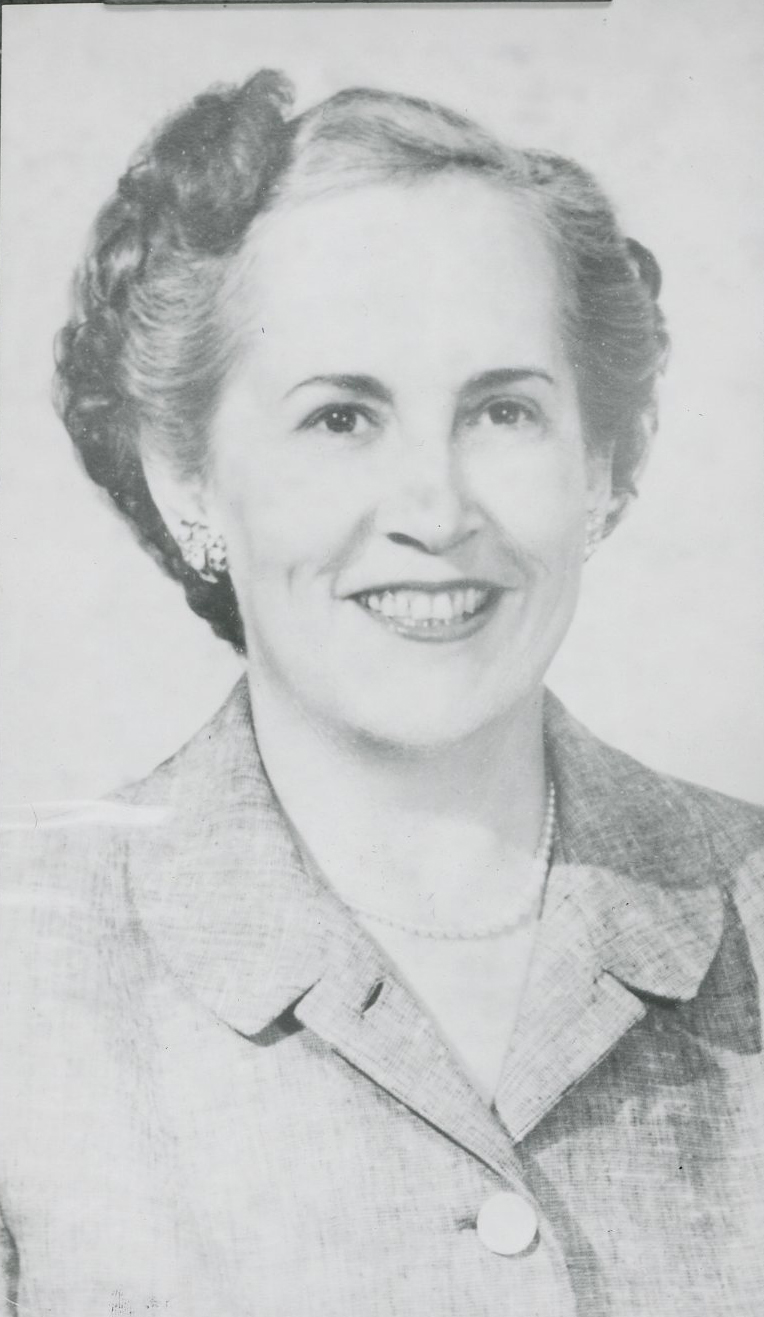
In the 1950s, Green was an outsider in multiple ways. First, she was a Democrat, and second, there had only been one woman previously elected to represent the state in Congress in Portland’s Nan Honeyman, and she had lost reelection after one term. Green had been a teacher by profession in her younger years, teaching public school in Salem from 1930 to 1941 and afterwards was a lobbyist for the Oregon Education Association and director of the Oregon Congress of Parents and Teachers. It probably goes without saying that in her career her big emphasis would be on education. In 1952, Green made her first run for public office by running for Secretary of State. Although she lost, she had lost narrowly in a good Republican year. In 1954, Green set her eyes on the Portland-based 3rd district. Its representative during that time was Homer D. Angell, who had defeated Honeyman back in 1938 and was moderate and pro-organized labor, having voted against the Taft-Hartley Act in 1947. However, by 1954, he was 79 years old and got defeated for renomination by 41-year-old Tom McCall, who would later be elected governor. Despite a fresh face, voter support for the GOP was declining and it was a midterm, which tends to work against the president’s party. Green defeated McCall with 52% of the vote, and had little trouble winning her district afterwards, even though Portland voted for Nixon in 1960.
Congresswoman Green
As a member of Congress, she started out as a New Deal liberal, much as Nan Honeyman had been, and called for an equal pay law (which would be enacted in 1963). From 1955 to 1964, she only dissented with the liberal Americans for Democratic Action (ADA) twice (she opposed flood control funding and a foreign aid increase in 1957). She strongly supported the civil rights laws of the 1950s and 1960s, but was the only woman to oppose an effort to tack on sex as a protected class to the Civil Rights Act of 1964. Green believed that this could kill the bill and that separate legislation should address sex discrimination, stating, “For every discrimination that I have suffered, the Negro woman has suffered ten times that amount of discrimination” (O’Dea, 288-289). She strongly supported New Frontier and Great Society programs but she notably dissented on the bill repealing the “right to work” section of the Taft-Hartley Act in 1965, a bit of a sign of things to come. That year, as chairwoman of the subcommittee on higher education, Green introduced the Higher Education Act of 1965, which was easily adopted during the Great Society Congress and was part of President Johnson’s efforts to use the federal government to the betterment of education. Green had also played major roles in drafting the National Defense Education Act in 1958 and the Higher Education Facilities Act in 1963. However, Green’s politics would increasingly diverge from the national Democratic line.
The Nixon Years: A Turn to the Right
Beginning in the latter part of the Johnson Administration, Green started dissenting with the liberal line a bit more and even moved a bit to the right on her signature issue of education. She started supporting measures giving states more authority and in 1969 she proposed a substitute to extending the Elementary and Secondary Education Act backed by the Nixon Administration which reduced the length of its extension from five to two years, thus funding for the law would come for review by Congress sooner. Green became increasingly skeptical of the efficacy of numerous federal social programs, and in 1969 was one of the sponsors of a proposal, opposed by the Nixon Administration, to transfer functions of numerous anti-poverty programs to the states. Indeed, her increasing skepticism of the federal role in education led her to coin the term “educational-industrial complex” to critique extensive federal involvement in education (Hunter). One issue Green continued to remain liberal on among others was in her opposition to the Vietnam War. In 1967, she had been one of only 18 representatives to support an amendment giving the sense of Congress that bombing of North Vietnam should come to an end. In 1972, she sponsored with Sen. Birch Bayh (D-Ind.) and Rep. Patsy Mink (D-Haw.) a lasting achievement in Title IX, banning sex discrimination in educational institutions receiving federal funding.
In 1974, Green opted to retire from Congress. Evaluations on her stand as rather similar; she sided with ADA 71% of the time, the conservative Americans for Constitutional Action 25% of the time, and her DW-Nominate score is -0.243, all indicating moderate liberalism for her overall career. Her activities after her career focused primarily on education, serving as a member of the State Board of Higher Education and taught at Warner Pacific College. Demonstrating further how much had politically changed in twenty years, Green endorsed President Ford in 1976 and served as co-chairwoman for “National Democrats for Gerald Ford”. In 1981, President Reagan tapped Green to serve on the President’s Commission on White House Fellowships. She died of cancer on April 21, 1987, at the age of 77. To this day, Edith Green is the most impactful female federal legislator that Oregon has elected.
References
ADA Voting Records. Americans for Democratic Action.
Retrieved from
Cogswell, P. (2022, December 12). Edith Starrett Green. Oregon Encyclopedia.
Retrieved from
https://www.oregonencyclopedia.org/articles/green_edith_starrett_1910_1987_
Green, Edith Starrett. Voteview.
Retrieved from
https://voteview.com/person/3775/edith-starrett-green
Hunter, M. (1981, April 3). Cuts in U.S. Aid to Education to Have Wide Impact. The New York Times.
Retrieved from
O’Dea, S. (2006). From suffrage to the Senate: America’s political women: an encyclopedia of leaders, causes & issues (2nd ed.), Vol 1. Millerton, NY: Gray House Publishing.

