Between March and June 1933, Congress, under the leadership of Speaker Henry T. Rainey (D-Ill.) and Senate Majority Leader Joe Robinson (D-Ark.) passed legislation that was enormous in its scope and revolutionary in its change in the Relief, Recovery, and Reform program and the concept of the First 100 Days has since served as a measuring stick for a presidency. Not all proposals were voted on and not all of them were necessarily “liberal”. The emergency banking legislation to stabilize banks, for instance, was embraced by most Senate conservatives, and many voted for the Economy Act. The Cullen-Harrison Act permitting the sale and taxation of 3.2% beer got some significant conservative support as well. The legislation that attracted substantial conservative opposition included the Agricultural Adjustment Act, the Tennessee Valley Authority, the National Industrial Recovery Act, and legislation nullifying gold clauses in contracts. Many members of the House and Senate supported the Federal Emergency Relief Act, which provided unemployment aid to the states. I have included MC-Index scores for the 73rd Congress with these votes.
These are:
House
1. Economy Act
Passed 266-139: D 197-93, R 69-41, F 0-5, 3/11/33.
2. Cullen-Harrison Act
Passed 316-97: D 238-58, R 73-39, F 5-0, 3/14/33.
3. Agricultural Adjustment Act
Passed 315-98: D 272-24, R 39-73, F 4-1, 3/22/33.
4. Federal Emergency Relief Act
Passed 331-42: D 252-12, R 74-30, F 5-0, 4/21/33.
5. Tennessee Valley Authority Conference Report
Adopted 258-112: D 243-29, R 12-83, F 3-0, 5/17/33.
6. National Industrial Recovery Act
Passed 325-76: D 267-25, R 54-50, F 4-1, 5/26/33.
7. Gold Clause Invalidation Resolution
Passed 283-57: D 250-9, R 28-48, F 5-0, 5/29/33.
Senate
1. Emergency Banking Relief Act
Passed 73-7: D 51-1, R 22-5, F 0-1, 3/6/33.
2. Economy Act
Passed 62-13: D 43-4, R 19-9, 3/15/33.
3. Cullen-Harrison Act
Passed 43-30: D 31-13, R 12-17, 3/16/33.
4. Federal Emergency Relief Act
Passed 55-17: D 42-2, R 13-15, 3/30/33.
5. Agricultural Adjustment Act
Passed 64-20: D 48-4, R 15-16, F 1-0, 4/28/33.
6. Tennessee Valley Authority Act
Passed 63-20: D 48-3, R 14-17, F 1-0, 5/3/33.
7. Agricultural Adjustment Act Conference Report
Adopted 53-28: D 39-11, R 13-17, F 1-0, 5/10/33.
8. Gold Clause Invalidation Resolution
Passed 48-20: D 43-2, R 4-18, F 1-0, 6/3/33.
9. National Industrial Recovery Act
Passed 58-24: D 47-4, R 10-20, F 1-0, 6/9/33.
10. National Industrial Recovery Act Conference Report
In 1854, the Pennsylvania Republican Party was founded by David Wilmot, the representative who sponsored the Wilmot Proviso, which if enacted would have blocked slavery from any lands gained in the Mexican-American War. However, he does not turn out to be the foremost figure of the early Republican Party in Pennsylvania, only serving two years in the Senate, nor the man who grows it most. This would be Simon Cameron (1799-1889), a figure who as you will read was a legend of political machinery. Before I write more about Cameron, there is a story about him that highlights his reputation. When President Lincoln asked Rep. Thaddeus Stevens (R-Penn.) about Cameron’s honesty when considering him for Secretary of War, Stevens responded, “I don’t think he would steal a red hot stove”. When Lincoln related Stevens’ answer to Cameron, who demanded an apology. Stevens would respond, “I apologize. I said Cameron would not steal a red hot stove. I withdraw that statement” (Robinson, 57). To compound matters, Paul Kahan’s biography of Cameron, which tries to put him more in the context of his times, was titled, Amiable Scoundrel: Simon Cameron, Lincoln’s Scandalous Secretary of War.
Background
Cameron got his start in Pennsylvania politics in the 1820s in newspaper publishing. By 1824, he was running the Pennsylvania state newspaper for the Democratic-Republican Party of the time and had by that point gotten many valuable contacts in state politics. Cameron was slow to back Andrew Jackson’s candidacy but did so because he supported John C. Calhoun for vice president. When one thinks of what Cameron would become, this support is deeply ironic. Ultimately John Quincy Adams won with Calhoun as vice president, and Cameron would be one of the friendlier Jackson allies to Adams’ policies, such as higher tariffs and the funding of internal improvements. He would become, however, more supportive of Jackson in 1828 and would become a strong supporter of Congressman James Buchanan. Cameron would exercise a great deal of influence in Pennsylvania politics and President Jackson would come to rely on him for getting Pennsylvania’s vote. However, he did say of him that he was a “renegade politician” and regarded him as dishonest.
Aiding the Rise of James Buchanan
Cameron also played a significant role in getting Pennsylvania’s Democrats on board with nominating Martin Van Buren as vice president for Jackson’s reelection run. As a reward, Jackson appointed Cameron to Board of Visitors to the United States Military Academy. He would also engineer James Buchanan’s election to the Senate. Although failing the first time to get him elected, Cameron would persuade Jackson to appoint Pennsylvania’s senior senator, William Wilkins, to a diplomatic post. He then managed to secure his election to the Senate.
The Winnebago Affair: The Start of a Reputation
Cameron’s ill reputation began with his role as a commissioner for the Winnebago Indians, in which his responsibility was to settle land claims. In this role, he sought to enrich himself on land speculation and was also alleged to have defrauded them by colluding with attorneys to convince Indians to grant them power of attorney so they could get the settlement money from their claims (Robinson, 58). The dearth of documentary evidence makes the whole affair both suspect and questionable as to who was telling the truth. Although Cameron was exonerated of wrongdoing in the Congressional investigation, he would for a time be known derisively as “The Great Winnebago Chief” for his alleged involvement in fraud. However, this was only a temporary setback for his long career.
First Term in the Senate
As a Democrat, Simon Cameron was a bit of a maverick as he supported a number of key planks of the Whig Party, and as a result he was able to lead a coalition of high tariff Democrats and Whigs to secure his election to the Senate, much to the consternation of Democratic Party regulars. Indeed, Cameron proved something of a pain for Polk and after he declined to consult him on federal appointments, he succeeded in forming coalitions to defeat Henry Horn as Collector of Customs for the Port of Philadelphia as well as George W. Woodward’s nomination for the Supreme Court. Polk ended up nominating Pennsylvanian Robert C. Grier, who was confirmed. President Polk said of him that he was “a managing tricky man in whom no reliance is to be placed” (Robinson, 57) On slavery, Cameron was a proponent of popular sovereignty, meaning the people of the states should get to decide on whether to be “free” or “slave” and he would grow more anti-slavery over time.
His time in the Senate was cut short when in 1848 Zachary Taylor was elected president as a Whig and with this victory the Pennsylvania state legislature went to the Whigs. Cameron had supported James Buchanan for the Democratic nomination for president, but when he lost to Senator Lewis Cass of Michigan, Cameron was accused of working behind the scenes to undermine Buchanan (Kahan, 87-89). He was unable to get enough support for another term due to the Whig composition of the legislature and was also unable to get Democratic legislators behind him…indeed none of them cast their votes for him. Although he was out of office now, this would be temporary as through his business interests he maintained political contacts. Cameron and Buchanan were no longer allies and he managed to undermine him still in a number of ways. Cameron, for instance, sent Jefferson Davis an article that reported that Buchanan had signed an anti-slavery petition thirty years before so as to undermine Southern support for him for the 1852 election. Buchanan had his allies in the press retaliate against Cameron by writing scathing articles. The political battling between them continued into the 1851 gubernatorial election, which although produced the victory of Democrat William Bigler, infighting may have thrown the state Senate to the Whigs. Although as part of the Pennsylvania delegation to the Democratic National Convention he was pledged to support Buchanan, Cameron worked behind the scenes to push for Lewis Cass. Ultimately, this battling between Buchanan and Cass resulted in the elevation of New Hampshire Senator Franklin Pierce, who would win the election.
The 1855 and 1857 Elections
After the Kansas-Nebraska Act was signed into law in 1854, Cameron left the Democratic Party and the following year he sought to return to the Senate, and in the process “loaned” money to Democratic powerbrokers, but his persuasive efforts failed. He then became affiliated with the American Party and hinted support for restrictive policies on immigration to win their favor. As the American Party fell apart, he became affiliated with the Republican Party and in 1856 he was briefly a contender for being picked as vice president by John C. Fremont. However, he opted to pick former Whig Senator William Dayton of New Jersey, and the ticket went down to defeat and the state of Pennsylvania voted for Buchanan. Cameron again ran for the Senate in 1857, this time successfully as a Republican. This election was challenged in the Senate, with claims of the state Senate failing to meet legal requirements surrounding the election and that “corrupt and unlawful means” had been used to secure votes (U.S. Senate). However, a Senate investigation only found a procedural misstep that was minor, and Cameron got to keep his seat.
Secretary of War
As a senator for the young Republican Party, Cameron was, just as he had been as a Democrat, a powerbroker and became a leading figure in the new party. Although he initially ran for the Republican nomination for president, it became clear during the Republican National Convention that he wouldn’t be nominated. The leading contender for the nomination was Senator William Seward of New York. However, Abraham Lincoln’s campaign made an arrangement with Cameron for him to transfer his delegates to Lincoln in exchange for a position in the new administration. This helped Lincoln secure enough delegates to pull off an upset and defeat Seward.
After Lincoln’s election, Cameron met with him and Lincoln wrote him a letter offering him either the Treasury or the War Department as a cabinet office. However, not every Republican in Pennsylvania wanted Cameron to have a post in the Lincoln cabinet. Horace White, a publisher of the Chicago Press & Tribune, wrote to Senator Lyman Trumbull (R-Ill.) that, ‘If I am incorrect in supposing that Mr. C. defrauded the Winebago half-breeds of $66,000 about the year 1832, I am not mistaken in believing that his general reputation is shockingly bad….For my part I wish that Albany and Harrisburgh were in the bottom of the sea” (Mr. Lincoln and Friends). After Cameron’s rivals complained, he rescinded the offer. However, Cameron had a trick up his sleeve, and he showed the Lincoln letter to some friends of his. Lincoln ultimately granted him the post of Secretary of War.
As Secretary of War, Cameron proved how adept he was…at politicking. He proved himself quite competent at political organization but incompetent at properly procuring and distributing resources. Cameron’s agents had disregarded competitive bidding completely and bought only from suppliers that were favored. Inefficiency and fraud contributed to the purchase of “huge quantities of rotten blankets, tainted pork, knapsacks that became unglued in the rain, uniforms that fell apart, discarded Austrian muskets, and hundreds of diseased and dying horses – all at exorbitant prices” (Oates). Some of the problems existing can be attributed to the United States facing the unprecedented problem of secession and a war that could literally be brother vs. brother, and 1861 was far from an easy start for the Union side. However, there were some things that were egregious, such as “selling condemned Hall carbines for a nominal sum, bought them back at $15 apiece, sold them at $3.50 apiece, and bought them back again at $22 apiece” (Oates). Although Cameron had not enriched himself with contract graft, numerous underlings had. He also engaged in a morally iffy arrangement with the Northern Central Railroad to transport troops and supplies, a company in which Cameron had invested in and gained 40% in profits from this move. However, using the Northern Central Railroad also shaved costs by a third (Robinson, 60). Cameron also attracted trouble by getting ahead of Lincoln on race, as he released a report from the War Department that called for granting freedom to any slave who crosses into Union lines and enlisting black soldiers. The latter in particular was a stance that President Lincoln was publicly opposed to at the time, and Cameron resigned in January 1862. He recounted on his influence in Lincoln’s selection of his successor, “When I went out of the Cabinet Lincoln asked me whom I wanted for my successor. I told him I wanted Stanton. Welles said he would go and ask Stanton whether he will take it. I started to go down and on the way I met Chase, and told him I was just going down to see Stanton – and told him what I was going for. No said he don’t go to Stanton’s office. Come with me to my office and send for Stanton to come there and we will talk it over together, and I did so” (Mr. Lincoln and Friends). Interestingly enough, Lincoln didn’t know that Edwin Stanton had assisted writing the anti-slavery part of the report. However, Stanton would be a competent administrator as Secretary of War.
On April 30, 1862, Congress censured Cameron for his poor administration of the War Department. Lincoln took an approach in response that was one that seems uncommon today: he responded that he and all other department chiefs were “equally responsible with him for whatever error, wrong, or fault was committed in the premises” (Oates). He took this stance as he regarded the nation as having been in danger and thus everyone had a difficult job in marshalling the resources needed for the war. Despite performance issues, reviewer Michael Robinson (2022) notes that, “one must admit that by the start of 1862 the War Department and “the army were better organized and provisioned than a year before (157)” (61) Cameron had been confirmed as Minister to Russia, and in 1863 resigned the post and attempted again to run for the Senate but lost narrowly to Democrat Charles Buckalew. Cameron was important in campaigning for Lincoln in 1864 and the state’s voters narrowly voted to reelect him. Cameron was also building up his political machine in the state, and did so despite having to contend with rivals, such as Governor Andrew Curtin (who would later serve in Congress as a Democrat in the 1880s) and Rep. William D. Kelley, who dismissed a pitch by a Cameron ally to get the censure reversed by saying, “To stir foul matter would be to produce a stench” (Mr. Lincoln and Friends).
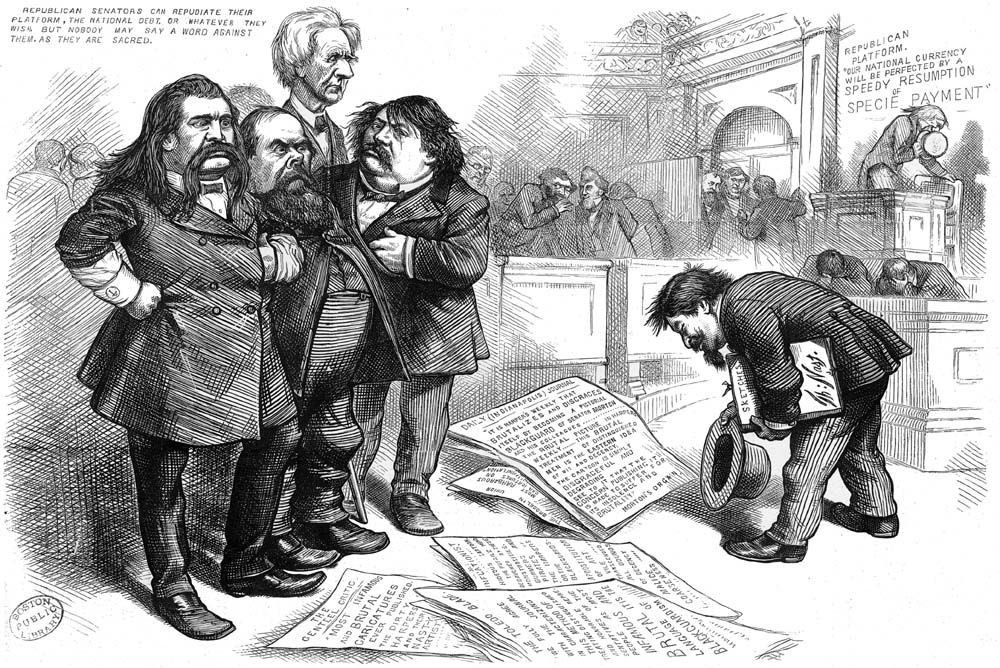
In 1867, he succeeded in returning to the Senate, being elected over Governor Curtin. There, he aligned himself with the Radical Republicans on Reconstruction and voted to convict President Andrew Johnson. He proceeded to build up the Republican machine in Pennsylvania during this time into a robust political organization. In 1874, Cameron was one of the numerous Republican senators to bend to pressure to support the proposed Inflation Act, inflating the currency in the wake of the Panic of 1873 as a stimulus. Currency inflation was a policy supported by many Philadelphia businessmen to stimulate the economy and ultimately, President Grant vetoed the bill on the advice of Secretary of the Treasury Hamilton Fish. Cartoonist Thomas Nast, who opposed inflating the currency and regarded it as a betrayal of a Republican Party campaign promise, included Cameron among the Republican senators he made fun of on supporting inflation, which he and other economic conservatives regarded as “financial heresy”. The below cartoon he drew in response to heated criticism he received after ripping on them through his cartoons.
Depicted are Senators John A. Logan (R-Ill.), Oliver Morton (R-Ind.), Cameron, and Matthew Carpenter (R-Wis.), with Nast asking “pardon”.
By 1876, Cameron was 77 years old and wanted to officially pass the torch. After ensuring that his son, Secretary of War J. Donald Cameron, would succeed him, he officially retired. Ironically, Cameron’s son would prove to be a bit of the inverse of his father: he had been a highly competent Secretary of War but was not as skilled at the glad-handing, back-slapping politics of his father. Although the elder Cameron was officially retired, he still acted behind the scenes. For instance, he used his influence to attempt to get former President Grant nominated again in 1880. Simon Cameron died on June 26, 1889 at the age of 90, leaving behind a tremendous political machine. The younger Cameron would eventually be eclipsed by Matthew Quay, whose efforts were vital to Benjamin Harrison’s victory in 1888 and inadvertently got Theodore Roosevelt to the presidency. The machine Cameron built would not face a serious challenge until the Great Depression, in which Philadelphia became more inclined to elect Democrats to Congress. However, Republicans would control the city’s political machinery until the election of Democrat Joseph S. Clark as mayor in 1951.
References
Kahan, P. (2016). Amiable scoundrel: Simon Cameron, Lincoln’s scandalous Secretary of War. Lincoln, NE: University of Nebraska Press.
Oates, S.B. (2021, February/March). Lincoln’s Corrupt War Department. American Heritage, 66(2).
Robinson, M.D. (2022). “Amiable Scoundrel: Simon Cameron, Lincoln’s Scandalous Secretary of War”, by Paul Kahan”, The Journal of the Abraham Lincoln Association, 43(1).
Before the question of abortion came to the forefront of American political thinking, the Equal Rights Amendment was a measure often supported by Republicans, including conservative ones as this vote will demonstrate. The amendment, written by suffragist Alice Paul, had first been introduced in the Senate one hundred years ago by Majority Whip Charles Curtis (R-Kan.) and Rep. Daniel Anthony Jr. (R-Kan.) (a nephew of women’s rights activist Susan B. Anthony), both were regarded as conservatives in their day and the former would be vice president from 1929 to 1933. In 1946, the House version of the ERA was sponsored by none other than Clare Hoffman of Michigan, who I have previously covered and was such a truculent rightist during World War II that FDR wanted him prosecuted for sedition.
Curiously, one of the measure’s opponents was Democrat Emanuel Celler of New York, normally a champion of liberal causes, who I have also covered for his incredible career. He opposed because he didn’t want special labor protection laws for women rendered unconstitutional. Although at one time Celler’s stance was mainstream among liberal Democrats, including Eleanor Roosevelt, few liberal Democrats by 1970 were sticking to this rationale for opposition and he faced an embarrassing defeat as House Judiciary Committee chairman when Martha Griffiths’ (D-Mich.) petition to move the bill out of his committee succeeded. The amendment would be voted on by both chambers in the 92nd Congress and voted for overwhelmingly. Birch Bayh (D-Ind.) argued that the ERA should be adopted to counter extensive sex discrimination, while Sam Ervin (D-N.C.) argued that the ERA would give way to developments like co-ed bathrooms and dorms, legalization of homosexuality, and women being drafted. He feared that all distinctions between men and women would be obliterated. Some of Ervin’s predictions came to pass even without the ERA’s adoption, including co-ed bathrooms and dorms and military service for women (U.S. Senate). Today, the ERA is divisive because of the issue of abortion, and the trans issue may now contribute as well to opposition. These are the votes:
House Passage, 354-24: D 217-12; R 137-12, 10/12/71.
Reps. H.R. Gross (R-Iowa) and Durward G. Hall (R-Mo.) voted for…they were among the most conservative members of the House.
Sens. Barry Goldwater (R-Ariz.), James Eastland (D-Miss.), and Wallace F. Bennett (R-Utah), who voted against this version, had voted for the 1953 version of the Equal Rights Amendment after the Hayden Rider was added, which clarified that this amendment would not take away any privileges currently held by women, thus protecting sex-specific labor laws. Interestingly enough, all but six Senate Democrats would vote for the Hayden Rider. The yeas among Democrats included Hubert Humphrey of Minnesota and Lyndon B. Johnson of Texas. Curiously, John Sparkman of Alabama, who voted for the 1972 ERA, voted against the 1953 version.
Sen. Margaret Chase Smith (R-Me.), the only woman in the chamber at the time, voted for. She had been a long-time supporter of the amendment.
Mississippi is the only state in which a majority of its federal legislators opposed. The closest to the state were Arizona and Utah, in which half of their federally elected officials voted against.
The states of Alabama, Arkansas, Colorado, Connecticut, Delaware, Hawaii, Idaho, Iowa, Kansas, Kentucky, Maine, Maryland, Massachusetts, Minnesota, Montana, Nebraska, Nevada, New Mexico, North Dakota, Oklahoma, Oregon, Rhode Island, South Dakota, Tennessee, Vermont, Virginia, Washington, and West Virginia had no legislators opposed.
No Senate liberals voted against.
Both John Birch Society members in Congress, Republicans John Rousselot and John G. Schmitz of California, were among the opposition.
Although the dissenters were mostly conservative, what is remarkable is that a number of prominent conservatives were on board with this, including Senators Carl Curtis (R-Neb.), Roman Hruska (R-Neb.), Strom Thurmond (R-S.C.), and John Tower (R-Tex.).
Rep. Leonor K. Sullivan (D-Mo.) was the only woman in Congress to vote against the ERA.
Judiciary Chairman Emanuel Celler (D-N.Y.) and William McCulloch (R-Ohio) were primarily known for their collaboration on civil rights legislation of the 1960s, but this time they collaborated in opposition to the ERA.
In addition to chairing the Watergate Committee, Sen. Sam Ervin (D-N.C.) led the Senate opposition to the ERA.
References
S.J. Res. 49. Joint Resolution proposing amendment to the Constitution relative to equal rights for men and women. Hayden amend. providing that nothing in the amendment shall be construed as impairing any rights or benefits given by law to women. Govtrack.
In 1884, Grover Cleveland was elected president. He was the first Democrat since 1856 to win a presidential election, and part of his platform was honesty and integrity in government, indeed his slogan was “A Public Office Is a Public Trust” (Williams). His ethical stands indeed motivated a number of Republicans known colloquially as “mugwumps”, to vote for him or at least refuse to back Republican nominee James G. Blaine. As part of his administration, Cleveland brought some former Confederates to the cabinet, and one of them was his attorney general, former Senator Augustus H. Garland of Arkansas. He was not aware that by picking him, he opened the door to his administration possibly being caught up in a scandal; in 1883, Garland had accepted $500,000 of nearly worthless shares in the Pan-Electric Company. This was a Tennessee-based company that formed regional telephone companies and used technology developed by J. Harris Rogers, chief electrician of the Washington Capitol Building. This company was a competitor to Bell Telephone, which filed suit against the company claiming patent infringement given the many, many similarities of Rogers’ designs to Bell products. Senator Isham G. Harris of Tennesse was a friend of Rogers’ father, and he had helped them form the Pan-Electric Company in exchange for having authority to add partners to the venture (Hudspeth). A number of Tennessee politicians got in on this company along with Harris, including Congressmen J.D.C. Atkins and Casey Young. The company was nominally headed by Joseph E. Johnston, a former Confederate general and one-time Congressman from Virginia, with an initial estimated value of $5 million based on what the directors thought Rogers’ patents were worth (Hudspeth). Johnston himself would get a position in the Cleveland Administration as U.S. railroad commissioner.
Given that the Cleveland Administration on its face was seen as friendly to their interests, Pan-Electric got U.S. District Attorney for Tennessee Henry W. McCorry in 1885 to request that Garland file suit to invalidate the Bell Telephone Company patent, claiming that Interior Department employees were unduly favorable to Alexander Graham Bell. Indeed, for the Pan-Electric Company stock to have had any significant value the Bell patent would have had to be invalidated (Williams). Had the invalidation suit been successful, Garland would have made millions. He refused to do so and went on a hunting trip, which his critics saw as convenient given what would happen next: acting Solicitor General John Goode, another Southern politician formerly of the Confederacy, filed the suit in the meantime. Critics leapt on this and discovered that Garland owned a tenth of the shares distributed by the company (Williams). Indeed, Garland himself had been on the original board of directors for the company and had been an attorney for them. Once President Cleveland got word, he reprimanded Goode for not going through the proper channel, which was Interior Secretary Lucius Q.C. Lamar. Goode’s decision was revoked and submitted for review by Lamar. He had no ties to the company but when he approved the lawsuit, the press went after Garland for his shares and a Congressional investigation was launched.
Cartoon Lampooning Augustus Garland
The Evidence to Invalidate?
The grounds that Pan-Electric and its friends used to try and invalidate the Bell patent were that it was overly generic and had been obtained fraudulently (Hudspeth, 40). There was also the allegation that people in the Interior Department of the previous administration had been biased to Bell. On February 14, 1876, Alexander Graham Bell had filed for a patent while another inventor, Elisha Gray, had filed a caveat that he would file a patent for the same invention within three months, thus suspending Bell’s patent, but Bell was awarded the patent. Legal proceedings followed and included in the evidence against Bell was an April 8, 1886 affidavit from Zenas F. Wilber, a patent examiner in the U.S. Patent Office. He attested to being an alcoholic who owed money to Bell’s patent attorney Marcellus Bailey, a fellow Union veteran. Wilber also held that he had too hastily ended the suspension of Bell’s patent based on him having paid a fee first, thus denying Gray an opportunity to challenge Bell’s patent. He also alleged that he was afterwards paid $100 to show Bell Gray’s caveat (The Washington Post). Thus, the allegation was that Bell stole Gray’s invention. These details were not in previous affidavits filed by him, and he claimed that a previous affidavit that he signed that contradicted this one was done at the behest of the Bell Company. Wilber held that he was duped into signing it while drunk and depressed before Bell attorney Thomas W. Swan (Evenson, 168). However, the April 8, 1886 affidavit was at the behest of the Pan-Electric Company. Additionally, Swan served as a witness (Evenson, 171). Wilber’s affidavits thus fell apart under scrutiny.
Result
Puck Cartoon showing Senator Harris, Attorney General Garland, and Johnston all caught up in the scandal.
Garland testified before Congress on April 19, 1886, denying that he had used his influence to benefit the Pan-Electric Company. The House, which was majority Democratic at the time, issued a majority report that exonerated Garland, Lamar, and others involved in the affair while the Republican minority report charged that Garland and Goode had deliberately engaged in a scheme to enrich themselves (Williams). Goode had been an appointment as acting Solicitor General, however, and the Republican Senate rejected his nomination. In November 1886, Judge Howell Edmunds Jackson, a recent Cleveland nominee, dismissed the suit against Bell, ending the scandal. Garland retained President Cleveland’s trust and he kept him on as Attorney General until the end of his term, and Jackson would be confirmed to the Supreme Court in 1893.
References
Augustus Hill Garland (1832-1899). Encyclopedia of Arkansas.
Evenson, A.E. (2000). The telephone patent conspiracy of 1876: the Elisha Gray – Alexander Bell controversy. Jefferson, NC: McFarland.
Hudspeth, H.G. (2020, January 10). “One Percent Inspiration and 99 Percent Tracing Paper”: The Pan-Electric Scandal and the Making of a Circuit Court Judge, April-November 1886. Mississippi Valley State University, 39-54.
From 1864 to 1888, the Democrats only won the state of Nevada once, in the close contest between James A. Garfield and Winfield Scott Hancock. With the exception of the one-termer James G. Fair, all their senators had been Republicans, with the most important being John P. Jones and William M. Stewart. However, in 1892 the new Populist Party won a resounding victory in the state, as the state’s interests were naturally with silver given the many silver mines in the state. The winner of the election for Nevada’s sole House district that year was former Republican Francis Newlands (1846-1917) of the newly created Silver Party, who trounced former Republican Congressman William Woodburn about as badly as James Weaver trounced Benjamin Harrison in the state.
Newlands was a lawyer by profession, having earned a law degree at Columbian College (now George Washington University) and moved to San Francisco, California, in 1870. There, he quickly became a success and in 1874 married Clara Sharon, the daughter of mining magnate (and future senator) William Sharon. Newlands helped Sharon run his business enterprises, including the Bank of California and the Palace Hotel. After Clara died after giving birth to their fourth child in 1882, Newlands inherited the Sharon estate. However, he had to move himself and his family to Reno, Nevada after Sharon’s 1885 death to protect it from a divorce lawsuit from Sharon’s mentally unstable former mistress, Sarah Althea Hill, who claimed that they had been married in secret. A story about that tempestuous woman will be one for a different post.
Newlands proved a popular representative and as a member of the Nevada-centric Silver Party would be a tireless advocate for bimetallism and against the adoption of the gold standard. He would support William Jennings Bryan for president in 1896 and was joined in the Silver Party by Senators John P. Jones and William M. Stewart, who had left the Republican Party over its full embrace of the gold standard. Newlands would be reelected time and again. Although he was often opposed to the McKinley Administration, in 1898 he sponsored the Newlands Resolution, which annexed Hawaii. Republicans overwhelmingly supported annexation and it was signed into law by President McKinley. Newlands was also a major supporter of funding irrigation projects, and succeeded in getting his bill, the Newlands Reclamation Act, which established the Bureau of Reclamation, signed into law. Although Senators Jones and Stewart returned to the Republican Party after 1900, Newlands changed affiliation to Democrat. In 1902, Senator John P. Jones let it be known that he was not going to be running for another term after thirty years of service. Newlands took the opportunity to run for the seat and won.
As a senator, Newlands was mostly progressive in his record. He asserted in 1905 that the United States had neglected domestic reform in favor of imperialism, stating, “During the past eight years of continuous international acquisition, we have found the nation drifting into aggression, in strong contrast with the traditions of the Republic and the peaceful intentions of our people at the commencement of this new era. During these eight years, we have almost neglected domestic legislation. Whilst we have been engaged in conquering other countries, monopoly has conquered our own; and, under the leadership of a President whose policy upon all matters of domestic reform is meeting with such general approval, we are endeavoring to recover for our own people the ground which we have lost whilst our eyes have been strained towards the horizon of imperial grandeur” (Newlands, 1905, 887-888). Newlands was also a strong supporter of conservation and backed President Roosevelt in his setting aside lands for national parks. In 1913, he sponsored the Newlands Labor Act, which created the Board of Mediation and Conciliation to address railroad strikes.
Investigating the Titanic
News of the sinking of the Titanic had reached the United States before the surviving passengers had reached the shores of the United States, and the Senate prepared for their arrival. As soon as the surviving passengers of the Titanic had arrived on the Carpathia in New York City on April 18th, 1912, they were met by Newlands, Senator William A. Smith (R-Mich.), and other officials to serve White Star Line chairman J. Bruce Ismay and surviving officers and crew subpoenas to testify at a Senate inquiry at the Waldorf-Astoria. Ismay testified the following morning. Newlands was part of the committee, headed by Senator Smith, investigating the Titanic sinking. The inquiry of this committee produced reforms in international maritime safety, including the creation of the International Ice Patrol.
Newlands and Racism
Francis Newlands was quite racist, even in his day. He had been born in antebellum Natchez, Mississippi in 1846, and despite being raised in Illinois and Washington D.C., the politics of the region of his birth remained in him. This was even present in one of his achievements, the development of the Chevy Chase neighborhood. Starting in the late 1880s he and a group of investors purchased tracts of farmland with the intention of developing it into a neighborhood. While there wasn’t technically a racial prohibition attached there was a minimum cost for people to build a home in the neighborhood which made it unlikely that blacks would be able to buy real estate there, and they didn’t. Blacks, Jews, and immigrants were not welcome to go to the neighborhood’s streetcar line or its amusement park (Flanagan). He also advocated the repeal of the 15th Amendment and supported a “whites only” immigration policy. Ironically, it was Nevada Senator William M. Stewart, who founded Chevy Chase with Newlands, who drafted the 15th Amendment.
On a “whites only” policy, Newlands stated, “Our country, by law to take effect upon the expiration of existing treaties, should prevent the immigration of all peoples other than those of the white race, except under restricted conditions relating to international commerce, travel, and education” (Newlands, 1909, 51). If he had at any time in his past as a Republican held favorable views to blacks, they seem to have been a distant memory. In his article, “A Western View of the Race Question”, he writes “As to the black race we have already drifted into a condition which seriously suggests the limitation of the political rights heretofore, perhaps mistakenly, granted them, the inauguration of a humane national policy which, by co-operative action by the nation and the southern states, shall recognize that blacks are a race of children, requiring guidance, industrial training, and the development of self-control, and other measures designed to reduce the danger of that race complication, formerly sectional, but now rapidly becoming national” (Newlands, 1909, 49). He also was against the acquisition of San Domingo because he feared that next would come Haiti. Newlands stated regarding acquiring Haiti that it would mean “…the addition of over a million of blacks to our population. The race problem now before us is, surely, sufficiently difficult” (Newlands, 1905, 890). Newlands believed that there was no way to create a racially peaceful society that was diverse without interracial relationships, which he of course was against. He stated, “History teaches us that it is impossible to make a homogenous people by the juxtaposition upon the same soil of races differing in color. Race tolerance, under such conditions, means race amalgamation, which is undesirable” (Newlands, 50).
Newlands and the Wilson Years
Francis Newlands, while a supporter of Wilson, was one of the less progressive Democrats during the Wilson Administration, and in 1916 he was the only Democrat to vote against the confirmation of Louis Brandeis to the Supreme Court. That year, he continued his work for conservation by sponsoring legislation creating the National Forest Service. Newlands supported American entry into World War I by pairing in favor of the resolution declaring war on Germany. He died of a heart attack in his Washington D.C. home on December 24, 1917.
Legacy
The ascendency of Newlands in Nevada represents a rise of the Democratic Party on the national level. Although the state itself elected Democratic governors quite a few times before Newlands was elected to Congress, he was the first Democrat to be reelected to the Senate from the state, and others followed in his path, particularly Key Pittman, who would serve from 1913 to 1940. Newlands was a politician who had numerous legislative accomplishments, but his record on racial issues has attracted some recent negative attention. Places named after him have been subject to calls for renaming, including Newlands Park in Reno and a fountain in the Chevy Chase neighborhood given his advocacy for the repeal of the 15th Amendment and his support for “whites only” immigration policy. I think we ought to base whether names, memorials, or monuments should be kept with consideration as to what they are meant to celebrate and not assume that they are meant to celebrate the entirety of the person. Otherwise, every historic figure is potentially up for removal since as humans even the greatest among us are not free of faults.
References
Flanagan, N. (2017, November 2). The Battle of Fort Reno. Washington City Paper.
Newlands, F.G. (1909, July-December). A Western View of the Race Question. The Annals of the American Academy of Political and Social Science, 34 (2), pp. 49-51.
In the political history surrounding the War of the Rebellion, the focus is often on Radical Republicans like Thaddeus Stevens of Pennsylvania and Ben Wade of Ohio, the leading promoters of the rights of freedmen who were also punitive in attitude to the South. A figure I’d like to highlight today, however, is one who was not so public and loud but no less important in William Pitt Fessenden (1806-1869).
Fessenden came from the Fessenden political family, and his brothers Samuel and Thomas served in Congress. His father, Samuel, was an abolitionist and such beliefs passed on to his children. He was first elected to Congress in 1840 as a Whig, the year that the shortest-lasting president William Henry Harrison was elected. During his one term in the House, Fessenden pushed to end the “gag rule” on debating the continued existence of slavery and did not himself last long in the House, as he came to have such a strong distaste for Washington that in 1843, he vowed never to return. He did in the meantime build up his political profile in the state as the leading Whig opponent of slavery from Maine. However, the abolitionist Fessenden was compelled by a sense of duty to return to Washington as the debate over slavery intensified in 1854, being elected to the Senate as a member of the Opposition. He would become one of the fathers of the state Republican Party and in Congress would speak vigorously against the Kansas-Nebraska Act, the law that had resulted in the end of the Whig Party and the beginning of the Republican Party. In 1857, Fessenden suffered two terrible misfortunes: the death of his wife and contracting malaria, which compromised his health for the rest of his life. Despite being one of the staunchest opponents of the Slave Power, he nonetheless was eager to preserve the Union and attended the last-ditch and unsuccessful Peace Conference of 1861 to avert the eight remaining slave states from seceding. Throughout Fessenden’s Senate career, he was independent-minded. For instance, he voted to strike the Legal Tender Clause from the Legal Tender Act but voted for the bill itself. The Legal Tender Act authorized $430 million in “greenbacks” unbacked by gold or silver as an emergency war measure. Fessenden also was not always up for voting favorably regarding railroads. He could best be thought of as a moderate conservative in his voting. Fessenden’s greatest contribution in the Senate was as chairman of the Senate Finance Committee, in which he took the lead on measures to fund the war effort and through his diligence and hard work was able to win unanimous approval on one revenue measure.
In 1864, President Lincoln nominated Fessenden to be the next Secretary of the Treasury without informing him ahead of time, and the Senate confirmed him unanimously. He was reluctant to succeed Salmon P. Chase due to his poor health, and Lincoln pressured him hard to take the post, telling him, “Fessenden, the Lord has not deserted me thus far, and He is not going to now—you must accept!” (Mr. Lincoln’s White House) Ultimately, however, duty called him to do so just as it had for him to return to Washington in 1854 and he resigned from the Senate to be Secretary of the Treasury. In this position, Fessenden focused on funding the war effort while keeping other expenditures down. However, he only stayed until the next year and then he was returned to the Senate. There, Fessenden would resume his chairmanship of the Finance Committee and retain his independent-minded voting; in 1868 he voted to sustain President Johnson’s veto of a bill increasing tariffs on copper and voted with conservatives in support of the Public Credit Bill in 1869, which would require payment of war bonds back in gold as bondholders expected, which was opposed by lame duck President Johnson who pocket vetoed it. President Grant would sign the measure.
Fessenden, Reconstruction, and the Johnson Impeachment
Fessenden was a strong supporter of Congressional Reconstruction, being chair of the Joint Committee on Reconstruction, and he strongly disliked and disagreed with President Johnson. He also voted for both the 14th and 15th Amendments. However, when the subject of impeachment came up for violating the Tenure of Office Act, Fessenden was the first of the seven Senate Republicans to vote against it. Two motives for this were not wanting President Pro Tem Ben Wade of Ohio, who was next in line for the presidency, to ascend to the office. Wade was a forceful and divisive figure as well as a supporter of currency inflation and high tariffs, all of which bothered Fessenden as well as a number of powerful businessmen in New England. Johnson survived conviction by one vote. As was written in a contemporary newspaper, “Andrew Johnson is innocent because Ben Wade is guilty of being his successor” (Trefousse, 309). Although deeply unpopular among his Republican colleagues for this vote, he nonetheless became chair of the Senate Appropriations Committee. Although none of the seven senators were reelected, he ultimately neither faced political consequences for his vote nor was able to make a mark in his position as his bout of malaria had taken its toll and he succumbed to his poor health on September 8, 1869, only a few months after the passing of his father.
Fessenden was overall a constructive legislator whose efforts were vital in saving the Union and was bound by a sense of duty to his country even when his health was compromised. He was one of America’s great patriots and deserves more than a modicum of recognition.
References
Cabinet and Vice Presidents: William Pitt Fessenden (1806-1869). Mr. Lincoln’s White House.
On January 29, 1901, Republican Representative George Henry White (1852-1918) of North Carolina, the only black member of Congress at the time, delivers a speech that would come to be known as the “Phoenix Speech”, which he concluded with,
“Now, Mr. Chairman, before concluding my remarks I want to submit a brief recipe for the solution of the so-called American negro problem. He asks no special favors, but simply demands that he be given the same chance for existence, for earning a livelihood, for raising himself in the scales of manhood and womanhood that are accorded to kindred nationalities. Treat him as a man; go into his home and learn of his social conditions; learn of his cares, his troubles, and his hopes for the future; gain his confidence; open the doors of industry to him; let the word “negro,”, “colored,” and “black” be stricken from all the organizations enumerated in the federation of labor.
Help him to overcome his weaknesses, punish the crime-committing class by the courts of the land, measure the standard of the race by its best material, cease to mold prejudicial and unjust public sentiment against him, and my word for it, he will learn to support, hold up the hands of, and join in with that political party, that institution, whether secular or religious, in every community where he lives, which is destined to do the greatest good for the greatest number. Obliterate race hatred, party prejudice, and help us to achieve nobler ends, greater results, and become more satisfactory citizens to our brother in white.
This, Mr. Chairman, is perhaps the negroes’ temporary farewell to the American Congress; but let me say, Phoenix-like he will rise up some day and come again. These parting words are in behalf of an outraged, heart-broken, bruised, and bleeding, but God-fearing people, faithful, industrious, loyal people–rising people, full of potential force” (White).
White had declined to seek reelection in 1900, as in the year before an amendment had been adopted to the state’s constitution that served to disenfranchise most blacks. No blacks would serve in Congress from White’s departure until Oscar De Priest’s election in 1928. He would be succeeded by white Democrat Claude Kitchin, who was involved in the deadly Wilmington insurrection of 1898 and said over a week before it, “We cannot outnumber the negroes…And so we must either outcheat, outcount, or outshoot them” (Zucchino, 137). This man would later become House Majority Leader from 1915 to 1919, and Minority Leader from 1921 to 1923. In a sweep of violence and white identity politics, the Republican-Populist coalition’s power was destroyed. This was the context in which black political power in North Carolina was extinguished.
Career
Born on December 18, 1852, whether White was born into slavery or not is disputable, but he did grow up in poverty. He attended the Freedman’s Bureau school at Rehobeth Church in North Carolina and in 1877 graduated from Howard University. After studying law under Judge William J. Clarke, he began practicing law. Although White entered politics in 1881, he was entering in a time in which black political participation was being increasingly marginalized but was able to win respect from whites and blacks alike. He had served a stint in the North Carolina House of Representatives in 1881 as well as district solicitor of the Second Judicial District from 1886 to 1890.
Given that black political power was largely restricted to the majority black 2nd district, White moved there to advance his career. In 1894, White challenged his brother-in-law, Republican Henry P. Cheatham, for the House seat. Cheatham had lost reelection in 1892 to Democrat Frederick A. Woodard after a Populist candidate had siphoned votes from him. Although White lost the primary this time, Cheatham lost the election, and the Republican primary voters opted to change tracks and pick White in 1896.
That year, with the election of President William McKinley came the elections of Republicans Daniel Lindsay Russell as governor, Senator Jeter C. Pritchard, and White. White established a largely conservative record, favoring Hawaiian annexation and supporting the gold standard, but made a few exceptions, such as opposing a bankruptcy bill that favored creditors. However, he would be best known for his efforts for civil rights and pleading with President McKinley to intervene in North Carolina over political violence, but to no avail. The coalition that had taken hold in North Carolina, the Republican-Populist fusion, was in truth bound together by an opposition to Democratic rule and they had many policy differences that couldn’t be reconciled, including Republicans wanting to have a light-handed approach to business while Populists wanted a heavy-handed approach, and Republicans supporting a gold standard while Populists wanted free silver. The coalition being vulnerable, the Democrats were able to run a white supremacy campaign that won them the state legislature, and they proceeded to amend the constitution to impose a literacy test which would be administered discriminatorily at the local level. In 1900, White introduced the first anti-lynching bill, but Congress never voted on it. He also with Edgar Crumpacker (R-Ind.) advocated for legislation penalizing Southern states for discriminatory literacy tests by reducing representation based on total illiteracy rates, but this effort failed. In addition to not running for reelection he also moved out of North Carolina, stating that “I cannot live in North Carolina and be treated as a man” (George Henry White). White moved to Washington D.C. where he became a successful banker and served as the driving force for the founding of the town of Whitesboro, New Jersey, a community where black people could thrive. He subsequently moved to Philadelphia, where he founded the first black-run bank in the city and became active in the city’s Republican politics was serving as Philadelphia’s assistant city solicitor until he died in sleep on December 28, 1918. In 2002 the town ot Tarboro, where he maintained his residence while representing North Carolina’s 2nd district, created a George White Day on January 29th, marking the anniversary of his “Phoenix Speech”.
By the time of the Great Depression, black loyalty to the Republican Party had been tested for some time. The Republican Party had abandoned consistent efforts for civil rights after the failure of the Lodge Federal Elections Bill in 1890, they had failed to pass an anti-lynching bill in 1922 despite President Harding and its Congressional leaders voicing support. Worse yet, President Hoover had broken a promise to Dr. Robert Moton, Booker T. Washington’s successor as head of the Tuskegee Institute, to grant blacks an unprecedented role in government after Moton agreed to help Hoover cover up abuses of blacks by local whites during the 1927 Mississippi River Flood recovery. Dr. Moton opted to endorse Roosevelt in 1932, and his New Deal was proving popular for many blacks. The first major sign that he was appealing to blacks was the 1934 midterm election, specifically in Illinois’s 1st District, a Chicago-based district which was and remains majority black. The incumbent is Oscar De Priest, a Republican who has voted against New Deal programs and condemned the New Deal as socialist. However, Arthur Wergs Mitchell (1883-1968), does not do the same, instead switching to the Democratic Party and campaigning in support of the New Deal. He had formerly headed the Chicago turnout campaign for Herbert Hoover in 1928. Although he narrowly loses the Democratic primary to Harry Baker, a white man, he dies before the election and Mitchell gets picked to fill in. Chicago Mayor Ed Kelly is of able assistance as he campaigns heavily for the black vote. Before I discuss Mitchell’s political career further, I feel his background is worth some coverage.
A Shady Past
Before moving North, Arthur W. Mitchell had engaged in agricultural education pursuits in Alabama. He founded a number of agricultural schools which were more oriented to getting free labor from students than educating them in superior farming practices. Mitchell also exaggerated his ties to Booker T. Washington (he had attended Tuskegee for one year) and outright lied about attending Talladega College. In 1908, he founded with the white owner of Fair Oaks Plantation the African American Building Loan and Real Estate Company and the West Alabama Normal and Industrial Institute. This school was a scheme to get cheap black labor to work in farms and woodlots, with only some rudimentary skills being learned by the children of the laborers at these schools (Nordin). The parents had hoped that their children would be learning skills that would enable them to have better futures. Mitchell would make appearances at Northern philanthropic institutions and send mailers to raise money for this scheme, thus taking away funds that would otherwise go to Booker T. Washington’s Tuskegee Institute. Although Washington initially campaigned against Mitchell’s activities, Mitchell managed to bribe a Tuskegee telegraph operator to intercept personally damaging communication and blackmailed Washington into backing down (Nordin). After the work was done at the plantation, the school’s main building mysteriously burned down.
Mitchell again engaged in this scheme at another plantation near Geiger, Alabama. Once again in 1915, a mysterious fire destroyed the school. Mitchell then served in an administrative role with the Armstrong Agricultural Institute. By 1919, however, pending lawsuits and allegations were mounting against him that he had defrauded poor blacks out of land, and he fled with his family to Washington D.C. While there, Mitchell uses illegally obtained money to buy apartments and study law (Nordin). He also sells real estate, and he is aided in these endeavors by Congressman John McDuffie (D-Ala.), a man he had befriended in his days in Alabama as he was one of the backers of one of his schools.
A Democratic Establishment Man
Ideologically, Mitchell is on the liberal end of course given his support of the New Deal, but he is more moderate than his successors will be. This district doesn’t go solidly Democratic overnight, as he wins reelection repeatedly by less than 10 points. In 1938, Mitchell’s opponent is black Republican William L. Dawson, who had worked in the Chicago Republican machine under De Priest. While in Congress, Mitchell, like De Priest, is accused of insufficient advocacy for civil rights by civil rights groups. He kowtows to what the Democratic machine in Chicago wants, distances himself from civil rights groups, does not attempt to aid black constituents from Southern districts who write him, and largely avoids issues that would cause offense to Southern whites. Rather, he is pushing measures to honor certain black figures that wouldn’t rock the boat. Indeed, biographer Dennis Nordin wrote of him that he was a “masterful flatterer of whites. . . . Whenever individual Democrats had done anything of importance . . . Mitchell was likely to offer them his help. . . . His letters, however, compromised African American respectability . . . [but suggested] that he might be personally useful if a need should arise to manage and control troublesome African Americans” (Pinderhughes). Mitchell also pushed a Southern-friendly myth that blacks in the South were better off than blacks in the North. In 1937, he strongly backs Roosevelt’s “court packing plan”, charging that the court had perverted the meaning of the 14th Amendment to defend corporations rather than blacks. That year, he sponsored an anti-lynching bill that was weaker than the Gavagan-Wagner proposal backed by the NAACP and there are murmurs of this bill getting support from a significant number of Southerners, including Judiciary Committee Chairman Hatton W. Sumners of Texas. Although Sumners and a few other Southerners vote for it, many Southerners opt to vote against anyway and many supporters of Gavagan-Wagner vote against the measure as too weak. Mitchell then backs the Gavagan-Wagner Bill, which passes the House but dies in the Senate.
Discrimination Lawsuit and Independence
In 1937, Mitchell boarded a train to take a vacation in Arkansas, and although he had paid a first-class ticket, by the time the train gets into Arkansas he is moved to a blacks only car by the conductor, which is in poor condition. Although the railroad offers to refund him the difference, Mitchell declines and files suit for discrimination in interstate travel. His case against the Illinois Central, Pullman, and Rock Island railroad companies takes four years to make its way up to the Supreme Court, and the court rules unanimously in his favor that under “separate but equal”, passengers traveling interstate regardless of their race must get first class accommodations if they paid for them. Although a small legal victory, it is a victory, nonetheless. He also during World War II spoke out against defense contractors who discriminated against blacks. Mitchell also demonstrates his independence in voting in his final term in Congress, which includes being one of two Cook County Democrats to support the Vinson Anti-Strike Bill, an unprecedented bucking of organized labor on his part.
The End
Ironically, Mitchell’s greatest accomplishment results in his political downfall. Chicago Mayor Ed Kelly and his machine don’t appreciate that he was exercising independence in advocacy for blacks, especially that which impacted Chicago-based rail companies, and he learned that the machine would be backing William L. Dawson, his 1938 opponent who had since become a Democrat, instead. Mitchell figured he wouldn’t win this fight and decided not to run again. Dawson would win the 1942 midterm election and be much more of a loyalist for liberalism than Mitchell, and the 1946 election would be the last time in which a Republican would come within single digits of defeating a Democrat in the 1st district. Like Mitchell, Dawson would also kowtow to the Chicago Democratic machine and remained in office until his death in 1970. Mitchell would afterwards assume the role of elder statesman and gave his support to Democratic presidential candidates.
References
Hill, R. Mitchell v. United States, et. al. The Knoxville Focus.
Before I post this, I want to put my cards on the table. In the 2012 redistricting, my hometown was to fall under his district, and I voted for Swalwell over Stark and did so with gusto given his ultra-liberal reputation and his penchant for pugnaciousness. On to covering Stark:
The year is 1972 and liberal Democrats have recently taken umbrage to Congressman George P. Miller. Miller had served in his Alameda County-based district since 1945 and is now 81 years old. The central complaint they have with him is that he has proven supportive of President Nixon on the Vietnam War. Although still a liberal Democrat in many more ways than not, he voted against Cooper-Church in 1970, against the Nedzi-Whalen Amendment and the Mansfield Amendment in 1971, and against the Boland Amendment in 1972, all efforts to restrict the scope of the war or to pull out. One of his colleagues, Jeffery Cohelan of Berkeley, had lost renomination in 1970 for less to Ronald V. Dellums. Enter Fortney Hillman “Pete” Stark (1931-2020).
Stark is a banker by profession and had founded the Security National Bank in Walnut Creek in 1963, intending it as a bank for the working class. His bank was a success and opened branches in both Alameda and Contra Costa Counties, eventually becoming worth $1 billion. He was at one time a Republican, but moved into the Democratic Party in the 1960s and was vehemently against the Vietnam War. His bank printed checks with the peace sign and he had the peace sign constructed atop the headquarters of his bank, attracting liberal customers. Stark, who campaigns against Miller both on him being old and his Vietnam War record, wins the primary. Indeed, his more difficult election is the general and in the year of the Nixon landslide, he prevails by six points against Republican Lew Warden. This will be the strongest challenge he ever faces from a Republican as his Alameda County district only gets more Democratic. Upon his victory, Stark sells his shares in Security National Bank. He soon establishes a staunchly liberal record, especially on questions of foreign policy and has a record both as a serious politician but also for his outbursts. I will start with the former.
Contributions to Law
Although Stark’s field was not initially healthcare, in 1985 he was elevated to be chairman of the subcommittee on health on the Ways and Means Committee. He would be the leading Democrat on this subcommittee until 2013. In 1985, Stark succeeded in getting an amendment attached to the Consolidated Omnibus Budget Reconciliation Act (COBRA), mandating numerous employers to offer continuation of coverage after a major life event and in the following year he won passage of the Emergency Medical Treatment and Active Labor Act (EMTALA), requiring hospitals to treat and stabilize people in emergency rooms regardless of ability to pay. He contributed the Stark Laws, which are regulations that severely restrict healthcare providers from referring Medicare patients to institutions that they profit from.
In 1986, as part of the tax legislation he played a key part in establishing COBRA, permitting employees to stay on their employers’ healthcare plans while looking for another job. He also worked with Rep. Bill Gradison (R-Ohio) to pass the Medicare Catastrophic Coverage Act in 1988, which expanded Medicare benefits to include outpatient drugs and caps copayment costs for enrollees, but the law faced massive criticism in the following year and was repealed by Congress. In 2008, Stark was one of the leaders of the push to pass the Medicare Improvements for Patients and Providers Act over President Bush’s veto.
The Stark Law
In 1988, Stark proposed a law that prohibited doctors who took Medicare patients from referring them to facilities where they or member of their immediate family have a financial stake and this was ultimately incorporated into the Omnibus Budget Reconciliation Act of 1990 (Kolber). This was followed up with a prohibition regarding doctors who took Medicaid patients (“Stark II”) in 1993.
Stark and Obamacare
Stark was also a key figure in the drafting of the Patient Protection and Affordable Care Act (“Obamacare”), having written some provisions of the law. He was an advocate for single-payer health care before it got the visibility it has now and unsuccessfully pushed for the inclusion of the public option, which if enacted had the potential to crowd out the private health insurance market.
Stark and Constituent Service
I have written this before, and I will do so again. If a member Congress has a reputation that is extreme or outrageous, look to constituent service as a reason they stick around. Stark had a reputation of delivering for his district, steering billions of dollars into it and assisted thousands of constituents in dealing with federal agencies (Lochhead).
Stark’s Controversies
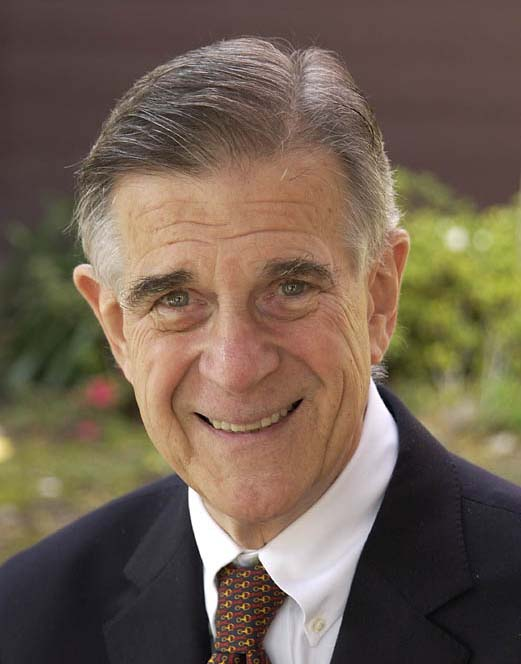
Stark in 2002.
Pete Stark was a highly controversial figure to say the least, and he could be quite feisty. Some of this can be attributed to a core attitude of his, which in his own words in 2002 was, “I cannot tolerate individuals who are indifferent to the plight of the poor” (Schudel). I will go down the list!
In 1990, he called Health and Human Services Secretary Louis Sullivan, a black physician, “a disgrace to his profession and his race” over disagreements on healthcare policy to which he responded, “I don’t live on Pete Stark’s plantation” (Schudel).
The following year, he called out Jewish colleagues who supported the Gulf War, referring to Jewish co-sponsor Rep. Stephen Solarz (D-N.Y.) as “Field Marshal Solarz in the pro-Israel forces” (Discover the Networks).
In 1995, he called Rep. Nancy Johnson (R-Conn.) a “whore for the insurance industries” who got her knowledge about healthcare through “pillow talk” (from her physician husband), for which he subsequently wrote an apology (Discover the Networks).
In 1999, Stark denounced California’s welfare director, black conservative Eloise Anderson, by stating that she would “kill children if she had her way” (Discover the Networks).
In 2001, during a debate on sexual abstinence programs, Stark accused Congressman J.C. Watts (R-Okla.) of fathering all of his children out of wedlock (two were). Watts, not present at the debate, got wind that he had said this and confronted him two days later, asking why he said that and asserted that not all of his children were born out of wedlock, to which Stark retorted, “Then how many were there?”, with Watts having to be restrained by his fellow members (Lochhead).
In 2003, Bill Thomas (R-Calif.), chairman of the House Ways and Means Committee, was trying to quickly pass an employer pension reform plan. Stark proceeded to heckle Thomas with vulgarities. Rep. Scott McInnis (R-Colo.) told him to “shut up” and he responded, “Oh, you think you are big enough to make me, you little wimp? Come on. Come over here and make me. I dare you. You little fruitcake. I said you are a fruitcake” and proceeded to call him a “cocksucker” (Discover the Networks).
In 2007, in response to President Bush’s veto of a proposed expansion of the State Children’s Health Insurance Program, he said, “You don’t have the money to fund the war or children. But you’re going to spend it to blow up innocent people if we can get enough kids to grow old enough for you to send to Iraq to get their heads blown off for the president’s amusement” (The Columbus Dispatch). Republicans attempted to censure him for this remark, but Democrats were in the majority and it was voted down.
Carl Guardino, the head of the non-partisan Silicon Valley Leadership Group arranged a meeting with Stark and a few small business leaders, which according to him, went like this: “Mr. Stark walked in, screaming the ‘F word’ at those small businessmen and women and turned what should have been a civil discourse on jobs and the economy into a curse-laden tirade” (Lochhead).
In 2008, Jan Helfeld, an interviewer who employs Socratic questioning, interviewed Stark, with the Congressman expressing the belief that “the more we owe, the wealthier we are”, and after he questions this by asking “Shall we borrow another trillion so we can become more wealthy?” he got progressively more belligerent and distraught as Helfeld stays on this issue and then Stark ended the interview, saying “Get the fuck out of here or I’ll throw you out the window” (Helfeld).
In 2010, he asked a member of a militia movement at a Town Hall meeting who was supporting stricter border control, “Who are you going to kill today?” (Schudel)
When a senior citizen at a Town Hall meeting said, “Don’t pee on my leg and tell me it’s raining” Stark responded, “I wouldn’t dignify you by peeing on your leg. It wouldn’t be worth wasting the urine” (Tavares).
Stark and the House Banking Scandal
I have covered the House Banking Scandal in the past, and it turns out that in the California delegation, Stark had a lot of overdraws. He had 64 overdrawn checks, which was a bit galling for a banker. However, Stark was after an investigation cleared of any criminal wrongdoing and received an exoneration letter, which he commented on by saying, “It’s a dastardly political thing if some poor bastard gets no letter. I’m not a lawyer, but it doesn’t seem to me it quite follows what ought to be ethics” (Tampa Bay Times).
Stark, Reintroducing the Draft, Atheism, and Other Matters
During the War in Iraq, of which he was a staunch critic, Stark supported reinstating the draft to make it so that people in more groups would have to experience the burden of war, stating, “If we’re going to have these escapades, we should not do it on the backs of poor people and minorities” (Tavares). He was also a Unitarian and in 2007 was the first ever member of Congress to openly identify himself as an atheist. The following year, the American Humanist Association awarded him the Humanist of the Year award.
Although Stark had a lifetime ACU score of 4%, he did have an independent streak. For instance, in 2008 he voted against both versions of the financial services bailout which created the Troubled Asset Relief Program and against bailing out the auto industry. Stark also voted against “cap and trade” in 2009 as an insufficient approach to climate change.
In 2010, Chairman of the House Ways and Means Committee Charles Rangel (D-N.Y.) stepped down in response to pressure within the Democratic Party after a critical report from the House Ethics Committee on taking sponsored Caribbean trips was released, which would later result in a censure. Although next in seniority for the post, Stark’s infamous reputation caused them to pass him over for Sander Levin of Michigan.
By 2012, Stark was, like Miller before him, getting on in years. In fact, he was going to be turning 81 in November, the same age that he had campaigned against Miller based on age. What’s more, he had been redistricted into a district that had only half of his original constituency. Folks in places like San Ramon, Dublin, Pleasanton, and Livermore were not so friendly to Stark’s political hot takes. What’s more, although his primary residence was in Alameda County, he had been spending most of his time in his other home in Harwood, Maryland and a controversy came about over whether he had improperly filed for an application for a homestead exemption for this home (Sherman). Enter Dublin City Councilman Eric Swalwell to challenge him. Stark attacks with him with both barrels, and falsely accused him of taking bribes from developers, which he ended up apologizing for (Lochhead). He also characterized him as a “Tea Party” candidate, a characterization that has aged like milk. Stark also mixed up the defunct Solyndra with Tesla Motors, both companies that had involvement in his district, proclaiming that he would love to buy one of the company’s new “S” cars (Lochhead). Although Stark won the primary, Swalwell could still run against him in the general election as California had recently adopted the open primary system and he prevailed by four points on Election Day. This made Stark the second longest serving member of Congress to ever lose reelection.
Stark died of leukemia on January 24, 2020. Speaker of the House Nancy Pelosi eulogized him, saying, “Today, America has lost a champion of the people and a leader of great integrity, moral courage, and compassion. Congressman Pete Stark was a master legislator who used his gavel to give a voice to the voiceless, and he will be deeply missed by Congress, Californians, and all Americans” (Tavares). As for what I think of the man, I think he was a partisan bomb thrower with a nasty streak and had some ability as a legislator. I have no regrets about voting him out, but one thing I will say for Stark is that he had the sense not to run for president! Why Swalwell even ran in the Democratic primary in 2020 is to me a mystery for the ages.
References
70 in House bank scandal are cleared. (1992, September 10). Tampa Bay Times.
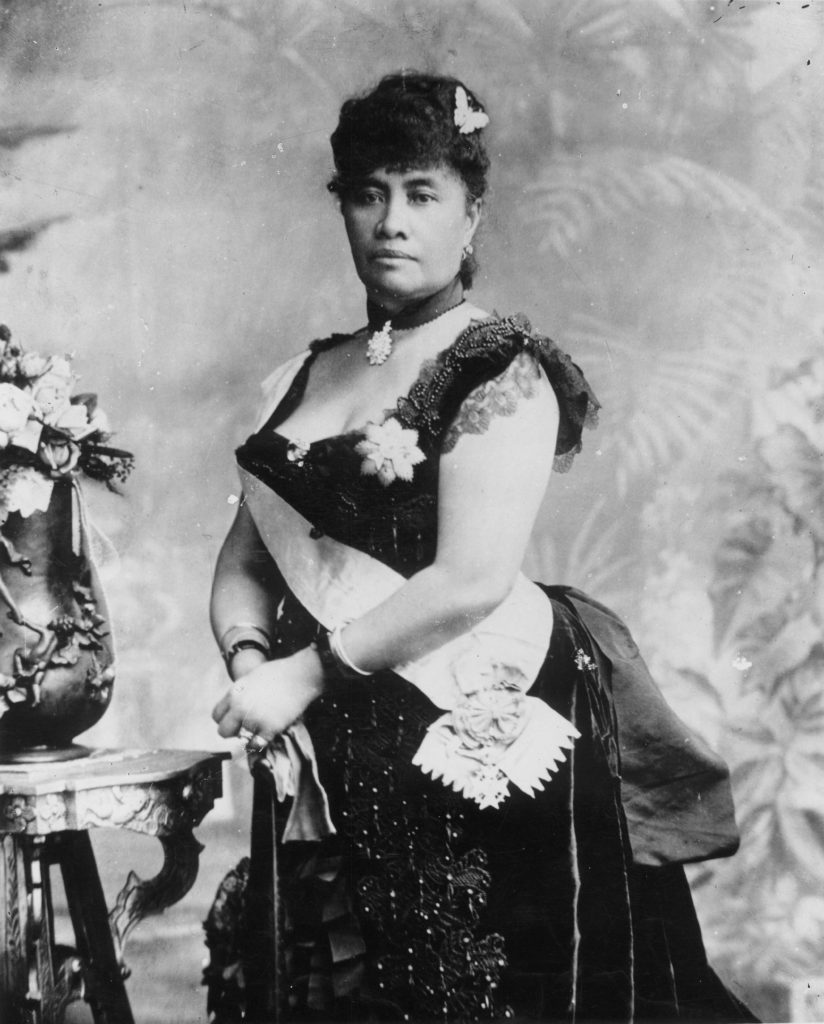
Queen Liliuokalani, the last of the Monarchs of the Hawaiian Islands
In January 1887, a secret society was formed in Oahu called the Committee of Safety, which had as a goal the overthrow of the monarchy with the ultimate aim being the annexation of the Hawaiian Islands by the United States. Some of its rationales included profligate spending by the King and the need to counter Japanese expansion. In June of that year this group, which had taken control of the Honolulu Rifles, was successful in making King Kalākaua sign the “Bayonet Constitution”, which severely restricted the King’s power, giving power to the legislature and cabinet and instead of having him have absolute veto power, allowing the legislature to override with 2/3’s of the vote. It also required the King to abide by the same laws that his subjects had to obey. This constitution also only permitted suffrage among literate Hawaiians, Europeans, and Americans with a minimum property requirement. The previous constitution had permitted suffrage for all adult males. This meant poor people and Asians were out of the political process.
After King Kalākaua died on January 20, 1891, Queen Liliuokalani attempted to restore the powers of the monarchy that had been limited in the Bayonet Constitution, and the Committee of Safety then, with the unofficial support of U.S. officials, initiated the overthrow of Queen Liliuokalani on January 17, 1893. This established the Republic of Hawaii under the new president, Sanford B. Dole. However, efforts to annex the islands were delayed until 1898, when Rep. Francis Newlands of the Silver Party of Nevada introduced the annexation resolution. The Spanish American War was then in progress. This is a very boiled down telling of this part of the story, which perhaps in future I will tell in greater detail.
Francis G. Newlands, sponsor of the resolution annexing the Hawaiian Islands
Most Republicans supported annexing the Hawaiian Islands while most of its opponents were Southern Democrats. Perhaps the most notable dissenter among the Republicans was Justin Morrill of Vermont, who was 88 years old and one of the founders of the Republican Party. He would die in office on December 28th. Senator Richard Pettigrew, now a “Silver Republican”, was a leading voice against the annexation of Hawaii and of imperialism altogether. He held that he could find no native Hawaiians among those he spoke with who were in favor of annexation and that the whole cause of annexation was the lifting of the duty on sugar and the placing of a bounty on domestic sugar, and stated, “Will Senators vote to take this title tainted by fraud? Will Senators vote to ratify this robber revolution brought about by us and refuse to consult the people most interested? If they will, it is an astonishing thing. If they will, then you can well suppose that we will go on with our career of conquest regardless of the honor of our flag and the honor of our name. We will go on to acquire other lands. There will be no stopping this acquisition” (6702). Speaking in favor of annexation included Henry Teller (SR-Colo.), Cushman Davis (R-Minn.) and Eugene Hale (R-Me.). The latter said, “I vote for the acquisition of Hawaii now not in any way as a war measure, not associated with the progress of the war, not marked in any way as a stepping-stone to anything else, but because of reasons that had matured and become convincing to my mind long before war was agreed upon. We have to-day a moral protectorate over the Hawaiian Islands, and it is the sense, I believe, of the American people that the union should be made complete. To me it does not involve statehood, but only a union, to be settled thereafter upon territorial grounds, limits, and precedents. Therefore I have no hesitation in voting for the resolution” (6708).
References
Annexation of the Hawaiian Islands (1898, July 6). Congressional Record.





 Mad Politics: The Bizarre, Fascinating, and Unknown of American Political History