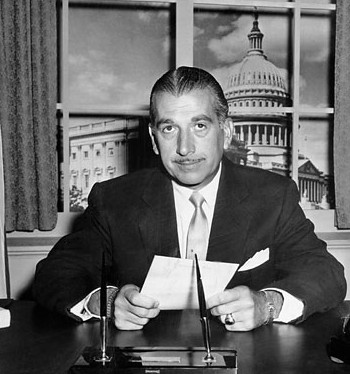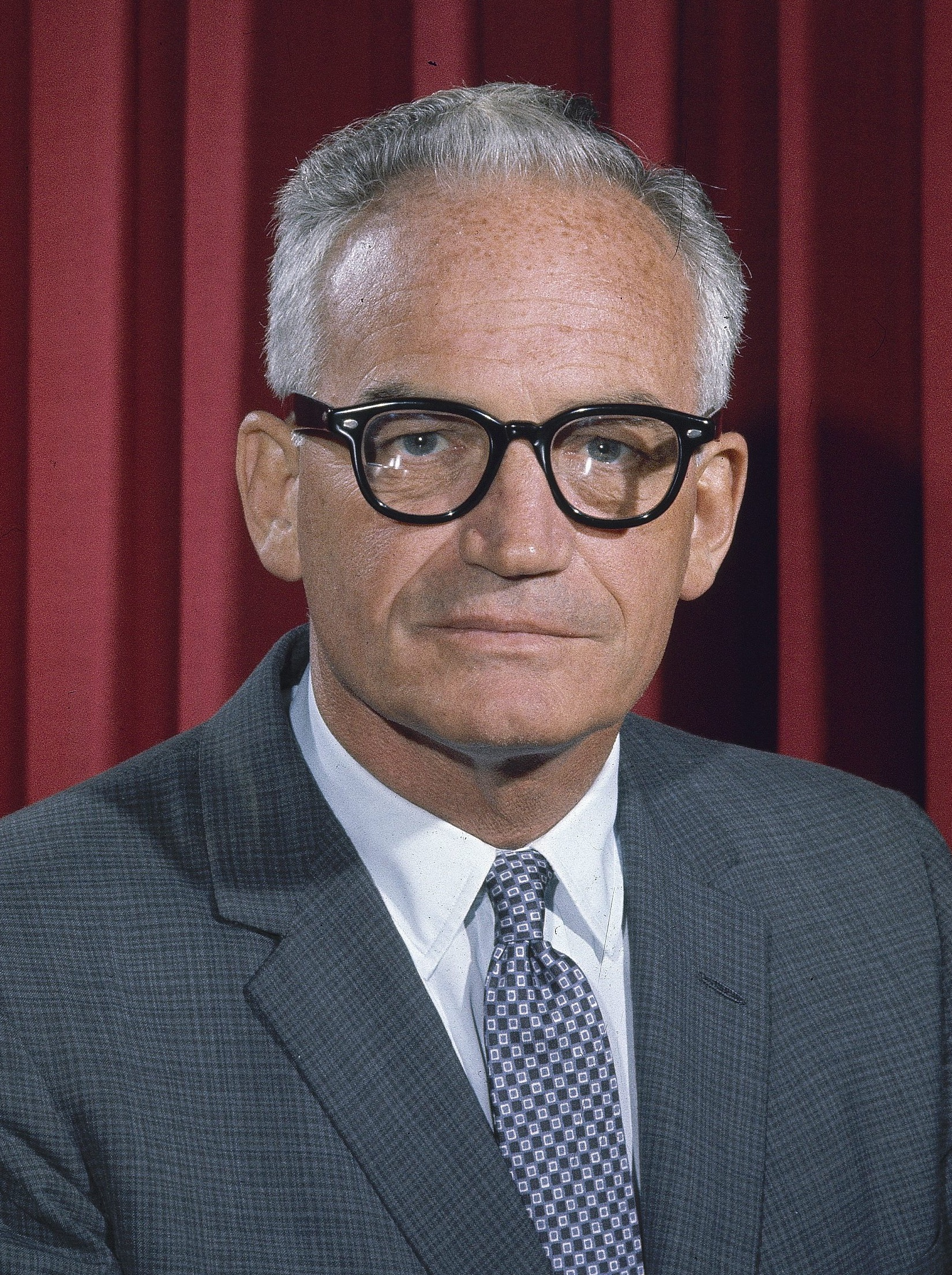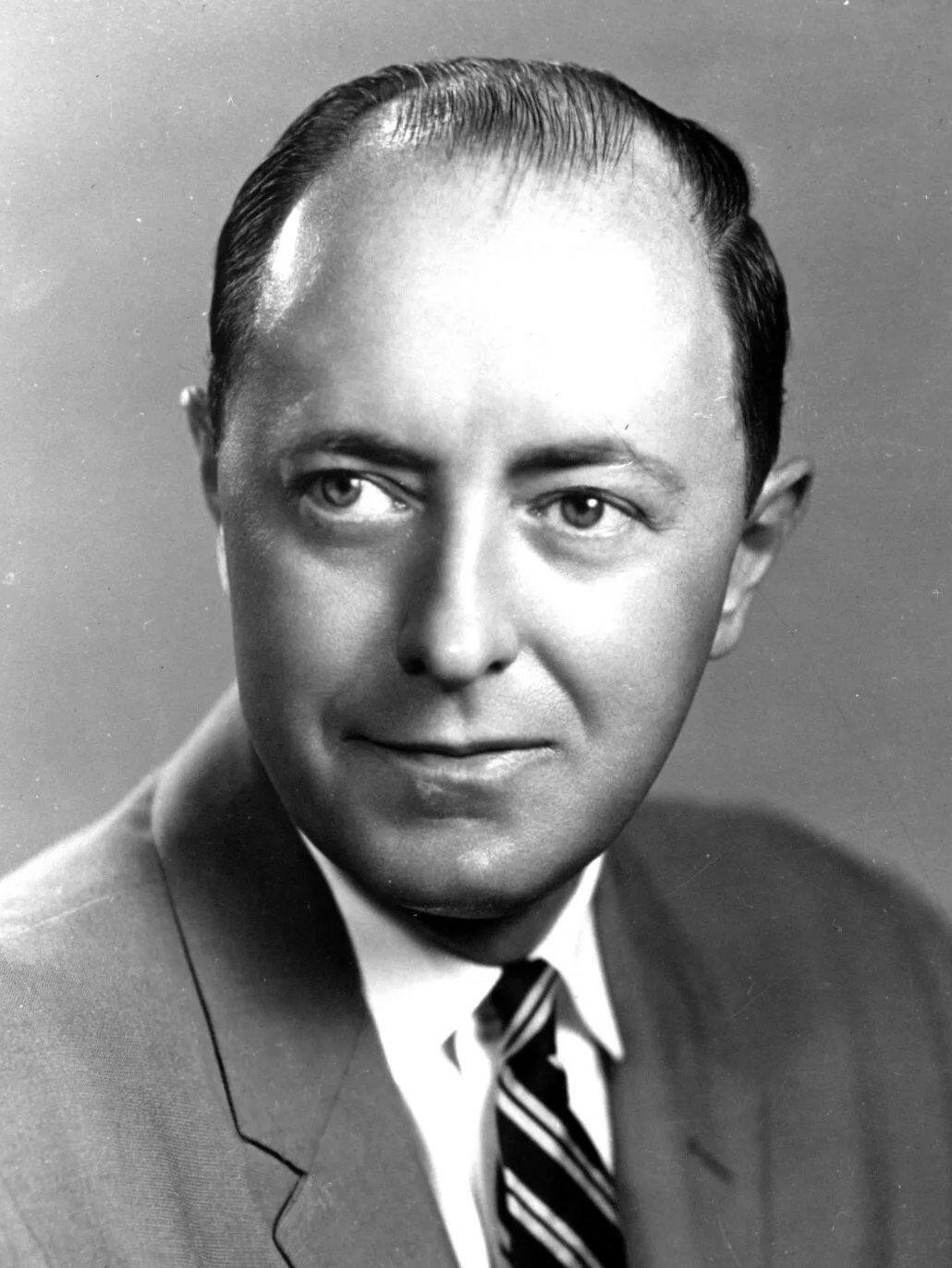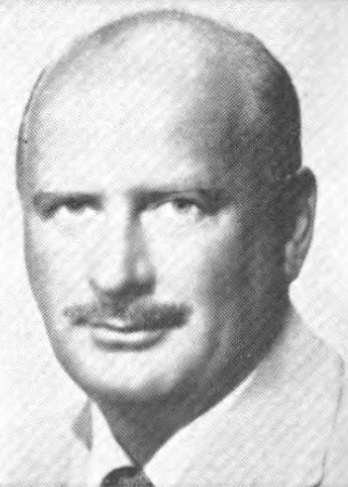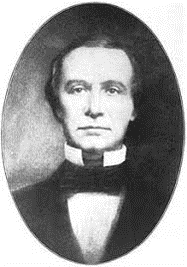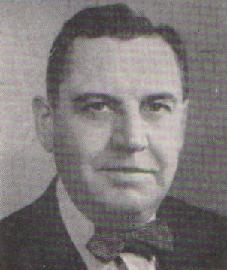
The most known Coolidge in American politics was of course President Calvin Coolidge, a conservative Republican who served from 1923 to 1929. However, did you know that there was another branch of Coolidges, kind of like the Democratic and Republican Roosevelts? The foremost elected official in this family was Democrat Marcus A. Coolidge (1865-1947), also from Massachusetts. While they were related and they do have some facial similarities, it was a relation that was “distant” (The Washington Post).
Coolidge had served as mayor of Fitchburg, Massachusetts for two terms and was well-liked by President Wilson, who picked him as envoy to Poland after World War I and was supportive of FDR (Hennessy). In 1920, he ran for lieutenant governor against Republican Alvan T. Fuller but lost as the Republicans had a boom year. Although the 1920s would be primarily years of political fortune for the Republicans, the Great Stock Market Crash of 1929 started their massive downfall.
In 1930, Senator Frederick Gillett, by this time nearing 80, was calling it quits. Not only that, but the Great Depression was also hitting the country. Coolidge saw it as his chance to run, and although the GOP picked Calvin Coolidge’s friend and former Senator Willliam M. Butler and Coolidge campaigned for him, Marcus Coolidge had former Democratic nominee Al Smith campaign for him. Both Calvin Coolidge and Smith had won Massachusetts in their elections. The Democrats, however, were ascendant, and Marcus Coolidge prevailed by over 10 points. This made it the first time in the history of Massachusetts that both of its senators were Democrats. Coolidge was supportive of the classic Democratic plank of tariff reduction and kept his options open on the question of the League of Nations (The New York Times). Coolidge, rather similar to Calvin, had some fiscally conservative points to him; he opposed veterans bonus legislation repeatedly until voting to override President Roosevelt’s veto in 1936. He would also vote against US entry into the World Court in 1935 despite voting against all proposed reservations.
Coolidge was largely a supporter of FDR’s First 100 Days legislation, such as voting for the Agricultural Adjustment Act, the Tennessee Valley Authority Act, and the National Industrial Recovery Act. He also voted for FDR’s “wealth tax” of 1935, but had some independence in his voting record, especially in his last two years. This included voting against the “Death Sentence” clause of the Public Utilities Holding Company Act, against bituminous coal regulation, and against the Revenue Act of 1936. Despite such independence, his DW-Nominate score was a -0.355. Coolidge might have had another term had Massachusetts’ governor not been Jim Curley. Curley wanted the Senate seat and, according to Time Magazine, “Senator Coolidge was simply dumped by the wayside; the Democratic convention automatically endorsed Mr. Curley” (Time Magazine, 1936). This reflected Curley’s power flexing but also perhaps his identity politics as although Coolidge was a Democrat, he was also a WASP. This didn’t end up working out for Curley and this was the only Senate seat picked up by a Republican that year in Henry Cabot Lodge Jr., and a Democrat would not be elected to this Senate seat again until 1978. In a reflection of his career in the Boston Globe, he was regarded as a “grand old 20th Century puritan” (Hennessy).
References
Hennessy, M.E. (1947, February 2). Round About. The Boston Globe.
Baltimore has historically been a place in which Republicans have seldom found themselves electable in its history. The most notable Republican to come out of Baltimore was none other than Spiro Agnew, who benefited from divisions regarding race within the state’s Democratic Party at the time. One figure who managed to do quite well before Agnew was Daniel Ellison (1886-1960). In 1923, he was elected to represent the fourth council district and most of the time he was in office he was the only Republican on the city council. He managed to stay through even during the Great Depression, a testament to his popularity. Ellison was also a bit of a rarity as a Republican in that he was Jewish. Jews have a long history of voting Democratic and although this may weaken with controversy regarding the Israel-Hamas war, I don’t generally count on super-dramatic shifts.
Ellison in Congress
In 1942, incumbent Democrat John A. Meyer lost renomination to Democrat Joseph Wyatt. Had Meyer been renominated, perhaps the seat would have stayed in Democratic hands. After all, the 4th district had a very long history of electing Democrats, the last time the district elected a Republican was in 1900. Ellison resigned his seat on the city council and narrowly won in the Republican wave year of 1942. To this day, Ellison is the last Republican to have held a seat on the Baltimore City Council and the last to have represented a significant portion of Baltimore in Congress.
Ellison’s DW-Nominate score was a -0.099, an astonishingly low score for a Republican, with only Charles La Follette of Indiana and Richard Welch of California having lower scores than him. He was perhaps the most consistent Republican supporter of maintaining wartime price control, voted against funding the House Committee on Un-American Activities, voted against the Smith-Connally Act on wartime labor disputes, voted against the Hobbs (D-Ala.) anti-racketeering bill opposed by organized labor in 1943, voted to retain agricultural subsidies, and for U.S. participation in the United Nations Relief and Rehabilitation Administration. On the conservative side, he voted against increasing funds for agricultural programs, voted to revoke FDR’s wage freeze in 1943, and voted for tax relief over President Roosevelt’s veto in 1944. Ellison was yet another figure in the storied history of dissident Republicans from Maryland, perhaps the most notable one being Charles Mathias, a major irritant to the Nixon White House who would serve in the House from 1961 to 1969 and the Senate from 1969 to 1987. Ellison’s overall liberal record wasn’t enough to stop him from losing reelection in 1944 by almost 20 points.
Morris Sheppard (D-Tex.), the Senate sponsor of the bill.
After suffrage for women became a reality in the United States with the ratification of the 19th Amendment in 1920, women’s advocacy groups decided to wield their new power by securing maternity aid legislation. While there was a lot of popular support and a lot of pressure for the legislation, there were groups that opposed, notably the Sentinels of the Republic and the anti-suffrage publication Woman Patriot. Some opponents made claims about this legislation being socialist or a step to bolshevism. The relevance of this bill is that it was a significant major foray into social welfare legislation.
Arguments for in the Senate:
William Kenyon (R-Iowa), responding to Senator James A. Reed’s (D-Mo.) acerbic criticisms of the bill, states, “Who were the men who formulated this measure? As I have sat here and listened to the wonderful satire, humor, and shafts of irony, I have wondered about the men who fathered this measure. It is not my bill, though I am glad to stand here and champion it, for I believe in it. It is the bill of the Senator from Texas [Mr. Sheppard]. Is he a bolshevist? Is he trying to tear mothers away from babies and babies away from mothers? He has more babies to exhibit than either the Senator from Missouri or myself. He has stood for everything that is good in public and private life. He has not a diseased, brain, evolving bolshevistic ideas.
How about the joint author of the bill in the House, Judge Towner, from my State? He is one of the ablest, most conservative, and careful men in public life, and one of the best men. He was a lecturer on constitutional law in the State University of Iowa, a man with a family. He is not a bolshevist. He has not one of these diseased brains that the Senator from Missouri is talking about” (July 22, 4207).
Arguments against:
Francis Warren (R-Wyo.) argued against on the grounds of limiting spending and government interference, holding that “…the Treasury of the United States is to-day a sick patient. We shall either have to put an end to these miscellaneous new fad appropriations, which, like the camel’s nose under the tent, seem small and unimportant in the first view we take of them, but which crowd upon us with every succeeding year until they help to place us under a taxation of burden that is wringing the withers of every taxpayer – individual, partnership, or corporation – or else we shall have to submit to an appreciable increase of the burden” (July 22, 4210).
Arguments for in the House:
John E. Raker (D-Calif.), held, “The purpose and the only purpose of the bill is to promote the welfare and hygiene of maternity and infancy as provided in the bill. All our schools and all our efforts in the line of education from the primary schools to the college, all the money spent for schools and for education is to better the condition of the human race. This bill has for its object like education on a specific and on special lines. No one has raised the constitutional question, no one has gone into hysteria over the study of animal life or money expended by the Federal Government for those purposes; no one has gone into hysteria over spending money in order to see that we might have better plant life; not one has gone into hysteria over a thousand and one other things that we are spending money on to better plant and animal life” (November 19, 7980).
Alben Barkley (D-Ky.), future vice president, argued that “We appropriate millions each year to save the lives of dumb animals” (November 18, 7934). He also argued that prominent opponent Thomas U. Sisson (D-Miss.) had no problem supporting $50,000 for rural sanitation and questioned the distinction between that and maternity aid (November 19, 7984).
Clarence F. Lea (D-Calif.) argued that this measure was primarily educational, and not a matter of government doing what the individual can do, as it cannot be expected that the individual would be able to self-educate on such a matter, and cites government educating farmers on best farming practices as a legitimate precedent (November 19, 7988).
Wynne F. Clouse (R-Tenn.) argued that appropriations for this purpose were constitutional, and cited the general welfare clause of the Constitution (November 19, 7984).
Everett Sanders (R-Ind.), who would serve as President Coolidge’s secretary, contested that this bill was socialist, stating, “It is claimed that it is socialism for the State or municipality to carry on the work as it is for the Federal Government. What is mean is that it ought not to be done by the Central Government. Well, we have centralized powers in the Federal Government, and that is as inevitable as the rising sun” (November 19, 7987).
Jasper Tincher (R-Kan.) argued that the bill does not violate “state’s rights” rather helps them with funding maternity aid (November 19, 7987).
R. Walton Moore (D-Va.) argued that this bill is an extension of what the Federal Government had been doing through the Public Health Service (November 19, 7988).
William Graham (R-Ill.) cited a broad public consensus for this measure, including support from President Harding and endorsement by the Republican and Democratic platforms of 1920, argued that one in ten babies dies within their first year and that the US ranked behind ten other nations in infant mortality, and cited New York City’s adoption of the bureau of child hygiene as a model for success (November 19, 7989-7991).
William Bankhead (D-Ala.) concurred with Graham’s citing of infant mortality numbers in the US and defended the measure’s constitutionality (November 19, 7992).
Daniel Reed (R-N.Y.) argued for the measure both on a humanitarian and an economic basis, stating that the price of saving a baby was $5 vs. $50 for burying a baby, and went on to say that “We are spending $200,000 a year to look after the benighted reindeer up in Alaska” (November 19, 7993-7994). Something to note about Daniel Reed: he would become one of the most uncompromising opponents of the New Deal.
Meyer London (S-N.Y.) argued for the importance of education in proper maternity practices, “The progress of our civilization, if we have any, is due to the rising of the general level of education, to the spreading of knowledge. The individual brain has not improved. We have no intellect to-day that is greater than intellects produced thousands of years ago, nor have we added a single ethical conception to the code of ethics of the world” (November 19, 7994). London was the only member of the Socialist Party in this Congress, and his support was made as a point against the bill by some opponents.
Walter Newton (R-Minn.) argued that the unconstitutionality argument is a stock argument used against any progressive measure and that it is only socialistic if public health and public education itself is, and interestingly stated as well, “…it has been claimed that the passage of this bill would result in the payment of cash to mothers on the birth of a child. I disagree wholly with European systems of maternity subsidies or gratuities. Let that system remain in Europe where it originated; that is the way I feel about it. This bill, however, does not only not provide for maternity benefits of this nature but, on the contrary, it expressly provides against any such payments” (November 19, 7997). Newton’s argument is interesting because it uses a differing conception of progressivism than we think of today. Usually when we think of progressivism, we think of Elizabeth Warren, Bernie Sanders, and AOC, but I don’t think any of them in a thousand years would express opposition to payments to mothers for having children. Newton was I conclude thinking about Theodore Roosevelt-style progressivism, one with in practice quite distinct limits. William Upshaw (D-Ga.) argued that “This bill is not an effort to supplant State functions or parental authority. It simply proposes to stimulate and encourage each to the noblest possible effort. The liquor traffic was outlawed because it prospered on the destruction of human life and happiness. The highest function of government is not the adjustment of the Nation’s commercial machinery, however important, but the development of that citizenship without which all Government activities would refuse to act. There would simply be no government at all if humanity were not in healthy action” (November 19, 7999).
Arguments against in the House:
The two representatives who figured most in this debate were Caleb Layton (R-Del.) and Thomas U. Sisson (D-Miss.). Layton feared an erosion of state’s rights and socialism, while Sisson asserted this measure was unconstitutional and socialistic.
Caleb Layton (R-Del.) argued, “This bill is unnecessary, because there is no accumulating demand for its passage by reason of any unusual mortality either in expectant mothers or in the newborn children. There never was a time since this Government was established when human life was more carefully guarded and conserved than it is now. The science and art of medicine and surgery have kept pace fully with developments in any other pursuit of man” and held that progress was already being sufficiently made (Congressional Record, November 18, 7927).
Alice Robertson (R-Okla.), the second woman ever elected to Congress, questioned the negative comparison between infant mortality rates in the US vs. New Zealand, stating, “I for one am mortally sick of New Zealand in capitals with the notion that her death rate is less than that of any other country. New Zealand statistics, where birth control is legally taught, are based on her white population only and therefore worthless. But her per capita debt is four times ours in spite of not having unwanted babies. Also the whole thermometer, to use plain English, lies, because there is nothing to tell the year for which these statistics were compared; dates are not given.” (November 19, 7980).
Frank Greene (R-Vt.) argued against the reasoning that the Federal Government aids livestock thus it must aid babies because the purpose of aiding livestock is to feed people (November 18, 7934).
Joseph Deal (D-Va.) argued there was no necessity for this bill as if the statistics were flawed given many births that went unrecorded, and that if the statistics were more accurate the US would be roughly on par with other nations (November 19, 8010).
Thomas U. Sisson (D-Miss.) claimed the bill was unconstitutional and socialistic, asserting that “I do not believe that this bill is constitutional, nor do I feel that as to the legislative provision in it there is a man on either side of this aisle who can convince anyone it is constitutional” and “If the vote could be by secret ballot and Members voted their real sentiments there would not be as many votes for this bill as there will be against it. I doubt if there will be 50 of us who will vote against the bill as is; but if the vote could be secret there would not be 50 votes for it. The gentleman from New York [Mr. London] of course will vote for it because it is purely socialistic” (November 19, 7984).
There was a strong correlation between opposition to Sheppard-Towner and opposition to the 19th Amendment in the Senate. Only nine senators registered opposition to the measure, and of the seven senators who voted or paired against and were present for the vote on suffrage amendment, five had opposed. Interestingly in the House, there was a split among the opposition of those who had voted for the 19th Amendment and against, with 15 for and 12 against. However, when we take into account some people who were known to have been anti-suffrage, the anti-suffrage people outnumber the pro-suffrage people. This includes Charles Underhill (R-Mass.) and Alice Robertson (R-Okla.) who had been previously known for their anti-suffrage activism as well as Joseph Deal (D-Va.) who had opposed it to the hilt as a state legislature. This also includes those who voted against the amendment in 1918 in Gordon Lee (D-Ga.), Peter Tague (D-Mass.), R. Wayne Parker (R-N.J.) and William Stafford (R-Wis.). However, if we use this measure too, we must add James Gallivan (D-Mass.) and Tom Connally (D-Tex.) to the pro-suffrage, anti-Sheppard column. This brings the total to 19 against suffrage and 17 for. Not as strong of a correlation as the Senate, but for both chambers when you account for there being many more supporters of suffrage than opponents, this heightens saliency. What also is of great interest is how much more support Sheppard-Towner received than women’s suffrage, and this is the greatest proof of all of the newfound power of women in politics. That someone like Senator Frank Brandegee, a man known as rigidly principled, archconservative, and outspoken against women’s suffrage, could be moved to vote for this measure, is nothing short of incredible. Although the Sheppard-Towner Act’s opponents rallied sufficiently to prevent its reauthorization in 1929, more comprehensive social insurance would come with the Social Security Act in 1935.
References
Congressional Record. (1921, July 22). U.S. Government Printing Office.
Illinois’ first district, based in a majority black area of Chicago, was the first in the 20th century to elect a black man to Congress. The first one was Oscar De Priest, a Republican who although not ultra-conservative, was opposed to the New Deal broadly. De Priest’s politics, and those of the GOP, fell out of favor with a majority of black voters during the Great Depression and he lost reelection in 1934. De Priest had been part of the Republican machine in Chicago, and it was a machine from which several black politicians traced their political start, including De Priest’s successor Arthur W. Mitchell as well as his protégé, William Levi Dawson (1886-1970).
Dawson had been born and raised in Georgia, where he attended segregated schools. At the age of 19, he fled the Deep South after an altercation with a white man and his family followed soon after his father also had one (Manning, 2003, 3). A lawyer by profession, Dawson became active in the Chicago Republican Party in the 1920s and his political career kicked off when in 1930 he was elected to the Illinois Republican Central Committee, and in 1933 he was elected to the Chicago City Council, representing the 2nd ward. By inclination, he was already on the road to liberalism, being a New Deal Republican. Dawson proved an effective political organizer, employing patronage and precinct workers, creating a political machine of his own that spanned up to five wards (WTTW).
In 1938, Dawson ran for Congress, giving his old mentor Democrat Arthur W. Mitchell a substantive challenge. The next year, he decided to leave the GOP and align himself with Democratic Mayor Ed Kelly. Fortunately for him, by 1942, Mitchell, who was not a particularly popular representative, had crossed the Chicago machine of Mayor Ed Kelly, who had not appreciated his lawsuit against a railroad company based in Chicago for racial discrimination and it was known to Mitchell that Kelly would not back him for another term (Hill). Instead, Kelly’s backing went to Dawson, who won election to Congress in 1942.
Dawson was typically known as a man who wasn’t much of a national boat-rocker, but he from time to time he was outspoken on a civil rights matter, such as opposing the construction of a segregated VA hospital in 1951. Additionally, he delivered that year a notable speech against the proposed Winstead Amendment, which The Chicago Defender credited for its defeat, that if adopted would have allowed whites to opt out of integrated units in the military thereby undermining desegregation, stating, “There is but one God and there is but one race of men all made in the image of God. I did not make myself black any more than you made yourselves white, and God did not curse me when he made me black anymore than he cursed you when he made you white” (Manning, 2009). Dawson’s work on civil rights tended to be more behind-the-scenes. For instance, an article in the July 1972 edition of Ebony magazine written by Doris E. Saunders credited Dawson with playing a significant role in blocking Jimmy Byrnes from the vice-presidential nomination. The South Carolinian Byrnes had in his long career worn many hats, and one of them was as Roosevelt’s right-hand man on domestic issues. Another, and this was consistent throughout, was as a segregationist. Dawson, although officially only a representative from Illinois’ 1st district, was the only representative in Congress in 1944 who was black and thus his views would be influential for black people across the nation. He made it clear to FDR that he would not accept a candidate that was unacceptable for the black voter, and the Democratic Party of 1944, especially when up against Thomas E. Dewey and a Republican Party with a pro-civil rights platform, needed to get the majority of black votes. Dawson, at the behest of Mayor Ed Kelly, met with Byrnes for three hours at the Blackstone Hotel, and emerged concluding that Byrnes was indeed unacceptable and made it clear this was so (Saunders, 49-50). Ultimately, Senator Harry S. Truman of Missouri was picked as a compromise nominee. In 1949, Dawson became the first black chairman of a Congressional committee, heading the Committee on Government Operations. Starting that year, he led voter registration drives in multiple Southern states (Manning, 2003, 4).
Although Dawson was a rather quiet success in Congress, this didn’t please everyone. Black radicals Stokely Carmichael and Charles V. Hamilton regarded him as a “tool of the downtown white Democratic power structure” (Manning, 2003, 5-6). Dawson was also criticized by the militant black publication The Chicago Defender. He was characterized as “non-committal, evasive, and seldom takes an outspoken stand on anything. Bill Dawson is, by all odds, ultra-conservative” (WTTW). Despite these views, Dawson repeatedly received high scores from the liberal Americans for Democratic Action. From 1947 to 1964, for instance, he opposed the ADA position only three times. Dawson’s DW-Nominate score has him at a -0.527. For reference, Bernie Sanders’ score is a -0.539. Some analyses of his career have pointed to a more complex picture than that of Carmichael and Hamilton, such as Charles Branham’s 1981 analysis in which he writes, “Rather than being “co-opted” by the white political machine, Dawson embraced the historically dualistic tradition of black political culture in Chicago. His career was consonant with a tradition of clientage, patronage and dependence which coexisted, sometimes uncomfortably, with the racially self-conscious heritage of social welfare, civil rights, and the maintenance and expansion of the race’s representation” (Manning, 2003, 10). In 1958, Dawson faced a notable challenger in civil rights activist Dr. T.R.M. Howard, but his political machine was sufficiently robust and voters sufficiently Democratic to easily fend him off. By this time, Dawson had formed an alliance with Mayor Richard Daley, whose machine placed Chicago in the Democratic column for good.
Although Dawson voted for all the major civil rights laws of the 1950s and 1960s, he wasn’t really at the forefront of the civil rights movement, focusing more on maintaining power in Congress and in his district. In 1960, he was of significant help to JFK in rallying the black vote in Chicago for him. Illinois was, with Texas, the swing states that Kennedy needed to win the election. In 1961, Dawson declined an offer from him to be postmaster general, preferring to remain at his perch in Congress. Had he accepted and been confirmed, he would have been the first black cabinet officer in American history. As would be expected, Dawson was a strong supporter of both JFK’s New Frontier and LBJ’s Great Society programs. In his later years, he was in poor health and in his last term in Congress he had cancer. However, the proximate cause of his death on November 9, 1970, at Chicago’s VA hospital, was pneumonia.
References
ADA Voting Records. Americans for Democratic Action.
Manning, C.E. (2003). The ties that bind: The congressional career of William L. Dawson and the limits of black electoral power, 1942-1970. Northwestern University.
By 1933, with the nation in the Great Depression, revenue needed by governments across the country, and the public tiring of Prohibition as they thought it had gone too far and encouraged lawlessness. With the mighty power of the Anti-Saloon League diminished and its head Wayne Wheeler six years dead, Congress acted upon the result of a Constitutional convention that had proposed the ending of Prohibition.
In the Senate, the end of Prohibition passed with a bipartisan majority on February 16th. This was a 63-23 vote, with Republicans voting 29 for and 14 against while Democrats voted 33 for and 9 against, with the Farmer-Labor senator voting for. The senators from Alabama, Arizona, California, Connecticut, Florida, Georgia, Illinois, Louisiana, Maine, Massachusetts, Michigan, Missouri, Montana, Nevada, New Hampshire, New Jersey, New Mexico, New York, North Carolina, North Dakota, Pennsylvania, Rhode Island, South Carolina, Tennessee, Washington, Wisconsin, and Wyoming all backed repeal. The senators from Colorado, Idaho, Iowa, Kansas, Nebraska, and Oklahoma all opposed. A notable vote against its end was the Prohibition Amendment’s father, Morris Sheppard of Texas. Another notable vote against was Phillips Goldsborough of Maryland, who was badly out of sync with his wet state. Although a courageous vote given the state’s preference, he would lose reelection in 1934.
In the House, the end of Prohibition passed with a bipartisan majority on February 20th, being a 289-121 vote, with Democrats voting 179 for and 32 against, Republicans voting 109 for and 89 against, and a Farmer-Labor representative voting for. Most of the Democratic opposition came from the South and there was a significant urban-rural divide on this matter. States that completely opposed Prohibition’s end in the House were Idaho, Kansas and Maine while states that completely supported its end were Arizona, Connecticut, Delaware, Florida, Nevada, New Jersey, New Mexico, North Carolina, Rhode Island, Virginia, and Wyoming. As the year 2023 closes and 2024 begins, bear in mind that it was ninety years ago in which Congress said that you could again legally purchase alcohol. The votes, detailed with DW-Nominate scores, are linked below:
In Wisconsin for quite some time the GOP dominated, but it wasn’t always the conservative party you’re thinking of today. Robert La Follette made being a left-wing Republican a thing in the state, and numerous others followed in his stead, particularly in the 1920s and 1930s. Throughout the 1920s, Wisconsin’s GOP was essentially in a state of rebellion against the national GOP, and the state voted not for Coolidge in 1924, but La Follette. Other rural areas were also inclined to vote La Follette, and he had strong performances in some other states, including coming close to winning North Dakota. One significant figure who had gone in this direction was Congressman Henry Cooper of the 1st district, who represented the district from 1893 to 1931 with one interruption in the 66th Congress, as he had lost renomination due to his vote against US participation in World War I. Although he had been reelected in 1930, he died two days before the next Congress, and Thomas Ryum Amlie (1897-1973) was elected to succeed him.
Amlie was hardly your typical Republican in his first term in Congress, and he voted for aid to agriculture, public works spending, for public ownership of Muscle Shoals (a proposal which would eventually become the Tennessee Valley Authority), veterans’ bonuses, and tariff reduction. His record displeased numerous Republicans, and he lost renomination in 1932 to the more conservative George W. Blanchard. However, Blanchard’s election was a bit of a fluke.
In 1934, inspired by Robert La Follette’s 1924 run as well as dissatisfaction with the GOP’s policy of opposition to FDR’s New Deal, the Progressive Party was formed out of the progressive wing of Wisconsin’s GOP in alliance with certain radical factions and had resounding successes that year. Any Republican who was reelected that year to Congress from Wisconsin was reelected as a Progressive, and Amlie won back the seat.
On his return to Congress, Amlie was one of the strongest non-Democratic supporters of the New Deal. He held regarding taxation for the New Deal, “I am with it a hundred percent. When 4 percent of the people own 80 percent of the wealth, how are you going to take care of the other 96 percent, or at least 70 percent, who haven’t anything? You can only get it by taxing and taking from those who have” (U.S. Government Printing Office, 227). Amlie even in 1938 voted to keep FDR’s reorganization plan, which was opposed by all Republicans and all other serving Wisconsin Progressives. Critics of this plan, most notably progressive activist turned New Deal enemy Amos Pinchot, condemned it as an effort by FDR to make himself a dictator (The New York Times). Amlie would frequently introduce legislation that would greatly strengthen government control over the economy. In 1937 and 1938 he sponsored with Reps. Jerry Voorhis (D-Calif.) and Robert Allen (D-Penn.) the Industrial Expansion bill, which if enacted would have moved the U.S. to a planned economy and this was par usual for him per a Wall Street Journal article of January 25, 1939, which observed that his bills “put the federal government in control of all industry by practical socialization” (Wisconsin Historical Society). In 1938, Amlie ran for the Senate on the Progressive Party ticket, but he lost the primary and the seat was won by Republican Alexander Wiley in a conservative wave year, for the nation and quite strongly for Wisconsin itself, putting an end to the progressive wing’s domination of the party.
Amlie for the Interstate Commerce Commission
In 1939, FDR nominated him to be a member of the Interstate Commerce Commission, but he faced great opposition from conservative forces in Congress. This included Senator Warren Austin (R-Vt.), who asked him about being introduced as “Comrade Amlie” in a 1934 Chicago meeting, with the built-in implication that this was connected to communism (Library of Congress). Although Amlie countered that many organizations referred to members as “comrade”, numerous accusations arose about his sympathies. In a letter to Senator Clyde Reed (R-Kan.), E.E. Cahoon of Racine Confectioners’ Machinery Co. stated his belief that Amlie should be disqualified due to “His expressed antagonism toward private enterprise and belief that the Government should acquire and operate all railroads, utilities, and industry” and Wisconsin Assembly Speaker Vernon W. Thomson, who would later serve as Governor and in Congress, got a resolution passed against Amlie’s nomination, arguing that he “has by his public utterances and other expressions of policy aligned himself with the Communist movement in this country”, that he sympathized with “a foreign element which has been promiscuous in its slaughter of Christians and their apostles”, and that he “advocated scrapping of our Federal Constitution, a completely new social order, creating of a great central authority, without checks or balances, to run our industry and placing all men in equal economic status” (US Government Printing Office, 256). The Wisconsin State Legislature wasn’t the only political force he faced opposition from. He was also condemned by his successor to his Congressional seat, conservative Republican Stephen Bolles, who called him a “radical” (US Government Printing Office, 232). However, Amlie had his defenders in Congress including Senator Elbert Thomas (D-Utah) and Representative Jerry Voorhis (D-Calif.), both staunch New Dealers. He was defended in testimony by economist John Bauer, director of American Public Utilities Bureau, who held that he “Has a greater grasp of detail and general knowledge for the position of Commissioner than the great majority of appointees I have known” and that he “will be most fair and reasonable to investors and to the rights of railroad companies. He would perform the duties in connection with railroad reorganization and readjustments in the light of the public interest” (US Government Printing Office, 241).
Amlie ultimately decided that a drawn-out fight was not worth it and withdrew his nomination. Roosevelt was disappointed by this development, and in writing to Amlie regarding the withdrawal of his nomination, he condemned his opposition. He wrote, “A quarter of a century ago I, too, was called a Communist and a wild-eyed radical because I fought for factory inspection, for a fifty-four-hour-a-week bill for women and children in industry and similar measures. You are still young and I hope that you will continue to work for the improvement of social and economic legislation under our framework of Government” (Roosevelt).
Amlie would switch his party affiliation to Democrat in 1941 and would be a founding member of the Union for Democratic Action, an organization that was formed to support the New Deal and FDR’s interventionist foreign policy, the latter a break from the Progressive Party itself, which opposed intervention in World War II until Pearl Harbor. The following year, Amlie was made director of Union for Democratic Action and conducted research into the voting records of members of Congress to ascertain liberalism and published scorecards, a practice that would be used to great effect by its successor organization, Americans for Democratic Action, which would be founded in response to the 1946 midterms. Both organizations, contrary to those who thought Amlie a communist, barred communists from joining. He also worked for the CIO in 1944 and conducted similar legislative research for them (Wisconsin Historical Society). However, Amlie’s subsequent efforts at securing elected or government roles would be repeatedly hampered. His unsuccessful efforts to secure federal positions over the years led him to believe that he was unofficially blacklisted over his staunchly left-wing views (Wisconsin Historical Society). Amlie also ran for a seat on the Wisconsin Supreme Court in 1949 and for Congress in 1958. He would thereafter focus instead on practicing law and after having to drop his practice for health reasons in 1962, he owned and maintained several properties until his death on August 22, 1973 (Wisconsin Historical Society).
Amlie’s DW-Nominate score, available on the Voteview website, is a -0.322, very low for a non-Democrat by that scale, and extremely so for anyone who ever was elected as a Republican. He was without doubt one of the most radical people to ever serve in Congress and call himself a Republican, second possibly only to Vito Marcantonio of East Harlem, who was outspokenly pro-communist.
References
“Comrade Amlie” question refuted by ICC Nominee. Library of Congress.
Dictatorship Step Laid to Roosevelt; Amos Pinchot Says His Bill for Reorganization Would Strip Congress of All Power. (1938, January 31). The New York Times.
Roosevelt, F.D. (1939, April 17). Withdrawal of the Nomination of Thomas R. Amlie for the Interstate Commerce Commission. The American Presidency Project.
To Recommit to Committee on Military Affairs, H.R. 11051, Providing for the Leasing and Other Utilization of the Muscle Shoals Property in the Interest of National Defense and of Agriculture, with Instructions to Strike Out the Section Providing for Operation of the Plant by the Government if it is not Leased within 18 Months from the Approval Date. Govtrack.
Joseph T. Deal, according to DW-Nominate, the most liberal representative of the 1920s.
In trying to examine and ascertain the ideology of the parties in the past, it can be rather difficult to translate to contemporary politics. There are some persistent themes that occur overtime, some examples being:
. Policies that empower or restrict the private sector, particularly large businesses. . Creditors vs. Debtors . Using the tax code for wealth redistribution.
However, there is a period that is most perplexing and is at its height in the 1920s. I read an interesting article a while back called Substantive Change in Congressional Ideology: NOMINATE and Its Alternatives, which highlights this difficulty between the scale and the history of the twenties. As noted by researchers Caughey and Schickler (2014), “Conservatives had considerable leverage within both parties in the 1920s, as evidenced by Democrats’ nomination of pro-business corporate attorney John W. Davis to face off against Calvin Coolidge in the 1924 President election. Dissatisfied with the perceived conservatism of the major parties, Robert La Follette of Wisconsin led a faction of Progressive Republicans which outflanked both parties on the “left” during these years” (3-4). Yet, figures who tend to be identified with the more conservative elements of the Democratic Party in this time, including Oscar Underwood of Alabama and Carter Glass of Virginia, are a bit more on the left than expected, with them at -0.396 and -0.304 respectively. DW-Nominate scores show much partisanship, particularly strongly from certain Southern Democrats and among urban Northern Democrats. The politician that DW-Nominate considers most liberal with a score of -0.824 is Joseph T. Deal of Virginia. Yet, Deal cast some curious votes for someone so allegedly liberal, including voting against veterans’ bonus legislation in 1922 and 1924, voting against agricultural aid, voting against the Howell-Barkley Railway Labor Disputes bill in the 68th Congress, and voting against the Sheppard-Towner Maternity Act in 1921. Such votes seem good markers for later opposition to the New Deal and when first looking at this period I thought him one of the more conservative Democrats, yet he by this standard he scores almost as liberal as Adam Clayton Powell’s (D-N.Y., 1945-71) -0.833, and he was known as a black radical. He is by DW-Nominate more liberal than any currently serving Democrat in Congress, yet his record obviously cannot be considered far left. The two members of the Socialist Party who served in the 1920s were Meyer London of New York and Victor Berger of Wisconsin. They score respectively -0.026 and 0.176. While they were a bit independent-minded and the latter could cast some votes we would consider conservative, it beggars belief that Berger was more conservative than all Democrats serving in the 1920s (and more conservative than Richard Nixon, at 0.162, when he was in Congress!). Yet, this strange phenomenon is not seen among Republicans. The most conservative representative listed in the 1920s as Charles Underhill of Massachusetts at an incredible 0.991. Underhill’s reputation by DW-Nominate is well-deserved: he voted for tax reduction, against veterans’ bonuses, against Sheppard-Towner, and opposed almost everything that could be considered progressive in his day. By the way, I emphasize the latter two issues because these were matters in which many conservative Republicans made exceptions. Both Underhill and Deal, by the way, were on the same side on the proposed Child Labor Amendment to the Constitution: against. The former did so as a manifestation of his extreme conservatism while the latter did so as a manifestation of regional priorities. The South had much more to lose economically from heavy regulation or abolition of child labor than the North. After all, as I have noted in a previous post, none other than Sam Rayburn (D-Tex.), a leading New Dealer who would support the Fair Labor Standards Act, voted against the Child Labor Amendment, while John Taber (R-N.Y.) and Dan Reed (R-N.Y.), who would both have extremely anti-New Deal records to the point of voting against the Fair Labor Standards Act and Social Security, voted for.
So what do we have here? Either in the 1920s there were a lot of votes that constituted 2nd dimension per DW-Nominate (regional, lifestyle issues) or there was a major transition underway in what it meant to be a liberal…perhaps a bit of both! I have seen on DW-Nominate two groups of people in the House who score most liberal: those Democrats who appear hyper-focused on state’s rights as a concept and voted that way and urbanites, largely from New York City, who we would easily see as liberal today and whose records were indisputably staunchly liberal during FDR’s presidency. And I think part of this involves the evolving perception of the concept of “state’s rights”. Historically, as I have written in the past, state’s rights have not always been a conservative concept. Indeed, states had a history of seeking to restrict the expansion of business while the federal government has had a history of seeking to expand it, at least that’s how it largely was until the Progressive Era and especially the New Deal. I believe now that there was a transition period between the Wilson and Roosevelt presidencies in which the meaning of what it was to be a progressive in the Democratic Party underwent a transition on some matters, namely the tolerance for the use of the federal government. Men like Deal, who appear quite liberal in their scoring yet voted conservative positions on some key issues, which in the 68th Congress also included William Boyce of Delaware and William Humphreys of Mississippi, seem to be a real mixed bag. They also defended Congressional prerogatives when opposing the Public Buildings bill in the 68th Congress, sponsored by Richard Elliott (R-Ind.), which served to streamline the process of constructing public buildings in Washington D.C. by placing it under the authority of the Secretary of the Treasury, rather than Congress voting individually on buildings. This was a way to improve government efficiency and cut down on pork, and numerous Northern Democrats, including those who would be among the staunch liberals of the New Deal era, voted for.
It should be noted that a response article was written by Nolan McCarty (2016) on the subject, “In Defense of DW-NOMINATE”, in which he acknowledges the validity of many criticisms, but he also holds that alternative methods fall short and that the case against DW-Nominate is overstated. However, I cannot ignore that some figures regarded as among the most “liberal” on DW-Nominate voted for some strangely conservative matters. However, certainly on some issues these people were liberal, such as opposition to Republican tariff policy and measures encouraging business investment in China through tax breaks.
Given this new information and article, I am seriously considering dropping using the liberal end of the DW-Nominate scale to determine ideological scores between the start of Woodrow Wilson’s presidency and the conclusion of FDR’s second term. It seems to me that the conception of what it was to be a staunch Democrat started undergoing some changes during the Wilson presidency as he focused more on the use of the federal government to attain progressive ends, and while Southern Democrats could deal with fine with someone who was known to be on their side of the issue of race and the Democratic Party still widely regarded as a “white man’s party”, this was considerably more difficult with a Democratic Party that was winning the black vote in presidential elections starting in 1936 and giving more and more focus to urban issues.
Note: All the DW-Nominate scores are available on:
Voteview.com
References
Caughey, D. & Schickler, E. (2014, September 28). Substance and Change in Congressional Ideology: NOMINATE and Its Alternatives. Massachusetts Institute of Technology.
Although I usually cover historical subjects and often keep my opinions as an undercard at best, this post is an opinion piece that includes historical examples, and it’s about a demand for litmus tests and purity.
For the Republicans, there is a constant risk of a cry of “RINO” (Republican in Name Only) from some troll or hothead much like zombies of the silver screen cry for “brains”, done as a term of abuse that can happen when a single disagreement arises, be it on a policy or even whether Trump’s latest statement is worth a defense. For the Democrats, it comes in the form of the left-wingers not believing many Democrats are left-wing enough or having standards that places them to the left of almost everyone if not everyone in Congress, despite there being a very small overall difference between how Bernie Sanders and the Democrats as a whole vote on major issues: he has voted with the Biden Administration 91% of the time (FiveThirtyEight). But maybe that 9% matters a great deal? Well, how about a more ideological look with the votes that were counted by the liberal lobbying group Americans for Democratic Action. Looking at lifetime average scores adjusted to not count unopinionated absences, Sanders scores a 98% while Majority Leader Chuck Schumer (D-N.Y.) scores a 95%. I remember attending an event that was about getting liberal and conservative folks to talk matters out, and I remember one young liberal woman talking about how there needed to be a “litmus test” for abortion in the Democratic Party despite nearly all Democrats in Congress by that time falling on the “choice” side in votes on the issue. I internally chuckled that she didn’t know how divided Democrats really used to be on abortion. You too can know by checking out the votes on the Hyde Amendment in 1976, which are located in References.
The demand for purity can go so far as 1 dissent from conservative or liberal position out of 20 votes immediately makes you a Republican or Democrat in Name Only, which should sound ridiculous. Yet, this is how some people think about things! It’s akin to if you regard yourself as a vegetarian yet you ate a single strip of bacon in a year’s period and thus you can no longer call yourself one. Like accident counters in workplaces, a single infraction is back to day zero for you! This emphasis on purity is difficult and for most people it frankly proves unsustainable: 84% of people who adopted a vegetarian diet ate meat after a year (Schultz). Politically, I can promise you, no president in history has been what you would call 100% liberal or conservative. Although FDR is unmistakably identified with liberalism and rightly so given his New Deal policies and internationalist foreign policy, he also vetoed veterans bonus legislation in 1935 and 1936 and ultimately agreed to sign the Hatch Act into law despite reservations in 1939. Ronald Reagan is unmistakably identified with conservatism and again, rightly so given his free market and socially conservative philosophy and actions, yet supported immigration reform that included amnesty, supported foreign aid measures in 1981 and 1982, and opposed a Helms (R-N.C.) amendment to block technology imports to the USSR.
Although Donald Trump is viewed by many conservatives as a great defender of their values and positions, he has on multiple occasions embraced compromise spending packages, opposed by many conservatives, despite his view now that there should be no compromise on spending with Biden (Kapur). As Trump himself tweeted on a 2019 budget deal on August 1, 2019, “Budget Deal is phenomenal for our Great Military, our Vets, and Jobs, Jobs, Jobs! Two year deal gets us past the Election. Go for it Republicans, there is always plenty of time to CUT!” (Grisales) I also promise you that no legislator has truly been 100% conservative or liberal in their record, although there are those out there who come really close. What we must ultimately decide is what constitutes “good enough” for philosophy.
Continuing on the vegetarian metaphor, is the occasional strip of bacon ok? Is being a pescetarian ok? Or must the quest for human perfection continue unabated? Is heaven a sparse place and hell a crowded place? For some, particularly among Americans, the answer to the last question is a definite YES. Such a perspective is completely ignorant of a past that is not in truth THAT long ago in which you had real conservatives and real liberals in both parties. Today who we call liberals in the Republican and conservatives in the Democratic parties are in truth moderates, and their numbers, at least nationally, are small, with their influence being that party majorities in Congress appear to depend on them.
References
ADA Voting Records. Americans for Democratic Action.
The 1932 election was nothing short of a revolution in American politics. FDR is elected president and Democrats gain 97 seats in the House. In West Virginia’s 2nd district, Congressman Frank Bowman loses reelection to Democrat Jennings Randolph (1902-1998), part of a clean Democratic sweep of the state that ends Republican primacy in the state for generations. He votes a solid New Deal line in his first term. Randolph’s philosophy of governance was, “Problems are truly wonderful, because we have the opportunity to solve them” (Weil). He only gains votes in the 1934 midterms and again, mostly votes a liberal line in the next Congress. Randolph does, however, exercise a little independence with his vote against the “death sentence” clause of the Public Utilities Holding Company Act. His record moderates considerably in the next Congresses, and he votes for a number of proposals to crack down on strikes, including the Smith-Connally Act in 1943. Randolph also votes to permanently establish the House Committee on Un-American Activities in 1945. He does, however, find the Case labor bill in 1946 to be too harsh on unions. However, his increasing moderation doesn’t prevent him from falling to the 1946 Republican wave, being defeated by Republican Melvin Snyder.
Randolph has a twelve-year hiatus from political office after this loss, and he works as an executive for Capital Airlines, now defunct. In 1958, an opportunity would present itself for him to return to politics. Matthew Neely had long been a presence in West Virginia politics, having been in and out office since the start of the Wilson Administration and one might say that he led the Democrats to dominance in West Virginia. However, in 1957 he had a recurrence of cancer, and died on January 18, 1958. Republican Governor Cecil Underwood appointed Republican John Hoblitzell to the Senate, but he would be up for election to finish the remainder of the term. 1958 was also the year in which a recession hit the United States, and it hit West Virginia particularly hard. Republican Senators Hoblitzell and Revercomb were out, and Democratic Senators Randolph and Robert Byrd were in.
The Senate
On his return to the Senate, Randolph proved about as liberal if not even more so than he was during FDR’s first term. He did have to face Cecil Underwood in the 1960 election, but he won by over ten points. Randolph solidly backed the New Frontier and the Great Society, and unlike his colleague Byrd, he supported all major civil rights legislation. Randolph also called for the creation of the Department of Peace, a foreign policy dream for liberals. The voters of West Virginia approved of his record, and he was reelected in 1966 with a higher percentage of the vote. Randolph, like Byrd, paid his state much attention and steered billions in federal money to black lung benefits. In 1969, Randolph succeeded in getting into law the Federal Coal Mine Health and Safety Act, requiring inspections of underground and strip-mining sites (West Virginia Archives & History). He indeed focused heavily on matters related to his state. Randolph’s focus on his state was highlighted by his quote, “…I’m not what you’d call a national Senator or international Senator” (West Virginia Archives & History). However, he does have a legacy in the Constitution.
Randolph’s Contribution to the Constitution
In 1970, Congress passed, and President Nixon reluctantly signed a five-year extension of the Voting Rights Act of 1965. Nixon’s reluctance was due to a provision that granted 18-year-olds the vote in federal, state, and local elections. This was challenged in the Supreme Court, and the court struck down mandates for an 18-year-old vote in state and local elections in Oregon v. Mitchell (1970). In response, Randolph, long an advocate for lowering the voting age to 18, introduced the 26th Amendment, which applied it on the state and local level as well. This amendment overwhelmingly passed both Houses of Congress in 1971. Randolph stated on this measure, “I believe that our young people possess a great social conscience, are perplexed by the injustices which exist in the world and are anxious to rectify these ills” (West Virginia Archives & History). He won reelection by his widest margin yet in 1972, but he was widely believed given his evident aging to not be running for reelection in 1978. However, Randolph decided to give it another go. There were two complications for this plan. First, he had to wage an active campaign as he got a substantial challenger this time around in Arch Moore, who had served two terms as governor and six terms in Congress. The second was the Panama Canal Treaties, although seen as a necessity by the Carter Administration and many in the foreign policy establishment such as former Secretaries of State Dean Rusk and Henry Kissinger, were controversial with the American public as many regarded the Canal as an American achievement and that it should not be given away as a matter of national security, with future President Ronald Reagan being one of the most outspoken opponents. Randolph was one of three or four senators who would only vote for the treaties if his vote was absolutely required, and it wasn’t, so he voted against (Congressional Quarterly). Randolph won reelection with about 50.5% of the vote.
Although far from agreeing with President Reagan on many issues, seemed to have friendly relations with him and his record had again moved more to the center. In 1982, while praising Reagan for keeping compulsory draft registration he also called on him to reinstate mandatory conscription (UPI). Randolph decided not to surprise the public again by running for reelection in 1984; by this time, he is 82 years old. His DW-Nominate score was a -0.247, surprisingly a bit to the right of Robert Byrd’s -0.309 even though Byrd is a bit more associated with conservatism. When Randolph departed the Senate on January 3, 1985, so went the last politician who served in Congress when it was passing FDR’s First Hundred Days legislation. Although Claude Pepper of Florida, who served in the Senate from 1937 to 1951 and was a staunch New Dealer, was serving in the House at the time of his death in 1989, Randolph lived until May 8, 1998, and seemed to retain his lucidity throughout. Upon his death, Rep. Bob Wise (D-W.V.) praised his record, stating, “Much of his career was spent building roads, bridges, water and sewer systems the background that proved so vital to West Virginia and the nation’s growth. All Americans, no matter how young or old, owe a great debt of thanks to Senator Randolph” (CBS News).
References
Former Sen. Jennings Randolph Dies. (1998, May 8). CBS News.
Although there were many people who contributed to the legal environment of Jim Crow in the South, there is one particular person who was most influential in the adoption of such systems in James Zachariah George (1826-1897).
George was an attorney by profession and had served as a private in the Mexican-American War. He also served as a reporter on the proceedings of the Mississippi Supreme Court, and like other prominent Southerners, he was a slaveowner. In 1861, George participated in the Mississippi Secession Convention and signed the Secession Ordinance. The conventioneers held that “Our position is thoroughly identified with the institution of slavery – the greatest material interest of the world” (National Park Service). In the War of the Rebellion, he would rise in the Confederate army to the rank of brigadier general.
Reconstruction
During Reconstruction, George would be active in the Democratic Party and would push to restore white supremacy in the state. In 1875, he convinced Governor Adelbert Ames not to arm black militias as he promised to do all in his power to make the election peaceful. What actually happened was that the Mississippi Plan was put into effect, in which numerous Democrats threatened violence, suppressed, or bought black votes.
In 1881, George was elected to the Senate, in which he garnered a good reputation among his colleagues for his debating ability and was viewed positively by many white Mississippians, who called him the “Great Commoner”. His record in the Senate was one of support for stronger regulations on railroads, support for anti-trust laws, and support for free coinage of silver. His DW-Nominate score is a -0.482. However, George’s sort of progressivism was for “whites only” and it is on the subject of race that George gained his greatest fame.
In 1890, George led the push for the adoption of a new constitution in Mississippi. Since the 15th Amendment, the status of blacks in Southern politics was in flux, especially after the departure of U.S. troops in 1877. Although blacks did vote, fraud, intimidation, and violence were frequent, and their turnout lessened overtime, or they were coerced into voting Democratic. Unlike today, Mississippi was a majority-black state in 1890, making up 58% of the population (Hanna, 3). The last Republican to be elected to Congress from Mississippi at the time, Elza Jeffords, was white and had served as single term from 1883 to 1885.
George’s proposal, in response to the potential of federal intervention through the Lodge Federal Elections Bill, aimed to kill two birds with one stone: disenfranchise black voters and curb election violence. The constitutional convention that adopted this amendment had 133 white delegates and one black delegate, Isaiah Montgomery, despite the state being majority black (Hannah, 3). Montgomery, by the way, was no spokesman for black suffrage. He had previously been a slave of Jefferson Davis’s brother and voted for disenfranchising black and some white voters (Mississippi History Timeline). George’s amendment succeeded in getting around constitutional concerns by instead of placing decisions of who gets to vote on the state, it became up to the local registrar, who would most of the time in practice reject the black applicant.
George’s constitution included some other provisions to deter black voting and curb whatever remaining political power they had:
. A literacy test requiring the voter to read a portion of Mississippi’s Constitution, which could be waived by a registrar if the voter simply “understood” the clause, a way for more poorly educated whites to get through as opposed to poorly educated blacks. 61% of Southern blacks in 1890 were illiterate (Margo, 8). . An annual $2 poll tax. Although I was unable to find a figure for equivalency for 1890, in 1913, $2 was the equivalent of $62.18 in today’s currency. . A secret ballot, which meant voters had to be literate. . Disenfranchisement for numerous criminal offenses that its drafters believed blacks committed at a higher rate than whites. . A crackdown on black firearm ownership, namely by changing right to bear arms from “all persons” to “citizens” and permitted the Legislature to prohibit carrying concealed weapons (Pettus).
Other provisions in the Constitution included mandated segregated schools and a ban on interracial relations.
The first Congressional election to occur after the enactment of George’s constitution, 1892, demonstrated that the law was effective in its purpose: 69,905 whites and 9,036 blacks voted. Despite blacks being 58% of the population, they were only 11% of the voters, and the suffrage situation would worsen over the years. In 1964, the year before the passage of the Voting Rights Act of 1965, only 6.7% of Mississippi’s black population eligible to vote was registered (Lopez). Although this law faced a challenge in the Supreme Court, George successfully defended it. Other former Confederate states followed his lead in adopting Jim Crow Constitutions between 1890 and 1908. He died in office on August 14, 1897.
To this day, George is one of the two Mississippi figures whose statue is in the Hall of Statues at the U.S. Capitol. The other is Jefferson Davis.
References
Hannah, J.A. et. al. (1965, May 18). Voting in Mississippi. A Report of the United States Commission on Civil Rights.