Oklahoma today is considered a solidly conservative state, but in its early years it was far from that. Its 1907 constitution was staunchly progressive and included initiative, referendum, and primary elections as well as strong regulations on big business (Brown).The state had one of the strongest Socialist parties; in the 1912 election candidate Eugene V. Debs got 16.42% of the vote, barely behind his strongest state, Nevada. The state’s first two senators were Democrats Robert Owen and Thomas Gore, the former a Wilsonian progressive reformer and one of the fathers of the Federal Reserve while the latter had a history in the Populist Party but later became more conservative. Numerous Oklahoma farmers were radicalized during the 1910s as over half of them were forced by economic circumstances to become tenant farmers as well as land often being acquired by wealthy landowners through ruthless and at times even fraudulent means (Sellars). One of the foremost counties struggling was Seminole County. This county during this time was described by former county commissioner Ted Eberle as “… a refuge for outlaws when it was Indian Territory, and there are still places you don’t go unless you’re invited” (Grant). Many in Seminole were young men, and their problems were many. Per Richard Grant (2023), “In addition to being rack-rented, with the lease payable in cotton and corn, they were charged outrageous rates of interest by banks and merchants for the credit they needed to put another crop in the ground. Twenty percent interest was the baseline, 200 percent was not uncommon, and the highest compounded rates reached 2,000 percent. Buyers offered rock-bottom prices for cotton, and tenant farmers had no choice but to sell, and mortgage the next year’s crop, to keep going. Adding to these burdens were the poor soil and periodic ravages of the pestilential boll weevil”.
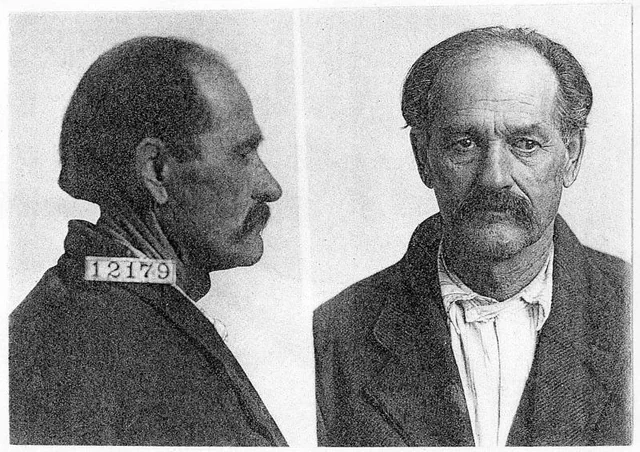
John Spears, the leader of the Green Corn Rebellion.
Although Oklahoma’s politics were often radical, one area in which Oklahoma political leaders did not agree with Socialists on was World War I; all members of the state’s delegation to Congress supported declaring war. However, numerous impoverished tenant farmers did not, and the military draft was the final straw. In August 1917, several hundred men gathered at the farm of socialist activist John Spears, many being members of the Working Class Union, which was made up of tenant farmers. Although they had tried to join the International Workers of the World, they were rejected as they were not wage laborers. These men were armed with shotguns, Winchester rifles, and squirrel guns and actually believed that they could march to Washington D.C. to overthrow President Wilson and end American involvement in a war they regarded as a “rich man’s war, poor man’s fight” (Grant). They also carried dynamite and strychnine to blow up bridges and poison food and water respectively. This became known as the “Green Corn Rebellion” as the rebels planned to eat unripe “green” corn while making their way to Washington. It should be noted that the Socialist Party of Oklahoma itself nor the national organization was involved, but the men who led this rebellion did consider themselves socialists. They would not be your standard Marxists, however; these people were explicitly Christian and wished to own their own farms, and they also not only included white men but also some Indians and blacks.
The rebellion started with the ambush and wounding of Sheriff Frank Grall and deputy Will Cross. The rebels cut telegraph and telephone lines, burned bridges, and attempted to dynamite an oil pipeline. However, it didn’t last long, as this movement was already infiltrated by law enforcement who reported their planned movements. Indeed, the rebellion only lasted a day until law enforcement confronted them and a shootout occurred, killing three of the rebels. Although about 450 people, including socialists who had nothing to do with this rebellion, were arrested, many were believed by law enforcement to have simply been duped and were released. 150 people were convicted and sentenced to between 1 and 10 years in prison at Fort Leavenworth, Kansas, with the leaders getting the highest sentences. Historian Nigel Sellars considered this to be “the only explicitly socialist insurrection in American history, and the only one that mirrors the other revolutions in 1917” (Grant). This event resulted in the crackdown and discrediting of the Socialist Party and the IWW in Oklahoma, and many of the rebels ended up moving away as employers would not hire them. Although the state remained generally inclined to elect politicians from the left for many years afterwards, the success of a socialist revolution was not in the cards. However, this was not the final act of rebellion against the draft; on January 1, 1920, draft board member Tom Ragland was ambushed and murdered by five men, who left the following note on his corpse, “Never again would he send men to war” (Grant).
References
Brown, K.L. Progressive Movement. The Encyclopedia of Oklahoma History and Culture.
Retrieved from
https://www.okhistory.org/publications/enc/entry?entry=PR017
Grant, R. (2019, October). When the Socialist Revolution Came to Oklahoma – and Was Crushed. Smithsonian Magazine.
Retrieved from
Sellars, N.A. Green Corn Rebellion. The Encyclopedia of Oklahoma History and Culture.
Retrieved from
https://www.okhistory.org/publications/enc/entry?entry=GR022

