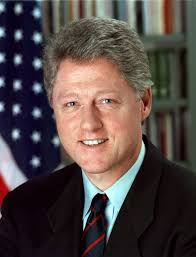
The popular perception of Bill Clinton during his presidency was that he was a moderate, and indeed to liberals looking back, he was that or even a conservative. Indeed, the term “New Democrat” came into being to describe Clinton’s form of Democratic politics and the politics of his supporters. One figure who was not a liberal who echoed this idea of him as a conservative of some sort was conservative David Harsanyi, who wrote, “Despite bringing some big liberal ideas, earthy debauchery and all manner of corruption to the Oval Office”, he “presided over a thriving economy, declared the era of big government over and signed more consequential conservative legislation than any president since – and perhaps, anyone before him” (BBC News). Today I intend to show why this take is wrong, and the traditional view of Clinton as a liberal, not a moderate or conservative, is the accurate one, and what’s more I will do so from the liberal perspective by using the votes selected as ideologically relevant by the liberal lobbying group Americans for Democratic Action.
Issues in which Bill Clinton was liberal included:
Support of and signing into law the Family and Medical Leave Act, the Motor-Voter Law, The Brady Bill, and the National Community and Service Act in 1993.
Support of and signing into law the Goals 2000 Educate America Act, adding funds for education grants to schools.
Opposed an amendment for school choice and reducing overall spending on education in 1994.
Opposing a Republican amendment to reduce domestic spending and protect defense from more cuts in 1994.
Supported banning “assault weapons”, supported an abortion clinic access bill, and a Montana Wilderness bill designating 1.6 million acres as protected wilderness.
Opposed the original welfare reform bill in 1995 (before signing another version in 1996 as it was close to election time), opposed Republican legislation to permit the creation of “company unions” without union presence.
Pro-choice in his record of preferred positions, including his veto of a “partial birth” abortion ban.
Opposition to proposed Balanced Budget and Tax Limitation Constitutional amendments.
Support of the Caesar Chavez Workplace Fairness Act and the admission of Washington D.C. as the state of New Columbia.
Opposed Republican efforts to end the estate tax, gift taxes, and the marriage penalty.
Supported hate crime legislation.
Supported campaign finance reform legislation.
Opposed income tax reduction.
Supported closing the “gun show” loophole in gun control laws.
Supported the Comprehensive Nuclear Test Ban Treaty.
Supported increasing the federal minimum wage.
Opposed the creation of education savings accounts.
Supported preferential treatment for minority-owned businesses by government in 1998.
Issues in which Bill Clinton was conservative included:
He went against ADA’s judgment in his opposition to ending funding for the superconducting super-collider project.
Clinton supported NAFTA, opposed efforts to impose steel tariffs, and supported normalizing trade relations with China.
Although his budget called for defense cuts, he opposed several additional Congressional efforts to do so, such as opposing the deletion of funds for the Trident II submarine missile, opposing cutting the Ballistic Missile Defense program, and opposing cutting funding for U.S. forces in Europe. The trade parts may be considered controversial to consider conservative today, especially in the environment of a Trump-led GOP.
Clinton’s ADA agreement rates were as follows:
Senate: 1993, 70; 1994, 100; 1995, 100; 1996, 100; 1997, 100; 1998, 90; 1999, 100; 2000, 100.
House: 1993, 67; 1994, 64; 1995, 100; 1996, 90; 1997, 100; 1998, 100; 1999, 86; 2000, 89.
For the Senate, this translates to Clinton supporting the liberal position 56 times out of 60 that he was recorded as having a position on a vote counted by Americans for Democratic Action, while in the House he supported the liberal position 63 times out of 74. The former renders his Senate agreement rate at 93% and the latter his House agreement rate at 84%. When we combine the two, Clinton comes out supporting the liberal position 88% of the time. Not moderate, and not conservative…by liberal standards! Further backing this is Clinton’s DW-Nominate score of -0.438. Something to bear in mind, however, is that DW-Nominate scores are not as reliable for presidents as they are for members of Congress, and Clinton had a lot more selectivity in his selection of legislative issues to register an opinion on than legislators do. But, with the information we have available based on actual votes cast, Clinton comes out a liberal who makes exceptions for trade and national defense. The “New Democrat” still is supportive of unions, still supports tax increases on upper incomes, supports social liberalism, and makes an exception to what is considered liberalism in the United States here and there, primarily on trade and national defense.
References
ADA Voting Records. Americans for Democratic Action.
Retrieved from
Bill Clinton’s conservative legacy? (2014, July 7). BBC News.
Retrieved from
https://www.bbc.com/news/blogs-echochambers-28155578
Clinton, William Jefferson (Bill). Voteview.
Retrieved from
https://voteview.com/person/99909/william-jefferson-bill-clinton
 Mad Politics: The Bizarre, Fascinating, and Unknown of American Political History