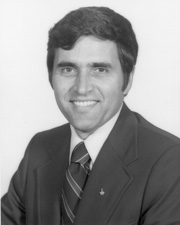
About Al Gore…Sr.

When you hear the name “Al Gore”, you think of the environmentally motivated vice president who lost one of the most controversial elections of American history. However, like so many people in politics, he wasn’t the only politician in the family. The first Gore was Albert Gore Sr. (1907-1998).


Gore’s rise began locally when he ran for superintendent of the Smith County School Board. Although the incumbent won, Gore had run a strong campaign and won the respect of the incumbent. After the incumbent was diagnosed with a terminal illness, he requested that Gore succeed him, and he did (Hill). His wife, Pauline, played a critical role in his campaigns and was a key advisor to him on issues including civil rights and the Vietnam War.


Gore in the House

Gore was first elected in 1938, a backlash election to President Roosevelt, and he proved in his first two terms to be highly independent, often voting against liberals on domestic issues. For instance, he voted to cut WPA funding, investigate the National Labor Relations Board, and against increasing bond powers of the US Housing Authority in 1939. However, he was loyal to the party on foreign policy and he was strongly supportive of the TVA (and by extension, public power development) and New Deal agricultural legislation. His record on domestic issues would shift more to the party liberals during the 78th Congress. Gore would, especially later in his career, be widely regarded as a liberal, albeit maintaining his independence to a degree. He briefly served in the military from December 1944 to March 1945.

During the Republican 80th Congress, he voted against most of their domestic agenda, making exceptions for the Taft-Hartley Act and the Nixon-Mundt communist registration bill. Gore would be largely loyal to the Truman Administration in his support of public housing, strong minimum wage legislation, foreign policy, and controls on prices and rents, but still maintained some independence in his leading the charge against the Brannan Plan. Named after President Truman’s Secretary of Agriculture, Charles F. Brannan, the Brannan Plan would have, for a two-year trial run, scrapped the intricate system of price supports for farmers, replacing it with guaranteed minimum income. With Gore at the helm, the Brannan Plan was sunk in the 81st Congress with a substitute that made minor changes to the existing system, getting seventy-nine Democrats and all but four Republicans on his side.

1952: A Year of Change

Senator Kenneth McKellar was an institution in the state of Tennessee. He had first been elected to the House in 1910 and was then elected to the Senate in 1916. Although a progressive for his time, he had grown less so later in his career. Although a key backer of the Tennessee Valley Authority, he also feuded with its chief, David Lilienthal. McKellar would come to oppose his nomination to chair the Atomic Energy Commission in 1947. He was still thought of as a senatorial powerhouse in 1952, but he was 83 years old and visibly in decline. Gore, by contrast, was 44 years old and traveled around the state to campaign. McKellar’s campaign slogan was “Thinking Feller? Vote McKellar!” to which the Gore campaign, on advice of his wife Pauline, ably responded with, “Think Some More – Vote For Gore!” (Our Campaigns) 1952 was a year of change for Tennessee, and the state’s Democrats pulled for Gore by 15 points. It was also in this year that the Crump political machine, based in Memphis, became restricted to that city. At the time, although Dwight Eisenhower won the state, on the state level Republicanism remained limited to East Tennessee and Gore trounced his Republican opponent by over 53 points.

Gore and the Interstate Highway System

Although I previously wrote that President Eisenhower’s Secretary of Commerce, Sinclair Weeks, deserves a huge amount of credit for the planning and implementation of the Interstate Highway System, Gore co-authored and sponsored the legislation with Representative George Fallon (D-Md.) and likewise deserves a lot of credit for America’s greatest public works project. Such sponsorship certainly helped his prospects for the vice presidential nomination that year, but his colleague, Estes Kefauver, got the nod instead.

Gore on Civil Rights

Albert Gore Sr. was, for his time and place, quite pro-civil rights. Although he voted against the Gavagan-Fish Anti-Lynching Bill in 1940 as did all other Tennessee Democrats, Gore, with fellow Representative Estes Kefauver, proved consistent in voting to ban the poll tax. They were in truth among the first Tennessee Democrats to vote for civil rights legislation.
As a senator, Gore voted for the Civil Rights Acts of 1957, 1960, and 1968 (despite his opposition to the fair housing portion) as well as the Voting Rights Act of 1965 and the 24th Amendment. His votes regarding the Civil Rights Act of 1964 are rather odd. Although he voted against the Civil Rights Act of 1964, he wasn’t opposed to it in its entirety. Gore supported the public accommodations title of the law, but opposed the employment discrimination title as well as the title depriving funds for segregated schools. It was the latter part that motivated his vote against, and he had motioned to recommit the bill right before the final vote to only have funds cut off if a school district defied court orders to desegregate (Metcalf). Gore was also one of three Southern Democrats in the Senate to not sign the Southern Manifesto. The others were Lyndon B. Johnson (who probably wasn’t asked to sign as party leader, Southerners recognized he had more national ambitions) and Estes Kefauver.

Gore and the 1960s

Gore was a supporter of both the Kennedy and Johnson Administrations. He strongly supported the creation of Medicare, sponsoring the measure with Senators Clinton Anderson (D-N.M.) and Jacob Javits (R-N.Y.) in 1964. He was likewise a supporter of LBJ’s flagship legislation for the War on Poverty, the Economic Opportunity Act of 1964. On foreign aid, Gore was becoming a bit more of a skeptic, siding with Senators Wayne Morse (D-Ore.) and Bill Proxmire (D-Wis.) on certain proposals to cut foreign aid. He also opposed two Constitutional amendments pushed by Minority Leader Everett Dirksen (R-Ill.) to counter Warren Court decisions on legislative apportionment and school prayer. Gore would also join J. William Fulbright (D-Ark.) in critiquing the Vietnam War.

Increasing Election Difficulties

Tennessee was slowly but surely becoming more and more Republican. The state’s two votes for Eisenhower proved more than flukes given the popularity of the general…its electorate also voted for Nixon in 1960. In 1962, Tennessee’s 3rd district, based in Chattanooga, elected its first Republican representative since 1920 in Bill Brock. Unlike the last Republican to represent the district, he would win reelection. In 1964, Gore faced a strong challenge from future Congressman Dan Kuykendall. Although Senator Barry Goldwater got thrashed in the election and it brought down some Republican candidates, Kuykendall did get 46% of the vote, running ahead of him. Absent Goldwater’s frankness on his belief that the Tennessee Valley Authority should be sold, Kuykendall may have won. By contrast, in 1958, also a bad year for the GOP, Gore had won reelection against sacrificial lamb Hobart Atkins by 60 points.

Gore and Occidental Petroleum

Albert Gore Sr. maintained a strong connection with the CEO of Occidental Petroleum, Armand Hammer. Hammer, who had major connections with the USSR that have been alleged to have gone as far as spying for them, was himself quite a character who deserves an entry of his own and I plan on giving him one. Gore first met Hammer in the 1940s and he became a major bankroller for not only his political campaigns, but also those of his son up until his death in 1990. FBI director J. Edgar Hoover had long suspected Hammer of being a Soviet agent, but left him alone so he could continue monitoring him until accusing him of being one in 1962, and Gore leapt to his defense on the Senate floor (Karon).


This connection to Occidental Petroleum, which would also get most of the naval oil reserves on Elk Hills during the Clinton Administration, would be an inconvenient subject of discussion in 2000 given Gore Jr.’s environmental advocacy and charges that Bush was a candidate of oil. After his Senate career, Gore Sr. would be on the board of directors of Occidental and would head up one of its subsidiary companies.

Despite this connection, however, Gore himself cast a number of votes that were unfavorable to oil interests. He multiple times voted to reduce the 27.5% oil depletion allowance and voted against removing the power of the Federal Power Commission to regulate oil prices in 1956.

Reelection in the Age of Nixon

In 1970, Gore would be less fortunate in his opposition and in the direction of the state. In 1966, Republican Howard Baker Jr. had won Tennessee’s other Senate seat and in 1968, Nixon won the state with national Democrat Hubert Humphrey coming in third. Goldwater, now back in the Senate, was not running for president and Nixon held the office. Nixon was determined to fight out this midterm, even going as far as to hope for a Senate majority. Although he was hands off in the reelections of many Southern Democrats, as they agreed with him on many major issues, Gore was different. He was one of the more liberal ones and had a record of opposition to Nixon’s Vietnam War policies. Gore had also voted against his Southern Supreme Court nominees, Clement Haynsworth and G. Harrold Carswell. The Republicans scored a top recruit in three-term Congressman Bill Brock of Chattanooga, who capitalized on these issues as well as his vote against Dirksen’s school prayer amendment and lambasted him for what he called a “radical-liberal” record (the “radical” part was undoubtedly an exaggeration) and accused him of representing liberal coastal elites rather than the people of Tennessee, and Gore would assert that Brock’s conservative record in Congress was against the interests of Tennesseans. On Election Day, he would beat Gore by about four points.

Although his political career was now over, Gore lived a long life, long enough to see some satisfying victories. For one, Brock would be defeated in 1976 by a Democrat close to his philosophy in Jim Sasser, who would serve three terms. But better yet for him was seeing his son’s rise from representative of his old district to the Senate and finally, to the White House as Bill Clinton’s VP. Tennessee would move largely into the Republican column by his final years but would twice vote for Clinton/Gore.

References

Al Gore’s Father Dead at 90. (1998, December 5). CBS News.

Retrieved from

https://www.cbsnews.com/news/al-gores-father-dead-at-90/

Hill, R. Tennessee’s Old Gray Fox: Albert Gore. The Knoxville Focus.

Retrieved from

Tennessee’s Old Gray Fox: Albert Gore

Karon, T. (2000, September 25). Gore’s Big Oil Connection: An ‘Occident’ of Birth? TIME.

Retrieved from

https://content.time.com/time/nation/article/0,8599,55826,00.html

McKellar, Kenneth D. Our Campaigns.

Retrieved from

https://www.ourcampaigns.com/CandidateDetail.html?CandidateID=104660

Metcalf, J. (1964, June 20). The Civil Rights Act is approved after an 83-day filibuster. New York Daily News.

Retrieved from

https://www.nydailynews.com/news/national/civil-rights-act-approved-1964-article-1.2254813

Weil, M. (1998, December 6). Vice President Al Gore’s Father Dies. The Washington Post.

Retrieved from

https://www.washingtonpost.com/wp-srv/politics/daily/dec98/goresr6.htm

Weingroff, R.F. (1996, Summer). Federal-Aid Highway Act of 1956: Creating the Interstate System (Sidebars), No. 60, Vol. 1. Federal Highway Administration.

Retrieved from

https://highways.dot.gov/public-roads/summer-1996/federal-aid-highway-act-1956-creating-interstate-system-sidebars

The 1923 Speaker Battle

Frederick H. Gillett, R-Mass.

After a fifteen-vote struggle as well as a prior rejection in 2015 in favor of Paul Ryan, Kevin McCarthy of California is finally Speaker of the House. The sort of fight we saw over the last few days has, as a number of publications have already written on, a century old precedent. The party in question was the same, but circumstances politically were a bit different. Although the party was conservative, the rebels were not from the right, rather from the left. The current fight was establishment vs. anti-establishment Republicans, with oscillations among the pro and anti-McCarthy factions about whether former President Donald Trump’s support of McCarthy was relevant. The most obvious presence among the rebels were Wisconsin Republicans. The state and its Republicans were in a state of rebellion against the national party and in 1924 Senator Robert La Follette (R-Wis.) would win the state’s electoral votes.


The first two years of the Harding Administration had proven awful from a progressive perspective. Lower income taxes, higher tariffs, pro-business policy, and limited government were the rule. Other issues included coal strikes, the economy still recovering from a mini-depression, and discontent over Prohibition enforcement. The Speaker of the House at the time was Frederick Gillett of Massachusetts. Gillett was a well-respected figure and a principled conservative. By DW-Nominate scoring, he gets a 0.662, making him the fourth most conservative representative in the 67th Congress. Gillett was also considered a passive figure who would go with what his fellow conservatives wanted. Much of the behind-the-scenes power was from former Minority Leader James R. Mann of Illinois. In 1922, the Republicans took a beating in the midterms, losing 77 seats in the House, much of the losses coming from urban areas. However, the Democrats had suffered worse in the 1918 and 1920 elections combined, leaving the GOP with a majority of 18 seats rather than 171. This gave frustrated progressives within the Republican Party an opportunity to fight for reform.

Unlike the rebels of 2023, who varied in the candidates they wanted between ballots with no solid consistent agreement about who should be speaker instead of McCarthy, the rebels in 1923 consistently championed Henry A. Cooper of Wisconsin for speaker. Cooper had, like Gillett, first been elected to Congress in 1892 and was a prominent member of the GOP’s progressive wing. He had only lost an election once, in 1918, when he lost renomination to conservative Clifford Randall due to his vote against World War I. A smaller contingent embraced another representative, Martin B. Madden of Illinois, who was less conservative (although not by that much) than Gillett and represented a majority black area in Chicago.


The GOP rebels for Cooper were:

Henry A. Cooper (R-Wis.), the leading choice of the rebels.

Frank Clague, Charles Davis, Oscar Keller, and Harold Knutson of Minnesota. Knutson was the least progressive among them and would become much more conservative later in his career.

Fiorello LaGuardia of New York. LaGuardia would later become arguably New York City’s greatest mayor.

James Sinclair of North Dakota.


Edward Voigt, John Nelson, John Schafer, Florian Lampert, Joseph Beck, Edward Browne, George Schneider, James Frear, and Hubert Peavey, all of Wisconsin. The monolithic rebellion from the Wisconsin delegation illustrated just how much Senator La Follette’s brand of politics had come to dominate the state, with the only detractor remaining in 1923 being Senator Irvine Lenroot, who was a moderate and a former ally. Cooper himself voted present as did the state’s Socialist, Victor Berger.

Farmer-Laborers Ole Kvale and Knud Wefald of Minnesota. The Farmer-Labor Party was a progressive offshoot of the Republican Party which would later merge with the Democrats. Thus, the state’s party being officially known as the Democratic Farmer-Labor Party.

Voting for Madden:

Martin B. Madden, R-Ill., minority choice of rebels.

Magne Michaelson, Frank Reid, and Edward King of Illinois. – All three were to the left of the median of House Republicans, were strongly pro-organized labor, and were certainly the most progressive Republicans representing the state at the time.

Roy Woodruff and William F. James of Michigan. – Although originally a Progressive of the Theodore Roosevelt mold, Woodruff would become extremely conservative during the Roosevelt Administration.

Ultimately, the rebels held out for three days in which eight votes were cast with no speaker decided. Finally, Majority Leader Nick Longworth (R-Ohio) reached an agreement with the rebels to loosen the rules and limit the speaker’s power, thus more potential for progressive legislation to reach the floor. Thus, on the ninth ballot, most of the rebels voted for Gillett. The exceptions were the third-party members Kvale, Wefald, and Berger. The rebels had won concessions…for now. In 1924, President Coolidge ran for a full term, and numerous progressive Republicans threw their support behind Senator Robert La Follette (R-Wis.). After Coolidge’s resounding victory, the progressives, particularly the ones who had sided with La Follette, were booted off committees in retaliation by the new Speaker, the man who had negotiated a truce with the progressives. Gillett had been elected to the Senate, defeating popular Democratic incumbent David I. Walsh, largely thanks to the coattails of the even more popular Coolidge. He served a single term.

References

Gillett, Frederick Huntington. Voteview.

Retrieved from
https://voteview.com/person/3599/frederick-huntington-gillett

Al D’Amato: The Man Schumer Had to Beat

In my last post, I covered Mitch McConnell’s predecessor, Dee Huddleston. Today I will turn it around and cover Senate Majority Leader Chuck Schumer’s predecessor, Alfonse D’Amato (1937- ). New York has in truth been a Democratic state for many years before Schumer was elected to the Senate, so it must be understood how D’Amato could get elected.


New York Politics in the mid-late 20th century: the four-party cocktail

The dynamics of New York politics for a time were strange, with there being four relevant parties: Republican, Democrat, Liberal, and Conservative. The Liberal Party had emerged from a 1944 exodus of anti-communist liberals from the American Labor Party, at the time its foremost figure being the famously pro-Soviet Congressman Vito Marcantonio. Although the Liberal Party often endorsed Democrats, they also backed liberal Republicans. This created some interesting political calculations and encouraged Rockefeller Republicanism in the state. Although they didn’t endorse Rockefeller himself, they consistently endorsed Senator Jacob Javits in his campaigns and twice backed John Lindsay for New York City’s mayor, their endorsement being crucial to his viability after he lost the Republican nomination in 1969. The Conservative Party, responding to the incentives of Republicans to move liberal, formed as another force in 1962 to represent conservatives when they were dissatisfied with Republican Party nominations. In 1965, they notably ran National Review founder William F. Buckley Jr. for New York City’s mayor, a quixotic bid that served to give conservatives an option. The dynamics between the four parties most notably came to a head after the assassination of Senator Robert Kennedy in 1968. Governor Rockefeller appointed Congressman Charles Goodell of upstate New York, who although previously a mostly fiscally conservative Republican who was liberal on foreign aid and civil rights, he shifted to staunch liberalism as a senator in an effort to win the Liberal Party nomination along with the Republican nomination. Although that part of his plan worked, his bid to win a full term was complicated by the entry of Buckley’s brother, James (who will turn 100 if he lives to March 9th!) as the Conservative Party candidate. He would win the election as the liberal vote was split between Goodell and Democratic Congressman Richard Ottinger, giving New York their most conservative senator since James W. Wadsworth Jr., who had lost reelection in 1926 to liberal titan Robert Wagner. This would be the single greatest achievement of the Conservative Party of New York. Such dynamics would emerge again regarding Senator Javits ten years later.


Javits had been one of the most liberal Republicans in national politics since the 1940s, being regarded by conservatives as one of if not the most “me too” Republicans, and commanded a loyal following, particularly among New York City’s Jews, but his reelection prospects were getting increasingly complicated by 1980. His equally liberal Republican colleague from New Jersey, Clifford Case, who also had a long career in the Senate had lost renomination in 1978 to conservative activist Jeffrey Bell, who would proceed to lose the election. Javits was also going to be turning 76 that year and worse yet, his revelation in February 1980 that he had been diagnosed with ALS the previous year. Although ALS usually kills its victims between two to five years of diagnosis, his was developing at an abnormally slow rate, so he thought he could survive one more term. It also didn’t help that in 1974, James Buckley had beat him to the punch in calling for Nixon’s resignation over Watergate. Republican conservatives turned to Al D’Amato, the supervisor of the Town of Hempstead and vice chairman of the Nassau County Board of Supervisors. Like Clifford Case had in 1978, he lost renomination to a more conservative challenger. However, Javits had still won the Liberal Party nomination, so he proceeded as their Senate candidate. The Conservative Party also nominated D’Amato, thus the right had a united front in the election. The Democrats nominated liberal Congresswoman Elizabeth Holtzman, resulting, just like in 1970, a split among liberals. Unlike New Jersey’s Bell, however, D’Amato won by 1.4% on account of the race being three-way, with Javits getting 11% of the vote on the Liberal Party ticket. This was the same dynamic that had allowed James Buckley to win in 1970. Also elected to Congress that year from Brooklyn and Queens was Chuck Schumer. Javits would die of complications of ALS in 1986, falling just short of what would have been a full term, and the Liberal Party would decline in influence afterwards.

Senator D’Amato

Although the majority of New Yorkers hadn’t voted for D’Amato, he sought to make himself more marketable in the state. He moved towards the center and became known foremost for securing funds for and addressing constituent service in New York State, leading his critics to call him “Senator Pothole”. However, he and his supporters embraced this name, and indeed, New Yorkers proved receptive. D’Amato would also go to bat for the state through filibusters. In 1986, he engaged in a 23 1/2 hour solo filibuster on the military appropriations bill for it stopping funding of the building of a jet trainer plane from a Farmingdale, New York company in which he read from the Washington D.C. phonebook (RealClearPolitics). This was the second longest filibuster in Senate history. That year, the Democrats nominated a staunch liberal in Mark Green, the chief speechwriter for Senator Gary Hart (D-Colo.), and D’Amato prevailed by over 15 points, this time with a majority. He was socially liberal on issues surrounding civil rights and gay rights, supporting affirmative action and anti-discrimination laws for homosexuals, and opposing “don’t ask, don’t tell”. D’Amato, however, was conservative on the subject of “law and order”, favoring the death penalty and weakening the exclusionary rule. He also, more controversially for the Democratic and pro-choice New York, had a pro-life record. D’Amato was strongly in favor of defense spending while being more liberal on issues regarding organized labor as well as domestic spending. He would also vote for the Family and Medical Leave Act. In 1992, with reelection looming and drawing a tougher opponent in New York Attorney General Robert Abrams, he conducted the ninth longest solo filibuster, this time regarding the dropping of aid for a typewriter company in Cortland, New York that motivated the firm to move operations to Mexico, for 15 hours and 14 minutes, in which he sang “South of the Border” (Down Mexico Way). To this day, he is the only person to appear twice among the top ten solo filibusters of Senate history. D’Amato won reelection by 1.2%. Always cognizant of jobs in New York state, he voted against NAFTA.

Throughout his time in the Senate, D’Amato was the de facto boss of the New York Republican Party, and provided critical support for the campaigns of both George Pataki to the governorship
and Rudy Giuliani for Mayor of New York City in 1994. That year, he sang his version of “Old McDonald Had a Farm” in response to the Democratic crime bill over what he regarded as pork, singing,

“President Clinton had a bill, ee-ay-ee-ay-oh.
“And in that bill was lots of pork, ee-ay-ee-ay-oh.
“New pork here, old pork there,
“Here a pork, there a pork,
“Everywhere pork, pork.
“The president’s bill cost much too much,
“And it must be chopped.
“With a chop, chop here,
“And a chop, chop there
“Chop that pork off everywhere.
“Then we’ll have a bill that’s fair,
“Ee-ay-ee-ay-oh” (Powers).

He would also be accused by critics of running a corrupt political machine, and these claims were bolstered by a Senate Ethics Committee rebuke in 1991 for permitting his brother to use Senate stationery to write a letter to one of his clients as well as a perception that large campaign contributions could result in extraordinary legislative action from him (Harden). In 1995, D’Amato wrote Power, Pasta, and Politics: The World According to Senator Al D’Amato, in which he offered his insights on the politics of his time.

During the Clinton years, D’Amato maintained a moderate conservative record and was acidic in his criticism of the Clintons during hearings regarding the Whitewater controversy. He also attracted particularly strong criticism for his vote against the Brady Bill, as gun control measures poll well in New York. His record as well as his declining share of the vote in a state that had voted for not just Clinton in 1992 and 1996 but also Dukakis in 1988 spelled trouble for his next reelection in 1998.
Although initially former Congresswoman Geraldine Ferraro, who had been the first woman to be nominated for vice president on a major party ticket in 1984, was the top nominee for the Senate race, Congressman Chuck Schumer campaigned energetically throughout the summer of 1998 and massively outspent Ferraro. Ferraro’s campaign stalled while he was gaining in Democratic polls and by the September 15th primary, he won with 50.8% of the vote.


D’Amato knew he was at risk, and launched negative attack after negative attack on Schumer, claiming he had a poor attendance record and derided him as a New York City liberal who didn’t care for upstate New York, with Schumer responding constantly and calling D’Amato a liar. He blundered when, while making a speech encouraging Jewish leaders to support him, he called Schumer a “putzhead” (this is the Yiddish equivalent of calling someone a “dickhead”) and referred to obese Congressman Jerry Nadler as “Congressman Waddler” and performed a physical imitation of him. This wasn’t D’Amato’s first time getting negative attention for impressions; during the O.J. Simpson trial he had used a Japanese accent to mock Judge Lance Ito, for which he apologized (USA Today).

Schumer focused his attacks on D’Amato implying that he only focused on local issues when his reelection was coming up and condemned his vote on the Brady Bill, which he had sponsored in the House. On Election Day, Schumer prevailed by 10 points. His lifetime ACU score was a 67% and his DW-Nominate score was 0.182.

In researching D’Amato, I found myself surprised that on a surprising number of meat and potatoes cultural issues he was conservative. From a New York senator, I honestly didn’t expect him to be staunchly pro-life and pro-gun. That being said, a point I have made in the process of my writings is that constituent service can get a politician a long way despite policy disagreements. It worked for Vito Marcantonio of East Harlem, New York, the legendary skinflint H.R. Gross of Waterloo, Iowa, and Al D’Amato for three terms. This leads me to ponder, could D’Amato have won in 1998 had he not called Schumer a “putzhead” and beat Strom Thurmond’s filibuster record?

References

Chuck Schumer for Senate – 1998 tv ad. YouTube.

Retrieved from

https://www.youtube.com/watch?v=2hfrjJnCdsI

D’Amato accused of insulting Schumer. USA Today.

Retrieved from

https://usatoday30.usatoday.com/news/opinion/ny/ny026.htm

Harden, B. (1998, November 4). New York’s Veteran ‘Senator Pothole’ Gets Run Over by Schumer. The Washington Post.

Retrieved from

https://www.washingtonpost.com/wp-srv/politics/campaigns/keyraces98/stories/ny110498.htm

Longest Filibusters in American History – Alfonse D’Amato. RealClearPolitics.

Retrieved from

https://www.realclearpolitics.com/lists/longest_filibusters/alfonse_damato.html#!

Powers, R. (1994, August 25). New York’s Singing Senator Voices Objections to Crime Bill With PM-Crime Bill Bit. Associated Press.

Retrieved from

https://apnews.com/article/1332ae220315afadc4d58fbe65727e1d

Schumer topples D’Amato in New York Senate race. (1998, November 3). CNN.

Retrieved from

https://www.cnn.com/ALLPOLITICS/stories/1998/11/03/election/senate/new.york/