The Socialists And How They Scored by DW-Nominate

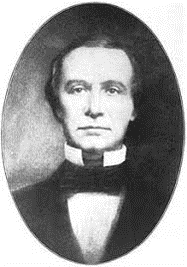
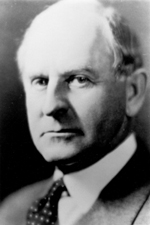
Robert Dale Owen (D-Ind.)

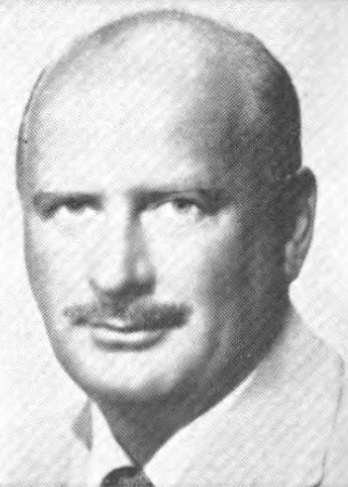
The term “socialism” or “socialist” gets bandied about quite a bit, but we do have actual socialists in Congress and some people who identified with the Socialist Party historically before going to a different party. Two were Populists before they became members of the Socialist Party. Interestingly, there is some variation in scoring, although at least one of these inclusions is questionable. I have also added George Rhodes (D-Penn.), as he had a past in Pennsylvania’s Socialist Party. One figure I am excluding is John Travers Wood, who although he was the Socialist mayor of Coeur d’Alene, Idaho way back in the 1910s, by the time he was elected to Congress in 1950 as a Republican he was about as far as you could get from a socialist.

Alexandria Ocasio-Cortez (D-N.Y., 2019- ) – -0.297

Perhaps the media’s most stylish if not the most touted socialist, Ocasio-Cortez’s score is strangely high given that she and “The Squad” have on some occasions voted “nay” with Republicans on Democratic legislation as it wasn’t sufficient for them.

Danny Davis (D-Ill., 1997- ) – -0.486

Danny Davis has long represented his Chicago district and has been a member of Democratic Socialists of America.

Rashida Tlaib (D-Mich., 2019- ) – -0.288

Another member of The Squad, she represents a Detroit district and like Ocasio-Cortez, she has voted “nay” on certain Democratic proposals.

Ilhan Omar (D-Minn., 2019 – ) – -0.293

Representing Minneapolis, Omar is also a member of “The Squad”.

Cori Bush (D-Mo., 2021- ) – -0.247

Cori Bush, representing urban St. Louis, became part of “The Squad” after her election in 2020.

Major Owens (D-N.Y., 1983-2007) – -0.569

Owens was a major NYC leftist and objected to the electoral vote count of Ohio for Bush in 2004. He also was the floor manager for the Americans with Disabilities Act in 1990.

Jamaal Bowman (D-N.Y., 2021- ) – -0.356

Bowman, representing New York City, is yet another member of “The Squad”.

Summer Lee (D-Penn., 2023- ) – -0.375

Elected to Congress in 2022, Summer Lee was a member of the Democratic Socialists of America and was elected with their support.

Greg Casar (D-Tex., 2023- ) – -0.378

Representing territory from East Austin to West San Antonio and formerly of the Austin City Council, Casar has been affiliated with the Democratic Socialists of America.

Bernie Sanders (I-Vt., 1989- ) – -0.539

Bernie Sanders is certainly America’s most famous contemporary socialist. He is interestingly not lower on DW-Nominate as there has been the occasional issue he has sided with the GOP on, such as auditing the Fed or opposition to funding research into human cloning.

Horace Greeley (W-N.Y., 1847-49) – 0.429 – Horace Greeley actually served as a member of Congress shortly, but I actually have strong doubts about Greeley’s “socialism”, as it seems like he entertained the idea rather than embraced it, and he tended to include ideas he entertained in his newspaper. His DW-Nominate score indicates that if he was a socialist, he was by far the most right-wing socialist to ever serve in Congress.

Robert Dale Owen (D-Ind., 1843-1847) – -0.232 – This is more of an actual socialist from Greeley’s time period, as his father, Robert Owen, was a major socialist theorist, his sort being a utopian socialism. Owen throughout his life stood for socialism. Yet as a member of Congress he had a reputation as not exceptional as far as Democrats went. Owen I find an interesting example not only because he was a Democrat in the time it was thought of as the party of Jackson, but also because he identified as a socialist before The Communist Manifesto existed.

Victor Berger (S-N.Y., 1911-13, 1923-29) – 0.176 – Berger of Milwaukee represents one of the DW-Nominate anomalies for sure, as his score is above that of red hunter Richard Nixon. He faced off regularly against Republican William Stafford.

Meyer London (S-N.Y., 1915-19, 1921-23) – -0.026 – One of the official members of the Socialist Party, he appears more conservative than most Democrats, and part of that may be his opposition to Democratic war measures, including his opposition to cracking down on civil liberties.

Andrew Biemiller (D-Wis., 1945-47, 1949-51) – -0.484 – Formerly a Socialist representative in the Wisconsin Assembly, Biemiller fairly seamlessly made the transition to a staunchly liberal Democrat in Congress. Both times he lost reelection it was to Republican Charles Kersten, the last Republican to represent Milwaukee in Congress.

David Bonior (D-Mich., 1977-2003) – -0.547

Although a member of Democratic Socialists of America, Bonior rose up to be the third-ranking Democrat in the House during the Bush Administration and was known as a major opponent of NAFTA. Interestingly, he was pro-life in his voting record.

Ron Dellums (D-Calif., 1971-98) – -0.644

Elected to represent Berkeley, California, in 1970, Dellums was a self-described socialist, staunchly anti-Vietnam War, and almost never voted for military appropriations bills.

John Conyers (D-Mich., 1965-2017) – -0.658

John Conyers long represented Detroit in Congress and notably introduced legislation to investigate the idea of reparations.

Leo Isacson (ALP-N.Y., 1948-49) – -1

Isacson won a special election in a normally staunchly Democratic district. He was left-wing to the hilt on domestic policy and his vote against the Marshall Plan can be seen as a vote friendly to the USSR.

Hugh De Lacy (D-Wash., 1945-47) – -0.501

De Lacy was one of two “secret communists” of Congress and represented Seattle for a term and was the leader of the pro-communist Washington Commonwealth Federation within the Democratic Party. However, he lost reelection in 1946, a time in which Seattle wasn’t relentlessly left-wing.

John Bernard (FL-Minn., 1937-39) – -0.353

Bernard was another of the two “secret communists” of Congress, although he would later publicly call himself a communist. He represented the Iron Range in Minnesota, now a Republican area.

Jerry J. O’Connell (D-Mont., 1937-39) – -0.396

Jerry O’Connell was known as a supporter of the Republican forces in the Spanish Civil War and was a communist fellow-traveler. He later associated with Hugh De Lacy’s wing of the Democratic Party, the Washington Commonwealth Federation.

Homer T. Bone (D-Wash., 1933-44) – -0.047

Bone had a past in Washington’s Socialist Party before winning election to the Senate as a Democrat. As a senator, although he was a New Dealer, he strongly opposed FDR’s foreign policy.

George Rhodes (D-Penn., 1949-69) – -0.369

Rhodes had a history in Pennsylvania’s Socialist Party, but the future was brighter with the Democrats and he defeated Republican Frederick Muhlenberg for reelection in 1948, serving 20 years and being a staunch supporter of Democratic programs.


Fiorello LaGuardia (R-N.Y., 1917-19, 1923-25, Prog. 1925-27, R-N.Y., 1927-33) – 0.208

LaGuardia is one of the people that I would question a full-on labeling of “socialist”. Although he did win election to Congress on a fusion Progressive/Socialist ticket in 1924, but ran as a Republican again in 1926.


George Lunn (D-N.Y., 1917-19) – -0.181

Lunn had been the Socialist Party mayor of Schenectady, New York, before Democrats approached him to run for Congress on their ticket. He would lose reelection in 1918.


Harry Lane (D-Ore., 1913-17) – -0.154

Lane was a rather independent-minded progressive senator and got into a whole lot of hot water for voting against American participation in World War I in 1917. He died before there were electoral consequences.

Freeman Knowles (P-S.D., 1897-99) – -0.281

Knowles started out as a Populist but would later join the Socialist Party.

Kittel Halvorson (P-Minn., 1891-93) – -0.153

Halvorson was just like Knowles in trajectory.

Henry Smith (UL-Wis., 1887-89) – -0.148

Smith had been a Socialist in the Wisconsin Assembly and, like in Congress, represented Milwaukee. He at differing times ran on the Democratic, Union Labor, Greenback Party, and Socialist tickets.

Jerry Voorhis (D-Calif., 1937-47) – -0.329

Jerry Voorhis was a loyal New Dealer but is also notable for being defeated by Richard Nixon for reelection in 1946. Interestingly, it was Nixon’s anti-communist politicking against Voorhis that turned Governor Earl Warren, a personal friend of Voorhis, against him throughout his political career.

Vito Marcantonio (R-N.Y., 1935-37, ALP 1939-51) – -0.415

Interestingly, Marcantonio was once a Republican! He was also one of the few openly pro-communist legislators out there, but his excellent constituent service helped keep him in office until Republicans and Democrats ran a fusion candidate to defeat him in 1950.

Interestingly, it has only been relatively recently that socialists got elected to office and stayed consistently long. Milwaukee figures as having multiple socialist figures representing the district as they had a particularly strong pull there.

References

Voteview.

Retrieved from

https://voteview.com/

When the US Had Too Much Money in the Treasury

In November 2023, the federal government operated at a $314 billion deficit. We have largely known deficits rather than anything else in recent decades given Congress not wanting to raise taxes and/or reduce spending. However, there was a time in which we had the opposite problem, one that some legislators may wish for now, having a surplus in the US Treasury instead of a debt. Such was the case in the politics of the late 1880s and early 1890s.

Along with opposing the spread of slavery, one of the founding issues of the Republican Party was the protective tariff. These tariffs were ostensibly for the purpose of continuing with Alexander Hamilton’s American System, in which tariffs were to fund internal improvements, thereby helping domestic industry grow both through protection from foreign competition and development of roads, bridges, and canals. Once the War of the Rebellion was over, slavery abolished, and then Reconstruction ended, tariffs became the central issue (although not the only) that separated the Democratic and Republican parties. The politics of the late 19th century were rather odd in the sense that partisanship was high but ideologically the parties, at least compared to today, don’t seem THAT different. Tariffs, however, resulted in growing Treasury surpluses, and this was seen as a problem because money just sitting in there just…well…sits there, not contributing to the economy. In 1889, President Benjamin Harrison stated, “while a Treasury surplus is not the greatest evil, it is a serious evil” (DiBacco). While it could have been used to retire debt, this would result in, according to economist Thomas V. DiBacco (1981), “buying securities at premium prices investors in this favorable position demanded. In this instance the government could be criticized for using public funds to reward big investors”.


Democrat Grover Cleveland wanted to reduce tariffs to lower the surplus, while Benjamin Harrison wanted to further raise tariffs but use the surplus on veterans’ pensions. The 1888 Republican platform explicitly supported protection, while supporting reducing domestic taxes and tariffs on items that cannot be made in the United States, even asserting “If there shall remain a larger revenue than is requisite for the wants of the government we favor the entire repeal of internal taxes rather than the surrender of any part of our protective system at the joint behests of the whiskey trusts and the agents of foreign manufacturers” (The American Presidency Project, Republican Party Platform). The Democratic platform, on the other hand, decried the protective tariff system. The platform held that “Judged by Democratic principles, the interests of the people are betrayed, when, by unnecessary taxation, trusts and combinations are permitted and fostered, which, while unduly enriching the few that combine, rob the body of our citizens by depriving them of the benefits of natural competition. Every Democratic rule of governmental action is violated when through unnecessary taxation a vast sum of money, far beyond the needs of an economical administration, is drawn from the people and the channels of trade, and accumulated as a demoralizing surplus in the National Treasury.

The money now lying idle in the Federal Treasury, resulting from superfluous taxation amounts to more than $125,000,000, and the surplus collected is reaching the sum of more than $60,000,000 annually” (The American Presidency Project, Democratic Platform). The Democratic platform also charged the Republicans with pushing numerous spending proposals of dubious value, materially and constitutionally, to reduce the surplus.


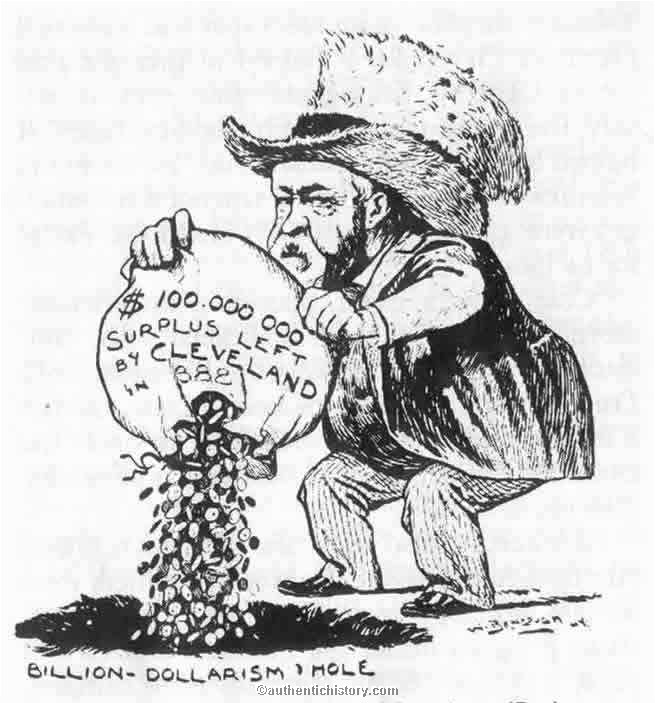
The 1888 election saw the victory of Benjamin Harrison and it all hinged on the state of New York. Harrison won New York thanks largely to the efforts of his campaign manager Matthew Quay. Harrison was also blessed with a Republican majority, and this majority was eager to spend the surplus. One measure was the Dependent and Disability Pension Act, which expanded pensions to all Union veterans who honorably served for at least 90 days and were unable to physically work. Others included a major expansion of the navy and more funds for internal improvements. The Congress also narrowly passed the McKinley Tariff. While all this did succeed in nearly eliminating the budget surplus, the Congress was criticized as the “Billion Dollar Congress”, to which Speaker Thomas Brackett Reed (R-Me.) responded, “This is a billion-dollar country” (NPS). The Democrats also charged that this spending was wasteful, and such a criticism is reflected in the below 1892 cartoon from the humorous Democratic magazine Puck.

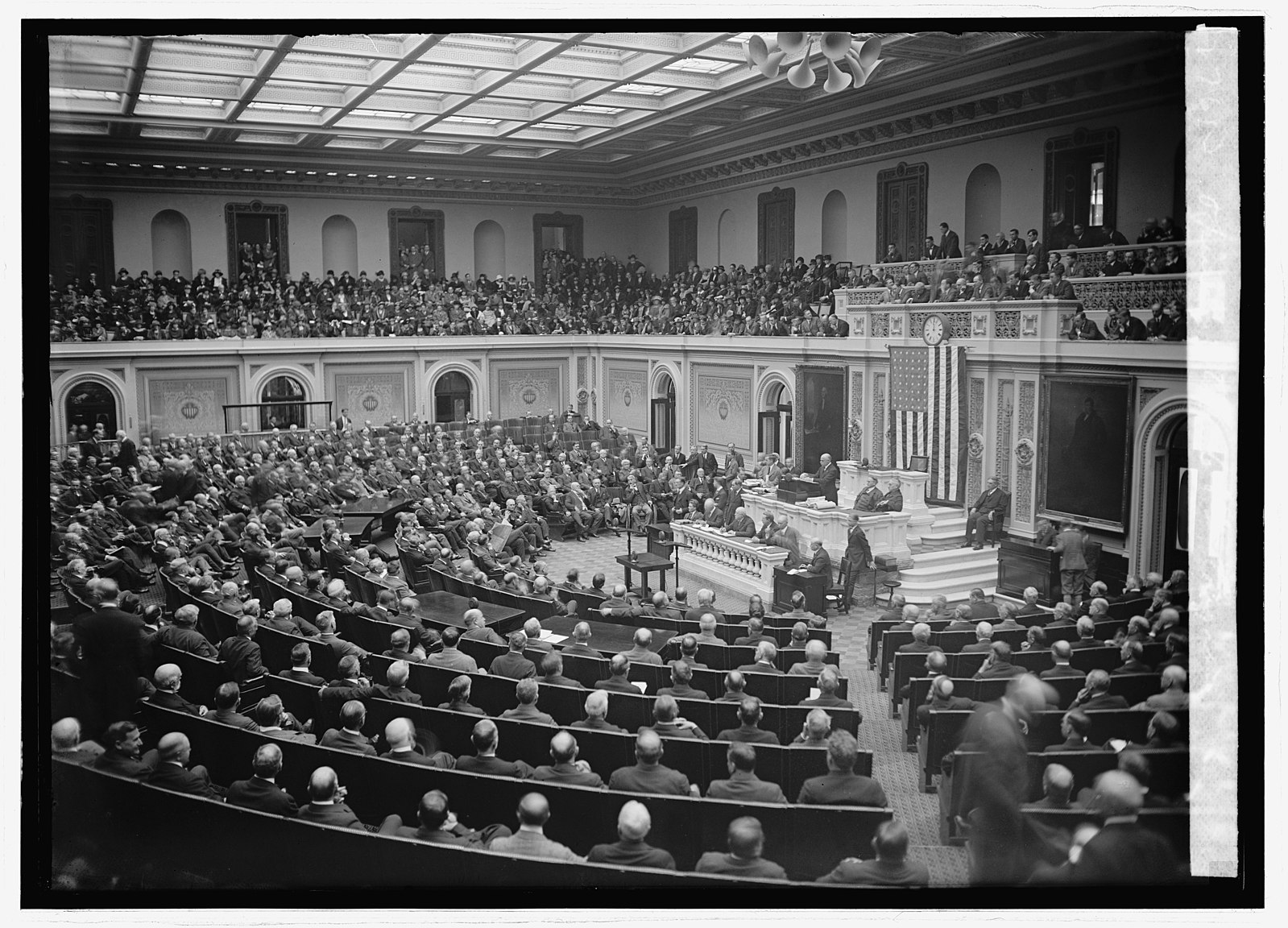
While the 51st Congress was quite productive and efficient in what they sought to achieve, namely the 1888 Republican platform, this attracted a lot of opposition, and the 1890 midterms were nasty due to the recession from the Panic of 1890, caused by the near collapse of London’s Barings Bank. Although Grover Cleveland would again be elected president in 1892, a lot of his presidency would see deficits due to the reduced revenues from the Panic of 1893 and the depression that followed.


References

Benjamin Harrison Home. National Parks Service.

Retrieved from

https://www.nps.gov/nr/travel/presidents/benjamin_harrison_home.html

Democratic Party Platform of 1888. The American Presidency Project.

Retrieved from

https://www.presidency.ucsb.edu/documents/1888-democratic-party-platform

DiBacco, T.V. (1981, September 28). Reagan May Long for a Surplus, But Some Presidents Abhorred It. The Washington Post.

Retrieved from

https://www.washingtonpost.com/archive/business/1981/09/28/reagan-may-long-for-a-surplus-but-some-presidents-abhorred-it/2166c421-53e4-4ad7-8eca-a46b66bb4a81/

Republican Party Platform of 1888. The American Presidency Project.

Retrieved from

https://www.presidency.ucsb.edu/documents/republican-party-platform-1888

Weigand, R.E. (1988, June 23). Protectionism and Ben Harrison. The Chicago Tribune.

Retrieved from

https://www.chicagotribune.com/news/ct-xpm-1988-06-23-8801090829-story.html

The Other Coolidge of Massachusetts

The most known Coolidge in American politics was of course President Calvin Coolidge, a conservative Republican who served from 1923 to 1929. However, did you know that there was another branch of Coolidges, kind of like the Democratic and Republican Roosevelts? The foremost elected official in this family was Democrat Marcus A. Coolidge (1865-1947), also from Massachusetts. While they were related and they do have some facial similarities, it was a relation that was “distant” (The Washington Post).

Coolidge had served as mayor of Fitchburg, Massachusetts for two terms and was well-liked by President Wilson, who picked him as envoy to Poland after World War I and was supportive of FDR (Hennessy). In 1920, he ran for lieutenant governor against Republican Alvan T. Fuller but lost as the Republicans had a boom year. Although the 1920s would be primarily years of political fortune for the Republicans, the Great Stock Market Crash of 1929 started their massive downfall.

In 1930, Senator Frederick Gillett, by this time nearing 80, was calling it quits. Not only that, but the Great Depression was also hitting the country. Coolidge saw it as his chance to run, and although the GOP picked Calvin Coolidge’s friend and former Senator Willliam M. Butler and Coolidge campaigned for him, Marcus Coolidge had former Democratic nominee Al Smith campaign for him. Both Calvin Coolidge and Smith had won Massachusetts in their elections. The Democrats, however, were ascendant, and Marcus Coolidge prevailed by over 10 points. This made it the first time in the history of Massachusetts that both of its senators were Democrats. Coolidge was supportive of the classic Democratic plank of tariff reduction and kept his options open on the question of the League of Nations (The New York Times). Coolidge, rather similar to Calvin, had some fiscally conservative points to him; he opposed veterans bonus legislation repeatedly until voting to override President Roosevelt’s veto in 1936. He would also vote against US entry into the World Court in 1935 despite voting against all proposed reservations.

Coolidge was largely a supporter of FDR’s First 100 Days legislation, such as voting for the Agricultural Adjustment Act, the Tennessee Valley Authority Act, and the National Industrial Recovery Act. He also voted for FDR’s “wealth tax” of 1935, but had some independence in his voting record, especially in his last two years. This included voting against the “Death Sentence” clause of the Public Utilities Holding Company Act, against bituminous coal regulation, and against the Revenue Act of 1936. Despite such independence, his DW-Nominate score was a -0.355. Coolidge might have had another term had Massachusetts’ governor not been Jim Curley. Curley wanted the Senate seat and, according to Time Magazine, “Senator Coolidge was simply dumped by the wayside; the Democratic convention automatically endorsed Mr. Curley” (Time Magazine, 1936). This reflected Curley’s power flexing but also perhaps his identity politics as although Coolidge was a Democrat, he was also a WASP. This didn’t end up working out for Curley and this was the only Senate seat picked up by a Republican that year in Henry Cabot Lodge Jr., and a Democrat would not be elected to this Senate seat again until 1978. In a reflection of his career in the Boston Globe, he was regarded as a “grand old 20th Century puritan” (Hennessy).

References


Hennessy, M.E. (1947, February 2). Round About. The Boston Globe.

Retrieved from

https://bostonglobe.newspapers.com/article/the-boston-globe-column-of-career-of-mar/77885137/

Marcus A., Candidate in Massachusetts, Distant Kin to Calvin. (1930, October 12). The Washington Post.

Retrieved from

https://pqasb.pqarchiver.com/washingtonpost_historical/access/226416702.html?dids=226416702:226416702&FMT=ABS&FMTS=ABS:FT&date=OCT+12%2C+1930&author=&pub=The+Washington+Post&desc=Marcus+A.%2C+Candidate+in+Massachusetts%2C+Distant+Kin+to+Calvin.&pqatl=google

Marcus A. Coolidge. Voteview.

Retrieved from

https://www.voteview.com/person/2035/marcus-allen-coolidge

Massachusetts: Flesh v. Blood. (1936, September 28). Time Magazine.

Retrieved from

https://content.time.com/time/subscriber/article/0,33009,756708,00.html

M. Coolidge Plans Activity in Senate; Bay State Democrat Asserts He Will Not Be ‘Rubber Stamp’ for Senator Walsh. (1931, July 12). The New York Times.

Retrieved from

https://www.nytimes.com/1931/07/12/archives/m-coolidge-plans-activity-in-senate-bay-state-democrat-asserts-he.html

Political Notes; Coolidge v. Smith. Time Magazine.

Retrieved from

https://content.time.com/time/subscriber/article/0,33009,740633,00.html

RINOs from American History #14: Daniel Ellison


Baltimore has historically been a place in which Republicans have seldom found themselves electable in its history. The most notable Republican to come out of Baltimore was none other than Spiro Agnew, who benefited from divisions regarding race within the state’s Democratic Party at the time. One figure who managed to do quite well before Agnew was Daniel Ellison (1886-1960). In 1923, he was elected to represent the fourth council district and most of the time he was in office he was the only Republican on the city council. He managed to stay through even during the Great Depression, a testament to his popularity. Ellison was also a bit of a rarity as a Republican in that he was Jewish. Jews have a long history of voting Democratic and although this may weaken with controversy regarding the Israel-Hamas war, I don’t generally count on super-dramatic shifts.

Ellison in Congress

In 1942, incumbent Democrat John A. Meyer lost renomination to Democrat Joseph Wyatt. Had Meyer been renominated, perhaps the seat would have stayed in Democratic hands. After all, the 4th district had a very long history of electing Democrats, the last time the district elected a Republican was in 1900. Ellison resigned his seat on the city council and narrowly won in the Republican wave year of 1942. To this day, Ellison is the last Republican to have held a seat on the Baltimore City Council and the last to have represented a significant portion of Baltimore in Congress.

Ellison’s DW-Nominate score was a -0.099, an astonishingly low score for a Republican, with only Charles La Follette of Indiana and Richard Welch of California having lower scores than him. He was perhaps the most consistent Republican supporter of maintaining wartime price control, voted against funding the House Committee on Un-American Activities, voted against the Smith-Connally Act on wartime labor disputes, voted against the Hobbs (D-Ala.) anti-racketeering bill opposed by organized labor in 1943, voted to retain agricultural subsidies, and for U.S. participation in the United Nations Relief and Rehabilitation Administration. On the conservative side, he voted against increasing funds for agricultural programs, voted to revoke FDR’s wage freeze in 1943, and voted for tax relief over President Roosevelt’s veto in 1944. Ellison was yet another figure in the storied history of dissident Republicans from Maryland, perhaps the most notable one being Charles Mathias, a major irritant to the Nixon White House who would serve in the House from 1961 to 1969 and the Senate from 1969 to 1987. Ellison’s overall liberal record wasn’t enough to stop him from losing reelection in 1944 by almost 20 points.

References

Ellison, Daniel. Voteview.

Retrieved from

https://www.voteview.com/person/2930/daniel-ellison