The state of Georgia has had the benefit of having some political heavy-hitters in the Senate, most notably Richard Russell and Walter Franklin George (1878-1957). George was an attorney by profession, and he reached the prominence of serving on the state’s Supreme Court from 1917 until his resignation in 1922.
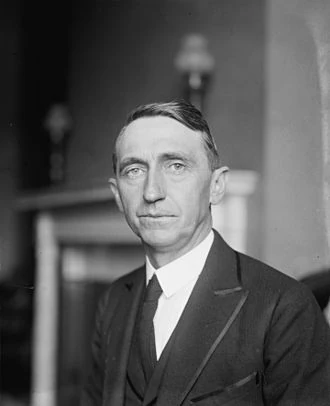
George in his early years in the Senate.
On September 26, 1922, Senator Thomas E. Watson, a fiery populist, died suddenly of a cerebral hemorrhage. Governor Thomas Hardwick, an anti-suffragist seeking to improve his political position with women, appointed Rebecca Latimer Felton to serve for a single day when the Senate was out of session, thus she cast no votes and the appointment was only symbolic. The true successor to Watson would be George. In this time, he was considered to be a liberal, and yes, in the more modern sense. The progressive The Searchlight magazine affirms this, “Among the new Senators, Dill, Wheeler, Mayfield, Copeland, and George are reported as fighting liberals, with Ferris and Ralston not far behind” (5). He undoubtedly was compared to the Republican presidents and most of the GOP’s officeholders of the day, opposing most of the policies of the Harding, Coolidge, and Hoover Administrations. This may seem rather strange given George’s historical reputation as a conservative, but there were numerous figures who were considered progressive or liberal in the 1920s who would prove a lot more conservative during the Roosevelt Administration. Indeed, among George’s positions were higher income taxes on the wealthy and backing veterans bonus legislation over President Coolidge’s veto. As a senator, he carried a respectable and dignified demeanor and even his wife, Lucy, would address him as “Senator George” (Hill). Speaking of his wife, she was something of a contrast to him. While George conveyed himself as a man of high dignity, Lucy was more down-to-earth and liked on Capitol Hill, including for her willingness to listen to and tell risqué stories (Hill). Like all other Georgia politicians of his day who won public office, George opposed all civil rights proposals, but he refrained from making race an issue in his campaigns and never promoted race hatred.
George and The New Deal
Although George had not backed FDR in the Democratic primary, he did support his 1932 campaign as well as most of the early New Deal measures, seeing in particular value in regulating the stock market with the Securities and Exchange Act, aid to agriculture through the Agricultural Adjustment Act, and the Tennessee Valley Authority. He also backed the National Industrial Recovery Act in 1933 and the Wagner Act in 1935, the latter being known as the “magna carta” of law protecting organized labor. George also supported veterans’ bonus legislation in 1935 and 1936, but this was in opposition to FDR, who wanted to hold down expenditures.
George vs. FDR
Although when he was first appointed to the Senate in 1922, George had a reputation as a progressive, by 1935 he was beginning to have some reservations about the New Deal, and he crossed FDR in his opposition to the “Death Sentence Clause” of the Public Utilities Holding Company Act and to bituminous coal regulation. He also opposed FDR’s court packing plan and his reorganization plan, the latter which critics dubbed the “dictator bill”. On August 11, 1938, Roosevelt delivered a speech in Barnesville, Georgia with George directly behind him, in which he sought to influence the Democratic primary. He stated after praising George for his intelligence and character, “Here in Georgia, my old friend, the senior Senator from the State, cannot possibly in my judgment be classified as belonging to the liberal school of thought – and, therefore, the argument that he has long served in the Senate falls by the wayside” and finished his assessment of George and politics with, “Therefore, answering the requests that have come to me from many leading citizens of Georgia that I make my position clear, I have no hesitation in saying that if I were able to vote in the September primaries in this State, I most assuredly should cast my ballot for Lawrence Camp” (The American Presidency Project). With this speech, Roosevelt, who was making an early effort at creating ideologically responsible parties, essentially read George out of the party. After the speech, George shook his hand and reportedly said, “I regret that you have taken this occasion to question my democracy. I accept the challenge” (Hill). Roosevelt had miscalculated badly on his purge effort, believing that his personal popularity in Georgia would move the needle in the primary, and George was renominated with FDR’s preferred candidate, Camp, coming in third behind Eugene Talmadge, who FDR wanted in office even less than George. With this victory, George both gained more stature in the Senate, particularly among FDR’s opponents, and subsequently opposed him more on domestic policy. FDR had made things worse for himself with this effort, and he would not attempt to meddle in primaries again. Reportedly, when someone around him remarked that Roosevelt was his own worst enemy, George remarked, “Not while I am still alive!” (Hill)
Committee Chairmanships and Influence
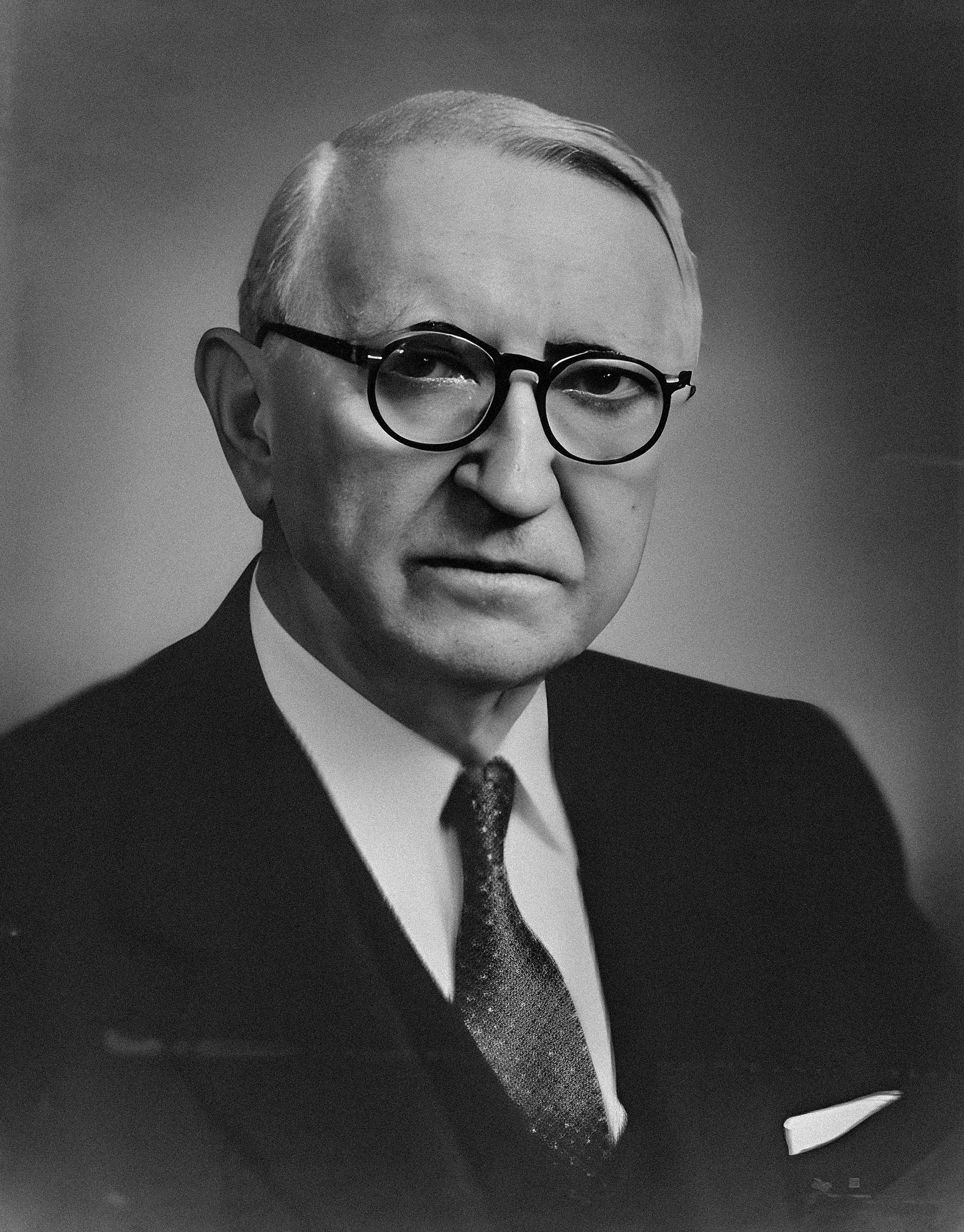
On November 10, 1940, Senate Foreign Relations Committee chairman Key Pittman (D-Nev.) died as a consequence of his alcoholism and George was next in line. He had come in at a rather critical time, and was chairman when FDR was pushing through Lend-Lease. Unlike on domestic policy, George was supportive of Roosevelt as his foreign policy was consistent with Wilsonian moralism and he was instrumental in pushing the measure through. However, his time on the Foreign Relations Committee would be short, and in 1941 he would reluctantly move to the chairmanship of the Senate Finance Committee, which was and is of similar importance to the Foreign Relations Committee. A confidential intelligence report on him from the British Foreign Office’s Isaiah Berlin read, “an honourable but narrow Southern Conservative, who incurred the displeasure of the New Deal in 1938 when an unsuccessful attempt to “purge” him was made by its then leaders (in particular [Edward] Flynn, [Harry] Hopkins, and [Thomas] Corcoran). This attempt increased his popularity in his State and in the Senate. He left the chairmanship of the Foreign Relations Committee in order to head the equally important Finance Committee, and is an exceedingly influential figure in the Senate, and the hope of Conservatives in many parts of the United States” (Hachey, 141-153). World War II would bring a tragedy to George and his wife, as one of their sons was a casualty. His other son, Heard, would later serve as his administrative assistant.
As chairman of the Senate Finance Committee, taxation was under his purview, and he was supportive of wartime tax relief, which FDR opposed. The final tax relief legislation would pass in 1944 over President Roosevelt’s veto, the first time a revenue bill had ever become law over a president’s veto. George would also support the Republican 80th Congress on income tax reduction, contrary to the position of the Truman Administration. He would also oppose the Roosevelt and Truman Administrations on labor policy, voting to override President Roosevelt’s veto of the Smith-Connally Labor Disputes Act in 1943 and President Truman’s veto of the Taft-Hartley Act in 1947.
Although George’s realm was in the Finance Committee, he remained a respected and influential voice on foreign affairs, and he backed the Truman Administration on Greek-Turkish aid and the Marshall Plan as did most Democrats. He also defended the latter from conservative efforts to cut the program on multiple occasions, but did not support Point IV aid, or foreign aid to poor rather than war-torn nations.
The George Amendment
In 1954, Senator John W. Bricker (R-Ohio) pushed for amending the Constitution for Congress to check the power of the presidency on foreign policy, and such a proposal was proving popular in the South. Minority Leader Lyndon B. Johnson (D-Tex.), however, was privately opposed to this measure, holding that it was “the worst bill I can think of” and asserted that it would be “the bane of every president we elect”, and was of course thinking of himself as well (Caro, 528). He thus courted Senator George to offer a substitute, and offer he did, while opposing a stronger version of the Bricker Amendment that was voted down. The Bricker Amendment as amended by George was adopted as a substitute, but its ratification failed by one vote.
George seemed to lessen in his conservatism a bit during the Eisenhower Administration if Americans for Democratic Action and Americans for Constitutional Action ratings are good measures for judging legislators, and in 1956 he sponsored a proposal to reduce the minimum age of receiving disability benefits under Social Security to 50, which was narrowly adopted 47-45. After all, George was something of a liberal on Social Security, having voted against the Knowland Amendment in 1950 which restricted the ability of the Social Security Administration to place mandatory minimums on unemployment compensation on states. By this time, George was 78 years old and looking at a strong primary challenge from former Governor Herman Talmadge, who was more willing to focus on race than George. He opted not to run for reelection given his heart condition as well as many of his supporters wavering on whether they’d vote for him in the primary (Hill). George’s DW-Nominate score, which covers his entire career, was a -0.064, which is high for a Democrat; from 1947 to 1956 he sided with the ADA position on key votes they counted 38% of the time, but only sided with the ACA position on key votes they counted 18% of the time. However, for the latter, this is a much more limited measure as they only counted votes for 1955 and 1956. George was overall his own man, his vote being one of dignified independence of presidential and party priorities. President Dwight Eisenhower subsequently selected him as the ambassador to NATO. However, it turned out to be just as well that he hadn’t run for reelection as he suffered a fatal heart attack on August 4, 1957. President Eisenhower subsequently ordered all US flags at federal buildings and other properties flown at half-mast in mourning.
References
ADA Voting Records. Americans for Democratic Action.
Retrieved from
Address at Barnesville, Georgia. The American Presidency Project.
Retrieved from
https://www.presidency.ucsb.edu/documents/address-barnesville-georgia
Borglum, G. (1922, November 30). Harding’s Challenge to Democracy. The Searchlight.
Retrieved from
Caro, R. (2002). The years of Lyndon B. Johnson: Master of the Senate. New York: Alfred A. Knopf.
George, Walter Franklin. Voteview.
Retrieved from
https://voteview.com/person/3536/walter-franklin-george
Hachey, T.E. (1973-1974, Winter). American Profiles on Capitol Hill: A Confidential Study for the British Foreign Office in 1943. Wisconsin Magazine of History, 57(2): 141-153.
Retrieved from
Hill, R. Senator Walter F. George: George of Georgia. The Knoxville Focus.
Retrieved from
https://www.knoxfocus.com/archives/senator-walter-f-george-george-of-georgia/
Pou, C. (2008, January 29). Walter F. George. New Georgia Encyclopedia.
Retrieved from
https://www.georgiaencyclopedia.org/articles/government-politics/walter-f-george-1878-1957/
 Mad Politics: The Bizarre, Fascinating, and Unknown of American Political History