The 1960 Presidential vs. Down Ticket Elections

I recently found a most interesting source on the 1960 election, and it is Congressional Quarterly’s breakdown of the election by district, which tells a fascinating story of the politics of the day. The politics of 1960 stand as a great contrast to contemporary politics. The parties were far more ideologically diverse, although Democrats still got more of the black vote than Republicans, Republicans could still get a significant minority, and both parties were trying to appeal to the white South. Republican Richard Nixon and Democrat John F. Kennedy compared records during the campaign to make their cases of who was the most experienced. Today, experience is often seen as a liability in Washington, as voters regularly clamor for outsiders. Only two candidates who were perceived as establishment rather than outsiders won presidential elections since 1976: George H.W. Bush in 1988 and Joe Biden in 2020, and neither of them served a second term. This was a remarkably close election, and victories could be seen for both parties in all regions of the nation. Kennedy’s top three states paint a varied picture in Rhode Island, Georgia, and Massachusetts. Richard Nixon won in some areas that are out of bounds for Republicans today, such as Portland, Oregon. Although San Francisco was Democratic, it was not as Democratic as it is today, and one of its two House seats was held by a Republican with Nixon coming close to winning that district.

Although one must acknowledge the complexities of politics in 1960 that we don’t see today, such as a substantial contingent of Southern Democrats voting more or less conservative, one sees a considerable difference between Nixon’s electoral performance and the Republicans down ticket. This was highly noticeable in the South, and there were numerous Southern districts that were overdue for a flip to the GOP. Some were predictive of future elections; Alabama’s 9th district (Birmingham), represented by George Huddleston Jr., was the only district Nixon won in the state, and in 1964 the district would flip to the GOP. Same goes for Arkansas’ 3rd district based in Fort Smith, in 1966 that district would flip to the GOP and do so for good. In Florida, Voters in half of its Congressional districts voted for Nixon, but the only House Republican elected was William Cramer of St. Petersburg. Although North Carolina voted for Kennedy, 7 of 12 of its House districts would have elected a Republican if the district vote was the same for president and Congressional candidates, while in reality only Charles Jonas of the 10th district was elected. In Tennessee, 5 of 9 of the districts voted for Nixon as did the state, yet only the standard two Republicans from the 1st and 2nd districts were elected to Congress that year. Republicans were gaining strength in suburban areas of the South, while Democrats retained their large advantage in rural areas. For instance, in Florida’s 3rd district, constituting the state’s western panhandle, Kennedy got the highest percentage of the vote of any of the districts. This area was the most culturally Deep South of any of Florida’s districts, and it would elect Democrats until 1994. This also happens to be the area that Matt Gaetz represented until last year. Among Southern states, Georgia was a great exception to the South being a battleground area, as Kennedy was spectacularly popular in the state, having an even better performance there than in his home state of Massachusetts and winning all districts, putting him narrowly over the top in the Southern vote. Indeed, the Southern vote came out 51-49 for Kennedy. This would make Georgia’s vote for Barry Goldwater in 1964 all the more jarring. However, something to note is that the black vote for Kennedy was considerably stronger than the Southern vote, which was informative for the Democratic Party as to where its future was, with him winning 68% of the demographic. A Democrat getting a figure as low as 68% in the black vote is now unheard of.

This map is also roughly predictive of where Kentucky and Oklahoma are now. In the former, Democrats only won two districts, the 1st based in Paducah which came the closest in the state to seceding during the War of the Rebellion, and the 7th, represented by liberal Carl Perkins. In the latter, only the 3rd district with Carl Albert, known as “Little Dixie”, voted for Kennedy. Yet, both states only sent one Republican to Congress from the House, although Kentucky strongly voted to reelect Republican Senator John Sherman Cooper, a popular maverick. On the state level, Missouri was strongly Democratic with both its senators and 9 out of 11 of its representatives being Democrats, but Nixon won 7 of 11 of its districts, only losing in the districts based around St. Louis and Kansas City.

In the West Coast, Nixon outperformed down ticket Republicans in California and in Oregon, winning all districts in the latter. However, Oregon’s status as a Republican state was going downhill, as President Eisenhower’s land use and private power policies were not popular among the state’s voters. Even though the state’s voters went for Eisenhower twice, Republicans in the state took a beating for it, and they since haven’t gone back to the level of power they had before the Eisenhower Administration. Washington, on the other hand, sent a curiously mixed delegation to Congress: 5 of its 7 representatives were Republican yet both of its senators were Democrats, and the state narrowly pulled the lever for Nixon. Republicans outperformed Nixon in the state, but this wouldn’t last, and by 1968, the state would be down to two House Republicans and Nixon would lose it.

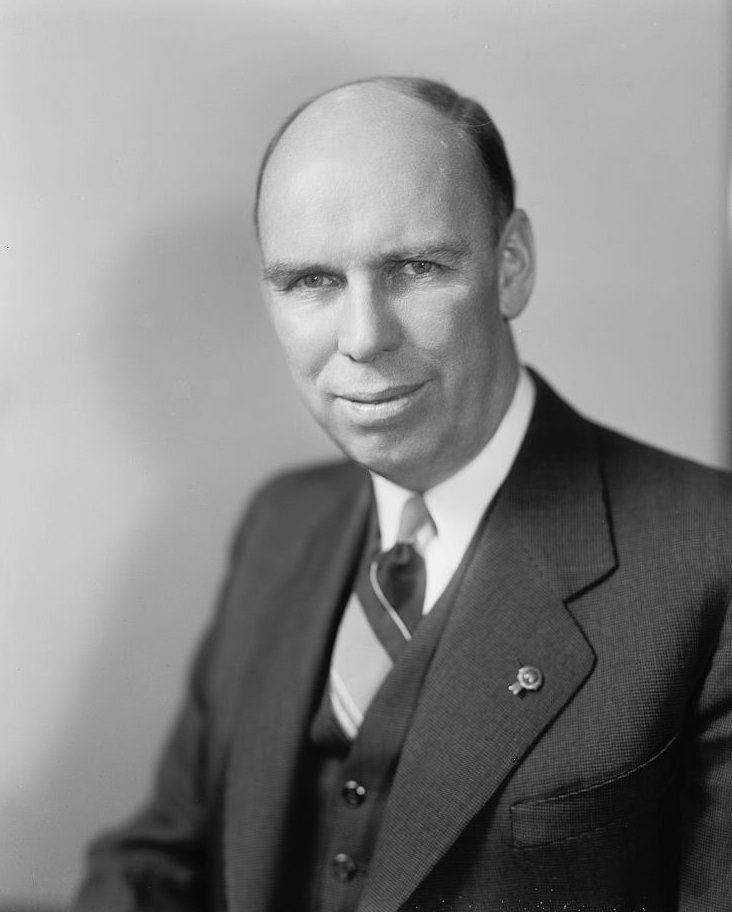
Former House Speaker Joe Martin (R-Mass.), who hung on despite Kennedy winning his district on account of his status as an institution in his district.

Although Nixon outperformed Republican candidates in the Midwest and Border States and especially the South, Congressional Republicans outperformed Nixon in eight states: the aforementioned Washington, Connecticut, Massachusetts, Michigan, Minnesota, New Jersey, New York, and Pennsylvania. In Pennsylvania, prominent moderate Republican William Scranton would be elected from the Scranton-based 10th district while Nixon lost. Nixon way outperformed Republicans in the South, as voters were used to the idea of splitting their tickets. In Massachusetts, John F. Kennedy won in all of the Congressional districts and the state was his third best, but this did not translate into any defeats in the 6 House seats Republicans held nor did it result in the defeat of moderate Republican Senator Leverett Saltonstall, whose politics were pretty much perfectly calibrated for a Republican in the state; conservative enough to not tick off the GOP base but also liberal enough for him to have considerable crossover appeal. Another example of a successful Republican in the Bay State was former Speaker of the House Joe Martin, who had been in office since 1925 and who was holding on in a district that had been starting to vote Democratic as he was an institution, the many favors he had done for his constituents, and his increasingly moderate voting record. The performance of John F. Kennedy in 1960 in Massachusetts can be seen as predictive for the long-term of the state, which since 1997 has had an entirely Democratic delegation to Congress save for 2010-2013, when Republican Scott Brown served in the Senate. The only states in which Kennedy had a better performance were Georgia and Rhode Island, which reflects the highly dual nature of the Democratic Party at the time. Indeed, both candidates sought to appeal to black and Southern white votes. The House leadership team was Speaker Sam Rayburn of Texas and Majority Leader John W. McCormack of Massachusetts in what was known as the “Austin-Boston Connection”. Delaware was an interesting case, as although it gave Kennedy a victory, Republican Cale Boggs defeated Democratic Senator J. Allen Frear for reelection, but at this time Boggs was viewed as more liberal than Frear, who had often frustrated Democratic leadership with his conservative voting record. Delaware’s sole Congressman, liberal Democrat Harris McDowell, was reelected. Nixon also handily won Vermont, which at this time had the longest streak of voting for Republicans for president, but it should be noted that this would be broken in 1964 and neither its senators nor sole representative were of the conservative wing of the party.

The Strange Cases of Alabama and Mississippi

The South was competitive ground in the 1960 election, but there was a complication: the State’s Rights Party. They ran uncommitted slates of electors in Alabama, Louisiana, and Mississippi. Although not enough traction was gained for a difference to be made in Louisiana, they had impact in Alabama and Mississippi. Although they were far from the only Jim Crow states, they were the most disaffected by the civil rights movement and this impacted how the states were voting this year. Alabama had the single strangest way of voting of any state that year, as people who voted Democratic were clearly voting for a slate of electors, with some pledged for Kennedy and others not pledged, for president. The percentage of the vote tabulated in Alabama thus doesn’t technically go to Kennedy, rather Democratic electors. The Democratic electors won, and Alabama’s electoral vote was split 6 for Senator Harry F. Byrd of Virginia and 5 for Kennedy. A controversy remains to this day as to whether Nixon could be said to have won the popular vote in a plurality in Alabama because of this split.  

Mississippi was the only state that year to not cast electoral votes for either Nixon or Kennedy, with the state being won by “unpledged electors”, who cast their votes for Senator Harry F. Byrd of Virginia. Kennedy got the lowest percentage of the vote here of any state, and Mississippi would go even further in its rejection of the national Democrats in the 1964 election with 87% of its voters (at the time nearly all white) voting for Goldwater. Kennedy’s Catholicism in many areas of Mississippi was seen as suspect, and they were generally aware that he was a liberal, which didn’t play well there.

Alternative Scenario: Presidential and Down Ticket Votes Mirror Each Other

An interesting conclusion can be drawn if we present an alternate scenario in which the Republican Party down ticket is just as popular as Nixon: Kennedy would have faced a Republican House with Republicans getting 227 seats as opposed to the Democrats’ 207, although what happens in Alabama and Mississippi in this scenario is quite disputable. While the Senate would have stayed Democratic given the drubbing Republicans suffered in 1958, but they would have gained four seats instead of two. This would have made Kennedy’s presidency more difficult. The popularity of down ticket candidates for the Democratic Party can be attributed to there being many Democratic voters willing to split their tickets. Indeed, ticket splitting was far stronger in 1960 than it is today, although this is because we have what are called ideologically responsible parties with a lot less ideological wiggle room. Furthermore, back in 1960, Democrats had a 17 million voter registration advantage, far more than they have today. I have also included below a sheet that makes the data a bit easier to read than CQ’s source. Bold italics indicate Republican Congressional winners while D and R designations indicate the presidential winner of the district. Alabama is asterisked due to its unique way of counting Democratic votes, thus percentages reflect votes for Democratic electors rather than Kennedy.

1960 Election Results:

References

1960 Official Vote In Each State, All Congressional Districts. CQ Almanac 1961. Congressional Quarterly Press.

Retrieved from

https://library.cqpress.com/cqalmanac/document.php?id=cqal61-879-29204-1371757#=

1960 United States presidential election. Wikipedia.

Retrieved from

https://en.wikipedia.org/wiki/1960_United_States_presidential_election

The 1932 Election: The Triumph of Triumphs for the Democrats

The Republican Party was in terrible trouble in 1932. President Herbert Hoover was deeply unpopular and for multiple reasons; an economy in depression with over 20% unemployment and rising and a president who appeared to many voters as doing little, Hoover stubbornly clinging to Prohibition while public opinion was strongly souring on it, and the cherry on top was the disastrous dispersing of the bonus marchers. The news only seemed to be getting worse over the months. The 1930 midterms had already been bad for the GOP, with the House becoming Democratically controlled after the deaths of 14 representatives, including Speaker of the House Nicholas Longworth (R-Ohio).

On the presidential level, Democratic candidate Franklin D. Roosevelt soundly defeated Herbert Hoover, winning all but six states with 472 electoral votes and 57.4% of the popular vote, with Hoover only holding on in Connecticut, Delaware, Maine, New Hampshire, Pennsylvania, and Vermont. Only William Howard Taft’s loss in 1912 was worse for a Republican candidate. He would be on the outs in the political scene until after FDR’s death, and he was able to serve as an elder statesman.

The losses Republicans sustained in Congress were arguably more disastrous than the presidential election, with them losing a whopping 101 seats. This gave Democrats 313 seats in the House, outnumbering Republicans by nearly 200. In Colorado, Idaho, Indiana, Oklahoma, Missouri, Montana, Nebraska, Rhode Island, South Dakota, Utah, Virginia, Washington, and West Virginia Republicans suffered a complete wipeout, with all House seats going to the Democrats. Delaware’s and Nevada’s only House seats went Democratic too. Democrats had their largest gains in Illinois (seven seats), Iowa (five seats), Michigan (six seats), Ohio (seven seats), and Pennsylvania (net of seven seats). Further helping Democratic gains was the population growth in the cities, which were voting increasingly Democratic.  

Some of the most notable House freshmen in this election included Republican Everett Dirksen of Illinois, Democrat Guy Gillette of Iowa, Democrat John Dingell Sr. of Michigan, Democrat William M. Colmer of Mississippi, Republican Charles Tobey of New Hampshire, Republican William Lemke of North Dakota (Union Party candidate for president in 1936), Democrat Stephen Young of Ohio, Democrat Francis E. Walter of Pennsylvania, Democrat James P. Richards of South Carolina, Democrat Willis Robertson of Virginia, and Democrat Jennings Randolph of West Virginia.

In the Senate, Democrats won 12 seats from Republicans, a glorious result for the former and a catastrophic one for the latter. This would also be the last time Democrats ever won a Senate seat from Kansas. Notable victories for Democrats included former Secretary of the Treasury William G. McAdoo in California over incumbent Republican Samuel Shortridge, Democrat Elbert Thomas besting Republican Reed Smoot (as in, “Smoot-Hawley Tariff”) in Utah, Fred Brown narrowly dispatching stalwart conservative incumbent George Moses in New Hampshire, future Senate powerhouse Pat McCarran knocking out popular incumbent Tasker Oddie in Nevada, and Fred Van Nuys ending the career of Senate Majority Leader James Watson of Indiana. Democrat Joe Robinson of Arkansas, who had been the vice-presidential candidate in 1928, was now elevated to majority leader and would loyally shepherd the passage of major New Deal legislation in the Senate. Notable Senate freshmen included McAdoo of California and McCarran of Nevada. Democrat Hattie Caraway of Arkansas, first appointed by Arkansas’ governor after her husband’s death, was elected to a full term, the first time a woman was elected to the Senate. Of the Republicans who lost in the Senate in this election, only John Thomas of Idaho would return. With 59 senators and 313 representatives, the Democrats were more than well-positioned to enact newly elected President Roosevelt’s New Deal agenda. This was the single greatest election for the Democrats in their history, and the last one in which the House shifted by over 100 seats.

The 1932 election marked a sea change in the direction of politics in the United States. The legacy of FDR not only with numerous groundbreaking policies but also his navigation through two different major crises proved endearing, and he was highly successful at courting union workers and black voters in his direction while keeping Southern whites in the party. This would be known as the New Deal coalition, and it would hold for over three decades. Until 1994, Republicans would only win the House in two elections and the Senate in five elections and although the New Deal coalition was cracked in 1968, the Democratic brand remained solid even when their presidential candidates lost in landslides. Many people could just as easily vote for the Republican presidential candidate as they did their Democratic representative or senator.

References

1932 United States House of Representatives elections. Wikipedia.

Retrieved from

https://en.wikipedia.org/wiki/1932_United_States_House_of_Representatives_elections

1932 United States presidential election. Wikipedia.

Retrieved from

https://en.wikipedia.org/wiki/1932_United_States_presidential_election

1932 United States Senate elections. Wikipedia.

Retrieved from

https://en.wikipedia.org/wiki/1932_United_States_Senate_elections

The 1950 Election: A Conservative Midterm

The 1946 election was thought of by Republicans as a repudiation of the New Deal and proceeded thusly in the 80th Congress. However, President Truman’s campaigning prowess in 1948 combined with Republican Thomas Dewey’s overly safe and bland campaign produced Democratic victory.

The 1950 election, although not producing Republican majorities, resembled in theme the sort of election they thought the 1946 midterms had been – an ideological referendum. The 1946 midterms had been primarily motivated by the scarcity of meat as well as a general fatigue with Democratic rule. In this election, the Korean War and anti-communism figured heavily. It was in 1950 in which Senator Joseph McCarthy (R-Wis.) made his famous Wheeling speech in which he spoke of a list of communists in his hand, and indeed the results were favorable in his direction. Republicans gained 26 seats from the Democrats in the House and 5 in the Senate, and although this didn’t constitute a majority, it further strengthened the Conservative Coalition, an alliance of conservative Republicans and Southern Democrats against numerous liberal Democratic legislative priorities which had already blocked most of President Truman’s Fair Deal proposals. Furthermore, several key Senate Democratic primaries resulted in the more conservative candidate winning.

Notable House Results:

In California, Republicans win back the Fresno-based 9th district with Allan O. Hunter against incumbent Cecil F. White. President Truman had specifically campaigned against the district’s Republican incumbent, Bud Gearhart, in 1948, and it contributed to his loss.

In Colorado, Republican J. Edgar Chenoweth wins back his seat in the 3rd district from John Marsalis.

In Connecticut, Republican Horace Seely-Brown regains the 2nd district seat, which he lost in the 1948 election to Democrat Chase G. Woodhouse.

In Idaho, Republican John Travers Wood wins an open seat in the 1st district. An interesting tidbit about Wood; although by this time he is an arch-conservative Republican, he had been the Socialist mayor of Coeur d’Alene almost 40 years earlier. His 1950 opponent, Gracie Pfost, would defeat him for reelection in 1952.

In Illinois, Republicans gained four seats in Cook County, including the returns of Richard B. Vail in the 2nd district and Fred Busbey in the 3rd district, who had been defeated in 1948. This was before Democrats were able to lock in dominance of Chicago with the Daley machine.  

In Indiana, the Democratic gains of 1948 were reversed, with Republicans winning five seats and Democrats going back to having only two seats.

In Maryland, Republican James Devereux defeated conservative Democrat William Bolton for reelection in the 2nd district.

In Missouri, Republicans gain two seats, although far from a recovery of their 1948 losses, in which they suffered a near complete wipeout in their House delegation, with only Springfield’s Dewey Short retaining his seat. Four of the Republicans defeated in 1948 fall short of comebacks.

In Nebraska, Republican Howard Buffett (Warren’s father) wins back his Omaha-based seat he lost in 1948.

In New York, Democrats get wrecked in upstate New York, losing all but the Albany district, which has seldom voted Republican in its history. They do gain one in Long Island with Ernest Greenwood defeating Republican W. Kingsland Macy. The most notable defeat, however, is that of American Labor Party’s Vito Marcantonio. Marcantonio was a radical who had been the only member of Congress to vote against the use of force in the Korean War and was openly pro-Soviet. The Democrats and Republicans united to back Democrat James G. Donovan to defeat him.

In Ohio, four Democrats lost reelection to Republicans. The most interesting race, however, was Democrat Thomas H. Burke’s defeat for reelection in the 9th district by Independent Frazier Reams, a former Democrat who achieves victory by bashing both Democratic and Republican leadership and when accused of being a “carpetbagger” by DNC Chairman Michael Kirwan he responded by carrying a carpet bag to his campaign events.

In Oklahoma, Republicans George Schwabe and Page Belcher were elected to the 1st and 8th districts, ending the very last session of Congress in which Republicans would be unrepresented in the state.

Republicans gain two seats in Pennsylvania. However, in Philadelphia Republicans Hardie Scott and Hugh Scott come close to losing reelection. For Republicans, this presaged the 1951 Philadelphia mayoral election which would break Republican dominance in the city’s politics for good. Both Scotts would be succeeded in their seats by Democrats and only one other Republican would win a Congressional seat in Philadelphia after.  

In South Carolina, Democrat Hugo Sims, as much of a liberal as one could be in South Carolina and win office at the time, lost renomination to John J. Riley.

In Tennessee, Republicans changed out both of their members of Congress in primaries; Republican maverick Dayton Phillips was defeated in the first district by longtime politician B. Carroll Reece, and party liner John Jennings was defeated in the second district by the more moderate Howard Baker Sr. 

In Texas, Republican Ben H. Guill loses reelection to Democrat Walter E. Rogers. Guill had been elected in a special election after the resignation of Democrat Francis Worley.

West Virginia continues its Democratic trend, with efforts by the three Republicans who lost reelection in 1948 to make a comeback failing and former Senator Rush Holt, now a Republican, falling short in his bid against the 3rd district’s Cleveland Bailey.

In Wisconsin, Republican Charles Kersten defeats Democrat Andrew Biemiller for reelection. This would be the last time that a Republican would defeat a Democratic incumbent member of Congress from Milwaukee.

Other Notes:

This would be the last election in which no Republicans would be elected to represent Arizona, North Carolina, and Virginia in either chamber of Congress.

Although Democrats retain all their seats in North Carolina, Hamilton Jones of the 10th district coming within five points of losing is an omen for his 1952 loss to Republican Charles Jonas, who holds the seat until the Nixon Administration. Democrats do not get quite such a warning with their holds in Virginia, as Republicans would gain three seats there in 1952. 

Notable Senate Results

In California, Republican Congressman Richard Nixon defeats Congresswoman Helen Gahagan Douglas in a campaign in which he compares her record to that of radical Congressman Vito Marcantonio and pushes the narrative of her as the “pink lady”.

In Connecticut, Democrat Brien McMahon is reelected over the candidacy of former Congressman Joseph Talbot, who runs a milquetoast campaign. In its special Senate election, Democrat William Benton prevails by a hair over Republican Prescott Bush, but Bush would win election to the Senate in 1952.

In Florida, liberal Democrat Claude Pepper, whose voting record and ill-advised praise of the USSR had gotten him nicknamed “Red Pepper” by his opponents, was defeated for renomination by Congressman George Smathers. Smathers wins the election overwhelmingly as Republicans are not yet competitive in Florida.

In Idaho, Senator Glen H. Taylor (D-Idaho), a staunch left-winger, was defeated for renomination in the Democratic primary by former Senator D. Worth Clark, who in turn lost the election to the extremely conservative Republican Herman Welker.

In Illinois, Senate Majority Leader Scott Lucas (D-Ill.) is defeated by former Congressman Everett Dirksen. This turns out to be a blessing in disguise for Lucas, as the strain of his office had resulted in a heart attack and his doctor had come to believe that had he won another term, he would have died in a year. Lucas instead lived until 1968.

In Maryland, Senator Millard Tydings was defeated for reelection by Republican John Marshall Butler. Senator Joseph McCarthy had a special interest in this race as Tydings had headed a committee that investigated McCarthy’s charges of subversion in government and, in a partisan vote of the committee, declared them a fraud and a hoax. Butler’s campaign thus had a lot of assistance from McCarthy’s staff.

In Missouri, the conservative trend goes the opposite way, with former Congressman Thomas Hennings defeating Republican incumbent Forrest Donnell. This indicates that Missouri’s going to be staying in the Democratic column for a while, and indeed it does; another Republican senator would not be elected from Missouri until 1976.

In New Hampshire, an effort by regular Republican Senator Styles Bridges to get fellow Republican Charles Tobey primaried falls short. Although Tobey had started out in the Senate as one of its most conservative members, his record shifted to the left after he came close to losing reelection in 1944, and his voting record only moved further to the left after his much stronger performance in the 1950 election.

In North Carolina, although the seat remains Democratic as the state is still of the “Solid South”, the primary is a fundamental battle between liberalism and conservatism, with liberal Frank Porter Graham losing his bid for a full term (he was appointed by Governor W. Scott Kerr) to conservative Willis Smith in a race that was also characterized by racist campaigning on the part of numerous Smith supporters.  

In Ohio, Robert Taft, despite organized labor gunning for his defeat for the Taft-Hartley Act, is reelected solidly.

In Pennsylvania, liberal Democratic Senator Francis Myers is defeated for reelection by moderate Republican James Duff.

In South Carolina, incumbent Senator Olin Johnston survives a primary challenge from Governor Strom Thurmond. Thurmond would become Johnston’s colleague in the Senate with the 1954 election and flip to the GOP in 1964, serving until 2003, when he was 100 years old!  

In South Dakota, Republican Senator Chan Gurney is defeated for renomination by Congressman Francis Case, who wins the election. The differences between the men are that Gurney is to Case’s right on domestic issues, but Case is to Gurney’s right on foreign policy, having been a non-interventionist before Pearl Harbor while Gurney had been an interventionist and having voted against the Marshall Plan while Gurney voted for.

In Utah, Senator Elbert Thomas, who had defeated Republican Reed Smoot (the Smoot of the Smoot-Hawley Tariff) in the 1932 election, was defeated for reelection by Republican Wallace Bennett. The seat has remained Republican since.

Frank Hague, The Dictator of Jersey City, Part II: The Apex of Power

Although Hague had managed to get the lesser of the Republicans in his view, that Republican nonetheless won the gubernatorial election and indeed New Jersey had a Republican wave with Herbert Hoover winning the state by 20 points; only Hudson County voted for Democrat Al Smith. Hague had had a good run of the 1920s up to this point, having Democrats Edward I. Edwards and A. Harry Moore as governors, who could be counted on to do what Hague wanted. The same was not true for Republican Morgan F. Larson, even though Hague had collaborated with Republican Atlantic City boss Nucky Johnson to elevate him over Democrat William Dill (Murray, 26). The Republican-controlled legislature sought to take down Hague, and they focused on an area in which he was vulnerable – taxes.

Hague’s Trouble with Taxes

Frank Hague’s city government taxed quite high for the services it provided as well as for a bloated public payroll; not all “jobs” came with functions. Indeed, the cost to taxpayers for Jersey City’s government was over four times that of Kansas City and New Orleans, also ruled by bosses and both with about 100,000 more people (Life Magazine).

As mayor of Jersey City, Frank Hague’s annual salary did not exceed $8500 annually. Yet, Hague, who came from modest means, was worth millions now, and the only income he ever reported to the Treasury was his mayoral income. In addition to other sources I mentioned in my last post, he received protection money from horse gambling establishments that ran numbers rackets, and Jersey City got the reputation of being the “Horse Bourse” (Fleming). He also would receive bribes at his office. There was a desk in which the visitor would place cash on the drawer on his side, and it would come out on Hague’s side (Isherwood). Although he was compelled to answer questions about his taxes to the New Jersey legislature, he refused to answer, and they cited him for contempt. However, the Court of Errors and Appeals ruled that the legislature lacked the authority to probe an individual for felonies, only the courts did. Hague did end up having to pay $60,000 to settle with the Federal government, and his reputation as a reformer mayor was gone. In 1929, he would face his closest call as mayor against James F. Murray, a young reform Democrat, but prevailed in an election in which between 20-30% of signatures in the poll book were fraudulent and numerous people were paid to vote multiple times (Murray, 24). Throughout his career he continued to make millions while only paying the taxes on his mayoral salary. Perhaps this would have been the beginning of the end of his reign had it not been for the Great Depression, and Republicans became highly unpopular nationwide. The Great Depression also helped Hague as his machine kept on going and kept supplying public jobs, a source of relief for numerous Jersey City residents (Fleming). He might have run into more trouble with his taxes had he not gained a crucial partner in politics…Franklin Delano Roosevelt.

FDR and Hague…a Quid Pro Quo Partnership

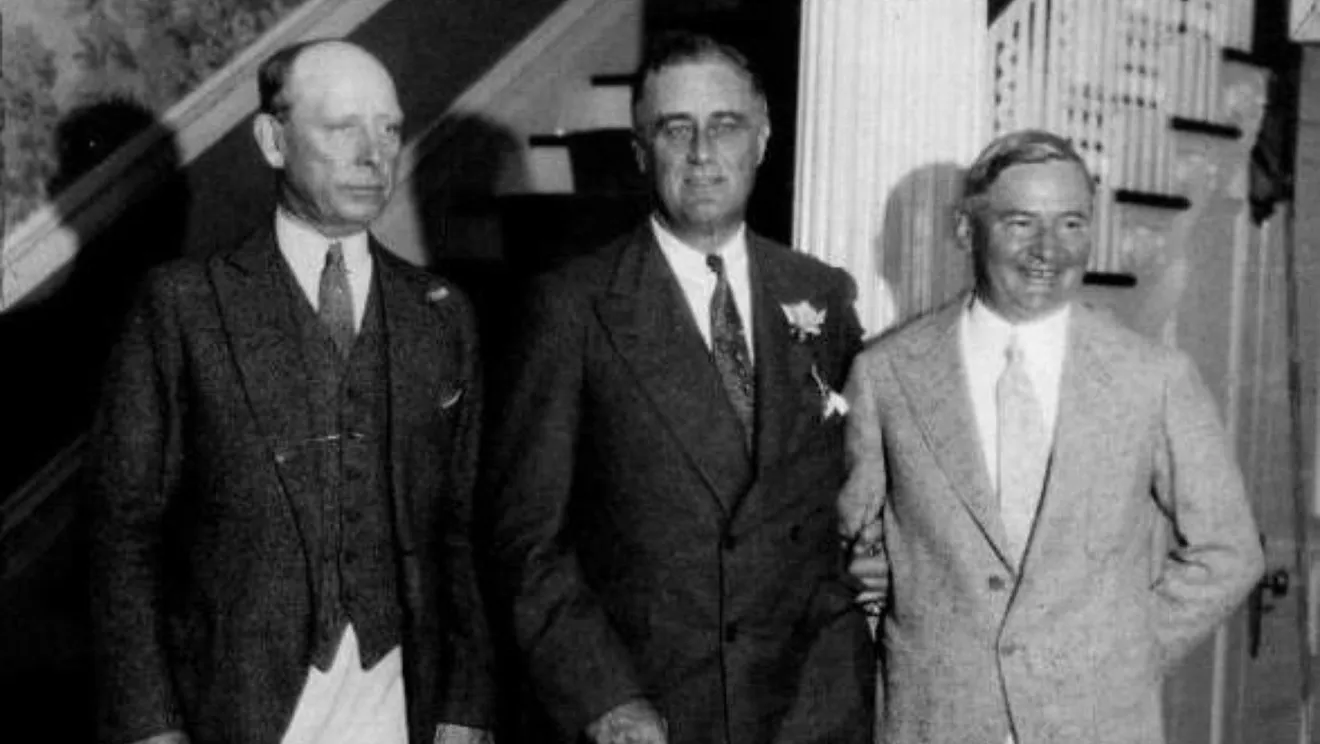
Hague, Roosevelt, and Governor A. Harry Moore, 1932

With the Great Depression in full swing, the Democrats were in the perfect position to win the next election, but who was the nominee going to be? Hague had a history of loyalty to New York’s Al Smith and indeed he initially endorsed Smith for the primary, even attacking Roosevelt by asserting that despite him being New York’s governor that he could not “carry a single state east of the Mississippi and very few in the Far West” (Fleming). However, New York City’s James A. Farley outmaneuvered him at the Democratic National Convention and FDR won the primary. Hague came around to FDR and he offered to host his first general election campaign rally. Roosevelt’s general election campaign kicked off in Sea Girt, New Jersey, on August 27, 1932, with Hague managing to get a turnout of 120,000, an incredible figure (Congressman Frank J. Guarini Library). Hague had also hosted a rally for Al Smith at Sea Girt in 1928. Although Democrats today are expected to win New Jersey in Federal elections, this was far from always the case; in 1930 Republican Dwight Morrow had won a Senate seat by nearly 20 points, and although Roosevelt’s win was a landslide in 1932, he only won New Jersey by 2 points, and that he won at all was thanks to Hudson County. Roosevelt was thankful for Hague’s help and directed Federal patronage in New Jersey to him; usually patronage went to a Democratic governor (at the start of the Roosevelt Administration it was Hague front man A. Harry Moore) or the leading Democratic senator in a state. This gave Hague all the more power, and he used the $47 million he would receive in Works Progress Administration funds for Jersey City to construct Roosevelt Stadium as well as finish the aforementioned Jersey City Medical Center. From 1936 to 1943, New Jersey would receive over $400 million in Works Progress Administration funds, one of the highest for a state (Murray, 23). Although Hague’s influence was already a bit national with his post as vice chairman of the Democratic National Committee, it was furthered now. Although Roosevelt is seen as an anti-machine politician and he denied patronage to New York City’s Tammany Hall, he let it flow to Hague’s machine. Hague also managed to get Moore elected to the Senate in 1934. In 1936, Roosevelt won reelection in New Jersey by 20 points, and Republican Senator Warren Barbour lost reelection. In 1940, Hague, along with Mayor Ed Kelly of Chicago (who ran his own corrupt machine), started up the push for Roosevelt to be nominated for a third term, which propelled him to win the primary and general election. Hague would also be of great help in the 1944 election. He was indispensable to Roosevelt, and both benefited from each other. However, this meant that sometimes Hague had to do things for Roosevelt that he’d rather not do, such as support Charles Edison for governor in 1940, but the full telling of that will be for part III.

Hague’s Other Pals

Hague managed to command many allies in New Jersey, including from both parties. Quick to court women voters once they gained suffrage, he got Mary Teresa Norton into politics, and got her elected to Congress representing Jersey City’s southern wards. Norton would be the sponsor of the Fair Labor Standards Act, also known as the law that established the Federal minimum wage. The first Democratic governor that he managed to get in, Edward I. Edwards, who served from 1920 to 1923, allowed Hague to raise taxes on corporations substantially, got him some allies on the public utility commission as well as on the Hudson County tax board and board of elections (Congressman Frank J. Guarini Library). He was allied to him until 1930, when he wanted to again be governor, but by this time Edwards’ career, finances, and general well-being were in free-fall, and after a skin cancer diagnosis the next year he took his own life. Hague’s success in electing Edwards in the 1919 election got him elected the chairman of the New Jersey Democratic Party, a position he would hold for 29 years. George Silzer was another who owed his career to Hague, serving from 1923 to 1926. He most importantly picked Hague’s choice for prosecutor of Hudson County (Frank J. Guarini Library). Hague’s greatest front man statewide, however, was A. Harry Moore, who served as governor from 1926 to 1929, 1931 to 1934, and 1937 to 1940. Hague had befriended Moore early in his career and the man had some advantages to him. First, Moore was Protestant (possibly the first Hague ever met), which made a difference in the minds of numerous voters back then as opposed to the majority Catholic population of Jersey City. Second, he had fiscally conservative tendencies (as a senator he was one of only three Democrats to oppose Social Security), which made him more palatable to Republican voters and let him get on fine with the Republican-controlled legislature. However, Moore most critically would be a party organization man up and down, meaning that he would support what Hague wanted in appointments, patronage, etc. This was especially vital when it came to getting a county prosecutor, thus Hague could direct prosecutions as he pleased. He liked Moore so much that he helped get him elected governor three times and tried to recruit him for a fourth time and got him a Senate seat. However, Moore’s credibility was damaged in his third term after he tapped Hague’s son, who had twice failed to get through law school yet passed the bar, to the Court of Errors and Appeals, the highest court in New Jersey at the time. When Moore exited the Senate in 1937 to serve again as governor, his temporary replacement, John Milton, was Hague’s longtime attorney. Speaking of the state’s highest court, he managed to get his crony, his corporate counsel Thomas J. Brogan, tapped by Governor Moore to be its chief justice, and he served from 1933 to 1946. Hague was able to get some Republican state senators to back him up, which helped him exert some influence over that legislative body, but he was never able to exert control over the Assembly, which was Republican and was just itching to find a way to get him out of office. As for his Republican friends…

“Hague Republicans”

Frank Hague not only managed to become the leading figure of the Democratic Party in Hudson County and New Jersey, he came to dominate the Hudson County Republican Party and command some statewide influence through some of his followers registering Republican in Hudson County. As I wrote in part one, 20,000 people who registered Republican in Hudson County were able to tip the results of the 1928 Republican gubernatorial primary. The Hudson County Board of Elections also had Hague Republicans at the helm, and he managed to turn Republican T. James Tumulty to supporting him (and switching parties) after offering him a job, but the most prominent Hague Republican was Harold G. Hoffman.

In 1934, Democrat William Dill was running for governor again, and although officially backed by Hague, he lost the election to Hoffman, a personally popular figure. Hague turned out to be pretty fine with Hoffman as governor as he likely knew that Hoffman had sticky fingers; per Hoffman’s confession letter revealed after his death he had throughout his political career embezzled over $300,000 from the government positions he had held (Murray, 2024, 58-60). Thus, he made deals with Hague and provided considerable patronage for his machine and came to him for support after Republicans soured on him for his backing of a sales tax. Hoffman also supported certifying the election before an investigation was done, did not support any investigations into Hudson County voting practices, and refused to back the recount of the 1937 election in which A. Harry Moore was once again elected governor (Murray, 2024, 58). Speaking of the 1937 election…

The Stolen Gubernatorial Election

In 1937, Hague faced yet another figure in the GOP he didn’t want to contend with in Lester H. Clee, who he hadn’t been able to prevent from winning the nomination. Clee was a strong opponent of the Hague machine and was eager to act against him. Hague had a lot to potentially lose, and on Election Night 1937 Clee was leading by 80,000 votes…at least until the results of Hudson County were tabulated, and Moore came out over 45,000 votes ahead statewide. The official tally had Moore leading Clee by 129,137 votes in Hudson County while Democrat William Dill had led Harold Hoffman by 89,127 votes in 1934 (Murray, 33).

The Hague machine went all out to prevent the election of Lester Clee, and the Republican legislature sought a recount. There was undoubtedly fraud that came out of the election results of Hudson County, as the number of people who were recorded as having voted exceeded the number of eligible people. Some examples of fraud included a rabbi who had moved to Massachusetts three years earlier was recorded as having voted in Hudson County, an institutionalized man was recorded as voting, and people who were confirmed dead were recorded as having voted (Johnson). The recount was performed, but Clee didn’t gain much. The case went up to the Court of Errors and Appeals, and Hague’s man, Brogan, was invaluable in defending the machine from judicial consequences, only permitting a retabulating of cast ballots, not an investigation into the integrity of the election itself (Murray, 38). The high court declined to investigate the election, thus the Assembly pursued the investigation. What the legislature needed was access to the registration list and poll books, and that was something the Hague forces blocked with numerous tactics, including a claim that Board of Elections Commissioner Charles Stoebling, a Republican tied to Harold Hoffman and had custody over the records, was desperately ill at home. Ultimately, the New Jersey legislature was unable to procure the books, as Jersey City police blocked access to the records (Murray, 53). Furthermore, the Hudson County Board of Elections stuck behind Hague (as they were wont to do) and outgoing Republican Governor Harold Hoffman, as mentioned earlier, was outspoken in his support of the election outcome, and his appointees, including the superintendent of the New Jersey State Police, were not inclined to help with the investigation. Democratic Attorney General David Wilentz, another Hague man, went against the investigation. Hoffman’s allegiance with Hague permanently damaged his standing with New Jersey Republicans, and when he sought the nomination for governor in 1940, which was publicly supported by Hague, he was defeated, the nomination going to anti-Hague Republican and future Senator Robert Hendrickson. The investigation came to a screeching halt when the Court of Errors and Appeals ruled 12-3 that it was unconstitutional (Murray, 59).  In 1940, the Senate decided to investigate the 1937 gubernatorial election, but they found that when they asked for the voting books of that election that they had been burned. No, this was not customary; other voting books had not been burned.

Hague’s Quirks

Mayor Hague was eager to counter stereotypes about the Irish and drunkenness, thus he was a resolute teetotaler throughout his life. Although his political career had started out with a loan from a saloon owner, he didn’t come there to drink alcoholic beverages, rather because he had realized this was where local political discussions occurred and where the local political power was. This didn’t just apply to him, if you were seated at a table with Hague, you were not to order an alcoholic beverage, and it was known that at dinners in which Hague was in attendance that people could not start ordering alcoholic beverages until he left, which he would before everyone else (Fleming). He also did not smoke and was a hypochondriac. Although there was much vice in his political behavior, there was no evidence of him straying from his marriage. This is similar to fellow Irish Catholic boss Jim Curley of Boston, who was highly politically corrupt but faithful to his wife.   

Hague vs. the CIO and Communists

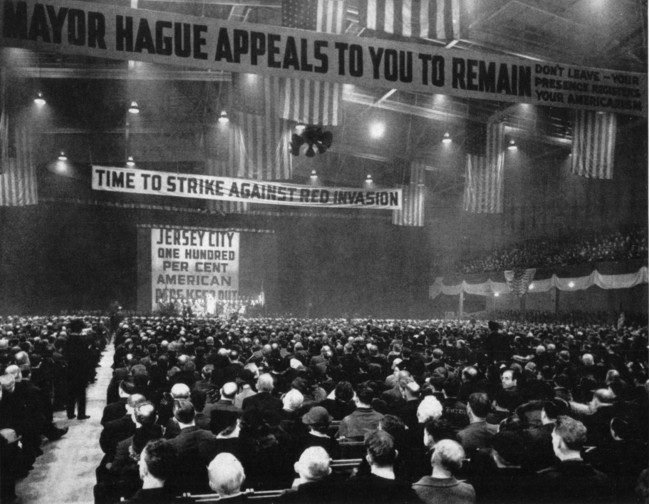
An anti-communist rally held by Mayor Hague

Frank Hague was initially a supporter of unions and could get along fine with the American Federation of Labor (AFL), which represented skilled craft laborers. However, in the 1930s a new union arose in the Congress of Industrial Organizations (CIO). This union was more radical than the AFL and represented unskilled laborers, and when they tried to get into Jersey City, Hague was hostile. He already taxed high for his government, and he was eager to attract business to the city. One way he could do that was to block the CIO. Union organizers were arrested for handing out leaflets on the streets. Hague was once alleged to have said “I am the law”, and although the truth has a little more context to it than that, it is undoubtedly true that this was the reality in Jersey City. He also banned the CIO from conducting meetings and no establishment would risk hosting them lest a city inspector come along and inevitably find code “violations” (Fleming). Hague justified his actions on the grounds that he believed that the CIO organizers were communists. His understanding of communism, however, seemed a bit limited. He said in one speech to the Jersey City Chamber of Commerce, “We hear about constitutional rights, free speech and free press. Every time I hear these words I say to myself, “That man is a Red, that man is a Communist” (Vernon, 96). Despite Hague’s stated opposition to communism, he had some similarities to them. His hospital and maternity were mostly funded with public money and his approach has even been called “municipal socialism” (Congressman Frank J. Guarini Library). During this time it was discovered that Mayor Hague was tapping phones, a part of the police state he ran. Hague used a Jersey City ordinance requiring permits from the chief of police for the leasing of any hall, which invariably would not be granted to the CIO thus preventing meetings of any substantive size, to justify his repression of the CIO. However, the case was brought to the Supreme Court, which struck down Jersey City’s ordinance as unconstitutional 5-2 in Hague v. Committee for Industrial Organization (1939). This whole affair presented a terrible difficulty for the Roosevelt Administration, which counted both Hague and the CIO as major supporters, and the Roosevelt Administration did not intervene despite calls from the CIO to do so. Hague was ultimately forced to let the CIO in. Although his understanding of communism was not impressive, it is nonetheless true that there was a significant communist presence in the CIO and some chapters were outright dominated by communists. Although Hague was brought to heel on this one by the Supreme Court, he was still in the heyday of his power. This would start to change in 1940, when Hague would have to contend with one of Thomas Edison’s sons, Charles Edison.

References

Fleming, T. (1969, June). The Political Machine II: A Case History “I Am The Law”. American Heritage, 20(4).

Retrieved from

https://www.americanheritage.com/political-machine-ii-case-history-i-am-law

Frank Hague. Congressman Frank J. Guarini Library.

Retrieved from

https://njcu.libguides.com/hague

Isherwood, D. (2013, December 2). More information surfaces on Jersey City “mystery safes”. NJ.com.

Retrieved from

https://www.nj.com/politics/2013/12/more_information_surfaces_on_jersey_city_mystery_safes.html

Jersey City’s Mayor Hague: Last of the Bosses, Not First Of The Dictators. (1938, February 7). Life Magazine.

Retrieved from

https://www.cityofjerseycity.org/hague/life/haguespeople.shtml

Murray, J.M. (2023). The Real “Stolen Election”: Frank Hague and New Jersey’s 1937 Race for Governor. NJS: An Interdisciplinary Journal, 20-67.

Retrieved from

https://www.google.com/url?sa=t&rct=j&q=&esrc=s&source=web&cd=&cad=rja&uact=8&ved=2ahUKEwiu8_37ttOMAxVUITQIHX0LDycQFnoECBkQAQ&url=https%3A%2F%2Fnjs.libraries.rutgers.edu%2Findex.php%2Fnjs%2Farticle%2Fdownload%2F353%2F420%2F779&usg=AOvVaw2UBoSE4-_ie9MeZyy_T5b3&opi=89978449

Murray, J.M. (2024). Research Notes: The Real “Stolen Election”: Frank Hague and New Jersey’s 1937 Race for Governor. NJS: An Interdisciplinary Journal, 57-60.

Retrieved from

https://www.google.com/url?sa=t&rct=j&q=&esrc=s&source=web&cd=&cad=rja&uact=8&ved=2ahUKEwiFmeWzqdSMAxXCMDQIHVjJFg0QFnoECCAQAQ&url=https%3A%2F%2Fnjs.libraries.rutgers.edu%2Findex.php%2Fnjs%2Farticle%2Fdownload%2F353%2F420%2F779&usg=AOvVaw2UBoSE4-_ie9MeZyy_T5b3&opi=89978449

Vernon, L.F. (2011). The life and times of Jersey City mayor Frank Hague: I am the law. Mount Pleasant, SC: Arcadia Publishing.

Frank Hague, The Dictator of Jersey City, Part I

Frank Hague (1876-1956) is a forgotten name among many outside Jersey City today, but he was among the foremost political bosses of his time and the control he exerted over Jersey City was so extensive and the means he used to win were such that they surpassed election law. He had a strong quid pro quo relationship with FDR and used Hudson County to decide races for governor in New Jersey.

Early Life and Political Start

Born to a working class Irish family in the Horseshoe area of Jersey City, Frank Hague did not excel at school, in fact, he was expelled for his bad behavior at 13, thus he only had a sixth grade education. Indeed, some of Hague’s enemies would later swear that he was barely literate and could read no more than headlines in a newspaper (Fleming). Although school ended early for him, his political career started early too. At the age of 20, after securing a loan from bar owner Ned Kenny, he began his campaign for constable and won by 3 to 1 margin. Through his effectiveness at voter turnout for Boss Bob Davis, he was rewarded with the post of deputy sheriff and continued to rise in the political organization of Jersey City, including delivering his ward to the Democrats when Republican Mark Fagan won the mayoral election. Hague had an early scandal when in 1904 he and Deputy Sheriff Thomas “Skidder” Madigan covered for Red Dugan, a friend of his, who had been passing fraudulent checks in Boston by providing a false alibi under oath (Watkins). Dugan would subsequently admit he had done it, and the Boston court wanted to indict Hague for perjury but couldn’t extradite him. This didn’t hurt Hague with many working class Irish voters, as helping a friend, especially doing so at the behest of said friend’s mother, which Hague said was the case, was a sufficient excuse (Watkins). He made a break with Boss Davis in 1906 over an appointment and he sided with reformer H. Otto Wittpenn for mayor, who when he won in 1907 he appointed Hague city custodian. He also made an important connection with Wittpenn’s secretary, A. Harry Moore, who would become a close ally, as well as with John Milton, who would serve as his lawyer throughout his political career. After Davis died in 1911, Wittpenn sought to lead the Democratic Party in Hudson County only for Hague to turn on him and accuse him of bossism, yet Wittpenn would win. He would also critically back a new reform figure in New Jersey politics in Governor Woodrow Wilson, including his destruction of the machine of Boss Smith of Newark (Fleming). Indeed, in this time, Hague was thought of as a reformer or at least he put on the mask of one.

Hague: The Reformer?

In 1911, Hague won the post of street and water commissioner, in which he quickly cut the budget from $180,000 annually to $110,000 and fired half the staff, only to quietly bring in more than the number he fired with his own men after he won praise in the press (Watkins). He also quietly and with success requested the city council to reverse the budget cuts. Hague then set his eyes on the police department, which had become a bad joke under Boss Davis, who freely allowed all sorts of vice. Hague did so by ruthlessly enforcing regulations, including having 125 officers tried in a day for violating them, and ruthlessly demoted or fired police officers (Fleming). These men were replaced by men Hague could count on. These men would serve as a surveillance network within the police force, and soon petty bribery was stamped out. Laws against prostitution and after-hours drinking were enforced, and women were barred from saloons with legal (and possibly extralegal) punishments threatened for violations by saloon owners (Fleming). Streets were also literally cleaned. While previously the streets would have a fair amount of garbage at any one time, Hague mandated the spraying down of the streets with a fire hydrant every night (Watkins). In 1913, his efforts were crucial in netting the Democratic gubernatorial candidate James Fielder a victory. Hague managed to produce a 25,959 vote lead in Hudson County (Fleming). After this, he was widely acknowledged as the leader of the Hudson County Democratic Party. Despite being a Democratic leader, there were occasions in which he tacitly supported a Republican candidate. The first instance of this was to counter his chief rival, Otto Wittpenn.

The 1916 Election: Hague Makes a Deal

In the 1916 gubernatorial election, Hague got some bad news in the Democratic primary: Otto Wittpenn was the winner! Fearing that his influence would be countered if he managed to be elected governor, he got into contact with Republican candidate Walter Edge’s campaign manager, Nucky Johnson. Hague worked out a deal with Johnson to get Edge elected governor, and this would be done by Hague not pushing for Wittpenn’s election partly in exchange for the Holland Tunnel, to be constructed, to end in Jersey City (Murphy). Edge was elected governor with Hudson County reporting a mere 7,430 vote lead for Wittpenn, the worst for a Democratic nominee for governor in decades (Fleming). His electoral career was over, and in the following year’s municipal election, Hague won after Mark Fagan decided to step down.

Mayor Hague

Although Hague was now in power, he did not have some of the conventional skills of a leader. I mentioned earlier that his education was limited, and even though he got training for public speaking once mayor, he would still have problems. Hague was on record, for instance, saying that “One hundred ten thousand voters has endorsed my administration”, that Jersey City was “the most moralest city in America”, and once ended a speech with “And thank you, ladies and gentlemen, for the privilege of listening to me” (Fleming). Fortunately for Hague, he was not short of other means for power.

The source of Hague’s power as the mayor of Jersey City and the leader overall of Hudson County lay in the economic circumstances of Jersey City. All railroad lines that had terminals in Jersey City with cargo intended for New York City had to go through the Port of Jersey City to be shipped across the Hudson Bay, as no freight lines existed between the two cities. This gave Hague the power to control the conditions in which such goods would be transported out to New York City. This was a rich source for kickbacks and shakedowns that immensely profited Hague and others who wielded control over the Hudson Waterfront (Murphy). He also maintained his power through expanding the number of public employees. Jersey City had the highest number of public sector employees of any city of that size, some of these were rewards for help in political campaigns and some had no duties, rendering them welfare by another name (Watkins). This extensive public payroll had to be funded somehow. He did so through multiple means. One was requiring that public employees kick back 3% of their pay to fund the Hague machine. Another was through raising taxes. After 20 years of Hague’s rule of Jersey City, taxes had been increased threefold, property assessments had doubled, and the city’s debt was increased by 500% (Life Magazine). He also, popularly for many of his constituents, sought huge tax increases on major businesses. In 1917 and 1918, he dramatically increased annual tax assessments on Standard Oil (from $1.5 million to $14 million), the Public Service Corporation (from $3 million to $30 million), and railroads (from $67 million to $160 million), to which they promptly went to the State Board of Taxes and Assessments, which canceled all his increases (Fleming).

This State Board was a problem, and he needed it replaced, and to replace it, he needed an ally, not Walter Edge, as governor. Hague denounced the board as beholden to special interests and pushed for the election of Jersey City’s First National Bank president, Edward I. Edwards, an important ally (Fleming). Major turnout in Hudson County netted Edwards the governorship. Indeed, Hague’s turnout machine was unrivaled in its time; 92% of eligible voters in Hudson County were registered and 85% or more went to the polls (Murphy). However, Hague was able to secure even more votes than that. It was not legal for names to be removed from Hudson County’s voter registration rolls, thus deaths or moves had to be noted on the rolls, but the Hudson County Board of Elections was deliberately lax on doing this. After all, the appointees to this board were on paper Republicans but in truth, owed their jobs to Hague. This was a rich source of data to produce fraudulent ballots when they were needed (Murphy). Hague needed to use such trickery to the fullest when it came to the 1920 municipal election, in which Democrats were very unpopular with Irish voters given their anger at President Woodrow Wilson, and they were facing an electoral slaughter. Hague’s machine desperately wanted to elect Skidder Madigan to the post of sheriff of Hudson County. Madigan, Hague’s old pal when they were both deputy sheriffs, could be counted on to select grand juries that were to Hague’s liking, in other words, those who would not vote to convict on any activities of Hague’s machine or would vote to convict those that Hague needed convicted. However, Madigan had a problem that year aside from being a Democrat, and that was he couldn’t read or write (Fleming). The Hague machine went all out to get him elected sheriff while other candidates went down to defeat. Violence, fraud, every trick that needed to be pulled was pulled to elect Madigan (Fleming). He also appealed to the Irish voters of the city, capitalizing on their resentments of Republican WASPs and of big businesses.

Hague’s regime, however, did come with its benefits. The poor were assisted in finding jobs and given free food, clothing, and coal (Watkins). The city streets were, as mentioned before, literally clean. Prostitution was no longer a significant presence in Jersey City, and the mob was kept out. Police, fire, and emergency services were pushed to efficiency, and Hague would sometimes personally test this efficiency by making emergency calls from a public phone booth at night. If the responding people did not come in a timely manner that satisfied Hague, he would berate them and occasionally even punch them in the face (Watkins). One example was when he was angered that an ambulance he called had taken 15 minutes to arrive. When he began berating the head intern, the young man responded, “It took me a while to wake up”, to which Hague answered by knocking him down into the gutter (Fleming). It was also due to Hague that Journal Square, the Pulaski Skyway, and the Jersey City Medical Center and a maternity hospital named after Hague’s mother, Margaret were constructed. A major benefit of living in Hague’s Jersey City was that medical care could be obtained by a fee of $35 but it would be waived if you said you couldn’t pay for it, and some of the best doctors in the nation were employed at the Jersey City Medical Center. This resulted in a hospital that cost $3 million to operate annually and received only $15,000 in revenue (Watkins). Public funds made up for the rest.  

Don’t Mess With Hague

The consequences for challenging Hague could be quite serious. In 1937, a man named John Longo sought to challenge Hague from within the Democratic Party and formed an anti-Hague slate, but this was met with arrest and a Hague judge sentenced him to nine months imprisonment on fabricated charges (Watkins). He would be screwed over again by Hague after getting an appointment as deputy clerk in 1943 for Hudson County. He would once again be arrested, and six witnesses committed perjury against him, resulting in another Hague judge sentencing Longo to prison between 18 months and 3 years (Watkins). Hague also employed violence to keep power; he had campaign workers and police beat up people who opposed him. This included one particularly notorious incident in which 245 Princeton students were sent by the Honest Ballot Association to monitor a 1920s election, which resulted in all students being blocked from the polling places and five were beaten so badly they had to be hospitalized (Watkins). Hague’s use of police to violently enforce his will was reinforced with incentives. The police force of Jersey City was the highest paid and most staffed of any police force of a city that size (Fleming). As previously mentioned, Hague could engage in physical violence himself. In one incident, he knocked out cold one of Jersey City’s commissioners, Michael Fagen (Fleming).

Further Rise to Power

In 1924, Hague’s power grew when Al Smith, thankful for his efforts on his behalf to secure the Democratic nomination (albeit unsuccessfully), managed to get him the vice chairmanship of the Democratic National Committee, and he would remain in this position until 1952. This gave Hague considerable influence over who the Democrats would select for president, and he certainly played his part in getting Al Smith the nomination in 1928.

Hague Fixes the 1928 Republican Gubernatorial Primary

Frank Hague’s influence did not exist only within the Democratic Party…he extended his grip to the Republican Party in a number of ways as well. A particularly notable event was the 1928 Republican primary, in which the favorite was widely regarded as former judge Robert Carey, who was a prominent critic of Hague and promised to take on his machine. He didn’t want to risk this man winning the election, thus he managed to get 20,000 of his supporters registered as Republicans to vote in the primary, resulting in the victor being State Senator Morgan F. Larson, a mild presence. As it turns out, Hague’s scheme was 100% legal, as New Jersey law permitted a person who had not voted in the last primary to switch party registration without penalty, thus Hague, anticipating 1928 as an important election, had 20,000 of his followers not vote in the preceding primary (Fleming). It was a good thing for Hague that he had done so, as Larson won the election.

More will come on Hague in a follow-up post, as he is a considerable subject.

References

Fleming, T. (1969). The Political Machine II: A Case History “I Am the Law”. American Heritage, 20(4).

Retrieved from

https://www.americanheritage.com/political-machine-ii-case-history-i-am-law

Jersey City’s Mayor Hague: The Last of the Dictators. (1938, February 7). Time Magazine.

Retrieved from

https://www.cityofjerseycity.org/hague/life/life020738.shtml

Murray, J.M. (2022, November 2). The Real Stolen Election – Frank Hague and the NJ Governor’s Race of 1937. YouTube.

Watkins, T. The Political Machine of Frank Hague of Jersey City, New Jersey. San Jose State University.

Retrieved from

https://www.sjsu.edu/faculty/watkins/bosses.htm#HAGUE

Big Ed Mechem: The Land of Enchantment’s Conservative Reformer

The New Mexico territory began as a conservative Republican stronghold and this was reflected in the first senators the state elected in Thomas B. Catron and Albert B. Fall. However, over time the state’s politics were increasingly inclined towards the Democrats, with the only Republican elected to Congress after the onset of the Great Depression being the progressive Senator Bronson Cutting, who would die in an airplane crash in 1935. From then on it was Democrats all the way, including in gubernatorial races. That was, until the election of Edwin Leard Mechem (1912-2002) as governor.

New Mexico in 1950 was considered quite Democratic, and at that point Republicans often had trouble recruiting candidates for major public offices. However, “Big Ed” (he was a large man) Mechem, a 38-year-old Las Cruces lawyer, stepped up to the plate against Democratic Congressman John E. Miles. Miles, who had had a long career in New Mexico politics, had good reason to think that he was going to win this one, and it didn’t hurt that he was politically moderate, potentially offsetting him being tied closely with the increasingly unpopular Truman Administration. However, Mechem delivered a powerful message against corruption in New Mexico politics and proposed reforms to the structure of the state’s government. New Mexico had had a long history of corruption in state politics, with money often having a strong influence on elections and charges of voter fraud were frequent; Senator Dennis Chavez may have won reelection in 1946 due to voter fraud (Hill). The climate of 1950 was decidedly conservative, and although New Mexico Democrats defeated Republican challengers for Congress (the two Democratic candidates were far from liberal stalwarts), Mechem won the 1950 election with 54% of the vote in an upset. Despite Mechem being quite conservative and the state of New Mexico being Democratic, he proved the state’s biggest vote-getter for the Republicans. He was not the first member of his family to serve as the state’s governor, as his uncle Merritt had done so from 1921 to 1923, also as a Republican.

As governor, Mechem proved a reformer, restructuring New Mexico government and standing independent of political machines. He also was quite politically savvy, and journalist James B. Barber of the Carlsbad Current-Argus noted that he was “a politician who can stumble into a vat of limburger cheese and come up reeking of [Chanel] No. 5. Some of it is luck, maybe, but there’s a lot of political savvy, too, in this big stubborn Las Cruces lawyer, who seldom takes advice from anyone” (28). He won reelection in 1952, running only two points behind Dwight Eisenhower. Mechem had a rather amusing tendency, as Barber noted, to issue forth a deep laugh from his chest that came out “ho ho ho” when he was dodging an inconvenient question (24). However, Mechem was term-limited, and instead of running for governor again, he tried to win a seat in the Senate. His opponent was Senator Clinton Anderson, a shrewd politician who was considered the foremost figure of the state’s Democratic Party. This would produce for him the worst defeat of his career, as the 1954 midterms resulted in the loss of control of Congress for the Republicans, and he would only net 43% of the vote. Mechem was not out of the game for long, and in 1956 he was again elected governor, defeating incumbent John F. Simms with 52% of the vote.

The 1958 election was particularly bad for Republicans, with Mechem losing by only a point to Democrat John Burroughs, but in a rematch in 1960 he campaigned against Burroughs’ forming his own political machine and came out ahead by less than a point. The Gallup Daily Independent had endorsed his bid for a comeback, citing his record as an efficient governor without ties to political machines (4). Although a victory, voters were less enthused about Mechem than in the past, and in 1962 Democrats managed to get New Mexico Representative Jack Campbell, a man known for being free of the control and influence of machines, to run against him. Campbell defeated him by 6 points. However, fate granted him an opportunity. On November 18th, the long-ailing Senator Chavez died, and Mechem pulled a maneuver that seldom works out in the long-run for politicians: resigning the governorship and having his successor appoint him to the Senate. This move was highly controversial in New Mexico as the voters had just rejected him for another term in public office only for him to move into the Senate.

Senator Mechem aligned himself closely with the staunchly conservative Barry Goldwater and his record proved among the most conservative in the Senate, opposing all major New Frontier and Great Society measures considered in his time in office as well as the Partial Nuclear Test Ban Treaty. The liberal Americans for Democratic Action rated him zeroes in both 1963 and 1964, not an easy feat to accomplish. He sided with Americans for Constitutional Action (Mechem would later serve on its Board of Trustees) 98% of the time by contrast, with the only position he had taken they considered liberal being voting against Senator Proxmire’s (D-Wis.) proposal to cut to Labor-HEW Appropriations in 1963. This meant, rather controversially for his state in which there were many Latinos, that he was one of six Republican senators to vote against the Civil Rights Act of 1964. Mechem also opposed most sections of the bill and was the only Republican to vote in favor of Senator Gore’s (D-Tenn.) motion to recommit the bill to ease the provision cutting off aid to segregated schools. Mechem’s DW-Nominate score was a 0.585, placing him as the fourth most conservative senator in the 88th Congress. Although he had voted his conscience as his voting was far from tailored to win reelection in New Mexico at the time, this was politically tough as he was up for election to a full term in 1964, and that year was worse for the average Republican candidate than 1962 had been.

The 1964 Election: “Big Ed” vs. “Little Joe”

The 1964 election was one of great contrasts, both in the presidential election and in the New Mexico Senate election. “Big Ed” was facing a challenge from Joseph “Little Joe” Montoya, who represented one of New Mexico’s two At-Large districts. Little Joe supported JFK’s New Frontier legislation and LBJ’s Great Society, Big Ed did not. Little Joe supported the Civil Rights Act of 1964, Big Ed did not. A lot of support for Mechem’s campaign likely came from people remembering him as a good and effective governor of the state, but the candidacy of Barry Goldwater was tough for him to work with, especially since he voted with him on almost all key issues.

Although Mechem tried his best, he was defeated by nine points in 1964, with Montoya getting excellent results in Spanish-American areas. Mechem’s move to the Senate had only temporarily stayed the execution of his political career, and he demonstrated that he was the rule and not the exception when it came to governors getting themselves appointed to the Senate. As a side note, West Virginia’s Joe Manchin is an example of how to do it right; after Senator Robert Byrd died in 2009, he appointed an interim successor and ran in a proper election to finish the late Byrd’s term in 2010 and won despite West Virginia no longer being competitive for Democrats in presidential elections and the 2010 midterms being what President Obama called a “shellacking” for the Democrats. Journalist Will Harrison (1964) wrote of the outcome for Mechem, “The Nov. 3 election was very likely the end of Ed Mechem’s political career. It is possible that he might have beaten Montoya in a head-to-head run without the presidential influence, but the writing was on the wall for Mechem in 1962 when Jack Campbell demonstrated that a clean, aggressive Democrat could beat him without outside influence. Mechem’s 1962 loss of Albuquerque and his home county of Dona Ana, and the loss of such formerly reliable areas as San Juan and Santa Fe were signals that he had reached the end of his string” (4). Harrison was right; the New Mexico voters had tired of “Big Ed” Mechem, and he would never again be elected to public office. However, one important person had not tired of “Big Ed”, and that was Richard Nixon.

Judge Mechem

In 1970, President Nixon nominated Mechem, who he dubbed “Mr. Republican” as a Federal court judge for the district of New Mexico, and he was confirmed. While a judge, Mechem’s judicial record was not influenced by his political leanings; he ruled that age discrimination was occurring at Sandia National Labs, that sex discrimination was occurring in the Albuquerque police department, that the Socorro County jail had been indifferent to the medical needs of a prisoner who died, and made several rulings favorable to American Indians (Hill). Mechem assumed senior status (a state of semi-retirement for judges) in 1982 but would continue to work as much as he could for the last twenty years of his life. He died on November 27, 2002, at the age of 90 from his longtime heart condition.

Future of New Mexico Politics

Interestingly, not too long after Mechem’s 1964 defeat, the politics of New Mexico improved considerably for Republicans and conservatives, with Richard Nixon winning the state in 1968, two Republicans being elected to Congress that year, and the 1972 election resulting in the election of Republican Pete Domenici to the Senate, who represented the state for 36 years. New Mexico today is now politically what it was during the time of FDR, Democratic all around for major offices, and the last Republican the state voted for in a presidential election was George W. Bush in 2004. Is a comeback in store for the Republicans in New Mexico? Undoubtedly at some point, but when that’s going to be is anyone’s guess.

Correction, 3/4/25: I had originally written of Joe Manchin’s election in 2010 to the Senate as for a full term, but it was actually to complete the late Senator Byrd’s term. Manchin ran for a full term in 2012. My thanks to Daniel Fox for spotting this.

References

ADA Voting Records. Americans for Democratic Action.

Retrieved from

Barber, J.B. (1953, May 10). If It’s Politics, Big Ed’s Coming Out Ahead. Carlsbad Current-Argus, 28.

Retrieved from

https://www.newspapers.com/image/504660962/

Barber, J.B. (1953, March 29). Will Mechem Try For Senate Seat? Ho Ho Ho. Carlsbad Current-Argus, 24.

Retrieved from

https://www.newspapers.com/image/504706110/

Harrison, W. (1964, November 8). Perfect Drive For Little Joe. Carlsbad Current-Argus, 4.

Retrieved from

https://www.newspapers.com/image/504842775/

Hill, R. E.L. Mechem of New Mexico: BIG ED. The Knoxville Focus.

Retrieved fromhttps://www.knoxfocus.com/archives/this-weeks-focus/e-l-mechem-new-mexico-big-ed/

Mechem, Edwin Leard. Voteview.

Retrieved from

https://voteview.com/person/10811/edwin-leard-mechem

Hells Canyon Dam – Private vs. Public Power

The 1952 election brought Dwight Eisenhower to the presidency as well as Republicans to a majority in Congress. One of Eisenhower’s policies was instead of public construction of dams, as had been the norm with the Roosevelt and Truman Administrations, that there would be a partnership between government and private companies, with government using private companies to construct and own the dams generating power. This proved highly controversial in the West, and the proposal for constructing the Hells Canyon Dam was at the center of this controversy.

Hells Canyon is a deep canyon between Idaho, Oregon, and a small portion of Washington, and has the snake river, and was seen as a rich source of hydroelectric power. The Eisenhower Administration favored the Idaho Power Company constructing three dams to generate power, but this met strong opposition from Democrats. Unfortunately for the Republicans, there was more opposition than that among the public. In 1954, Oregon Republican Senator Guy Cordon, the last conservative to represent the state in the Senate, narrowly lost reelection to Democrat Richard Neuberger despite President Eisenhower coming to Oregon to campaign with him, and one of the key issues Neuberger pushed was opposition to private power as opposed to public power, painting it as a giveaway of public rights (LaLande). After the 1954 election, Oregon had two Democratic senators for the first time since the Wilson Administration.

Votes on Hells Canyon Dam and an Alleged Deal

In 1956, the Senate voted down public construction of Hells Canyon Dam 41-51 on July 19th. Most Republicans voted against it along with several Southern Democrats. The 1956 election didn’t produce a different party makeup of the Senate, as Republicans and Democrats both gained and lost different seats. Yet, on June 21, 1957, the Senate approved public construction of Hells Canyon Dam 45-38. The senators who had voted against in 1956 but voted for this time were George Smathers (D-Fla.), Richard Russell (D-Ga.), Russell Long (D-La.), Margaret Chase Smith (R-Me.), James Eastland (D-Miss.), Sam Ervin (D-N.C.), and George Aiken (R-Vt.). The flip of five Southern Democrats was key to securing this victory, and Senator Charles Potter (R-Mich.), a supporter of a strong civil rights bill and opponent of public ownership of Hells Canyon Dam, alleged right after the vote that this flip was done in exchange for the support of Western Democrats for watering down the pending civil rights bill (The New York Times). Senator Wayne Morse (D-Ore.), a supporter of strong civil rights legislation and a co-sponsor of the Hells Canyon Dam denied the charge. Senator Frank Church (D-Idaho), who had voted for both of the key amendments weakening the Civil Rights Act of 1957 and had co-sponsored the Jury Trial Amendment as well as the Hells Canyon Dam bill, denied that a deal had occurred. He stated, “There was never any understanding between Lyndon Johnson and me that I would take a role in the Civil Rights Bill or I would join in the sponsorship of the Jury Trial Amendment in exchange for his help on Hells Canyon. That’s pure fiction utterly without any basis in fact” (Gellman). Although this flip of the Southern senators is suggestive of a deal, there was a public explanation for the flip from the de facto leader of the Southern Democrats. Senator Richard Russell (D-Ga.) stated as to his own reason, “I happen to be one of the five Democrats who changed his vote on Hells Canyon. I did it because of the tax amortization feature which made it very apparent that the Federal Government was going to pay for the dam in any event. If we were going to pay for it, I thought we ought to have title to it” (Bill Downs, War Correspondent). Several senators who were alleged to be participants in this deal denied that a deal occurred, but historian Robert Caro gave this allegation credence as he reported that Majority Leader Lyndon B. Johnson (D-Tex.) masterminded this deal. However, historian Irving Gellman (2015) contests this, holding that Hells Canyon Dam had been killed in a House subcommittee before the vote on the Jury Trial Amendment. However, this counter-argument might be off as well, as the exchange, according to Time Magazine, was over the vote to send the Civil Rights Act of 1957 to the Judiciary Committee, chaired by segregationist James Eastland (D-Miss.), to undo Minority Leader William Knowland’s (R-Calif.) maneuver bypassing it. Indeed, the vote on sending the bill to the Judiciary Committee was held the day before the Hells Canyon Dam vote and numerous Western senators voted with the South on this one, with the five Southern senators voting for the dam allegedly in gratitude for the support of Western senators. Interestingly, Frank Church was not among the senators to vote to bring it back to committee, pointing to his denial being accurate that he didn’t make a deal. Although Wayne Morse voted to send it back, his record was consistent as a stickler for legislative procedure and he voted against efforts to weaken the bill, making his denial credible as well. Although several senators had denied there was a deal, Russell Long (D-La.) would give credence to the notion of an informal deal, stating, “Johnson put together sort of a gentleman’s agreement where about four of us would vote for the high dam at Hells Canyon and about four on the other side would vote with us (…) on a completely unrelated subject: civil rights” (Lange, 69).

Political Consequences of Support for Private Power

There were significant political consequences for those in the Pacific Northwest who supported private construction and ownership of the Hells Canyon Dam; although President Eisenhower easily won reelection in Oregon, Oregon Republicans got hit hard; Oregon Republican Congressmen Sam Coon and Harris Ellsworth lost reelection in districts that had been held by Republicans since the 1942 election. Coon’s loss was directly attributed to his opponent Al Ullman’s opposition to private construction of dams in Hells Canyon (Foss). Indeed, the 1956 election had bad results for Oregon Republicans by and large. That year, Republican Governor Elmo Smith lost reelection to Democrat Robert Holmes and Democrats won control of the state legislature for the first time since 1878 (Swarthout). In Idaho, Democrat Frank Church, a supporter of public ownership of dams at Hells Canyon, defeated Republican incumbent Herman Welker, a supporter of private ownership, in the last election in which a Democrat would defeat a Republican Senate incumbent in Idaho. Although in this case, Welker’s loss was attributable to more than that as his behavior was increasingly volatile and erratic, with him being prone to temper tantrums and bouts of depression as well as appearing to have poor balance, which included a public incident of stumbling and falling down airplane stairs (Hill). At the time his critics alleged that this was the product of heavy drinking, but the truth was worse: it turned out Welker had a brain tumor, and it would kill him on October 30, 1957. Welker’s strong support of Joseph McCarthy also proved a hindrance rather than a help by 1956.

Despite these political consequences, the Hells Canyon legislation being killed in the House subcommittee proved to be the final word on it, as the Idaho Power Company would later construct three dams on the Snake River.

References

Foss, C. Albert Conrad “Al” Ullman. Oregon Encyclopedia.

Retrieved from

https://www.oregonencyclopedia.org/articles/ullman_al/

Gellman, I.F. (2015, November 9). Robert Caro Gives LBJ More Credit than He Deserves for the Passage of the Civil Rights Act of 1957. History News Network.

Retrieved from

https://www.historynewsnetwork.org/article/robert-caro-gives-lbj-more-credit-than-he-deserves

Hill, R. Idaho’s Conservative: Herman Welker. The Knoxville Focus.

Retrieved from

https://www.knoxfocus.com/archives/this-weeks-focus/idahos-conservative-herman-welker/rom

HR. 6127. Civil Rights Act of 1957. Point of Order Against Objection by Knowland to Referral of Bill to Judiciary Committee. Rejected. (Bill Thus Bypassed the Judiciary Committee). Govtrack.

Retrieved from

https://www.govtrack.us/congress/votes/85-1957/s57

LaLand, J. (2022, September 16). Guy Cordon. Oregon Encyclopedia.

Retrieved from

https://www.oregonencyclopedia.org/articles/cordon_guy_1890_1969_/

Lange, O.M. (2017). “The Miracle of 1957”: Southern senators and the making of the 1957 Civil Rights Act (Master’s thesis). University of Oslo.

Retrieved from

National Affairs: Balance Tipped. (1957, July 1). Time Magazine.

Retrieved from

https://time.com/archive/6611890/national-affairs-balance-tipped/

Potter Charges Dam – Rights Deal. (1957, June 22). The New York Times.

Retrieved from

Russell Rejects Criticism of South on Civil Rights. (2024, February 13). Bill Downs, War Correspondent.

Retrieved from

https://www.billdownscbs.com/2024/02/1957-senator-richard-b-russell-rejects.html

S. 1333. Authorize Construction, Operation, and Maintenance of Hells Canyon Dam. Govtrack.

https://www.govtrack.us/congress/votes/84-1956/s200

S. 555. Authorize Federal Construction of Hells Canyon Dam. Govtrack.

Retrieved from

https://www.govtrack.us/congress/votes/85-1957/s59

Swarthout, J.M. (1957). The 1956 Election in Oregon. The Western Political Quarterly, 10(1).

Retrieved from

https://www.jstor.org/stable/444252

The 1920 Election: A Massive Mandate

I’ve noticed these days that any win gets portrayed as some great mandate for leadership in a presidential election, both for the president and his party. However, there have been no elections that I would call a major mandate since Barack Obama’s win in 2008. Democrats expanded on their House majority and turned a slight Senate majority into one that could overcome a filibuster. Obama also won the states of Indiana and North Carolina, not ones that have landed in the Democratic column since. Since that election, wins have either been narrow or in the case of Obama in 2012, still having one of the House of Congress in the control of the opposing party. The 1920 election, however, was one for the ages.

Given the unpopularity of the defeated Versailles Treaty as well as a mini-depression that was occurring, it was nigh impossible for anyone to take up Woodrow Wilson’s mantle and win. Ohio’s Governor, James M. Cox, attempted it anyway. Ohio Senator Warren Harding’s call for “normalcy” resounded across the nation as the nation stood disillusioned with progressivism, tired of extensive involvement in foreign affairs, alarmed by race riots, strikes, and an anarchist bombing of Wall Street, and hurting from the depressed economy. Although old rumors that Harding had black ancestry made their way to the public, it didn’t seem to have much of an impact, and he won in a landslide, getting 404 to Cox’s 127 electoral votes. Only the states of the former Confederacy plus Kentucky backed Cox. The Solid South also had a breakaway in Tennessee, the first former Confederate state to vote for a Republican presidential candidate since Reconstruction.  Harding could fully claim a mandate, especially with the legislative results that accompanied his election.

House

The House results were catastrophic for Democrats in the North, with Republicans, already having a majority, gaining 63 seats. The following House delegations became or remained entirely Republican after the 1920 election:

Connecticut, Delaware, Idaho, Indiana, Iowa, Kansas, Maine, Michigan, Minnesota, Montana, Nebraska, Nevada, New Hampshire, New Mexico, North Dakota, Ohio, Oregon, Rhode Island, South Dakota, Utah, Vermont, Washington, West Virginia, Wisconsin, Wyoming

Pennsylvania was with one exception entirely Republican, and that exception, Guy Campbell, would vote like a Republican in the 67th Congress and subsequently switch parties.

Outside the South and Border States, Democrats were reduced to 19 representatives:

Carl Hayden, Ariz.

Clarence Lea, Calif.

John Raker, Calif.

Edward Taylor, Colo.

John Rainey, Ill.

Adolph Sabath, Ill.

Thomas Gallagher, Ill.

Peter Tague, Mass.

James Gallivan, Mass.

Charles O’Brien, N.J.

John Kindred, N.Y.

Thomas Cullen, N.Y.

Christopher Sullivan, N.Y.

Daniel Riordan, N.Y.

W. Bourke Cockran, N.Y.

John Carew, N.Y.

Anthony Griffin, N.Y.

Peter Ten Eyck, N.Y.

James Mead, N.Y.

Guy Campbell, Penn.

The Urban Areas

Republicans had massive success in urban areas, particularly shocking being in New York City, where they won a majority of the city’s districts in Congress. This feat has not been repeated since and was achievable because Tammany Hall largely sat on their hands in this election as well as some of the left-wing vote going to Socialist Party candidates arguably cost Democrats victories in New York’s 3rd, 7th, 8th, and 23rd districts. By contrast, today the only New York City district that Republicans often win is Staten Island. New York’s 12th district once again elected Socialist Meyer London, one of only two members of the Socialist Party to ever win a seat in Congress. In neighboring New Jersey, a Republican won a seat in the Northern portion of Jersey City, a feat that has only been repeated once since.

In Illinois, Republicans won all but three of Chicago’s House seats, although Chicago was considerably more Republican than it is now. Outside of Chicago, this election produced future House Speaker Henry T. Rainey’s only reelection loss.

In Ohio, Republicans won both seats in Cleveland, a feat they have yet to achieve again.

Ethnic Germans and Irish, usually rich sources for the Democratic vote in major cities, were hostile to the Versailles Treaty and to President Wilson. These groups had beefs with Britain, and yes, at that time anti-British politics were still something that could be capitalized on in the US. The result was many ethnic Germans and Irish either voted Republican or stayed home in 1920, and the Democratic machines that served these groups were not particularly willing to help the Cox/Roosevelt ticket. The degree of success Republicans had in the 1920 election in urban areas has been unheard of since.

The Border states were a disaster for Democrats too, with them only holding the staunchly Democratic 2nd and 11th districts in Missouri, the latter based in St. Louis. In Maryland, Democrats only won Maryland’s 1st and 4th districts, the latter based in Baltimore. In Oklahoma, Republicans won five of the eight House seats. The norm was for Republicans to only hold the 8th district while the 1st district, based in Tulsa, was highly competitive. The Socialist Party in Oklahoma arguably cost Democrats the 2nd, 4th, and 6th districts. Kentucky was the only state in which things were fairly normal for Democrats, with them holding 8 of 11 of the state’s House seats.  

The South remained mostly solid for Democrats, but Republicans won three seats in Tennessee that they didn’t usually win, putting Republicans on par with Democrats. The status quo of only two Republican representatives from East Tennessee would return with the 1922 election. They also won a single seat in Texas based in San Antonio, which they managed to win a few more times, as well as kept a seat in Virginia.

The Senate

The Senate Democrats took a bad lump, but the six-year terms of the Senate shielded them from worse. One retiring Democrat, Edwin Johnson of South Dakota, was succeeded by Republican Peter Norbeck, while 12 incumbents either lost reelection or renomination.

Arizona: Democrat Marcus A. Smith was defeated for reelection by Republican Ralph Cameron, making Cameron the first ever Republican elected to Congress from the young state, which at the time was usually strongly Democratic.

Arkansas – Democrat William F. Kirby lost renomination to Congressman Thaddeus Caraway, and in the South statewide the Democratic nomination contest was the real election.

California – Democrat James Phelan lost reelection to Republican Samuel Shortridge.

Colorado – Democrat Charles Thomas’s political independence resulted in him refusing to run for renomination with Democrat Tully Scot winning the primary, and then Thomas lost reelection as a member of the Nationalist Party.

Georgia – Democrat Hoke Smith lost renomination to fiery populist Thomas E. Watson.

Idaho – Democrat John F. Nugent lost reelection to Republican Frank Gooding.

Kentucky – Democrat J.C.W. Beckham lost reelection to Republican Richard P. Ernst.

Maryland – Democrat John W. Smith lost reelection to Republican Ovington Weller.

Nevada – Democrat Charles Henderson lost reelection to Republican Tasker Oddie.

North Dakota – Republican Asle Gronna lost renomination to Edwin F. Ladd, who won the election.

Oklahoma – Democrat Thomas P. Gore’s independence from the Wilson Administration cost him renomination to Congressman Scott Ferris, who lost the election to Republican Congressman John W. Harreld.

Oregon – Democrat George E. Chamberlain lost reelection to Republican Robert N. Stanfield.

The major gains of this election would result in many Republican policies being passed in the 1920s, but the extent of them would prove temporary as in 1922 Republicans would more than lose their 1920 House gains. Senate Republicans would lose seven seats. However, a Republican majority would persist in the House until the 1930 election and the Senate until the 1932 election, when the United States was in the Great Depression.

RINOs from American History #23: Jacob Javits

In this series, I have for some time avoided a certain figure to cover, primarily because I wanted to make a bit of a long post on him, and now the time has finally come for an entry on Jacob Koppel Javits (1904-1986).


Born to a Jewish immigrant family in New York City, Javits’s background really was one that would have been expected for a Democrat, but he was a bit different. To rise up in life, Javits went to night school at Columbia University while working part-time and then earned a law degree from New York University. As a young man, he would become attracted to the Republican Party because of the reform politics of Fiorello La Guardia and would support his campaigns for mayor. In 1945, Javits would lead the research team for Jonah Goldstein’s Republican-Liberal campaign for mayor. Although Goldstein lost, Javits was recognized for his talents and in 1946 was nominated by the Republican Party to run for Congress from the Upper West Side of Manhattan. The odds were on their face daunting: the district was strongly Democratic and the GOP last won the seat in the landslide election of 1920, but Javits pulled it off and the unfavorable environment to Democrats helped as well. Javits to this day, by the way, is the last Republican to have held this district.

Congressman Javits

Jacob Javits was without doubt the most liberal Republican in the House during the Truman Administration. Although he backed the tax reduction and agriculture cuts pushed by Republicans in the 80th Congress, he agreed with them on little else on the liberal-conservative spectrum domestically. Always a supporter of organized labor, Javits opposed the 1947 Taft-Hartley Act. He also was a regular foe of anti-subversive legislation and was one of eight House Republicans to vote against the Nixon-Mundt bill for Communist registration. Javits was also unfailingly internationalist, and would be so for the rest of his career. In 1948, he narrowly won reelection against Democrat Paul O’Dwyer, and he voted with the Truman Administration on nearly every question of national significance. He did not disagree with the liberal Americans for Democratic Action on any of the key votes they counted for their 1950-1953 ratings. This approach was popular, and he won reelection in 1950 with over 60% of the vote. Javits was also notably one of only two House Republicans to vote against the McCarran Internal Security Act in 1950, which among other provisions included Communist registration. In 1954, Javits sought the post of New York Attorney General, and in an election that was mostly narrow victories for Democrats statewide, Javits won against Congressman Franklin D. Roosevelt Jr. In this post, he was vigorous in his enforcement of the state’s Fair Employment Practices law to combat racial discrimination in employment. Javits served in this post until 1956, when he decided to run for the Senate as incumbent Herbert Lehman was not running again. He once again defeated the son and namesake of a prominent New York Democrat in Robert F. Wagner Jr., who had also won the Liberal Party nomination. The Liberal Party would subsequently back Javits’s campaigns for reelection. Javits was a beneficiary of the four-party system that existed in New York in the mid to late 20th century with Republicans and Democrats but also the Liberal and Conservative Parties. The Liberal Party became a useful groundswell of support for Javits, with many voters of the Liberal Party strongly disliking the machine politics of the Democrats while wanting their policies.

Senator Javits

Javits would quickly make a splash on the scene, challenging numerous points of Senate authority including Senate Majority Leader Lyndon B. Johnson (D-Tex.). He was also the most maverick member of the Senate Republicans during the Eisenhower Administration with the possible exception of the aging prairie populist William Langer of North Dakota. Time Magazine (1966) wrote of Javits as a senator that although he was “a member of the minority party and something of a maverick, whose abrasiveness and hustle have always barred him from the Senate’s cozy inner establishment, he has achieved rare respect and stature by force of intellect, diligence, and integrity”. To a degree, he let this get to his head. As Time Magazine (1966) wrote, “the public figure and the private man have fused and become virtually indistinguishable; his handsome wife Marion complains, only half in jest, that even at home he will not answer a question without clearing his throat and buttoning his coat. When approached by a streetwalker late one night in Manhattan, the Senator introduced himself, shook her hand and proceeded to solicit her vote. He loves his eminence and supports it with a sober single-mindedness matched by few, if any, of his colleagues”.

Senator Javits was a bit more amenable to conservative positions during the Eisenhower Administration than he was while in the House during the Truman Administration. Although he supported high-profile liberal causes, he supported several budget cutting proposals supported by the Eisenhower Administration and backed its efforts at easing price floors on agricultural products. In 1960, Javits voted against Senator Clinton Anderson’s (D-N.M.) proposal to institute a Medicare program, but he would support subsequent Medicare proposals. He retained his opposition to domestic anti-Communist measures and unsuccessfully pushed to end the student loyalty oath and non-communist affidavit, which were required for university students to receive financial aid under the National Defense Education Act. Javits also opposed all major amendments in the 1958 and 1959 bills on organized labor reform, which included requiring secret ballots for union votes, curbing “hot cargo” contracts, curbing use of union dues for political purposes. He was also one only two Republican senators to vote against the McClellan (D-Ark.) “Bill of Rights” amendment for union members. Javits saw the role of himself and his fellow liberal Republicans as charting a middle course between “those who ignore international realities and look back with nostalgia to the economic jungle of the 19th century” and those who would seek “increasing control over the nation’s economic and social life” (Time Magazine).  

The second term of Eisenhower proved Javits’ high-water mark of conservatism, as during the 1960s, he would be one of the strongest Republican supporters of New Frontier and Great Society measures, including anti-poverty legislation, federal aid to education, funding the arts and humanities, and rent supplements. Javits was also an unwavering supporter of civil rights legislation, and in 1965 he appointed Lawrence Wallace Bradford Jr. as the first black Senate page, and in 1971 in another first he picked Paulette Desell as the institution’s first female page. A member of the Judiciary Committee in the 89th Congress, he proved a pain in the neck for its segregationist chairman James Eastland (D-Miss.) for his dogged persistence on civil rights. Once, when pressuring him to bring the Voting Rights Act of 1965 to a vote, Eastland stared down Javits and acidly said, “I don’t like you or your kind” (Weaver). In the following session, the Southern bloc would successfully pressure Senate leadership to reduce membership of the Judiciary Committee by one just to remove Javits. He then would move to the Appropriations Committee. Despite this and his aides recalling anti-Semitic comments from senators and their staffers, Javits would later in his career state, “I have never felt any anti-Semitism in the Senate. I should warn you, I’m not quick to feel that sort of thing, but not in my worst struggles with Dick Russell did I ever feel it. The Senate is an admirable institution from that point of view” (Weaver). He would also, unusually for a Republican, gain the support of numerous liberal groups for reelection, including Americans for Democratic Action. Javits had also been one of the Republicans to refuse to endorse Barry Goldwater’s presidential run. This was not the first time he had declined to endorse the Republican nominee, having endorsed FDR for reelection in 1940. Javits was also one of only two Republican senators to vote against both a school prayer amendment and an amendment permitting state legislative redistricting on a basis other than solely population. He also played key roles in drafting legislation for the National Endowment of the Arts and the Employee Retirement Income Security Act of 1974. Although Javits was not a direct sponsor of many laws, he was able to form effective coalitions with liberal Democrats to pass legislation and was able to influence how said bills were written (Weaver). In 1966, he set his eyes on the vice presidency, but he did not really have a chance to make it to that office in the GOP, not with his record. Unlike in 1964 with Goldwater, Javits endorsed Richard Nixon in 1968 and, despite numerous disagreements with him, would do so again in 1972.  

Although initially a supporter of the Vietnam War, Javits became a critic, supporting both the Cooper-Church Amendment block funding of US forces in Cambodia and Laos as well as setting a timetable to end the war with the McGovern-Hatfield Amendment. His foremost legislative achievement regarding this subject was his leadership in passing the War Powers Act in 1973, an effort to reassert the power of the legislative branch. However, he occasionally supported a measure supported by defense hawks, most notably the Selective Service Act in 1980. As previously noted, Javits was often in disagreement with President Nixon, and he voted against unsuccessful Supreme Court nominees Clement Haynsworth and G. Harrold Carswell as well as being one of three Republicans to vote against William Rehnquist in 1971. He was also less willing to back spending cuts backed by the Nixon Administration than he was under the Eisenhower Administration. However, on Watergate, Javits was highly cautious in his approach, contrasting with the public criticism issued by his fellow New York senator, Conservative James L. Buckley. He also publicly cautioned Nixon not to play “impeachment politics” by cutting his programs “to please a given number of senators: 33 plus one” (Tolchin). Javits had observed the Nixon Administration retreating on certain legislative programs, including his abandonment of the Family Assistance Plan, mass transit, and consumer protection. Indeed, President Nixon given his positions on legislation in his second term comes off considerably more conservative than in his first term. In 1974, Javits faced a difficult reelection but won a three-way race with his chief opposition being Democrat Ramsey Clark, LBJ’s former attorney general who had become a man of the radical left and had a long controversial career after of radical left activism that included defending Slobodan Milosevic and Saddam Hussein. Javits’ position in 1974 was compromised due to his Nixon connection as well as him not taking a leadership role in opposing the Vietnam War, and as one aide remarked, “If he had been running against anyone else but Ramsey Clark, he would have lost” (Weaver).

Why Was Javits a Republican Anyway?

Despite Jacob Javits being a maverick in his party and far more often voting with the Democrats, he insisted to the very end that he was a Republican. It turns out he had a permanent distaste for the Democratic Party of New York City due to the corrupt bossism of New York City’s Tammany Hall. He saw his father work for the organization, and he was disgusted by their practices (Pearson). Thus, no matter how often he disagreed with the GOP, he never considered switching parties. This is a complaint that today, at least applied to Tammany Hall is no longer an issue as Tammany Hall is defunct. However, to what degree at least some of their practices continue in major Democratic controlled cities is an open question.

Final Term

Javits was a true blue liberal as usual, and his status in Washington seemingly higher than ever after victory. In 1976, he campaigned hard for the election of Gerald Ford to a full term and watched the election results at the White House. That year, with the loss of James Buckley for reelection, Javits got a much more similar colleague in Daniel Patrick Moynihan, and the two closely collaborated. He also played a more prominent role in foreign affairs, working with the Carter Administration to produce the Camp David Accords. However, there were problems ahead for him, both politically and on his health.

Decline

In 1979, Javits was diagnosed with ALS (aka Lou Gehrig’s Disease), albeit an unusually slowly progressing version. Thus, he decided on running for yet another term in 1980. This time, the Republican Party, which had been getting more conservative as the 1970s dragged on, were not on board. Javits lost renomination to Al D’Amato, the vice chairman of the Nassau County Board of Supervisors. However, he was not out of the running! While he lost the Republican nomination, he still won the Liberal Party nomination, which resulted in a three-way race between him, D’Amato, and Democratic Congresswoman Elizabeth Holtzman. While the Liberal Party nomination had succeeded in getting Mayor John Lindsay a second term in 1968, this time it resulted in a split of the liberal vote, resulting in D’Amato’s election. The Conservative Party had gotten on board with D’Amato, and thus no split among the right existed. This outcome resulted in the decline of support for the Liberal Party as a force in New York politics, and part of why New York is predominantly Democratic today is that the Liberal Party no longer exists to throw a spanner into the works. When it comes to measuring the ideology of Javits, he only agreed with the conservative Americans for Constitutional Action 14% of the time during his career in the Senate, agreed with the liberal Americans for Democratic Action a whopping 85% of the time throughout his career in Washington, and his DW-Nominate score was a -0.124, exceptionally low for a Republican.

Although ALS resulted in his confinement to a wheelchair, Javits maintained a positive outlook, and in 1983, President Ronald Reagan awarded him the Presidential Medal of Freedom.  It appears that Javits would have mostly survived another term in the Senate, as he succumbed to ALS on March 7, 1986.

References

ADA Voting Records. Americans for Democratic Action.

Retrieved from

Jacob Koppel Javits. The Eleanor Roosevelt Papers.

Retrieved from

https://www2.gwu.edu/~erpapers/mep/displaydoc.cfm?docid=erpn-jacjav

Javits, Jacob Koppel. Voteview.

Retrieved from

https://voteview.com/person/4898/jacob-koppel-javits

Nation: Trustee for Tomorrow: Republican Jacob Javits. (1966, June 24). Time Magazine.

Retrieved from

https://time.com/archive/6629620/nation-trustee-for-tomorrow-republican-jacob-javits/

Pearson, R. (1986, March 7). Former Senator Javits is Dead at 81. The Washington Post.

Retrieved from

https://www.washingtonpost.com/archive/politics/1986/03/08/former-senator-jacob-javits-is-dead-at-81/f86e8a21-6461-431c-b766-f20dcc942401/

Tolchin, M. (1974, April 4). Javits Says Nixon Plays ‘Impeachment Politics’. The New York Times.

Retrieved from

Weaver, W. (1977, September 5). Javits’s Rise Slow but on His Terms. The New York Times.

Retrieved from

Walter F. George: Georgia’s Dignified Statesman 

The state of Georgia has had the benefit of having some political heavy-hitters in the Senate, most notably Richard Russell and Walter Franklin George (1878-1957). George was an attorney by profession, and he reached the prominence of serving on the state’s Supreme Court from 1917 until his resignation in 1922.

George in his early years in the Senate.

On September 26, 1922, Senator Thomas E. Watson, a fiery populist, died suddenly of a cerebral hemorrhage. Governor Thomas Hardwick, an anti-suffragist seeking to improve his political position with women, appointed Rebecca Latimer Felton to serve for a single day when the Senate was out of session, thus she cast no votes and the appointment was only symbolic. The true successor to Watson would be George. In this time, he was considered to be a liberal, and yes, in the more modern sense. The progressive The Searchlight magazine affirms this, “Among the new Senators, Dill, Wheeler, Mayfield, Copeland, and George are reported as fighting liberals, with Ferris and Ralston not far behind” (5). He undoubtedly was compared to the Republican presidents and most of the GOP’s officeholders of the day, opposing most of the policies of the Harding, Coolidge, and Hoover Administrations. This may seem rather strange given George’s historical reputation as a conservative, but there were numerous figures who were considered progressive or liberal in the 1920s who would prove a lot more conservative during the Roosevelt Administration. Indeed, among George’s positions were higher income taxes on the wealthy and backing veterans bonus legislation over President Coolidge’s veto. As a senator, he carried a respectable and dignified demeanor and even his wife, Lucy, would address him as “Senator George” (Hill). Speaking of his wife, she was something of a contrast to him. While George conveyed himself as a man of high dignity, Lucy was more down-to-earth and liked on Capitol Hill, including for her willingness to listen to and tell risqué stories (Hill). Like all other Georgia politicians of his day who won public office, George opposed all civil rights proposals, but he refrained from making race an issue in his campaigns and never promoted race hatred.

George and The New Deal

Although George had not backed FDR in the Democratic primary, he did support his 1932 campaign as well as most of the early New Deal measures, seeing in particular value in regulating the stock market with the Securities and Exchange Act, aid to agriculture through the Agricultural Adjustment Act, and the Tennessee Valley Authority. He also backed the National Industrial Recovery Act in 1933 and the Wagner Act in 1935, the latter being known as the “magna carta” of law protecting organized labor. George also supported veterans’ bonus legislation in 1935 and 1936, but this was in opposition to FDR, who wanted to hold down expenditures.

George vs. FDR

Although when he was first appointed to the Senate in 1922, George had a reputation as a progressive, by 1935 he was beginning to have some reservations about the New Deal, and he crossed FDR in his opposition to the “Death Sentence Clause” of the Public Utilities Holding Company Act and to bituminous coal regulation. He also opposed FDR’s court packing plan and his reorganization plan, the latter which critics dubbed the “dictator bill”. On August 11, 1938, Roosevelt delivered a speech in Barnesville, Georgia with George directly behind him, in which he sought to influence the Democratic primary. He stated after praising George for his intelligence and character, “Here in Georgia, my old friend, the senior Senator from the State, cannot possibly in my judgment be classified as belonging to the liberal school of thought – and, therefore, the argument that he has long served in the Senate falls by the wayside” and finished his assessment of George and politics with, “Therefore, answering the requests that have come to me from many leading citizens of Georgia that I make my position clear, I have no hesitation in saying that if I were able to vote in the September primaries in this State, I most assuredly should cast my ballot for Lawrence Camp” (The American Presidency Project). With this speech, Roosevelt, who was making an early effort at creating ideologically responsible parties, essentially read George out of the party. After the speech, George shook his hand and reportedly said, “I regret that you have taken this occasion to question my democracy. I accept the challenge” (Hill). Roosevelt had miscalculated badly on his purge effort, believing that his personal popularity in Georgia would move the needle in the primary, and George was renominated with FDR’s preferred candidate, Camp, coming in third behind Eugene Talmadge, who FDR wanted in office even less than George. With this victory, George both gained more stature in the Senate, particularly among FDR’s opponents, and subsequently opposed him more on domestic policy. FDR had made things worse for himself with this effort, and he would not attempt to meddle in primaries again. Reportedly, when someone around him remarked that Roosevelt was his own worst enemy, George remarked, “Not while I am still alive!” (Hill)

Committee Chairmanships and Influence

On November 10, 1940, Senate Foreign Relations Committee chairman Key Pittman (D-Nev.) died as a consequence of his alcoholism and George was next in line. He had come in at a rather critical time, and was chairman when FDR was pushing through Lend-Lease. Unlike on domestic policy, George was supportive of Roosevelt as his foreign policy was consistent with Wilsonian moralism and he was instrumental in pushing the measure through. However, his time on the Foreign Relations Committee would be short, and in 1941 he would reluctantly move to the chairmanship of the Senate Finance Committee, which was and is of similar importance to the Foreign Relations Committee. A confidential intelligence report on him from the British Foreign Office’s Isaiah Berlin read, “an honourable but narrow Southern Conservative, who incurred the displeasure of the New Deal in 1938 when an unsuccessful attempt to “purge” him was made by its then leaders (in particular [Edward] Flynn, [Harry] Hopkins, and [Thomas] Corcoran). This attempt increased his popularity in his State and in the Senate. He left the chairmanship of the Foreign Relations Committee in order to head the equally important Finance Committee, and is an exceedingly influential figure in the Senate, and the hope of Conservatives in many parts of the United States” (Hachey, 141-153). World War II would bring a tragedy to George and his wife, as one of their sons was a casualty. His other son, Heard, would later serve as his administrative assistant.

As chairman of the Senate Finance Committee, taxation was under his purview, and he was supportive of wartime tax relief, which FDR opposed. The final tax relief legislation would pass in 1944 over President Roosevelt’s veto, the first time a revenue bill had ever become law over a president’s veto. George would also support the Republican 80th Congress on income tax reduction, contrary to the position of the Truman Administration. He would also oppose the Roosevelt and Truman Administrations on labor policy, voting to override President Roosevelt’s veto of the Smith-Connally Labor Disputes Act in 1943 and President Truman’s veto of the Taft-Hartley Act in 1947.

Although George’s realm was in the Finance Committee, he remained a respected and influential voice on foreign affairs, and he backed the Truman Administration on Greek-Turkish aid and the Marshall Plan as did most Democrats. He also defended the latter from conservative efforts to cut the program on multiple occasions, but did not support Point IV aid, or foreign aid to poor rather than war-torn nations.

The George Amendment

In 1954, Senator John W. Bricker (R-Ohio) pushed for amending the Constitution for Congress to check the power of the presidency on foreign policy, and such a proposal was proving popular in the South. Minority Leader Lyndon B. Johnson (D-Tex.), however, was privately opposed to this measure, holding that it was “the worst bill I can think of” and asserted that it would be “the bane of every president we elect”, and was of course thinking of himself as well (Caro, 528). He thus courted Senator George to offer a substitute, and offer he did, while opposing a stronger version of the Bricker Amendment that was voted down. The Bricker Amendment as amended by George was adopted as a substitute, but its ratification failed by one vote.

George seemed to lessen in his conservatism a bit during the Eisenhower Administration if Americans for Democratic Action and Americans for Constitutional Action ratings are good measures for judging legislators, and in 1956 he sponsored a proposal to reduce the minimum age of receiving disability benefits under Social Security to 50, which was narrowly adopted 47-45. After all, George was something of a liberal on Social Security, having voted against the Knowland Amendment in 1950 which restricted the ability of the Social Security Administration to place mandatory minimums on unemployment compensation on states. By this time, George was 78 years old and looking at a strong primary challenge from former Governor Herman Talmadge, who was more willing to focus on race than George. He opted not to run for reelection given his heart condition as well as many of his supporters wavering on whether they’d vote for him in the primary (Hill). George’s DW-Nominate score, which covers his entire career, was a -0.064, which is high for a Democrat; from 1947 to 1956 he sided with the ADA position on key votes they counted 38% of the time, but only sided with the ACA position on key votes they counted 18% of the time. However, for the latter, this is a much more limited measure as they only counted votes for 1955 and 1956. George was overall his own man, his vote being one of dignified independence of presidential and party priorities. President Dwight Eisenhower subsequently selected him as the ambassador to NATO. However, it turned out to be just as well that he hadn’t run for reelection as he suffered a fatal heart attack on August 4, 1957. President Eisenhower subsequently ordered all US flags at federal buildings and other properties flown at half-mast in mourning.

References

ADA Voting Records. Americans for Democratic Action.

Retrieved from

Address at Barnesville, Georgia. The American Presidency Project.

Retrieved from

https://www.presidency.ucsb.edu/documents/address-barnesville-georgia

Borglum, G. (1922, November 30). Harding’s Challenge to Democracy. The Searchlight.

Retrieved from

Caro, R. (2002). The years of Lyndon B. Johnson: Master of the Senate. New York: Alfred A. Knopf.

George, Walter Franklin. Voteview.

Retrieved from

https://voteview.com/person/3536/walter-franklin-george

Hachey, T.E. (1973-1974, Winter). American Profiles on Capitol Hill: A Confidential Study for the British Foreign Office in 1943. Wisconsin Magazine of History, 57(2): 141-153.

Retrieved from

Hill, R. Senator Walter F. George: George of Georgia. The Knoxville Focus.

Retrieved from

https://www.knoxfocus.com/archives/senator-walter-f-george-george-of-georgia/

Pou, C. (2008, January 29). Walter F. George. New Georgia Encyclopedia.

Retrieved from

https://www.georgiaencyclopedia.org/articles/government-politics/walter-f-george-1878-1957/