Great Conservatives from American History #30: Robert F. Rich – The Keystone State’s Spending Scold

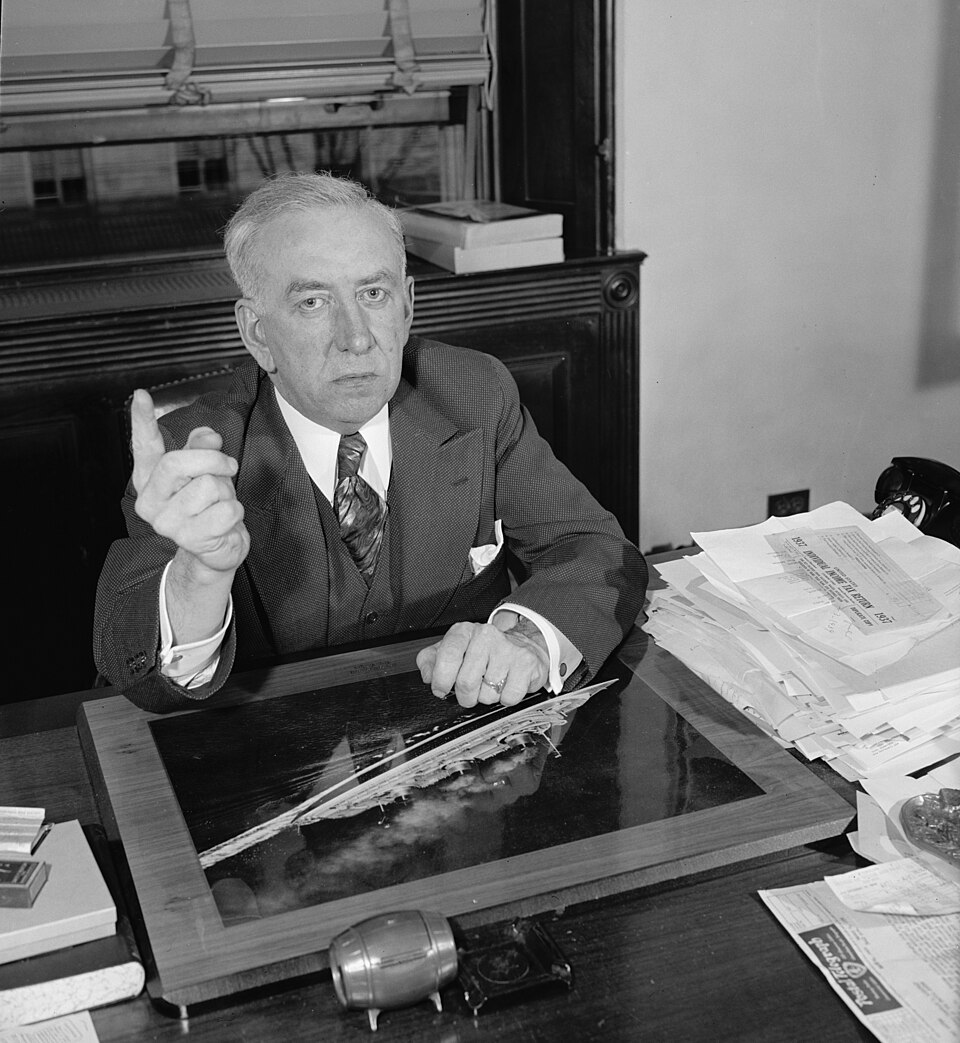
On July 20, 1930, Congressman Edgar R. Kiess died in office, and Robert Fleming Rich (1883-1968), general manager of his family’s firm, Woolrich Woolen Mills (which still exists today), ran and won the election to replace him. He had been active in Republican politics for quite some time and had been a delegate to the 1924 Republican National Convention. He was from the start committed to holding the line on spending.

Rich opposed nearly every New Deal law; the only significant law he supported that was liberal was the Revenue Act of 1935 as a way to raise revenue in the midst of all the spending. This means that he was in opposition to numerous New Deal reforms that stuck, such as Social Security and the federal minimum wage. If FDR was in agreement with Rich, it was mostly because he had taken a stand that to Rich was conservative. For example, he voted for the Economy Act in 1933, against overriding President Roosevelt’s 1935 and 1936 vetoes of veterans’ bonus legislation, and voted against the third Frazier-Lemke farm mortgage bill in 1936. Rich was most known for consistently asking “Where are we gonna get the money?” for various New Deal spending programs, and others would join in but humorously, as all knew the money printing press (Manion). His reputation as a “watchdog of the Treasury” was difficult to match in his day.

Rich was no more accommodating to the Roosevelt Administration on foreign policy; indeed he was if anything even more in opposition than on domestic issues. Regarding Lend-Lease, Rich stated, “I do not care what the people in my district think. If I received a telegram tomorrow from everybody in my district wanting me to vote for this bill, I would resign my job in Congress before I would vote for it” (Congressional Record). Part of his strong opposition was his uncompromising stand against communism. The considered the notion of the US allying with the USSR as the equivalent of getting “in bed with a rattlesnake and a skunk” (McMeekin, 350). As an eastern businessman, he was also fiercely against the tariff-lowering agenda of the Roosevelt Administration.

In 1942, Rich opted not to run for reelection as his home district was split in two with redistricting (Mallon). House Minority Leader Joe Martin (R-Mass.) praised him thusly, “We may have differed with him on occasion, but no one ever questioned his courage, integrity, or his zeal to work for what he believed was best for hist country” and added, “As a result of his tireless industry and his ceaseless watchfulness, he has saved the taxpayers hundreds of millions of dollars. We regret to see him go, because we need more than one “watchdog of the Treasury” as we move toward the abyss of wild inflation and national bankruptcy” (Mansfield Advertiser). Not all were sorry to see him leave. The left-wing New Republic (1942) wrote, “A glance at The New Republic’s voting-record chart will show that Rich has a perfect minus score both on foreign and domestic issues. For twelve years he has been the loudest critic of all things decent in the whole big House. He is the owner of the company town of Woolrich, an open-shopper and a mean opponent of social progress. Getting rid of him means more than just getting rid of a reactionary Republican vote” (763). That year, he was also one of only four House Republicans to vote against banning the poll tax in federal elections. Rich would also oppose anti-poll tax legislation in 1945, 1947, and 1949. Not all was negative for him on civil rights, however; in 1937 and 1940 he voted for anti-lynching legislation and in 1946 he voted for the anti-segregation Powell amendment to the school lunch bill.

Rich was not satisfied with being out of Congress for long, and in 1944 he ran again and won. He proved no less opposed to the Truman Administration than he was to the Roosevelt Administration. In 1946, he led the successful push to kill the construction of a government-run phosphate fertilizer plant at or near Mobile, Alabama as part of the Tennessee Valley Authority. That year, in a rare siding with the liberal position, he opposed the Tidelands bill. From 1947 to 1950, Rich was only in agreement with the liberal Americans for Democratic Action 2% of the time; the one vote he sided with them on was his vote to kill the Rankin pension bill in 1949, which was devised at least in part to hamstring President Truman’s push to expand Social Security. That means he opposed aid to Greece and Turkey and the Marshall Plan and supported all domestic priorities of the conservative 80th Congress. In 1950, Rich voted against admitting Hawaii and Alaska as states. That year, he opted to retire for good, wanting to focus on his business. His DW-Nominate score is a 0.664, being in the top 5 conservatives for almost his entire time in the House.

Rich vs. the Majority

Some examples of Rich taking stances against the overwhelming majority included:

On April 19, 1935, he paired against Social Security, which only 33 representatives voted against.

On May 23, 1940, he was one of 21 representatives to vote against a compromise work relief appropriations measure.

On December 18, 1945, he was one of 15 representatives to vote against US participation in the UN.

On April 18, 1946, he was one of 20 representatives to vote for a motion to kill extending price control legislation.

On May 23, 1946, he was one of 41 representatives to vote against membership and participation in UNESCO.

On February 9, 1949, he was one of 69 representatives to vote against extending the Reciprocal Trade Act.

On August 11, 1949, he was one of 35 representatives to vote against a compromise bill increasing the minimum wage.

On October 3, 1949, he was one of 42 representatives to vote against extending and increasing funding for hospital construction.

On August 26, 1950, he was on the only representative to vote against a supplemental appropriations bill.

On December 5, 1950, Rich was one of 20 representatives to vote against extending the excess corporate profits tax.

After Politics

Rich continued his business pursuits in retirement, and served as president of Woolrich Woolen Mills from 1959 to 1964, chairman of its Board of Directors from 1964 to 1966, and finally entered semi-retirement in 1966 by stepping down to honorary chairman. He died on April 29, 1968, at the age of 84.

References

87 Cong. Rec. (Bound) – Volume 87, Part 1 (January 3, 1941 to February 18, 1941), 561.

ADA Voting Records. Americans for Democratic Action.

Retrieved from

Mallon, P. (1942, July 23). Washington Backstage. New Orleans States-Item, 10.

Retrieved from

https://www.newspapers.com/image/1322345144

Manion, C. (2011, December 7). A Debate That Will Live in Infamy. Crisis Magazine.

Retrieved from

A Debate That Will Live in Infamy

McMeekin, S. (2021). Stalin’s war: a new history of World War II. London, UK: Basic Books.

Rich, Robert Fleming. Voteview.

Retrieved from

https://voteview.com/person/7864/robert-fleming-rich

Tributes to Congressman Robert F. Rich. (1942, December 23). Mansfield Advertiser, 1.

Retrieved from

https://www.newspapers.com/image/354419369

Washington Notes. (1942, June 1). The New Republic, 763-764.

Retrieved from
https://www.newspapers.com/image/1144100116

Martin Sweeney: Cleveland’s Fighting Irishman

Cleveland has long been a Democratic stronghold, but this has not always guaranteed representation by people pliant to Democratic Administrations. Martin Leonard Sweeney (1885-1960) was such an individual, who although was by many metrics a Democrat, nonetheless proved a pain in the neck for FDR. As a young man, Sweeney worked for the Central Furnace Company and was part of the Longshoremen’s Union. His support for labor causes started early, having been elected a secretary of the union in 1903. In 1909, Sweeney was fired after he refused to sign a “yellow dog” contract, meaning a contract in which you agree to not be part of a union or join a union as a condition of employment. He then pursued a law degree at the Baldwin-Wallace College and upon completion started practicing law. From 1924 to 1931, he served as a municipal court judge, where he made his staunch opposition to Prohibition clear.

In 1930, Congressman Charles Mooney died, thus Judge Sweeney ran for the seat and won. Like he was as a judge, he was outspoken in his opposition to Prohibition while in Congress. Sweeney chided Congress for “behaving like a lot of old women” on the subject and stated that Prohibition was “ a crazy law, enacted by fanatics, impossible to enforce…” (Hill). This stance was consistent with the views of his constituency and fit with his Irish Catholic background. Such a background would motivate several aspects of his politics, both favorably and unfavorably to his party.

Although Sweeney was pledged to support Al Smith at the Democratic National Convention in 1932, he switched support to FDR. He proved a strong supporter of the first New Deal including all of the first 100 Days legislation, and with the exception of veterans issues, mostly agreed with FDR in his first term. However, he consistently had an independent streak, and this first showed to the detriment of his party when he lost the Democratic nomination to run for mayor of Cleveland to incumbent Ray T. Miller. Instead of being a sport and endorsing Miller, he endorsed the Republican candidate, Harry Lyman Davis. Davis won the election as enough Democrats followed Sweeney’s endorsement. He was also the foremost supporter of and Congressional spokesman for radio personality Father Charles Coughlin, who had started out supporting FDR and employing the slogan “Roosevelt or Ruin”, but Coughlin turned against FDR and, so did Sweeney. For instance, he supported the 1936 Frazier-Lemke bill, which was opposed by the Roosevelt Administration. This opposition motivated Gerald L.K. Smith, Coughlin, and Dr. Francis Townsend to form the Union Party, which ran maverick populist Republican William Lemke of North Dakota for president. Instead of endorsing Roosevelt, Sweeney endorsed Lemke (The Cleveland Plain Dealer, 13). He considered his 1936 reelection to be a mandate for independence from the Roosevelt Administration. While Sweeney did continue his support of a number of New Deal programs that he considered pro-labor, such as the Works Progress Administration, he proved one of Roosevelt’s strongest critics on foreign policy within the Democratic Party and opposed his 1938 reorganization plan as well as the excess profits tax. One area in which Sweeney stayed loyal to New Deal principles was his strong support for organized labor; he consistently opposed proposals to curb the power of unions. He also was one of Congress’s leading advocates of the Townsend Plan in 1939. Sweeney not only had trouble with Roosevelt, however, he was also independent of the Cleveland Democratic organization given his refusal to back Ray Miller in 1933, and Miller became chairman of the Cuyahoga County Democratic Party in 1938. Now, Sweeney’s chief rival had a perch of power from which to try to oust him. In 1941, his effort to run for mayor of Cleveland was again thwarted.

Sweeney and Non-Interventionism

Martin Sweeney was considered one of the foremost if not the foremost Anglophobe in Congress given his stance as an Irish patriot. In 1936, he voted against a resolution expressing condolences for the death of King George V, not out of a personal spite against the man, rather in protest of the brutal treatment of the Irish by the notorious Black and Tans under his reign (The Cleveland Plain Dealer, 13). In 1939, Sweeney loudly and rather rudely denounced King George VI and the Queen Mother while they were visiting the U.S. and sent a telegram to the former, which he read on the House floor, “. . .do you not think it is the decent thing to give some consideration to the obligation you owe the United States of America, whose assistance in the last World War made possible the continuance of Your Majesty’s government as a world power” (Hill). Indeed, among Democrats he was one of the most extreme of non-interventionists, being one of only seven House Democrats to vote for the first Lend-Lease appropriation in 1941. On September 4, 1940, Sweeney alleged in a speech before Congress that the military conscription bill being debated was an attempt to bring the U.S. into World War II on the side of Britain. This brought him into conflict with Beverly Vincent (D-Ky.), a supporter of the administration, when he finished his speech and went to sit next to him. Then, per Time Magazine (1940), ““I’d rather you would sit somewhere else,” quietly said Beverly Vincent. When Sweeney bristled, Vincent added: “You are a traitor.” Words passed. Vincent called Sweeney a son of a bitch. Sweeney swung at him. Taking careful aim and with obvious satisfaction, Beverly Vincent planted a good hard right, smack! It staggered, and silenced, Martin Sweeney. Though Congressmen not infrequently threaten one another and have been known to throw bound copies of the Record* when vexed, ancient Doorkeeper Joseph Sinnot said it was the best blow he had heard in his 50 years in the House.” Sweeney’s stances on foreign policy played well among his constituency before Pearl Harbor.  

Sweeney and Antisemitism

Sweeney was, as noted, Father Coughlin’s spokesman in Congress, and his radio speeches were becoming increasingly peppered with antisemitism, including him essentially parroting the Nazi line on Kristallnacht. As part of this, journalists Drew Pearson and Robert S. Allen alleged that Sweeney and Father Coughlin opposed U.S. District Attorney Emerich Burt Freed, an old legal partner of former Senator Robert Bulkley, for judge on the federal bench for Cleveland because he was a foreign-born Jew. Sweeney sued Pearson and Allen as well as newspapers that carried their Washington Merry-Go-Round column for libel, but he lost.

Life After Pearl Harbor

After Pearl Harbor, support for Sweeney’s pre-war positions dwindled in his strongly Democratic district, and both the Roosevelt Administration and Ray Miller wanted to see him defeated. In 1942, Union for Democratic Action listed him as one of the Congressional “obstructionists” they wanted to see defeated and listed him as opposed to their stances on 11 of 15 issues in which he cast a vote, and he opposed the UDA position on all foreign policy votes. To run against Sweeney, Ray Miller selected the young Michael Feighan for a second time. Feighan ran as a 100% supporter of FDR, and denounced him as the “leader of isolationism in northern Ohio and always a welcomed speaker at local German-American bund gatherings” (Hill). The fighting Irishman would not take this lying down. He retorted, “If I was connected with Nazi propaganda, take me to jail and indict me. Then prove the charge. That’s the American way” (Hill). Unlike in 1940, in which Sweeney easily defeated Feighan, Ray Miller got his wish. Sweeney commented on his loss, “It is a difficult assignment to try to beat a combination of newspapers, Communists and misguided persons” (Time Magazine, 1942). In 1943, Sweeney once again ran for mayor of Cleveland and met defeat, this time by future Senator Frank J. Lausche. The next year, he tried for the Democratic nomination for governor but lost to Lausche again, who ironically would be way more at odds with his party than Sweeney on Capitol Hill. He then endorsed the Republican Dewey-Bricker ticket to defeat FDR. Sweeney said regarding his motivations, “When Browder [Communist Party leader] and Hillman [radical head of the CIO PAC] crawl into the Democratic party, it is time for the Jeffersonian democrats to walk out” (Hill). Sweeney tried one more time before giving up the ghost, for the Ohio State Supreme Court, a race he lost overwhelmingly.

Despite his public image as an FDR opponent, his DW-Nominate score is a -0.375. Sweeney never retired from practicing law, practicing with his son, Bob, and died in his sleep on May 1, 1960 at the age of 75. The younger Sweeney would serve one term in Congress from 1965 to 1967 and unlike his father, would not cause trouble for the Johnson Administration, being a strong supporter of the president and his Great Society programs. He was also one of the first attorneys to file an asbestos lawsuit in the nation, which would make him a millionaire (Hill). Another interesting fact about Sweeney is that his first cousin was Dr. Francis Sweeney, the prime suspect in the unsolved Cleveland Torso Murders.

P.S.: I will be archiving my 2023 content by Saturday.

References

Hill, R. The Gentleman from Ohio: Martin L. Sweeney. The Knoxville Focus.

Retrieved from

Brennan, D. & Ryan, D.P. Sweeney, Martin L. Encyclopedia of Cleveland History.

Retrieved from

https://case.edu/ech/articles/s/sweeney-martin-l

Martin L. Sweeney, Ex-Lawmaker, Dies. (1960, May 2). The Cleveland Plain Dealer, 1, 13.

Retrieved from

https://www.newspapers.com/image/1061405447

https://www.newspapers.com/image/1061405567

Rep. Sweeney Loses Libel Suit Over Column Which Called Him Anti-Semite. (1941, January 14). Jewish Telegraphic Agency.

Retrieved from

Sweeney, Martin Leonard. Voteview.

Retrieved from

https://voteview.com/person/9113/martin-leonard-sweeney

The Congress: The Bitter End. (1940, September 15). Time Magazine.

Retrieved from

https://time.com/archive/6764006/the-congress-the-bitter-end

U.S. At War: The Primaries. (1942, August 23). Time Magazine.

Retrieved from

https://time.com/archive/6787404/u-s-at-war-the-primaries