The Impeachment of William Sulzer or, Don’t Mess with Tammany Hall!

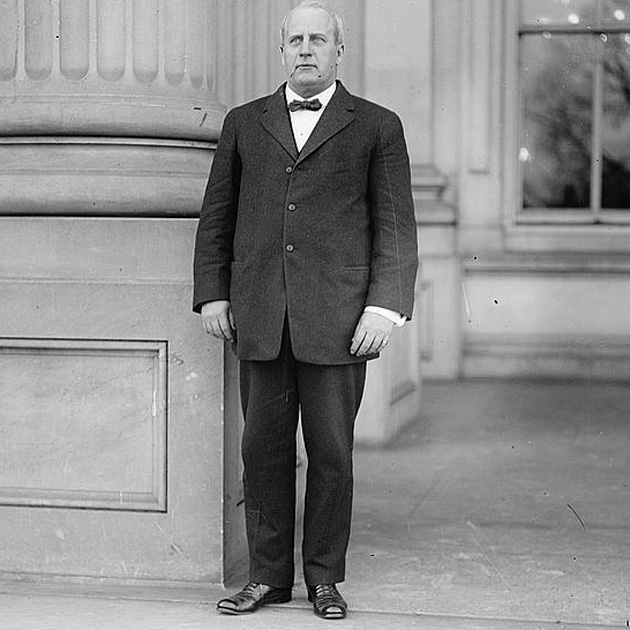
Three presidents have been impeached in American history and none have been convicted: Andrew Johnson, Bill Clinton, and Donald Trump. New York has by contrast only had one governor impeached, but he was also convicted and thus removed from office. This was William Sulzer (1863-1941), who lasted only nine months as governor. His start in politics was campaigning for Tammany Hall machine candidates in 1884. Gradually making his way up in the organization through his loyalty to boss Richard Croker, he was elected to the State Assembly in 1889. In 1893, Croker got him chosen as speaker of the Assembly, only thirty years old. He was loyal to boss Richard Croker, and this loyalty paid off with his election to the New York State Assembly, where he was selected to be speaker in 1893. This would propel him to Congress, being elected in 1894. Sulzer was a reform-minded representative who opposed imperialism, supported the cause of the Boers in the Boer War, and supported the eight-hour workday. For his man of the people approach he became known as “Plain Bill”. Although thought of as progressive, Sulzer’s record seems by DW-Nominate to be to the right of many of his Democratic colleagues at the time at a -0.222. Sulzer remained for some time in the House, and although in his final session of Congress he was chairman of the House Foreign Affairs Committee, his true ambition was to be governor. This was stalled as Croker’s successor, Charles F. “Silent Charlie” Murphy, repeatedly passed him over for the gubernatorial nomination for people he thought of as more reliable. Finally, Sulzer got the nod in 1912 and received the support of Woodrow Wilson and many other progressive-minded figures, winning a resounding victory.

Although Tammany expected loyalty from Sulzer, he had higher ambitions in mind than politics in New York. He wanted to be the president. As New York Assembly chaplain James T. Kirk, who investigated the Sulzer case said, “A clairvoyant told him at an early age that he was going to be speaker of the Assembly, he would then be governor, and then he was going to be president…That became a central driving force in his life” (Mahoney). Well, two for three isn’t shabby from a clairvoyant! Although support of Tammany Hall could translate well on the state level, it didn’t do so on the national level. Once he had the reins of power, he came out swinging, seeking to take control of the state’s Democratic Party. Sulzer sought to be a reformist governor, battled against Tammany Hall on patronage appointments, pushed for open primaries, and conducted an investigation into government corruption. He declared, “Rest assured that in this struggle, those who help me will win my gratitude; that those who oppose me will merit condemnation” (Spector).

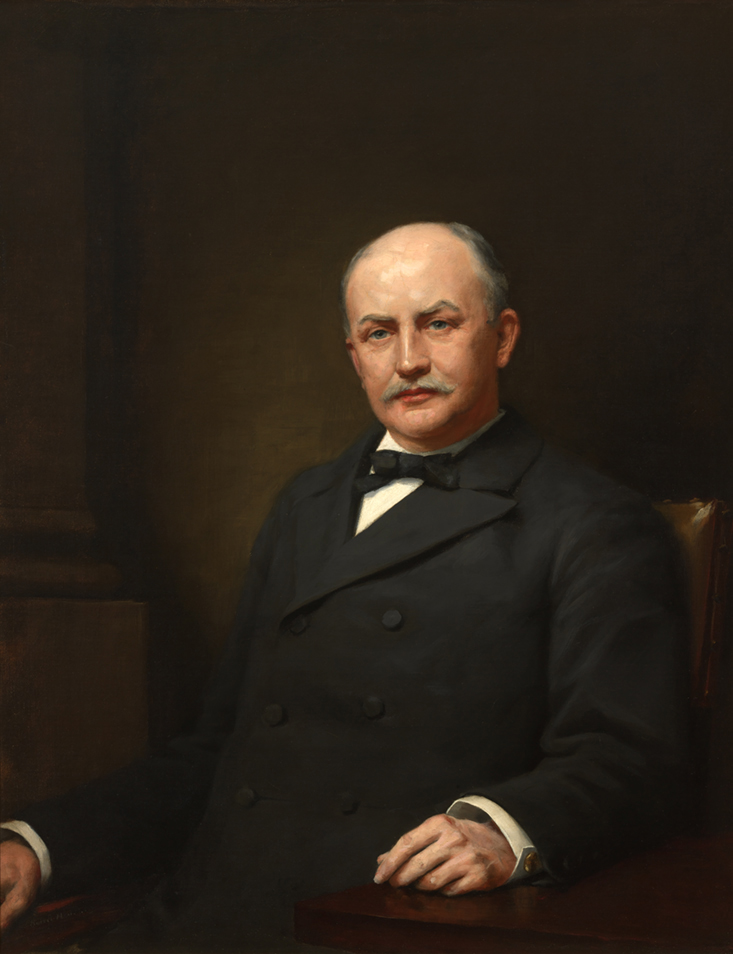
All this didn’t sit well with “Silent Charlie” Murphy, who was now out to wreck Sulzer. Unfortunately for Sulzer, Tammany Hall had far more allies in the state legislature than he did, including Assembly Speaker Al Smith and Senate Majority Leader Robert F. Wagner. While Sulzer battled Tammany’s patronage appointments, they retaliated by refusing to confirm Sulzer’s appointments. They and others in retaliation for investigating state government investigated Sulzer and discovered that during the campaign, he had used campaign funds for personal use such as investments, had failed to report the full extent of his campaign financing and spending as required by New York’s Corrupt Practices Act, and had dramatically underreported major donors (Spector). This was a shabby look for “Plain Bill”. The state legislature used the special session that Sulzer had called for a vote on open primaries to instead impeach him. Although Governor Sulzer challenged the constitutionality of the proceedings given that they covered activities before he was governor, the Assembly nonetheless impeached him. The Senate followed through on October 17, 1913, after Sulzer failed to testify in his own defense, with him being convicted of three of eight articles of impeachment and removed from office. Lieutenant Governor Martin H. Glynn succeeded him. The New York Supreme Court, probably in recognition of the overtly political nature of the matter, declined to bar him from holding political office, which was an option in cases of impeachment and conviction.

Aftermath

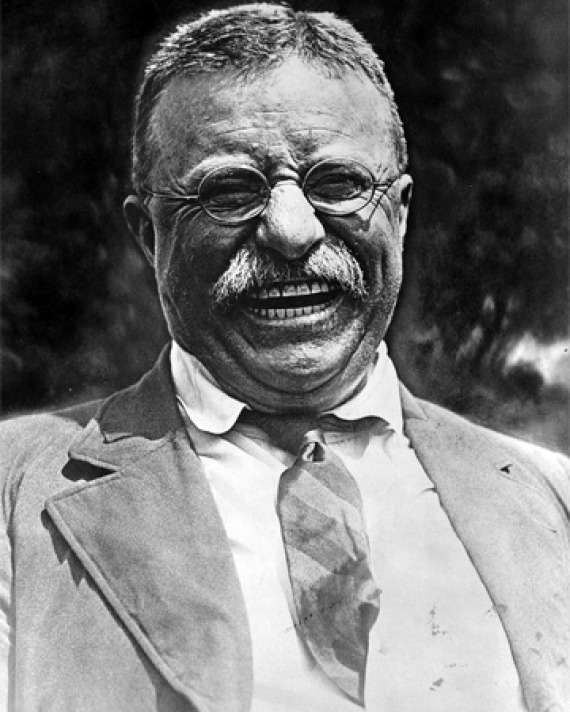
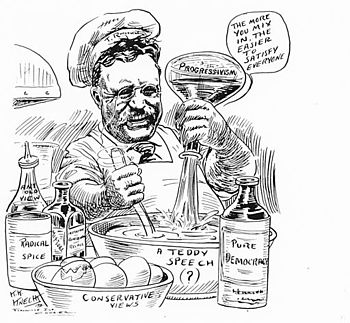
Sulzer had a temporary comeback in his election to the Assembly only weeks after his impeachment as a Progressive and attempted to regain the governorship on the Progressive Party ticket. However, he didn’t gain traction due to the opposition of Theodore Roosevelt. He created the American Party to serve as his vehicle and won the nomination of the Prohibition Party as well due to him making a speech in which he condemned rum, but he didn’t attract much support. However, the Republican candidate won in 1914, a sort of victory for Sulzer as his Democratic successor had been unseated. In 1916, Sulzer gained the American Party’s nomination for president, but only got 181 votes. His political career was over.

Sulzer’s impeachment was of doubtful validity, given that the charges were about conduct before he was governor. Additionally, his misdeeds were not uncommon in that time and if that is all he was guilty of, he was far from the worst of New York’s politicians. In 1983, the nonagenarian Hamilton Fish III, who was a Progressive Party assemblyman from 1914 to 1916 and later a Republican in Congress, recalled in a letter to future Congressman Maurice Hinchey that “His impeachment as governor was a farce and a fraud” (Mahoney). Sulzer’s true offense was using and then turning on Tammany Hall, and the consensus of researchers is that the impeachment of Sulzer had no better grounding than politics. However, it should also be noted that Theodore Roosevelt’s assessment of Sulzer was poor, and when he tried to get the Progressive Party nomination for governor, he torpedoed it by writing a letter to party members that “the trouble with Sulzer is that he does not tell the truth” (Fredman, 266).

Interestingly, the two legislative leaders that figured most prominently in this overtly politicized impeachment would be major players in national politics down the road. Robert F. Wagner would serve as New York’s senator from 1927 to 1949 and would be one of the foremost promoters of New Deal legislation, including sponsoring the Social Security Act and the Wagner Act, the latter known as the magna carta of legislation protecting organized labor. Al Smith, who closely connected himself with Tammany Hall and played such a large role in carrying out “Silent Charlie” Murphy’s bidding, found that Tammany Hall helped his statewide prospects greatly but hindered his presidential prospects. Smith was a highly successful governor from 1919 to 1920 and again from 1923 to 1928. Thrice he ran for the Democratic nomination, in 1924, 1928, and 1932. Although he won in 1928, Smith’s Tammany Hall association served as an anchor to his campaign, and along with his Catholicism and anti-Prohibition stances cost him victories in normally Democratic states in the South. Sulzer’s view that he had to take a reformist path to have a chance at the presidency was sound; the last two Democrats from New York who have won the presidency, Grover Cleveland and FDR, were both governors who opposed Tammany Hall. However, the latter was more astute in his relations with Tammany Hall and was thus able to be more of a force in countering them as governor and later president. Although Sulzer had the right idea broadly, he lacked the political skill to take control of the Democratic Party in New York, much less run for president. He failed to do the legislative math and his approach to reform is reminiscent to me of a bull in a China shop. For Sulzer to have had a chance to succeed in his presidential ambitions, his governorship had to survive Tammany Hall’s retaliation, and it did not.

References

Lifflander, M.L. (2010, Spring). The Impeachment. New York Archives, 9 (4). 18-23.

Retrieved from

https://www.nysarchivestrust.org/application/files/6015/6467/5436/archivesmag_spring2010.pdf

Mahoney, B. (2021, April 15). Only one governor has been impeached. Some say he should be unimpeached. Politico.

Retrieved from

https://www.politico.com/states/new-york/albany/story/2021/04/15/only-one-governor-has-been-impeached-some-say-he-should-be-unimpeached-1374546

O’Donnell, J. (2021, March 4). The story of NY’s only gubernatorial impeachment. City & State New York.

Retrieved from

https://www.cityandstateny.com/opinion/2021/03/the-story-of-nys-only-gubernatorial-impeachment/175118/

Spector, J. (2013, August 19). 100 years ago, a N.Y. governor was impeached. Albany Democrat & Chronicle.

Retrieved from

https://www.democratandchronicle.com/story/news/local/2013/08/18/100-years-ago-a-ny-governor-was-impeached/2669421/

Sulzer, William. Voteview.

Retrieved from

https://voteview.com/person/9080/william-sulzer

The Original Conservative Shock Jock: Joe Pyne


Although the confrontational and abrasive conservative media host is nothing novel now, in the days before talk radio became the major format for conservatives, Joe Pyne (1924-1970) made this approach novel on his radio shows and later TV show.

Pyne, like many men of his generation, served in World War II. His heroic service earned him three battle stars and a leg injury, the complications from said injury resulting in amputation in 1951 (The New York Times). His wooden leg, incidentally, was not considered a subject to be brought up around him. Pyne got his start early in radio and in 1949 as a host he invented the radio call-in show when he put a phone receiver to the microphone when dealing with a ranting caller. Before then, radio hosts would simply report on air what the caller was telling them. With this format he became known for his insults of difficult or disagreeing callers. Among his signature lines were, “Go gargle with razor blades”, “Take your teeth out, put ’em in backwards and bite your throat”, and “If your brains were dynamite, you couldn’t blow your nose” (Time Magazine; Halper, 185). His fans called him “Killer Joe”. He would grow more conservative over time in his radio career, and in 1953 he celebrated the executions of Julius and Ethel Rosenberg for treason, “we finally incinerated those commies. I hope it was slow and painful” (Cook).

In 1965, Pyne’s format moved to television, and there he became one of TV’s foremost conservatives, railing against the welfare state, communists, anti-war protestors, hippies, gays, and feminists. His approach was distinctly emotional and not analytical or intellectual by design. Pyne held, “The subject must be visceral. We want emotion, not mental involvement” (The New York Times). One of his most controversial moments was when during the 1965 Watts Riot, he was interviewing a black militant, and Pyne opened his coat to reveal a handgun, and his guest reciprocated. This resulted in a suspension for a week and the FCC considering revoking broadcasting licenses from any station that carried his show (Timberg & Erler, 272). However, he did speak against racial discrimination and Governor Lester Maddox’s appearance got heated to the extent that he walked off with Pyne refusing to shake his hand. Pyne hosted a number of controversial figures, including Klansmen, Black Power activists, American Nazis, and the Church of Satan founder Anton LaVey. To the latter he said at the end of his 1967 appearance, “I’d like to tell you where to go, but you’d enjoy it” (Goransson). He also brought in a number of people who were simply bizarre and kooky. Pyne said of giving these people a platform, “If I bring kooks on, it’s to expose them” (The New York Times). His detractors criticized him as a “bully” and as a caterer to bigots. Author Harlan Ellison said of him, “Joe Pyne was a hustler and a bully. And he was sharp. I thought I’d go on his show and beat him at his own game, but I blew it. I spent my time talking about the issues, civil liberties and all that, and he talked about America. The trouble with Pyne was that he was really good at what he did” (Cook). Pyne didn’t make his money through being nice. He even admitted he wasn’t on his show, stating, “I’m not a nice guy, and I don’t want to be” (The New York Times). This was indeed fundamental to the enjoyment of his audience, but he could be quite shocking. A particularly notable instance of his lack of niceties was when he asked an epileptic, “Just why do you think people should feel sorry for you?” (Time Magazine)

Although Pyne was really good at what he did as Harlan Ellison put it, once in a while a guest got one over him. There’s a legend that Pyne once said to Frank Zappa, “I guess your long hair makes you a hippie” to which Zappa responded, “I guess your wooden leg makes you a table” (Cook). Although Pyne did have Zappa on the show in 1966, the episode may be lost, as many of his episodes were taped over by the network, thus until a copy is found, this story is unverifiable. At his peak in 1968, Pyne had over 10 million viewers a week, enviable numbers especially when one considers that the US population was smaller in that year and that it is equivalent to the numbers Sean Hannity, Bill O’Reilly, and Megyn Kelly got weekly combined in 2016 (Cook). Perhaps he could have been on top even longer had it not been for his fondness for cigarettes.

Premature Demise

Pyne was a heavy smoker, and he claimed he would never quit despite knowing that a risk of cancer existed and referred to them jokingly as “coffin nails”. This came back to bite him sooner than he probably thought; in 1969, he was diagnosed with lung cancer. Although he quit cold turkey it was far too late…Pyne would slowly die and continue to host his show, even from his bedroom when he proved too weak to drive to work (Cook). He died on March 23, 1970, only 45 years old. Pyne is a forgotten figure today, but he was the prototype for Rush Limbaugh and other media hosts we see today in the field of conservative political entertainment.


References

Broadcasting: Killer Joe. (1966, July 29). Time Magazine.

Retrieved from

https://content.time.com/time/subscriber/article/0,33009,899296,00.html

Cook, K. (2017, June). Joe Pyne Was America’s First Shock Jock. Smithsonian Magazine.

Retrieved from

https://www.smithsonianmag.com/history/joe-pyne-first-shock-jock-180963237/

Goransson, A. Anton LaVey Joe Pyne Show (1967). YouTube.

Retrieved from

https://www.youtube.com/watch?v=AALDuMTmk6w

Halper, D.L. (2009). Icons of talk: the media mouths that changed America. Westport, CT: Greenwood Publishing Group.

Retrieved from

Joe Pyne, 44, Dies; Abrasive TV Host. (1970, March 25). The New York Times.

Retrieved from

https://www.nytimes.com/1970/03/25/archives/joe-pyne-44-dies-abrasive-tv-host-his-talk-show-was-devoted-to.html

Morris, R. (2023, January 19). The big mouth who started it. Auburn Villager.

Retrieved from

https://www.auburnvillager.com/opinion/the-big-mouth-who-started-it/article_89933614-9816-11ed-8cf6-5756e8602bf6.html

Timberg, B.M. & Erler, R.J. (2004). Television talk: a history of the TV talk show. Austin, TX: University of Texas Press.

The 1890 Midterm – A Most Bitter Repudiation of the GOP

Charles F. Crisp (D-Ga.), the House speaker after the 1890 election.

The 1888 election, one of the closest in American history and one of five in which the loser of the popular vote won, produced the first united government for Republicans since the Grant Administration. The Republicans enjoyed small majorities in both the House and the Senate, although the numbers in the Senate and House would increase with the admittance of new states. The House situation provided a challenge for Speaker Thomas Brackett Reed of Maine, but he managed the situation ably and had a remarkably productive Congress, including passing the Sherman Anti-Trust Act (which was weak), admitting six new states to the union, the Sherman Silver Purchase Act, the second Morrill Act for land grants for universities, and the Chace International Copyright Act. Such achievements were made possible in part by eliminating the “disappearing quorum”. Legislators could, until Reed, literally not answer to their names when present and thus be able to stop business on the grounds that there were not enough legislators to conduct business. The 51st Congress was a highly productive one known as the “Billion Dollar Congress” since this was the first time that Congress had appropriated a billion dollars for a budget. This Congress sought to spend the surplus (which was viewed as a problem in that time) that had accumulated under President Cleveland, and this spending included union veterans pension legislation and increased navy spending. However, this spending, including some particular items that were thought of as questionable in their usefulness, came under fire. Critics thought the spending itself to be an excuse to enact the GOP’s signature policy: tariff increases. The GOP in this time was explicitly in favor of the protective tariff, and in 1890 the Republican Congress on a partisan vote passed the McKinley Tariff. This proved quite unpopular and making matters worse was that the economy was in recession. This was the result of The Panic of 1890, an international economic crisis that had begun with the insolvency of Barings Bank in London and spread throughout the world. Thus, while the prices of goods rising could be said to benefit domestic workers, it was a double whammy for those who had lost their jobs in the recession. Other problems arose for the GOP as well, including the foundation of the Populist Party, which harmed them in the Midwest, and that state parties had gotten increasingly aggressive in pushing for “English only” education, nativism, and temperance laws, resulting in voters of German and Irish extraction overwhelmingly moving to the Democrats (Jensen, 122-153).

The results were remarkable for the Democrats and catastrophic for the GOP. The GOP sustained major losses, including in places typically regarded as safe for the party, losing a total of 93 seats, bringing the number of Republican representatives down to 86. Their House numbers would only reach such lows again in 1936. In Illinois, the GOP went from having 13 of 20 representatives to 6, but even more jarring was Wisconsin, in which the GOP delegation fell from 7 out of 9 to 1 out of 9. This presaged Grover Cleveland’s win in those states in 1892. To understand what an achievement that was, Wisconsin hadn’t voted Democratic since 1852 and Illinois since 1856. Even in Massachusetts, at the time a solidly Republican state in which the Democrats only typically ran well in Boston, Republicans had their representation shaved from 10 out of 12 representatives to 5 out of 12. A few notable Republicans lost reelection in 1890, such as Joe Cannon of Illinois (who would serve as House speaker from 1903 to 1911), future President William McKinley of Ohio, and future progressive Robert La Follette of Wisconsin. Some notable figures who won this year included Populist activist Tom Watson of Georgia and future presidential contender William Jennings Bryan of Nebraska. The saving grace for the GOP in this election was that although they lost four seats in the Senate, the admission of the new states of Idaho, Montana, North and South Dakota, Washington, and Wyoming, and they held a majority. However, not even this would save them from losing this majority in the 1892 election.

The Issue of Race

Along with being a disaster for the GOP, this election also served as a disaster for black voters in the South trying to exercise some political power. 1890 was the last time until the 1922 that the GOP made a serious effort to pass civil rights legislation, namely the Lodge Federal Elections bill, which was both a voting rights and an anti-corruption measure, as fraud was part of what produced Democratic domination of the South. Democrats were unified against this measure and campaigned heavily against what they called the “Force Bill”, seeing it as a partisan imposition. The new speaker, Charles F. Crisp of Georgia, was the first and only Confederate veteran to serve in this role. After the 1890 and 1892 elections, the Republicans seemed to regard civil rights as a losing issue and de-prioritized it. Democrats would get their walloping only four years later.

References

1890 United States House of Representatives elections. Wikipedia.

Retrieved from

https://en.wikipedia.org/wiki/1890_United_States_House_of_Representatives_elections

Jensen, R.J. (1971). The winning of the Midwest: social and political conflict, 1888-1896. Chicago, IL: Chicago University Press.

The Sherman Adams Scandal: The Forgotten Eisenhower Administration Controversy


One forgotten aspect of the Truman Administration was that there was a significant level of corruption within it. President Truman, for all the favorable coverage he gets from historians, was not that good at picking the right people for positions and felt strong feelings of loyalty to those he picked (Boylan). Thus, the corruption in the Truman Administration was a campaign point in 1952 for Republicans, and the following administration was corruption free, but one controversy threatened the squeaky-clean image of the administration, and that was the case of Eisenhower’s chief of staff, Sherman Adams (1899-1986).

Sherman Adams: An Underlooked Figure


Although Richard Nixon was vice president and everyone knows who Nixon was, it was in truth Sherman Adams, a man now forgotten by the public, who was Eisenhower’s de facto assistant president. Adams had served in Congress from 1945 to 1947 as well as served as New Hampshire’s governor from 1949 to 1953. In the latter role, he signed into law the measure that made New Hampshire one of the key early contests for presidential primaries (New England Historical Society). He had been one of Eisenhower’s earliest backers in the Republican primary, and Eisenhower appreciated him greatly, and this resulted in him being appointed chief of staff. Adams controlled access to the president and save for cabinet officials and a few other important administration figures, he could deny requests for visits, which he more did more often than not, giving him a reputation as “the abominable no-man” (The Los Angeles Times). He was also no-nonsense and a bit gruff. This included him hanging up the phone when he thought the conversation was over and not saying “hello” or “goodbye” on phone calls (Langeveld). Adams’ approach did not win him friends in Washington, including fellow Republicans, whose requests to see Eisenhower he often denied. His power was such that a joke that circulated among Washington D.C. insiders at the time was, “Wouldn’t it be terrible if Eisenhower died and Nixon became president?” followed by the punchline, “Yeah, but what if Sherman Adams died and Eisenhower became president?” (Elving) Eisenhower would eventually have to do without Adams at his side, and it involved most notably, a vicuna coat.

An Uncomfortable Connection

In 1958, a Congressional subcommittee discovered that Adams had made a few calls to regulatory agencies regarding the legal issues that a friend of his was having. This friend was Bernard Goldfine, a wealthy Massachusetts textile businessman and influence-peddler who owned two mills in New Hampshire and was having issues with the Federal Trade Commission and the Securities and Exchange Commission. Adams had set up a meeting between him and the chairman of the Federal Trade Commission to discuss these issues, but both Goldfine denied that Adams had exercised any influence on the regulatory agencies (Time Magazine). You know what hit the fan for the Eisenhower Administration when it was discovered that Adams had received gifts from Goldfine. He had paid for a few of Adams’ stays at hotels including the Waldorf-Astoria in New York City, had lent him a luxurious Oriental rug, and gifted him a vicuna coat (The Los Angeles Times). Although Adams was not discovered to have committed any crime and defended his connection to Goldfine as a friendship and insisted that he had not been influenced to any favorable action by him, the connection was unseemly in appearance. Given that the midterms were looming as well as Adams’ unpopularity among Congressional Republicans, they were fine with sacrificing him if it would help them avoid an electoral drubbing. Although President Eisenhower and Vice President Nixon defended Adams, this was seen by Democrats and many voters as hypocritical and in September 1958 the political gravity of the situation became apparent when Senator Frederick G. Payne of Maine, who had accepted a substantial loan from Goldfine that he hadn’t paid back and hadn’t been able to satisfactorily explain, was badly defeated for reelection (Langeveld). It was after this that Eisenhower with a heavy heart asked Adams to resign. This, by the way, did not prevent a midterm drubbing for the GOP. Bernard Goldfine would eventually be convicted of tax evasion and lose his fortune.

An Overblown Scandal?

Compared to later scandals, however, the Adams scandal is frankly quite mild. It is so mild in fact, that Adams’ acceptance of gifts was not that unusual for his time, with Goldfine having paid hotel bills for at least three representatives and Eisenhower having accepted gifts himself, including to decorate his Gettysburg farm as well as vicuna cloth from none other than Goldfine (Langeveld). Adams never held public office again and wrote in defense of his connection to Goldfine. He would also successfully lobby for Mount Pleasant in New Hampshire’s Presidential Range to be changed to Mount Eisenhower, which occurred in 1972, and Adams is honored with the summit building on Mount Washington being named after him (Langeveld).


References

Boylan, J. (2021, February/March). Truman Dogged by Charges of “Favoritism and Influence”. American Heritage, 66(2).

Retrieved from

https://www.americanheritage.com/truman-dogged-charges-favoritism-and-influence


Elving, R. (2005, July 18). Frequent Falls For Top Aides in the White House. National Public Radio.


Retrieved from


https://www.npr.org/2005/07/18/4760096/frequent-falls-for-top-aides-in-the-white-house

Investigations: Bernard Goldfine’s Two Faces. (1958, July 14). Time Magazine, p. 2.

Retrieved from

https://content.time.com/time/subscriber/article/0,33009,868553-2,00.html


Langeveld, D. (2009, September 24). Sherman Adams: a coating of scandal. The Downfall Dictionary.


Retrieved from


https://downfalldictionary.blogspot.com/2009/09/sherman-adams-coating-of-scandal.html


Sherman Adams Dies at 87 in N.H.: Forced Out as Top Eisenhower Aide in Vicuna Coat Scandal. (1986, October 28). The Los Angeles Times.


Retrieved from


https://www.latimes.com/archives/la-xpm-1986-10-28-mn-7917-story.html


Sherman Adams, The New Hampshire Logger Who Ran the White House…Until he disgraced himself with a coat. New England Historical Society.


Retrieved from


https://newenglandhistoricalsociety.com/sherman-adams-the-new-hampshire-logger-who-ran-the-white-house/

William Proxmire: The Badger State Maverick

Wisconsin has produced its share of mavericks in politics. It is one of two states to have elected to Congress a member of the Socialist Party, its voters elected the legendary Robert La Follette, and they elected William Proxmire (1915-2005).

Proxmire’s political career began when Wisconsin was considered a Republican state rather than the swing state it is today. Its senators were Republicans Joseph McCarthy and Alexander Wiley, and the state had been trending towards conservatism since the 1938 midterms. Proxmire thrice ran for governor in the 1950s, but Wisconsin was still voting staunchly Republican in those years. However, the demise of one of Wisconsin’s most infamous figures provided the opportunity he needed.

On May 2, 1957, McCarthy died at Bethesda Naval Hospital as a consequence of his alcoholism and a special election was held to succeed him. In August, the voters elected him and could have scarcely picked someone further from him. Contrary to public custom of new senators giving some words of praise to their predecessors, Proxmire denounced McCarthy, calling him a “disgrace to Wisconsin, the Senate, and America” (Glass). This did not cost him at the polls, and he won a full term in 1958. At the time of his election, he was widely regarded as staunchly left-wing and initially he lived up to this reputation. Americans for Democratic Action gave him 100% scores in his first three years of Congress. Americans for Constitutional Action, which covered his record from 1958 to 1959 in its 1960 release of its first index, gave him a 10%. Proxmire was loyal to numerous bread and butter Democratic causes, such as food stamps and strengthening organized labor. However, Proxmire came to have a bit of a skeptical eye on spending, and this resulted in his dissents with Democratic amendments and legislation increasing overtime. He was an enemy of pork barrel amendments and joined Wayne Morse of Oregon as a liberal dissenter on foreign aid spending. This didn’t make him some crusty conservative non-interventionist or particularly anti-communist in foreign policy; he supported the Partial Nuclear Test Ban Treaty in 1963 and from 1967 until the Senate voted to ratify in 1986, he spoke every day the Senate was in session for the Treaty on the Prevention of Genocide. Proxmire also backed numerous Northern Democratic domestic policy fundamentals such as the Economic Opportunity Act of 1964, Medicare, civil rights legislation, and federal aid to education. He dissented from the Johnson Administration on tax reduction as he believed spending restrictions should be in place for such a cut, a stance in conflict with the Keynesian philosophy of the White House and a majority of lawmakers of the day.

Attendance Record and Fitness

Proxmire was legendary for, among other things, his almost perfect attendance record. Quite a healthy man who was into fitness, he from April 20, 1966, to October 18, 1988, did not miss a single vote in the Senate. This is a record that has yet to be broken by any senator, and it was another indicator to Wisconsin voters that they had a special senator. The New York Times reported in 1978 that the 62-year-old Proxmire’s morning consisted of “100 push-ups and 200 sit-ups, 50 at a time” and that he ran 4.9 miles to his office (Tolchin).

Proxmire vs. The Vietnam War

Although Proxmire had voted for the Gulf of Tonkin Resolution, he would join Wayne Morse as one of the foremost critics of the Vietnam War and criticize both the Johnson and Nixon Administrations. In 1970, he voted for the Cooper-Church Amendment to end the US military presence in Cambodia and for the McGovern-Hatfield “End the War” Amendment providing for a timetable for withdrawal from Vietnam. His record of staunch opposition to the Vietnam War as well as his deep-seated skepticism to funding the B-1 Bomber and the MX Missile contributed to his shockingly low DW-Nominate score of -0.598, which is, if you take DW-Nominate at face value, lower than Bernie Sanders.

Proxmire the Incorruptible and Frugal

William Proxmire not only was not corrupt, but he also did much to avoid any such impression. He refused to accept reimbursements for travel expenses. Not all senators appreciated such gestures, possibly because they made them look bad by comparison, but many also regarded him as a grandstander (Severo). Some Wisconsinites were critical of him for his tightfistedness as it contributed to Wisconsin getting less federal money than perhaps it otherwise would and thought him ineffective, but these folks were in the minority. Proxmire only went on one junket (a taxpayer funded trip) in his entire career and was similarly notorious for his personal frugality.

When it came to New York City’s bailout, although Proxmire voted for it, he became known for his oversight of the city in the process as chairman of the Senate Banking and Finance Committee, with The New York Times describing him as “the de facto viceroy of New York City, a potentate imposed by an alien power, in this case the Federal Government” (Tolchin). New York City was reliant upon him to approve of continuing the federal loan program to the city, and thus his opinions became of paramount importance. The New York Times wrote, “On those occasions when officials persist in policies that he opposes, they invariably reverse themselves. His criticism led City Council officials to relinquish a 50 percent pay raise they had voted for themselves. How, he had asked, could they expect city employees to hold the line in negotiations? He was instrumental, too, in persuading City University to end free tuition” (Tolchin).

Proxmire vs. Scientists (Govt. Funded Ones, Anyway)

In his quest to curb wasteful spending in government, William Proxmire became the bane of scientists who sought government research grants. From 1975 to 1988 he monthly sponsored his “Golden Fleece Awards”. The first study he awarded was one by the National Science Foundation for $84,000 on why people fall in love. Proxmire explained his opposition to funding, “not only because no one – not even the National Science Foundation – can argue that falling in love is a science; not only because I’m sure that even if they spend $84 million or $84 billion they wouldn’t get an answer that anyone would believe. I’m also against it because I don’t want the answer” (Glass). Other Golden Fleece Awards per Richard Severo (2005) and Martin Tolchin (1976), both of The New York Times, went to:

. A $97,000 study that included covering what happened in a Peruvian brothel, with researchers making multiple visits for what they claimed was for accuracy.
. A $57,800 study by the Federal Aviation Administration to study measurements of airline stewardesses, including the “length of the buttocks” and how their knees were arranged when seated.
. A $27,000 Justice Department study on why prisoners want to escape.
. A $3,000 Pentagon study to ascertain if soldiers should carry umbrellas in the rain.
. A $10,900 study by the National Institute of Alcohol Abuse to determine whether intoxication makes fish more aggressive.

Proxmire also crossed the scientific community in his skepticism over NASA funding. Indeed, NASA has been a target for cuts from both figures on the left and right, and Proxmire was between camps. This resulted in what was called the “Proxmire Effect”, in which government scientists were increasingly reluctant to pursue less conventional research lest it attract Proxmire’s critical eye and potentially “win” a Golden Fleece Award (Kress). Proxmire’s commitment to trimming waste, even if it meant crossing the scientific community, added to his reputation as a legislator with great integrity.

Proxmire and the Supreme Court

Proxmire generally supported nominating liberal justices to the Supreme Court and opposed conservative ones. He voted against both Clement Haynsworth and G. Harrold Carswell for the court, but he crossed liberals when he voted for William Rehnquist both for associate justice in 1971 and for chief justice in 1986. Proxmire did, however, vote against the confirmation of Robert Bork in 1987.

A Most Unconventional Reelection Strategy

In 1976, Proxmire told his secretary-treasurer John D. Finerty to his shock that he would not accept any campaign contributions for his reelection and proceeded to announce this to the public. For a normal politician especially today, this is probably suicide, but Proxmire was not a normal politician and was by this time quite popular. He figured that if he’s for reductions in government spending, he should be trimming campaign spending too. Proxmire won reelection with 73% of the vote by simply campaigning around the state out of his own pocket, and he only paid $177.73 to run for reelection (Tolchin). He was a vigorous campaigner and shook the hands of so many voters on one occasion that his hand needed to be bandaged due to blisters (Kelly). This didn’t slow him down much though as he got right back to it! Proxmire said regarding his approach, “I think fully two-thirds of the senators could get re-elected without spending a penny” (Severo). He again did not accept any campaign contributions for 1982 and won with 65% of the vote.

Proxmire and Reagan

Proxmire proved surprisingly friendly to the Reagan Administration in many respects. For 1981, the first year of the Reagan Administration, ACA scored him a 71% while ADA scored him a 55%. He supported tax reduction and reductions of domestic expenditures, very much contrary to what his party wanted. Like Reagan, Proxmire was pro-life. However, he retained his skepticism to military spending and opposed Reagan’s spending buildup as well as his military aid to Central American nations such as El Salvador.
On August 27, 1987, Proxmire announced his retirement without giving any indicators beforehand to his family or staff, citing his age of 71, not wanting to be approaching 80 while in the Senate. I have just one thing to say about that: how quaint! Proxmire continued to work in his law office until he started showing symptoms of Alzheimer’s disease, being officially diagnosed in 1998. He died on December 15, 2005, in a Sykesville, Maryland nursing home at the age of 90. Wisconsin hasn’t had another senator like Proxmire and they probably never will again, for there was one and only Bill Proxmire. Although my viewpoint is conservative, I have a tremendous admiration for this man’s sense of discipline,

References

Glass, A. (2015, April 20). Sen. William Proxmire starts vote streak, April 20, 1966. Politico.

Retrieved from

https://www.politico.com/story/2015/04/this-day-in-politics-april-20-1966-117125

Kelly, J. (2022, September 28). Before money ruled politics, how William Proxmire sold himself to Wisconsin. The Cap Times.

Retrieved from

https://captimes.com/news/government/before-money-ruled-politics-how-william-proxmire-sold-himself-to-wisconsin/article_742dd3ec-48c9-5a32-9e87-002db30ecc36.html

Kress, K.A. (1978) Parapsychology in Intelligence: A Personal Review and Conclusions. Central Intelligence Agency.

Retrieved from

https://www.cia.gov/readingroom/docs/NSA-RDP96X00790R000100010031-3.pdf

Proxmire, William. Voteview.

Retrieved from

https://voteview.com/person/7638/william-proxmire

Severo, R. (2005, December 16). William Proxmire, Maverick Democratic Senator From Wisconsin, Is Dead a 90. The New York Times.

Retrieved from

https://www.nytimes.com/2005/12/16/us/william-proxmire-maverick-democratic-senator-from-wisconsin-is-dead-at.html

Tolchin, M. (1978, May 28). The Perplexing Mr. Proxmire. The New York Times.

Retrieved from

https://www.nytimes.com/1978/05/28/archives/the-perplexing-mr-proxmire-with-new-york-facing-bankruptcy-by-hands.html

Investigating a Smear: Hamilton Fish and the “Swastika-Bedecked Platforms”

In his career in Congress, Hamilton Fish III (1888-1991) made many enemies. He launched the first House investigation into Communism in 1930, opposed FDR’s recognition of the USSR, opposed most of the New Deal, and strongly opposed FDR’s foreign policy. This resulted in opposition on the strongest terms from the Roosevelt Administration, the USSR, as well as the British. It is now known that the latter, through British Security Coordination, engaged in a five-year campaign to discredit Fish. This included allegations that he was anti-Semitic despite sponsoring the resolution declaring the US’s support for a Jewish homeland in Palestine and seeking ways to rescue Jews from Germany,  Fish hurt his own cause given that he was insufficiently careful with who he associated with. One particular story revolves around the allegation that Fish spoke on a stage “decorated with swastikas”. Philip Lentz wrote in his September 13, 1987 article for the Chicago Tribune that “He spoke at right-wing rallies on swastika-bedecked platforms and pro-Hitler literature bearing his frank was discovered in his office” (Lentz). I have in the past covered the story about the frank,

The Washington Post’s obituary of Fish repeats this story but a more limited version, “Mr. Fish once spoke at a 1938 German Day rally at Madison Square Garden from a stage decorated with swastikas…” (Pearson). This is the basis for the inclusion of this “fact” in Fish’s Wikipedia page. Let’s examine the context of the 1938 German Day rally.

The 1938 German Day rally at Madison Square Garden occurred on October 2nd, so I reviewed press reports on the event in the subsequent days. The Kearney Daily of October 3rd, 1938, noted of German Day in Madison Square Garden, held the previous day, “German day was celebrated in Madison Square Garden by 10,000 German-Americans last night, but there were no swastikas, no heiling of Adolf Hitler, no direct mention of affairs in the third reich. The conservative element of the German societies which regards persons of German descent as Americans and not Germans were in charge, and Rep. Hamilton Fish was the chief speaker. He attacked President Roosevelt, saying that he had no part in the peaceful solution of the Czechoslovak crisis”. Other newspapers I found contained the same wording on the account of this event. Indeed, the German Day rally that Fish spoke at was one that explicitly cut ties with Nazis. As the Daily News of New York City reported on October 3rd, “The German Day organizers recently barred Fritz Kuhn and his German-American Bund from participating in the exercises”. The Lincoln Star further reported on October 3rd on the nature of this event, “Kuhn [Fritz Kuhn of the German-American Bund] asserted that the rally was one of several in the New York metropolitan area to offset yesterday’s German day celebration in Madison Square Garden, New York City, at which the bund was not represented. In past years the bund has played a leading part in the German day rally at which Rep. Hamilton Fish asserted Germany’s annexation of Sudetenland from Czechoslovakia was justified. The Sudeten Germans were entitled to join Germany if they desired and President Roosevelt’s appeals for peace in Europe were futile, he said”. However, there is one source that may give some credence, and that is one of the trustees of the Desmond-Fish Public Library, which recently investigated him over calls of removing his name. Although thankfully they voted to retain the name after not finding evidence that he was anti-Semitic, one of the trustees who voted to retain, Anita Prentice, claimed that the rally had a swastika on display (Germany’s national flag in 1938 was the swastika flag, so this is a possibility) and the Nazi salute was given (Sparks). She might be referring to this picture on the lower right quadrant, which Dan Evon from Snopes reported as being from a 1938 rally:


However, what is strange about the picture in the lower right quadrant is that there are two men in Bundist uniforms visible. Bundists were not represented at the 1938 German Day rally, and its leader, Fritz Kuhn, was holding several rallies in the New York metropolitan area the next day, with him being present at the one in Union City, New Jersey, so this may be a picture of one of those events. I haven’t seen a picture that counters the account reported in The Kearney Daily and published in other papers. Surely the reporter who wrote the account that appeared in these publications would have seen a swastika and heiling if present, right?

To be clear, there isn’t nothing to criticize about Fish here. A report of the time condemns Fish for criticizing what its author regards as FDR’s sincere and not for show last-ditch effort at mediation in the Sudeten crisis, asking “Can the same be said for [Fish], who seized this particular time and occasion to please his German-American audience, to decry the President of the United States for an effort for peace, and before them to assert that Hitler was justified in what he did to Czechoslovakia, who owned the Sudetenland, the Polish and Hungarian and Slovak territories by virtue of a war in which lands assigned to the new Czechoslovak State were spoils or territory taken by the victors, which lands were wrested away from those who lost that war?” (Sun Herald) Even this report, however, doesn’t indicate the presence of swastikas or heiling at the event. While it is true that the Sudetenland was made up mostly of Germans, the idea that Hitler would stop at just lands with majority German populations is, in historical retrospect, naïve. Indeed, it reminds me much of Russia’s annexation of the Crimea in 2014 on the grounds that many of its residents were Russian and had voted for independence (in an illegal vote per Ukraine’s Constitution). The event such reports tie Fish to, however, may make people think of the Nazi rally at Madison Square Garden, which was organized by the German-American Bund and occurred on February 20, 1939, an event he did not attend.

Fish himself addressed Lentz’s claim in 1987, stating, “It is an absolute falsehood to state that I spoke at right-wing rallies on swastika-bedecked platforms and that pro-Hitler literature bearing the Congressional frank was discovered in my office. Most of these stories originated in the Daily Worker” (Fish). To be sure, the Roosevelt Administration, communists, and British Security Coordination were keen on painting Fish as pro-Nazi to further their aims. If there is a photo that exists that proves the presence of a swastika (or swastikas) and of heiling at the event Fish spoke at, I would be interested to see it, but for now I find this account to be quite doubtful.

References

Bund Leader Is Stoned By Angry Crowd In Jersey. (1938, October 3). The Lincoln Star, p. 8.

Retrieved from

Bundista. (1938, October 4). Sun Herald (Biloxi, Mississippi), p. 4.

Retrieved from

https://www.newspapers.com/image/741839744

Evon, D. (2020, February 21). Do These Photos Show a 1939 Rally at Madison Square Garden? Snopes.

Retrieved from

https://www.snopes.com/fact-check/nazi-rally-madison-square-garden/

Fish, H. (1987, October 5). Reflections From Hamilton Fish. Chicago Tribune.

Retrieved from

Lentz, P. (1987, September 13). Defection to Democrats begins a political Fish family feud. Chicago Tribune, p. 16.

Retrieved from

Observe German Day. (1938, October 3). The Kearney Daily (Kearney, Nebraska), p. 1.

Retrieved from

Pearson, R. (1991, January 19). Isolationist Congressman Hamilton Fish Sr. Dies. The Washington Post.

Retrieved from

https://www.washingtonpost.com/archive/local/1991/01/20/isolationist-congressman-hamilton-fish-sr-dies/4544ee14-84a6-4827-9744-5c7bd599615a

Sparks, L. (2024, March 9). Desmond-Fish Trustees Vote To Keep Library Name. The Highlands Current (Anita Prentice is in the comments section).

Retrieved from

https://highlandscurrent.org/2024/03/09/desmond-fish-trustees-vote-to-keep-library-name/

U.S. Germans Bar Bund At Garden Rally. (1938, October 3), p. 13. Daily News (New York City).

Retrieved from

What States Get Their Way The Most?

(I know this is a spoiler, but this state’s flag is so cool!)

A question came to my mind recently, and that is what states have had their preferences best represented in presidential elections? Also, which ones have had their preferences least represented in said elections? I looked back to the first election all the way to 2020, and I found some results that are expected and a few not so much.

The five states that have voted for the winner the most are:

3. Pennsylvania (TIE, 81%) – I suppose this isn’t a great surprise, as Pennsylvania has historically been an electoral vote rich state and was one of the most Republican states in the nation from end of the War of the Rebellion to the Great Depression, an era in which Republicans won all but four presidential elections. Pennsylvania has trended a bit Democratic lately though, with Republicans only winning the state in 2016 since 1992.

3. California (TIE, 81%) – California frequently has either gone with the trends of the nation or been a trend-setter for the nation throughout its history. This is becoming a bit less true today than it was back in the day, as the state hasn’t voted for a Republican candidate for president since 1988. California doesn’t look like it will do so anytime soon: Democratic candidates haven’t gotten below 60% of the vote since 2008, and Biden won the state with 63% of the vote in 2020, the second best performance the Democratic candidate has had in the state’s history, only being outdone by FDR’s 1936 reelection.

2. Ohio (TIE, 82%) – Ah, Ohio, the classic bellwether state. Until 2020, the thinking was that whoever won Ohio won the presidential election. Indeed, until that point, over the last 100 years the only times the nation went against Ohio’s judgment was in 1944 and in 1960, the former happened as Thomas Dewey’s running mate was Ohio Governor John W. Bricker, and the latter was nationally a very close election. Ohio may be becoming less representative if its Republican trend is maintained or accelerates.

2. Illinois (TIE, 82%) – Illinois has gotten substantially more Democratic in recent years, to the point that Republicans write off winning the state in presidential elections, having last done so in 1988. However, it wasn’t always this way. “Will it play in Peoria?” as a figure of speech doesn’t exist for no reason, and Illinois, like Ohio, represented Middle America. It was one of the pivotal states that produced JFK’s win in 1960, and swung with the nation. The reason the state ties with Ohio despite its recent Democratic turn is because of its strong loyalty to the GOP from Reconstruction to the Great Depression.

1. New Mexico (WINNER, 89%) – In the state’s history from 1912 to present, New Mexico’s preference has been best represented. It was not until 1976 that their preference was rejected, when the voters narrowly preferred Gerald Ford to Jimmy Carter. There would only be two more occasions in which this happened: 2000, in which they very narrowly voted for Gore over Bush, and 2016, in which they voted for Clinton over Trump by 8 points. Their preferences have historically been extremely well-aligned to the national mood, and even if their preference loses in 2024, they will still be on top with an 86% win rate.

The five least represented are:

4. South Carolina (TIE, 57%) – South Carolina, although now a firmly Republican state, was once one of the most wedded to the Democratic Party, and this was really bad for its win rate from the end of Reconstruction to the Great Depression. Even in 1928, a year in which Republicans did astonishingly well in the South, nearly all South Carolina voters voted for Al Smith. A good deal of this result can be attributed to South Carolina being the last state to adopt the secret ballot. Voters would pick either the Democratic ballot or the Republican ballot, and everyone could see what the individual voter picked. Even if a voter may have preferred the Republican candidate, the social consequences of picking the Republican ballot could be quite significant, including loss of friendships and business. However, under the governorship of Strom Thurmond, the secret ballot was instituted in 1950, and people started voting more Republican. A prominent example was South Carolina’s Jimmy Byrnes, once a major supporter of the New Deal as well as FDR’s right-hand man on domestic affairs during World War II, was becoming more and more conservative and starting in 1952 he voted for Republican candidates for president. The states’ voters both declined to vote for Eisenhower and voted for Goldwater, significantly harming their win rate.

4. Texas (TIE, 57%) – Texas’ win-rate is substantially harmed by its voters’ refusal to vote for a Republican candidate for president until 1928. The state throughout its history has frequently had one distinct party preference in presidential races, and only the period of 1952 to 1980 was a time in which Texas could be said to be a swing state, thus their win-rate is tied with the fortunes of whatever party their voters pick.  

3. Alaska (56%) – Fun fact: Alaska has only once voted for the Democratic candidate for president! That was Lyndon B. Johnson in 1964. Their voters’ staunch loyalty to Republican candidates for president since has made their electoral win rate completely tied in with the modern Republican Party.

2. Alabama (52%) – Alabama is spared from last place because a majority of their electors voted for John F. Kennedy in 1960 instead of Harry Byrd (who never announced his candidacy). This state’s history of presidential preferences is almost identical to its neighbor, Mississippi. Aside from 1960, the only time when the state did not vote as Mississippi did was in 1840, when Mississippi voted for Whig William Henry Harrison while Alabama stuck with Democrat Martin Van Buren. In this regard, Alabama has lived up to its rebel reputation.

  1. Mississippi (LOSER, 51%) – The state that has had their way the least is Mississippi, with the nation selecting their voters’ preference for president only 51% of the time. Mississippi interestingly did quite well in getting their preferences before the 1860 election, as from their founding to 1856 their preference was chosen 80% of the time. However, the War of the Rebellion changed the environment for them a lot. After 1872, Mississippi became one of the most Democratic states in the nation. Like Alabama, they dissented from numerous landslides, such as Theodore Roosevelt in 1904, Warren Harding in 1920, Calvin Coolidge in 1924, Herbert Hoover in 1928, the Eisenhower victories, and LBJ in 1964. They also on three occasions voted for a third option: Strom Thurmond in 1948, Harry Byrd in 1960, and George Wallace in 1968. Mississippi is, quite unsurprisingly, the ultimate rebel state.

List of States in Order:

30 Interesting and Strange Facts About Richard Milhous Nixon

April 22, 2024 marked the 30th anniversary of the death of one of American history’s most fascinating presidents. These aren’t necessarily facts everyone knows about him. Some are interesting and reveal some private viewpoints of his and some are downright bizarre. I’ve avoided some of the big stuff that everybody knows.

  1. Nixon wasn’t only the first president to visit Communist China, he was also the first to visit Moscow, doing so for the Moscow Summit in 1972.
  2. Richard Nixon’s private views on abortion were mixed, expressing concern in the aftermath of Roe v. Wade (1973) that legalization would result in “permissiveness” and the breakdown of the family, but also thought it necessary in some cases, stating, “There are times when an abortion is necessary. I know that. When you have a black and a white, or a rape” (Savage). Nixon, it should be noted, was far from unique in his day in his disapproval of interracial relations…only five years before 72% of Americans disapproved of interracial marriage (Gallup).
  3. In the early morning of May 9, 1970, Nixon, unable to sleep, had his chauffeur drive him to the Lincoln Memorial, where he talked with a group of hippies who were going to be protesting that day.
  4. In the Watergate tapes, Nixon bashed numerous racial, ethnic, religious, and other groups. Per historian Ken Hughes, “There are three groups about whom Nixon is particularly paranoid: Jews, intellectuals and Ivy Leaguers. He believes that members of all those groups are arrogant and put themselves above the law. After the leak of the Pentagon Papers he became convinced that the leak was part of a conspiracy that was going to leak his own secrets” (Little).
  5. As Eisenhower’s vice president, Nixon pushed for a strong measure to protect voting rights, but the Senate under the leadership of Lyndon B. Johnson (D-Tex.) weakened the measure.
  6. Despite Nixon’s post-presidency reputation as an environmental president, he vetoed the highly popular Water Pollution Control Amendments in 1972 on cost grounds, which was overridden by overwhelming margins.
  7. Richard Nixon backed guaranteed minimum income through the proposed Family Assistance Plan, which would have simultaneously increased the welfare rolls while being a form of workfare. It failed due to opposition from some conservatives (for the former) and from some liberals for being insufficiently generous.
  8. Richard Nixon pushed for a universal healthcare coverage plan, but something to bear in mind is that this was universal catastrophic health insurance and only applied if you were employed. Nixon would in retirement be opposed to President Clinton’s proposed universal healthcare plan.
  9. Out of office, Nixon supported the Civil Rights Act of 1964 and the Voting Rights Act of 1965.
  10. Richard Nixon was once observed eating a dog biscuit after feeding a few to one of his dogs by the Secret Service.
  11. Nixon was no athlete. He was a bit of a klutz and although he tried to improve his golf game he eventually quit and called it “a game for lazy bastards” (Howe).
  12. Nixon did, however, like bowling and had a bowling alley installed in the White House and, unlike other physical activities, he was decent at it. He saw bowling as more time efficient than golf.
  13. Nixon conducted, through Anna Chennault, secret negotiations with the South Vietnam government, promising them a better deal than the Johnson Administration with a peace arrangement. He believed that Johnson’s peace proposal was a late effort to secure the election for Hubert Humphrey. South Vietnam rejected the peace deal, and although certainly Nixon’s pitch carried weight, chances are they would have done so anyway. Although not treason, as Nixon and his campaign weren’t giving “aid and comfort” to enemies of the United States, it may have been a Logan Act violation (Farrell). LBJ knew of it but did not expose it, as it would have revealed that he was spying on the Nixon campaign.
  14. As a member of Congress, Nixon was a staunch internationalist, or as some might say today, a “globalist”. He retained this approach in his presidency.
  15. Richard Nixon was publicly in favor of banning “Saturday night specials”, inexpensive guns commonly used by criminals, but was privately in favor of a complete handgun ban. He vacillated a bit though, also saying a few days later, “What do they want to do, just disarm the populace? Disarm the good folks and leave the arms in the hands of criminals?” (Politico). Nixon generally favored stronger gun control.
  16. Nixon saved Israel during the Yom Kippur War through 22,000 tons of arms shipments, counteracting the arms shipments Egypt and Syria were receiving from the Soviets (Maoz). He notably had considerably different views towards Israeli and American Jews, admiring the former and regarding the latter as by and large political enemies.
  17. Richard Nixon’s favorite food was cottage cheese with ketchup.
  18. Nixon considered nominating the first woman to the Supreme Court in California’s Mildred Lillie, but she was not recommended by the American Bar Association.
  19. Nixon did not often back challenges to Southern Democratic politicians from Republicans as he saw many of them as allies. A notable exception was Tennessee Congressman Bill Brock’s successful effort to unseat Senator Albert Gore Sr.
  20. Nixon developed an intense rivalry with Earl Warren that turned into mutual hatred.
  21. Nixon is one of two presidents to have two Supreme Court nominees rejected in a row.
  22. Two months after his resignation, Nixon almost died of phlebitis.
  23. By 1986, Nixon was ranked one of the most admired men in the United States per a Gallup poll, a remarkable reputational comeback.
  24. Nixon’s successors sought out his advice, although they were not too loud about doing so.
  25. The charges of impropriety against Nixon in 1952 that he refuted with the “Checkers” speech were indeed overblown and what he had wasn’t illegal.
  26. Nixon maintained correspondence with Donald Trump in the 1980s to early 1990s, including a letter in which he said that Pat had assessed that when Trump decided to run for president he would win. Although this did not prove true for his first effort (he lost the Reform Party nomination in 2000 to Pat Buchanan), we all know what happened the second time!
  27. Although Nixon didn’t originally consider himself to be an author, after writing the final chapter of his first and mostly ghostwritten book Six Crises (1962), he proceeded to write nine more best-selling books throughout his life.
  28. Nixon had the Secret Service trail Ted Kennedy in 1972 presumably for his own protection, but it was actually to try and find any dirt on him.
  29. In 1985, Nixon ended his Secret Service protection, wanting privacy.
  30. Nixon was a strong opponent of campaign finance legislation, and opposed the Federal Election Campaign Act Amendments in 1974.

    References

    Farrell, J.A. (2018, December 30). Anna Chennault: the Secret Go-Between Who Helped Tip the 1968 Election. Politico.

    Retrieved from

    https://www.politico.com/magazine/story/2018/12/30/anna-chennault-obituary-vietnam-back-channel-nixon-1968-223299/

    Howe, C. (2014). Richard Nixon ate dog biscuits, got looped on martinis, walked the beach in his suit and lace-ups and spied on Ted Kennedy. Secret service agents reveal Tricky Dick’s bizarre behavior before he resigned 40 years ago. Daily Mail.

    Retrieved from

    https://www.dailymail.co.uk/news/article-2717322/Richard-Nixon-ate-dog-biscuits-got-looped-martinis-walked-beach-suit-lace-ups-spied-Ted-Kennedy-New-book-reveals-Tricky-Dicks-bizarre-behavior-forced-resign-presidency-40-years-ago.html

    Gun control: Richard Nixon wished for total handgun ban. (2013, March 11). The Associated Press.

    Retrieved from

    https://www.politico.com/story/2013/03/gun-control-richard-nixon-wished-for-total-handgun-ban-088686

    Little, B. (2023, October 18). 7 Revealing Nixon Quotes From Tapes. History Channel.

    Retrieved from

    https://www.history.com/news/nixon-secret-tapes-quotes-scandal-watergate

    Maoz, J. (2009, October). Richard Nixon Saved Israel – but Got No Credit. Commentary.

    Retrieved from

    https://www.commentary.org/articles/jason-maoz-2/thirty-six-years-ago-today-richard-nixon-saved-israel-but-got-no-credit/

    Saad, L. (2017, June 21). Gallup Vault: Americans Slow to Back Interracial Marriage. Gallup.

    Retrieved from

    https://news.gallup.com/vault/212717/gallup-vault-americans-slow-back-interracial-marriage.aspx

    Savage, C. (2009, June 23). On Nixon Tapes, Ambivalence Over Abortion, Not Watergate. The New York Times.

    Retrieved from

    https://www.nytimes.com/2009/06/24/us/politics/24nixon.html

The Politics of the Lockheed Martin and Chrysler Corporation Bailouts

The 1970s were a difficult time for the United States. It was a period characterized by stagflation, stagnation, demoralization, and disillusion. To add to this, crucial industries went to the government for bailouts. Two industries that figured prominently were Lockheed Martin and Chrysler.

In 1971, with the US still having troops committed in Vietnam, Lockheed Martin, a prominent defense contractor, was in financial trouble as their liabilities exceeded their assets by $38.5 million (Trimble). Although they appealed to private banks for a loan, they refused to do so unless the government was supporting them. Lockheed Martin going under would have been highly disruptive for the Pentagon, as they were the largest contractor working with them, and they supplied the C-130, P-3, and S-3A aircraft in addition to the Poseidon, Polaris, and Trident ballistic missiles (Trimble). There were also up to 60,000 people who would be out of work as a result, particularly in California. In 1971, Congress responded with the Emergency Loan Guarantee Act, crafted by Treasury Secretary John Connally, permitting the government to guarantee up to $250 million in private loans to private businesses, which was understood to be directed at Lockheed Martin. The House vote was the most difficult hurdle, with the bill passing 192-189 (D 102-129, R 90-60) on July 30th, one of the closest votes of the session on major legislation. The Senate passed the measure on an exceptionally close 49-48 (D 22-30, R 27-16, I 0-1, C 0-1) vote on August 2nd.

Interestingly, this was an issue in which the liberal Americans for Democratic Action (ADA) and the conservative Americans for Constitutional Action (ACA) took the same position: they both opposed. ADA was opposed to anything that would bolster the Vietnam War and ACA was consistently opposed to subsidies and bailouts. Both Barry Goldwater and George McGovern voted against, but there was more opposition from Democrats and support from Republicans for this measure. Republicans had two compelling arguments to deal with: supporting national defense or backing free market orthodoxy. You might call this the “Horseshoe Theory” in effect, but most of the “Horseshoe Theory” is simply ultra-conservatives and ultra-liberals voting the same but for considerably different reasons. The New York Times also noted there were local interests involved in the voting, “The one pattern in the roll call was that Senators with Lockheed installations or the plants of subcontractors in their states voted for the legislation. Those with plants in their states of the McDonnell Douglas Corporation, makers of the DC‐10, which would be the principal competitor of the Tri star, voted against the Lockheed bill, as did those with plants in their state of the General Electric Company, which makes the engines for the DC‐10” (Shanahan). The case of Chrysler would be a bit less stark and fits considerably better on a left to right scale.

The Chrysler Bailout

By the late 1970s, multiple factors had hurt Chrysler over the years. The quality of American cars declined, gas prices were rising, car sales were declining, and many consumers were finding greater appeal with foreign-made cars, particularly from Japan and Germany. By 1979, Chrysler was facing bankruptcy, and by November they were reporting $721 million in losses for the year (Cole). The aid they sought was a $1.5 billion loan, six times larger than the bailout of Lockheed Martin and twice as large as the Carter Administration had initially set as its maximum. Under the proposed bailout, Chrysler would have to obtain $1.5 billion more in concessions and private loans.

Although an argument can be made for national defense in backing a Chrysler bailout as they were contracted to produce the M-1 Abrams tank for the Pentagon in 1977, the larger issue was the biggest four-letter word in politics: jobs. 360,000 people would be out of work immediately if Chrysler folded, with double the amount occurring additionally due to a ripple effect (Seabury). In other words, they had become, like Lockheed, thought of as “too big to fail”. While free marketeers could argue that its competitors would pick up the slack, the risk wasn’t one that the US government or a majority of Congress was keen on taking. There was also a good deal more incentive for liberal Democrats to vote for given the influence of the prominent United Auto Workers, who with 1.5 million members would find themselves with a considerable loss in union dues and were major backers of the Democratic Party. This was a strong motive for the Carter Administration to back the bailout, and what’s more UAW was at that time neutral in the 1980 Democratic primary, with a considerable possibility that there would be an endorsement of Ted Kennedy of Massachusetts should he launch a challenge, and UAW president Douglas Fraser did end up endorsing Kennedy when he challenged Carter. An Administration official frankly commented on the bailout, “it’s hard to argue with the fact that this is a fundamental political decision” (Cole).

The adoption of the conference report of the bailout was adopted by the House on December 20th on a 241-124 (D 191-42, R 50-82) vote and by the Senate on a 43-34 (D 31-11, R 12-22, I 0-1) vote, being signed by President Carter. The bailout also included concessions by UAW for $203 million in wages and $200 million in pension deferrals (Cole). ACA counted a vote against initial passage as positive, while ADA did not count this measure at all. Although you had some Democrats who were consistent in opposition to bailouts, such Senators Claiborne Pell of Rhode Island and William Proxmire of Wisconsin, many supported for the UAW and jobs. It also didn’t hurt that by 1979 the Lockheed bailout had actually netted the Treasury $31.2 million (Cole). The choice for opposition was easier for Republicans given their opposition to strong organized labor, particularly those unions which actively back Democrats, as well as less emphasis on national defense, and that this was a Carter rather than a Nixon Administration proposal. This bailout’s legacy is more controversial, as although proponents can say that Chrysler did get back on its feet, the government would again bail out Chrysler in 2008 with the onset of the Great Recession, eventually being sold to Fiat in 2014. The Heritage Foundation in 1983 also pointed out in a report some groups of people not considered or cast aside by the proponents of bailing out Chrysler:

“. Current and future laid-off Ford and General Motors workers, who never understood that their tax dollars were being used to destroy their own jobs in order to save jobs at Chrysler.
. Small businessmen and private individuals, who never understood that the Chrysler bail-out would squeeze $1.2 billion out of the credit market, making it difficult and more costly for them to raise business capital or finance a mortgage on a new house, all of which would have created new job.
. Over 60,000 now laid-off Chrysler workers, who expected the bailout to save their jobs.
. American car buyers, who never understood that Ford and General Motors would have taken over much of a bankrupt Chrysler’s market and produced cars more efficiently, reducing the cost of domestic automobiles” (Hickel).

Bailouts continue to be a controversial issue and as I have argued in the past, the financial services bailout was a major motivator for increasingly populistic politics.

References

Cole, R.J. (1979, November 4). Politics and Jobs: Chrysler Corporation’s $1.5 Billion Bailout. The New York Times.

Retrieved from

Hickel, J.K. (1983, July 12). The Chrysler Bail-Out Bust. The Heritage Foundation.

Retrieved from

https://www.heritage.org/government-regulation/report/the-chrysler-bail-out-bust

Seabury, C. (2021, September 18). The Chrysler Bailout of 1979: A Retrospective. Investopedia.

Retrieved from

https://www.investopedia.com/articles/economics/chrysler-bailout.asp

Shanahan, E. (1971, August 3). Senate Backs Lockheed, 49-48. The New York Times.

Retrieved from

https://www.nytimes.com/1971/08/03/archives/senate-backs-lockheed-4948-senate-passes-loan-guarantee-for.html


To agree to the conference report on H.R. 5860, Chrysler loan guarantees (motion passed). Voteview.

Retrieved from

https://voteview.com/rollcall/RH0960672

To agree to the conference report on H.R. 5860, Chrysler loan guarantees (motion passed). Voteview.

Retrieved from

https://voteview.com/rollcall/RS0960506

To pass H.R. 8432. Voteview.

Retrieved from

https://voteview.com/rollcall/RH0920152

To pass H.R. 8432, authorizing $250 million for emergency loan guarantees to major business enterprises. Voteview.

Retrieved from

https://voteview.com/rollcall/RS0920164

Trimble, S. (2020, March 24). Nearly 50 Years Apart, Lockheed Bailout Resonates During Boeing Crisis. Aviation Week Network.

Retrieved from

https://aviationweek.com/defense-space/supply-chain/nearly-50-years-apart-lockheed-bailout-resonates-during-boeing-crisis

Great Conservatives from American History #17: Bill Armstrong


From a young age, William Lester “Bill” Armstrong (1937-2016) took an interest in radio, becoming a DJ at 11 years old, and was America’s first top 40 DJ who was a teenager. By the age of 22 after service in the Colorado National Guard, Armstrong purchased radio station KOSI-AM in Aurora, and would become the owner of multiple television and radio stations. In 1962, Armstrong was elected to the Colorado House, being the youngest person at the time elected to the legislative body, and was elected to the State Senate in 1964. During this time, he became President of the Senate.

By 1970, Colorado was a growing state, having gained the 5th Congressional District, based in Aurora. Armstrong ran for this Republican district against Democrat Byron L. Johnson, who served one term previously in Congress, and won with 62% of the vote.

Armstrong’s record in the House proved strongly conservative, with Americans for Constitutional Action grading him 100 in 1974 and 1977, his other scores being above 90. One Democrat described him, partly inaccurately, as a “raving, drooling conservative” (Wins). His focuses were on taxes, budgets, and economic regulation. Armstrong did support a few conservation measures. During his time in the House, Armstrong became a born-again Christian, which he credited to making him more tolerant of other viewpoints, stating, “So even though I am certain of what I believe, I am more accepting of other opinions on other subjects. My own limitations and shortcomings remind me not to be too critical of the failings of others” (Elliott). Although his legislative priorities tended more towards fiscal and economic matters, he nonetheless proved a strong social conservative.

In 1978, Armstrong ran in the Republican primary for the Senate, with his opponent being astronaut Jack Swigert Jr., who had been on the Apollo 13 mission. Although he defeated Swigert, the two became close friends, and Armstrong backed Swigert’s bid for Congress in 1982 and was with him when he died of cancer on December 27th that year. In the 1978 campaign, Armstrong hit incumbent Democrat Floyd Haskell hard on his record on spending and taxes in effective televised ads, helping produce his win with 58% of the vote.

In the Senate, Armstrong quickly took the lead on numerous conservative causes. During the 96th Congress, he pushed for a cost-of-living military pay increase of 3.4%, a reduction in taxes and spending, and repealing the 1969 credit control law on July 1, 1981. The latter proposal was part of the bill extending the Council on Wage and Price Stability despite President Carter’s opposition, but with expiration being on June 30, 1982, instead. Armstrong also opposed restoring the Selective Service in 1980, siding with the more libertarian side of the conservative Republicans.

During the Reagan Administration, Armstrong was the leading advocate of indexing income tax rates for inflation so that people would not be subject to bracket creep, thereby owing higher rates of taxation in addition to inflation compromising their wallet despite not earning more money. This proposal, which he sponsored with Bob Dole (R-Kan.), would be adopted for individual income taxes in the 1981 tax reduction, effective starting in 1985. No longer did individual income taxpayers have to worry about bracket creep. Armstrong also was a staunch budget hawk, supporting budget cuts and a balanced budget amendment to the Constitution as well as taking part in the National Commission on Social Security Reform, where he successfully pushed for raising the retirement age. Armstrong proved popular with Coloradans and won reelection in 1984 with 64% of the vote. The following year, he sponsored the creation of the Korean Veterans War Memorial. On social issues, Armstrong backed the Hatch-Eagleton Human Life Amendment in 1983 as well as a school prayer amendment in 1984. In 1988, Armstrong sponsored an amendment overturning a court ruling for Washington D.C. to exempt religious institutions from a law banning discrimination against homosexuals, which passed 58-33 on July 11th. That year, he played a key role in passing the Family Support Act of 1988, a mild welfare reform law that instituted work requirements of 16 hours a week for able-bodied welfare recipients among other provisions. Although Armstrong voted against initial passage of the Americans with Disabilities Act, he voted for the conference report, thus sending the bill to the president.

Armstrong chose not to run for another term in 1990, and after leaving the Senate, he held the position of director of Campus Crusade for Christ until 2008. From 2006 until his death on July 5, 2016, he served as the president of Colorado Christian University. Armstrong had lost his five-year battle with cancer.

Armstrong represented a different time in Colorado politics, when conservatives were a stronger force. The thought that someone with his politics could win a Senate seat, especially with over 60% of the vote, seems nigh impossible in the Colorado of today.

References

Armstrong, William Lester. Voteview.

Retrieved from

https://voteview.com/person/14002/william-lester-armstrong

Elliott, D. (2016, July 7). William L. Armstrong, Republican senator from Colorado, dies at 79. The Washington Post.

Retrieved from

https://www.washingtonpost.com/politics/william-l-armstrong-republican-senator-from-colorado-dies-at-79/2016/07/07/5a4fa18a-4458-11e6-8856-f26de2537a9d_story.html

Floyd Haskell Dies. (1998, August 26). The Washington Post, B06.

Retrieved from

https://www.washingtonpost.com/wp-srv/politics/campaigns/junkie/links/haskell.htm

Wins, M. (1978, May 12). Senator Haskell of Colorado Seen In Deep Trouble in Re-election Bid. The New York Times.

Retrieved from