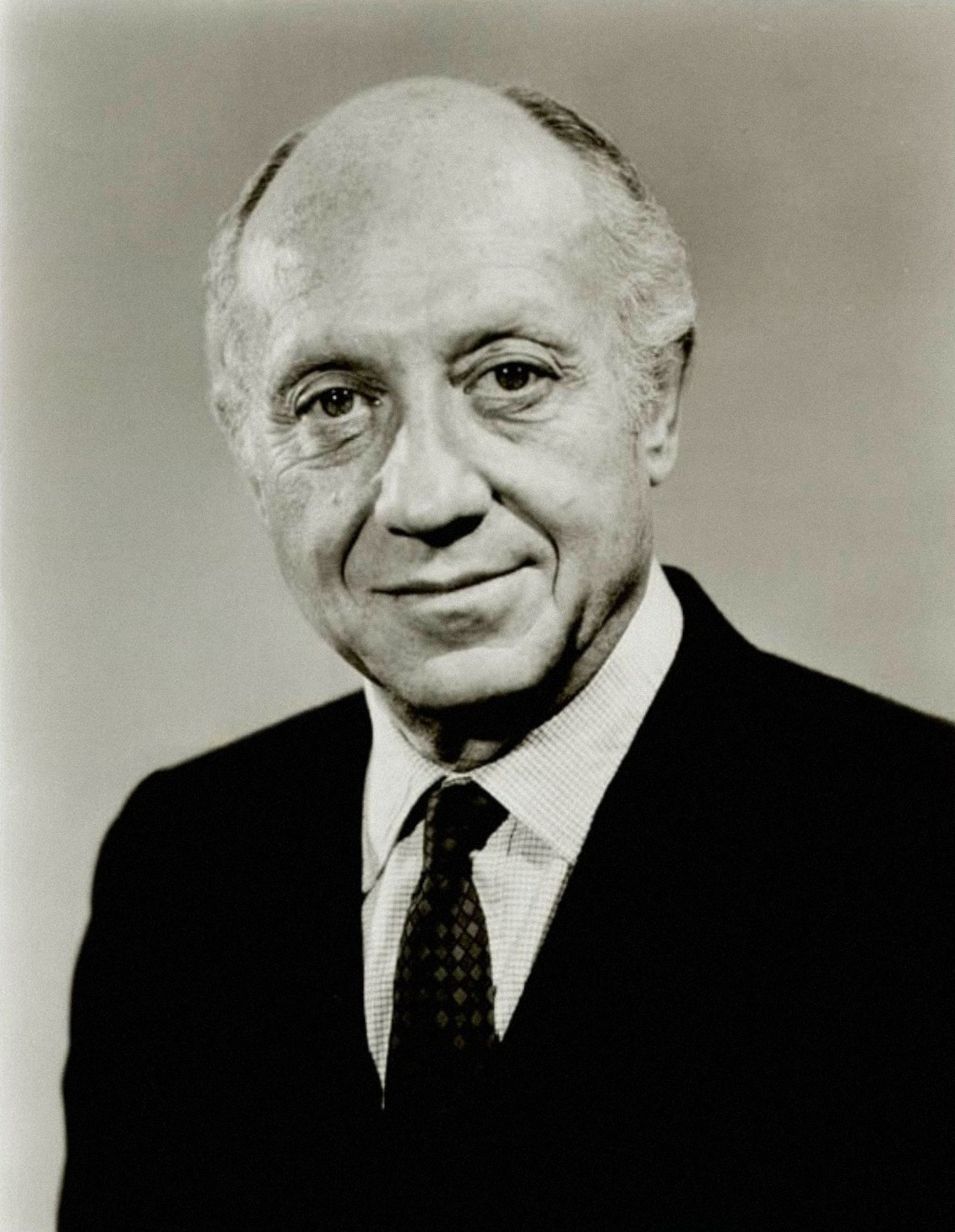
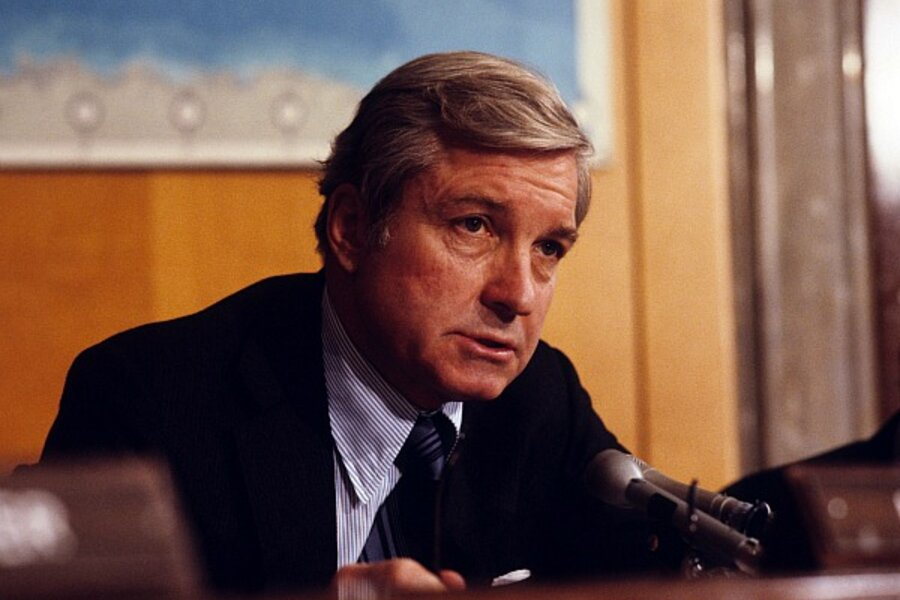
RINOs from American History #22: Charles Percy

The state of Illinois is not exactly the friendliest ground for Republicans these days, but Illinois’ prominent Republican figures was Charles Harting Percy (1919-2011), who was a big name in Rockefeller Republican circles. His life before politics was a series of great successes. At the age of 30, after working for the Bell & Howell Corporation for several years (with an interruption for service in the Navy from 1942 to 1945), he became its president. He served for 15 years, and Percy proved an astute businessman, growing the company and multiplying revenues by 32 and the number of employees by 12 and making the company go public (The San Diego Union-Tribune). The Bell & Howell Corporation, which makes cameras, camera lenses, and other film equipment, still exists today. During his time as president, he became involved in politics, supporting President Dwight Eisenhower, who encouraged him to write Decisions for a Better America, a book outlining policies for Republicans to promote for the future.

In 1964, Percy resigned his post to run for governor, but the national environment weighed too heavily with Barry Goldwater’s unpopularity and his endorsement of him and he narrowly lost to Democratic incumbent Otto Kerner. The 1966 campaign would prove more successful for him. Percy ran against 74-year old Senator Paul Howard Douglas, long a prominent and principled independent liberal voice in Illinois. He benefited from a backlash to the Johnson Administration’s social policies, including support for a fair housing law. Although Percy also favored a fair housing law and civil rights legislation overall, some voters saw voting for him as a way to stick it to the Johnson Administration. Percy also received sympathetic support because of the brutal murder of his 21-year-old daughter and campaign manager, Valerie, by a home intruder. The case remains officially unsolved. Percy won the election by 11 points, and he was almost immediately considered a strong candidate for a possible future presidential run, with many seeing him as Kennedy-esque. In late 1967, a Louis Harris poll placed Percy ahead of Lyndon B. Johnson for the 1968 election (Clymer). Johnson was not the only big name who Percy was a potential threat. Richard Nixon thought him a potential threat in the Republican primary in 1968, noting, “Percy and Nixon are two to one…Percy has a good forum in Washington and he’s smart, but he doesn’t have a delegate base” (Chicago Tribune). However, Percy did not think himself sufficiently experienced to run for president, and endorsed Nelson Rockefeller. Nixon gave Percy some consideration as a running mate, but he did not land on his list of finalists due to him having endorsed Rockefeller during the primary. In 1968, he sponsored a proposal to permit communities to use federal law enforcement grants to recruit, train, and pay young people to aid the police in community relations, which attracted the support of many moderate and liberal Republicans. Percy was a rising star among Rockefeller Republicans to the point that he was considered a contender for the Republican nomination for president in 1968. His record in the Senate reflected his moderate liberalism. The Chicago Tribune (1985) wrote in a retrospective of his career, “As a Senator, Percy was good but not great. Early in his legislative career, Ralph Nader’s Congress Project described Percy as “one of the most diligent, well-prepared and effective men in the Senate””. Percy was effective in altering how federal judges were picked in Illinois, considering selection on a merit basis, to the consternation of Illinois Republican leaders (Chicago Tribune).

Like Percy did with many Republicans in Illinois, he also crossed President Nixon on numerous occasions. He voted against the nominations of both Clement Haynsworth and G. Harrold Carswell to the Supreme Court, but he did vote for William Rehnquist in 1971. Percy also supported both the Cooper-Church Amendment in 1970 to pull out of Laos and Cambodia but he also opposed the McGovern-Hatfield “End the War” Amendment, the first to establish a timetable for withdrawal from Vietnam. In 1972, Percy decided to leave the Appropriations Committee for the Foreign Relations Committee, seeing this as a more optimal committee for which to boost himself for a presidential run. On the Foreign Relations Committee, Percy advocated for pulling out of Vietnam and in support of détente (Chicago Tribune). Despite all the talk of him being president, he only seriously considered running once, and that was in 1973 when he formed an exploratory committee for the 1976 presidential election. That year, Percy sponsored a resolution for an independent prosecutor to investigate the Watergate break-in and called on President Nixon to “tell the whole truth” about Watergate (Naughton). However, Nixon’s resignation and Ford’s succession to the presidency ended Percy’s presidential ambitions. He would instead endorse Ford for a full term. Americans for Constitutional Action regarded Percy poorly, with him supporting their positions only 34% of the time during his career, with him at worst backing ACA positions only 7% of the time in 1969 and 71% at most in 1984. The liberal group Americans for Democratic Action, on the contrary, found a good deal more to like about him. He agreed with them on the issues 57% of the time and his agreement ranged from 35% in 1981 to 79% in 1968. DW-Nominate scores him at 0.099, lower than any Republicans serving in Congress today. Percy described himself as “a conservative on money issues but a liberal on people issues” (Hawkins, 2011).

In 1974, Percy introduced legislation to make 55 miles per hour the limit for national freeways as a fuel conservation measure and this became law in 1975, lasting until 1987. In 1975, Percy recommended John Paul Stevens for the Supreme Court to President Ford. Stevens was Ford’s only pick for the Supreme Court. In 1978, Percy, at first thought to have an easy road to reelection, was surprised when relatively unknown Democrat Alex Seith proved to be a more formidable challenger than he thought. Polling had originally put Percy at 20 points ahead of Seith, but Seith embraced some hardline anti-communist stances and fiscal conservatism, which resulted in some conservative defections and a Chicago Sun-Times poll had Seith up by seven points in the week before the election. Percy had to campaign hard in the last week, airing a blitz of TV ads and using his own money to fund his reelection (Time Magazine). Percy pulled through by roughly the reverse of the Chicago Sun-Times poll.

Final Term

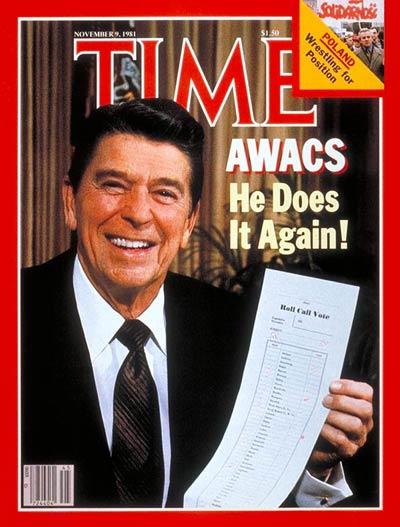
Although often a liberal on foreign policy including voting for the Panama Canal Treaties, he also tried to push through an amendment to make clear to China in 1979 that aggression to Taiwan would be considered against the interests of U.S. national security. The amendment failed to pass, but Percy’s pushing of this amendment was a clear indicator that he at least wanted to appear tougher on the international stage. The 1980 election would elevate him to the chairmanship of the Foreign Relations Committee. Despite his chairmanship, his historical approach to foreign relations was considerably different from that of the Reagan Administration, and President Reagan often went to Majority Leader Howard Baker (R-Tenn.) instead for help on his foreign policy initiatives. Percy, perhaps seeing the writing on the wall of the party’s direction, was a bit more accommodating to Reagan Republicanism than he would have been in the past. However, he maintained a significant degree of independence, and in 1981 he spearheaded opposition to the construction of the Tennessee-Tombigbee Waterway, a project that Reagan had gotten behind and environmentalists had gone against. Ironically, one of the ways in which he did help Reagan harmed him when he sought reelection. In 1981, Percy had voted for President Reagan’s sale of Airborne Warning and Control Systems radar planes to Saudi Arabia, which supporters of Israel had opposed as a potential threat to the nation’s security.  Percy also crossed Israel and its supporters the next year when he condemned Israel’s invasion of Lebanon (Broder). Due to Percy’s sometimes critical stance on Israel, he was now a target for defeat. It also didn’t help that Percy had once described Yasser Arafat as a “relative moderate” (Cornwell). Despite President Reagan coming to Illinois to campaign for him, the Israel factor as well as Illinois having a weak economy and becoming an increasingly Democratic state, resulted in his narrow 1984 defeat for reelection by liberal Democratic Congressman Paul Simon. Percy, like the man he beat for reelection, had served three terms. Percy’s loss has been interpreted by some as having significant future implications as it showed the power of the pro-Israel lobby.

References

Broder, J. (2003, December 10). The battle of the Mideast lobbies. NBC News.

Retrieved from

https://www.nbcnews.com/id/wbna3071599

Clymer, A. (2011, September 17). Charles Percy, Former Ill. Senator, Is Dead at 91. The New York Times.

Retrieved from

Cornwell, R. (2011, September 22). Charles Percy: Politician hailed early in his career as the Republicans’ answer to John F. Kennedy. The Independent.

Retrieved from

https://www.independent.co.uk/news/obituaries/charles-percy-politician-hailed-early-in-his-career-as-the-republicans-answer-to-john-f-kennedy-2358670.html

Former Illinois Sen. Charles Percy dies at 91. (2011, September 17). The San Diego Union-Tribune.

Retrieved from

Hawkins, K. (2011, September 17). Former US Sen. Charles Percy of Illinois was ‘fervently moderate’. The Christian Science Monitor.

Retrieved from

Nation: Percy’s Problem. (1978, November 6). Time Magazine.

Retrieved from

Naughton, J.M. (1973, June 3). Percy Calls on Nixon to Tell Truth About Watergate. The New York Times.

Retrieved from

Percy, Charles Harting. Voteview.

Retrieved from

https://voteview.com/person/11205/charles-harting-percy

Percy Endured and Endeared, But Was Nagged By Career as Might-Have-Been. (1985, January 13). Chicago Tribune.

Retrieved from

To Agree to That Portion of a Percy Amendment to S. 917 Which Adds to the Stated Purpose of Grants to Improve Law Enforcement the Purpose of Recruiting and Training of Community Service Officers to Assist Police in Discharge of Certain Duties. Voteview.

Retrieved from

https://www.voteview.com/rollcall/RS0900414

To Amend S. 245 By Stating That the Security Interests of the U.S. Would Be Threatened if Taiwan Were To Be Attacked. (Motion Failed). Voteview.

Retrieved from

https://www.voteview.com/rollcall/RS0960013

The Battle on the Battle Act

John F. Kennedy, the man who defeated the Battle Act

By 1951, the Cold War had heated up quite a bit with the Korean War, and as part of the Mutual Defense Assistance Control Act, a provision was included by Rep. Laurie C. Battle (D-Ala.), which prohibited foreign aid to any nations that traded with the USSR. Although this was accepted in the heat of the Korean War, over time internationalists thought that this tied the president’s hands excessively when it came to Cold War maneuvering. India, for instance, sold a small amount of Thorium nitrate to China in 1953 after a deal fell through with the US, prohibited under the Battle Act for receiving aid. India was a tricky nation for the US to deal with at the time as it was one of the non-aligned nations, and its government under Jawaharlal Nehru was left-wing, nationalizing many industries and subjecting others to tight bureaucratic regulations. Yet, India was not a nation that the United States wanted to make a foe either, even though they were more aligned with Pakistan at the time, which was with the Western Bloc. Multiple efforts were made subsequently to cut aid to India, including a successful one in 1955 cutting $10 million by a vote of 68-16 on July 22nd, and an effort by staunchly anti-Communist Senator Styles Bridges (R-N.H.) to cut aid to India by 50% the following year which was rejected 23-56 on June 29th.

Given complications with India as well as Stalin no longer being a factor in the USSR, it was thought that perhaps American aid to Soviet satellite nations may push them to break way from Soviet control. This thought was shared by President Dwight Eisenhower and Senator John F. Kennedy (D-Mass.), who sponsored such a proposal. The Kennedy Amendment stipulated that aid could be extended to these nations if the President believed that it would loosen the grip of “Sino-Soviet domination” (Time Magazine). This proposal was also endorsed by Eisenhower’s Secretary of State, John Foster Dulles. However, Eisenhower could not wave a wand for this provision to come into law, as it had to go through Congress. Although it is true that many Republicans lined up to support Eisenhower on foreign aid, less were willing to support granting aid to communist nations, and these included the previously mentioned Bridges as well as Senate Minority Leader William F. Knowland (R-Calif.) and Everett Dirksen (R-Ill.). All three were influential and willing to vote against foreign aid cuts, but they were not willing to provide aid to Soviet satellites. Dirksen and Bridges had voted against Eisenhower’s nomination of Chip Bohlen as Ambassador to the USSR in 1953 as they regarded him as too accommodating to the Soviets and all three voted against censuring Joseph McCarthy in 1954. These three pressured Eisenhower with the threat of foreign aid cuts to back down on revision of the Battle Act, with him instead calling for the measure as a separate bill instead of an amendment to Mutual Security legislation. Senator Knowland’s motion to table Kennedy’s amendment prevailed by a single vote, and Eisenhower being on record opposing Kennedy’s amendment undoubtedly sunk it. However, President Eisenhower would back a separate bill to revise the Battle Act the following year, which met an easier time in a significantly more Democratic Senate. However, the House declined to act. President Kennedy tried again as president in 1961 with a separate bill that passed the Senate 45-36, but the House once again declined to act. However, the Battle Act itself was ended as the Mutual Security program was replaced with the Foreign Assistance Act in 1961 later in the year, and this measure stipulated that the president could provide aid to any Communist nation if he regarded it as vital to the security of the United States.

References

Foreign Relations of the United States, 1952-1954, Africa and South Asia, Volume XI, Part 2. State Department Office of the Historian.

Retrieved from

https://history.state.gov/historicaldocuments/frus1952-54v11p2/d1047

HR 11356. Foreign Aid. Amendment to Reduce Development Assistance and Technical Cooperation Funds to India. Govtrack.

Retrieved from

https://www.govtrack.us/congress/votes/84-1956/s183

HR 12181. Mutual Security Act of 1958. Amendment to Strike Language Giving the President Authority to Approve Aid to Communist Nations Other Than Soviet Union, Communist China, and North Korea. Govtrack.

Retrieved from

https://www.govtrack.us/congress/votes/85-1958/s185

HR. 7724. Mutual Security Appropriations for Fiscal 1956. Committee Amendment to Reduce by $10 Million Funds for Development Assistance for India. Govtrack.

Retrieved from

https://www.govtrack.us/congress/votes/84-1955/s74

Nomination of Charles Bohlen to be Ambassador to Russia. Govtrack.

Retrieved from

https://www.govtrack.us/congress/votes/83-1953/s9

S. 1215. Amend 1951 Battle Act to Give President Authority to Give Aid to Countries Other Than U.S.S.R. and Communist Far East. Govtrack.

Retrieved from

https://www.govtrack.us/congress/votes/87-1961/s36

S. 1697. Give President Authority to Approve Economic Aid for Communist-Dominated Countries Other Than Soviet Union & Those in the Far East When Important for National Security. Govtrack.

Retrieved from

https://www.govtrack.us/congress/votes/86-1959/s210

S. Res. 301. Passage. Govtrack.*

Retrieved from

https://www.govtrack.us/congress/votes/83-1954/s271

* – This source has an error on the vote of Nebraska senators, it was Hazel Abel who voted to censure McCarthy while the hardcore conservative Roman Hruska voted against.

The Congress: Retreat & Defeat. (1958, June 16). Time Magazine.

Retrieved from

https://time.com/archive/6800916/the-congress-retreat-defeat/

Power-Balancing and Peaceful Relations in the Middle East: Jimmy Carter and Military Aircraft Sales

The McDonnell-Douglas F-15 Eagle

President Carter’s foremost achievement in the Middle East is widely regarded as the Camp David Accords, but a critical part of the strategy of the Carter Administration in the Middle East was for the United States to be friendly with all the Middle Eastern nations that they could. After all, OAPEC (Organization of Arab Petroleum Exporting Countries) had flexed its economic muscle in October 1973 with an oil embargo in response to the Nixon Administration and other nations that supported Israel in the Yom Kippur War, the US shipment of arms having been credited with saving the nation. This produced an oil shock in the United States that resulted in oil shortages and higher prices and ended in March 1974. The US thus sought to find ways to improve their relations with Arab nations while continuing their historic support for Israel. One of these ways was through military sales.

Israel had asked the Carter Administration in early 1978 to sell it 25 McDonnell-Douglas F-15 Eagles, but the Administration only agreed to 15 as well as 75 F-16s, which were less powerful models of military aircraft. Egypt was to get 50, and Saudi Arabia 60 F-15s, the total sale amounting to $4.8 billion (Hovey). Israel had previously been sold 25, so their total arsenal of F-15s would stand at 40 by 1981, when deliveries were to occur. The Carter Administration had in mind a balance of power in the Middle East with the inclusion of Saudi Arabia and Egypt. However, this was before the Camp David Accords and advocacy groups for Israel saw this arrangement as on net against its interests, fearing that Egypt and Saudi Arabia would use their F-15s against Israel, and campaigned against it. How the politics of the Middle East looked in 1978 as compared to today is a marked contrast; the foremost critic of Israel in the Senate at the time was North Carolina’s Jesse Helms (he would change his tune after the 1984 election), while liberals tended to be the strongest defenders of Israel. Liberal Republican Lowell Weicker of Connecticut issued a scathing critique of this new approach in May 1978, accusing Carter’s national security advisor Zbigniew Brzezinski of exchanging a “balance of power” approach for a “world order” approach, and that Jews were an obstacle to this, darkly warning that “We know from history that time and again, when national leaders ran into difficulties, they found it convenient to blame their problems on the Jews. And we know what were the results” (Wald). However, Carter had more to contend with on his own side of the aisle in opposition. Senator Daniel Patrick Moynihan (D-N.Y.), for instance, commented that “It certainly seems to be an ill‐timed intrusion into the peacemaking process” (Hovey). This measure also met the total opposition of Rep. Clarence Long (D-Md.), chairman of the House Appropriations subcommittee on foreign operations.

Opponents introduced Senate Continuing Resolution 86 to disapprove of the sale, and there was considerable support for the resolution. In response, President Carter wrote a letter to the Senate, urging them to accept the deal, arguing, “The long-term interests of Israel are served by the proposed sales to Egypt and Saudia Arabia. It is in Israel’s interest to encourage the forces of moderation in the Middel East, and to promote their close relationship with the United States. It would not serve Israel’s interest if we were to fail to keep bi-partisan commitments, made by the prior Administration as well as by mine, to provide aircraft for the defense of Saudi Arabia. It would be against Israel’s interest if moderate nations are brushed aside by the United States, opening vast possibilities for the intrusion of hostile influences” (Carter).

On May 15, 1978, the Senate voted on the resolution disapproving of the sale, and they were persuaded of the Carter Administration’s position, with the resolution failing 44-54 (D 33-27; R 11-26; I 0-1). The conservative Americans for Constitutional Action counted a “yea” on this resolution as against their position while the liberal Americans for Democratic Action counted a “yea” as for their position. This was one issue in which conservatives and the Carter Administration were in accord, with Senate conservatives by and large backing the sale, and even some normally quite liberal people went to bat for Carter, including Maine’s Edmund Muskie and South Dakota’s George McGovern. Senator John J. Sparkman (D-Ala.), the aging chairman of the Committee on Foreign Relations and 1952 candidate for vice president, came to the sale’s defense. However, a young Joe Biden of Delaware, who had been the first of the Democratic senators to endorse Jimmy Carter in the 1976 primary, voted for the resolution, as did Frank Church of Idaho, who would succeed Sparkman as chairman and had been a strong supporter of the Panama Canal Treaties. Neither Egypt nor Saudi Arabia would use their planes to attack Israel, as opponents of the sale had feared as a possibility, and Israel would make great use of F-15s in military operations. The Reagan Administration, interestingly enough, would have a similar controversy surrounding military aircraft sales to the Middle East only three years later, and would have an even tougher battle on the matter. However, that’s a post for another time.

References

Carter, J. (1978, May). Letter to Members of Congress on Middle East Arms Sales. Jewish Virtual Library.

Retrieved from

https://www.jewishvirtuallibrary.org/president-carter-letter-to-members-of-congress-on-middle-east-arms-sales-may-1978#google_vignette

Hovey, G. (1978, February 15). U.S. Plans First Jet Sale to Cairo, Reduces Israeli Order for Craft; Saudis Get 60. The New York Times.

Retrieved from

To Agree to S. Con. Res. 86, The Resolution Expressing Disapproval of the President’s Proposal to Sell Aircraft and Related Defense Articles to Egypt, Israel, and Saudi Arabia. Govtrack.

Retrieved from

https://www.govtrack.us/congress/votes/95-1978/s797

Wald, M.L. (1979, September 23). Weicker Still Jousting With All Comers. The New York Times.

Retrieved from

Jimmy Carter’s Most Controversial Achievement: The Panama Canal Treaties

In 1903, the US sought to carve an interoceanic canal in Central America, and negotiated the Hay-Herran Treaty with Colombia, which at the time had Panama as a province. However, the Colombian legislature rejected the treaty, and the US subsequently gave support to the cause of Panamanian independence, which was declared that year and recognized by the US, resulting in the Hay-Bunau-Varilla Treaty, which granted the US the rights to a canal zone in perpetuity, and Panama getting $10 million from the US as well as an annual rental payment. The Canal Zone that resulted was an American enclave in the otherwise sovereign nation of Panama, and tensions rose between Canal Zoners and Panamanians over the next sixty years, and this resulted in two more treaties in 1936 and 1955.

Cold War tensions in Central and South America changed the political equation, and on January 9, 1964, an anti-American riot occurred at the canal after a scuffle between American and Panamanian high school students and Canal Zone police resulted in the tearing of a deeply symbolic Panamanian flag. The matter of who instigated the scuffle is a subject of dispute to this day. The riot resulted in the deaths of 4 US soldiers and at least 22 Panamanians. One of the deaths of the soldiers was accidental, and among the Panamanian deaths, some were killed by Canal Zone police after demonstrators threw rocks in response to tear gassing, but at least six were killed in a fire set by Panamanian rioters. This event resulted in the Panamanian government breaking off diplomatic relations with the US, to be renewed only when negotiations were opened for a new treaty regarding the Panama Canal, and President Johnson started negotiations. Although an agreement on three treaties was reached in 1967, political uncertainty in Panama resulted in a setback. The talks, however, continued during the Nixon and Ford Administrations. Secretary of State Henry Kissinger advised President Ford that “If these [Canal] negotiations fail, we will be beaten to death in every international forum and there will be riots all over Latin America” (Department of State). Gerald Ford was thus in favor of relinquishing the Panama Canal during the 1976 campaign. However, Jimmy Carter signaled opposition at the time, pledging not to surrender “practical control of the Panama Canal any time in the foreseeable future” (Department of State). Despite Carter’s initial opposition, his advisors were for it, and they ended up convincing him to be for it too.

The Carter Administration finalized the talks with Panama, signing two treaties on September 7, 1977. The first was that the 1903 treaty was to be scrapped, that the Canal Zone would cease to exist as a separate entity on October 1, 1979, and that the US would turn over control of the Panama Canal by December 31, 1999. The second was that the Panama Canal would be neutral and that the US would have the authority to defend its neutrality with military force. Thus, the US sought to ensure instead of ownership in perpetuity, use in perpetuity.

Carter managed to get the support of Senate Majority Leader Robert Byrd (D-W.V.) and Senate Minority Leader Howard Baker (R-Tenn.). For both men, neither among the staunchest partisans in their respective parties, this was an early test of their leadership abilities, as this was the first session of Congress that both men were their party leaders. As Byrd would recount, it was his “trial by fire” (U.S. Senate). Baker definitely had a lot more to lose; he was up for reelection in 1978, and he had presidential aspirations for 1980. Byrd, on the other hand, had been reelected in 1976. The political establishment of Washington faced major headwinds over this issue; 38 senators signaled their opposition to the Panama Canal Treaty, and public opinion was against, with only 23% of Americans supporting while 50% opposed. Ronald Reagan strongly opposed the treaties, famously stating, “We bought it, we paid for it, it’s ours, and we’re going to keep it” (Lindsay). He had also used this issue against Gerald Ford in the 1976 Republican primary, and Reagan had come close to winning. The Senate’s top opponent was James B. Allen (D-Ala.), an ally of George Wallace who frequently championed conservative causes and had even received one vote for vice president at the 1976 Republican National Convention. Senator Strom Thurmond (R-S.C.) declared that “The loss of this canal would contribute to the encirclement of the United States” (Department of State). Indeed, conservative legislators were suspicious of Panamanian dictator Omar Torrijos, who was thought to be favorable to communism.

Although 38 senators signaled their opposition to the Panama Canal Treaty, Democrat Ed Zorinsky, the first to be elected to the Senate from Nebraska since the Great Depression, indicated his private support for the treaty, but that Nebraskans were strongly opposed and that he would only vote for it if President Carter could convince Nebraskans to support it. Carter, Byrd, and Baker proceeded to lobby senators, and for the first time in the Senate’s history, the proceedings of the Senate for the treaty debate were live on radio in an effort to educate the public on the treaty (U.S. Senate). They also got support from a few unexpected people: famously conservative actor John Wayne as well as National Review’s William F. Buckley Jr. came out in favor of the treaties. Wayne was a friend of General Omar Torrijos, and accused Reagan of misinforming people in his arguments (Lindsay). One of the senators who played a significant role in trying to shape the treaty in the Senate was Dennis DeConcini (D-Ariz.). Arizona didn’t typically elect Democrats, and DeConcini’s election in 1976 had been the product of an unusually bitter Republican primary. He thus sought to add language that would make his vote in favor easier for him to explain to his conservative constituents, and proposed a reservation giving the United States the explicit right to use military force to defend the Panama Canal, which threatened Panamanian support for the treaty. Ultimately, this reservation was adopted but with language added that nothing in the treaty was to be “interpreted as a right” of intervention in the domestic affairs of Panama (Time Magazine). Senator Ed Brooke (R-Mass.) sought and got some minor technical reservations to the treaty, winning his vote. A senator with a bit of a different angle on this matter was James Abourezk (D-S.D.). Abourezk, who was staunchly liberal, was not actually against the treaty, but wanted to make a deal with President Carter that he would vote for the treaty if he would veto a bill deregulating natural gas, but Carter was not inclined to be cutting deals (Time Magazine). A senator the Carter Administration hotly pursued was California’s Republican S.I. Hayakawa. Hayakawa was an interesting fellow to say the least, and he had in his 1976 campaign said regarding the canal that we “stole it fair and square” (Lindsay). However, he turned out to be persuadable and Carter buttered up his ego by voicing an eagerness to consult Hayakawa on foreign policy regularly. He came to support the treaties, and, contrary to a budding consultative partnership forming, neither man spoke to the other again. One senator who was in a difficult position was Byrd’s West Virginia colleague, Jennings Randolph. Randolph was well into his seventies, and he was facing a tough reelection, with Republicans having recruited their strongest candidate yet against him in Governor Arch Moore. He was one of three or four senators would only vote for if his vote was needed, and it turns out it wasn’t. He would narrowly survive his reelection in 1978. The vote on the Neutrality Treaty on March 16th was 68-32 (D 52-9; R 16-22; I 0-1).

https://voteview.com/rollcall/RS0950702

This would be followed up with an identical vote for the Panama Canal Treaty on April 18th. This was one more vote than was needed to ratify, and although this vote was close, the pro-side actually had three to four more senators they could have flipped if their votes were needed. This would be Senator Allen’s last battle; he died less than two months after Senate ratification of a heart attack on June 1st.

The Fight Over Funding and Consequences for Pro-Treaty Senators

This was a tough vote, and the battle wasn’t over. Congress had to approve funds to implement the Panama Canal Treaties, and by the time Congress was considering the measure, a midterm had occurred. While it wasn’t too shabby for Carter and the Democrats given the history of midterms, he nonetheless faced a less friendly Congress, and there had been senators who lost reelection at least in part over their vote for the Panama Canal Treaties. These included Democrats Floyd Haskell of Colorado, Dick Clark of Iowa, William Hathaway of Maine, Wendell Anderson of Minnesota, and Thomas J. McIntyre of New Hampshire. Republican Clifford Case of New Jersey, long a frequent dissenter from Republican positions, lost renomination to anti-tax activist Jeffrey Bell. This would also contribute to the Republican sweep of the Senate in 1980, with pro-treaty senators Herman Talmadge of Georgia (although his segregationist past and his censure for ethics violations hurt him more), John Culver of Iowa, John A. Durkin of New Hampshire, and Robert B. Morgan of North Carolina. Perhaps the most notable loss among the Democrats up for 1980, though, was Frank Church of Idaho, who had been the floor manager of the treaties and lost to Congressman Steve Symms, an ultra-conservative who was critical of the treaties. Minority Leader Howard Baker (R-Tenn.), however, managed to handily win his bid for a third term in 1978, but his leadership on the Panama Canal Treaties cost him any hope of winning a Republican nomination for president. The vote to implement the Panama Canal Treaties lacked the need for the 2/3’s majority the treaties had, and indeed it fell just short of 2/3’s when the Senate voted for it 63-32 on September 25, 1979. However, it also had to be approved by the House unlike with the treaties, and the House was a bit less persuadable. Congressman John Dingell (D-Mich.), for instance, was far from receptive, stating, “We in the House are tired of you people in the State Department going to your tea-sipping friends in the Senate. Now you good folks come up here and say you need legislation [to implement the treaties] after you ignored the House. If you expect me to vote for this travesty, you’re sorely in error” (Lindsay). Adoption of the conference report was on a narrower margin of 232-188 the following day, with President Carter signing the law on the day after. Carter said in his statement on signing the Panama Canal Act into law that the treaties “express the commitment of the United States to the belief that fairness, and not force, should lie at the heart of our dealings with the nations of the world” (The American Presidency Project).

Although a staunch opponent of the Panama Canal Treaties had been elected to the presidency in Ronald Reagan, he did not attempt to undo the treaties…he had enough on his plate in Central America with the situations in Nicaragua and El Salvador. Although many analysts regard the Panama Canal Treaties as a success given the fears of what would happen if they were not ratified, there are still issues surrounding the canal, notably China’s growing influence through the subsidiary of a Chinese business managing two ports and Chinese businesses funding the construction of a new bridge over the canal.

References

Lindsay, J.M. (2011, March 16). TWE Remembers: The Fight over the Panama Canal Treaties. Council on Foreign Relations.

Retrieved from

https://www.cfr.org/blog/twe-remembers-fight-over-panama-canal-treaties

Nation: How the Treaty Was Saved. (1978, May 1). Time Magazine.

Retrieved from

https://time.com/archive/6853512/nation-how-the-treaty-was-saved/

Panama Canal Act of 1979 Statement on Signing H.R. 111 Into Law. The American Presidency Project.

Retrieved from

https://www.presidency.ucsb.edu/documents/panama-canal-act-1979-statement-signing-hr-111-into-law

Senate Leaders and the Panama Canal Treaties. United States Senate.

Retrieved from

https://www.senate.gov/about/powers-procedures/treaties/senate-leaders-and-the-panama-canal-treaties.htm

The Panama Canal and the Torrijos-Carter Treaties. Department of State.

Retrieved from

https://history.state.gov/milestones/1977-1980/panama-canal#:~:text=One%20of%20President%20Jimmy%20Carter%27s,control%20of%20the%20Panama%20Canal.

Differing Interpretations of Jimmy Carter’s Record

Although many obituaries on Jimmy Carter are laudatory, he is generally much better regarded for his post-presidency than his presidency. President Carter had an interesting way about him in being a source of dissatisfaction for both conservatives and liberals, although considerably more for the former than the latter. While obviously liberals would prefer his policies to those of his successor, the characterization of Carter as a liberal Democrat does have some contesting from them, and dissatisfaction with Carter was sufficient for Senator Ted Kennedy (D-Mass.) to challenge him for renomination in 1980. One article that caught my eye was that from liberal columnist Timothy Noah writing for Politico, who regards labeling Carter as a liberal a mistake, and although the headline of his article seems to point to Carter being labeled a conservative, he gets labeled instead a liberal Southerner within the article. However, this seems to be considered some form of conservatism, although a lesser form than practiced by the GOP. Liberals not counting Carter as one of their own does have a degree of basis in one of the three standards I like to use in examining politicians, Americans for Democratic Action. ADA finds Carter to have embraced their position on issues 75% of the time, with him at lowest embracing their positions 63% of the time in the Senate in 1979 and at highest, the House in the same year at 90%. Although clearly backing what ADA regards as the “liberal” position 3 in 4 times is not acceptable to conservatives, it also unsatisfactory for liberals. One notable issue in which Carter sided with conservatives was in the retaining of the Hyde Amendment in 1977, a big no-no for contemporary Democrats. Interestingly, Carter by his own admission related better to Southern Democrats and Republicans than he did his liberal allies, who voted with him more (Noah). This is similar to Lyndon B. Johnson when he was Senate Majority Leader. Although he was much more with liberals in how he voted than conservatives and he would prove even more liberal in his presidency, his personal relations with liberals were testier than his chummy relations with fellow Southern Democrats. What this translates to, however, is that liberals largely get the wheat and conservatives largely get the chaff. Carter agrees with Americans for Constitutional Action, ADA’s conservative counterpart, 13% of the time. However, there are a few interesting aspects to this judging of Carter, including on three occasions ADA and ACA taking the same position on an issue! This occurred twice for the Senate in 1980, when both ADA and ACA objected to Senator Dan Moynihan’s (D-N.Y.) proposal for federal funds for private school tuitions and supported Senator Jake Garn’s (R-Utah) amendment maintaining the status quo for housing instead of a new housing subsidy program. President Carter was on the same page as both organizations. In the House that year, both ADA and ACA approved of Representative Samuel Devine’s (R-Ohio) motion to recommit and thus kill the bill establishing the Energy Mobilization Board. This board, if put in place, would have empowered the president to override environmental laws on a federal, state and local level. While overturning environmental laws might appeal to conservatives eager to promote development for economic growth, the full implications of what this could establish for federalism (meaning proper relations between the federal government and states) became clear to most by 1980. Liberal Democrats found this objectionable for two reasons. The first is the environmental angle, and the second was the very real possibility at the time that came true that the next president would be Ronald Reagan. Contrary to the position of both organizations, Jimmy Carter opposed killing the bill. I always find these incidents in which on major issues the most conservative and the most liberal people align to be fascinating. Those weren’t the only votes ADA counted that are questionable from an ideological standpoint. Counting the vote for lifting controls on gas by 1985 is questionable given that many conservatives opposed the proposal as too long retaining controls, and senators from the oil-rich Louisiana, Oklahoma, and Texas were against. If anything, this vote is a vote of the political center against the strong left and right. It should also be noted that DW-Nominate gives Jimmy Carter a score of -0.504, which is quite liberal indeed! However, it should be noted that I’ve noticed that the ideological bent of presidents does seem exaggerated by this standard and this is because presidents don’t weigh in on every or sometimes even a lot of issues that Congress votes on that have ideological salience. I will proceed with examining Carter’s stances on the issues of his time.

Foreign Policy

Jimmy Carter was a supporter of the postwar consensus surrounding foreign aid, backing foreign aid bills and he also sought to present to the world you might say a kinder, gentler United States. He supported sanctions for the white minority ruled Rhodesia in 1977 and opposed lifting them to support the government of the black majority government of Bishop Abel Muzorewa elected in 1979, opening the path for China-backed Robert Mugabe’s election in an election fraught with violence in 1980. Mugabe, although considered a symbol of Pan-Africanism, brought Zimbabwe to ruin with his economic and social policies. Although many people point to the Camp David Accords, normalizing relations between Israel and Egypt, as a great accomplishment of the Carter Administration, the more consequential action of his was the Panama Canal Treaties. The first treaty scrapped the old 1903 treaty that granted the US rights in perpetuity over the canal, instead turning over control to Panama by December 31, 1999, and the second was the neutrality treaty, which mandated that the canal be neutral and that the US was authorized to militarily intervene to enforce neutrality. Carter also ceased support to the Somoza regime in Nicaragua, which allowed the Marxist Sandinistas to have a successful coup and he then supported providing aid to the new government.  Carter also dropped support for the Shah of Iran in the fall of 1978 after Black Friday, in which 88 religious demonstrators were gunned down for failing to disperse, and the national strike of October which shut down the nation’s petroleum industry. Unlike Rhodesia, Nicaragua, and the Panama Canal Treaties, there was no Congressional vote regarding the situation in Iran.

Domestic Policy

Carter was fairly strong with liberals on domestic policy. He supported the creation of the Department of Education, opposed weakening an increase in the minimum wage, opposed maintaining the requirement that food stamp recipients pay for part of it, supported a windfall profits tax, supported retaining the 1969 credit control law, and backed conservation measures reserving lands in Alaska, California, and Idaho for national parks and wildlife refuges. Carter also backed a set of mandatory and voluntary price controls for the healthcare industry in response to inflation, which died in Congress. He opposed conservative efforts to end price controls on natural gas in 1977 on new onshore that year and new offshore by 1982, instead supporting a compromise proposal the following year to end price controls on all newly discovered gas by 1985. Although Carter indicated support for budget reductions, he opposed several conservative proposals at budget reduction and budget balancing. Although Carter supported trucking deregulation and opposed an effort by Senator Warren Magnuson (D-Wash.) to weaken it with an amendment placing a “burden of proof” on applicants for a trucking certificate to demonstrate that their proposed service works towards present or future public needs, he also opposed allowing Congress to check the executive on this matter by having the ability to vote to overturn regulations that might stem from the legislation. Carter was also opposed to efforts to end gas rationing and supported bailing out the Chrysler Corporation. Carter did oppose a consumer co-op bank bill in 1977, but backed a subsequent proposal. Despite being portrayed as a fiscal conservative, Carter backed Appropriations Committee Chairman Robert Giamo’s (D-Conn.) budget for fiscal year 1981 increasing the deficit.

Jimmy Carter on Civil Rights and Women’s Rights

Carter supported strengthening the fair housing act in a way that gave authority for enforcement to administrative law judges instead of jury trials and supported the Equal Rights Amendment, with the latter he signed into law the measure extending the deadline for its ratification to 1982, but no additional states ratified between then and the deadline. Ronald Reagan had supported the ERA while California’s governor but by 1980 he had turned against it, and Reagan would sign a measure strengthening the fair housing act that provided for jury trials for violations in 1988.

Jimmy Carter on Military Issues

On military issues, Carter had a mixed record. He opposed the construction of five B-1 Bombers and managed to get support for this from some politicians who were usually defense hawks such as Armed Services Committee chairman John C. Stennis (D-Miss.) and Appropriations Committee chairman George Mahon (D-Tex.). Carter tended to oppose stronger measures to cut military spending, including Rep. Ted Weiss’s (D-N.Y.) 1977 attempt to delete all funds for the neutron bomb and Rep. Paul Simon’s (D-Ill.) 1980 effort to delete funds for the MX Missile Basing System.

Jimmy Carter was more liberal than Ronald Reagan on every issue during the 1980 election…except the institution of the Selective Service. Carter was receptive to arguments that this measure was needed in case the US had to mobilize for a full-scale war. Although instituting the selective service is the conservative position, there were numerous conservatives who opposed it as opening the door to the government viewing the nation’s youth as their property, and Reagan was among them. Liberals were opposed to this measure, not wanting to potentially bring back the draft, with many of the Vietnam War doves against. However, after the 1980 election he would decide instead to form a commission to investigate the issue and then he would decide whether to continue supporting ending it. They advised him to keep the selective service, and he did. In 1978, Carter backed sales of aircraft and other munitions to Egypt, Israel, and Saudi Arabia, but supporters of Israel were opposed to this measure as on balance benefiting its at the time enemies. Indeed, the original arrangement had Israel being sold more arms and Egypt and Saudi Arabia were not in the arrangement. The Senate rejected the effort to overturn this sale, the effort being supported by ADA and opposed by ACA. Conservatives at this time supported an approach to the Middle East that was comprehensive…or backing both Israel and Islamic nations in the region.

I think that with this I have largely if not entirely dismantled the notion that Carter was not a liberal. Perhaps you could say he was a moderate liberal as that’s what ADA puts him at, but ACA and DW-Nominate find him to be considerably stronger in liberalism than Timothy Noah gives him credit.

References

ADA’s 1977 Voting Record. Americans for Democratic Action.

Retrieved from

ADA’s 1978 Voting Record. Americans for Democratic Action.

Retrieved from

ADA’s 1979 Voting Record. Americans for Democratic Action.

Retrieved from

ADA’s 1980 Voting Record. Americans for Democratic Action.

Retrieved from

Carter, James Earl, Jr. Voteview.

Retrieved from

https://voteview.com/person/99906/james-earl-carter-jr

Noah, T. (2024, December 30). Jimmy Carter Wasn’t a Liberal. Politico.

Retrieved from

https://www.politico.com/news/magazine/2024/12/30/jimmy-carter-conservative-00084028

The Warren Commission – The Flawed Quest for Consensus, Part II: Breakdown of Consensus and Criticisms

The Warren Commission presents their report to President Johnson

While today few who investigate the Kennedy assassination walk away believing that the Warren Commission was adequate, the outcome of the Warren Commission initially seemed uncontroversial. Time Magazine’s (1964) appraisal was even laudatory, “In its final form, the Commission’s report was amazing in its detail, remarkable in its judicious caution and restraint, yet utterly convincing in its conclusions. The wonder was that the commission took such a long time to complete its report but that it did so much so swiftly”. However, even within the commission itself there was a lot of disagreement despite Earl Warren getting a unanimous vote on the report. This unanimous vote papered over the fact that three of the commissioners did not agree with the single bullet theory: Richard Russell, John Sherman Cooper, and Hale Boggs. Russell mistrusted CIA testimony based on past dealings with the agency and was deeply unsatisfied with what he saw as the lack of depth with the Warren Commission’s investigation (Wilkes, 3). History would vindicate Russell’s mistrust and criticism. Furthermore, in 1970, he told The Washington Post that he believed that Oswald had encouragement to kill Kennedy and asserted that the members of the Commission “weren’t told the truth about Oswald”. Russell also reiterated that he supported the conclusion that Oswald was the assassin. Interestingly, LBJ agreed with Russell when he expressed his disbelief that a single bullet went through Kennedy and Connally (The New York Times, 1994). This wasn’t the only conclusion that Johnson doubted on the commission. He also believed, contrary to the Warren Commission’s conclusion that no conspiracies foreign or domestic were responsible for Kennedy’s assassination, that Castro had masterminded the conspiracy (Davison). Commissioner John J. McCloy, whose long career was due in part to his mastery at building consensus, also did so with the final report of the Warren Commission. Although he initially had doubts about the single bullet theory, he came around to it, siding with Allen Dulles and Gerald Ford. However, the most influential figure to dissent from the Warren Commission would be one of the people who testified as a witness, Mark Lane.

Rush to Judgment

In 1966, the consensus bubble surrounding the Kennedy assassination burst with the publication of Rush to Judgment by Mark Lane. Lane had had a short stint in the New York State Assembly as a liberal Democrat whose candidacy was endorsed by Kennedy and Eleanor Roosevelt and had publicly expressed skepticism about Lee Harvey Oswald’s guilt as far back as December 19, 1963, and subsequently twice testified before the Warren Commission. In this book, he serves essentially as the defense for Lee Harvey Oswald and challenged numerous narratives of the Kennedy assassination, including the “single-bullet theory”, questioned that Oswald was the killer of officer J.D. Tippit based on a witness testimony of the perpetrator that was inconsistent with Oswald’s appearance, and introduced witness accounts of hearing shots coming from a nearby grassy knoll. It should be noted that of the witnesses of the Kennedy assassination, less than 12% heard the shot as coming from the grassy knoll, with more reporting hearings shots either from the Texas School Book Depository or another building (National Archives, 492).  Earl Warren himself did not think highly of Lane. He dismissed him as “a publicity seeker who played fast and loose with the subject” (Cray, 430-431). This view on him was bolstered by JFK assassination journalist and researcher Gene Russo. Russo found that what Lane wrote was “completely inaccurate, there were a lot of falsehoods in it…it was total fiction” and that he had been fed disinformation without his knowledge from a KGB source (The Mob Museum). Nonetheless, with the doubts that he presented to the public, Lane became the father of JFK conspiracy theories, and his aim to sow doubt over the Warren Commission’s conclusions was undoubtedly a roaring success by the 1970s. In 1976, 81% of the public did not believe that Oswald acted alone according to a Gallup poll (Swift). Lane would write a total of ten books on the subject, with the last one being Last Word: My Indictment of the CIA (2013).

Criticisms of the Commission

One of the major criticisms of the Warren Commission was that the investigation was incomplete, with numerous witnesses not interviewed and questions remaining to this day about Lee Harvey Oswald’s visit to Mexico City several weeks before the assassination. Indeed, the commission did not make a conclusion on Oswald’s motives to kill Kennedy. In Mexico City, he had visited both the Soviet and Cuban embassies in an effort to get a visa to Cuba. What Oswald said at those embassies and whether he had indicated that he wanted to kill Kennedy to them or whether he had been encouraged to do so is up for debate. Indeed, per author and researcher Philip Shenon, this was never sufficiently investigated by the CIA, FBI, or the Warren Commission. FBI Director Clarence Kelley wrote in his memoirs in 1987 that he believed that Mexico City held the key to Oswald’s motives, writing “Oswald’s stay in Mexico City apparently shaped the man’s thinking irrevocably” (Shenon). Furthermore, there was a desire to provide closure for the American public in time for the 1964 election with the conclusion that had pretty quickly been reached by FBI director J. Edgar Hoover. As Edward Jay Epstein wrote of the Warren Commission in Inquest: The Warren Commission and the Establishment of Truth (1966), “sincerely convinced that the national interest would best be served by the termination of rumors, and predisposed by its make-up and by pressure of time not to search more deeply, failed to answer some of the essential questions about the tragedy” (Wilkes, 4).

Other major criticisms of the commission stem from the testimony of the FBI and the CIA, as both organizations were seeking to cover their operations and behinds. The FBI concealed how much was known about Oswald, with Hoover testifying under oath that “there was nothing up to the time of the assassination that gave any indication that this man was a dangerous character who might do harm to the president” (Shenon). However, the Kennedy assassination was not the first time Oswald had come up on the FBI’s radar. In 1975, FBI director Clarence Kelley revealed that the FBI’s Dallas office had only days before the Kennedy assassination received a threatening letter from Oswald in response to FBI agent James Hosty’s inquiries into his wife, Marina (The New York Times, 1975). Two days after the Kennedy assassination, Hosty destroyed the letter on the orders of his superior.

The CIA did not tell the Warren Commission that they had been surveilling Oswald in Mexico City and they also omitted that they had engaged in numerous operations to try to assassinate Fidel Castro. Indeed, these multiple attempts on Castro’s life was why President Johnson suspected that Cuba was behind President Kennedy’s assassination. The presence of Allen Dulles on the Warren Commission was for the purpose of making sure that other Commissioners didn’t ask CIA operatives questions that would imperil operations.

Journalist and professor Edward Jay Epstein discovered after the Warren Commission Report’s release that of the seven commissioners, Russell, Cooper, and Boggs disagreed with the “single bullet theory”, believing that separate bullets had penetrated Kennedy’s throat and hit Governor Connally (Bickel). None of the three, however, had made secret their issues with the commission.  

John Sherman Cooper publicly criticized the conclusion of the Warren Commission as “premature and inconclusive” and doubted that Kennedy and Governor Connally were hit by the same bullet, or the “single-bullet theory” and told Robert and Ted Kennedy in 1964 that he didn’t believe Oswald had acted alone (Simkin, Cooper). Cooper did, however, agree with the Warren Commission’s conclusion that Oswald was the only assassin in a 1980 interview. He said, “We’ve all said if someone could find something that we didn’t, we want it to be found because the truth is what we want. But I think all of us believe and I still believe, even after the last investigation by the House, that our decision will stand. There are some places in it which are hard to explain but every evidence pointed to Oswald as the sole assassin and no conspiracy” (Gerth).

Hale Boggs of Louisiana was critical of FBI director J. Edgar Hoover in this matter. He believed that Hoover had “lied his eyes out” to the commission (Simkin, Boggs). By the early 1970s Boggs was an overall critic of J. Edgar Hoover, and his criticisms would be bolstered by revelations about the FBI’s activities after his death. Incidentally, John Connally, whose injuries were severe enough for him to have nearly joined Kennedy, also doubted the single bullet theory.

Earl Warren suppressed key evidence from other commissioners. For instance, he was the only commissioner to see Kennedy autopsy photos and did not allow the commission to interview certain people Oswald knew in Mexico, notably an employee at the Cuban consulate in Mexico, Sylvia Duran. Warren would not hear her testimony with the rationale that the commission could not count on truthful testimony from communists, which may have shed more light on his activities there and what he was talking to the Cubans about (Andrews). However, Warren kept all but one investigator in the dark that the commission had managed to interview Fidel Castro, who denied all involvement. So much for no testimony from communists! 

Gerald Ford, His Defense of the Warren Commission, and His Role

Gerald Ford would consistently defend the conclusions of the Warren Commission. On February 5, 1999, he issued the following statement, “In 1964, the Warren Commission unanimously decided:

  • Lee Harvey Oswald was the assassin, and
  • The Commission found no evidence of a conspiracy, foreign or domestic.

As a member of the Commission, I endorsed those conclusions in 1964 and fully agree now as the sole surviving Commission member” (UA University Archives).

He would do so until the day he died. Interestingly, in 1997 it was revealed that Ford had pushed for changing the description of where the bullet entered Kennedy from “A bullet had entered his back at a point slightly below the shoulder to the right of the spine” to “A bullet had entered the back of his neck slightly to the right of the spine”, with the final report reading, “A bullet had entered the base of the back of his neck slightly to the right of the spine” (UPI). Ford had sought to alter the description to make it higher on his body to give further credence to the “single bullet theory”. Ford regarded the change as minor, but this certainly added to the view that the single bullet theory was cooked up. What’s more, while the CIA had a man on the commission in Allen Dulles, Ford was the FBI’s man on the commission, secretly providing information to Hoover about its proceedings (Andrews).

It is entirely possible that the Warren Commission got the big picture conclusion correct that Lee Harvey Oswald acted alone in killing Kennedy, but there was an undisputably political nature to the investigation, and numerous stones were left unturned in the process. The incompleteness of the Warren Commission would result in the also flawed House Committee on Assassinations in the 1970s and the proliferation of Kennedy assassination conspiracy theories. The effort to tamp down on rumors long run completely and utterly backfired. One element that was not ruled on in the investigation, but we now have information for is Oswald’s motivation.

Motivation of Lee Harvey Oswald

I do not wish to dive too deeply into the possibility of conspiracy, as that itself would require A LOT more coverage than this post, but I do want to say that the Warren Commission was quite incomplete and this is due not only to some self-imposed limitations by Chairman Earl Warren, the FBI and CIA misleading in their testimony, and failing to ascertain a motive for Oswald. The failure to ascertain a motive and the misleading by the CIA, however, are connected.

Ever since the Warren Commission’s conclusion, a convincing motive for Oswald has since been revealed. There is clear evidence indicating that he was a staunch supporter of Castro’s communist regime in Cuba, and this was a known fact to the Warren Commission. Indeed, he was a member of the Fair Play for Cuba Committee and there is a photograph that exists of him passing out literature from said committee in New Orleans. He also invented the New Orleans branch of the Fair Play for Cuba Committee and despite his claims of having 35 members, he was the only member. Oswald had engaged in activities he’d hoped would please the Cubans, including taking a shot at the right-wing activist General Edwin A. Walker.

Seven weeks before the Kennedy assassination, Oswald visited the Cuban embassy in Mexico, and he went to the Soviet and Cuban embassies, including meeting the KGB’s chief of assassinations in the region. The CIA as well as Cuban intelligence were monitoring him, and the Cubans had been keeping tabs on him since the past year. It has since been alleged, particularly by author and journalist Gus Russo, who wrote in his book on the Kennedys and Castros, Brothers in Arms, that representatives of the Cuban government egged him on to kill Kennedy, although they did not act beyond that. LBJ, as I noted earlier, thought that the Cubans were behind the assassination and feared that if the American public came to that conclusion that they would demand vengeance, potentially resulting in nuclear war. This, plus the CIA not wanting the public to know about its multiple operations to assassinate Castro, were reasons for the possibility of conspiracy to be tossed and for the CIA to mislead the Warren Commission. Furthermore, the FBI and CIA wished to avoid potential blame for failing to prevent President Kennedy’s assassination.

References

Andrews, E. (2013, November 18). 9 Things You May Not Know About the Warren Commission. History Channel.

Retrieved from

https://www.history.com/news/9-things-you-may-not-know-about-the-warren-commission

Assassination Expert Says Cubans Encouraged Oswald to Kill JFK. (2021, November 22). The Mob Museum.

Retrieved from

https://themobmuseum.org/blog/assassination-expert-says-cubans-encouraged-oswald-to-kill-jfk/

Bickel, A. (1966, October). The Failure of the Warren Report. Commentary Magazine.

Retrieved from

Bush, B. (2024, September 24). 60 years on, Warren Commission witness testimony adds intrigue to story of JFK death. The Columbus Dispatch.

Retrieved from

https://www.dispatch.com/story/news/history/2024/09/24/warren-commission-report-released-60-years-ago-today-still-intrigues/75279059007/

Cray, E. (1997). “Facts So Simple”. Chief justice: a biography of Earl Warren. New York, NY: Simon & Schuster.

Davison, P. (1997, October 11). LBJ thought Cuba had Kennedy killed. The Independent.

Retrieved from

https://www.the-independent.com/news/lbj-thought-cuba-had-kennedy-killed-1235502.html

Erickson, M. (2013, November 8). JFK: Why JFK’s assassination has spawned so much speculation. The State Journal-Register.

Retrieved from

https://www.sj-r.com/story/special/special-sections/2013/11/08/jfk-why-jfk-s-assassination/41952936007/

F.B.I. Says Oswald Threatened Agent. (1975, August 31). The New York Times.

Retrieved from

Gerald Ford Reaffirms Warren Commission Conclusion That Oswald Assassinated JFK. UA University Archives.

Retrieved from

https://www.universityarchives.com/auction-lot/gerald-ford-reaffirms-warren-commission-conclusio_7BD4722AE4

Gerth, J. (2013, November 22). Cooper said serving on Warren Commission “too personal”. The Courier-Journal.

Retrieved from

https://www.courier-journal.com/story/news/local/2013/11/22/cooper-said-serving-on-warren-commission-too-personal-/3674217/

Johnson Said He Doubted Finding on Assassination. (1994, April 17). The New York Times.

Retrieved from

Kaplan, R. (2013, October 27). New book reveals how much FBI, CIA knew about Oswald before Kennedy assassination. CBS News.

Retrieved from

https://www.cbsnews.com/news/new-book-reveals-how-much-fbi-cia-knew-about-oswald-before-kennedy-assassination/

Report: Ford edited JFK report. (1997, July 3). UPI.

Retrieved from

https://www.upi.com/Archives/1997/07/03/Report-Ford-edited-JFK-report/9274867902400/

Sabato, L.J. (2013, November 21). Is there more to JFK assassination? CNN.

Retrieved from

https://www.cnn.com/2013/11/15/opinion/sabato-jfk-assassination/index.html

Senator Clarifies His View On Oswald. (1970, January 20). The New York Times.

Retrieved from

Shenon, P. (2015, February 2). What the Warren Commission Didn’t Know. Politico.

Retrieved from

https://www.politico.com/magazine/story/2015/02/warren-commission-jfk-investigators-114812/

Shenon, P. (2015, March 18). What Was Lee Harvey Oswald Doing in Mexico? Politico.

Retrieved from

https://www.politico.com/magazine/story/2015/03/jfk-assassination-lee-harvey-oswald-mexico-116195/

Simkin, J. (1997). John Sherman Cooper. Spartacus Educational.

Retrieved from

https://spartacus-educational.com/USAcopperJS.htm

Simkin, J. (1997). Thomas Hale Boggs. Spartacus Educational.

Retrieved from

https://spartacus-educational.com/JFKboggs.htm

Special Section: The Warren Commission Report. (1964, October 2). Time Magazine.

Retrieved from

https://time.com/3422341/the-warren-commission-report/

Swift, A. (2013, November 15). Majority in U.S. Still Believe JFK Killed in a Conspiracy. Gallup.

Retrieved from

https://news.gallup.com/poll/165893/majority-believe-jfk-killed-conspiracy.aspx

Views and Dissent of Members of the Committee. National Archives.

Retrieved from

https://www.archives.gov/research/jfk/select-committee-report/part-4.html

Wilkes, D.E. (2003, November 8). Sen. Richard Russell and the Great American Murder Mystery. University of Georgia School of Law.

Retrieved from

https://digitalcommons.law.uga.edu/cgi/viewcontent.cgi?referer=&httpsredir=1&article=1137&context=fac_pm

The Warren Commission – The Flawed Quest for Consensus, Part I: Foundations and Investigation

Earl Warren, Chief Justice of the Supreme Court and chairman of the Warren Commission

On November 22, 1963, the United States faced one of its greatest tragedies in the assassination of President John F. Kennedy. Although a controversial president in his day, Kennedy has since become an admired figure for Americans of many stripes. Only two days later, his assassin Lee Harvey Oswald was shot dead in the Dallas Police Garage while being transferred from city to county jail by Jack Ruby. In the wake of these events, President Lyndon B. Johnson issued Executive Order 11130 on November 29th, authorizing the creation of the President’s Commission on the Assassination of President Kennedy, which would popularly become known as the Warren Commission. Johnson was initially not for doing this, rather this was done to head off potential Senate and House investigations into the matter. The chairman was Chief Justice Earl Warren, whose tenure over the Supreme Court was highly transformative and controversial, and who had resisted multiple lobbying efforts by LBJ to place him on the commission, only being convinced to do so as Johnson foretold catastrophe if he wasn’t there. Also tapped for the committee were:

Senator Richard B. Russell (D-Ga.), chairman of the Senate Armed Services Committee and de facto leader of the Southern Democratic bloc of the Senate. He initially refused to be on the committee because he didn’t want to serve with Warren over his desegregation decisions, but the crafty fox LBJ basically voluntold him to be on the committee by publicly stating that Russell was going to be on the committee.

Senator John Sherman Cooper (R-Ky.), formerly Ambassador to India and highly respected on both sides of the aisle, one of the least partisan senators.

Representative Hale Boggs (D-La.), majority whip of the House.

Representative Gerald Ford (R-Mich.), a rising star in the GOP and chairman of the House Republican Conference.

John J. McCloy, chairman of the Council on Foreign Relations. McCloy is quite the figure, and one of the most powerful men in American politics to have never been elected to public office, as he held multiple positions of power in the government throughout his long life. I intend to write an extensive post about him one of these days.

Allen Dulles, director of the CIA, 1953-1961. Dulles was placed on the commission by LBJ to make sure that questions were not asked of CIA operatives that could expose operations.

On December 5th, the Warren Commission met for the first time to formally begin the investigation. 552 witnesses testified before the Warren Commission, including Oswald’s mother and wife, people present on the day of the assassination, President Lyndon B. Johnson and other politicians, police officers, contacts of Oswald and Ruby, CIA director John McCone and FBI director J. Edgar Hoover, and some others. Not all witness testimony proved productive. For instance, Professor Revilo P. Oliver was called to testify before the Warren Commission because of his article titled “Marxmanship in Dallas”, in which he claimed the possibility that Kennedy was assassinated because he was turning away from the communist mission. Oliver’s testimony proved both contradictory and based on speculation. However, more relevant problems would arise with the testimony of others to the committee, which will be covered in the second part. In the process of the investigation, Warren Commission staff member Arlen Specter (who would later have a 30-year career in the Senate) concluded that a single bullet went through both President Kennedy and Governor Connally, and this would become accepted in the report of the committee, although there was a lot more internal controversy than people at the time knew of the report’s release, but that will be for the second part.

On September 24, 1964, the Commission officially released its findings, exactly ten months after Oswald had been killed. The Commission reached the following major conclusions with all members signing the report:

  1. There was no conspiracy, foreign or domestic, to kill JFK.
  2. Lee Harvey Oswald was the sole man responsible for the assassination of JFK.
  3. There was a single bullet fired that went through both Kennedy and Governor Connally.
  4. Oswald had also shot Officer J.D. Tippit 45 minutes later.
  5. Jack Ruby acted alone in murdering Lee Harvey Oswald.

At first, the public seemed to accept this conclusion. However, with time flaws and complications surrounding the committee and its work would come to public attention and the public would increasingly doubt the Warren Commission’s conclusions, as many do to this day. The next post will cover reactions, criticisms, and an overall takeaway from the Warren Commission’s views.

References

Andrews, E. (2024, August 19). 9 Things You May Not Know About the Warren Commission. History Channel.

Retrieved from

https://www.history.com/news/9-things-you-may-not-know-about-the-warren-commission

Erickson, M. (2013, November 8). JFK: Why JFK’s assassination has spawned so much speculation. The State Journal-Register.

Retrieved from

https://www.sj-r.com/story/special/special-sections/2013/11/08/jfk-why-jfk-s-assassination/41952936007/

Special Section: The Warren Commission Report. (1964, October 2). Time Magazine.

Retrieved fromhttps://time.com/3422341/the-warren-commission-report/

Walter F. George: Georgia’s Dignified Statesman 

The state of Georgia has had the benefit of having some political heavy-hitters in the Senate, most notably Richard Russell and Walter Franklin George (1878-1957). George was an attorney by profession, and he reached the prominence of serving on the state’s Supreme Court from 1917 until his resignation in 1922.

George in his early years in the Senate.

On September 26, 1922, Senator Thomas E. Watson, a fiery populist, died suddenly of a cerebral hemorrhage. Governor Thomas Hardwick, an anti-suffragist seeking to improve his political position with women, appointed Rebecca Latimer Felton to serve for a single day when the Senate was out of session, thus she cast no votes and the appointment was only symbolic. The true successor to Watson would be George. In this time, he was considered to be a liberal, and yes, in the more modern sense. The progressive The Searchlight magazine affirms this, “Among the new Senators, Dill, Wheeler, Mayfield, Copeland, and George are reported as fighting liberals, with Ferris and Ralston not far behind” (5). He undoubtedly was compared to the Republican presidents and most of the GOP’s officeholders of the day, opposing most of the policies of the Harding, Coolidge, and Hoover Administrations. This may seem rather strange given George’s historical reputation as a conservative, but there were numerous figures who were considered progressive or liberal in the 1920s who would prove a lot more conservative during the Roosevelt Administration. Indeed, among George’s positions were higher income taxes on the wealthy and backing veterans bonus legislation over President Coolidge’s veto. As a senator, he carried a respectable and dignified demeanor and even his wife, Lucy, would address him as “Senator George” (Hill). Speaking of his wife, she was something of a contrast to him. While George conveyed himself as a man of high dignity, Lucy was more down-to-earth and liked on Capitol Hill, including for her willingness to listen to and tell risqué stories (Hill). Like all other Georgia politicians of his day who won public office, George opposed all civil rights proposals, but he refrained from making race an issue in his campaigns and never promoted race hatred.

George and The New Deal

Although George had not backed FDR in the Democratic primary, he did support his 1932 campaign as well as most of the early New Deal measures, seeing in particular value in regulating the stock market with the Securities and Exchange Act, aid to agriculture through the Agricultural Adjustment Act, and the Tennessee Valley Authority. He also backed the National Industrial Recovery Act in 1933 and the Wagner Act in 1935, the latter being known as the “magna carta” of law protecting organized labor. George also supported veterans’ bonus legislation in 1935 and 1936, but this was in opposition to FDR, who wanted to hold down expenditures.

George vs. FDR

Although when he was first appointed to the Senate in 1922, George had a reputation as a progressive, by 1935 he was beginning to have some reservations about the New Deal, and he crossed FDR in his opposition to the “Death Sentence Clause” of the Public Utilities Holding Company Act and to bituminous coal regulation. He also opposed FDR’s court packing plan and his reorganization plan, the latter which critics dubbed the “dictator bill”. On August 11, 1938, Roosevelt delivered a speech in Barnesville, Georgia with George directly behind him, in which he sought to influence the Democratic primary. He stated after praising George for his intelligence and character, “Here in Georgia, my old friend, the senior Senator from the State, cannot possibly in my judgment be classified as belonging to the liberal school of thought – and, therefore, the argument that he has long served in the Senate falls by the wayside” and finished his assessment of George and politics with, “Therefore, answering the requests that have come to me from many leading citizens of Georgia that I make my position clear, I have no hesitation in saying that if I were able to vote in the September primaries in this State, I most assuredly should cast my ballot for Lawrence Camp” (The American Presidency Project). With this speech, Roosevelt, who was making an early effort at creating ideologically responsible parties, essentially read George out of the party. After the speech, George shook his hand and reportedly said, “I regret that you have taken this occasion to question my democracy. I accept the challenge” (Hill). Roosevelt had miscalculated badly on his purge effort, believing that his personal popularity in Georgia would move the needle in the primary, and George was renominated with FDR’s preferred candidate, Camp, coming in third behind Eugene Talmadge, who FDR wanted in office even less than George. With this victory, George both gained more stature in the Senate, particularly among FDR’s opponents, and subsequently opposed him more on domestic policy. FDR had made things worse for himself with this effort, and he would not attempt to meddle in primaries again. Reportedly, when someone around him remarked that Roosevelt was his own worst enemy, George remarked, “Not while I am still alive!” (Hill)

Committee Chairmanships and Influence

On November 10, 1940, Senate Foreign Relations Committee chairman Key Pittman (D-Nev.) died as a consequence of his alcoholism and George was next in line. He had come in at a rather critical time, and was chairman when FDR was pushing through Lend-Lease. Unlike on domestic policy, George was supportive of Roosevelt as his foreign policy was consistent with Wilsonian moralism and he was instrumental in pushing the measure through. However, his time on the Foreign Relations Committee would be short, and in 1941 he would reluctantly move to the chairmanship of the Senate Finance Committee, which was and is of similar importance to the Foreign Relations Committee. A confidential intelligence report on him from the British Foreign Office’s Isaiah Berlin read, “an honourable but narrow Southern Conservative, who incurred the displeasure of the New Deal in 1938 when an unsuccessful attempt to “purge” him was made by its then leaders (in particular [Edward] Flynn, [Harry] Hopkins, and [Thomas] Corcoran). This attempt increased his popularity in his State and in the Senate. He left the chairmanship of the Foreign Relations Committee in order to head the equally important Finance Committee, and is an exceedingly influential figure in the Senate, and the hope of Conservatives in many parts of the United States” (Hachey, 141-153). World War II would bring a tragedy to George and his wife, as one of their sons was a casualty. His other son, Heard, would later serve as his administrative assistant.

As chairman of the Senate Finance Committee, taxation was under his purview, and he was supportive of wartime tax relief, which FDR opposed. The final tax relief legislation would pass in 1944 over President Roosevelt’s veto, the first time a revenue bill had ever become law over a president’s veto. George would also support the Republican 80th Congress on income tax reduction, contrary to the position of the Truman Administration. He would also oppose the Roosevelt and Truman Administrations on labor policy, voting to override President Roosevelt’s veto of the Smith-Connally Labor Disputes Act in 1943 and President Truman’s veto of the Taft-Hartley Act in 1947.

Although George’s realm was in the Finance Committee, he remained a respected and influential voice on foreign affairs, and he backed the Truman Administration on Greek-Turkish aid and the Marshall Plan as did most Democrats. He also defended the latter from conservative efforts to cut the program on multiple occasions, but did not support Point IV aid, or foreign aid to poor rather than war-torn nations.

The George Amendment

In 1954, Senator John W. Bricker (R-Ohio) pushed for amending the Constitution for Congress to check the power of the presidency on foreign policy, and such a proposal was proving popular in the South. Minority Leader Lyndon B. Johnson (D-Tex.), however, was privately opposed to this measure, holding that it was “the worst bill I can think of” and asserted that it would be “the bane of every president we elect”, and was of course thinking of himself as well (Caro, 528). He thus courted Senator George to offer a substitute, and offer he did, while opposing a stronger version of the Bricker Amendment that was voted down. The Bricker Amendment as amended by George was adopted as a substitute, but its ratification failed by one vote.

George seemed to lessen in his conservatism a bit during the Eisenhower Administration if Americans for Democratic Action and Americans for Constitutional Action ratings are good measures for judging legislators, and in 1956 he sponsored a proposal to reduce the minimum age of receiving disability benefits under Social Security to 50, which was narrowly adopted 47-45. After all, George was something of a liberal on Social Security, having voted against the Knowland Amendment in 1950 which restricted the ability of the Social Security Administration to place mandatory minimums on unemployment compensation on states. By this time, George was 78 years old and looking at a strong primary challenge from former Governor Herman Talmadge, who was more willing to focus on race than George. He opted not to run for reelection given his heart condition as well as many of his supporters wavering on whether they’d vote for him in the primary (Hill). George’s DW-Nominate score, which covers his entire career, was a -0.064, which is high for a Democrat; from 1947 to 1956 he sided with the ADA position on key votes they counted 38% of the time, but only sided with the ACA position on key votes they counted 18% of the time. However, for the latter, this is a much more limited measure as they only counted votes for 1955 and 1956. George was overall his own man, his vote being one of dignified independence of presidential and party priorities. President Dwight Eisenhower subsequently selected him as the ambassador to NATO. However, it turned out to be just as well that he hadn’t run for reelection as he suffered a fatal heart attack on August 4, 1957. President Eisenhower subsequently ordered all US flags at federal buildings and other properties flown at half-mast in mourning.

References

ADA Voting Records. Americans for Democratic Action.

Retrieved from

Address at Barnesville, Georgia. The American Presidency Project.

Retrieved from

https://www.presidency.ucsb.edu/documents/address-barnesville-georgia

Borglum, G. (1922, November 30). Harding’s Challenge to Democracy. The Searchlight.

Retrieved from

Caro, R. (2002). The years of Lyndon B. Johnson: Master of the Senate. New York: Alfred A. Knopf.

George, Walter Franklin. Voteview.

Retrieved from

https://voteview.com/person/3536/walter-franklin-george

Hachey, T.E. (1973-1974, Winter). American Profiles on Capitol Hill: A Confidential Study for the British Foreign Office in 1943. Wisconsin Magazine of History, 57(2): 141-153.

Retrieved from

Hill, R. Senator Walter F. George: George of Georgia. The Knoxville Focus.

Retrieved from

https://www.knoxfocus.com/archives/senator-walter-f-george-george-of-georgia/

Pou, C. (2008, January 29). Walter F. George. New Georgia Encyclopedia.

Retrieved from

https://www.georgiaencyclopedia.org/articles/government-politics/walter-f-george-1878-1957/

George W. Malone: The Silver State Nationalist

I have covered George Wilson Malone (R-Nev.) a little bit in the past as one of Joseph McCarthy’s closest allies in the Senate, but he is rather interesting to me because of his parochial and somewhat odd record in the Senate. Malone, although known by the effeminate nickname “Molly”, was actually rather masculine, having been an amateur boxer in his youth. An interesting personal detail, a bit of a bombshell you might say, arises about him upon research. He was married since 1921 to Katie Moslander, who was fifteen years his junior. They had a daughter in 1920, when she was 15 years old! The age of consent in Nevada was 18 years old at the time (today it is 16). Professionally, Malone was a civil and hydraulic engineer, and as the state water engineer of Nevada from 1927 to 1935 he was involved in the planning and construction of the Hoover Dam. During World War II, he was an engineering consultant for the U.S. Senate.

His first try for the Senate was in 1934, and a newspaper ad for him pledged that “A Vote for George W. Malone will be a Vote For The State of Nevada, First, Last and All of the Time” (Nevada State Journal). As his Senate career later would prove, this was a truthful ad, as he would be criticized for focusing too much on the interests of Nevada. Nevada voters would not go for his pitch this time around, as Republicans were deeply unpopular generally nationwide and Key Pittman was a giant in Nevada politics. Malone would get only 33.4% of the vote. He would try for the Senate again ten years later, this time against Democrat Pat McCarran on a staunchly pro-tariff platform, but McCarran was far too powerful, and Malone was not a better alternative for liberals displeased with McCarran, and thus he netted 41.6% of the vote.

1946 – The Year of the GOP…and Malone

For Malone, third time was the charm, and it greatly helped that 1946 was an excellent year for Republicans, who had not held a legislative majority in either chamber since the Hoover Administration. Also helping was that the Democratic primary was bitter, and enough Democrats who had voted for incumbent Edward P. Carville were unwilling to back Berkeley Bunker, and Malone won with 55.6% of the vote.

In the Senate, Malone was considered an Old Guard Republican, which included support for income tax reduction, high tariffs, and a resolute opposition to internationalism. While his colleague, McCarran, had been non-interventionist before World War II, he voted for aid to Greece and Turkey as well as the Marshall Plan, this was not so with George Malone. In his career, he never met a foreign aid measure he liked, and this contributed to his low influence in the majority internationalist Senate. He opposed the Marshall Plan on the grounds that the United States was harming its international goodwill by backing European “colonial” powers (Evening Star). Malone’s strong focus on tariffs and regional issues did not help him either in influence. His parochialism resulted in Time Magazine regarding him as one of the Senate’s eight worst members in 1950 alongside Kenneth McKellar (D-Tenn.), Pat McCarran (D-Nev.), Harry P. Cain (R-Wash.), William Jenner (R-Ind.), Glen Taylor (D-Idaho), William Langer (R-N.D.), and Elmer Thomas (D-Okla.). Time Magazine’s (1950) entry read, “His Senate office is a rat’s nest of statistics on the West’s mineral resources and little else; his chair on the Senate floor is often vacant. Fifty-nine-year-old “Molly” Malone once represented the Western mining and industrial interests in the Capitol lobby; as a Senator, he still does”. One must admit, however, that foreign aid is generally far from the priorities of landlocked Nevada voters. However, Malone was not a down-the-line conservative. Contrary to what his entry on One Nevada Encyclopedia states, he was one of three Republican senators to vote against overriding President Truman’s veto of the Taft-Hartley Act and he backed extending rent control in 1950, although for the latter issue he had voted to cut funds for rent control enforcement the previous year as well as for a “local option” amendment strongly opposed by the Truman Administration. Regarding organized labor, Malone voted for the Americans for Democratic Action position on both votes counted on union reform and against the Americans for Constitutional Action position on five of five votes they counted on the subject in 1958. His record on civil rights was not terribly favorable. Although Malone voted for the Civil Rights Act of 1957 (as did all Senate Republicans), he supported both the jury trial amendment and striking 14th Amendment enforcement by the attorney general from the 1957 act, which served to water it down.

In 1950, he succeeded in killing a bill that would have permitted the interstate shipment of slot machines with an 11-hour filibuster, and after he was finished, he said, “I could still go 10 rounds and if they bring this bill up again, I’ll talk against it again” (Evening Star).  That year, Malone weighed in on two civil rights issues: army desegregation and the Fair Employment Practices bill. For the former, Senator Richard Russell (D-Ga.) had managed to get an amendment in the draft bill that permitted “voluntary segregation” for drafted troops. Majority Leader Scott Lucas (D-Ill.) motioned to delete this amendment, which carried 42-29, and essentially serves as a vote to continue army desegregation. Malone voted with the majority. However, on voting to end debate on the Fair Employment Practices bill, a vote that was about breaking Southern obstruction on civil rights legislation, Malone was one of six Republican senators to vote against. Senators from the west most of the time voted against ending debate as a way of protecting themselves from what they regarded as domination from the east. Nevada senators had a state-specific motive for this, as there was always the potential threat of a federal crackdown on the casino industry. 

Malone was also notable as a figure who was a pain for most senators to hear speak, as his speeches tended to be dull, verbose, and lengthy. As columnist Holmes Alexander (1950) wrote while noting that Malone did make some good points in his speeches, “Agoraphobia – fear of open spaces – does not afflict George W. Malone, junior senator from Nevada. Whenever Senator Malone takes the Senate floor, its inhabitants run for the cloakrooms and leave him there talking to the vacant seats and a fistful of Midwest isolationists. He doesn’t seem to mind. At least he’s used to it. The Nevadan always talks too long – seldom less than three hours. And he usually talks on the same subject – the bipartisan foreign policy. He is against it”. Although I hesitate to use the word “isolationist” to describe opponents of internationalism, it does seem to fit in Malone’s case. In 1956, he proposed that the United States remove all its troops from abroad and deploy them for defense in North America (Evening Star).

The cause for which Malone was identified with the most regarded one of the oldest planks in the history of the Republican Party, and that was support for high tariffs. His fundamental belief on trade was that relying on goods produced by low wages in other nations would in the long run wreck American business and labor alike (Evening Star). Malone was perhaps the staunchest protectionist in the entire Senate, going as far as to be one of only two senators to vote against a compromise extension of the Reciprocal Trade Act in 1951 that included a “peril points” (setting a floor on tariff reduction) provision GOP senators had unanimously pushed for.

The 1952 Election and the Eisenhower Years

Malone’s election in 1946 could perhaps be seen as a fluke given that he was prone to extreme stances on certain issues that set him apart from political modernity, such as trade and foreign aid. However, the Democratic primary didn’t go the way Senator Pat McCarran wanted, with Democrats voting to nominate liberal Thomas Mechling, an opponent of his machine. Thus, McCarran surreptitiously lent campaign staff and resources to Malone, and he won reelection while several of his 1946 Republican freshmen lost. As a consequence, the Senate was Republican-controlled.

Malone’s stances, while opposed to most of what President Truman stood for, were not that much better aligned with the Eisenhower Administration. In 1953, he was one of 13 senators to vote against confirming Charles Bohlen as Ambassador to the USSR, a group comprised of Joseph McCarthy and his hard-core supporters. He would support McCarthy down the line, voting against his censure and in 1957 called for striking his censure from the record. In 1956, he had a notable outburst when he leapt over a table at a British diplomat in San Francisco in response to an insult during a dignified luncheon (The Evening Star). That year, Malone was noted by internationalist Paul Hoffman as one of the troublesome senators who should be read out of the GOP, with columnist George Sokolsky (1956) writing, “Senator George Malone is opposed because no one can control him. He goes his own way really not belonging wholly to one side or another. Independence of that sort is not welcomed and although George Malone spoke well of the Russians after his visit to their country, it has not won for him the support of those in our government who prefer Zhukov to Khruschev, which is none of our business”. He could sometimes go his own way through persuasion. Majority Leader Lyndon B. Johnson (D-Tex.) would occasionally court Malone for his vote on issues he wasn’t known to be a hardliner on. Some instances of him changing his mind included on the prevailing wage for the Interstate Highway Act in 1956, having initially voted against applying the prevailing wage but then voting for it. In 1958, Malone voted against an effort to kill the anti-preemption bill being considered (I have discussed this bill in an earlier post), but then voted to send the bill back to committee for the session. He also could be persuaded to vote for some social welfare measures, including being one of six Republicans to vote for Senator Walter George’s (D-Ga.) 1956 amendment starting disability payments under Social Security at age 50, which passed 47-45. In 1958, Malone was one of only three Republicans to vote for Senator John F. Kennedy’s (D-Mass.) amendment to expand coverage of unemployment compensation and weekly payments as well as mandating 39 weeks of unemployment benefits for states.

The 1958 election year was terrible for the GOP, and Malone faced a strong challenger in Las Vegas city attorney Howard W. Cannon and did not have the benefit of Pat McCarran being around. Although Eisenhower cabinet secretaries Fred Seaton and Ezra Taft Benson backed his reelection and Malone touted his seniority as well as his opposition to a federal tax on gambling, he lost reelection to Las Vegas’s city attorney Howard Cannon, getting only 42% of the vote, being one of 12 Republican senators defeated. His DW-Nominate score was a 0.312, and his Americans for Democratic Action scores were overall low with a cumulative of 14% when counting pairs and not counting absences against, with him thrice scoring zeroes. Malone’s Americans for Constitutional Action cumulative score was, including counting pairs, a 68% based on his record from 1955 to 1958. After his time in the Senate, he would achieve a dubious distinction; being the only former senator to ever work for Willis Carto. Like Malone, Carto was a protectionist, and he brought him on as a trade expert for Liberty Lobby’s Trade Policy Committee, where he lobbied for the adoption of a “scientific tariff”. Carto would later write glowingly of Malone in his book, Populism vs. Plutocracy: The Universal Struggle, in which he praised numerous figures from American history who opposed internationalism and/or banking interests, which also included Andrew Jackson, Robert La Follette, and Robert Taft.

Malone attempted a comeback in 1960, running for Nevada’s at-Large Congressional seat held by Walter Baring, but he was easily defeated. The following year, he was diagnosed with cancer, and died on May 19, 1961, after a week of hospitalization. Although not influential, Malone was far from unpopular, as 27 of his Senate colleagues attended his funeral. One thing that is clear to me is that the current Republican Party has a far greater home for Malone than the one in his day had.

References

Alexander, H. (1950, March 8). Unheard Talk. Fort Worth Star-Telegram.

Retrieved from

https://www.newspapers.com/image/638165950/

George Malone. Online Nevada Encyclopedia.

Retrieved from

http://www.onv-dev.duffion.com/articles/george-malone

George Malone Dies; Ex-Senator of Nevada. (1961, May 20). Evening Star (Washington, D.C.).

Retrieved from

https://www.newspapers.com/image/871152400/

Malone, George Wilson. Voteview.

Retrieved from

https://www.voteview.com/person/5944/george-wilson-malone

National Affairs: The Senate’s Most Expendable. (1950, March 20). Time Magazine.

Retrieved from

https://time.com/archive/6796166/national-affairs-the-senates-most-expendable/

Political Ad for George W. Malone. (1934, August 29). Nevada State Journal (Reno, NV).

Retrieved from

https://www.newspapers.com/image/78816810/

Sokolsky, G.E. (1956, December 28). GOP at Odds With Itself. Ledger-Dispatch and Star (Norfolk, VA).

Retrieved from

https://www.newspapers.com/image/952390129/

John Overton: Huey Long’s Defender and Hater of Daylight Savings Time

In the stead of larger-than-life characters, their key helpers get overlooked, and that is certainly the case with John Holmes Overton (1875-1948), whose time in politics was longer than that of his famous friend, Huey Long.

An attorney by profession, Overton attempted to get into office in 1918 when he ran for the Senate, but lost the primary to Edward Gay, who served only a short time before opting to call it quits. In the meantime, Overton befriended the considerably younger Huey Long of the Louisiana Public Service Commission, which if it was in any part political calculation, it was a highly intelligent one. Although Long’s first bid for governor failed in 1924, four years later he was elected. His methods of using (and abusing) his power resulted in his impeachment in 1929, and in the process, Overton served as his counsel. He defended him thusly, in language that perhaps we find familiar, “I’ve supported every governor that has been elected in Louisiana for twenty-five years, all on promises that they have made to the people. Not one of them has been able or, if able, willing to carry out what was expected of him. The present governor is throwing out of office the clique that all other governors promised to throw out. He is backed to the wall in his efforts to redeem his campaign pledge” (Long, 149). After a round robin statement was issued by a group of state senators that they wouldn’t impeach him under any circumstances, it was clear that Long would remain in office. In 1930, Overton was elected to the House for a single term, and his voting was at that time on the liberal side. As a loyal Long man, Long was sure to throw his weight in support of him in the 1932 Senate election, in which he defeated Edwin Broussard, who was of the Democratic Party’s conservative wing. It sure didn’t help Broussard that he hadn’t supported Long’s run for the Senate two years earlier. From 1933 to 1935, Overton served with Long in the Senate, and Overton mostly voted with Long, although unlike Long he voted for the Reciprocal Trade Act in 1934.

Overton’s political benefactor was assassinated in 1935, but his career survived; he was easily renominated in his own right in 1938. Incidentally, after his reelection, his record began increasingly shifting to the right. Like many Southerners during the Roosevelt Administration, Overton grew more conservative over time despite his initial support of New Deal laws. In 1939, Overton voted against the Neutrality Act Amendments, which repealed the arms embargo, thus permitting the US to trade arms with belligerent nations. However, he would support the Lend-Lease Act in 1941. By 1944, the rotund Overton was in declining health, and he initially announced that he would not run again. However, pleas to reconsider from many of his Senate colleagues as well as Governor James Noe announcing that he would run for the Senate convinced him to reconsider, and he won renomination (which was tantamount to reelection for a Democrat in Louisiana).

Overton vs. Daylight Savings Time

Of all the senators, no one was more opposed to Daylight Savings Time than John Overton. Daylight Savings Time was used inconsistently since World War I, but President Roosevelt reenacted it in 1942, which lasted until September 30, 1945 (national daylight savings time would come long-term with the Uniform Time Act of 1966). Overton in response threatened to place an ad in the lost and found section of the newspaper reading, “Lost — somewhere between sunrise and sunset, one golden hour, set with 60 diamond minutes. No reward is offered; it is lost forever” (Hill). Overton would not even in practice accept it during this time. His office’s schedule ran on what he referred to as “God’s time”, placing a sign on his office that read, “This Office Runs on God’s Time”, and this humorously made coordinating meetings with him a bit of a challenge for his fellow Louisianan Allen Ellender (Hill).

The 80th Congress and the End

In 1947, Overton attempted to have Senator Theodore Bilbo (D-Miss.) seated, which the Republican majority refused to do due to Bilbo’s publicly implying that intimidation and violence should be used to prevent blacks from voting. Although Huey Long was seen as favorable to the working man, Overton came to the conclusion that many Southerners and Republicans had…labor unions had become too powerful. To liberals, his vote for the Taft-Hartley Act was a repudiation of the working man. George S. Long, Huey Long’s brother, wrote to him that “you have quit the people who elected you to office” (Hill). In the 80th Congress, the liberal Americans for Democratic Action found that in 1947 he had voted their way 5 out of 9 times and the following year 5 out of 8 times. His overall DW-Nominate score was -0.053, which is just a hair higher than that of departing Senator Joe Manchin of West Virginia, and lower than that of Susan Collins. Per that scaling system, Overton is both to the right of all Democrats serving in Congress and to the left of all Republicans serving in Congress. Overton supported Truman’s foreign policy as well as his stance against GOP-pushed tax reductions in the 80th Congress, while opposing public housing and the nomination of David Lilienthal to head the Atomic Energy Commission. His poor health caught up with him in May 1948 when he developed an intestinal obstruction. Although he had emergency surgery, he died on the 14th.

References

Congressional Supplement. (1948). Americans for Democratic Action.

Retrieved from

Hill, R. (2016, May 1). Huey Long’s Lawyer: Senator John Overton of Louisiana. The Knoxville Focus.

Retrieved from

Long, H.P. (1933). Every man a king: the autobiography of Huey P. Long. New Orleans, LA: National Book Club, Inc.

Overton, John Holmes. Voteview.

Retrieved from

https://voteview.com/person/7126/john-holmes-overton

Report Card for 80th Congress. (1947). Americans for Democratic Action.

Retrieved from

S. Res 1. White Motion That the Oath of Office be Administered to Brewster. Taft Motion to Table Overton Motion to Substitute the Name of Bilbo. Govtrack.

Retrieved from

https://www.govtrack.us/congress/votes/80-1947/s2