There is a notion, one that I have tried my best to combat as a writer, that states have a set philosophy for all time and thus we can look back at how they voted and say that such people would vote a certain way today. This ignores important factors such as demographic shifts and economic changes. As hard as it is for some to believe, the state of Utah at one time was a bulwark for FDR and the New Deal. In 1932, Utah voters gave their longtime Republican senator, Reed Smoot (as in Smoot-Hawley Tariff), the boot. They did likewise for their two Republican representatives, and the beneficiary in the state’s first district was Orrice Abram “Abe” Murdock Jr. (1893-1979).
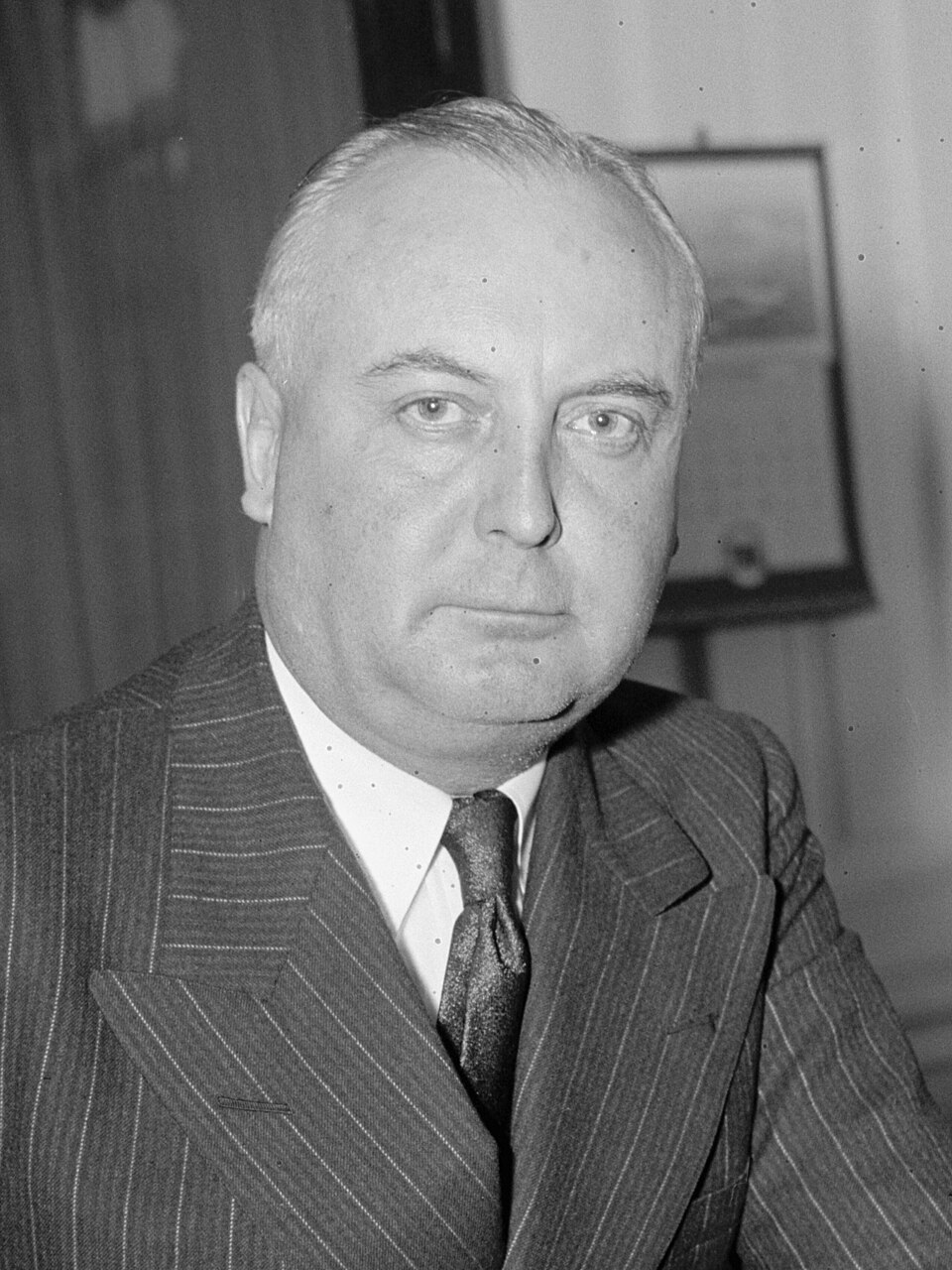
Murdock made his way up in state politics during the Republican 1920s, including serving on the Beaver city council from 1920 to 1921, multiple terms as county attorney, and serving as city attorney from 1926 to 1933. In 1928, Murdock ran for district attorney in the 5th Utah district but lost. In 1932, he got his big break when he ran for Congress, defeating Republican Don B. Colton by 3 points.
Murdock was a staunch proponent of the New Deal, although he did oppose Roosevelt’s push to fund the New Deal by cutting veterans’ benefits. This was a fairly minor objection in the grand scheme of things, and he supported all of the major New Deal laws. The voters were with him, and he won reelection in 1934 by 30 points. Murdock was also supportive of water projects to help grow the west. However, he was perhaps best known for his staunch support of labor unions, and fought against the efforts of Howard W. Smith (D-Va.), chairman of the special committee to investigate the National Labor Relations Board (NLRB). Smith was an opponent of the Congress of Industrial Organizations (CIO) and believed that the NLRB favored the CIO. There was, however, one issue that contemporary liberals would not consider Murdock one of their own, and that was that in 1937 and 1940 he voted against anti-lynching legislation.
Although Utah was strongly for the New Deal, one of its senators, William H. King, had turned against it by 1936. Congressman Murdock challenged King for renomination on a platform of 100% support for the New Deal, and the contrast between Murdock and King was strong not only based on domestic policy, but also by age: Murdock was 47 while King was 77. Although the latter was for Roosevelt’s foreign policy, this wasn’t enough as Murdock was supportive too and he won the primary by a 2-1 margin, a resounding rebuke of King. The state’s voters were simpatico with the Democratic primary voters, resoundingly reelecting Roosevelt and electing Murdock by over 25 points.
Senator Murdock
Murdock proved one of the friendliest of all the senators to New Deal policy as well as to organized labor. Contrary to his votes against anti-lynching legislation in the House, he supported the retention of the Fair Employment Practices Committee as well as banning the poll tax in federal elections. His staunch pro-Administration stance included his votes against overriding President Roosevelt’s veto of the Smith-Connally Act in 1943 and the Revenue Act in 1944. Murdock also co-authored the G.I. Bill (The Ogden Standard Examiner). However, politics have a way of changing over the years, and Utah was no exception. 1946 was a far different year than 1940, as President Truman was deeply unpopular and Republicans were keen on rebounding from their losses, which they did. Murdock campaigned on his record of advocacy for agriculture, labor, and veterans, as well as the successful fight to retain the Geneva steel plant (The Ogden Standard Examiner). However, this wasn’t enough to prevent his defeat by Republican Arthur Watkins, although his loss was by less than three points him for reelection, indicative once again of how Utah was not always this staunchly red state. Murdock’s DW-Nominate score is a -0.351. This was far from the end of Murdock’s time in Washington, and President Truman tapped him to be on the National Labor Relations Board. His appointment was opposed by pro-business conservatives, but he was confirmed and served until 1957. Murdock did have disagreements with the Eisenhower Administration during this time, as he regarded its appointees to the NLRB as voting for changes in the law to favor employers (Cook). In 1960, he briefly served on the Atomic Energy Labor-Management Relations Panel before he retired from politics. Murdock died on September 15, 1979 in Bethesda, Maryland.
References
Cook, J. (1979, September 18). Abe Murdock Dead; Former U.S. Senator. The New York Times.
Retrieved from
For Action…Accomplishment…Leadership…Vote Straight Democratic. (1946, November 3). Advertisement in The Ogden (Utah) Standard Examiner, 9.
Retrieved from
https://www.newspapers.com/image/598708429/
King Suffers Crushing Defeat. (1940, September 5). Washington Times-Herald, 3.
Retrieved from
https://www.newspapers.com/image/1037944639/
Murdock, Orrice Abram, Jr. (Abe). Voteview.
Retrieved from
https://voteview.com/person/6800/orrice-abram-murdock-jr-abe
 Mad Politics: The Bizarre, Fascinating, and Unknown of American Political History