It rather goes without saying that the two parties today are strongly ideologically polarized. The most conservative Democrat is more liberal than the most liberal Republican in Congress, and President Trump has zero thoughts of trying to get even a few Democratic politicians on his side. Indeed, all Senate Democrats and all but two House Democrats backed impeaching him in 2020, one who then switched to the GOP. However, the party systems have changed over the years, and in particular changed significantly after the election of President Roosevelt in 1932. He pursued what has been commonly called the pursuing of Jeffersonian ends by Hamiltonian means, an idea spelled out by progressive Herbert Croly in 1909. The Democratic Party as established stood for the policies and principles of Andrew Jackson that were inspired by the policies and principles of Thomas Jefferson. I will also be including the Whig platform here for contrast, but the Democrats are the central focus.
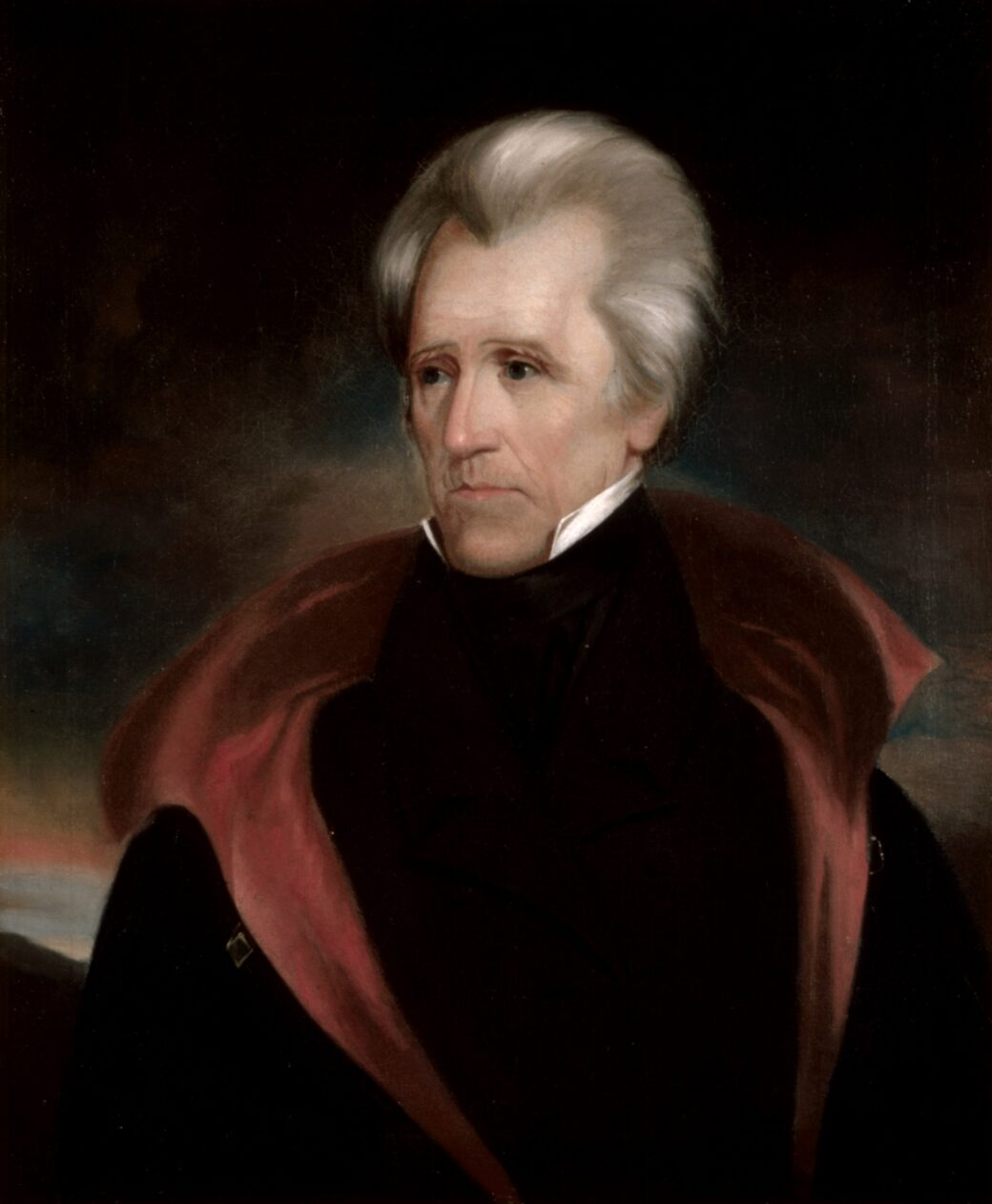
The following language was in all Democratic Party platforms from 1840 to 1856:
“1. Resolved, That the federal government is one of limited powers, derived solely from the constitution, and the grants of power shown therein, ought to be strictly construed by all the departments and agents of the government, and that it is inexpedient and dangerous to exercise doubtful constitutional powers.
2. Resolved, That the constitution does not confer upon the general government the power to commence and carry on, a general system of internal improvements.
3. Resolved, That the constitution does not confer authority upon the federal government, directly or indirectly, to assume the debts of the several states, contracted for local internal improvements, or other state purposes; nor would such assumption be just or expedient.
4. Resolved, That justice and sound policy forbid the federal government to foster one branch of industry to the detriment of another, or to cherish the interests of one portion to the injury of another portion of our common country—that every citizen and every section of the country, has a right to demand and insist upon an equality of rights and privileges, and to complete and ample protection of person and property from domestic violence, or foreign aggression.
5. Resolved, That it is the duty of every branch of the government, to enforce and practice the most rigid economy, in conducting our public affairs, and that no more revenue ought to be raised, than is required to defray the necessary expenses of the government.
6. Resolved, That congress has no power to charter a national bank; that we believe such an institution one of deadly hostility to the best interests of the country, dangerous to our republican institutions and the liberties of the people, and calculated to place the business of the country within the control of a concentrated money power, and above the laws and the will of the people.
7. Resolved, That congress has no power, under the constitution, to interfere with or control the domestic institutions of the several states, and that such states are the sole and proper judges of everything appertaining to their own affairs, not prohibited by the constitution; that all efforts by abolitionists or others, made to induce congress to interfere with questions of slavery, or to take incipient steps in relation thereto, are calculated to lead to the most alarming and dangerous consequences, and that all such efforts have an inevitable tendency to diminish the happiness of the people, and endanger the stability and permanency of the union, and ought not to be countenanced by any friend to our political institutions.
8. Resolved, That the separation of the moneys of the government from banking institutions, is indispensable for the safety of the funds of the government, and the rights of the people.
9. Resolved, That the liberal principles embodied by Jefferson in the Declaration of Independence, and sanctioned in the constitution, which makes ours the land of liberty, and the asylum of the oppressed of every nation, have ever been cardinal principles in the democratic faith; and every attempt to abridge the present privilege of becoming citizens, and the owners of soil among us, ought to be resisted with the same spirit which swept the alien and sedition laws from our statute-book.”
These principles were strongly consistent, as opposed to the Whig Party, which although they had principles (protective tariffs, funding internal improvements), they weren’t spelled out fully until their 1852 platform, and indeed specifics are not spelled out at all in their 1848 platform! The Whigs also sought to completely avoid the issue of slavery, a position which the events of the 1850s proved was untenable. The Democratic Party strikes me as the more programmatic party of the two, and indeed they were the dominant party from its creation until the 1860 election. They stood for concrete principles they placed in every platform, while the Whigs were the collection of opposition to the Democrats, and once its great standard-bearer and founder, Senator Henry Clay of Kentucky, died in 1852, they didn’t last much longer. The language of the Democratic Party indicates a strong belief in the role of states rather than the federal government, although the issues they care about from that perspective are ones that are seen as benefiting the privileged and powerful. The states, thus, were supposed to serve as a check against them per Democratic philosophy. Tariffs assisted the industrial private sector and often did so at the expense of the rural South, which would face retaliatory tariffs on their exported cotton and tobacco. Thus, the language in opposition to sectional legislation and policies benefiting one industry while harming another. The funding of internal improvements (bridges, roads, canals) were for the purpose of advancing commerce, something that Democrats of the time thought should be confined to states. President Andrew Jackson’ veto of the continuing of the Second Bank of the United States was seen as a heroic act by Democrats as a blow against the economically privileged, hence the language of a “concentrated money power”. The language on slavery was for the purpose not only of continued Southern support but also for preservation of the union. Now for the Whigs…
The 1844 Whig Platform
The first Whig platform was mostly non-specific on policy although they did spell out that they supported a protective tariff and spreading out the proceeds of sales of public lands to the states. Democrats did mention and oppose the latter in their 1844 platform.
The 1852 Whig Platform
I skipped to the 1852 platform because I already mentioned the barren 1848 platform. The 1852 platform actually comprehensively spells out what the Whigs believed, and sadly, when they issued the strongest statement of their beliefs they got creamed, only winning the states of Kentucky, Massachusetts, Tennessee, and Vermont. They did embrace the Compromise of 1850, Henry Clay’s last, as it was the hope that this would prevent disunion. The platform they did the best on was the 1848 platform, and this was because of the popularity of General Zachary Taylor, a hero of the Mexican-American War, a war the Whigs had opposed. This, in addition to President Pierce’s signing of the Kansas-Nebraska Act in 1854, was the death of the Whig Party, as opponents of slavery in both the Whig and Democratic parties became galvanized to form a new party…the Republican Party. And did this realignment ever bring together former opponents: Confederate President Jefferson Davis and Vice President Hannibal Hamlin were both Democrats before 1856, and President Abraham Lincoln and Confederate Vice President Alexander Stephens were both Whigs before 1850. These are the principles espoused by the Whigs:
“First: The Government of the United States is of a limited character, and it is confined to the exercise of powers expressly granted by the Constitution, and such as may be necessary and proper for carrying the granted powers into full execution, and that all powers not thus granted or necessarily implied are expressly reserved to the States respectively and to the people.
Second: The State Governments should be held secure in their reserved rights, and the General Government sustained on its constitutional powers, and that the Union should be revered and watched over as the palladium of our liberties.
Third: That while struggling freedom everywhere enlists the warmest sympathy of the Whig party, we still adhere to the doctrines of the Father of his Country, as announced in his Farewell Address, of keeping ourselves free from all entangling alliances with foreign countries, and of never quitting our own to stand upon foreign ground, that our mission as a republic is not to propagate our opinions, or impose on other countries our form of government by artifice or force; but to teach, by example, and show by our success, moderation and justice, the blessings of self-government, and the advantages of free institutions.
Fourth: That where the people make and control the Government, they should obey its constitution, laws and treaties, as they would retain their self-respect, and the respect which they claim and will enforce from foreign powers.
Fifth: Government should be conducted upon principles of the strictest economy, and revenue sufficient for the expenses of an economical administration of the Government in time of peace ought to be derived from a duty on imports, and not from direct taxes; and in laying such duties, sound policy requires a just discrimination and protection from fraud by specific duties when practicable, whereby suitable encouragement may be afforded to American industry, equally to all classes, and to all parts of the country.
Sixth: The Constitution vests in Congress the power to open and repair harbors, and remove obstructions from navigable rivers, and it is expedient that Congress shall exercise that power whenever such improvements are for the protection and facility of commerce with foreign nations, or among the States–such improvements being, in every instance, National and general in their character.
Seventh: The Federal and State Governments are parts of one system, alike necessary for the common prosperity, peace and security, and ought to be regarded alike with a cordial, habitual and immovable attachment. Respect for the authority of each and acquiescence in the just constitutional measures of each, are duties required by the plainest considerations of National, State, and individual welfare.
Eighth: That the series of acts of the Thirty-first Congress, commonly known as the Compromise or Adjustment (the act for the recovery of fugitive slaves from labor included,) are received and acquiesced in by the Whigs of the United States as a final settlement, in principle and in substance, of the subjects to which they relate; and, so far as these acts are concerned, we will maintain them, and insist upon their strict enforcement, until time and experience shall demonstrate the necessity of further legislation to guard against the evasion of the law, on one hand, and the abuse of their powers on the other–not impairing their present efficiency to carry out the requirements of the Constitution; and we deprecate all further agitation of the questions thus settled, as dangerous to our peace; and will discountenance all efforts to continue or renew such agitation, whenever, wherever, or however made; and we will maintain this settlement as essential to the nationality of the Whig party and of the Union.” (American Presidency Project).
Although the Whigs died off, many of their policies would be pushed by the Republican Party, which embraced the protective tariff and passed the National Bank Act in 1863, establishing a series of national banks with a unified currency, and contemporary Democrats have fully embraced Hamiltonian means to Jeffersonian ends and some state Democratic parties distance themselves from Jefferson and Jackson by renaming their dinners to “Kennedys-King” (after JFK, RFK, and MLK) dinners, figures who are far more relevant to the thinking of Democrats today than Jefferson and Jackson and whose legacies are unburdened by slavery.
References
1840 Democratic Party Platform. American Presidency Project.
Retrieved from
https://www.presidency.ucsb.edu/documents/1840-democratic-party-platform
1844 Democratic Party Platform. American Presidency Project.
Retrieved from
https://www.presidency.ucsb.edu/documents/1844-democratic-party-platform
1848 Democratic Party Platform. American Presidency Project.
Retrieved from
https://www.presidency.ucsb.edu/documents/1848-democratic-party-platform
1852 Democratic Party Platform. American Presidency Project.
Retrieved from
https://www.presidency.ucsb.edu/documents/1852-democratic-party-platform
1856 Democratic Party Platform. American Presidency Project.
Retrieved from
https://www.presidency.ucsb.edu/documents/1856-democratic-party-platform
Whig Party Platform of 1844. American Presidency Project.
Retrieved from
https://www.presidency.ucsb.edu/documents/whig-party-platform-1844
Whig Party Platform of 1848. American Presidency Project.
Retrieved from
https://www.presidency.ucsb.edu/documents/whig-party-platform-1848
Whig Party Platform of 1852. American Presidency Project.
Retrieved from
https://www.presidency.ucsb.edu/documents/whig-party-platform-1852
 Mad Politics: The Bizarre, Fascinating, and Unknown of American Political History