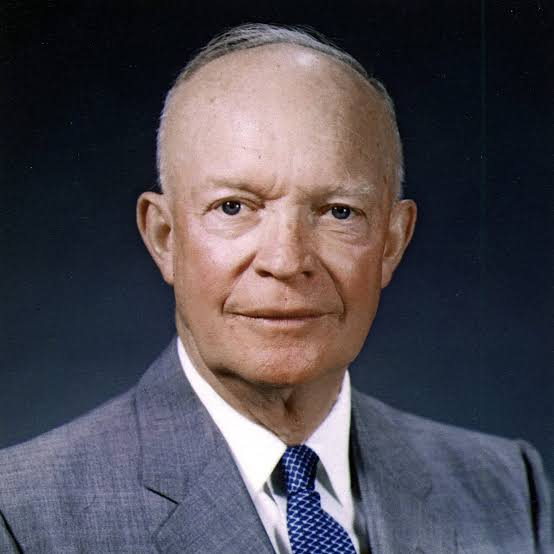
The 1952 election produced the first Republican presidential win in 24 years as well as a Republican Congress, thus united government. From the onset of the Great Depression until 2001, the 1953-1955 session of Congress would be the only time the GOP would have united government. Although the Republicans, particularly the House Republicans, stood against the Truman Administration agenda staunchly, their resolve against liberalism lessened during the Eisenhower Administration, at least per how much they agreed with the votes Americans for Democratic Action (ADA) from 1947 to 1960 determined as important for liberal policies. I would have loved to use Americans for Constitutional Action for this, but they did not exist during the Truman Administration.
One of the most prominent and dramatic examples was that of Republican House leader Joe Martin of Massachusetts. While he proved a strong partisan against liberalism and the Truman Administration, he shifted during the Eisenhower Administration to accommodate its priorities which were considerably more moderate than the anti-New Deal politics of many of the Congressional Republicans during the Truman years. Despite opposing public housing during the Truman Administration, as Speaker in the 83rd Congress Martin supported the administration’s request for public housing. He had only supported ADA’s position 6% of the time during the Truman Administration. During the Eisenhower Administration, it was 53% of the time. Martin’s successor as leader of the House Republicans, Charles Halleck of Indiana, went from 6% to 35%, and Republican Whip Les Arends of Illinois went from 5% to 29%. Some Republicans who stood previously stood resolute against foreign aid under Truman were supporting Eisenhower’s Mutual Security legislation (economic and military aid). Another interesting phenomenon was that a few of the most conservative Republicans by DW-Nominate standards actually moved rightward during the Eisenhower Administration. Illinois’ Noah Mason agreed with ADA 10% of the time during the Truman Administration, only 4% of the time during the Eisenhower Administration. Likewise, Wint Smith of Kansas, Bob Dole’s predecessor in the House and possibly the most conservative individual Kansas elected to Congress in the 20th century, had gone from siding with ADA 4% of the time to 1%. Iowa’s H.R. Gross, who started his career as something of a populist, saw his agreement decline from 37% to 13%. Overall, the House Republicans increased their agreement with ADA positions from 19% to 30%. The effect was far less dramatic, however, in the Senate. Interestingly, some of the Senate’s moderates during the Truman Administration moved to the right during the Eisenhower Administration (such as Massachusetts’ Leverett Saltonstall and Vermont’s Ralph Flanders) but the trend did still exist, although only 27% to 30%.
Sheet w/Scores and Averages:
References
ADA Voting Records. Americans for Democratic Action.
Retrieved from
 Mad Politics: The Bizarre, Fascinating, and Unknown of American Political History