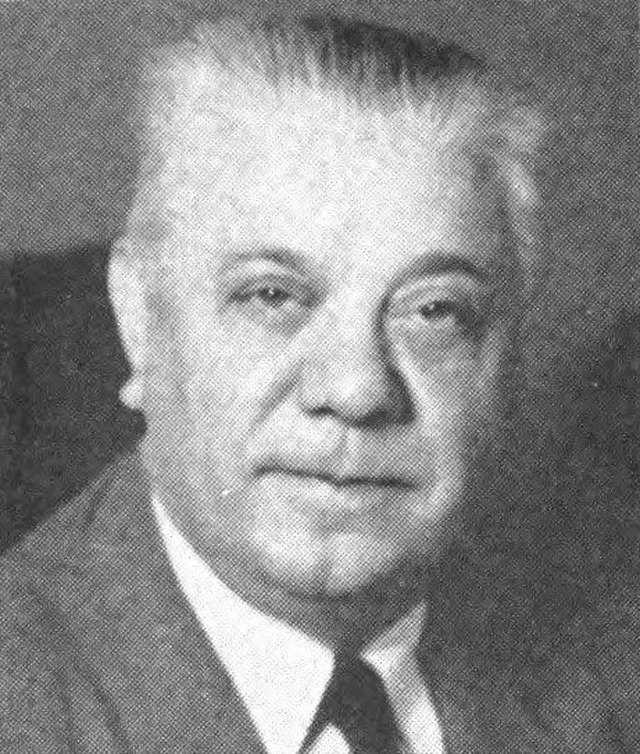
On July 18, 1957, octogenarian Congressman James B. Bowler of Illinois’ 7th district, based in Chicago, died. Running in his place was Roland Libonati (1897-1991), controversial lawyer who represented Al Capone during his heyday and had connections and friendships with the mob in general.
In 1930, Libonati, often known as “Libby”, was elected to the Illinois House of Representatives, serving until 1934, and then was elected again in 1940, serving a single term. He was then elected to the Illinois Senate, where within his five years of service he rose to be minority whip. and in 1940 secured election to the Illinois Senate, where he rose in the Senate leadership to be minority whip. Throughout his career, Libonati was, in addition to his connections to mobsters, known for his malapropisms, which included calling Slavic voters “Slavishes”, speaking of late autumn as the time of year when “the moss is on the pumpkin” and “I am trying not to make any honest mistakes” (Time Magazine).
When running for the special election in 1957, his victory was never in doubt given the district’s staunchly Democratic makeup and the firm grip the Daley machine had in the district. His relations with mobsters were maintained right to his time in Congress, with Time Magazine (1957) noting that “Libonati is still on chummy terms with Capone henchmen such as Tony Accardo and Paul (“the Waiter”) Ricca, who are really “charitable” and “patriotic” fellows, according to Libby”. During his career in Congress, Libonati sat on the House Judiciary Committee, which considered civil rights legislation Libonati’s record was strongly liberal; he sided with the liberal Americans for Democratic Action 93% of the time and the conservative Americans for Constitutional Action only 3% of the time. His DW-Nominate score was a -0.415. The only major issue that Libonati opposed liberals regarding public power with the Hanford facility in Washington state. Libonati was considered a staunch man of the Daley machine, but his loyalty would be tested with a subject of which he was passionately in support: civil rights.
As a member of the Judiciary Committee, Libonati was involved in the consideration of the civil rights bill, and he was for a very strong bill. The issue was that strong proposals in the past had either been filibustered to death in the Senate or had been watered down considerably. The hope of the Kennedy Administration and the leadership of the Judiciary Committee was to produce a bill that was strong but could also attract needed Republican votes. Although Libonati was pressured by President Kennedy and Mayor Daley to support the compromise bill, he voted with liberals for the stronger bill. After this, Libonati reported to a colleague that the Daley machine informed him that his career was over (Purdum, 144-145). This may not have been the only factor, however. The Cosa Nostra was reported to have ordered Libonati to retire, with the decision being made in late 1962 given him having fallen into disfavor by Salvatore Giancana (The Chicago Sun-Times Post-Dispatch). He was succeeded in Congress by Frank Annunzio, who is an interesting figure himself.
References
Gang Reported Forcing Out Rep. Libonati. (1964, January 15). The Chicago Sun-Times Post-Dispatch.
Retrieved from
Illinois: Meet Your Congressman. (1957, November 25). Time Magazine.
Retrieved from
https://time.com/archive/6826839/illinois-meet-your-congressman/
Libonati, Roland Victor. Voteview.
Retrieved from
https://voteview.com/person/5654/roland-victor-libonati
Roland V. Libonati. (1991, May 28). Chicago Tribune.
Retrieved from
Purdum, T. (2014). An idea whose time has come: two presidents, two parties, and the battle for the Civil Rights Act of 1964. New York, NY: Henry Holt & Company.
 Mad Politics: The Bizarre, Fascinating, and Unknown of American Political History