In this series, I have for some time avoided a certain figure to cover, primarily because I wanted to make a bit of a long post on him, and now the time has finally come for an entry on Jacob Koppel Javits (1904-1986).
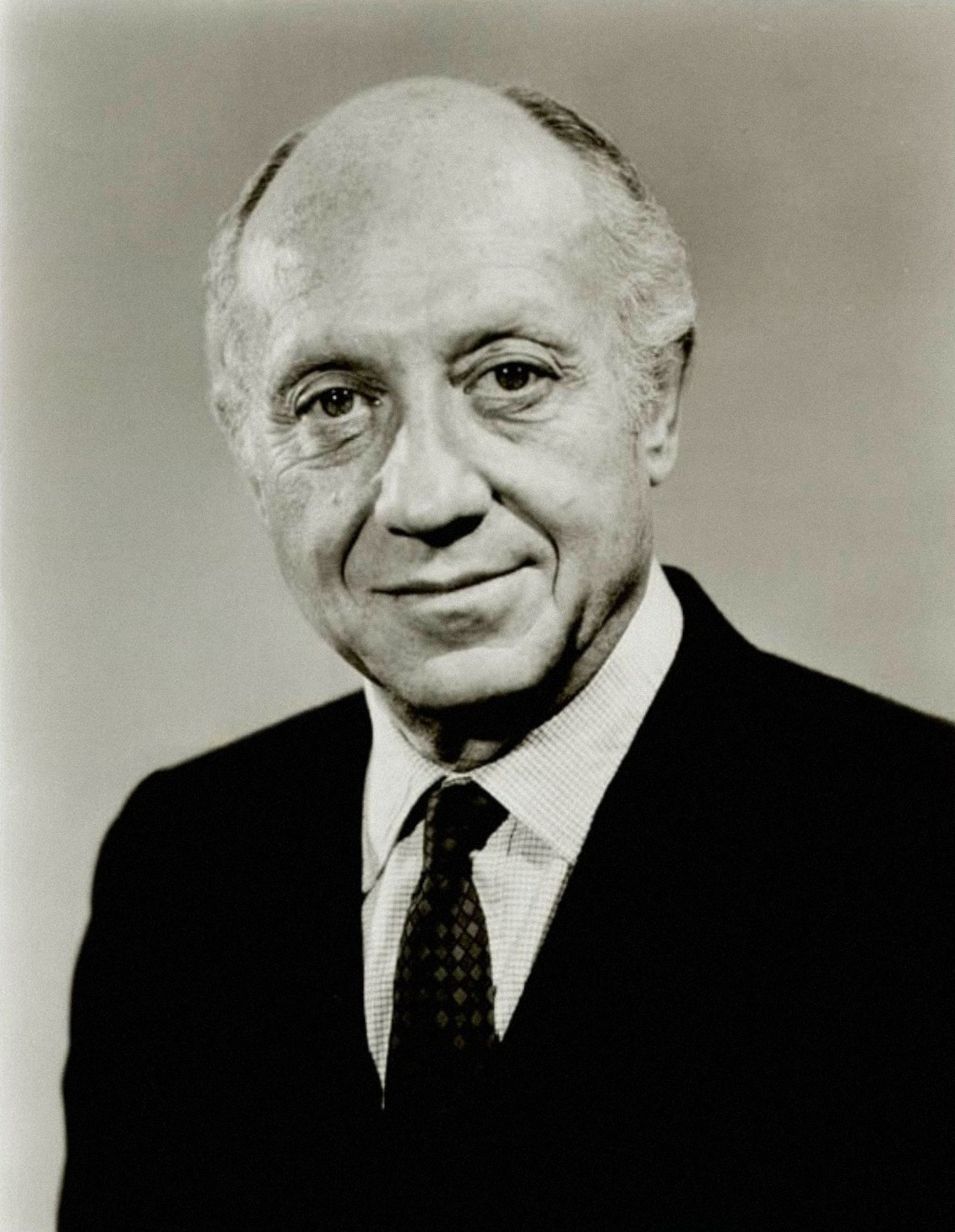
Born to a Jewish immigrant family in New York City, Javits’s background really was one that would have been expected for a Democrat, but he was a bit different. To rise up in life, Javits went to night school at Columbia University while working part-time and then earned a law degree from New York University. As a young man, he would become attracted to the Republican Party because of the reform politics of Fiorello La Guardia and would support his campaigns for mayor. In 1945, Javits would lead the research team for Jonah Goldstein’s Republican-Liberal campaign for mayor. Although Goldstein lost, Javits was recognized for his talents and in 1946 was nominated by the Republican Party to run for Congress from the Upper West Side of Manhattan. The odds were on their face daunting: the district was strongly Democratic and the GOP last won the seat in the landslide election of 1920, but Javits pulled it off and the unfavorable environment to Democrats helped as well. Javits to this day, by the way, is the last Republican to have held this district.
Congressman Javits
Jacob Javits was without doubt the most liberal Republican in the House during the Truman Administration. Although he backed the tax reduction and agriculture cuts pushed by Republicans in the 80th Congress, he agreed with them on little else on the liberal-conservative spectrum domestically. Always a supporter of organized labor, Javits opposed the 1947 Taft-Hartley Act. He also was a regular foe of anti-subversive legislation and was one of eight House Republicans to vote against the Nixon-Mundt bill for Communist registration. Javits was also unfailingly internationalist, and would be so for the rest of his career. In 1948, he narrowly won reelection against Democrat Paul O’Dwyer, and he voted with the Truman Administration on nearly every question of national significance. He did not disagree with the liberal Americans for Democratic Action on any of the key votes they counted for their 1950-1953 ratings. This approach was popular, and he won reelection in 1950 with over 60% of the vote. Javits was also notably one of only two House Republicans to vote against the McCarran Internal Security Act in 1950, which among other provisions included Communist registration. In 1954, Javits sought the post of New York Attorney General, and in an election that was mostly narrow victories for Democrats statewide, Javits won against Congressman Franklin D. Roosevelt Jr. In this post, he was vigorous in his enforcement of the state’s Fair Employment Practices law to combat racial discrimination in employment. Javits served in this post until 1956, when he decided to run for the Senate as incumbent Herbert Lehman was not running again. He once again defeated the son and namesake of a prominent New York Democrat in Robert F. Wagner Jr., who had also won the Liberal Party nomination. The Liberal Party would subsequently back Javits’s campaigns for reelection. Javits was a beneficiary of the four-party system that existed in New York in the mid to late 20th century with Republicans and Democrats but also the Liberal and Conservative Parties. The Liberal Party became a useful groundswell of support for Javits, with many voters of the Liberal Party strongly disliking the machine politics of the Democrats while wanting their policies.
Senator Javits
Javits would quickly make a splash on the scene, challenging numerous points of Senate authority including Senate Majority Leader Lyndon B. Johnson (D-Tex.). He was also the most maverick member of the Senate Republicans during the Eisenhower Administration with the possible exception of the aging prairie populist William Langer of North Dakota. Time Magazine (1966) wrote of Javits as a senator that although he was “a member of the minority party and something of a maverick, whose abrasiveness and hustle have always barred him from the Senate’s cozy inner establishment, he has achieved rare respect and stature by force of intellect, diligence, and integrity”. To a degree, he let this get to his head. As Time Magazine (1966) wrote, “the public figure and the private man have fused and become virtually indistinguishable; his handsome wife Marion complains, only half in jest, that even at home he will not answer a question without clearing his throat and buttoning his coat. When approached by a streetwalker late one night in Manhattan, the Senator introduced himself, shook her hand and proceeded to solicit her vote. He loves his eminence and supports it with a sober single-mindedness matched by few, if any, of his colleagues”.
Senator Javits was a bit more amenable to conservative positions during the Eisenhower Administration than he was while in the House during the Truman Administration. Although he supported high-profile liberal causes, he supported several budget cutting proposals supported by the Eisenhower Administration and backed its efforts at easing price floors on agricultural products. In 1960, Javits voted against Senator Clinton Anderson’s (D-N.M.) proposal to institute a Medicare program, but he would support subsequent Medicare proposals. He retained his opposition to domestic anti-Communist measures and unsuccessfully pushed to end the student loyalty oath and non-communist affidavit, which were required for university students to receive financial aid under the National Defense Education Act. Javits also opposed all major amendments in the 1958 and 1959 bills on organized labor reform, which included requiring secret ballots for union votes, curbing “hot cargo” contracts, curbing use of union dues for political purposes. He was also one only two Republican senators to vote against the McClellan (D-Ark.) “Bill of Rights” amendment for union members. Javits saw the role of himself and his fellow liberal Republicans as charting a middle course between “those who ignore international realities and look back with nostalgia to the economic jungle of the 19th century” and those who would seek “increasing control over the nation’s economic and social life” (Time Magazine).
The second term of Eisenhower proved Javits’ high-water mark of conservatism, as during the 1960s, he would be one of the strongest Republican supporters of New Frontier and Great Society measures, including anti-poverty legislation, federal aid to education, funding the arts and humanities, and rent supplements. Javits was also an unwavering supporter of civil rights legislation, and in 1965 he appointed Lawrence Wallace Bradford Jr. as the first black Senate page, and in 1971 in another first he picked Paulette Desell as the institution’s first female page. A member of the Judiciary Committee in the 89th Congress, he proved a pain in the neck for its segregationist chairman James Eastland (D-Miss.) for his dogged persistence on civil rights. Once, when pressuring him to bring the Voting Rights Act of 1965 to a vote, Eastland stared down Javits and acidly said, “I don’t like you or your kind” (Weaver). In the following session, the Southern bloc would successfully pressure Senate leadership to reduce membership of the Judiciary Committee by one just to remove Javits. He then would move to the Appropriations Committee. Despite this and his aides recalling anti-Semitic comments from senators and their staffers, Javits would later in his career state, “I have never felt any anti-Semitism in the Senate. I should warn you, I’m not quick to feel that sort of thing, but not in my worst struggles with Dick Russell did I ever feel it. The Senate is an admirable institution from that point of view” (Weaver). He would also, unusually for a Republican, gain the support of numerous liberal groups for reelection, including Americans for Democratic Action. Javits had also been one of the Republicans to refuse to endorse Barry Goldwater’s presidential run. This was not the first time he had declined to endorse the Republican nominee, having endorsed FDR for reelection in 1940. Javits was also one of only two Republican senators to vote against both a school prayer amendment and an amendment permitting state legislative redistricting on a basis other than solely population. He also played key roles in drafting legislation for the National Endowment of the Arts and the Employee Retirement Income Security Act of 1974. Although Javits was not a direct sponsor of many laws, he was able to form effective coalitions with liberal Democrats to pass legislation and was able to influence how said bills were written (Weaver). In 1966, he set his eyes on the vice presidency, but he did not really have a chance to make it to that office in the GOP, not with his record. Unlike in 1964 with Goldwater, Javits endorsed Richard Nixon in 1968 and, despite numerous disagreements with him, would do so again in 1972.
Although initially a supporter of the Vietnam War, Javits became a critic, supporting both the Cooper-Church Amendment block funding of US forces in Cambodia and Laos as well as setting a timetable to end the war with the McGovern-Hatfield Amendment. His foremost legislative achievement regarding this subject was his leadership in passing the War Powers Act in 1973, an effort to reassert the power of the legislative branch. However, he occasionally supported a measure supported by defense hawks, most notably the Selective Service Act in 1980. As previously noted, Javits was often in disagreement with President Nixon, and he voted against unsuccessful Supreme Court nominees Clement Haynsworth and G. Harrold Carswell as well as being one of three Republicans to vote against William Rehnquist in 1971. He was also less willing to back spending cuts backed by the Nixon Administration than he was under the Eisenhower Administration. However, on Watergate, Javits was highly cautious in his approach, contrasting with the public criticism issued by his fellow New York senator, Conservative James L. Buckley. He also publicly cautioned Nixon not to play “impeachment politics” by cutting his programs “to please a given number of senators: 33 plus one” (Tolchin). Javits had observed the Nixon Administration retreating on certain legislative programs, including his abandonment of the Family Assistance Plan, mass transit, and consumer protection. Indeed, President Nixon given his positions on legislation in his second term comes off considerably more conservative than in his first term. In 1974, Javits faced a difficult reelection but won a three-way race with his chief opposition being Democrat Ramsey Clark, LBJ’s former attorney general who had become a man of the radical left and had a long controversial career after of radical left activism that included defending Slobodan Milosevic and Saddam Hussein. Javits’ position in 1974 was compromised due to his Nixon connection as well as him not taking a leadership role in opposing the Vietnam War, and as one aide remarked, “If he had been running against anyone else but Ramsey Clark, he would have lost” (Weaver).
Why Was Javits a Republican Anyway?
Despite Jacob Javits being a maverick in his party and far more often voting with the Democrats, he insisted to the very end that he was a Republican. It turns out he had a permanent distaste for the Democratic Party of New York City due to the corrupt bossism of New York City’s Tammany Hall. He saw his father work for the organization, and he was disgusted by their practices (Pearson). Thus, no matter how often he disagreed with the GOP, he never considered switching parties. This is a complaint that today, at least applied to Tammany Hall is no longer an issue as Tammany Hall is defunct. However, to what degree at least some of their practices continue in major Democratic controlled cities is an open question.
Final Term
Javits was a true blue liberal as usual, and his status in Washington seemingly higher than ever after victory. In 1976, he campaigned hard for the election of Gerald Ford to a full term and watched the election results at the White House. That year, with the loss of James Buckley for reelection, Javits got a much more similar colleague in Daniel Patrick Moynihan, and the two closely collaborated. He also played a more prominent role in foreign affairs, working with the Carter Administration to produce the Camp David Accords. However, there were problems ahead for him, both politically and on his health.
Decline
In 1979, Javits was diagnosed with ALS (aka Lou Gehrig’s Disease), albeit an unusually slowly progressing version. Thus, he decided on running for yet another term in 1980. This time, the Republican Party, which had been getting more conservative as the 1970s dragged on, were not on board. Javits lost renomination to Al D’Amato, the vice chairman of the Nassau County Board of Supervisors. However, he was not out of the running! While he lost the Republican nomination, he still won the Liberal Party nomination, which resulted in a three-way race between him, D’Amato, and Democratic Congresswoman Elizabeth Holtzman. While the Liberal Party nomination had succeeded in getting Mayor John Lindsay a second term in 1968, this time it resulted in a split of the liberal vote, resulting in D’Amato’s election. The Conservative Party had gotten on board with D’Amato, and thus no split among the right existed. This outcome resulted in the decline of support for the Liberal Party as a force in New York politics, and part of why New York is predominantly Democratic today is that the Liberal Party no longer exists to throw a spanner into the works. When it comes to measuring the ideology of Javits, he only agreed with the conservative Americans for Constitutional Action 14% of the time during his career in the Senate, agreed with the liberal Americans for Democratic Action a whopping 85% of the time throughout his career in Washington, and his DW-Nominate score was a -0.124, exceptionally low for a Republican.
Although ALS resulted in his confinement to a wheelchair, Javits maintained a positive outlook, and in 1983, President Ronald Reagan awarded him the Presidential Medal of Freedom. It appears that Javits would have mostly survived another term in the Senate, as he succumbed to ALS on March 7, 1986.
References
ADA Voting Records. Americans for Democratic Action.
Retrieved from
Jacob Koppel Javits. The Eleanor Roosevelt Papers.
Retrieved from
https://www2.gwu.edu/~erpapers/mep/displaydoc.cfm?docid=erpn-jacjav
Javits, Jacob Koppel. Voteview.
Retrieved from
https://voteview.com/person/4898/jacob-koppel-javits
Nation: Trustee for Tomorrow: Republican Jacob Javits. (1966, June 24). Time Magazine.
Retrieved from
https://time.com/archive/6629620/nation-trustee-for-tomorrow-republican-jacob-javits/
Pearson, R. (1986, March 7). Former Senator Javits is Dead at 81. The Washington Post.
Retrieved from
Tolchin, M. (1974, April 4). Javits Says Nixon Plays ‘Impeachment Politics’. The New York Times.
Retrieved from
Weaver, W. (1977, September 5). Javits’s Rise Slow but on His Terms. The New York Times.
Retrieved from
 Mad Politics: The Bizarre, Fascinating, and Unknown of American Political History