I have written in the past about the defeat of the Bricker Amendment as an achievement of LBJ, but I felt this subject needed a bit of a deeper dive, so here it is. National sovereignty is a subject that has long greatly concerned American conservatives. This concern, in addition to extraordinarily bad relations between President Wilson and Senator Lodge (they refused to be in the same room together), resulted in the rejection of the Versailles Treaty. Another monumental event came quite close to happening on account of this concern, and this was the proposed Bricker Amendment to the Constitution. Over the history of the United States, the use of executive agreement has risen considerably overtime as opposed to treaties for convenience as the US has become a more prominent actor on the global stage (Lindsay). After World War II, there were several international developments that gave conservatives concern. The first was the Yalta Agreement, in which in addition to planning the postwar fate of Germany, Stalin succeeded in convincing the US and Britain that he would allow free and fair elections in Poland and contributed to the domination of the USSR of Eastern Europe.
Another was the UN Charter, of which the US is a signatory, which pledged members to promote “conditions of economic and social progress” and rights “without distinction as to race” (Time Magazine, 1954). This could be seen by conservatives nationally as international pushing for increasing government and by Southern conservatives as bringing an end to Jim Crow. The latter concern was bolstered by a Truman-appointed committee in 1947 suggesting that the UN Charter gave authority for civil rights laws previously lacking (Time Magazine, 1954).
Furthermore, the US endorsed but did not ratify until 1988 the Genocide Convention. One might think ratifying the Genocide Convention today to be a no-brainer, but there were substantial reasons why it was a cause for concern for the US at the time. One part of this was because of an expansive definition of genocide that included, “causing..mental harm” to members of “a national, ethnical, racial, or religious group” which Time Magazine opined “expressions of honest opinion might become crimes” (Time Magazine, 1954). This is an interesting early warning of “hate speech” laws that have been passed in numerous European nations and have attracted a disturbing level of support among American youth, who seem to have failed to account for who might be defining what “hate speech” is and the controversies that have occurred in European nations over such laws, such as the prosecution and conviction of politician Geert Wilders in the Netherlands for calling for less Moroccans in the nation. There was also the 1951 document authored by the communist Civil Rights Congress, “We Charge Genocide”, presented to the UN in Paris meetings in December that charged the US with genocide based on Jim Crow practices in the South as well as discrimination throughout the nation that had basis in this expansive definition, and claimed that US “endorsement” of racism and “monopoly capitalism” made this possible (Martin). Thus, the Genocide Convention could serve as at least an effective propaganda tool by the USSR, if not something worse for the US. There was also the UN Covenant of Human Rights.
The UN Covenant of Human Rights was a far-reaching document with Eleanor Roosevelt at the helm for two years in drafting. However, Time Magazine (1953) reported that there was a great deal of influence from Soviet delegates as well as from other dictatorships, which resulted in a dilution of “such natural rights as freedom of religion, speech, press and assembly by mixing them with highly dubious “rights”. Some of these “rights” would enlarge government powers instead of restricting them. According to the covenant, for example, the state is obliged to see such things as “healthy development of the child” and “environmental hygiene” and “the right of everyone” to a job, fair wages, adequate housing, education and a “continuous improvement of living conditions””. Desirable goals become state mandated, and result in both Big Brother and Big Sister taking hold.
The Treaty Power in General in a Postwar World
John Foster Dulles observed this potential danger in 1952 when he stated, “The treatymaking power is an extraordinary power liable to abuse. Treaties make international law, and they make domestic law…They are, indeed, more supreme than ordinary laws. [They] can override the Constitution…cut across the rights given to the people by their Constitutional Bill of Rights” (Time Magazine, 1953). However, only the next year he was tapped by President Eisenhower to be Secretary of State. By the time the Bricker Amendment came up for consideration, he came out against it, rationalizing given his previous statement that such abuses had not happened (Time Magazine, 1953). Thus, his argument as Secretary of State amounted to that the Bricker Amendment was seeking to solve a problem that wasn’t existing.
Time Magazine (1953) described the situation with treaties thusly, “In the 166 years since 1787, virtually the only limit put upon the treaty power by the Supreme Court is that a treaty may not “authorize what the Constitution forbids.” Even that limitation has been questioned. A circuit court of appeals declared: “It is doubtful if the courts have power to declare the plain terms of a treaty void and unenforceable”. Given that this was what the understanding was of the time, concern over the state of the treaty-making power of the Constitution is at least understandable. Worse yet, there wasn’t necessarily a dividing line as to what distinguishes a treaty from an executive agreement policy-wise. Senator Guy Gillette (D-Iowa) discovered this when he asked the State Department this question and received the following answer, “A treaty was something they had to send to the Senate to get approval by two-thirds votes. An executive agreement was something they did not have to send to the Senate” (Lindsay). There have been Supreme Court decisions that clarified this matter more since then. Speaking of the Supreme Court…
Further Concern: Troublesome Supreme Court Decisions
The American Bar Association considered the possibility of a treaty superseding the Constitution as “One of the greatest constitutional crises the country has ever faced” and urged the adoption of a Constitutional amendment to clarify the supremacy of the Constitution (Time Magazine, 1954). After all, in 1920 in Missouri v. Holland the Supreme Court upheld the Migratory Bird Treaty Act of 1918 (for It’s Always Sunny fans, yes, bird law nearly influenced the adoption of a Constitutional amendment.) in a decision that held that treaties superseded state laws, the same decision in which Justice Oliver Wendell Holmes Jr. articulated the notion of the “living Constitution”, a notion contemptible to judicial conservatives. This decision alarmed many conservatives, who came to believe that the president could amend the Constitution by making treaties with other nations, thereby encroaching on functions that were otherwise reserved to the states (Sutherland, 1951). Two more that caused alarm and added ambiguity to the situation were United States v. Belmont (1937) and United States v. Pink (1942). In the former, it was ruled that an executive agreement overrode New York State law and in the latter, it was ruled that treaties and executive agreements are interchangeable (Lindsay). If there is such ambiguity and executive agreements are to carry the same force on states as treaties, why bother submitting a treaty to the Senate just for it to potentially meet the fate of the Versailles Treaty?
Conservatives Act
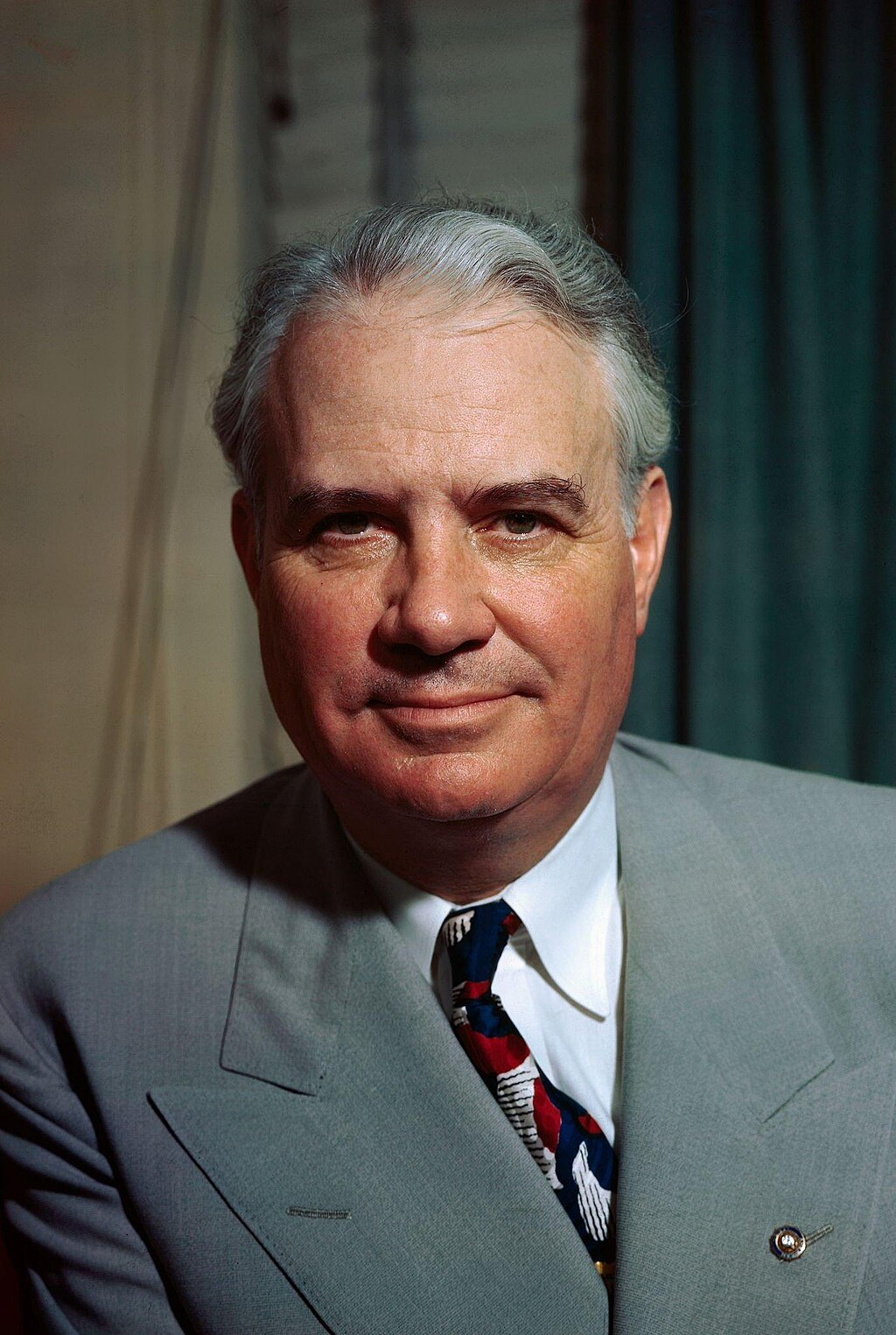
On September 14, 1951, John W. Bricker (R-Ohio), one of the staunchest conservatives in the Senate, introduced what came to be known as the “Bricker Amendment” for the first time. This amendment proposed three limitations on executive power on foreign relations. These were, as Professor Cathal J. Nolan (1992) writes, “(1) the Executive was to be barred from entering into treaties which conflicted with the Constitution; (2) all treaties henceforth would require implementing legislation “which would be valid in the absence of a treaty” (a so-called ‘which clause’); and (3) executive agreements now would be overseen – and could be rejected – by Congress just as were treaties”. Not only was the American Bar Association in support as earlier mentioned, but so was the American Medical Association. Both groups were at the time considered conservative organizations. However, the Senate had a Democratic majority and had it come to a vote, the Bricker Amendment would have surely failed. The 1952 election, in addition to electing Dwight Eisenhower, also produced Republican majorities in Congress.
With a Republican president in the White House as well as a Republican Senate, the time seemed right for Senator Bricker, formerly the Republican vice-presidential candidate in 1944, to again propose his amendment. Unfortunately for Bricker, the chairman of the Senate Foreign Relations Committee at the time was Wisconsin’s Alexander Wiley, a former non-interventionist who had since become a staunch internationalist. Wiley decried the measure as “the most dangerous thing that has ever been brought before Congress” (Time Magazine, 1953). Even worse for Bricker, President Eisenhower wanted the amendment defeated. He wrote to Majority Leader Knowland that he was “unalterably opposed” to the amendment as reported to the Senate Judiciary Committee and believed that it would “shackle the federal government so that it is no longer sovereign in foreign affairs” (CQ Almanac).
The “Which Clause”
Bricker’s amendment was weakened in committee to make it more palatable to the Eisenhower Administration, but he sought to restore its original strength by attempting to add Section 3. This, known as the “which clause”, read, “A treaty or other international agreement shall become effective as internal law in the United States only through legislation by the Congress unless in advising and consenting to a treaty by the Senate, by a vote of two-thirds of the Senators present and voting, shall provide that such treaty may become effective as internal law without legislation by the Congress” (CQ Almanac). If incorporated, this amendment had great potential to cause trouble for a president who wished to have executive agreements with other nations not rising to the level of treaty. This proposal was defeated 42-50, notably getting votes against by some who otherwise supported the Bricker Amendment, such as Majority Leader William Knowland (R-Calif.) and Walter George (D-Ga.). Senator George brought up a version that although was weaker than the original Bricker Amendment, was stronger than the committee version of the Bricker Amendment. The George Substitute was now the central proposal.
LBJ Engineers Amendment’s Demise
I have covered LBJ’s role in greater detail in the past, but Senate Minority Leader Lyndon B. Johnson (D-Tex.) was privately opposed to the Bricker Amendment. He had presidential ambitions and like Eisenhower he believed it would hamper the president’s ability to conduct foreign policy. However, Johnson could not simply vote against it. He had to pull off a tricky act as Texans were in strong support, therefore he had to appear to support the Bricker Amendment while getting it defeated. His vote on this amendment was “yea”, but he managed to get a vote adopting the George (D-Ga.) substitute defeated by one vote. With this one vote, the Bricker Amendment had met its Waterloo. Senator Bricker was embittered by this event and blamed Eisenhower for its defeat. In truth, both Eisenhower and Johnson were the necessary players for the Bricker Amendment’s fall. The cause for the Bricker Amendment was largely neutered through the Supreme Court’s decision in Reid v. Covert (1957), in which a plurality found that although executive agreements could be entered by the president, they couldn’t contradict the US Constitution. Had the Bricker Amendment been adopted, it would have been perhaps the most substantial alteration to the Constitution in the 20th century. The notion of the imperial presidency on foreign policy would be firmly out, and the balance of power would have gone more to the legislative branch, as some conservatives have argued was intended by the Founders, but as others could argue is inappropriate on foreign policy. Historian Walter LaFeber wrote that with the defeat of the Bricker Amendment that the Constitution was “saved from the most radical overhauling in its history” (Tananbaum). The most recent legal development involving the treaty power was the 6-3 Supreme Court decision Medellin v. Texas (2008), in which at-the-time Texas Solicitor General Ted Cruz successfully argued that a treaty is not binding as domestic law until an act of Congress has occurred to implement it, that rulings from the International Court of Justice are not binding on US courts, and cannot be enforced without authority from Congress or the Constitution (552 U.S. 491). If there is a heaven (which I happen to believe there is), then surely Bricker smiled from above at this decision.
Differing Perspectives
Interpretations for the motives behind the Bricker Amendment vary, and this is simply because there were multiple motives behind the amendment. As might be expected, a 2021 paper out of Columbia University on this emphasized the racial cause (Glusman). But frankly, certain segments of society are completely and utterly obsessed with racial identity. There were far more people with motives that differed from those of the white South. This was, for instance, not the motive of Bricker and his fellow Midwestern Republicans…he on multiple occasions had voted in the civil rights direction while in the Senate, including for the Civil Rights Act of 1957 and against weakening it by a jury trial amendment, as well as against Senator Richard Russell’s (D-Ga.) effort to undermine desegregation of the army in 1950. Rather, he was of the Old Guard Midwest Republicans who were skeptical to hostile to internationalism and constantly on guard for America’s national sovereignty. There is, however, a degree of truth in this narrative as the amendment had strong support from Southern legislators. Indeed, only three senators from former Confederate states in Lister Hill of Alabama, J. William Fulbright of Arkansas, and Estes Kefauver of Tennessee voted against the Bricker Amendment as amended by George, and they were among the most amenable to the politics of the national Democratic Party. Looking back, it is ultimately for the best that the US addressed civil rights without any sort of international force behind it, as such an approach would have only weakened, not strengthened, support for civil rights as the issue of national sovereignty could have been introduced as a reason to oppose in addition to the existing argument of state sovereignty to oppose. Another perspective, embraced by multiple scholars, was that the Yalta Agreement was the central cause of the proposal of the Bricker Amendment (Tananbaum).
References
Bricker, John William. Voteview.
Retrieved from
https://voteview.com/person/1024/john-william-bricker
Bricker Treaty Amendment Debate. (1954). CQ Almanac.
Retrieved from
https://library.cqpress.com/cqalmanac/document.php?id=cqal54-1358114
Glusman, G. (2021, December 2). The Long Afterlife of the Bricker Amendment: Jim Crow, Human Rights, and the Genocide Convention. Columbia Journal of Transnational Law.
Retrieved from
Holland v. Missouri (1920), 252 U.S. 416.
Lindsay, J.M. (2022, February 26). TWE Remembers: The Bricker Amendment. Council on Foreign Relations.
Retrieved from
https://www.cfr.org/blog/twe-remembers-bricker-amendment
Martin, C. (1997). Internationalizing ‘The American Dilemma’ – The Civil Rights Congress and the 1951 Genocide Petition to the United Nations. Journal of American Ethnic History, 16(4), 44-45.
Medellin v. Texas (2008), 552 U.S. 491.
National Affairs: The Bricker Amendment: A Cure Worse Than the Disease? (1953, July 13). Time Magazine.
Retrieved from
Nolan, C.J. (1992). The Last Hurrah of Conservative Isolationism: Eisenhower, Congress, and the Bricker Amendment. Freedom and Security, 22(2), 337-349.
Retrieved from
https://www.jstor.org/stable/27550951
S.J.Res.1. Amend. To Committee Substitute Adding to Clause 2, Article IV, of the Constit. A Provision That No Treaty Shall by the Supreme Law of the Land Unless Made in Pursuance of the Constitution. Govtrack.
Retrieved from
https://www.govtrack.us/congress/votes/83-1954/s103
S.J.Res.1. Bricker Amend. Providing That a Treaty or Other International Agreement Shall Become Effective as Internal Law Only Through Act of Congress, But That Senate in Ratifying a Treaty May, by 2/3’s Vote, Make it so Effective Immediately. Govtrack.
Retrieved from
https://www.govtrack.us/congress/votes/83-1954/s105
S.J.Res.1. On Passage. (2/3’s Maj. Required – Failed). Govtrack.
Retrieved from
https://www.govtrack.us/congress/votes/83-1954/s109
Sutherland, A.E. (1952). Restricting the Treaty Power. Harvard Law Review, 65(8), 1305-1338.
Retrieved from
https://www.jstor.org/stable/1336653?origin=crossref
Tananbaum, D.A. (1985, January). The Bricker Amendment Controversy: Its Origins and Eisenhower’s Role. Diplomatic History, 9(1), 73-93.
Retrieved from
 Mad Politics: The Bizarre, Fascinating, and Unknown of American Political History