The year is 1958, and Congress is not happy with the Supreme Court. In addition to Brown v. Board of Education (1954) other decisions that attracted criticism included Mallory v. United States (1957) in which it was ruled that any confessions brought out during an unlawfully long period of detention were inadmissible in court and Pennsylvania v. Nelson (1956), which overturned the conviction of a communist for sedition for his advocacy of overthrowing the US government by violent means by ruling that the 1940 Smith Act superseded Pennsylvania’s much older anti-sedition statute (350 U.S. 497). Interestingly, that law’s sponsor, Representative Howard W. Smith (D-Va.), was not only still in Congress, but he was also the powerful chairman of the House Rules Committee and objected, as he did not intend his measure to intrude on state anti-subversive laws.
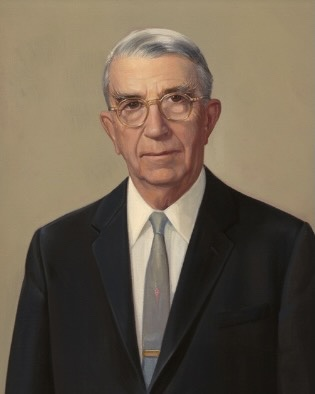
Smith proceeded to introduce the “Anti-Preemption bill”, which would explicitly overturn Nelson and generally restrict Federal courts in the application of the preemption doctrine by only allowing them to block enforcement of state laws if Congress had explicitly intended to preempt and that there was direct and irreconcilable conflict in Federal and state laws (CQ Press). Furthermore, Federal anti-subversive laws would be clarified as not preempting state anti-subversive laws. Smith argued that Federal courts had been finding preemption in multiple cases where no evidence existed of intent to do so by Congress, with one other notable recent decision being Guss v. Utah Labor Relations Board (1957), which ruled that states could not get involved in labor disputes that the National Labor Relations Board (NLRB) refused to intervene (CQ Press, 353 U.S. 1). The House, in which the Conservative Coalition was strong, passed the bill 241-155 (D 101-109, R 140-46) on July 17th after an effort by Representative Kenneth Keating (R-N.Y.) to kill it failed. Critics contended that it would result in state intrusion in areas in which Federal laws were desirable and that since it would retroactively apply it would potentially result in a massive reevaluation of precedents in Federal-state relationships and burdening the courts with litigation (CQ Press). The opponents of the measure did have some strong allies in other places. Namely, President Dwight Eisenhower (who opposed as the bill would apply retroactively) as well as Senate Majority Leader Lyndon B. Johnson (D-Tex.).
The Anti-Preemption Bill Makes the Senate

Two key votes were held on the anti-preemption bill as it was debated in the Senate. The first was on Senator Thomas Hennings’s (D-Mo.) motion to table Senator John McClellan’s (D-Ark.) amendment substituting the House-passed anti-preemption bill for the much more moderate court bill, which failed 39-46 (D 25-19, R 14-27) on August 20th, and the second was a vote to kill the bill for the session. With the first vote, it looked like the Smith Anti-Preemption bill would pass the Senate. However, Majority Leader Lyndon B. Johnson (D-Tex.) had faced greater odds before, and he set to work to get the measure killed the next day. Journalist James J. Kilpatrick (1960) of the Richmond News Leader described how this went down, “He talked Florida’s Senator Smathers into pairing his vote for the bill with the vote of Oklahoma’s absent Senator Monroney against the bill. He persuaded Senator Young of North Dakota, Senator Frear of Delaware, and Senator Kerr of Oklahoma, all supporters of the bill, to take a walk down the corridors when the bell sounded for a roll call vote. He induced Senator Lausche of Ohio – against the Ohioan’s better judgment, as he ruefully confessed the next day – to switch his vote. And while the roll call actually was in progress, he saw to it that Republican Senator Bennett of Utah was high-pressured into voting against the bill in order to prevent a tie that might have embarrassed the Vice President”. Johnson had also managed to persuade Senator Malone (R-Nev.) to switch his vote, and while advocates gained reversals from Senators Kuchel (R-Calif.) and Gore (D-Tenn.), it was not enough. The Anti-Preemption bill was killed by Senator John Carroll’s (D-Colo.) motion to recommit 41-40 (D 27-17, R 14-23).
Although the House did pass another anti-preemption bill in the next Congress by a vote of 225-192 (D 111-162, R 114-30) on June 24, 1959, after a failed attempt by Representative John Lindsay (R-N.Y.) to kill the bill, the Senate, now much more liberal than before, did not take up the bill. Enthusiasm for this bill also died down after the Supreme Court ruled in Uphaus v. Wyman (1959) that the states had the right to investigate and penalize subversion directed against themselves, and that year the Guss decision had been overturned by Congress in passing the Landrum-Griffin Act, which explicitly permitted states to intervene in areas of Federal and state jurisdiction in which the NLRB refused to get involved (CQ Press).
References
Guss v. Utah Labor Relations Board, 353 U.S. 1 (1957)
HR 3. BAR COURTS FROM RULING THAT FEDERAL LAW NULLIFIES STATE LAW IN SAME FIELD UNLESS SPECIFIED BY CONGRESS. PASSED AS AMENDED.
HR 3. Bar Courts from Ruling That Federal Law Nullifies State Law in Same Field Unless Specified by Congress. Passed as Amended. Govtrack.
Retrieved from
https://www.govtrack.us/congress/votes/85-1958/h164
HR 3. Limitation of Court Application of Federal Preemption Doctrine. Govtrack.
Retrieved from
https://www.govtrack.us/congress/votes/86-1959/h47
Kilpatrick, J.J. (1960, October 14). LBJ: Counterfeit Confederate. Human Events.
Pennsylvania v. Nelson, 350 U.S. 497 (1956)
Preemption Doctrine. CQ Press.
Retrieved from
https://library.cqpress.com/cqalmanac//document.php?id=cqal59-1335860
S. 654. Permit States to Enact Laws Barring Subversive Activities. Hennings Motion to Table McClellan Amendment Providing That No Act of Congress Should Be Construed as Nullifying Unless Congress So Specifies. Govtrack.
Retrieved from
https://www.govtrack.us/congress/votes/85-1958/s293
S. 654. Permit States to Enact Laws Barring Subversive Activities. Motion to Recommit. Govtrack.
Retrieved from
https://www.govtrack.us/congress/votes/85-1958/s296
 Mad Politics: The Bizarre, Fascinating, and Unknown of American Political History