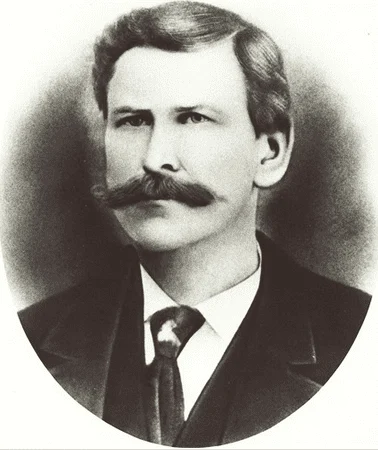
Although Prohibition was nationally repealed in 1933, there were states that held on to it much longer. 1952, Mississippi was one of those states and had been the first to adopt it in 1908 and the first to ratify the national amendment in 1918. The debate in 1952 was on to keep or repeal it, and a 29-year-old state legislator, Noah S. “Soggy” Sweat Jr. (1922-1996), had the idea of how to approach this contentious issue as he was reaching the end of his five-year term in the state House. He delivered the following speech before the Mississippi State Legislature on April 4, 1952:
“My friends, I had not intended to discuss this controversial subject at this particular time. However, I want you to know that I do not shun controversy. On the contrary, I will take a stand on any issue at any time, regardless of how fraught with controversy it might be. You have asked me how I feel about whiskey. All right, this is how I feel about whiskey:
If when you say whiskey you mean the devil’s brew, the poison scourge, the bloody monster, that defiles innocence, dethrones reason, destroys the home, creates misery and poverty, yea, literally takes the bread from the mouths of little children; if you mean the evil drink that topples the Christian man and woman from the pinnacle of righteous, gracious living into the bottomless pit of degradation, and despair, and shame and helplessness, and hopelessness, then certainly I am against it.
But, if when you say whiskey you mean the oil of conversation, the philosophic wine, the ale that is consumed when good fellows get together, that puts a song in their hearts and laughter on their lips, and the warm glow of contentment in their eyes; if you mean Christmas cheer; if you mean the stimulating drink that puts the spring in the old gentleman’s step on a frosty, crispy morning; if you mean the drink which enables a man to magnify his joy, and his happiness, and to forget, if only for a little while, life’s great tragedies, and heartaches, and sorrows; if you mean that drink, the sale of which pours into our treasuries untold millions of dollars, which are used to provide tender care for our little crippled children, our blind, our deaf, our dumb, our pitiful aged and infirm; to build highways and hospitals and schools, then certainly I am for it.
This is my stand. I will not retreat from it. I will not compromise” (Marquez).
He managed to simultaneously please and antagonize both sides of the issue. Sweat recounted that it had taken him two months to write the brief speech, and it has since been legendary in Mississippi politics as well as of the United States. This speech gave rise to the logical fallacy, “If-by-Whiskey”, which is defined by Logically Fallacious as:
“A response to a question that is contingent on the questioner’s opinions and makes use of words with strong connotations. This fallacy appears to support both sides of an issue — a tactic common in politics.”
After his stint in the state legislature, Sweat served as district attorney for two terms, and from 1966 to 1974 he was a circuit judge. The position, incidentally, that won in 1952 was continuing Prohibition; Mississippi was the final state to repeal it, doing so in 1966!
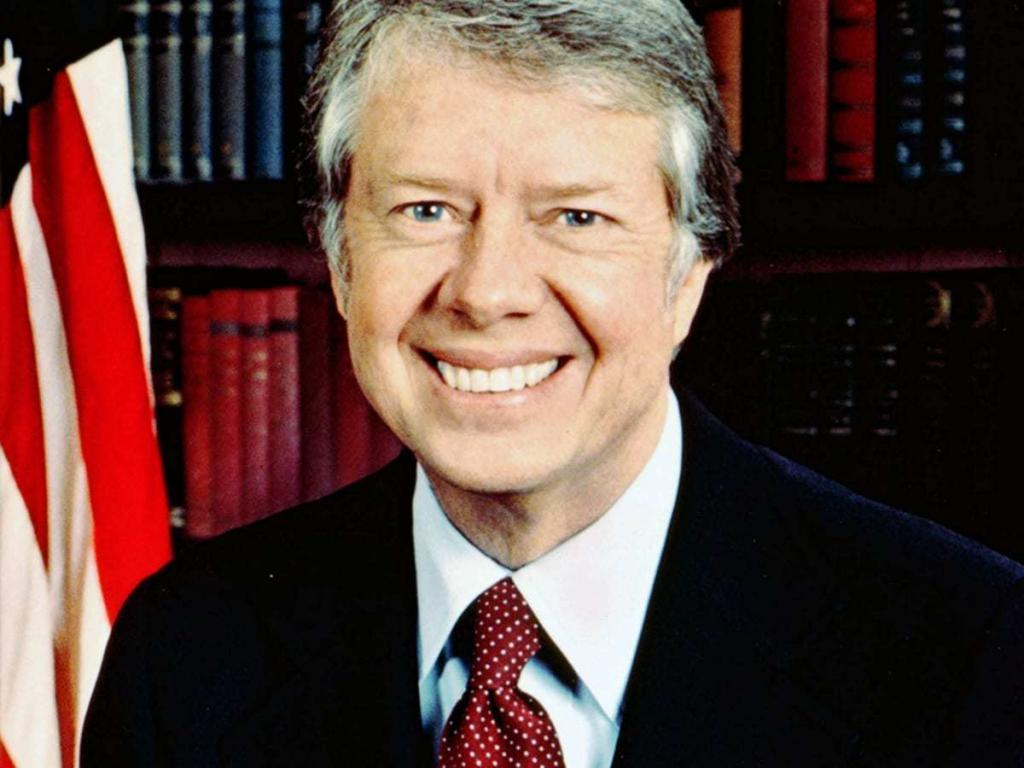
On October 1st, 1924, Jimmy Carter was born, and he still lives today. This makes him the first centenarian president in American history. An interesting minor coincidence is that on the day Carter turned 100 the debate between Walz and Vance was occurring. Like Carter’s running mate Mondale, Walz is from Minnesota. Maybe that’s a good portend for Democrats in this election? I don’t know. But what I do know is how Carter was seen ideologically during his presidency.
Unfortunately, I cannot at this time produce a proper Americans for Democratic Action rating for him, and this is because ADA’s 1979 page lacks descriptions of the first four Senate votes. I certainly can find out what those are, but not in time to post this before midnight PST. Liberals from what I’ve seen so far seem to regard him as a moderate liberal, and sometimes have counted as against the liberal position measures that most Republican conservatives went against. For instance, the 1978 administration-backed proposal to deregulate natural gas by 1985. This was unsatisfactory in its slowness for conservative Republicans, and deregulation itself of natural gas was unsatisfactory to liberals. Thus, Carter’s liberalism may be lessened in ways that conservatives wouldn’t agree with. I will also note later on in this post some votes on which ADA actually sided with Americans for Constitutional Action! DW-Nominate scores him a -0.504, which is pretty solidly liberal and places him to the left of many, many Democrats of his day (and today).
As for ACA…
If Jimmy Carter’s official positions on votes were to be counted as votes, he would score for his presidency a 13%. I can offer far more details here, because I have already compiled ACA votes for the Carter era. Areas in which Carter took a liberal position on issues were:
. $23.3 billion in federal programs for anti-recession purposes, which included public works financing (1977).
. Weakening the Hatch Act through the Federal Employees’ Political Rights Act, permitting greater allowances for participation in politics by Federal employees (1977).
. Opposing an effort by Congressman Beard (R-Tenn.) to prohibit VA funds to benefit individuals upgraded by his special discharge program that allowed certain individuals discharged as less than honorable to be upgraded (1977).
. Opposed a House and Senate effort to sunset price controls on natural gas, for new onshore in 1977 and new offshore in 1982 (1977).
. Supported House and Senate efforts to delete funds for five B-1 Bombers (1977).
. Opposed Congressman Erlenborn’s (R-Ill.) amendment for a more gradual increase in the federal minimum wage than the committee bill (1977).
. Supported Majority Leader Byrd’s (D-W.V.) motion to table the Allen (D-Ala.) resolution expressing the opposition of the Senate to pardoning draft resisters and evaders (1977).
. Supported his nomination of Paul Warnke as chief negotiator of the Strategic Arms Limitation talks with the USSR. Warnke had previously called for reducing military spending by a third, and his nomination was a clear signal of continuing détente (1977).
. Opposed Senator Curtis’s (R-Neb.) amendment keeping the requirement that food stamp recipients pay for part of their cost (1977).
. Supported Majority Leader Byrd’s (D-W.V.) motion to end debate on the bill permitting public financing of Senate campaigns (1977).
. Supported an increase in the federal minimum wage (1977).
. Opposed Congressman Breaux’s (D-La.) substitute for outer continental shelf legislation that grants the states more money and limits government intervention in exploratory drilling (1978).
. Supported the proposed creation of the Office of Consumer Representation for consumer protection (1978).
. Supported deleting Senator Stennis’s (D-Miss.) motion to rescind funds for the production of two additional B-1 Bombers (1978).
. Supported the enactment of the Panama Canal Treaties, as well as supported tabling an effort to authorize the disposal of all US property before the treaties took effect (1978).
. Supported Appropriations Committee Chairman Mahon’s (D-Tex.) motion for the House to rescind funds for the production of three B-1 Bombers (1978).
. Opposed Congressman Young’s (R-Alaska) proposal to permit Alaska to choose lands to be conserved under the Alaska Lands bill and to remove five million acres from coverage (1978).
. Opposed Congressman Stratton’s (D-N.Y.) amendment to maintain troops at a minimum of 26,000 in South Korea (1978).
. Supported up to $1.65 billion in federal loan guarantees to New York City (a bailout, in other words) (1978).
. Supported Senate and House efforts to retain indirect U.S. Aid to Uganda, Cambodia, Laos, and Vietnam (1977, 1978).
. Opposed Congressman Hansen’s (R-Idaho) amendment prohibiting funds for Panama in the Foreign Aid Appropriations bill (1978).
. Supported an alternative version of the Consumer Cooperative Bank bill (1978).
. Opposed Senator Lugar’s (R-Ind.) proposed reduction in funding of food stamps by $250 million (1978).
. Opposed Congressman Kramer’s (R-Colo.) amendment reaffirming the position the US took in the 1955 mutual defense treaty regarding aggression against Taiwan (1979).
. Opposed an anti-busing amendment to the U.S. Constitution (1979).
. Supported the bill implementing the Panama Canal Treaties (1979).
. Supported the creation of the Department of Education (1979).
. Supported the Emergency Energy Conservation Act (1979).
. Opposed Congressman Courter’s (R-N.J.) amendment to prohibit funds for controlling the price of gasoline (1979).
. Supported $1.5 billion in federal loan guarantees to be matched by $2.1 billion from other sources to bail out the Chrysler Corporation (1979).
. Opposed Senator Percy’s (R-Ill.) amendment declaring that aggression against Taiwan by China would be considered a threat to U.S. security interests (1979).
. Opposed Senator Stennis’s (D-Miss.) effort to end sanctions against Zimbabwe-Rhodesia (1979).
. Opposed Senator Helms’s (R-N.C.) effort to retain a spending ceiling on food stamps for fiscal 1980-81 (1979).
. Supported Majority Leader Byrd’s (D-W.V.) tabling of Sen. Armstrong’s (R-Colo.) amendment for a higher military pay raise (1979).
. Supported the bill imposing a windfall profits tax (1979, 1980).
. Opposed Congressman Broyhill’s (R-N.C.) motion to provide for a legislative veto for Federal Trade Commission regulations (1980).
. Opposed Congressman Symms’s (R-Idaho) limited substitute for the Idaho Wilderness bill (1980).
. Supported Congressman Obey’s (D-Wis.) increasing in funds of domestic programs and oil tax credit reform to raise funds for the increase (1980).
. Opposed Congresswoman Holt’s (R-Md.) proposed transfer of funds from domestic programs for increases in defense spending (1980).
. Supported the International Development Bank bill (1980).
. Supported extending the debt ceiling at $879 billion through June 30, 1980 (1980).
. Supported Majority Leader Wright’s (D-Tex.) amendment providing $425 million in aid to Nicaragua (1980).
. Opposed Congressman Sensenbrenner’s (R-Wis.) motion to delete administrative (as opposed to judicial) enforcement of fair housing laws (1980).
. Opposed Congressman Levitas’s (D-Ga.) amendment permitting a Congressional veto of trucking regulations (1980).
. Opposed Congressman Pritchard’s (R-Wash.) amendment reducing by $200 million funds for the Tennessee-Tombigbee Waterway (1980).
. Supported the Defense Production Act amendments, providing for funds for synthetic and alcohol fuels as well as the creation of a conservation bank (1980).
. Opposed Congressman Devine’s (R-Ohio) motion to kill the proposed Energy Mobilization Board (1980). Note: ADA supported this motion too!
. Opposed disapproving of his gasoline rationing plan (1980).
. Opposed Senator Schmitt’s (R-N.M.) amendment permitting a one-house veto of Federal Trade Commission regulations (1980).
Opposed Senator Dole’s (R-Kan.) motion to recommit the windfall profits tax bill for hearings (1980).
. Opposed Senator Hollings’s (D-S.C.) motion to table Senator Nelson’s (D-Wis.) proposed deletion of $2 billion from defense spending and $400 million in interest payments, transferring the funds to domestic priorities (1980).
. Opposed Senator Armstrong’s (R-Colo.) amendment to repeal the Credit Control Act of 1969 (1980).
. Supported Senator Hollings’s (D-S.C.) budget resolution (1980).
. Opposed Senator Stone’s (D-Fla.) motion to block funds for military aid to Nicaragua (1980).
Areas in which Carter took a conservative position included:
. Opposing the National Consumer Cooperative Bank bill, which would have provided $750 million for a bank and a self-help development fund to issue loans to consumer cooperatives and to assist inner-city residents to start consumer cooperatives respectively (1977).
. Opposed Congressman Weiss’ (D-N.Y.) amendment blocking funds for research and development of neutron bombs (1977).
. Opposed the emergency farm bill for wheat, corn, and cotton (1978).
. Opposed a resolution disapproving his sale of jet fighters to Middle Eastern nations (1978).
. Supported outlining U.S. policy on settling the dispute between Greece and Turkey over Cyprus as part of repealing the arms embargo on Turkey (1978).
. Supported implementation of the Selective Service (1980).
. Opposed Congressman Simon’s (D-Ill.) reduction by $500 million for the MX intercontinental missile system (1980).
. Opposed Senator Magnuson’s (D-Wash.) amendment to place the burden of proof on an applicant for a trucking certificate to demonstrate that their proposed service is consistent with present or future public needs (1980).
. Supported Senator Garn’s (R-Utah) amendment to delete middle-income housing subsidies, instead having the funds go to current housing programs (1980). Note: ADA supported Senator Garn’s amendment too!
. Opposed Senator Moynihan’s (D-N.Y.) amendment to allow students in private elementary and secondary schools to receive Basic Educational Opportunity Grants of up to $750 annually (1980). Note: ADA opposed Senator Moynihan’s amendment too!
Carter was overall a liberal man who most often dissented from liberalism on matters regarding military policy. His opposition to Senator Magnuson’s burden of proof amendment serves to highlight his support for deregulation that conservatives see as a positive of his presidency.