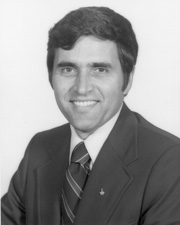
Great Conservatives from American History #6: Joseph Rainey

Since this is Black History Month, I have opted to cover some figures of black history in politics. Today’s is the first black Congressman in history, South Carolina’s Joseph Rainey (1832-1887).


Born into slavery, his father Edward had the good fortune of being permitted by his master to work a side-business as a barber. He would contribute a portion of what he made to his master as was law, but was able to earn and save enough money to buy the freedom of himself, his wife, and two children (U.S. House). Joseph Rainey would follow in his father’s footsteps as a barber in South Carolina. Although a free man, his rights were still limited. As Professor Bobby J. Donaldson (2021) explains, “Their liberties were limited by law. Every free man over the age of 15 was required to have a white “guardian” to enable him to live in the city, and any “insolence” left the African American man open to violent assault. Free people of color had to pay an annual tax; if they failed to pay it, they could be sold into slavery for one year. Wherever they went, free people of color were assumed to be enslaved and had to show documents to prove they were not.” In 1861, with the outbreak of the War of the Rebellion, Rainey was drafted into the Confederate Army to perform menial labor. The following year, he and his wife fled to Bermuda, where both made a good living and with the money they made. During this time Rainey received a greater education, including reading classic literature which prepared him for civic life (Donaldson). They returned to South Carolina in 1865, and Rainey became active in the Republican Party. In 1868, he participated in the constitutional convention of South Carolina which instituted a poll tax to fund a public school system. During this time, his conservatism manifested in his expressed belief that those who don’t own property shouldn’t have the right to vote (Richardson). This position traces back to the Federalist Party, whose members believed that people who didn’t own property had no investment in the current governance. In 1870, an opportunity arose with Congress’s refusal to seat B.F. Whittemore, a corrupt carpetbagger who had been censured for selling appointments to naval and military academies at $2000 each and had been reelected after resigning to avoid expulsion. (Rocky Mount Telegram). Rainey was elected in his place, becoming the first black representative in American history.

Rainey usually impressed those he met and to many he was a curiosity. As the Chicago Daily Tribune wrote on him, “His long bushy side whiskers are precisely like a white man’s. His physical organization seems to be sufficiently strong to bear all the strain his mental construction will give. His forehead is middling broad and high and the ennobling organization of the mind is well developed. He has an excellent memory, and his perceptive powers are good. His polite and dignified bearing enforces respect. Of course Mr. Rainey will not compare with the best men of the House of Representatives, but he is a good average congressman, and stands head and shoulders above the ordinary carpet bagger” (Donaldson). He was largely conservative on matters regarding business and monetary issues. Rainey usually supported railroad interests and opposed concepts like “free silver”, expanding silver currency generally, and greenbacks. He did, however, vote for the Bland-Allison Act over President Hayes’ veto in 1878 as a compromise. Rainey’s central cause, however, was protecting the rights of freedmen. For one day in 1872, he presided over the House of Representatives, another first for a black man. As one newspaper noted about the fears of racists, “For the first time in the nation’s history a colored man, in the person of Hon. Joseph H. Rainey, of South Carolina, on Thursday last presided over the deliberations of the House of Representatives….The earth continues to revolve on its axis” (Donaldson).
Rainey, as did almost all other Republicans, supported the Ku Klux Klan Act in 1871 to curb racially motivated violence against politically active blacks and white Republicans. The Ku Klux Klan of the Reconstruction period was by far the most violent of the incarnations of the Klan and had a body count of thousands. Rainey strongly supported the Civil Rights Act of 1875 and asked in a speech,


Why is it that colored members of Congress cannot enjoy the same immunities that are accorded to white members? Why cannot we stop at hotels here without meeting objection? Why cannot we go into restaurants without being insulted? We are here enacting laws for the country and casting votes upon important questions; we have been sent here by the suffrages of the people, and why cannot we enjoy the same benefits that are accorded to our white colleagues on this floor? (Donaldson)


By 1874, the KKK had been countered by federal authority, but new groups arose that also perpetrated acts of violence to upend the political power of blacks as well as white carpetbaggers and “scalawags”. These included the White League and the Red Shirts, which became such a threat that he purchased a “summer home” in Windsor, Connecticut, where he moved his family for their protection. He maintained an official residence in South Carolina as legally required.


Although reelected in a difficult contest in 1876 against Democrat John S. Richardson, the political environment in the state was declining for blacks. Republican presidential candidate Rutherford B. Hayes only won the state by a mere 889 votes that year. His victory was secured by agreeing to end Reconstruction, and the results of the next presidential election speak greatly to how things changed in South Carolina: Democrat Winfield Scott Hancock won the state by 32 points. The numbers would only worsen for Republicans in South Carolina as less and less blacks were voting due to absurdly restrictive voting laws targeted at them, violence, intimidation, and fraud. By 1900, the Republican vote for president dwindled down to 7%. Republican percentages would remain in single digits until Eisenhower almost won the state in 1952, thanks both to Truman’s embrace of civil rights and to the institution of the secret ballot, and the state would again vote Republican for president in 1964. In 1878, with Reconstruction over and increased voter intimidation, violence, and fraud occurring, Rainey was defeated for reelection with Democrat John S. Richardson winning with 62% of the vote, despite the district being majority black in population. He served in a post in the U.S. Treasury for a short time and then he turned to business pursuits, retiring in 1886. Sadly, Rainey didn’t get to enjoy retirement for long. Malaria was a horrible reality in the South until rural electrification, and his brush with it compromised his health so badly that he died months later on August 2, 1887.


P.S.: Some may be understandably skeptical about my assertions of Joseph Rainey as a conservative, thus in the references I have provided links to votes I have cited as evidence. The usage of the word “conservative” for Reconstruction Era politics is usually employed to mean policies that aim for a return as much as possible to the antebellum South.

References


Donaldson, B.J. (2021, January). Meet Joseph Rainey, the First Black Congressman. Smithsonian Magazine.


Retrieved from

https://www.smithsonianmag.com/history/joseph-rainey-first-black-congressman-180976502/

Precedent for Keeping Powell Out. (1967, April 18). Rocky Mount Telegram.

Retrieved from

https://www.newspapers.com/clip/74846930/precedent-for-keeping-powell-out/

Representative Joseph Rainey of South Carolina, the First African American to Serve in the House. U.S. House of Representatives.

Retrieved from

https://history.house.gov/Historical-Highlights/1800-1850/Representative-Joseph-Rainey-of-South-Carolina,-the-first-African-American-to-serve-in-the-House/

To Agree to a Report of Committee of Conference on H.J. Res. 109, Which Provides That Subsidiary Silver Coin and Fractional Currency Oustanding Shall Not Exceed $50,000,000; That Amount of Money Invested in Silver Bullion, Exclusive of Resulting Coin, Shall Not Exceed $200,000 [Limiting Silver Coinage]. Govtrack.

Retrieved from

https://www.govtrack.us/congress/votes/44-1/h141

To Concur in Senate Amendment to H.R. 1093 Said Amendment Striking the Provision Permitting the Coinage of Silver Bullion at a U.S. Mint or Assay Office on Same Terms and Conditions as Coinage of Gold Bullion [Rainey votes for]. Govtrack.

Retrieved from

https://www.govtrack.us/congress/votes/45-2/h87

To Introduce H.R. 2788, A bill to Authorize the Building of a Military and Postal Railway from Washington, D.C., to New York City [Rainey votes for]. Govtrack.

Retrieved from

https://www.govtrack.us/congress/votes/41-3/h511

To Pass S. 617, A Bill to Fix the Amount of U.S. Notes and the Circulation of National Banks, and for Other Purposes [Rainey votes against]. Govtrack.

Retrieved from

https://www.govtrack.us/congress/votes/43-1/h126

To Pass H.R. 1093 Over the Veto of the President. [Rainey votes to override Hayes’ veto of Bland-Allison] Govtrack.

Retrieved from

https://www.govtrack.us/congress/votes/45-2/h93

To Pass S. 647. [Rainey votes to Incorporate the Texas Pacific Railroad Co.]. Govtrack.

Retrieved from

https://www.govtrack.us/congress/votes/41-3/h583

To Suspend the Rules and Pass A H.Res. Providing That the Right of the Congress to Coin and Regulate Money Does Not Include the Authority to Issue Paper of Government as Money [Rainey votes for Anti-Greenback Resolution]. Govtrack.

Retrieved from

https://www.govtrack.us/congress/votes/44-1/h23

To Suspend the Rules and Pass H.R. 3923, Providing for the Coining of the Standard Silver Dollar of the U.S. and for Restoring its Legal-Tender Character. [Rainey votes against restoring bimetallism]. Govtrack.

Retrieved from

https://www.govtrack.us/congress/votes/44-1/h154

To Table H.R. 5429, a Bill Authorizing and Requiring the United States Treasurer to Receive U.S. Coins in Exchange for U.S. Notes [Rainey votes to table]. Govtrack.

Retrieved from

https://www.govtrack.us/congress/votes/45-3/h312

To Table S.J. Res. 11. (Extending Time for Wisconsin Railroad to be Completed) Govtrack.

Retrieved from

https://www.govtrack.us/congress/votes/41-3/h521

Great Conservatives from American History #5: Bob Stump

In 1976, the Arizona Republicans were having a big fight over who was to succeed retiring Senator Paul Fannin. The contenders were both representatives and hardcore conservatives in Sam Steiger and John B. Conlan. The primary battle was bitter, and the winner, Steiger, came out of it a damaged candidate and he lost the election by over 10 points to Democrat Dennis DeConcini. The Republicans also lost Steiger’s seat to a Democrat. Although going from Fannin to DeConcini was a loss for conservatives, it turns out Steiger to Robert Lee “Bob” Stump (1927-2003) was not.


Stump, a cotton farmer by profession, was from the start of his Congressional career a poor fit in the Democratic Party. To win his seat, he spoke out against Vice Presidential nominee Walter Mondale. He had been elected to Congress in a time in which the conservative wing of the party was starting its decline that had kicked off from a change in policy from House Democrats, that who would get a committee chairmanship would no longer be based on seniority alone. Democrats were in no mood for a repeat of the obstructionism of Howard W. Smith of Virginia or the prejudiced and patronizing Eddie Hebert of Louisiana. Stump’s record was shockingly conservative from the get-go, rivaling that of Larry McDonald of Georgia, who would become chairman of the John Birch Society. Americans for Constitutional Action gave him a 100% in both 1977 and 1978. Republicans noticed how poor a fit Stump was for the party and often tried to recruit him. Leading Republican John Rhodes (R-Ariz.) brought the issue up with him multiple times, stating, “I’ve told him any time he wants to switch parties, I can guarantee him the Republican nomination” (CQ, 57). Back when conservative organizations courted Democrats, he was found to be a valuable presence to make their organizations more than simply an arm of the Republican Party. He was part of the advisory boards of the National Right to Work Committee, the Gun Owners of America, and the American Conservative Union. The Democratic leadership was inclined to keep him around simply as a vote for organization of the House.


The liberal project for the domination of the Democratic Party would be stymied for a brief time in the 97th Congress, in which 63 House Democrats bucked party leadership to back the Gramm-Latta Budget and 48 backed the Kemp-Roth substitute that ultimately made up the tax reduction bill. Although the Democratic leadership declined to penalize members who voted for these laws, they were put on notice that future voting in this direction could result in penalties. This prompted Stump to announce in September 1981 that he would switch to the Republican Party. He stated on his departure, “I have been a Democrat all my life. But I find that I can no longer support the policies dictated by the liberals who dominate the party” and went on to say “There were history-making proposals to cut the budget and cut taxes this session. I voted for all those proposals, against the demands of the party liberals” (Hulbert). Stump hoped that his departure would motivate other Democrats to switch, and he was followed by Eugene Atkinson of Pennsylvania and Phil Gramm of Texas. However, most chose to remain. Richard Shelby of Alabama was reportedly close to switching, but he opted to move up in the Democratic Party, eventually winning election to the Senate in 1986. It was after the 1994 Republican Revolution that he switched to the Republican Party. Even Larry McDonald of Georgia, the most conservative of them all, stuck with the Democratic Party until his death. Stump’s switch would be official in the 98th Congress.


In the 98th Congress, Stump the Republican was an even stronger conservative than he had been before, being a strong supporter of Reagan’s increases in defense spending and anti-communist foreign policy. He was also a staunch budget slasher on domestic matters. Stump followed through on fiscal conservatism in his own affairs, maintaining a bare-bones staff. Thus, he performed some secretarial functions, and it was entirely possible that if you called Stump’s Washington D.C. office, he would answer the phone himself. It is hard to imagine any elected official in Washington answering cold phone calls. Stump also sponsored legislation to make English the official language of the United States and pushed for legislation to counter automatic citizenship being conferred upon the children of illegal immigrants. He would make an exception in conservatism in his opposition to prayer in public schools and also opposed the Equal Access Act in 1984. These actions stemmed from his strict belief in separation of church and state as a Seventh Day Adventist.

Stump was committed unwaveringly to an anti-communist foreign policy, consistently backing world actors who were opposed to communism. In 1986, he successfully pushed for ending the prohibition on aid to UNITA anti-communist rebels in Angola, a follow-up to the repeal of the Clark Amendment the previous year. Stump briefly considered running for the Senate to succeed Barry Goldwater but ultimately demurred to Congressman John McCain. He also became one of the chamber’s foremost naysayers, seldom finding a domestic spending proposal he liked. Stump also voted against a lot of social legislation that received overwhelming margins of passage, including the Fair Housing Amendments Act of 1988, the Americans with Disabilities Act, the Hate Crimes Statistics Act of 1990, the Older Workers Benefit Protection Act, and the Civil Rights Act of 1991.

In 1994, a Republican House was elected after forty years of Democratic control and Stump was now chairman of the House Veterans Affairs Committee, where he pushed for college and job opportunities for veterans. Although by this time a powerful member of Congress, he was a workhorse rather than a showhorse. As Senator Jon Kyl (R-Ariz.) said about him, “He always shunned the limelight, but got the job done” (USA Today, 2002). In June 1998, it was mistakenly reported that Bob Hope had died, and Stump announced his death on the floor of the House. Ironically, Hope would die five weeks after him. In 2001, Stump became chairman of the House Armed Services Committee and in this capacity, he successfully pushed for increasing pay for military personnel, additional military construction, and the Bush Administration’s plan for missile defense (USA Today, 2003). In April 2002, he announced his retirement due to declining health, which turned out to be from myelodysplasia, a serious blood disorder. Stump died of this ailment on June 20, 2003. His American Conservative Union lifetime score was a whopping 97%, indicating a strong adherence to conservative principles.

Stump earns an entry for being a leading light for Reagan Democrats to move to the Republican Party, being among the leading supporters of anti-communist foreign policy, his leading advocacy for making English the official language of the United States, his leadership on national defense and the well-being of the nation’s veterans, and his limited government philosophy that applied on the spending side and not merely in the form of tax reductions.

References

Former Ariz. congressman Bob Stump dies. (2003, June 22). USA Today.

Retrieved from

https://usatoday30.usatoday.com/news/washington/2003-06-22-stump_x.htm

Hurlbert, D. (1981, September 25). Rep. Bob Stump, a conservative Democrat has announced plans… UPI.

Retrieved from

https://www.upi.com/Archives/1981/09/25/Rep-Bob-Stump-a-conservative-Democrat-has-announced-plans/4294370238400/

Politics in America (1981). Congressional Quarterly, 57.

Retrieved from

https://www.google.com/books/edition/Politics_in_America/J2Q2JpmlclsC?hl=en&gbpv=1&dq

Rep. Bob Stump of Arizona retiring. (2002, April 26). USA Today.

Retrieved from

https://usatoday30.usatoday.com/news/washington/2002/04/26/stump.htm

From Space to the Senate: John Glenn and Harrison Schmitt


In retrospect regarding the 2022 midterms, no one should have been surprised that Blake Masters lost to Mark Kelly in the Arizona Senate and for multiple reasons. One of them is that Kelly’s resume as an astronaut is more broadly appealing than being the top ideological student of venture capitalist Peter Thiel. Kelly is but the third astronaut to make his way to the Senate. The first two were Ohio’s John Glenn (1921-2016) and New Mexico’s Harrison Schmitt (1935- ).


John Glenn

In 1959, World War II veteran and US Marine John Glenn was recruited by NASA for Project Mercury with six other candidates. Glenn flew on Mercury-Atlas 6, the first manned spaceflight into orbit by the Americans. On February 20, 1962 his flight launched, and he circled the Earth three times, with the craft falling down into the ocean after 44 hours, 55 minutes, and 23 seconds. Upon his return, Glenn was the toast of the nation, meeting President Kennedy, and being the subject of a ticker-tape parade. He then became a close friend of the Kennedy family, and Attorney General Bobby Kennedy urged Glenn to run for the Senate in 1964.

On January 16, 1964, Glenn resigned from NASA to pursue a political career. However, just a month later he had a fall in a hotel bathroom causing a concussion. The head injury impacted his hearing and the attending doctor gave him a recovery time of one year, so he dropped out of the race. In the next year, he accepted the position of vice president of corporate development Royal Crown Cola, later becoming president of Royal Crown International. In 1968, he was in Los Angeles campaigning for Robert F. Kennedy and went with his wife Annie to the hospital after he was shot. Glenn then served as a pallbearer at his funeral. He declined to run for the Senate that year, but looked to a run in 1970 to succeed retiring Stephen Young.

First Senate Primary Run: 1970

Funny enough, the reception to the idea of astronauts running for political office was initially mixed. There were those, particularly among Republicans in reaction to John Glenn’s running for office, who thought that it was somehow improper for astronauts to capitalize on their fame to run for political office. At that time, there was another figure in Democratic politics in Ohio who was looking at a Senate seat in Howard Metzenbaum. Metzenbaum was a businessman but also a bit to the left of Glenn. He had more solid Democratic Party establishment support in the state, particularly from unions and he won the primary. Metzenbaum would, however, go on to lose the election to Congressman Robert Taft Jr.


Running for Office in ’74

On January 3, 1974, Senator William B. Saxbe resigned the Senate to serve as President Nixon’s attorney general. The governor at the time was Democrat John J. Gilligan, who although had appointed Glenn as chair of the Citizens Task Force on Environmental Protection, gave Metzenbaum a leg up by appointing him to serve the remainder of the term. His incumbency edge did not deter Glenn from giving the Senate another go, especially since Metzenbaum had faced the voters before and lost. Metzenbaum blundered badly when he asserted that Glenn had not held a real job. He responded effectively in a May 4, 1974 speech that would come to be known as the “Gold Star Mothers Speech”, stating, “…look those men with mangled bodies in the eyes and tell them they didn’t hold a job. You go with me to any Gold Star mother and you look her in the eye and tell her that her son did not hold a job” (Glenn). Glenn won the primary four days later 54-46% and defeated Cleveland’s Republican mayor Ralph Perk in the general election by 34 points and won all counties.


Although not even two years into the Senate, Jimmy Carter considered Glenn for his vice president and in 1976 he, with Texas Congresswoman Barbara Jordan, delivered the Keynote Address at the Democratic National Convention. However, Jordan was a great speaker and Glenn, who followed her, delivered an underwhelming speech, with his delivery being the primary issue. He lost the nomination to Minnesota’s Walter Mondale. That year, Metzenbaum would join Glenn in the Senate by narrowly winning a rematch with Taft and would become a political ally. He often agreed with President Carter on domestic issues and frequently voted the liberal Democratic line on issues such as food stamps, busing, and abortion. His lifetime American Conservative Union score was a 12%. Glenn also sided with Carter often on foreign policy with his votes for the Panama Canal Treaties and selling AWACs to Egypt, Israel, and Saudi Arabia in 1978. However, he backed funding B-1 Bombers and wasn’t convinced to support SALT II, which fell through after the Soviet invasion of Afghanistan. Glenn also naturally backed increased government funding for scientific pursuits. Although overall a liberal Democrat, he was not big on emphasizing partisanship and was highly likeable; he won reelection in 1980 with 69% of the vote, far ahead of Ronald Reagan’s 51.5% of the vote. It was fitting that Ohio, a state that had a disproportionate number of people who made innovations in and had achievements in flight, would vote to keep their astronaut-senator.

Presidential Ambitions

In 1983, John Glenn announced his candidacy for the Democratic nomination for president. Although the front-runner was former Vice President Walter Mondale, Glenn was initially seen as the leading alternative. That year, the film “The Right Stuff” had celebrated the bravery of Glenn and his fellow Mercury astronauts and it really seemed like the stars were aligning for him to win. However, the timing of this movie’s release would turn out to be detrimental to his campaign. Although Glenn was wanting to be questioned about the issues of the day, his background as an astronaut came back to haunt him as many voters at town halls would ask him about that rather than his politics. His record had also been independent enough so that he cast some votes that gave certain groups within the Democratic Party pause: his vote against the Common Site Picketing bill in 1975 concerned organized labor and his vote for selling AWAC planes to Saudi Arabia and Egypt in 1978 concerned Jewish groups. Glenn also had continued his reputation as not being an outstanding public speaker. As humorist Dave Barry wrote, “he couldn’t electrify a fish tank if he threw a toaster into it” (Greenfield).

As the 1984 primary season continued and enthusiasm for Glenn dwindled, he was supplanted as an alternative to Mondale by Colorado Senator Gary Hart. He came in third in the Iowa caucus and the New Hampshire primary, and finally his failing to win any of the Super Tuesday primaries on March 13th combined with increasing campaign debt resulted in him dropping out of the race that night. Although Glenn lost the primary, he would handily win reelection in 1986 against Congressman Tom Kindness. He would, however, have a political complication due to his involvement with Charles Keating.

The Keating Five

With the Savings and Loan Crisis came the scandal of the Keating Five. The Keating Five were a group of senators who had received campaign contributions from and were accused of acting improperly on behalf of Lincoln Savings and Loan Association chairman and fraudster Charles Keating. These were Dennis DeConcini (D-Ariz.), John McCain (R-Ariz.), Alan Cranston (D-Calif.), Don Riegle (D-Mich.), and John Glenn (D-Ohio). Glenn had received from Keating $34,000 in January 1984 to help with campaign debt and he had contributed over $200,000 to a PAC that Glenn was a spokesman for (Keating Five). Of the five, however, McCain and Glenn had only attended two meetings with federal regulators in which Cranston and DeConcini pressured them to lay off Keating. Although Glenn did not appear to be guilty of any ethical or legal violation, he was not dropped from the investigation as the Democrats wanted the investigation to remain “bipartisan” by keeping McCain on, who had the same amount of culpability as Glenn, thus they could not drop him. Ultimately McCain and Glenn were found only to have exercised poor judgment in attending the two meetings with Keating. Although this scandal harmed both, they both won renomination and reelection in 1992. However, in the case of Glenn, it constituted his toughest reelection, winning by less than ten points against future Senator and Governor Mike DeWine.

The Oldest Man in Orbit and Retirement

In 1998, Glenn, at the age of 77, returned to space, being the oldest astronaut in history. This mission was to study the effects of space on aging. Although actor William Shatner flew at 90, Glenn remains the oldest to have entered orbit. He retired from the Senate that year and in 2012, President Obama awarded him the Presidential Medal of Freedom.


Harrison Schmitt


The Watergate Committee benefited the image and career of a number of senators. These included Chairman Sam Ervin (D-N.C.), Howard Baker (R-Tenn.), and Herman Talmadge (D-Ga.). One senator, however, the committee did not benefit was Joseph Montoya (D-N.M.), who performed poorly in his questioning. As The New York Times wrote on him, “He enters the hearing room each day with a prepared set of questions and appears to ask each one of them, regardless of whether they have been asked by another senator and regardless of the witness’s answer. Montoya has told associates that much of his problem has been caused by his lack of staff assistance” (Simonich). Voters were not buying his excuses, and this made him vulnerable for the 1976 election. Enter Harrison “Jack” Schmitt. Schmitt, a geologist by profession, had joined NASA in June 1965 and he was one of the astronauts on the Apollo 17 mission in 1972. He was selected as the scientific community at the time was lobbying for a geologist to collect samples on the moon. As of February 2023, the last man to have ever walked on the moon. Available evidence suggests that he was the astronaut who took a famous photo during this mission called “The Blue Marble”, this photo of Earth:

In 1975, Schmitt resigned from NASA to run for the Senate. Montoya blundered on the campaign by being dismissive of his background as an astronaut, stating, “It’s no big deal to go to the moon. They tied him in the rocket, pushed the button in Houston and off he went. Even I could have gone”, to which Schmitt responded, “I’d like to see him try it” (Simonich). On Election Day 1976 he defeated Montoya by 14 points.


Schmitt proved a moderately conservative senator, and took at times some socially liberal positions, such as voting to retain Medicaid funding for abortions. In 1978, he voted against the Panama Canal Treaties and proved most of the time a supporter of increased defense funding. The American Conservative Union gave him a lifetime score of 75%. He also was supportive of more funding for NASA. During Reagan’s first two years, Schmitt proved a staunch supporter of tax reduction and voted against the partial rollback in 1982 of the Reagan tax cuts. However, that year he also voted to increase the gas tax.


The year 1982 proved a difficult one for Republicans given the recession, and Schmitt was up for reelection. His opponent, New Mexico Attorney General Jeff Bingaman, ran an effective campaign with the slogan, “What on Earth has he done for you lately?” (Kluger) Schmitt ran an attack campaign on Bingaman’s tenure as attorney general, with two ads against him widely being panned as unfair. Bingaman also hit Schmitt on his votes on Social Security as well as his favorable votes for defense spending. On Election Day 1982, Bingaman defeated Schmitt 54-46%. Although Schmitt’s seat was regarded as one of the most vulnerable, his reelection loss was still regarded as an upset given his stature as an astronaut and earlier polling being in double digits for him. Bingaman also benefited from high turnout in Democratic Albuquerque. From 2005 to 2008, Schmitt served on the NASA Advisory Council. He is currently an adjunct professor of engineering physics at the University of Wisconsin-Madison as well as a member of the Heartland Institute. Schmitt has been a critic of numerous approaches to climate change that involve extensive use of government.


References

Greenfield, J. (2016, December 8). John Glenn, Hero and Political Cautionary Tale. Politico.

Retrieved from


https://www.politico.com/magazine/story/2016/12/john-glenn-cautionary-tale-214510/

John Glenn. Keating Five.

Retrieved from


http://keatingfive.org/actors/senators/John-Glenn

John Glenn: Political Career. The Ohio State University Public Libraries.

Retrieved from

https://library.osu.edu/john-glenn-political-career

Kluger, J. (2009, July 16). Moon Walkers. Time Magazine.

Retrieved from

https://web.archive.org/web/20090719082143/http://www.time.com/time/specials/packages/article/0,28804,1910599_1910769_1910767-3,00.html

Reinhold, R. (1982, November 3). Schmitt Loses New Mexico Senate Seat. The New York Times.

Retrieved from

https://www.nytimes.com/1982/11/03/us/schmitt-loses-new-mexico-senate-seat.html

Glenn, J. (1974, May 4). Gold Star Mother’s Speech.

Retrieved from

https://library.osu.edu/documents/ohio-congressional-archives/documents/Gold%20Star%20Mother%20speech.pdf

Simonich, M. (2022, August 7). Watergate was no boon for New Mexico’s investigating senator. Santa Fe New Mexican.

Retrieved from

https://www.santafenewmexican.com/news/local_news/watergate-was-no-boon-for-new-mexicos-investigating-senator/article_6f4f145c-126b-11ed-b2bc-73fbebaf5bc3.html

Wilkinson, H. (2020, January 17). John Glenn’s Big Disappointment: Running For President. NPR.

Retrieved from

https://www.wvxu.org/politics/2020-01-17/john-glenns-big-disappointment-running-for-president

RINOs From American History #3: Gilbert Gude

Maryland’s 8th district, which is currently represented by 1/6 Committee Democrat Jamie Raskin, is centered in Bethesda and is a district liberal in character and voting habits. However, this district used to be up for electing Republicans…liberal ones that is.


The 1966 midterms were a backlash against President Lyndon B. Johnson, Vietnam, and race riots, and one of the beneficiaries was Gilbert Gude (1923-2007), who won an open seat. This was the same year, incidentally, that Republican Spiro Agnew was elected governor over a segregationist Democrat in George Mahoney. Gude, unlike many people in this series, was right off the bat leaning in the liberal direction, with his 1967 Americans for Constitutional Action (ACA) score being a 34% and his Americans for Democratic Action (ADA) score being a 73%. Gude rejected the labels of liberal and conservative, thinking of himself as “a liberal on civil rights and a moderate on fiscal matters” (Schudel). He had previously served in the state legislature as well as the state senate and had chaired Congressman Charles Mathias’s successful 1964 reelection campaign. After President Nixon’s election, he would only become more liberal, opposing President Nixon’s Vietnam War policies and voting for the Cooper-Church Amendment in 1970 to cut off funds for troops in Cambodia. He also supported increased gun control. Gude became most known, however, for his advocacy for environmental laws and succeeded in amending the Clean Air Act to require publication of auto emission test results, worked for the protection of the Potomac Valley, worked the protection of the Chesapeake and the Potomac River, and the creation of the C&O National Historical Park, now one of the nation’s most frequented national parks (Kelly & Rasmussen). In 1972, he supported Rep. Henry Reuss’s (D-Wis.) unsuccessful effort to add an amendment to the Water Pollution Control Act to require firms use the latest water pollution control technology by 1980.


In 1970, Gude faced a Democratic opponent with a big name: Thomas Hale Boggs Jr., the son of the House’s Majority Whip Hale Boggs of Louisiana, but he won reelection by over 26 points. He was, in short, unbeatable. Even in the 1974 midterms, in which the Republican Party was harmed by the Watergate scandal, Gude won reelection in this Democratic district by over 30 points. In 1976, Gude decided to retire to accept a post as the head of the Library of Congress’ Congressional Research Service. That year, Gude got a 9% from ACA, with ADA giving him an 80%. He would serve in this next role until 1985. After his retirement, two more Republicans with a philosophy much like his would be elected from the district: Newton Steers (1977-1979) and Constance Morella (1987-2003). The Montgomery County district would fall from Republican hands in the 2002 midterms as the district was made even more Democratic.


References


Kelly, J. & Rasmussen, F.N. (2007, June 8). Gilbert Gude. The Baltimore Sun.

Retrieved from

https://www.baltimoresun.com/news/bs-xpm-2007-06-09-0706090109-story.html

Schudel, M. (2007, June 9). Gilbert Gude, 84; GOP Legislator, Environmentalist. The Washington Post.

Retrieved from

https://msa.maryland.gov/megafile/msa/speccol/sc3500/sc3520/002000/002028/html/post9june2007.html

Van Hollen, C. (2007, June 12). Tribute to Congressman Gilbert Gude. VoteSmart.

Retrieved from

https://justfacts.votesmart.org/public-statement/267694/tribute-to-congressman-gilbert-gude

RINOs From American History #2: Clifford P. Case

In 1944, Congressman Donald H. McLean of New Jersey’s 6th district is calling it quits. McLean is a staunch Republican, having been strongly opposed to the New Deal, voting against Social Security and the Fair Labor Standards Act of 1938. Indeed, when McLean’s time in Congress began in 1933, the area most opposed to FDR and the New Deal was the Eastern seaboard. This would change dramatically over the next twenty years and his successor represents a wider change on the Eastern seaboard for Republican politics in Clifford Philip Case (1904-1982).


Although McLean was moderately internationalist, Case is staunchly so, and on domestic policy he proves a moderate. He believes in economic controls in times of national emergency and frequently votes so. In 1946, the Republicans win control of Congress and in this session, he will reach the peak of conservatism. He supports most domestic legislation put forth by the Congress’s leadership including tax reduction and the Taft-Hartley Act and backs President Truman’s foreign policy to the hilt. He also shows a moderation when it comes to anti-communism in his support of softening proposed anti-subversive legislation in 1947. Case also sponsors an anti-lynching proposal and votes to ban the poll tax. After the GOP loses control of Congress in the 1948 presidential election, Case moves substantially to the left. He supports much of President Truman’s proposals, including public housing, aid for middle-income housing, and price and rent controls. Case even gets a 100% by Americans for Democratic Action in 1952. By contrast, in 1948, he had scored a 15%. In August 1953, Case would resign Congress to become chairman of the Fund of the Republic, a Ford Foundation institution with its intent to be to protect freedom of speech and civil liberties. This was a response to Joseph McCarthy and politicians like him. He would during this time of course condemn McCarthy and pledge to vote him off of the Subcommittee on Investigations, and this would strengthen opposition to him from the right of the Republican Party when he ran for the Senate in 1954. Conservatives pushed a write-in campaign for former Representative Fred Hartley, sponsor of the Taft-Hartley Act, but he attracted few votes. Conservative sources denounced him as “a pro-Communist Republicrat” and “Stalin’s choice for Senator” (McFadden). The Star-Ledger charged that his sister, Adelaide, had been affiliated with communists in her college years, a charge Case strongly denied (Rutgers). However, his votes for the Nixon-Mundt Communist Registration Bill in 1948 and for the McCarran Internal Security Act in 1950 undermine these takes, especially when actual pro-communist Congressman Vito Marcantonio had voted against both. However, it is true that Case was less enthusiastic about anti-communist measures than many Republicans. The 1954 race was incredibly close, and with Eisenhower and Nixon heavily campaigning for Case in the state, he won the election against Congressman Charles R. Howell by only 3,507 votes.


Case and Eisenhower

Senator Case pledged “1000% support of Eisenhower”, which Americans for Democratic Action condemned in 1955 as “…nearly 1000% repudiation of liberal practices and principles…” (Americans for Democratic Action). Indeed, of the three Republican presidents he served with, Eisenhower would be the one whose positions he would back the most. This was due both to Eisenhower’s moderation and Case’s moving towards Eisenhower’s moderation. He also of course strongly supported the president’s internationalism. However, ADA wouldn’t remain disappointed with Case, especially with the Kennedy and Johnson presidencies. Case was also the first Republican senator to support Medicare when he was the only one of them to vote for Senator Clinton Anderson’s (D-N.M.) Medicare proposal in 1960. That year, he won reelection by over 12 points.

Case: 1960s and 1970s Liberal

With the election of John F. Kennedy in 1960, Case proved one of the most supportive Republicans of the New Frontier, although he opposed Kennedy on public power and agricultural legislation. He proved enormously popular with New Jersey voters, who thought highly of his maverick status among Republicans and liberals respected him. Case thoroughly supported the Great Society and was unwaveringly favorable to civil rights legislation. During the 1970s he would vote to uphold Great Society programs and equity-based policies such as busing and affirmative action. During the Great Society Congress, Case was one of only two Republican senators to vote against both a school prayer amendment and a legislative apportionment amendment, both proposed by Minority Leader Everett Dirksen (R-Ill.). He also opposed reinstatement of a federal death penalty in 1974 as well as the Hyde Amendment in 1976. Case’s liberalism was so strong in this period that in 1971, 1974, and 1976 he scored a 0% by Americans for Constitutional Action. Americans for Democratic Action had scored Case 100% in 1967, 1968, and 1969. Indeed, there was minimal difference between him and his Democratic colleague Harrison Williams on major issues. At this point, you might be wondering why Case is still a Republican, and to that he provided an answer: ”I am a Republican, and I believe in the Republican Party. But I have my own convictions as to what the Republican Party should stand for, and I intend to fight for them as hard as I can. And I will not be driven away from my Republicanism simply because some Democrats happen to agree with me on certain issues – and some Republicans don’t”(McFadden).


Legislation

Clifford Case had a number of legislative achievements. He had been one of the floor managers of the Civil Rights Act of 1964 and in 1972, he got the Case Act passed, requiring the president to report an executive agreement reached with another country to Congress within 60 days (Pearson). Although initially he had been supportive of the Vietnam War, he turned against it as the sixties wore on and during the Nixon Administration, he was a solid “dove”, supporting both the Cooper-Church Amendment cutting off funds for military action in Cambodia and the McGovern-Hatfield “End the War” Amendment in 1970. In 1973, Case scored a major legislative victory when he sponsored with Frank Church (D-Idaho) an amendment prohibiting further U.S. military actions in Vietnam, Laos, and Cambodia after August 15, 1973, without Congressional approval. Troops had already been pulled from Vietnam due to the Paris Peace Accords but not in Laos and Cambodia. President Nixon, not having the numbers in Congress to fight this amendment given Watergate, reluctantly signed it into law.


Case and Carter

Case is mostly supportive of President Carter’s initiatives but opposes his sale of Airborne Warning and Control System planes to Egypt, Israel, and Saudi Arabia. This was part of his pro-Israel stance, as Egypt and Saudi Arabia were antagonistic to Israel at the time and indeed many liberals opposed the sale. He also proves a strong voice in support of the Panama Canal Treaty, believing it best for the health of relations with South and Central American nations.

By the late 1970s, the mood is souring among Republicans for liberals, and in 1978 Case faces a challenge from Jeff Bell, speechwriter for Ronald Reagan’s 1976 campaign who moved to New Jersey to challenge him. He does not take this challenge seriously and spends most of the primary season in Washington D.C., which proved to be a mistake as Bell pulls an upset. It is an old story in Washington: the seasoned veteran gets cocky and refuses to consider a possible loss seriously. The most recent occasion of this that stuck out in my mind was Senator Richard Lugar’s (R-Ind.) loss of renomination. This was due both to an exaggerated claim of him being a RINO but also to him losing touch with the voters of his state. For Case, it was the latter and a not exaggerated case of the former. Bell proceeds to lose the election to future presidential contender Bill Bradley by 12 points. Case would subsequently serve as the chairman of the Board of Directors of Freedom House. He had been a cigarette smoker throughout his life and in 1981 he was diagnosed with lung cancer. Despite an operation on one of his lungs in August, he succumbed to his illness on March 5, 1982.

Although Case is not the last Republican senator from New Jersey, he is the last to be elected by the voters: Nicholas Brady and Jeffrey Chiesa were placeholders appointed by Republican governors. Some sources classify Case as a moderate Republican, but truth be told after 1960 he could be regarded as staunchly liberal. Both ACA and ADA agree on this. DW-Nominate, which is a wider-based scale, gives Case a -0.108. This is one of the lowest scores a Republican has ever received. Whatever ideological basis he had for being a Republican seemed to have been mostly ancient history by his 1978 renomination effort.

References

ADA World Congressional Supplement. (1955, September). Americans for Democratic Action.

Retrieved from

https://adaction.org/wp-content/uploads/2017/11/1955.pdf

Clifford P. Case II: Loyal Son, Scholar, Statesman: Early Political Career. Rutgers University Libraries.

Retrieved from

https://exhibits.libraries.rutgers.edu/clifford-p-case/early-political-career

McFadden, R.D. (1982, March 7). Ex-Senator Clifford P. Case, 77, Is Dead. The New York Times.

Retrieved from

https://www.nytimes.com/1982/03/07/obituaries/ex-senator-clifford-p-case-77-is-dead.html

Pearson, R. (1982, March 7). Clifford P. Case, Former Senator From N.J., Dies. The Washington Post.

Retrieved from

https://www.washingtonpost.com/archive/local/1982/03/07/clifford-p-case-former-senator-from-nj-dies/ea82176f-1f02-4f75-8173-6f413b39590b/

Americans for Constitutional Action on the Ford Years

Gerald Ford will probably be one of the forgotten presidents as more time passes by, as he had one of the shortest terms in presidential history and wasn’t even elected to the office! This is too bad because Ford was a good guy and he was more than a placeholder president.

In 1974, the Congressional Republicans get hammered in the midterms, providing a difficult environment for the unelected President Ford who wishes to both heal the nation and hold the line on spending in the face of stagflation. The young liberal Democratic freshmen, known colloquially as the “Watergate Babies”, make their presence felt promptly as the driving forces in the ousters of committee chairman F. Edward Hebert (D-La.), William R. Poage (D-Tex.), and Wright Patman (D-Tex.). The former two are outed for being too conservative and the latter over alleged infirmity. This signals, as I have written in the past, that seniority alone does not make for committee chairmanships, and this pushes the party more towards liberalism, a trend that has only accelerated. The new Congress pushes a lot of liberal legislation, much of which entails spending over what the president wants. Ford stands as a fiscal conservative. He opposes legislation regarding strip mining, spending $6.5 billion on aiding ailing railroads, funding public works for job creation, childcare services, agriculture, and spending for the Labor-HEW Department. Ford also opposes tax reductions without budget caps, a vintage conservative position as of late. He stands for the free market as well in his support for deregulating oil prices, but this would not happen until the Reagan Administration. On foreign policy and military policy conservatism, Ford is for partial lifting of an embargo on Turkey, opposes more Congressional oversight over U.S. international arms sales, and is against postponing the development of B-1 Bombers. On the liberal side supports pay increases for government, foreign aid, energy conservation legislation, and bailing out New York City. His scores are:

1975 (House) – 73%

1976 (House) – 100%

1975 (Senate) – 80%

1976 (Senate) – 89%

Congress

100% in 1975:


House:


Rousselot, R-Calif.
Burgener, R-Calif.
Symms, R-Idaho
Crane, R-Ill.
Hutchinson, R-Mich.
Robinson, R-Va.

Senate:


Goldwater, R-Ariz.


100% in 1976:


House:


Steiger, R-Ariz.
Clawson, R-Calif.
Kelly, R-Fla.
Symms, R-Idaho
Hansen, R-Idaho
Montgomery, D-Miss.
Latta, R-Ohio
Hall, D-Tex.
Poage, D-Tex.

Senate:

Fannin, R-Ariz.
McClure, R-Idaho
Curtis, R-Neb.
Helms, R-N.C.
Bartlett, R-Okla.
Thurmond, R-S.C.
Scott, R-Va.
Hansen, R-Wyo.

ACA-Index Basis for 94th Congress:

ACA Scoresheets for:

1975 (House)

1975 (Senate)

1976 (House)

1976 (Senate)

A Vote on Fascism?

A major debate that Americans have, and in truth most of it comes down to accusing your political opposition of being bullies, is what constitutes fascism? The United States arguably has in its time adopted policies that are fitting with fascism. They may not be the ones you think either. But one that people can agree constitutes fascism is the formation of a cartel, which under government supervision, businesses decide prices on goods and services. We had this very system for a short time in the United States under the National Industrial Recovery Act. This act established the National Recovery Administration, and membership in this organization by business included numerous codes they had to follow. Included in this was a minimum wage, the right to collectively bargain, and businesses in this organization would together decide upon pricing. These codes also served to limit newcomers to fields in the name of order. While membership in this organization was officially voluntary, support for President Roosevelt and his efforts to fix the broken economy was strong, and feelings towards those who were dissenting could be venomous. Businesses that did not participate risked being picketed and boycotted. Thus, many signed up for this program and would put on their window fronts the NRA’s Blue Eagle logo, which some critics called the “Soviet Duck”. In order to achieve this cartel, however, anti-monopoly and anti-trust laws had to be suspended. This got a mixed reception, including dissension among people who up to that point were regarded as good progressives…people like Montana’s Burton K. Wheeler. Organized labor was disappointed that collective bargaining had not been implemented. Ironically, Wheeler would face accusations of fascist sympathy given his staunch non-interventionism. I have found a most curious vote regarding this very subject. This is an amendment to the work relief appropriations bill in 1935, with the notoriously independent Senator William E. Borah (R-Idaho) leading the way. He proposes to restore the anti-trust and anti-monopoly laws suspended, effectively dismantling the cartel system. This proposal failed on a 33-43 vote.

The vote went as follows:

YEA: 33

Democrats: Black (AL), Ashurst (AZ), Adams (CO), Maloney (CT), Fletcher (FL), McGill (KS), Tydings (MD), Clark (MO), Wheeler (MT), McCarran (NV), Copeland (NY), Gore (OK), Thomas (OK), Smith (SC), McKellar (TN), King (UT), Byrd (VA), Glass (VA)

Republicans: Hastings (DE), Townsend (DE), Borah (ID), Dickinson (IA), Capper (KS), White (ME), Vandenberg (MI), Schall (MN), Barbour (NJ), Frazier (ND), Nye (ND), Metcalf (RI), Norbeck (SD), Gibson (VT)

Farmer-Laborers: Shipstead (MN)

NAY: 43

Democrats: Bankhead (AL), Hayden (AZ), Lonergan (CT), George (GA), Pope (ID), Dieterich (IL), Minton (IN), Van Nuys (IN), Murphy (IA), Barkley (KY), Logan (KY), Radcliffe (MD), Walsh (MA), Bilbo (MS), Harrison (MS), Truman (MO), Murray (MT), Burke (NE), Pittman (NV), Brown (NH), Hatch (NM), Wagner (NY), Reynolds (NC), Donahey (OH), Gerry (RI), Byrnes (SC), Bulow (SD), Bachman (TN), Connally (TX), Sheppard (TX), Thomas (UT), Schwellenbach (WA), Neely (WV), Duffy (WI), O’Mahoney (WY)

Announced Against: Robinson (AR), Bulkley (OH)

Republicans: Hale (ME), Couzens (MI), Keyes (NH), McNary (OR), Steiwer (OR), Austin (VT)

Progressives: La Follette (WI)

A few notes about this vote:

Republicans Hastings and Townsend were without doubt the two most conservative senators in the 74th Congress. The two opposed practically everything about the New Deal and would vote against Social Security that year. Same goes for Metcalf. Dickinson, White, and Vandenberg were also conservatives with Barbour and Gibson being a bit less so. Capper and Nye would move to the right later on.

Republican conservatives are not wholly off the hook though: Hale, Keyes, and Austin were firm domestic conservatives, with Hale and Austin voting against Social Security. Steiwer was a moderate conservative, McNary pretty much hovering around the edge of moderate to moderate conservative, and Couzens was a moderate.

Democrat Robert Reynolds of North Carolina was widely thought of as a fascist if not a fascist sympathizer.

Democrats Hugo Black of Alabama and Sherman Minton of Indiana would both become Supreme Court justices. Guess who the better one was?

Democrat Robert F. Wagner was one of FDR’s “Brain Trusters”.

Democrat Harry S. Truman, later president, voted against restoring the antimonopoly and antitrust laws.

My point here is not necessarily to point the finger at people who cast “nay” on this vote as fascists, but to point out that embracing a fascist policy may be easier than you think, especially if you see the circumstances around you as warranting emergency measures. Indeed, probably no one scores a 0% on the F-Scale Test, designed to measure fascist beliefs. I, for full disclosure, got a 33% on it.

References

National Industrial Recovery Act. VCU Social Welfare History Project.

Retrieved from

To Amend H.J. Res. 117, By Restoring the Antimonopoly and Antitrust Laws Which Were Suspended by the National Industrial Recovery Act. Govtrack.

Retrieved from

https://www.govtrack.us/congress/votes/74-1/s33

RINOs From American History #1: Lowell P. Weicker Jr.

I have previously written criticism about the usage of the term RINO (Republican in Name Only) and in short detail written about who I consider real RINOs, which has been so utterly abused that it can mean any Republican who pisses off another at any moment, anyone who isn’t 100% personally loyal to Trump (although that seems to be going out the door), or for a single real or perceived breach of conservatism. However, the term used to have genuine meaning…someone whose party affiliation was Republican but did not vote as a conservative. Today’s conservatives fail to appreciate how many of those types there were in the party 40-50 years ago. I intend to restore this term to its original meaning…people who really do not fit within the Republican Party because of lack of adherence to a moderate to conservative philosophy. That’s right, I don’t think that someone who is a party moderate should be regarded as a RINO, rather people who have major records against the party line and favoring the Democratic Party’s policies. The first I will cover was a bit of bête noire for conservatives during the Reagan years as he stood out the most as a critic of President Reagan and grew more liberal throughout his time in office: Lowell Palmer Weicker Jr. (1931- ) of Connecticut.

Beginnings

A lawyer by profession, Weicker became active in Connecticut Republican politics in the early 1960s, during which time he was a conservative. In 1962 he was elected to the Connecticut House of Representatives representing Greenwich, serving from 1963 to 1969. He simultaneously from 1964 to 1969 served as First Selectman of Greenwich. In 1968, Weicker sought an upgrade and defeated incumbent Donald Irwin for Connecticut’s 4th District by four points.

Congressman Weicker

Representative Weicker voted as a moderate in his first term and was in quite the hurry to move up. In 1970, he set his sights on the Senate, and it was good timing too – Senator Thomas J. Dodd had been censured by the Senate for personal use of campaign funds in 1967 and had lost renomination to anti-Vietnam War activist Reverend Joseph Duffey over this scandal. However, Dodd wasn’t giving up and he was running for reelection as an Independent. This left the environment favorable for Weicker as the Democratic vote split between Duffey and Dodd. Although the Republicans didn’t win the Senate as President Nixon had hoped, they did gain seats and Weicker was one of them.


Senator Weicker – From Nixon Supporter to Opponent

Initially, Weicker was a supporter of Nixon and had happily campaigned with him in his first Senate bid. Nixon was to his right, but not dramatically enough for him to be a critic. Indeed, Weicker often supported during this time increased military spending (although far from always), sometimes supported fiscal conservatism, opposed public funding of presidential campaigns, and opposed postcard voter registration (this today would be called “voter suppression”). His more liberal areas included support for busing, opposing restoring a federal death penalty in 1974, support for foreign aid, and he was a supporter of a strong minimum wage. Although initially a supporter of President Nixon’s Vietnam approach, Weicker would before his administration was through become a critic. He would also go from supporting the importation of chrome from Rhodesia, which was under UN sanctions, in 1971 to supporting legislation to impose a ban in 1973. He then became a critic of Nixon overall after being placed on the Watergate Committee.

On August 12, 1973, Weicker publicly stated that all the tapes and documents regarding the Watergate break-in should be released, or the people would have no confidence in Nixon (The New York Times). He would even call for Nixon’s resignation before the release of the Watergate tapes, particularly irking the president. Nixon wasn’t alone in this feeling; as Weicker recounted, “People in Connecticut were very much behind President Nixon, as was the rest of the country. They thought he could do no wrong, and when I was in Connecticut, I would get flipped the bird all the time, whether it was on the streets or in the car, for the role that I was playing. After Watergate was over, then the needle goes all the way the other way, and I’ve got huge favorability ratings” (Bendici). Later in life, he would give a positive appraisal of Nixon. Weicker held that “Richard Nixon, aside from his shadier side, was actually a very good president. Why he had to go off on this other tangent is absolutely beyond me. He did, and he got caught” (Keating).

Moving to the Left

After the Nixon Administration, he grows friendlier to federal measures on issues like housing and social spending generally. Consistent with his pro-union politics, he supports the common site picketing bill, permitting the picketing of an entire construction site even if the union didn’t have complaints with all contractors working on the site. Weicker also supports the 1976 Clark Amendment for Angola, prohibiting aid to entities involved in military or paramilitary operations. Congress would repeal this amendment in 1985 (a move Weicker opposed) with the support of the Reagan Administration.

In 1976, Weicker wins reelection by 16 points and all counties. The last Republican to have won all counties in running for the Senate was Governor Raymond Baldwin in 1946, and no Republican would repeat Weicker’s feat. Weicker continued his independence during the Carter Administration and twice during the 1970s threatened to leave the party. He had a bit of an unfortunate tendency to be in the right and then blow it by being insulting. In one instance, he called out a baseless attack from Senator John Heinz (R-Penn.) who in response to Weicker proposing to stop aid to a Pennsylvania rail mill and another senator pointing out cutting this aid would harm a Colorado firm, he pondered aloud if the Colorado firm was a subsidiary of a Connecticut company. However, Weicker did so by saying he was “an idiot or devious”, a breach of Senate decorum (Wald). In another instance, he was the first senator to point out a shift in the Carter Administration foreign policy towards Egypt. However, Weicker proceeded to accuse President Carter’s national security advisor Zbigniew Brzezinski of scrapping a “balance of power” approach for a “world order” approach, and that American Jews were an obstacle to this, darkly warning that “We know from history that time and again, when national leaders ran into difficulties, they found it convenient to blame their problems on the Jews. And we know what were the results” (Wald). The common interpretation of this was that he was calling Brzezinski a Nazi. In 1979, Weicker announced his candidacy for president, but withdrew before the primaries as he wasn’t getting the national traction he needed.

The Rise of Reagan

Although many Republicans are jubilant over the election of Ronald Reagan in 1980, Weicker is not. His politics have been growing more liberal in an increasingly conservative party. He fights many of the Republican Party’s social as well as economic positions during this time, although he does join the rest of the party in voting for the 1981 tax cuts. Weicker also in 1982 delivers a notable speech before the AFL-CIO convention in which former Vice President Walter Mondale and Senator Ted Kennedy (D-Mass.) are present, denouncing “Reaganomics”, holding that the combination of tax and budget cuts on social welfare programs produced a “great human tragedy” (Richards). He then delivered a rather peculiar pitch for the attendees, to defeat Democrats who supported Reagan’s policies and to elect Republicans who were more critical, like himself. Weicker simply saw himself as upholding tradition within the GOP, stating, “I happen to believe that my party is the party of Lincoln and Eisenhower, not the party of Thurmond and Helms” (Richards). Conservatives in the Republican Party were quite unhappy with him and chose as their preferred candidate Prescott Bush Jr., Vice President Bush’s brother. Weicker fairly easily holds off this challenge and wins reelection in the 1982 midterms by four points over Congressman Toby Moffett. Had Bush Jr. won the nomination, the odds are he would have, like Jeffrey Bell in New Jersey in 1978, gone on to lose the election.


Weicker gets more and more liberal as the Reagan Administration progresses, in 1987 and 1988 respectively Americans for Democratic Action rates him 85% and 90%. The American Conservative Union rated him a 26% on his lifetime score, with 1987 and 1988 being 4%. He is also a strong critic of the Reagan Administration’s military spending, especially regarding the Strategic Defense Initiative (popularly called “Star Wars” by its critics). At this point, conservatives are seeing little difference between him and liberal Democrats. This is especially so after he made efforts to prevent the nomination of conservatives in the state Republican Party in 1986, which was blamed for poor performance in this election. As William F. Buckley Jr., whose National Review endorsed Joe Lieberman over Weicker in 1988, wrote in 2006 on him, “The all-time generator of negative conservative satisfactions was Lowell Weicker. He was first senator from Connecticut, then governor. He was the King of Schadenfreude: dispenser of the nectar of health & satisfaction when we conservatives had a chance to vote against him” (Buckley). However, conservatives were not his only problem. Andrew J. Bates (1988) of The Harvard Crimson, in an article in which he is otherwise supportive of him, described his approach as a “blustery, abrasive, and confrontational style” which put off colleagues on both sides of the aisle and a lack of interest in campaigning and local matters. Conservative voter defection on Election Day compromises Weicker’s Republican base support enough for him to lose reelection by less than a point. Although he is done in the Senate, he is not so with elected office.


Weicker and A Connecticut Party

Weicker’s career on the state level was reborn with a budget crisis, and he campaigned on his own created party, “A Connecticut Party”, proposing to resolve this crisis without imposing an income tax. The state of Connecticut’s voters had long resisted an income tax, and when one was imposed in 1971 by the state legislature, it was revoked in six weeks due to immense public backlash. He won a three-way race, with many Democrats choosing to vote for his third-party ticket over that of their own nominee, Congressman Bruce Morrison. However, upon being elected, Weicker reverses course and supports an income tax to resolve the budget crisis. Three bills that were sent to him without an income tax he vetoed, and his acts even brought partial government shutdown. An income tax is ultimately adopted along with certain spending cuts and reductions in the corporate and gas taxes. Although initially unpopular, after the state’s budget crisis was resolved he regains popularity but chooses not to run for reelection in 1994 to spend time with family. The state’s income tax has been controversial since its adoption, but it has never been repealed despite multiple governors running on that platform as the state has become overly reliant on it as a source of revenue (Fitch).


Although Weicker considers both a presidential run on the Reform Party ticket in 1996 as well as a Senate run in 2006, he ultimately opts to stay in retirement. He has since retirement been a critic of the Republican Party and has endorsed Democratic candidates for president. As of writing, he is the last surviving senator of the Watergate Committee and the last Republican to have represented Connecticut in the Senate.

References

Bates, A.J. (1988, November 14). The Elephant Bucks A Maverick. The Harvard Crimson.

Retrieved from

https://www.thecrimson.com/article/1988/11/14/the-elephant-bucks-a-maverick-pbpberhaps/

Bendici, R. (2012, July 31). Final Say: Lowell Weicker. Connecticut Magazine.

https://www.ctinsider.com/connecticutmagazine/article/Final-Say-Lowell-Weicker-17042026.php

Buckley, W.F. (2006, September 26). Vote for Lieberman? National Review.

Retrieved from

https://www.nationalreview.com/2006/09/vote-lieberman-william-f-buckley-jr/?target=author&tid=900279

Fitch, M.E. (2019, December 3). Temporary income tax “myth” has roots in Weicker’s pitch to lawmakers. Yankee Institute.

Retrieved from

https://yankeeinstitute.org/2019/12/03/temporary-income-tax-myth-has-roots-in-weickers-pitch-to-lawmakers-public/

Keating, C. (2019, December 1). Lowell Weicker built his reputation challenging Richard Nixon during Watergate; he says

Republicans in Congress are afraid to do the same with Trump. Hartford Courant.

Retrieved from

https://www.courant.com/politics/hc-pol-lowell-weicker-trump-impeachment-20191201-gdgg7pho7vbhtekxdir3gqzgui-story.html

Release of Tapes. (1973, August 13). The New York Times.

Retrieved from

https://www.nytimes.com/1973/08/13/archives/release-of-tapes-urged-by-weicker-senator-says-nixon-speech-will.html

Richards, C.F. (1982, April 7). Weicker unleashes attack on Reagan. UPI.

https://www.upi.com/Archives/1982/04/07/Weicker-unleashes-attack-on-Reagan/6236081703000/

Wald, M.L. (1979, September 23). Weicker Still Jousting With All Comers. The New York Times.

Retrieved from

About Al Gore…Sr.

When you hear the name “Al Gore”, you think of the environmentally motivated vice president who lost one of the most controversial elections of American history. However, like so many people in politics, he wasn’t the only politician in the family. The first Gore was Albert Gore Sr. (1907-1998).


Gore’s rise began locally when he ran for superintendent of the Smith County School Board. Although the incumbent won, Gore had run a strong campaign and won the respect of the incumbent. After the incumbent was diagnosed with a terminal illness, he requested that Gore succeed him, and he did (Hill). His wife, Pauline, played a critical role in his campaigns and was a key advisor to him on issues including civil rights and the Vietnam War.


Gore in the House

Gore was first elected in 1938, a backlash election to President Roosevelt, and he proved in his first two terms to be highly independent, often voting against liberals on domestic issues. For instance, he voted to cut WPA funding, investigate the National Labor Relations Board, and against increasing bond powers of the US Housing Authority in 1939. However, he was loyal to the party on foreign policy and he was strongly supportive of the TVA (and by extension, public power development) and New Deal agricultural legislation. His record on domestic issues would shift more to the party liberals during the 78th Congress. Gore would, especially later in his career, be widely regarded as a liberal, albeit maintaining his independence to a degree. He briefly served in the military from December 1944 to March 1945.

During the Republican 80th Congress, he voted against most of their domestic agenda, making exceptions for the Taft-Hartley Act and the Nixon-Mundt communist registration bill. Gore would be largely loyal to the Truman Administration in his support of public housing, strong minimum wage legislation, foreign policy, and controls on prices and rents, but still maintained some independence in his leading the charge against the Brannan Plan. Named after President Truman’s Secretary of Agriculture, Charles F. Brannan, the Brannan Plan would have, for a two-year trial run, scrapped the intricate system of price supports for farmers, replacing it with guaranteed minimum income. With Gore at the helm, the Brannan Plan was sunk in the 81st Congress with a substitute that made minor changes to the existing system, getting seventy-nine Democrats and all but four Republicans on his side.

1952: A Year of Change

Senator Kenneth McKellar was an institution in the state of Tennessee. He had first been elected to the House in 1910 and was then elected to the Senate in 1916. Although a progressive for his time, he had grown less so later in his career. Although a key backer of the Tennessee Valley Authority, he also feuded with its chief, David Lilienthal. McKellar would come to oppose his nomination to chair the Atomic Energy Commission in 1947. He was still thought of as a senatorial powerhouse in 1952, but he was 83 years old and visibly in decline. Gore, by contrast, was 44 years old and traveled around the state to campaign. McKellar’s campaign slogan was “Thinking Feller? Vote McKellar!” to which the Gore campaign, on advice of his wife Pauline, ably responded with, “Think Some More – Vote For Gore!” (Our Campaigns) 1952 was a year of change for Tennessee, and the state’s Democrats pulled for Gore by 15 points. It was also in this year that the Crump political machine, based in Memphis, became restricted to that city. At the time, although Dwight Eisenhower won the state, on the state level Republicanism remained limited to East Tennessee and Gore trounced his Republican opponent by over 53 points.

Gore and the Interstate Highway System

Although I previously wrote that President Eisenhower’s Secretary of Commerce, Sinclair Weeks, deserves a huge amount of credit for the planning and implementation of the Interstate Highway System, Gore co-authored and sponsored the legislation with Representative George Fallon (D-Md.) and likewise deserves a lot of credit for America’s greatest public works project. Such sponsorship certainly helped his prospects for the vice presidential nomination that year, but his colleague, Estes Kefauver, got the nod instead.

Gore on Civil Rights

Albert Gore Sr. was, for his time and place, quite pro-civil rights. Although he voted against the Gavagan-Fish Anti-Lynching Bill in 1940 as did all other Tennessee Democrats, Gore, with fellow Representative Estes Kefauver, proved consistent in voting to ban the poll tax. They were in truth among the first Tennessee Democrats to vote for civil rights legislation.
As a senator, Gore voted for the Civil Rights Acts of 1957, 1960, and 1968 (despite his opposition to the fair housing portion) as well as the Voting Rights Act of 1965 and the 24th Amendment. His votes regarding the Civil Rights Act of 1964 are rather odd. Although he voted against the Civil Rights Act of 1964, he wasn’t opposed to it in its entirety. Gore supported the public accommodations title of the law, but opposed the employment discrimination title as well as the title depriving funds for segregated schools. It was the latter part that motivated his vote against, and he had motioned to recommit the bill right before the final vote to only have funds cut off if a school district defied court orders to desegregate (Metcalf). Gore was also one of three Southern Democrats in the Senate to not sign the Southern Manifesto. The others were Lyndon B. Johnson (who probably wasn’t asked to sign as party leader, Southerners recognized he had more national ambitions) and Estes Kefauver.

Gore and the 1960s

Gore was a supporter of both the Kennedy and Johnson Administrations. He strongly supported the creation of Medicare, sponsoring the measure with Senators Clinton Anderson (D-N.M.) and Jacob Javits (R-N.Y.) in 1964. He was likewise a supporter of LBJ’s flagship legislation for the War on Poverty, the Economic Opportunity Act of 1964. On foreign aid, Gore was becoming a bit more of a skeptic, siding with Senators Wayne Morse (D-Ore.) and Bill Proxmire (D-Wis.) on certain proposals to cut foreign aid. He also opposed two Constitutional amendments pushed by Minority Leader Everett Dirksen (R-Ill.) to counter Warren Court decisions on legislative apportionment and school prayer. Gore would also join J. William Fulbright (D-Ark.) in critiquing the Vietnam War.

Increasing Election Difficulties

Tennessee was slowly but surely becoming more and more Republican. The state’s two votes for Eisenhower proved more than flukes given the popularity of the general…its electorate also voted for Nixon in 1960. In 1962, Tennessee’s 3rd district, based in Chattanooga, elected its first Republican representative since 1920 in Bill Brock. Unlike the last Republican to represent the district, he would win reelection. In 1964, Gore faced a strong challenge from future Congressman Dan Kuykendall. Although Senator Barry Goldwater got thrashed in the election and it brought down some Republican candidates, Kuykendall did get 46% of the vote, running ahead of him. Absent Goldwater’s frankness on his belief that the Tennessee Valley Authority should be sold, Kuykendall may have won. By contrast, in 1958, also a bad year for the GOP, Gore had won reelection against sacrificial lamb Hobart Atkins by 60 points.

Gore and Occidental Petroleum

Albert Gore Sr. maintained a strong connection with the CEO of Occidental Petroleum, Armand Hammer. Hammer, who had major connections with the USSR that have been alleged to have gone as far as spying for them, was himself quite a character who deserves an entry of his own and I plan on giving him one. Gore first met Hammer in the 1940s and he became a major bankroller for not only his political campaigns, but also those of his son up until his death in 1990. FBI director J. Edgar Hoover had long suspected Hammer of being a Soviet agent, but left him alone so he could continue monitoring him until accusing him of being one in 1962, and Gore leapt to his defense on the Senate floor (Karon).


This connection to Occidental Petroleum, which would also get most of the naval oil reserves on Elk Hills during the Clinton Administration, would be an inconvenient subject of discussion in 2000 given Gore Jr.’s environmental advocacy and charges that Bush was a candidate of oil. After his Senate career, Gore Sr. would be on the board of directors of Occidental and would head up one of its subsidiary companies.

Despite this connection, however, Gore himself cast a number of votes that were unfavorable to oil interests. He multiple times voted to reduce the 27.5% oil depletion allowance and voted against removing the power of the Federal Power Commission to regulate oil prices in 1956.

Reelection in the Age of Nixon

In 1970, Gore would be less fortunate in his opposition and in the direction of the state. In 1966, Republican Howard Baker Jr. had won Tennessee’s other Senate seat and in 1968, Nixon won the state with national Democrat Hubert Humphrey coming in third. Goldwater, now back in the Senate, was not running for president and Nixon held the office. Nixon was determined to fight out this midterm, even going as far as to hope for a Senate majority. Although he was hands off in the reelections of many Southern Democrats, as they agreed with him on many major issues, Gore was different. He was one of the more liberal ones and had a record of opposition to Nixon’s Vietnam War policies. Gore had also voted against his Southern Supreme Court nominees, Clement Haynsworth and G. Harrold Carswell. The Republicans scored a top recruit in three-term Congressman Bill Brock of Chattanooga, who capitalized on these issues as well as his vote against Dirksen’s school prayer amendment and lambasted him for what he called a “radical-liberal” record (the “radical” part was undoubtedly an exaggeration) and accused him of representing liberal coastal elites rather than the people of Tennessee, and Gore would assert that Brock’s conservative record in Congress was against the interests of Tennesseans. On Election Day, he would beat Gore by about four points.

Although his political career was now over, Gore lived a long life, long enough to see some satisfying victories. For one, Brock would be defeated in 1976 by a Democrat close to his philosophy in Jim Sasser, who would serve three terms. But better yet for him was seeing his son’s rise from representative of his old district to the Senate and finally, to the White House as Bill Clinton’s VP. Tennessee would move largely into the Republican column by his final years but would twice vote for Clinton/Gore.

References

Al Gore’s Father Dead at 90. (1998, December 5). CBS News.

Retrieved from

https://www.cbsnews.com/news/al-gores-father-dead-at-90/

Hill, R. Tennessee’s Old Gray Fox: Albert Gore. The Knoxville Focus.

Retrieved from

Tennessee’s Old Gray Fox: Albert Gore

Karon, T. (2000, September 25). Gore’s Big Oil Connection: An ‘Occident’ of Birth? TIME.

Retrieved from

https://content.time.com/time/nation/article/0,8599,55826,00.html

McKellar, Kenneth D. Our Campaigns.

Retrieved from

https://www.ourcampaigns.com/CandidateDetail.html?CandidateID=104660

Metcalf, J. (1964, June 20). The Civil Rights Act is approved after an 83-day filibuster. New York Daily News.

Retrieved from

https://www.nydailynews.com/news/national/civil-rights-act-approved-1964-article-1.2254813

Weil, M. (1998, December 6). Vice President Al Gore’s Father Dies. The Washington Post.

Retrieved from

https://www.washingtonpost.com/wp-srv/politics/daily/dec98/goresr6.htm

Weingroff, R.F. (1996, Summer). Federal-Aid Highway Act of 1956: Creating the Interstate System (Sidebars), No. 60, Vol. 1. Federal Highway Administration.

Retrieved from

https://highways.dot.gov/public-roads/summer-1996/federal-aid-highway-act-1956-creating-interstate-system-sidebars

The 1923 Speaker Battle

Frederick H. Gillett, R-Mass.

After a fifteen-vote struggle as well as a prior rejection in 2015 in favor of Paul Ryan, Kevin McCarthy of California is finally Speaker of the House. The sort of fight we saw over the last few days has, as a number of publications have already written on, a century old precedent. The party in question was the same, but circumstances politically were a bit different. Although the party was conservative, the rebels were not from the right, rather from the left. The current fight was establishment vs. anti-establishment Republicans, with oscillations among the pro and anti-McCarthy factions about whether former President Donald Trump’s support of McCarthy was relevant. The most obvious presence among the rebels were Wisconsin Republicans. The state and its Republicans were in a state of rebellion against the national party and in 1924 Senator Robert La Follette (R-Wis.) would win the state’s electoral votes.


The first two years of the Harding Administration had proven awful from a progressive perspective. Lower income taxes, higher tariffs, pro-business policy, and limited government were the rule. Other issues included coal strikes, the economy still recovering from a mini-depression, and discontent over Prohibition enforcement. The Speaker of the House at the time was Frederick Gillett of Massachusetts. Gillett was a well-respected figure and a principled conservative. By DW-Nominate scoring, he gets a 0.662, making him the fourth most conservative representative in the 67th Congress. Gillett was also considered a passive figure who would go with what his fellow conservatives wanted. Much of the behind-the-scenes power was from former Minority Leader James R. Mann of Illinois. In 1922, the Republicans took a beating in the midterms, losing 77 seats in the House, much of the losses coming from urban areas. However, the Democrats had suffered worse in the 1918 and 1920 elections combined, leaving the GOP with a majority of 18 seats rather than 171. This gave frustrated progressives within the Republican Party an opportunity to fight for reform.

Unlike the rebels of 2023, who varied in the candidates they wanted between ballots with no solid consistent agreement about who should be speaker instead of McCarthy, the rebels in 1923 consistently championed Henry A. Cooper of Wisconsin for speaker. Cooper had, like Gillett, first been elected to Congress in 1892 and was a prominent member of the GOP’s progressive wing. He had only lost an election once, in 1918, when he lost renomination to conservative Clifford Randall due to his vote against World War I. A smaller contingent embraced another representative, Martin B. Madden of Illinois, who was less conservative (although not by that much) than Gillett and represented a majority black area in Chicago.


The GOP rebels for Cooper were:

Henry A. Cooper (R-Wis.), the leading choice of the rebels.

Frank Clague, Charles Davis, Oscar Keller, and Harold Knutson of Minnesota. Knutson was the least progressive among them and would become much more conservative later in his career.

Fiorello LaGuardia of New York. LaGuardia would later become arguably New York City’s greatest mayor.

James Sinclair of North Dakota.


Edward Voigt, John Nelson, John Schafer, Florian Lampert, Joseph Beck, Edward Browne, George Schneider, James Frear, and Hubert Peavey, all of Wisconsin. The monolithic rebellion from the Wisconsin delegation illustrated just how much Senator La Follette’s brand of politics had come to dominate the state, with the only detractor remaining in 1923 being Senator Irvine Lenroot, who was a moderate and a former ally. Cooper himself voted present as did the state’s Socialist, Victor Berger.

Farmer-Laborers Ole Kvale and Knud Wefald of Minnesota. The Farmer-Labor Party was a progressive offshoot of the Republican Party which would later merge with the Democrats. Thus, the state’s party being officially known as the Democratic Farmer-Labor Party.

Voting for Madden:

Martin B. Madden, R-Ill., minority choice of rebels.

Magne Michaelson, Frank Reid, and Edward King of Illinois. – All three were to the left of the median of House Republicans, were strongly pro-organized labor, and were certainly the most progressive Republicans representing the state at the time.

Roy Woodruff and William F. James of Michigan. – Although originally a Progressive of the Theodore Roosevelt mold, Woodruff would become extremely conservative during the Roosevelt Administration.

Ultimately, the rebels held out for three days in which eight votes were cast with no speaker decided. Finally, Majority Leader Nick Longworth (R-Ohio) reached an agreement with the rebels to loosen the rules and limit the speaker’s power, thus more potential for progressive legislation to reach the floor. Thus, on the ninth ballot, most of the rebels voted for Gillett. The exceptions were the third-party members Kvale, Wefald, and Berger. The rebels had won concessions…for now. In 1924, President Coolidge ran for a full term, and numerous progressive Republicans threw their support behind Senator Robert La Follette (R-Wis.). After Coolidge’s resounding victory, the progressives, particularly the ones who had sided with La Follette, were booted off committees in retaliation by the new Speaker, the man who had negotiated a truce with the progressives. Gillett had been elected to the Senate, defeating popular Democratic incumbent David I. Walsh, largely thanks to the coattails of the even more popular Coolidge. He served a single term.

References

Gillett, Frederick Huntington. Voteview.

Retrieved from
https://voteview.com/person/3599/frederick-huntington-gillett