Legends rise and fall in politics, and Senator George W. Norris of Nebraska was one of them. He had been in federal politics since 1903, first as representative and then as senator, and in the process had successfully reduced the powers of the Speaker of the House in response to the rule of Illinois’ Joe Cannon, authored the 20th Amendment, and sponsored the Tennessee Valley Authority. However, his maverick nature and his strong support of President Roosevelt was rubbing his increasingly conservative constituents the wrong way. In 1940, in a bad omen for Norris, Roosevelt lost Nebraska by almost 15 points. Norris also stuck out like a sore thumb for his support for FDR’s foreign policy (although he couldn’t support the peacetime draft). The political change of Nebraska and his advanced age left him open for a challenge. Enter Kenneth Wherry (1892-1951).
Wherry had a bit of a political odyssey himself, since as a state senator from 1929 to 1932 he was generally thought of as a progressive, including by none other than Norris himself, who wrote positively of him, “Senator Wherry is one of the most promising men in public life to honor Nebraska in a long time. Having served as an outstanding member of two sessions of the Legislature, he has demonstrated himself to be a forceful representative of the people’s interests, a man of outstanding ability, always fighting for what he conscientiously believes to be right” (Dalstrom). Wherry had in the past made two unsuccessful efforts at higher political office in 1932 and 1934, for the Republican nomination for governor and for Senate respectively. Norris’ chances of reelection in 1942, already difficult, were doomed after Democrats decided to back their own candidate and Wherry won handily.
In the Senate, Wherry made his presence known as a staunch conservative. He would call himself a “political fundamentalist” and often put issues in stark dichotomies, such as between “free enterprise and socialism” or “economy and waste” (Time, December 10, 1951). He was a staunch foe of price controls, high spending, New Deal laws, socialism (he made an exception for funding a TVA steam plant in 1948), and internationalism. Such a foe of the latter he was that on December 4, 1945, he was one of only seven senators to vote against the United Nations Participation Act. An experienced salesman who had sold furniture, coffins, cars, and real estate, Wherry was a talented spokesman and debater. However, he could engage in what became known as “Wherryisms”, in which he spoke so fast that he would jumble his words. These included telling a senator he would have “opple amportunity” to speak, calling Wayne Morse of Oregon “the distinguished Senator from Junior”, “Chief Joints of Staff”, referring to Indochina (Vietnam) as “Indigo China”, calling Spessard Holland of Florida “the Senator from Holland”, and “bell door ringer” (Time, Time). Wherry’s rise was rapid, and in 1944, he was elected majority whip. In 1945, he was among members of a Congressional delegation to visit Buchenwald to see the aftermath of the horrors of the Holocaust.
Assuming Leadership
The official leading Senate Republican for the 80th Congress was Majority Leader Wallace White of Maine, but he was a figurehead for Robert Taft of Ohio and given his increasingly poor health, Majority Whip Wherry would often serve effectively as acting majority leader. Wherry himself was to the right of the average of his party, and unlike party leadership and the majority of Republicans, he was one of 23 senators to vote against Greek-Turkish aid in 1947, one of 17 senators to vote against the Marshall Plan in 1948, and one of 13 senators to vote against the NATO Treaty in 1949. His Americans for Democratic Action score was a mere 6% and his DW-Nominate score was a 0.544, making him one of the most conservative senators in his time. As a prime backer of conservative policy and doctrines, he even took Senator Robert Taft to task for sponsoring the Taft-Ellender-Wagner Housing Bill, which provided for public housing. Despite Wherry’s role as an arch-foe of the Truman Administration, he earned the respect of President Truman, who wrote him, “While you and I are as far apart as the poles on policy, I can admire an honest opponent” (Lewiston Morning Tribune). With the retirement of White, Republicans elected Wherry minority leader in 1949.
As minority leader, Wherry successfully pushed for an amendment to the Senate rules in 1949 that made cloture apply to all business except rules changes by a 2/3’s vote of the entire Senate. In April 1951, he led the charge against sending troops to Europe under the North Atlantic Treaty. Although Wherry and his non-interventionist allies were not able to prevent granting Truman authority to send troops to Europe without Congressional authorization, he with John McClellan (D-Ark.) succeeded on passing an amendment 49-46 limiting Truman to four divisions, with Congressional authorization required for more (ADA World). Americans for Democratic Action scored him negatively on every key vote except civil rights during Truman’s second term.
Wherry and Civil Rights
Although there were efforts by Southern Democrats to appeal to the anti-New Deal Republicans for votes against civil rights legislation as New Deal-like, this was not so for Wherry. He was a supporter of civil rights legislation, opposing a Southern effort to weaken desegregation of the army and supporting ending debate on a Fair Employment Practices bill in 1950. He was also a supporter of a federal poll tax ban and in 1943 backed Senator William Langer’s (R-N.D.) anti-discrimination rider to an education bill. On July 19, 1946, Wherry voted for the Equal Rights Amendment, which had a curious mix of conservatives and liberals for and against, opponents including Senators Robert Wagner (D-N.Y.) and Robert Taft (R-Ohio), the latter who expressed concern that the amendment would nullify sex-specific labor protections (De Wolf). However, Wherry also, with Senator Lister Hill (D-Ala.), led a subcommittee to investigate homosexuality in the Federal government based on the widespread belief that this would make them susceptible to blackmail by Soviet agents.
The End
Wherry was in 1951 thought of as a rising star in the Republican Party and possibly a nominee for vice president. However, fate had a different idea; that year he was diagnosed with liver cancer and in October he had an operation. While recovering from surgery, Wherry contracted pneumonia and died on November 29th. He was one of the great conservatives for his strong advocacy of conservative positions as well as his role as a conservative leader in the 1940s and early 1950s against the tide of New Dealism and internationalism.
References
ADA World: Congressional Supplement. (1951, October). Americans for Democratic Action.
In 1924, Congress proposed the Child Labor Amendment in response to Hammer v. Dagenhart (1918) and Bailey v. Drexel Furniture (1922), two Supreme Court decisions ruling that Congress didn’t have the power to abolish or regulate child labor on the federal level. Thus, with President Coolidge’s support, Congress voted for an amendment to this effect.
The House vote was as follows:
Passed 297-69: R 168-13; D 127-56; FL 1-0; S 1-0, 4/26/24.
Senate:
Passed 61-23: R 40-6; D 19-17; FL 2-0, 6/2/24.
The push for this amendment disappeared with the adoption of the Fair Labor Standards Act, which interestingly enough had a number of Republicans who voted for this amendment, such as conservatives Robert Luce (R-Mass.), John Taber (R-N.Y.), and Dan Reed (R-N.Y.) vote against, while some figures who voted against the Child Labor Amendment, most notably Sam Rayburn (D-Tex.), voted for the Fair Labor Standards Act. There is a distinctly Southern bent to dissent from this amendment, although there was some considerable support even there, including from figures who would distinctly move to the right in the Roosevelt years, such as Senator Carter Glass (D-Va.) and Representative John Rankin (D-Miss.).
The acrimony that characterizes modern politics is in part attributable to the “culture wars”. This is characterized by increasing vigor and radicalism on certain social issues surrounding racial and sexual identity as well as stronger support for socialism. As the left becomes more and more aggressive in pushing such issues the right becomes more truculent in their opposition as well as pushing of strong abortion restrictions in some states. Changes in language, writing (such as capitalizing “black” in journalism and academia and sometimes capitalizing “white”), and educational curriculum characterize this conflict. I have some relatively recent experience in higher education, having earned my MPA in 2017, and I can tell you that the teaching of neo-Marxism in higher education is quite real. There was a considerable emphasis on the Frankfurt School, critical theory (of which CRT is part), some on Antonio Gramsci, and one of the books covered was Capitalist Schooling in America (1976), an unabashedly neo-Marxist work. I give this background to tell you where I am coming from on the subject I am writing of today. Today’s subject is an episode of malfeasance in educational curriculum investigation prompted by one of the most corrupt big city mayors in American history.
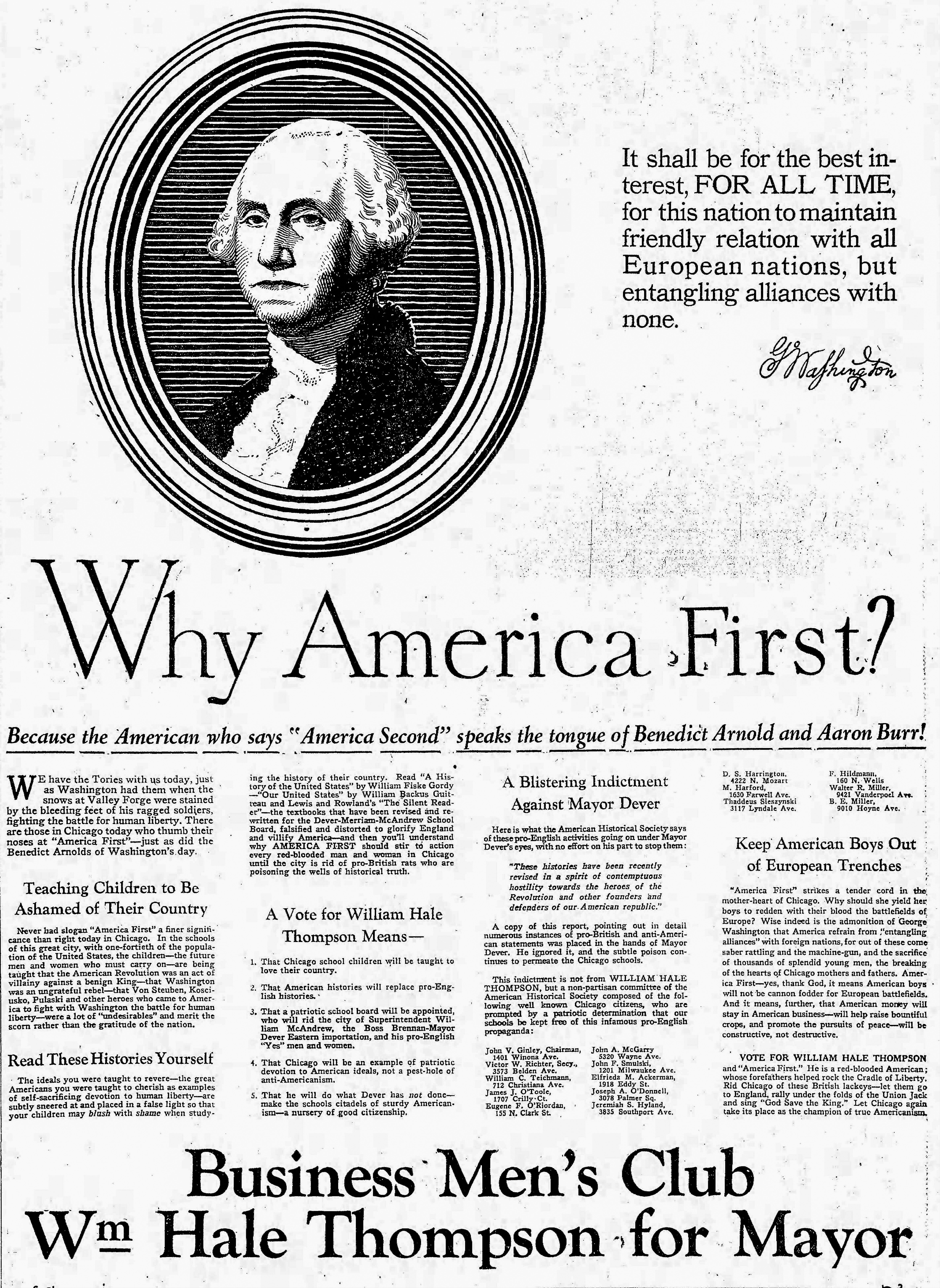
William Hale “Big Bill” Thompson was Chicago’s Republican mayor from 1915 to 1923 and again from 1927 to 1931. His time in office was characterized by non-enforcement of Prohibition which extended to an overall disregard for the law, gangland bombings including at polling places going unprosecuted, support for Al Capone, and identity-based appeals. For the latter, he campaigned as an arch-foe of Great Britain, much to the delight of ethnic German and Irish voters. Thompson’s anti-British stance and his refusal to do anything about anti-conscription groups and anti-war protests was enough for him to be called “Kaiser Bill” (Hill). He continued pressing against Britain after World War I and while campaigning to return to office in 1927, he promised to ethnic Irish audiences if King George V ever visited Chicago that he’d “crack King George one in the snoot” (Grossman). Another example of “Big Bill” Thompson’s campaigning is the following 1927 flyer, which also employs the slogan “America First”:
His anti-British push went beyond silly promises, however, as after he won, he led a campaign to crack down on subversive books in the Chicago Public Library and in schools. And if you read the fine print on this flyer, one of his promises was to oust Chicago School Superintendent William McAndrew. For cracking down on subversive books in the Chicago Public Library, he appointed Urbine J. Herrmann, who the Chicago Tribune reported, “And if he finds a pro-British book, he declares, he will take it out to the lake front and have it burned by the public hangman” (Grossman). Thompson also appointed former two-time Congressman John J. Gorman (R-Ill., 1921-23, 1925-27) as special assistant corporate counsel, his job being to investigate school curriculum for lies and distortions and to oust McAndrew. Gorman had as a representative headed up the Citizens’ Commission on School Histories, which in 1926 denounced three textbooks as being pro-British and excluding the achievements of people of other nationalities (Herrick, 167).
John J. Gorman
To fulfill Thompson’s promise, Gorman launched a crusade against school curriculum and Superintendent McAndrew, claiming that he had “poisoned” school curriculum at the behest of the British to turn students against America. He most notably accused him of putting in school curriculum a textbook An American History by Dr. David Muzzey. This resulted in hearings before the Chicago Board of Education in which Gorman testified as a witness regarding the “pro-British” content of Muzzey’s work. He was asked the following questions and gave the following answers based on his testimony:
Q: “Now, I ask you whether or not you found in this — found this in the book: ‘The capital of Massachusetts was a center of vulgar sedition, strewn with brickbats and broken glass, where his enemies went about clothed in homespun and his friends in tar and feathers?”
Gorman: “Yes, sir.”
Q: “Did you find there that Muzzey characterized the Continental Congress as ‘a collection of quarrelsome, pettifogging lawyers and mechanics?”
Gorman: “Yes, sir.”
Q: “Did you find language in there to the effect that ‘Washington was a tyrant, a dictator, a despot,’ and he was called a step-father of his country?”
Gorman: “Yes, sir.”
Q: “Before you go into details, Congressman, what was the effect produced on your mind as to the attitude of Muzzey in the treatment of the story of the colonists and the revolution?”
Gorman: “Well, I was amazed to find that the American Revolution was treated in the manner that Muzzey treats it — giving the pro-British view of it. His text books contain numerous distortions, and where it would state facts it would frequently minimize their importance, and the text is filled with deletions. I would rather say from the text that there are omissions of many vital events and vital characters pertaining to the Revolutionary War that were always taught, for a period of over a hundred years, in the schools of our country by the patriotic text writers of previous times.”
(People v. Gorman)
After this testimony, McAndrew was suspended and then found guilty of several charges. Dr. Muzzey filed suit against Gorman for defamation. On October 11, 1929, he retreated with his tail tucked between his legs on these claims, writing an apology letter that his sworn statements against the book were written by someone else, that he was misled, and found upon on his own examination nothing wrong with Muzzey’s textbook (Herrick, 170). Although the lawsuit was withdrawn, the proceedings against Gorman began for perjury and McAndrew was cleared on appeal to the Superior Court of Cook County. I actually took to investigating whether these quotes were in Muzzey’s book, and this is what I found from the 1911 edition of An American History, with the claimed quotes in bold:
“To George III’s eyes the capital of Massachusetts was a center of vulgar sedition, strewn with brickbats and broken glass, where his enemies went about clothed in homespun and his friends in tar and feathers” (Muzzey, 121).
“The more ardent of these Loyalists denounced the Congress in unmeasured terms as a collection of quarrelsome, pettifogging lawyers and mechanics; and when the Declaration of Independence put them in the position of traitors, thousands of them entered the British armies” (Muzzey, 152-153).
“The Republicans opposed the administration at every step. The press on both sides became coarse and abusive. Washington was reviled in language fit to characterize a Nero. “Tyrant,” “dictator,” and “despot” were some of the epithets hurled at him. He was called the “stepfather of his country”, and the day was hailed with joy by the Republican press when this impostor should be “hurled from this throne”” (Muzzey, 199-200).
It is clear that Gorman’s “pro-British” charges against the book were based on quotes that were distorted out of context in service to the anti-British campaign of Mayor Thompson. On December 17, 1931, the Supreme Court of Illinois disbarred Gorman for perjury. Thompson himself I’m sure in the future will have his own post, as he was quite an outrageous character. The message here for culture warriors seeking to challenge curriculum in public schools, assuming you are doing so in good faith, is this: do your homework!
References
Grossman, R. (2016, February 5). ‘Big Bill’ Thompson: Chicago’s unfiltered mayor. Chicago Tribune.
A recent news story is the Tennessee Legislature’s expulsion of two black Democrats, for their participation in the occupation of the Tennessee Legislature by protestors for gun control and using a bullhorn in disrupting the business of the legislature, in violation of the rules. This incident reminded me of an incident regarding one Texas Democrat in Congress, Thomas Lindsay Blanton (1872-1957).
With President Wilson’s reelection in 1916 came the election of Blanton. He was something of a populist and was supportive of some social reform movements, such as Prohibition and women’s suffrage. Blanton was also a bit of a pain in the bottom for many of his fellow representatives as he had no problem accusing his foes of being liars, no problem going after items he saw as wasteful spending even if it went against the wishes of the other Texas representatives, no problem condemning all junkets and fringe benefits for his colleagues, and no problem butting heads with organized labor. He did so in an irascible manner, and put off many of his colleagues, yet his constituents saw him positively, as striking out against the powers that be. Blanton was something of a spiritual successor to Rep. William Holman (D-Ind.), a figure I have covered before. He was willing to hold lengthy roll calls, and one Massachusetts representative complained that on one occasion he was “…filching from me and every other Member 10 days of life” (Fishbein). Although a Democrat, his stances on labor put him at odds with many of his fellow Democrats. Blanton, for instance, vocally supported a proposal that would draft people who went on strike during World War I and on March 6, 1918 he was one of only 38 representatives to vote against the Lunn (D-N.Y.) amendment to the anti-sabotage bill, making it lawful to strike for better wages or conditions of employment during wartime. He also made clear his opposition to the railroad strike in 1921, and his vocal opposition made him the target of death threats and one occasion his car was fired upon. It was his opposition to organized labor that would cause the most famous incident surrounding him.
In 1921, Blanton inserted into the Congressional Record a letter from Millard French, a non-union printer, who recounted a heated conversation between him and union printer Levi Huber, that read on Huber’s part with censoring, “G_d D__n your black heart, you ought to have it torn out of you, you u___ s__ of a b____. You and the Public Printer has no sense. You k____ his a___ and he is a d____d fool for letting you do it” (Fishbein). Putting this exchange in the Congressional Record was an outrage for legislators in 1921. House Republican Majority Leader Frank Mondell of Wyoming declared that the remarks were “unspeakable, vile, foul, filthy, profane, blasphemous, and obscene” (Fishbein). Blanton was apparently trying to highlight conflicts between non-union and union workers with this insertion.
Thomas Blanton avoided expulsion by only eight votes as enough Republicans were wary of making a martyr out of him, but after the expulsion vote failed, he was unanimously censured. He fainted upon the censure vote passing, hitting his head on the marble floor. Blanton then made his way to his office where he cried alone. In the longer run of things, this was simply a bump in the road for him as he was reelected in 1922. He would serve in Congress with one brief interruption until he was defeated for renomination by Clyde Garrett in 1936. Despite his difficult reputation, Blanton would do some good in Congress by exposing instances of corruption: he exposed and forced the resignation of a District of Columbia commissioner for overcharging veterans in guardian fees and another investigation of his resulted in the declaration of 45 inmates of St. Elizabeth’s Hospital to be sane and released (Miller). Blanton also sponsored legislation for stringent immigration restrictions. Opinions of him in his time and after naturally varied. Rebecca Fishbein (2018) of Vice writes that “Other members of Congress described him as boorish, ill-tempered, loud, and prone to get into shouting matches and, on occasion, literal fistfights with his fellow representatives on the House floor”. I should also note that Blanton was, like his other Texas colleagues, a segregationist. However, the Texas Historical Association gives him a bit more credit. It notes that the Washington Post reported that Blanton had saved the federal government millions and that the Dallas Morning News observed that every state delegation needed one of him (Miller). After his retirement, he proved no less acidic; he went as far as to advocate during World War II that the death penalty be put in place for people who strike during wartime. Although Blanton was planning on a Congressional comeback in 1954 by challenging incumbent Omar Burleson, his wife nixed the plan, probably on account that by this time he was an octogenarian. He died on August 11, 1957.
Although Blanton has been regarded as “conservative” by Vice, and on certain issues (particularly labor unions) he was, but he was quite far from uniformly so and supported a good deal of the New Deal (for instance, work relief, abrogating gold clauses, the Agricultural Adjustment Act, and the National Industrial Recovery Act) and opposed the 1922 income tax reduction and tariff increases. The Dallas Morning News was probably right in saying that every delegation needs someone like Blanton…in the sense that folks in Congress need some people to keep them on their toes.
References
Fishbein, R. (2018, July 19). The Time the Word ‘Damn’ Almost Got a Man Kicked Out of Congress. Vice.
To Amend S. 383, By Making It Lawful Under the Act for Employees to Agree Together to Stop Work with a Bonafide Purpose of Securing Better Wages or Conditions of Employment. (P.3125). Govtrack.
Reverend Richard Mather, Founder of the Mather School
I have recently been reading about a group of Christians that have been given the label of “Christian Nationalist”. This seems to be a bit of a catch-all for conservative Christians in its applications. Some articles have regarded those they have labeled as “Christian Nationalists” as a great threat, even the greatest threat to democracy in America (see Blake, Graves-Simmons & Siddiqi, and Reynolds in references). I personally would be interested to know what declaring the US a “Christian nation” would mean to those who actually label themselves as “Christian Nationalist”. Does it mean someone who believes in destroying the Establishment Clause of the First Amendment, embracing white identity politics, and oppressing women? For those who subscribe to what I just described, I’d say you are engaging in an atrocious reaction to the increasing secularization of society. Does it, however, mean a narrow interpretation of the Establishment Clause of the 1st Amendment, a belief that religious symbols can be allowed to be displayed on public lands, a belief that abortion is wrong and should be banned except in cases of the mother’s life being endangered, and a belief that school-led voluntary non-denominational school prayer can be allowed? If so, then you could retroactively label many, many figures in American history as “Christian Nationalists” as well as a majority of contemporary politically conservative Christians. You could even, by this definition, label a majority of Americans as “Christian Nationalists” if you go back far enough. I have a strong suspicion there is an overuse in this term and that some will use it on anyone who wants to bat back the tide of secularization over the last sixty years. My focus, however, is on a history of prayer in schools, how it fell, and what came of the backlash to its fall. To understand the history of prayer in schools, it is necessary to give some coverage to the history of public schooling.
Beginnings in Religion
The first taxpayer supported public school in what would be the United States was the Mather School established in Lexington, Massachusetts, in 1639. This was founded by Reverend Richard Mather, the grandfather of the famed theologian Reverend Cotton Mather. Then the first compulsory public education law what would become the United States was passed by the Massachusetts Colony in 1647 called the “Old Deluder Satan Law”. The purpose of this law was to ensure that children would become educated enough to read and interpret the Bible for themselves.
In 1789, nearly all American citizens of the thirteen states were some sort of Christian. Catholics numbered fairly few and were the focal point of religious prejudice, a prejudice that had continued from the conflicts between Protestants and Catholics in Britain. Although their rights were federally protected by the Constitution, there were states that took it upon themselves to adopt a “state religion”. Massachusetts, for instance, had an official state religion, the Congregational Church (Puritans) until 1833, being the last state to drop the concept of state religion. Under the leadership of Thomas Jefferson and James Madison, Virginia disestablished its church in 1786 with the Virginia Statute for Religious Freedom, which would serve as a basis of the First Amendment. Schooling in that time was mostly a private affair, with schools being available to families that could afford to pay for them. These schools often taught the Bible as well. However, this state of affairs would not last, and advocates for public education knew that for the nation and its economy to grow that this step would be necessary. Before the War of the Rebellion, the states all adopted public school systems of some sort, but not all were comprehensive in coverage. After the war, all children would be eligible for public schooling in Southern states.
Protestant vs. Catholic Influence in Schooling
Towards the mid-19th century, as more states adopted public education, Bible reading became a great controversy as the majority Protestants pushed King James Bible reading, and in Pennsylvania it even got violent; in 1843 the Philadelphia Board of Controllers permitted children to read from Bibles in school supplied by their parents, which was regarded by many Protestants as an effort to eliminate Bible reading altogether in public school (Ariens). The tensions resulted in anti-Irish Catholic riots on May 6-8th and July 6-7th 1844, which killed over 20 people and two Catholic churches burned. However, these disputes were not as frequent as one might think. As Bruce Dierenfield (2007) writes, “In New York State, for example, half of all district schools conducted some form of opening religious exercises, usually simple Bible reading, but rarely did such exercises provoke major disputes. Between 1865 and 1905, the state superintendent received no complaints about religious instruction from 80 percent of the school districts. Of the remaining 20 percent, only 1 out of 1,000 complaints involved religion. Why were devotions less controversial – at least in New York – after the Civil War than before? Religious minorities in New York increasingly tolerated what they regarded as an unpleasant beginning of the school day. This was so long as the devotions did not go too far” (33). Religious minorities, in other words, were considerably less activist than they would become. In many, but not all public schools, prayer was a given and teaching from Protestant Bibles was commonplace. Since Catholics at this time could not prevail on Bible policy with Protestants, they formed parochial school systems starting in 1870. However, the ruling Protestants would make sure that Catholic influence was limited.
In 1875, President Ulysses S. Grant delivered a speech to a meeting of Union veterans and called for adopting a Constitutional amendment mandating free public schools and blocking public funds for religious sect schools, wanting public education to be “unmixed with sectarian, pagan or atheistical dogmas” (Deforrest). King James Bible reading, since multiple Protestant sects used it, was not considered sectarian by Grant or by his Protestant Republican supporters. Rep. James G. Blaine (R-Me.) championed this amendment in Congress, but the Senate declined to ratify. Most states, however, acted and ratified “Blaine Amendments”, prohibiting funding of these schools. They were ultimately ratified in 39 states.
The United States was, although not officially a “Christian nation”, was deeply so in tradition, customs, values, and education. Supreme Court Justice David J. Brewer even affirmed that the United States was a “Christian nation” in the Supreme Court decision Church of the Holy Trinity v. United States (1892), writing, “These, and many other matters which might be noticed, add a volume of unofficial declarations to the mass of organic utterances that this is a Christian nation” (143 U.S. 457). He even wrote a treatise on the subject in 1905, The United States: A Christian Nation. However, the 20th century would be a time of tremendous change, in the United States and the world. Courts in the 19th century upheld King James Bible reading, but there was one state, however, that gave a glimpse as to what would happen in the 20th century. The Wisconsin Supreme Court ruled in State ex rel. Weiss v. District Board (1890) that King James Bible reading “without restriction” was sectarian and thereby unconstitutional (Ariens).
Efforts at Compulsory Schooling and Religious Indoctrination
Although the controversy surrounding religion in schools seemed temporarily, if imperfectly, resolved by 1900, further efforts would begin during the Progressive Era. In response to socioeconomic changes and immigration as well as inspired by the release of the film Birth of a Nation (1915), the second incarnation of the Ku Klux Klan was established. The organization was in addition to being bigoted on the lines of race and religion, avowedly Protestant. As part of the anti-Catholicism of the organization, they would go considerably beyond mere prayer and Bible reading at the beginning of the school day and actively sought to destroy private Catholic schooling.
Such a policy manifested in Oregon when a proposal for mandatory public schooling won 53% of the vote in 1922, the law which required children between ages 8 and 16 to attend public school with exceptions based on “age, health and access to a parent or private teacher” (Bunting). This would serve to shut down private Catholic schools in the state and force Catholic students into education with Protestant Bible reading and prayer. This policy went directly against education reformer Horace Mann’s view on public schools, “[T]he education of the whole people, in a republican government, can never be attained without the consent of the whole people. Compulsion, even though it were a desirable, is not an available instrument. Enlightenment, not coercion, is our resource” (Murphy). Fortunately, the law was thwarted before its start date by the Supreme Court in Pierce v. Society of Sisters (1925), in which mandatory public school attendance was unanimously ruled unconstitutional. Justice James McReynolds, the majority opinion author, wrote, “The fundamental theory of liberty upon which all governments in this Union repose excludes any general power of the state to standardize its children by forcing them to accept instruction from public teachers only” (Bunting). The decision remains good law to this day, and the second Klan saw a major decline starting that year, with The Knights of the Ku Klux Klan shuttering in 1944.
Ultimately, public schooling was seen both as a way of advancing industrial growth and development but also for the spreading of Protestant morality. This can explain why conservatives used to be the big supporters of public schooling. However, schools would start to move away from a Protestant underpinning and conservative troubles with public schooling grew.
References
143 U.S. 457.
Ariens, M.S. (2012, August 23). Religion in Nineteenth-Century Public Education. Civil liberties in the United States.
Deforrest, M.E. (2003). An Overview and Evaluation of State Blaine Amendments: Origins, Scope, and First Amendment Concerns. Harvard Journal of Law and Public Policy, Vol. 26.
Dierenfield, B.J. (2007). The battle over school prayer: how Engel v. Vitale changed America. Lawrence, KS: University Press of Kansas.
Graves-Fitzsimmons, G. & Siddiqi, M. (2022, April 13). Christian Nationalism Is ‘Single Biggest Threat’ to America’s Religious Freedom’. Center for American Progress.
If you were to observe the Senate during the first six years of the Wilson Administration, a figure you may hear speak, debate, and push his party colleagues to vote for important bills backed by the president is a man who dresses like a dandy, wears spats, makes no effort to hide that he wears a toupee (although he is never photographed without it!), and even has some pink in his Van Dyke whiskers! This is Illinois’ J. Hamilton Lewis (or “J. Ham”) (1863-1939).
Although Lewis represented the “Land of Lincoln” in the Senate, he was the son of an invalid Confederate veteran and his mother had died in childbirth. Thus, he was raised by relatives and after earning his law degree at Augusta University, he in 1885 made his way to the Washington territory, where he practiced law and got into politics. In 1887, Lewis was elected for a single term to the state legislature as a Democrat and after the state’s admission he was on a commission to determine boundaries with Canada. Although his gubernatorial bid in 1892 was unsuccessful, he attracted a lot of support from state Democrats for the 1896 election, namely for the vice-presidential nomination, receiving 11 votes at the Democratic National Convention on the first ballot for vice president, despite not being minimum age. He benefited, however, from the presidential election in 1896, as William Jennings Bryan won the state by double digits, and Lewis in turn won an at-Large Congressional seat. Although Lewis faced a Republican Congress and president, he made his mark even in his first term. He proved a highly capable debater to the degree that even Speaker Thomas Brackett Reed of Maine, a giant both intellectually and physically, preferred not to tangle with the young lawyer from Seattle. However, in 1898 he lost reelection to Republican Francis W. Cushman. He then served in the Spanish-American War, rising to the rank of colonel. In 1900, he ran for the vice-presidential nomination, but it went to Adlai Stevenson instead. In 1903, Lewis got a compelling offer to join a law firm in Chicago and moved, and this is where he would stay. In 1908, he ran for governor, but just like in Washington before, he was unsuccessful.
The Senate
In 1913, the situation for Illinois and the Senate was in tumult. The state’s senior senator, Shelby Cullom, was an octogenarian who had been in the House when President Lincoln was assassinated. The state’s other senator, William Lorimer, was a Chicago political boss who got expelled for corruption. Cullom had stuck by Lorimer and was defeated in the “advisory” primary by Lawrence Y. Sherman, a Lorimer critic. Given the divided powers of the state legislature, a compromise was crafted in which they elected Lewis and Sherman. Lewis would be elected Majority Whip, second to Majority Leader John W. Kern of Indiana.
Senator Lewis was critical in pushing Democratic senators to back “New Freedom” legislation such as the Clayton Anti-Trust Act and the creation of the Federal Reserve and was mostly loyal in his record to the administration. His appearance, as noted earlier, was the talk of the town. He didn’t dress down for audiences either; once he was advised to do so when attending a political gathering with working class voters, but instead he came with coattails and a top hat and said to them that he had come to pay them his respects and that this warranted him wearing the best clothes he had, and they were won over, cheering him as he left the hall (Hill).
Lewis, consistent with his support for Wilson, backed American entry into World War I as well as wartime restrictions on civil liberties. He also supported women’s suffrage and opposed Prohibition. However, Lewis’ time in the Senate would be cut off by dissatisfaction with Wilson in the 1918 midterms. He was defeated by Republican Congressman Medill McCormick, who was known for his dislike of the British government and brother of Colonel Robert R. McCormick, owner of the staunchly Republican Chicago Tribune. Now instead of a highly capable debater in Lewis who almost certainly would have supported the Versailles Treaty, Wilson had to contend with an irreconcilable; McCormick would not back the treaty under any circumstances. In 1920, Lewis was trounced in his run for governor by Republican Len Small, who would become one of the state’s numerous corrupt governors.
Second Act
Although Lewis was in the electoral wilderness in the Republican twenties, he made a good deal of money practicing international law. His chance came around again in 1930. McCormick’s widow (he had committed suicide in 1925), Ruth Hanna, was running for the Senate. However, questionable levels of campaign expenditures haunted her campaign and this with the backdrop of the onset of the Great Depression contributed to J. Ham’s landslide win: he defeated McCormick by almost 34 points. Although in 1932 he was the “favorite son” candidate from Illinois for president with the backing of Chicago Mayor Anton Cermak, he soon came around to supporting FDR. After the election of Roosevelt to the White House, “J. Ham”, remembered fondly for his efforts for Wilson by fellow Democrats, was again elected the Senate Majority Whip, this time serving under Majority Leader Joe Robinson of Arkansas. Like he had done for Wilson’s New Freedom, he used his position to whip up votes for FDR’s New Deal programs.
Helping a Young Senator
The 1934 midterms were good for Democrats, and in Missouri, incumbent Republican Roscoe Patterson was defeated for reelection. The new senator was a favorite of the Kansas City based Pendergast Machine, and its leader Tom Pendergast was not liked by Roosevelt and his people in the Administration, who had a strong distaste for political bosses. This man initially had a difficult time getting people to talk to him given the reputation of the machine he had come from, and Roosevelt wouldn’t meet with him for five months. However, Lewis decided to befriend and mentor him. He would tell the senator, “Harry, don’t start out with an inferiority complex. For the first six months you’ll wonder how the hell you got here. After that you’ll wonder how the hell rest of us got here” (Hill). Senator Truman, who was regarded as the honest public face of the Pendergast machine, would eventually be preferred by the Administration to his colleague J. Clark Bennett, who was too independent-minded and non-interventionist. He would make his mark during World War II, heading up a committee investigating waste and corruption in the government, which would save the US billions in military spending and ultimately result in his rise to the presidency. Lewis would continue to dress in his way, by this time being out of date, wearing spats and he would also wear wavy pink toupees.
Roosevelt’s Second Term
Unlike 1918, Lewis won reelection in 1936 by over 15 points against his former colleague, Otis F. Glenn, who remained a supporter of the at the time deeply unpopular former President Hoover. Although a Roosevelt Administration loyalist, he did cast a few adverse votes as far as Roosevelt was concerned: he supported deleting the “death sentence clause” of the Public Utilities Holding Company Act in 1935, which was the core of the law, and voted to kill his “court packing plan” in 1937. As a member of the Foreign Relations Committee, Lewis opined on September 12, 1938, regarding the Sudeten Crisis, “Czechoslovakia isn’t the real object at all. That is a small matter that could be settled at any time. These gestures of Germany toward Czechoslovakia are to test how far France and England will go in combatting Germany’s larger aims” (The Associated Press). Two days later, England caved and three days after France did so. The Munich Agreement was formalized on September 29-30, 1938, and Nazi Germany occupied the Sudetenland in the following days. They would also invade Bohemia and Moravia in March 1939. On the afternoon of April 9, 1939, Lewis suffered a heart attack and although rushed to the hospital, he died five hours later (The New York Times). The New York Times incorrectly reported his age as 72, when he was in fact 75. The last vote Lewis had cast was to confirm William O. Douglas to the Supreme Court. Lewis stands out as the first official Majority Whip in Senate history (and a highly effective one at that) as well as being one of the few politicians to have represented two states in Congress.
References
Hill, R. The Senate’s Dandy: James Hamilton Lewis of Illinois. The Knoxville Focus.
Senator Lewis, 72, Stricken Fatally; Congress Veteran Is Rushed to Capital Hospital When He Suffers Heart Attack. (1939, April 10). The New York Times.
If it is true amid speculation that former President Trump will be indicted over the Stormy Daniels affair, a matter of which attracts more questions than strong opinion from me, we will be in uncharted waters. While Richard Nixon was rescued from such waters by Gerald Ford’s pardon and indeed no president or former president has been criminally prosecuted as of March 28, 2023, there has been a vice president who faced legal consequences for crimes. This would be Richard Nixon’s first vice president, Spiro Theodore Agnew (1918-1996), whose rise was improbable and meteoric, and his fall was similarly astonishing.
The Rise of Agnew
After service in World War II, Agnew settled down, got married, and earned a law degree. This led to his start in politics in Maryland, which although historically Democratic, had something of a conservative surge in the 1950s. Agnew had switched from Democrat to Republican in 1946 and served as an aide to Congressman James Devereux and got an appointment to the Baltimore Board of Zoning Appeals. In 1962, he saw his opportunity for elected office as Baltimore County Executive because of a split in the Democratic Party organization and won the election. Agnew proved a moderate Republican who supported civil rights. Agnew’s election victory in staunchly Democratic Baltimore was without doubt a fluke caused by party divisions, but it provided him with a sufficiently high profile to run for governor in 1966. He would again benefit from Democratic infighting as the Democratic primary had three candidates: Carlton R. Sickles, a liberal Congressman, Maryland Attorney General Thomas B. Finan, and George P. Mahoney. The conservatives in the Democratic Party went for Mahoney, and he won as the liberal vote was divided between Sickles and Finan. Mahoney was a perennial office-seeker who had repeatedly lost close contests in general elections, and he focused his campaign in opposition to open housing and residential desegregation. As a result, Agnew won with 49.5% of the vote, including 70% of the black vote. An independent candidate, Hyman Pressman, had also siphoned some of the liberal vote away.
Agnew continued to govern as a moderate as governor and had a good working relationship with the Democratic legislature. He succeeded in enacting tax reform, banning racial discrimination in housing covenants in new housing, and ending anti-miscegenation laws (Holden & Messitte, 3). However, in the wake of riots, including a deadly one in Baltimore, after the assassination of civil rights activist Martin Luther King Jr., Agnew read a group of Maryland civil rights leaders the “riot act” so to speak over their response to the rioting, which he saw as inadequate in quelling mob violence. This act put him on the national map, including for Richard Nixon. Nixon, to everyone’s surprise, picked him for vice president despite Agnew having backed Nelson Rockefeller’s candidacy. This pick, according to The Washington Post at the time, “may be the most eccentric political appointment since the Roman Emperor named his horse a consul” (Holden & Messitte, 3). The pick of Agnew was met for some time by the Humphrey campaign with “Spiro Who?”, but he didn’t remain a national unknown for long. He didn’t exactly relish his role given the political attacks he was now facing, and complained, “I was governor of Maryland, the brightest governor in the East. Then Richard Nixon picked me as his running mate and the next morning I’m the dumbest son of a bitch ever born” (Howe). However, Nixon saw an edge in picking Agnew. Agnew was from a border state and had a moderate record, and Nixon sought to appeal to moderates across the nation. As he wrote in his memoirs, “From a strictly political standpoint, Agnew fit perfectly with the strategy we had devised for the November election. With George Wallace in the race, I could not hope to sweep the South. It was absolutely necessary, therefore, to win the entire rimland of the South – the border states – as well as the states of the Midwest and West. Agnew fit the bill geographically, and as a political moderate he fit it philosophically” (Holden & Messitte, 3).
Vice President
As vice president, Nixon didn’t give him much responsibility beyond that constitutionally mandated and he was out of the loop of major administration decisions. As Agnew himself noted in 1980, “I was never allowed to come close enough to participate directly with [Nixon] in any decision. Every time I want to see him and raised a subject for discussion, he would begin a rambling, time-consuming monologue. Then finally the phone would ring or [White House Chief of Staff H.R.] Haldeman would come in, and there would be no time left for what I had really come to talk about…He preferred keeping his decision making within a very small group” (Holden & Messitte, 4). However, he gave Agnew an outsized role on the messaging front, having him be the “attack dog” of the Administration so to speak.
Agnew was publicly politically incorrect, and once referred to Polish American voters as “Polacks” and called a Japanese American newspaper reporter a “fat Jap” (Howe). He was also blessed with talented speechwriters in William Safire and Pat Buchanan, and he delivered a punch when he spoke at his intended targets. Conservative groups loved him for his rhetorical attacks on the media, on anti-war protestors, and others of the left. On November 13, 1969, he delivered a powerful speech written by Pat Buchanan regarding the power of the news media and media bias before a Republican audience in Des Moines, Iowa. In another speech written by Safire in which he castigated the media, he famously called them “nattering nabobs of negativism” and that “they have formed their own 4-H club – the hopeless, hysterical hypochondriacs of history” (Remnick). He had words for opponents of American involvement in Vietnam too. They were “an effete corps of impudent snobs”, “ideological eunuchs”, “professional anarchists”, and “vultures who sit in trees” (Remnick). There was even some thought of Agnew running for president in 1976. However, by 1972 he was thinking of stepping down; Barry Goldwater and Richard Nixon both claimed that Agnew was considering stepping down, and Nixon himself was seriously considering replacing him with Treasury Secretary John B. Connally (Holden & Messitte, 5).
The Kickback Kid
The politics of Baltimore and Maryland as a whole were frequently corrupt, and Agnew was far from the exception. It had become known in Baltimore County that any firm that wanted to land major contracts with the county had to pay kickbacks to Agnew, this would be to the tune of 3-5% of the contract (Howe). This scheme would continue with state contracts as governor and as vice president he steered contracts to businessmen who would pay him kickbacks. For those unfamiliar with the concept of a kickback, a kickback is classic form of corruption: a bribery and tax evasion scheme in which the recipient compels who they are paying to return a portion of money they get paid to supplement their income without that additional money being reported to the IRS. This practice was astonishingly common in Baltimore County, although not astonishing to those living in the county. Indeed, corruption in Agnew’s time in Maryland was unfortunately common: convicted of corruption during that time were the following Democrats: Senator Daniel J. Brewster, Agnew’s successor as Baltimore County Executive Dale Anderson, Speaker of the House A. Gordon Boone, and Baltimore County State’s Attorney Samuel Green Jr. As a border state, Maryland was said to have “combined the worst of the Northern big-city machine with the worst of the Southern courthouse tradition” (Holden & Messitte, 2).
The U.S. Attorney for the District of Maryland began an investigation into Agnew in 1973, and was prepared to charge him with failing to report $29,500 of income gained in 1967. Despite denying that he would resign if he was indicted to an audience of Republican women in Los Angeles less than two weeks before, he resigned on October 10, 1973, being the second vice president to do so (the first was John C. Calhoun, over disagreements on tariffs with President Jackson). The case against him was so damning that Agnew had agreed to resign and accepted a plea of nolo contendere (“no contest”) to a felony to get a fine of $10,000 and three years of probation. As journalist Richard Cohen noted, “This was a thoroughly corrupt man. He shook down everybody. He got a nickel a pack from the cigarette machines…He was shameless. Even to the point where he kept taking money as the vice-president” (Holden & Messitte, 7).
Aftermath – Trading on His Name and Anti-Semitism
Agnew’s record after office mainly consisted of business consulting, trading off whatever people thought his name could get them in influence. He also palled around with his friend Frank Sinatra and “spent his money on mistresses, sports cars, expensive gifts, jewelry and traveled with 21 secret service agents costing the taxpayer $5,000 a month” (Howe). Agnew also had a turn to literature, writing a novel titled “The Canfield Decision” in 1976, a story, funny enough, about a duplicitous vice president. His history after office really doesn’t paint him in any more of a favorable light than before. Agnew came to blame Jews for his downfall and in 1980 offered his services to Prince Fah’d of Saudi Arabia as a propagandist against American Jews, wanting $200,000 a year for three years for this purpose. His push to him was, “Since 1974, the Zionists have orchestrated a well-organized attack on me to use lawsuits to bleed me of my resources to continue my effort to inform the American people of their control of the media and other influential sectors of American society…I’ve taken every opportunity to speak out against the catastrophic US policies regarding Israel. This has spurred my Zionist enemies on to greater efforts. I need desperately your financial support so that I can continue to fight” (Krausz). Agnew had apparently not always been an anti-Semite. According to his former speechwriter William Safire (1976), “…his anti-Semitic cracks first began when the Jewish businessmen he had known in Baltimore County sought immunity by turning state’s evidence against him. He became embittered at a handful of Jews, which might well have turned him against Jews in general”.
Agnew also regretted the plea of “nolo contendere” and claimed his innocence in his memoirs. He also claimed without evidence that he bought a gun after learning that Nixon planned to have the CIA arrange his suicide. In 1981, Agnew was ordered to pay restitution for the bribes he received while governor, and in 1989 had the nerve to seek a tax deduction from the state of California, where he was living, on the $142,500 he had been ordered to pay (Ellis). Although Agnew and Nixon had not talked since his resignation, he attended his funeral. He stated, “I decided after 20 years of resentment to put it all aside” (Schmich). Agnew died on September 19, 1996, of undiagnosed acute leukemia.
Although I cannot judge Spiro T. Agnew anything but negatively overall, he had some positives in his career. He proved an able (albeit a bribe-taking) governor. His career was downright improbable, and he is a first and only for some groups, perhaps to their consternation should they be reading this. Agnew is the only person of Greek extraction and is the only Marylander to serve as vice president (no Marylander has been president). Honestly, although he was responsible for his own behavior and conduct in the taking of bribes, I get the feeling that this was how he understood the game to be played in a corrupt environment, and did so, not believing that consequences would fall on him for doing something seemingly commonplace. Hence, Agnew’s blaming of Jewish businessmen for turning to the Feds for arrangements that were seen by him and others as business as usual.
References
Ellis, V. (1989, April 4). $24,197 California Refund Sought: Agnew Wants Tax Break on Bribes He Returned. Los Angeles Times.
Holden, C.J. & Messitte, Z. (2006). Spiro Agnew and the Golden Age of Corruption in Maryland Politics: An Interview with Ben Bradlee and Richard Cohen of the Washington Post. The Occasional Papers of The Center for the Study of Democracy, 2(1).
Howe, C. (2020, December 8). Exclusive: How Nixon’s VP Spiro Agnew ran America’s most brazen political scandal of bribery and extortion out of the White House – but it went unnoticed in the shadow of Watergate, MSNBC’s Rachel Maddow reveals in new book. The Daily Mail.
In the 1920s, Republicans dominated in the state of California, including, unthinkable now I know, San Francisco. The 5th district, based in portions of San Francisco and South San Francisco, had elected for almost ten years John I. Nolan, a popular Republican who would break with his party often and was strongly pro-organized labor. However, he died on November 18, 1922, at the premature age of 48 and his widow succeeded him as a placeholder for the next term. Then the district elected Lawrence J. Flaherty, who died in office at the premature age of 47. Elected in his place in 1926 was Richard J. Welch (1869-1949), a member of the San Francisco Board of Supervisors who would last.
From the beginning, Welch, who had a considerable background both in state Republican politics and as an ironworker and machinist, voted independently of the Republican Party line and in his first two full terms was a moderate. However, with the onset of the Great Depression, he moved towards favoring more and more government intervention. In 1933, Welch voted for the major 100 Days Legislation save for the Economy Act, which cut spending and benefits as a means to fund the New Deal and had attracted a lot of conservative support. He would prove one of the most consistent supporters of the New Deal on the Republican side, resulting in him being thought of as a “New Deal Republican”. Welch voted for the National Industrial Recovery Act, the Agricultural Adjustment Act, the Tennessee Valley Authority, invalidating gold clauses in contracts after voting for a Republican substitute only prohibiting gold clauses in future contracts, confiscating privately held gold, the Securities and Exchange Act, Social Security, and the Fair Labor Standards Act. However, Welch refused to back certain power-grabs by Roosevelt, such as the 1938 reorganization bill, which further centralized authority in the president and met with a stunning defeat in the House. He also was a consistent non-interventionist up until World War II, voting against the repeal of the arms embargo in 1939, against the peacetime draft in 1940, and against Lend-Lease. Welch, like Nolan before him, proved a consistent friend to organized labor and would not back GOP efforts at limiting the gains of organized labor from the Wagner Act and from decisions made by the National Labor Relations Board. He voted against an investigation of the National Labor Relations Board in 1939, against the Vinson Anti-Strike Bill in 1941, and against the Smith-Connally Labor Disputes Act in 1943. Unlike Nolan, who had voted against the Dyer Anti-Lynching Bill in 1922, Welch proved a consistent supporter of civil rights legislation, backing anti-lynching and anti-poll tax bills. In truth, it is safe to say that he was one of the was the most supportive Republicans of the New Deal who stayed in the party.
Welch seemed to get more liberal over time, and embraced, with perhaps some reservation, the post-war international consensus and voted for Greek-Turkish Aid and the Marshall Plan. He also had one of the lowest DW-Nominate scores for a Republican in American history at -0.174. Welch voted for the 80th Congress’ tax reduction proposals and for the Mundt-Nixon Communist Registration Bill but against the Taft-Hartley Act, staying true to his support for organized labor. During the 80th Congress, he was chairman of the Committee on Public Lands. Americans for Democratic Action gave him a 45 in 1947 and a 60 in 1948, and in the following year he didn’t vote against the ADA position once. On September 10, 1949, Welch suffered a heart attack and died in the hospital. After his death, he was succeeded by Democrat Jack Shelley, president of the California American Federation of Labor, who easily beat his Republican opponent and would later be elected mayor of San Francisco. The district has not elected another Republican since.
References
Congressional Supplement. Americans for Democratic Action.
Between March and June 1933, Congress, under the leadership of Speaker Henry T. Rainey (D-Ill.) and Senate Majority Leader Joe Robinson (D-Ark.) passed legislation that was enormous in its scope and revolutionary in its change in the Relief, Recovery, and Reform program and the concept of the First 100 Days has since served as a measuring stick for a presidency. Not all proposals were voted on and not all of them were necessarily “liberal”. The emergency banking legislation to stabilize banks, for instance, was embraced by most Senate conservatives, and many voted for the Economy Act. The Cullen-Harrison Act permitting the sale and taxation of 3.2% beer got some significant conservative support as well. The legislation that attracted substantial conservative opposition included the Agricultural Adjustment Act, the Tennessee Valley Authority, the National Industrial Recovery Act, and legislation nullifying gold clauses in contracts. Many members of the House and Senate supported the Federal Emergency Relief Act, which provided unemployment aid to the states. I have included MC-Index scores for the 73rd Congress with these votes.
These are:
House
1. Economy Act
Passed 266-139: D 197-93, R 69-41, F 0-5, 3/11/33.
2. Cullen-Harrison Act
Passed 316-97: D 238-58, R 73-39, F 5-0, 3/14/33.
3. Agricultural Adjustment Act
Passed 315-98: D 272-24, R 39-73, F 4-1, 3/22/33.
4. Federal Emergency Relief Act
Passed 331-42: D 252-12, R 74-30, F 5-0, 4/21/33.
5. Tennessee Valley Authority Conference Report
Adopted 258-112: D 243-29, R 12-83, F 3-0, 5/17/33.
6. National Industrial Recovery Act
Passed 325-76: D 267-25, R 54-50, F 4-1, 5/26/33.
7. Gold Clause Invalidation Resolution
Passed 283-57: D 250-9, R 28-48, F 5-0, 5/29/33.
Senate
1. Emergency Banking Relief Act
Passed 73-7: D 51-1, R 22-5, F 0-1, 3/6/33.
2. Economy Act
Passed 62-13: D 43-4, R 19-9, 3/15/33.
3. Cullen-Harrison Act
Passed 43-30: D 31-13, R 12-17, 3/16/33.
4. Federal Emergency Relief Act
Passed 55-17: D 42-2, R 13-15, 3/30/33.
5. Agricultural Adjustment Act
Passed 64-20: D 48-4, R 15-16, F 1-0, 4/28/33.
6. Tennessee Valley Authority Act
Passed 63-20: D 48-3, R 14-17, F 1-0, 5/3/33.
7. Agricultural Adjustment Act Conference Report
Adopted 53-28: D 39-11, R 13-17, F 1-0, 5/10/33.
8. Gold Clause Invalidation Resolution
Passed 48-20: D 43-2, R 4-18, F 1-0, 6/3/33.
9. National Industrial Recovery Act
Passed 58-24: D 47-4, R 10-20, F 1-0, 6/9/33.
10. National Industrial Recovery Act Conference Report
In 1854, the Pennsylvania Republican Party was founded by David Wilmot, the representative who sponsored the Wilmot Proviso, which if enacted would have blocked slavery from any lands gained in the Mexican-American War. However, he does not turn out to be the foremost figure of the early Republican Party in Pennsylvania, only serving two years in the Senate, nor the man who grows it most. This would be Simon Cameron (1799-1889), a figure who as you will read was a legend of political machinery. Before I write more about Cameron, there is a story about him that highlights his reputation. When President Lincoln asked Rep. Thaddeus Stevens (R-Penn.) about Cameron’s honesty when considering him for Secretary of War, Stevens responded, “I don’t think he would steal a red hot stove”. When Lincoln related Stevens’ answer to Cameron, who demanded an apology. Stevens would respond, “I apologize. I said Cameron would not steal a red hot stove. I withdraw that statement” (Robinson, 57). To compound matters, Paul Kahan’s biography of Cameron, which tries to put him more in the context of his times, was titled, Amiable Scoundrel: Simon Cameron, Lincoln’s Scandalous Secretary of War.
Background
Cameron got his start in Pennsylvania politics in the 1820s in newspaper publishing. By 1824, he was running the Pennsylvania state newspaper for the Democratic-Republican Party of the time and had by that point gotten many valuable contacts in state politics. Cameron was slow to back Andrew Jackson’s candidacy but did so because he supported John C. Calhoun for vice president. When one thinks of what Cameron would become, this support is deeply ironic. Ultimately John Quincy Adams won with Calhoun as vice president, and Cameron would be one of the friendlier Jackson allies to Adams’ policies, such as higher tariffs and the funding of internal improvements. He would become, however, more supportive of Jackson in 1828 and would become a strong supporter of Congressman James Buchanan. Cameron would exercise a great deal of influence in Pennsylvania politics and President Jackson would come to rely on him for getting Pennsylvania’s vote. However, he did say of him that he was a “renegade politician” and regarded him as dishonest.
Aiding the Rise of James Buchanan
Cameron also played a significant role in getting Pennsylvania’s Democrats on board with nominating Martin Van Buren as vice president for Jackson’s reelection run. As a reward, Jackson appointed Cameron to Board of Visitors to the United States Military Academy. He would also engineer James Buchanan’s election to the Senate. Although failing the first time to get him elected, Cameron would persuade Jackson to appoint Pennsylvania’s senior senator, William Wilkins, to a diplomatic post. He then managed to secure his election to the Senate.
The Winnebago Affair: The Start of a Reputation
Cameron’s ill reputation began with his role as a commissioner for the Winnebago Indians, in which his responsibility was to settle land claims. In this role, he sought to enrich himself on land speculation and was also alleged to have defrauded them by colluding with attorneys to convince Indians to grant them power of attorney so they could get the settlement money from their claims (Robinson, 58). The dearth of documentary evidence makes the whole affair both suspect and questionable as to who was telling the truth. Although Cameron was exonerated of wrongdoing in the Congressional investigation, he would for a time be known derisively as “The Great Winnebago Chief” for his alleged involvement in fraud. However, this was only a temporary setback for his long career.
First Term in the Senate
As a Democrat, Simon Cameron was a bit of a maverick as he supported a number of key planks of the Whig Party, and as a result he was able to lead a coalition of high tariff Democrats and Whigs to secure his election to the Senate, much to the consternation of Democratic Party regulars. Indeed, Cameron proved something of a pain for Polk and after he declined to consult him on federal appointments, he succeeded in forming coalitions to defeat Henry Horn as Collector of Customs for the Port of Philadelphia as well as George W. Woodward’s nomination for the Supreme Court. Polk ended up nominating Pennsylvanian Robert C. Grier, who was confirmed. President Polk said of him that he was “a managing tricky man in whom no reliance is to be placed” (Robinson, 57) On slavery, Cameron was a proponent of popular sovereignty, meaning the people of the states should get to decide on whether to be “free” or “slave” and he would grow more anti-slavery over time.
His time in the Senate was cut short when in 1848 Zachary Taylor was elected president as a Whig and with this victory the Pennsylvania state legislature went to the Whigs. Cameron had supported James Buchanan for the Democratic nomination for president, but when he lost to Senator Lewis Cass of Michigan, Cameron was accused of working behind the scenes to undermine Buchanan (Kahan, 87-89). He was unable to get enough support for another term due to the Whig composition of the legislature and was also unable to get Democratic legislators behind him…indeed none of them cast their votes for him. Although he was out of office now, this would be temporary as through his business interests he maintained political contacts. Cameron and Buchanan were no longer allies and he managed to undermine him still in a number of ways. Cameron, for instance, sent Jefferson Davis an article that reported that Buchanan had signed an anti-slavery petition thirty years before so as to undermine Southern support for him for the 1852 election. Buchanan had his allies in the press retaliate against Cameron by writing scathing articles. The political battling between them continued into the 1851 gubernatorial election, which although produced the victory of Democrat William Bigler, infighting may have thrown the state Senate to the Whigs. Although as part of the Pennsylvania delegation to the Democratic National Convention he was pledged to support Buchanan, Cameron worked behind the scenes to push for Lewis Cass. Ultimately, this battling between Buchanan and Cass resulted in the elevation of New Hampshire Senator Franklin Pierce, who would win the election.
The 1855 and 1857 Elections
After the Kansas-Nebraska Act was signed into law in 1854, Cameron left the Democratic Party and the following year he sought to return to the Senate, and in the process “loaned” money to Democratic powerbrokers, but his persuasive efforts failed. He then became affiliated with the American Party and hinted support for restrictive policies on immigration to win their favor. As the American Party fell apart, he became affiliated with the Republican Party and in 1856 he was briefly a contender for being picked as vice president by John C. Fremont. However, he opted to pick former Whig Senator William Dayton of New Jersey, and the ticket went down to defeat and the state of Pennsylvania voted for Buchanan. Cameron again ran for the Senate in 1857, this time successfully as a Republican. This election was challenged in the Senate, with claims of the state Senate failing to meet legal requirements surrounding the election and that “corrupt and unlawful means” had been used to secure votes (U.S. Senate). However, a Senate investigation only found a procedural misstep that was minor, and Cameron got to keep his seat.
Secretary of War
As a senator for the young Republican Party, Cameron was, just as he had been as a Democrat, a powerbroker and became a leading figure in the new party. Although he initially ran for the Republican nomination for president, it became clear during the Republican National Convention that he wouldn’t be nominated. The leading contender for the nomination was Senator William Seward of New York. However, Abraham Lincoln’s campaign made an arrangement with Cameron for him to transfer his delegates to Lincoln in exchange for a position in the new administration. This helped Lincoln secure enough delegates to pull off an upset and defeat Seward.
After Lincoln’s election, Cameron met with him and Lincoln wrote him a letter offering him either the Treasury or the War Department as a cabinet office. However, not every Republican in Pennsylvania wanted Cameron to have a post in the Lincoln cabinet. Horace White, a publisher of the Chicago Press & Tribune, wrote to Senator Lyman Trumbull (R-Ill.) that, ‘If I am incorrect in supposing that Mr. C. defrauded the Winebago half-breeds of $66,000 about the year 1832, I am not mistaken in believing that his general reputation is shockingly bad….For my part I wish that Albany and Harrisburgh were in the bottom of the sea” (Mr. Lincoln and Friends). After Cameron’s rivals complained, he rescinded the offer. However, Cameron had a trick up his sleeve, and he showed the Lincoln letter to some friends of his. Lincoln ultimately granted him the post of Secretary of War.
As Secretary of War, Cameron proved how adept he was…at politicking. He proved himself quite competent at political organization but incompetent at properly procuring and distributing resources. Cameron’s agents had disregarded competitive bidding completely and bought only from suppliers that were favored. Inefficiency and fraud contributed to the purchase of “huge quantities of rotten blankets, tainted pork, knapsacks that became unglued in the rain, uniforms that fell apart, discarded Austrian muskets, and hundreds of diseased and dying horses – all at exorbitant prices” (Oates). Some of the problems existing can be attributed to the United States facing the unprecedented problem of secession and a war that could literally be brother vs. brother, and 1861 was far from an easy start for the Union side. However, there were some things that were egregious, such as “selling condemned Hall carbines for a nominal sum, bought them back at $15 apiece, sold them at $3.50 apiece, and bought them back again at $22 apiece” (Oates). Although Cameron had not enriched himself with contract graft, numerous underlings had. He also engaged in a morally iffy arrangement with the Northern Central Railroad to transport troops and supplies, a company in which Cameron had invested in and gained 40% in profits from this move. However, using the Northern Central Railroad also shaved costs by a third (Robinson, 60). Cameron also attracted trouble by getting ahead of Lincoln on race, as he released a report from the War Department that called for granting freedom to any slave who crosses into Union lines and enlisting black soldiers. The latter in particular was a stance that President Lincoln was publicly opposed to at the time, and Cameron resigned in January 1862. He recounted on his influence in Lincoln’s selection of his successor, “When I went out of the Cabinet Lincoln asked me whom I wanted for my successor. I told him I wanted Stanton. Welles said he would go and ask Stanton whether he will take it. I started to go down and on the way I met Chase, and told him I was just going down to see Stanton – and told him what I was going for. No said he don’t go to Stanton’s office. Come with me to my office and send for Stanton to come there and we will talk it over together, and I did so” (Mr. Lincoln and Friends). Interestingly enough, Lincoln didn’t know that Edwin Stanton had assisted writing the anti-slavery part of the report. However, Stanton would be a competent administrator as Secretary of War.
On April 30, 1862, Congress censured Cameron for his poor administration of the War Department. Lincoln took an approach in response that was one that seems uncommon today: he responded that he and all other department chiefs were “equally responsible with him for whatever error, wrong, or fault was committed in the premises” (Oates). He took this stance as he regarded the nation as having been in danger and thus everyone had a difficult job in marshalling the resources needed for the war. Despite performance issues, reviewer Michael Robinson (2022) notes that, “one must admit that by the start of 1862 the War Department and “the army were better organized and provisioned than a year before (157)” (61) Cameron had been confirmed as Minister to Russia, and in 1863 resigned the post and attempted again to run for the Senate but lost narrowly to Democrat Charles Buckalew. Cameron was important in campaigning for Lincoln in 1864 and the state’s voters narrowly voted to reelect him. Cameron was also building up his political machine in the state, and did so despite having to contend with rivals, such as Governor Andrew Curtin (who would later serve in Congress as a Democrat in the 1880s) and Rep. William D. Kelley, who dismissed a pitch by a Cameron ally to get the censure reversed by saying, “To stir foul matter would be to produce a stench” (Mr. Lincoln and Friends).
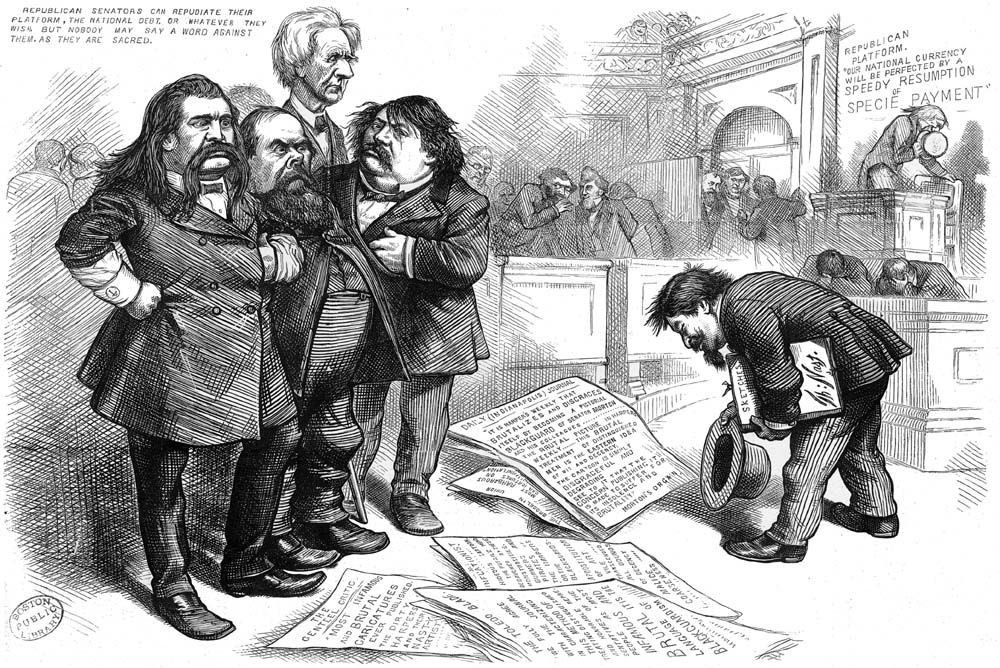
In 1867, he succeeded in returning to the Senate, being elected over Governor Curtin. There, he aligned himself with the Radical Republicans on Reconstruction and voted to convict President Andrew Johnson. He proceeded to build up the Republican machine in Pennsylvania during this time into a robust political organization. In 1874, Cameron was one of the numerous Republican senators to bend to pressure to support the proposed Inflation Act, inflating the currency in the wake of the Panic of 1873 as a stimulus. Currency inflation was a policy supported by many Philadelphia businessmen to stimulate the economy and ultimately, President Grant vetoed the bill on the advice of Secretary of the Treasury Hamilton Fish. Cartoonist Thomas Nast, who opposed inflating the currency and regarded it as a betrayal of a Republican Party campaign promise, included Cameron among the Republican senators he made fun of on supporting inflation, which he and other economic conservatives regarded as “financial heresy”. The below cartoon he drew in response to heated criticism he received after ripping on them through his cartoons.
Depicted are Senators John A. Logan (R-Ill.), Oliver Morton (R-Ind.), Cameron, and Matthew Carpenter (R-Wis.), with Nast asking “pardon”.
By 1876, Cameron was 77 years old and wanted to officially pass the torch. After ensuring that his son, Secretary of War J. Donald Cameron, would succeed him, he officially retired. Ironically, Cameron’s son would prove to be a bit of the inverse of his father: he had been a highly competent Secretary of War but was not as skilled at the glad-handing, back-slapping politics of his father. Although the elder Cameron was officially retired, he still acted behind the scenes. For instance, he used his influence to attempt to get former President Grant nominated again in 1880. Simon Cameron died on June 26, 1889 at the age of 90, leaving behind a tremendous political machine. The younger Cameron would eventually be eclipsed by Matthew Quay, whose efforts were vital to Benjamin Harrison’s victory in 1888 and inadvertently got Theodore Roosevelt to the presidency. The machine Cameron built would not face a serious challenge until the Great Depression, in which Philadelphia became more inclined to elect Democrats to Congress. However, Republicans would control the city’s political machinery until the election of Democrat Joseph S. Clark as mayor in 1951.
References
Kahan, P. (2016). Amiable scoundrel: Simon Cameron, Lincoln’s scandalous Secretary of War. Lincoln, NE: University of Nebraska Press.
Oates, S.B. (2021, February/March). Lincoln’s Corrupt War Department. American Heritage, 66(2).
Robinson, M.D. (2022). “Amiable Scoundrel: Simon Cameron, Lincoln’s Scandalous Secretary of War”, by Paul Kahan”, The Journal of the Abraham Lincoln Association, 43(1).


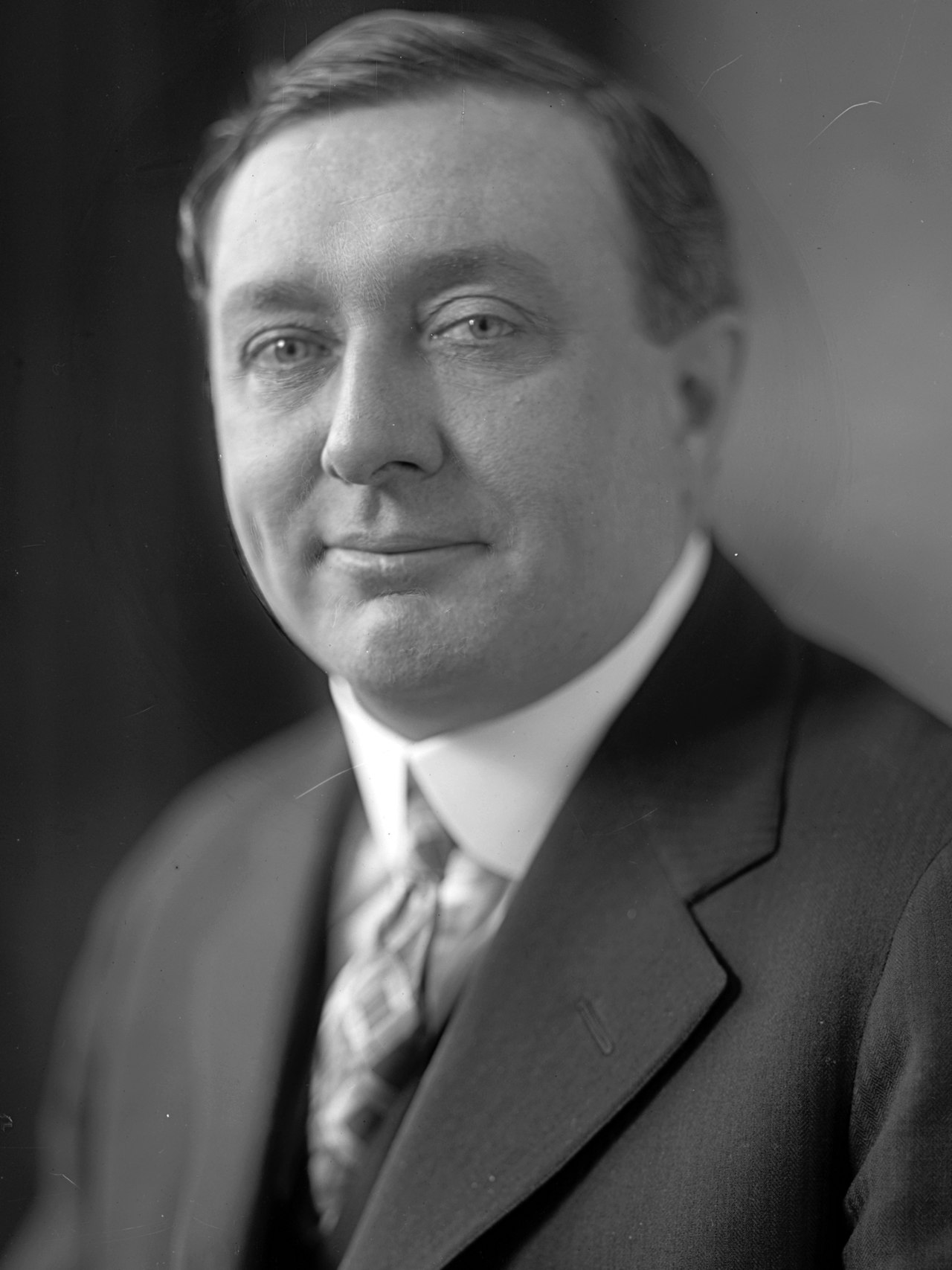


 Mad Politics: The Bizarre, Fascinating, and Unknown of American Political History