RINOs from American History #26: Millicent Fenwick

At one time there were people in the Republican Party who were considered prominent and promising who were of the party’s “Rockefeller” or “liberal” wing. One of the last who looked like she was going to go to higher places was Millicent Hammond Fenwick (1910-1992). Born Millicent Hammond, she had tragedy early in her life when her mother was among the casualties of the sinking of the Lusitania in 1915. Her father was the wealthy New York financier and politician Ogden Hammond, who served as Ambassador to Spain during the Coolidge Administration. As a young society woman, she caused some scandal when she fell in love with the older and already married businessman Hugh Fenwick. Fenwick chose her and divorced his wife. He and Millicent were married from 1932 to 1945 (although they had separated in 1938) and had two children. After the separation, she sought to provide for her children by briefly modeling for Harper’s Bazaar and then writing for Vogue magazine, and in 1948 she wrote Vogue’s Book of Etiquette, which sold over a million copies. Although she had first become politically aware in the 1930s, recalling, “Hitler started me in politics; when I became aware of what he was doing to people, I fired up” (U.S. House). By the 1950s she decided that it was time to get into public service.

A strong advocate for civil rights, Fenwick was a member of the NAACP and from 1958 to 1974 she served on the New Jersey Committee of the U.S. Commission on Civil Rights. She also served on the Bernardsville Borough Council from 1958 to 1964. In 1969, Fenwick was elected to the New Jersey Assembly, serving until 1973. While there, she solidified her reputation as a wit when a conservative member of the Assembly spoke out against the Equal Rights Amendment, stating, “I just don’t like this amendment. I’ve always thought of women as kissable, cuddly and smelling good”, which was met with Fenwick’s retort, “That’s the way I feel about men, too. I only hope for your sake that you haven’t been disappointed as often as I have” (U.S. House). Although an advocate for marriage, she had never remarried after her divorce from Hugh Fenwick. In 1973, Governor William Cahill tapped her to head up the New Jersey Division of Consumer Affairs. In 1974, with Congressman Peter Frelinghuysen retiring, Fenwick sought his seat in Congress. Running against her in the Republican primary was future governor Thomas Kean, but she defeated Kean by a mere 83 votes and went on to win the seat.

Congresswoman Fenwick

After her election to Congress, Fenwick diverged even more from party line than her moderate predecessor. She voted to override President Ford’s vetoes on strip mining regulations in 1975 and federal day care and public works in 1976. However, she voted to sustain his 1976 veto of a bill loosening Hatch Act regulations. Although Fenwick backed President Ford’s position to deregulate oil prices in 1975, she also supported Representative Neal Smith’s (D-Iowa) 1976 amendment that limited deregulation of oil prices to small producers. On social issues and foreign aid, Fenwick had a liberal voting record. Contrary to a majority of her party, she opposed the Hyde Amendment, the first successful pro-life reaction to Roe v. Wade. In 1980, Fenwick unsuccessfully tried to keep an endorsement of the Equal Rights Amendment in the Republican Party platform. She was, however, also known as fiscally conservative, although this didn’t mean she was solidly down the line on cuts. When a reporter tried to categorize her, she stated, “Everyone asks me whether I’m a liberal, a maverick, a neoconservative or whatever. I simply try to stick to what I believe in” (Malnic). However, it was her stances on ethics that frequently attracted positive attention. Indeed, Fenwick was among the favorites of the mainstream media of the day, with anchor Walter Cronkite once calling her the “conscience of Congress” (U.S. House). She certainly got points not only from her party, but also the general public, when she took on the notoriously mean and tough chairman of the House Administration Committee Wayne Hays (D-Ohio). Fenwick wanted to keep committee meetings open to the public (Malnic). Hays was not happy with this freshman whippersnapper. As Fenwick recalled, “Hays once said ‘If that woman doesn’t sit down and keep quiet, I’m not going to sign the checks for her staff’”. (Malnic). Hays would resign in 1976 after a highly publicized scandal that he hired his mistress who had no secretarial skills as his secretary. She also sat on the committee that investigated the “Koreagate” influence peddling scandal. Fenwick was also widely regarded as the inspiration for the Doonesbury character Lacey Davenport (an ideal Republican by liberal standards), but cartoonist Garry Trudeau denied this was the case. In 1981, she denounced her colleagues for placing in tax deductions for themselves through hasty legislative maneuvering and announced that she would not choose to benefit from these deductions (Malnic). Fenwick was also known for smoking her trademark pipe, which she took up after her doctor advised her to quit smoking cigarettes.

The 1982 Senate Election

Fenwick, at the age of 72, decided to run for the Senate. In the primary, she faced Jeffrey Bell, a staunch Reaganite who had been the Republican nominee for the Senate in 1978. A nomination of Bell would have been seen as an affirmation of support for Reagan’s agenda within the New Jersey Republican Party, but Fenwick prevailed. Nonetheless, she got Reagan’s endorsement. Fenwick faced Democrat Frank Lautenberg, a wealthy executive who financed his own campaign. Although she was favored to win the race, 1982 was a bad year for the Republicans as the economy was in a recession, something that Lautenberg heavily capitalized on. He also made the point that if elected, she would strengthen the Senate Republican majority and thus keep Strom Thurmond of South Carolina as chairman of the prominent Judiciary Committee. Thurmond was a former segregationist and had only that year voted favorably on voting rights legislation. Fenwick hit back against this tactic, arguing, ”Is there a black person in this state who doesn’t know where I stand? I didn’t wait until 1982 to Join the N.A.A.C.P. When I was a working woman I was a member” (Norman).  Lautenberg was also able to significantly outspend her, and on election day she fell short by three points. Ideologically, Fenwick sided with the positions of Americans for Democratic Action 66% of the time, the conservative Americans for Constitutional Action 43% of the time, and her DW-Nominate score stands at a 0.134, a bit higher than one might think given these scores. Her case also is an example that conservatives can use that even when Republicans run a candidate that liberals claim to like they still don’t win. President Reagan did not leave her high and dry, tapping her to serve as Ambassador to the United Nations Agencies for Food and Agriculture, serving until she retired in March 1987. Fenwick died of heart failure on September 16, 1992 at the age of 82.

References

ADA Voting Records. Americans for Democratic Action.

Retrieved from

Fenwick, Millicent Hammond. U.S. House of Representatives.

Retrieved from

https://history.house.gov/People/Detail/13066

Fenwick, Millicent Hammond. Voteview.

Retrieved from

https://voteview.com/person/14221/millicent-hammond-fenwick

Malnic, E. (1992, September 17). Millicent Fenwick, 82; Congress ‘Conscience’. Los Angeles Times.

Retrieved from

https://www.latimes.com/archives/la-xpm-1992-09-17-mn-798-story.html

Norman, M. (1982, October 29). Rep. Fenwick Says Lautenberg Distorts Her Record. The New York Times.

Retrieved from

The 1914 Election: The First Completely Popular Election

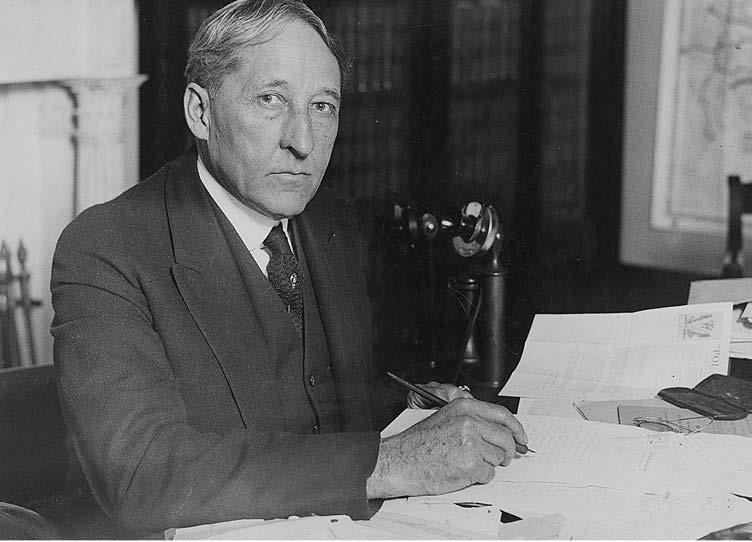
Speaker of the House Champ Clark (D-Mo.), who retained his majority, although considerably shrunken from what it had been at the start of the Wilson Administration.

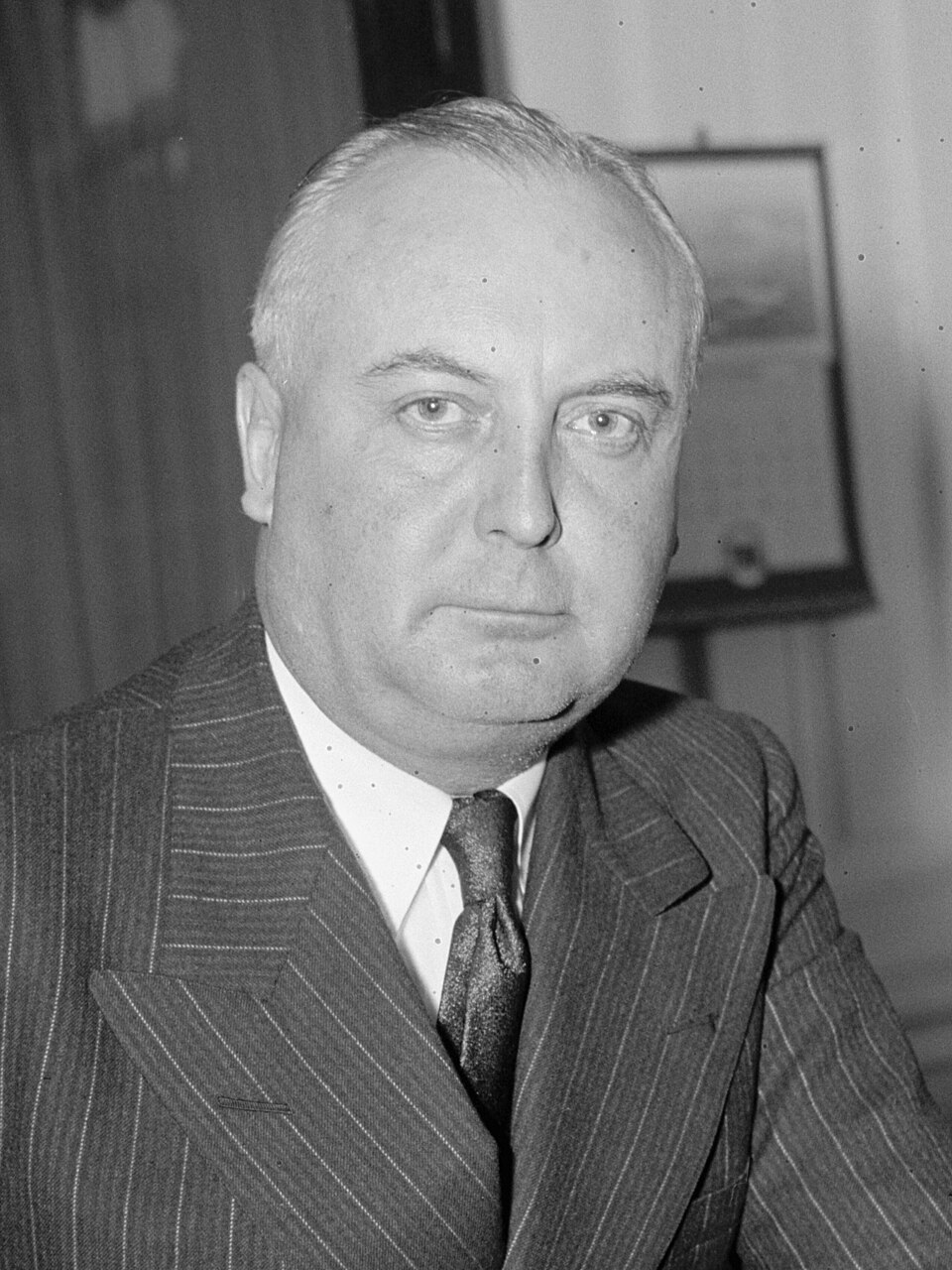
The 1914 midterms were rather peculiar. They were one of the midterms in which the president’s party lost seats in the House but gained in the Senate. Furthermore, this was the first election in which senators were popularly elected, and as I have covered before this impacted the makeup of the Senate. The Progressive Party remained a factor in a number of crucial elections which arguably resulted in Democratic wins. This election saw a future president get elected to the Senate in Warren G. Harding in Ohio, as well as the election of the first and only Prohibitionist member of Congress as well as the election of the second Socialist member of Congress. This would also be the first election won by James Wolcott Wadsworth Jr. of New York, whose career was rather unusual in that he had his national start in the Senate, and then later served in the House. He would be a consistent voice for arch-conservatism on domestic issues and his advocacy for military preparedness but would notably differ with his party in his support for FDR’s foreign policy.

Republicans ran in the 1914 election on the platform of the economic policies of the Taft Administration producing prosperity seen at the time, and this saw big gains in their traditional stronghold of New England. In the Midwest, the Republican performance was a bit spottier. They did very well in Illinois and Iowa, but were only able to regain two seats from their complete wipe-out in the 1912 election in Indiana, gained a House seat in Kansas, lost a House and a Senate seat in South Dakota, and lost a Senate seat in Wisconsin. Democrats managed to keep a number of seats or make gains in the West, where Wilson was maintaining or gaining in popularity. An interesting example was in Utah, in which the state’s second district flipped from Republican to Democrat, and this would presage Wilson’s big win there in 1916 as well as Republican Senator George Sutherland’s loss and the loss of the first district. By stark contrast, the state had been one of only two to stick with William Howard Taft in 1912. It should be noted that a significant part of why Republicans made big gains in the House was because the 1912 split in the GOP had produced major gains in the House that year, Democrats having won seats they normally would not win. In Philadelphia, at the time a Republican stronghold in part thanks to its corrupt machine, Democrats had managed to snag two of the city’s Congressional districts, which came back under Republican control in this election. Republicans overall gained 62 seats in the House, a “shellacking” but not enough to win a majority, even though they did win the popular House vote. The Progressive Party loses a net of four seats; they were but a minor contender in national politics although as noted earlier, they ate away at Republican votes in some critical places. The Progressive Party’s influence would come to an end when Theodore Roosevelt decided to back Republican Charles Evans Hughes in the 1916 presidential election.

Republican Gains, House

In Colorado’s 2nd district, Republican Charles Timberlake defeated Democrat Harry Seldomridge for reelection.

In Connecticut, Republicans had a clean sweep, with Democrats Augustine Lonergan, Bryan F. Mahan, Thomas Reilly, Jeremiah Donovan, and William Kennedy losing reelection to Republicans P. Davis Oakey, Richard Freeman, John Tilson, Ebenezer Hill, and James Glynn respectively.

In Delaware, Republican Thomas W. Miller defeated Democratic incumbent Franklin W. Brockson.

In Illinois, Republicans gained a whopping net of 11 seats. Republican Ira Copley switched to Progressive for his reelection and won. The most notable victor was former Speaker Joe Cannon regaining his seat in the 18th district over Democrat Frank O’Hair. Progressives Charles Thomson and William Hinebaugh lose reelection to George Foss and Charles Fuller in the 10th and 12th districts respectively, while Democrats Louis FitzHenry, Charles Borchers, James Graham, William Baltz, H. Robert Fowler, Robert Hill, and Lawrence Stringer lose reelection to John Sterling, William B. McKinley, Loren Wheeler, William Rodenberg, Thomas Williams, Edward Denison, and Burnett Chiperfield respectively. Republican William Wilson would win an open seat in the 3rd district.

In Indiana, Republicans Merrill Moores and William Wood defeated Democratic incumbents Charles Korbly and John Peterson in the 7th and 10th districts respectively.

In Iowa, Republicans Harry Hull, Burton Sweet, and C. William Ramseyer win in the 2nd, 3rd, and 6th districts respectively. They all win open seats.

In Maryland, Republican Sydney Mudd wins an open seat in the 5th district.

In Massachusetts, Republican George Tinkham wins an open seat in the 11th district while Republicans William H. Carter and Joseph Walsh defeat incumbents John Mitchell and Thomas Thacher in the 13th and 16th districts respectively.

In Michigan, Republicans George Loud and W. Frank James defeat Progressive incumbents Roy Woodruff and William J. MacDonald in the 10th and 12th districts respectively.

In Minnesota, Republican Franklin Ellsworth wins an open seat in Minnesota’s 2nd district.

In Nebraska, Republican C. Frank Reavis defeats Democrat John Maguire for reelection in the 1st district.

In New Hampshire, Democrat Eugene E. Reed of the 1st district loses reelection to Republican Cyrus Sulloway and Democrat Raymond B. Stevens of the 2nd district runs for the Senate (he loses) and is succeeded by Republican Edward Wason.

In New Jersey, Republicans gain five seats. At the start of the 63rd Congress, William J. Browning of the 1st district was initially the only Republican, but Dow Drukker won a special election during the Congress. Democrats J. Thompson Baker, Allan B. Walsh, William Tuttle, and Edward Townsend lost reelection to Isaac Bacharach, Elijah Hutchinson, John Capstick, and Frederick Lehlbach respectively. Republican Richard Parker wins an open seat.

In New Mexico, Republican Benigno Hernandez defeats Democrat Harvey B. Fergusson for reelection. Hernandez is the first Hispanic American in Congress.

In New York, Republicans gain eleven seats. Democratic incumbents Lathrop Brown, James O’Brien, Jacob Cantor, Benjamin Taylor, George McClellan, Peter Ten Eyck, Charles Talcott, John Clancy, and Robert Gittins lose to Frederick Hicks, Oscar Swift, Isaac Siegel, James Husted, Charles Ward, Rollin Sanford, Homer Snyder, Walter Magee, and S. Wallace Dempsey respectively.

In North Carolina, Republican James J. Britt defeats Democrat James M. Gudger Jr. for reelection in the 10th district.

In Ohio, Republicans gain ten seats. Most notably, future Speaker Nicholas Longworth regains his seat from Democrat Stanley Bowdle in the 1st district. Democrats George White, William Francis, and Elsworth Bathrick lose reelection to William Mooney in the 15th district, Roscoe McCulloch of the 16th district, and John Cooper of the 19th district respectively. Republicans Joshua Russell, Nelson Matthews, Charles Kearns, Seward Williams, David Hollingsworth, and Henry Emerson win open seats.

In Pennsylvania, Republicans gain a net of eight seats, with Democrats Michael Donohoe, J. Washington Logue, Robert E. Lee, Franklin Dershem, Andrew Brodbeck, and Wooda Carr losing reelection to Peter Costello, George Darrow, Robert Heaton, Benjamin Focht, C. William Beales, and Robert F. Hopwood. Progressives Henry Temple and Willis Hulings lose reelection to Republicans William M. Brown and Samuel H. Miller.

In Rhode Island, Republican Walter Stiness defeats Democrat Peter Gerry for reelection in the 2nd district.

Democratic Gains, House

In Iowa, Democrat Thomas Steele defeats Republican George Scott for reelection in the 11th district.

In Kansas, Republican Victor Murdock steps down to run for the Senate as a Progressive and Democrat William Ayres wins an open seat in the 8th district.

In Minnesota, Democrat Carl Van Dyke defeats Republican Frederick Stevens for reelection.

In Nebraska, Democrat Ashton Shallenberger defeats Republican Silas Barton for reelection in the 5th district.

In Oklahoma, Democrat James Davenport wins an open seat in the 1st district from retiring Republican Bird McGuire.

In Pennsylvania, Democrat Michael Liebel defeats Republican Milton Shreve for reelection. It is a three-way race in which a Progressive candidate gets 23.5% of the vote.

In South Dakota, Democrat Harry Gandy wins the open seat in the 3rd district.

In Utah, Democrat James Mays wins the open seat in the 2nd district.

In West Virginia, Democrat Adam Littlepage defeats Republican Samuel B. Avis for reelection in the 3rd district.

In Washington, Democrat Clarence Dill wins in the 5th district.

Democratic Gains, Senate

In California, Democrat James Phelan wins the election to succeed retiring Republican George Perkins.

In South Dakota, Republican Coe Crawford loses renomination to Congressman Charles Burke, but Burke loses the election to Democrat Edwin Johnson.

In Wisconsin, Democrat Paul Husting narrowly wins the election to succeed retiring Republican Isaac Stephenson.

Progressive Gains:

In California’s 6th district, Republican Joseph Knowland retires and is succeeded by John A. Elston.

In Illinois’ 11th district, Ira C. Copley switches from Republican to Progressive and wins.

In Louisiana’s 3rd district, Progressive Whitmell P. Martin wins an open seat.

In Minnesota, Progressive Thomas Schall wins an open Republican seat in the 10th district.

Other Gains:

In California, Prohibitionist Charles Randall defeats Progressive Charles W. Bell for reelection in the 9th district.

In New York, Socialist Meyer London defeats Democrat Henry Goldfogle for reelection in the 14th district.

Renomination Losses:

In Alabama’s 6th district, Democrat Richmond P. Hobson lost renomination to William B. Oliver.

In Florida’s at-Large District, Claude L’Engle, who barely voted, lost to William J. Sears.

In Louisiana, Democrat James W. Elder lost renomination to Riley J. Wilson in the 5th district.

In Maryland, Democrat Frank Smith lost renomination to Richard A. Johnson in the 5th district, who loses to Republican Sydney Mudd.

In Missouri’s 12th district, Democrat Michael Gill loses renomination, and the seat is won by Republican Leonidas C. Dyer.

In New York, Democrats Frank Wilson, Jefferson Levy, and Henry George Jr. lose renomination to Joseph Flynn in the 3rd district, Michael Farley in the 14th district, and G. Murray Hulbert in the 21st district respectively, all who win the election. Democrats Herman Metz and Edwin Underhill lose renomination in the 10th and 37th districts respectively, and the victors lose the election to Republicans. Republican Samuel Wallin loses renomination to William Charles in the 30th district, who wins his election.

In Ohio, Democrat J. Henry Goeke lost renomination in the 4th district, and the victor lost the seat.

In Oklahoma, Democrat Claude Weaver loses to Joseph B. Thompson.

In Oregon, Republican Walter Lafferty of the 3rd district ran for reelection as an Independent and lost to Republican Clifton MacArthur.

In Pennsylvania, Democrat Robert Difenderfer loses renomination to Harry E. Grim in the 8th district, who loses the election. Democrat John Rothermel loses renomination to Arthur Dewalt, who wins the election in the 13th district.

In Washington, Progressive James W. Bryan loses renomination to Austin E. Griffith, who loses the election in the 1st district.

This election resulted in a Democratic House majority of 230-196 and 7 third party members, which would place Republicans in a good position in 1916, but they fell short in enough places so that a coalition of Democrats and third party members would retain a majority in the succeeding Congress. The Senate had a 56-39 Democratic majority, which was a bit of a tougher hurdle for Republicans to come back from.

References

1914 United States House of Representatives elections. Wikipedia.

Retrieved from

https://en.wikipedia.org/wiki/1914_United_States_House_of_Representatives_elections

1914 United States Senate elections. Wikipedia.

Retrieved from

https://en.wikipedia.org/wiki/1914_United_States_Senate_elections

That Time a President Was Nearly Killed in a Vehicular Accident

To this day, we have had no presidents who have died as a result of a vehicular collision. However, one of our presidents came close, and this was a man who would survive taking a bullet on the campaign trail…Theodore Roosevelt. The year is 1902, and Roosevelt is out on the campaign trail to support Republican candidates for the midterms. In September, he is touring New England and after visiting retired Senator Henry Dawes in Pittsfield, Massachusetts, he takes a carriage with his entourage from Pittsfield to Lenox. His entourage included his secretary George Cortelyou, Massachusetts Governor Murray Crane, driver David J. Pratt, and bodyguard William Craig. Unbeknownst to Roosevelt as orders had gone out to close the road to trolleys, the executives of the Pittstown Electric Street Company, either out of ignorance of or disregard of the order, wanted to take a trolley to meet President Roosevelt downtown. However, others wanted to board the trolley too, and this delayed scheduled departure by 15 minutes. The driver, Euclid Madden, was ordered by the executives to try to make up for lost time, thus the trolley was barreling along. After a sharp curve, Madden saw to his horror that the trolley was on a crash course for the president’s carriage, and although he rang the bell it was too late.

CRASH!

Roosevelt’s bodyguard, William Craig, was pulled under the trolley, crushing his skull and killing him instantly, one of the horses was mortally wounded while the others broke ranks and fled. The other four occupants were thrown from the carriage. Pratt was seriously wounded from his fall and had to be hospitalized, Cortelyou was knocked out and bleeding from the neck but ended up being okay, Crane only received light bruising, and President Roosevelt’s face landed in the mud. He was slightly injured, including a wound to his shin, a bloody mouth, and a swelling face. After inquiring about the well-being of others, he furiously stormed towards the driver, accusing him of negligence and shouted expletives at him, and when the driver argued that he had the right-of-way, Roosevelt shook his fist and shouted through his blood-stained teeth, “this is the most damnable outrage I ever knew!” and had to be restrained from attacking him (History Nuggets). The president was distraught over the loss of Craig, who was close with the Roosevelt family and was the first secret service agent to die protecting the president. Roosevelt’s continued participation in the 1902 campaign would be complicated as his shin wound would turn out to be more serious as it become infected weeks later while he was campaigning in the Midwest. Two operations ended up being necessary to prevent sepsis and Roosevelt used a wheelchair during his recovery. Two men were prosecuted for this incident – Madden and conductor James Kelly. Although Kelly served no jail time, Madden was hit with a heavy fine and served six months in jail. The Pittstown Electric Company, fully aware that they had urged Madden to go fast, paid the fine and compensated him throughout his time in jail, and he resumed his employment on release. Roosevelt would later tell an audience, “If you’re set on risking your life, go to Pittsfield, Mass., and take a trolley ride” (New England Historical Society).

References

President’s Landau Struck by a Car. (1902, September 4). The New York Times.

Retrieved from

The Pittsfield Streetcar Driver Who Nearly Killed Teddy Roosevelt. (2024). New England Historical Society.

Retrieved from

The Trolley and the Barouche. (2015, July 14). History Nuggets.

Retrieved from

https://historynuggets.squarespace.com/nuggets/2015/7/14/the-trolley-and-the-barouche

When Theodore Roosevelt Was Hospitalized at St. Vincent’s. Hoosier State Chronicles.

Retrieved from

John K. Shields: The Volunteer State’s Maverick

Electing a person to the Senate of a party is not always going to mean he or she will support everything their party does. Contrary to notions about RINOs (Republicans in Name Only) and to a lesser extent DINOs (Democrats in Name Only) , defections are less common than they used to be. However, with John Knight Shields (1858-1934), him being a party-line man was really never guaranteed.

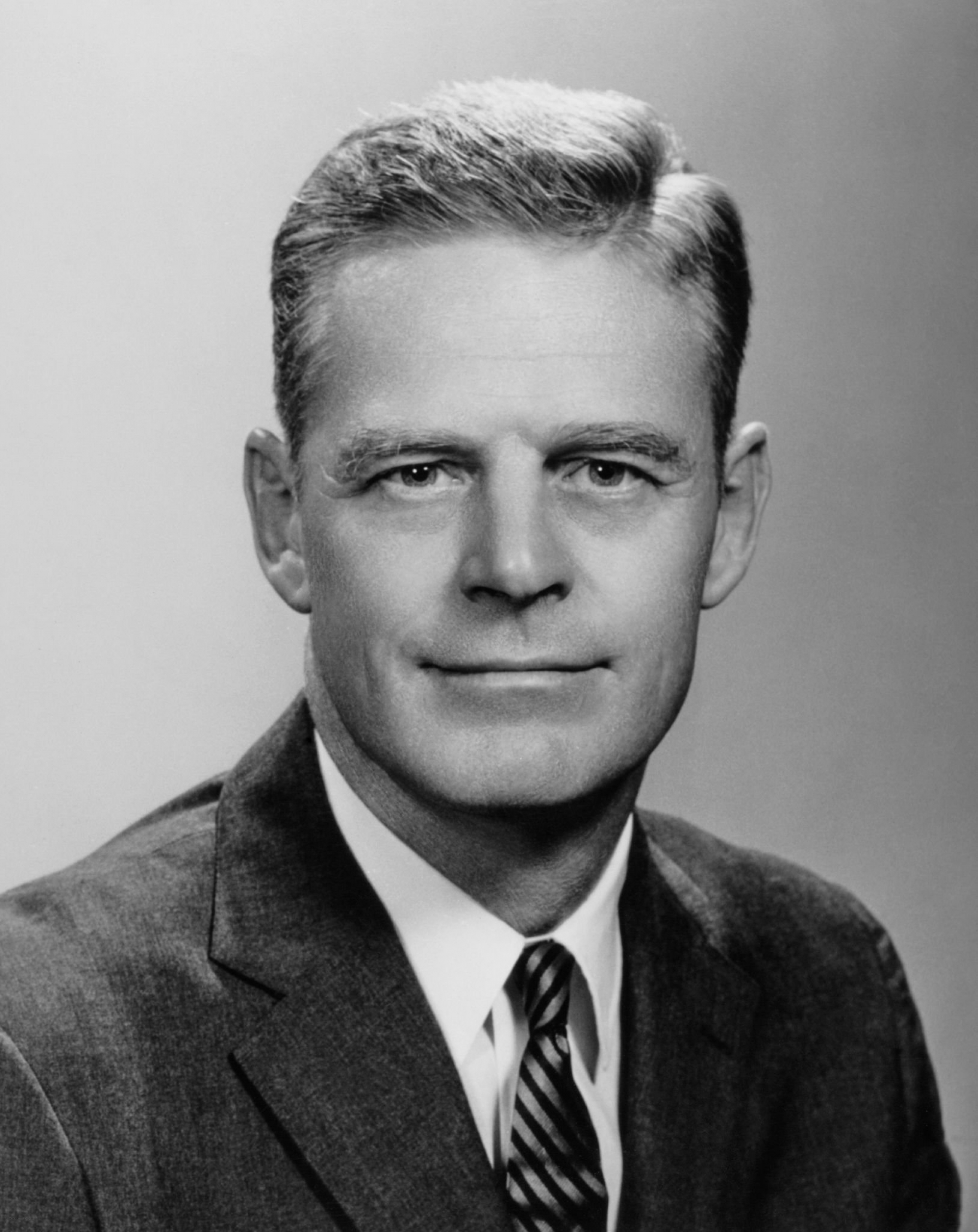
Following in the footsteps of his father, Shields took up the practice of law, and for his first 12 years in practice he was a partner at his father’s firm. His good reputation resulted in his appointment as an officer who assisted judges with complicated legal cases, a position he served in for six years. In 1902, Shields was elected an associate justice of Tennessee’s Supreme Court, being elevated to chief justice in 1910. At that time, the Democratic Party had split into factions, with one of the groups accusing Governor Malcolm R. Patterson of attempting to intimidate Tennessee’s Supreme Court (Bristol Herald Courier). Shields won great respect in his stand for an independent judiciary, and he became thought of as a good choice for national office.

Shields was elected to the Senate by a combination of independent Democrats and Republicans, and thus he was not really ever going to be someone’s man. Indeed, he could be personally a bit prickly. While Shields supported a good deal of President Wilson’s New Freedom legislation, his independence would not put him in good stead with him. He was a defender of state’s rights, and this manifested in his opposition to Prohibition and women’s suffrage. Shields also believed that the creation of the Federal Water Power Commission, championed by Wilson, was an unconstitutional intrusion on the states (The New York Times). However, the issue that would cause such a rift between him and the president and many fellow Democrats was yet to come.

In 1918, his renomination appeared in doubt, and there was a rumor that President Wilson was going to write and a publish letter that he was no friend of his administration, and in response fellow Senator Kenneth McKellar begged Wilson not to write it, and it was not written (Hill, 2019). Despite this letter not being written, Shields was keen on continuing to be independent from and even hostile to the president. After the election, he even snapped that Wilson and his secretary Joseph Tumulty could go to hell (Hill, 2019). Shields came out strongly against the League of Nations, at least President Wilson’s version of it and he backed Henry Cabot Lodge’s (R-Mass.) strong reservationist substitute. Shields considered himself acting true to the principles of the nation and the Democratic Party, including Wilson during the 1916 campaign (Bristol Herald Courier).  Such a dissent was to Wilson a sin that could never be forgiven, especially after he had held his pen so the senator could be reelected. Shields also charged that selfish interests were at work for the League of Nations, stating, “Great capitalists who desire to speculate in the deprecated bonds of the bankrupt nations of Europe and dealers in cotton and food products, who desire to exploit those countries for selfish purposes and wanted the United States as provided in the League of Nations to stabilize those governments and make their bonds and contracts valid, have spent over a million dollars under the auspices of the League to Enforce Peace in organizing branches of their league, paying public speakers and subsidizing newspapers to have the treaty ratified” (Hill, 2020).

During the Harding and Coolidge Administrations Shields had reverted a bit back to party loyalty, including opposing the tariff increases and income tax reductions under Harding. Although supportive of electrifying the Tennessee Valley area using the Muscle Shoals properties, he was supportive of it being done by private (by Henry Ford), rather than public means. President Warren G. Harding seriously considered nominating Shields to the Supreme Court in 1922 as his pick of a Democrat, but had wanted to pick a man under 60 and due to a misprint Harding believed that he was younger. He was in truth 64, and Harding instead selected the 56-year-old Pierce Butler.  

Although Wilson had not written that letter that would have ended Shields’ career in 1918, he did write it and make it public before the 1924 primary. He also had opposed bonus legislation for World War I veterans, which was very popular and seen as a patriotic thing to support. Although Wilson died before he could see Shields get beat, Wilson’s letter and death did impact it. His primary opponent, Lawrence Tyson, charged that Shields’ opposition sped up Wilson’s decline and death (Bristol Herald Courier). Wilson did get his revenge from beyond the grave, as the Democrats nominated Lawrence Tyson to be the next senator. Shields’ DW-Nominate score was a -0.156, which placed him among the more conservative Democrats. He chose to retire after this loss and although President Coolidge offered him a post on the Federal Trade Commission in 1926, he preferred to spend the rest of his days at his beloved family estate of “Clinchdale” in Grainger County than return to Washington D.C. In 1934, tragedy struck when Shields’ wife died, and he was so distraught that his health broke down, dying two weeks later on September 30th at the age of 76.

References

Ex-Senator John K. Shields Succumbs. (1934, October 1). The Bristol Herald Courier, 1.

Retrieved from

https://www.newspapers.com/image/586529503/

Hill, R. (2019, March 24). The 1924 Senate Race in Tennessee, I. The Knoxville Focus.

Retrieved from

https://www.knoxfocus.com/archives/this-weeks-focus/1924-senate-race-tennessee/

Hill, R. (2020, January 20). Tennessee and the League of Nations, V. The Knoxville Focus.

Retrieved from

https://www.knoxfocus.com/archives/this-weeks-focus/tennessee-league-nations-v-2/

John K. Shields, Ex-Senator, Dies. (1934, October 1). The New York Times.

Retrieved from
Shields, John Knight. Voteview.

Retrieved from

https://voteview.com/person/8471/john-knight-shields

George Huddleston: The Heart of Dixie’s Dissenter

In 1914, Birmingham’s prominent representative, Oscar Underwood, who had sponsored the Underwood Tariff reducing tariffs and imposing the first permanent income tax, won popular election to the Senate. His successor was a bit more of an independent figure in prominent attorney George Huddleston (1869-1960). He identified as a “Jeffersonian Democrat” and sought to vote in a way that was true to Jeffersonian ideals as he saw them. This meant that although he was keen on state’s rights, as his votes against Constitutional amendments for women’s suffrage and Prohibition (although he supported it on a state level) indicated, he also supported a lot of progressive legislation, and was strongly supportive of labor unions, being one of their foremost spokesmen. Huddleston was also a representative who was thinking away from the past during the Wilson years. He voted for pensions for veterans of the War of the Rebellion, the Spanish-American War, and the Philippine-American War. Pensions for union veterans were a sore spot for the South, as their tax money was going to forces that had defeated them while Confederate veterans only got pensions from their respective states. He also did not embrace the “Lost Cause” narrative, once telling his daughter after she made a display in her class of wishing that the Confederacy had won the war with or without slavery, “Don’t talk like an ass. Slavery is a terrible evil. It degrades both sides” and after his daughter responded that the Confederates must have thought it was fine, he replied, “I’m sorry to say that at that time most Southerners did think it was all right. And the South paid for it” (Packer). Unusually for his time and place, Huddleston supported racial equality. He also spoke out against the KKK and xenophobia, not moves for popularity in 1920s Alabama politics. However, Huddleston could not vote for federal civil rights measures, as he would certainly have been defeated for renomination had he done so.

Consistent with his progressive views, he was an opponent of American imperialism, opposing intervening in Nicaragua and Haiti and initially opposed American entry into World War I (Derbes). Although Huddleston ended up voting to declare war on Germany, he strongly opposed curtailing civil liberties, stating, “In a time like this. . .it takes a lion-hearted courage for a man to stand up on his feet and dare to speak for peace” (Hill). His independence irked President Wilson, who called for his defeat for renomination based on his voting record. However, Birmingham’s voters still liked their representative, and Wilson’s popularity was beginning to take a tumble.

In the 1920s, Huddleston proved an opponent of most the policies of the conservative Republican presidents of the age. In 1931, he was chosen by the Democrats to respond to President Hoover’s State of the Union Address, in which he lambasted him for failing to grant direct relief to Americans (Hill). Despite Huddleston’s criticisms of Hoover, he was becoming more independent from the Democratic Party’s line. Indeed, around this time, he began voting more towards the right (Jones). This impacted Huddleston’s views on FDR’s New Deal programs. While he supported the Tennessee Valley Authority and the National Industrial Recovery Act, he stood alone among Alabama’s delegation as a consistent opponent of New Deal agricultural policy. Despite this and other differences, he won renomination with 61% of the vote. However, in his next term, he further antagonized the Roosevelt Administration with his votes against Social Security, the Bituminous Coal Act, and the Public Utilities Holding Company Act. On the latter, he objected to the bill abolishing holding companies for public utilities, arguing that “regulation” and not “vengeance” was called for (Hill). In 1936, Luther Patrick, a New Deal loyalist, challenged him in the Democratic primary. Huddleston was losing popularity in his district due to his anti-New Deal views, and the same press outlets that decades before had claimed he was a “socialist” or a “radical” now claimed that he was a “conservative”. This did not go unnoticed by Huddleston, who stated, “My principles remain now as always – I have not changed. Some who once criticized me as radical now call me conservative. The change is in them and not me” (Jones). I personally think that it was a bit of both; he grew more conservative and the politics of the time shifted in a liberal direction.

Huddleston had a low moment in his 1936 primary when during a heated argument with his primary challenger regarding him implying that other Alabama Democrats wanted to see him defeated, he hit him over the head with a ketchup bottle. The results of the 1936 primary were just about the reverse of the last one, as Patrick won with almost 60% of the vote (Hill). Huddleston’s DW-Nominate score was a -0.076, which ranked as rather conservative for a Democrat. His political career was over, and his turn to the right stuck. In 1940, Huddleston for the first time endorsed a Republican for president in Wendell Willkie. However, most of Alabama was not with him on this, with only traditionally Republican Winston County voting for him. In 1948, despite having previously called for racial equality, he endorsed Strom Thurmond’s run for president. For Huddleston, the Democratic Party had moved too far away from the style of Jeffersonian politics he embraced.  However, his son, Huddleston Jr., had a political career after, and the elder Huddleston lived to see him be elected to Congress, from the same Birmingham district he had represented, in 1954. Huddleston Sr. died on February 29, 1960 at the age of 90. Interestingly, Huddleston Jr. would have a similar ideological journey as his father and would himself be defeated. However, unlike his father, he was defeated by someone who ran to his right in 1964 rather than to his left. Much had changed in Alabama’s political climate in 28 years.

References

Derbes, B.J. (2012, August 10). George Huddleston Sr. Encyclopedia of Alabama.

Retrieved from

https://encyclopediaofalabama.org/article/george-huddleston/

Hill, R. (2024, August 25). The Gentleman from Alabama: George Huddleston. The Knoxville Focus.

Retrieved from

https://www.knoxfocus.com/archives/this-weeks-focus/the-gentleman-from-alabama-george-huddleston/

Huddleston, George. Voteview.

Retrieved from

https://voteview.com/person/4685/george-huddleston

Jones, J. (1960, March 1). George Huddleston, 90, Ex-Congressman, Dies. Birmingham Post-Herald, 1.

Retrieved from

https://www.newspapers.com/image/793668498/

Packer, G. (2000). Blood of the Liberals. The New York Times.

Retrieved from
The Eaton Affair: A Society Drama That Put a Presidency in Peril

I hold that the era we have been living in since 2015 can be called the Trump Era. I was loath to believe this at the start of it, but the truth is that the politics of this current age have completely centered on Donald Trump, on matters both political and personal. They centered on him when he was out of office for four years as well, in part because stories about him made media companies tons of money. He has expressed great admiration for another president who so much dominated in attention of the era of his prominence that historian Arthur Schlesinger Jr. titled his 1945 book on him, The Age of Jackson. Andrew Jackson’s entry into presidential politics resulted in the demise of the old Democratic-Republican Party into factions, and Jackson ran as being closest to the original values of Thomas Jefferson. Although his first bid, 1824, was a loss, he alleged a “corrupt bargain” had occurred for him to lose, namely that John Quincy Adams had gotten Henry Clay to give him his electors in exchange for Clay being appointed Secretary of State. Such a quid pro quo was denied by Adams and Clay but the allegation stuck in the public mind. Jackson’s triumphant victory in 1828 was marred by the death of his wife Rachel shortly after. Rachel Jackson had been in fragile health, and the 1828 election had a number of nasty charges thrown around, including that Rachel had committed bigamy by marrying Jackson. The truth was that Rachel had not known that the divorce from her first husband had not been legally finalized at the time of the marriage, only discovering this two years after. Jackson blamed her death on the stress caused by such allegations of her political opponents. This added to his already existing sensitivity on personal accusations against women.

A Controversial Appointment

John H. Eaton

The trouble for Jackson began when he was picking his first cabinet, seeking to reward supporters. One of them was his close personal friend, biographer, and fellow Tennessean John H. Eaton for Secretary of War. Eaton had nine months before married a woman named Margaret “Peggy” O’Neill, who had been a bar maid at her father’s boarding house and had a reputation of being flirtatious with customers. Her first husband, a man who was 22 years her senior in Navy purser John B. Timberlake, was known for having two problems: drinking and debt. Senator John Eaton, who had befriended the couple, got Timberlake an overseas position to help him out. On April 2, 1828, he died abroad, and although an autopsy concluded that he had died of pneumonia, rumors spread throughout Washington society that he had committed suicide over an alleged affair with Eaton and it was further alleged that Eaton had gotten Timberlake the post so he could freely court Peggy. Indeed, only months after Timberlake’s death, John and Peggy were married. Based on this short grieving period and such rumors, the wives of Jackson’s cabinet officers socially ostracized Peggy Eaton, refusing to invite her to any events and would not attend any events in which she was present. Furthermore, Peggy Eaton was considered too outspoken for a woman by others. As John F. Marszalek (2000) wrote, “She did not know her place; she forthrightly spoke up about anything that came to her mind, even topics of which women were supposed to be ignorant. She thrust herself into the world in a manner inappropriate for woman…. Accept her, and society was in danger of disruption. Accept this uncouth, impure, forward, worldly woman, and the wall of virtue and morality would be breached and society would have no further defenses against the forces of frightening change. Margaret Eaton was not that important in herself; it was what she represented that constituted the threat. Proper women had no choice; they had to prevent her acceptance into society as part of their defense of that society’s morality” (56-57). This greatly upset Jackson. Jackson himself had advised Eaton to marry her as soon as possible and defended him and Peggy throughout this ordeal. The woman who was leading this ostracism was none other than his vice president’s wife, Floride Calhoun. John C. Calhoun may also have been using this as a way to boost his views within Jackson’s cabinet, as he and Eaton had significant political disagreements, including on tariffs and nullification. This whole matter became known as the Eaton Affair or the Petticoat Affair.

Peggy Eaton
A furious Jackson called a cabinet meeting to defend Peggy, and supposedly in the process commented that she was “as chaste as a virgin!” despite her having twice been married and having had three children (Hill). Although cabinet officers tried to explain to Jackson the reasoning for their wives’ ostracism of her, the subject became closed once Jackson compared her situation to that of his late wife. Only Secretary of State Martin Van Buren, a widower, and Postmaster General William Barry, who had appreciated Peggy nursing his very ill child, stood by her. This matter was a deepening sore in the administration, and John Eaton would in retaliation release accurate documentation that as Secretary of War to President Monroe Calhoun had supported censuring Jackson over his 1818 invasion of Florida. Calhoun only made matters worse when due to miscommunication he released correspondence between himself and Jackson in 1831. This major rift between Jackson and his cabinet threatened to derail his presidency, so the cunning Van Buren, who Jackson came to increasingly trust, came up with a scheme to resolve the situation.  

Van Buren would first resign his post, followed by John Eaton, thus politically permitting Jackson to ask for the resignations of all his cabinet officers with the pretense of a cabinet reorganization. Of course, Vice President John C. Calhoun could not be part of this, thus he and the ringleader in this ostracism would remain in Washington. This matter, in addition to Calhoun’s support of South Carolina’s nullification of the “Tariff of Abominations” completely alienated Jackson from Calhoun, and made him one of his two most hated rivals. When asked in 1837 if he had any regrets about his presidency, Jackson reportedly responded, “Yes, I regret I was unable to shoot Henry Clay or to hang John C. Calhoun” (U.S. Senate). With all resignations in hand, Jackson remade the cabinet, and in the process brought Van Buren back as Minister to Great Britain, but a vote to continue in his post was defeated by the influence of Calhoun. However, this came off as Van Buren being a victim of petty personal politics, and Jackson would pick him to serve as vice president in his second term. John Eaton would never attain the political heights he had reached before his marriage to Peggy; he did not succeed in a bid to return to the Senate in 1834 (he was made governor of the Florida Territory instead) and then alienated himself from Jackson by becoming a Whig and endorsing William Henry Harrison in 1840.

References

Hill, R. (2013, August 11). Peggy Eaton: The Woman Who Brought Down A Cabinet. The Knoxville Focus.

Retrieved from

https://www.knoxfocus.com/archives/peggy-eaton-the-woman-who-brought-down-a-cabinet/

John C. Calhoun. UVA Miller Center.

Retrieved from

https://millercenter.org/president/jackson/essays/calhoun-1829-john-vicepresident

Marszalek, J.F. (2017, October 8). Eaton Affair. Tennessee Encyclopedia.

Retrieved from

Marszalek, J.F. (2000). The Petticoat Affair.: manners, mutiny, and sex in Andrew Jackson’s White House. Baton Rouge, LA: Louisiana State University Press.

The Attempt to Kill “King Andrew”. U.S. Senate.

Retrieved from

https://www.senate.gov/artandhistory/history/minute/Attempt_to_kill_King_Andrew.htm

The Lodge Bill: An Early Chance at Voting Rights in the South?

Henry Cabot Lodge

The 1888 election was a close one, and one that Republican Benjamin Harrison won narrowly, and only by the electoral vote. It was in this election that Republican got for the first time since the Grant Administration unified government. The Republicans set to work on numerous bills that they did not have a chance at passing if either the House or Senate were Democratic. One of these, proposed by Congressman Henry Cabot Lodge (R-Mass.) was the Federal Elections Bill. If enacted, this measure would have, among other provisions, authorized the federal supervision of Congressional elections in cases in which 500 petitions had been made from the respective districts about voting practices to the Judge of the District Court no less than two months prior to the election (The New York Times). This bill only covered Congressional elections, and was constitutional given that Congress has the explicit authority to regulate elections for senators and representatives except for the places in which senators are chosen under Article I, Section 4, Clause 1. The primary purpose of this measure was to implement the 15th Amendment, as it was often the case that blacks were subjected to voter intimidation and fraud to keep their numbers down. There were several Congressional elections in which Congress overturned the result due to voter intimidation and fraud in the South. In 1890, for instance, Thomas E. Miller of South Carolina and John Mercer Langston of Virginia, both who identified themselves as black (Miller was mostly white), were seated after findings by Congress that a fair election had been denied. However, it was a bill that applied nationwide. Thus, the shenanigans of Northern city machines could very well be impacted too. Lodge stood steadfastly by his bill. Something to note here is that Lodge was not in keeping with radical egalitarianism, indeed in response to a letter that expressed concern over “ignorant Negro votes”, he responded, “Nothing in this bill or any other prevents a state from excluding ignorance from the suffrage. Massachusetts has an educational test. South Carolina can do the same, but will not because she wishes to exclude black ignorance and let white ignorance vote” (Gwin, 105). That sounds like a color-blind policy to me!  On July 2, 1890, the bill passed 155-149. It was on to the Senate, where the bill’s sponsor was George Frisbie Hoar (R-Mass.) and it commanded a lot of Republican support. But was it enough?

Although the House passed it, the bill did not seem terribly popular. The Weekly San Diegan (1890) noted, “It is significant that the San Francisco and Portland Councils of Federated Trades have adopted resolutions condemning the federal election bill as dangerous to the freedom of the ballot box” (2). They were not the only unions to oppose this measure. Indeed, Knights of Labor leader Terence V. Powderly (1890) opposed, arguing that the measure itself would intimidate voters and encourage fraud, and furthermore claims hypocrisy, stating, “The Democratic party does its best to intimidate the colored citizens of the South, and they give as a reason that if they did not do so they would be subject to negro rule down there, or as they put it, “ignorant rule.” In the North the employers of labor intimidate the workmen in the interest of the Republican Party, but that party cannot lay claim to so respectable an excuse as the desire to avoid “ignorant rule,” for the workmen of the North have never imposed ignorant rule where they elected their own representatives” (10).

On August 13th, it was reported that Pennsylvania boss Matthew Quay (R-Penn.) introduced a resolution to postpone consideration of the Lodge Bill so the tariff bill could be passed (Wilkes-Barre Times Leader, 1). It was said that Senator Arthur P. Gorman (D-Md.) and Quay were making an agreement behind the scenes, and it would make sense for those two to do so; both men were at the head of political machines that had engaged in corrupt practices to maintain political dominance. And indeed, the Lodge Bill was postponed, being again considered in the Senate during the lame-duck session of Congress. One of the opponents, notably, was Senator William M. Stewart (R-Nev.), who had authored the 15th Amendment. Opponents in the Senate, led by Gorman, sought to defeat the bill by delay, and they succeeded. Silver Republicans, such as Stewart, had joined the Democrats to defeat the bill given a promise from Gorman not to interfere with their silver interests (The New York Times, 1906).

Although modern liberal opinion is positive on this measure*, liberal opinion did not historically approve. Historian Richard E. Welch, Jr. (1965) noted that “The standard liberal interpretation of American history applauds recent efforts in behalf of greater political equality for the southern Negro. It continues, however, to deplore the Federal Elections Bill of 1890: its introduction, its provisions, the motives of its originators and proponents. In the lexicon of American history the defeat of the force bill of 1890 was a “good thing”” (511). This is quite reminiscent of President Kennedy’s simultaneous support for civil rights in his time and his belief that Republican Reconstruction had been a mistake.

Would the Lodge Bill have made the sort of gains on civil rights like the 1960s? I think it a mistake to believe this law would have been a panacea and would have had difficulty surviving after the next election. However, if it remained, it would have constituted a fair (in my opinion) and constitutional means of not only enforcing a race-neutral application of voting laws but also countering the fraudulent antics of big city machines. I can see this measure as both garnering historical support from contemporary liberals (now that the “little guy” isn’t just a white working man) and contemporary conservatives as a way to actually apply color-blind standards, possibly rendering more federally intrusive measures unnecessary, and countering voter fraud.

* – The pro-critical race theory The Forum Magazine’s 2022 article on the subject, which compares Republican efforts in 1890 to Democratic efforts for the For the People Act in 2022, even though the bills have many substantive differences.
 

References

A Federal Election Bill. (1890, March 15). The New York Times.

Retrieved from
Encourages Fraud. (1890, August 3). The Saint Paul Daily Globe, 10.

Retrieved from

https://www.newspapers.com/image/81068633/

Gorman Dies Suddenly; Was Seemingly Better. (1906, June 5). The New York Times.

Retrieved from
Gwin, S.P. (1968). The Partisan Rhetoric of Henry Cabot Lodge, Sr. University of Florida.

Retrieved from

Remonstrance Against the Federal Election Bill. (1890, July 24). The Weekly San Diegan, 2.

Retrieved from

https://www.newspapers.com/image/1048031780/

Senator Quay’s Move. (1890, August 13). Wilkes-Barre Times Leader, 1.

Retrieved from

https://www.newspapers.com/image/394966835/

The Federal Elections Bill of 1890. Library of America.

Retrieved from

https://storyoftheweek.loa.org/2024/10/the-federal-elections-bill-of-1890.html

Welch, R. (1965, December). The Federal Elections Bill of 1890: Postscripts and Prelude. The Journal of American History, 52 (3), 511-526.

Retrieved from

https://www.jstor.org/stable/1890845

The Father of Labor Day: James H. Kyle

http://hdl.loc.gov/loc.pnp/bellcm.02016a

On July 4, 1890, a hard-working man of 36 who worked for Yankton College and had previously had tenures as a teacher and a pastor was called upon on at the last minute to deliver a speech before the citizens of Brown County, South Dakota. James Henderson Kyle (1854-1901) proceeded to deliver a half-hour powerful, rousing speech in which he denounced corruption in government and called for more redistribution of wealth. These messages resounded with the people of South Dakota who were so distant from political and economic power, and this speech propelled him to the U.S. Senate.

Kyle had originally been a Republican, but by 1887 he found himself in greater sympathy with the views of the Democrats and switched. Although by the time of his election in 1891 he chose not to identify with any party, he had been supported by the populistic Farmers Alliance and Democrats. Kyle soon opted to identify as a member of the left-wing People’s (Populist) Party and mostly voted with the Democrats in his first term. This included his support of the Wilson-Gorman Tariff in 1894 which reduced tariffs and reinstituted the income tax for the highest earners. He also supported free coinage of silver, women’s suffrage, worker’s rights, and Prohibition. However, the cause he was most known for was Labor Day.

On August 28, 1893, Kyle introduced a bill, S. 730, to make the first Monday of September a federal holiday to honor the contributions of American labor. President Cleveland signed the measure into law on June 28th. On an interesting note, this was signed while the Pullman Strike was occurring, which President Cleveland would ultimately end by use of federal troops. In 1898, Kyle would make another legislative contribution through his strong advocacy for the establishment of the Industrial Commission to investigate the economic conditions of the U.S., which President McKinley signed into law.

Although he had been a Populist, during his second term his views started shifting away from Populism as support of socialism was increasing and the strength of the party was declining. On December 28, 1899, Kyle delivered a statement in which he divorced himself from the Populist Party. He said, “Though I am a bimetallist and have been so from conscientious convictions for twenty-five years, I would rather take the most undiluted gold standard coin than to accept bimetallism with the ingredients of radical socialism that are now associated with it” (The New York Times). From then on, he was a Republican and largely supported the party on the issues from then on. He had already been moving in this direction on some issues, such as his support for President McKinley’s vote to ratify the Treaty of Paris on February 6, 1899, which ended the Spanish-American War, brought the Phillippines, Guam, Puerto Rico, and Cuba under US control and brought an end to the Spanish Empire while establishing the United States as a world power. Guam and Puerto Rico remain U.S. territories today. Kyle’s DW-Nominate score stands at a -0.108, reflecting both his Populism and his later Republican phase.

Kyle’s era of renewed Republicanism would not last long; in 1899 he had contracted malaria and this weakened his heart. On July 1, 1901, he would issue forth his last words that reflected both his faith and peace with the end, “Now I shall rest” (Robinson). Kyle was only 47 years old.

References

James H. Kyle of South Dakota Dead. (1901, July 2). The New York Times.

Retrieved from
Kyle, James Henderson. Voteview.

Retrieved from

https://voteview.com/person/5386/james-henderson-kyle

Memorial Addresses on the Life and Character of James H. Kyle. (1902). Congressional Record. Washington, D.C.: Congressional Printing Office.

Retrieved from

Robinson, D. (1904). History of South Dakota, Vol. 1, 612-614.

Retrieved from

https://electricscotland.com/history/world/bios/kyle_james.htm

The Ideological Dick Cheney

Perhaps no other figure is more identified with neo-conservatism nor reviled for it by the critics of the George W. Bush Administration than the now late Richard Bruce “Dick” Cheney (1941-2025). This post will cover his Congressional career, where we get to best examine his ideology.

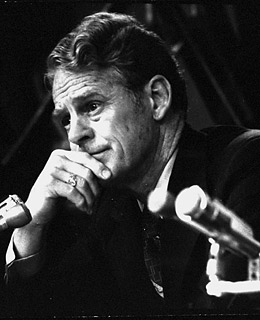
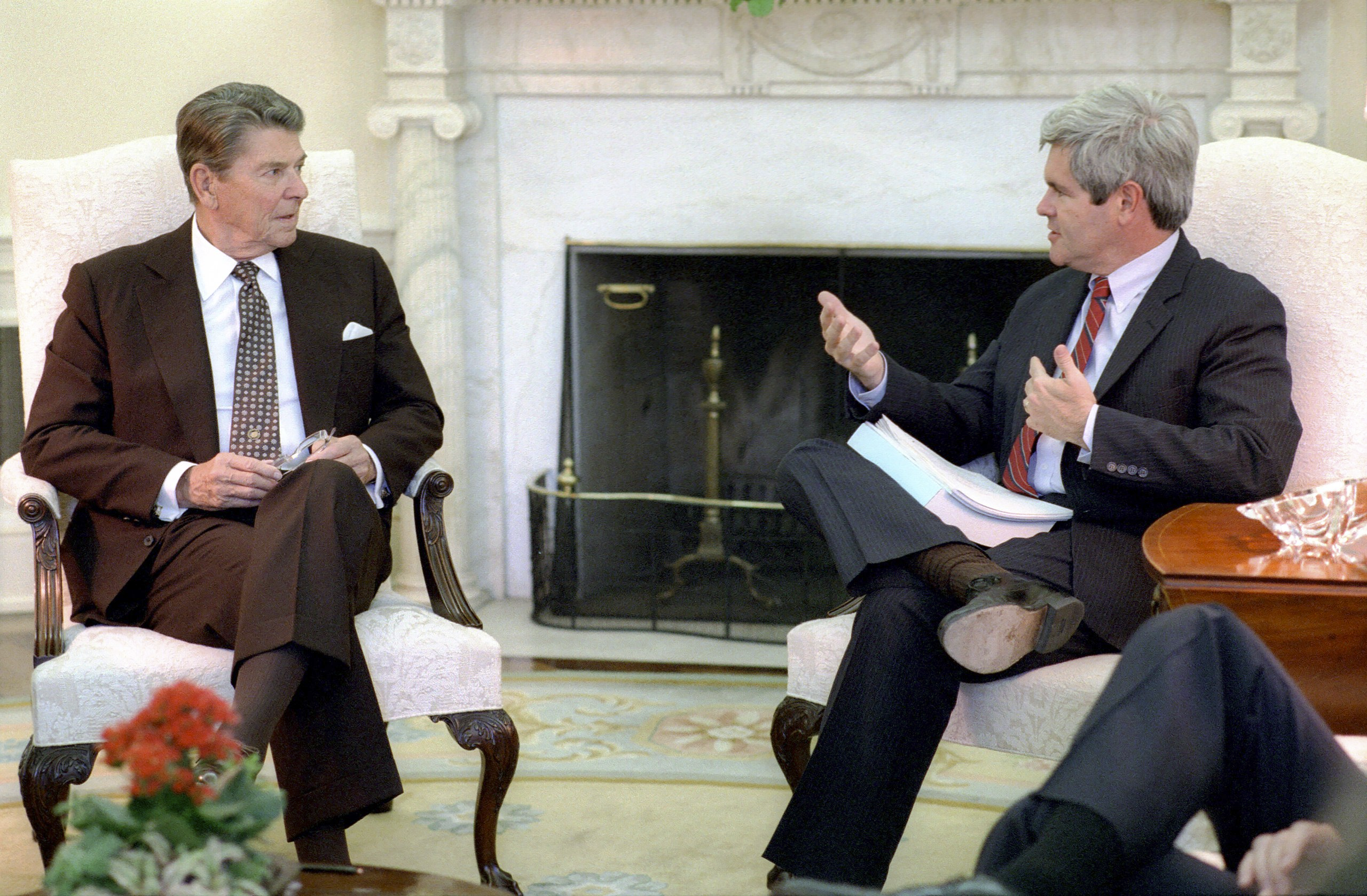
Dick Cheney, 1984

Cheney had a bit of a rough start, as he got into the drinking culture of college fraternities and his excessive drinking resulted in two drunk driving convictions in the early 1960s. However, he cleaned up his act, finished his college education, and in 1969 he secured an internship with moderate Republican Congressman William A. Steiger of Wisconsin. It was through this that he got connected to Donald Rumsfeld, who would bring him on into the Office of Economic Opportunity and mentored him. This connection resulted in him becoming President Gerald Ford’s deputy chief of staff under Rumsfeld and then being elevated to chief of staff. In 1978, Cheney ran for Congress, the same year that George W. Bush first ran for Congress, but unlike Bush, Cheney would win his race in Wyoming. However, this was also the first year that the consequences of his lifestyle came to bite him, as he suffered his first of five heart attacks at the age of 37. Cheney was a beer drinker, had a family history of weak hearts, had a fatty diet, and had smoked up to three packs a day (Rodriguez). After this, he began to eat healthier and quit smoking. Incidentally, his old boss Steiger also suffered a heart attack that year, but his was fatal at the age of 40.

Cheney quickly established himself as a staunch conservative, standing opposed to implementing the Panama Canal Treaty, the establishment of the Department of Education, and the bailout of Chrysler in 1979. Indeed, his first score by the conservative Americans for Constitutional Action (ACA) was a 100%. Cheney was likewise opposed to the windfall profits tax and price controls on oil and gasoline. From 1979 to 1984, he sided with ACA’s positions on votes 93% of the time. Americans for Democratic Action (ADA) gave him a similar inverse assessment; he sided only 5% of the time with their positions. His DW-Nominate score also paints the picture of a strongly conservative politician, being a 0.523. In April 1980, Cheney was one of the first members of Congress to endorse Ronald Reagan, and with his election he became one of the president’s staunchest supporters. Indeed, he was one of three reasons the Wyoming delegation to Congress was especially powerful during the Reagan years, the other two being Senators Alan Simpson and Malcolm Wallop. All three were highly influential on the White House. Cheney proved exceptionally conservative in some areas, particularly regarding domestic spending and regulations. Some examples of him being in a conservative minority include:

He was one of 56 representatives to vote against increasing food stamp funds over budget caps on May 8, 1980.

He was one of 29 votes against a foreign aid bill for food to Africa on March 6, 1984.

He was one of 27 votes against an additional three years funding for head start and numerous other social programs on September 16, 1984.

Cheney was one of 48 votes against the first vote on the South Africa sanctions bill on August 1, 1985.

He one of 59 to vote against an increase in funding of child nutrition programs on September 18, 1985.

Cheney was one of 57 representatives to vote against funding arts programs under the National Foundation on the Arts and Humanities Act of 1965 on October 10, 1985.

A critic of much environmental legislation, he was one of 33 representatives to vote against extending Superfund programs on December 10, 1985.

Continuing this trend, he was one of 27 representatives to vote against extending Superfund programs on October 10, 1986.

Cheney was one of 29 votes against the Hate Crimes Statistics bill on May 18, 1988. However, he also voted for John Miller’s (R-Wash.) amendment that substituted “homosexuality or heterosexuality” for “sexual orientation” as a covered category.

He was one of 13 votes against the AIDS Federal Policy Act on September 23, 1988. However, he also voted against a motion by Bill McCollum (R-Fla.) to require spousal notification if a patient is infected with AIDS.

Cheney was one of 51 votes against a ban on lawn darts on October 21, 1988.

During the Reagan Administration, Cheney was a faithful supporter of the president, including on some of his more controversial stances, such as sale of AWACs (surveillance planes) to Saudi Arabia in 1981 and his opposition to Congress’s imposition of sanctions on South Africa. He also backed Reagan when he partly rolled back his 1981 tax cuts with the 1982 Tax Equity and Fiscal Responsibility Act. On civil rights, Cheney voted against the 1980 Fair Housing bill over its administrative judges provision, voted for extending the Voting Rights Act of 1965, voted for the proposed Civil Rights Act of 1984, and voted for the Civil Rights Restoration Act in 1988 before voting against overriding President Reagan’s veto. His primary priority, however, was on foreign policy. He staunchly supported aid to anti-communist forces in Nicaragua, Angola, and Afghanistan as well as El Salvador’s anti-communist government. Cheney also backed the Strategic Defense Initiative. His expertise on foreign and military policy made him a slam dunk candidate for Secretary of Defense under the George H.W. Bush Administration, being confirmed 92-0, after former Senator John Tower was rejected by the Senate for alleged alcoholism and womanizing. As noted earlier, in this post I was only covering his Congressional career, and the only case one can make for him being a RINO is if the definition of RINO is lack of personal loyalty to our current president. By the way, a quick observation…who would have put it on their bingo card back in 2004 that 20 years later Cheney would have endorsed Harris for president while RFK Jr. would have endorsed Trump?

References

ADA Voting Records. Americans for Democratic Action.

Retrieved from

Cheney, Richard Bruce. Voteview.

Retrieved from

https://voteview.com/person/14611/richard-bruce-cheney

Mullen, M. (2025, November 6). Cheney, the state’s most powerful and polarizing politician. Wyoming Tribune Eagle.

Retrieved from

https://www.wyomingnews.com/news/local_news/wyoming-remembers-dick-cheney-the-state-s-most-powerful-and-polarizing-politician/article_2344e9ee-03e8-411b-9759-d7ce0b4c2d29.html

Rodriguez, A. (2025, November 4). Dick Cheney had five heart attacks. Here’s how science helped him live until 84. USA Today.

Retrieved from

https://www.usatoday.com/story/life/health-wellness/2025/11/04/dick-cheney-heart-attacks-modern-medicine/87083844007/

How They Voted: The Immigration and Nationality Act of 1965

In 1924, Congress passed the Immigration Act of 1924, which established a permanent National Origins Quota system, which set a quota of 2% of immigration from nations, based on foreign-born populations that had been counted in the 1890 census. The relevance of the 1890 census was that this predated a massive influx of immigrants from Eastern and Southern Europe. Thus, opponents of stringent quotas on these people proposed the 1910 census be used as a basis instead, thus allowing considerably more people from these nations to be admitted. Also facing severe limitations were immigrants from Asia, Africa, and the Middle East, and Japan along with nations in the “Asiatic Barred Zone” faced complete exclusion. Interestingly, no quota was set for any immigrants from the Western Hemisphere.

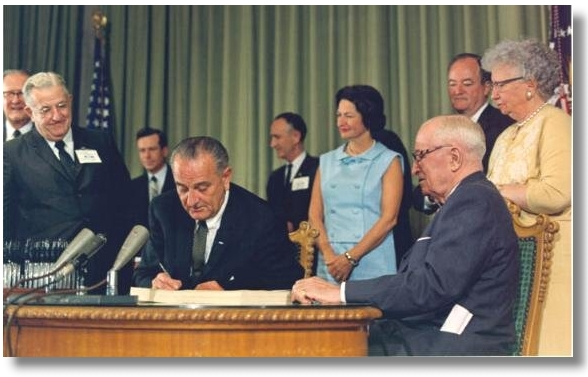
This measure was quite popular when passed, indeed the vote in favor in the House had been 323-71 and the Senate 69-9. Support and opposition were both bipartisan, but it was clear that urban politicians stood most opposed. One of these politicians was 36-year-old Emanuel Celler of Brooklyn, a Democrat who was serving his first term in Congress. By 1965, the political situation changed monumentally. Celler was not a freshman in a minority party; he was now one of the most powerful members of Congress as the chairman of the Judiciary Committee and the national climate had changed considerably on the issues of race and immigration. In 1924, eugenics had been in vogue and fears abounded about anarchist and communist immigrants. By 1965, the American public and its intellectuals had mostly turned away from eugenics as it was now associated with Nazi genocide of Jews, Roma, the disabled, and numerous other minority groups.  Senator Ted Kennedy (D-Mass.), a prominent proponent, argued that “The bill will not flood our cities with immigrants. “It will not upset the ethnic mix of our society” and Senator Hiram Fong (R-Haw.) claimed that the population of Asian Americans “will never reach 1 percent of the population” (Richwine).  

The House version passed 318-95 on August 25th, with 209 Democrats and 109 Republicans voting for while 71 Democrats and 24 Republicans voted against. Nearly all of the Democratic votes against came from Border or Southern states. A similar pattern existed in the Senate, in which the bill was passed with amendment 76-18 on September 22nd. 52 Democrats and 24 Republicans voted for while 15 Democrats and 3 Republicans voted against in John Sherman Cooper of Kentucky (a curious dissenter given his past votes for liberally admitting postwar refugees), Norris Cotton of New Hampshire, and Strom Thurmond of South Carolina. This also included two pairs against from Republicans John Tower of Texas and Wallace Bennett of Utah. The only Democrats outside the South who voted against were Arizona’s Carl Hayden and West Virginia’s Robert Byrd. Hayden had also been supportive of expanding U.S. admittance of refugees after World War II. The House readily accepted the Senate’s changes on a vote of 320-70, with Democrats voting 202-60 for and Republicans 118-10. The House Republicans who were against were Jack Edwards, Glenn Andrews, John Buchanan, and James Martin of Alabama, James B. Utt of California, H.R. Gross of Iowa, Prentiss Walker of Mississippi, Charles Goodell of New York (an odd dissenter here), Albert Watson of South Carolina, and Jimmy Quillen and John Duncan of Tennessee. The only Democrats outside the South or Border states to oppose were Johnny Walker and Thomas Morris of New Mexico, Robert Secrest of Ohio, and Robert Nix of Pennsylvania (a very curious vote indeed!).  

Interestingly, this law was not considered to be highly ideologically salient by liberals or conservatives of the day; neither ADA nor ACA counted the votes on this law as qualifying you as a liberal or a conservative. The measure got high marks per a Gallup poll conducted at the time with 70% approval, and few people considered immigration the issue of foremost importance at the time, with Medicare being the biggest focus (Kohut). In the backdrop of the civil rights movement, eliminating discrimination in immigration quotas seemed a logical choice.

Contrary to Kennedy’s arguments, after 1965 the percent of immigrants who came from Europe fell from over 80% to 13% in 2018. The elimination of the caps on immigration did not prove to be the issue that resulted in massive immigration from South of the border. Indeed, this law for the first time placed a cap on immigration from Mexico. Rather, a development that was occurring at around the same time; the demise of the Bracero Program, which had occurred in 1964, combined with provisions in the 1965 law that exempted from quotas family members of immigrants already in the nation, resulted in 25% of the US’s immigrants being from Mexico in 2018 while 25% more were from other Latin American nations. The Immigration and Nationality Act also resulted in higher levels of immigration from Asian nations; in 2018, 28% of immigrants to the United States were Asian. Furthermore, in 1965, 5% of the population were first-generation immigrants but in 2015 they came to represent 13% of the population (Chrishti, Hipsman, and Ball). The Immigration and Nationality Act of 1965 has, at its 60th year, been proven to have dramatically changed the demographic makeup of America.

References

Cadava, G.L. How Should Historians Remember the 1965 Immigration and Nationality Act? OAH.

Retrieved from

https://www.oah.org/tah/august-2/how-should-historians-remember-the-1965-immigration-and-nationality-act/

Chrishti, M., Hipsman, F., and Ball, I. (2015, October 15). Fifty Years On, the Immigration and Nationality Act Continues to Reshape the United States. Migration Policy Institute.

Retrieved from

https://www.migrationpolicy.org/article/fifty-years-1965-immigration-and-nationality-act-continues-reshape-united-states

Kohut, A. (2015, February 4). From the archives: In ‘60s, Americans gave thumbs-up to immigration law that changed the nation. Pew Research.

https://www.pewresearch.org/short-reads/2019/09/20/in-1965-majority-of-americans-favored-immigration-and-nationality-act-2/

Massey, D.S. & Pren, K.A. (2012). Unintended Consequences of US Immigration Policy: Explaining the Post-1965 Surge from Latin America. Popul Dev Rev., 38(1)

https://pmc.ncbi.nlm.nih.gov/articles/PMC3407978/

To Agree to the Conference Report on H.R. 2580, The Immigration and Nationality Act. Voteview.

Retrieved from

https://voteview.com/rollcall/RH0890177

To Pass H.R. 2580, Immigration and Nationality Act Amendments. Voteview.

Retrieved from

https://voteview.com/rollcall/RS0890232

To Pass H.R. 2580, The Amended Immigration and Nationality Act. Voteview.

Retrieved from

https://voteview.com/rollcall/RH0890125