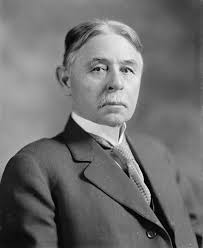
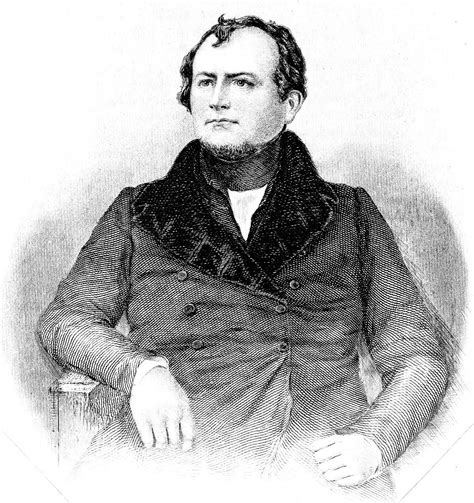
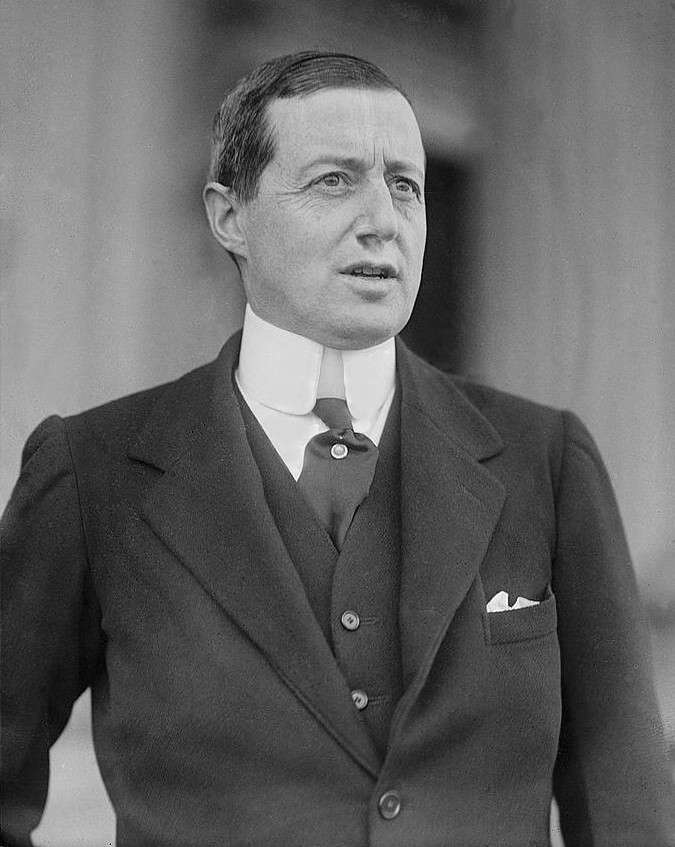
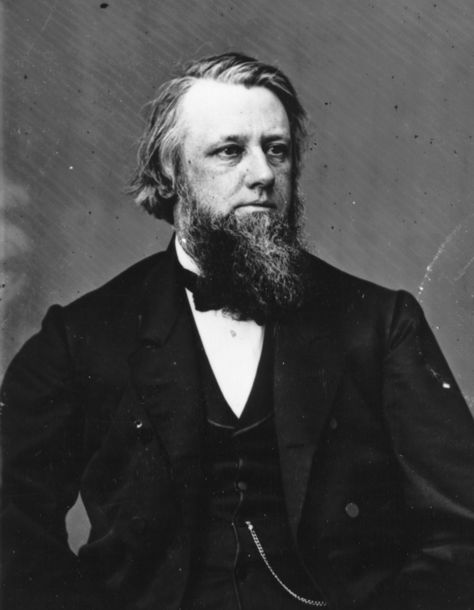
Henry B. Anthony: Father of the Senate and Founding Father of the Rhode Island GOP


Rhode Island today is one of the most Democratic states in the nation. Although Republicans do have chances to elect governors, they haven’t had a member of Congress elected since 1992, they haven’t been able to elect a conservative to Congress since 1938, and the last time they were able to elect a conservative Republican to the Senate was in 1930. Indeed, before 1928 the GOP had a solid grip on the politics of Rhode Island. The man who established this solid grip was Henry Bowen Anthony (1815-1884).
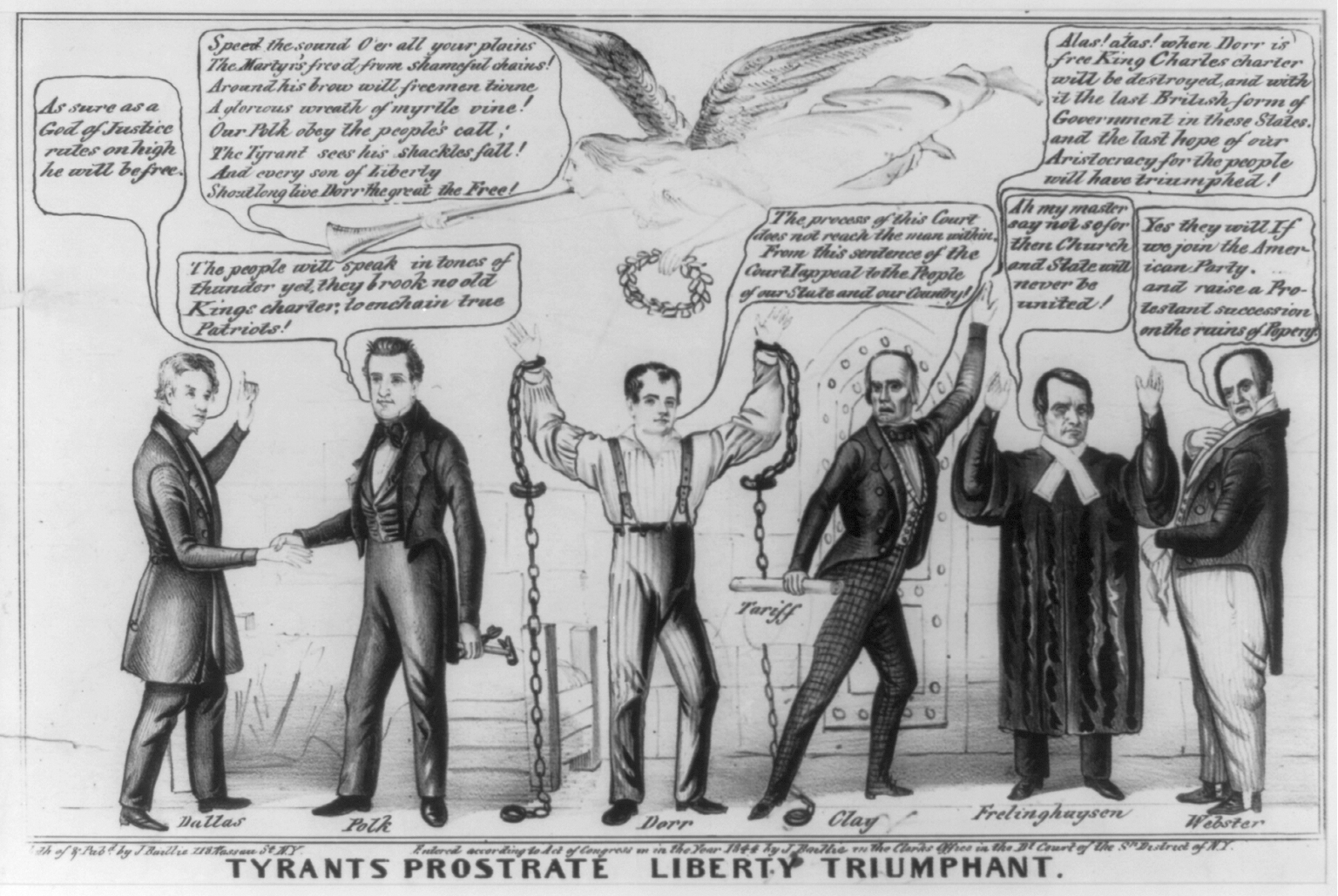
A journalist by profession, Anthony’s editorship of the Providence Journal made him a prominent and influential citizen in the state. A Whig, he used the Providence Journal to promote such political positions as retaining property requirements for voting, limiting immigrants’ political power, and the rule of law and order as opposed to rule by mob (Ferraro). Rhode Island’s constitution at the time of Anthony’s political career was based on the old 1663 charter from the English crown. This charter included provisions that limited voting to property owners and had in the Assembly each town having one representative with no city having more than 1/6 of the legislature, and the Senate having one for each town and city (Steffens). The former resulted in a rebellion by Thomas Dorr in 1842, a figure who supported eliminating the property requirement so new immigrants could vote, hence Anthony’s emphasis on “law and order” (Warwick History, Part II). Ultimately, that year despite the failure of the rebellion to put Dorr in power as governor, the state did enact universal suffrage for those men born in the United States (foreign-born would have to own property to vote until 1888, and there would still be limitations on suffrage), the last to do so (Steffens). However, the state had not changed the township provision, thus although Rhode Island may have more immigrants who are inclined towards Democrats in cities such as Providence, the small townships have at least one representative and one senator. Thus, what one must do to secure power is please those small townships. Throughout his political career, Anthony would be sure to do so. He served as Rhode Island’s governor from 1849 to 1851 as a Whig, where he began creating his machine that he would use to dominate Rhode Island politics. He drifted into the American, or, “Know Nothing” Party after the Whig Party’s collapse and then became a Republican. Anthony was married in his younger years, to Sarah Rhodes, but after her death in 1854 he did not remarry. The couple had no children, thus the remainder of his life was free to be committed to politics, and commit himself he did.

In 1859, Anthony was elected to the Senate as an “American Republican”. There, he became known as a talented orator and his abilities as well as his political wisdom and friendliness with senators regardless of party resulted in him gaining a lot of influence. In December 1862, his colleagues elected him chairman of the Senate Republican Conference, a post he would hold for the rest of his life. In his day, the positions of majority and minority leader did not exist, but the functions of party leader were held by the chairman of the conference of their party. Anthony would also 17 times be elected president pro tempore, a position of popularity rather than seniority at the time (U.S. Senate). He was affectionately known as the “Father of the Senate”…rather than having a family, Anthony had made the Senate his family. Per Senator George Frisbie Hoar (R-Mass.) in 1903, “He had come to be the depository of [the Senate’s] traditions, customs and unwritten rules…He seemed somehow the intimate friend of every man in the Senate, on both sides. Every one of his colleagues poured out his heart to him. It seemed that no eulogy or funeral was complete unless Anthony had taken part in it, because he was reckoned [as a protecting] friend of the man who was dead” (Baker, 5-6).

The Journal Ring – The Source of His Power

Anthony’s power was unrivaled in Rhode Island as one of its senators, and he could be quite ruthless. One writer of the time wrote that he did not hesistate to use “political legerdemain and bribery” to achieve his goals (U.S. Senate). The practices Anthony engaged in were more common in his day than now. In Rhode Island a culture of bribery of people to vote was normalized, with many voters refusing to turn out if not bribed (Steffens). The official reasoning was that such payments were compensation for lost time, a defense that strikes me as especially laughable in hindsight.

Anthony’s greatest way of maintaining power, however, was through his dominating influence over the press, particularly the power of his Providence Journal, hence his machine being known as the “Journal Ring”. Given that Anthony was such a powerful figure, opinions differed on him. For his supporters, he was a skilled politician, an intellectual, a scholar, and one who would put disagreeing opinions in his newspaper. For his critics, he behaved as a typical political boss and who employed anti-Irish Catholic bigotry and ignorance to maintain control (Warwick History, Part II). The latter came in the form of supporting Governor William Hoppin, who espoused anti-Catholic conspiracy theories, and allowing anti-Catholic groups to publish material in his paper, one of which fretted that if suffrage were extended to immigrants, “civil and political insitutions and public schools would come under the control of the Pope of Rome through the medium of thousands of naturalized foreign Catholics…” (Warwick History, Part II). The conflicts between the Protestants and Catholics that had characterized Britain in the past transferred over to the United States, making Catholics in that day essentially the “Jews” of the United States. Anthony himself responded to criticisms of the system of government he supported by saying, “a republican government might be representative without being democratic” and regarded immigrants as those who “came among us uninvited and upon whose departure there is no restraint” (Warwick History, Part II). He saw such immigrants as a threat to his political power as well as to that of the GOP, and at least in the long run he wasn’t wrong. By the 1928 election their descendants would be sufficiently mobilized to vote for Democrat Al Smith over Republican Herbert Hoover and by the 1930s they would prove fatal to the GOP’s dominance of the state. Rhode Island voters have since seen fit to vote for the Republican candidate for president only four times (Ike both times, Nixon in ’72, and Reagan in ’84). Political power seems a tremendous motive in his actions on immigration, as he did not support all immigration restrictions equally, opposing the Chinese Exclusion Act of 1882, a law which attracted overwhelming support among laboring white men of the West. Anthony’s position in the Senate was guaranteed by his control of his political machine which elected the very people who elected him in the state legislature, a state legislature proportionately favorable to him and the GOP by Constitutional structure.

Anthony would occasionally have a challenge to his machine, and one such figure who did so was William Sprague, a wealthy man from a family that had already produced politicians who managed to win the governorship of Rhode Island as a member of the Rhode Island Union Party in 1860, helped greatly by spending his own money. However, after the outbreak of the War of the Rebellion, he was quick to send troops to support the Union and became a Republican. Anthony courted the at the time popular Sprague and had his machine elect him to the Senate in 1863. However, William Sprague would end up being more politically independent than Anthony liked, and in 1868 he had to be threatened with political ruin to vote to convict President Andrew Johnson (Warwick History Part III). He became one of the Liberal Republicans during the Grant Administration who backed the candidacy of Horace Greeley in 1872. After publicly lashing out against Anthony and his domination of the political scene in Rhode Island through the Providence Journal, he saw to it that he did not win another term and was able to capitalize in the Providence Journal on both his Liberal Republicanism as well as his worsening alcoholism, calling him a madman (Warwick History, Part III). In 1875, he had the legislature replace him with General Ambrose Burnside.

Anthony and Lincoln and Johnson

As the leader of the Senate Republicans, Anthony was a strong supporter of President Abraham Lincoln and his efforts both at securing the union and in opposition to slavery. After Lincoln’s assassination, he gave his support to President Andrew Johnson, even though the two had considerable disagreements on Reconstruction policy. Anthony would vote, contrary to Johnson’s positions, for the 14th and 15th amendments to the Constitution. However, Johnson decided to give patronage appointments in Rhode Island to Anthony’s foes, and thus when the time came for the vote on convicting Andrew Johnson of impeachment charges, Anthony, the first to vote, announced, “Guilty!” (U.S. Senate) He would support all subsequent presidents in his lifetime, for all of them would be Republicans; he was spared by his own death from witnessing the election of Grover Cleveland. Ideologically, he could be thought of broadly as a conservative given his positions on currency, interest rates, tariffs, and immigration, he was not necessarily uniformly so in how he voted and was far from a guaranteed vote for railroad interests. Anthony also supported the annexation of Santo Domingo (now known as the Dominican Republic). His DW-Nominate score was a 0.286, indicating a moderate conservatism by that standard.

A Successor

In the late 1870s, Anthony came to know one Nelson Aldrich, and was sufficiently impressed that he backed his rise in politics. After serving a single term in the House from 1879 to 1881, Anthony secured his election to the Senate, where he would serve for 30 years and become a titan in that body, leading its “Big Four” of conservatives who called the shots in the Senate from 1897 to 1905, and he would himself essentially lead the Senate until his retirement in 1911. Although reelected in 1883, Anthony’s health was declining, and in January 1884 he declined to be elected again as Senate pro tempore. He would die on September 2nd. Anthony’s death was followed by the single largest public funeral in the state’s history.

References

Anthony, Henry Bowen. Voteview.

Retrieved from

https://voteview.com/person/212/henry-bowen-anthony

Baker, R.A. (2007). Traditions of the United States Senate. U.S. Senate.

Retrieved from

https://www.google.com/books/edition/Traditions_of_the_United_States_Senate/PV-SvOCvC_AC?hl=en&gbpv=1&dq

Ferraro, W.M. (1999). Anthony, Henry Bowen. American National Biography. New York, NY: Oxford University Press.

Retrieved from

https://www.anb.org/display/10.1093/anb/9780198606697.001.0001/anb-9780198606697-e-0400026

Henry Bowen Anthony 1815-1884 – A brilliant editor and politician. Warwick Rhode Island Digital History Project.

Retrieved from

https://www.warwickhistory.com/index.php?option=com_content&view=article&id=270:henry-bowen-anthony-1815-1884-a-brilliant-editor-and-politician&catid=56&Itemid=125

Steffens, L. (1905). Rhode Island: A State for Sale. Small State Big History.

Retrieved from

https://smallstatebighistory.com/rhode-island-state-sale/

The Last Time a President Dropped Out for Another Term


On June 27th, 2024, America saw during the Biden-Trump debate an “emperor has no clothes” scenario. Biden’s terrible state in that debate was something that even his staunchest of supporters in the media could not explain away or spin. The game was up, the truth was before everyone’s eyes. With the money for the Democrats threatening to dry up if Biden stayed on and after publicly denying he was dropping out, he dropped out on Sunday. While dramatic, this event is not unprecedented, and the president who dropped had won his term by a far greater margin than Biden had in 2020.                                     

The 1964 election brought a sweeping victory to President Lyndon B. Johnson, with Goldwater only winning Arizona and the Deep South. This, plus a staunchly liberal Congress that came with it, resulted in the most activist liberal Congress since the days of FDR. This Congress passed Medicare and Medicaid, the Elementary and Secondary Education Act, and the Voting Rights Act of 1965 among other sweeping measures. However, with a profoundly productive Congress came a backlash to the policies of the Johnson Administration, a slowing economy, and adding fuel to the fire were numerous “ghetto riots”. The Great Society backlash of 1966 was a portend of trouble for Johnson. Presidents have come back from bad midterms before (Truman, Clinton, Obama), and since Johnson had not served a full two terms, he was Constitutionally allowed to run again in 1968. The greatest trouble he was having, however, was with his own party’s base over the Vietnam War, and Johnson needed to first be renominated. In 1967, liberal activists Allard Lowenstein and Curtis Gans started the “Dump Johnson” movement over the Vietnam War. Lowenstein visited several prospective Democrats to try and talk them into the race, including Senators Bobby Kennedy of New York and George McGovern of South Dakota. However, the first person he was able to recruit into the race was Senator Eugene McCarthy (D-Minn.) (Britannica). At first, he seemed like a candidate with a snowball’s chance in hell of beating Johnson, but youthful enthusiasm was with him. Many college students volunteered for McCarthy’s campaign and campaigned throughout New Hampshire for him. LBJ was expected to win the New Hampshire primary through write-in votes as he hadn’t filed, and did on March 12th. However, he only did so with 48% as opposed to 42% for McCarthy. This elevated McCarthy from a lesser challenger to a greater challenger. Johnson’s deteriorating political position wasn’t the only thing on his mind. Another factor Johnson considered was his health, as he had believed for some time that his death was not far off. In 1967, Johnson secretly had a study done into his life expectancy based on the males in his bloodline, and predicted that based on his heart issues and the history of the Johnson men that he would die at the age of sixty-four, a prophecy that came true (Janos). My how times have changed!

On March 31, 1968, Johnson announced that he would “neither seek nor accept” the Democratic nomination (Glass). The New Hampshire primary showed both Johnson and the public the sorry state his presidency was now in. Unfortunately for McCarthy, this gave bigger figures in the Democratic Party the permission they needed to enter the race, with Bobby Kennedy and Vice President Hubert Humphrey both entering the primary. Kennedy was largely considered the favorite, but was tragically assassinated after winning the California Democratic primary. Thus, the path was open for Vice President Hubert Humphrey to clinch the nomination in the disastrous and chaotic 1968 Democratic National Convention. He would narrowly lose that year to Richard Nixon, but the race would likely have been worse for Humphrey had George Wallace not been in the race to grab up most of the Deep South states. This event in itself actually seems less dramatic than Biden’s dropping out for a number of reasons. First, the timing. March 31st was early enough for Democratic candidates to fully form campaigns and participate in major primaries. Second, the election is less than four months away with Biden’s departure. Third, the event that took Biden down was so much more revelatory and dramatic than Johnson winning by considerably less than expected in the earliest primary.

References

Allard K. Lowenstein. Encyclopedia Britannica.

Retrieved from

https://www.britannica.com/biography/Allard-K-Lowenstein

Glass, A. (2016, March 12). McCarthy nearly upsets LBJ in New Hampshire primary: March 12, 1968. Politico.

Retrieved from

https://www.politico.com/story/2016/03/mccarthy-nearly-upsets-lbj-in-new-hampshire-primary-march-12-1968-220521

Janos, L. (1973, June). The Last Days of the President. The Atlantic.

Retrieved from

https://www.theatlantic.com/magazine/archive/1973/07/the-last-days-of-the-president/376281/

Great Conservatives from American History #18: Jeremiah Denton

Today, I’d like to talk about an American hero. A man who served his country in Vietnam and bravely endured hell while in the captivity of the North Vietnamese. I’m not talking about John McCain, I’m talking about Jeremiah Denton (1924-2014).

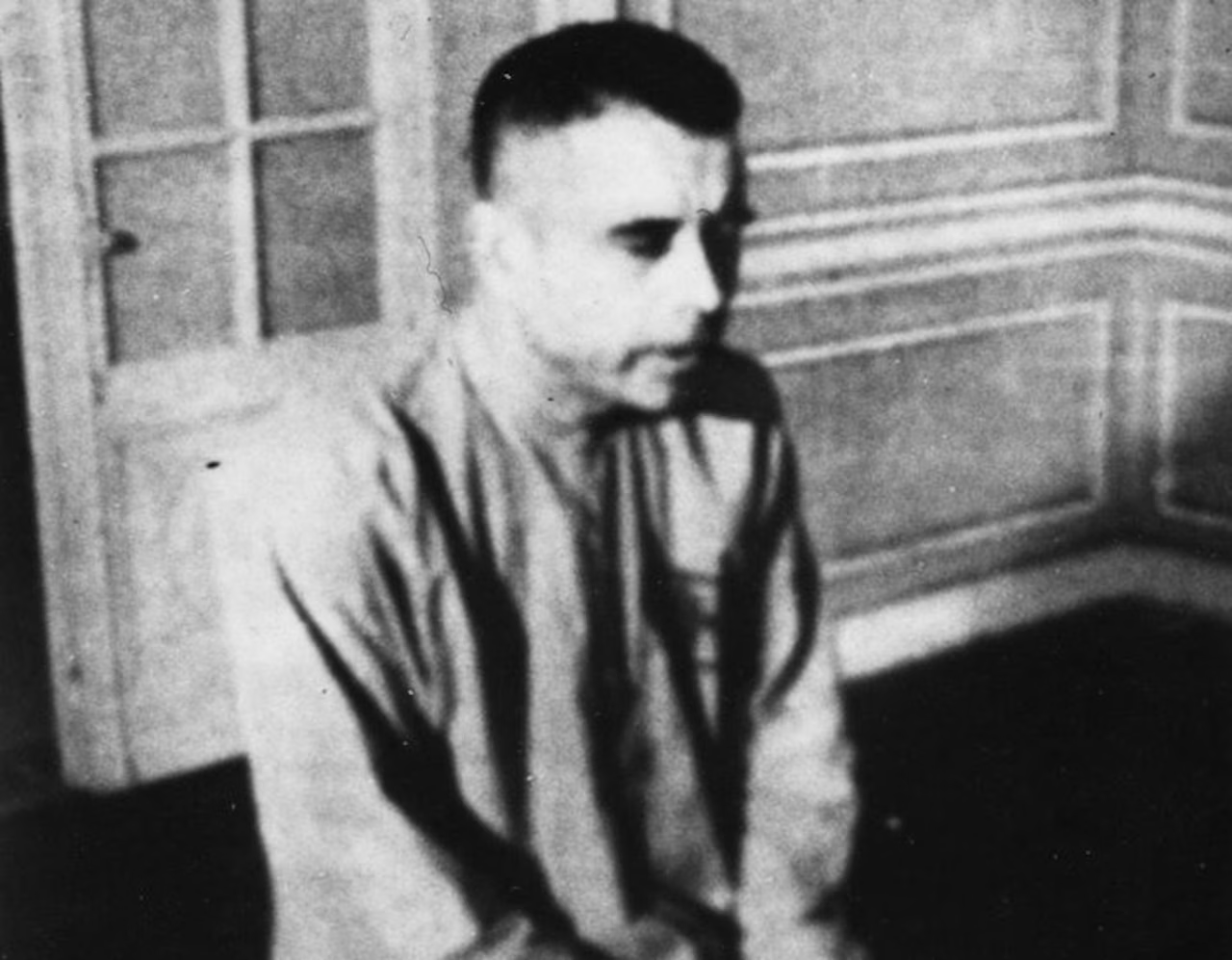
Denton in North Vietnamese captivity, 1966.

Denton had a 31-year career in the navy and one of his achievements was crafting the “Haystack Concept” for nuclear war tactics: the concealing of aircraft carriers from radar by having them travel with commercial shipping and avoiding naval formations (Angevine). He was one of the many unfortunate men serving in Vietnam to fall into North Vietnamese captivity, being shot down while flying in 1965. He and his men were tortured for information, and Denton was among the leading soldiers who resisted, for this he was put into “Alcatraz” for solitary confinement along with other prominent resistors, which included Admiral James Stockdale (who ran as Ross Perot’s VP in 1992) and Sam Johnson, who would later be a longtime representative from Texas. When trotted out for a broadcast to show how allegedly well they were being treated in 1966, while Denton was speaking, he blinked morse code for “torture”. This was observed by a few observant watchers, and this was the first indicator to the American public as to how prisoners of war were being treated. Denton would live for 7 1/2 years in the infamous “Hanoi Hilton”. Denton was released in 1973, and his captors only likely got wise to his morse code when he was awarded the Navy Cross for valor in 1974, as he didn’t face direct consequences for his interview (CBS News). he would write about his horrible experiences in captivity in his book, “When Hell Was in Session”. In 1977, Denton retired from the navy as a rear admiral. In 1979, Denton told the Los Angeles Times that “They beat you with fists and fan belts. They warmed you up and threatened you with death. Then they really got serious and gave you something called the rope trick [cutting off circulation to his limbs with ropes]” (CBS News).


After his naval career, Denton decided to focus on politics, and in 1980 he ran for the Senate as a Republican, his motivation to do so being over what he saw as President Carter’s weak response to the Soviet invasion of Afghanistan (Watson). He was elected to the Senate over Democrat Jim Folsom Jr. by three points, running ahead of Ronald Reagan, who won the state by just over a point. This made him the first Republican to be elected to the Senate from Alabama since Reconstruction and he became only the second Navy admiral to serve in the Senate, the first having been Connecticut’s Thomas Hart. In the Senate, Denton was a staunch conservative. Consistent with his conservative Catholic upbringing, he had a particularly strong focus on social issues (Watson). Denton promoted abstinence as the most reliable form of birth control, supported the Hatch-Eagleton Human Life Amendment, backed a school prayer amendment, and extolled the nuclear family. He was also a strong advocate of national security legislation. Denton’s DW-Nominate score was a 0.467, placing him among the conservatives per that scale. The American Conservative Union thought similarly, giving him an 89%. In 1982, he voted against extending the Voting Rights Act of 1965, as he thought it had unfairly penalized the South (Watson). However, the following year supported the Martin Luther King Jr. holiday. Denton held that although King was personally imperfect, the change he brought to the South warranted the holiday (Congressional Record). While he would have no problem winning reelection in Alabama were he to run today on his conservatism, the Democratic Party was considerably stronger in Alabama in the 1980s, and in 1986 they ran Congressman Richard Shelby, also known as a conservative. Had Denton run for reelection in a different year, he may have won given that 1986 was a pretty bad year for the GOP in the Senate, and he lost by less than a point. Interestingly, Shelby himself would become a Republican in 1995 and served in the Senate until 2023. Denton continued advocating for conservative causes and in 2004, there was a minor controversy surrounding him being prevented from speaking before the California Assembly by the Democratic leadership on July 4th, on account of his conservative politics (Mikkelson). On March 28, 2014, he passed into history from a heart ailment, aged 89. Denton served as a fine example of courage in the face of great adversity, as well as a strong advocate for social stability and public morals and the nuclear family from which he believed these were based.

References

Angevine, R.G. (2011). Hiding in Plain Sight: The US Navy and Dispersed Operations Under EMCON, 1956-1972. Naval War College Review, 64 (2), 80-82.

Retrieved from

https://web.archive.org/web/20111118061108/http://www.usnwc.edu/getattachment/bfd7502d-682c-444d-946c-63245227ae68/Hiding-in-Plain-Sight–The-U-S–Navy-and-Dispersed

Denton, Jeremiah Andrew, Jr. Voteview.

Retrieved from

https://voteview.com/person/14901/jeremiah-andrew-denton-jr

Ex-senator and Vietnam POW who blinked “torture” in Morse code dies. (2014, March 28). CBS News.

Retrieved from

https://www.cbsnews.com/news/jeremiah-denton-ex-senator-and-vietnam-pow-who-blinked-torture-in-morse-code-dies-at-89/

He Survived Captivity, One Minute At A Time. (2014, March 29). NPR.

Retrieved from

https://www.npr.org/2014/03/29/296211985/j-denton-fo

Lowry, R. (2014, March 31). Jeremiah Denton: Grade-A hero. New York Post.

Retrieved from

https://nypost.com/2014/03/31/jeremiah-denton-grade-a-hero/

“Martin Luther King, Jr. Holiday.” Congressional Record 129: 16 (October 19, 1983) p. 28341-28380.

Retrieved from

Click to access GPO-CRECB-1983-pt20-6-2.pdf

Mikkelson, D. (2004, July 15). Jeremiah Denton. Snopes.

Retrieved from

https://www.snopes.com/fact-check/jeremiah-denton/

Sen. Jeremiah Denton. American Conservative Union.

Retrieved from

http://ratings.conservative.org/people/D000259

Watson, E.L. (2010, November 9). Jeremiah Denton Jr. Encyclopedia of Alabama.

Retrieved from

https://encyclopediaofalabama.org/article/jeremiah-denton-jr/

Boies “Big Grizzly” Penrose – Part II: The Senate and Becoming Boss


Now that Penrose was in the Senate, he was on the same national footing as Matthew Quay. However, soon his influence in that chamber would surpass Quay’s, for he was in legal trouble. Penrose had not liked Quay’s methods for their jail risk, and Quay was indicted in 1898 for allegedly defrauding the People’s Bank in Philadelphia. Although the evidence in this case was weak and he was ultimately acquitted, this incident resulted in him narrowly being denied seating to the Senate the following year, and for a brief time Penrose was the state’s only senator. Although Quay managed to get back in and remained boss, Penrose was considerably more of a policy man. The former pretty much worked on whatever he saw as benefiting Pennsylvania, but the latter got on the Senate Finance Committee and would twice serve as its chairman. In 1903, Quay was starting to die from chronic gastritis and upon his death the following year, Penrose was the undisputed leader of the machine.

Robert Bowden (1937) wrote that there were four great consistencies about Penrose, which informed how he carried out his life and career: “1. His first, last, and only love was politics…2. He had an unshakeable obsession of greatness…3. He was boldly, consistently, beautifully, free from hypocrisy”…4. He had no scruples or “set” principles to live up to or avoid” (44, 45, 46). However, this isn’t quite true. Bowden (1937) does note earlier in his book that “He had no scruples against anything – except stupidity” (11). Furthermore, Penrose was far more conservative than his predecessor bosses. Prior bosses Simon Cameron, J. Donald Cameron, and Matthew Quay had DW-Nominate scores of 0.275, 0.214, and 0.171. This indicates that these men were moderately ideological, and for Quay its possible that that’s just how the cookie crumbled on his votes that were geared towards his power and Pennsylvania. Penrose’s DW-Nominate score was a 0.619 by contrast. As leader of the Pennsylvania GOP, he figured why engage in petty corrupt practices such as graft and accepting bribes when you can legally solicit contributions from corporate interests…after all conservative Republican policy is geared towards benefiting the expansion of commerce and by extension growing well-paying jobs. Why shouldn’t the businessmen pay for it? As Robert Bowden (1937) writes, “He was always very scornful of Quay and his sort for profiting by the petty graft in contracts and the like. Franchises, contracts, gambling with State funds, small bribes, and things of that kind, furnished the source of Quay’s wealth. But why risk going to the penitentiary by picking up little amounts of graft when the real money was to be had by working for those who controlled mines and steel mills and railroads. They paid handsomely for a law passed or defeated now and then” (188). Penrose went a bit further in his practices than mere solicitation of campaign funds, however, as he pioneered “squeeze bills”. He would have an ally in the Pennsylvania legislature introduce legislation to regulate a particular industry, and once a sufficient level of campaign contributions came in, he promised to have the bill shelved, and it was (Beers, 53). This turns the traditional thought of campaign contributions on its head; the popular conception of big business is that they push politicians to act for them through campaign contributions, but Penrose pushed big business for contributions in a way far greater than mere calls and meetings. Speaking of calls, Penrose was the master of phone calls. Rather than any communication on critical issues being written down, he used the telephone so if any dispute came up over what was said, he could always deny it.

Penrose’s foremost political cause was raising tariffs. When one of his men asking what the issue of the upcoming campaign was going to be, he responded, “Hell, man! Have you arrived at the age of discretion and don’t know that there’s always only one question worth making an issue out of? Protection! Protect the great industries of this State and you start dollars flowing out to every home in the State. We make that possible because we control the government at Harrisburg and at Washington. We intend to keep that control” (Bowden, 19). Indeed, high tariffs were the bread and butter of the traditional GOP, as much so as income tax reduction in modern times. What’s more, it tended to be the progressives among the Republicans who were most likely to dissent on tariff questions. However, Penrose’s political ideology was a bit greater than tariffs. Indeed, per Bowden (1937) with some exaggeration states, “His sole interest in public life was centered on keeping business free from governmental regulation” (250). He was also opposed to most reform causes of his day, opposing amendments to the Constitution for direct election of senators, women’s suffrage, and Prohibition. The latter distinctly offended his philosophy that he should do whatever he wanted and that others ought to be free to do so if they had the guts. Senators whose counsel he valued (including DW-Nominate scores) included per Robert Bowden (1937), “John W. Weeks [0.587], Massachusetts; Warren Harding [0.595], Ohio; Frank Brandegee [0.778], Connecticut; Henry Cabot Lodge [0.568] and W. Murray Crane [0.669], Massachusetts; Reed Smoot [0.514], Utah; Lawrence Y. Sherman [0.807], Illinois; James W. Watson [0.55], Indiana; Charles Curtis [0.433], Kansas; James Wadsworth [0.434], New York; William P. Dillingham [0.602], Vermont; Miles Poindexter [0.199], Washington; Jacob H. Gallinger, [New Hampshire] [0.553]. A noble band, these and not a progressive heresy in a carload” (244). With the sole exception of Poindexter (the author was probably referring to his last four years in the Senate, in which he had a major conservative shift), all of these men were indeed bona fide conservatives.

Penrose held a strong dislike for stupidity and hypocrisy and thought quite ill of reformers. His attitude could be summed up thusly, “He was quite sure that every reformer was a hypocrit[e] or an ignoramus and not worth worrying about, and that most reformers attack conditions about which they know nothing. Besides, it didn’t cost them anything to attack other people’s property or habits” (Bowden, 235). Penrose would also not have trucked to today’s activists on left-wing subjects. Per Robert Bowden (1937), “He had no sympathy for reform and despised reformers. To him anybody who whined of injustice and immoral conditions was a weakling who, being both cowardly and weak, tried to get other weaklings like himself to abolish that which he was afraid to have for his very own” (32). For his personal attitudes towards women, they were unknown aside from his enjoyment of ladies of the night. Speaking of personal matters…

The Peculiarities of Penrose

Despite Penrose being a germaphobe, being hesitant to shake hands and despised people whispering in his ear, his hands were often dirty and his nails unkempt. Historian John Lukacs (1978) described him as “gargantuan, gross, and cynical”. His gargantuan size was due to his insane levels of eating: at his peak weight he was over 300 pounds. On one evening at dinner, Penrose reportedly ate “a dozen raw oysters, chicken gumbo, a terrapin stew, two canvas back ducks, mashed potatoes, lima beans, macaroni, asparagus, cole slaw and stewed corn, one hot mince pie, and a quart of coffee. All of which he stowed away while he drank a bottle of sauterne, a quart of champagne, and several cognacs” (Time Magazine). Such a meal, although it sounds incredible, was not unusual for him and other waiters from other establishments had similar Penrose stories. On another occasion, by this time in his early 50s, he dined with Congressman J. Washington Logue, who reported that he drank nine cocktails and five highballs and after ate 26 reed birds followed by the wild rice they were served atop and then drank a bowl of gravy (Bowden, 191-192). On yet another occasion, Penrose and another man competed for $1000 bet on who could eat more. The victor was Penrose who ate fifty iced oysters and consumed a quart of bourbon, and the loser was hospitalized, with Penrose remarking to his astounded audience, “I’ve probably made a damned hog of myself” (Noel & Norman, 11-12).

Penrose was not known to be ashamed of anything about himself. When entertaining guests on his yacht, he appeared on deck ready for a swim, to which a lady screamed, with Penrose responding, “Madame, I grant that mine is not the form of Apollo, but it is too late for either of us to do anything about that. But if I present what to you are strange or unfamiliar phenomena, it is you who should be ashamed, not I” (Time Magazine). He did, however, in his later years have a screen put up for when he was dining at restaurants.

The 1912 Election: Penrose Sides with the Establishment

In 1912, Penrose backed William Howard Taft over Theodore Roosevelt as Roosevelt was an outright threat to bosses like him, but Roosevelt won the state. Penrose had beforehand reached the sober realization that the public was tired of the GOP and were in a reformist mood, thus the battle was not for the presidency, rather control of the party, and he ultimately won that battle. The election did come at a cost to Penrose as he temporarily lost his post as a national committeeman but got it back in 1914.

Penrose and Wilson

Penrose was not a fan of President Wilson, who he derided as a “schoolmarm” (Lukacs). Although he managed to add the oil depletion allowance to the 1913 Revenue Act, he voted against the bill for its tariff reductions. Penrose would be one of the most staunchly opposed Republicans to Wilson’s “New Freedom” agenda and was strongly for military preparedness. Penrose during World War I predicted the introduction of the Versailles Treaty and the 1920 election: “Hell! Just encourage [the Democrats] a bit and they’ll not only lick the Kaiser but themselves as well – with a little help from us. You see, it’s like this. Woodrow got us into this war to make the world safe for Democracy. We’re a big brother now, not to one nation but to a dozen. They’ll borrow all we’ve got. Be damned lucky to keep our shirts. Then Woodrow will insist on making a peace treaty that’ll sound like a high school oration. Just about that time the pious taxpayer will get tired of being up in the clouds and they’ll call in us good Republicans to get them back to earth…Yes, sir, idealism is a great thing, but it costs too much” (Bowden, 246).

The 1914 Election: Penrose Faces the People

Boies Penrose had opposed the 17th Amendment for direct election of senators, but he was outvoted and progressive reformers hoped that Penrose and men like him would be turned out of office. Indeed, his eccentricities made it possible that this would be so. However, Penrose remained highly intelligent, and he visited cities and towns and gladhanded the voters to gain support. His opponents also had a problem in that they were divided: former President Theodore Roosevelt endorsed Progressive Gifford Pinchot and President Woodrow Wilson endorsed Democrat A. Mitchell Palmer. They split the opposition vote, and Penrose came out ahead with 46.76% of the vote. After a triumphant reelection in 1920, he said to a reformer friend of his, “Give me the People, every time! Look at me! No legislature would ever have dared to elect me in the Senate, not even at Harrisburg. But the People, the dear People, elected me by a bigger majority than my opponent’s total vote by half a million. You and your ‘reformer’ friends thought direct election would turn men like me out of the Senate! Give me the People, every time!” (Kennedy) Although Penrose certainly had a new-found appreciation for the people, he remained a cynic. He said of the voting public, “The people are all right, but their tastes are simple: they dearly love hokum” (Bowden, 198).

Penrose Saves La Follette and Helps Bring Down the Versailles Treaty

In 1917, Senator Robert La Follette (R-Wis.), a noted progressive, had voted against declaring war on Germany. This, in addition to distorted reports of a speech he gave that falsely alleged that he had defended the sinking of the Lusitania, had many of his fellow senators wanting his immediate expulsion from politics. However, when the vote was coming up with La Follette appearing before the Senate afraid, “Big Grizzly” approached him, put his big arm around him, and escorted him to his seat. Penrose publicly opposed La Follette being ousted for his stance on the war, and with most Republicans voting with Penrose, La Follette was not expelled. Like La Follette, Penrose was a strong opponent of the Versailles Treaty, but unlike him, he was not considered an “irreconcilable”, or one who refused to vote for the treaty under any circumstances.

Decline and Deciding on a President

In the 1910s, Penrose began to face a considerable challenge from within the Pennsylvania GOP: the Vare brothers. The Vare brothers (William and Edwin) of Philadelphia were notorious contractor bosses, and William even made arrangements with mobsters Lucky Luciano and Waxey Gordon in which any operation of theirs would be subject to his veto. Once Penrose and Edwin Vare passed, William would be the undisputed boss in Philadelphia Republican politics. While alive, Penrose had to contend with their growing influence in the city, where his influence was the weakest. Worse yet, his health was failing as he was getting into his late fifties given his indulgent consumption of oysters, steaks, and other culinary delights. As Robert Bowden (1937) wrote, “He no longer had an intellectual curiosity to satisfy; even that dulled on him. Having nothing else to occupy him he turned all his thoughts to the gratification of his many appetites. But already he had pampered them too much and they rebelled on him. His stomach no longer would accept, without loud complaint, five-pound steaks. His capacity for liquor had dwindled shamefully. Hemorrhoids caused him no little worry and inconvenience. About everything physical was wrong with him. He was now only a man-mountain of three hundred pounds of diseased flesh” (255). Despite his decline, he remained as active on the political scene as he could.

In 1919, a group of journalists asked Penrose who the ideal Republican candidate for president would be, and he responded: “We shall select a man with lofty ideals. He shall be a man familiar with world problems. He will be a man who will appeal warmly to the young voter – the young men and women of our country. A man of spotless character, of course…A man whose life shall be an inspiration to all of us, to whom we may look as our national hero…The man I have in mind is the late Buffalo Bill” (Lukacs). The man Penrose actually looked to for the presidency was Senator Warren G. Harding of Ohio and asked him about it. He saw in Harding a compatriot in his conservatism, and was one of the most important figures backing Harding’s nomination, and although he could not attend the Republican National Convention due to poor health, he was quite active in the proceedings and ran up a telephone bill of $7000 (not accounting for inflation!) in July 1920. He recommended to Harding Pennsylvanian industrialist Andrew Mellon as Treasury secretary, and sponsored the Emergency Tariff Act in 1921 (although he initially opposed it) as well as the Revenue Act of 1921 (income tax reduction). His accomplishments in 1921 were the last of his career. Penrose had been diagnosed with terminal cancer and on December 31, 1921, he died in his bed. Despite rumors that Penrose had millions secretly stashed away, he personally had not profited from politics. He was born rich and died a considerably poorer man, as his brothers were not left with much on his death.

To be completely honest, I kind of like Boies Penrose. His stands against stupidity and hypocrisy resonate with me, as do his efforts to make the machine less in contradiction with the law. Does this make me a cynic? I hope not, for it is not a way to live. Although Penrose really took things to extremes. I’d call him a Diogenes, but he had too much enjoyment of excess and the high life for that.

References

65th Congress – Senators. Voteview.

Retrieved from

https://voteview.com/congress/senate/65/text

Books: Boies Would Be Boies. (1931, November 23). Time Magazine.

Retrieved from

https://time.com/archive/6748250/books-boies-would-be-boies/

Beers, P.B. (1980). Pennsylvania politics today and yesterday: the terrible accommodation. University Park, PA: Pennsylvania State University Press.

Bowden, R.D. (1937). Boies Penrose: symbol of an era. New York, NY: Greenberg.

Cameron, James Donald. Voteview.

Retrieved from

https://voteview.com/person/1435/james-donald-cameron

Cameron, Simon. Voteview.

Retrieved from

https://voteview.com/person/1437/simon-cameron

Crane, Winthrop Murray. Voteview.

Retrieved from

https://voteview.com/person/2147/winthrop-murray-crane

Kennedy, J.F. (1956, February 21). Remarks of Senator John F. Kennedy at the New York Herald Tribune Luncheon, New York, New York. John F. Kennedy Presidential Library and Museum.

Retrieved from

https://www.jfklibrary.org/archives/other-resources/john-f-kennedy-speeches/new-york-ny-herald-tribune-luncheon-19560221

Lukacs, J. (1978). Big Grizzly. American Heritage, 29(6).

Retrieved from

https://www.americanheritage.com/big-grizzly

Noel, T. & Norman, C. (2002). A Pike’s Peak Partnership: The Penroses and the Tutts. University Press of Colorado.

Retrieved from

https://www.upcolorado.com/excerpts/9780870816895.pdf

Penrose, Boies. Voteview.

Retrieved from

https://voteview.com/person/7332/boies-penrose

Quay, Matthew Stanley. Voteview.

Retrieved from

https://voteview.com/person/7668/matthew-stanley-quay

Boies “Big Grizzly” Penrose – Boss of Pennsylvania, Part I: Early Days and State Politics


In present day, Pennsylvania is a swing state, although both of its senators are Democrats, and the governor is one as well. The state used to be much different, being a stronghold for the GOP. This domination began with boss Simon Cameron, who had once been a Jackson-supporting Democrat. Although perhaps not the most powerful of Pennsylvania’s Republican bosses ever, Boies Penrose (1860-1921) was the biggest one physically and also the most conservative one. He was perhaps the most unique character of all of them.

An Aristocratic Upbringing and Entering Politics

The Penrose name was quite prominent and the family wealthy, and it was instilled into him from an early age that he was of the elite and a person to be deferred to. While in college, he was 6’4″ and 200 pounds, making for a striking figure, although he would balloon over the years, making his allies and enemies alike refer to him as “Big Grizzly”. Although a prime candidate for football, he would not play, as the thought of coming into physical contact with sweaty men was repulsive (Noel & Norman, 11). Although initially a lazy student at risk of failing, after intervention from his father he righted the ship and graduated with flying colors, developing an intense interest in politics that lasted his entire life and even writing an extensive and masterful paper on Philadelphia’s government. Penrose also wrote on Martin Van Buren, regarding him as “the first and the greatest of American politicians; of that class of statesmen who owe their success not so much to their opinions or characters, as to their skill in managing the machinery of party…He marks the transition in American politics from statesmen like Adams and Webster to the great political bosses and managers of today…Adams was the last statesman of the old school who was to occupy the White House, Van Buren was the first politician president” (Lukacs). Penrose would see Van Buren as a model to emulate, regarding his approach as the acceptance of political reality. He would also identify a core failure of Marxist assumptions, that being that the working classes were not a revolutionary group, rather among the staunchest defenders of property and fundamentally conservative (Lukacs). This seems to ring truer today than even in his day. He carried an ego that was as big as he became, and this led him to instead of associating a lot with his peers, associate with commoners. Instead of going to high-end establishments with peers, he went to pubs and oyster and steakhouses for common citizens, and they would seek out the young intellectual’s wisdom while he would meet the leaders of local political gangs and get connected in the political world (Bowden, 20-21). In this sense, he followed the footsteps of his grandfather, Charles, who had played a critical role in getting the notorious Simon Cameron elected to the Senate in 1857. Like Charles, Boies would crave power. However, he would not crave money unlike most machine bosses…he was already rich. Furthermore, Penrose was keen to avoid risking the penitentiary in the pursuit of political power (Lukacs).

Although he had earned a law degree and worked in a legal firm, Penrose came to have a low opinion of many of his clients. He recalled of his days in law, “My offices were always full. On one side of the waiting room the politicians gathered. Across the other side were my clients. After a few months I decided to choose between them and I chose the least stupid and the most honest” (Lukacs). From then on, Penrose’s full-time profession was politics. He started in opposition to the “Gas Ring” of Philadelphia, and in February 1884 he was able to see to it that no voter fraud occurred on behalf of the ring given his intimidating presence and that he held a list of registered voters in his hand, making sure the vote came in right; the machine’s candidate lost 3 to 1 (Lukacs). In November, he was elected to the state legislature. Upon going to Harrisburg, Penrose completely neglected to visit Matthew Quay, the boss of Pennsylvania politics, as was expected. Although Quay’s right-hand man, Bull Andrews, was outraged by this, Quay himself was intrigued and invited Penrose to dinner (Bowden, 52-53).

The Junior Partner

Penrose’s entrance into politics was a rather bold one, as he opted not to kowtow to the powerful Quay. Quay had ably served Governor Andrew Curtain during the War of the Rebellion as well as the Camerons, father and son Simon and J. Donald, and had in 1884 been elected Pennsylvania’s treasurer. His control over the taxpayer funds of the state made him the power, overshadowing Senator J. Donald Cameron, who had considerably less political skill than his wily father. Quay’s methods included graft, using the Pennsylvania State Treasury as a campaign fund and investing money from the treasury to grow it, practices that placed him at risk of going to prison. Penrose’s defiance, powerful intellect, and presence ultimately motivated Quay to take him in rather than to fight him. Although he had some disagreements with Quay on methods, for instance telling him at their introductory dinner, “Times are changing, Mr. Quay. Look at all the new inventions, all the new industries, and such things, springing up! They are going to be run by young men with new ideas and they’ll demand new political set-ups…It’s all plain to me” (Bowden, 57). Penrose ultimately became Quay’s junior partner in the machine, and when Quay was elected to the Senate, Penrose was his man in the state legislature to enforce his will. Quay and Penrose also employed the media to influence public opinion, holding controlling interests in numerous newspapers to grant them favorable coverage (Lukacs). With his rising power, he ultimately wanted to be Philadelphia’s mayor, and announced his run in 1894. However, there was a problem, and this was in Penrose’s lifestyle. Boies Penrose’s lifestyle was hedonistic; he ate what he wanted, drank what he wanted, and slept with ladies of the night. Given his wealth, anything he wanted he could and did pay for, and he was generally pretty open about the things he did, those things that others would opt to hide doing. This would result in Penrose’s only great political failure, as his opposition had managed to obtain a picture of him leaving a notorious brothel at dawn, forcing his withdrawal. This motivated him to be a bit more discreet in his dealings with women.

There were numerous ways he used power corruptly under Quay as well as on his own later. Penrose used the courts to protect lower-level individuals who had employed voter fraud and permitted corrupt schemes by his minions, yet Penrose himself never profited off his office and no evidence ever arose that his own election victories were due to voter fraud (Lukacs). He seemed to see it as necessary to allow his underlings some degree of corrupt behavior, as this was the way of machine politics in Pennsylvania, especially in Philadelphia. In 1897, Senator J. Donald Cameron was not running for another term, and although Penrose had a challenge from within the party from reformer John Wanamaker, he was elected. The next post will cover Penrose’s time as a senator until his death.

References

Bowden, R.D. (1937). Boies Penrose: symbol of an era. New York, NY: Greenberg.

Retrieved from

https://ia600200.us.archive.org/23/items/boiespenrosesymb00bowd/boiespenrosesymb00bowd.pdf

Lukacs, J. (1978). Big Grizzly. American Heritage, 29(6).

Retrieved from

https://www.americanheritage.com/big-grizzly

Noel, T. & Norman, C. (2002). A Pike’s Peak Partnership: The Penroses and the Tutts. University Press of Colorado.

Retrieved from

https://www.upcolorado.com/excerpts/9780870816895.pdf

The 1874 Midterms: The Tide Turns Against Reconstruction


The War of the Rebellion had had a strong impact on the fortunes of the GOP, and this was particularly helped by their enactment of the 15th Amendment, which prohibited denial of suffrage based on race or color. Freedmen voted gratefully for Republicans and this resulted in the South having Republican representation to Congress for a time. However, resentment brewed among white Democrats, some who had been temporarily disenfranchised for their support of the Confederacy, and they sought to use means fair and foul, legal and illegal, to “redeem” the South. Complicating matters further for Republicans was the economic depression that came from the Panic of 1873 (the downturn lasted until 1879) and numerous corruption scandals in the Grant Administration including the New York custom house ring, the Star Route ring, and the Sanborn incident. Revelations of more scandals would follow this midterm. Historian James McPherson found the massive Democratic victories to be “due mainly to economic depression, political corruption, and the turbulence of Southern politics” (McAfee, 166). This is the typical story, but there is another factor that exists and it may have been the strongest of them all. Historian William Gillette, who studied the 1874 midterm extensively, concluded that the push for integrated schools factored above others in the Republicans’ 1874 loss, driving “Scalawags” or white Southerners who previously backed the GOP away, and that it had some impact in the North as well (McAfee, 167). Indeed, some Republicans attributed integrated schools as the issue that killed them in the election. President Ulysses S. Grant was among them (McAfee, 163).

How bad were the Republican losses? They lost 96 seats in the House, the largest single loss in the history of the Republican Party. As historian McAfee wrote, “As long as the Republican civil rights movement had not inconvenienced Northern whites, it moved forward. But the mixed-schools issue brought it to an insurmountable stone wall” (McAfee, 159). The Republicans suffered widespread net losses, with Kentucky and Nevada the only states in which they had a net gain of seats. Even in such stout Republican states as Illinois, Massachusetts, and Pennsylvania, Republican representatives found themselves in the minority of their House delegations. Losses in the South were quite present too, with them losing all representation in Arkansas and Georgia. Although campaigns of fraud, intimidation, and violence against black participation in voting played a role, whites who had previously supported Republicans (“scalawags”) switching to the Democrats played a role too in Republican losses in the South. Results were less terrible for the Republicans in the Senate, in which elections are every six years and they were far ahead of Democrats on Senate seats, but the Democrats did gain nine seats. They won against Republican or Liberal Republican incumbents in Connecticut and Missouri. Prominent Radical Republican Zachariah Chandler lost reelection to fellow Republican Isaac Christiancy. Democrats also succeeded retiring senators in Florida, Indiana, New York, Pennsylvania, Texas, Virginia, and West Virginia. In the Texas election, Republicans were hardly in contention, with the major contest being between Democrats Samuel Maxey and James Throckmorton. Democrats only lost one seat, in California, but to Anti-Monopoly candidate Newton Booth, far from an ideal substitute for Senate Republicans.

Former President Andrew Johnson also scored a comeback by returning to the Senate in Tennessee, where support for Republicans was crumbling, but he wasn’t able to make much of it as he died mere months after being sworn in. This election, with the Democrats in control of the House and an increasingly embattled Grant Administration, signaled the doom of Reconstruction. Governor Adelbert Ames (R-Miss.), who would be forced to resign by the Democratic legislature, regarded the results thusly, “a revolution has taken place – by force of arms – and a race are disenfranchised – they are to be returned to a condition of serfdom – an era of second slavery” (Kato, 45-46). Whether or not Hayes had won, Reconstruction would have been brought to an end after the 1876 election given unified Democratic opposition to its continuance. Although Southern Republicans still remained, their presence would dwindle within the next 25 years rather than immediate disenfranchisement occurring. As historian C. Vann Woodward wrote, “It is perfectly true that Negroes were often coerced, defrauded, or intimidated, but they continued to vote in large parts of the South for more than two decades after Reconstruction” (Jenkins & Peck, 198). The last black Republican of the first generation of black politicians in Congress, George White of North Carolina, would leave office in 1901.

References

Jenkins, J.A. & Peck, J. (2021). Congress and the first civil rights era, 1861-1918. Chicago, IL: The University of Chicago Press.

Kato, D. (2016). Liberalizing lynching: building a new racialized state. New York, NY: Oxford University Press.

McAfee, W.M. (1998). Religion, race, and Reconstruction: the public school in the politics of the 1870s. Albany, NY: State University of New York Press.

The 1944 Election: When the Democrats Ran a Dying Man


President Biden’s recent catastrophic debate performance gave much credence to the increasingly widespread belief that he is senile, and more has been talked about it, including from those who were constantly trying to dismiss it before now. Should the Dems renominate him, it will be reminiscent of their renomination of President Franklin D. Roosevelt in 1944. Although he certainly looked worse than in the past, Americans by and large didn’t know the extent of it. Democrats around FDR knew that he was not going to survive another term.

The Extent of FDR’s Health Problems

Although President Roosevelt appeared to be in good health for much of his presidency, on November 28, 1943, following the Tehran Conference he became ill, and although it was thought he had come down with the flu, by March 1944 his health had remained compromised and Senator Truman noted that Roosevelt looked unhealthy, yet Dr. Ross McIntire, an ear, nose, and throat specialist publicly claimed that FDR was “enjoying excellent health” (Susmano). FDR and his family were not satisfied with his care, and on March 28th, he was given a full physical by Dr. Howard G. Bruenn, a cardiologist. Bruenn’s diagnosis was serious: “hypertension, hypertensive heart disease, cardiac failure (left ventricle), and acute bronchitis” (The University of Arizona Health Sciences Library). His blood pressure was 186/108 mm Hg, and the next month it hit 230/126 mm Hg. A blood pressure of 180/120 mm Hg and above is today considered a hypertensive emergency (Edwards). Although I previously noted he appeared to be in good health, in truth he had had systolic hypertension since 1937, and diastolic hypertension since 1941 (Susmano). The public would in an election year get some indication that rumors about FDR’s worsening health were the real deal in his “Bremerton Speech”.

FDR’s Bremerton Speech

On August 12, 1944, FDR delivered a speech in Bremerton, Washington, that first indicated to the public that he might not be doing well. He had lost 20 pounds by acting on the advice of his physicians for a low-fat diet, and as a consequence his leg braces no longer fit his arms, and the unsteady movement of the ship he was speaking from forced him to hold himself up by his arms, an exercise of endurance for the aging president (Farley). Roosevelt was also unsteady and not smooth in his speech. Worse yet, starting ten minutes in he experienced an episode of chest pain that radiated to his shoulders, making this speech even more of an endurance effort, although this particular event didn’t prove to be serious. This event was not as publicly jarring as the Biden debate performance, but nonetheless doubts were spreading about him, and his reelection was looking increasingly questionable. However, his opponents would gift him with an opportunity, and he would make full use of it.

A Comeback: The Fala Rumor and “Fala Speech”

On August 31st, Rep. Harold Knutson (R-Minn.), a bitter opponent of the president on domestic and foreign policy, accused Roosevelt of extravagance on the House floor and referenced a rumor that he had accidentally left his Scottish terrier Fala on the Aleutian Islands and had sent a destroyer to pick him up. FDR responded to these charges on September 23rd in a speech before the Teamster’s Union, “The Republicans were not content to attack me, or my wife, or my sons. No, not content with that, now they even attack my little dog, Fala. Well, of course I don’t resent attacks, and my family doesn’t resent attacks, but Fala does resent them. You know, Fala is Scotch, and being a Scottie, as soon as he learned that the Republican fiction writers in Congress and out had concocted a story that I had left him behind on the Aleutian Islands and had sent a destroyer back to find him – at a cost to the taxpayer of two or three, or eight or twenty million dollars – his Scotch soul was furious. He has not been the same dog since. I am accustomed to hearing malicious falsehoods about myself – such as that old, worm-eaten chestnut that I have represented myself as indispensable. But I think I have a right to resent, to object to libelous statements about my dog” (Lewellyn, 66-67). The message to the public was clear: FDR was still on his game.

However…

Despite his public rally, Democrats around him knew he was unwell and would most likely not survive another term, and this prospect disturbed many Democrats given that Roosevelt’s vice president was Henry Wallace. Wallace was regarded as a radical and not trusted by many Democrats. Many certainly didn’t want him to be president, and although Roosevelt liked Wallace, some powerful voices were against him on the ticket, and he opted to switch him out. Initially, it looked possible that Jimmy Byrnes, FDR’s right-hand man on domestic affairs, could be tapped for the position. The problem here was that the South Carolinian Byrnes was a segregationist and picking him had the potential for widespread defections to the Republican ticket from black voters, whose switch to voting Democratic in presidential elections was only eight years old. The potential defections were not ones the Democrats wanted to risk, as this was going to be FDR’s closest election. Democrats needed as unified a ticket as possible, and thus the pick, or more accurately drafting, of the popular Senator Harry S. Truman from the border state of Missouri who was well-regarded among both Northern and Southern Democrats. He had chaired the incredibly popular Truman Committee, which had investigated and managed to in a non-partisan fashion identify and curb wasteful practices in national defense. Truman also had a loyal record to the New Deal, including voting to uphold President Roosevelt’s ill-fated “court-packing plan”. Frankly, Kamala Harris reminds me a bit of Henry Wallace in that both shared a staunchly left-wing philosophy (Harris was one of the most left-wing senators per DW-Nominate scoring) and were unpopular in their roles as vice president. Don’t hold your breath for Harris to be changed out because the staunch identitarians in the party will veto such a proposal.

Death

FDR, one day before his death.

Despite this seeming rally, it was short-lived, and his condition would deteriorate further in the coming months. At the Yalta Conference in February 1945, his blood pressure, which had become uncontrollable, spiked to 260/150 mm Hg. Dr. Lord Moran, Churchill’s personal physician, examined FDR and concluded, “I give him only a few months to live” (Ali et. al., 2). Indeed, on April 12, 1945, Roosevelt died of a cerebral hemorrhage, his blood pressure having spiked that morning to over 300/190 mm Hg (Susmano). No comparison is perfect, after all comparisons are by their nature imperfect, for an exact one would be the thing itself, and that’s not a comparison. Biden’s problems surround his mind, not his physicality, and he has nowhere near the political acumen of FDR. The comparison is in that Democrats may run a candidate they know to be seriously compromised, much like those around FDR knew that his health was seriously compromised. A “Fala speech” comeback seems most unlikely, even if Republicans hand him an opportunity (I wouldn’t be surprised if they do). However, Trump gave Biden material to work with in that debate, and he proved unable to effectively capitalize on it. The only sort of comeback I can see for Biden is if something very bad comes out about Trump, although given for certain quarters of the media that’s essentially another Tuesday, it may come down to what Edwin Edwards famously said about his election chances for Louisiana governor the day before election day in 1983: “The only way I can lose this election is if I’m caught in bed with either a dead girl or a live boy” (Warren). That could very well be so for Trump unless the Democrats change out Biden, and although there is talk of it now, I get the feeling that Americans will be subjected once again to this match-up, thanks to the party primary system. I am becoming increasingly convinced that the primary system should be abolished and that maybe “smoke-filled rooms” weren’t so bad, but that’s a post for another day.

References

Ali, R., Connolly, I.D., Li, A., Choudhri, O.A., Pendharkar, A.V., & Steinberg, G.K. (2016). The strokes that killed Churchill, Roosevelt, and Stalin. Neurosurgical Focus, 41(1).

Retrieved from

https://www.google.com/url?sa=t&rct=j&q=&esrc=s&source=web&cd=&cad=rja&uact=8&ved=2ahUKEwjO5Jqt45CHAxWooI4IHc3vCrIQFnoECCwQAQ&url=https%3A%2F%2Fthejns.org%2Fdownloadpdf%2Fjournals%2Fneurosurg-focus%2F41%2F1%2Farticle-pE7.pdf&usg=AOvVaw1KScSiTLMw3ozZrWVAYMdb&opi=89978449

Autenrieth, M. (2021, April 10). The Dying President. National Park Service.

Retrieved from

https://www.nps.gov/hofr/blogs/the-dying-president.htm

Edwards, J.M. (2023, September 20). Hypertensive Urgency vs. Emergency: What’s the Difference? Healthline.

Retrieved from

https://www.healthline.com/health/high-blood-pressure-hypertension/hypertensive-urgency-vs-emergency

Farley, J. (2019, August 11). 75 years ago, the speech that changed Bremerton, Roosevelt. Kitsap Sun.

Retrieved from

https://www.kitsapsun.com/story/news/2019/08/11/75-years-ago-speech-changed-bremerton-and-president-roosevelt/1960507001/

Franklin D. Roosevelt – Disability and deception. The University of Arizona Health Sciences Library.

Retrieved from

https://lib.arizona.edu/hsl/materials/collections/secret-illness/fdr

Harris, Kamala Devi. Voteview.

Retrieved from

https://voteview.com/person/41701/kamala-devi-harris

Llewellyn, J. (2010). Paws, Pathos, and Presidential Persuasion: Franklin Roosevelt’s “Fala Speech” as Precursor and Model for Richard Nixon’s “Checkers Speech”. CTAMJ.

Retrieved from

https://cornerstone.lib.mnsu.edu/cgi/viewcontent.cgi?article=1043&context=ctamj

Susmano, A. (2017, January 31). Franklin Delano Roosevelt’s last illness. Hektoen International.

Retrieved from

https://hekint.org/2017/01/31/franklin-delano-roosevelts-last-illness/

Warren, J. (2010, August 22). Blagojevich Fatigue? Get Used to It. The New York Times.

Retrieved from

https://www.nytimes.com/2010/08/22/us/22cncwarren.html

RINOs from American History #17: Edgar Cowan

I haven’t done one of these in quite some time, and I figure I would offer a bit of a different twist to it than you’re all probably used to, and it’s one of the earliest RINOs in the history of the GOP in Pennsylvania’s Senator Edgar Cowan (1815-1885).


Elected to succeed Democrat William Bigler, Cowan initially seemed like the figure for the GOP, being a former Whig and loyalist to Republican boss Simon Cameron. He had also denounced Bigler as a “doughface”, or a Northern politician favorable to Southern interests. However, overtime his independence would prove a hindrance to the GOP. Cowan laid out his five principles regarding the War of the Rebellion, and they were as follows:

“1. The North must not violate the Constitution in coercing the South to remain in the Union.

  1. The Democratic Party in the Free States and the Union men in the Border States must be conciliated.
  2. Congress should confine itself to raising revenues and an army.
  3. The war should be waged according to the rules of civilized warfare.
  4. The war was to suppress a rebellion and not to conquer the Southern States.” (Pershing, 226-227)

    Cowan’s numerous dissents were early into the Lincoln Administration, opposing the National Bank Act and the Legal Tender Act, and opposing expelling Senator Jesse Bright (D-Ind.) for recommending an arms dealer to Jefferson Davis. He opposed the Legal Tender Act as he did not see it within the government’s power to print paper money, rather that only gold and silver coinage were allowed. Cowan opposed the National Bank Act as banks stood from this legislation to make double interest on money invested in government bonds (Pershing, 231). He also opposed the second Confiscation Act, confiscating property of rebels, which included slaves. Like every other Republican, Cowan backed the 13th Amendment ending slavery, but was unwilling to go further than that. After the assassination of Abraham Lincoln, Cowan was the Senate Republican who sided with President Andrew Johnson the most. He was opposed to the 14th Amendment, voted against the Civil Rights Act of 1866, supported Johnson on Reconstruction, and was one of the few American politicians to make an argument against legislation because of Romani (also pejoratively known as “Gypsies”) people, a population of historically negligible impact on the United States. His Republican colleagues came to despise him. Senator Ben Wade (R-Ohio), one of the staunchest of the Radical Republicans, had on separate occasions called him a “dog” and the “watchdog of slavery” (Mr. Lincoln’s White House, Kennedy). Senator Henry Wilson (R-Mass.), in the future Ulysses Grant’s second vice president, denounced his positions on race. He stated, “The Senator from Pennsylvania tells us that he is a friend of the negro. What sir, he a friend of the negro! Why sir, there has hardly been a proposition before the Senate of the United States for the last five years leading to the emancipation of the negro and the protection of his rights that the Senator from Pennsylvania has not sturdily opposed. He has hardly ever uttered a word on this floor the tendency of which was not to degrade and belittle a weak and struggling race. He comes here today and thanks God that they are free, when his vote and his voice for five yeras with hardly an exception have been against making them free. He thnks God, sir, that your work and mine, our work which has saved a country and emancipated a race is secured; while from the word ‘go’ to this time, he has made himself the champion of ‘how not to do it’. If there be a man on the floor of the American Senate who has tortured the Constitution of the country to find powers to arrest the voice of this nation which was endeavoring to make a race free, the Senator from Pennsylvania is the man” (Pershing, 229-230).

    Cowan: For Women’s Suffrage?

    On December 12, 1866, Cowan, in a rather curious move, proposed women’s suffrage for Washington D.C. during the consideration of the Washington D.C. suffrage bill. This was defeated 9-37, and although he claimed this measure was offered in seriousness, it seems like a bid to hamstring the D.C. suffrage bill, as he opposed it on passage. The few senators who voted for it were curiously a diverse bunch and ranged from Delaware’s George Riddle, who had owned slaves and opposed the 13th Amendment, to Radical Ben Wade. The D.C. suffrage bill extended the vote to all men 21 and older regardless of race.

    Untenable for Further Public Office

    Among his many dissents, Cowan opposed the enactment of the GOP’s trap card on President Johnson in the Tenure of Office Act. He scored a -0.257 on the DW-Nominate scale, which is unbelievably low for a Republican. This also makes him the most liberal Republican of the 1860s by DW-Nominate’s scale.

    In 1867, Cowan lost reelection to the man he had once been loyal to, Simon Cameron, who favored Congressional Reconstruction. Cowan’s supporters now, rather than Republicans, were Democrats. President Johnson subsequently nominated him minister to Austria, but Senate Republicans would not confirm him. Cowan would endorse Democratic candidates for president for the rest of his days, and died in 1885 after a year-long battle with cancer of the mouth and throat.

    Although Cowan will probably find few fans today, one figure who sang his praises was none other than John F. Kennedy. As a senator, Kennedy (1956) praised Cowan for his opposition to Radical Republicans, stating, “Edgar Cowan stood firm in his adherence to the Constitution and his own ideals – and, in the turbulent reconstruction period that followed the end of hostilities, he refused to follow those Senate Republican leaders who wanted Andrew Johnson to administer the downtrodden southern states as conquered provinces which had forfeited their rights under the Constitution”.

    References

    Cowan, Edgar. Voteview.

    Retrieved from

    https://voteview.com/person/2101/edgar-cowan

    Pershing, B.F. (1921, May 31). Senator Edgar A. Cowan 1861-1867. Reading before the Historical Society of Western Pennsylvania.

    Retrieved from

    https://www.google.com/url?sa=t&rct=j&q=&esrc=s&source=web&cd=&cad=rja&uact=8&ved=2ahUKEwjo3JK_7omHAxUGvo4IHV8uBjIQFnoECCUQAQ&url=https%3A%2F%2Fjournals.psu.edu%2Fwph%2Farticle%2FviewFile%2F1265%2F1113&usg=AOvVaw3YxQjBQj5wEdnFt063KRiK&opi=89978449

    Remarks of Senator John F. Kennedy at the Philadelphia Inquirer Book and Luncheon, Philadelphia, January 10, 1956. John F. Kennedy Presidential Library and Museum.

    Retrieved from

    https://www.jfklibrary.org/archives/other-resources/john-f-kennedy-speeches/philadelphia-pa-19560110

    Visitors from Congress: Benjamin F. Wade. Mr. Lincoln’s White House.

    Retrieved from

    http://www.mrlincolnswhitehouse.org/residents-visitors/visitors-from-congress/visitors-congress-benjamin-f-wade-1800-1878/

What the American Federation of Labor Thought of Members of Congress in the 1920s

Samuel Gompers, founder of the American Federation of Labor

While engaging in political research through the excellent newspapers.com, I found that the American Federation of Labor had graded representatives in Congress based on what they thought of as “pro-labor”. Specifically, they laid out 16 key votes in an advertisement against Congressman Joseph Deal (D-Va.) for his “unfavorable to labor” record. The votes were:

  1. Nolan Amendment to Seamen’s Bill
    Rep. John Nolan (R-Calif.) amendment to the Seaman’s bill which reduces maximum hours for oilers, watertenders, and firemen on vessels from 12 to 8 hours a day.Adopted 166-113: R 98-91; D 67-21; IR 0-1; S 1-0, 6/15/21.
    Yea = +, Nay = –
  2. Sheppard-Towner Maternity Aid Bill
    Passed 279-39: R 194-24; D 83-15; IR 1-0; S 1-0, 11/19/21.
    Yea = +, Nay = –
  3. Adjusted Compensation for World War I Veterans
    Passed 333-70: R 241-42; D 90-28; IR 1-0; S 1-0, 3/23/22.
    Yea = +, Nay = –
    4. Extending the Emergency Quotas of the Immigration Act of 1921
    Passage of the bill extending the Emergency Quota Act, limiting immigration of nationalities to 3% of their population in the U.S.
    Passed 258-26: R 180-17; D 78-8; S 0-1, 5/2/22.
    Yea = +, Nay = –
    5. Override President Harding’s Veto of Adjusted Compensation for World War I Veterans
    Veto overridden 258-54: R 187-35; D 69-19; IR 1-0; S 1-0, 9/20/22.
    Yea = +, Nay = –
    6. Underhill Worker’s Compensation Bill for D.C.
    Passage of the Underhill Worker’s Compensation bill for Washington D.C. which permits private worker’s compensation firms and limits payments to dependents in case of death to a maximum of eight years and $5000. as opposed to the Fitzgerald bill, which renders Worker’s Compensation run by government only and lacks such a cap.
    Passed 137-126: R 98-82; D 38-43; IR 1-0; S 0-1, 1/22/23.
    Yea = -, Nay = +
    7. Adjusted Compensation for World War I Veterans
    Passage of the bill providing servicemen with $1.00 per day served and $1.25 per day served overseas, to be paid out to the veteran in 1945 or to the veteran’s family if the veteran has since died.
    Passed 355-54: R 175-34; D 177-20; F 2-0; S 1-0, 3/18/24.
    Yea = +, Nay = –
    8. Immigration Act of 1924
    Passage of the bill setting a cap of 2% of the population of the 1890 census of nationalities for immigration annually.
    Passed 323-71: R 163-33; D 158-37; F 2-0; S 0-1, 4/12/24.
    Yea = +, Nay = –
    9. Child Labor Amendment
    Adoption of the Constitutional amendment granting Congress the power to limit and abolish child labor.
    Adopted 297-69: R 168-13; D 127-56; F 1-0; S 1-0, 4/26/24.
    Yea = +, Nay = –
    10. Discharge the Howell-Barkley Bill
    Rep. Alben Barkley (D-Ky.) motion to discharge the Howell-Barkley bill from the Committee on Interstate and Foreign Commerce. This measure repeals the Railroad Labor Board, which proponents of this legislation charged with being biased towards railroads over labor in its rulings and substitutes it with four national adjustment boards to mediate and settle labor disputes and because it would only provide for representation on the side of labor for unions, opponents charged that it would essentially result in a “closed shop”.
    Passed 194-181: R 40-153; D 151-28; FL 2-0; S 1-0, 5/5/24.
    Yea = +, Nay = –
    11. Override President Coolidge’s Veto of Adjusted Compensation for World War I Veterans
    Veto overridden 313-78: R 145-57; D 166-21; F 1-0; S 1-0, 5/17/24.
    Yea = +, Nay = –
    12. Strike Enacting Clause from Howell-Barkley Bill
    Rep.  Everett Sanders (R-Ind.) motion to agree to the recommendation of the Committee on Interstate and Foreign Commerce and strike the enacting clause of the bill, thus defeating it for the session. Despite the defeat of this effort, Howell-Barkley ultimately did not reach the President’s desk.
    Defeated 160-188: R 133-45; D 27-140; FL 0-2; S 0-1, 5/19/24.
    Yea = -, Nay = +
    13. Postal Workers Salary Bill
    Adoption of the conference report of the Postal Workers Salary bill, including the Cable corrupt practices amendment.
    Adopted 361-6: R 185-6; D 173-0; F 2-0; S 1-0, 6/6/24.
    Yea = +, Nay = –
    14. Railway Labor Act
    Passage of the bill abolishing the Railroad Labor Board and instead providing for collective bargaining. Passed 381-13: R 220-5; D 157-8; F 3-0; AL 1-0, 3/1/26.
    Yea = +, Nay = –
    15. Bar Interstate Sales of Certain Prisoner Produced Goods
    Passage of the bill preventing free labor from having to compete with prisoner-produced goods.
    Passed 303-39; R 160-20; D 140-19; F 2-0; S 1-0, 5/15/28.
    Yea = +, Nay = –
    16. Override President Coolidge’s Veto of Postal Service Pay Bill
    Passage, over President Coolidge’s veto, of the bill providing for higher pay for night work in the postal service.
    Veto overridden 320-42: R 161-39; D 156-3; F 2-0; S 1-0, 5/22/28.
    Yea = +, Nay = –

On only one occasion of these 16 votes did Congress’s vote go against the preference of the American Federation of Labor. However, it is true that what ended up getting enacted was a bit less. The first bonus bill, for instance, didn’t overcome President Harding’s veto, the Child Labor Amendment was never ratified by the states, and the Howell-Barkley bill of the 68th Congress was ultimately defeated, resulting in the compromise measure passed in the next Congress. What’s more, a few of these votes have overwhelming majorities for them, such as the bill for postal workers salaries in 1924 and the Railway Labor Act in 1926. No legislator who voted more than twice and served beyond the 67th Congress scored a 0%. Although there are some votes that could fit into our understanding of conservatism and liberalism, there are others that are poor fits. For instance, you’d be hard-pressed to find a liberal in modern times who would defend the national origins quota system enacted by the Immigration Act of 1924, but the AFL was all for it. Immigration as an issue for labor is the sole reason that Socialists Meyer London of New York and Victor Berger of Wisconsin don’t get 100% by their standards.

It is also interesting how numerous individuals who in the 1920s were, by this standard, staunch friends of labor would later be considered enemies by FDR, New Dealers, and the Congress of Industrial Organizations. Republican Hamilton Fish of New York votes with the AFL on 11 out of the 12 issues he voted on, thus 92%. Democrat John Rankin of Mississippi voted with the AFL on 15 out of the 15 issues he voted on, 100%. Both men would be considered foes of organized labor during the Roosevelt Administration. Some are more predictive; John Nance Garner’s (D-Tex.) score of 69% is one of the weaker ones among Texans and seems predictive of his turn against organized labor as vice president, particularly when it came to sit-down strikes.  The worst scorers were mostly Republicans but a few Southern Democrats made the cut too, a bit of a foretelling of the Conservative Coalition that was to arise after the 1938 midterms in which one of their strongest matters of unity was in curbing the power of organized labor after the enactment of the 1935 Wagner Act. A 100% score for some legislators doesn’t guarantee a liberal record overall; Simeon Fess of Ohio gets such a score because of his votes on veterans in 1922, his vote for Sheppard-Towner in 1921, and his vote for extending emergency immigration quotas. Fess was known as a big foe of the New Deal as a senator and it cost him reelection.

Something else to note about the 1920s was that this was before the time in which the liberal-labor coalition came to fruition. Although labor unions had been quite supportive of Wilson, it was with FDR that this bond firmly formed and it was doubled down on with the rise of Walter Reuther, a man with a socialist past, of United Auto Workers. What’s more, how the regions fared were quite different on labor. New England had a lot of Republican legislators who were opposing numerous AFL-backed measures. Interestingly, the South (meaning former Confederacy) does well by AFL standards, although Virginia barely scrapes past 50% in approval of such measures and Texas’ 74% reflects some significant dissent among certain representatives. The states and regions averaged on approval of AFL’s position:

Border:

Ky.: 88%
Md.: 73%
Mo.: 87%
Okla.: 89%
W.V.: 91%

Average: 86%

Middle Atlantic:

Del.: 43%
N.J.: 65%
N.Y.: 69%
Pa.: 75%

Average: 63%

Midwest:

Ill.: 83%
Ind.: 85%
Iowa: 88%
Kan.: 83%
Mich.: 81%
Minn.: 84%
Neb.: 83%
N.D.: 89%
Ohio: 82%
S.D.: 81%
Wis.: 93%

Average: 85%

Mountain States:

Ariz.: 100%
Colo.: 86%
Idaho: 71%
Mont.: 97%
N.M.: 100%
Nev.: 100%
Utah: 88%
Wyo.: 89%

Average: 91%

New England:

Conn.: 40%
Me.: 68%
Mass.: 63%
N.H.: 53%
Vt.: 55%
R.I.: 70%

Average: 58%

South:

Ala.: 82%
Ark.: 94%
Fla.: 87%
Ga.: 84%
La.: 89%
Miss.: 70%                     
N.C.: 88%
S.C.: 86%
Tenn.: 81%
Tex.: 74%
Va.: 51%

Average: 81%

West Coast:

Calif.: 91%
Ore.: 64%
Wash.: 89%

Average: 81%

American Federation of Labor Scorecard:


References

Mr. Deal Calls for the Record — Well, Here It Is (Advertisement). (1928, August 5). The Portsmouth Star, 16.

Retrieved from

https://www.newspapers.com/image/907231668/


The Ohio Idea: A Left-Wing Plan for the Post-War of the Rebellion Economy


The War of the Rebellion was an expensive matter, indeed saving a nation never comes cheap. Once the war had ended, the question arose of how to pay off creditors’ bonds. At this time, Secretary of the Treasury Hugh McCulloch, an economic conservative, began contracting paper currency not tied to gold so as to clamp down on inflation and move the nation back to gold-based currency. This policy was not pleasing to everyone, particularly those who would benefit from inflation, and although debtors were major beneficiaries there were also business interests that favored currency inflation at the time. A prominent politician steps up with an alternative.

Prominent Democrat George Pendleton of Ohio, who had been a strong opponent of the Lincoln Administration and the party’s candidate for vice president in 1864, proposed in 1867 in an article for the Cincinnati Enquirer what became known as the “Ohio Idea”. His idea was to redeem bonds in paper currency instead of gold. Such a measure was inflationary and such inflation would benefit some, particularly farmers in the Midwest, many who were in debt. One of the fundamental determinants of right vs. left historically is creditors vs. debtors. People on the right pursue policies favorable to creditors so as to encourage further lending presumably so those who take on the loans can grow themselves up, while people on the left pursue policies favorable to debtors so as to ease the burden of repayment, especially if they hit upon difficulties with what they hoped to achieve with the loan. Per historian John B. Weaver (2013), “As historian Robert Sharkey observed, the “Ohio Idea”, or Pendleton Plan as it also came to be known, skillfully appealed at once to several interest groups. In one fell swoop it promised to terminate the contraction policy, overthrow the National Banking System, and strike a note of fairness in demanding “the same currency for the ploughholder and the bondholder” (44). There was distinct class motive behind this proposal and fits with the Democratic Party’s tradition as being a party of the little guy, even if at that time the little guy was for all intents and purposes white. Pendleton himself was a staunch Jacksonian, and he concerned himself with the welfare of the common man. Although Democrats had opposed the Legal Tender Act in 1862, including Pendleton, the sought after outcome could be thought of as “old wine in new bottles”. Such adaptation of changing means to achieve old ends was later seen with President Franklin D. Roosevelt, who used Hamiltonian means to achieve Jeffersonian and Jacksonian ends with the New Deal.

Opposed to the “Ohio Idea” was Ohio Republican Senator John Sherman, chairman of the Senate Finance Committee, who held that only certain class of bonds could be repaid in greenbacks, and that the existing greenbacks could be eventually transitioned from based on fiat to gold and silver backed with economic growth (Weaver, 45). Pendleton’s idea was embraced by the Democratic platform of 1868, but it fell to the wayside as they lost the election and President Ulysses S. Grant signed into law the Public Credit Act in 1869, in which debts were to be paid in gold. However, conflicts over currency inflation would continue throughout the 19th century, particularly in the backlash to the Coinage Act of 1873 and the uneasy bimetallism that followed with the Bland-Allison Act. There are some interesting things to note about Pendleton himself – he was known as the leader of the “Peace Democrats”, or as they were called, “Copperheads”, who were for signing a peace treaty with the Confederacy. He had also been George McClellan’s running mate in 1864 and had led opposition in the House to the 13th Amendment. Pendleton’s central contribution to the law would be as a senator with the Pendleton Act, making 10% of federal positions merit-based rather than spoils based, and it would cost him reelection to the Senate.


References


Mach, T.S. George Hunt Pendleton, The Ohio Idea and Political Continuity in Reconstruction America. Ohio History Journal.


Retrieved from


https://resources.ohiohistory.org/ohj/search/display.php?page=123@ipp=20@searchterm=array&vol=108&pages=125-144


Weaver, J.B. (2013, April). Green, Gold, or Silver: The Money Question in Ohio Politics, 1865-1900. Ohio Academy of History.


Retrieved from


https://www.ohioacademyofhistory.org/wp-content/uploads/2013/04/2003Weaver.pdf