Insurance Regulation: A State or Federal Matter?

The history of Congressional pushback against the Supreme Court for taking the side of the federal government over the states has a much more significant history than simply beginning with the Southern reaction to Brown v. Board of Education (1954). It was also the Supreme Court’s rulings that brought on the Tidelands Controversy after the discovery of oil off the California coast, the Supreme Court hindering the ability of states to enact anti-subversive laws, and it was a Supreme Court decision that resulted in Congress affirming insurance regulation as a state function.

In 1942, the Justice Department sued the South-Eastern Underwriters Association, a group of fire insurance companies in six Southern states, for allegedly being in violation of the Sherman Anti-Trust Act. The South-Eastern Underwriters Association contested the suit on the grounds that insurance did not fall under federal jurisdiction, and they seemed to have a solid precedent to cite in Paul v. Virginia (1869), in which the court unanimously ruled that insurance regulation was the purview of the states. As the case was pending, 35 state attorney generals announced their opposition to insurance being under federal jurisdiction (Wilkes-Barre Times Leader, 1). This was a different Supreme Court, however, and it ruled 4-3 in United States v. South-Eastern Underwriters Association (1944) that the insurance industry was covered by the Sherman Anti-Trust Act of 1890 as they found insurance to be a form of interstate commerce. This overruled the Supreme Court precedent of Paul v. Virginia (1869), which ruled insurance was not interstate commerce and thus its regulation was the jurisdiction of the states. This decision was yet another Supreme Court move in maximizing what was interpreted as interstate commerce under the Commerce Clause. The Supreme Court had in 1942 gone rather far with the interpretation in Wickard v. Filburn (1942) when they ruled that even activities that have indirect impact on interstate commerce count as interstate commerce. The insurance decision attracted widespread opposition in Congress.
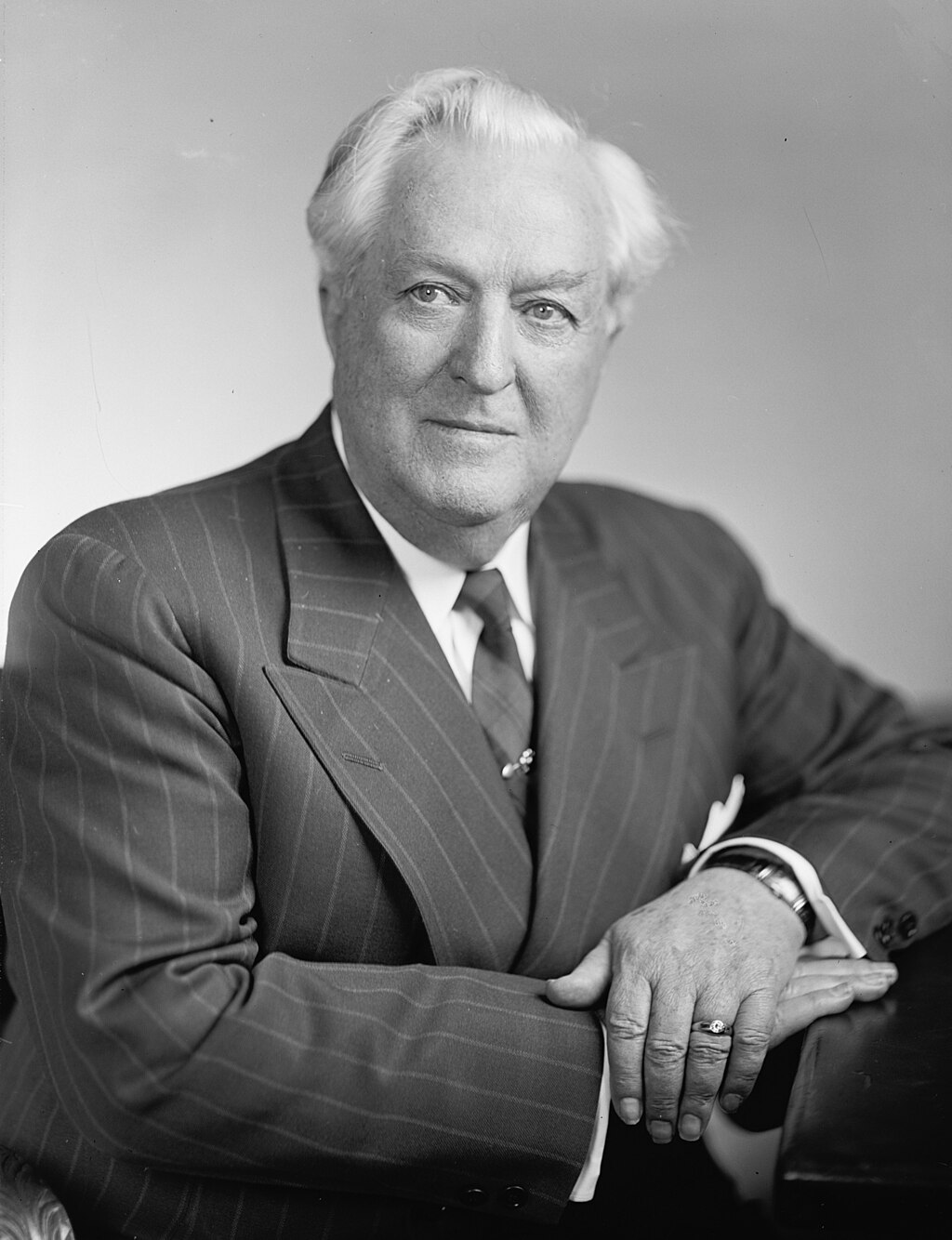
House Judiciary Committee Chairman Hatton W. Sumners (D-Tex.) stated, “I do not propose to yield to the Supreme Court and destroy the greatest democracy in the world…I call upon Congress to assume its responsibility” and Representative Walter C. Ploeser (R-Mo.) charged that “power-hungry politicians” were trying to control the insurance business and that it would fall under the regulatory burdens of the Office of Price Administration (Springfield Weekly Republican, 6). Representative Francis Walter (D-Penn.) sponsored House Resolution 422 in response, which would make clear the Congressional intent that insurance be regulated by states. He condemned the court as having not only overturned a 75-year precedent but also having “contemptuously ignored the intent of Congress” and asserted that the insurance companies had been following the laws of their states (Springfield Weekly Republican, 6). There were, however, representatives who defended the Supreme Court’s ruling in Emanuel Celler (D-N.Y.) and Jerry Voorhis (D-Calif.). They expressed opposition to Congress undoing a Supreme Court ruling and Celler held that proponents of this measure were portraying the insurance industry as “pure as the driven snow” and accused insurance companies of playing a “heads I win, tails you lose” game with rate-fixing under federal and state regulations (Springfield Weekly Republican, 6).

On June 22, 1944, the House passed Walter’s resolution by a vote of 283-54 (D 118-51; R 165-1; P 0-1; AL 0-1). The Roosevelt Administration opposed efforts against this decision, but Congress was in an increasingly rebellious mood, evidenced by them overriding his vetoes of the Smith-Connally Act in 1943 and the Revenue Act of 1944, the latter the first time Congress ever overrode a presidential veto of tax legislation. However, the measure didn’t advance to the Senate that year, and the bill would have to wait until the next session. This bill, sponsored by Senators Pat McCarran (D-Nev.) and Homer Ferguson (R-Mich.) was one of the first priorities of the 79th Congress, and it again passed on a strong bipartisan basis, 315-58 (D 150-56; R 165-0; P 0-1; AL 0-1) on February 14, 1945. The Senate followed up two weeks later, passing the bill 68-8 (D 35-8; R 31-0; P 1-0) on February 28th. The vote far beyond the margin of President Roosevelt to veto, he signed the measure into law on March 9th. Interestingly, there was a revision to this law in recent years. In 2020, Congress overwhelmingly passed the Competitive Health Insurance Reform Act that subjected medical and dental insurance to federal anti-trust regulations in response to rising healthcare costs, and it was signed by President Trump on January 13, 2021.

P.S.: My 2022 content is going to be archived come Tuesday.

References

House Exempts Insurance Firms. (1944, June 29). Springfield Weekly Republican, 6.

Retrieved from

https://www.newspapers.com/image/1065371041/

Insurance Regulation Opposed By 34 States. (1944, January 10). Wilkes-Barre Times Leader, 1.

Retrieved from

https://www.newspapers.com/image/116466917/

Paul v. Virginia, 65 U.S. 168 (1869).

Retrieved from

https://supreme.justia.com/cases/federal/us/75/168/

S 340. Express the Intent of the Congress with Reference to the Regulation of the Business of Insurance. On Passage. Govtrack.

Retrieved from

https://www.govtrack.us/congress/votes/79-1945/h9

S 340. Express the Intent of the Congress with Reference to the Regulation of the Business of Insurance. Adoption of Conference Report. Govtrack.

Retrieved from

https://www.govtrack.us/congress/votes/79-1945/s7

To Recommit H. Res. 422, Affirming the Intent of Congress That Regulation of Insurance Business Stay Under State Control [Passage]. Govtrack.

Retrieved from

https://www.govtrack.us/congress/votes/78-1944/h145

United States v. South-Eastern Underwriters, 322 U.S. 533 (1944).

Retrieved from

https://supreme.justia.com/cases/federal/us/322/533/

Wickard v. Filburn, 317 U.S. 111 (1942).

Retrieved from

https://supreme.justia.com/cases/federal/us/317/111/

The Confirmation of David Souter: A Tale of Mistaken Expectations

Last month, Supreme Court Justice David Souter (1939-2025) passed into history. If I had to pick the most uncontroversial justice in the time of his service, I would pick him. What strikes me as most interesting about Souter, however, is what was expected of him and what the reality was. The short story is that he was nominated by Republican President George H.W. Bush in 1990, and contrary to expectations that he would be on the court’s conservative wing, before long he was voting with its liberal wing. What I will explain today is why conservatives thought he would be on their team and why liberals were afraid he would constitute a shift in the court to the right.

The Story

In 1990, Justice William Brennan, the intellectual architect of the Warren Court decisions and the foremost intellectual liberal during his time on the bench, was stepping down, and doing so at a rather worrisome time for liberals. Democrats had been out of the White House since the 1980 election, and President George H.W. Bush was interested in getting conservatives on the Supreme Court. However, one thing that weighed heavily upon his mind was President Reagan’s failed nomination of Robert Bork. Bork had a long ideological paper-trail, and one that liberal activists were able to use effectively to derail his nomination. Bush didn’t want a repeat, and thus he thought that going obscure in his pick would be the best path. Republican Senator Warren Rudman of New Hampshire, a moderate conservative who had served as the state’s attorney general before Souter, recommended him. Margaret Carlson (1990) of Time Magazine described the political motivation of Bush, “In Souter, Bush may have found the last person in America who does not think in opinionated sound bites. Souter, with his Yankee reticence, does not presume anyone would be interested in what he thinks if legal scholars have already thought about it. In that, he may be the answer to the President’s secret moderate dreams: someone conservative enough to allay right-wing suspicions that he has been insufficiently sympathetic to their causes but at the same time unknown enough to keep liberals from finding anything on which to hang another bruising confirmation fight.” Souter was also in a number of ways a quirky and enigmatic individual. At 50, he was a lifelong bachelor which to some suggested homosexuality, but no evidence ever surfaced that this was the case, and he had a history of dating women. Souter was also noted for his love of spending his evenings reading classic literature in silence, attending the opera, antique books, and hiking. At the time, conservatives were pleased as punch about his nomination. Chief of Staff John Sununu, who had known Souter when he was serving as New Hampshire’s governor, told conservatives that he would be a “home run” for their team (Lacayo). Indeed, there were some indicators that he would be a conservative in philosophy.

Souter had served as the state’s attorney general under Governor Meldrim Thomson, Jr., from 1976 to 1978, and frequently defended his stances and policies. Governor Thomson was notable for his ultra-conservatism, and had seen fit to tap him for the New Hampshire Superior Court (their Supreme Court). Souter’s record on the New Hampshire Superior Court gave mixed indications for those trying to read the tea leaves on what he would be on the Supreme Court. He ruled favorably on environmental and consumer protections, but tended to side with the prosecution on criminal justice cases. Souter also had three months on the U.S. Court of Appeals for the First Circuit, but this was insufficient to establish how he would vote on the federal level. Souter also wrote in a court decision in 1986, “the court’s interpretive task is to determine the meaning of…((constitutional language)) as it was understood when the framers proposed it” and in 1976 he had spoken of affirmative action as “affirmative discrimination” (Carlson).

Although Souter’s political background, especially as attorney general under Governor Thomson, would suggest conservatism, the Senate Judiciary Committee voted 13-1 to recommend Souter’s confirmation. Senator Ted Kennedy (D-Mass.) was the sole dissenter, stating, “I am troubled that, if Judge Souter joins the current closely divided Supreme Court, he will solidify a 5-4 anti-civil rights, anti-privacy majority inclined to turn back the clock on the historic progress of recent decades” (Savage). Most Democrats were okay enough with him and his lack of federal jurisprudence to vote for him, and his confirmation vote came out to a resounding 90-9 on October 2nd. He was nonetheless opposed by the liberal Americans for Democratic Action, and the American Conservative Union counted his confirmation as a conservative vote. Both positions seem most peculiar in retrospect if you didn’t know the context in which he was confirmed and his background. The senators who voted against Souter were entirely from the Democratic Party’s liberal wing, and they were Alan Cranston of California, Daniel Akaka of Hawaii, Barbara Mikulski of Maryland, Ted Kennedy and John Kerry of Massachusetts, Bill Bradley and Dan Lautenberg of New Jersey, Quentin Burdick of North Dakota (yes, North Dakota at one time could elect liberals statewide), and Brock Adams of Washington.

Although in his first year on the Supreme Court, Bush seemed to have had an unqualified success with Souter as he did indeed vote conservative on criminal justice cases in his early years, but in 1992 he joined the majority in Planned Parenthood v. Casey, which rather than overturn Roe v. Wade as conservatives hoped, strengthened it. In law school, Souter had taken to the philosophy of Justice Oliver Wendell Holmes, Jr., and as a justice acted accordingly. In his rulings, he favored strict separation of church and state, upholding affirmative action despite his prior criticism, voted to uphold government using eminent domain for purposes of economic development, and was among the four dissenters in Bush v. Gore (2000). By the late 1990s, Souter was voting solidly with the court’s liberal wing, thus making Bush’s nomination of him only a partial success in the long run, in the sense that he didn’t get a bruising Senate confirmation fight. In 2001, Kennedy expressed his regret that he voted against him given what his record proved to be (CNN). Souter opted to wait until George W. Bush was out of office to fulfill his wish to retire, doing so in 2009, thus allowing President Barack Obama to pick Justice Sonya Sotomayor, currently the strongest liberal sitting on the court.

The Souter confirmation taught conservatives a lesson; that they needed to carefully ideologically vet the people they were voting on for the Supreme Court. Indeed, for them, Souter was one of a series of appointments that Republican presidents made that was a mistake. Others included Justices Warren and Brennan by Eisenhower, Justice Blackmun by Nixon, and Justice Stevens by Ford. Some conservatives also consider the appointments of Burger and Powell by Nixon as well as O’Connor and Kennedy by Reagan to have been mistakes at least over the issue of abortion. I would say that Souter was the last justice picked by a Republican president who turned out to be a court liberal, even if there are some occasional rumblings about justices such as Roberts, Kavanaugh, and Barrett for not always doing what the activist right wants. He also happened to be the last justice nominated by a Republican to get a majority of Democratic votes.

References

1990 ADA Voting Record. Americans for Democratic Action.

Retrieved from

Carlson, M. (1990, August 6). David Souter: An 18th Century Man. Time Magazine.

Retrieved from

https://time.com/archive/6715550/david-souter-an-18th-century-man/

David H. Souter. Oyez.

Retrieved from

https://www.oyez.org/justices/david_h_souter

Lacayo, R. (2009, May 2). Evaluating Souter: A Strange Judicial Trip, Leaning Left. Time Magazine.

Retrieved from

https://time.com/archive/6914477/evaluating-souter-a-strange-judicial-trip-leaning-left/

PN1414 – Souter Nomination. CPAC Center for Legislative Accountability.

Retrieved from

http://ratings.conservative.org/bills/US-1990-senate-PN1414

Savage, D.G. (1990, September 28). Panel Approves Souter; Kennedy Only Dissenter. Los Angeles Times.

Retrieved from

https://www.latimes.com/archives/la-xpm-1990-09-28-mn-1196-story.html

Ted Kennedy Discusses Current Congressional Issues. (2001, July 21). CNN.

Retrieved fromhttps://transcripts.cnn.com/show/en/date/2001-07-21/segment/00

Worcester v. Georgia: The Ignored Supreme Court Decision

The idea of defiance of the Supreme Court is one that seems remote in the minds of many, although the court is certainly unpopular among liberals right now, an outright defiance of any one decision still seems remote. The closest that a president came to defying the Supreme Court as far as my memory goes was if the Supreme Court had ruled against FDR in the Gold Clause Cases in 1935. They ruled for the Administration 5-4, but Roosevelt had every intention to defy the court if they ruled otherwise, and the Supreme Court had ruled against numerous New Deal laws without FDR defying their verdicts. Andrew Jackson and the state of Georgia, however, did in 1832.

Samuel A. Worcester

One of President Jackson’s priorities, which really appealed to the South at the time, was moving the five civilized tribes out of their ancestral lands to make room for settlers to farm. Although popular in the South, the issue was highly controversial, and the Whig Party was opposed. The vote in the House was exceptionally close at 102 to 97. In the meantime, the tribes had a number of white sympathizers, which included missionaries. One of these missionaries was Samuel A. Worcester, who was helping the Cherokee, and Georgia’s state government didn’t appreciate their efforts. The state in response passed a law that prohibited whites from living in tribal land unless they got a special license from Georgia’s governor and swore an oath to the state. Worcester and his fellow missionaries were subsequently arrested, convicted, and imprisoned. He appealed his imprisonment to the Supreme Court, and in 1832 they ruled 5-1 in Worcester v. Georgia that Georgia had no authority to make laws regarding Cherokee land, and that treating tribal land as separate nations was consistent with the history of treaties by the United States with the tribes. Chief Justice Marshall wrote the opinion of the court, holding that “the nations had always been considered as distinct, independent political communities, retaining their original natural rights as the undisputed possessors of the soil” (31 U.S. 515) Marshall conceded that the Cherokee had surrendered some sovereignty with treaties, that this was not sufficient for enacting such a law.

John Marshall

That was all well and good, except who was going to enforce it? Georgia refused to comply, and President Jackson refused to enforce the ruling. Although Jackson is famously reputed to have said to Brigadier General John Coffee, “John Marshall has made his decision; now let him enforce it”, what he actually said was, “The decision of the supreme court has fell still born, and they find that it cannot coerce Georgia to yield to its mandate” (Garrison). Not as defiant, memorable, or smooth, right? After intense public pressure and criticism, the missionaries were pardoned the following year, and Indian removal would proceed in the coming years in what was infamously known as the Trail of Tears. That subject undoubtedly warrants a separate post.  Andrew Jackson would have greater appreciation of the Supreme Court, however, when it came to the Nullification Crisis, another subject that warrants a separate post in which South Carolina nullified two tariff laws as it found them unconstitutional, and Jackson proclaimed that South Carolina had no authority to determine constitutionality of federal legislation and that the Supreme Court had the ultimate authority on constitutionality (Rosen). The full stories of the Trail of Tears and nullification will be written about at a later date. Overall, it would be quite foreign and scandalous to us if a Supreme Court decision was actively defied and the White House would not enforce the ruling, indeed it would produce a Constitutional crisis. However, Worcester was not in vain and remains good law, thus it has served as a precedent for numerous Indian rights cases.

References

Garrison, T.A. (2004, April 27). Worcester v. Georgia. New Georgia Encyclopedia.

Retrieved from

https://www.georgiaencyclopedia.org/articles/government-politics/worcester-v-georgia-1832/

Rosen, J. (2006, December). The Supreme Court – The First Hundred Years. PBS 13.

Retrieved from

https://www.thirteen.org/wnet/supremecourt/antebellum/history2.html

Worcester v. Georgia. Encyclopedia Britannica.

Retrieved from

https://www.britannica.com/topic/Worcester-v-Georgia

Worcester v. Georgia, 31 U.S. 515 (1832). Justia.

Retrieved from

https://supreme.justia.com/cases/federal/us/31/515/

One Man, One Vote: A Recent Concept

Although many Americans take “one man, one vote” for granted today as a concept, this was far from always so, and this only changed sixty years ago. One can talk about the lower relative value of a vote in nationwide elections, but that’s not what I am discussing here. And for the record, I for one don’t mind too terribly that my vote as a resident of Washington is regarded as less important than the vote of someone from Nevada. If Washington voters really wanted greater relevance that badly, they would vote less Democratic. What I am discussing is the rough equality in population size of districts, and indeed states used to have full command over legislative apportionment. However, the postwar environment was one for change and for lessening the power of states. In 1947, the Supreme Court ruled in favor of the federal government for title U.S. v. California, depriving the state of much revenue over loss of title over offshore oil deposits. In 1946, in his opinion of the decision Colegrove v. Green in which Illinois’ state legislative districts were upheld, Justice Felix Frankfurter, far from regarded as a political conservative, cautioned against the Supreme Court entering the “political thicket” of state legislative reapportionment. This remained the state of affairs during the Vinson Court, but after Chief Justice Fred Vinson’s death in 1953, Earl Warren was confirmed as chief justice. Warren had different ideas about the trajectory of the court in many ways, and in 1956 he was joined on the court by William Brennan, a man who President Eisenhower mistakenly assumed would be a conservative Democrat on the court. The team of Warren as leader and Brennan as the legal brains, the Warren Court, rather than Congress or the White House, took the lead on social policy. And of all the far-reaching decisions made by the Warren Court on civil rights and the rights of criminal defendants, Chief Justice Warren regarded their rulings on legislative reapportionment to be the most important. In 1962, Charles W. Baker and other Tennesseans sued the state, alleging that a 1901 reapportionment law was being ignored by the state, resulting in districts malapportioned by a failure to adjust to population growth and shifts (Oyez, Baker). the Supreme Court ruled in Baker v. Carr 6-2 that redistricting was a justiciable question under the 14th Amendment’s equal protection clause. Justice Brennan wrote the opinion and was joined by Chief Justice Warren and Justice Black with Justices Douglas, Clark, and Stewart issuing concurring opinions. Dissenting were Justices Frankfurter and Harlan. Frankfurter was sticking to his guns on refusing to intervene on political questions and Harlan held that the 14th Amendment didn’t apply to voting, as this was the purview of the 15th Amendment. One justice was absent, however. Charles Whittaker, who was struggling to find his own way on the court ideologically, finally suffered a nervous breakdown and his inability to decide broke him. With the stage set for a ruling to rule legislative districts unconstitutional, this happened in Reynolds v. Sims (1964), with the court ruling 8-1 (Frankfurter had retired by this point), when the Supreme Court ruled that Alabama’s legislative districts were unconstitutional. Justice Stewart concurred, but held that only obvious violations of the equal protection clause should be struck down (Oyez, Reynolds). That same year, another case, Wesberry v. Sanders was decided 6-3. This decision held that Georgia’s Congressional districts were a violation of the Equal Protection Clause (Oyez, Wesberry). Joining Harlan in dissent this time were Stewart and Clark.

Congress Responds

The decisions on legislative reapportionment, particularly Reynolds v. Sims (1964), were met with outrage by conservatives in Congress.  That year, Congressman William M. Tuck (D-Va.) proposed a bill removing state legislative apportionment from the jurisdiction of federal courts. This measure met with initial success as it passed the House 218-175 (D 96-140, R 122-35) on August 19th. Although the vote fell on largely ideological lines, there were a few interesting details in the vote. For instance, in a few states, the most conservative of its representatives were voting against it. In Oklahoma, Republican Page Belcher and Democrat John Jarman voted against, and they were the only two representatives from the state to vote against the Economic Opportunity Act that year. Same goes for Republican Gene Snyder of Louisville, Kentucky. In Tennessee, Democrats Richard Fulton (Nashville) and Clifford Davis (Memphis) plus Republican Bill Brock (Chattanooga) voted against. A few Republicans it seems had overriding interests in shaking up the Democratic status quo of the states they were representing. In Alabama, the state of the lawsuit, only George Huddleston (Birmingham) voted against, as Birmingham stood to gain in representation from Reynolds. Birmingham had had 41 times the population of one of Alabama’s districts yet still only got one representative as it was contained in one county (Oyez, Reynolds). it faltered in the Senate. This measure attracted a lot of support from Midwestern and Southern states, the conservatives eager to curb the power of growing cities. Senator Everett Dirksen (R-Ill.) was a particularly strong opponent of “one man, one vote” as he feared that Democratic Chicago would come to dominate the state’s politics (was he wrong on that one?) and he proposed an amendment to the Constitution in response that would permit one House of a bicameral legislature to be apportioned on factors other than population, including geography and political subdivisions. Liberal critics condemned the amendment as the “rotten borough amendment”. The amendment was voted on in the Senate both in 1965 and in 1966. In the first vote, the Senate failed to ratify 57-39 (D 28-36, R 29-3) on August 4th, the three Republican dissenters were Cale Boggs of Delaware, Clifford Case of New Jersey, and Jacob Javits of New York. The latter two were the most liberal of the Senate Republicans. The only three senators from the former Confederacy to vote against were Tennessee’s Ross Bass and Albert Gore and Texas’s liberal stalwart Ralph Yarborough.  The second time around the vote failed 55-38 (D 26-35, R 29-3) on April 20th. The only senator whose position changed was Montana Democrat Lee Metcalf, who switched from “yea” to “nay” between the first and second votes.

Although the proposal could have potentially been voted on in the next Congress, the Senate’s numbers weren’t much better for conservatives…liberals had a strong bench even for politically popular proposals. The push for curbing the court’s authority on legislative apportionment died down and especially so after Dirksen’s death in 1969. Now state redistricting is a regular subject of judicial review, and multiple cases make their way up to the Supreme Court.

References

Baker v. Carr (1962). Oyez.

Retrieved from

https://www.oyez.org/cases/1960/6

H.R. 11926. Bar the Supreme Court and Lower Federal Courts Jurisdiction Over Matters Dealing with State Legislative Reapportionment. Passage. Govtrack.

Retrieved from

https://www.govtrack.us/congress/votes/88-1964/h220

Reynolds v. Sims (1964). Oyez.

Retrieved from

https://www.oyez.org/cases/1963/23

To Pass S.J. Res. 66, a Proposal for a Constitutional Amendment Permitting Apportionment of One House of a Bicameral State Legislature Using Population, Geography, and Political Subdivisions as Factors. Govtrack.

Retrieved from

https://www.govtrack.us/congress/votes/89-1965/s177

To Pass S.J. Res. 103, a Proposed Constitutional Amendment Permitting Apportionment of One House of a Bicameral State Legislature Using Population, Geography, and Political Subdivisions as Factors. Govtrack.

Retrieved from

https://www.govtrack.us/congress/votes/89-1966/s289

Wesberry v. Sanders (1964). Oyez.

Retrieved from

https://www.oyez.org/cases/1963/22