What Did the Old Democratic Party Stand For?

It rather goes without saying that the two parties today are strongly ideologically polarized. The most conservative Democrat is more liberal than the most liberal Republican in Congress, and President Trump has zero thoughts of trying to get even a few Democratic politicians on his side. Indeed, all Senate Democrats and all but two House Democrats backed impeaching him in 2020, one who then switched to the GOP. However, the party systems have changed over the years, and in particular changed significantly after the election of President Roosevelt in 1932. He pursued what has been commonly called the pursuing of Jeffersonian ends by Hamiltonian means, an idea spelled out by progressive Herbert Croly in 1909. The Democratic Party as established stood for the policies and principles of Andrew Jackson that were inspired by the policies and principles of Thomas Jefferson. I will also be including the Whig platform here for contrast, but the Democrats are the central focus.
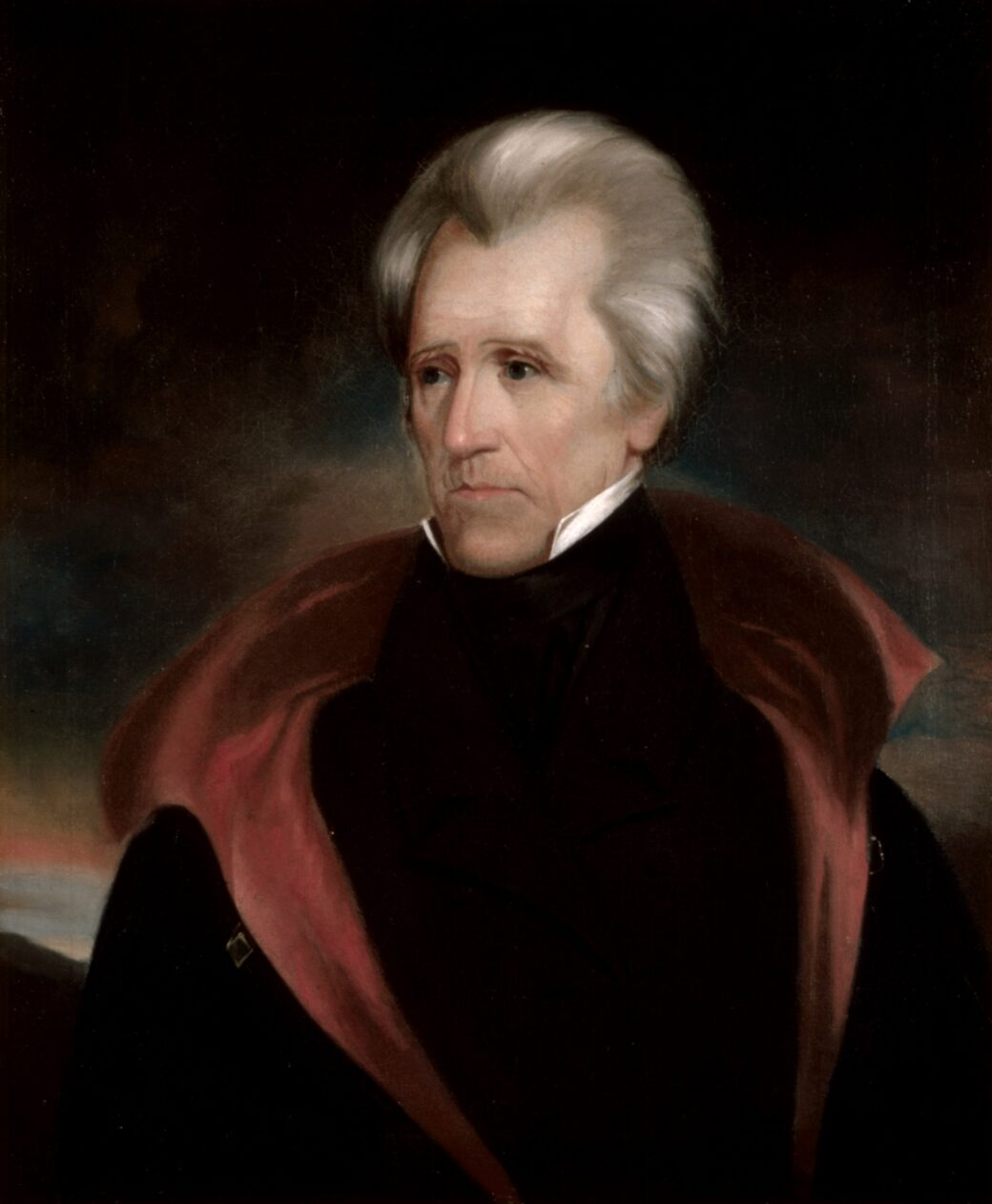
The following language was in all Democratic Party platforms from 1840 to 1856:

“1. Resolved, That the federal government is one of limited powers, derived solely from the constitution, and the grants of power shown therein, ought to be strictly construed by all the departments and agents of the government, and that it is inexpedient and dangerous to exercise doubtful constitutional powers.

2. Resolved, That the constitution does not confer upon the general government the power to commence and carry on, a general system of internal improvements.

3. Resolved, That the constitution does not confer authority upon the federal government, directly or indirectly, to assume the debts of the several states, contracted for local internal improvements, or other state purposes; nor would such assumption be just or expedient.

4. Resolved, That justice and sound policy forbid the federal government to foster one branch of industry to the detriment of another, or to cherish the interests of one portion to the injury of another portion of our common country—that every citizen and every section of the country, has a right to demand and insist upon an equality of rights and privileges, and to complete and ample protection of person and property from domestic violence, or foreign aggression.

5. Resolved, That it is the duty of every branch of the government, to enforce and practice the most rigid economy, in conducting our public affairs, and that no more revenue ought to be raised, than is required to defray the necessary expenses of the government.

6. Resolved, That congress has no power to charter a national bank; that we believe such an institution one of deadly hostility to the best interests of the country, dangerous to our republican institutions and the liberties of the people, and calculated to place the business of the country within the control of a concentrated money power, and above the laws and the will of the people.

7. Resolved, That congress has no power, under the constitution, to interfere with or control the domestic institutions of the several states, and that such states are the sole and proper judges of everything appertaining to their own affairs, not prohibited by the constitution; that all efforts by abolitionists or others, made to induce congress to interfere with questions of slavery, or to take incipient steps in relation thereto, are calculated to lead to the most alarming and dangerous consequences, and that all such efforts have an inevitable tendency to diminish the happiness of the people, and endanger the stability and permanency of the union, and ought not to be countenanced by any friend to our political institutions.

8. Resolved, That the separation of the moneys of the government from banking institutions, is indispensable for the safety of the funds of the government, and the rights of the people.

9. Resolved, That the liberal principles embodied by Jefferson in the Declaration of Independence, and sanctioned in the constitution, which makes ours the land of liberty, and the asylum of the oppressed of every nation, have ever been cardinal principles in the democratic faith; and every attempt to abridge the present privilege of becoming citizens, and the owners of soil among us, ought to be resisted with the same spirit which swept the alien and sedition laws from our statute-book.”

These principles were strongly consistent, as opposed to the Whig Party, which although they had principles (protective tariffs, funding internal improvements), they weren’t spelled out fully until their 1852 platform, and indeed specifics are not spelled out at all in their 1848 platform! The Whigs also sought to completely avoid the issue of slavery, a position which the events of the 1850s proved was untenable. The Democratic Party strikes me as the more programmatic party of the two, and indeed they were the dominant party from its creation until the 1860 election. They stood for concrete principles they placed in every platform, while the Whigs were the collection of opposition to the Democrats, and once its great standard-bearer and founder, Senator Henry Clay of Kentucky, died in 1852, they didn’t last much longer. The language of the Democratic Party indicates a strong belief in the role of states rather than the federal government, although the issues they care about from that perspective are ones that are seen as benefiting the privileged and powerful. The states, thus, were supposed to serve as a check against them per Democratic philosophy. Tariffs assisted the industrial private sector and often did so at the expense of the rural South, which would face retaliatory tariffs on their exported cotton and tobacco. Thus, the language in opposition to sectional legislation and policies benefiting one industry while harming another. The funding of internal improvements (bridges, roads, canals) were for the purpose of advancing commerce, something that Democrats of the time thought should be confined to states. President Andrew Jackson’ veto of the continuing of the Second Bank of the United States was seen as a heroic act by Democrats as a blow against the economically privileged, hence the language of a “concentrated money power”. The language on slavery was for the purpose not only of continued Southern support but also for preservation of the union. Now for the Whigs…

The 1844 Whig Platform

The first Whig platform was mostly non-specific on policy although they did spell out that they supported a protective tariff and spreading out the proceeds of sales of public lands to the states. Democrats did mention and oppose the latter in their 1844 platform.

The 1852 Whig Platform

I skipped to the 1852 platform because I already mentioned the barren 1848 platform. The 1852 platform actually comprehensively spells out what the Whigs believed, and sadly, when they issued the strongest statement of their beliefs they got creamed, only winning the states of Kentucky, Massachusetts, Tennessee, and Vermont. They did embrace the Compromise of 1850, Henry Clay’s last, as it was the hope that this would prevent disunion. The platform they did the best on was the 1848 platform, and this was because of the popularity of General Zachary Taylor, a hero of the Mexican-American War, a war the Whigs had opposed. This, in addition to President Pierce’s signing of the Kansas-Nebraska Act in 1854, was the death of the Whig Party, as opponents of slavery in both the Whig and Democratic parties became galvanized to form a new party…the Republican Party. And did this realignment ever bring together former opponents: Confederate President Jefferson Davis and Vice President Hannibal Hamlin were both Democrats before 1856, and President Abraham Lincoln and Confederate Vice President Alexander Stephens were both Whigs before 1850. These are the principles espoused by the Whigs:

“First: The Government of the United States is of a limited character, and it is confined to the exercise of powers expressly granted by the Constitution, and such as may be necessary and proper for carrying the granted powers into full execution, and that all powers not thus granted or necessarily implied are expressly reserved to the States respectively and to the people.

Second: The State Governments should be held secure in their reserved rights, and the General Government sustained on its constitutional powers, and that the Union should be revered and watched over as the palladium of our liberties.

Third: That while struggling freedom everywhere enlists the warmest sympathy of the Whig party, we still adhere to the doctrines of the Father of his Country, as announced in his Farewell Address, of keeping ourselves free from all entangling alliances with foreign countries, and of never quitting our own to stand upon foreign ground, that our mission as a republic is not to propagate our opinions, or impose on other countries our form of government by artifice or force; but to teach, by example, and show by our success, moderation and justice, the blessings of self-government, and the advantages of free institutions.

Fourth: That where the people make and control the Government, they should obey its constitution, laws and treaties, as they would retain their self-respect, and the respect which they claim and will enforce from foreign powers.

Fifth: Government should be conducted upon principles of the strictest economy, and revenue sufficient for the expenses of an economical administration of the Government in time of peace ought to be derived from a duty on imports, and not from direct taxes;  and in laying such duties, sound policy requires a just discrimination and protection from fraud by specific duties when practicable, whereby suitable encouragement may be afforded to American industry, equally to all classes, and to all parts of the country.

Sixth: The Constitution vests in Congress the power to open and repair harbors, and remove obstructions from navigable rivers, and it is expedient that Congress shall exercise that power whenever such improvements are for the protection and facility of commerce with foreign nations, or among the States–such improvements being, in every instance, National and general in their character.

Seventh: The Federal and State Governments are parts of one system, alike necessary for the common prosperity, peace and security, and ought to be regarded alike with a cordial, habitual and immovable attachment. Respect for the authority of each and acquiescence in the just constitutional measures of each, are duties required by the plainest considerations of National, State, and individual welfare.

Eighth: That the series of acts of the Thirty-first Congress, commonly known as the Compromise or Adjustment (the act for the recovery of fugitive slaves from labor included,) are received and acquiesced in by the Whigs of the United States as a final settlement, in principle and in substance, of the subjects to which they relate; and, so far as these acts are concerned, we will maintain them, and insist upon their strict enforcement, until time and experience shall demonstrate the necessity of further legislation to guard against the evasion of the law, on one hand, and the abuse of their powers on the other–not impairing their present efficiency to carry out the requirements of the Constitution; and we deprecate all further agitation of the questions thus settled, as dangerous to our peace; and will discountenance all efforts to continue or renew such agitation, whenever, wherever, or however made; and we will maintain this settlement as essential to the nationality of the Whig party and of the Union.” (American Presidency Project).

Although the Whigs died off, many of their policies would be pushed by the Republican Party, which embraced the protective tariff and passed the National Bank Act in 1863, establishing a series of national banks with a unified currency, and contemporary Democrats have fully embraced Hamiltonian means to Jeffersonian ends and some state Democratic parties distance themselves from Jefferson and Jackson by renaming their dinners to “Kennedys-King” (after JFK, RFK, and MLK) dinners, figures who are far more relevant to the thinking of Democrats today than Jefferson and Jackson and whose legacies are unburdened by slavery.

References

1840 Democratic Party Platform. American Presidency Project.

Retrieved from

https://www.presidency.ucsb.edu/documents/1840-democratic-party-platform

1844 Democratic Party Platform. American Presidency Project.

Retrieved from

https://www.presidency.ucsb.edu/documents/1844-democratic-party-platform

1848 Democratic Party Platform. American Presidency Project.

Retrieved from

https://www.presidency.ucsb.edu/documents/1848-democratic-party-platform

1852 Democratic Party Platform. American Presidency Project.

Retrieved from

https://www.presidency.ucsb.edu/documents/1852-democratic-party-platform

1856 Democratic Party Platform. American Presidency Project.

Retrieved from

https://www.presidency.ucsb.edu/documents/1856-democratic-party-platform

Whig Party Platform of 1844. American Presidency Project.

Retrieved from

https://www.presidency.ucsb.edu/documents/whig-party-platform-1844

Whig Party Platform of 1848. American Presidency Project.

Retrieved from

https://www.presidency.ucsb.edu/documents/whig-party-platform-1848

Whig Party Platform of 1852. American Presidency Project.

Retrieved from

https://www.presidency.ucsb.edu/documents/whig-party-platform-1852
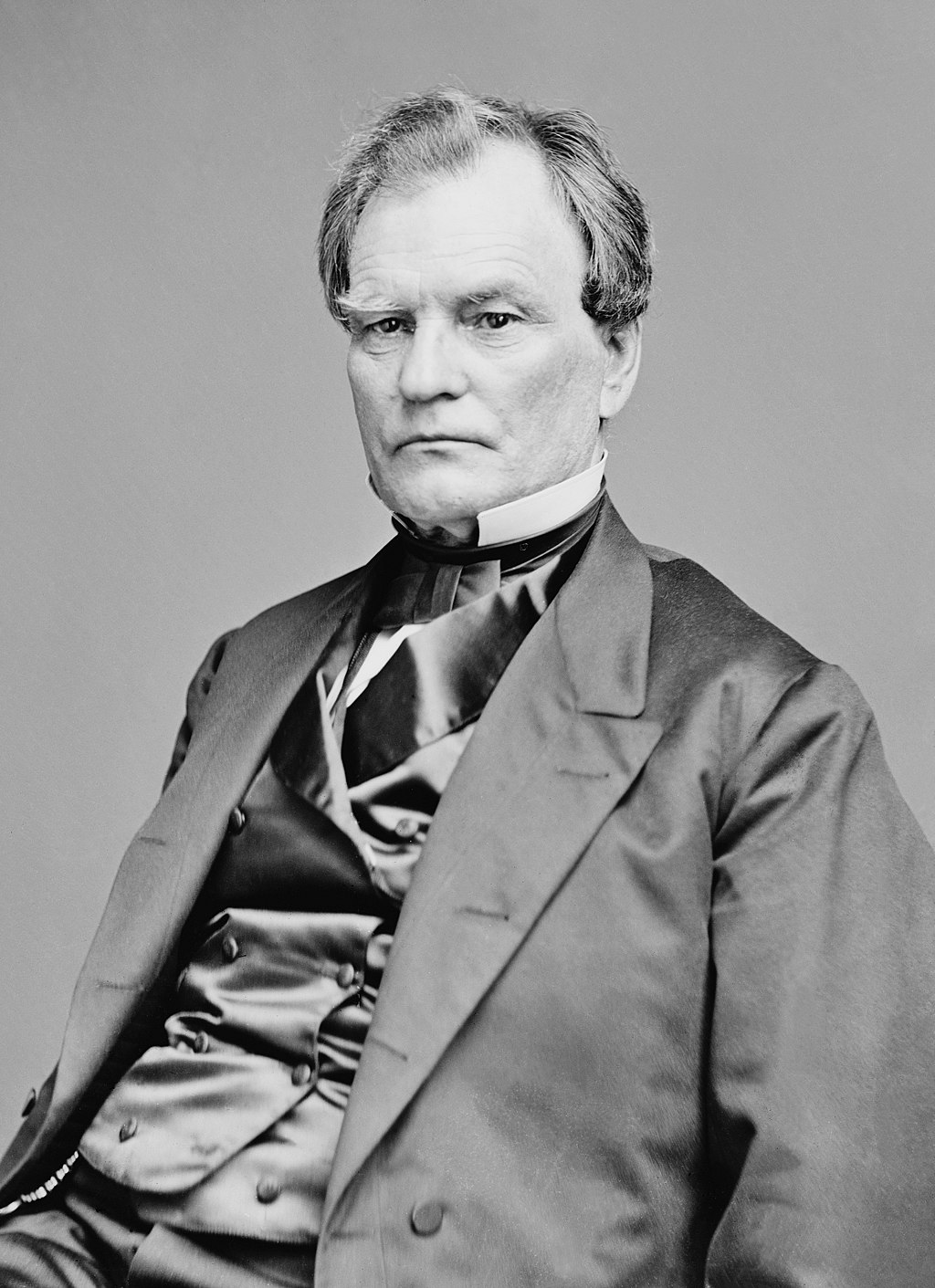
Benjamin Wade: The Controversial Radical Republican

One of the most controversial figures of the old Republican Party of Lincoln, if not the most controversial, was Ohio Senator Benjamin “Bluff” Franklin Wade (1800-1878), famous for his reputation as a Radical Republican. This was due to his image as a punitive figure for Reconstruction, his uncompromising attitudes on the rights of freedmen, and a perception that he was but a tool of Northern capitalists.

An attorney by profession, Wade’s career in politics began in 1831 when he formed a legal partnership with Joshua Giddings, a fierce opponent of slavery. From there he was elected prosecutor of Ashtabula County in 1836 and in 1837, he won election to the Ohio State Senate. Although a member of the Whig Party, a party known for its staunch support of business, Wade was a bit too independent of the interests of business for the liking of the Whigs and it cost him a third term. He was out of office, but not for good, as in 1847 he was elected presiding judge of Ohio’s 3rd judicial district, serving until 1851, when he was elected to the Senate as a Whig. Although he had long been fiercely anti-slavery, he had a sense of strategy in how he voted for president, which was displayed when he voted for Whig Zachary Taylor in 1848 rather than Martin Van Buren of the anti-slavery Free Soil Party. Wade figured that a vote for Taylor, a slaveowner on a party platform that said nothing of slavery, would be preferable to Van Buren because the Free Soil Party had no chance of victory, and he correctly figured that Taylor would not bow to pro-slavery interests. Wade strongly opposed the Compromise of 1850 for its provisions benefiting slavery and in 1854, he voted against the Kansas-Nebraska Act.

In the 1850s with the party system changing given the demise of the Whig Party and the temporary rise of the American (“Know Nothing”) Party, Wade could have capitalized on the issue of nativism to help his 1857 reelection, but being a man of outspoken convictions he rather condemned nativism, and his condemnation was such that he almost got into a brawl with American Party Senator John M. Clayton of Delaware, one of the leading promoters of nativism (Trefousse, 65). Indeed, he was strongly opinionated and often crossed swords rhetorically with his colleagues. Historian Allan G. Bogue wrote of him, “Wade was no orator, and his contributions to debate were usually short and, on occasion, intemperate: he once called [Edgar] Cowan a dog and attacked the President in debate on more than one occasion” (Mr. Lincoln’s White House). He also sometimes publicly had harsh words for President Lincoln, who he believed was blowing the war effort and not going far enough against slavery. In one instance, Wade and a delegation were seeking the removal of Ulysses S. Grant as head of the Union Army at Vicksburg and upon Lincoln’s response which was to start to tell a story, he responded, “Bother your stories, Mr. President. That is the way it is with you, sir. It is all story – story. You are the father of every military blunder that has been made during the war. You are on the road to hell, sir, with this Government, and you are not a mile off this minute” to which Lincoln responded, “Wade, that is about the distance from here to the Capitol” (Mr. Lincoln’s White House). Lincoln, razor sharp and quick-witted, often got the better of Wade in their verbal exchanges. Wade never particularly liked Lincoln even though he would support him and said that his views on slavery “could only come of one born of poor white trash and educated in a slave state” (American Battlefield Trust). However, Wade was also known for making his disagreements strong on politics, but in truth he wasn’t big on making things personal. Indeed, in 1855 he had said of Judah P. Benjamin of Louisiana, who would later join the Confederacy, “I will call him a friend. I have no reason to call him anything else, for I have received nothing but kindness and respect at his hands. He being a southern man, I am the last one to assail him for defending his institutions. I have no doubt that if my habits and education had been like his, our positions would have been reversed to-day. I can understand that very well, and make allowances for it” (Trefousse, 68).

During the War of the Rebellion, Wade chaired the Joint Committee on the Conduct of the War, which covered issues of the war as well as Indian conflicts. In 1864, he coauthored and cosponsored the Wade-Davis bill setting the policy for readmission of Southern states, which required newly admitted states to abolish slavery, hold conventions for new state constitutions, required a majority of white males to pledge the ironclad oath swearing allegiance to the United States and that they had not supported the Confederacy, and barring from public office Confederate officials and veterans. This measure was pocket-vetoed by President Lincoln, who wanted to implement his own more lenient plan for Reconstruction. This, however, did not come to pass with Lincoln’s assassination. The conflict between President Johnson, who wanted lenient Reconstruction while Congressional Republicans sought Reconstruction on harsher terms as well as on terms that protected the rights of freedmen in the newly admitted states, characterized the rest of his time in office.

In 1867, Wade was elected President Pro Tempore, placing him next in line for the presidency as President Johnson had no vice president. However, his stature in Ohio was deteriorating. Wade bet his political career on a ballot measure in Ohio for universal black male suffrage, which failed. That election also saw a Democratic majority in the Ohio State Legislature, and reelection for Wade was coming up in 1869. This meant that if the Democratic majority stayed, he was going to lose reelection. This could be avoided if Andrew Johnson was convicted on his impeachment charges, thus he was strongly in support. If convicted, Senate Pro Tem Wade would have become president until the end of the term. Indeed, one newspaper wrote of Andrew Johnson’s acquittal, “Andrew Johnson is innocent because Ben Wade is guilty of being his successor” (Bomboy). This was certainly known to be the motive of Maine’s William Pitt Fessenden, the first Republican to vote to acquit Johnson, who was among the moderates who despised Wade. All Wade needed was one more vote to have been president. Worse yet for him, although he had been favored to be selected vice president, instead Speaker of the House Schuyler Colfax of Indiana won the nomination. Wade’s defeat for reelection was certainly a source of jubilation for Democrats, who elected Allen G. Thurman, who was opposed to civil rights, keen on curbing the power and influence of railroads, and opposed to high tariffs. Wade would not run for public office again, but would hold several positions in the private and public sector, including serving on a commission to study the proposed annexation of what is today known as the Dominican Republic, and was an elector for Rutherford B. Hayes in 1876. Wade would die on March 2, 1878 at the age of 77. Senator Carl Schurz praised him as “one of the oldest, most courageous, and most highly respected of the antislavery champions” (Trefousse, 73-74).

What Was Wade Ideologically?

There are some things that suggest to modern readers that Wade was left-wing. These include his belief in racial equality (unusual at the time, although liberalism as we know it hadn’t taken up the mantle of racial equality yet), his early support for women’s suffrage, his concern for the betterment of wealth of the working man, and his support for trade unions. Furthermore, Wade’s position for soft currency after the War of the Rebellion also sparked the ire of the business establishment of his day. However, there are significant issues with considering him left-wing.

These issues include that Wade was in his economic beliefs Hamiltonian, got his start in the business-friendly Whig Party, was a strong supporter of the protective tariff, supported the National Bank Act of 1863 for a uniform national currency well in keeping with the views of the Federalist and Whig parties as opposed to chaotic state banks with their own currencies, repeatedly supported legislation that favored railroads including substantial public land grants, and consistent with his stance on railroads sponsored a bill that granted public land to a mining company in the Montana territory. This indicates a willingness to hand over public land to private businesses, which I would think left-wingers would consider an abomination. Furthermore, after his time in the Senate, Wade would serve as a lobbyist for the Northern Pacific Railroad. Although he was undoubtedly sincere in his commitment to Reconstruction and penalizing the Confederates among the Southerners for rebellion, he was also a supporter of many core policies that spurred the Gilded Age and would thus produce the reaction of progressivism. Biographer Hans Trefousse writes of this mix in his stances, “The final charge against Wade was that he was a mere catspaw for powerful capitalists. While it is true that he always supported tariff protection, and while it is equally true that he pushed through the senate a bill to give a group of capitalists control of mining properties in the Far West, he was by no means beholden to industrial interests. Henry Cooke, the banker, thoroughly distrusted Wade’s radicalism, and although his brother Jay later gave the ex-senator a retainer to represent the Northern Pacific Railroad, conservative spokesmen for business had grave misgivings about the Ohioan’s financial orthodoxy” (71).  Something also to consider is that Wade himself had been born into a family of modest means and had been a laborer before he started practicing law. For the issues of slavery and Reconstruction, these are strongly based on partisanship and regionalism as opposed to basic liberal/conservative philosophy as we know them today. In 1867, Wade delivered a speech advocating tariffs, stating, “Labor commands no higher reward than I am glad to see it. I hope to God it never will be any lower than it is; for now the real manual laborer gets but a scanty portion of that which he earns. I hope the time will never be when he will be less rewarded than he is now” (Trefousse, 71). He even spoke out of concern for how little the laboring man had as opposed to the wealthy in 1868, and indeed this was the time in which he was voting for the direction of post-war financial policy to be towards soft currency, perhaps suggesting he was moving a little leftward on economics later in his career. Yet, on the scale of liberalism and conservatism from DW-Nominate, he scores a 0.564, which by this measurement makes him the second most conservative senator in his day, in the sense of his backing Hamiltonian and Whig prescriptions which as I noted, were favorable to business. It is also possible for someone to score high on DW-Nominate but nonetheless show a more liberal side to labor issues, such as a figure I wrote about not too long ago in Runt Bishop of Illinois, who scored a 0.609 despite his consistent opposition to measures that curbed the power of organized labor; he voted extremely conservative on many other issues such as foreign policy. Wade stands, by looking at his voting record, as a conservative on fundamental issues that defined the Federalist and Whig parties as “conservative”, but he was indeed a complicated figure and in some ways far ahead of his time.

References

Benjamin Wade. American Battlefield Trust.

Retrieved from

https://www.battlefields.org/learn/biographies/benjamin-wade

Benjamin Wade: A Featured Biography. U.S. Senate.

Retrieved from

https://www.senate.gov/senators/FeaturedBios/Featured_Bio_Wade.htm

Bishop, Cecil William (Runt). Voteview.

Retrieved from

https://voteview.com/person/731/cecil-william-runt-bishop

Bomboy, S. (2024, August 11). Five little-known men who almost became president. National Constitution Center.

Retrieved from

https://constitutioncenter.org/blog/five-little-known-men-who-almost-became-president

Trefousse, H.L. The Motivation of a Radical Republican. Ohio History Journal.

Retrieved from

Visitors from Congress: Benjamin F. Wade. Mr. Lincoln’s White House.

Retrieved from

https://www.mrlincolnswhitehouse.org/residents-visitors/visitors-from-congress/visitors-congress-benjamin-f-wade-1800-1878/index.html

Wade, Benjamin Franklin. Voteview.

Retrieved from

https://voteview.com/person/9698/benjamin-franklin-wade

Louis T. Wigfall: The Lone Star State’s Fire-Eating Blowhard

I will not be covering the election results in this post as the results are not all in yet. Although Trump officially won all seven swing states, there is still one Senate race that is too close to call and there are still House races to be counted before it is determined which party controls the chamber. Although I did not bring up Arizona’s Senate race, by implication of predicting Republicans would get 53 Senate seats I thought Democrat Ruben Gallego would win. Instead of writing about the election, today’s post is about a rather interesting fellow, perhaps Texas’s worst senator of all time.

Born to Southern aristocracy in South Carolina, Lewis Trezevant Wigfall (1816-1874) had all the advantages, save his birth parents, who died when he was young. Although he got a good education and was far from a stupid man, Wigfall was a highly ill-tempered and violent alcoholic who lacked work ethic (Mellon). In 1836, Wigfall served in the Second Seminole War for three months. Although he became a lawyer (it was not that hard to become one in those days), he would preoccupy himself with gambling, frequenting brothels, quarreling with fellow members of South Carolina’s planter aristocracy, and going to taverns and getting in fights. The products of Wigfall’s preoccupations included the failure of his law practice, squandering his inheritance, killing another man in a quarrel under disputed circumstances, and fighting a duel with future Congressman Preston Brooks, with both men seriously wounded and Brooks having to use a cane for the rest of his life as his hip was shattered. Brooks would use this cane to infamously beat Senator Charles Sumner for an anti-slavery speech in which he insulted his uncle. Wigfall would be greatly burdened by guilt over the man he killed, and for years the man would appear in his nightmares (Copperas Cove Leader Press). His belief system was formed not only through the circumstances of his upbringing but also his university education. The college president of South Carolina State, his alma mater, had in 1827 called for South Carolina to secede from the Union (Copperas Cove Leader Press). This was not the only way in which Wigfall was a man of his time and place. He also believed that the society of the planter aristocracy was the peak of civilization, was unapologetically pro-slavery, and believed in the virtues of chivalry (King). In 1841, Wigfall married Charlotte Cross, the marriage producing five children and resulting in him abandoning dueling. However, he still had a positive view of the practice, regarding it as a crucial “factor in the improvement of both the morals and manners of the community” (Wright, 32). By 1846, Wigfall’s money problems caught up to him as in addition to his irresponsible spending, he had to pay medical bills for his dying eldest son. His house and property were sold off at a Sheriff’s auction (McCawley). After his son died, he and his family moved to Texas for a new life. Wigfall also changed the spelling of his first name to Louis in the process.

In Texas, he got serious about practicing law and made for an effective attorney. Wigfall also serves in the state House from 1849 to 1850 as a Democrat where he was an early advocate of secession over the issues of slavery and tariffs. Like many other prominent people of his time and place, he owned slaves. Secession wasn’t popular at the time in Texas, and this stalled his career. However, as the events and tensions that led to the War of the Rebellion were accelerating in the 1850s, more Texans found Wigfall’s secessionist message appealing, and he proved a talented stump speaker. He was elected to the Texas State Senate in 1856, and the following year his speeches on the campaign trail were credited with the election of Hardin Runnels, a secessionist, as Texas’s governor over Senator Sam Houston (Drane).  

Senator Wigfall

In 1859, Wigfall is elected to the Senate and is among the chamber’s staunchest fire-eaters, or advocates of secession. After Republican Abraham Lincoln is elected to the presidency in 1860, Southern states begin seceding from the Union, including Texas. Wigfall stayed in Washington until April 1861, gathering intelligence for the Confederacy and recruiting troops from Maryland. He was expelled from the Senate on July 11th for his support of the Confederacy.

Wigfall the Confederate

During the War of the Rebellion, he served as a brigadier general, commanding the Texas Brigade. However, his service was marred by his drinking, being visibly drunk on numerous occasions, including while on duty. In 1862, he was elected to the Confederate Senate.  

In the Confederate Senate, Wigfall proved an advocate for state’s rights, including opposing Confederate President Jefferson Davis’s proposal for a Supreme Court. Davis was often frustrated in his efforts to centralize government as numerous Confederates did hold strong to the philosophy of state’s rights, and Wigfall was a frequent antagonist. He declared that Davis’s “pig-headedness and perverseness” were losing the war for the South (Drane). Wigfall was also a strong supporter of Robert E. Lee commanding all Confederate forces and was successful in enacting a conscription law and funding railroad construction. He was also unalterably opposed to conscripting black soldiers as a last-ditch effort, declaring, “Sir, I wish to live in no country where the man who blacks my boots or curries my horse is my equal” (Drane).

Wigfall fled to Britain after the war ended and his family later followed. He never met with the professional success he had in Texas again, and he and his family fell into poverty by 1869 with Wigfall only being able to get odd jobs (Drane). In 1872, Wigfall and his family returned to the United States after it was certain that he would not be tried for treason, and in January 1874 they moved back to Texas, settling in Galveston. Wigfall didn’t have the opportunity to attempt another comeback, becoming seriously ill; his decades of alcoholism had caught up with him and he suffered a fatal stroke on February 18th.

References

Drane, R.E. Louis T. Wigfall. Road to the Civil War.

Retrieved from


King, A.L. Wigfall, Louis Trezevant. Texas State Historical Association.

Retrieved from

https://www.tshaonline.org/handbook/entries/wigfall-louis-trezevant

Louis Wigfall. National Park Service.

Retrieved from

https://www.nps.gov/people/louis-wigfall.htm


Louis T. Wigfall, Hottest Of The Red-Hot Rebs. (2015, August 21). Copperas Cove Leader Press.

Retrieved from

https://www.coveleaderpress.com/editorial/louis-t-wigfall-hottest-red-hot-rebs

McCawley, P. (2016, July 7). Wigfall, Louis Trezevant. South Carolina Encyclopedia.

Retrieved from

https://www.scencyclopedia.org/sce/entries/wigfall-louis-trezevant/

Mellon, M. (2014, September 1). Notable Scumbags of the Civil War V: “Battling” Louis T. Wigfall. Mellon Writes Again!

Retrieved from

https://mellonwritesagain.com/notable-scumbags-of-the-civil-war-v-battling-louis-t-wigfall/

Wright, L.W. (1905). A Southern girl in ’61: the war-time memories of a Confederate senator’s daughter. New York, NY: Doubleday, Page & Co.