In 1930, Senator Frank Greene died during an operation, and selected to succeed him by Governor John E. Weeks was Frank C. Partridge, a personal friend and longtime presence in Vermont politics. The following year, however, there was to be an election to finish out the term, and prominent attorney Warren Austin (1877-1962) of St. Albans was persuaded to challenge Partridge, announcing shortly before the end of 1930. Although incumbency is often an advantage, in Partridge’s case it was not; he had to attend to the Senate while Austin was free to campaign across the state, delivering 60 speeches (Mazuzan, 130). Austin’s age was also to his advantage as he was 15 years younger than the 68-year old Partridge, and he won the Republican nomination for the election to finish the late Greene’s term. In 1931, winning the Republican nomination was tantamount to election, as Vermont was the Wyoming of its day in Republicanism.
Austin became a quick study of the Senate, and he thought there was some room for procedural change, namely that his fellow senators had too much room to bloviate (Mazuzan, 130-131). He voted like a traditional Republican, with a wariness of a largesse in federal government, spending, and the powers of the executive. This translated to a strong opposition to FDR’s New Deal, with him voting against all major “first 100 days” legislation except the Economy Act. As Austin wrote to his mother, “I am very apprehensive of the arbitrary powers which are being placed in the hands of one man” (Mazuzan, 131). Austin was opposed to measures he saw as intruding on states and localities as well as on individuals, and saw this in the New Deal. In particular, Austin strongly opposed the cancellation of air mail contracts based on ultimately unsubstantiated charges of fraud and collusion, writing “However unfortunate may seem the material and intimate results of the cancellations of the air-mail contracts and the acts which have succeeded that, the poignancy of the event was the grave and serious doubt excited in the minds of men and women of the purpose of the “New Deal” which is neither Republican nor Democratic. Is it an emergency policy? Or is it a permanent departure from free institutions and a surreptitious establishment, without the knowledge or consent of the people of ideas of government which are in conflict with the breeding, the traditions, and the settled purpose of the American people” (Mazuzan, 134). However, the politics of old were under increasing fire, even in Vermont. Austin’s opponent for reelection in 1934 was Fred C. Martin, FDR’s IRS collector for the state, who ran as a New Dealer and challenged Austin’s record as well as touted areas of Vermont that were assisted by New Deal programs. In a portend of Vermont’s future, this message got a lot of traction, particularly in the state’s western portion. In response Austin touted Vermont’s traditions, regarded the administration as pushing “foreign doctrines and socialistic ideas”, and asserted that there was a need for an independent voice from that of the Roosevelt Administration (Mazuzan, 138-139). Although the election result of Austin winning reelection was “business as usual”, he only won with 51% of the vote, and three western counties had voted for Martin. He would not change his ways for the most part in his next term on domestic issues and in 1935 he voted against Social Security. Only seven other senators either voted or paired against. In 1937, Austin would participate in the drafting of the Conservative Manifesto, a ten-point document proposing alternative policies to the New Deal that emphasized private enterprise and state as opposed to federal authority (Moore). In 1939, he was elected assistant minority leader and would serve as acting minority leader while Oregon’s Charles McNary was running for vice president.
Foreign Policy
Austin was well-versed in dissent, but this dissent was not confined to the ruling Democratic Party. Unlike most of his Republican colleagues before World War II, Austin was an internationalist. In 1935, he had voted for the US joining the World Court (one of FDR’s few policy defeats in his first term), and this debate largely portended the internationalist/anti-interventionist divide. Austin would vote for repealing the arms embargo in 1939, vote for the peacetime draft, be the Senate’s strongest supporter of Lend-Lease, and support permitting merchant ships to enter belligerent ports. He was even one of two Senate Republicans to oppose an amendment to the Lend-Lease bill striking aid for the USSR. He was interestingly at odds with his new colleague George Aiken both from right and left, as Aiken was significantly more liberal than him on domestic policy but was opposed to FDR’s foreign policy before World War II and more willing to permit age-based deferments to the draft. Austin strongly supported the creation of the United Nations, but kept national sovereignty in mind when he voted for the Connally Reservation, which excludes domestic disputes from the jurisdiction of the International Court of Justice. During the 1940s, Austin also moderated somewhat on domestic issues, for instance supporting retaining the National Youth Administration in 1943 and his support (albeit limited) of wartime price control. On August 2, 1946, Austin resigned from the Senate as President Truman announced his appointment as Ambassador to the United Nations. Austin’s DW-Nominate score was a 0.106, which seemed to strongly reflect his internationalism given that his record was mostly oppositional to the New Deal.
UN Ambassador
As Ambassador to the UN, Austin became known as a forceful advocate of the West as a cold warrior. During this time, he allegedly gaffed, “I hope Arabs and Jews will settle their differences in a truly Christian spirit”, but his assistant who was present held that what Austin was communicating was that as a Christian he would be impartial towards Muslims and Jews regarding the creation of Israel (Traveling for History). In 1951, Austin presented to the United Nations Security Council a Soviet submachine gun found in possession of captured North Korean troops to demonstrate that the Soviets were providing arms to them.
He served until two days after the end of the Truman Administration, with President Eisenhower picking another New England internationalist who had served in the Senate to replace him in Henry Cabot Lodge Jr.
Austin retired from public service after and was forced to curb his activities after suffering a stroke in October 1956. He died on December 25, 1962. Times have changed much in Vermont since he left office in 1946. For instance, his old Senate seat is held by none other than Bernie Sanders, a marked contrast to Austin’s anti-New Deal politics.
It is not wrong to say that the parties have changed, but what people often don’t understand is that there was a flip of regions regarding what part of the Republican Party went to the left. From the late 19th century to the 1930s, the Midwest was the area in which there were more likely to be rebels to Republican conservatism. Think Senators George Norris and Robert La Follette, from Nebraska and Wisconsin respectively. These today are not thought of as the homes of progressive Republicanism. Norris and La Follette were liberal populists in orientation, and this brand of Republican could be readily elected to the Midwest. La Follette was one of two of these sorts of Republicans to run for president third party, the other was North Dakota’s William Lemke (1878-1950).
In 1915, Lemke joined the newly formed Non-Partisan League, serving as its legal advisor. Although like today, Republicans dominated North Dakota politics, the real parties were the two factions within the state GOP, which was the previously mentioned Non-Partisan League from the left and the Independent Voters Association from the right. Lemke was a hard worker and the brains out of the outfit, putting in at times 18 hours a day and he was regarded as “the political bishop” (BND). Lemke, however, made two mistakes during this time. Per the Bank of North Dakota,
“Using money from the League’s Home Builders Association, Lemke built a house for himself and his family in Fargo that exceeded the HBA’s cap on public loans for private dwellings in North Dakota. That blunder became a symbol of League corruption and ineptitude. He also let himself be elected chairman of the Republican Party in North Dakota in 1916, Attorney General, a member of the critically-important Industrial Commission in 1920. This violated Townley’s [founder of Non-Partisan League] rule that League leaders would not stand for public office, to assure the farmer-citizens of North Dakota that their purposes were altruistic, not personal aggrandizement”.
In 1921, Lemke was recalled along with Governor Lynn Frazier due to poor economic conditions as well as widespread accusations that the Non-Partisan League government was Bolshevik in nature. Like with Frazier, this would not be the end of Lemke’s career.
The Great Depression helped the political fortunes of Lemke and other Non-Partisan Leaguers, and he was elected to Congress in 1932 as one of two at-large representatives, having defeated the more conservative Thomas Hall for renomination. He had supported FDR’s candidacy, and he backed most of the New Deal, including the Agricultural Adjustment Act, the Tennessee Valley Authority, and the National Industrial Recovery Act. Lemke also was a consistent defender of organized labor. In 1935, he made an exception by voting against Social Security, albeit from the left; he preferred the more expensive and mathematically challenged Townsend Plan. Lemke did, however, stick with traditional Republicanism in his opposition to the Reciprocal Trade Act in 1934. He also contributed to the New Deal through the Frazier-Lemke Farm Bankruptcy Act in 1934, limiting the ability of banks to repossess farms, the Supreme Court unanimously struck it down in Louisville Joint Stock Land Bank v. Radford (1935) as in violation of the 5th Amendment, as creditors were denied their property rights. Another measure was enacted that instead of stopping foreclosures postponed them. After Roosevelt opposed efforts at a third Frazier-Lemke Act and the bill was defeated, Lemke ran for president under the Union Party ticket. He no longer supported Roosevelt, saying of him, “I look upon Roosevelt as a bewildered Kerensky of a provisional government. He doesn’t know from or where he’s going” (Simkin). Although Lemke was the presidential nominee, in truth he was not the focus of the campaign. The campaign was a coalition of populist influencers in preacher Gerald L.K. Smith, Father Charles Coughlin, and Dr. Francis Townsend. The venture was a complete and utter disaster, as Smith and Coughlin aggressively competed for dominance in the party and the former tried to poach Dr. Townsend’s followers from under him. Lemke was also pretty far from central casting as a presidential candidate; his appearance was unkempt and shabby, and he was an underwhelming public speaker (Jeansonne, 55). At the same time Lemke was defeated, he was reelected to his Congressional seat. He would continue his record of supporting New Deal measures but opposed any efforts that were seen by Roosevelt opponents as power grabs, such as the proposed 1938 reorganization plan, and he was, as other North Dakota federal politicians of the time were, an opponent of FDR’s foreign policy.
Attempt at the Senate and Continuing Congressional Career
In 1940, Lemke ran for the Republican nomination for the Senate, but the real contest was between incumbent Lynn Frazier and former Governor William Langer, which the latter won. He was able to return in the 1942 midterms, and around 1945 his record shifted a bit to the right, namely in his willingness to support federal government measures impacting the economy through price control and his willingness to support income tax reduction. However, Lemke continued to defend labor unions and in 1947 he voted to sustain President Truman’s veto of the Taft-Hartley Act. Americans for Democratic Action graded Lemke in 1947, 1948, and 1949, and his scores come out as 42%, 25%, and 33%. Had ADA counted his score for 1950 based on the votes and pairs he had, he would get a 67%. His DW-Nominate score is a 0.032, lower than any current serving Republican. Lemke would die in office on May 30, 1950.
References
ADA Voting Records. Americans for Democratic Action.
President John Tyler, whose nominees were most rebuked by a vote of the Senate.
At first, the people president-elect Donald Trump announced he would nominate after being sworn in seemed like the sort of picks you’d expect, Marco Rubio for Secretary of State or Elise Stefanik for Ambassador to the UN. However, three of his recent announcements have provoked shock, doubt, and opposition. These are Matt Gaetz for Attorney General, RFK Jr. for Secretary of Health and Human Services, and Tulsi Gabbard for National Intelligence Director. Gaetz has been a bomb-thrower in Congress for Trump and has made many enemies in the GOP for his leading role in the ouster of House Speaker Kevin McCarthy (R-Calif.), not to mention there was a House Ethics Committee report due to be released on his personal conduct before his resignation from the House. Kennedy has had a history of expressing many views that are out there, but most notorious have been his anti-vaccine stances. Furthermore, his personal record regarding marital fidelity makes Donald Trump look like a saint by comparison. Gabbard has in the past expressed support for Syrian President Bashar al-Assad and has previously repeated Russian propaganda surrounding the ongoing Russo-Ukrainian War. These announcements have certainly given some who would otherwise be supporting Trump nominations pause. Leading Senate Republicans have pledged that Trump’s nominees will go through the regular Senate vetting process as opposed to recessing the Senate thereby allowing Trump to install his cabinet for a maximum of nearly two years without Senate scrutiny. Believe it or not, only nine people have ever been rejected for a cabinet post by a vote of the Senate.
The first cabinet nomination in the history of the United States to be rejected was none other than Roger B. Taney, who would be most known as chief justice from 1836 until his death in 1864. Much like Trump is proposing to do, Andrew Jackson used a recess appointment to confirm Attorney General Taney as Secretary of the Treasury. However, as Treasury Secretary Taney was Jackson’s point man for the destruction of the Second Bank of the United States, which included advising transferring funds out of the bank and into state banks and authored a lot of President Jackson’s veto message (Encyclopedia Britannica). In retaliation, the Senate rejected continuing him in this position 18-28 in June 1834.
John Tyler’s Nominees
John Tyler has the dubious distinction of having the most cabinet nominees rejected by a vote of the Senate, with four getting rejected. This is certainly a least in part attributable to him considered by his party to be a rogue president. Indeed, him assuming the presidency instead of simply serving as acting president was considered questionable in his time, and some saw him as illegitimate. Yet, this precedent stuck. As a Whig, Tyler was dissenting on a lot of Whig policy, including vetoing restoring the Second Bank of the United States and vetoing two tariff increases. The defeated were Caleb Cushing for Secretary of the Treasury (who was voted on three times as Tyler stubbornly resubmitted his nomination twice), David Henshaw for Secretary of the Navy, James M. Porter for Secretary of War, and James S. Green for Secretary of the Treasury. The defeats of these candidates can broadly be attributed to President Tyler’s unpopularity.
Henry Stanbery
In 1866, the Senate confirmed Henry Stanbery as Attorney General for the Johnson Administration without fanfare or drama. However, relations between the Senate and Stanbery soured. He had backed President Johnson’s Reconstruction policy that gave no focus on rights for freedmen, and he had helped draft Johnson’s veto message of the first Reconstruction Act and on March 12, 1868 he resigned his post to join the defense team for President Andrew Johnson in the Senate’s impeachment trial. After Johnson was acquitted by one vote, he renominated Stanbery for his old post. The Senate, however, wasn’t having it, and his nomination was rejected 11-29 on June 2nd.
Charles B. Warren
In 1925, President Coolidge nominated Charles B. Warren to replace Attorney General Harlan F. Stone, who had been confirmed to the Supreme Court. Something to be understood about the Republican Party at this time was that although conservatives were strongly in the majority in the party, there was a staunch progressive wing and this wing in particular had clout in the Senate as they were able to team up with Democrats to oppose many policies of the Republican administrations of the 1920s. Warren was seen as too friendly to business interests, especially the “sugar trust”. The vote on this was going to be close, and Vice President Charles G. Dawes was going to be needed. Dawes thought he had time to take a nap at the Willard Hotel as he was told by the Senate leadership that a vote wouldn’t be held that day. However, the Senate abruptly decided to proceed to the vote…while Dawes was napping. Although Dawes was awoken and rushed to the Capitol to cast the tie-breaking vote, it was too late by the time he had arrived, as a senator had changed his mind to opposition with the vote failing 39-41. However, when the vote was held again on March 16th, it was rejected 39-46. President Coolidge was quite put off indeed by his vice president. This is also the last time that the Senate ever voted to reject a president’s nominee when the president’s party was in control.
Lewis Strauss
This rejection is the one that certainly has had the most public attention lately, given that it figured in the film Oppenheimer. Indeed, Strauss’s role in pushing of Oppenheimer out contributed to his defeat. However, there were other factors. Strauss’s competence was not in question, rather it was his polarizing personality that had become clear when he was a member and later chairman of the Atomic Energy Commission…while he had the full confidence and friendship of President Eisenhower, he made numerous enemies. Time Magazine (1959) described the variance of the views on him thusly, “Strauss, by the extraordinary ingredients of his makeup, is one to arouse superlatives of praise and blame, admiration and dislike. In the eyes of friends, he is brilliant, devoted, courageous and, in his more relaxed moments, exceedingly charming. His enemies regard him as arrogant, evasive, suspicious-minded, pride-ridden, and an excessively rough battler”. One of these enemies was Senator Clinton Anderson (D-N.M.), who led the charge against Strauss’s confirmation. Anderson made sure that committee hearings on Strauss went on for weeks, and he admitted that this was a strategy, “I thought if the committee members saw enough of him, he would begin to irritate them, just as he has me” (Time Magazine). Another factor was that Strauss, a staunch conservative, had repeatedly worked against public generation of power, supporting instead private industry. Although his nomination survived in committee by a vote of 9-8, this did not translate to confirmation, especially not in the strongly Democratic Senate. Strauss was rejected on a vote of 46-49, with 15 Democrats in support, and 2 Republicans in opposition. Strauss’s high level of defensiveness, an insistence on addressing every point of contention instead of admitting to a few errors, also harmed his nomination (Time Magazine).
John Tower
In 1989, President Bush nominated John Tower to serve as Secretary of Defense. Tower had served in the Senate from 1961 to 1985 as the first Republican to represent Texas since Reconstruction, and he had become an expert on national defense, serving as the chairman of the Armed Services Committee from 1981 to 1985. He had also served as the lead negotiator in the Strategic Arms Reduction Talks with the USSR and chaired the Tower Commission on Iran-Contra, which had issued a strongly critical report of the Reagan Administration. Tower was not known to suffer fools, and this made numerous senators on the Democratic side less than sanguine about his nomination. However, an unexpected opponent of his nomination came to testify before the Senate in Heritage Foundation’s Paul Weyrich. Weyrich opposed his nomination on the grounds of his moral character, stating, “I have encountered the senator in a condition lacking sobriety as well as with women he was not married to”, and adding to this Tower’s second wife, Lila Burt Cummings, alleged “marital misconduct” in her divorce filing (Los Angeles Times). The nomination became a highly partisan issue, and on March 9, 1989, Tower was rejected 47-53, with three Democrats (Dodd of Connecticut, Heflin of Alabama, and Bentsen of Texas) voting for, and one Republican voting against (Nancy Kassebaum of Kansas). The odd man out in support was Dodd, who although he denied it, it seems likely that he had Tower’s vote against his father’s censure in 1967 in mind. Tower’s defeat by vote of the Senate is the only one to have happened at the start of a president’s time in office.
I find it possible that the Senate rejects one Trump nominee in a vote, but more likely that a far more common event occurs: the nomination is withdrawn, either by Trump or the nominee him or herself. Indeed, there is a long list of announced nominations that were withdrawn during the first Trump Administration, including Andy Puzder for Secretary of Labor and Patrick M. Shanahan for Secretary of Defense. Count on some of those rather than a series of dramatic Senate rejection votes.
References
Conservative Tells of Seeing Tower Drunk: Senate Panel Hears Activist Oppose Defense Nomination. Los Angeles Times.
The 2024 election was an electoral college sweep for Donald Trump, as he won all seven swing states. It turned out that the fear from Democrats on Republicans having a lot more of the early vote was justified. Since the Senate and House are determined to be in Republican control, it is time to look at what has happened. First, how did I do on predictions?
Presidential
I predicted 5 of the 7 swing states, and in that prediction was also a Donald Trump victory, which occurred. The states I thought would go Harris were Michigan and Wisconsin. I also regarded Michigan as the sick man of the swing states, but that was actually a designation that should have gone to Wisconsin, where Trump had his worst swing state performance. I certainly beat the Google AI prediction of a Harris win and her winning 4 of the 7 swing states (she didn’t get Arizona, Georgia, and North Carolina per AI). I never doubted North Carolina would go to Trump, same for Georgia. Nevada was a very close call for me, but I’m glad that I went against the conventional wisdom of Jon Ralston. I pat myself on the head in particular for judging this based on his prediction bias. Some facts and figures that were predictive of this election were that Gallup found this year that there were more self-identified Republicans than Democrats for the first time since it started asking the question, that Republicans led in voter confidence on the top election issue (the economy) per Gallup, that most sitting vice presidents historically don’t succeed the president, and that prediction markets were predicting a Trump win. History has only defied the Gallup voter confidence metric once, and that was in 1948. Furthermore, the prediction markets since 1916 have only been wrong three times. Alan Lichtman’s keys to the presidency has broken whatever way you see it. This election certainly gives weight to Nate Silver’s criticism of a number of his keys as subjective. Another portend I saw for this election that turned out to be valid was that Democratic incumbent senators in swing states were highlighting what they had in common with Trump in their ads. Their internal polling must have indicated something that much of the public didn’t know. After all, if the numbers had been good for Harris, they would have connected themselves with Harris in their ads.
The Senate
I am proud to report that my prediction for the Senate was 100%. I again outperformed the Google AI prediction, which predicted that Republicans would get 51 seats. I predicted that Senators Sherrod Brown of Ohio, Bob Casey of Pennsylvania, and Jon Tester of Montana would lose reelection to Republicans Bernie Moreno, Dave McCormick, and Tim Sheehy respectively and they did. The interesting thing about all three is that they had defeated Republican incumbents in 2006. It is a testament to the political skills of these men, especially in the case of Tester given the nature of his state, that they held on for three terms. For Brown, the state’s politics shifted from under his feet.
Although popular as governor in his state, Republican Larry Hogan couldn’t defeat Democrat Angela Alsobrooks. For Marylanders, the attitude towards Hogan for national office amounts to “nice guy, wrong party”.
Republican Mike Rogers in Michigan came very close, but didn’t quite make it as enough Trump voters split their tickets to put Democrat Elissa Slotkin over the top.
Republican Eric Hovde in Wisconsin came within a point, but Tammy Baldwin’s greater knowledge of farm issues likely put her over the top.
If Republican Sam Brown in Nevada had more buy-in earlier in his Senate race, perhaps he could have toppled Democrat Jacky Rosen, but then again, she did have some crossover appeal among Trump voters.
Republican Kari Lake of Arizona is a bad candidate and GOP primary voters should not choose to run her for a statewide office again; Trump won the state and all of the state’s Congressional Republicans won their reelections, in districts that were mapped out by an independent redistricting commission, but Lake couldn’t win hers.
Democrat Colin Allred, although certainly an appealing candidate, couldn’t cut into Texas’s Republicanism nearly enough to beat incumbent Ted Cruz.
The House
In the name of contrariness, I suppose I muffed this one by predicting Democratic control. However, the House has been close, and although Republicans gained or kept important ground in some places, they have lost in others.
Republican Flips
Gabe Evans toppled incumbent Yadira Caraveo in the truly swing 8th district of Colorado.
Tom Barrett defeated Curtis Hertel to win Michigan’s 7th district, held by outgoing Democrat Elissa Slotkin, now senator-elect.
Due to partisan redistricting, Republicans gained three seats in North Carolina. The new members are Addison McDowell, Brad Knott, and Tim Moore. This setup may change for the 2026 midterms.
Ryan Mckenzie defeated Susan Wild for reelection in Pennsylvania’s 7th district.
Robert Bresnahan defeated Matt Cartwright for reelection in Pennsylvania’s 8th district.
Democratic Flips
Court-ordered redistricting in Alabama resulted in the creation of a new 2nd district, a second black-majority district. Shomari Figures was elected to this seat.
George Whitesides defeated Republican Mike Garcia for reelection in California’s 27th district.
Court-ordered redistricting in Louisiana resulted in the creation of a new 6th district, a second black-majority district. Cleo Fields, whose last term in Congress ended in 1997, made a comeback.
In New York, Democrats so far have made their most impressive showing, winning three seats. Their party organization was in a sorry state in 2022, but this is clearly no longer so.
In the 4th district, Laura Gillen defeated Republican Anthony D’Esposito for reelection.
In the 19th district, Josh Riley defeated Republican Marc Molinaro for reelection.
In the 22nd district, John Mannion defeated Republican Brandon Williams for reelection.
In Oregon, the state’s Republican delegation can once again hold their party caucus in a phone booth, as in the 5th district, Janelle Bynum defeated Lori Chavez-DeRemer for reelection.
Unresolved races include Alaka’s At-Large district, in which Republican Nick Begich is leading over Democratic incumbent Mary Peltola.
Republicans John Duarte and Michelle Steel of California’s 13th district and 45th district may lose reelection when counting ends.
Maine has a ranked-choice system, and Democrat Jared Golden of the 2nd district will almost certainly win reelection.
Overall, I did pretty well this time in predicting the presidential winner and all of the Senate races. The House did stay Republican, but some vulnerable incumbents went down, and the GOP’s current numbers make a Democratic majority in the House quite obtainable from the 2026 midterm elections.
There are overall several takeaways from this election.
President Biden should never have tried for reelection. The Democrats didn’t hold a proper primary, and simply anointing Vice President Harris given the lack of time is a mess the Democrats got themselves into. The seeds of the 2024 defeat were planted in 2020. This being said, dumping Biden was the best of their bad options at that point.
Although certain economic indicators on the surface were good, the purchasing power of many Americans went down under the Biden Administration, and certain policies did the opposite of helping with inflation, namely the American Rescue Plan. Furthermore, the measure that the Biden Administration put forth as combatting inflation, the Inflation Reduction Act, primarily consisted of spending more money on green energy.
The border was a major issue, and whatever measures taken by the Biden Administration to try and clamp down on the situation now, the American people remember that the Biden Administration enacted multiple policies undoing Trump Administration policies on the border, which in sum effectively meant an open border policy, prompting a surge.
Harris was to say the least not a good candidate. She had to consistently dodge based not only on being part of an unpopular administration but also had one of the most left-wing Senate records. The positions she staked out when running for the Democratic nomination in 2020 she also had to walk back, and I believe the 2024 walking back by Harris of her 2020 stances to be as genuine as Obama claiming he was against same-sex marriage when he ran for president in 2008.
Abortion was not the major issue that certain left-wing or left-leaning press outlets were pushing. The shock of the Dobbs decision seems to have worn off after two years and numerous state referendums on abortion policy, so many voters who may have otherwise been motivated on the subject were simply able to vote on the subject in their own state. Unless Republicans should foolishly push for a national abortion ban, this issue is off the federal table save for the matter of federal government funding of abortions.
This election was a referendum on the Biden-Harris Administration, and although Trump certainly figured in people’s minds the voters didn’t forget that he wasn’t the incumbent. The Democrats could run away from Biden, but they could not run away from the fact that they were the incumbent party. The Republicans should not, however, read this as Trump suddenly becoming very personally popular among the American public. Trump was picked by the voters despite having lower personal likability numbers than Harris.
Kamala Harris responding to Sunny Hostin’s question about what she’d do differently than Biden and having no difference of substance was damaging, and I didn’t think that this would be ignored during the election.
Donald Trump had an excellent campaign manager in Susie Wiles, who mostly was able to keep him on focus. Picking her as chief of staff is on point.
J.D. Vance was a far better VP pick than most people thought at the time, and his performance at the VP debate did much to combat portrayals of him as “weird”. Furthermore, he was better at arguing for Trump than Trump was.
Harris probably chose the worst of her options when she picked Tim Walz. By the way, both times Democrats have run women for president they have picked balding upper-middle aged men named Tim from light blue states!
This is the election of the podcast. Podcasts are proving more influential media than declining mainstream media outlets with their packaged thinking talk programs, and as demonstrated by Trump’s appearances on podcasts with young male audiences, most notably the Joe Rogan Experience.
Although this was a secondary factor, far left social issues figured against Democrats, such as “defund the police”, certain trans policies (trans women in women’s sports, state-subsidized sex-change operations, puberty blockers and sex change operations for minors), and racial identity politics.
Trump won the image war. His campaign PR stunts such as his serving food at the drive-thru of a McDonald’s and as a garbageman may be disregarded by some as disingenuous, not real, or unimportant, but everyone knew they were PR stunts, and they were good ones. Furthermore, his narrow brush with death produced a photo that is iconic in American history.
Give the pollsters a break. The outcomes of these elections were well within the RCP poll average margins of error. Some pollsters got it more wrong while others were more on the mark. This is why you look at poll averages to see about where the race is.
Trump’s win in this election changes the narratives about him as well as narratives about where our nation’s politics are at. Grover Cleveland no longer stands alone, to say the least.
This election is from the information available, going to be a coin flip. I hope to do better than a coin flip in these predictions I will make. First thing’s first, however, a history of RealClearPolitics average polling for major races (President, Senator). Gubernatorial races are not figuring prominently this year, and the only close one to speak of worth attention is New Hampshire, where Republican Kelly Ayotte is slightly leading in polling at the moment. The endorsement of Governor Sununu may be sufficient to put her over the top. Before we carry on here, I want to go over some polling history.
Presidency
Presidential Election
2016
Net Bias
2020
State
RCP Average
Actual
RCP Average
Actual
Net Bias
AZ
R +4
R +3.5
R +0.5
D +0.9
D +0.3
D +0.6
GA
R +4.8
R +5.1
D +0.3
R +1
D +0.3
R +1.3
MI
D +3.4
R +0.3
D +3.7
D +4.2
D +2.8
D +1.4
NV
R +0.8
D +2.4
R +3.2
D +2.4
D +2.4
None
NC
R +1
R +3.7
D +2.7
R +0.2
R +1.3
D +1.1
PA
D +1.9
R +0.7
D +2.6
D +1.2
D +1.2
None
WI
D +6.5
R +0.7
D +7.2
D +6.7
D +0.7
D +6
This is indicative of largely Democratic bias over the last two cycles, but 2012 had Republican bias, and as you will see, the 2022 midterms had a considerable Republican bias, but there is a caveat to this one.
Let’s look at some indicators:
Good for Trump:
. Republicans outnumber Democrats nationwide, a new development (Archacki). The independent vote may turn out to be the deciding factor, however.
On November 1st, 538 put Trump at a slight advantage with a 53% chance to win, but greater odds have been overcome, most notably by Trump in 2016.
The betting markets are favoring a Trump victory. The predictive performance of the betting markets since 1916 has only failed thrice: in 1916 itself, 1948 (polling ended two weeks before the election in that one), and the tremendous upset of 2016.
Per Nate Cohn, there isn’t evidence yet that the pollsters’ Trump voter counting problems are fixed.
Nate Silver, formerly of 538, predicted a Trump win up until final projection.
The polling of the election may suffer from a non-response bias that favors Trump (Grover).
Defections from the Democrats in Michigan from Arab American voters, with a possibility that Trump gets more of them than Harris does, with left-wing Arab Americans potentially voting for Green Party candidate Jill Stein.
The Trump campaign, according to Jack Herrera of Politico, has consistently had a stronger ground game in Pennsylvania than the Harris campaign, which could spell victory in the state despite the “garbage island” incident. As someone who has worked in campaigns, I strongly believe in ground game. In 2020, I knew the Democrats were not going to do as well as polls predicted because they were behind on ground game, namely door knocking, and particularly so in Florida. However, although Trump himself survived COVID, his reelection did not.
Kamala Harris is not an inspiring candidate aside from her being a woman and most importantly, not Trump, at least from a standpoint of those not ideologically motivated. Her record in the Senate was one of the most liberal, and she campaigned as a hard California liberal in the 2020 Democratic primary.
Republicans have higher favorability on the economy per Gallup polling. The last time a party’s candidate for president lost when the party had an edge on the top issue, which is the economy this year, it was in 1948. And I’ve mentioned the issue of polling in 1948.
Good for Harris:
Historian Allan Lichtman’s keys to the presidency system has predicted since 1980 the outcomes of all presidential elections except 2000.
The Des Moines Register poll of Iowa actually puts her three points ahead. This is most likely an outlier, but this poll has had some good history behind it, but an Emerson poll also came out that had Trump up in Iowa by ten points and Emerson is a highly reputable firm. If the Iowa poll is indicative of movement towards the Democrats in Iowa, then that doesn’t speak well for Trump’s ability to win less solid states. But one must remember of course that this time their off.
Per 538’s Nate Cohn, pollsters may be overly weary of underestimating the Trump vote, making an undercounting again seemingly unlikely.
Nate Silver’s final projection gives Harris the slightest edge over Trump.
The subject of abortion may be a sleeper factor here that increases Harris’s share considerably with moderate and independent women and wins her the election.
The “island of garbage” line at Trump’s Madison Square Garden rally, which may tip some needed Latino voters in Pennsylvania.
Donald Trump has a lot of baggage to put it mildly, and some older voters may be nervous about him being the more chaotic candidate, again putting it mildly.
Michigan Democrats have a stronger ground game than Republicans. Although Republicans have undergone some course correction after the catastrophic tenure of Kristina Karamo as party chairman and this will help them some, early voting is indicating a trend towards an over 50% turnout from Detroit (Massey & Guillen). A 50%+ turnout is an indicator of a Democratic win.
Now…let’s look at the RCP poll averages from Monday evening for the seven swing states. I know Minnesota and New Hampshire were recently added to tossups, but I doubt this is going to happen.
Arizona – Trump +2.8
Republicans have been making gains in Arizona in registration since 2020, and there is no recent poll that has Trump in a polling deficit. The closest one is Morning Consult, which has a tie. In this final stretch, Arizona is the sick man of the swing states for the Harris campaign and the champion for Trump’s. Trump wins the state.
Georgia – Trump +1.7
Most polls have Trump leading in Georgia, with New York Times/Siena being the only one to indicate a Harris lead. NYT/Siena is a highly credible polling firm, but so is Emerson, which indicates a one-point lead for Trump. I think Trump pulls through in Georgia.
Michigan – Harris +0.5
The numbers in Detroit, as I mentioned in the positives for Harris, make me think that Michigan, despite Arab American defections, will stay blue this time. The polling momentum appears going slightly to Trump, but a flurry of polls late in the game pointed to a GOP wave in 2022 that didn’t materialize in most of the nation. What’s more, the Michigan GOP is still recovering from the disastrous tenure of Kristina Karamo as its party chair. I think ground game matters a lot, and Democrats have a better ground game in Michigan. Much of the ground game right now is through Elon Musk’s America PAC, which is a major push to reach people with a low propensity for voting (LaHut). Harris wins Michigan, the sick man of the swing states for Republicans.
Nevada – Trump +0.6
This one is rather interesting. Although Trump is up, Nevada has had some history of over-polling Republicans. However, it was one of the states in 2020 in which the pollster average was the actual margin of victory for Biden. Nevada political expert Jon Ralston has predicted that Harris will win but by the narrowest of margins with mail-in ballots. Ralston is a credible source, as he predicted the outcome of 2020 in Nevada as well as Republican Joe Lombardo winning in the gubernatorial election in 2022 and Democrat Catherine Cortez Masto winning reelection to the Senate. However, Ralston has also predicted margins of victory, and he has overpredicted Democratic margins in the past. He predicts for this one that Harris will win by 0.3% (Schwartz). In 2020, Ralston predicted a Biden victory in Nevada by four points, but Biden actually won by 2.4%, a difference of 1.6% in favor of Democrats and in 2022 he predicted a 2 point victory for Masto but Masto won with 0.8%. If his being off by 1.2 to 1.6% in favor of Democrats holds up, Trump wins the state. The state’s Democratic registration edge also has declined considerably from 2020 and many of the state’s new residents are from California and may be against their old state’s political leadership. Not good for Harris if true. Ben Margiott of Las Vegas Channel 3 News reports that “Republicans continue to hold a roughly 4% turnout advantage”. I predict a Trump win by the skin of his teeth.
Trump has been leading in most polls in North Carolina, and the early vote looks good for Republicans and not so good for Democrats. That being said, early voting is not necessarily predictive. It is difficult to see how Harris outperforms 2020 Biden, save a considerable enough migration of college-educated whites from four years ago. I predict a Trump win.
Pennsylvania – Trump +0.4
Most agree that this is the must-win of the swing states. The interesting thing about Pennsylvania is it is one of the two states in which the poll average matched the outcome in 2020! Furthermore, the ground game of the GOP in this state has been outperforming that of the Democrats for months (Herrera). However, there has been more elderly Democratic early voting, which may not bode well for the GOP. Democrats, however, have an advantage in early voting shaved by 600,000 votes. With more Republican votes in, this gives them more room for GOTV on Election Day. On balance, I call this one for Trump.
Wisconsin – Harris +0.4
Harris’s numbers look the second best in Wisconsin, and I think the days of polling discrepancies in the state may be over. I think that Harris is favored to win the state based on Democratic ground game, which is stronger than the Republican game in the state.
Senate
Something to bear in mind about Senate polls historically is that there has always been at least one upset every year. An upset is defined in this post as one in which the opposite result occurs from the RCP polling average.
Races in which upsets occurred over the past ten years:
North Carolina, 2014: Tillis vs. Hagan
RCP Projection: D +1.2
Actual Result: R +1.7
Democrats spent the most money on this race to protect Senator Kay Hagan of North Carolina and she led in most polls, but the midterm went the Republicans’ way and Tillis pulled off an upset.
New Hampshire, 2016: Ayotte vs. Hassan
RCP Projection: R +1.5
Actual Result: D +0.2
Senator Kelly Ayotte was leading in most polls up to the election, but as the state voted for Clinton, Governor Maggie Hassan got enough of the vote to pull a squeaker.
Pennsylvania, 2016: McGinty vs. Toomey
RCP Projection: D +2
Actual Result: R +1.6
Senator Pat Toomey of Pennsylvania won a narrow reelection victory even though only poll put him ahead, this tracked with Trump winning the state, although Toomey ran ahead of Trump.
Wisconsin, 2016: Johnson vs. Feingold
RCP Projection: D +2.7
Actual Result: R +3.4
Senator Ron Johnson of Wisconsin was thought at the beginning of 2016 to have a DOA campaign. However, despite grim prognostications throughout the year and most polls of the Senate race putting former Senator Russ Feingold at an advantage, Johnson won by 3.4. Feingold’s RCP average was 2.7 up.
Arizona, 2018: McSally vs. Sinema
RCP Projection: R +1
Actual Result: D +2.3
Republican Senator Martha McSally was facing popularity problems and ran a lackluster campaign. Despite late polls seeming to go her way, Kyrsten Sinema defeated her.
Florida, 2018: Nelson vs. Scott
RCP Projection: D +2.4
Actual Result: R +0.2
Democratic Senator Bill Nelson of Florida after three terms was defeated by Republican Rick Scott. Nelson had led in most polls, but there was an increase in the number of polls that put Scott over the top.
Indiana, 2018: Braun vs. Donnelly
RCP Projection: D +13.
Actual Result: R +5.9
Democratic Senator Joe Donnelly led in the majority of polls in the final stretch, but Republican Mike Braun pulled off a victory in Republican Indiana.
Nevada, 2018: Heller vs. Rosen
RCP Projection: Tie
Actual Result: D +5
This may not technically be considered an upset, but Heller had been leading in two of the three last polls, and the result was one point higher than Emerson’s poll figuring Rosen at +4.
Maine, 2020: Collins vs. Gideon
RCP Projection: N/A, but all polls had Democrat Sara Gideon up, although RCP considered the race a “toss up”.
Actual Result: R +8.6.
Although polling was sparse, this one is scandalous, as the margin of victory for Collins wasn’t even within 5 points.
North Carolina, 2020: Cunningham vs. Tillis
RCP Projection: D +2.6
Actual Result: R +1.8
Chuck Cunningham looked good to defeat Republican incumbent Thom Tillis, who was seen as lackluster. I thought at the time Tillis would pull through a win anyway as polls had underestimated him before and Cunningham had an extramarital affair scandal.
2022 saw four upsets, all upsets were polling that favored Republicans but the seats went to the Democrats. The Republicans had candidate quality issues with the uncharismatic and weird Blake Masters, the personally troubled and questionably coherent Herschel Walker, and the comically out-of-touch Dr. Mehmet Oz. Nevada’s Democratic turnout machine managed to secure a victory for Cortez Masto over Laxalt, who made the poor decision to be loud in support of Trump’s election denial in 2020. I have my doubts the poll bias will be this bad this time around towards Republicans, and much of this bias actually happened in the last week of the campaign as a flurry of bad polls came out, and contrary to popular belief it was more widespread than just Republican pollsters.
Arizona, 2022: Kelly vs. Masters
RCP Projection: R +0.3
Actual Result: D +4.9
Georgia, 2022: Walker vs. Warnock
RCP Projection: R +1.4
Actual Result: D +0.9
Nevada, 2022: Cortez Masto vs. Laxalt
RCP Projection: R +3.4
Actual Result: D +0.9
Pennsylvania, 2022: Fetterman vs. Oz
RCP Projection: R +0.4
Actual Result: D +4.9
2022 is an example of why the polls may be biased towards Republicans this time around rather than the Democrats, as they were from 2014 to 2020. This is a possibility, but I don’t see the bias being this much, perhaps a little on the side of the Democrats, and maybe even a bit to the Republicans once again. Now for the Senate races!
Michigan – Rogers vs. Slotkin, Slotkin +2.3
Democratic Congresswoman Elissa Slotkin has led in all but one poll, and that is from Rasmussen Reports, which although did very well in the 2004 election predictions, it has had a bit of a spottier record since 2012. Republican Mike Rogers was a decent pick, but Democrats are on their game once again in Michigan. Like Harris wins Michigan, Slotkin wins. If she loses, Democrats have had an awful election.
Montana – Sheehy vs. Tester, Sheehy +7.7
Senator Tester will be defeated in the election despite late-game optimism from Democrats. There has been no time in the history of Senate RCP polls in which a candidate was this far ahead in polling and lost. It is a testament to Senator Tester that he managed to serve three terms from a state that has repeatedly voted for Republican presidents.
Nevada – Brown vs. Rosen, Rosen +4.9
Nevada is figuring to be a tight race presidentially, but the polling has put Democrat Jacky Rosen repeatedly up, with Republican Sam Brown only leading by one in a Susquehanna poll, without doubt an outlier. Rosen wins another term.
Ohio – Brown vs. Moreno, Moreno +1.7
Senator Brown has been banking on a number of people voting for Trump and him, but Ohio’s status as a red state and Trump’s coattails look like they are going to push Moreno over the top. Brown was leading up until very recent polls, and it looks like the momentum is on Moreno’s side. I also reason this because split-ticket voting is a less common phenomenon than it used to be. I also don’t see this as a last-minute bad poll flurry as this turn isn’t widespread.
Pennsylvania – Casey vs. McCormick, Casey +1.8
Democratic Senator Bob Casey has been in office since 2007, and this is his toughest race. However, McCormick has been behind in most recent polls although the margins are close. Since every Senate election has had at least one upset, I will boldly offer the prediction that it is this race. Winner: McCormick.
Texas – Allred vs. Cruz, Cruz +4.4
Democrats try again to take down Ted Cruz with Congressman Colin Allred. They have arguably picked better this time than Beto O’Rourke, but Texas’s Republican status is not going to change with this presidential election, and there won’t likely be enough Trump-Allred voters to elect him. Cruz wins another term.
Wisconsin – Baldwin vs. Hovde, Baldwin +1.8
I was torn between this and Pennsylvania as being the shocker, but the ground game is stronger for the GOP in Pennsylvania and they just seem to be polling better. The one hesitancy I have in this is that Wisconsin polls have from 2016 to 2020 underestimated Republican strength. Indeed, Biden won by less than a point in 2020 when he was polled to win by more than six. This being said, the ground game is stronger for Democrats in Wisconsin this year, and I believe in ground game. The days of poll bias for Democrats may just be over, indeed Republican poll bias manifested in 2022, with Senator Ron Johnson of Wisconsin winning by a narrower than expected margin and Governor Tony Evers winning reelection despite RCP poll averages putting Republican Tim Michels, who denied that Trump had actually lost the 2020 election, narrowly on top. Again, candidate quality matters! Although Hovde is a better candidate and he does have the advantage of being able to self-fund, he also didn’t get the endorsement of the Wisconsin Farm Bureau Federation based on his lack of knowledge on farm issues, so I think Baldwin does get another term.
Overall, I predict Republicans end this race with 53 seats in the Senate. As for the House, it is, like the presidency, anyone’s game, but I’m going to make a little bit of a wild prediction here. Democrats narrowly take the House because of Harris coattails in blue state House races. Yes, I’m one of the few who is predicting a mixed result in which Trump does not get unified government. There are a fair number of vulnerable Republican incumbents and the legislative chaos caused by a stubborn minority in the GOP certainly didn’t help their image to govern.
References
Archaki, L. (2024, September 28). For First Time Ever, More Americans Are Republican Than Democrat. The Daily Beast.
Schwartz, I. (2024, November 4). Jon Ralston: Nevada is Going To Be Close, Mail-In Ballots That Come In Late Will Put Kamala Harris Over The Top. Real Clear Politics.
Although many Americans take “one man, one vote” for granted today as a concept, this was far from always so, and this only changed sixty years ago. One can talk about the lower relative value of a vote in nationwide elections, but that’s not what I am discussing here. And for the record, I for one don’t mind too terribly that my vote as a resident of Washington is regarded as less important than the vote of someone from Nevada. If Washington voters really wanted greater relevance that badly, they would vote less Democratic. What I am discussing is the rough equality in population size of districts, and indeed states used to have full command over legislative apportionment. However, the postwar environment was one for change and for lessening the power of states. In 1947, the Supreme Court ruled in favor of the federal government for title U.S. v. California, depriving the state of much revenue over loss of title over offshore oil deposits. In 1946, in his opinion of the decision Colegrove v. Green in which Illinois’ state legislative districts were upheld, Justice Felix Frankfurter, far from regarded as a political conservative, cautioned against the Supreme Court entering the “political thicket” of state legislative reapportionment. This remained the state of affairs during the Vinson Court, but after Chief Justice Fred Vinson’s death in 1953, Earl Warren was confirmed as chief justice. Warren had different ideas about the trajectory of the court in many ways, and in 1956 he was joined on the court by William Brennan, a man who President Eisenhower mistakenly assumed would be a conservative Democrat on the court. The team of Warren as leader and Brennan as the legal brains, the Warren Court, rather than Congress or the White House, took the lead on social policy. And of all the far-reaching decisions made by the Warren Court on civil rights and the rights of criminal defendants, Chief Justice Warren regarded their rulings on legislative reapportionment to be the most important. In 1962, Charles W. Baker and other Tennesseans sued the state, alleging that a 1901 reapportionment law was being ignored by the state, resulting in districts malapportioned by a failure to adjust to population growth and shifts (Oyez, Baker). the Supreme Court ruled in Baker v. Carr 6-2 that redistricting was a justiciable question under the 14th Amendment’s equal protection clause. Justice Brennan wrote the opinion and was joined by Chief Justice Warren and Justice Black with Justices Douglas, Clark, and Stewart issuing concurring opinions. Dissenting were Justices Frankfurter and Harlan. Frankfurter was sticking to his guns on refusing to intervene on political questions and Harlan held that the 14th Amendment didn’t apply to voting, as this was the purview of the 15th Amendment. One justice was absent, however. Charles Whittaker, who was struggling to find his own way on the court ideologically, finally suffered a nervous breakdown and his inability to decide broke him. With the stage set for a ruling to rule legislative districts unconstitutional, this happened in Reynolds v. Sims (1964), with the court ruling 8-1 (Frankfurter had retired by this point), when the Supreme Court ruled that Alabama’s legislative districts were unconstitutional. Justice Stewart concurred, but held that only obvious violations of the equal protection clause should be struck down (Oyez, Reynolds). That same year, another case, Wesberry v. Sanders was decided 6-3. This decision held that Georgia’s Congressional districts were a violation of the Equal Protection Clause (Oyez, Wesberry). Joining Harlan in dissent this time were Stewart and Clark.
Congress Responds
The decisions on legislative reapportionment, particularly Reynolds v. Sims (1964), were met with outrage by conservatives in Congress. That year, Congressman William M. Tuck (D-Va.) proposed a bill removing state legislative apportionment from the jurisdiction of federal courts. This measure met with initial success as it passed the House 218-175 (D 96-140, R 122-35) on August 19th. Although the vote fell on largely ideological lines, there were a few interesting details in the vote. For instance, in a few states, the most conservative of its representatives were voting against it. In Oklahoma, Republican Page Belcher and Democrat John Jarman voted against, and they were the only two representatives from the state to vote against the Economic Opportunity Act that year. Same goes for Republican Gene Snyder of Louisville, Kentucky. In Tennessee, Democrats Richard Fulton (Nashville) and Clifford Davis (Memphis) plus Republican Bill Brock (Chattanooga) voted against. A few Republicans it seems had overriding interests in shaking up the Democratic status quo of the states they were representing. In Alabama, the state of the lawsuit, only George Huddleston (Birmingham) voted against, as Birmingham stood to gain in representation from Reynolds. Birmingham had had 41 times the population of one of Alabama’s districts yet still only got one representative as it was contained in one county (Oyez, Reynolds). it faltered in the Senate. This measure attracted a lot of support from Midwestern and Southern states, the conservatives eager to curb the power of growing cities. Senator Everett Dirksen (R-Ill.) was a particularly strong opponent of “one man, one vote” as he feared that Democratic Chicago would come to dominate the state’s politics (was he wrong on that one?) and he proposed an amendment to the Constitution in response that would permit one House of a bicameral legislature to be apportioned on factors other than population, including geography and political subdivisions. Liberal critics condemned the amendment as the “rotten borough amendment”. The amendment was voted on in the Senate both in 1965 and in 1966. In the first vote, the Senate failed to ratify 57-39 (D 28-36, R 29-3) on August 4th, the three Republican dissenters were Cale Boggs of Delaware, Clifford Case of New Jersey, and Jacob Javits of New York. The latter two were the most liberal of the Senate Republicans. The only three senators from the former Confederacy to vote against were Tennessee’s Ross Bass and Albert Gore and Texas’s liberal stalwart Ralph Yarborough. The second time around the vote failed 55-38 (D 26-35, R 29-3) on April 20th. The only senator whose position changed was Montana Democrat Lee Metcalf, who switched from “yea” to “nay” between the first and second votes.
Although the proposal could have potentially been voted on in the next Congress, the Senate’s numbers weren’t much better for conservatives…liberals had a strong bench even for politically popular proposals. The push for curbing the court’s authority on legislative apportionment died down and especially so after Dirksen’s death in 1969. Now state redistricting is a regular subject of judicial review, and multiple cases make their way up to the Supreme Court.
H.R. 11926. Bar the Supreme Court and Lower Federal Courts Jurisdiction Over Matters Dealing with State Legislative Reapportionment. Passage. Govtrack.
To Pass S.J. Res. 66, a Proposal for a Constitutional Amendment Permitting Apportionment of One House of a Bicameral State Legislature Using Population, Geography, and Political Subdivisions as Factors. Govtrack.
To Pass S.J. Res. 103, a Proposed Constitutional Amendment Permitting Apportionment of One House of a Bicameral State Legislature Using Population, Geography, and Political Subdivisions as Factors. Govtrack.
We are now one week away from yet another election which is called the “most important of our lifetimes”, and the third election in which Donald Trump is the Republican nominee. Many observers, myself included, are regularly checking polls and even trying to be so bold as to predict outcomes. The first election that featured Trump, 2016, was the greatest upset in American political history since Truman defeated Dewey in 1948. The worst example of average polling being off was Wisconsin, in which Clinton, per the RealClearPolitics polling average, was up by 6.5, but Trump won by 0.7. None of the latest polls had put Trump on top, including the Republican firm Remington Research, which found Clinton at 8 points ahead. In fact, none of the polls from August until Election Day had Trump up. In the case of 1948, however, polling ended two weeks before the election. The 1936 poll by The Literary Digest, however, takes the cake. The magazine The Literary Digest issued a presidential straw poll every election year, and this had been predictive of the winner since 1916. Yet, their 1936 poll projected Republican Alf Landon as the winner with 57% of the vote and 370 electoral votes. As anyone with even a cursory knowledge about American history should know, we have not had a President Landon. Landon actually only won 37% of the vote and 8 electoral votes; only the voters of Maine and Vermont (they were very different states back then!) saw fit to vote out FDR. The Literary Digest had predicted 1916, which merits credit as it was a close race, but the others were landslides. All this, however, begs the question: how did this publication blow an even bigger landslide? Let’s look at their methodology.
The Literary Digest conducted one election straw poll per year, and they used three lists as sources: phone numbers, drivers’ registrations, and country club memberships (Emory Oxford College). For 1936, they contacted 10 million people for their survey, and from this they got 1,293,669 people who supported Landon and 972,897 people who supported Roosevelt. This approach had multiple methodological problems. The first, the conventional story, is that The Literary Digest had failed to account for the class polarization that came with the Roosevelt Administration…Americans in previous elections had voted more similarly based on class. Many working-class Americans in the North voted Republican in the past elections, and while the 1920s prosperity was part of it, they also supported the GOP’s high tariff platform, a mainstay as old as the party’s 1856 platform. However, FDR’s New Deal programs were highly appealing to many Americans going through hard times, while many in the upper strata had the luxury to think more about FDR’s growing political power as a source of peril and his policies were coming greatly out of their pockets. That the wealthy were overrepresented among those who had telephones, vehicle registrations, and country club memberships should go without saying.
Thus, wealthy people were way overrepresented in the straw poll, as they were disproportionately represented in their opposition to FDR. However, subsequent research pointed the finger at a much more important factor, the response rate to the poll. 10 million people had been sent the poll, but only 2.4 million responded! This constitutes a mere 24% response rate, which is sufficiently low to make the poll worthless. Substantially compromising the class narrative is that a majority of Americans who had telephones and vehicle registrations also supported Roosevelt (Lusinchi). Rather, it was people who were opposed to Roosevelt who had much stronger motivation to respond to the poll. This research partially debunked this traditional narrative, holding that the poor response rate to the poll was sufficient to produce the off result and that the overrepresentation was a secondary factor.
The error was so catastrophic that The Literary Digest folded in 1938. But with the demise of the magazine was the elevation of the Gallup poll. George Gallup was one of the pollsters who got 1936 right, and through his polling predicted an FDR win, albeit with 54% of the vote (PBS). Gallup had nonetheless managed to get the correct outcome by polling a representative sample of 3,000 people as opposed to The Literary Digest’s sample of 2.4 million people. This case illustrates the value of solid methodology in polling. We will not see an error of this magnitude in the polling averages of these races, and it is doubtful we will get something like 2016, which I regard as a black swan event.
References
2016 Wisconsin: Trump vs Clinton. RealClearPolling.
The role of Confederates in American political life after the War of the Rebellion is truly remarkable, even if their influence could never translate to being elected to the presidency or vice presidency. One of the more prominent figures in postwar America was Roger Quarles Mills (1832-1911) of Texas.
Early Political Life
As a young man, Mills was an attorney by profession in Corsicana and identified as a Whig, which is strange when you consider his stance on trade in his time in Congress. However, the dissolution of the Whig Party due to both to their devastating 1852 presidential election loss and most finally the Kansas-Nebraska Act in 1854 had him move into the American (“Know Nothing”) Party, which was common for Southern Whigs. Mills was as a Texas politician a defender of slavery and shifted into the Democratic Party in the late 1850s as the Republican Party overtook the American Party as the core opposition to the Democrats. Even before the outcome of the 1860 election he was supporting secession over the issue of slavery. That year, he voted for Democrat John Cabell Breckinridge, but Breckinridge’s support was largely confined to the South. After this loss, Mills solidly supported secession, and this position was highly popular in Texas including Navarro County, which included Corsicana. 94% of the people who voted in Navarro County’s public referendum on secession were in support (Putman). With Texas’s departure from the Union, he left with it, serving as an officer in the Confederate Army, participating in numerous battles and rising to the rank of colonel.
During Reconstruction, Mills coordinated the activities of Texas’s KKK, but as a very loosely organized group, he may have had no direct hand in its violence. As historian Christopher Long (2021) notes, “Members of every social stratum belonged to the Klan, though the more respectable elite usually shied away from acts of violence”. In 1869, Grand Wizard Nathan Bedford Forrest ordered the disbanding of the Klan, but the Klan continued into the early 1870s.
Although the 1872-1873 elections were a triumph for Grant and the Republicans, this was not the case in Texas. In 1873, Republican Governor Edmund Davis was seeking reelection and in Corsicana a big barbeque dinner was held with a politically and racially mixed audience with black policemen part of the governor’s entourage he delivered a speech defending his policies and advocating for his reelection. Stepping up to retort was Mills. Researcher Wyvonne Putnam (1988) wrote on the impact of the speech, “Paying no attention to the Negro police he broke into one of those extemporaneous speeches so typical of him when roused. He lambasted Davis’ administration up one side and down the other. Especially did he denounce Davis’ use of the Negro police. The crowd was taken off its feet by his oratory, and when he sat down they cheered long and loud. The Negroes, who as a race always know a strong man when they see one, were not a whit behind the whites in the applause. So taken back was Davis by the demonstration that he did not stay to partake of the barbecue dinner, but got in his buggy and headed for Austin. Largely on the strength of this episode Mills was elected to Congress”.
As a member of Congress, Mills was a loud and proud Democrat, and embraced the label of “free trader”, a label that even many Democrats shied away from in the late 19th century. He supported inflationary currency through free coinage of silver as did many Texans of the time. However, this didn’t mean that Mills always was voting the way his constituents wanted him to. He was highly principled and was an unwavering opponent of Prohibition, a position gaining popularity in Texas in the 1880s. Mills regarded many of its proponents as hypocrites, and in 1887, he delivered a speech condemning such a proposal, “Prohibition was introduced as a fraud; it has been nursed as a fraud. It is wrapped in the livery of Heaven, but it comes to serve the devil. It comes to regulate by law our appetites and our daily lives. It comes to tear down liberty and build up fanaticism, hypocrisy, and intolerance. It comes to confiscate by legislative decree the property of many of our fellow citizens. It comes to send spies, detectives, and informers into our homes; to have us arrested and carried before courts and condemned to fines and imprisonments. It comes to dissipate the sunlight of happiness, peace, and prosperity in which we are now living and to fill our land with alienations, estrangements, and bitterness. It comes to bring us evil– only evil– and that continually. Let us rise in our might as one and overwhelm it with such indignation that we shall never hear of it again as long as grass grows and water runs” (Putnam). After the 1886 election, Mills would become the chairman of the House Ways and Means Committee, and it was there that he proposed his most famous (or infamous by Republican standards) legislation, his tariff reduction bill known as the Mills Bill, which struck at the heart of the tariff system that the Republicans so staunchly embraced. As passed by the House, this bill removed tariffs on wool, lumber, and salt and overall reduced rates by an average of 7%. Although justified as a necessary measure to reduce the surplus in the treasury (which was a problem at the time!), Republican opponents feared that this measure would constitute the first step towards the dismantling of the tariff system altogether (Ann Arbor Register). They didn’t have to fear that measure becoming law in that Congress though, as the bill was DOA in the Republican Senate. It was quite useful to Republicans, however, as a campaign issue, and they even mentioned it in the 1888 party platform, “We denounce the Mills bill as destructive to the general business, the labor and the farming interests of the country, and we heartily indorse the consistent and patriotic action of the Republican Representatives in Congress in opposing its passage.” Mills campaigned across the country for his bill, but Cleveland narrowly lost reelection and for the first time since 1872 Republicans won united government.
Mills for Speaker of the House
Democratic control of the House had had an interruption after the 1888 election but returned with a vengeance in the 1890 midterms, and Mills threw his hat into the ring to be the next House speaker. Although initially he commanded high support and even received enough pledges to vote for him sufficient for him to win, he proved overly principled in his refusal to promise individual Democrats placement in powerful positions in exchange for their votes. Another factor was that Mills had a temper and lost it often enough to give his fellow Democrats pause. On the final ballot 15 representatives defected and he lost to Charles Crisp of Georgia. Although embittered that he didn’t get to be speaker, the resignation of Senator John H. Reagan got him elected to the Senate the following year.
Senator Mills and Retirement
As a senator, Mills largely voted the Democratic line and passionately took up the cause of Cuban independence from Spain and was an opponent of the American form of imperialism, opposing the annexation of Hawaii in 1897. However, it was an act of loyalty to President Cleveland that harmed him in Texas, when he voted for the repeal of the Sherman Silver Purchase Act in 1893, contrary to his past free coinage of silver advocacy. Indeed, Cleveland’s signing this law was considered a massive betrayal by many rank-and-file Democrats, who abandoned Cleveland in 1896 in favor of free silverite William Jennings Bryan. By 1899, a coalition had formed against him with House Minority Leader Joseph Weldon Bailey (D-Tex.) and Governor James Hogg as key actors, which resulted in him not running for another term (Putnam). His DW-Nominate score, accounting for his House and Senate career, was a -0.471.
Mills retired from politics after and only became wealthy after oil was discovered on his property, which permitted him to live his last years in comfort. Four years after his wife died, Mills passed on September 2, 1911.
References
Barr, A. (2016, July 2). Mills, Roger Quarles. Texas State Historical Association.
I know I’ve covered some of this subject in an earlier post this year, but that was primarily focused on FDR’s precarious health in the 1944 election. This is a more comprehensive post that also covers legislative elections.
Contrary to the popular image of a united America during World War II, the 1942 midterms produced the least cooperative Congress President Roosevelt ever had…the unity of the American public was on winning the war, not on the smorgasbord of Roosevelt’s policies. Although the Congress was not Republican, one would be forgiven for thinking it was given how often it and Roosevelt butted heads. For the first time in the history of the United States, for instance, Congress overrode the President’s veto on a revenue bill. This Congress also overrode President Roosevelt’s veto of the Smith-Connally Labor Disputes Act, which provided a method for the president to intervene in wartime strikes in response to John L. Lewis’s United Mine Workers going on strike. Conservatism was rapidly rising among Southern Democrats, many who had previously been willing to give FDR a lot of leeway in his first and even second terms. Numerous New Deal programs were axed by Congress including the Works Progress Administration, the National Youth Administration, and the Civilian Conservation Corps. To make matters worse for Roosevelt, his health was starting to severely decline. FDR securing yetanother term would be contingent on how well the war was going.
The Republican Headliner
The Republicans selected a man who was a genuinely compelling candidate in Thomas E. Dewey. He was New York’s governor and had been the mob-busting district attorney of Manhattan. Although his past effort at the Republican nomination in 1940 had come up short, him being governor as well as Wendell Willkie neglecting to help with party building resulted in him winning the nomination. On certain fundamentals one could say Dewey was conservative; he reduced taxes as governor and was a strong supporter of the usage of the death penalty. However, Dewey was overall of the moderate wing of the GOP. His vice presidential pick, Governor John W. Bricker of Ohio, was staunchly conservative and governed mostly in the opposite manner that FDR did and enjoyed success in his state. Dewey was aggressive in campaigning against Roosevelt, and some thought that this hurt him on the campaign, which would inform his future thinking. However, he held back on any questioning surrounding Pearl Harbor, namely on what FDR knew before the attack. The GOP also embraced the creation of a United Nations while broadly criticizing the New Deal and calling for a reduction in the size of the federal government. There were lingering questions about FDR’s health, although he toured the country to dispel such questions, even though they turned out to be well-grounded in reality.
Ultimately, it was crucial gains in the war that proved critical for Roosevelt’s reelection, just as they had for Lincoln in the War of the Rebellion 80 years earlier. Many don’t realize that Lincoln’s reelection was in doubt before the Union victory at Gettysburg. Roosevelt’s message of don’t “change horses in mid-stream” was effective (Roosevelt House). The Dewey campaign, realizing that FDR was popular among soldiers and regarding them as subject to pro-Administration propaganda, challenged overseas ballots. Dewey also campaigned against, in an early indicator of the postwar politics, against Roosevelt as being “indispensable” to corrupt large city Democratic machines and to Communists (Jordan, 266). By the time of Election Day 1944, however, D-Day had occurred along with other major American military victories to the point that it was no longer a matter of if, but when Germany and Japan were going to lose the war. Although Dewey gained three states in 1944 that Willkie had not won in Ohio, Wisconsin, and Wyoming, this was far from enough and Roosevelt got Michigan, which he had lost in 1940. Roosevelt was held to his lowest percentage of the vote at 53% while Dewey got 46%, popular vote figures that contrast considerably with Roosevelt’s Electoral College victory of 432 to 99.
The House
The election in the House was a victory for Democrats, with them gaining 22 seats, halving the losses they incurred in the 1942 midterms. The elections with turnover included:
The defeat for renomination in the Democratic primary of Alabama’s Joe Starnes and John Newsome by Albert Rains and Luther Patrick respectively. This was a big win for FDR in the state, as Starnes and Newsome were antagonistic to the Roosevelt Administration while Rains and Patrick were Southern liberals.
The defeat of four California Republicans for reelection. This election could also be said to be the start of the Bay Area moving towards the Democrats, as San Francisco’s Thomas Rolph and Alameda County’s Albert Carter were among the losers. Rolph’s loss was a comeback for Democrat Franck Havenner, who had lost in 1940. Carter’s district would never again send a Republican to Congress. Los Angeles’s Norris Poulson lost to Democrat Ned Healy, but he would make a comeback in 1946 and stay in office until being elected the city’s mayor. Also defeated was William W. Johnson by Democrat Clyde Doyle. The Republicans did get one victory though in Los Angeles County with Gordon McDonough, who won the election after Democratic Congressman John Costello, who was anti-Administration, was defeated for renomination.
The defeat of four of six of Connecticut’s Republican members of Congress. Democrat Herman P. Kopplemann won back his seat from Republican William J. Miller for the second time (Miller would win it again in 1946), Democrat Chase Woodhouse defeated Republican incumbent John D. McWilliams, Democrat James P. Geelan defeated Republican incumbent Ranulf Compton, and Democrat Joseph F. Ryter would win against Republican incumbent B.J. Monkiewicz One of the two Republican survivors was that great wit and lady of letters Clare Boothe Luce, who prevailed by a point.
Delaware’s sole member of Congress, Earle Willey, went down to defeat to Democrat Phillip Traynor, the man he had defeated in 1942.
Four Illinois Republicans lost reelection in Fred Busbey, Charles Dewey, Calvin Johnson, and Stephen Day to Democrats Edward Kelly, Alexander Resa, Melvin Price (who would serve until his death in 1988!), and Emily Taft Douglas. Perhaps the sweetest victory among the bunch was that of Day, who was an extremist on foreign policy and represented all of Illinois. Busbey would win back his seat in 1946, lose again in 1948, and win in 1950 and 1952 before being booted out for good in 1954.
The victory of Republican Chester Carrier in the 1944 special election in Kentucky was made temporary by the victory of Democrat Frank Chelf.
In Michigan, ultra-liberal Democrat Frank Hook won his seat back from Republican John B. Bennett. Bennett would, however, win the seat back in 1946 and serve until his death in 1964.
Republican Daniel Ellison of Baltimore was defeated for reelection by Democrat George Fallon. Ellison was the last Republican to ever represent any portion of Baltimore in Congress.
Republicans Richard Gale and Melvin J. Maas would lose reelection in Minnesota to Democrats William Gallagher and Frank Starkey. Maas kept getting reelected to his otherwise Democratic St. Paul district due to the left being split in their votes by the Democratic and Farmer-Labor parties, but the 1944 election marked the merger of the two. The Democratic-Farmer-Labor Party would long-run prove a highly successful merger.
Republicans William P. Elmer and Louis Miller would lose reelection in Missouri to Democrats A.S.J. Carnahan and John B. Sullivan respectively. Sullivan was winning his seat back.
In New Jersey, Republican T. Millet Hand would win the open 2nd district, previously occupied by Democrat Elmer Wene.
In New York, Roosevelt’s sweetest victory in the whole House election would occur, with moderate Republican Augustus W. Bennet toppling Republican Hamilton Fish. Fish was the most public and hated of Roosevelt’s foes in the House, and Roosevelt had even wanted to include Fish (along with Clare Hoffman of Michigan) in an anti-sedition indictment. Republican Joseph J. O’Brien also lost reelection to Democrat George F. Rogers.
Ohio Republicans Harry Jeffrey, Edmund Rowe, and Henderson Carson lost reelection to Democrats Edward Gardner, Walter Huber, and William Thom respectively. This was a comeback for Thom, but Carson would defeat him in 1946.
Oklahoma Republican George B. Schwabe won the open seat left by Democrat Wesley Disney’s decision to run in the Democratic Senate primary. This was not that bad of a loss for the Administration…Disney had become one of the most anti-Roosevelt Democrats in Congress by this time.
There was quite a bit of activity in Pennsylvania in this election…
Republican James Gallagher of Philadelphia lost reelection to Democrat William Barrett. Although Gallagher would win his seat back in 1946, Barrett would take the seat back in 1948 and Democratic control would hold for good after. Barrett would die in office in 1976.
Republican C. Frederick Pracht of Philadelphia would lose reelection to Democrat William Green, who like Barrett, would lose in 1946 only to win again in 1948 and stay in office until his death.
Republican Hugh Scott of Philadelphia would suffer the only defeat of his career in Congress to Democrat Herbert McGlinchey but would come back in 1946 and keep winning reelection in the increasingly Democratic Philadelphia until winning the Senate election in 1958. He would stay in the Senate until 1977, serving as minority leader from 1969 to 1977.
Republican Thomas B. Miller lost reelection to Democrat Daniel J. Flood. Although Flood would be turned out in the 1946 election, he would come back in the 1948 election, be defeated in 1952, and come back in 1954. From then on, he would stay in office until a bribery scandal forced him from office in 1980.
Republican Robert Corbett, who had previously served in Congress from 1939 to 1941, made a comeback by defeating Democrat Thomas Scanlon for reelection. He was of the liberal to moderate wing of the party, but this helped him get reelected until his death in 1971.
Republican James G. Fulton defeated Democrat James A. Wright in a bright spot for the GOP. However, Fulton would be ideologically similar to Corbett and like him would serve in office until his death in 1971.
Republican Fred Norman, who had been first elected in 1942, was defeated for reelection by staunchly liberal Democrat Charles Savage. Norman would make a comeback in 1946, but his time in office wouldn’t be long as he would die only three months after his term started.
Republicans A.C. Schiffler and Edward G. Rohrbough would lose reelection in West Virginia. Schiffler was defeated by Democratic veteran Matthew Neely and Rohrbough would make a comeback in 1946 before again being defeated by Democrat Cleve Bailey in 1948.
Republican John W. Byrnes would defeat Democratic incumbent LaVern Dilweg in Wisconsin. Byrnes would serve in office until 1973.
As an added bonus, Republican Frank Barrett of Wyoming would win reelection against one Charles E. Norris. You thus might say that Barrett beat a CHUCK NORRIS!
Senate
The Senate was a less positive picture for Roosevelt and the Democrats, and Republicans on net gained a seat.
In Connecticut, the good year for the Democrats applied too with the defeat of Republican Senator John A. Danaher by Democrat Brien McMahon.
In Idaho, the Roosevelt Administration had a great win after Glen H. Taylor defeated sometimes supporter of the Roosevelt Administration D. Worth Clark in the primary and then won the election.
In Indiana, Republican Homer Capehart was elected to the Senate, the previously elected incumbent for a full term having been Democrat Frederick Van Nuys, who had died in 1943.
In Iowa, Democrat Guy Gillette, a sometimes supporter of the Roosevelt Administration, was defeated for reelection by Republican Governor Bourke Hickenlooper.
A victory turned into defeat for the Roosevelt Administration in Missouri when Bennett Champ Clark, a Democratic antagonist of the administration, was defeated in the primary only for his successor to be Republican Forrest Donnell.
The greatest victory of all perhaps for the Roosevelt Administration was the defeat of Gerald Nye, one of the most prominent opponents of American entry into World War II before Pearl Harbor by Democratic Governor John Moses. Nye was harmed by multiple factors that didn’t involve his foreign policy record including his fairly quick divorce and remarriage to a younger woman, regular Republicans remembering his largely pro-New Deal record during the 1930s and approving of the fiscal conservatism of Governor Moses, and the entry of Independent candidate Lynn Stambaugh, who got 21% of the vote. This victory was short-lived, however, as Moses was in poor health and died only two months after being sworn in. Republican Milton Young would be elected in his place.
In Oregon, the Roosevelt Administration certainly gained a victory, although not a party one at the time. Republican Rufus Holman, a former Klansman with a penchant for conspiracism who had before the US’s entry into World War II praised Hitler on the floor of the Senate, was defeated for renomination by liberal Wayne Morse, who won the election. Morse would be the most liberal Senate Republican before leaving the party in 1952 and finally switching his affiliation to Democrat in 1955.
In Pennsylvania, Republican Jim Davis, formerly Secretary of Labor under Harding, Coolidge, and Hoover until he was elected to the Senate in 1930, was defeated by Democratic Congressman Francis Myers.
In South Carolina, the Roosevelt Administration got a victory that they had previously tried for in 1938: Governor Olin Johnston defeated Administration foe “Cotton Ed” Smith for renomination. It was just as well, as Smith died before the general election.
Dewey would try again in 1948 only to meet his most infamous defeat, one of the most prominent upsets in American history with the Chicago Tribune’s notorious “Dewey Defeats Truman” headline proudly held up by the reelected Truman. Bricker would be elected to the Senate in 1946 and serve two terms as one of the most conservative senators of his day.
References
1944’s Fourth Presidential Campaign. See How They Ran!
In the last post, I covered the ideology of Jimmy Carter as president, and indeed as far as presidents go, he was quite liberal by DW-Nominate and solidly liberal by Americans for Constitutional Action. I thought I might as well cover his defeated 1976 opponent in Gerald Ford. Ford’s record on national issues goes far further back than Carter, having first been elected to the House in 1948. His record in the House is too expansive for me to cover fully key vote by key vote, but he was moderately conservative overall. ACA gave Ford a high score of 100% in 1959 (many Republican representatives aced by their standards that year) and a low score of 53% in 1969 (many Republican representatives did unusually poorly by their standards that year). His overall modified ACA score was a 78%. His DW-Nominate score stands at a 0.281.
Ford was mostly fiscally conservative on domestic matters, although he did in 1958 vote to establish a trial-run food stamp program (he voted against a similar proposal in 1959) and in 1960 voted for $50 million in urban renewal and slum clearance grants. Ford loyally supported President Eisenhower’s vetoes of public works bills and a sewage plant funding bill in 1960 and sided with the administration on agriculture issues. During the 1960s, Ford opposed Kennedy’s accelerated public works program, tax reduction (he regarded it as inflationary combined with domestic spending), the Economic Opportunity Act of 1964, and federal aid for school construction. He was even the only Michigander to vote against Medicare in 1965, perhaps as part of his being the new Republican House leader. Ford did, however, vote to increase the minimum wage in 1966 but only after backing Rep. John Anderson’s (R-Ill.) substitute to limit the measure’s impact on retail establishments based on gross sales. He routinely backed conservative substitutes to minimum wage increases, even if he voted for the final bills. Ford’s differences with conservatism in the 1960s largely surrounded foreign policy and civil rights issues. Speaking of civil rights…
Ford on Civil Rights
Gerald Ford was mostly supportive of civil rights measures. He voted for the Civil Rights Act of 1964 and the Voting Rights Act of 1965 (although he preferred the substitute he backed with Rep. William McCulloch (R-Ohio) that attempted to balance state and federal interests), and although he voted for Rep. Arch Moore’s (R-W.V.) motion to strike fair housing from the Civil Rights Act of 1966, he did vote for the bill itself and voted for the Civil Rights Act of 1968. Ford notably pushed a Nixon Administration backed substitute to the Voting Rights Act extension in 1969 that would have applied the temporary provisions of the act nationwide, but McCulloch didn’t back him on this one. He also backed Nixon on the adoption of the Philadelphia Plan, voting against Rep. George Mahon’s (D-Tex.) effort to kill it. As president, the issue of extending the Voting Rights Act of 1965 fell to him, and he simply signed a law extending the act for seven years. Ford, like Nixon, opposed busing as a means of desegregation. On other matters surrounding states vs. federal, Ford took conservative positions: on federal vs. state title over the Tidelands he voted in 1951, 1952, and 1953 for state title and voted in 1958 and 1959 for anti-preemption legislation to grant states greater leeway in anti-subversive legislation, all in response to Supreme Court decisions. Speaking of the Supreme Court…
Ford on the Supreme Court
Ford was a critic of the Warren Court, and in multiple ways he voted to counter to decisions of the court. He repeatedly voted for legislation against the Mallory rule of evidence that invalidates confessions extracted by criminal defendants if kept for an unreasonably long period in detention from arrest to court appearance whether there had been evidence of coercion or torture or not. In 1964, Ford voted for the Tuck (D-Va.) bill to strip state legislative apportionment from Supreme Court jurisdiction. In 1971, Ford voted for a school prayer amendment to the Constitution in response to Supreme Court decisions ruling state school prayer statutes unconstitutional. In 1970, he attempted to impeach Justice William O. Douglas, in what was at least in part a retaliatory move against Democrats for twice in a row tanking Nixon’s nominees to the court. Yet, Ford’s sole nomination to the Supreme Court, John Paul Stevens (who succeeded Douglas), would become known later in life as one of the most liberal justices.
Ford on Foreign Policy
Gerald Ford was heavily influenced in his politics by Senator Arthur Vandenberg. He reflected in a 2001 speech, “He holds a very special place in my life. Before Pearl Harbor, I emulated the isolationist outlook of my fellow Midwesterners – – Senator Vandenberg included at the time. A tour of duty in the South Pacific, aboard a combat aircraft carrier with nine battle stars, convinced me very strongly otherwise. After four years in the Navy, I came home to Grand Rapids a convert to the bipartisan foreign policy espoused by my fellow townsman, Arthur Vandenberg.
Inspired by Vandenberg’s example, I came to believe that only American leadership could shape a future where peace was possible and freedom was secure” (United States Senate). As a protégé of Senator Arthur Vandenberg, he not only supported post-war aid to Europe but also, like his fellow townsman and hero, backed Point IV aid to poor nations. He backed every foreign aid vote counted by Americans for Constitutional Action during the Eisenhower Administration, and sponsored an amendment increasing foreign aid in 1960. Ford would, however, support some foreign aid cuts during the 1960s and repeatedly backed stronger anti-communist positions in foreign affairs, such as his support for blocking grain shipments to the USSR and Hungary in 1963. Ford’s retention of Henry Kissinger as Secretary of State was strongly disliked by anti-détente conservatives. Interestingly, however, his presidency was more conservative than his time in the House, as if his positions on ACA-counted votes are counted as votes, he scores an 84%. By DW-Nominate, he’s much higher, registering at a 0.506.
As President, Ford opposed the following:
. Agriculture Act Amendments (1975). . A strip mining bill that would set federal standards for surface mining regulation, which he vetoed (1975). . A House resolution disapproving of his plan to decontrol prices for domestic oil over a 39-month period (1975). . A tax reduction bill reducing 1976 individual and business taxes without establishing a $395 billion fiscal 1977 federal spending ceiling, which he vetoed (1975). . A bill authorizing $6.5 billion in financial assistance to railroads, which would simultaneously reduce regulation by the Interstate Commerce Commission (1975). . A bill that would grant Congress the right to review any proposal to decontrol oil prices and require the president to place price ceilings on any oil not currently controlled (1975). . Deleting funds for the B-1 Bomber (1975). . Deferring funds for the Flight-Testing Maneuverable Reentry Vehicle until it can be established that the Soviets are flight testing their own system (1975). . The Clark Amendment, limiting US involvement in Angola to gathering intelligence (1975). . Only deregulating small oil producers while keeping big oil producers price-controlled (1976). . Extending 65-week employment assistance until March 31, 1977 and special benefits for the uninsured to December 31, 1976 (1976). . Permitting federal civilian and postal workers to participate as private citizens in political campaigns and protecting employees from improper political solicitation, a scaling back of the Hatch Act (1976). . The Public Works Anti-Recession bill, making grants for public works programs for the explicit purpose of reducing employment, his veto being overridden (1976). . The proposed Voter Registration Act, which would have created a voter registration commission in the Federal Elections Commission to register voters by mail (1976). Note on this one: Republicans opposing measures that are touted by their Democratic proponents as expanding voting access is nothing new. . A bill increasing funding for the Departments of Labor and Health, Education and Welfare by $915,839,318 over his budget, with his veto being overridden (1976). . A bill providing financial assistance for low-income people to insulate their homes and to push state and local adoption of energy conservation standards in new buildings (1976). . A bill for no-fault auto insurance (1976). . A bill establishing a government agency for grain inspection that would not be limited to federal export ports, thus moving into authority previously in the purview of states (1976). This is consistent with Ford’s consistent sense of federalism, his belief that liberal Democrats push measures on the federal level that improperly intrude in state prerogatives. . A bill increasing Congressional control over U.S. arms sales (1976). . A bill providing for federal child day care services under the Social Security Act, which he vetoed (1976). . An amendment barring funds for the B-1 Bomber program before February 1, 1977 (1976). . Another bill for public works for the purposes of increasing employment, in which Congress overrode his veto (1976). He supported: . The proposed South Vietnam Assistance Act, which if enacted would have spent $327 million for humanitarian and evacuation programs in South Vietnam and for the use of U.S. troops to assist evacuations. This measure got a lot of opposition out of fear that the US would be dragged into conflict in Vietnam again (1975). . A bill providing for automatic cost-of-living increases in pay for members of Congress and top officials in the executive, legislative, and judicial branches (1975). . Killing a proposal that disapproved of his proposed 5% pay increase for members of Congress, military personnel, and federal government officials, which would have instead resulted in a 8.66% pay increase proposed by the Advisory Committee on Federal Pay (1975). . $2.25 billion in funds for the Inter-American Development Bank and funds of up to $25 million for the African Development Fund (1975). . Partially lifting an arms embargo to Turkey (1975). . Loaning up to $2.3 billion annually to New York City (1975). Ford however did not approve of any measure that would fully bail out the city, resulting in a famous headline from the New York Daily News: Ford to City: Drop Dead (New York Daily News). Although Ford never uttered such words, this was how his threat to veto any bailout was taken. . The proposal by Rep. Charles Wiggins (R-Calif.) to investigate whether increasing fines is effective for anti-trust regulation instead of an anti-trust bill (1976).
Ford’s presidency was substantially limited on domestic policy due to the Democrats holding a supermajority, and sometimes he caved and reluctantly signed bills that he otherwise opposed (such as continuing federal price control on oil). Ford was essentially a fiscally conservative president, an internationalist, a supporter of increasing US military firepower, an opponent of federal encroachments into state functions, moderately socially conservative, and a compromiser.
References
Address by President Gerald R. Ford, May 23, 2001. U.S. Senate.

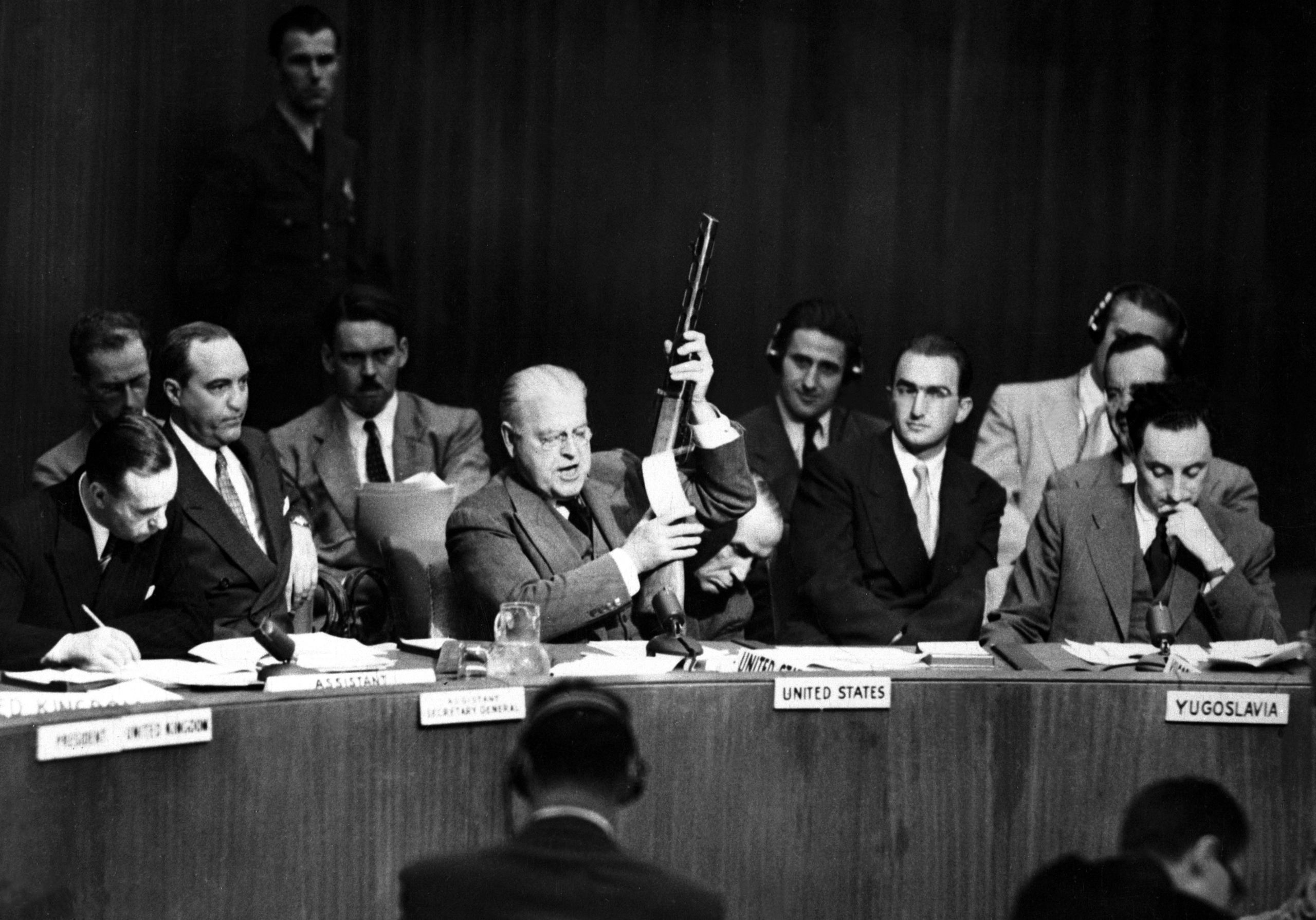
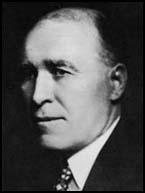
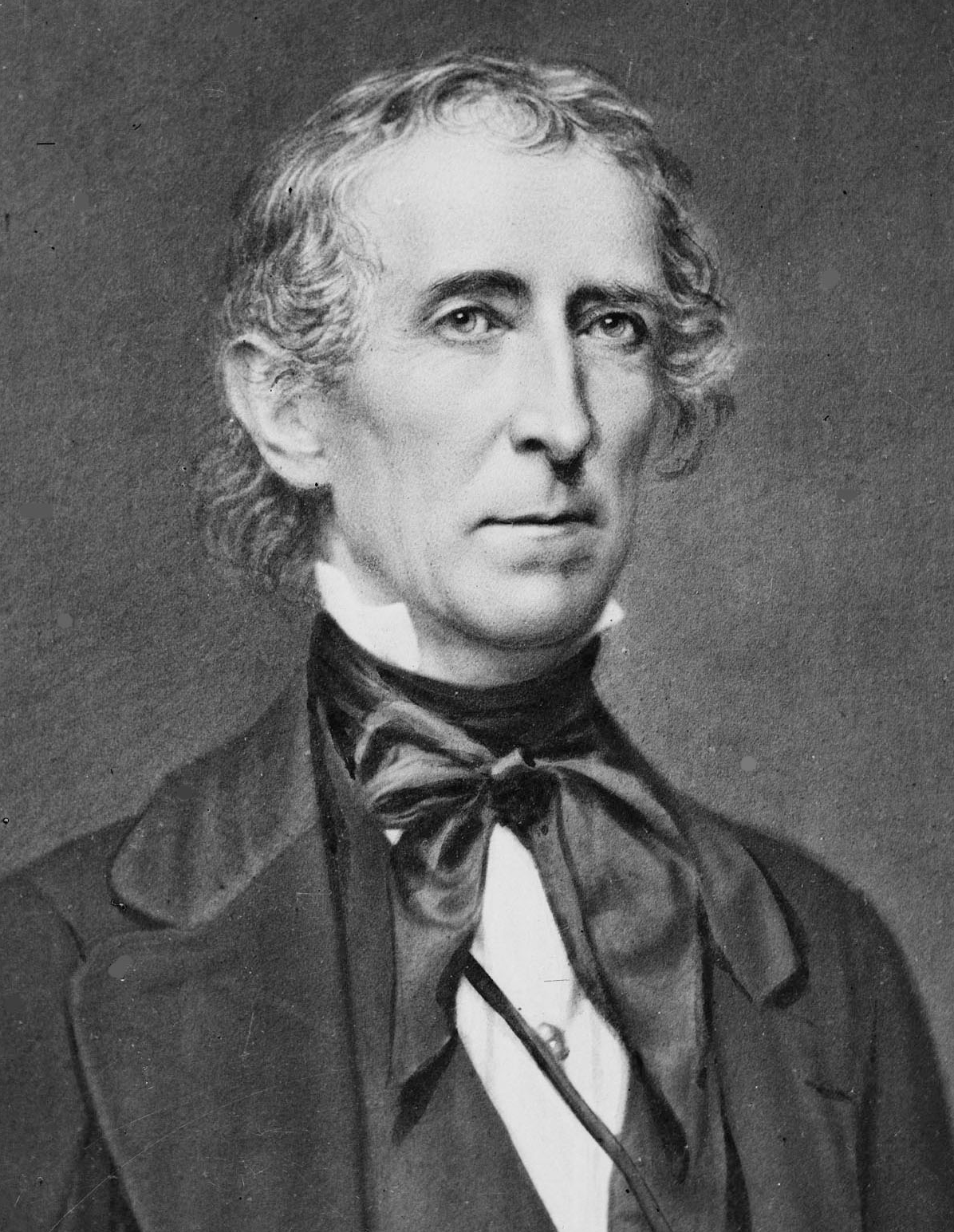


 Mad Politics: The Bizarre, Fascinating, and Unknown of American Political History