In 1992, the Democrats won the White House for the first time since 1976, and with united government they sought to make numerous changes in the liberal direction, and one of the many issues Clinton was firmly liberal on was abortion. Since the late 1970s, a major movement of protests of abortion clinics formed, but with non-violent protests there came incidents that went beyond standard protesting, such as intimidation, criminal harassment, stalking of abortion providers, and violence. A particularly notable group perpetrating these incidents was the terrorist group Army of God, whose members have committed numerous crimes against abortion providers, including murder. The escalation of tactics as well as the March 10, 1993 murder of Dr. David Gunn by pro-life extremist Michael Griffin motivated the Democrats to push for the Freedom of Access to Clinic Entrances (FACE) Act.
While numerous of these activities were of course already illegal under state and local laws, the citations for trespass were not thought sufficient and in some jurisdictions local law enforcement was thought to be lax. Proponents also argued that the state and local authorities did not have sufficient resources to deal with the scope and scale of these incidents. The initial bill was passed in November 1993 and only covered abortion clinics, but in order to shore up additional support churches and other places of worship were added, thus creating two protected classes. In the House, the measure was sponsored by Reps. Chuck Schumer (D-N.Y.) and Constance Morella (R-Md.) while the Senate sponsor was Ted Kennedy (D-Mass.).
Rep. Louise Slaughter (D-N.Y.) justified this new law, stating, “State and local law enforcement lack the resources – and sometimes lack the will – to battle large-scale, long-term operations that include trespassing, vandalism, and assault (Congressional Record).
Rep. Jim Bunning (R-Ky.) opposed the bill, and stated in his opposition, “In the sixties, before passage of the Civil Rights Act, there were sit-ins, pray-ins and protests all around the country. Some were peaceful. Some were not. In some circles, the civil rights movement was not very popular, but Congress did not pass special laws to discourage civil rights protests because of their motivation or because of their viewpoint. He went on to say, “Yes, we should punish violence, threats of violence and intimidation. But this bill goes beyond that. It would punish people engaged in non-violent, free speech. It would create harsh new penalties for people who engage in non-violent civil disobedience” (Congressional Record).
Rep. Carolyn Maloney (D-N.Y.) in support stated, “Most people would be outraged if they were prevented from entering a supermarket – or a church or an office building or any other place – by someone who disagreed with what was going on inside. We need this Freedom of Access bill because throughout our country, there continue to be bombings, assaults, threats, and even murders by people trying to prevent people from working in or using medical facilities which offer reproductive health services. In the previous Congress, the House passed the Farm Animal and Research Facilities Protection Act, which prevents violent blockades of facilities for research animals. If we care that much about facilities for animals, we ought to care about facilities for women. The right to choose is meaningless without the access to choose.”
Rep. Lynn Schenk (D-Calif.), shall we say, poured on the Tabasco sauce in this debate when she alleged the motives of the opposition, “Their true agenda is to continue the reign of harassment, terror, and physical intimidation against women and their doctors” (Congressional Record). Would it surprise you to learn that she is a lawyer?
Rep. Chris Smith (R-N.J.), who continues to serve, had the most to say in opposition on the day of passage and in defense of abortion protestors, “The difference in what we are dealing with today are those acts of nonviolent civil disobedience, and I can tell you Mr. Speaker, if we applied the standard in this bill to those who have been involved in D.C. statehood, civil rights, women’s rights, animal rights, and a whole host of other very important causes, this particular legislation would never see the light of day on this floor. Mr. Speaker, just let me also make a very important point: that sidewalk counseling has saved tens of thousands of children throughout the last 20 years. Women, many of whom have had abortions frequently become sidewalk counselors and go to abortion clinics to speak out. These women, and I have pictures of women who have helped women through the difficult, distressful pregnancies they may be experiencing, they have helped women about to abort at that 11th hour (Congressional Record).
The bill passed the House on May 5, 1994 on a vote of 241-174 (D 201-43, R 40-131). The Senate followed up on a vote of 69-30 (D 52-3, R 17-27) a week later. Interestingly, among the Republican supporters was Mitch McConnell. The three Democratic dissenters were J. Bennett Johnston and John Breaux of Louisiana along with J. James Exon of Nebraska. None of these seats are held by Democrats today.
This law was controversial in passage as some non-violent tactics could result in jail time. For instance, in practice, one protest tactic that has resulted in jail time for offenders has been sit-ins. In particular, activist Herb Geraghty was imprisoned for doing so in Pennsylvania in 2020 and was sentenced in 2023. He was pardoned in 2025 by President Trump, and has advocated for the law’s repeal (Geraghty). It should also be noted that since passage of the law the number of violent incidents decreased surrounding abortion. I must note that it is interesting that the FACE Act is being used against Don Lemon yet the administration has made clear that it is only interested in using the FACE Act in egregious cases regarding clinics (Lucas). Selective prosecution does not seem to only been a feature of the present administration; the Biden Administration was also alleged to have used to the FACE Act selectively, in being willing to prosecute cases of attacks on abortion clinics at higher rates than attacks on pregnancy centers and churches (Kamman). That administrations, past and present, have used this law most selectively makes a case for repeal in this writer’s opinion. Earlier this year, Representative Chip Roy (R-Tex.) proposed to repeal the FACE Act.
References
A bill to amend the Public Health Service Act to permit individuals to have freedom of access to certain medical clinics and facilities, and for other purposes. Voteview.
On Saturday, Americans learned that Venezuelan dictator Nicolas Maduro had been taken from Caracas by U.S. forces and flown to Manhattan for trial. The most obvious comparison between the ouster of Maduro by the U.S. is the ouster of General Manuel Noriega of Panama. Although the cases of Maduro and Noriega on their faces do look the same, as in a Latin American dictator is engaged in drug trafficking and is wanted by the United States, there are some significant differences between the circumstances that resulted in Operation Just Cause.
Relations between the U.S. and Panama have had a complicated history, and part of this was the control of the U.S. over the Panama Canal, which they had constructed, and the area they owned called the Panama Canal Zone. Starting in the 1960s, agitation for Panamanian ownership of the Panama Canal began, and U.S. leaders began supporting turning over the Panama Canal to improve relations with Latin America. President Gerald Ford endorsed the idea while Jimmy Carter came around to it once he was president. With the signing of the Panama Canal treaties in 1978, the U.S. and Panama had certain treaty obligations, such as the U.S. reserving the right to militarily intervene if neutrality over the canal was violated. Carter had signed the treaty along with Panama’s leader, Omar Torrijos. However, Torrijos was killed in an air crash in 1981, and the power vacuum that followed was resolved by the rise to power of Manuel Noriega. Noriega was never officially the leader, rather he had puppet presidents.
The U.S. and Noriega: From Friends to Foes
Manuel Noriega had a long and complicated relationship with the United States, which began with his recruitment from the Panamanian military to study at the School of the Americas through the U.S. Department of Defense in the 1950s, which trained many anti-communist fighters in the Western Hemisphere. Noriega rose up through the Panamanian military and in 1968, he bet on the right horse when he backed the coup that deposed President Arnulfo Arias for Omar Torrijos. As a reward, Torrijos made him chief of military intelligence. In 1971, the CIA began paying him for intelligence (Graham). In 1981, however, Torrijos was killed in a mysterious plane crash and out of the power vacuum Noriega became the unofficial leader of Panama. He was never president, rather he had figureheads serve his interests as president. The U.S. was initially supportive of Noriega as an anti-communist leader in Panama, and indeed he provided military support for the Contras in Nicaragua. However, the CIA wasn’t his only outside source of income. In 1982, Noriega cut a deal with Pablo Escobar to allow his cocaine to move through Tocumen International Airport. In return, Noriega would get $1000 per kilo of cocaine that reached the U.S. Although the U.S. knew of this arrangement, they valued him for his providing weapons and funding of Contra rebels in Nicaragua. However, what they didn’t know until later is that the CIA wasn’t the only intelligence agency paying him. Despite his anti-communist stance, Noriega was also a double-agent, accepting money from Cuban intelligence in exchange for information on the U.S. He also became increasingly brutal as a ruler, including beheading political rival Hugo Spadafora in 1985. After the president he had rigged the 1984 election for, Nicolas Ardito Barletta, promised an investigation, Noriega forced his resignation. On February 4, 1988, Noriega was indicted in Miami for drug trafficking and money laundering. In May 1989, Noriega again stole the election, much like Nicolas Maduro had in Venezuela in 2024. Noriega afterwards amped up the hostility to the U.S., including stating that the U.S. and Panama were in a “state of war” and with his forces firing on U.S. marines, killing one, and abducting another marine and his wife, brutally beating him and threatening her with sexual assault. Given that Noriega was acting with such impunity there was certainly an existing risk for the neutrality of the Panama Canal.
On December 20, 1989, Operation Just Cause, or the invasion of Panama, was ordered by President Bush. A tremendous amount of American public support already existed for such an action, unlike the sudden operation and capture of Maduro, which came a bit out of left field for most, as prediction markets showed (the success of this however certainly serves to blunt a lot of criticism). The invasion of Panama proceeded quickly, and Noriega fled to the Vatican’s embassy for diplomatic sanctuary. The US forces proceeded to surround the embassy and blast disturbing chicken sounds and numerous songs including “Give it Up” by K.C., “Welcome to the Jungle” by Guns N’ Roses, “Never Gonna Give You Up” by Rick Astley, “Danger Zone” by Kenny Loggins, and “Panama” by Van Halen as a form of psychological warfare to get Noriega to come out (Myre). Noriega surrendered on January 3, 1990 and he was brought to the U.S. for trial.
Noriega was convicted by a Miami jury and sentenced to 40 years imprisonment for drug trafficking, racketeering, and money laundering. He served 17 years after which he was extradited to France where he was convicted of money laundering in 2010 and then extradited back to Panama where he was imprisoned for murder, corruption, and embezzlement, having previously been convicted in absentia. He died in a Panama City hospital of cancer on May 29, 2017. Some differences that exist between Maduro and Noriega is that although you could say that Venezuela is a national security issue for the U.S. given their relationships with China and Russia and that under Maduro it had become a narco state, there were more clear open hostilities with the U.S. with Panama and the Panama Canal lay in the balance.
References
Graham, D.A. (2017, May 30). The Death of Manuel Noriega – and U.S. Intervention in Latin America. The Atlantic.
The subject of the war powers of the president have again arisen with the Saturday U.S. raid on Caracas and the capturing of Venezuelan dictator Nicolas Maduro and his wife for trial. President Trump did not invoke the War Powers Resolution, although neither did President George H.W. Bush for his invasion of Panama in 1989-1990. The War Powers Resolution is definitely a subject of discussion, though, for this most notable event and today I am looking into the circumstances of the adoption of the War Powers Resolution.
Clement J. Zablocki (D-Wis.) and Nixon.
By 1973, the U.S. was in the process of withdrawing from Vietnam and many members of Congress were critical of how both Presidents Johnson and Nixon had used their war powers. For the latter, it was when Nixon ordered secret bombings of Cambodia without seeking Congressional consent. In the House, Clement J. Zablocki (D-Wis.), chairman of the House Foreign Affairs Committee, introduced the War Powers Resolution. The measure had bipartisan support as well as drafting, with Paul Findley (R-Ill.) being the resolution’s main author. The resolution requires the president to notify Congress within 48 hours of military action and bars forces from remaining for more than 60 days. The first body to vote on this resolution would be the House. On July 18, 1973, they voted for 244-170 (D 171-61, R 73-109). The central architect of the resolution in the Senate was Jacob Javits (R-N.Y.), one of the most liberal members of Nixon’s party who had repeatedly been in opposition to the Nixon Administration on Vietnam. He considered the measure as “a critical departure from the past” (CQ Almanac 1973). However, the measure attracted broad support, and a key senator to come out in favor was the chairman of the Senate Armed Services Committee and known conservative John C. Stennis (D-Miss.), who expressed that “It is of the utmost importance to the future of this nation that we not again slip gradually into a war that does not have the moral support and sanction of the American people” (CQ Almanac 1973). However, the measure did not have the support of another prominent figure from the South, a legal authority on the Constitution, Sam Ervin (D-N.C.). Ervin held that the measure was unconstitutional, stating, “Here is a power and a duty which the Constitution clearly imposes upon the President of the United States, to use the armed forces to protect this country against invasion. And here is a bill which says expressly that the President of the United States cannot perform his constitutional duty and cannot exercise his constitutional power to protect this country against invasion for more than 30 days without the affirmative consent of Congress” (CQ Almanac 1973). There was also a small cadre of liberals who opposed the War Powers Resolution as not being sufficiently strong. Thomas Eagleton (D-Mo.) objected to the absence of a provision disallowing the use of intelligence agencies or other actors to engage in hostilities against other nations (CQ Almanac 1973). On July 20th, the resolution was adopted 72-18 (D 50-4, R 22-14), but because it was different from the House version, the measure had to go into conference. October 10th, the equation did not change in the Senate with a vote of 75-20 (D 49-6, R 26-13, C 0-1), still a veto-proof margin. However, original passage in the House had not been veto-proof. This, however, would not remain so as President Nixon’s popularity was declining from the continuing sore on his presidency that was Watergate.
Majority Leader Tip O’Neill (D-Mass.) argued for the resolution, holding that “If the President can deal with the Arabs, and if he can deal with the Soviets, then he ought to be able and willing to deal with the U.S. Congress. That is all we ask of him” (CQ Almanac 1973). Democratic leadership was united in favor, and Republican leadership was mostly united against. The exception was Senate Minority Leader Hugh Scott (R-Penn.), thus the foremost opponent in the House was Minority Leader Gerald Ford (R-Mich.). Ford, less than a year away from being president, expressed his concerns, “We may be a long ways from being out of the woods. I am very, very concerned that the approval of this legislation over the President’s veto could affect the President’s capability to move forward from cease-fire and to achieve a permanent peace” (CQ Almanac 1973). The resolution passed on October 12th 238-122 (D 163-38, R 75-84). President Nixon, as no one doubted he would, vetoed the resolution. Further eroding Nixon’s popularity, however, between final passage and his veto of the resolution, the “Saturday Night Massacre” had occurred, in which Attorney General Elliot Richardson resigned after refusing Nixon’s order to fire special prosecutor Archibald Cox, and Deputy Attorney General William Ruckelshaus was fired after refusing to fire Cox. Solicitor General Robert Bork ultimately agreed to fire Cox.
The real battle to override the President’s veto occurred in the House, as supporters had more than enough on passage in the Senate to get the resolution through. To achieve an override, eleven opponents of the president had to be lobbied to switch their votes from “nay” to “yea”. Bella Abzug (D-N.Y.), one of the most left-wing members of Congress, had opposed, stating before the conference report that “I shall vote against this bill because it is patently unconstitutional and gives the President power he does not now have…I fear that it does exactly the opposite of what we set out to do: that is, to prevent the President, any president, from usurping the power of Congress to declare war” (CQ Almanac 1973). Speaker Carl Albert (D-Okla.) and the liberal group Americans for Democratic Action actively lobbied these legislators to switch. Their efforts were successful, as eight did so, including Abzug. The House vote of 284-135 (D 197-32, R 87-103) to override on November 7th was four votes above the threshold needed to override President Nixon’s veto.
In the Senate, with an override now inevitable, a few members switched their votes later that day: Republican Howard Baker of Tennessee and Democrats James Allen of Alabama, Harold Hughes of Iowa, and Gaylord Nelson of Wisconsin switched from “nay” to “yea” while Republicans Ted Stevens of Alaska and Henry Bellmon of Oklahoma switched from “yea” to “nay”. The vote was 75-18 (D 50-3, R 25-14, C 0-1). On a side note, the vote on the resolution as reported by Voteview has an error, as Senators Tunney (D-Calif.) and Tower (R-Tex.) have their votes swapped; Tower opposed the War Powers Resolution while Tunney supported. Overall, most of the resolution’s opponents were conservative, but there were some interesting conservative votes in favor on overriding the president’s veto, such as John Ashbrook (R-Ohio), who had run a quixotic primary campaign in 1972 to Nixon’s right, the legendary penny-pincher H.R. Gross (R-Iowa), and John Rousselot (R-Calif.), the only member of the John Birch Society in Congress at the time. In the Senate, conservative Republicans were a bit more unified against with Barry Goldwater (R-Ariz.) and Jesse Helms (R-N.C.) being among the dissenters, but you did have guys like James McClure (R-Idaho) and William Scott (R-Va.) as votes in favor. In another indication of how poorly the Nixon Administration was doing on popularity, among Southern Democrats, a key group that Nixon sought to court support, only Sam Ervin voted against overriding Nixon’s veto.
There have been critics of this resolution, both as being too strong and too weak. Law Professor Robert F. Turner argued in a Fall 2012 journal article that the War Powers Resolution was unwise, unconstitutional, and even resulted in a reduction of American security to the point that it directly contributed to the 9/11 attacks. However, Scott R. Anderson, a fellow of the Brookings Institution, holds that although the War Powers Resolution is imperfect, it was a good undertaking that had a positive result in constraining the executive in getting the US into prolonged wars.
References
Anderson, S.R. (2023, November 9). The Underappreciated Legacy of the War Powers Resolution. Lawfare.
To Agree to the Conference Report on H.J. Res. 542, to Govern the Use of the Armed Forces by the President During the Absence of a Declaration of War. Voteview.
To Override the President’s Veto of H.J. Res. 542, Concerning the War Powers of the Congress and the President Concerning the War Powers of the Congress and the President. Voteview.
To Override the President’s Veto of H.J. Res. 542, to Govern the Use of the Armed Forces by the President During the Absence of a Declaration of War. Voteview.
Turner, R.F. (2012, Fall). The War Powers Resolution at 40: Still an Unconstitutional, Unnecessary, and Unwise Fraud that Contributed Directly to the 9/11 Attacks. Case Western Reserve Journal School of Law, 45(1).
Come November 2, 1948, Republicans were highly confident that they would have a new president in Thomas E. Dewey. Dewey was the governor of New York and a young, genial if a bit of a tame candidate. He had also earned great acclaim as the mob-busting district attorney of Manhattan. Dewey had been aggressive on the 1944 campaign trail, and his advisors believed he needed to play it safe this time. However, one person who did not think so was House Speaker Joe Martin’s (R-Mass.) mother, who according to Martin (1960) while Dewey was campaigning in North Attleboro, “admonished him with more wisdom than any of us realized at the time ‘Don’t take it so easy'” (19). President Harry S. Truman was not taking it easy…at all.
The common perception of Truman’s chances.
President Truman faced not one, not two, but three challengers in 1948. Generally, having more than one significant challenger as a president is bad news for the president’s party. This proved most notably true in 1892, 1912, 1968, and 1992. Along with Dewey, Truman faced two breakaways from within his own party. The first was former Vice President Henry A. Wallace, who was nominated to run for president for the newly constituted Progressive Party, not to be confused with Theodore Roosevelt’s Progressive Party or Wisconsin’s Progressive Party. Wallace ran on a staunchly left-wing platform and refused to criticize communists, and although this Progressive Party did not start as a communist venture, the party machinery became controlled by secret communists and went as far as to oppose the Berlin Airlift (Radosh). Wallace would later regret his run and realize the error of his positions on communism. On Truman’s right was the State’s Rights Party (or “Dixiecrat” party) and its nominee, South Carolina Governor Strom Thurmond. Before his run, Thurmond was seen as a bit of a racial moderate by Southern standards. However, with this campaign he became the national spokesman for Jim Crow. President Truman had ordered the desegregation of the army and embraced a civil rights platform, which seriously tested Southern support for him.
Truman worked hard to get reelected. He went around the nation blasting the “do nothing” Republican 80th Congress (they simply weren’t doing what he wanted on domestic issues and doing things he didn’t want). Dewey opted to stay above the fray and not defend the 80th Congress. Truman also campaigned heavily on the farm vote, placing blame on the Republican Congress for a grain storage shortage and highlighting Republican cuts to agricultural programs.
Although all newspaper polls predicted a Dewey win, including papers preemptively publishing that he won, as seen in the below picture, Truman managed to completely defy expectations. Instead of divisions harming him, they actually helped distinguish him from radicals and from segregationists, which helped him consolidate votes from moderate voters, farmers, and blacks. Truman swept much of the Midwest, the West, and although he lost four Southern states to Thurmond, it was not enough to hamper him. In New York, the Progressive Party’s presence did split the left and Dewey won the state, but that was the most damage they did to Truman.
The results were apparent down ticket too, as Republicans not only lost the House, but their loss was a whopping 75 seats! In the Senate, Republicans lost 9 seats.
In California, Democrats gained three seats, but this was offset by two with Republican Hubert Scudder succeeding retiring Democrat Clarence F. Lea and Republican Thomas Werdel succeeding retiring Democrat Alfred Elliott. The sweetest loss for Truman was most certainly Fresno’s Bud Gearhart, who he had specifically campaigned against as a conservative obstructionist, “You have got a terrible Congressman here. He has done everything he possibly could do to cut the throats of the farmer and the laboring man” (Time Magazine).
In Colorado, two Democrats defeated Republican incumbents. Republican Robert Rockwell was defeated by Democrat Wayne Aspinall, who would serve in Congress until 1973, while Democrat John Marsalis’s defeat of J. Edgar Chenoweth would not stick and he would return in the 1950 election.
In Connecticut, two House Republicans lost reelection, but this was not too shabby; Republicans had been out all of their seats before and would get fully wiped out in the 1958 midterms. A notable Congressional freshman was future senator Abe Ribicoff.
In Delaware, Republican Senator C. Douglass Buck lost reelection to Democrat J. Allen Frear.
In Idaho, Democrat Compton White would return for one more term. He had served from 1933 until his 1946 defeat by Abe Goff. Republican Senator Henry Dworshak would lose reelection to Democrat Bert Miller, but he would return after Miller died the next year.
In Illinois, Republicans lost six seats, most prominently in Chicago. This was before Richard Daley made Democrats the undisputed dominant party of the city. Republican Senator Curly Brooks would lose reelection to Democrat Paul Howard Douglas in an upset.
In Indiana, Republicans lost five seats, which is a bit hard to imagine today.
In Iowa, Senator George Wilson was defeated for reelection by Democrat Guy Gillette, who had previously served in the Senate. An added shocker to Truman’s win in that staunchly Republican state.
In Kentucky, Republican W. Howes Meade lost reelection to Democrat Carl Perkins. Perkins would serve until his death in 1984 and became most noted for his work on education. Republican Senator John Sherman Cooper would also lose reelection, to Democrat Virgil Chapman.
In Massachusetts, Republican Charles Clason lost to Democrat Foster Furcolo, who would later serve as the state’s governor.
In Michigan, Republicans lost two House seats in Detroit. Yeah, it was a different time back then. A notable freshman was future President Gerald Ford of Grand Rapids.
In Minnesota, the Democrats proved that the merger of the Democratic Party and the Farmer-Labor Party was an excellent idea. They had gone from only representing the Iron Range to Hubert Humphrey defeating Republican incumbent Joseph Ball for the Senate by 20 points and gaining three House seats. Second only in sweetness to Humphrey’s victory in Minnesota for Truman was most certainly the defeat of House Ways and Means Committee Chairman Harold Knutson, who had been in office since 1917, was a bitter foe of internationalism, and was at loggerheads with the Truman Administration on tax reduction.
In Missouri, Truman was certainly jumping for joy at Democrats gaining eight House seats. Republican House incumbents were almost entirely wiped out, with only Springfield’s Dewey Short surviving the wave.
In Nebraska, Warren Buffett’s father, Howard, was defeated for reelection in Omaha. Buffett would return in the 1950 election for one more term.
In New Jersey, Democrats gained three seats, including that of retiring Republican Fred Hartley of Newark, who had sponsored the Taft-Hartley Act, which passed over President Truman’s veto. His successor, Peter Rodino, would serve until 1989 and chair the House Watergate Committee. That seat has not been represented by a Republican since.
In Nevada, Democrat Walter Baring won the seat.
In New York, Democrats gained nine seats, but one of those was from American Labor Party Congressman Leo Isacson. Five of the Republican losses were in New York City.
In Ohio, Republicans lost eight House seats, including that of At-Large Representative George Bender, who would be among the returning representatives in the 1950 election.
In Oklahoma, Democrats had a clean sweep of the state, with Republican George Schwabe of Tulsa losing to Dixie Gilmer (Schwabe would come back for one more term in the 1950 election) and they would gain the Enid-based seat as well as a Senate seat.
In Pennsylvania, Republicans lost eleven seats, including four in Philadelphia. Yes, Philadelphia used to be a strongly Republican city, but this election was the beginning of the end; Republicans would never hold all of Philadelphia’s seats again.
In Utah, Republican William A. Dawson lost reelection to Democrat Reva Beck Bosone. He would return in the 1952 election.
In Washington, Democrats gained one seat.
In West Virginia, Democrats gained all four of the House seats Republicans held and Democrat Matthew Neely made a return to the Senate by defeating Republican Chapman Revercomb for reelection.
In Wisconsin, Democrats gained two seats based in Milwaukee.
In Wyoming, Democrat Lester Hunt defeated Republican Senator Edward Robertson for reelection. It was a different time!
References
Face of the Victor. (1948, November 15). Time Magazine.
It can be highly tempting for people to say that one state has “always been conservative” or “always been liberal” to explain away party switches. But the reality is that populations shift, political priorities shift, and one party’s policies can go so strongly against a certain state’s interests that their voters move to the other party, even if in the past they had supported much of what their old party stood for. This has been demonstrably true of some states even in modern day. I will present today five examples of states, not in the former Confederacy or New England, which have had considerable evolution in their status.
Henry Clay of Kentucky, whose state and him went from being supporters of Thomas Jefferson’s Democratic-Republicans to being staunchly with the Whig Party.
Delaware
Our last president was the first from America’s first state of Delaware. Since 1992, the state has voted Democratic and since 1996 it has done so by double digits save for 2004. Delaware also now has the distinction of having elected the first member of Congress to identify as trans. The state’s Democratic dominance would have been absolutely unthinkable during the time of the foundation of the Democratic Party itself.
Delaware had been one of the most loyal states to the old Federalist Party, only voting for the Democratic-Republicans in the 1820 election in which James Monroe had no substantive opposition. Delaware was also a reliable state for the Whig Party until 1852, when all but four states voted for Democrat Franklin Pierce. Normally, Delaware voters would be supportive of the economic philosophy that guided both the Federalists and the Whigs; an adherence to Alexander Hamilton’s American System. This being imposing tariffs both for protection of domestic industry and to fund internal improvements for the purpose of expanding national growth. The Whig’s successor party, the Republican Party, would embrace the same. However, Delaware was a tough state for Republicans because it was a slave state. Although slavery was not practiced by most families in the state by the start of the War of the Rebellion, many voters still defended the “peculiar institution” and the political of the power of the state lay with its defenders. During the war, its voters elected Unionist politicians to the House, but its senators were Democratic and defenders of slavery in Willard Saulsbury, James A. Bayard, and George Riddle. From 1865 to 1895 all of its governors were Democrats, and until the 1889 election all its senators Democrats. What changed in Delaware was that more blacks were becoming middle class, thus making the issue of race less salient. What’s more, a certain prominent family moved their operations to Delaware and bankrolled the state’s Republican Party in the du Ponts. Although in 1888, Delaware had voted for Democrat Grover Cleveland by nearly 12 points, an ominous signal of times ahead for the Democrats came in the next election, in which Cleveland won, but by only 1.5 points. This was an election in which incumbent Benjamin Harrison was unpopular and Cleveland scored unexpected wins in states that had consistent records of Republican voting in Illinois and Wisconsin, the former having voted Republican since 1860 and the latter having done so since its first presidential election in 1856. Delaware’s politicians, be they Democratic or Republican, had records of opposition to inflationary currency, and the economic depression as well as the Democrats shifting towards the left by picking William Jennings Bryan, a proponent of currency inflation through “free coinage of silver” (no limits on silver content in coinage), left Delaware cold. McKinley won the state by 10 points in 1896.
The 1896 election kicked off a period of Republican dominance. Until 1936, save for the 1912 three-way election, Delaware voted for the Republican candidate. Henry du Pont and his cousin Thomas were elected to the Senate during this period, and during FDR’s first term, its senators, Daniel Hastings and John Townsend, were the most consistent opponents of the New Deal in the Senate and voted against Social Security. However, FDR’s appeal even penetrated Delaware; Hastings would lose reelection in 1936 and Townsend in 1940. However, in 1948, Delaware would return to the Republican fold in voting for Thomas Dewey. The state would vary in its voting behavior through 1988, and it would go for the Democrat in the close 1960 and 1976 elections. Since 1993, Delaware has had only Democratic governors, and it has not elected a Republican to the Senate since 1994 nor to the House since 2008. A big part of the state’s shift towards the Democrats was that from 1990 to 2018, the black population of Delaware increased by 47% (Davis). Since 1964, black voter support for Republican presidential candidates has not surpassed 15%. Delaware does not look like it will turn away from the Democrats any time soon.
Iowa
Admitted to the Union in 1846, Iowa started existence as a Democratic state. In 1848, its voters preferred Michigander Lewis Cass to Whig Zachary Taylor. However, a significant minority of Iowa’s Democrats were staunchly anti-slavery and after the Kansas-Nebraska Act of 1854, these people bolted to the newly formed Republican Party. The GOP’s most prominent politician in the latter part of the 19th century and for a few years in the early 20th was Senator William B. Allison, who would be part of the Senate’s leadership during the McKinley and Roosevelt presidencies. Until 1912, Iowa would without fail vote for Republican presidential candidates and would not do so again until 1932. From 1859 until 1926, all of its senators were Republicans, and the 1926 case was because Republicans had split over their nominee, Smith W. Brookhart, who was on the party’s liberal wing. Iowa Democrats made significant headway during the 1930s, with the state even having two Democratic senators from 1937 to 1943. However, the state was moving against Roosevelt and its voters were strongly against American involvement in World War II, preferring the Republican candidate in 1940 and 1944. There was a bit of a surprise when Truman won the state in 1948, something that can be credited to his effective appeals to Midwestern farmers and painting the Republican 80th Congress as bad for their interests.
Iowa nonetheless continued its Republican voting behavior in Republican presidential elections, even though the state’s party saw significant gains in the 1970s, including both Senate seats. In 1988, Iowa delivered a bit of a surprise in its vote for Democrat Michael Dukakis. Indeed, from 1988 until Trump’s victory in the state in 2016, Iowa would be Democratic on a presidential level with the only exception being Bush’s squeaker of a win in 2004. Since 2016, however, support for Republicans has only been increasing. In 2024, Trump won the state by 13 points despite that Seltzer poll. This was the best performance a Republican candidate has had in Iowa since 1972, when Nixon won with 57%.
Kentucky
Kentucky has an even more varied history as a state than Delaware. After it was first admitted, it did, as did all the other states, vote to reelect George Washington in 1792. However, when it came to choosing between Adams and Jefferson, they chose Jefferson and kept doing so up until the foundation of the Whig Party. The Whig Party had as its central founder Kentucky’s Henry Clay, who at one time had been part of Jefferson’s Democratic-Republicans but had opposed the rise of General Andrew Jackson.
Kentucky’s issue with sticking with the successor party was the same as Delaware’s: it was a slave state. It remained in the union but its voters were staunch foes of the GOP. Kentucky did not vote Republican until 1896, and did so narrowly, a product of the economic depression and Democrat William Jennings Bryan’s inflationary currency stance. Although this looked like an opening and indeed Republicans had a few successes in electing governors, the state maintained its Democratic character up until 1956, its voters having only seen fit to vote Republican in 1924 and 1928. The 1956 election was quite successful for Dwight Eisenhower and Republicans, including in Kentucky. Not only did the state vote for him, they also voted in two Republicans to the Senate in John Sherman Cooper and Thruston B. Morton. However, their brand of Republicanism was much more moderate than what we see from Kentucky’s GOP today. Republicans followed up their 1956 win with Nixon’s 1960 win of the state. From 1956 onward, Kentucky did not vote for a Democratic candidate for president unless he was from the South. The last time the state voted for the Democrat was Bill Clinton in 1996. Nonetheless, the state party remained strong, and from 1975 to 1985 both of its senators were Democrats. However, this was broken with the election of Mitch McConnell in 1984, and Democrat Wendell Ford retired in 1999. To this day, Ford is the last Democratic senator from the state. This Republican bent is not going away any time soon either; Trump scored the highest margin of victory that any Republican has in 2024, even surpassing Nixon’s 1972 performance. However, Kentucky does still elect Democratic governors, but this puts it in a similar position to Vermont, which is highly Democratic but has happily elected Republican Governor Phil Scott.
New York
New York presents an interesting case as although recently it has voted solidly for the Democrats since 1988, it was at one time a big swing state. Indeed, New York’s vote was predictive of the winner of presidential elections until 1856, when their voters backed Republican John C. Fremont. However, this did not put them firmly in the Republican column. Indeed, Democrats had a strong presence in the state through the political organization of Tammany Hall in New York City. Republicans had a powerful machine as well in the late 1860s to early 1880s under Senator Roscoe Conkling. The electoral vote rich state became a prime target for the parties, and it resulted in Democrats picking people who were for hard currency for their presidential candidates even though their base nationwide was favorable to soft, or inflationary currency. When Democrats picked a New Yorker, they usually won the state. In 1868, they elected former New York Governor Horatio Seymour, and although the Republicans won the election, the Democrats won New York. In 1876, the same was true with their pick of Samuel J. Tilden. However, with the downfall of the Bourbon Democrats and the economic depression of the 1890s, New York voted for Republican William McKinley, beginning an era of Republicans being dominant in the state. These weren’t liberal guys either; at the start of the Harding Administration its senators were William Calder and James W. Wadsworth Jr., both staunchly conservative, with Wadsworth voting against the entirety of the New Deal in FDR’s first and second terms as a representative. However, the status of Republicans was starting to weaken with the gubernatorial elections of Al Smith and Franklin D. Roosevelt and in 1928 even though Republicans fared quite well in that election, Hoover only won the state by two points. New York would vote for Roosevelt all four times and although it would vote for Republican Thomas Dewey in 1948, this was a plurality caused by Henry Wallace’s Progressive Party getting 8.25% of the vote. New York voted for Eisenhower twice, but I would say that its Democratic era began with the election of 1960. I say this because Republicans have only won three presidential elections since then; the 49-state landslides of Nixon in 1972 and Reagan in 1984 as well as Reagan in 1980. It is true that Republicans were still able to elect some governors and managed to hold on to one of the Senate seats for 42 years, but this was because Republicans ran candidates that were far from doctrinaire conservatives. Jacob Javits, who served from 1957 to 1981, was a textbook example of a RINO, and his successor, Al D’Amato, would probably be a bit too moderate for the modern GOP’s tastes. Perhaps Republicans have some reason for optimism in the Empire State; Trump’s performance in 2024 was the best Republicans have had since 1988.
Oregon
You might have trouble believing this, but until Michael Dukakis’ win in 1988, Oregon had voted Republican for president 81% of the time. This included the close 1960 and 1976 elections and before Wilson’s 1912 win, they had only voted Democratic in the 1868 election. The state remained fairly robust for the GOP, even when faced with FDR. Although Roosevelt won the state four times, its senators were Republican for almost the entire time. Oregon’s Charles McNary was the leader of the Senate Republicans! Oregon also had Republican governors for all but six years from 1939 to 1987. However, Oregon Republicans understood that they had to make exceptions here and there on conservatism and McNary was a very moderate conservative. The Eisenhower Administration would challenge Republican rule in Oregon based on its belief in the private sector, rather than the public sector.
In 1954, the bottom began to fall out for the state GOP, and this was due to the Eisenhower Administration’s favoring private development over public development of power. It was in that year that Republicans lost the Congressional seat based in Portland and their senator lost reelection. This would be followed by two more Congressional Republicans losing reelection in 1956. The defeated senator, Guy Cordon, stands as the last conservative to represent Oregon in the Senate. Although for 27 years Oregon had two Republican senators, neither Mark Hatfield nor Bob Packwood could be considered conservatives. Gordon Smith, who represented Oregon from 1997 to 2009, was a moderate.
Although Oregon has had a strong Democratic streak since 1988, it is also true that Al Gore won by less than half a point in 2000, and Kerry won by less than five points in 2004. However, Oregon’s Democratic politics have strengthened since then, and since 2008 the Democratic candidate has won by double digits. Oregon does not look like it will be moving to the Republican column at any time in the foreseeable future.
References
Davis, T.J. (2018, December 30). Young people are changing black politics in Delaware. Delaware Online.
This month, the Voting Rights Act of 1965 turned 60; Lyndon B. Johnson signed the bill into law on August 6th. Thus, I am covering the subject of the process of its passage.
Selma
The violence seen on national TV in Selma, with non-violent protestors being beaten by police on the Edmund Pettus Bridge, shocked the nation and increased calls for action on voting rights. Further pushing public opinion was a racist mob beating Reverend James Reeb to death at Selma and the murder of Viola Liuzzo by members of the KKK. Although the previous year’s landmark Civil Rights Act of 1964 had a section for voting rights, it was not regarded as sufficiently strong during the 1964 election. Although it was clear that in the Great Society Congress action would be taken, the question was which course would be taken?
A Harsh Bill
After these events that got worldwide press coverage, President Johnson instructed his Attorney General Nicholas Katzenbach to craft “the goddamndest, toughest voting rights act that you can” to counter the situation in the South. The Johnson Administration’s measure, backed by House Judiciary Committee Chairman Emanuel Celler (D-N.Y.), contained the following provisions:
. A suspension of literacy tests for five years in areas where less than 50% of the eligible population was registered or voted in the 1964 election.
. Federal examiners to register and enforce the right to vote for all citizens unable to exercise the right.
. Nationwide prohibition on measures that are discriminatory in voting practices.
. Outright ban on the poll tax for voting in state and local elections.
. Language assistance for voters who were not proficient in English.
. A “preclearance” provision requiring covered states and localities to get their election changes approved by the US Attorney General. This was one of the most controversial provisions.
The Senate
The advocacy for a strong Voting Rights Act was led by Senator Phillip Hart (D-Mich.), the bill’s manager, and was aided in efforts to strengthen the bill by Hiram Fong (R-Haw.), Birch Bayh (D-Ind.), Ted Kennedy (D-Mass.), Edward Long (D-Mo.), Joseph Tydings (D-Md.), Jacob Javits (R-N.Y.), Quentin Burdick (D-N.D.), and Hugh Scott (R-Penn.). The opposition to the measure would normally be led by Richard Russell (D-Ga.), but he was under the weather so the bulk of the work against came from Allen Ellender (D-La.), with help from Sam Ervin (D-N.C.), James Eastland (D-Miss.), John Stennis (D-Miss.), Herman Talmadge (D-Ga.), Lister Hill (D-Ala.), and John Sparkman (D-Ala.). The Senate’s party leaders, Mike Mansfield (D-Mont.) and Everett Dirksen (R-Ill.), were instrumental in crafting a bill that could get widespread support.
Whither Poll Taxes?
One controversy surrounding the Voting Rights Act was how the law should address poll taxes. The original bill had a provision that outright banned state and local poll taxes, but the bill was changed in the Senate on this count. A key vote on the Voting Rights Act was regarding Senator Ted Kennedy’s (D-Mass.) amendment to retain the bill’s explicit ban on the poll tax for states and localities. This amendment was opposed by President Johnson, Majority Leader Mike Mansfield, and Minority Leader Everett Dirksen. Mansfield and Dirksen crafted a substitute that declared that poll taxes were contrary to the right to vote and directed the U.S. Attorney General to initiate lawsuits against poll taxes in states and localities, believing that courts would act against poll taxes. Kennedy’s amendment failed on May 11th, 45-49. Courts would act as Mansfield and Dirksen anticipated in striking down poll taxes. The most unusual vote was from Louisiana’s Russell Long, who voted for this amendment but voted against the Voting Rights Act.
Support for the Voting Rights Act:
George McGovern (D-S.D.), future presidential contender, stated, “For more than one hundred years this basic right [voting] has been denied to large segments of the American citizenry, solely because of the color of their skin. The Voting Rights Act of 1965 will secure that right. It will be passed by an overwhelming margin, because there is broad agreement on the part of the American people that to deprive the American Negro of the right to vote is to deprive all of us of the essence of our heritage and democracy” (11750).
Jacob Javits (R-N.Y.), one of the Senate’s leading liberals, justified support of the Voting Rights Act given numerous instances of denials of the vote, stating, “The fundamental basis for the bill is the factual finding of Congress that there have been such widespread denials of the fundamental right to vote in so many broad areas of the Nation as to require the application of remedies in order to implement the 15th amendment” (11740).
Milward Simpson (R-Wyo.), while acknowledging the bill was a tough measure, he also said, “Time and time again legislation has been before the Congress which is proposed with the view toward bringing the right to vote to all citizens. I am ashamed, and all Americans should be ashamed, that this right has not been one of those cherished rights guaranteed to all citizens, regardless of race or color” (11746). Simpson’s support is a significant development as he had been one of six Republican senators to vote against the Civil Rights Act of 1964 the previous year.
Opposition to the Voting Rights Act:
James Eastland (D-Miss.), chairman of the Senate Judiciary Committee who had made his committee the “graveyard” for civil rights legislation, asserted that with the Voting Rights Act “we are entering an era of absolute government. The bill is a major step in that direction. It will destroy the system of government that we know now. We are destroying it under the whiplash of Martin Luther King and others of that ilk” and cited Article I, section 2 of the Constitution to justify opposition (11735).
John Sparkman (D-Ala.), who was the Democratic Party’s pick for vice president in 1952, opposed the bill on nine counts, including what he found to be unequal protection of the laws, a distortion of the proper relationship between federal, legislative, and judicial functions of government, and that the bill was sectional (11727-11728).
John Tower (R-Tex.) stated his sympathy with the aim of the bill and acknowledged that the federal government does have the authority to enforce the 15th Amendment, he objected to way it was to be achieved, holding, “Mr. President, the mathematical guilt formula to be so unjustly hung upon several States and counties, is arrived through the highly questionable assumption that literacy tests and lower voter participation always means discrimination. Other objective, basic assumptions that lack of participation in certain elections may be due to a strong one-party system, voter apathy toward one or more candidates, or even bad weather, are completely ignored” (11751).
Whither Literacy Tests?
The Voting Rights Act suspended literacy tests for five years in covered jurisdictions, and literacy tests would later be banned permanently. The core debate surrounded the question of whether literacy should be a consideration or if literacy tests should remain but with standards as to what constitutes literacy. Republicans, such as William McCulloch (R-Ohio), thought that a 6th grade education was sufficient proof of literacy. This standard would be placed into the Republican substitute of the bill. Another controversial proposal was by Rep. Jacob Gilbert (D-N.Y.), which permitted people to vote if they proved literate in a language other than English that was taught in their school. This amendment, primarily geared towards Puerto Ricans, was rejected 202-216. The bill passed 77-19 on May 26th, but the measure still had to get through the House.
Proposed Republican Substitute
House Republicans had an alternative voting rights plan, backed by Minority Leader Gerald Ford (R-Mich.) and William McCulloch (R-Ohio), ranking Republican on the Judiciary Committee. This substitute aimed to balance out the interests of state’s rights and civil rights, by making enforcement on a by county basis. It established a 6th grade education as proof of literacy (thus allowing literacy tests for individuals who had not graduated from 6th grade), retained the ban on poll taxes and would also cover Texas under the Voting Rights Act, which President Johnson, who continued to look out for the interests of his home state, didn’t want. Although not exactly a prince of a state on the subject of voting rights, it was known that the conditions of Texas were not like those of the Deep South. Rep. William McCulloch critiqued the Celler (D-N.Y.) version of the bill, and did so on conservative terms, calling the automatic trigger mechanism in the bill “pure fantasy – a presumption based on a presumption” and considered the committee bill an attack on the ability of the states to determine voter qualifications (Reichardt). This substitute had a key foe in liberal stalwart Frank Thompson (D-N.J.), who argued, “…I oppose the Ford-McCulloch substitute amendment because it does not reach down into the heart of the problems were are trying to eliminate. It is no fiction that “tests and devices,” a key phrase in voting and registration legislation, are being used to restrict the franchise. A serious defect of the Republican leadership substitute is in its requirement that Federal examiners administer tests to applicants with less than six grades of education. This requirement would serve to continue into the present and the future a double standard of testing – the very evil we are attempting to eliminate. Negroes would be tested by the examiners on the basis of the standard set forth in the substitute amendment – completion of six grades or passing of the State literacy test. At the same time, whites would be applying for registration to the State or local registrar, who would presumably do what he has always done – register whites on the basis of their white skin rather than on the basis of any educational achievement or passage of any test” (16228). Most fatal to this proposed substitute, however, was the embrace most Southern Democrats gave this substitute, even if they did not intend to support it on passage. This signaled to the liberal 89th Congress, already predisposed to support President Johnson on domestic policy, that the Republican substitute was weak. Rep. Harold Collier’s (R-Ill.) effort for the House to adopt the Republican substitute as well as Rep. Robert McClory’s (R-Ill.) amendment failed 171-248. Interestingly, a few opponents of the Voting Rights Act voted against this substitute, including some from Texas, as this version would have covered Texas. One Republican proposed amendment that did pass, however, was the Cramer (R-Fla.) anti-voter fraud proposal, which passed 253-165 with all Republicans in support.
House Supporters:
Ed Roybal (D-Calif.) cited recent violent events as justification for the Voting Rights Act and considered the measure a “clear, practical, effective, and legislatively responsible way to enable citizens to vote without the fear or threat of discrimination” (16280).
Majority Whip Hale Boggs (D-La.) stated, “I wish I could stand here as a man who loves my State, born and reared in the South, who has spent every year of his life in Louisiana since he was 5 years old, and say there has not been discrimination. But unfortunately it is not so” and went on to state, “I shall support this bill because I believe the fundamental right to vote must be part of this great experiment in human progress under freedom which is America” (U.S. House of Representatives). His announcement of support was a big deal given that he had previously opposed all civil rights measures save for the 24th Amendment.
Jonathan Bingham (D-N.Y.) stated his support for the Celler (D-N.Y.) version, regarding the Ford-McCulloch substitute as much weaker (16273).
Paul Findley (R-Ill.) spoke in support of the bill, citing the Lincolnian heritage of the Republican Party as Lincoln’s Illinois hometown of Springfield being in his district, and praised Gerald Ford’s (R-Mich.) recent appointment of Frank Mitchell, the first black page of the House (16272).
Charles Goodell (R-N.Y.) stated his reserved support for the Celler (D-N.Y.) version of the Voting Rights Act and voiced his preference for the Ford-McCulloch substitute. He regarded the Celler version as “unnecessarily punitive” and critiqued only applying the Voting Rights Act to seven states, noting Texas being absent from coverage, but said he would vote for the Celler bill (16273).
William F. Ryan (D-N.Y.) wanted a measure that did more, and cited deprivations he witnessed as a civil rights activist of freedoms of speech, assembly, and press, but acknowledged that this measure was the furthest the federal government had gone so far (16265).
Frank Annunzio (D-Ill.) praised the bill and also cited the murders of civil rights activists Reverend James J. Reeb and Viola Liuzzo as being bad for the US’s image abroad (16272).
House Opponents:
John Dowdy (D-Tex.) condemned the suspension of certain state laws surrounding election policy and considered suspensions as characteristic of martial law or the tyrannical regimes of Hitler, Mussolini, and Stalin, but not America (16268).
Glenn Andrews (R-Ala.) asserted that the Voting Rights Act itself was a form of discrimination against seven states, Alabama being among them, and cited Article II, section 1, clause 2 that states have the right to set voter qualifications (Congressional Record, 16274).
James Broyhill (R-N.C.) stated his opposition to the Celler version of the Voting Rights Act, but said that if the Ford-McCulloch substitute would be adopted that he would vote for the bill on passage (16270).
W.J. Bryan Dorn (D-S.C.) condemned the embrace of the Voting Rights Act as Congress “being forced to bow and subvert itself to the will of the mob” and that the legislation was “punitive”, “vindictive and sectional”, and “evil” (16268).
The House passed the Voting Rights Act of 1965 333-85 on July 9th.
There are a few things to note about the votes on the Voting Rights Act. First, opposition was almost entirely among Southern politicians. There were only seven legislators outside of the South that opposed the Voting Rights Act on both initial passage and the vote on the conference report: Senator Robert Byrd (D-W.V.), Republican Representatives H. Allen Smith of Glendale and James B. Utt of Tustin (Orange County), California, Republican George Hansen of Pocatello, Idaho, Republican H.R. Gross of Waterloo, Iowa, Democrat Paul C. Jones of Kennett, Missouri, and Republican Robert C. McEwen of Ogdensburg, New York. Also of note was the abstention of Democrat Adam Clayton Powell Jr. of Harlem, New York. Although in truth of disputable racial identity as he was of mixed racial origin (he had blue eyes) and thus could have passed for white, Powell identified himself as black, and a radical at that, and abstained as he thought the bill was not strong enough. He held that this as well as the 1966 civil rights bill was a “phony carrot stick” for black middle class (CQ Press). There were also notable differences between the House and Senate versions of the Voting Rights Act of 1965, including the House version’s outright ban of state and local poll taxes. The final version hammered out by the conference committee kept the Senate language on state and local poll taxes, thus they would be challenged in court, adopted the Senate’s provision that waived requirements for English literacy to vote in certain cases, and adopted the stronger triggering formula in the House bill as opposed to the Senate bill which allowed certain escape clauses (Reichardt). The net impact of the conference committee’s bill does seem to have been to make the bill stronger. The only senator who switched on the Voting Rights Act’s conference report was Florida’s George Smathers, who went from voting against to voting for, while in the House there were a few new Republican votes against, such as Paul Fino (R-N.Y.) over the English literacy provision but there were also some new Republican votes for, such as all three of Tennessee’s Republican representatives. In the South, there were a few Democrats who flipped from opposition to support, such as A.S. Herlong (D-Fla.) and George Mahon (D-Tex.). Contrary to what GovTrack and Voteview will tell you, one of these switches was not Watkins Abbitt (D-Va.). Through an error they mix up Abbitt’s vote with that of E. Ross Adair (R-Ind.), who voted for both the House and conference version of the Voting Rights Act. The result was a highly effective law that increased black participation in politics in the South, although it would take a few election cycles for the full power of their votes to be realized.
In my last post, I covered the independently liberal Stephen Young However, there was in the past a conservative faction of the state’s Democrats. The most prominent of these in the early 20th century and the most successful of the Republican 1920s was Alvin Victor Donahey (1873-1946).
He started his political career in the 1898 election, serving as the clerk of Goshen Township Board of Trustees for five years. From 1905 to 1909, he was simultaneously auditor of Tuscarawas County and on New Philadelphia’s Board of Education. Donahey won his reputation-making office in 1912 when he was elected State Auditor. Serving until 1921, he gained the nickname “Honest Vic”. According to New York Times correspondent Chailfs M. Dean (1934), “A State employee presented an itemized expense account including the cost of a meal at a Cleveland hotel. During the meal he consumed a baked potato. Donahey’s analysis of the expense account proved that he had paid thirty-five cents for a baked potato. The item was disallowed. Every farmer in Ohio cheered. Many of them were unable to obtain thirty-five cents a bushel for potatoes at the time”. Although Democrats were not always popular in Ohio, Donahey was, and was one of their biggest vote-getters.
In 1920, he ran for governor, but the odds were too long even for him in that strongly Republican year, losing by six points. However, it should be noted that he ran ahead of Democratic presidential nominee James Cox by seven points. Although Donahey’s first try in running for governor was unsuccessful, 1922 was a far better year for Democrats and he narrowly won, even as Senator Atlee Pomerene went down to defeat against Republican Congressman Simeon Fess. Donahey furthered his good reputation as governor given his strong sense of honesty as well as his independence. Such independence was expressed through his many vetoes, vetoing 76 bills in his first term in office. Bills that got vetoed included Klan-backed legislation for Bible reading in schools, making Prohibition offenders who hadn’t paid fines perform manual labor, and any tax increases (NGA). Donahey overall opposed Prohibition and how it was enforced. On one occasion, he pardoned 2,000 people convicted on such charges and did so as he saw enforcement as hitting the poor disproportionately hard (NGA). Donahey won reelection in 1924 by a stronger margin despite the year being good for Republicans nationwide. His 1926 reelection was quite close, and in 1928 he decided against another term. Donahey was briefly considered as a potential candidate for 1928, and at the Democratic National Convention he received five votes. However, with the Great Depression and Republicans becoming quite unpopular nationwide Donahey had a solid opportunity to return to public office.
In 1934, Donahey took on Senator Fess, but whether he would commit to the New Deal was uncertain to the concern of strong New Deal supporters, as in every speech he delivered he said, “I will support President Roosevelt in every proper manner” (Dean). Days before the election, it was widely believed that Donahey was going to prevail over Fess, and he did by 20 points.
Donahey as a senator, 1938.
New Deal supporters who were concerned about Donahey being a reliable voter would in time be proven correct in their concerns. In his first year he largely stuck with the Roosevelt Administration, such as casting votes for the Wagner Act and to uphold the “death sentence” clause of the Public Utilities Holding Company Act. He was more in line with the Roosevelt Administration at the time than Ohio’s other senator, Democrat Robert J. Bulkley, whose independence of the administration had included his votes against the Agricultural Adjustment Act and opposition to the “death sentence” clause. However, Donahey’s votes in opposition to the World Court presaged his foreign policy views regarding World War II. He also opposed work relief legislation, and after the 1936 election his opposition to the New Deal would grow, as he became increasingly committed to curbing spending. Donahey also opposed the “court packing plan” and the reorganization bill in 1938, certainly much to the chagrin of the president. He also opposed the Neutrality Act Amendments of 1939, which repealed the arms embargo, and opposed the peacetime draft in 1940. However, Donahey still did support the administration in some matters, such as retaining funds for the Civilian Conservation Corps and permitting the purchase of private power generating facilities by the Tennessee Valley Authority from Commonwealth & Southern. That year, he opted not to run for reelection, and he was succeeded by Republican Harold Burton. Donahey’s DW-Nominate score was a 0.107, which is quite high for a Democrat and indicated a lot of opposition to Roosevelt’s domestic agenda. Donahey did not run for office again, resuming his career in the private sector until his death on April 8, 1946.
Clare Boothe Luce (1903-1987) was a rather unique woman of many talents. She was a skilled playwright, writer, magazine editor, a politician, and a socialite. Although her life in many ways was that of a feminist, she didn’t always have such a mindset, and her life reflected what can be seen as positive and negative things that people attribute to feminism.
Born Ann Clare Boothe, she had something of a difficult childhood; she was the daughter of a showgirl and her father left the family when she was 8. Her mother had great ambitions for her, and pushed her to be an actress, and appeared in the Broadway play The Dummy in 1914 as well as had a bit part in the film The Heart of a Waif the following year. As a teenager, she gained some notoriety as a suffragist, working for the National Woman’s Party. Her mother, wanting her to climb the social ladder, had arranged her marriage to the clothing heir George Tuttle Brokaw in 1923, who was 24 years her senior. They had one daughter, Ann Clare Brokaw, in 1924. The marriage was, however, unhappy as Brokaw was a violent alcoholic. As she recalled later about the marriage to journalist Dominick Dunne, “I know all about violence and physical abuse because my first husband used to beat me severely when he got drunk. Once, I can remember coming home from a party and walking up our vast marble staircase at the Fifth Avenue house while he was striking me. I thought, if I just gave him one shove down the staircase I would be rid of him forever” (Brenner). Clare asked his mother for a divorce in 1929, and it was granted, with her getting a generous settlement that made her independently wealthy. However, she had to split custody of her daughter with Brokaw for half the year. He would die six years later in a sanitarium, a consequence of his alcoholism.
Clare Boothe would go on to be the caption writer for Vogue magazine in the early 1930s, then became the editor of Vanity Fair. She wrote profiles on people, one of the first being Time and Fortune Magazine’s Henry Luce. She initially despised him, writing, “He claims he has no other interest outside of his work, and that his work fills his waking hours” (Brenner). Nonetheless, in 1935 she would after only a few meetings with him, marry him. Luce had divorced his wife explicitly to marry her. He would subsequently establish Life magazine, reportedly at her suggestion (The Eleanor Roosevelt Papers). Their marriage was not an easy one, but one that lasted. However, it lasted through them having an open marriage, with her having numerous affairs with prominent figures, including Randolph Churchill (Morris, 2014). There was a mutual respect for each other and both elevated the other in different ways. In 1936, Luce wrote the all-female satire The Women in only three days, which became a hit on Broadway. She also wrote Abide with Me (1935), Kiss the Boys Goodbye (1938), Margin for Error (1939), Child of the Morning (1951),and Slam the Door Softly (1970). Luce’s works also include three books, which were Stuffed Shirts (1931), Europe in the Spring (1940), and Saints for Now (1952) (editor). She was also known for her wit. Some quotes attributed to her include:
“Money can’t buy happiness, but it can make you awfully comfortable while you’re being miserable.”
“Simplicity is the ultimate sophistication.”
“Because I am a woman, I must make unusual efforts to succeed. If I fail, no one will say, ‘She doesn’t have what it takes.’ They will say, ‘Women don’t have what it takes.’”
“Censorship, like charity, should begin at home; but unlike charity, it should end there.”
“If God wanted us to think with our wombs, why did he give us a brain?”
“No good deed goes unpunished.”
“Nature abhors a virgin – a frozen asset.”
Luce would also be a war correspondent for Life magazine from 1939 to 1942, and her connections would result in her getting interviews with political and military leaders. She would not hesitate to issue criticism when she thought it worthy. However, Luce did get into some trouble after she mockingly likened RAF pilots to “flying fairies” in print (Morris, 1997, 458).
Politics
When Luce was in a relationship with Bernard Baruch, she, like him, supported FDR’s election in 1932. However, she became disillusioned with Roosevelt’s economic policies by his second term and switched from Democrat to Republican. In 1940, Luce endorsed and campaigned for Republican Wendell Willkie, opposing FDR not only out of ideological differences but out of a belief that the two-term tradition shouldn’t be broken. Her politics were at this point indeed similar to those of her husband. In 1942, she was recruited to run for Congress. She condemned incumbent Le Roy Downs, who had defeated her stepfather Albert Austin for reelection in 1940, as a “rubber stamp” for Roosevelt (U.S. House). Luce won in the Republican wave, but by a plurality. If the left had lined up behind incumbent Democrat Le Roy Downs, he would have won reelection; 11% of the vote had gone to the Socialist candidate. Luce’s platform was “One, to win the war. Two, to prosecute that war as loyally and effectively as we can as Republicans. Three, to bring about a better world and durable peace, with special attention to postwar security and employment here at home” (U.S. House).
Luce and FDR
Luce was publicly critical of President Roosevelt, and in the 1944 presidential campaign she charged that he was “the only American President who ever lied us into a war because he did not have the political courage to lead us into it” (U.S. House). He didn’t appreciate her barbs and was sure to campaign against her explicitly. Vice President Wallace dismissed her as a “sharp-tongued glamor girl of forty” who when running around the country without a mental protector, “put her dainty foot in her pretty mouth” (U.S. House). However, Luce and FDR were not as far apart on policy as their public relationship would suggest. While she supported overriding President Roosevelt’s vetoes of bills restraining subsidies and providing tax relief, she voted to sustain his veto of the Smith-Connally Act, which was designed to counter wartime strikes. Luce also supported retaining the National Youth Administration in 1943. She opposed increased funding for agricultural programs and supported minor restraints to price control while opposing strong efforts to hinder price controls. Luce was also an internationalist, supporting the creation of an international peacekeeping body after the war’s conclusion, an idea which would become the United Nations. Luce also was opposed to the House Committee on Un-American Activities, voting against funding it in 1943 and opposing making it a permanent committee in 1945. Her DW-Nominate score was a 0.07, making her one of the least conservative Republicans in Congress. In 1943, Luce supported repealing the Chinese Exclusion Act, which was signed into law. She was in favor of eliminating discrimination in immigration, supported desegregation of the army, and supported the Equal Rights Amendment.
Although President Roosevelt had much in good news that year with the defeats of bitter foes Senator Gerald Nye of North Dakota and Representative Hamilton Fish of New York, Luce would win reelection by one point. Like in 1942, if the left had unified behind the Democratic candidate, Luce would have lost. That year, Luce suffered a terrible tragedy when her daughter was killed in a car accident at 19 while attending university. After her daughter’s death, she turned to faith and spiritualism and converted to Catholicism but was never able to persuade her husband to do so.
In 1946, Luce sponsored with Rep. Emanuel Celler (D-N.Y.) a bill permitting naturalization of Indians and Filipinos and permitting a quota of 100 a year from each nation which was signed into law by President Truman. She was also consistently anti-communist in her foreign policy outlook. Luce argued that the Kremlin had “incorporated the Nazi technique of murder” and regarded postwar foreign policy surrounding Poland as “a partition of Poland and overthrow of its friendly, recognized constitutional Government” (U.S. House). In January 1946, she decided not to run for reelection. This farewell from politics would turn out to be temporary, as in 1952 Luce energetically campaigned for the election of Dwight Eisenhower. The following year, Eisenhower saw her as a perfect candidate to represent the United States in Italy, and nominated her ambassador. Although more conservative Italians were initially a bit put out that Eisenhower had picked a woman, in a week’s time she had won them over. This post was particularly important in the Cold War context as although Italy was on the Allied bloc, they had one of the strongest communist parties in Western Europe, and there was always a risk of a communist victory. During this time, Luce was able to negotiate a border dispute between Italy and Yugoslavia. She served in this capacity until 1956, by which time she had become very ill. This illness had started in 1954, and after she was taken back to the United States, it was found that she had been suffering from arsenic poisoning. It turned out that the arsenic paint on the ceiling of her bedroom was flaking off. By 1959, Luce had recovered and although she was confirmed Ambassador to Brazil, she miscalculated when she said just after her confirmation “my difficulties, of course, go some years back and began when Sen. Morse was kicked in the head by a horse” (McMillan). This referenced a 1951 incident in which a horse broke Morse’s jaw. The controversy that arose resulted in her resignation only three days later.
In 1964, Luce, who had become increasingly conservative over the years, briefly considered reentering politics to run for the Senate in 1964 as a member of New York’s Conservative Party, but dropped the idea. That election would be won by none other than Robert F. Kennedy. That year, Luce firmly backed Senator Barry Goldwater (R-Ariz.) for the presidency. Her husband, Henry Luce, was increasingly in poor health, and on February 28, 1967, he died of a heart attack. Afterwards, Luce moved to Hawaii where she was a prominent socialite. In 1973, President Nixon appointed her to the Foreign Intelligence Advisory Board, where she served until 1977. President Reagan reappointed her in 1982, and she served until her death. In 1983, she was awarded the Presidential Medal of Freedom.
Luce could be quite a story-teller, and this included some fiction. According to Marie Brenner (1988), she had told friends in the past that numerous prominent men had wanted to marry her and that she had slept with Strom Thurmond. Although many people would regard Clare Boothe Luce as having lived an incredible life, she reflected in her last weeks, “You know, I have had a terrible life. I married two men I really didn’t like. My only daughter was killed in a car accident. My brother committed suicide. Has my life been a life for anyone to envy?” (Brenner) Luce succumbed to brain cancer in Washington D.C. on October 9, 1987. The Washington Post eulogized her thusly, “She raised early feminist hell. To the end she said things others wouldn’t dare to – cleverly and wickedly – and seemed only to enjoy the resulting fracas…Unlike so many of her fellow Washingtonians she was neither fearful nor ashamed of what she meant to say” (U.S. House).
References
Brenner, M. (1988, March). Fast and Luce. Vanity Fair.
By 1917, the push for Prohibition was at its strongest. Wayne Wheeler of the Anti-Saloon League, a pioneer of lobbying tactics used today, was able to score many election wins across the country. Party didn’t matter to him as long as the individual was for Prohibition, and this plus World War I set the nation for Prohibition and against that which was German. Sauerkraut became temporarily known as “liberty cabbage” and since beer drinking is a strong part of the German culture, that was set upon too. On August 1, 1917, the Senate voted for Senate Joint Resolution 17, sponsored by Senator Morris Sheppard (D-Tex.), proposing a Constitutional amendment to prohibit the production, sale, and transportation of alcohol. The amendment was adopted 65-20 (D 36-12, R 29-8). The House followed up on December 17th, with the House side of the resolution sponsored by Charles Carlin (D-Va.) The amendment was adopted 282-128 (D 140-64, R 138-62, Prog. 2-1; Soc. 0-1; IR 1-0, Proh. 1-0). The different parties listed are Progressive, Socialist, Independent Republican, and Prohibitionist.
There was a strong rural vs. urban character to the vote on Prohibition, with major cities overwhelmingly voting against it. Although many conservatives voted for, there were a significant number of dissenters. Rural liberals were easily in favor, while urban liberals were always against. A few interesting nay votes came from Alabama, including that of Tom Heflin, who was known to favor Prohibition. Some of the votes against came out of a sense of state’s rights rather than opposition to what Prohibition was aiming to achieve. Interestingly, the most notable progressive Republicans, such as Borah, Norris, and La Follette, were supportive. Prohibition stands as a bit of an issue that can be supported or opposed from the left and right for different reasons. Indeed, alcohol does have a cost to society and progressives of the time were committed to using the forces of government to improve society, but conservatives could see this as a moralistic issue and also as a means of improving efficiency. After all, a sober worker is a productive worker. Democrats of the Jeffersonian school could see this as both treading on the states and an intrusion upon personal liberty. To examine how the votes stack up with ideology, at least as defined by DW-Nominate scaling, click the documents below. A checkmark means paired for and an “X” means paired against, bold italics means Republican, and plain text means Democrat.
Trump is president for a second time, and while there hasn’t been anyone with his exact last name in Federal office before, there was an oddly named fellow named Philadelph Van Trump (1810-1874), although unlike Trump he was never a Republican.
The mid-19th century was a strange time in American politics. Before the existence of the Republican Party the major rival of the Democratic Party was the Whig Party. The Whigs were a broad coalition of politicians who had come together in opposition to President Andrew Jackson and his groundbreaking use of executive power. Indeed, in 1850 you could find Abraham Lincoln in the same party as Alexander Stephens, who would be vice president of the Confederacy. However, over time the differences within this coalition only grew. The most vital of these issues was of slavery, with an increasingly intractable divide between “conscience Whigs” and “cotton Whigs”. Van Trump started in the Whig Party and in 1852 he participated in last Whig National Convention, which nominated General Winfield Scott. However, the Whigs tried too hard to appeal to everyone and thus ended up having little appeal; the ticket only won the states of Massachusetts, Kentucky, Tennessee, and Vermont, a result that, with the enactment of the Kansas-Nebraska Act, spelled the death of the Whig Party. Many Whigs flocked to the rapidly growing American (“Know Nothing”) Party, as did Van Trump, and in 1856 he ran for governor of Ohio on the American Party ticket. However, this made the gubernatorial race three-way, splitting the Democratic vote and resulting in the election of Republican Salmon P. Chase. In 1860, Van Trump strongly supported the Constitutional Union Party’s ticket which ran John Bell for president and Edward Everett as vice president. The platform was maintaining the union but leaving slavery alone. Van Trump’s movement between parties is one way in which he actually was similar to current President Donald Trump, as Trump has in the past been in the Democratic Party as well as in the Reform Party for when he was running for that party’s nomination for president in 2000.
During the War of the Rebellion, Van Trump was a staunch opponent of President Lincoln and the Republicans. From 1862 to 1867, he served as a judge of the court of common pleas, commanding a lot of respect in this role for acting as he saw fit under the law even under threat of imprisonment. As the newspaper The Stark County Democrat described in his obituary, “His career as a Judge was a marked one, and perhaps no jurist ever more completely commanded respect of the bar. He was profoundly learned in the law, possessed iron firmness and the greatest suavity. The celebrated kidnapping case of Dr. [E. B.] Olds came before him, but he fearlessly enforced the law, although surrounded with bayonets and himself threatened with military arrest and imprisonment. But for the hasty intervention of the Supreme Court, he would have imprisoned Gov. [David] Tod under the kidnapping act” (DiBacco). For context, Dr. Olds was considered among the leading Copperheads of Ohio, or those who wanted a peace agreement with the Confederacy for an amicable break. Governor Tod had recommended him for arrest for his activities, which were regarded as siding with Confederates, and he was himself arrested for kidnapping briefly until freed by the Supreme Court (Roseboom & Wisenburger, 190-192). His efforts at higher judicial office met with little success, as he thrice lost elections to the Ohio Supreme Court. Instead of again seeking a post on the court, in 1866 Van Trump ran for Congress and won in the at-the-time Democratic 12th district.
Congressman Van Trump
During his time in office, Van Trump not only opposed the impeachment of President Andrew Johnson but also delivered a speech against it in Congress. As a member of the Committee on Railroads, he was a consistent opponent of the Republican policy of generous land grants to railroads. Van Trump was also consistently against high tariffs, an economic bread and butter policy of the GOP at the time. However, during his time in office he developed heart disease, and he did not seek reelection in 1872. Van Trump’s DW-Nominate score was -0.591, or one of the most liberal per that system in his time. He did not live long in retirement, dying on July 31, 1874. Van Trump also has a rather interesting connection to Washington State, where I live, in that his son, Philemon Beecher Van Trump, was the first person to document climbing Mt. Rainier in 1870.
Van Trump was different in many ways than current President Trump, and yet another one of those was in his riches. As his obituary in The Stark County Democrat read, “he died comparatively poor because he was too generous to accumulate wealth” (DiBacco).
References
DiBacco, T.V. (2018, May 4). The other Trump in history. Orlando Sentinel.


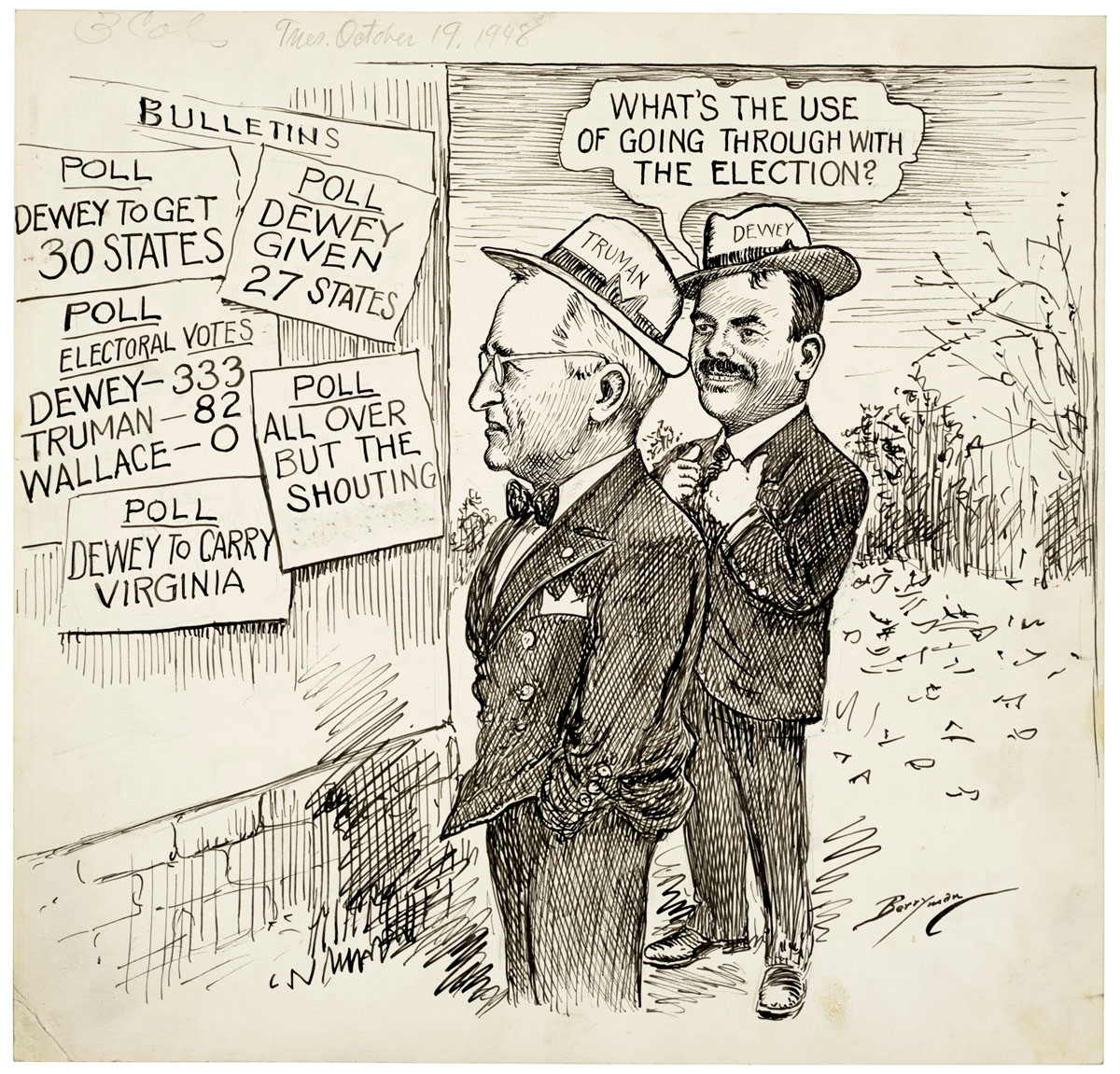
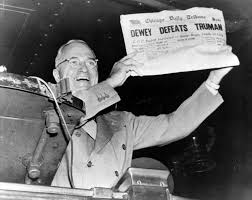

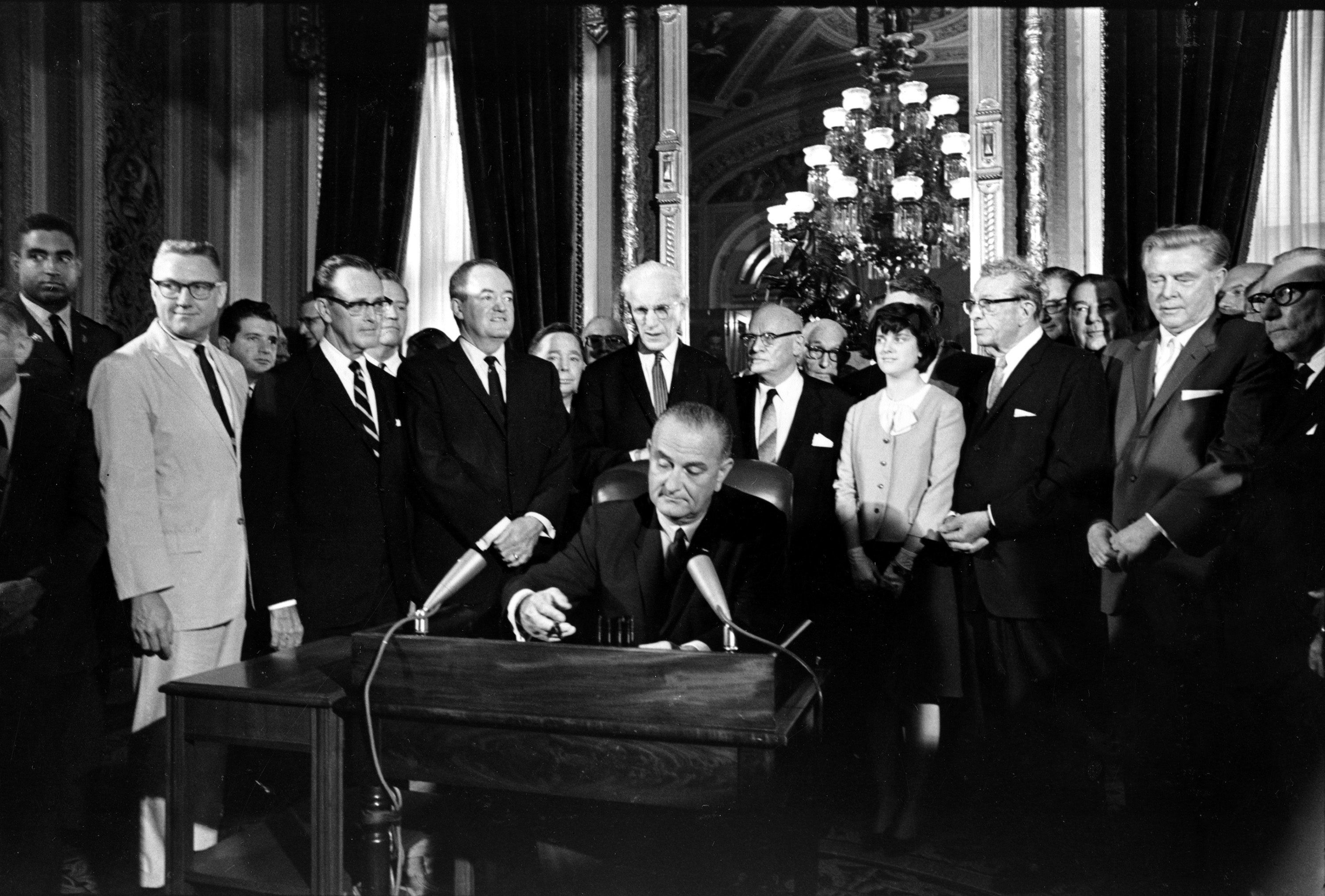


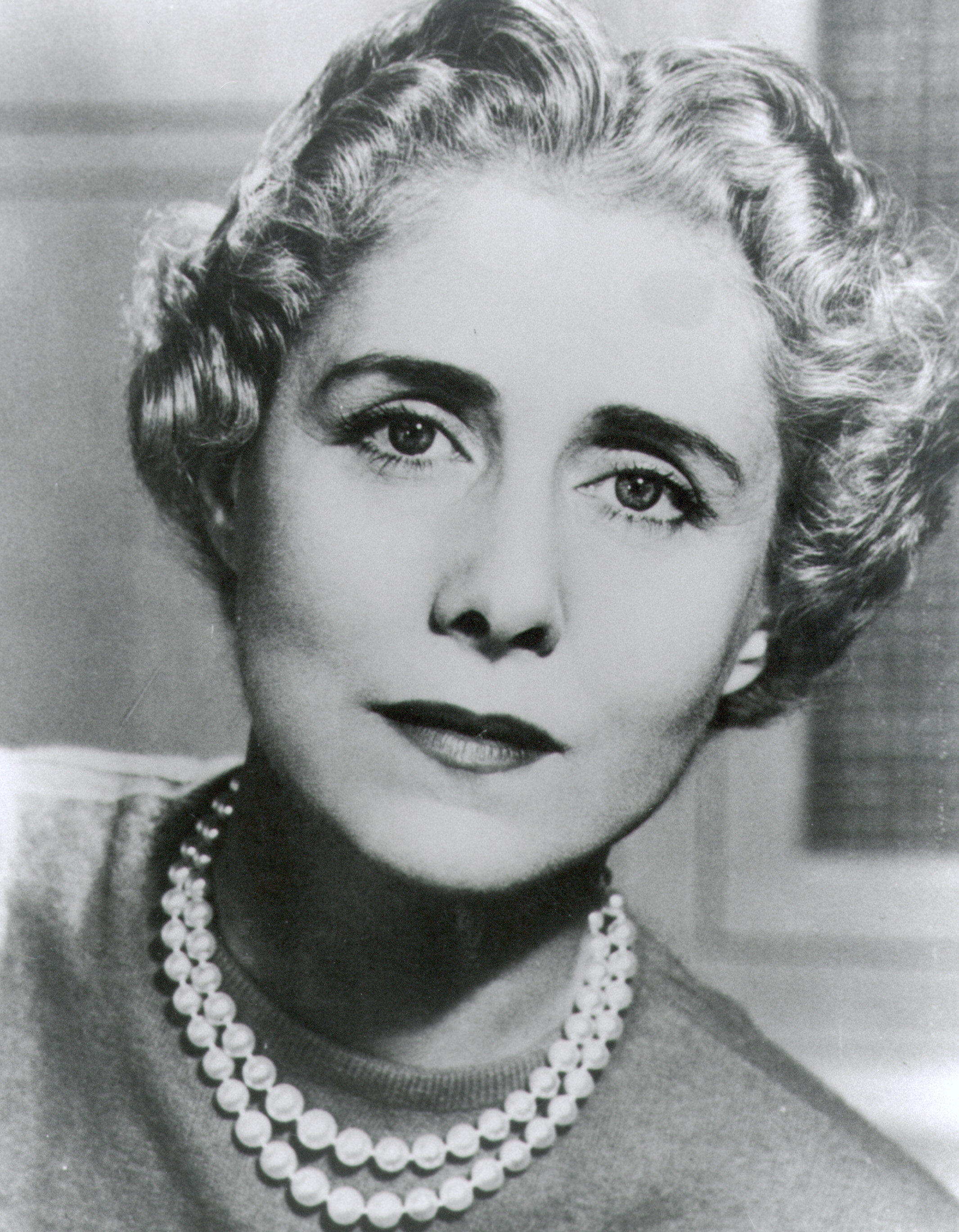
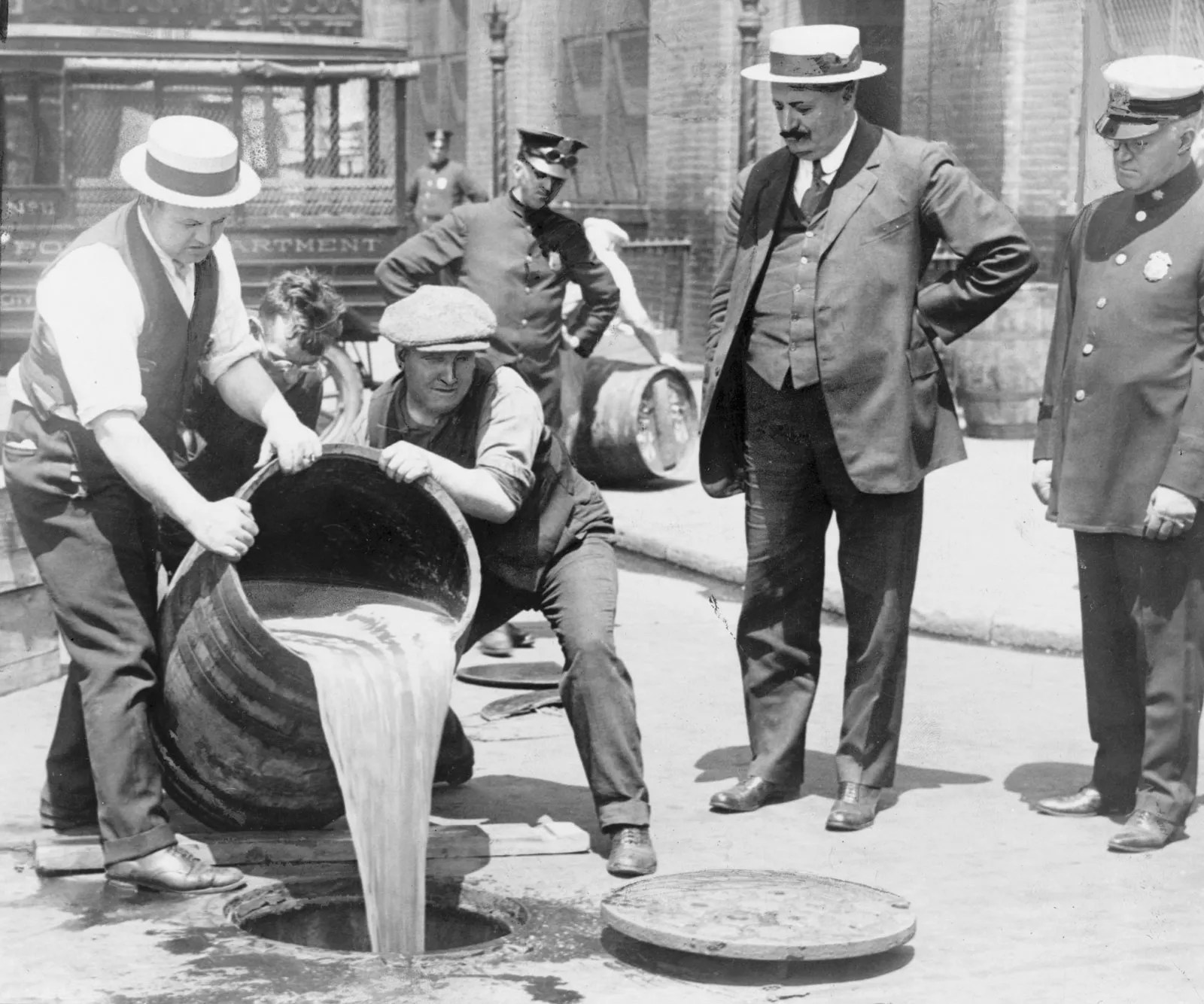
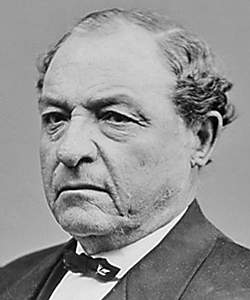
 Mad Politics: The Bizarre, Fascinating, and Unknown of American Political History