Clare Boothe Luce: From Playwright to Politics

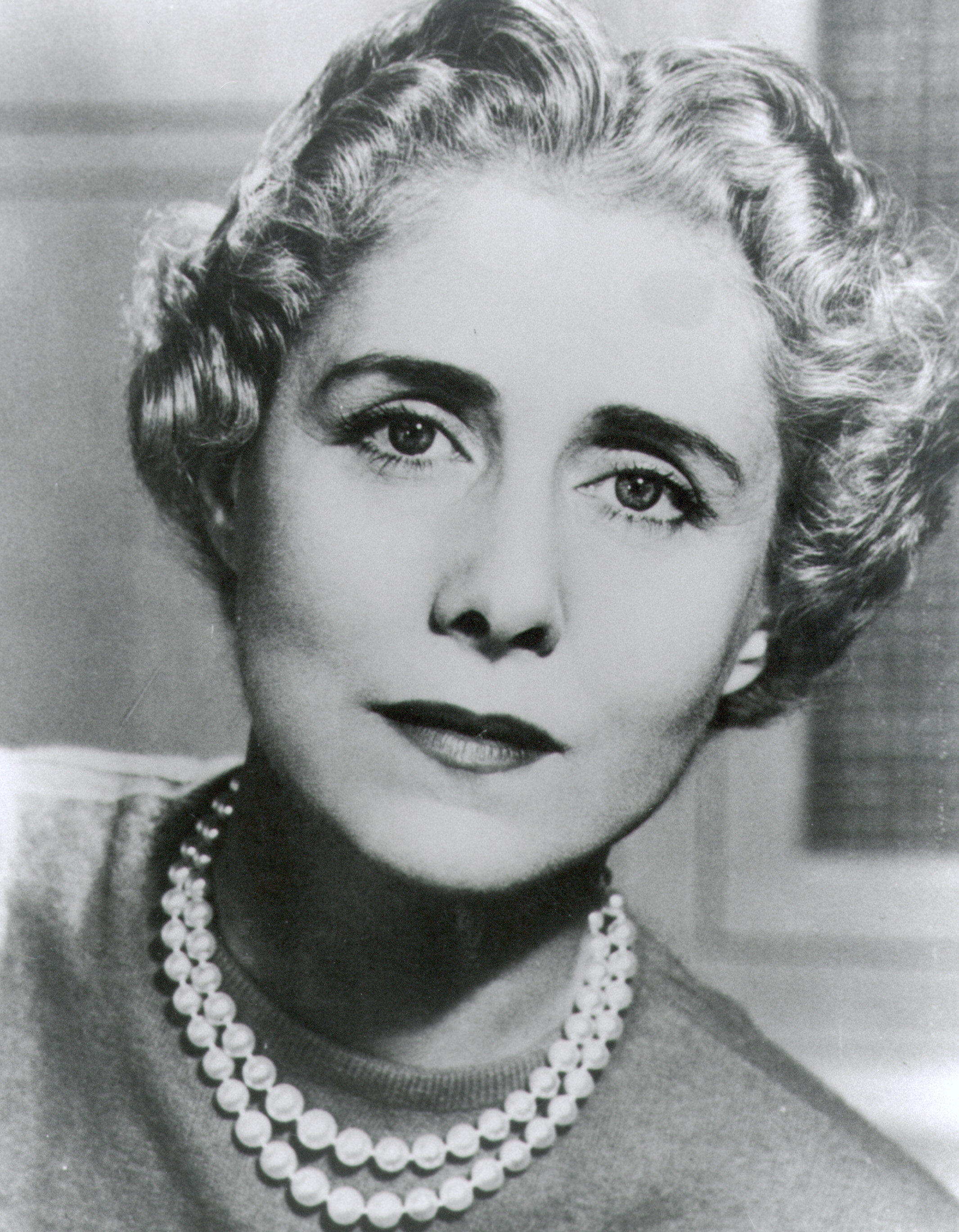
Clare Boothe Luce (1903-1987) was a rather unique woman of many talents. She was a skilled playwright, writer, magazine editor, a politician, and a socialite. Although her life in many ways was that of a feminist, she didn’t always have such a mindset, and her life reflected what can be seen as positive and negative things that people attribute to feminism.

Born Ann Clare Boothe, she had something of a difficult childhood; she was the daughter of a showgirl and her father left the family when she was 8. Her mother had great ambitions for her, and pushed her to be an actress, and appeared in the Broadway play The Dummy in 1914 as well as had a bit part in the film The Heart of a Waif the following year. As a teenager, she gained some notoriety as a suffragist, working for the National Woman’s Party. Her mother, wanting her to climb the social ladder, had arranged her marriage to the clothing heir George Tuttle Brokaw in 1923, who was 24 years her senior. They had one daughter, Ann Clare Brokaw, in 1924. The marriage was, however, unhappy as Brokaw was a violent alcoholic. As she recalled later about the marriage to journalist Dominick Dunne, “I know all about violence and physical abuse because my first husband used to beat me severely when he got drunk. Once, I can remember coming home from a party and walking up our vast marble staircase at the Fifth Avenue house while he was striking me. I thought, if I just gave him one shove down the staircase I would be rid of him forever” (Brenner). Clare asked his mother for a divorce in 1929, and it was granted, with her getting a generous settlement that made her independently wealthy. However, she had to split custody of her daughter with Brokaw for half the year. He would die six years later in a sanitarium, a consequence of his alcoholism.

Clare Boothe would go on to be the caption writer for Vogue magazine in the early 1930s, then became the editor of Vanity Fair. She wrote profiles on people, one of the first being Time and Fortune Magazine’s Henry Luce. She initially despised him, writing, “He claims he has no other interest outside of his work, and that his work fills his waking hours” (Brenner). Nonetheless, in 1935 she would after only a few meetings with him, marry him. Luce had divorced his wife explicitly to marry her. He would subsequently establish Life magazine, reportedly at her suggestion (The Eleanor Roosevelt Papers). Their marriage was not an easy one, but one that lasted. However, it lasted through them having an open marriage, with her having numerous affairs with prominent figures, including Randolph Churchill (Morris, 2014). There was a mutual respect for each other and both elevated the other in different ways. In 1936, Luce wrote the all-female satire The Women in only three days, which became a hit on Broadway. She also wrote Abide with Me (1935), Kiss the Boys Goodbye (1938), Margin for Error (1939), Child of the Morning (1951), and Slam the Door Softly (1970). Luce’s works also include three books, which were Stuffed Shirts (1931), Europe in the Spring (1940), and Saints for Now (1952) (editor). She was also known for her wit. Some quotes attributed to her include:

“Money can’t buy happiness, but it can make you awfully comfortable while you’re being miserable.”

“Simplicity is the ultimate sophistication.”

“Because I am a woman, I must make unusual efforts to succeed. If I fail, no one will say, ‘She doesn’t have what it takes.’ They will say, ‘Women don’t have what it takes.’”

“Censorship, like charity, should begin at home; but unlike charity, it should end there.”

“If God wanted us to think with our wombs, why did he give us a brain?”

“No good deed goes unpunished.”

“Nature abhors a virgin – a frozen asset.”

Luce would also be a war correspondent for Life magazine from 1939 to 1942, and her connections would result in her getting interviews with political and military leaders. She would not hesitate to issue criticism when she thought it worthy. However, Luce did get into some trouble after she mockingly likened RAF pilots to “flying fairies” in print (Morris, 1997, 458).

Politics

When Luce was in a relationship with Bernard Baruch, she, like him, supported FDR’s election in 1932. However, she became disillusioned with Roosevelt’s economic policies by his second term and switched from Democrat to Republican. In 1940, Luce endorsed and campaigned for Republican Wendell Willkie, opposing FDR not only out of ideological differences but out of a belief that the two-term tradition shouldn’t be broken. Her politics were at this point indeed similar to those of her husband. In 1942, she was recruited to run for Congress. She condemned incumbent Le Roy Downs, who had defeated her stepfather Albert Austin for reelection in 1940, as a “rubber stamp” for Roosevelt (U.S. House). Luce won in the Republican wave, but by a plurality. If the left had lined up behind incumbent Democrat Le Roy Downs, he would have won reelection; 11% of the vote had gone to the Socialist candidate. Luce’s platform was “One, to win the war. Two, to prosecute that war as loyally and effectively as we can as Republicans. Three, to bring about a better world and durable peace, with special attention to postwar security and employment here at home” (U.S. House).

Luce and FDR

Luce was publicly critical of President Roosevelt, and in the 1944 presidential campaign she charged that he was “the only American President who ever lied us into a war because he did not have the political courage to lead us into it” (U.S. House). He didn’t appreciate her barbs and was sure to campaign against her explicitly. Vice President Wallace dismissed her as a “sharp-tongued glamor girl of forty” who when running around the country without a mental protector, “put her dainty foot in her pretty mouth” (U.S. House). However, Luce and FDR were not as far apart on policy as their public relationship would suggest. While she supported overriding President Roosevelt’s vetoes of bills restraining subsidies and providing tax relief, she voted to sustain his veto of the Smith-Connally Act, which was designed to counter wartime strikes. Luce also supported retaining the National Youth Administration in 1943. She opposed increased funding for agricultural programs and supported minor restraints to price control while opposing strong efforts to hinder price controls. Luce was also an internationalist, supporting the creation of an international peacekeeping body after the war’s conclusion, an idea which would become the United Nations. Luce also was opposed to the House Committee on Un-American Activities, voting against funding it in 1943 and opposing making it a permanent committee in 1945. Her DW-Nominate score was a 0.07, making her one of the least conservative Republicans in Congress. In 1943, Luce supported repealing the Chinese Exclusion Act, which was signed into law. She was in favor of eliminating discrimination in immigration, supported desegregation of the army, and supported the Equal Rights Amendment.

Although President Roosevelt had much in good news that year with the defeats of bitter foes Senator Gerald Nye of North Dakota and Representative Hamilton Fish of New York, Luce would win reelection by one point. Like in 1942, if the left had unified behind the Democratic candidate, Luce would have lost. That year, Luce suffered a terrible tragedy when her daughter was killed in a car accident at 19 while attending university. After her daughter’s death, she turned to faith and spiritualism and converted to Catholicism but was never able to persuade her husband to do so.

In 1946, Luce sponsored with Rep. Emanuel Celler (D-N.Y.) a bill permitting naturalization of Indians and Filipinos and permitting a quota of 100 a year from each nation which was signed into law by President Truman. She was also consistently anti-communist in her foreign policy outlook. Luce argued that the Kremlin had “incorporated the Nazi technique of murder” and regarded postwar foreign policy surrounding Poland as “a partition of Poland and overthrow of its friendly, recognized constitutional Government” (U.S. House). In January 1946, she decided not to run for reelection. This farewell from politics would turn out to be temporary, as in 1952 Luce energetically campaigned for the election of Dwight Eisenhower. The following year, Eisenhower saw her as a perfect candidate to represent the United States in Italy, and nominated her ambassador. Although more conservative Italians were initially a bit put out that Eisenhower had picked a woman, in a week’s time she had won them over. This post was particularly important in the Cold War context as although Italy was on the Allied bloc, they had one of the strongest communist parties in Western Europe, and there was always a risk of a communist victory. During this time, Luce was able to negotiate a border dispute between Italy and Yugoslavia. She served in this capacity until 1956, by which time she had become very ill. This illness had started in 1954, and after she was taken back to the United States, it was found that she had been suffering from arsenic poisoning. It turned out that the arsenic paint on the ceiling of her bedroom was flaking off. By 1959, Luce had recovered and although she was confirmed Ambassador to Brazil, she miscalculated when she said just after her confirmation “my difficulties, of course, go some years back and began when Sen. Morse was kicked in the head by a horse” (McMillan). This referenced a 1951 incident in which a horse broke Morse’s jaw. The controversy that arose resulted in her resignation only three days later.

In 1964, Luce, who had become increasingly conservative over the years, briefly considered reentering politics to run for the Senate in 1964 as a member of New York’s Conservative Party, but dropped the idea. That election would be won by none other than Robert F. Kennedy. That year, Luce firmly backed Senator Barry Goldwater (R-Ariz.) for the presidency. Her husband, Henry Luce, was increasingly in poor health, and on February 28, 1967, he died of a heart attack. Afterwards, Luce moved to Hawaii where she was a prominent socialite. In 1973, President Nixon appointed her to the Foreign Intelligence Advisory Board, where she served until 1977. President Reagan reappointed her in 1982, and she served until her death. In 1983, she was awarded the Presidential Medal of Freedom.

Luce could be quite a story-teller, and this included some fiction. According to Marie Brenner (1988), she had told friends in the past that numerous prominent men had wanted to marry her and that she had slept with Strom Thurmond. Although many people would regard Clare Boothe Luce as having lived an incredible life, she reflected in her last weeks, “You know, I have had a terrible life. I married two men I really didn’t like. My only daughter was killed in a car accident. My brother committed suicide. Has my life been a life for anyone to envy?” (Brenner) Luce succumbed to brain cancer in Washington D.C. on October 9, 1987. The Washington Post eulogized her thusly, “She raised early feminist hell. To the end she said things others wouldn’t dare to – cleverly and wickedly – and seemed only to enjoy the resulting fracas…Unlike so many of her fellow Washingtonians she was neither fearful nor ashamed of what she meant to say” (U.S. House).  

References

Brenner, M. (1988, March). Fast and Luce. Vanity Fair.

Retrieved from

https://www.vanityfair.com/news/1988/03/clare-boothe-luce-profile?srsltid=AfmBOootChiaA-gxz5sr7jZRalQRAxYTi2jnvtUrNotxxNAHCogjcg9r

Clare Boothe Luce – Quotes. Goodreads.

Retrieved from

https://www.goodreads.com/author/quotes/332721.Clare_Boothe_Luce

Clare Boothe Luce. The Eleanor Roosevelt Papers.

Retrieved from

https://www2.gwu.edu/~erpapers/mep/displaydoc.cfm?docid=erpn-claluc

Luce, Clare Boothe. U.S. House of Representatives.

Retrieved from

https://history.house.gov/People/detail/17213

Luce, Clare Boothe. Voteview.

Retrieved from

https://voteview.com/person/5827/clare-boothe-luce

McMillan, P. (1987, October 10). Clare Boothe Luce Dies of Cancer at 84. Los Angeles Times.

Retrieved from

https://www.latimes.com/archives/la-xpm-1987-10-10-mn-8556-story.html

Morris, S.J. (1997). Rage for fame: the ascent of Clare Boothe Luce. New York, NY: Random House.

Morris, S.J. (2014). Price of fame: the honorable Clare Boothe Luce. New York, NY: Random House.

Morris, S.J. (2014, June 19). Clare, in Love and War. Vanity Fair.

Retrieved from
https://www.vanityfair.com/style/society/2014/07/clare-boothe-luce-marriage-ambassadorship?srsltid=AfmBOor-EjIsjqcp09puO6k0Ok83A2F-7jAD-fiQ28wvjyVT0fkywarj

Walter F. George: Georgia’s Dignified Statesman 

The state of Georgia has had the benefit of having some political heavy-hitters in the Senate, most notably Richard Russell and Walter Franklin George (1878-1957). George was an attorney by profession, and he reached the prominence of serving on the state’s Supreme Court from 1917 until his resignation in 1922.

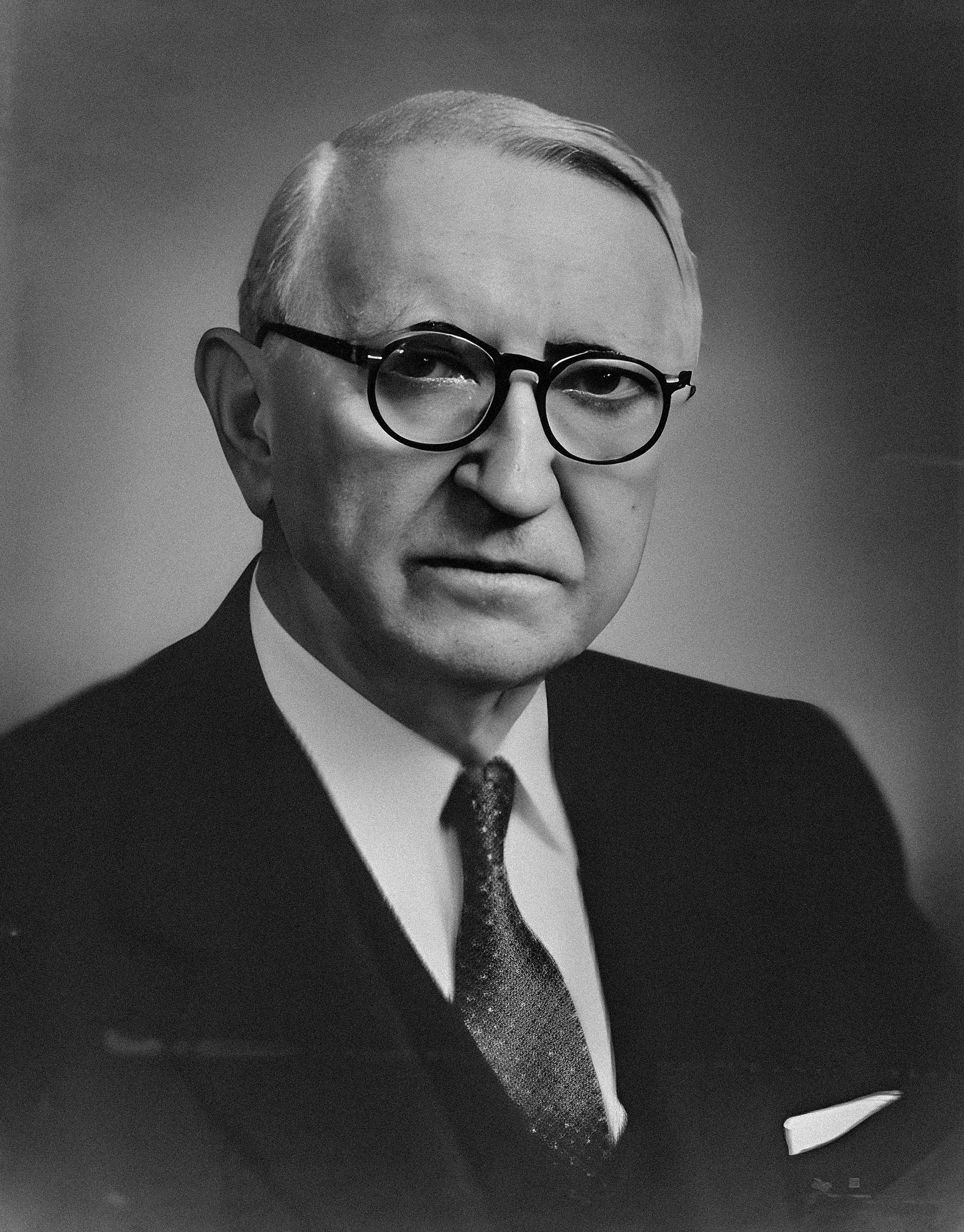
George in his early years in the Senate.

On September 26, 1922, Senator Thomas E. Watson, a fiery populist, died suddenly of a cerebral hemorrhage. Governor Thomas Hardwick, an anti-suffragist seeking to improve his political position with women, appointed Rebecca Latimer Felton to serve for a single day when the Senate was out of session, thus she cast no votes and the appointment was only symbolic. The true successor to Watson would be George. In this time, he was considered to be a liberal, and yes, in the more modern sense. The progressive The Searchlight magazine affirms this, “Among the new Senators, Dill, Wheeler, Mayfield, Copeland, and George are reported as fighting liberals, with Ferris and Ralston not far behind” (5). He undoubtedly was compared to the Republican presidents and most of the GOP’s officeholders of the day, opposing most of the policies of the Harding, Coolidge, and Hoover Administrations. This may seem rather strange given George’s historical reputation as a conservative, but there were numerous figures who were considered progressive or liberal in the 1920s who would prove a lot more conservative during the Roosevelt Administration. Indeed, among George’s positions were higher income taxes on the wealthy and backing veterans bonus legislation over President Coolidge’s veto. As a senator, he carried a respectable and dignified demeanor and even his wife, Lucy, would address him as “Senator George” (Hill). Speaking of his wife, she was something of a contrast to him. While George conveyed himself as a man of high dignity, Lucy was more down-to-earth and liked on Capitol Hill, including for her willingness to listen to and tell risqué stories (Hill). Like all other Georgia politicians of his day who won public office, George opposed all civil rights proposals, but he refrained from making race an issue in his campaigns and never promoted race hatred.

George and The New Deal

Although George had not backed FDR in the Democratic primary, he did support his 1932 campaign as well as most of the early New Deal measures, seeing in particular value in regulating the stock market with the Securities and Exchange Act, aid to agriculture through the Agricultural Adjustment Act, and the Tennessee Valley Authority. He also backed the National Industrial Recovery Act in 1933 and the Wagner Act in 1935, the latter being known as the “magna carta” of law protecting organized labor. George also supported veterans’ bonus legislation in 1935 and 1936, but this was in opposition to FDR, who wanted to hold down expenditures.

George vs. FDR

Although when he was first appointed to the Senate in 1922, George had a reputation as a progressive, by 1935 he was beginning to have some reservations about the New Deal, and he crossed FDR in his opposition to the “Death Sentence Clause” of the Public Utilities Holding Company Act and to bituminous coal regulation. He also opposed FDR’s court packing plan and his reorganization plan, the latter which critics dubbed the “dictator bill”. On August 11, 1938, Roosevelt delivered a speech in Barnesville, Georgia with George directly behind him, in which he sought to influence the Democratic primary. He stated after praising George for his intelligence and character, “Here in Georgia, my old friend, the senior Senator from the State, cannot possibly in my judgment be classified as belonging to the liberal school of thought – and, therefore, the argument that he has long served in the Senate falls by the wayside” and finished his assessment of George and politics with, “Therefore, answering the requests that have come to me from many leading citizens of Georgia that I make my position clear, I have no hesitation in saying that if I were able to vote in the September primaries in this State, I most assuredly should cast my ballot for Lawrence Camp” (The American Presidency Project). With this speech, Roosevelt, who was making an early effort at creating ideologically responsible parties, essentially read George out of the party. After the speech, George shook his hand and reportedly said, “I regret that you have taken this occasion to question my democracy. I accept the challenge” (Hill). Roosevelt had miscalculated badly on his purge effort, believing that his personal popularity in Georgia would move the needle in the primary, and George was renominated with FDR’s preferred candidate, Camp, coming in third behind Eugene Talmadge, who FDR wanted in office even less than George. With this victory, George both gained more stature in the Senate, particularly among FDR’s opponents, and subsequently opposed him more on domestic policy. FDR had made things worse for himself with this effort, and he would not attempt to meddle in primaries again. Reportedly, when someone around him remarked that Roosevelt was his own worst enemy, George remarked, “Not while I am still alive!” (Hill)

Committee Chairmanships and Influence

On November 10, 1940, Senate Foreign Relations Committee chairman Key Pittman (D-Nev.) died as a consequence of his alcoholism and George was next in line. He had come in at a rather critical time, and was chairman when FDR was pushing through Lend-Lease. Unlike on domestic policy, George was supportive of Roosevelt as his foreign policy was consistent with Wilsonian moralism and he was instrumental in pushing the measure through. However, his time on the Foreign Relations Committee would be short, and in 1941 he would reluctantly move to the chairmanship of the Senate Finance Committee, which was and is of similar importance to the Foreign Relations Committee. A confidential intelligence report on him from the British Foreign Office’s Isaiah Berlin read, “an honourable but narrow Southern Conservative, who incurred the displeasure of the New Deal in 1938 when an unsuccessful attempt to “purge” him was made by its then leaders (in particular [Edward] Flynn, [Harry] Hopkins, and [Thomas] Corcoran). This attempt increased his popularity in his State and in the Senate. He left the chairmanship of the Foreign Relations Committee in order to head the equally important Finance Committee, and is an exceedingly influential figure in the Senate, and the hope of Conservatives in many parts of the United States” (Hachey, 141-153). World War II would bring a tragedy to George and his wife, as one of their sons was a casualty. His other son, Heard, would later serve as his administrative assistant.

As chairman of the Senate Finance Committee, taxation was under his purview, and he was supportive of wartime tax relief, which FDR opposed. The final tax relief legislation would pass in 1944 over President Roosevelt’s veto, the first time a revenue bill had ever become law over a president’s veto. George would also support the Republican 80th Congress on income tax reduction, contrary to the position of the Truman Administration. He would also oppose the Roosevelt and Truman Administrations on labor policy, voting to override President Roosevelt’s veto of the Smith-Connally Labor Disputes Act in 1943 and President Truman’s veto of the Taft-Hartley Act in 1947.

Although George’s realm was in the Finance Committee, he remained a respected and influential voice on foreign affairs, and he backed the Truman Administration on Greek-Turkish aid and the Marshall Plan as did most Democrats. He also defended the latter from conservative efforts to cut the program on multiple occasions, but did not support Point IV aid, or foreign aid to poor rather than war-torn nations.

The George Amendment

In 1954, Senator John W. Bricker (R-Ohio) pushed for amending the Constitution for Congress to check the power of the presidency on foreign policy, and such a proposal was proving popular in the South. Minority Leader Lyndon B. Johnson (D-Tex.), however, was privately opposed to this measure, holding that it was “the worst bill I can think of” and asserted that it would be “the bane of every president we elect”, and was of course thinking of himself as well (Caro, 528). He thus courted Senator George to offer a substitute, and offer he did, while opposing a stronger version of the Bricker Amendment that was voted down. The Bricker Amendment as amended by George was adopted as a substitute, but its ratification failed by one vote.

George seemed to lessen in his conservatism a bit during the Eisenhower Administration if Americans for Democratic Action and Americans for Constitutional Action ratings are good measures for judging legislators, and in 1956 he sponsored a proposal to reduce the minimum age of receiving disability benefits under Social Security to 50, which was narrowly adopted 47-45. After all, George was something of a liberal on Social Security, having voted against the Knowland Amendment in 1950 which restricted the ability of the Social Security Administration to place mandatory minimums on unemployment compensation on states. By this time, George was 78 years old and looking at a strong primary challenge from former Governor Herman Talmadge, who was more willing to focus on race than George. He opted not to run for reelection given his heart condition as well as many of his supporters wavering on whether they’d vote for him in the primary (Hill). George’s DW-Nominate score, which covers his entire career, was a -0.064, which is high for a Democrat; from 1947 to 1956 he sided with the ADA position on key votes they counted 38% of the time, but only sided with the ACA position on key votes they counted 18% of the time. However, for the latter, this is a much more limited measure as they only counted votes for 1955 and 1956. George was overall his own man, his vote being one of dignified independence of presidential and party priorities. President Dwight Eisenhower subsequently selected him as the ambassador to NATO. However, it turned out to be just as well that he hadn’t run for reelection as he suffered a fatal heart attack on August 4, 1957. President Eisenhower subsequently ordered all US flags at federal buildings and other properties flown at half-mast in mourning.

References

ADA Voting Records. Americans for Democratic Action.

Retrieved from

Address at Barnesville, Georgia. The American Presidency Project.

Retrieved from

https://www.presidency.ucsb.edu/documents/address-barnesville-georgia

Borglum, G. (1922, November 30). Harding’s Challenge to Democracy. The Searchlight.

Retrieved from

Caro, R. (2002). The years of Lyndon B. Johnson: Master of the Senate. New York: Alfred A. Knopf.

George, Walter Franklin. Voteview.

Retrieved from

https://voteview.com/person/3536/walter-franklin-george

Hachey, T.E. (1973-1974, Winter). American Profiles on Capitol Hill: A Confidential Study for the British Foreign Office in 1943. Wisconsin Magazine of History, 57(2): 141-153.

Retrieved from

Hill, R. Senator Walter F. George: George of Georgia. The Knoxville Focus.

Retrieved from

https://www.knoxfocus.com/archives/senator-walter-f-george-george-of-georgia/

Pou, C. (2008, January 29). Walter F. George. New Georgia Encyclopedia.

Retrieved from

https://www.georgiaencyclopedia.org/articles/government-politics/walter-f-george-1878-1957/

FDR vs. Veterans Benefits

The Department of Government Efficiency (DOGE) is aiming to find waste, inefficiency, and areas to cut government spending. One subject that they have touched on is veterans benefits as has prospective Trump nominee to the post of Secretary of Defense Pete Hegseth. On that one from a historical perspective, they are in for one hell of a fight! Veterans’ benefits have a long history of being politically difficult to resist. In 1949, for instance, the House by only one vote rejected Veterans Affairs Committee chairman John Rankin’s (D-Miss.) measure that would have provided for a massive pension program for World War I and World War II veterans at $90 a month (or $1,193.69 in October 2024 dollars) starting at age 65 that at the same time would have served to fiscally prevent President Truman from expanding Social Security as he planned (Time Magazine). The measure’s defeat was in no small part due to the vocal opposition of certain World War II veterans in Congress, most notably Olin “Tiger” Teague of Texas, the second-highest decorated soldier of the war. Even President Roosevelt at the height of his power struggled with the issue.

Speaker Henry Rainey (D-Ill.) was perfectly willing to let the executive branch write laws and have the House rubber stamp them, but there was a fight in the early New Deal that Roosevelt lost, and not even the opposition of Speaker Rainey could overcome this, and this was on funding New Deal programs in part through cuts in veterans’ benefits.

The first New Deal law to pass, and one that actually got substantial support from conservatives, was the Economy Act, which cut spending for the purposes of making room in the budget for FDR’s New Deal programs and served to effectively repeal all laws passed after the War of the Rebellion for veterans’ pensions, granting FDR the power to restructure veterans’ benefits, and he did so by cutting benefits by over $400 million. This provoked a lot of bipartisan opposition, including from individuals thought of as progressive in this time, such as Senator Burton Wheeler (D-Mont.). On June 14, 1933, the Senate responded to FDR’s veterans’ benefits reduction with the Steiwer (R-Ore.)-Cutting (R-N.M.) amendment 51-39 (D 19-39; R 31-0; P 1-0) to the Independent Offices Appropriations bill, which if enacted into law would have only permitted Roosevelt to cut up to 25% of an individual veteran’s benefits, amounting to a maximum overall reduction between $100-160 million. Interestingly, this vote presaged further opposition to Roosevelt’s agenda in the future, most notably on foreign policy, from certain senators who were at least nominally for the New Deal at this point, including Wheeler, Pat McCarran of Nevada, and Robert R. Reynolds of North Carolina. This was also a point of contention between the flamboyant Huey Long of Louisiana and the president. Roosevelt was prepared to veto the bill if the amendment remained, but the House came to his rescue and refused to adopt Steiwer-Cutting 177-209 (D 79-201; R 93-8; FL 1-0) the following day. However, the battle was far from over on veterans’ benefits, the most hotly contested part of the Economy Act, and the House voted to increase veterans benefits to largely offset Roosevelt’s cuts. Although President Roosevelt vetoed the bill, the House overrode his veto of the bill 310 to 72 (D 209-70; R 97-2; FL 4-0) on March 27, 1934. Among Republicans, only Robert Luce and George Tinkham of Massachusetts, normally opponents of Roosevelt and the New Deal, voted against this effort. Although Majority Leader Robinson (D-Ark.) was more successful at persuading his fellow Democrats to sustain Roosevelt’s veto, his veto was overridden the following day 63-27 (D 29-27; R 33-0; FL 1-0) that same day. This would be predictive of the override of another of President Roosevelt’s vetoes, on the Patman Bonus bill. Like President Hoover before him, Roosevelt opposed the Patman Bonus bill, which permitted veterans to collect their bonuses at any time as opposed to 1945 as established by the 1924 World War Adjusted Compensation Act as a budget-busting measure. Unlike with the appropriations bill, he got some sizeable conservative Republican support for his position. Although the House overrode President Roosevelt’s veto on May 22, 1935, 322-98 (D 248-60; R 64-38; P 7-0; FL 3-0), Majority Leader Joseph Robinson (D-Ark.) was successful in getting the Senate to sustain the veto the following day 54-40 (D 41-28; R 12-12; P 1-0). However, a compromise Patman bill was pressed into 1936. This one managed to pass over President Roosevelt’s veto, with members of Congress feeling more pressure as the next election approached. The House voted to do so on January 24th 326-61 (D 249-32; R 67-29; P 7-0; FL 3-0) and the Senate voted to do so 76-19 (D 57-12; 17-7; P 1-0; FL 1-0) three days later. Although veterans’ organizations advised veterans to wait until 1945 to collect, many chose to do so right away. This measure would essentially serve as a stimulus for veterans. Roosevelt would later do quite well for veterans in his signing of the GI Bill in 1944.

References

Ortiz, S.R. (2009). Beyond the Bonus March and GI Bill: How Veteran Politics Shaped the New Deal Era. New York, NY: NYU Press.

Retrieved from

https://academic.oup.com/nyu-press-scholarship-online/book/16388/chapter-abstract/171539464?redirectedFrom=fulltext

Senate Votes 51 to 39; Adopts New Increases for Veterans Despite Leaders’ Pleas. (1933, June 15). The New York Times.

Retrieved from

https://www.nytimes.com/1933/06/15/archives/senate-votes-51-to-39-adopts-new-increases-for-veterans-despite.html

The Congress: Rankin’s Revenge. (1949, February 28). Time Magazine.

Retrieved from

https://time.com/archive/6602178/the-congress-rankins-revenge/

To Amend H.R. 5389, by Amending Sec 20, Authorizing President to Establish Review Boards Dealing with Veterans Pensions. Govtrack.

Retrieved from

https://www.govtrack.us/congress/votes/73-1/s97

To Concur in an Amendment to H.R. 5389. Govtrack.

Retrieved from

https://www.govtrack.us/congress/votes/73-1/h61

To Override the President’s Veto of H.R. 3896. Govtrack.

Retrieved from

https://www.govtrack.us/congress/votes/74-1/s69

To Override the Veto of H.R. 9870. Govtrack.

Retrieved from

https://www.govtrack.us/congress/votes/74-2/s138

To Pass H.R. 3896, the Objections of the President of the United States Notwithstanding. Govtrack.

Retrieved from

To Pass H. 9870 Over the Objections of the President of the United States. Govtrack.

Retrieved from

https://www.govtrack.us/congress/votes/74-2/h138

Franklin D. Roosevelt…Jr.: An Underwhelming Presidential Son

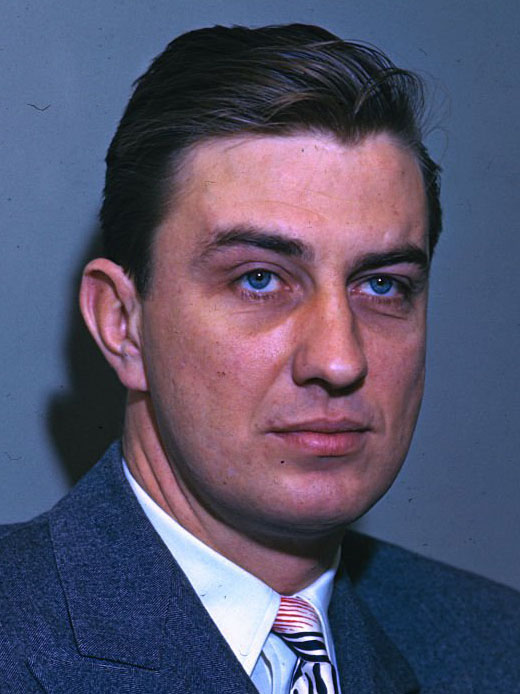
Although there is no royalty in the United States and never can be as a matter of constitutionality (unless we decide to repeal that part of the Constitution for reasons that escape me), there have been political families who have been tremendously influential: the Kennedys, the Bushes, and the Roosevelts. Two of FDR’s sons had political careers of their own in FDR Jr. and James Roosevelt. Today I will be writing about the former, who fell far from the tree of his father in terms of political acumen.

When it came to war service, President Roosevelt was no hypocrite, and Franklin Delano Roosevelt Jr. (1914-1988) served in the war and he did so with honor. In his personal life, however, Roosevelt Jr. had issues, being married a grand total of five times. In 1948, he sought to recruit Dwight Eisenhower for the Democratic nomination, not knowing that his true sympathies lay with the Republicans. His time for public office would come in 1949.

Congressional Career

In 1949, longtime Congressman Sol Bloom, who had been chairman of the House Foreign Affairs Committee, died, and Roosevelt Jr. ran to succeed him, managing to defeat the Tammany Hall picked candidate as the Liberal candidate. Roosevelt Jr., who would win his subsequent reelections as a Democrat, was per Americans for Democratic Action a perfect liberal during his time in Congress, never having voted against a single one of the issues they regarded as a key vote. He supported public housing, price controls, foreign aid, reciprocal trade, public power, more immigration, and opposed the McCarran Internal Security Act. His DW-Nominate score was quite a low -0.619. Although Roosevelt Jr. was a perfect liberal by the standards of Americans for Democratic Action, he proved a poor member of Congress for laziness and general lack of enthusiasm for the job. Speaker Sam Rayburn of Texas would tell his brother James upon his entrance into Congress in 1955 to “not waste our time like your brother did”, and James himself would recount that Jr. “had a dreadful record in Congress. He was smart, but not smart enough. He had good ideas and the power of persuasion, but he did not put them to good use. He coasted instead of working at his job, considering it beneath him, while he aimed for higher positions. He may have had the worst attendance record of any member of those days, and it cost him those higher positions” (Roosevelt, 314). Instead of running for reelection for Congress, Roosevelt Jr. ran for attorney general, but was defeated by fellow Congressman Jacob Javits, thus being the only Democrat to lose a statewide election that year.

In 1960, he served as something of a bulldog for his friend John F. Kennedy’s campaign in the hopes that he could revive his faltering political career, and falsely insinuated during the West Virginia primary that Senator Hubert Humphrey (D-Minn.), who was also running for the nomination, had been a draft-dodger during World War II (Time Magazine). The truth was that Humphrey was not allowed to fight due to a disability, and Roosevelt would subsequently apologize. Kennedy’s win in that race tipped the primary decisively for him. Although Kennedy had initially wanted Roosevelt to be Secretary of the Navy, Defense Secretary Robert McNamara nixed the idea. Roosevelt would instead serve as Under Secretary of Commerce from 1963 to 1965. Any hope Roosevelt Jr. had of further rise died with Kennedy, although he did serve in one more federal position as head of the Equal Employment Opportunity Commission from 1965 to 1966. Roosevelt made one last bid for elective office in running for governor on the Liberal Party ticket in 1966, but he didn’t stand a snowball’s chance in hell against the powerhouse of incumbent Nelson Rockefeller.

Roosevelt would pursue business ventures for the remainder of his life, including the distribution of imported cars. He died on August 17, 1988, his 74th birthday, of lung cancer.

References

ADA Voting Records. Americans for Democratic Action.

Retrieved from

Franklin D. Roosevelt Jr. Dies of Lung Cancer at 74. Los Angeles Times.

Retrieved from

https://www.latimes.com/archives/la-xpm-1988-08-17-mn-651-story.html

Franklin Delano Roosevelt, Jr. Columbian College of Arts & Sciences.

Retrieved from

https://erpapers.columbian.gwu.edu/franklin-delano-roosevelt-jr-1914-1988

Roosevelt, Franklin Delano, Jr. Voteview.

Retrieved from

https://voteview.com/person/8050/franklin-delano-roosevelt-jr

Roosevelt, J. (1976). My Parents: A Differing View. Los Angeles, CA: Playboy Press.

The Administration: Roosevelt’s Reward. (1963, February 8). Time Magazine.

Retrieved from https://time.com/archive/6626000/the-administration-roosevelts-reward/

The 1944 Election: FDR’s Last Stand

I know I’ve covered some of this subject in an earlier post this year, but that was primarily focused on FDR’s precarious health in the 1944 election. This is a more comprehensive post that also covers legislative elections.


Contrary to the popular image of a united America during World War II, the 1942 midterms produced the least cooperative Congress President Roosevelt ever had…the unity of the American public was on winning the war, not on the smorgasbord of Roosevelt’s policies. Although the Congress was not Republican, one would be forgiven for thinking it was given how often it and Roosevelt butted heads. For the first time in the history of the United States, for instance, Congress overrode the President’s veto on a revenue bill. This Congress also overrode President Roosevelt’s veto of the Smith-Connally Labor Disputes Act, which provided a method for the president to intervene in wartime strikes in response to John L. Lewis’s United Mine Workers going on strike. Conservatism was rapidly rising among Southern Democrats, many who had previously been willing to give FDR a lot of leeway in his first and even second terms. Numerous New Deal programs were axed by Congress including the Works Progress Administration, the National Youth Administration, and the Civilian Conservation Corps. To make matters worse for Roosevelt, his health was starting to severely decline. FDR securing yet another term would be contingent on how well the war was going.

The Republican Headliner

The Republicans selected a man who was a genuinely compelling candidate in Thomas E. Dewey. He was New York’s governor and had been the mob-busting district attorney of Manhattan. Although his past effort at the Republican nomination in 1940 had come up short, him being governor as well as Wendell Willkie neglecting to help with party building resulted in him winning the nomination. On certain fundamentals one could say Dewey was conservative; he reduced taxes as governor and was a strong supporter of the usage of the death penalty. However, Dewey was overall of the moderate wing of the GOP. His vice presidential pick, Governor John W. Bricker of Ohio, was staunchly conservative and governed mostly in the opposite manner that FDR did and enjoyed success in his state. Dewey was aggressive in campaigning against Roosevelt, and some thought that this hurt him on the campaign, which would inform his future thinking. However, he held back on any questioning surrounding Pearl Harbor, namely on what FDR knew before the attack. The GOP also embraced the creation of a United Nations while broadly criticizing the New Deal and calling for a reduction in the size of the federal government. There were lingering questions about FDR’s health, although he toured the country to dispel such questions, even though they turned out to be well-grounded in reality.

Ultimately, it was crucial gains in the war that proved critical for Roosevelt’s reelection, just as they had for Lincoln in the War of the Rebellion 80 years earlier. Many don’t realize that Lincoln’s reelection was in doubt before the Union victory at Gettysburg. Roosevelt’s message of don’t “change horses in mid-stream” was effective (Roosevelt House). The Dewey campaign, realizing that FDR was popular among soldiers and regarding them as subject to pro-Administration propaganda, challenged overseas ballots. Dewey also campaigned against, in an early indicator of the postwar politics, against Roosevelt as being “indispensable” to corrupt large city Democratic machines and to Communists (Jordan, 266). By the time of Election Day 1944, however, D-Day had occurred along with other major American military victories to the point that it was no longer a matter of if, but when Germany and Japan were going to lose the war. Although Dewey gained three states in 1944 that Willkie had not won in Ohio, Wisconsin, and Wyoming, this was far from enough and Roosevelt got Michigan, which he had lost in 1940. Roosevelt was held to his lowest percentage of the vote at 53% while Dewey got 46%, popular vote figures that contrast considerably with Roosevelt’s Electoral College victory of 432 to 99.

The House

The election in the House was a victory for Democrats, with them gaining 22 seats, halving the losses they incurred in the 1942 midterms. The elections with turnover included:  

The defeat for renomination in the Democratic primary of Alabama’s Joe Starnes and John Newsome by Albert Rains and Luther Patrick respectively. This was a big win for FDR in the state, as Starnes and Newsome were antagonistic to the Roosevelt Administration while Rains and Patrick were Southern liberals.

The defeat of four California Republicans for reelection. This election could also be said to be the start of the Bay Area moving towards the Democrats, as San Francisco’s Thomas Rolph and Alameda County’s Albert Carter were among the losers. Rolph’s loss was a comeback for Democrat Franck Havenner, who had lost in 1940. Carter’s district would never again send a Republican to Congress. Los Angeles’s Norris Poulson lost to Democrat Ned Healy, but he would make a comeback in 1946 and stay in office until being elected the city’s mayor. Also defeated was William W. Johnson by Democrat Clyde Doyle. The Republicans did get one victory though in Los Angeles County with Gordon McDonough, who won the election after Democratic Congressman John Costello, who was anti-Administration, was defeated for renomination.

The defeat of four of six of Connecticut’s Republican members of Congress. Democrat Herman P. Kopplemann won back his seat from Republican William J. Miller for the second time (Miller would win it again in 1946), Democrat Chase Woodhouse defeated Republican incumbent John D. McWilliams, Democrat James P. Geelan defeated Republican incumbent Ranulf Compton, and Democrat Joseph F. Ryter would win against Republican incumbent B.J. Monkiewicz One of the two Republican survivors was that great wit and lady of letters Clare Boothe Luce, who prevailed by a point.

Delaware’s sole member of Congress, Earle Willey, went down to defeat to Democrat Phillip Traynor, the man he had defeated in 1942.

Four Illinois Republicans lost reelection in Fred Busbey, Charles Dewey, Calvin Johnson, and Stephen Day to Democrats Edward Kelly, Alexander Resa, Melvin Price (who would serve until his death in 1988!), and Emily Taft Douglas. Perhaps the sweetest victory among the bunch was that of Day, who was an extremist on foreign policy and represented all of Illinois. Busbey would win back his seat in 1946, lose again in 1948, and win in 1950 and 1952 before being booted out for good in 1954.

The victory of Republican Chester Carrier in the 1944 special election in Kentucky was made temporary by the victory of Democrat Frank Chelf.

In Michigan, ultra-liberal Democrat Frank Hook won his seat back from Republican John B. Bennett. Bennett would, however, win the seat back in 1946 and serve until his death in 1964.

Republican Daniel Ellison of Baltimore was defeated for reelection by Democrat George Fallon. Ellison was the last Republican to ever represent any portion of Baltimore in Congress.

Republicans Richard Gale and Melvin J. Maas would lose reelection in Minnesota to Democrats William Gallagher and Frank Starkey. Maas kept getting reelected to his otherwise Democratic St. Paul district due to the left being split in their votes by the Democratic and Farmer-Labor parties, but the 1944 election marked the merger of the two. The Democratic-Farmer-Labor Party would long-run prove a highly successful merger.

Republicans William P. Elmer and Louis Miller would lose reelection in Missouri to Democrats A.S.J. Carnahan and John B. Sullivan respectively. Sullivan was winning his seat back.

In New Jersey, Republican T. Millet Hand would win the open 2nd district, previously occupied by Democrat Elmer Wene.

In New York, Roosevelt’s sweetest victory in the whole House election would occur, with moderate Republican Augustus W. Bennet toppling Republican Hamilton Fish. Fish was the most public and hated of Roosevelt’s foes in the House, and Roosevelt had even wanted to include Fish (along with Clare Hoffman of Michigan) in an anti-sedition indictment. Republican Joseph J. O’Brien also lost reelection to Democrat George F. Rogers.

Ohio Republicans Harry Jeffrey, Edmund Rowe, and Henderson Carson lost reelection to Democrats Edward Gardner, Walter Huber, and William Thom respectively. This was a comeback for Thom, but Carson would defeat him in 1946.

Oklahoma Republican George B. Schwabe won the open seat left by Democrat Wesley Disney’s decision to run in the Democratic Senate primary. This was not that bad of a loss for the Administration…Disney had become one of the most anti-Roosevelt Democrats in Congress by this time.

There was quite a bit of activity in Pennsylvania in this election…

Republican James Gallagher of Philadelphia lost reelection to Democrat William Barrett. Although Gallagher would win his seat back in 1946, Barrett would take the seat back in 1948 and Democratic control would hold for good after. Barrett would die in office in 1976.

Republican C. Frederick Pracht of Philadelphia would lose reelection to Democrat William Green, who like Barrett, would lose in 1946 only to win again in 1948 and stay in office until his death.

Republican Hugh Scott of Philadelphia would suffer the only defeat of his career in Congress to Democrat Herbert McGlinchey but would come back in 1946 and keep winning reelection in the increasingly Democratic Philadelphia until winning the Senate election in 1958. He would stay in the Senate until 1977, serving as minority leader from 1969 to 1977.

Republican Thomas B. Miller lost reelection to Democrat Daniel J. Flood. Although Flood would be turned out in the 1946 election, he would come back in the 1948 election, be defeated in 1952, and come back in 1954. From then on, he would stay in office until a bribery scandal forced him from office in 1980.  

Republican Robert Corbett, who had previously served in Congress from 1939 to 1941, made a comeback by defeating Democrat Thomas Scanlon for reelection. He was of the liberal to moderate wing of the party, but this helped him get reelected until his death in 1971.

Republican James G. Fulton defeated Democrat James A. Wright in a bright spot for the GOP. However, Fulton would be ideologically similar to Corbett and like him would serve in office until his death in 1971.

Republican Fred Norman, who had been first elected in 1942, was defeated for reelection by staunchly liberal Democrat Charles Savage. Norman would make a comeback in 1946, but his time in office wouldn’t be long as he would die only three months after his term started.

Republicans A.C. Schiffler and Edward G. Rohrbough would lose reelection in West Virginia. Schiffler was defeated by Democratic veteran Matthew Neely and Rohrbough would make a comeback in 1946 before again being defeated by Democrat Cleve Bailey in 1948.

Republican John W. Byrnes would defeat Democratic incumbent LaVern Dilweg in Wisconsin. Byrnes would serve in office until 1973.  

As an added bonus, Republican Frank Barrett of Wyoming would win reelection against one Charles E. Norris. You thus might say that Barrett beat a CHUCK NORRIS!

Senate

The Senate was a less positive picture for Roosevelt and the Democrats, and Republicans on net gained a seat.

In Connecticut, the good year for the Democrats applied too with the defeat of Republican Senator John A. Danaher by Democrat Brien McMahon.

In Idaho, the Roosevelt Administration had a great win after Glen H. Taylor defeated sometimes supporter of the Roosevelt Administration D. Worth Clark in the primary and then won the election.

In Indiana, Republican Homer Capehart was elected to the Senate, the previously elected incumbent for a full term having been Democrat Frederick Van Nuys, who had died in 1943.

In Iowa, Democrat Guy Gillette, a sometimes supporter of the Roosevelt Administration, was defeated for reelection by Republican Governor Bourke Hickenlooper.

A victory turned into defeat for the Roosevelt Administration in Missouri when Bennett Champ Clark, a Democratic antagonist of the administration, was defeated in the primary only for his successor to be Republican Forrest Donnell.

The greatest victory of all perhaps for the Roosevelt Administration was the defeat of Gerald Nye, one of the most prominent opponents of American entry into World War II before Pearl Harbor by Democratic Governor John Moses. Nye was harmed by multiple factors that didn’t involve his foreign policy record including his fairly quick divorce and remarriage to a younger woman, regular Republicans remembering his largely pro-New Deal record during the 1930s and approving of the fiscal conservatism of Governor Moses, and the entry of Independent candidate Lynn Stambaugh, who got 21% of the vote. This victory was short-lived, however, as Moses was in poor health and died only two months after being sworn in. Republican Milton Young would be elected in his place.

In Oregon, the Roosevelt Administration certainly gained a victory, although not a party one at the time. Republican Rufus Holman, a former Klansman with a penchant for conspiracism who had before the US’s entry into World War II praised Hitler on the floor of the Senate, was defeated for renomination by liberal Wayne Morse, who won the election. Morse would be the most liberal Senate Republican before leaving the party in 1952 and finally switching his affiliation to Democrat in 1955.

In Pennsylvania, Republican Jim Davis, formerly Secretary of Labor under Harding, Coolidge, and Hoover until he was elected to the Senate in 1930, was defeated by Democratic Congressman Francis Myers.

In South Carolina, the Roosevelt Administration got a victory that they had previously tried for in 1938: Governor Olin Johnston defeated Administration foe “Cotton Ed” Smith for renomination. It was just as well, as Smith died before the general election.

Dewey would try again in 1948 only to meet his most infamous defeat, one of the most prominent upsets in American history with the Chicago Tribune’s notorious “Dewey Defeats Truman” headline proudly held up by the reelected Truman. Bricker would be elected to the Senate in 1946 and serve two terms as one of the most conservative senators of his day.

References

1944’s Fourth Presidential Campaign. See How They Ran!

Retrieved from

https://www.roosevelthouse.hunter.cuny.edu/seehowtheyran/portfolios/1944-fdrs-fourth-presidential-campaign/

1944 United States House of Representatives election. Wikipedia.

Retrieved from

https://en.wikipedia.org/wiki/1944_United_States_House_of_Representatives_elections

1944 United States presidential election. Wikipedia.

Retrieved from

https://en.wikipedia.org/wiki/1944_United_States_presidential_election#cite_note-29

1944 United States Senate election. Wikipedia.

Retrieved from

https://en.wikipedia.org/wiki/1944_United_States_Senate_elections

Jordan, D.M. (2011). FDR, Dewey and the Election of 1944. Bloomington, IN: Indiana University Press.