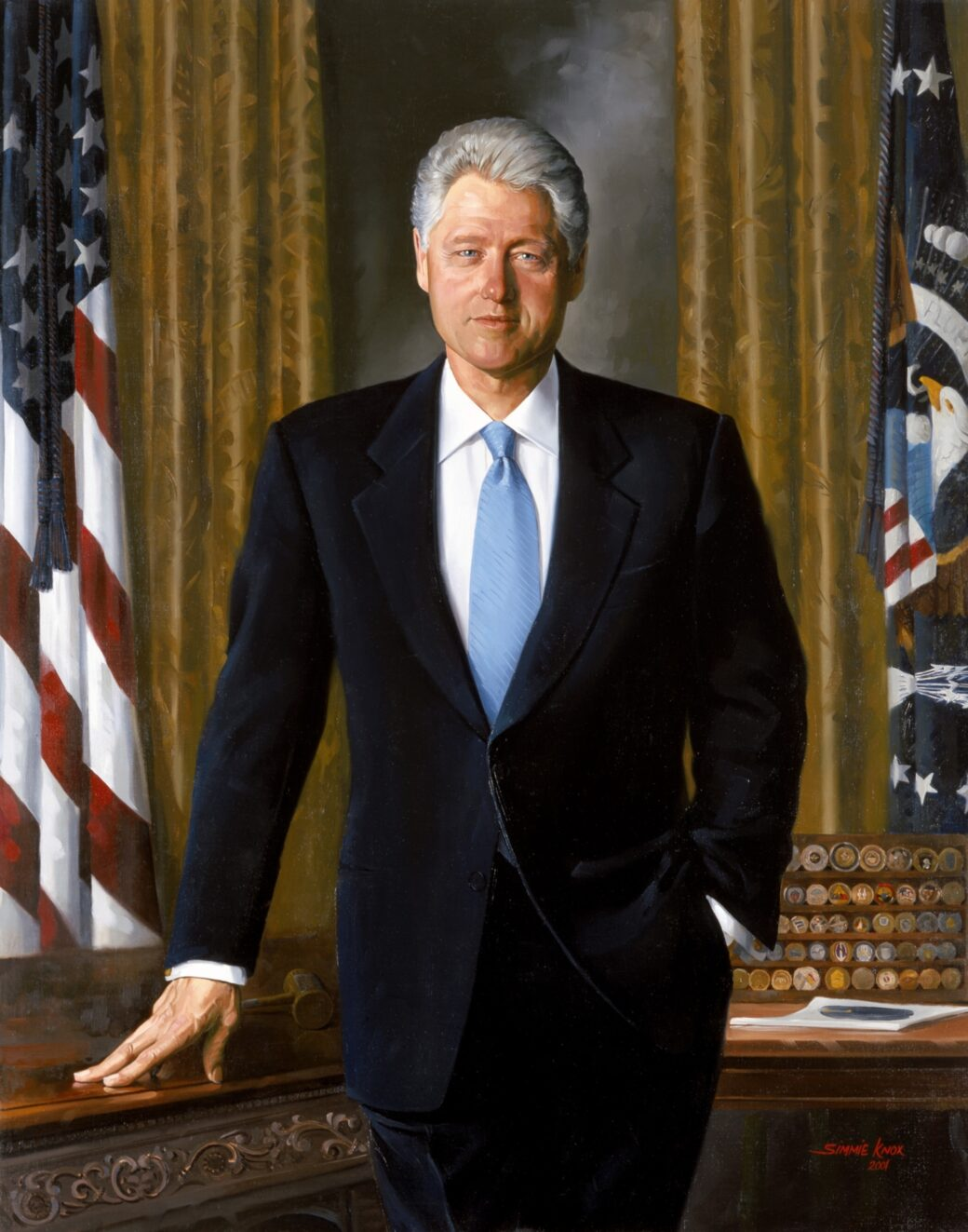
In 1992, the Democrats won the White House for the first time since 1976, and with united government they sought to make numerous changes in the liberal direction, and one of the many issues Clinton was firmly liberal on was abortion. Since the late 1970s, a major movement of protests of abortion clinics formed, but with non-violent protests there came incidents that went beyond standard protesting, such as intimidation, criminal harassment, stalking of abortion providers, and violence. A particularly notable group perpetrating these incidents was the terrorist group Army of God, whose members have committed numerous crimes against abortion providers, including murder. The escalation of tactics as well as the March 10, 1993 murder of Dr. David Gunn by pro-life extremist Michael Griffin motivated the Democrats to push for the Freedom of Access to Clinic Entrances (FACE) Act.
While numerous of these activities were of course already illegal under state and local laws, the citations for trespass were not thought sufficient and in some jurisdictions local law enforcement was thought to be lax. Proponents also argued that the state and local authorities did not have sufficient resources to deal with the scope and scale of these incidents. The initial bill was passed in November 1993 and only covered abortion clinics, but in order to shore up additional support churches and other places of worship were added, thus creating two protected classes. In the House, the measure was sponsored by Reps. Chuck Schumer (D-N.Y.) and Constance Morella (R-Md.) while the Senate sponsor was Ted Kennedy (D-Mass.).
Rep. Louise Slaughter (D-N.Y.) justified this new law, stating, “State and local law enforcement lack the resources – and sometimes lack the will – to battle large-scale, long-term operations that include trespassing, vandalism, and assault (Congressional Record).
Rep. Jim Bunning (R-Ky.) opposed the bill, and stated in his opposition, “In the sixties, before passage of the Civil Rights Act, there were sit-ins, pray-ins and protests all around the country. Some were peaceful. Some were not. In some circles, the civil rights movement was not very popular, but Congress did not pass special laws to discourage civil rights protests because of their motivation or because of their viewpoint. He went on to say, “Yes, we should punish violence, threats of violence and intimidation. But this bill goes beyond that. It would punish people engaged in non-violent, free speech. It would create harsh new penalties for people who engage in non-violent civil disobedience” (Congressional Record).
Rep. Carolyn Maloney (D-N.Y.) in support stated, “Most people would be outraged if they were prevented from entering a supermarket – or a church or an office building or any other place – by someone who disagreed with what was going on inside. We need this Freedom of Access bill because throughout our country, there continue to be bombings, assaults, threats, and even murders by people trying to prevent people from working in or using medical facilities which offer reproductive health services. In the previous Congress, the House passed the Farm Animal and Research Facilities Protection Act, which prevents violent blockades of facilities for research animals. If we care that much about facilities for animals, we ought to care about facilities for women. The right to choose is meaningless without the access to choose.”
Rep. Lynn Schenk (D-Calif.), shall we say, poured on the Tabasco sauce in this debate when she alleged the motives of the opposition, “Their true agenda is to continue the reign of harassment, terror, and physical intimidation against women and their doctors” (Congressional Record). Would it surprise you to learn that she is a lawyer?
Rep. Chris Smith (R-N.J.), who continues to serve, had the most to say in opposition on the day of passage and in defense of abortion protestors, “The difference in what we are dealing with today are those acts of nonviolent civil disobedience, and I can tell you Mr. Speaker, if we applied the standard in this bill to those who have been involved in D.C. statehood, civil rights, women’s rights, animal rights, and a whole host of other very important causes, this particular legislation would never see the light of day on this floor. Mr. Speaker, just let me also make a very important point: that sidewalk counseling has saved tens of thousands of children throughout the last 20 years. Women, many of whom have had abortions frequently become sidewalk counselors and go to abortion clinics to speak out. These women, and I have pictures of women who have helped women through the difficult, distressful pregnancies they may be experiencing, they have helped women about to abort at that 11th hour (Congressional Record).
The bill passed the House on May 5, 1994 on a vote of 241-174 (D 201-43, R 40-131). The Senate followed up on a vote of 69-30 (D 52-3, R 17-27) a week later. Interestingly, among the Republican supporters was Mitch McConnell. The three Democratic dissenters were J. Bennett Johnston and John Breaux of Louisiana along with J. James Exon of Nebraska. None of these seats are held by Democrats today.
This law was controversial in passage as some non-violent tactics could result in jail time. For instance, in practice, one protest tactic that has resulted in jail time for offenders has been sit-ins. In particular, activist Herb Geraghty was imprisoned for doing so in Pennsylvania in 2020 and was sentenced in 2023. He was pardoned in 2025 by President Trump, and has advocated for the law’s repeal (Geraghty). It should also be noted that since passage of the law the number of violent incidents decreased surrounding abortion. I must note that it is interesting that the FACE Act is being used against Don Lemon yet the administration has made clear that it is only interested in using the FACE Act in egregious cases regarding clinics (Lucas). Selective prosecution does not seem to only been a feature of the present administration; the Biden Administration was also alleged to have used to the FACE Act selectively, in being willing to prosecute cases of attacks on abortion clinics at higher rates than attacks on pregnancy centers and churches (Kamman). That administrations, past and present, have used this law most selectively makes a case for repeal in this writer’s opinion. Earlier this year, Representative Chip Roy (R-Tex.) proposed to repeal the FACE Act.
References
A bill to amend the Public Health Service Act to permit individuals to have freedom of access to certain medical clinics and facilities, and for other purposes. Voteview.
Retrieved from
https://voteview.com/rollcall/RS1030507
Conference Report on S. 636, Freedom of Access to Clinic Entrances Act of 1994. Congressional Record, 148(53).
https://www.govinfo.gov/content/pkg/CREC-1994-05-05/html/CREC-1994-05-05-pt1-PgH40.htm
Freedom of Access to Clinics Act. Voteview.
Retrieved from
https://voteview.com/rollcall/RH1030753
Geraghty, H. (2026, February 6). I Was Jailed for 18 Months Under the FACE Act. It’s Time to Repeal This Unconstitutional Law. National Review.
Retrieved from
Kamman, S. (2024, December 20). Biden admin. accused of failure to prosecute church attacks, ‘one sided’ FACE Act enforcement. Christian Post.
Retrieved from
Lucas, R. (2026, March 9). Trump’s DOJ Limits on FACE Act enforcement fuel concern from abortion providers. NPR.
Retrieved from
https://www.npr.org/2025/03/09/g-s1-52616/abortion-face-act-access-enforcement
 Mad Politics: The Bizarre, Fascinating, and Unknown of American Political History