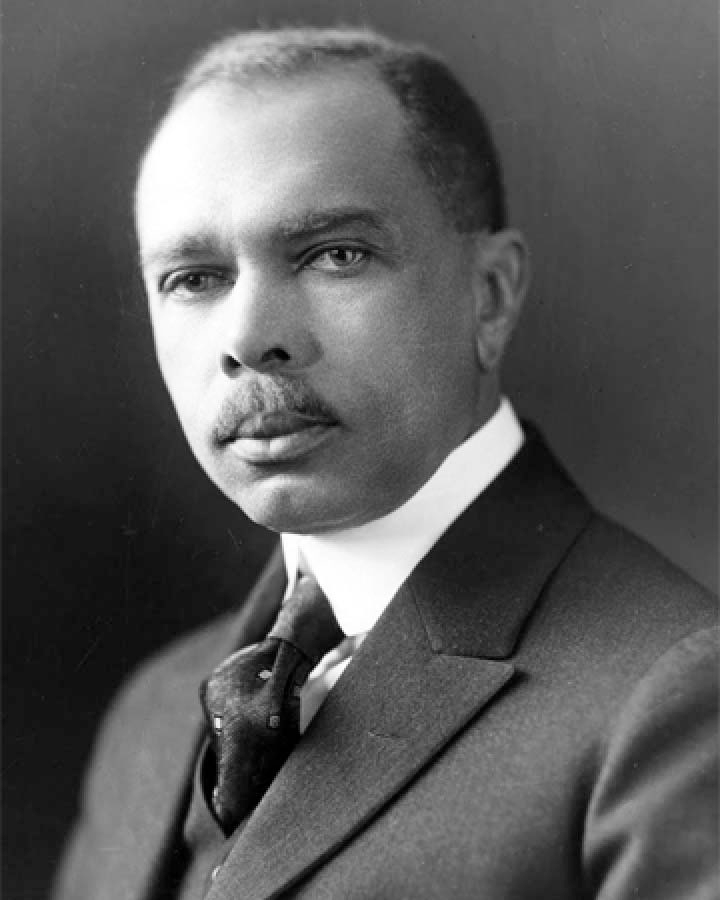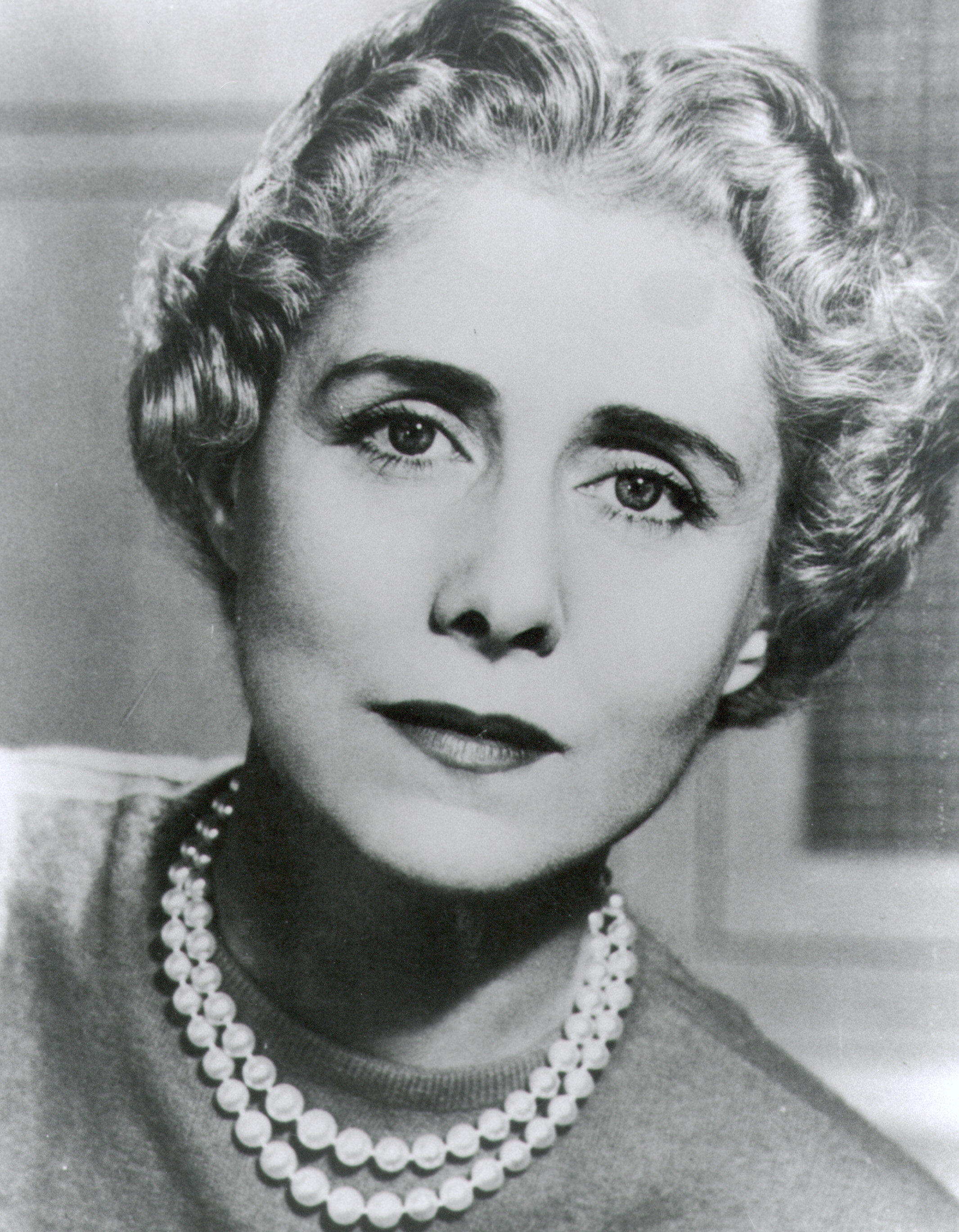
Trump is president for a second time, and while there hasn’t been anyone with his exact last name in Federal office before, there was an oddly named fellow named Philadelph Van Trump (1810-1874), although unlike Trump he was never a Republican.
The mid-19th century was a strange time in American politics. Before the existence of the Republican Party the major rival of the Democratic Party was the Whig Party. The Whigs were a broad coalition of politicians who had come together in opposition to President Andrew Jackson and his groundbreaking use of executive power. Indeed, in 1850 you could find Abraham Lincoln in the same party as Alexander Stephens, who would be vice president of the Confederacy. However, over time the differences within this coalition only grew. The most vital of these issues was of slavery, with an increasingly intractable divide between “conscience Whigs” and “cotton Whigs”. Van Trump started in the Whig Party and in 1852 he participated in last Whig National Convention, which nominated General Winfield Scott. However, the Whigs tried too hard to appeal to everyone and thus ended up having little appeal; the ticket only won the states of Massachusetts, Kentucky, Tennessee, and Vermont, a result that, with the enactment of the Kansas-Nebraska Act, spelled the death of the Whig Party. Many Whigs flocked to the rapidly growing American (“Know Nothing”) Party, as did Van Trump, and in 1856 he ran for governor of Ohio on the American Party ticket. However, this made the gubernatorial race three-way, splitting the Democratic vote and resulting in the election of Republican Salmon P. Chase. In 1860, Van Trump strongly supported the Constitutional Union Party’s ticket which ran John Bell for president and Edward Everett as vice president. The platform was maintaining the union but leaving slavery alone. Van Trump’s movement between parties is one way in which he actually was similar to current President Donald Trump, as Trump has in the past been in the Democratic Party as well as in the Reform Party for when he was running for that party’s nomination for president in 2000.
During the War of the Rebellion, Van Trump was a staunch opponent of President Lincoln and the Republicans. From 1862 to 1867, he served as a judge of the court of common pleas, commanding a lot of respect in this role for acting as he saw fit under the law even under threat of imprisonment. As the newspaper The Stark County Democrat described in his obituary, “His career as a Judge was a marked one, and perhaps no jurist ever more completely commanded respect of the bar. He was profoundly learned in the law, possessed iron firmness and the greatest suavity. The celebrated kidnapping case of Dr. [E. B.] Olds came before him, but he fearlessly enforced the law, although surrounded with bayonets and himself threatened with military arrest and imprisonment. But for the hasty intervention of the Supreme Court, he would have imprisoned Gov. [David] Tod under the kidnapping act” (DiBacco). For context, Dr. Olds was considered among the leading Copperheads of Ohio, or those who wanted a peace agreement with the Confederacy for an amicable break. Governor Tod had recommended him for arrest for his activities, which were regarded as siding with Confederates, and he was himself arrested for kidnapping briefly until freed by the Supreme Court (Roseboom & Wisenburger, 190-192). His efforts at higher judicial office met with little success, as he thrice lost elections to the Ohio Supreme Court. Instead of again seeking a post on the court, in 1866 Van Trump ran for Congress and won in the at-the-time Democratic 12th district.
Congressman Van Trump
During his time in office, Van Trump not only opposed the impeachment of President Andrew Johnson but also delivered a speech against it in Congress. As a member of the Committee on Railroads, he was a consistent opponent of the Republican policy of generous land grants to railroads. Van Trump was also consistently against high tariffs, an economic bread and butter policy of the GOP at the time. However, during his time in office he developed heart disease, and he did not seek reelection in 1872. Van Trump’s DW-Nominate score was -0.591, or one of the most liberal per that system in his time. He did not live long in retirement, dying on July 31, 1874. Van Trump also has a rather interesting connection to Washington State, where I live, in that his son, Philemon Beecher Van Trump, was the first person to document climbing Mt. Rainier in 1870.
Van Trump was different in many ways than current President Trump, and yet another one of those was in his riches. As his obituary in The Stark County Democrat read, “he died comparatively poor because he was too generous to accumulate wealth” (DiBacco).
References
DiBacco, T.V. (2018, May 4). The other Trump in history. Orlando Sentinel.
When it comes to conservatism, one state we don’t think of so much these days is Illinois. It is difficult for Republicans to win statewide thanks to Chicago, which has been unshakably Democratic since the days of Mayor Richard Daley, and Democratic politics seem to have, at least at the moment, an iron-clad grip. One figure who would be tremendously out of place in the modern politics of Illinois was Noah Morgan Mason (1882-1965).
The 12th of 13 children of a working-class family in Glamorganshire, Wales, the family immigrated to the United States when Mason was 6. Although he had to drop out of school to work on the family farm at 14, his mother saw something in the young boy that told her that he was destined for a greater future than his father, and thus she pushed him to go to college, and he did, graduating from Illinois State Normal University. Mason would dedicate himself to education, and at 22 he was the principal of Jones School in Oglesby, serving for five years, after which he became the city’s school superintendent (Hill). This prominent role led him to politics, and in 1919 he ran for and won the post of city commissioner for Oglesby. In 1926, Mason tried for the first time to win a seat in the Illinois State Senate but lost. However, this would be the only race he ever lost, and he would be elected to the State Senate in 1930.
As a state senator, Mason voted to repeal Prohibition. Although he had time and again expressed his personal opposition to drinking, he recognized that a majority of his district had voted for a referendum to repeal Prohibition, and he believed that he should abide by the wishes of his constituents in what he regarded as the Jeffersonian and Lincolnian tradition (Hill). Indeed, Mason was attentive to the wants and interests of his conservative constituency, and it kept him in office, but higher office was on his mind.
His opportunity for higher office came in 1936, as Congressman John T. Buckbee was ailing. When talk of Mason running to succeed him came about, he denied that he would seek the office unless Buckbee decided to retire due to ill health (Hill). This showed respect for the ill incumbent, and Mason would win the nomination to succeed him after he died in office. Although the 1936 election would elevate Democrats to the height of their power, Mason won his election too, and he presented quite an alternative.
Mason vs. The New Deal
From the very start of his Congressional career, he made his position clear as a committed conservative with his maiden speech to the House focusing against the expansion of the Federal government and in opposition to President Roosevelt’s “court packing plan” (Samosky, 36). Although solidly conservative in his record from the start, he was not necessarily averse to compromise. For instance, Mason, along with all but one of Illinois’ representatives, voted for the Wagner-Steagall Housing Act in 1937 while a majority of House Republicans voted against. He also voted for the original House passage of the Fair Labor Standards Act while opposing the final version. Mason would oppose work relief measures as well, and saw the work relief program as a corrupt way to strengthen the power of the Democratic Party. He accused its director, Harry Hopkins, of having transformed the program into “the most powerful political instrument of partisan advantage ever devised in the United States of America” and would in 1944 accuse him of condoning or encouraging “intimidation, bribery, and wanton violation of the Corrupt Practices Act” (Hill). Mason also condemned numerous Brain Trusters for radical backgrounds and statements. He regarded guaranteed minimum income, employment for all by the government, and confiscation of all property except houses and subsistence farms as “State socialism”, comparing such ideas to the practices of Nazi Germany, Fascist Italy, and Soviet Russia (Samosky, 41). Although Mason represented a rural district, he stood opposed to New Deal agricultural policy, which he saw as heavy on government control. He instead advocated the adoption of the McNary-Haugen measure that the farm bloc had attempted to pass in the 1920s over the opposition of President Calvin Coolidge (Samosky, 36).
Although strongly opposed to the New Deal’s political machinery, domestic spending, strong hand on businesses, ever-expanding Federal government, the infiltration of the government by Communists, and organized labor policies, he did not only see the bad in the New Deal. In January 1944, he stated that he considered the creation of the Federal Deposit Insurance Corporation, the creation of the Securities and Exchange Commission, Social Security, and the Fair Labor Standards Act to have been overall positive albeit flawed (Samosky, 42). Mason was, however, unconditionally opposed the Office of Price Administration during World War II and was against the price, wage, and rent controls established. He held that “Rationing merely distributes scarcity” and opposed economic controls as he saw them as hindering personal initiative (Samosky, 36). Mason would be similarly opposed to President Truman’s Fair Deal as he was Roosevelt’s New Deal.
Mason vs. Foreign Aid
Noah Mason’s stances on foreign policy would strike many as parochial. He was not only opposed, as were a majority of Republicans, to FDR’s foreign policy before World War II, he also opposed the bipartisan foreign policy consensus after World War II. Although Mason seemed to support the idea of an international peacekeeping body in theory given his vote for the 1943 Fulbright Resolution, in practice he was against, as he was one of 15 representatives to vote against the United Nations Participation Act in 1945. Given this vote, he certainly could not have been counted on to vote for aid to Greece and Turkey in 1947 or the Marshall Plan in 1948, and he didn’t. Mason did not ease up on his opposition to foreign aid during the Eisenhower Administration, and if anything, his opposition got stronger. He could not be counted on to support any elements of Eisenhower’s agenda that were moderate or liberal. Mason considered foreign aid to be a grand giveaway that added to the national debt and thus added to how much Americans would have to be taxed in the future, stating that it “shunted off upon our children a debt of $300 billion – a greater debt than all the other countries in the world combined” (Samosky, 48). Despite Mason being an outsider on many issues, his Illinois constituency appeared to be content with his stances, as they kept reelecting him.
Mason vs. Subversion
Noah Mason was a strong foe of radical forces that pushed discordance in society and government. In 1938, he made a speech to La Salle, Illinois’ Elks Club in which he condemned organizations such as the Silver Shirts, the Ku Klux Klan, and the German American Bund for stirring up racial and religious hatred as well as Communists and individuals in government he regarded as pushing class hatred (Samosky, 44). Fittingly, Mason was placed on the House Committee on Un-American Activities (The Dies Committee) in that year, serving in this post until 1943, and he would vote to make the committee permanent in 1945. He was a reliable vote for most measures intended to curb subversion. However, Mason made an interesting exception when on April 8, 1954 he voted to require a Federal court order for a wiretap in national security cases, contrary to the position of the Eisenhower Administration. He also praised Senator Joseph McCarthy (R-Wis.) as a “fighting Irishman” and a “red-blooded, two fisted American” (Samosky, 45).
Mason: For and vs. Eisenhower
President Eisenhower and his greatest backers were what were known as “modern Republicans”, in other words, accepting of the continuance of much of the New Deal with more fiscal discipline, for foreign aid, and easing up on protectionism. Mason was no such figure. He consistently opposed foreign aid bills, opposed federal aid to education, was one of 35 representatives to oppose a reciprocal trade bill in 1953, and opposed a bipartisan bill that year admitting more European refugees. Although born in Wales into a working-class family, Mason was for strong immigration limits, stating, “We’ve got to keep America American” (Alsop, J. & Alsop, S.). He saw restricting immigration as a way of protecting American values from potentially subversive influences, and saw his role as one of a preserver of the values that resulted in the flourishing of the United States. As a member of the powerful House Ways and Means Committee, Mason sought to overhaul the tax code. As journalists Joseph and Stewart Alsop (1953) reported, he said that he wanted to “relieve the overtaxed by taxing the untaxed”, which meant per the Alsops “reducing income and corporate taxes, while levying a manufacturer’s sales tax, taxing co-operatives, and depriving the churches, charitable foundations and universities of most of their existing exemptions”. Eisenhower by contrast wanted an extension of the excess profits tax, which of course Mason was completely opposed to.
As journalists Joseph and Stewart Alsop (1953) noted in their article on him as an example of difficulties President Eisenhower was having with the conservative wing of the GOP, “President Eisenhower’s problem with his own party is agreeably symbolized by Noah Mason…” and concluded with, “…the question remains – and it is pressing question – whose party is it, Noah Mason’s or Dwight Eisenhower’s?” He would, however, vote to sustain Eisenhower’s cost-conscious vetoes. Mason also maintained a strong devotion to a conservative view of Federalism. This meant that the Federal role was to be as limited as he saw fit under the Constitution, and this perspective translated into his positions on civil rights.
Mason vs. Civil Rights
Among House Republicans, by the Eisenhower Administration he was one of the most unbending opponents of civil rights legislation. Mason voted against the Civil Rights Acts of 1957 and 1960, which were watered-down, and no Senate Republicans had opposed, and was one of nine Republicans to vote against even considering the latter bill. He hadn’t opposed all civil rights proposals in the past, indeed in 1937 and 1940 he had voted for anti-lynching legislation, and he had voted for unsuccessful Powell Amendments in 1946 and 1956 to counter segregation in public education. He also had accepted the premise that non-discrimination by government and in societal opportunities was a good as posited by President Truman (Samosky, 39). However, what he opposed outweighed what he supported considerably. Mason opposed four of five measures against the poll tax he registered a vote or opinion on. This included the 1962 CQ Almanac recording that he had either announced or answered a CQ poll that he was against the 24th Amendment. He also opposed Fair Employment Practices legislation and opposed the 1960 Powell Amendment to counter segregation in education. During the debate over the 1957 Civil Rights Act, Mason contended that “each and every” right was “a State function, a State responsibility, a State obligation” and was “definitely left to the States by the Constitution” (Samosky, 39). He further delivered a speech before Congress in which he connected Federal civil rights legislation to the New Deal’s Federal intervention into the business of States. He painted a happy picture of the United States in this speech, that is, until in “…came our New Dealers, our Fair Dealers and our Modern Republicans with ideas and proposals to change our constitutional form of government into a welfare state, a centralized Socialist-Labor government, without our sovereign States relegated to a subservient position, exercising only those powers and duties that might be assigned them by an all-powerful, arrogant, dictatorial, centralized Federal Government – divorced from those powers, duties, and privileges guaranteed to the State by Our Federal Constitution” (Mason). Mason had no personal love for segregation, but he saw civil rights legislation as supported by the Eisenhower Administration as yet another manifestation of this trend he speaks against. This was not the only way that he could be in the minority of his party. He was also one of 24 House Republicans to vote against the admission of Hawaii in 1959. Although not a civil rights measure itself, the admission of Hawaii as well as Alaska added four pro-civil rights senators, thus many Southerners were in opposition. Indeed, if a bill was passed with but a small contingent of opposition from the right, Mason was likely to be among the dissenters.
Mason vs. the Majority
Image from Chronicling Illinois, citation in References.
Given that he rarely compromised in his views, especially in his later years, Mason could often be found against the majority on legislation, especially since he was one of the most conservative people in the Republican Party, which during his time in Congress only had a majority in two sessions. Some votes in which Mason was desperately in the minority aside from previously mentioned legislation included:
. On April 19, 1944 he voted against extending the Lend-Lease Act one year, which was passed 334-21.
. He voted for the Rankin (D-Miss.) motion to defeat the entire bill extending the Office of Price Administration, which would have killed all controls, and was defeated 20-370 on April 18, 1946.
. On July 18, 1955, he voted against an expansion of Social Security benefits, which passed 372-31.
. On July 20, 1955, he voted against increasing the minimum wage from 75 cents to $1 an hour with no coverage expansions, which passed 362-54.
. On August 26, 1960, he paired against the Kerr-Mills Act, a popular substitute for proposed Medicare legislation which provided Federal funds to States for medical costs of poor elderly people, which passed 369-17.
. On April 20, 1961, he paired against increasing Social Security benefits, the measure passing the House 400-14 on April 20, 1961.
. On June 6, 1962, he voted against a school lunch bill that passed 370-11.
. On September 24, 1962, he voted against authorizing President Kennedy to mobilize 150,000 reserve troops in response to increasing Soviet presence and armaments in Cuba, which passed 342-13.
However, something that should be noted about Mason was that despite his extreme views, he was a personable communicator of them and liked by his colleagues. Indeed, he was known to be a good-natured and friendly figure. Perhaps you could call him a happy warrior. In 1955, the New York Times characterized him as a “white-haired, genial battler” (Samosky, 39). Indeed, given how much Noah Mason opposed legislation just generally, I think an appropriate characterization for him is the “Amiable No-Man”. And he would be saying no a lot to the last president he served with.
Mason vs. The Kennedy Administration
Unsurprisingly, Noah Mason was opposed to almost every aspect of John F. Kennedy’s New Frontier, from public works legislation to the Peace Corps. However, he made one notable exception, and it was perhaps based on his background as an educator. Mason voted for the bill providing a five-year program for Federal aid to States for educational television in 1962. His most notable and final battle was that year and it was on a subject that he never compromised on…trade.
Noah Mason was consistently and unalterably protectionist in his views on trade, and expressed such views on the House Ways and Means Committee and cast such votes. In 1962, he waged his last major battle in Congress against the Kennedy Administration’s Trade Expansion Act, which granted the president more authority to negotiate mutual tariff reductions of up to 50% and to aid workers harmed by such reductions by more generous unemployment benefits among other measures (CQ Almanac). He motioned to recommit the bill to substitute it with a one-year extension of the existing Trade Agreements Act, which was defeated 171-253 on June 28th, and the Trade Expansion Act was signed into law. That year, Mason announced that he would not be up for another term, and told the House in his speech that “I plan to become a missionary to the liberal heathen on the Hill…preaching the gospel of conservatism to those who will listen. They may yet be saved to a happier future in which taxes will go down and not always up; in which the national debt will grow smaller and not bigger, in which the army of bureaucrats will get their proper comeuppance” (Hill). The latter part of this statement makes me think he would have certainly approved of the discharges of Federal employees that have occurred lately. Mason’s career, at least the last six years of it, was seen as incredibly positive by conservatives, with him agreeing with Americans for Constitutional Action 97% of the time, only differing with them on a vote to retain the Soil Bank Program in 1957 and on the aforementioned educational television legislation. By contrast, he only agreed with Americans for Democratic Action, which judged his record from 1947 to 1962, 7% of the time. Mason’s DW-Nominate score was a 0.63, which placed him consistently among the top ten most conservative members of the House in his time.
The conservative revival that Mason had been hopeful for would have to wait until after his death, as he lived only two years after his retirement, dying on March 29, 1965, of heart failure, a year that perhaps was the apex of American liberalism in the 20th century. I cannot imagine that he would have supported the legislation enacted later in the year, including the Elementary and Secondary Education Act, the Voting Rights Act, and Medicare. Surely, he would have been heartened had he lived to see the rise of Reagan, even if he probably would have been disappointed with the budget deficits. Perhaps Mason is from the great beyond disappointed in where Illinois has gone, with a mere 3 of 17 representatives being Republicans thanks to redistricting, and even his old district is now represented by Democrat Lauren Underwood. He would certainly, however, be more heartened by the Republicans are they are today, as the party, 72 years after the Alsop brothers asked the critical question of whose party it was, it is clearly more of Mason’s today than Eisenhower’s.
References
Alsop, J., & Alsop, S. (1953, June 30). Mason Symbolizes Ike’s Problem. St. Petersburg Times.
ADA Voting Records. Americans for Democratic Action.
Northerner Backs the South – States’ Rights and the U.S. Constitution Versus Civil Rights and the Court. (1957, June 7). The Times (Shreveport, LA), p. 15.
Many Americans have a desire for an independent candidate for public office. One who stands separate from political organizations or certain powerful lobbies. Although we have had no president since the rise of the Republican Party who wasn’t a Republican or a Democrat, there have been the occasional elected officials who were independent. In the last Congress, there were a whopping four senators who were identifying as independent, but two had long been known as Democrats in Kyrsten Sinema of Arizona and Joe Manchin of West Virginia. Now the Senate has Maine’s Angus King and Vermont’s Bernie Sanders. Ohio at one time had Congressman Henry Frazier Reams (1897-1971).
The 1950 election produced victories for the Republicans, but one result stood out, and that was in Ohio’s 9th district, based in Toledo. Democratic Congressman Thomas A. Burke, a staunch liberal, was likewise a firm friend of organized labor. However, attorney Frazier Reams, left the Democratic party in August to challenge Huber, accusing him of being a tool for prominent CIO labor leader Richard T. Gosser, while also blasting the Republican machine in Toledo (The Tennessean). Normally independents don’t get a whole lot of traction, but voters were responsive to Reams’ message. Rep. Michael J. Kirwan (D-Ohio) as chairman of the Democratic National Committee derided him as a “carpetbagger” given that he was from Tennessee, but he had in truth lived in Toledo for over 25 years and Reams responded by subsequently carrying a carpetbag with him to campaign events and rallies (Everett). Burke lost reelection that year, with Reams getting votes from both Democrats and Republicans. After his victory, he said, “The people merely proved that they were tired of special interests, whether on the Left or the Right, together with all the power-politics represented by both sides” (The Nashville Banner). Reams indeed sought to transcend left and right. He pledged after his victory that he would “sit in the middle of the aisle” (CQ Press). In office, Reams seemed to back a lot of the Democratic agenda on economic policy, supporting the retention of price and rent controls and backed the furtherance of government programs such as public housing and an increase in Social Security benefits. However, he did seem to be against measures that were criticized as being socialist, such as on public power. Reams also sided with Ohio Republicans in favor of using the Taft-Hartley Act’s injunction in the 1952 steel labor dispute and in 1953 he supported the Republicans in their push to end the Reconstruction Finance Corporation. He overall backed Americans for Democratic Action’s positions 76% of the time, and his DW-Nominate score was a -0.151. When it comes to independents, Reams reminds me a bit of Angus King, Maine’s independent senator, who considerably more often votes with Democrats (indeed he caucuses with them) but is not fully a party-line person. Reams could, however, not defy the two-party gravity for long.
In 1954, Reams lost a three-way election to Democrat Thomas Ashley. As Time Magazine (1954) reported, Reams miscalculated in his approach, writing “Reams made the mistake of thinking that Republican Candidate Irving Reynolds was his toughest opponent. Reams and Reynolds engaged in a bitter personal campaign, both dismissing the Democrat as “young Ashley”. Young Ashley, who had a nervous habit of giggling on television appearances, won by 4,000 votes over Reams and 8,000 over Reynolds”. The district has had a long Democratic history since, as the only non-Democrat to win the seat since was Republican Ed Weber in 1980, who was defeated in 1982 by Marcy Kaptur, who still holds the seat. However, a Republican may very well succeed Kaptur as Ohio has gotten more Republican over the years, and Ohio’s 9th is just the sort of district that has been moving increasingly into the Republican column. Reams himself would continue the practice of law and would head up his own broadcasting company, Reams Broadcasting Corporation. His last years were spent in Oakland, California, where he died on September 15, 1971.
References
ADA Voting Records. Americans for Democratic Action.
The New Mexico territory began as a conservative Republican stronghold and this was reflected in the first senators the state elected in Thomas B. Catron and Albert B. Fall. However, over time the state’s politics were increasingly inclined towards the Democrats, with the only Republican elected to Congress after the onset of the Great Depression being the progressive Senator Bronson Cutting, who would die in an airplane crash in 1935. From then on it was Democrats all the way, including in gubernatorial races. That was, until the election of Edwin Leard Mechem (1912-2002) as governor.
New Mexico in 1950 was considered quite Democratic, and at that point Republicans often had trouble recruiting candidates for major public offices. However, “Big Ed” (he was a large man) Mechem, a 38-year-old Las Cruces lawyer, stepped up to the plate against Democratic Congressman John E. Miles. Miles, who had had a long career in New Mexico politics, had good reason to think that he was going to win this one, and it didn’t hurt that he was politically moderate, potentially offsetting him being tied closely with the increasingly unpopular Truman Administration. However, Mechem delivered a powerful message against corruption in New Mexico politics and proposed reforms to the structure of the state’s government. New Mexico had had a long history of corruption in state politics, with money often having a strong influence on elections and charges of voter fraud were frequent; Senator Dennis Chavez may have won reelection in 1946 due to voter fraud (Hill). The climate of 1950 was decidedly conservative, and although New Mexico Democrats defeated Republican challengers for Congress (the two Democratic candidates were far from liberal stalwarts), Mechem won the 1950 election with 54% of the vote in an upset. Despite Mechem being quite conservative and the state of New Mexico being Democratic, he proved the state’s biggest vote-getter for the Republicans. He was not the first member of his family to serve as the state’s governor, as his uncle Merritt had done so from 1921 to 1923, also as a Republican.
As governor, Mechem proved a reformer, restructuring New Mexico government and standing independent of political machines. He also was quite politically savvy, and journalist James B. Barber of the Carlsbad Current-Argus noted that he was “a politician who can stumble into a vat of limburger cheese and come up reeking of [Chanel] No. 5. Some of it is luck, maybe, but there’s a lot of political savvy, too, in this big stubborn Las Cruces lawyer, who seldom takes advice from anyone” (28). He won reelection in 1952, running only two points behind Dwight Eisenhower. Mechem had a rather amusing tendency, as Barber noted, to issue forth a deep laugh from his chest that came out “ho ho ho” when he was dodging an inconvenient question (24). However, Mechem was term-limited, and instead of running for governor again, he tried to win a seat in the Senate. His opponent was Senator Clinton Anderson, a shrewd politician who was considered the foremost figure of the state’s Democratic Party. This would produce for him the worst defeat of his career, as the 1954 midterms resulted in the loss of control of Congress for the Republicans, and he would only net 43% of the vote. Mechem was not out of the game for long, and in 1956 he was again elected governor, defeating incumbent John F. Simms with 52% of the vote.
The 1958 election was particularly bad for Republicans, with Mechem losing by only a point to Democrat John Burroughs, but in a rematch in 1960 he campaigned against Burroughs’ forming his own political machine and came out ahead by less than a point. The Gallup Daily Independent had endorsed his bid for a comeback, citing his record as an efficient governor without ties to political machines (4). Although a victory, voters were less enthused about Mechem than in the past, and in 1962 Democrats managed to get New Mexico Representative Jack Campbell, a man known for being free of the control and influence of machines, to run against him. Campbell defeated him by 6 points. However, fate granted him an opportunity. On November 18th, the long-ailing Senator Chavez died, and Mechem pulled a maneuver that seldom works out in the long-run for politicians: resigning the governorship and having his successor appoint him to the Senate. This move was highly controversial in New Mexico as the voters had just rejected him for another term in public office only for him to move into the Senate.
Senator Mechem aligned himself closely with the staunchly conservative Barry Goldwater and his record proved among the most conservative in the Senate, opposing all major New Frontier and Great Society measures considered in his time in office as well as the Partial Nuclear Test Ban Treaty. The liberal Americans for Democratic Action rated him zeroes in both 1963 and 1964, not an easy feat to accomplish. He sided with Americans for Constitutional Action (Mechem would later serve on its Board of Trustees) 98% of the time by contrast, with the only position he had taken they considered liberal being voting against Senator Proxmire’s (D-Wis.) proposal to cut to Labor-HEW Appropriations in 1963. This meant, rather controversially for his state in which there were many Latinos, that he was one of six Republican senators to vote against the Civil Rights Act of 1964. Mechem also opposed most sections of the bill and was the only Republican to vote in favor of Senator Gore’s (D-Tenn.) motion to recommit the bill to ease the provision cutting off aid to segregated schools. Mechem’s DW-Nominate score was a 0.585, placing him as the fourth most conservative senator in the 88th Congress. Although he had voted his conscience as his voting was far from tailored to win reelection in New Mexico at the time, this was politically tough as he was up for election to a full term in 1964, and that year was worse for the average Republican candidate than 1962 had been.
The 1964 Election: “Big Ed” vs. “Little Joe”
The 1964 election was one of great contrasts, both in the presidential election and in the New Mexico Senate election. “Big Ed” was facing a challenge from Joseph “Little Joe” Montoya, who represented one of New Mexico’s two At-Large districts. Little Joe supported JFK’s New Frontier legislation and LBJ’s Great Society, Big Ed did not. Little Joe supported the Civil Rights Act of 1964, Big Ed did not. A lot of support for Mechem’s campaign likely came from people remembering him as a good and effective governor of the state, but the candidacy of Barry Goldwater was tough for him to work with, especially since he voted with him on almost all key issues.
Although Mechem tried his best, he was defeated by nine points in 1964, with Montoya getting excellent results in Spanish-American areas. Mechem’s move to the Senate had only temporarily stayed the execution of his political career, and he demonstrated that he was the rule and not the exception when it came to governors getting themselves appointed to the Senate. As a side note, West Virginia’s Joe Manchin is an example of how to do it right; after Senator Robert Byrd died in 2009, he appointed an interim successor and ran in a proper election to finish the late Byrd’s term in 2010 and won despite West Virginia no longer being competitive for Democrats in presidential elections and the 2010 midterms being what President Obama called a “shellacking” for the Democrats. Journalist Will Harrison (1964) wrote of the outcome for Mechem, “The Nov. 3 election was very likely the end of Ed Mechem’s political career. It is possible that he might have beaten Montoya in a head-to-head run without the presidential influence, but the writing was on the wall for Mechem in 1962 when Jack Campbell demonstrated that a clean, aggressive Democrat could beat him without outside influence. Mechem’s 1962 loss of Albuquerque and his home county of Dona Ana, and the loss of such formerly reliable areas as San Juan and Santa Fe were signals that he had reached the end of his string” (4). Harrison was right; the New Mexico voters had tired of “Big Ed” Mechem, and he would never again be elected to public office. However, one important person had not tired of “Big Ed”, and that was Richard Nixon.
Judge Mechem
In 1970, President Nixon nominated Mechem, who he dubbed “Mr. Republican” as a Federal court judge for the district of New Mexico, and he was confirmed. While a judge, Mechem’s judicial record was not influenced by his political leanings; he ruled that age discrimination was occurring at Sandia National Labs, that sex discrimination was occurring in the Albuquerque police department, that the Socorro County jail had been indifferent to the medical needs of a prisoner who died, and made several rulings favorable to American Indians (Hill). Mechem assumed senior status (a state of semi-retirement for judges) in 1982 but would continue to work as much as he could for the last twenty years of his life. He died on November 27, 2002, at the age of 90 from his longtime heart condition.
Future of New Mexico Politics
Interestingly, not too long after Mechem’s 1964 defeat, the politics of New Mexico improved considerably for Republicans and conservatives, with Richard Nixon winning the state in 1968, two Republicans being elected to Congress that year, and the 1972 election resulting in the election of Republican Pete Domenici to the Senate, who represented the state for 36 years. New Mexico today is now politically what it was during the time of FDR, Democratic all around for major offices, and the last Republican the state voted for in a presidential election was George W. Bush in 2004. Is a comeback in store for the Republicans in New Mexico? Undoubtedly at some point, but when that’s going to be is anyone’s guess.
Correction, 3/4/25: I had originally written of Joe Manchin’s election in 2010 to the Senate as for a full term, but it was actually to complete the late Senator Byrd’s term. Manchin ran for a full term in 2012. My thanks to Daniel Fox for spotting this.
References
ADA Voting Records. Americans for Democratic Action.
Like many men of his generation, William Jennings Miller (1899-1950) was a veteran of the first World War. Unlike many men of his generation, his injuries occurred shortly after the war’s conclusion. Miller was test-flying a plane and it crashed. He suffered a broken back as well as the loss of both of his legs, and spent four years in the hospital. Despite this crushing loss, Miller proceeded with life after being released. He got married and launched a successful insurance career in Hartford, Connecticut. Miller also was active in the American Legion, becoming Connecticut’s commander in the 1930s. In this position, he simultaneously fought for generous benefits for disabled veterans while taking a fiscally conservative stance in opposing adjusted compensation certificates, and during his tenure membership reached record levels (Congressional Record, 16000). Miller’s success in insurance as well as in the American Legion put him in a good position to run for public office, and in 1938 he challenged Democrat Herman P. Kopplemann for reelection. This was a good time to run as it was the first election since 1928 that went in a Republican direction, and he was among the winners. This election started a ten-year cycle of boom and bust for the parties in Connecticut.
Congressman Miller
Miller was a happy warrior while in Congress, persistently cheerful despite his disability and known as “Smiling Bill”. His attendance record was solid and as an active member of the American Legion he specialized in veterans’ affairs. Miller encouraged veterans, injured and not injured alike, to not rely on the government whilst advocating for them. He proved fiscally conservative, voting against work relief appropriations in 1939. However, on social issues he proved liberal. Miller was one of less than ten Republicans to oppose the Hobbs bill in 1939 that would have provided for detention facilities for illegal immigrants. Miller also supported anti-lynching legislation, which while you might think this would be a given in Connecticut, his Republican colleague, Thomas Ball of the 2nd district, voted against. He was also opposed to the US getting involved in World War II, voting against the Neutrality Act Amendments in 1939 and against the peacetime draft in 1940. 1940 was a good year for the Democrats in Connecticut, and all House Republican incumbents lost reelection, with Kopplemann returning to office. However, in 1942, Miller ran again and defeated Kopplemann a second time.
During the 78th Congress, Miller was staunchly independent in his voting. He voted against appropriations for the Dies Committee, for income tax relief, against further funds for the National Youth Administration, and against the Smith-Connally Act. The latter provided a mechanism for stopping wartime strikes and it was enacted in 1943 over President Roosevelt’s veto. Miller further voted against multiple efforts to weaken wartime price control, voted against soldier voting bills that placed the criterion of who would get mailed a ballot with the States as opposed to the Federal government, voted to ban the poll tax in Federal elections, supported generous benefits for defense workers, supported legislation curbing subsidies, and supported freezing the Social Security tax at 1%. 1944 was, although not the blowout year for Connecticut Democrats that 1940 was, still a good year as four of six of the Republican representatives were not returned to office, with Miller again losing to Kopplemann. In 1946, however, Republicans again had a clean sweep of the Connecticut delegation, with Kopplemann losing reelection for the last time to Miller. During the Republican 80th Congress, he supported income tax reduction over President Truman’s veto, the Taft-Hartley Act over President Truman’s veto, banning the poll tax for Federal elections, the Reed-Bulwinkle bill easing anti-trust laws on railroads, budget cuts to multiple departments, and the Marshall Plan. However, he demonstrated his independence and his general aversion to anti-subversion measures in being one of only eight House Republicans to vote against the Mundt-Nixon bill for the registration of Communists with the Attorney General. Although Miller opposed cuts to aid to Europe, he nonetheless voted against aid to Greece and Turkey in 1947. I have not been able to find out the why but his voting on other foreign aid measures suggests that his rationale may have been similar to that of a small group of Democratic liberals who opposed such aid as the two nations fell short of being democracies.
Miller’s independence did not save him from another defeat in 1948, this time by future Connecticut Governor, Secretary of Health, Education, and Welfare, and Senator Abe Ribicoff. Despite his record of being in and out of Congress, Miller ran ahead of most Republicans (Congressional Record, 16000). This highlighted both how difficult his district had become for Republicans but also to Miller’s appeal. Ideologically, his DW-Nominate score was a 0.062, highlighting his strong independence from party line and his score from the liberal Americans for Democratic Action, which accounted for his last term, was a 32%.
Perhaps had his health allowed it, he would have made another go for Congress. However, Miller developed a kidney ailment in March 1949 that resulted in him being bedridden for a year (The Hartford Courant). Although it looked like earlier in the year he might have been on the mend, he died only weeks after the 1950 election on November 22nd. The Hartford Courant memorialized him thusly, “Former Congressman William J. Miller attained a remarkable degree of success despite a physical handicap that would have discouraged a less courageous man…Bill Miller wore nobody’s collar when he was in Congress. When he thought his party’s leadership was wrong, he voted as his conscience dictated” (Congressional Record, 16000). Despite living a physically difficult and short life, Miller made the best of it that he could and did so with a smile on his face. Republicans didn’t fare well in the Hartford-based district after Miller’s exit, with the Republicans only winning back the district one more time; in 1956, when President Eisenhower was overwhelmingly reelected and the seat was open. It also happened to be the last time Connecticut elected an entirely Republican delegation to Congress. The 1958 midterms resulted in a full switch of the House delegation from Republican to Democrat and saw Republican Senator William Purtell’s reelection loss to Thomas J. Dodd. Could a Republican like Miller be elected in any district in Connecticut today? Perhaps in the 4th or 5th districts, but Connecticut hasn’t sent a Republican to Congress since 2006, and that was Chris Shays, considered one of the most liberal Republicans in his day who fell in 2008 to the district’s current representative, Jim Himes.
References
ADA Voting Records. Americans for Democratic Action.
Let me get this out of the way…no this is not a post alleging that Ronald Reagan was a liberal or a RINO as president or any other such half-baked revisionism. This is about the early phase of Ronald Reagan’s public life, when Reagan was in fact a liberal.
Reagan’s Early Life
Ronald Reagan’s early upbringing was influenced by the politics and religion of his parents. His mother was a devoutly religious woman and his father, Jack, a traveling salesman, was a staunchly populistic Democrat who supported the progressive causes of his day, strongly opposed the KKK and racial and religious bigotry, and would support the New Deal. As a young man, Ronald Reagan would let black college football players stay at his folks’ place when no establishment in his town would let them stay the night. Reagan’s experiences in young adulthood motivated him to stick with a liberal Democratic philosophy; after all, President Roosevelt’s work relief programs had provided his father and older brother with jobs (Cannon). In 1934, Reagan started his work as a sports radio announcer for WHO in Iowa. Interestingly, heading up the news section at WHO was H.R. Gross, would later become a notorious skinflint in Congress and support Reagan’s rise in politics. When asked in 1984 at a visit from President Reagan if he thought that Reagan had the chops to be president at the time, he responded, “No. He was a Democrat. He belonged to the wrong party” (UPI). After his time in radio, Reagan would move to Los Angeles and got a contract with Warner Brothers after a successful screen test. His enthusiasm for liberal causes was strong but it was based in a strong idealism and the personal magnetism of FDR appealed to him greatly. Writer Howard Fast even claimed that Reagan attempted to join the Communist Party in 1938, but was turned down as he was thought to be a lightweight and unreliable (Geller). This story is, however, disputed.
Reagan remained committed to FDR during his presidency and voted for him every time. By 1946, he concluded that the communists were a force of evil to be reckoned with much like the Nazis had been, but this approach was not well-received by many of the actors who had previously been in full support of his positions. He worked with actress Olivia de Havilland to counter communists in the Independent Citizens’ Committee of the Arts, Sciences, and Professions, which was ostensibly a pro-FDR group, but was headed by secret communist Hannah Dorner who with the communist leadership made the organization always side with the USSR despite a primarily non-communist membership (Fund). Ultimately, Reagan, de Havilland, Roosevelt, and other prominent figures who lent credibility through their membership to the communist leaders left the organization, rendering the committee influentially inert.
The following year, he became president of the Screen Actors’ Guild and to this day he is the only president to have ever led a union. Reagan became a member of the newly established liberal Americans for Democratic Action (which would staunchly oppose his presidency) as well as United World Federalists. As president of the Screen Actor’s Guild he clashed with communists and pro-Communists in Hollywood, who were using underhanded methods to gain control of unions and had been trying to destroy the Stagehand’s Union (which was an anti-communist bulwark). He would testify before the House Committee on Un-American Activities as a friendly witness in 1949. In 1948, Reagan campaigned for the election of Harry S. Truman for a full term and Hubert Humphrey for the Senate. In a 1948 speech for the pair, he criticized the Republican 80th Congress’s performance, condemning the Taft-Hartley Labor Bill and citing the Congress’s blocking an expansion of Social Security and failure to enact civil rights legislation as among their shortcomings (YouTube).
Although Ronald Reagan was initially supportive of liberal Rep. Helen Gahagan Dougals’s bid for the Senate in California in 1950 and contributed $50, his attitude shifted during the election. Towards the end of the election, he switched his support to Rep. Richard Nixon (Nixon Foundation). By this point, Reagan was although not a dyed-in-the-wool conservative, not the strong liberal he had once been. In 1952, he again broke from his party in his decision to support Dwight Eisenhower in 1952. Reagan’s increasing conservatism would develop throughout his time hosting the General Electric Theater anthology series from 1954 to 1962, as he would often talk politics with conservative GE executives, who would persuade him to take up the conservative mantle. In 1962, Reagan officially switched his party registration to Republican. Reagan’s biographer Lou Cannon summed up Reagan’s transformation from liberal to conservative as being due to “ increased wealth, and the higher taxes that accompanied it; conflicts with leftist union leaders as an official of the Screen Actros Guild, and exposure in his General Electric days to a growing view that the federal government, epitomized by the New Deal, was stifling economic growth and individual freedom”.
References
Cannon, L. Ronald Reagan: Life in Brief. UVA Miller Center.
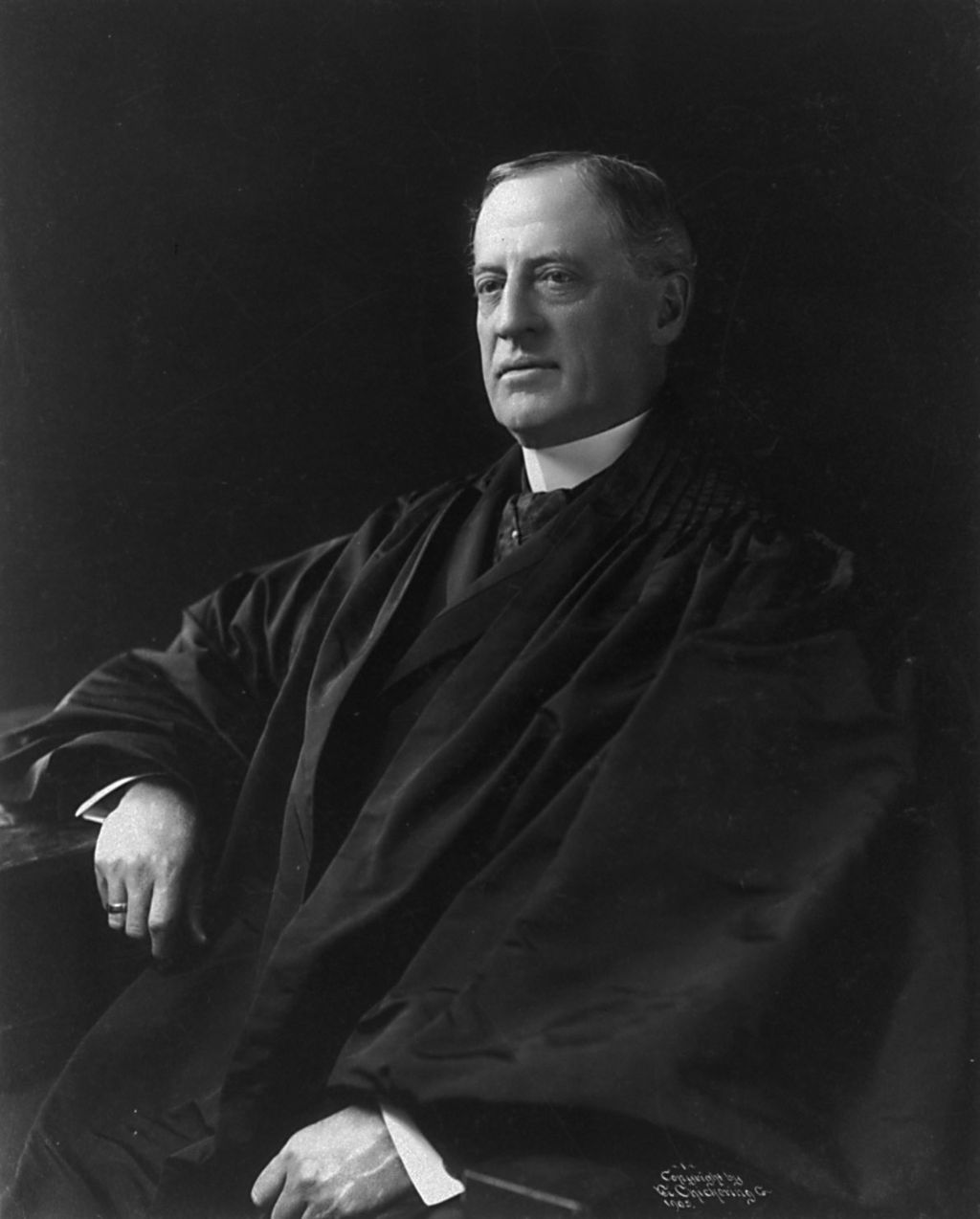
Felix Frankfurter, the author of the Mallory decision.
In 1954, a D.C. home was broken into, and a housewife was choked and raped. This terrible crime became the basis of a major case before the Supreme Court that would cause a political firestorm. The perpetrator was 19-year-old Andrew Mallory, who was convicted of the rape and sentenced to death, and after his arrest he had been interrogated for seven hours before confessing to rape (Time Magazine). There was no evidence of torture or coercion in this confession, but it was also shown that there was a judge available during this time. Mallory appealed his sentence up to the Supreme Court based on the length of his pre-hearing detention. The Supreme Court ruled unanimously in Mallory v. U.S. in 1957 that any confession obtained after an unreasonable delay was inadmissible in federal court. This meant that arrested persons had to promptly be presented to judges and that testimony produced during an “unnecessary” delay could not be considered by judges, and Mallory was freed.
This decision was met with popular disapproval, especially from conservatives. Senator Strom Thurmond (D-S.C.) issued a statement condemning the ruling, holding that “Any police abuse this decision prevents will be replaced many times over by criminals abusing the laws of the States and Nation under the umbrella of the Supreme Court decision” (Clemson University). Thurmond, a frequent critic of the Warren Court, would also make the Mallory decision an issue during the consideration of Justice Abe Fortas to be elevated to chief justice. However, it wasn’t just strong conservatives who condemned the Mallory decision; Kenneth Keating (R-N.Y.), who was frequently associated with the GOP’s Rockefeller wing, stated, “I cannot believe that the universal rejection of the Mallory (rule) approach in all other jurisdictions (except Federal) is based on a callous unconcern for the rights of the accused. The Mallory decision simply went too far in coddling criminals and gave too little thought to the interests of the public…Brutal or other unlawful police actions should of course be exposed and condemned” (CQ Press). Congress opted for action.
On July 2, 1958, the House passed 294-79 a bill that would make statements obtained from a defendant admissible in court during a period of unreasonable delay, directly overturning the Mallory decision. The votes against mostly came from liberals. Senator Jacob Javits (R-N.Y.), for instance, opposed the bill as he regarded it as “unnecessary” and expressed concern that Congress was making the first move in a “raid” on the jurisdiction of the Supreme Court (CQ Press). However, the bill died in the Senate due to the efforts of liberal Senators John Carroll (D-Colo.) and Wayne Morse (D-Ore.). In 1959, the House again passed an anti-Mallory bill on July 7th, and again the Senate prevented its enactment. The House would undertake periodic efforts to undo the decision and thus make it easier to prosecute criminal defendants. With crime rising substantially in the 1960s, the omnibus crime bill in 1968 was passed that included several provisions that strengthened the criminal code. The act notably altered the Mallory Rule so that a confession could be admitted into evidence if a judge found it was voluntary, and that delay was not unreasonably longer than six hours (Time Magazine). In between Mallory and the 1968 omnibus crime bill, a more famous decision would catch the public eye in Miranda v. Arizona (1967), which instituted the requirement of police reading of a defendant’s rights to them before interrogation.
And what happened to Andrew Mallory? Mallory, it turns out, was a repeat offender. He had numerous jobs he was in and out of and after a babysitting job went sour, he broke into the family home and beat the wife, and in 1960, he broke into another home and beat and raped a mother of four children (Time Magazine). He was convicted of the latter crime and served 11 years in prison. Mallory was shot and killed a year later by a police officer while on the run after attacking and robbing a couple after pointing a gun at another pursuing officer (Time Magazine).
References
Figure in Key Case Before High Court Is Killed by Police. (1972, July 12). The New York Times.
Statement By Senator Strom Thurmond in the Senate with Reference to the Supreme Court Decision in the Mallory Case. (1957, June 27). Clemson University.
The 1950 election was without question an ideological election…the nation shifted right. This was reflected in both general and primary elections. For the latter, Congressman George Smathers’ defeat of the staunchly liberal Senator Claude Pepper was of particular note. Also of note was Senator Glen Taylor of Idaho’s defeat by former Senator D. Worth Clark in a rematch. Republican Herman Welker, who had focused his fire on Taylor as had all other candidates as well as the Idaho Statesman, probably was disappointed that it was not him to defeat Taylor. After all, Taylor had been such a massive mismatch for the state of Idaho ideologically as he was extremely liberal and had run for vice president on the Progressive Party ticket, the party organization which was dominated by actual communists and speeches written for Henry Wallace had communist authorship and they basically spouted Moscow’s position. However, the mood in Idaho was quite Republican and the GOP had a clean sweep of the state, including winning Idaho’s 1st district, which contained the state’s panhandle and at the time was a bastion of organized labor in the state. Welker defeated Clark’s attempted comeback by a whopping 23 points. His campaign planks included anti-communism, his opposition to the proposed Columbia Valley Authority (TVA for the west), reducing income taxes, a balanced budget, and opposition to deficit spending (The Burley Herald). Welker also had some star power behind him. When he worked as an attorney in Los Angeles as a young man, he befriended Bing Crosby, and for 15 years Crosby would go on vacations to Idaho and hunt pheasant with Welker (Hill). Crosby hosted a fundraiser for him, and with considerable momentum in his and Republicans’ direction, Welker won with 61% of the vote, with D. Worth Clark only taking 38%.
Senator Welker
Welker’s tenure in the Senate was highly controversial, with him pulling no punches in his approach. Indeed, this is what he promised when he announced his bid for the Senate, with him stating, “I will not engage in velvet glove technique. I will call a spade a spade and will never be vague or uncertain by giving nervous endorsement or pussyfooting, just to get votes” (The Burley Hearld). However, although certainly among some Idaho voters his approach was refreshing, he wore out his welcome during his term. Welker was so attached to Senator Joseph McCarthy as part of his inner circle that he was known as “Little Joe from Idaho”. As McCarthy’s reputation worsened nationwide, so did his in Idaho. Columnist Holmes Alexander, a conservative, listed some major issues with Welker that were impacting his prospects for reelection, “the senator’s absenteeism was high, prestige low among colleagues and the press corps, his office a haven for political hacks from back home, his payroll loaded with ‘do-nothing relatives’ and had ‘made a sorry spectacle of himself as a ranter … and a bully of witnesses in committee” (Hill). However, this assessment of his faults does not include the most shameful episode in his tenure. He spearheaded the effort, with Senator Styles Bridges (R-N.H.), in attempting to blackmail Senator Lester Hunt (D-Wyo.) into resigning over his son’s arrest in Washington D.C. for propositioning an undercover officer. The margin of the Republican majority in the Senate was tight, and the GOP figured that a Republican could win Hunt’s Senate seat, but not if Hunt was the incumbent. A cleaner effort to get Hunt out of the way was pursued by the Eisenhower Administration, which offered Hunt a financially lucrative post on the US Tariff Commission if he resigned his seat and agreed not to run for the Senate again (Storrow). Hunt would subsequently shoot himself in his office. As Ray Hill (2024) notes, “There is good reason to believe Styles Bridges was at least human enough to have suffered both shame and guilt for what was a vile episode. Bridges, once one of the most prominent GOP senators, retained his influence, but largely confined himself to the shadows on Capitol Hill. Unfortunately, Herman Welker did not seem as affected by the incident as his colleague, although those close to the Idaho senator noted his paranoia seemed to be increasing”. In 1954, Welker led the defense for McCarthy on the question of censure, but because Senator McCarthy would not apologize for his conduct before the Watkins Committee, he was censured 67-22 on December 2nd. Reportedly Welker was among the senators who encouraged McCarthy not to apologize (Johnson).
1956: Frank Church Steps Up
In 1956, Democrat Frank Church narrowly won the Democratic primary to challenge Welker over former Senator Glen Taylor, managing to convince Democratic voters that they shouldn’t lose again by picking Taylor. Church’s campaign was one of positivity and he favorably contrasted with Welker on the right and Taylor on the left. He also refused to use the blackmail story against Welker, having all pamphlets surrounding the matter burned in a bonfire (Hill). Church wanted to defeat Welker on the issues, and he pointed out contrasts between his stances and Welker’s positions. Church declared in the weeks before the election that “in recent years Idaho has gone from one extreme to the other in its senators. I have spoken of the extremist views and deplorable voting record of my opponent, Herman Welker, during this campaign, and I will undertake to describe it for what it is – a record so bad that now even leading Republicans are disclaiming it” (The Idaho Statesman). Indeed, from a liberal perspective no senator had a worse record than Welker. He was the only senator for the duration of a full Senate term in the 1950s who managed to side with Americans for Democratic Action on zero votes. He sided with Americans for Constitutional Action 83% of the time, with them marking him down for his votes for mineral subsidies in 1955, the agriculture bill in 1956 (although he voted in a free market direction on amendments), and against a reduction in an increase in air force funding in 1956. Welker’s DW-Nominate score was a 0.493, being one of the most conservative senators in his day. He also notably opposed the Eisenhower Administration on some key issues, including foreign aid and on a few important judicial nominations. This included being one of four Republicans to vote against the confirmation of Simon Sobeloff, a moderate who the Eisenhower Administration knew would rule against segregation and had opposed the use of paid informants in national security cases, as well as being one of two to vote against the confirmation of John Marshall Harlan II to the Supreme Court. The only other opponents were notorious maverick Republican William Langer of North Dakota and a group of Southern Democrats. After the Committee for an Effective Congress announced their endorsement of Church, Welker denounced them as a “radical bunch of pinks and punks” (Hill). Welker was also a critic of Brown v. Board of Education (1954). He went as far as to claim that communists literally wrote the court’s decision (Johnson). Although President Eisenhower won Idaho resoundingly in the 1956 election, Welker did as well this time as Clark had done in 1950. This was despite the fact that there was a third candidate in the race to potentially drain from Church’s vote in Taylor, who would recall that he was paid to run as an Independent in the race by Welker supporters to the tune of $35,000 (Johnson). Welker’s health deteriorated after the end of his term, with him having increasingly poor balance. In one incident, he twice fell off a ladder while trying to paint the roof of his house before giving up (Hill). It was discovered in October that he had a malignant brain tumor, and although two operations were performed, he died on October 31st. Although we cannot be sure how far the brain tumor impacted Welker’s mind, it is hard to imagine that it didn’t play at least a major role in his erratic behavior in his last years in office that contributed to his loss.
References
Frank Church Raps Record of Opponent. (1956, October 16). The Idaho Statesman.
The state of Washington is not known as a Republican much a less conservative place, but 1946 was an exception. That year was the first time the GOP won control of both the House and the Senate since 1928, and numerous people were elected who in other circumstances would not have likely won. This could be said for Harry Pulliam Cain (1906-1979).
A banker by profession, Cain did not start his life in politics on the Republican side, rather he was a New Deal Democrat, fervently backing FDR in 1932 and becoming the chairman of the Pierce County Young Democrats. However, he became disillusioned with Roosevelt’s second-term policies and his “court-packing plan” and would recall, “I had respect for Roosevelt at first. His program was bold and imaginative – just what we needed when the country was sick. But he continued to treat us sick even when we had become well again. I thought the third term was a terrible thing” (Smith, 2023). From 1935 to 1936, Cain and his wife took a long trip to Europe, and he was in the audience of several Nazi mass rallies. The speeches he heard from Hitler and other leading Nazis convinced him that the Nazis were a danger to the world, and made over 150 speeches on the subject back in the US (Smith, 2011, 28-37). In 1940, Cain was elected Tacoma’s mayor and although the mayoral position in Tacoma was not a strong one, he increased his power by making direct appeals to the people, hosting a weekly radio program, and engaging in a few publicity stunts, such as walking across the newly rebuilt Tacoma Narrows Bridge. Cain also stood out as one of only two elected officials on the West coast to oppose Japanese internment, consistent with his core belief in individual freedom. This translated to him protecting Tacoma’s Japanese business district (Smith, 2023). He was also a reformer as he wanted to crack down on vice and pushed for long-term city planning. Reelected in 1942, Cain would take a leave of absence in 1943 to serve in the military, where he would serve with heroism and distinction, rising to the rank of colonel. In 1945, he delivered a tremendously impactful speech to 5,000 Germans at a former concentration camp on the massive extent of the crimes of Nazi Germany, which brought the crowd to tears (Smith, 2023).
Eyes on the Senate
In 1944, Cain announced his candidacy for the Republican nomination for the Senate. However, his principled nature by insisting on not answering political questions and not personally campaigning while serving in the army contributed to his loss to Congressman Warren G. Magnuson. 1944 was also not the best year for the GOP, but the next election…that would be a different story.
In 1946, Cain ran for the Senate as a Republican, and the Democrats were in a uniquely poor position in Washington for multiple reasons. First, the unpopularity of Truman in 1946 given meat shortages, and incumbent Hugh Mitchell, who was not charismatic, was in a weak position as he had not been elected to his position, rather appointed after the resignation of Senator Mon C. Wallgren as he had been elected governor. This combination of factors resulted in the election of Cain.
Senator Cain
As a senator, Cain stood as more conservative than the standard Republican from Washington. He was the only Washington politician, for instance, who voted against funding a new Tennessee Valley Authority steam plant in 1948. Many voters in the state of Washington were supportive of public ownership and generation of power rather than private, and Cain was firmly on the side of private development. Indeed, he was a strong supporter of the free market as opposed to government regulation and control. Cain also gained a reputation as the staunchest supporter of the real estate industry in the Senate, and this translated into him being prominent in opposition to rent control and public housing. In 1948, he unsuccessfully attempted to kill the Taft-Ellender-Wagner Housing bill. This would instead be done in the House, but the bill would become law in the next Congress. Cain also voted for the Taft-Hartley Act, which was not a popular statewide position in given that Washington was the second-highest unionized state in the nation. However, he saw himself as a Burkean legislator who does not surrender his judgment to the voters, and stated in 1949, “I had decided to listen only to my conscience and my instinct and do what seemed right at the time. Why not? A man in public office might as well play it the way he thinks he should. There is no sure way to stay in public office” (Derieux, 65).
On foreign policy, Cain did back aid to Greece and Turkey and supported the Marshall Plan while opposing efforts to cut the program. However, he would not be in favor of Point IV aid to poor nations and would support foreign aid cuts. Cain stood opposed to the US taking in generous numbers of displaced persons from Europe, and in 1950 he voted against a bill taking in an increased number of such people. Yet, he also supported civil rights at home, voting to end a Southern filibuster against a Fair Employment Practices bill and opposing a Southern effort to undermine army desegregation.
Cain also notably held two solo filibusters: a six-and-a-half hour nonstop filibuster against Mon C. Wallgren to head the National Security Resources Board, which was successful as he withdrew after the Senate Armed Services Committee voted to reject the nomination. Cain believed that Wallgren was unqualified for the role, but this would harm his standing among Washington voters. The following year, Cain performed another solo filibuster, for 12 hours and 8 minutes against legislation extending rent control, but rent control would be extended.
Cain, after his filibuster of Wallgren.
In the 1952 election, even though Eisenhower won resoundingly including in the state of Washington, four Republican senators lost reelection, and Cain lost the biggest of all of them, with Congressman Henry Jackson winning the election by 13 points. He would later reflect that he had talked too much and listened too little (Smith, 2023). Cain’s DW-Nominate score was a 0.352, higher than that of other Washington Republicans serving at the time, and he only sided with the liberal Americans for Democratic Action 18% of the time. Cain would in 1971 letter to C.J. Skreen explain how he voted thusly, “as a reactionary I reacted strongly against measures believed to be adverse to the public interest. It seldom bothered me that a number of my positions were supported only by a small minority. Had I been concerned with self rather than country I would have acted much differently. I was often angry and too impatient for my own good”.
Post-Senate
After departing the Senate, President Eisenhower appointed him to head the Subversive Activities Control Board. Although Cain had been a staunch supporter of Senator Joseph McCarthy (R-Wis.) and was a close personal friend, he turned into a liberal reformer on the board. He came to oppose the Eisenhower Administration’s internal security program, found the Attorney General’s List of Subversive Organizations too broad to be relied on in loyalty cases, and came out against the loyalty oath that all government employees were required to take (Smith, 2023). He did so publicly, and this became known as the “Cain Mutiny”. He also criticized McCarthy for his term “Fifth Amendment communist” as disrespecting the Constitution (Bird). Despite this, Cain and McCarthy remained friends until the latter’s death. Cain was not reappointed, although he read the writing on the wall and had not sought to be reappointed.
Florida Politics
In 1957, Cain moved to Florida where he continued his work in the banking sector and was active in the state’s Republican Party. He decided to run for public office again in 1972, when he determined that his position of County Commissioner of Dade County would not be confined to a mere interim role, finding the call to public service irresistible, “…I was struck by the great need for public services – sewers, transportation and so forth – and I concluded that unless something is done, within 10 years this government will be unmanageable and this splendid community will be undesirable to live in” (The New York Times). His philosophy was although still economically conservative, more liberal on social issues, particularly civil rights. That year, he described himself as “basically a political pragmatist – from time to time and for different reasons a conservative, militant, liberal, moderate, purist, radical and now and again what some call a populist. The record consists of doing the best I could when confronted by any situation demanding action” (Cardwell). Cain won the election. While commissioner, he successfully pushed for bilingualism given the considerable Cuban population and was even an early supporter of gay rights. Cain also successfully pushed for a smoking ban in all indoor public facilities. The latter was quite personal for him, as he had for many years smoked two packs a day. Unfortunately, Cain had not quit in time to avoid serious consequences for his health. By 1976, his health was in decline and he lost reelection. Cain would make return trips to Tacoma throughout his later years, and he did so one last time in December 1977 to accept an award honoring his stand against Japanese-American internment. He died from complications of emphysema on March 3, 1979.
References
12 Hours, 8 Minutes. (1950, June 19). Time Magazine, 20.
Bird, M. (1979, March 4). Ex-Senator Harry Cain Dies at 73; A Critic of McCarthy-Era Excesses. The New York Times.
Retrieved from https://www.nytimes.com/1979/03/04/archives/exsenator-harry-cain-dies-at-73-critic-of-mccarthyera-excesses.htmlrom
Derieux, J.C. (1949, August 13). Hurry Cain Out of the West. Collier’s.
Cardwell, R. (1972, July 16). He’s Back in Politics. Tacoma News Tribune.
Ex-Senator Runs for County Post. (1972, September 10). The New York Times.
Retrieved from
Harry P. Cain, letter to C.J. Skreen, December 9, 1971. C.M. Smith collection.
Smith, M.C. (2011). Raising Cain: the life and politics of Senator Harry P. Cain. Book Publishers Network.
Smith, M.C. (2023, May 15). Cain, Harry Pulliam. History Link.
On July 18, 1957, octogenarian Congressman James B. Bowler of Illinois’ 7th district, based in Chicago, died. Running in his place was Roland Libonati (1897-1991), controversial lawyer who represented Al Capone during his heyday and had connections and friendships with the mob in general.
In 1930, Libonati, often known as “Libby”, was elected to the Illinois House of Representatives, serving until 1934, and then was elected again in 1940, serving a single term. He was then elected to the Illinois Senate, where within his five years of service he rose to be minority whip. and in 1940 secured election to the Illinois Senate, where he rose in the Senate leadership to be minority whip. Throughout his career, Libonati was, in addition to his connections to mobsters, known for his malapropisms, which included calling Slavic voters “Slavishes”, speaking of late autumn as the time of year when “the moss is on the pumpkin” and “I am trying not to make any honest mistakes” (Time Magazine).
When running for the special election in 1957, his victory was never in doubt given the district’s staunchly Democratic makeup and the firm grip the Daley machine had in the district. His relations with mobsters were maintained right to his time in Congress, with Time Magazine (1957) noting that “Libonati is still on chummy terms with Capone henchmen such as Tony Accardo and Paul (“the Waiter”) Ricca, who are really “charitable” and “patriotic” fellows, according to Libby”. During his career in Congress, Libonati sat on the House Judiciary Committee, which considered civil rights legislation Libonati’s record was strongly liberal; he sided with the liberal Americans for Democratic Action 93% of the time and the conservative Americans for Constitutional Action only 3% of the time. His DW-Nominate score was a -0.415. The only major issue that Libonati opposed liberals regarding public power with the Hanford facility in Washington state. Libonati was considered a staunch man of the Daley machine, but his loyalty would be tested with a subject of which he was passionately in support: civil rights.
As a member of the Judiciary Committee, Libonati was involved in the consideration of the civil rights bill, and he was for a very strong bill. The issue was that strong proposals in the past had either been filibustered to death in the Senate or had been watered down considerably. The hope of the Kennedy Administration and the leadership of the Judiciary Committee was to produce a bill that was strong but could also attract needed Republican votes. Although Libonati was pressured by President Kennedy and Mayor Daley to support the compromise bill, he voted with liberals for the stronger bill. After this, Libonati reported to a colleague that the Daley machine informed him that his career was over (Purdum, 144-145). This may not have been the only factor, however. The Cosa Nostra was reported to have ordered Libonati to retire, with the decision being made in late 1962 given him having fallen into disfavor by Salvatore Giancana (The Chicago Sun-Times Post-Dispatch). He was succeeded in Congress by Frank Annunzio, who is an interesting figure himself.
References
Gang Reported Forcing Out Rep. Libonati. (1964, January 15). The Chicago Sun-Times Post-Dispatch.
Purdum, T. (2014). An idea whose time has come: two presidents, two parties, and the battle for the Civil Rights Act of 1964. New York, NY: Henry Holt & Company.