I have noticed among online liberals on social media and in comment sections (I should never read most comment sections TBH), there is this notion that Democrats are moderate, or by the tellings of some radicals, even “conservative”. They will make certain surface level comparisons that do not involve how their nominees actually vote or cherry-pick a vote or two to obscure a larger picture. Thus, I have taken it upon myself to find out how often Democratic nominees running for terms in the 21st century figured ideologically, based upon votes. I use for this purpose votes that the liberal Americans for Democratic Action (ADA) counts as key votes, votes that the conservative American Conservative Union (ACU) counts as key votes, and in the cases of Al Gore and Joe Biden the conservative Americans for Constitutional Action (ACA) as they were in Washington before 1985. Also included of course is the academic measurement of DW-Nominate, which has -1 to 1 as its scale, the former being most liberal and the latter being most conservative.
Fortunately, all from 2000 on can be ideologically evaluated as they have legislative records. Bear in mind, my use of ADA, ACU, and ACA are based on agreement rates rather than the ratings they put out themselves. This means politicians are on record agreeing or voting for their positions. Thus, there is none of the nonsense of counting absences as against liberalism that ADA does, as well as the nonsense of counting non-votes (such as opinions on holding a vote to confirm Merrick Garland to the Supreme Court in 2016 and signing an amicus curiae brief in 2020) and weighing certain votes by more than one (although non-votes is a far greater beef for me) that ACU has done. Now, let’s look at the six nominees…
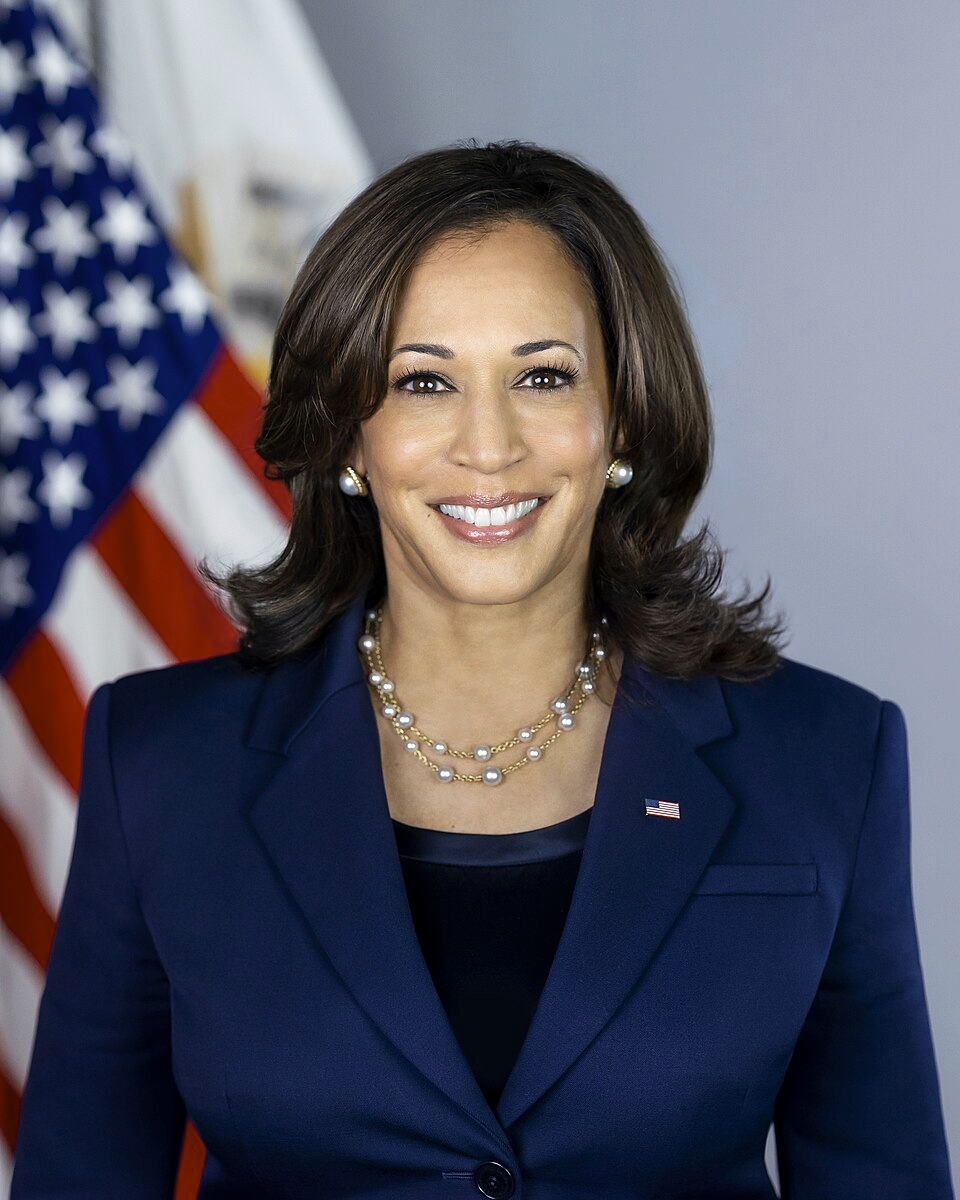
Kamala Harris, you will know why by the end of this post why her picture is being featured!
2000:
Al Gore
ADA: 70
ACA: 24
ACU: 15
DW-Nominate: -0.316
Al Gore was around far back enough to have been evaluated by Americans for Constitutional Action, an organization that shuttered its doors after releasing its 1984 ratings. Thus, ACA’s ratings only cover Gore’s House record. Interestingly, both of Gore’s ACA and ADA scores find him a moderate liberal. He is also the one individual for who ADA and ACU differ significantly. ACU finds him to be a solid liberal while ADA only finds moderate liberal.
2004:
John Kerry
ADA: 95
ACU: 5
DW-Nominate: -0.352
Remarkably, John Kerry’s agreement rates with ADA and ACU both reveal him as 95% liberal. However, Kerry’s DW-Nominate score places him more as a standard liberal than extremely liberal as both ADA and ACU agreement rates indicate. John Edwards is rather similar with ADA and ACU, and he is notably less liberal than any of the Democratic nominees here by DW-Nominate score.
2008 and 2012:
Barack Obama
ADA: 98
ACU: 9
DW-Nominate: -0.343
Given how much Obama agreed with ADA (he only differed with them on one vote!) and disagreed with ACU, it is safe to say that on key issues he was very liberal. However, DW-Nominate’s finding places him as standard liberal. None of the standards find him to be moderate or as some deluded and ridiculous people who are probably close to the ideology of Marx if not there find him, “conservative”. They view how much he was able to get done as a measure of his ideology as opposed to his stances. It kinda hurts your prospects at getting all of your agenda done when you don’t have united government. Obama only had the benefit of both the House and Senate being Democratic for his first two years. Yes, there are people out there who also think Obama as not being liberal because of some similarities Obamacare had to something crafted in the Heritage Foundation in the early 90s and initially supported by some Republicans. I may choose to do a takedown of that narrative some day.
2016:
Hillary Clinton
ADA: 97
ACU: 8
DW-Nominate: -0.367
Hillary Clinton is frankly not a huge surprise here. As a polarizing figure, she is with the liberal position over 90% of the time per ADA and ACU key votes. By DW-Nominate, she is just standard liberal, and the best case liberals have of her being on the moderate end. I suppose if one is comparing her to Bernie Sanders and using DW-Nominate that’s the case. But I suppose the questions that are always to be asked when comparative ideology is asserted is “by whose standard?” and “compared to who?” This is, of course, what I’m trying to accomplish in this post.
2020:
Joe Biden
ADA: 86
ACA: 19
ACU: 12
DW-Nominate: -0.314
Joe Biden as a senator was not an ultra-liberal, but rather solidly liberal as all the interest group ratings indicate, with ACU giving Biden the lowest marks on conservatism. His DW-Nominate score makes him the least liberal person the Democratic Party has run for president in the 21st century by that standard. However, I should note that much of his crossover votes were decades behind him by the time he was elected vice president in 2008.
2024:
Kamala Harris
ADA: 100
ACU: 6
DW-Nominate: -0.709
Again, conservatives ironically make a better case for the Democratic nominee’s moderation than liberals! She never disagreed with ADA once, their only faults with her record was when she was absent. By the way, Harris’s “moderation” was only rhetorical for the 2024 election, as all three measures demonstrate, contrary to the narrative spun by much of our media. Her DW-Nominate score even places her to the left of Bernie Sanders, who gets a -0.545. Bernie Sanders’ DW-Nominate score is linked in References just in case you don’t believe me! One might argue that conservatives always will call Democrats extreme, but the case they had against Harris on that I think was rock solid. However, she did have a slightly higher incidence of agreement with ACU than John Kerry. Nonetheless, on two of three measures she ranks most liberal among the Democratic nominees.
Interestingly, with the exception of Kamala Harris, all Democratic nominees score between -0.3 and -0.4 by DW-Nominate. All three measures reveal barely any significant ideological differences between Clinton and Obama, and ironically ACU’s ratings make a better case for Clinton’s and Obama’s perceived moderation by left-wing Democrats than ADA’s ratings. However, the best case is their DW-Nominate scores, which place them as liberal, but not extremely liberal. On two of three measures, Clinton ranks as more liberal than Obama, but only very slightly. The differences between them were mostly a matter of establishment vs. not as establishment. Indeed, if we look at elections over the past 50 years it is consistently the candidate who is seen as less establishment who wins presidential elections with only two exceptions: George H.W. Bush in 1988 and Joe Biden in 2020.
References
ADA Voting Records. Americans for Democratic Action.
Retrieved from
Biden, Joseph Robinette (Joe), Jr. Voteview.
Retrieved from
https://voteview.com/person/14101/joseph-robinette-joe-biden-jr
Clinton, Hillary Rodham. Voteview.
Retrieved from
https://voteview.com/person/40105/hillary-rodham-clinton
Gore, Albert Arnold, Jr. Voteview.
Retrieved from
https://voteview.com/person/14423/albert-arnold-gore-jr
Harris, Kamala Devi. Voteview.
Retrieved from
https://voteview.com/person/41701/kamala-devi-harris
Kerry, John Forbes. Voteview.
Retrieved from
https://voteview.com/person/14920/john-forbes-kerry
Sanders, Bernard. Voteview.
Retrieved from
https://voteview.com/person/29147/bernard-sanders
Sen. Albert Gore. American Conservative Union.
Retrieved from
http://ratings.conservative.org/people/G000321
Sen. Barack Obama. American Conservative Union.
Retrieved from
http://ratings.conservative.org/people/O000167
Sen. Hillary Clinton. American Conservative Union.
Retrieved from
http://ratings.conservative.org/people/C001041
Sen. Joseph Biden. American Conservative Union.
Retrieved from
http://ratings.conservative.org/people/B000444
Sen. John Kerry. American Conservative Union.
Retrieved from
http://ratings.conservative.org/people/K000148
Sen. Kamala Harris. American Conservative Union.
Retrieved from


 Mad Politics: The Bizarre, Fascinating, and Unknown of American Political History