I will not be covering the election results in this post as the results are not all in yet. Although Trump officially won all seven swing states, there is still one Senate race that is too close to call and there are still House races to be counted before it is determined which party controls the chamber. Although I did not bring up Arizona’s Senate race, by implication of predicting Republicans would get 53 Senate seats I thought Democrat Ruben Gallego would win. Instead of writing about the election, today’s post is about a rather interesting fellow, perhaps Texas’s worst senator of all time.
Born to Southern aristocracy in South Carolina, Lewis Trezevant Wigfall (1816-1874) had all the advantages, save his birth parents, who died when he was young. Although he got a good education and was far from a stupid man, Wigfall was a highly ill-tempered and violent alcoholic who lacked work ethic (Mellon). In 1836, Wigfall served in the Second Seminole War for three months. Although he became a lawyer (it was not that hard to become one in those days), he would preoccupy himself with gambling, frequenting brothels, quarreling with fellow members of South Carolina’s planter aristocracy, and going to taverns and getting in fights. The products of Wigfall’s preoccupations included the failure of his law practice, squandering his inheritance, killing another man in a quarrel under disputed circumstances, and fighting a duel with future Congressman Preston Brooks, with both men seriously wounded and Brooks having to use a cane for the rest of his life as his hip was shattered. Brooks would use this cane to infamously beat Senator Charles Sumner for an anti-slavery speech in which he insulted his uncle. Wigfall would be greatly burdened by guilt over the man he killed, and for years the man would appear in his nightmares (Copperas Cove Leader Press). His belief system was formed not only through the circumstances of his upbringing but also his university education. The college president of South Carolina State, his alma mater, had in 1827 called for South Carolina to secede from the Union (Copperas Cove Leader Press). This was not the only way in which Wigfall was a man of his time and place. He also believed that the society of the planter aristocracy was the peak of civilization, was unapologetically pro-slavery, and believed in the virtues of chivalry (King). In 1841, Wigfall married Charlotte Cross, the marriage producing five children and resulting in him abandoning dueling. However, he still had a positive view of the practice, regarding it as a crucial “factor in the improvement of both the morals and manners of the community” (Wright, 32). By 1846, Wigfall’s money problems caught up to him as in addition to his irresponsible spending, he had to pay medical bills for his dying eldest son. His house and property were sold off at a Sheriff’s auction (McCawley). After his son died, he and his family moved to Texas for a new life. Wigfall also changed the spelling of his first name to Louis in the process.
In Texas, he got serious about practicing law and made for an effective attorney. Wigfall also serves in the state House from 1849 to 1850 as a Democrat where he was an early advocate of secession over the issues of slavery and tariffs. Like many other prominent people of his time and place, he owned slaves. Secession wasn’t popular at the time in Texas, and this stalled his career. However, as the events and tensions that led to the War of the Rebellion were accelerating in the 1850s, more Texans found Wigfall’s secessionist message appealing, and he proved a talented stump speaker. He was elected to the Texas State Senate in 1856, and the following year his speeches on the campaign trail were credited with the election of Hardin Runnels, a secessionist, as Texas’s governor over Senator Sam Houston (Drane).
Senator Wigfall
In 1859, Wigfall is elected to the Senate and is among the chamber’s staunchest fire-eaters, or advocates of secession. After Republican Abraham Lincoln is elected to the presidency in 1860, Southern states begin seceding from the Union, including Texas. Wigfall stayed in Washington until April 1861, gathering intelligence for the Confederacy and recruiting troops from Maryland. He was expelled from the Senate on July 11th for his support of the Confederacy.
Wigfall the Confederate
During the War of the Rebellion, he served as a brigadier general, commanding the Texas Brigade. However, his service was marred by his drinking, being visibly drunk on numerous occasions, including while on duty. In 1862, he was elected to the Confederate Senate.
In the Confederate Senate, Wigfall proved an advocate for state’s rights, including opposing Confederate President Jefferson Davis’s proposal for a Supreme Court. Davis was often frustrated in his efforts to centralize government as numerous Confederates did hold strong to the philosophy of state’s rights, and Wigfall was a frequent antagonist. He declared that Davis’s “pig-headedness and perverseness” were losing the war for the South (Drane). Wigfall was also a strong supporter of Robert E. Lee commanding all Confederate forces and was successful in enacting a conscription law and funding railroad construction. He was also unalterably opposed to conscripting black soldiers as a last-ditch effort, declaring, “Sir, I wish to live in no country where the man who blacks my boots or curries my horse is my equal” (Drane).
Wigfall fled to Britain after the war ended and his family later followed. He never met with the professional success he had in Texas again, and he and his family fell into poverty by 1869 with Wigfall only being able to get odd jobs (Drane). In 1872, Wigfall and his family returned to the United States after it was certain that he would not be tried for treason, and in January 1874 they moved back to Texas, settling in Galveston. Wigfall didn’t have the opportunity to attempt another comeback, becoming seriously ill; his decades of alcoholism had caught up with him and he suffered a fatal stroke on February 18th.
References
Drane, R.E. Louis T. Wigfall. Road to the Civil War.
This election is from the information available, going to be a coin flip. I hope to do better than a coin flip in these predictions I will make. First thing’s first, however, a history of RealClearPolitics average polling for major races (President, Senator). Gubernatorial races are not figuring prominently this year, and the only close one to speak of worth attention is New Hampshire, where Republican Kelly Ayotte is slightly leading in polling at the moment. The endorsement of Governor Sununu may be sufficient to put her over the top. Before we carry on here, I want to go over some polling history.
Presidency
Presidential Election
2016
Net Bias
2020
State
RCP Average
Actual
RCP Average
Actual
Net Bias
AZ
R +4
R +3.5
R +0.5
D +0.9
D +0.3
D +0.6
GA
R +4.8
R +5.1
D +0.3
R +1
D +0.3
R +1.3
MI
D +3.4
R +0.3
D +3.7
D +4.2
D +2.8
D +1.4
NV
R +0.8
D +2.4
R +3.2
D +2.4
D +2.4
None
NC
R +1
R +3.7
D +2.7
R +0.2
R +1.3
D +1.1
PA
D +1.9
R +0.7
D +2.6
D +1.2
D +1.2
None
WI
D +6.5
R +0.7
D +7.2
D +6.7
D +0.7
D +6
This is indicative of largely Democratic bias over the last two cycles, but 2012 had Republican bias, and as you will see, the 2022 midterms had a considerable Republican bias, but there is a caveat to this one.
Let’s look at some indicators:
Good for Trump:
. Republicans outnumber Democrats nationwide, a new development (Archacki). The independent vote may turn out to be the deciding factor, however.
On November 1st, 538 put Trump at a slight advantage with a 53% chance to win, but greater odds have been overcome, most notably by Trump in 2016.
The betting markets are favoring a Trump victory. The predictive performance of the betting markets since 1916 has only failed thrice: in 1916 itself, 1948 (polling ended two weeks before the election in that one), and the tremendous upset of 2016.
Per Nate Cohn, there isn’t evidence yet that the pollsters’ Trump voter counting problems are fixed.
Nate Silver, formerly of 538, predicted a Trump win up until final projection.
The polling of the election may suffer from a non-response bias that favors Trump (Grover).
Defections from the Democrats in Michigan from Arab American voters, with a possibility that Trump gets more of them than Harris does, with left-wing Arab Americans potentially voting for Green Party candidate Jill Stein.
The Trump campaign, according to Jack Herrera of Politico, has consistently had a stronger ground game in Pennsylvania than the Harris campaign, which could spell victory in the state despite the “garbage island” incident. As someone who has worked in campaigns, I strongly believe in ground game. In 2020, I knew the Democrats were not going to do as well as polls predicted because they were behind on ground game, namely door knocking, and particularly so in Florida. However, although Trump himself survived COVID, his reelection did not.
Kamala Harris is not an inspiring candidate aside from her being a woman and most importantly, not Trump, at least from a standpoint of those not ideologically motivated. Her record in the Senate was one of the most liberal, and she campaigned as a hard California liberal in the 2020 Democratic primary.
Republicans have higher favorability on the economy per Gallup polling. The last time a party’s candidate for president lost when the party had an edge on the top issue, which is the economy this year, it was in 1948. And I’ve mentioned the issue of polling in 1948.
Good for Harris:
Historian Allan Lichtman’s keys to the presidency system has predicted since 1980 the outcomes of all presidential elections except 2000.
The Des Moines Register poll of Iowa actually puts her three points ahead. This is most likely an outlier, but this poll has had some good history behind it, but an Emerson poll also came out that had Trump up in Iowa by ten points and Emerson is a highly reputable firm. If the Iowa poll is indicative of movement towards the Democrats in Iowa, then that doesn’t speak well for Trump’s ability to win less solid states. But one must remember of course that this time their off.
Per 538’s Nate Cohn, pollsters may be overly weary of underestimating the Trump vote, making an undercounting again seemingly unlikely.
Nate Silver’s final projection gives Harris the slightest edge over Trump.
The subject of abortion may be a sleeper factor here that increases Harris’s share considerably with moderate and independent women and wins her the election.
The “island of garbage” line at Trump’s Madison Square Garden rally, which may tip some needed Latino voters in Pennsylvania.
Donald Trump has a lot of baggage to put it mildly, and some older voters may be nervous about him being the more chaotic candidate, again putting it mildly.
Michigan Democrats have a stronger ground game than Republicans. Although Republicans have undergone some course correction after the catastrophic tenure of Kristina Karamo as party chairman and this will help them some, early voting is indicating a trend towards an over 50% turnout from Detroit (Massey & Guillen). A 50%+ turnout is an indicator of a Democratic win.
Now…let’s look at the RCP poll averages from Monday evening for the seven swing states. I know Minnesota and New Hampshire were recently added to tossups, but I doubt this is going to happen.
Arizona – Trump +2.8
Republicans have been making gains in Arizona in registration since 2020, and there is no recent poll that has Trump in a polling deficit. The closest one is Morning Consult, which has a tie. In this final stretch, Arizona is the sick man of the swing states for the Harris campaign and the champion for Trump’s. Trump wins the state.
Georgia – Trump +1.7
Most polls have Trump leading in Georgia, with New York Times/Siena being the only one to indicate a Harris lead. NYT/Siena is a highly credible polling firm, but so is Emerson, which indicates a one-point lead for Trump. I think Trump pulls through in Georgia.
Michigan – Harris +0.5
The numbers in Detroit, as I mentioned in the positives for Harris, make me think that Michigan, despite Arab American defections, will stay blue this time. The polling momentum appears going slightly to Trump, but a flurry of polls late in the game pointed to a GOP wave in 2022 that didn’t materialize in most of the nation. What’s more, the Michigan GOP is still recovering from the disastrous tenure of Kristina Karamo as its party chair. I think ground game matters a lot, and Democrats have a better ground game in Michigan. Much of the ground game right now is through Elon Musk’s America PAC, which is a major push to reach people with a low propensity for voting (LaHut). Harris wins Michigan, the sick man of the swing states for Republicans.
Nevada – Trump +0.6
This one is rather interesting. Although Trump is up, Nevada has had some history of over-polling Republicans. However, it was one of the states in 2020 in which the pollster average was the actual margin of victory for Biden. Nevada political expert Jon Ralston has predicted that Harris will win but by the narrowest of margins with mail-in ballots. Ralston is a credible source, as he predicted the outcome of 2020 in Nevada as well as Republican Joe Lombardo winning in the gubernatorial election in 2022 and Democrat Catherine Cortez Masto winning reelection to the Senate. However, Ralston has also predicted margins of victory, and he has overpredicted Democratic margins in the past. He predicts for this one that Harris will win by 0.3% (Schwartz). In 2020, Ralston predicted a Biden victory in Nevada by four points, but Biden actually won by 2.4%, a difference of 1.6% in favor of Democrats and in 2022 he predicted a 2 point victory for Masto but Masto won with 0.8%. If his being off by 1.2 to 1.6% in favor of Democrats holds up, Trump wins the state. The state’s Democratic registration edge also has declined considerably from 2020 and many of the state’s new residents are from California and may be against their old state’s political leadership. Not good for Harris if true. Ben Margiott of Las Vegas Channel 3 News reports that “Republicans continue to hold a roughly 4% turnout advantage”. I predict a Trump win by the skin of his teeth.
Trump has been leading in most polls in North Carolina, and the early vote looks good for Republicans and not so good for Democrats. That being said, early voting is not necessarily predictive. It is difficult to see how Harris outperforms 2020 Biden, save a considerable enough migration of college-educated whites from four years ago. I predict a Trump win.
Pennsylvania – Trump +0.4
Most agree that this is the must-win of the swing states. The interesting thing about Pennsylvania is it is one of the two states in which the poll average matched the outcome in 2020! Furthermore, the ground game of the GOP in this state has been outperforming that of the Democrats for months (Herrera). However, there has been more elderly Democratic early voting, which may not bode well for the GOP. Democrats, however, have an advantage in early voting shaved by 600,000 votes. With more Republican votes in, this gives them more room for GOTV on Election Day. On balance, I call this one for Trump.
Wisconsin – Harris +0.4
Harris’s numbers look the second best in Wisconsin, and I think the days of polling discrepancies in the state may be over. I think that Harris is favored to win the state based on Democratic ground game, which is stronger than the Republican game in the state.
Senate
Something to bear in mind about Senate polls historically is that there has always been at least one upset every year. An upset is defined in this post as one in which the opposite result occurs from the RCP polling average.
Races in which upsets occurred over the past ten years:
North Carolina, 2014: Tillis vs. Hagan
RCP Projection: D +1.2
Actual Result: R +1.7
Democrats spent the most money on this race to protect Senator Kay Hagan of North Carolina and she led in most polls, but the midterm went the Republicans’ way and Tillis pulled off an upset.
New Hampshire, 2016: Ayotte vs. Hassan
RCP Projection: R +1.5
Actual Result: D +0.2
Senator Kelly Ayotte was leading in most polls up to the election, but as the state voted for Clinton, Governor Maggie Hassan got enough of the vote to pull a squeaker.
Pennsylvania, 2016: McGinty vs. Toomey
RCP Projection: D +2
Actual Result: R +1.6
Senator Pat Toomey of Pennsylvania won a narrow reelection victory even though only poll put him ahead, this tracked with Trump winning the state, although Toomey ran ahead of Trump.
Wisconsin, 2016: Johnson vs. Feingold
RCP Projection: D +2.7
Actual Result: R +3.4
Senator Ron Johnson of Wisconsin was thought at the beginning of 2016 to have a DOA campaign. However, despite grim prognostications throughout the year and most polls of the Senate race putting former Senator Russ Feingold at an advantage, Johnson won by 3.4. Feingold’s RCP average was 2.7 up.
Arizona, 2018: McSally vs. Sinema
RCP Projection: R +1
Actual Result: D +2.3
Republican Senator Martha McSally was facing popularity problems and ran a lackluster campaign. Despite late polls seeming to go her way, Kyrsten Sinema defeated her.
Florida, 2018: Nelson vs. Scott
RCP Projection: D +2.4
Actual Result: R +0.2
Democratic Senator Bill Nelson of Florida after three terms was defeated by Republican Rick Scott. Nelson had led in most polls, but there was an increase in the number of polls that put Scott over the top.
Indiana, 2018: Braun vs. Donnelly
RCP Projection: D +13.
Actual Result: R +5.9
Democratic Senator Joe Donnelly led in the majority of polls in the final stretch, but Republican Mike Braun pulled off a victory in Republican Indiana.
Nevada, 2018: Heller vs. Rosen
RCP Projection: Tie
Actual Result: D +5
This may not technically be considered an upset, but Heller had been leading in two of the three last polls, and the result was one point higher than Emerson’s poll figuring Rosen at +4.
Maine, 2020: Collins vs. Gideon
RCP Projection: N/A, but all polls had Democrat Sara Gideon up, although RCP considered the race a “toss up”.
Actual Result: R +8.6.
Although polling was sparse, this one is scandalous, as the margin of victory for Collins wasn’t even within 5 points.
North Carolina, 2020: Cunningham vs. Tillis
RCP Projection: D +2.6
Actual Result: R +1.8
Chuck Cunningham looked good to defeat Republican incumbent Thom Tillis, who was seen as lackluster. I thought at the time Tillis would pull through a win anyway as polls had underestimated him before and Cunningham had an extramarital affair scandal.
2022 saw four upsets, all upsets were polling that favored Republicans but the seats went to the Democrats. The Republicans had candidate quality issues with the uncharismatic and weird Blake Masters, the personally troubled and questionably coherent Herschel Walker, and the comically out-of-touch Dr. Mehmet Oz. Nevada’s Democratic turnout machine managed to secure a victory for Cortez Masto over Laxalt, who made the poor decision to be loud in support of Trump’s election denial in 2020. I have my doubts the poll bias will be this bad this time around towards Republicans, and much of this bias actually happened in the last week of the campaign as a flurry of bad polls came out, and contrary to popular belief it was more widespread than just Republican pollsters.
Arizona, 2022: Kelly vs. Masters
RCP Projection: R +0.3
Actual Result: D +4.9
Georgia, 2022: Walker vs. Warnock
RCP Projection: R +1.4
Actual Result: D +0.9
Nevada, 2022: Cortez Masto vs. Laxalt
RCP Projection: R +3.4
Actual Result: D +0.9
Pennsylvania, 2022: Fetterman vs. Oz
RCP Projection: R +0.4
Actual Result: D +4.9
2022 is an example of why the polls may be biased towards Republicans this time around rather than the Democrats, as they were from 2014 to 2020. This is a possibility, but I don’t see the bias being this much, perhaps a little on the side of the Democrats, and maybe even a bit to the Republicans once again. Now for the Senate races!
Michigan – Rogers vs. Slotkin, Slotkin +2.3
Democratic Congresswoman Elissa Slotkin has led in all but one poll, and that is from Rasmussen Reports, which although did very well in the 2004 election predictions, it has had a bit of a spottier record since 2012. Republican Mike Rogers was a decent pick, but Democrats are on their game once again in Michigan. Like Harris wins Michigan, Slotkin wins. If she loses, Democrats have had an awful election.
Montana – Sheehy vs. Tester, Sheehy +7.7
Senator Tester will be defeated in the election despite late-game optimism from Democrats. There has been no time in the history of Senate RCP polls in which a candidate was this far ahead in polling and lost. It is a testament to Senator Tester that he managed to serve three terms from a state that has repeatedly voted for Republican presidents.
Nevada – Brown vs. Rosen, Rosen +4.9
Nevada is figuring to be a tight race presidentially, but the polling has put Democrat Jacky Rosen repeatedly up, with Republican Sam Brown only leading by one in a Susquehanna poll, without doubt an outlier. Rosen wins another term.
Ohio – Brown vs. Moreno, Moreno +1.7
Senator Brown has been banking on a number of people voting for Trump and him, but Ohio’s status as a red state and Trump’s coattails look like they are going to push Moreno over the top. Brown was leading up until very recent polls, and it looks like the momentum is on Moreno’s side. I also reason this because split-ticket voting is a less common phenomenon than it used to be. I also don’t see this as a last-minute bad poll flurry as this turn isn’t widespread.
Pennsylvania – Casey vs. McCormick, Casey +1.8
Democratic Senator Bob Casey has been in office since 2007, and this is his toughest race. However, McCormick has been behind in most recent polls although the margins are close. Since every Senate election has had at least one upset, I will boldly offer the prediction that it is this race. Winner: McCormick.
Texas – Allred vs. Cruz, Cruz +4.4
Democrats try again to take down Ted Cruz with Congressman Colin Allred. They have arguably picked better this time than Beto O’Rourke, but Texas’s Republican status is not going to change with this presidential election, and there won’t likely be enough Trump-Allred voters to elect him. Cruz wins another term.
Wisconsin – Baldwin vs. Hovde, Baldwin +1.8
I was torn between this and Pennsylvania as being the shocker, but the ground game is stronger for the GOP in Pennsylvania and they just seem to be polling better. The one hesitancy I have in this is that Wisconsin polls have from 2016 to 2020 underestimated Republican strength. Indeed, Biden won by less than a point in 2020 when he was polled to win by more than six. This being said, the ground game is stronger for Democrats in Wisconsin this year, and I believe in ground game. The days of poll bias for Democrats may just be over, indeed Republican poll bias manifested in 2022, with Senator Ron Johnson of Wisconsin winning by a narrower than expected margin and Governor Tony Evers winning reelection despite RCP poll averages putting Republican Tim Michels, who denied that Trump had actually lost the 2020 election, narrowly on top. Again, candidate quality matters! Although Hovde is a better candidate and he does have the advantage of being able to self-fund, he also didn’t get the endorsement of the Wisconsin Farm Bureau Federation based on his lack of knowledge on farm issues, so I think Baldwin does get another term.
Overall, I predict Republicans end this race with 53 seats in the Senate. As for the House, it is, like the presidency, anyone’s game, but I’m going to make a little bit of a wild prediction here. Democrats narrowly take the House because of Harris coattails in blue state House races. Yes, I’m one of the few who is predicting a mixed result in which Trump does not get unified government. There are a fair number of vulnerable Republican incumbents and the legislative chaos caused by a stubborn minority in the GOP certainly didn’t help their image to govern.
References
Archaki, L. (2024, September 28). For First Time Ever, More Americans Are Republican Than Democrat. The Daily Beast.
Schwartz, I. (2024, November 4). Jon Ralston: Nevada is Going To Be Close, Mail-In Ballots That Come In Late Will Put Kamala Harris Over The Top. Real Clear Politics.
Although many Americans take “one man, one vote” for granted today as a concept, this was far from always so, and this only changed sixty years ago. One can talk about the lower relative value of a vote in nationwide elections, but that’s not what I am discussing here. And for the record, I for one don’t mind too terribly that my vote as a resident of Washington is regarded as less important than the vote of someone from Nevada. If Washington voters really wanted greater relevance that badly, they would vote less Democratic. What I am discussing is the rough equality in population size of districts, and indeed states used to have full command over legislative apportionment. However, the postwar environment was one for change and for lessening the power of states. In 1947, the Supreme Court ruled in favor of the federal government for title U.S. v. California, depriving the state of much revenue over loss of title over offshore oil deposits. In 1946, in his opinion of the decision Colegrove v. Green in which Illinois’ state legislative districts were upheld, Justice Felix Frankfurter, far from regarded as a political conservative, cautioned against the Supreme Court entering the “political thicket” of state legislative reapportionment. This remained the state of affairs during the Vinson Court, but after Chief Justice Fred Vinson’s death in 1953, Earl Warren was confirmed as chief justice. Warren had different ideas about the trajectory of the court in many ways, and in 1956 he was joined on the court by William Brennan, a man who President Eisenhower mistakenly assumed would be a conservative Democrat on the court. The team of Warren as leader and Brennan as the legal brains, the Warren Court, rather than Congress or the White House, took the lead on social policy. And of all the far-reaching decisions made by the Warren Court on civil rights and the rights of criminal defendants, Chief Justice Warren regarded their rulings on legislative reapportionment to be the most important. In 1962, Charles W. Baker and other Tennesseans sued the state, alleging that a 1901 reapportionment law was being ignored by the state, resulting in districts malapportioned by a failure to adjust to population growth and shifts (Oyez, Baker). the Supreme Court ruled in Baker v. Carr 6-2 that redistricting was a justiciable question under the 14th Amendment’s equal protection clause. Justice Brennan wrote the opinion and was joined by Chief Justice Warren and Justice Black with Justices Douglas, Clark, and Stewart issuing concurring opinions. Dissenting were Justices Frankfurter and Harlan. Frankfurter was sticking to his guns on refusing to intervene on political questions and Harlan held that the 14th Amendment didn’t apply to voting, as this was the purview of the 15th Amendment. One justice was absent, however. Charles Whittaker, who was struggling to find his own way on the court ideologically, finally suffered a nervous breakdown and his inability to decide broke him. With the stage set for a ruling to rule legislative districts unconstitutional, this happened in Reynolds v. Sims (1964), with the court ruling 8-1 (Frankfurter had retired by this point), when the Supreme Court ruled that Alabama’s legislative districts were unconstitutional. Justice Stewart concurred, but held that only obvious violations of the equal protection clause should be struck down (Oyez, Reynolds). That same year, another case, Wesberry v. Sanders was decided 6-3. This decision held that Georgia’s Congressional districts were a violation of the Equal Protection Clause (Oyez, Wesberry). Joining Harlan in dissent this time were Stewart and Clark.
Congress Responds
The decisions on legislative reapportionment, particularly Reynolds v. Sims (1964), were met with outrage by conservatives in Congress. That year, Congressman William M. Tuck (D-Va.) proposed a bill removing state legislative apportionment from the jurisdiction of federal courts. This measure met with initial success as it passed the House 218-175 (D 96-140, R 122-35) on August 19th. Although the vote fell on largely ideological lines, there were a few interesting details in the vote. For instance, in a few states, the most conservative of its representatives were voting against it. In Oklahoma, Republican Page Belcher and Democrat John Jarman voted against, and they were the only two representatives from the state to vote against the Economic Opportunity Act that year. Same goes for Republican Gene Snyder of Louisville, Kentucky. In Tennessee, Democrats Richard Fulton (Nashville) and Clifford Davis (Memphis) plus Republican Bill Brock (Chattanooga) voted against. A few Republicans it seems had overriding interests in shaking up the Democratic status quo of the states they were representing. In Alabama, the state of the lawsuit, only George Huddleston (Birmingham) voted against, as Birmingham stood to gain in representation from Reynolds. Birmingham had had 41 times the population of one of Alabama’s districts yet still only got one representative as it was contained in one county (Oyez, Reynolds). it faltered in the Senate. This measure attracted a lot of support from Midwestern and Southern states, the conservatives eager to curb the power of growing cities. Senator Everett Dirksen (R-Ill.) was a particularly strong opponent of “one man, one vote” as he feared that Democratic Chicago would come to dominate the state’s politics (was he wrong on that one?) and he proposed an amendment to the Constitution in response that would permit one House of a bicameral legislature to be apportioned on factors other than population, including geography and political subdivisions. Liberal critics condemned the amendment as the “rotten borough amendment”. The amendment was voted on in the Senate both in 1965 and in 1966. In the first vote, the Senate failed to ratify 57-39 (D 28-36, R 29-3) on August 4th, the three Republican dissenters were Cale Boggs of Delaware, Clifford Case of New Jersey, and Jacob Javits of New York. The latter two were the most liberal of the Senate Republicans. The only three senators from the former Confederacy to vote against were Tennessee’s Ross Bass and Albert Gore and Texas’s liberal stalwart Ralph Yarborough. The second time around the vote failed 55-38 (D 26-35, R 29-3) on April 20th. The only senator whose position changed was Montana Democrat Lee Metcalf, who switched from “yea” to “nay” between the first and second votes.
Although the proposal could have potentially been voted on in the next Congress, the Senate’s numbers weren’t much better for conservatives…liberals had a strong bench even for politically popular proposals. The push for curbing the court’s authority on legislative apportionment died down and especially so after Dirksen’s death in 1969. Now state redistricting is a regular subject of judicial review, and multiple cases make their way up to the Supreme Court.
H.R. 11926. Bar the Supreme Court and Lower Federal Courts Jurisdiction Over Matters Dealing with State Legislative Reapportionment. Passage. Govtrack.
To Pass S.J. Res. 66, a Proposal for a Constitutional Amendment Permitting Apportionment of One House of a Bicameral State Legislature Using Population, Geography, and Political Subdivisions as Factors. Govtrack.
To Pass S.J. Res. 103, a Proposed Constitutional Amendment Permitting Apportionment of One House of a Bicameral State Legislature Using Population, Geography, and Political Subdivisions as Factors. Govtrack.
We are now one week away from yet another election which is called the “most important of our lifetimes”, and the third election in which Donald Trump is the Republican nominee. Many observers, myself included, are regularly checking polls and even trying to be so bold as to predict outcomes. The first election that featured Trump, 2016, was the greatest upset in American political history since Truman defeated Dewey in 1948. The worst example of average polling being off was Wisconsin, in which Clinton, per the RealClearPolitics polling average, was up by 6.5, but Trump won by 0.7. None of the latest polls had put Trump on top, including the Republican firm Remington Research, which found Clinton at 8 points ahead. In fact, none of the polls from August until Election Day had Trump up. In the case of 1948, however, polling ended two weeks before the election. The 1936 poll by The Literary Digest, however, takes the cake. The magazine The Literary Digest issued a presidential straw poll every election year, and this had been predictive of the winner since 1916. Yet, their 1936 poll projected Republican Alf Landon as the winner with 57% of the vote and 370 electoral votes. As anyone with even a cursory knowledge about American history should know, we have not had a President Landon. Landon actually only won 37% of the vote and 8 electoral votes; only the voters of Maine and Vermont (they were very different states back then!) saw fit to vote out FDR. The Literary Digest had predicted 1916, which merits credit as it was a close race, but the others were landslides. All this, however, begs the question: how did this publication blow an even bigger landslide? Let’s look at their methodology.
The Literary Digest conducted one election straw poll per year, and they used three lists as sources: phone numbers, drivers’ registrations, and country club memberships (Emory Oxford College). For 1936, they contacted 10 million people for their survey, and from this they got 1,293,669 people who supported Landon and 972,897 people who supported Roosevelt. This approach had multiple methodological problems. The first, the conventional story, is that The Literary Digest had failed to account for the class polarization that came with the Roosevelt Administration…Americans in previous elections had voted more similarly based on class. Many working-class Americans in the North voted Republican in the past elections, and while the 1920s prosperity was part of it, they also supported the GOP’s high tariff platform, a mainstay as old as the party’s 1856 platform. However, FDR’s New Deal programs were highly appealing to many Americans going through hard times, while many in the upper strata had the luxury to think more about FDR’s growing political power as a source of peril and his policies were coming greatly out of their pockets. That the wealthy were overrepresented among those who had telephones, vehicle registrations, and country club memberships should go without saying.
Thus, wealthy people were way overrepresented in the straw poll, as they were disproportionately represented in their opposition to FDR. However, subsequent research pointed the finger at a much more important factor, the response rate to the poll. 10 million people had been sent the poll, but only 2.4 million responded! This constitutes a mere 24% response rate, which is sufficiently low to make the poll worthless. Substantially compromising the class narrative is that a majority of Americans who had telephones and vehicle registrations also supported Roosevelt (Lusinchi). Rather, it was people who were opposed to Roosevelt who had much stronger motivation to respond to the poll. This research partially debunked this traditional narrative, holding that the poor response rate to the poll was sufficient to produce the off result and that the overrepresentation was a secondary factor.
The error was so catastrophic that The Literary Digest folded in 1938. But with the demise of the magazine was the elevation of the Gallup poll. George Gallup was one of the pollsters who got 1936 right, and through his polling predicted an FDR win, albeit with 54% of the vote (PBS). Gallup had nonetheless managed to get the correct outcome by polling a representative sample of 3,000 people as opposed to The Literary Digest’s sample of 2.4 million people. This case illustrates the value of solid methodology in polling. We will not see an error of this magnitude in the polling averages of these races, and it is doubtful we will get something like 2016, which I regard as a black swan event.
References
2016 Wisconsin: Trump vs Clinton. RealClearPolling.
The role of Confederates in American political life after the War of the Rebellion is truly remarkable, even if their influence could never translate to being elected to the presidency or vice presidency. One of the more prominent figures in postwar America was Roger Quarles Mills (1832-1911) of Texas.
Early Political Life
As a young man, Mills was an attorney by profession in Corsicana and identified as a Whig, which is strange when you consider his stance on trade in his time in Congress. However, the dissolution of the Whig Party due to both to their devastating 1852 presidential election loss and most finally the Kansas-Nebraska Act in 1854 had him move into the American (“Know Nothing”) Party, which was common for Southern Whigs. Mills was as a Texas politician a defender of slavery and shifted into the Democratic Party in the late 1850s as the Republican Party overtook the American Party as the core opposition to the Democrats. Even before the outcome of the 1860 election he was supporting secession over the issue of slavery. That year, he voted for Democrat John Cabell Breckinridge, but Breckinridge’s support was largely confined to the South. After this loss, Mills solidly supported secession, and this position was highly popular in Texas including Navarro County, which included Corsicana. 94% of the people who voted in Navarro County’s public referendum on secession were in support (Putman). With Texas’s departure from the Union, he left with it, serving as an officer in the Confederate Army, participating in numerous battles and rising to the rank of colonel.
During Reconstruction, Mills coordinated the activities of Texas’s KKK, but as a very loosely organized group, he may have had no direct hand in its violence. As historian Christopher Long (2021) notes, “Members of every social stratum belonged to the Klan, though the more respectable elite usually shied away from acts of violence”. In 1869, Grand Wizard Nathan Bedford Forrest ordered the disbanding of the Klan, but the Klan continued into the early 1870s.
Although the 1872-1873 elections were a triumph for Grant and the Republicans, this was not the case in Texas. In 1873, Republican Governor Edmund Davis was seeking reelection and in Corsicana a big barbeque dinner was held with a politically and racially mixed audience with black policemen part of the governor’s entourage he delivered a speech defending his policies and advocating for his reelection. Stepping up to retort was Mills. Researcher Wyvonne Putnam (1988) wrote on the impact of the speech, “Paying no attention to the Negro police he broke into one of those extemporaneous speeches so typical of him when roused. He lambasted Davis’ administration up one side and down the other. Especially did he denounce Davis’ use of the Negro police. The crowd was taken off its feet by his oratory, and when he sat down they cheered long and loud. The Negroes, who as a race always know a strong man when they see one, were not a whit behind the whites in the applause. So taken back was Davis by the demonstration that he did not stay to partake of the barbecue dinner, but got in his buggy and headed for Austin. Largely on the strength of this episode Mills was elected to Congress”.
As a member of Congress, Mills was a loud and proud Democrat, and embraced the label of “free trader”, a label that even many Democrats shied away from in the late 19th century. He supported inflationary currency through free coinage of silver as did many Texans of the time. However, this didn’t mean that Mills always was voting the way his constituents wanted him to. He was highly principled and was an unwavering opponent of Prohibition, a position gaining popularity in Texas in the 1880s. Mills regarded many of its proponents as hypocrites, and in 1887, he delivered a speech condemning such a proposal, “Prohibition was introduced as a fraud; it has been nursed as a fraud. It is wrapped in the livery of Heaven, but it comes to serve the devil. It comes to regulate by law our appetites and our daily lives. It comes to tear down liberty and build up fanaticism, hypocrisy, and intolerance. It comes to confiscate by legislative decree the property of many of our fellow citizens. It comes to send spies, detectives, and informers into our homes; to have us arrested and carried before courts and condemned to fines and imprisonments. It comes to dissipate the sunlight of happiness, peace, and prosperity in which we are now living and to fill our land with alienations, estrangements, and bitterness. It comes to bring us evil– only evil– and that continually. Let us rise in our might as one and overwhelm it with such indignation that we shall never hear of it again as long as grass grows and water runs” (Putnam). After the 1886 election, Mills would become the chairman of the House Ways and Means Committee, and it was there that he proposed his most famous (or infamous by Republican standards) legislation, his tariff reduction bill known as the Mills Bill, which struck at the heart of the tariff system that the Republicans so staunchly embraced. As passed by the House, this bill removed tariffs on wool, lumber, and salt and overall reduced rates by an average of 7%. Although justified as a necessary measure to reduce the surplus in the treasury (which was a problem at the time!), Republican opponents feared that this measure would constitute the first step towards the dismantling of the tariff system altogether (Ann Arbor Register). They didn’t have to fear that measure becoming law in that Congress though, as the bill was DOA in the Republican Senate. It was quite useful to Republicans, however, as a campaign issue, and they even mentioned it in the 1888 party platform, “We denounce the Mills bill as destructive to the general business, the labor and the farming interests of the country, and we heartily indorse the consistent and patriotic action of the Republican Representatives in Congress in opposing its passage.” Mills campaigned across the country for his bill, but Cleveland narrowly lost reelection and for the first time since 1872 Republicans won united government.
Mills for Speaker of the House
Democratic control of the House had had an interruption after the 1888 election but returned with a vengeance in the 1890 midterms, and Mills threw his hat into the ring to be the next House speaker. Although initially he commanded high support and even received enough pledges to vote for him sufficient for him to win, he proved overly principled in his refusal to promise individual Democrats placement in powerful positions in exchange for their votes. Another factor was that Mills had a temper and lost it often enough to give his fellow Democrats pause. On the final ballot 15 representatives defected and he lost to Charles Crisp of Georgia. Although embittered that he didn’t get to be speaker, the resignation of Senator John H. Reagan got him elected to the Senate the following year.
Senator Mills and Retirement
As a senator, Mills largely voted the Democratic line and passionately took up the cause of Cuban independence from Spain and was an opponent of the American form of imperialism, opposing the annexation of Hawaii in 1897. However, it was an act of loyalty to President Cleveland that harmed him in Texas, when he voted for the repeal of the Sherman Silver Purchase Act in 1893, contrary to his past free coinage of silver advocacy. Indeed, Cleveland’s signing this law was considered a massive betrayal by many rank-and-file Democrats, who abandoned Cleveland in 1896 in favor of free silverite William Jennings Bryan. By 1899, a coalition had formed against him with House Minority Leader Joseph Weldon Bailey (D-Tex.) and Governor James Hogg as key actors, which resulted in him not running for another term (Putnam). His DW-Nominate score, accounting for his House and Senate career, was a -0.471.
Mills retired from politics after and only became wealthy after oil was discovered on his property, which permitted him to live his last years in comfort. Four years after his wife died, Mills passed on September 2, 1911.
References
Barr, A. (2016, July 2). Mills, Roger Quarles. Texas State Historical Association.
I know I’ve covered some of this subject in an earlier post this year, but that was primarily focused on FDR’s precarious health in the 1944 election. This is a more comprehensive post that also covers legislative elections.
Contrary to the popular image of a united America during World War II, the 1942 midterms produced the least cooperative Congress President Roosevelt ever had…the unity of the American public was on winning the war, not on the smorgasbord of Roosevelt’s policies. Although the Congress was not Republican, one would be forgiven for thinking it was given how often it and Roosevelt butted heads. For the first time in the history of the United States, for instance, Congress overrode the President’s veto on a revenue bill. This Congress also overrode President Roosevelt’s veto of the Smith-Connally Labor Disputes Act, which provided a method for the president to intervene in wartime strikes in response to John L. Lewis’s United Mine Workers going on strike. Conservatism was rapidly rising among Southern Democrats, many who had previously been willing to give FDR a lot of leeway in his first and even second terms. Numerous New Deal programs were axed by Congress including the Works Progress Administration, the National Youth Administration, and the Civilian Conservation Corps. To make matters worse for Roosevelt, his health was starting to severely decline. FDR securing yetanother term would be contingent on how well the war was going.
The Republican Headliner
The Republicans selected a man who was a genuinely compelling candidate in Thomas E. Dewey. He was New York’s governor and had been the mob-busting district attorney of Manhattan. Although his past effort at the Republican nomination in 1940 had come up short, him being governor as well as Wendell Willkie neglecting to help with party building resulted in him winning the nomination. On certain fundamentals one could say Dewey was conservative; he reduced taxes as governor and was a strong supporter of the usage of the death penalty. However, Dewey was overall of the moderate wing of the GOP. His vice presidential pick, Governor John W. Bricker of Ohio, was staunchly conservative and governed mostly in the opposite manner that FDR did and enjoyed success in his state. Dewey was aggressive in campaigning against Roosevelt, and some thought that this hurt him on the campaign, which would inform his future thinking. However, he held back on any questioning surrounding Pearl Harbor, namely on what FDR knew before the attack. The GOP also embraced the creation of a United Nations while broadly criticizing the New Deal and calling for a reduction in the size of the federal government. There were lingering questions about FDR’s health, although he toured the country to dispel such questions, even though they turned out to be well-grounded in reality.
Ultimately, it was crucial gains in the war that proved critical for Roosevelt’s reelection, just as they had for Lincoln in the War of the Rebellion 80 years earlier. Many don’t realize that Lincoln’s reelection was in doubt before the Union victory at Gettysburg. Roosevelt’s message of don’t “change horses in mid-stream” was effective (Roosevelt House). The Dewey campaign, realizing that FDR was popular among soldiers and regarding them as subject to pro-Administration propaganda, challenged overseas ballots. Dewey also campaigned against, in an early indicator of the postwar politics, against Roosevelt as being “indispensable” to corrupt large city Democratic machines and to Communists (Jordan, 266). By the time of Election Day 1944, however, D-Day had occurred along with other major American military victories to the point that it was no longer a matter of if, but when Germany and Japan were going to lose the war. Although Dewey gained three states in 1944 that Willkie had not won in Ohio, Wisconsin, and Wyoming, this was far from enough and Roosevelt got Michigan, which he had lost in 1940. Roosevelt was held to his lowest percentage of the vote at 53% while Dewey got 46%, popular vote figures that contrast considerably with Roosevelt’s Electoral College victory of 432 to 99.
The House
The election in the House was a victory for Democrats, with them gaining 22 seats, halving the losses they incurred in the 1942 midterms. The elections with turnover included:
The defeat for renomination in the Democratic primary of Alabama’s Joe Starnes and John Newsome by Albert Rains and Luther Patrick respectively. This was a big win for FDR in the state, as Starnes and Newsome were antagonistic to the Roosevelt Administration while Rains and Patrick were Southern liberals.
The defeat of four California Republicans for reelection. This election could also be said to be the start of the Bay Area moving towards the Democrats, as San Francisco’s Thomas Rolph and Alameda County’s Albert Carter were among the losers. Rolph’s loss was a comeback for Democrat Franck Havenner, who had lost in 1940. Carter’s district would never again send a Republican to Congress. Los Angeles’s Norris Poulson lost to Democrat Ned Healy, but he would make a comeback in 1946 and stay in office until being elected the city’s mayor. Also defeated was William W. Johnson by Democrat Clyde Doyle. The Republicans did get one victory though in Los Angeles County with Gordon McDonough, who won the election after Democratic Congressman John Costello, who was anti-Administration, was defeated for renomination.
The defeat of four of six of Connecticut’s Republican members of Congress. Democrat Herman P. Kopplemann won back his seat from Republican William J. Miller for the second time (Miller would win it again in 1946), Democrat Chase Woodhouse defeated Republican incumbent John D. McWilliams, Democrat James P. Geelan defeated Republican incumbent Ranulf Compton, and Democrat Joseph F. Ryter would win against Republican incumbent B.J. Monkiewicz One of the two Republican survivors was that great wit and lady of letters Clare Boothe Luce, who prevailed by a point.
Delaware’s sole member of Congress, Earle Willey, went down to defeat to Democrat Phillip Traynor, the man he had defeated in 1942.
Four Illinois Republicans lost reelection in Fred Busbey, Charles Dewey, Calvin Johnson, and Stephen Day to Democrats Edward Kelly, Alexander Resa, Melvin Price (who would serve until his death in 1988!), and Emily Taft Douglas. Perhaps the sweetest victory among the bunch was that of Day, who was an extremist on foreign policy and represented all of Illinois. Busbey would win back his seat in 1946, lose again in 1948, and win in 1950 and 1952 before being booted out for good in 1954.
The victory of Republican Chester Carrier in the 1944 special election in Kentucky was made temporary by the victory of Democrat Frank Chelf.
In Michigan, ultra-liberal Democrat Frank Hook won his seat back from Republican John B. Bennett. Bennett would, however, win the seat back in 1946 and serve until his death in 1964.
Republican Daniel Ellison of Baltimore was defeated for reelection by Democrat George Fallon. Ellison was the last Republican to ever represent any portion of Baltimore in Congress.
Republicans Richard Gale and Melvin J. Maas would lose reelection in Minnesota to Democrats William Gallagher and Frank Starkey. Maas kept getting reelected to his otherwise Democratic St. Paul district due to the left being split in their votes by the Democratic and Farmer-Labor parties, but the 1944 election marked the merger of the two. The Democratic-Farmer-Labor Party would long-run prove a highly successful merger.
Republicans William P. Elmer and Louis Miller would lose reelection in Missouri to Democrats A.S.J. Carnahan and John B. Sullivan respectively. Sullivan was winning his seat back.
In New Jersey, Republican T. Millet Hand would win the open 2nd district, previously occupied by Democrat Elmer Wene.
In New York, Roosevelt’s sweetest victory in the whole House election would occur, with moderate Republican Augustus W. Bennet toppling Republican Hamilton Fish. Fish was the most public and hated of Roosevelt’s foes in the House, and Roosevelt had even wanted to include Fish (along with Clare Hoffman of Michigan) in an anti-sedition indictment. Republican Joseph J. O’Brien also lost reelection to Democrat George F. Rogers.
Ohio Republicans Harry Jeffrey, Edmund Rowe, and Henderson Carson lost reelection to Democrats Edward Gardner, Walter Huber, and William Thom respectively. This was a comeback for Thom, but Carson would defeat him in 1946.
Oklahoma Republican George B. Schwabe won the open seat left by Democrat Wesley Disney’s decision to run in the Democratic Senate primary. This was not that bad of a loss for the Administration…Disney had become one of the most anti-Roosevelt Democrats in Congress by this time.
There was quite a bit of activity in Pennsylvania in this election…
Republican James Gallagher of Philadelphia lost reelection to Democrat William Barrett. Although Gallagher would win his seat back in 1946, Barrett would take the seat back in 1948 and Democratic control would hold for good after. Barrett would die in office in 1976.
Republican C. Frederick Pracht of Philadelphia would lose reelection to Democrat William Green, who like Barrett, would lose in 1946 only to win again in 1948 and stay in office until his death.
Republican Hugh Scott of Philadelphia would suffer the only defeat of his career in Congress to Democrat Herbert McGlinchey but would come back in 1946 and keep winning reelection in the increasingly Democratic Philadelphia until winning the Senate election in 1958. He would stay in the Senate until 1977, serving as minority leader from 1969 to 1977.
Republican Thomas B. Miller lost reelection to Democrat Daniel J. Flood. Although Flood would be turned out in the 1946 election, he would come back in the 1948 election, be defeated in 1952, and come back in 1954. From then on, he would stay in office until a bribery scandal forced him from office in 1980.
Republican Robert Corbett, who had previously served in Congress from 1939 to 1941, made a comeback by defeating Democrat Thomas Scanlon for reelection. He was of the liberal to moderate wing of the party, but this helped him get reelected until his death in 1971.
Republican James G. Fulton defeated Democrat James A. Wright in a bright spot for the GOP. However, Fulton would be ideologically similar to Corbett and like him would serve in office until his death in 1971.
Republican Fred Norman, who had been first elected in 1942, was defeated for reelection by staunchly liberal Democrat Charles Savage. Norman would make a comeback in 1946, but his time in office wouldn’t be long as he would die only three months after his term started.
Republicans A.C. Schiffler and Edward G. Rohrbough would lose reelection in West Virginia. Schiffler was defeated by Democratic veteran Matthew Neely and Rohrbough would make a comeback in 1946 before again being defeated by Democrat Cleve Bailey in 1948.
Republican John W. Byrnes would defeat Democratic incumbent LaVern Dilweg in Wisconsin. Byrnes would serve in office until 1973.
As an added bonus, Republican Frank Barrett of Wyoming would win reelection against one Charles E. Norris. You thus might say that Barrett beat a CHUCK NORRIS!
Senate
The Senate was a less positive picture for Roosevelt and the Democrats, and Republicans on net gained a seat.
In Connecticut, the good year for the Democrats applied too with the defeat of Republican Senator John A. Danaher by Democrat Brien McMahon.
In Idaho, the Roosevelt Administration had a great win after Glen H. Taylor defeated sometimes supporter of the Roosevelt Administration D. Worth Clark in the primary and then won the election.
In Indiana, Republican Homer Capehart was elected to the Senate, the previously elected incumbent for a full term having been Democrat Frederick Van Nuys, who had died in 1943.
In Iowa, Democrat Guy Gillette, a sometimes supporter of the Roosevelt Administration, was defeated for reelection by Republican Governor Bourke Hickenlooper.
A victory turned into defeat for the Roosevelt Administration in Missouri when Bennett Champ Clark, a Democratic antagonist of the administration, was defeated in the primary only for his successor to be Republican Forrest Donnell.
The greatest victory of all perhaps for the Roosevelt Administration was the defeat of Gerald Nye, one of the most prominent opponents of American entry into World War II before Pearl Harbor by Democratic Governor John Moses. Nye was harmed by multiple factors that didn’t involve his foreign policy record including his fairly quick divorce and remarriage to a younger woman, regular Republicans remembering his largely pro-New Deal record during the 1930s and approving of the fiscal conservatism of Governor Moses, and the entry of Independent candidate Lynn Stambaugh, who got 21% of the vote. This victory was short-lived, however, as Moses was in poor health and died only two months after being sworn in. Republican Milton Young would be elected in his place.
In Oregon, the Roosevelt Administration certainly gained a victory, although not a party one at the time. Republican Rufus Holman, a former Klansman with a penchant for conspiracism who had before the US’s entry into World War II praised Hitler on the floor of the Senate, was defeated for renomination by liberal Wayne Morse, who won the election. Morse would be the most liberal Senate Republican before leaving the party in 1952 and finally switching his affiliation to Democrat in 1955.
In Pennsylvania, Republican Jim Davis, formerly Secretary of Labor under Harding, Coolidge, and Hoover until he was elected to the Senate in 1930, was defeated by Democratic Congressman Francis Myers.
In South Carolina, the Roosevelt Administration got a victory that they had previously tried for in 1938: Governor Olin Johnston defeated Administration foe “Cotton Ed” Smith for renomination. It was just as well, as Smith died before the general election.
Dewey would try again in 1948 only to meet his most infamous defeat, one of the most prominent upsets in American history with the Chicago Tribune’s notorious “Dewey Defeats Truman” headline proudly held up by the reelected Truman. Bricker would be elected to the Senate in 1946 and serve two terms as one of the most conservative senators of his day.
References
1944’s Fourth Presidential Campaign. See How They Ran!
I have written in the past about the defeat of the Bricker Amendment as an achievement of LBJ, but I felt this subject needed a bit of a deeper dive, so here it is. National sovereignty is a subject that has long greatly concerned American conservatives. This concern, in addition to extraordinarily bad relations between President Wilson and Senator Lodge (they refused to be in the same room together), resulted in the rejection of the Versailles Treaty. Another monumental event came quite close to happening on account of this concern, and this was the proposed Bricker Amendment to the Constitution. Over the history of the United States, the use of executive agreement has risen considerably overtime as opposed to treaties for convenience as the US has become a more prominent actor on the global stage (Lindsay). After World War II, there were several international developments that gave conservatives concern. The first was the Yalta Agreement, in which in addition to planning the postwar fate of Germany, Stalin succeeded in convincing the US and Britain that he would allow free and fair elections in Poland and contributed to the domination of the USSR of Eastern Europe.
Another was the UN Charter, of which the US is a signatory, which pledged members to promote “conditions of economic and social progress” and rights “without distinction as to race” (Time Magazine, 1954). This could be seen by conservatives nationally as international pushing for increasing government and by Southern conservatives as bringing an end to Jim Crow. The latter concern was bolstered by a Truman-appointed committee in 1947 suggesting that the UN Charter gave authority for civil rights laws previously lacking (Time Magazine, 1954).
Furthermore, the US endorsed but did not ratify until 1988 the Genocide Convention. One might think ratifying the Genocide Convention today to be a no-brainer, but there were substantial reasons why it was a cause for concern for the US at the time. One part of this was because of an expansive definition of genocide that included, “causing..mental harm” to members of “a national, ethnical, racial, or religious group” which Time Magazine opined “expressions of honest opinion might become crimes” (Time Magazine, 1954). This is an interesting early warning of “hate speech” laws that have been passed in numerous European nations and have attracted a disturbing level of support among American youth, who seem to have failed to account for who might be defining what “hate speech” is and the controversies that have occurred in European nations over such laws, such as the prosecution and conviction of politician Geert Wilders in the Netherlands for calling for less Moroccans in the nation. There was also the 1951 document authored by the communist Civil Rights Congress, “We Charge Genocide”, presented to the UN in Paris meetings in December that charged the US with genocide based on Jim Crow practices in the South as well as discrimination throughout the nation that had basis in this expansive definition, and claimed that US “endorsement” of racism and “monopoly capitalism” made this possible (Martin). Thus, the Genocide Convention could serve as at least an effective propaganda tool by the USSR, if not something worse for the US. There was also the UN Covenant of Human Rights.
The UN Covenant of Human Rights was a far-reaching document with Eleanor Roosevelt at the helm for two years in drafting. However, Time Magazine (1953) reported that there was a great deal of influence from Soviet delegates as well as from other dictatorships, which resulted in a dilution of “such natural rights as freedom of religion, speech, press and assembly by mixing them with highly dubious “rights”. Some of these “rights” would enlarge government powers instead of restricting them. According to the covenant, for example, the state is obliged to see such things as “healthy development of the child” and “environmental hygiene” and “the right of everyone” to a job, fair wages, adequate housing, education and a “continuous improvement of living conditions””. Desirable goals become state mandated, and result in both Big Brother and Big Sister taking hold.
The Treaty Power in General in a Postwar World
John Foster Dulles observed this potential danger in 1952 when he stated, “The treatymaking power is an extraordinary power liable to abuse. Treaties make international law, and they make domestic law…They are, indeed, more supreme than ordinary laws. [They] can override the Constitution…cut across the rights given to the people by their Constitutional Bill of Rights” (Time Magazine, 1953). However, only the next year he was tapped by President Eisenhower to be Secretary of State. By the time the Bricker Amendment came up for consideration, he came out against it, rationalizing given his previous statement that such abuses had not happened (Time Magazine, 1953). Thus, his argument as Secretary of State amounted to that the Bricker Amendment was seeking to solve a problem that wasn’t existing.
Time Magazine (1953) described the situation with treaties thusly, “In the 166 years since 1787, virtually the only limit put upon the treaty power by the Supreme Court is that a treaty may not “authorize what the Constitution forbids.” Even that limitation has been questioned. A circuit court of appeals declared: “It is doubtful if the courts have power to declare the plain terms of a treaty void and unenforceable”. Given that this was what the understanding was of the time, concern over the state of the treaty-making power of the Constitution is at least understandable. Worse yet, there wasn’t necessarily a dividing line as to what distinguishes a treaty from an executive agreement policy-wise. Senator Guy Gillette (D-Iowa) discovered this when he asked the State Department this question and received the following answer, “A treaty was something they had to send to the Senate to get approval by two-thirds votes. An executive agreement was something they did not have to send to the Senate” (Lindsay). There have been Supreme Court decisions that clarified this matter more since then. Speaking of the Supreme Court…
Further Concern: Troublesome Supreme Court Decisions
The American Bar Association considered the possibility of a treaty superseding the Constitution as “One of the greatest constitutional crises the country has ever faced” and urged the adoption of a Constitutional amendment to clarify the supremacy of the Constitution (Time Magazine, 1954). After all, in 1920 in Missouri v. Holland the Supreme Court upheld the Migratory Bird Treaty Act of 1918 (for It’s Always Sunny fans, yes, bird law nearly influenced the adoption of a Constitutional amendment.) in a decision that held that treaties superseded state laws, the same decision in which Justice Oliver Wendell Holmes Jr. articulated the notion of the “living Constitution”, a notion contemptible to judicial conservatives. This decision alarmed many conservatives, who came to believe that the president could amend the Constitution by making treaties with other nations, thereby encroaching on functions that were otherwise reserved to the states (Sutherland, 1951). Two more that caused alarm and added ambiguity to the situation were United States v. Belmont (1937) and United States v. Pink (1942). In the former, it was ruled that an executive agreement overrode New York State law and in the latter, it was ruled that treaties and executive agreements are interchangeable (Lindsay). If there is such ambiguity and executive agreements are to carry the same force on states as treaties, why bother submitting a treaty to the Senate just for it to potentially meet the fate of the Versailles Treaty?
Conservatives Act
On September 14, 1951, John W. Bricker (R-Ohio), one of the staunchest conservatives in the Senate, introduced what came to be known as the “Bricker Amendment” for the first time. This amendment proposed three limitations on executive power on foreign relations. These were, as Professor Cathal J. Nolan (1992) writes, “(1) the Executive was to be barred from entering into treaties which conflicted with the Constitution; (2) all treaties henceforth would require implementing legislation “which would be valid in the absence of a treaty” (a so-called ‘which clause’); and (3) executive agreements now would be overseen – and could be rejected – by Congress just as were treaties”. Not only was the American Bar Association in support as earlier mentioned, but so was the American Medical Association. Both groups were at the time considered conservative organizations. However, the Senate had a Democratic majority and had it come to a vote, the Bricker Amendment would have surely failed. The 1952 election, in addition to electing Dwight Eisenhower, also produced Republican majorities in Congress.
With a Republican president in the White House as well as a Republican Senate, the time seemed right for Senator Bricker, formerly the Republican vice-presidential candidate in 1944, to again propose his amendment. Unfortunately for Bricker, the chairman of the Senate Foreign Relations Committee at the time was Wisconsin’s Alexander Wiley, a former non-interventionist who had since become a staunch internationalist. Wiley decried the measure as “the most dangerous thing that has ever been brought before Congress” (Time Magazine, 1953). Even worse for Bricker, President Eisenhower wanted the amendment defeated. He wrote to Majority Leader Knowland that he was “unalterably opposed” to the amendment as reported to the Senate Judiciary Committee and believed that it would “shackle the federal government so that it is no longer sovereign in foreign affairs” (CQ Almanac).
The “Which Clause”
Bricker’s amendment was weakened in committee to make it more palatable to the Eisenhower Administration, but he sought to restore its original strength by attempting to add Section 3. This, known as the “which clause”, read, “A treaty or other international agreement shall become effective as internal law in the United States only through legislation by the Congress unless in advising and consenting to a treaty by the Senate, by a vote of two-thirds of the Senators present and voting, shall provide that such treaty may become effective as internal law without legislation by the Congress” (CQ Almanac). If incorporated, this amendment had great potential to cause trouble for a president who wished to have executive agreements with other nations not rising to the level of treaty. This proposal was defeated 42-50, notably getting votes against by some who otherwise supported the Bricker Amendment, such as Majority Leader William Knowland (R-Calif.) and Walter George (D-Ga.). Senator George brought up a version that although was weaker than the original Bricker Amendment, was stronger than the committee version of the Bricker Amendment. The George Substitute was now the central proposal.
LBJ Engineers Amendment’s Demise
I have covered LBJ’s role in greater detail in the past, but Senate Minority Leader Lyndon B. Johnson (D-Tex.) was privately opposed to the Bricker Amendment. He had presidential ambitions and like Eisenhower he believed it would hamper the president’s ability to conduct foreign policy. However, Johnson could not simply vote against it. He had to pull off a tricky act as Texans were in strong support, therefore he had to appear to support the Bricker Amendment while getting it defeated. His vote on this amendment was “yea”, but he managed to get a vote adopting the George (D-Ga.) substitute defeated by one vote. With this one vote, the Bricker Amendment had met its Waterloo. Senator Bricker was embittered by this event and blamed Eisenhower for its defeat. In truth, both Eisenhower and Johnson were the necessary players for the Bricker Amendment’s fall. The cause for the Bricker Amendment was largely neutered through the Supreme Court’s decision in Reid v. Covert (1957), in which a plurality found that although executive agreements could be entered by the president, they couldn’t contradict the US Constitution. Had the Bricker Amendment been adopted, it would have been perhaps the most substantial alteration to the Constitution in the 20th century. The notion of the imperial presidency on foreign policy would be firmly out, and the balance of power would have gone more to the legislative branch, as some conservatives have argued was intended by the Founders, but as others could argue is inappropriate on foreign policy. Historian Walter LaFeber wrote that with the defeat of the Bricker Amendment that the Constitution was “saved from the most radical overhauling in its history” (Tananbaum). The most recent legal development involving the treaty power was the 6-3 Supreme Court decision Medellin v. Texas (2008), in which at-the-time Texas Solicitor General Ted Cruz successfully argued that a treaty is not binding as domestic law until an act of Congress has occurred to implement it, that rulings from the International Court of Justice are not binding on US courts, and cannot be enforced without authority from Congress or the Constitution (552 U.S. 491). If there is a heaven (which I happen to believe there is), then surely Bricker smiled from above at this decision.
Differing Perspectives
Interpretations for the motives behind the Bricker Amendment vary, and this is simply because there were multiple motives behind the amendment. As might be expected, a 2021 paper out of Columbia University on this emphasized the racial cause (Glusman). But frankly, certain segments of society are completely and utterly obsessed with racial identity. There were far more people with motives that differed from those of the white South. This was, for instance, not the motive of Bricker and his fellow Midwestern Republicans…he on multiple occasions had voted in the civil rights direction while in the Senate, including for the Civil Rights Act of 1957 and against weakening it by a jury trial amendment, as well as against Senator Richard Russell’s (D-Ga.) effort to undermine desegregation of the army in 1950. Rather, he was of the Old Guard Midwest Republicans who were skeptical to hostile to internationalism and constantly on guard for America’s national sovereignty. There is, however, a degree of truth in this narrative as the amendment had strong support from Southern legislators. Indeed, only three senators from former Confederate states in Lister Hill of Alabama, J. William Fulbright of Arkansas, and Estes Kefauver of Tennessee voted against the Bricker Amendment as amended by George, and they were among the most amenable to the politics of the national Democratic Party. Looking back, it is ultimately for the best that the US addressed civil rights without any sort of international force behind it, as such an approach would have only weakened, not strengthened, support for civil rights as the issue of national sovereignty could have been introduced as a reason to oppose in addition to the existing argument of state sovereignty to oppose. Another perspective, embraced by multiple scholars, was that the Yalta Agreement was the central cause of the proposal of the Bricker Amendment (Tananbaum).
Glusman, G. (2021, December 2). The Long Afterlife of the Bricker Amendment: Jim Crow, Human Rights, and the Genocide Convention. Columbia Journal of Transnational Law.
Martin, C. (1997). Internationalizing ‘The American Dilemma’ – The Civil Rights Congress and the 1951 Genocide Petition to the United Nations. Journal of American Ethnic History, 16(4), 44-45.
Medellin v. Texas (2008), 552 U.S. 491.
National Affairs: The Bricker Amendment: A Cure Worse Than the Disease? (1953, July 13). Time Magazine.
Nolan, C.J. (1992). The Last Hurrah of Conservative Isolationism: Eisenhower, Congress, and the Bricker Amendment. Freedom and Security, 22(2), 337-349.
S.J.Res.1. Amend. To Committee Substitute Adding to Clause 2, Article IV, of the Constit. A Provision That No Treaty Shall by the Supreme Law of the Land Unless Made in Pursuance of the Constitution. Govtrack.
S.J.Res.1. Bricker Amend. Providing That a Treaty or Other International Agreement Shall Become Effective as Internal Law Only Through Act of Congress, But That Senate in Ratifying a Treaty May, by 2/3’s Vote, Make it so Effective Immediately. Govtrack.
The year is 1958, and Congress is not happy with the Supreme Court. In addition to Brown v. Board of Education (1954) other decisions that attracted criticism included Mallory v. United States (1957) in which it was ruled that any confessions brought out during an unlawfully long period of detention were inadmissible in court and Pennsylvania v. Nelson (1956), which overturned the conviction of a communist for sedition for his advocacy of overthrowing the US government by violent means by ruling that the 1940 Smith Act superseded Pennsylvania’s much older anti-sedition statute (350 U.S. 497). Interestingly, that law’s sponsor, Representative Howard W. Smith (D-Va.), was not only still in Congress, but he was also the powerful chairman of the House Rules Committee and objected, as he did not intend his measure to intrude on state anti-subversive laws.
Smith proceeded to introduce the “Anti-Preemption bill”, which would explicitly overturn Nelson and generally restrict Federal courts in the application of the preemption doctrine by only allowing them to block enforcement of state laws if Congress had explicitly intended to preempt and that there was direct and irreconcilable conflict in Federal and state laws (CQ Press). Furthermore, Federal anti-subversive laws would be clarified as not preempting state anti-subversive laws. Smith argued that Federal courts had been finding preemption in multiple cases where no evidence existed of intent to do so by Congress, with one other notable recent decision being Guss v. Utah Labor Relations Board (1957), which ruled that states could not get involved in labor disputes that the National Labor Relations Board (NLRB) refused to intervene (CQ Press, 353 U.S. 1). The House, in which the Conservative Coalition was strong, passed the bill 241-155 (D 101-109, R 140-46) on July 17th after an effort by Representative Kenneth Keating (R-N.Y.) to kill it failed. Critics contended that it would result in state intrusion in areas in which Federal laws were desirable and that since it would retroactively apply it would potentially result in a massive reevaluation of precedents in Federal-state relationships and burdening the courts with litigation (CQ Press). The opponents of the measure did have some strong allies in other places. Namely, President Dwight Eisenhower (who opposed as the bill would apply retroactively) as well as Senate Majority Leader Lyndon B. Johnson (D-Tex.).
The Anti-Preemption Bill Makes the Senate
Two key votes were held on the anti-preemption bill as it was debated in the Senate. The first was on Senator Thomas Hennings’s (D-Mo.) motion to table Senator John McClellan’s (D-Ark.) amendment substituting the House-passed anti-preemption bill for the much more moderate court bill, which failed 39-46 (D 25-19, R 14-27) on August 20th, and the second was a vote to kill the bill for the session. With the first vote, it looked like the Smith Anti-Preemption bill would pass the Senate. However, Majority Leader Lyndon B. Johnson (D-Tex.) had faced greater odds before, and he set to work to get the measure killed the next day. Journalist James J. Kilpatrick (1960) of the Richmond News Leader described how this went down, “He talked Florida’s Senator Smathers into pairing his vote for the bill with the vote of Oklahoma’s absent Senator Monroney against the bill. He persuaded Senator Young of North Dakota, Senator Frear of Delaware, and Senator Kerr of Oklahoma, all supporters of the bill, to take a walk down the corridors when the bell sounded for a roll call vote. He induced Senator Lausche of Ohio – against the Ohioan’s better judgment, as he ruefully confessed the next day – to switch his vote. And while the roll call actually was in progress, he saw to it that Republican Senator Bennett of Utah was high-pressured into voting against the bill in order to prevent a tie that might have embarrassed the Vice President”. Johnson had also managed to persuade Senator Malone (R-Nev.) to switch his vote, and while advocates gained reversals from Senators Kuchel (R-Calif.) and Gore (D-Tenn.), it was not enough. The Anti-Preemption bill was killed by Senator John Carroll’s (D-Colo.) motion to recommit 41-40 (D 27-17, R 14-23).
Although the House did pass another anti-preemption bill in the next Congress by a vote of 225-192 (D 111-162, R 114-30) on June 24, 1959, after a failed attempt by Representative John Lindsay (R-N.Y.) to kill the bill, the Senate, now much more liberal than before, did not take up the bill. Enthusiasm for this bill also died down after the Supreme Court ruled in Uphaus v. Wyman (1959) that the states had the right to investigate and penalize subversion directed against themselves, and that year the Guss decision had been overturned by Congress in passing the Landrum-Griffin Act, which explicitly permitted states to intervene in areas of Federal and state jurisdiction in which the NLRB refused to get involved (CQ Press).
References
Guss v. Utah Labor Relations Board, 353 U.S. 1 (1957)
HR 3. BAR COURTS FROM RULING THAT FEDERAL LAW NULLIFIES STATE LAW IN SAME FIELD UNLESS SPECIFIED BY CONGRESS. PASSED AS AMENDED.
HR 3. Bar Courts from Ruling That Federal Law Nullifies State Law in Same Field Unless Specified by Congress. Passed as Amended. Govtrack.
S. 654. Permit States to Enact Laws Barring Subversive Activities. Hennings Motion to Table McClellan Amendment Providing That No Act of Congress Should Be Construed as Nullifying Unless Congress So Specifies. Govtrack.
President Eisenhower is often looked back with fondness by many as a figure of a more stable time in the United States (although there were social conflicts brimming and a lot of what was seen in the 1960s started developing in the 1950s), and indeed the representative of what President Joe Biden once called “your father’s Republican Party”. Given that Eisenhower is most certainly thought of as representative of “your father’s Republican Party”, what was he like ideologically? I already wrote in a previous post that he’s moderately conservative, but what are the details?
In his first term, Eisenhower took the side of states over the federal government in granting title for offshore natural resources (read: oil) and signed into law a bill making it so as he had promised in 1952. This issue was one of the reasons that Texas for the first time since 1928 had voted Republican. He was a convinced internationalist, and a major reason he ran for president was to stop the rise of Senator Robert Taft to the presidency, who would have been much more of a skeptic of foreign aid and the US role in the world). The relationship between Republicans and Eisenhower, although overall positive, had nuance and was complex. Although certainly far friendlier to business than his predecessor or his successor, Eisenhower was far from a turn back to his three Republican predecessors. Indeed, there was no great concerted effort to outright repeal portions of the New Deal (although there were efforts to scale back government in agriculture and to alter the Tennessee Valley Authority). He initially supported some public housing, but later turned against authorizing more. Although Eisenhower appointed some people who were not pleasing to the conservative wing of the GOP such as Charles Bohlen for Ambassador to the USSR and liberal Republican Paul Hoffman as a delegate to the UN General Assembly, he also picked some staunch conservatives in Secretary of the Treasury George Humphrey, Secretary of Commerce Sinclair Weeks, and especially Secretary of Agriculture Ezra Taft Benson. Examining Eisenhower’s official positions on votes counted by Americans for Constitutional Action for the Senate from 1955 to 1960 and for the House from 1957 to 1960 reveals that had he been a legislator, he would have scored an overall 69% by the group. ACA would endorse a legislator for reelection if their score was 65% or above, so the fiction of Eisenhower the legislator would have been endorsed for reelection (had the also fictional scenario existed in which he could and would have run), albeit not with enthusiasm by the group. Although much is made out of the 1956 Republican platform by contemporary liberals, indeed the platform was written by members of the party’s moderate to liberal wing, but Eisenhower was certainly less liberal than the platform made out the GOP to be. The Democratic Party overall was undoubtedly more liberal than Eisenhower, but Eisenhower was definitely to the left of the average Republican in his views by ACA standards. However, his DW-Nominate score was a 0.281 and places him a little to the right of the middle among Senate Republicans.
Eisenhower’s positions on votes counted by ACA were:
Supporting the elimination of a $20 tax credit, which if enacted would have had an estimated impact of removing 5 million taxpayers from the rolls (1955).
Opposed Senator Long’s (D-La.) amendment to cut foreign aid by $318 million (1955).
Supported Senator Capehart’s (R-Ind.) amendment to cut public housing to 35,000 units annually over two years (1955).
Supported the Senate Foreign Relations Committee’s amendment increasing foreign aid by $420 million (1955).
Supported Senator Anderson’s (D-N.M.) amendment to the farm bill for 90% of parity price supports (1956).
Supported Senator Aiken’s (R-Vt.) amendment to delete dual parity from the farm bill (1956).
Opposed the adoption of the farm bill for 90% of mandatory price supports for one year and for a soil bank program (1956).
Supported Senator Bridges’s (R-N.H.) amendment to reduce the increase in defense department spending from $960 to $500 million (1956).
Opposed Senator Bridges’s (R-N.H.) amendment to delete funding in future foreign aid bills for Yugoslavia (1956).
Opposed legislation authorizing the construction of the Hells Canyon Dam by the Federal Government as opposed to private development (1956, 1957).
Supported a foreign aid increase by an overall figure of $108.5 million over what was approved by the House (1956).
Supported legislation to authorize federal aid for economically depressed areas (1956).
Supported Senator Hruska’s (R-Neb.) motion to recommit the Rivers and Harbors bill with instructions reducing river and harbor projects by a minimum of $350 million and to consider deletion of new projects (1957).
Opposed Representative Fisher’s (D-Tex.) amendment to delete $50 million in grants for sewage plant construction (1957).
Opposed Minority Leader Knowland’s (R-Calif.) amendment to maintain the restriction on bartering commodities with communist nations (1957).
Opposed Representative Harrison’s (D-Va.) amendment, prohibiting the use of funds for a soil acreage reserve program on 1958 crops (1957).
Opposed Senator Morse’s (D-Ore.) amendment to increase public housing from 35,000 annually to 200,000 annually for fiscal years 1958 and 1959 (1957).
Supported Representative Boland’s (D-Mass.) motion to concur in the Senate amendment providing funds to enact the flood insurance program enacted in the previous year (1957).
Opposed Senator Ellender’s (D-La.) amendment to cut military assistance by $500 million (1957).
Supported Representative Arends’s (R-Ill.) amendment, deleting the requirement that the Secretary of Defense notify Congress of transfers of military public works projects to private industry and to subject these transfers to Congressional approval (1957).
Opposed the Anderson (D-N.M.)-Aiken (R-Vt.)-Case (R-S.D.) amendment to the Civil Rights Act of 1957, deleting Title III, which granted the attorney general the authority to institute civil action for preventative relief in 14th Amendment cases, even if all legal remedies hadn’t been exhausted (1957).
Opposed Representative Smith’s (R-Wis.) motion to recommit the Mutual Security Act with instructions to delete the creation of the Development Loan Fund (1957).
Opposed Senator Goldwater’s (R-Ariz.) motion to kill the bill allowing the Tennessee Valley Authority to issue and sell bonds for up to $750 million (1957).
Opposed Representative Taber’s (R-N.Y.) motion to recommit the 1958 Fiscal Supplemental Appropriation bill, reducing Tennessee Valley Authority funds (1957).
Supported Representative Judd’s (R-Minn.) motion to recommit the 1958 Mutual Security Fiscal 1958 Appropriations, restoring funds cut by Congress (1957).
Opposed the bill barring reducing price supports of agricultural commodities except tobacco (covered by separate legislation) below their 1957 level (1958).
Supported Representative McGregor’s (R-Ohio) motion to recommit the River and Harbor and Flood Control Acts of 1958, deleting four projects and reducing costs on fourteen others (1958).
Opposed Senator Jenner’s (R-Ind.) amendment to bar the sales of farm surpluses to any nation that has not pledged that it will not back communist governments in case the Cold War with them goes hot (1958).
Opposed Senator Fulbright’s (D-Ark.) amendment to limit interest rates on loans to states and localities to 3% instead of 3.5% (1958).
Supported Representative Herlong’s (D-Fla.) amendment to substitute the Eisenhower Administration’s proposals on unemployment compensation instead of the more generous committee bill backed by Democratic leadership (1958).
Opposed Senator Kennedy’s (D-Mass.) amendment to expand coverage of unemployment compensation and provide for a federally mandated standard of 39 weeks of unemployment benefits (1958).
Supported Minority Leader Knowland’s (R-Calif.) amendment, deleting allowing foreign aid to communist nations aside from the USSR, China, and North Korea (1958).
Opposed an open rule for debate on the second effort to pass legislation preventing reductions in agricultural price supports (1958).
Supported allowing States to assume jurisdiction in cases in which the National Labor Relations Board will not act (“no man’s land” disputes) (1958, 1959).
Opposed Senator Douglas’s (D-Ill.) amendment to provide for a reduction of personal income taxes by $50 a person along with other reductions in personal and excise taxes, which are unfunded and estimated to loss $6-6.3 billion in annual revenue (1958).
Opposed Senator McNamara’s (D-Mich.) amendment providing for a two-year school construction program at a cost of $2 billion (1958).
Supported three separate efforts to kill anti-preemption legislation by Senator Hennings (D-Mo.) and Representatives Keating (R-N.Y.) and Lindsay (R-N.Y.) respectively to provide that an act of Congress does not undo a state law unless explicitly stated in the legislation, designed to restore anti-subversive powers of states (1958, 1959).
Opposed Representative Hays’s (D-Ohio) motion to strike the enacting clause of a bill for mineral subsidies, thereby killing it for the session (1958).
Opposed Senator Ellender’s (D-La.) amendment reducing by $50 million funds for defense support (1958).
Supported Senator Capehart’s (R-Ind.) amendment reducing funds under the housing bill by $1.3 billion (1959).
Supported Representative Teague’s (R-Calif.) motion to delete a $300 million direct loan program from the Veterans Housing bill (1959).
Supported Senator Schoeppel’s (R-Kan.) amendment reducing from $165 million to $63 million in annual grants for airport construction over four years (1959).
Supported Representative Davis’s (D-Ga.) motion to reduce airport construction funding for fiscal years 1961 and 1962 by $32.3 million and for fiscal year 1963 by $32.4 million (1959).
Opposed the bill authorizing $389.5 million for Federal loans and grants to economically depressed areas (1959).
Supported Senator McClellan’s (D-Ark.) amendment prohibiting unions from coercing or inducing employers or employees to not do business with other entities (1959).
Supported Representative Scherer’s (R-Ohio) motion to add provisions to the Tennessee Valley Authority financing bill to increase control of executive agencies and Congress over the issuing of bonds (1959).
Opposed Senator Humphrey’s (D-Minn.) amendment to the wheat bill, enacting 85% of parity price supports on wheat for farmers who reduce acreage by 20% (1959).
Supported the amendment of Senator Williams (R-Del.) to reduce from $450 million to $375 million in funds for soil bank payments (1959).
Supported his nomination of Lewis Strauss as Secretary of Commerce (1959).
Supported Representative Kilburn’s (R-N.Y.) motion to recommit the Housing Act of 1959 to adopt the Herlong (D-Fla.) substitute, which authorizes no public housing and reduces funds for other housing programs by $1.3 billion (1959).
Opposed Majority Leader Johnson’s (D-Tex.) motion to raise parity in the wheat bill from 75% to 90% and incorporates a 25% acreage reduction (1959).
Supported Senator Dirksen’s (R-Ill.) motion to reduce funds for the Departments of Labor and of Health, Education, and Welfare by $365,061,000, in accordance with his budget (1959).
Opposed Senator Long’s (D-La.) amendment to increase funds for public assistance by $150 million (1959).
Supported Senator Williams’s (R-Del.) motion to recommit the Public Works Appropriations bill, reducing funds by $80,159,300, in keeping with his budget (1959).
Opposed the adoption of the wheat price support bill (1959).
Vetoed the Housing Act of 1959 (1959).
Opposed the proposed Federal Youth Conservation Corps to employ 150,000 young people, which would have cost between $375 and $400 million (1959).
Opposed concurring in the Senate amendments to the TVA Revenue Bond bill, thereby ending all efforts to place the TVA’s budget under the President’s control (1959).
Opposed Senator Anderson’s (D-N.M.) amendment capping interest rate at 4.25% for savings bonds, encouraging short-term borrowing for government funding (1959).
Supported the adoption of the Landrum (D-Ga.)-Griffin (R-Mich.) substitute labor bill, which curbed secondary boycotts as well as organizational and recognition picketing, and granting states authority to address “no man’s land” disputes (1959).
Opposed Representative Kearns’s (R-Penn.) motion to recommit and thus kill the Landrum-Griffin Act (1959).
Opposed the bill expanding Federal grants for sewage plant construction and permitting localities to request Federal grants, vetoing the bill in 1960 (1959, 1960).
Supported Representative Hiestand’s (R-Calif.) motion to recommit the Housing Act of 1959, spreading the $550 million urban renewal program over two years rather than one and deleting $50 million for college classroom construction loans (1959).
Vetoed a bill adding 67 public works projects not contained in his budget, which was sustained (1959)
Vetoed a second bill adding public works projects to an estimated over $800 million cost, but his veto was overridden (1959).
Passage of the bill eliminating prohibitions on foreign aid to Communist-dominated nations aside from the USSR, China, and North Korea (1959).
Supported Representative Simpson’s (R-Penn.) motion to recommit the bill permitting an increase in the interest rate of government bonds to permit the issuance of securities at over 4.25% should the President determine it in the national interest (1959).
Opposed Senator Ellender’s (D-La.) amendment to the 1959 Mutual Security Appropriations bill, reducing military assistance by $100 million (1959).
Opposed the $1.5 billion bill providing aid for school construction (1960).
Supported Representative Yates’s (D-Ill.) amendment to appropriate $50 million for urban renewal and slum-clearance grants (1960).
Supported Majority Leader Johnson’s (D-Tex.) motion to delete Title II of the Civil Rights Act of 1960, granting the Attorney General authority to seek injunctions in civil rights cases (1960).
Supported Senator Williams’s (R-Del.) amendment to reduce subsidized ship voyages from 2,400 to 2,225, saving an estimated $20 million (1960).
Opposed the Emergency Home Ownership bill, providing for an additional $1 billion to enable the Federal National Mortgage Association to buy Federally insured home mortgages on new homes worth $13,500 or less (1960).
Opposed the Area Redevelopment Act to provide Federal grants to economically depressed areas, vetoing the bill (1960).
Supported Senate approval of Executive N, an executive agreement for the compulsory settlement of disputes between nations (1960).
Supported the bill authorizing the United States to participate in the International Development Association and authorizing a subscription of $320,290,000 (1960).
Opposed Senator Clark’s (D-Penn.) amendment authorizing 37,000 more public housing units (1960).
Supported Representative Kitchin’s (D-N.C.) amendment substituting a bill that extends $1 an hour wage protection but no overtime protection to employees of interstate retail chains and raising the hourly minimum for previously covered workers to $1.15 instead of the stronger Democratic minimum wage bill (1960).
Opposed Senator Anderson’s (D-N.M.) Medicare amendment to the Social Security Act Amendments, providing for a system of medical benefits to all Social Security retirees 68 and older, financed by an increase in the Social Security tax (1960).
Supported Representative Ford’s (R-Mich.) amendment adding $65 million to the Mutual Security Program for defense support (1960).
Supported $190 million more for foreign aid (1960).
Most people know of the great investor Warren Buffett, but how many people know of his political father? This was Howard Homan Buffett (1903-1964) of Omaha, Nebraska. Buffett was in the investment business and was very politically conservative. His views led him to politics, and in 1942, he was elected to Congress, representing Omaha, despite the widespread belief that he would lose to moderate Democrat Charles McLaughlin (Klein).
While in Congress, he voted a strongly conservative line, opposing wartime subsidies and price controls as well as backing tax relief over President Roosevelt’s objections. He was skeptical of foreign aid as well as of the authority of the military. During his second term, he darkly warned that the United States would become a dictatorship if curbs were not enacted on the power of the military brass (The New York Times). Buffett was strongly opposed to civilian military training as well as to the draft, regarding such measures as coercive. He voted against both Greek-Turkish Aid in 1947 and the Marshall Plan in 1948. On the latter, Buffett stated, “If the Marshall Plan meant $100 million worth of profitable business for your firm, wouldn’t you invest a few thousands or so to successfully propagandize for the Marshall Plan? And if you were a foreign government, getting billions, perhaps you could persuade your prospective suppliers here to lend a hand in putting that deal through Congress” (Klein). He mostly backed the agenda of the 80th Congress, with the occasions in which he dissented from his fellow Republicans appearing to be of a horseshoe theory nature, being in opposition to certain measures as not conservative enough. Buffett represented a strongly liberty-oriented conservatism (American conservatism is to be seen as a striking of a balance between order and liberty, rather than preferring order over liberty as certain non-conservative intellectuals seem to think) that was skeptical of state power in multiple ways. Buffett repeatedly called for a full return to the gold standard and wrote, “With a restoration of the gold standard, Congress would have to again resist handouts…Congress would be forced to confront spending demands with firmness. The gold standard acted as a silent watchdog to prevent unlimited public spending” (Buffett). He proved time and again that the voters had elected a man of high ethical caliber. This was particularly evident by his refusal to go on junkets (taxpayer funded trips), his refusal to accept a pay raise, and he was recounted by his wife as considering legislation on the basis of, “Will this add to, or subtract from, human liberty?” (Klein) On civil rights, he thrice voted to ban the poll tax, voted for a Powell Amendment in 1946, and voted against establishing a VA hospital that would only serve black patients that attracted the opposition of the NAACP and the two black members of Congress at the time. His DW-Nominate score was 0.686, in the top tier for Republicans of his day and exceeding that of Barry Goldwater.
The 1948 election proved a surprising boon to President Truman and the Democrats, and Buffett was among the legislators swept away, in this case by liberal Eugene O’Sullivan. He did, however, make a comeback in the ideologically favorable 1950 election. Americans for Democratic Action judged four years of his service in Congress, and his scores come out thusly:
1947 – 8
1948 – 17
1951 – 8
1952 – 0
Something to note about these scores is that for 1948, the two votes he cast that were “liberal” could be seen as a horseshoe effect and the 1951 vote regarded that VA hospital previously mentioned. In 1952, Buffett opted not to run for another term, departing electoral politics for good. He remained active in conservative causes after his departure from Congress, being part of the Board of Trustees for Americans for Constitutional Action from its founding until his death and also was a member of the John Birch Society. In 1956, he delivered a lecture in which among other things, he stated, “Today’s situation is the result of an alarming and devious government intervention in the economic affairs of the nation for objectives not contemplated by the men who wrote the Constitution” (Klein). Buffett died of cancer on April 30, 1964, at 60.
Despite the apple having fallen a bit far from the tree on politics, with Warren adopting many of the opposite politics of his father, he credits him as a great teacher who inspired a lifelong love of reading and investing, and said of him that “The best advice I’ve ever been give is by my father, who told me it took 20 years to build a reputation and 20 minutes to lose it” (Elkins).
References
ADA Voting Records. Americans for Democratic Action.


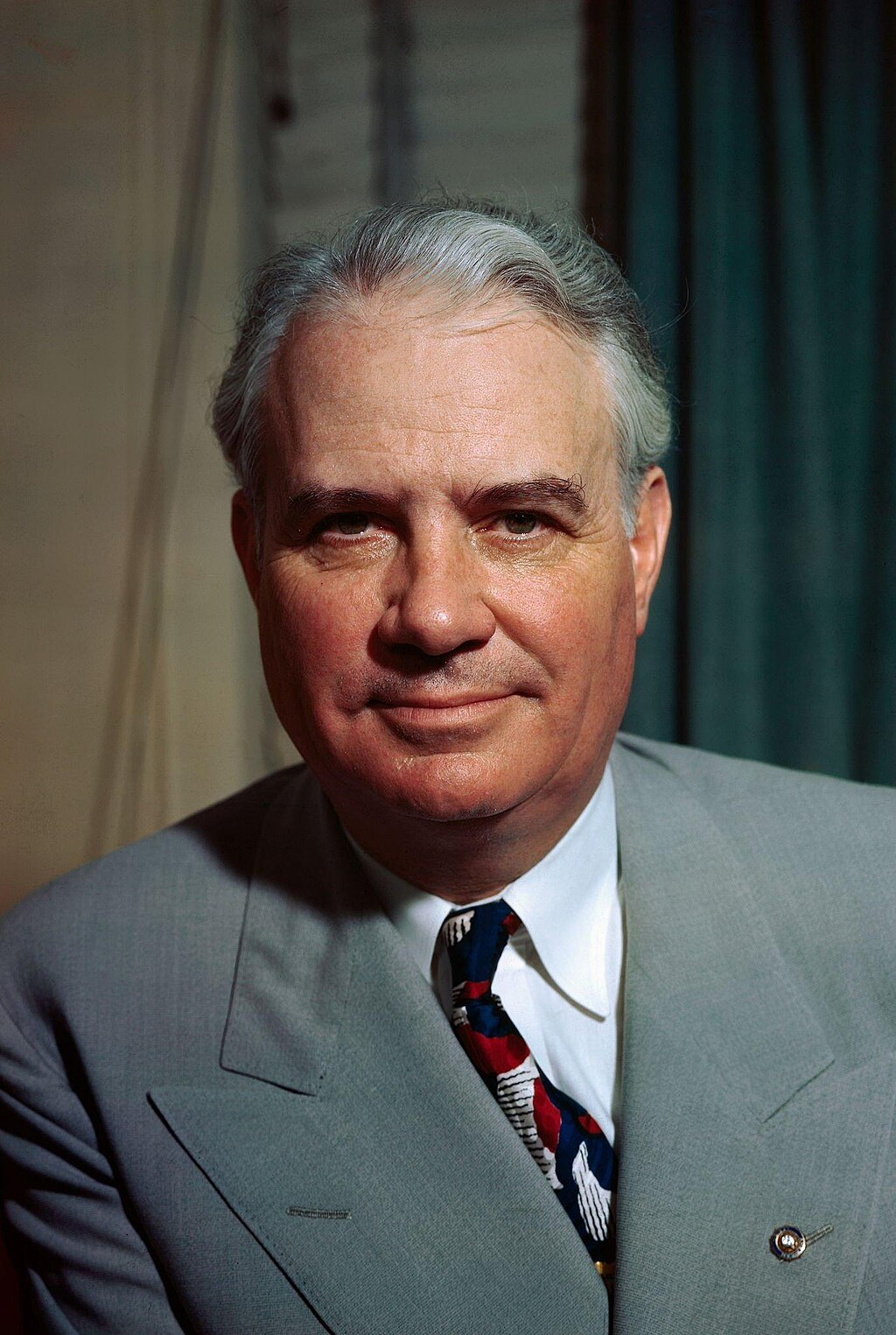
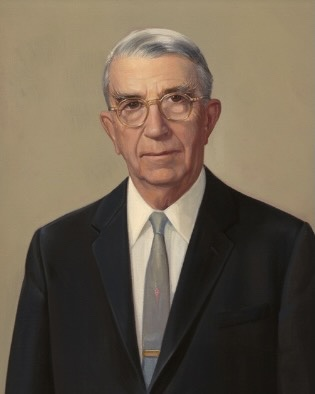


 Mad Politics: The Bizarre, Fascinating, and Unknown of American Political History