The 1966 election was a comeback for the GOP, which had taken a licking in the 1964 election, and one of their achievements was winning back Wisconsin’s 6th district with Oshkosh’s William Albert Steiger (1938-1978). From the start, Steiger was a go-getter who pursued his dreams. He dreamed of a career in public office, and at the mere age of 22 as a young graduate of his local state representative resigned, and he ran for the seat and won. Steiger’s young age fooled some people into thinking that he was a page. Once, a legislator ordered him to run an errand, and he humorously did so, later observing that he became chairman of the same committee the legislator served on (Miller).
As a member of Congress, Steiger proved to be considerably more moderate, especially on social issues, than his staunchly conservative Republican predecessor William K. Van Pelt, who had voted against the Civil Rights Act of 1964. On civil rights, he was even more liberal than his Democratic predecessor, Abner Race, who had voted against the proposed Civil Rights Act of 1966 for its inclusion of a fair housing provision; Steiger supported fair housing. He believed that there was some need for anti-poverty measures and thus opposed some efforts to curb the Office of Economic Opportunity and food stamps, opposed most anti-busing amendments, voted against a school prayer amendment to the Constitution, was an internationalist, and strongly supported the creation of the Legal Services Corporation. However, Steiger was also conservative on issues of taxes and economic regulation, consistently supported the Nixon Administration on the Vietnam War, and proved strongly opposed to campaign finance legislation, being one of 48 representatives to vote against the Federal Election Campaign Act Amendments in 1974. In 1970, Steiger was the House sponsor of the law creating the Occupational Safety and Health Administration and would oppose subsequent efforts to curb its enforcement on small businesses. He also sponsored legislation providing for environmental protection of the Great Lakes.
In 1978, Steiger called for reducing the capital gains tax from 49% to its pre-1969 level of 25%, arguing that this reduction would stimulate the economy by encouraging investment in the stock market and boosting capital investment, resulting in more jobs (Time Magazine). Through his debating skills and staunch advocacy as well as existing economic concerns, he persuaded the Democratic Congress to pass a capital gains tax cut from 49% to 28%, despite the Carter Administration’s opposition. Carter himself stated in opposition, “I will not tolerate a plan that provides huge windfalls for millionaires and two bits for the average American” (Time Magazine). That year, Steiger won reelection. On December 1st, he announced his plan to introduce legislation for tax-free capital gains accounts, but only three days later died in his sleep of a heart attack at the age of 40. Although Steiger was a diabetic, he was not previously known to have had heart problems and had been good on managing it. The ideological assessments of him differ somewhat. He sided with the conservative Americans for Constitutional Action 62% of the time, the liberal Americans for Democratic Action 31% of the time, and his DW-Nominate score is a 0.336. The latter is interesting because he gets a higher score than people who had stronger conservative reputations and stronger assessments from ACA and weaker assessments from ADA. His fate and the lost potential of it is both sad and reminiscent of Alabama’s Senator James B. Allen, who had died of a heart attack earlier that year. Both men had potential to play significant roles in the Reagan era; Steiger would likely have figured prominently in House debates and crafting of tax reduction legislation. On tax cutting, he was just ahead of his political times. Also, like James B. Allen mentoring Jesse Helms, he mentored a notable man in Dick Cheney, who worked for him as a staffer. Steiger referred him to his colleague, Donald Rumsfeld, who would tap him to work for him in the Office of Economic Opportunity under President Nixon and his roles in government would rise up until he was elected vice president.
References
ADA Voting Records. Americans for Democratic Action.
Believe it or not, it used to be possible for Democrats to win major statewide races in Idaho. From 1933 to 1951, and again from 1957 to 1981 at least one of Idaho’s senators was a Democrat. The most successful of these Democrats, and indeed the most successful national Democrat from Idaho was Frank Church. Church was a Great Society liberal, and although not the most liberal of Democrats, he was surprisingly liberal for that state. Something to bear in mind, however, is that in the western portion of the state, there was a strong union presence, and this presence helped Democrats win in the 1st district and could turn the tide statewide. However, the election James McClure to the district in 1966 as well as his reelection indicated that politics were changing in the area. Once Republican Senator Len Jordan decided to retire in 1972, McClure was elected as his successor. Elected as McClure’s successor was 34-year-old charismatic apple farmer and U.S. Marine veteran Steve Symms (1938-2024).
Symms’ slogan during his campaign had been “take a bite out of big government”, and his record proved that he meant it. A libertarian-leaning staunch conservative, he was an almost unbending advocate for free market principles. In his first year, Symms introduced measures to repeal the ban on private gold ownership and to end the Post Office monopoly on delivering first class postage (Ernsberger, Walter, and Morrone). The first cause was successful, the second not. For the latter, Symms staged a race between the U.S. Post Office and letter carriers on horseback to demonstrate the benefits of competition (Clark). While many conservative Republicans were successfully pushed to support Nixon when he was not so conservative, Symms was not among them. He refused to support extending price and wage controls in 1973 and that year sponsored a proposal to prevent government funding of grain sales to the USSR and China, contrary to President Nixon’s position. Ever the fiscal hawk, he offered an amendment reducing the raise of the debt ceiling that passed thanks to support from both conservative Republicans and liberal Democrats. In 1974, Symms was among the opponents of President Ford’s nomination of Nelson Rockefeller as his vice president. Only three Republican senators had voted against this nomination. Although the 1974 midterms were rough on Republicans, he was sufficiently independent from Nixon to not only avoid consequences numerous other Republicans faced but won reelection by a greater margin than he had won in 1972. Symms was a relentless foe of gun control and abortion, opposed increasing the power of organized labor, pushed against the reach of the Occupational Safety and Health Administration into small businesses, and defended the role of states as opposed to the use of the federal government. His most famous quote was, “freedom has always come from a box. If not the ballot box, and not the jury box, then at last resort, the cartridge box” (Clark). Although liberal critics interpreted this as a call for violence, this was not the gist of Symms’ quote. He was encouraging civic engagement so the cartridge box wouldn’t be necessary, and added “we’re still far from resorting to the cartridge box” (Clark).
1980: Frank vs. Steve
Frank Church had run well in Idaho; in his last reelection in 1974 he won by 12 points against Bob Smith, a Republican of Symms’ ideological persuasion. However, by 1980 problems were mounting for Democratic incumbents. Jimmy Carter had never been popular in western states and his popularity was only declining. Another problem, and a particularly big one for Church, was his leading role in getting the Panama Canal Treaties ratified in 1978. This was nationally unpopular and if anything it played worse in Idaho. Seeing an opportunity, Symms jumped into the race. and the contest between them became known as Frank vs. Steve. They were very different people; Symms was conservative while Church was liberal (although with a few exceptions like his opposition to gun control), Symms could easily relate to common Idahoans and was known for telling sometimes off-color jokes, while Church was eloquent in his speech and serious (Clark). Although Church had a lot of name recognition, accomplishments, the Reagan landslide brought Symms to a one-point victory.
Senator Symms
Senator Symms, much like in the House, could be counted as one of the most conservative senators, pushing for cutbacks in spending and reductions in taxes. In 1981, he sponsored a proposal to reinstate the purchase requirement for food stamps, that recipients had to pay for part of their food stamps, but it was rejected. Interestingly, he did back the Tax Equity and Fiscal Responsibility Act in 1982, partially rolling back the Reagan tax cuts in the name of reducing the deficit. Symms was mostly a supporter of free trade, but made an exception when he supported import quotas on casein (milk protein) in 1981.
Although an ideologue, Symms was, much like Reagan, a “happy warrior” and was not known to hold grudges. He also had to mind his constituency and deliver for them in Washington, including funds for highways, the Idaho National Laboratory, and the Mountain Home Airforce Base (Stevenson). In 1986, Symms, who could say things off the cuff, responded to the Chernobyl disaster by remarking that it was a pity that it hadn’t been much closer to Moscow (Deseret News). That year, he got a strong challenge for reelection from Governor John V. Evans, and although a number of Senate Republicans lost reelection, Symms prevailed by three points. During this time, he persuaded President Reagan to support his proposal for a 65 mile per hour allowance for rural roads as an exemption from the 55-mile-per hour limit enacted in 1974 to conserve fuel; he argued to Reagan that there was no good reason for the federal government to be telling towns like Nampa, Idaho what speed limit they should enact and that supporting this would be Reagan being Reagan (Clark). Although his amendment was not accepted in conference on the 1986 highway bill, it was adopted in the next Congress. Consistent with his belief in state authority, he voted against the National Minimum Drinking Age Act in 1984. Likewise, Symms frequently voted against civil rights legislation in his time, including having twice opposed extending the Voting Rights Act and voted against the Americans with Disabilities Act in 1990.
On foreign policy, he was a Cold War hawk, sponsoring a successful 1982 amendment making it U.S. policy to expose Cuban expansionism and led the successful push to repeal the Clark Amendment in 1985, which had blocked military assistance to the resistance group UNITA to fight against the Marxist Angola government, which was receiving Cuban support. In 1988, he was one of only five senators to vote against the INF Treaty with the USSR, which eliminated an entire class of nuclear weapons.
Symms, George Bush, and James A. McClure (R-Idaho) at a 1988 Boise barbecue.
In 1988, Symms made a splash in the presidential election when he stated that he’d heard rumors that there were photos of Kitty Dukakis burning an American flag during the Vietnam War, but later admitted he had no proof (Drew). He was a bane for the liberal Americans for Democratic Action, which he only voted with 2% of the time, but the conservative Americans for Constitutional Action greatly appreciated him as he voted with them 96% of the time, while his DW-Nominate score is a 0.687, making him the most conservative senator in the entire time he served in that legislative body.
By 1991, Symms was considering retirement as numerous personal issues had arisen. He and his wife Fran had separated in 1986 and she divorced him in 1990 over infidelity and his son Dan was being prosecuted for alleged violations of immigration law at the family ranch. Symms decided to retire, and after all he had not intended to be a lifelong legislator. At 54, his career in elective politics was over. In 1992, he married his former aide, Loretta Fuller, and subsequently became a lobbyist. In 2001, he joined up with Dennis DeConcini (D-Ariz.) to form the lobbying group Parry, Romani, DeConcini, & Symms.
On August 8, 2024, Symms died at his home in Leesburg, Virginia, where he had moved after his career in elective office ended. Governor Brad Little ordered flags lowered to half-mast and eulogized him thusly, “Sen. Steve Symms was a true patriot — a military veteran and dedicated public servant whose roots in agriculture helped informed his decisions back in D.C. representing Idaho’s interests,” Little said. “Symms routinely pushed back on government overreach, stood up for the working people of Idaho, and defended the freedoms we hold dear as Americans” (Stevenson). Symms makes it on my list of great conservatives as despite his personal imperfections, he proved a principled voice for libertarian-leaning conservatism and against the scourge of communism around the world.
References
ADA Voting Records. Americans for Democratic Action.
The layman thinks of Reagan as a candidate who had two terms as president and had his background as an actor who was in a film with a chimpanzee. People with deeper knowledge know that he had two terms as California’s governor and put forth a major challenge to Gerald Ford’s 1976 run for president. And people with yet even deeper knowledge know that 1976 wasn’t Reagan’s first go at the Oval Office.
Ronald Reagan was a bit of a latecomer to electoral politics. Although he had been attentive to politics since his youth, by the 1960s Reagan had only recently fully come along to conservatism. I already covered the period in which he was a liberal, and his change was not a matter of an on/off switch, it was gradual. Indeed, he had made his debut on the national stage as a political figure at the 1964 Republican National Convention, where he delivered a powerful speech titled “A Time for Choosing”. This speech convinced wealthy California businessmen Holmes Tuttle and Henry Salvatori to press Reagan to run for governor in 1966, which he agreed to. This would be his first election victory, at the age of 55. By contrast, Lyndon B. Johnson had first won a Congressional election at 29, John F. Kennedy at 29, Richard Nixon had won at 33, and Gerald Ford at 35. Reagan’s victory and his time as governor was inspiring for conservatives nationwide. Something interesting to note about Reagan as well is that he had a hidden mentor during the 1960s. This was none other than a retired Dwight Eisenhower, who had watched Reagan’s speech on TV and saw tremendous potential in him (Kopelson). He would mentor him from 1965 to 1968, giving him pointers on public speaking and how to run for public office. As early as June 1967, merely six months into his first political office, he left the door open for a presidential run in 1968, stating, “If the Republican Party comes beating at my door I won’t say ‘Get lost, fellows’” (Moore, 58). Back in 1968, presidential nominations didn’t work the way they do today. It was entirely possible for someone to win no primaries and come out ahead at the national convention. Both the Democratic and Republican parties have since made sure that the result is not in doubt by the time of convention.
Although Reagan was not technically running early in the game, he still got votes in early Republican primaries as a “favorite son” of California and won that primary, Nixon, who was running a full campaign, dominated. Indeed, throughout much of 1968 he denied that he was a candidate (Moore, 61). Another figure who had entered the race late, although not as late as Reagan officially would (August 5th), was Governor Nelson Rockefeller of New York, the ultimate symbol of liberal Republicanism at the time. Interestingly, despite their ideological differences, Governor Reagan and Governor Rockefeller were friends and they had a shared concern about Nixon’s temperament being a hindrance to him serving as president and to the Republican Party (Shirley, 12-13). Thus, they agreed to coordinate a strategy to try to deny Nixon, possibly pulling off what the Blaine and Sherman factions did to prevent President Grant’s return in 1880. Rockefeller’s best chance was to pull delegates away from the Northeast while Reagan’s best chance was to pull delegates away from the South. Reagan campaigned against the Great Society, the 1968 gun control law, and the Johnson Administration’s failure to win the Vietnam War (Moore, 63). His campaigning pushed Nixon’s rhetoric to the right to secure the Republican nomination, and although he easily had the biggest lead on delegates, Reagan actually had the plurality of primary votes while coming third in delegate count.
As Reagan biographer Craig Shirley (2005) concluded about his first bid,”The California Governor’s 1968 attempt to win the Republican nomination was ill-conceived, ill-timed, and too little, too late” (13). Indeed, his entry came when prominent conservatives including Barry Goldwater had already endorsed Nixon. However, there is an alternative positive view of his run. Glen Moore (1992) of Columbus State University writes, “…there were more positive than negative results from Reagan’s first presidential campaign. He gained valuable experience that helped him strongly challenge President Gerald [R]. Ford for the GOP nomination in 1976” (65)
References
1968 Republican Party presidential primaries. Wikipedia.
Ulysses S. Grant, the first president to try for a third term.
President Donald Trump and his supporters have now and again teased the idea of him having a third term despite the existence of the 22nd Amendment limiting presidents to two terms and the 12th Amendment which does not allow someone to run for vice president if they are not permitted to serve as president, thus putting the kibbutz on the idea of running Trump has VP and flipping once whoever is elected president resigns. The talk about third term Trump, from him, his supporters, and Trump’s opponents, is simply twaddle. I don’t dismiss the notion that he could influence the next Republican president through social media, private calls, etc., but president for a third term he will not be. Only one president in American history has served beyond Washington’s two-term precedent, and that was Franklin D. Roosevelt. After his presidency, Roosevelt’s foes managed to secure the support to make his break the last from tradition with the aforementioned 22nd Amendment. However, he was not the only president to seek a third term, and he wasn’t the first to do so. I will not include Roosevelt in this post as he was successful and I will also not include Woodrow Wilson thinking he could run again in 1920 despite having suffered a massive stroke only to be rebuffed by party bosses, as he never actually got to candidate stage. The first to seek a third term was Republican Ulysses S. Grant.
1880: Grant’s Final Run
When Rutherford B. Hayes ran for president in 1876, he promised to serve only one term, and he kept his promise, thus leaving the Republican field open. The Stalwart faction of the Republican Party, which was led by New York Senator Roscoe Conkling and opposed civil service reform, had done quite well under the Grant Administration, and thus wanted to run him again. After his presidency, Grant with his wife Julia had gone on a two and a half year tour around the world, where he gained much greater understanding and insight into foreign relations, and even mediated a dispute between Japan and China (National Park Service). Both him being out of the country and perhaps enough time passing for people to not think about or think less about the corruption that happened during the Grant Administration helped his prospects. Conkling himself was bullish on Grant, “nothing but an act of God could prevent Grant’s nomination” (National Park Service). However, given how well known his support of Grant was, his strong pride and ego, and that the Stalwart faction was closely tied with Grant, many came to reasonably believe that Conkling’s power would rise under a third Grant Administration, and many Republicans didn’t want that. Furthermore, Maine Senator James G. Blaine, who sought civil service reform (although he wasn’t nearly the reformer as popularly thought), and Secretary of the Treasury John Sherman (General Sherman’s brother) also sought the Republican nomination. Furthermore, Although the Stalwart faction was considerable and in the first round of balloting Grant got the most votes, he did not make the threshold to win. In order for the Blaine and Sherman factions to block the Stalwarts, they had to unify behind a candidate, and they found one in Congressman James Garfield, to this day the last sitting member of the House to win both a presidential nomination and an election. Garfield had delivered a powerful nominating speech for Sherman, but rather than convincing voters to support him, it convinced them to support Garfield. Garfield came out with the nomination. Conkling had said nothing short of an act of God would prevent Grant’s nomination, and it is ironic that given his high estimation of himself that it was Conkling who was a major reason why Grant did not get the nomination.
1912: The Bull Moose Run
When Theodore Roosevelt left office in 1908, he did so with some regret; regret that he had promised not to run for another term in 1904. Nonetheless, he at the time of leaving believed that President Taft would continue his moderate path of progressive reform. However, he learned of certain key conflicts within the GOP while abroad, and found himself increasingly displeased with his successor. His sources of dissatisfaction included how Taft addressed tariff reduction, the Ballinger-Pinchot affair over conservation, and his legalistic rather than case-by-case basis for regulating trusts. In 1912, Roosevelt put himself forth for the Republican nomination, but Taft and party conservatives had control over party machinery and managed to deny him his effort to return to office. Instead of bowing out for the election, he ran for president on the Progressive Party ticket, also known as the Bull Moose Party. The 1912 platform would call for numerous reforms, such as initiative, referendum, and recall for direct democracy, numerous labor reforms, called for easing the process for adopting amendments to the Constitution, women’s suffrage, unemployment and old age insurance, and restrictions on courts striking down legislation. With Roosevelt’s entry, Taft’s reelection was doomed, and party conservatives focused on clamping down on controlling party machinery. The real election became Wilson vs. Roosevelt, and Wilson knew it, focusing his attacks on Roosevelt. Some conservatives in the GOP thought Wilson preferable to Roosevelt at the time as at least he seemed less radical at the time. Wilson prevailed, and would do so again in 1916, in which he again focused his attacks on Theodore Roosevelt.
1952: Truman Tests a Third-Term Run
The 22nd Amendment interestingly exempted the sitting president from the block on running for more than two terms, thus President Truman could legally serve again. Truman did have interest in running again, but there were several issues. First, he was unpopular, having an only 22% approval rating at the start of 1952 due to the US being in a stalemate on Korea, a set of unpopular price controls he enacted in the name of economic stability, and increasing unemployment and inflation (Glass). Second, there had been some significant corruption scandals within his administration, particularly with the IRS. Third, a compelling alternative was rising in Senator Estes Kefauver (D-Tenn.). Kefauver was a folksy liberal populist who although he was not the best orator, he was second-to-none on one-on-one voter interactions who often donned his trademark coonskin hat and had gained acclaim for his televised hearings on organized crime. In this author’s opinion, he is one of the few Southern Democrats of this period who would still carry appeal for Democratic base voters today. In the March 1952 primary in New Hampshire, the earliest indicator of where the Democratic race was going, Truman lost to Kefauver. Such a poor showing convinced him it was time to hang up his hat. Interestingly, it turns out Kefauver would not net the nomination in 1952 nor would he ever, the closest he got was winning the VP nomination in 1956.
1968: Johnson’s Half-Hearted Hurdle
Although Johnson’s run would not be technically a third term as he had only served the last year of JFK’s term, he was eligible as the 22nd Amendment allows for a president to serve a maximum of ten years in office. His “run” was not particularly enthusiastic given his declining popularity but also his health. His health habits had long been poor, smoking two to three packs a day, having a fatty diet, exercising little, and heavy drinking, and this produced a heart attack that was the most severe one could have without dying in 1955. After this, he dropped smoking, improved his diet, started exercising more, and rationed his alcohol. During his presidency, a computer had analyzed his and his family’s medical history and determined that he would not live past 64 (Time Magazine). Furthermore, the old New Deal coalition was coming apart, the 1966 midterms being the first indicator, and the Democratic Party was splitting into factions. However, in early 1968 the only candidate who had risen to challenge Johnson was Minnesota’s Senator Eugene McCarthy, who was running on an anti-Vietnam War platform. Once again, New Hampshire would figure in faltering a president from getting a third term. Although McCarthy was not considered a big name in Washington, his campaign ginned up an unexpected level of enthusiasm from the youth, particularly college students. While Johnson did win the March primary, he did so by the unexpectedly low margin of 7 points. This indicated that Johnson was indeed beatable, and on March 16th, Senator Robert F. Kennedy (D-N.Y.) announced his candidacy. McCarthy wasn’t a heavy-hitter for Democrats, but Kennedy was. On March 31st, Johnson announced his withdrawal from reelection, leaving an open primary. He commented on his health, “I’m going to enjoy the time I’ve got left. When I go, I want to go quick. I don’t want to linger on the way Eisenhower did” (Time Magazine). Although Johnson had been compliant with the orders of his doctors, he resumed his old ways of heavy smoking, eating, and drinking in 1971. This resulted in the computer turning out to be right; Johnson died of a heart attack on January 22, 1973 at 64, which would have only been two days after another term would have ended for him.
References
Glass, A. (2019, March 29). Truman declines to seek another term, March 29, 1952. Politico.
As early as 1943, Americans as well as their politicians were thinking about what would happen in the post-war world. Most were haunted by the failure of international law to stop Axis aggression, and believed something stronger and more permanent than the League of Nations must be established, and must have the United States as an active player. Spearheading the resolution stating America’s postwar aims was Representative J. William Fulbright (D-Ark.), a freshman who was known as an intellectual proponent of internationalism.
Rep. Robert Sikes (D-Fla.) gave his support, Mr. Speaker, to win the war is not enough. We need not go far back in memory to recall another time when we fought and won a war against aggressor nations, a war to make the world safe for democracy. We thought we gave democracy to the world. Then we turned our backs, and in nation after nation freedom exploded into anarchy, dictators reaped the benefit of America’s good intentions. We must think ahead, for we cannot endure the horror and cost of war every 25 years. Human lives are too precious to be sacrificed in vain. This time we must also win the peace. If we are to win the peace, it is not a day too soon to start laying the groundwork for a peace that is lasting and just. Today as never before the world looks to this Nation for leadership. If we again refuse to accept the mantle of world leadership, it must fall to other shoulders, and world policies will again be shaped by other hands. God forbid that they be the hands of another Hitler, but wishful thinking will not make them friendly hands or kind hands” (Congressional Record, 7718).
Rep. Everett Dirksen (R-Ill.), who would later serve as Senate Republican leader, announced his support, “I favor collaboration, organized justice, the curbing and prevention of military aggression, the disarmament of Axis Powers, a clarification of peace aims now before it is too late, a strong United States Army and Navy, the use of constitutional processes, and the preservation of our national interests. Why not say so in language that all can understand? Must language be used to obscure rather than reveal our intent? Peace will come from the bottom up, not from the top down and the time is here to let the people know what we mean that they might speak their minds” (Congressional Record, 7709).
Opponents
Rep. Frederick C. Smith (R-Ohio), one of the most if not the most conservative member of the House, voiced opposition to the Fulbright Resolution on Constitutional grounds, stating, Mr. Speaker, I am impelled to vote against the Fulbright resolution that Congress favor the setting up of international machinery with power to establish and maintain peace among the nations of the world. It seems to me the lower House is attempting here to perform a function which does not properly belong to it. The subject matter of this resolution deals specifically with treaties. The Constitution definitely vests in the President the “power to make treaties,” but only “by and with the advice and consent of the Senate, provided two-thirds of the Senators present concur.” I think this is sufficient reason for voting against this resolution. The phrase in the Fulbright resolution, “international machinery with power adequate to establish and maintain * * * peace among the nations of the world * * * participation by the United States therein,” can mean but one thing, namely, creation of an international police force, with the United States participating, for maintaining an armed peace among the nations of the world. In my opinion, this is no time for the United States to be making any such commitments as this. There are entirely too many unknown factors at this juncture to safely undertake the formulation of so far-reaching and revolutionary a policy as this would involve. Moreover, those of us who take the position that the peace treaty should be made in strict conformity with the Constitution can hardly be consistent when at the same time we vote for the Fulbright resolution. It would be wholly incongruous to attempt to stand on constitutionalism in the writing of the peace, on the one hand, and to vote for the Fulbright resolution, on the other, since this resolution seeks to perform a duty which the Constitution vests exclusively in the upper Chamber. It may be expected the Senate will uphold its constitutional prerogative” (Congressional Record, 7708).
Despite Smith’s objections, this resolution was adopted 360-29 on September 21st, and it is rather interesting to point out some of the dissenters here:
Malcolm Tarver (D-Ga.), not a usual opponent of FDR’s foreign policy who opposed a number of New Deal measures. His opposition is rather curious, but if he was going the Constitutionalist route, it would have been based on Smith objecting to the House acting on such a matter.
Jessie Sumner (R-Ill.), the first woman to be reelected to the House from Illinois, and an extreme conservative.
Clare Hoffman (R-Mich.), a constant thorn in the side of President Roosevelt who badly wanted him indicted for sedition.
Roy Woodruff (R-Mich.), a former Bull Moose Progressive turned arch-conservative.
Harold Knutson (R-Minn.), a tax expert who had voted against the U.S. declaring war on Germany in 1917.
Daniel Reed (R-N.Y.), another tax expert, had voted against every major New Deal initiative that attracted ideological controversy.
William Lemke (R-N.D.), an agrarian radical who had run for president on the Union Party ticket in 1936 who got a bit more conservative in his later years.
The Senate Resolution
Senator Tom Connally
The Senate’s corresponding resolution was the Connally Resolution, sponsored by Tom Connally (D-Tex.). Support was overwhelming, and many non-interventionists were won over.
Senator David Walsh (D-Mass.) gave a reserved argument for, and he had opposed the Versailles Treaty and had been a non-interventionist. He stated, “I in tend to vote for the resolution. It is obvious that a vote against the resolution would be tan t amount to a denial of any willingness to cooperate with other free nations in the post-war world. Such a denial would in my opinion misrepresent the sentiments of the American people, and would misrepresent my own sentiments. But let there be no misunderstanding of the nature of the resolution and of my position in supporting it. The resolution is an offer – not a commitment. It is expressive of a desire for a just and honorable peace, and of a willingness to cooperate in its maintenance. But as to what is a just and honorable peace and as to ways and means for its maintenance, those are questions which cannot possibly be decided until the terms and conditions are resolved, and until the post-war international organization is translated from the realm of theory to the realm of fact” (Congressional Record, 9203).
Senator Carl Hayden (D-Ariz.), who had been consistent in his support of President Roosevelt’s foreign policy before Pearl Harbor, backed the resolution while expressing an understanding of the limit of its impact: “Mr. President, I intend to vote for Senate Resolution 192 as revised by the Committee on Foreign Relations, but I desire to make it perfectly clear that I know just what I am voting for. It is a simple resolution which does nothing more than express the idea that the Senate favors the establishment of a just peace throughout the world and is willing that the United States shall assume a fair share of the responsibility for the maintenance of such a peace. It does not bind any Senator to vote for or against any treaty, in whole or in part, which may hereafter be submitted to the Senate to implement this general declaration. And above all, even though adopted by a unanimous vote, the resolution does not amend the Constitution of the United States by merely repeating some of the words of the supreme law of the land” (Congressional Record, 9206).
Senator William Langer (R-N.D.) spoke in opposition, “Mr. President, when the distinguished chairman of the Committee on Foreign Relations introduced his resolution, we were urged to vote for
it because it was said to be so elastic that it could be construed to mean anything. That had a familiar sound to me. It reminds me of one of those smooth, slick salesmen we men in the West are so familiar with, who in the old days used to get some farmer behind the barn and give him a drink of rot gut, and get him to sign a contract to buy a $7,000 or $8,000 threshing machine and threshing engine. They would get him to sign the contract; and when the farmer said, “There is some fine print on the back
of this contract,” the smooth, slick salesman would say, “Oh, that does not mean anything.” When I was Governor, we finally got rid of those practices, by North Dakota statute “ (Congressional Record, 9201).
Langer’s words did not amount to much, as the vote came out 85-5 in favor of the Connally Resolution on November 5, 1943. The only senators who joined him in opposition were:
. Hiram Johnson (R-Calif.), one of the leaders of the opposition to the Versailles Treaty and Theodore Roosevelt’s running mate in 1912.
. Henrik Shipstead (R-Minn.), an old-time progressive who had returned to the Republican Party, become more conservative, and was resolutely against the U.S. taking the role of world policeman.
. Burton Wheeler (D-Mont.), one of the leaders of the opposition to FDR’s foreign policy before World War II and had come out early against his “court packing plan”.
. Robert R. Reynolds (D-N.C.), one of the few Southern non-interventionists who had a bad habit of associating himself with disreputable figures.
. Robert La Follette Jr. (P-Wis.) paired against the resolution. He had consistently opposed FDR’s pre-World War II foreign policy and his father, La Follette Sr., had been one of the irreconcilables in the Versailles Treaty debate. The communists later smeared him as a Nazi sympathizer.
Interestingly, unlike the House in which the vote had more of a core of hardcore conservatives, the only senator who was a hardcore conservative by this point who voted against was the aging Johnson, considerably past his old progressive days.
This resolution reminds me of the Emancipation Proclamation. Although the measure didn’t have immediate practical effect, it had a strong symbolic effect and much like the Emancipation Proclamation set the tone for the narrative of the War of the Rebellion from then on, the Fulbright and Connally Resolutions set the tone for the direction of the United States after World War II, which became the creation of the United Nations. The votes, as well as the DW-Nominate scores of the voting politicians, are included. A checkmark is a pair or announcement in favor and an “X” is a pair or announcement against.
In recent times, less and less is required for the press to count a Democrat as a “moderate” or even “conservative”. The closest one has come in recent years was West Virginia Senator Joe Manchin, but someone who really did fit this bill was Zell Bryan Miller (1932-2018). Miller was always two things: a Democrat and a man of Young Harris, Georgia. He never knew his father, as his father died only 17 days after his birth from cerebral meningitis. He and his sister were raised by their mother in modest circumstances and the fact that she had built the family home with rocks she got from a stream instilled into young Zell the value of rugged independence (Grant). As a young man, Miller attended and graduated from Young Harris College but lacked the discipline to proceed at Emory University. However, he gained the discipline required from his subsequent service in the U.S. Marines (Grant). In 1954, Miller married Shirley Carver and they had two sons, with him continuing his education in 1956 at the University of Georgia, earning Bachelor’s and Master’s degrees in history, learning from prominent historian E. Merton Coulter, a proponent of the Dunning School of historical interpretation of Reconstruction. In 1958, while teaching history and political science at Young Harris College, Miller won his first election to serve as Young Harris’s mayor at the young age of 26. Serving from 1959 to 1960, he was then elected to the Georgia State Senate, serving until 1964. He attempted to win the Democratic nomination for Congress in both 1964 and 1966, and like most Georgia politicians of the time, he ran on a segregationist platform. Although not successful in his bids for Congress, Miller served as executive secretary for Governor Lester Maddox from 1968 to 1971. In this role, he was credited with influencing Maddox to make more appointments of blacks to government positions and to improve higher education (Grant). From 1971 to 1973, Miller served as chairman of the state’s Democratic Party, which set him up for a run in 1974 for lieutenant governor. Miller proved popular in this role, and his time resulted in him considering a run for the Senate.
The 1980 Senate Primary
Although the name Talmadge carried a lot of political heft in Georgia, during his fourth term, Senator Herman Talmadge’s reputation began to suffer. An alcoholic, his drinking got out of hand after the drowning death of his son in 1975, and his publicized divorce was ugly and bitter. In addition, Talmadge was hit with a dishonor that only nine senators have ever suffered, and only one has ever served another term after: he was censured by the Senate (although the term “denounced” was used in his case). Furthermore, his past as a segregationist was not aging well as black participation was increasing in the state’s Democratic Party, thus Zell Miller challenged him for renomination and received endorsements from numerous black political figures, including State Senator Julian Bond and Atlanta Mayor Maynard Jackson (Harris). Talmadge, however, commanded a lot of loyalty in the Democratic Party, his seniority helped, and there were black supporters of him for delivering on certain priorities. Miller fell short in his bid to deny Talmadge renomination by 18 points, but in the general election, he would narrowly lose reelection to Mack Mattingly, chairman of the Georgia Republican Party. Some Democrats believed that Miller’s candidacy made the difference in the general election. in the meantime, he would continue to serve as lieutenant governor. In 1990, Miller decided to move up to governor, successfully gaining the nomination in 1990 and winning against Republican Johnny Isakson by over 8 points.
As governor, he pledged to serve only one term and sought to make the most of the time. Miller focused strongly on education, and proposed an amendment to the state’s constitution to permit a state lottery with the funds going to fund the state’s education system, which the voters passed. He also established the HOPE Scholarship Program, in which every Georgia student who averages a B or better is eligible for a fully paid scholarship to any Georgia state college or university. Miller was keen on both preventative and punitive measures on criminal justice, and got the toughest sentencing guidelines in the country passed, a two strikes law (Grant).
In 1992, Miller gave his strong backing to the candidacy of Bill Clinton and helped him get the Democratic nomination. He delivered a strong keynote speech at the Democratic National Convention, in which he said, “I made it because Franklin Delano Roosevelt energized this nation. I made it because Harry Truman fought for working families like mine. I made it because John Kennedy’s rising tide lifted even our tiny boat. I made it because Lyndon Johnson showed America that people who were born poor didn’t have to die poor” (Stout).
Although Miller was successful in helping Clinton to the White House and carrying Georgia for him, he had his own political future to consider. He had been quite a success as governor, and this motivated him to change his mind and run for a second term. This was far from without controversy, and Georgia voters were souring on the Clinton Administration, which resulted in Miller only winning reelection by two points in 1994. Although on the presidential level, second terms are often considerably worse than first, Miller’s second term as governor was even better than the first. He worked hard to make the state attractive for growth and investment. Miller even established a special program to use private funding to distribute classical music CDs to every family with babies born in Georgia, and by the end of his second term, his approval rating was an astronomical 85% (Grant). Although after his term, Miller sought to continue his education career and taught at Emory, University of Georgia, and of course Young Harris College, the call of political office would come to his doorstep.
Senator Miller
On July 18, 2000, Republican Senator Paul Coverdell died of a cerebral hemorrhage, and Democratic Governor Roy Barnes tapped Miller to serve in the interim. He sought a full term, and for the 2000 special election, he faced Mack Mattingly. However, Miller had recently been an extremely popular governor while Mattingly had been out of elective office since his reelection loss in 1986. The result was a blowout for Miller, winning by 20 points while Republican George W. Bush carried the state by over 11 points. One could interpret this victory as a vindication of Miller’s 1980 candidacy for the Senate. As a senator, Miller’s record started moderate, and he was one of a few Senate Democrats to vote for the Bush tax cuts in 2001. He stated, “I agree with President Bush that the taxpayers are better judges of how to spend their own money than we are” (Stout). His disagreement with Democratic leadership grew when they came out strongly against an amendment he sponsored with Phil Gramm (R-Tex.) to loosen union and personnel rules for the Department of Homeland Security and held up the legislation shortly before the 2002 midterms over the issue, he became a critic of the party’s leadership. Miller saw this as placing the priorities of an interest group (federal employees) over the priority of national security. He blamed the results of the 2002 midterm on the Democratic Senate leadership, stating, “When you bring it down to whether you are for homeland security or for protecting federal employees’ jobs, that is pretty hard to defend” and blamed repeated votes on the issue for the defeats of Max Cleland (D-Ga.) and Jean Carnahan (D-Mo.) (Preston). Miller had campaigned for the former’s reelection. After the 2002 midterms, his record shifted strongly to the right. In 2004, Miller announced that he would not be running for a full term. This freed him to do what he wanted, including introducing a Constitutional amendment repealing the 17th Amendment (direct election of senators) as he believed this lessened the power of states in favor of the federal government. Miller’s separation from the national Democratic Party was complete with his endorsement of George W. Bush. This time, he was a keynote speaker at the Republican National Convention. Miller delivered yet another strong speech,
“Never in the history of the world has any soldier sacrificed more for the freedom and liberty of total strangers than the American soldier.
And, our soldiers don’t just give freedom abroad, they preserve it for us here at home.
For it has been said so truthfully that it is the soldier, not the reporter, who has given us the freedom of the press.
It is the soldier, not the poet, who has given us freedom of speech.
It is the soldier, not the agitator, who has given us the freedom to protest.
It is the soldier who salutes the flag, serves beneath the flag, whose coffin is draped by the flag, who gives that protester the freedom he abuses to burn that flag” (Presidential Rhetoric).
He was also staunchly critical of Senator John Kerry’s (D-Mass.) voting record on defense issues, as he had a history of voting for defense cuts. During his speech, he told the audience, “This is the man who wants to be the commander in chief of the U.S. Armed Forces? U.S. forces armed with what? Spitballs?” (Stout). After the speech, reporters started asking him questions. When correspondent Chris Matthews asked him over a microphone to elaborate on the “spitballs” remark, Miller snapped, “Do you know what a metaphor is? Get out of my face!” and subsequently stated, “I wish we lived in the day when we could challenge someone to a duel,” but expressed regret for the remark (Stout).
Despite his endorsement of Bush, as noted earlier, Miller never switched parties, always seeing the Democratic Party as his home. He made the direct comparison when asked about why he didn’t switch, stating, “I compare it to being in an old house. It’s a house that I’ve lived in for years that’s getting kind of drafty and hard to heat. The plumbing won’t work, and some strangers have moved into the basement, and I don’t know who they are, and there’s no doubt I would be more comfortable in another house. But, you see, I was here first. I’ve lived in this house for years and years. It’s home, and I’m not going to leave” (Stout). With his departure from the Senate on January 3, 2005, was the departure of the last true conservative Democrat of the Senate in this author’s opinion. Miller sided with the liberal Americans for Democratic Action only 23% of the time, while he sided with the American Conservative Union 71% of the time. His DW-Nominate score is a 0.146, which is extremely high for a Democrat. Miller’s storied political life and the various stances he took over his career led some to call him “Zigzag Zell”, and this reflected the mixed feelings people in the Georgia Democratic Party had about him at the end. His successor, interestingly enough, was Johnny Isakson, the man he bested in 1990. President Bush subsequently appointed him to the American Battle Monuments Commission, and in 2008 the University of Georgia honored him by dedicating the Zell B. Miller Learning Center (Grant).
Although in retirement from elective office, Miller did still let his opinions be known, and often supported Republican candidates for public office, such as Saxby Chambliss for reelection to the Senate in 2008 and Governor Nathan Deal. However, he did support Democrats now and again, such as Michelle Nunn in her 2014 Senate run. In 2017, Miller retired from public life due to a diagnosis of Parkinson’s disease and died the next year on March 23rd at 86 in Young Harris. Whatever happened in his life, wherever he politically stood, and whoever he supported, Zell Miller was born a Young Harris Democrat and died a Young Harris Democrat.
References
ADA Voting Records. Americans for Democratic Action.
At one time, California Republicans were of great significance; Hiram Johnson was a celebrated leader of the progressive faction of the Republican Party and nationally known for his role in defeating the Versailles Treaty, Richard Nixon was from California, and Ronald Reagan’s political career began in California. As late as 2023, a California Republican had a leadership role, Speaker Kevin McCarthy. Another figure of significance, although not as well known as Nixon or Reagan, was William Fife Knowland (1908-1974), who was one of the foremost figures of Washington at the height of his power.
Knowland’s birth as well as how his father, J.R. Knowland, regarded him set him up for a career in politics. The elder Knowland had been a member of Congress in the conservative faction of the party from the Roosevelt to Wilson Administrations representing Oakland (different time, different Oakland). J.R. also was a mentor to Earl Warren, who would diverge considerably from conservative politics with time. From his youth, the younger Knowland was an active player in California politics, serving in the State Assembly from 1933 to 1935 and the State Senate from 1935 to 1939. In 1942, at the age of 34, he joined the army; he and his father’s newspaper, the Oakland Tribune, for which he worked as assistant publisher, had supported the peacetime draft law and he figured that if he supported such a policy that he should live it for the duration of the war.
After Senator Hiram Johnson died in 1945, Warren approached J.R. Knowland about a temporary Senate appointment, but he declined and recommended his son. Interestingly, Knowland learned of his appointment by the reading the Stars and Stripes newspaper; his wife Helen had attempted to call him to tell him about his appointment, but her call was turned down by military censors as “not essential government business” (Hill). The army honorably discharged him and sent him to Washington to serve.
Although Knowland would develop a public reputation as a conservative, in his first years in the Senate he was politically moderate. Indeed, when appointed, he publicly identified himself as a “liberal Republican pointed toward national social programs and business stability and international cooperation based on a non-partisan approach to foreign policy” (Montgomery and Johnson, 53). He demonstrated his willingness by backing President Truman’s Full Employment bill in 1945, which would be signed into law but in a compromised form the following year. He was, however, fiscally conservative, and was concerned about the accumulation of debt (Montgomery and Johnson, 67). Knowland’s warnings on debt have since been largely unheeded by both parties. In 1950, Knowland, a strong supporter of authority of states, sponsored an amendment to that year’s Social Security bill restricting the authority of the Social Security Administrator to require states to adopt federal standards for unemployment compensation, requiring a 90 day notice for noncompliance findings and required judicial review before funds could be withheld from states. The amendment was adopted as part of that year’s legislation. Bill Knowland was also not what we would think of as a politician temperamentally, he was humorless, not charismatic, and had a tendency not to remember people he had previously met. However, he was also highly principled, and indeed the integrity of his public life is unblemished. However, Knowland’s private life was a different story. Although he and his wife Helen loved each other, both had extra-marital affairs. They had married very young and hadn’t had a chance to “sow their wild oats”. Helen conducted an affair with journalist and later senator Blair Moody, while Knowland had an affair with Moody’s wife, Ruth.
In 1952, Knowland faithfully backed fellow Californian and family friend Earl Warren for the Republican nomination for president. Richard Nixon was also supposed to be a backer of Warren, but he double-crossed Warren by working behind the scenes to get the California delegation to flip to Eisenhower on key procedural votes during the Republican National Convention, thus securing his nomination (Farrell). Knowland himself had received an offer for an arrangement from Taft which he declined, most likely meaning a vice president nomination in exchange getting California’s delegates to his side. Had Knowland acted before Nixon, he would have secured the nomination for Taft. And since Taft died on July 31, 1953, we would have had President Knowland. This demonstrates that principles in politics can come at a cost. Earl Warren, however, would get a pretty substantial consolation prize with the advocacy of Knowland: Chief Justice of the Supreme Court. During the Eisenhower presidency, he increasingly identified with the conservative wing, particularly once he succeeded Taft as Senate Republican leader, and voted against Senator Joseph McCarthy’s censure in 1954. Although not a slavish devotee of his, indeed Knowland had voted against his pushes to reject Charles Bohlen’s nomination as Ambassador to Russia as well as reducing aid to nations trading with Red China in 1953 and objected to his breaches of Senatorial decorum, he nonetheless thought that McCarthy’s prime sin was exaggeration as opposed to the validity of his crusade. He reflected on McCarthy in 1970, “…one of Joe McCarthy’s liabilities was a tendency to overstate his case. I think he hurt himself a good deal by this overstating his case, and he offended a lot of Republican senators by some of the statements he made” and further stated, “I haven’t agreed with Senator Fulbright on the way he performed either during the Eisenhower Administration or during the Johnson Administration, or even currently. But he was a senator of the United States, and I really resented when McCarthy got up on the floor and referred to him as Senator Halfbright. I mean, it was this kind of a thing, you know, that just isn’t done” (Frantz, 21).
As a leader, Knowland was not as skilled as Democratic leader Lyndon B. Johnson, who often got the better of him. As veteran journalist William S. White noted, “Knowland was very inflexible and not one-tenth as bright as Johnson in maneuvers and so on. So Johnson took care that he always maintained a very close personal relationship with Knowland, so that he could approach him at any time. He really just sort of overwhelmed Knowland with his brilliance as a leader” but also added that, “It only meant that he was a more intuitive man, operating with more freedom of motion in a more relaxed party. To put it another way, the stiffness of Knowland, an honorable and very down-right man quite incapable of subtlety, had a kind of inevitability in the very nature of his party. The flexible, inventive, more volatile characteristics of Johnson were in a sense really the human characteristics of his party” (Montgomery and Johnson, 140-141). President Eisenhower also noted Knowland’s deficit in leadership. He wrote in his diary on January 18, 1954, “Knowland means to be helpful and loyal, but he is cumbersome. He does not have the sharp mind and the great experience that Taft did. Consequently, he does not command the respect in the Senate that Senator Taft enjoyed” (Montgomery and Johnson, 150-151). While Knowland was without question a man of integrity in his public actions, his leadership deficiencies precluded moving higher. Interestingly, something that also connects to today is Knowland’s recounting of himself and other members of the Republican Senate leadership trying to convince President Eisenhower to replace some of Truman’s people in government departments, which he would not budge on as he did not want to be seen as attacking the civil service (Frantz, 24-25). Republican presidents since have been more friendly to the views of Knowland and other Republican bigwigs in the need to build up the party. Although Eisenhower had his differences with Knowland and others in the Republican leadership, Knowland rejected the interpretation that Eisenhower was ideologically closer to Democratic leader Lyndon B. Johnson than the GOP (Frantz, 29). In 1957, he sponsored an unsuccessful amendment retaining the restriction on bartering of commodities for communist nations, in keeping with his anti-communist stance. In 1958, Knowland successfully introduced an amendment blocking liberalization of the Battle Act as an amendment to foreign aid legislation to permit aid to communist nations aside from the USSR, China, and North Korea. Consistent with his views on unions, he also sponsored two unsuccessful secret ballot amendments to that year’s proposed labor reform bill.
Knowland and Civil Rights
After the decision of Brown v. Board of Education (1954), legislative action was bound to follow. In 1956, the House passed an Eisenhower Administration-backed civil rights bill, which focused on voting rights. Knowland and Majority Leader Johnson wanted to hold off on civil rights until after the election, and all but five senators agreed. In 1957, Knowland backed the Eisenhower Administration bill fully, and managed to bypass the Senate Judiciary Committee to bring it to the floor. The committee was chaired by James Eastland (D-Miss.), one of the most prominent and outspoken segregationists who made the committee a graveyard for civil rights bills. However, Knowland did not prevail in his effort to prevent weakening amendments, most notably striking the section of the bill granting the Attorney General authority to initiate 14th Amendment lawsuits and the adoption of a jury trial provision for contempt of court voting rights cases. Majority Leader Johnson had prevailed in the adoption of the latter two, which resulted in passage of the bill, as the Southern bloc had agreed not to have a coordinated filibuster if these weakening amendments were added. Johnson got a good deal of credit for securing the passage of the first civil rights bill, which also cemented him as a national rather than regional figure and made him a presidential contender.
Knowland atop an elephant during the 1958 Senate campaign.
Defeat and After
I have already covered the story of Knowland and the 1958 election, so long story short, he lost the gubernatorial election badly to Pat Brown in a deeply troubled campaign, and this ended his political career. Knowland sided with the liberal Americans for Democratic Action 31% of the time, and the conservative Americans for Constitutional Action 77% of the time, both measures indicating a moderate conservatism. His DW-Nominate score is a 0.227. Knowland’s political career was over at the age of 50, and he resumed publishing, succeeding his father as publisher for the Oakland Tribune.
Although Helen Knowland’s extra-marital activities had ended with Blair Moody’s death in 1954, Bill’s affair with Ruth lasted until her death in 1961, and he continued to have affairs after. Finally, in 1972, the couple divorced so Bill could marry a much younger woman. However, she was a tempestuous woman, a full-blown alcoholic, and addicted to spending. This, combined with Knowland’s gambling addiction drained the family fortune. By 1974, Knowland was over $900,000 (over $5 million in today’s money) in debt to banks and mobsters. He considered selling the Oakland Tribune, but he ended up landing on a different course of action. On the morning of February 23, 1974, Knowland drove up to his compound in Guerneville, got his gun, went to his pier on the Russian River, and fired a shot into his right temple, dying instantly at the age of 65.
References
ADA Voting Records. Americans for Democratic Action.
Montgomery, G.B. & Johnson, J.W. (1998). One step from the White House: the rise and fall of Senator William F. Knowland. Berkeley, CA: University of California Press.
There is a persistent ideological debate on where to place the Nazis. The American left loves to tar and feather the American right with comparisons to Nazis, and the common designation for Nazis is “far right” and the same people who apply that label I notice apply this label to a growing number of Republican officeholders. The right hits back by claiming that Nazism is a form of socialism, a rival socialism to Marx. The application of the term “Liberal” to Hitler is for most people a bizarre and unthinkable application. After all, Hitler and the Nazis were extremely socially conservative. However, it definitely can be argued that the Nazis’ efforts to undermine Christianity with a state-sponsored “Positive Christianity” go against the social conservatism of the United States, which is overwhelmingly based in Christianity. Joseph P. Kamp argued for Hitler being a liberal, as least a New Deal one, in 1949. But before I dive further into this, a bit of background on the author.
Background on the Author
Joseph P. Kamp, 1944.
Joseph Peter Kamp (1900-1993) was perhaps the most prolific right-wing pamphleteer of the 20th century. He started his activities in 1919 when the Constitutional Educational League was formed. Kamp become the organization’s lead spokesman in 1925, and basically became the League. In 1934, he would collaborate with Harold Lord Varney, Lawrence Dennis, and former Populist Congressman Milford W. Howard of Alabama in launching The Awakener, a newspaper that was strongly opposed to the New Deal and to the growing power of organized labor. Kamp authored numerous provocative pamphlets the Constitutional Educational League and later through Headlines, including Vote CIO and get a Soviet America (1944), We Must Abolish the United States: The Hidden Facts Behind the Crusade for World Government (1950), and Behind the Plot to Sovietize the South (1956). A notable pamphlet attacking Kamp was Joe Kamp: Hero of the Pro-Fascists by the organization Friends of Democracy. He was also regularly accused of anti-Semitism and fascism, including an indictment of the Constitutional Educational League in 1942 for allegedly seeking to undermine the U.S. Army and Navy. He was also indicted twice for contempt of Congress; first over his refusal to answer questions and the second time for refusal to disclose his backers and was convicted for the first time but acquitted the second time. While I think the charge of fascism is highly disputable for him, the anti-Semitism is pretty beyond dispute given what I have read of Kamp, and his association with notorious anti-Semite Willis Carto from the 1960s all the way up to the 1980s as part of Liberty Lobby includes letters the two wrote to each other. There is one in particular demonstrating that he was actively seeking to deny the Holocaust. The damning passage reads, “…I think I wrote to you once that I intended to deal with the allegation that six million Jews are supposed to have been put to death by the Nazis because the ADL now has the Catholic Church spreading this lie. When I get through demolishing the fable I am going to quote a Jewish author who writes that while FIVE million Jews are said to have been liquidated between 1933 and 1945, there were SEVEN million Christians who suffered the same fate” (Kamp, 1968). Kamp here is, ironically for someone on the right, not understanding “per capita” as there were far less Jews than Christians in Europe even if the figures he cites were accurate, as well as papering over that Jews were targeted directly for their religion as opposed to Christians who unless they were vocal faith-based dissenters were targeted because they were part of other groups the Nazis were interested in terminating. Simply put, he wished to downplay the impact of what he calls “Hitler’s anti-Jewish terror” (Kamp, 1968). Anyway, on to Kamp’s pamphlet, Hitler Was a Liberal!
Kamp’s (1949) premise is, “Hitler’s ideology and program are shockingly parallel to the philosophy and measures currently expounded and promoted by a powerful clique of Americans who have the effrontery to call themselves “liberals”. This same “liberal” clique hails the results at the polls in the 1948 election as a “liberal” victory and a “mandate” from the American people for a “liberal” legislative program, a program which is strikingly similar to proposals set forth in Hitler’s Mein Kampf”. The paradox is due to the Red political smog which has been systematically exuded over our people to becloud their understanding of this time-honored and deeply-cherished American characteristic” (3-4).
Kamp proceeds to argue that the term “liberal” as commonly applied at the time of writing is a bad misnomer. He defines a traditional liberal as, “…one with generous mental horizons. He is open-minded, looks at both sides of a question. He has foresight as well as hindsight. He knows the past, and resolutely faces the future. He is not rutted in iron-clad tradition, nor given to impractical wishful thinking. He judges an issue in the light of fact and existing circumstance, and is not unduly swayed either be precept or roseate promise. He has common sense, good will and a profound belief in individual rights and liberties” (Kamp, 5).
Kamp considers those who call themselves liberal in 1949 thusly, “For the most part, his “liberalism” is characterized by VIOLENT OPPOSITION TO THE ESTABLISHED ORDER; which, according to him, has plenty of faults and few virtues; he is “all out” for revolutionary change – without a serious thought as to the consequences; he admits that there are two sides to every question – but the other side is always “reactionary;” he claims an open mind on everything – provided that it conforms to his own view” (6).
Kamp (1949) holds that “The real power behind the scenes Is not the Politburo; it is THE PHILOSOPHY OF SOCIALISM. We are inclined to think of the cold war in terms of the Kremlin, and to forget that Russian Communism is but one form of Socialism in action. The history of Soviet Socialism goes back no farther than November, 1917. Marxist Socialism with its plan of world revolution goes back a hundred years. All Socialism springs from the same root and produces the same narcotic to liberty. There is no Socialism of any hue which is not based upon the sacrifice of human rights and liberties for State slavery, and all Socialism is a political pyramid dominated by a dictator and his chosen bureaucrats. Every attempt at applied Socialism in the world has resulted in a dictatorship” (9-10).
His case for Hitler the Liberal?
“If opposition to the conservative social order, the building of a welfare state, wholesale raids on private property and fundamental human rights (all of which the new “liberalism” is promoting in the United States) are the earmarks of a “Liberal”, then Adolf Hitler should be enshrined as one of the mighty heroes of the “liberal movement,” for who more than the paperhanger of Bavaria gave wholeheartedly of his time and genius to the “liberal” cause of destroying governments, property and human rights, and building Socialist – welfare – slave states” (Kamp, 13). He makes his case by comparing points in the Nazi Party’s 25 point program to what New Deal liberals were standing for in 1949.
Kamp’s Comparisons:
“Hitler proposed “nationalization of education to give equality of advantages to all.” Our “liberals” demand Federal Aid to Education – the prelude to “nationalization.”
“Hitler demanded “equal rights for all German citizens.” Our “liberals” demand an F.E.P.C. law.”
“Hitler promised “old age pensions.” Our “liberals” propose increased old age pensions and expanded Social Security.” (14)
“Hitler sponsored “nationalization of public health service.” Our “liberals” are backing Socialized Medicine.”
“Hitler demanded the “nationalization of trusts.” Our “liberals” want 19 more TVAs and the right to “nationalize” our steel industry as a starter.”
“Hitler was for “a strong central state power.” Our “liberals” want all Government power to be concentrated in a bureaucratized executive department, and to make Congress a “rubber stamp.”
“Hitler did something else that is “happening here.” He concentrated the taxing power in Berlin, and doled back locally collected tax money to local politicians who did his bidding. Thus he broke down local self-government which was in Germany, as it has been in the United States, the bulwark of freedom”. (Kamp, 15)
There are some significant issues here. While all of the NSDAP points he reports are accurate, the context leaves a bit to be desired to put it lightly. First, lets cover the most obvious one, “equal rights for all German citizens” equating to proposed anti-discrimination laws. This point completely neglects that anti-discrimination laws in the United States would cover Jews as religion-based discrimination was to be prohibited, while in Germany Jews were stripped of their citizenship, consistent with another one of these 25 points, thus “equal rights” does not apply to them. This cannot have escaped Kamp given that he clearly read the 25 points.
Second, the point of “nationalization of trusts” has an anti-Semitic basis, in that the owners of major department stores in Germany at the time of the platform were Jewish. Thus, it wasn’t just out of a sense of left-wing populism that Nazis went against “trusts”.
Third, Hitler’s proposed “nationalization of public health service” was not the equivalent of single-payer healthcare. Single-payer healthcare was a post-World War II phenomenon, not something that arose in Nazi Germany. Kamp seeks to tie New Deal liberalism together with the totalitarianism of Hitler and call both forms of socialism.
Some points that I find have greater accuracy are:
The comparison of “old age pensions”. Something to note is that Germany had already set up a social insurance system for invalidity and old age under Otto von Bismarck, and although the Nazi regime did plan on an expanded old age pension scheme to be paid for by “plutocrats”, the plan was shelved in 1940 until the war was to be won (The New York Times). This is a bit more accurate on Kamp’s part because the Nazis did intend on this to happen, although their focus was far more on war preparation.
The comparison of states and federal control. Nazi Germany outright replaced the authority of German states with party district leaders, who reported directly to Hitler. This destroyed sovereignty of individual German states. Kamp’s comparison between liberal efforts to expand and concentrate federal authority in the United States and Germany’s knocking out of sovereignty of individual states, although hyperbolic, is admittedly in the same direction of power orientation that modern liberals since at least the New Deal have sought. Democrats seek to consolidate power in the federal, and the Nazis sought to consolidate power on Germany’s national level.
Despite some actual points, the validity of comparisons have significant limitations. For one thing, the staunch social liberalism would find little to no place in the Nazi agenda save for pushes against traditional religions. Although there is a point to be had about parties making lofty promises for providing a lot and then providing dictatorship. Although Kamp points to federalization as a potential threat to freedom and I think there are substantial arguments behind this, he engages in hyperbole and regarding Hitler and “equal rights”, gross distortion.
References
Kamp, J.P. (1968, December 31). Letter to Willis Carto.
Back in the 1950s, California had two Republican senators. What a concept, right? Their two senators were Minority Leader William F. Knowland and Thomas Kuchel. Knowland was counted among the conservatives and was a Cold War hawk, making opposition to Communist China and support of Nationalist China a signature issue. He had been a key player in pushing the Civil Rights Act of 1957 to passage, although he was unable to prevent the adoption of weakening provisions. California’s governor at the time was Goodwin “Goodie” Knight. From the late 19th century to this time, Republicans had been the dominant party in California. The last time the state had two Democratic senators was during the War of the Rebellion, and from 1896 onward, only once had a Democrat been elected governor, Cuthbert Olson, in 1938. He only served one term and is not considered one of the state’s notable governors, and had been succeeded by Republican Earl Warren, one of the state’s most notable governors and by this time chief justice. California Republicans were at the time a big tent party, having had prominent conservatives as well as progressives. Knowland as Republican leader since 1953 was one of the most prominent men in Washington.
William F. Knowland
By 1957, Knowland had his eyes set outside of the Senate. The 1958 elections were coming up, and on October 3rd, he announced he was running for governor. A popular narrative surrounding this decision is that Knowland had his eyes on the presidency and thought that being governor would be a good stepping stone to a 1960 run. He addressed this at the time, stating, “if nominated and elected, I will devote myself faithfully to the administration of the duties of the office for the term or terms to which I might be elected” but declined to issue a Sherman statement definitively ruling out a presidential run (Montgomery & Johnson, 240). Knowland’s declining to do so continued the speculation and accusations. In a 1970 interview, he denied the presidency was his motive, rather that he wanted to end his career on a high note and he wanted to return to California to be closer to his family (Frantz, 46). Knowland, however, would have to challenge popular Governor Knight for renomination, a task he felt up to. Knight initially resolved to face off Senator Knowland, however, he had secured the support of his colleague Kuchel as well as the entire Republican Congressional delegation and worse yet polling was showing he would be losing to Knowland 3 to 1 (Montgomery & Johnson, 240-241). Knight kept out of the public eye in early November, but once he reemerged, he announced his bid for the Senate. Critics accused Knowland of masterminding the swapping of offices. However, he held that circumstances had “…opened up a false charge that this was a deal, whereby in effect I had entered into [an agreement] with Knight to get him out of the governorship and in turn get him into the senatorial race, which plagued me during the campaign” (Frantz, 45). If this is so, who or what was behind Governor Knight choosing to switch elections? The major sources were Vice President Nixon and the Chandler family, which owned the Los Angeles Times and were backing Knowland. In 1964, Knight himself identified Richard Nixon as the source of pressure for his switch, stating, “The long series of disasters which Republicans have suffered in California since 1958 can be traced to the ‘big switch’ in which I was denied financial aid unless I agreed to run for senator instead of governor” (Montgomery & Johnson, 242-243). This switch negatively impacted the Republican ticket but in particular Knowland’s campaign. Essentially, Knowland was taking the fall for Nixon’s scheming. What’s more, Democrats had two solid candidates for both offices: Edmund “Pat” Brown and Clair Engle. Brown had been elected state attorney general in 1950 and Engle had represented the Sacramento Valley in Congress since 1943. Brown, a popular figure, ran on a platform of “responsible liberalism” and Engle could point to a significant achievement in his record in securing funds for the Central Valley irrigation project. There was also a significant statewide issue that benefited the Democrats and haunted the Republicans.
The Impact of Prop 18
An important issue in a number of states were “right to work” proposals. In California, this was Prop 18, and if enacted it would have allowed employees at a company that had a union to not join it as a condition of employment. This proposition motivated unions to go into overdrive in campaigning and getting their members out to vote. Knowland, who had repeatedly supported measures curbing the power of organized labor in the Senate, supported Prop 18 while Governor Knight opposed. Knight’s opposition as well as his record as governor did secure him some organized labor support. Knowland’s opponent, Democrat Edmund “Pat” Brown, ran heavily against Prop 18. Knight’s opponent, Democratic Congressman Clair Engle, also managed to win organized labor support.
Other Issues
Another issue for Knowland’s campaign was that he did not appear all that much in California in the early stages of the primary campaign, opting instead to campaign from Washington and worse yet, while he initially supported complete federal funding of the Trinity River portion of the Central Valley Project, he changed course and announced support or a deal involving Pacific Gas and Electric Company, in which they would construct power stations and sell the power for profit, with Pat Brown promptly taking the opposite position (Montgomery & Johnson, 243-244). Numerous missteps occurred in the Knowland campaign and there was clear disunity between Knowland and Knight. One such misstep was his wife Helen sending out copies of a pamphlet to Republican officials titled “Meet the Man Who Plans to Rule America”, a hit piece on United Auto Workers leader Walter Reuther by the extremely right-wing pamphleteer Joseph P. Kamp who had been accused of being anti-Semitic and a fascist (Montgomery & Johnson, 248-249). However, a devastating blow to the campaign came about when the disunity of the Republican ticket became official. On October 4th, Knight announced that he would not be supporting Knowland’s campaign for governor over his positions on labor issues (Montgomery & Johnson, 249). By the final weeks of the campaign, obituaries were being preemptively written for the Knowland campaign. Historically in California, the press supported Republican politicians, but the senator and Helen continued to make missteps on the campaign, and this resulted in a withdrawal of an endorsement by the San Francisco Chronicle and the endorsement of Pat Brown by the normally Republican San Francisco Examiner (Montgomery & Johnson, 252).
Results
The 1958 election resulted in Democrat Pat Brown winning 60-40 and Democrat Clair Engle winning 57-43 for the Senate. This was the real start of the rise of the Democratic Party in California. In Knowland’s home turf of Oakland, Republican Congressman John J. Allen lost reelection to Democrat Jeffery Cohelan, and Oakland would only move more and more to the left, never again being represented by a Republican. Knowland was reserved on whether he had made a mistake running for governor, stating, “Now, I don’t say that I would have been elected that year because we lost a lot of Republicans. You remember Sputnik had been put up. We had a recession on. We lost senators in the states where they didn’t even have the right-to-work issue on the ballot” (Frantz, 45). Worse yet for Republicans, Democrats managed to win control of both the State Senate and Assembly, the first time they had held both in many years. Democrats have consistently held majorities in both chambers since, the only exceptions being 1969 to 1971, when Republicans held a majority in both, and 1994 to 1996, when Republicans held a majority in the State Assembly. It is honestly hard for me to overstate how good of an election 1958 was for Democrats and liberalism and how bad it was for Republicans and conservatism. Pat Brown summed up the situation for the GOP, “The election has eliminated two people who very frankly, no matter what they say, don’t like Mr. Nixon. And I’m referring to Mr. Knowland and Mr. Knight. He’s the only one left, so you might say that helped – that left Nixon in charge of the Republican Party in California. There’s no one to challenge his leadership out here now” (Montgomery & Johnson, 258). Newly elected Clair Engle thought similarly. He stated, “Knight and Knowland were fighting like men until [Nixon] interceded and ran them in tandem” although he did not rule out a political comeback for Knowland (Montgomery & Johnson, 258)
Aftermath
Although Knowland maintained background influence in the California Republican Party and publicly through his ownership of the Oakland Tribune and supported Goldwater, Reagan, and Nixon, his political career was over. His end was tragic, he committed suicide in 1974 as he was facing financial ruin. His successor, Clair Engle, would tragically die of a brain tumor in office in 1964. Knight would try for office one more time, but lost the 1962 gubernatorial primary to Richard Nixon. Pat Brown would win another term in 1962, defeating Nixon and resulting in Nixon’s famous remark to the press, “You don’t have Nixon to kick around anymore, because, gentlemen, this is my last press conference”. Although Brown would be defeated by Ronald Reagan in 1966, his son, Jerry, would serve in multiple positions in California, most notably governor from 1975 to 1983 and again from 2011 to 2019.
References
Frantz, J.B. (1970, March 23). Oral history transcript, William F. Knowland, interview 1 (I). LBJ Presidential Library.
Montgomery, G.B. & Johnson, J.W. (1998). One step from the White House: the rise and fall of Senator William F. Knowland. Berkeley, CA: University of California Press.
A general assumption exists that with politicians they ideologically come and go from Washington as the same people on ideological matters. Although more true today than it used to be, it is never a full guarantee. One example from the Deep South was Democrat William Jennings Bryan Dorn (1916-2005). Dorn was named after the politician William Jennings Bryan as his father wished for him to have a life in politics. He came on to the scene early, being elected to the State House in 1938 and the State Senate in 1940. His political career was interrupted by him serving in the US Army during World War II. On Dorn’s return, he sought to win election to Congress. He challenged incumbent Butler B. Hare of the 3rd district, who had served in Congress 16 years, and defeated him. Dorn proved to be to Hare’s right in his first term, and often disagreed with his party on certain key issues. Notably, he voted for Republican tax reduction bills, voted for Taft-Hartley, and even was one of the few Southern Democrats to vote against the Marshall Plan. Although only a man of 32 by the 1948 election, Dorn was highly ambitious and decided to challenge incumbent Senator Burnet R. Maybank. However, Maybank was sufficiently popular to survive Dorn’s challenge from his right. Although out of office, he wasn’t for long, and sought his old seat in 1950, now held by Hare’s son, James. This election proved to be a boon to the political right, and Dorn won renomination, tantamount to election in the at-the-time one party state of South Carolina.
Although of the right, Dorn stood out among the South Carolina House delegation in his support for public housing. However, he was opposed to price and rent controls and consistently backed foreign aid cuts. During the Eisenhower Administration, Dorn continued his opposition to foreign aid, supported releasing the regulation of natural gas prices from the Federal Power Commission, and started voting against public housing measures. He did, however, express a preference for public control over power generation and transmission, one of the ways in which many Southern Democrats remained New Dealers.
From 1961 to 1964, Dorn proved South Carolina’s foremost foe of New Frontier and Great Society measures in the House, even though his district had voted for Kennedy in 1960. This included opposing highly popular measures such as the Manpower Development and Training Act of 1962 for vocational training of the unemployed and the Educational Television Facilities Act of 1962 for the construction of public television stations for educational broadcasting. He voted against the Economic Opportunity Act of 1964, the Food Stamp Act of 1964, as well as the Elementary and Secondary Education Act and Medicare in 1965. Notably, this is contrary to South Carolina Encyclopedia’s biography on him, which depicts him as a supporter of LBJ’s anti-poverty program, which simply wasn’t so during Johnson’s time as president (Moore). Like other South Carolinian officeholders, Dorn was a segregationist and opposed every civil rights measure during the Eisenhower, Kennedy, and Johnson Administrations. Given this record quite hostile to social welfare measures and high spending, how Dorn would legislatively behave during the Nixon Administration would prove surprising if not shocking.
The Nixon Administration: Some Surprises
Agreement rates, ADA and ACA.
A preview of Congressman Dorn’s changes came in 1968, when he supported an open-ended appropriation for food stamps. Although this change is not nearly as represented in Americans for Democratic Action’s (ADA) ratings as opposed to Americans for Constitutional Action’s (ACA) ratings, these came in the form of how he addressed social programs and even civil rights. In 1969, Dorn opposed a conservative substitute to extending the Federal Elementary and Secondary Education Act, which he had opposed only four years before. In 1970, Dorn was the only South Carolina representative to vote for a bill for federal aid for desegregation. This absolutely floored his colleagues, especially when one considers that in other ways Dorn’s record remained in his old ways. For instance, he opposed extending the Voting Rights Act in 1970 and continued to oppose funding for the Civil Rights Commission. Dorn was also the only South Carolina representative to vote against the Equal Rights Amendment in 1971. However, he also voted against another amendment that proved even more surprising; he was also the only South Carolina representative to vote against a school prayer amendment that same year. Dorn also voted against several legislative efforts to curb busing as a means for desegregation, including Rep. Broomfield’s (R-Mich.) and Rep. Ashbrook’s (R-Ohio) 1971 proposals. Although in 1969 Dorn had supported transferring anti-poverty functions to the states, he supported extending such programs despite President Nixon’s opposition to the bill for the level of spending and for containing a provision for government daycare. He also opposed a Republican substitute to anti-poverty legislation which had a simple extension with no funding increases or government daycare program or legal services corporation the following year. The reason, however, that ADA found him still pretty conservative while ACA found him considerably less so was due to his staunchly pro-military voting record. Dorn constantly opposed defense cuts and was always supportive of President Nixon on the Vietnam War. He also voted against the War Powers Act of 1973, which was passed over President Nixon’s veto. ADA placed considerably more weight on military issues than ACA, which although far from neglectful of military spending and Vietnam, placed more weight on issues of spending and government expansion. Dorn was furthermore an advocate for veterans, and thus was well suited for his time as chairman of the Veterans’ Affairs Committee from 1973 to 1974. In 1974, Dorn opted against another term in Congress to run for governor. This certainly seemed like a good idea, after all Republicans were being dragged down by Watergate. However, South Carolina defied this trend with the election of Republican Governor James Edwards. Dorn had sided with ADA 15% of the time during his time in Congress, ACA 72% of the time, and his DW-Nominate score is -0.017. None of these criterion really reflect the notion that Dorn was a “progressive populist” as South Carolina Encyclopedia’s profile depicts him in his later career (Moore). Sure, he became a bit more liberal, but his ACA agreement never fell below 48% and he never agreed with ADA more than 58% of the time in a given year. Although DW-Nominate’s score does not look conservative at all, bear in mind that party-line procedural votes get counted and that his score is higher than any Democrat serving nationally. Dorn tried again for governor in 1978, but lost the Democratic primary. From 1980 to 1984, he did one last service for his party by serving as the chairman of the state’s Democratic Party. Perhaps aside from the shifts in his record, the most interesting thing about Dorn is that his portrayal seems a bit different from reality.
References
ADA Voting Records. Americans for Democratic Action.
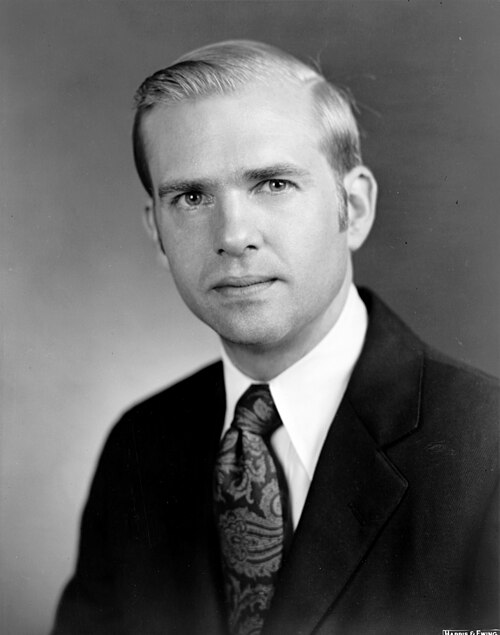
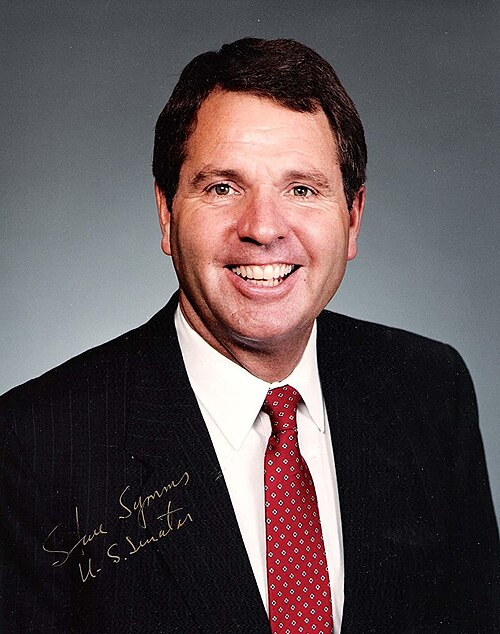
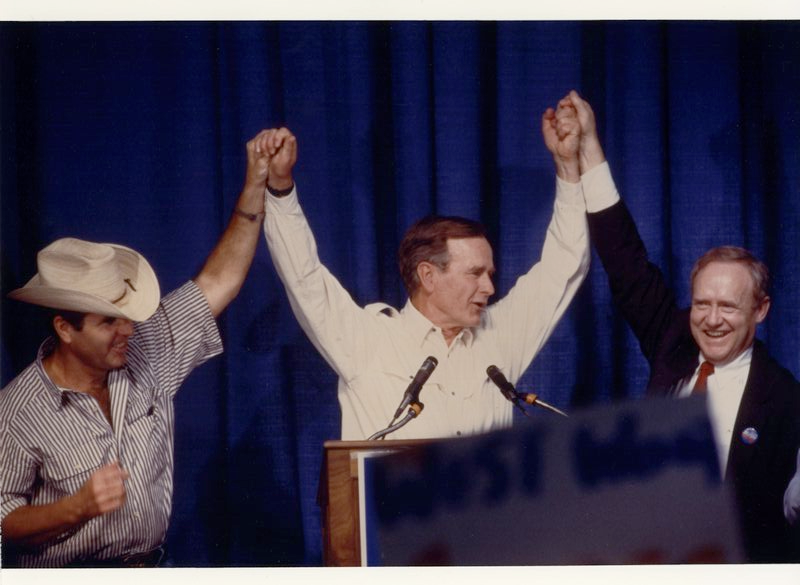
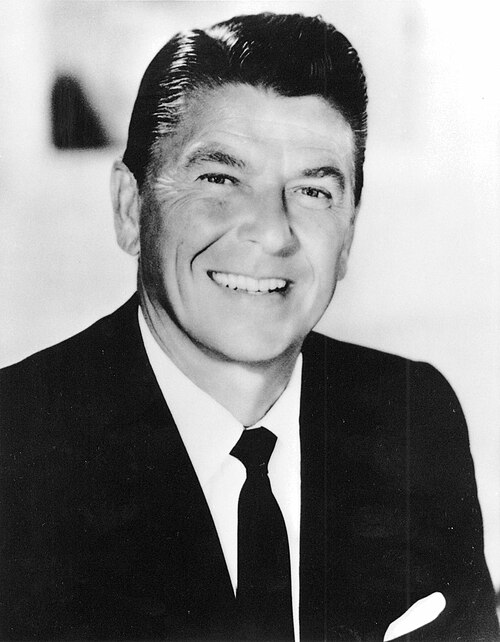
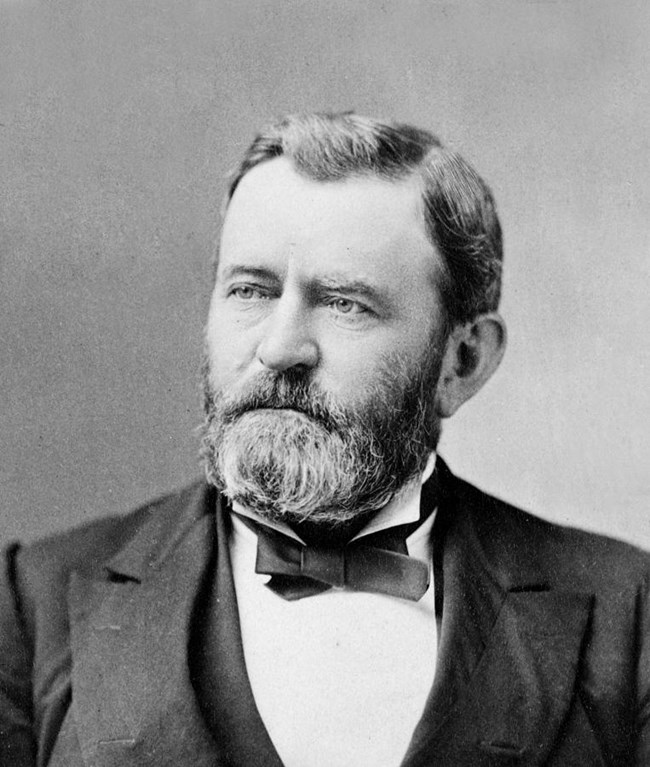
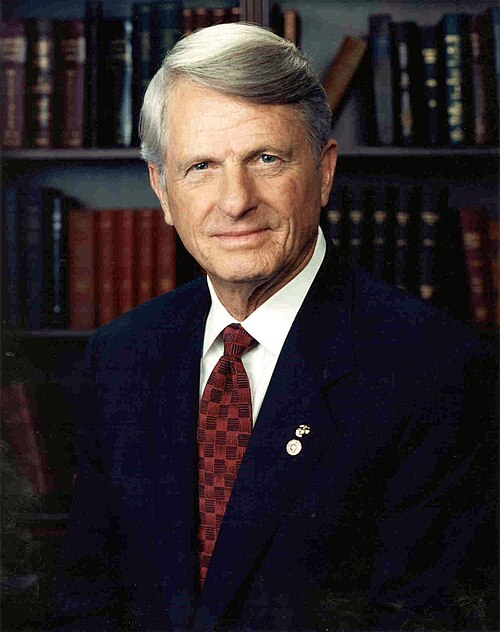
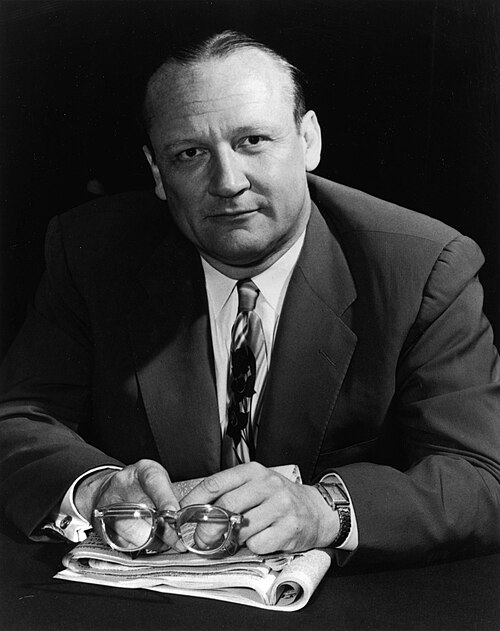
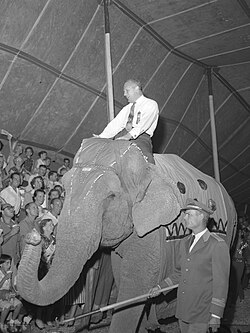
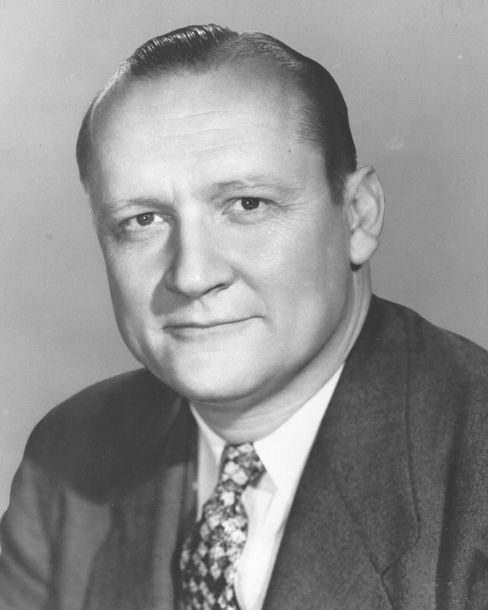
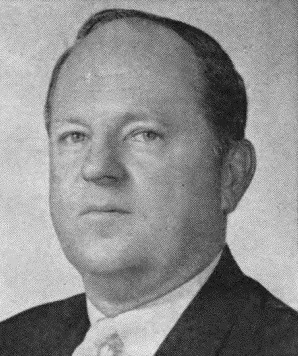
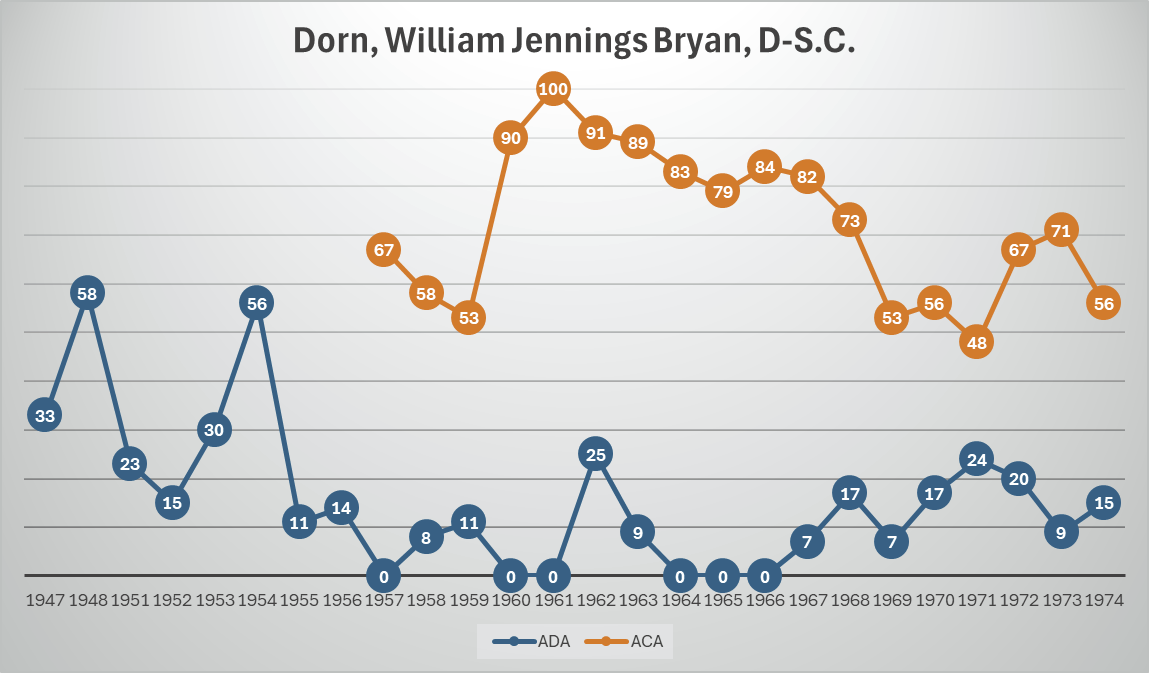
 Mad Politics: The Bizarre, Fascinating, and Unknown of American Political History