Where Did the South Stand Politically in the Civil Rights Era?

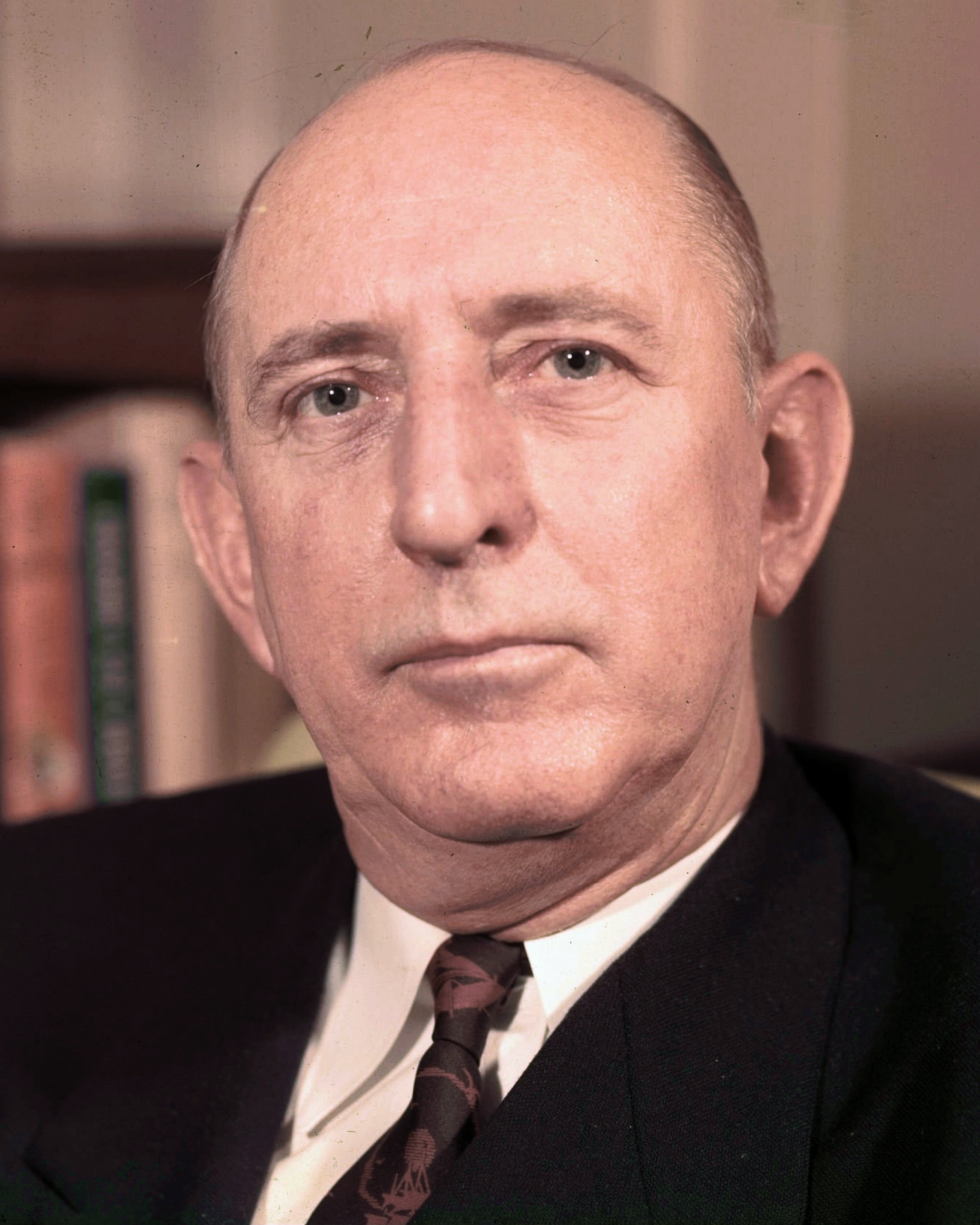
Richard Russell, the leader of the Southern Democratic faction of the Senate.

Southern Democrats occupy something of a debated space in their politics in the liberal/conservative range of things. Conservative Republicans don’t like the idea of them being connected to them and will argue that most didn’t switch to the GOP. There are some reasons for that that stand outside of ideology, such as figuring that they would do better sticking to their regional brand of Democratic politics, as many in the South still were in the habits of their fathers, grandfathers, and great-grandfathers in voting Democratic. This being said, the Southern Democrats as a group although were not the staunchest conservative group in the Senate (that would be the conservative wing of the Republican Party of the day), many were conservative enough to have an informal “Conservative Coalition” with Republicans to oppose many liberal policies. There were issue areas in which this coalition weakened…on the Southern Democratic side it was on agriculture and public power, and on the Republican side it was on civil rights and particularly during the Eisenhower Administration on foreign aid, to which Southern Democrats had become increasingly antagonistic.

Based on lifetime modified ACA scores (thus based on records from 1955-1984), this is how the Senate Southerners, who served during the Civil Rights Era (1954-1968) did on conservatism. I will be ranking them from least to most conservative:

Estes Kefauver (D-Tenn.) – 5%

Lowest score: 0% (1955, 1956, 1962, 1963)
Highest score: 11% (1957)

Kefauver in short: Kefauver, who I have written about before, was a liberal populist who was more amenable to civil rights than many Southern senators, indeed Tennessee had become a bit of a softer state on the subject, while it used to be that it was only Republicans in East Tennessee who would vote for civil rights. Kefauver’s biggest moments in the sun were his publicized investigations of the mafia and his vice-presidential run in 1956. He would play no role in the civil rights debates of the 1960s as he died before the Civil Rights Act of 1964 was debated.

Ross Bass, (D-Tenn.) – 7%

Lowest score(s): 0% (1961, 1962, 1963, 1964, 1966)
Highest score: 33% (1957)

Bass in short: Bass’s record here includes his time in the House and his time in the Senate during the Great Society Congress. He was in terms of his ideology a true successor of Estes Kefauver. However, Bass lost the 1966 Democratic primary to Frank Clement, who proceeded to lose to Republican Howard Baker Jr.

Ralph Yarborough (D-Tex.) – 8%

Lowest score: 0% (1962, 1967, 1970)
Highest score: 17% (1968)

Yarborough in short: Ralph Yarborough was Texas’ best-known champion of liberalism, backing strongly Democratic national programs. He even voted for the Civil Rights Act of 1964, the only senator from a former Confederate state to do so, and that year defeated his Republican challenger by the name of George H.W. Bush. The times in which Yarborough voted conservative per ACA included some foreign aid votes, and he did vote with LBJ on civil rights in 1957 and 1960. Yarborough’s liberalism became tiresome for Texans, and he lost renomination to moderate Lloyd Bentsen in 1970.

W. Kerr Scott (D-N.C.) – 10%

Lowest score: 0% (1958)
Highest score: 20% (1955)

Scott in short: W. Kerr Scott was a progressive Democrat on most matters save for the civil rights issue, certainly a New Dealer in spirit and deed. He died in office in 1958, resulting in his replacement with a much more conservative man who also went by his middle name: B. Everett Jordan.

Lyndon B. Johnson (D-Tex.) – 10%

Lowest score: 0% (1955)
Highest score: 22% (1957)

Johnson in short: As Senate Majority leader, Lyndon B. Johnson was a national figure, and was an especially talented leader, pulling off narrow victories, and he with great frequency backed liberal positions despite liberals mistrusting him and considering him something of a conservative. His presidency would put this mistrust (at least on domestic issues) to rest for liberals.

Walter George (D-Ga.) – 18%

Lowest score: 8% (1956)
Highest score: 40% (1955)

George in short: This period catches the very last years in Walter George’s long career, as he had served in the Senate since 1922. his low score here reflects a bit of a softening in his final years more towards where he stood at the beginning of his career. In the middle of his career, George had gained praise as a principled dissenter of much of what FDR stood for.

Albert Gore Sr. (D-Tenn.) – 21%

Lowest score: 0% (1962)
Highest score: 75% (1955)

Gore in short: The father of the much more known Al Gore, Gore Sr. was known as one of the most liberal of the Southerners in the Senate. This didn’t only manifest itself in support for much of the national Democratic agenda but also on his votes on some social issues, and one that was particularly politically damaging was his vote against Everett Dirksen’s school prayer amendment in 1966. Gore’s positions on the Vietnam War also didn’t do him favors in Tennessee, and he lost reelection to Republican William Brock in 1970.

Herbert S. Walters (D-Tenn.) – 24%

Lowest score: 7% (1963)
Highest score: 40% (1964)

Walters in short: Walters was an interim replacement after the death of Estes Kefauver. There really isn’t that much to say about him. However, ACA and ADA do strongly disagree on Walters’ ideology, so that’s of note.

J. William Fulbright (D-Ark.) – 25%

Lowest score: 4% (1963)
Highest score: 54% (1968)

Fulbright in short: The name Fulbright lives on the Fulbright Scholarship, and he was one of the strongest internationalists in the South. Undoubtedly one of the more liberal Southern Democrats, he could nonetheless, based on the ACA vote selection, stood for the conservative position 25% of the time. He both sponsored the Gulf of Tonkin Resolution and then turned against the Vietnam War as chairman of the Senate Foreign Relations Committee. Fulbright’s record on race (although he could at least vote to confirm Thurgood Marshall to the Supreme Court), his Faustian bargain for power if you will, ended up contributing to his renomination loss in 1974.

Olin Johnston (D-S.C.) – 30%

Lowest score: 19% (1963)
Highest score: 50% (1960)

Johnston in short: Olin Johnston had during the 1930s been a strong supporter of FDR, being the state’s New Deal governor. His bid against Senator “Cotton Ed” Smith fell short in 1938, but the second time was a charm as he won a rematch in 1944. Senator Johnston’s record consisted of a lot of domestic liberalism (he supported the Economic Opportunity Act of 1964 and Medicare) but he frequently voted against foreign aid. Indeed, Johnston had been one of the few Southern Democrats to vote against the Marshall Plan in 1948.

J. Lister Hill (D-Ala.) – 31%

Lowest score: 7% (1959)
Highest score: 54% (1967)

Hill in short: Lister Hill, who I wrote about quite recently, had had a longstanding reputation as a New Dealer and a Fair Dealer who specialized in public health. However, his state was moving quite to his right, and it was to the extent that he thought it best to retire in 1968.

John J. Sparkman, D-Ala. – 35%

Lowest score(s): 0% (1956, 1959)
Highest score(s): 75% (1970, 1972)

Sparkman in short: John Sparkman was much of the same New Deal class as Lister Hill, and was the last segregationist to be on a Democratic Party presidential ticket, being the candidate for vice president in 1952. Sparkman certainly moved to the right after 1962, although far from staunch conservative. By 1978, he had clearly stayed in office too long and bowed out of reelection.

George Smathers, D-Fla. – 38%

Lowest score: 18% (1962)
Highest score: 73% (1968)

Smathers in short: George Smathers was certainly a turn right from his predecessor, Claude Pepper. However, among the Southern Democrats of his time, he was certainly one of the more liberal. Although Smathers signed the Southern Manifesto, he proved more flexible than many others, voting for the Civil Rights Act of 1957 and the Constitutional amendment banning the poll tax. He even privately hoped the Civil Rights Act of 1964 would pass even though voting for it was politically impossible for him. Smathers was also a close friend of JFK and was one of two options to replace Lyndon Johnson had Kennedy lived to the 1964 election. Smathers chose not to run for reelection in 1968.

Russell Long (D-La.) – 42%

Lowest score: 10% (1966)
Highest score: 73% (1970)

Long in short: Long’s record seems to zig-zag a bit, with him strongly supporting President Johnson’s Great Society during the Great Society Congress, but he moves to the right towards the Nixon presidency. On civil rights, he seemed to have a fairly easy time adjusting to the changing South, and his name and influence far from hurt him. He also was one of the Democratic senators to support President Reagan’s tax reductions. Long would opt not to run for reelection in 1986.

Thomas Wofford (D-S.C.) – 44%

Wofford in short: Perhaps the least notable senator in this entire list, as he served in the interim after Strom Thurmond briefly resigned from the Senate, only to win again.

Fritz Hollings (D-S.C.) – 46%

Lowest score: 28% (1976)
Highest score: 71% (1967)

Hollings in short: Hollings was the last of these senators to leave office, retiring in 2004. Although Hollings started out as a bit of a conservative, he found his place as a moderate and stuck to that for a long time. He was also known for his outspoken and occasionally offensive remarks. Hollings was also known as the “Senator from Disney” for his advocacy for the company.

William B. Spong Jr. (D-Va.) – 49%

Lowest score: 38% (1971)
Highest score: 63% (1969)

Spong in short: Spong was a straight-up moderate, and he had been recruited by President Johnson in 1966 to run in the Democratic primary against A. Willis Robertson. Robertson had two things going against him: the Voting Rights Act of 1965, which had expanded the electorate, and his age. Spong defeated him, but only served a term until he was defeated in 1972 by Republican Congressman William Scott. Spong contributed a rather funny name when senators were trying to come up with ridiculous names for bills, that being the hypothetical legislation sponsored with Senators Hiram Fong (R-Haw.) and Russell Long (D-La.) protecting the copyrights of songwriters from Hong Kong, which would be titled the “Long-Fong-Spong-Hong-Kong-Song Bill”.

Price Daniel (D-Tex.) – 53%

Lowest score: 50% (1956)
Highest score: 60% (1955)

Daniel in short: Daniel made much more of an impact as governor after his Senate term. He seemed to be about where many Texans were politically at the time of his service in the Senate.

Allen Ellender (D-La.) – 57%

Lowest score: 31% (1956)
Highest score: 83% (1964)

Ellender in short: I wrote a lot about Allen Ellender recently, which you can read. He was kind of a hodgepodge of views liberal and conservative, although his later career trended more conservative than liberal. Also notably supported FDR’s court-packing plan in 1937. Ellender died in office in 1972.

B. Everett Jordan (D-N.C.) – 61%

Lowest score: 38% (1963)
Highest score: 80% (1969)

Jordan in short: Succeeding the late W. Kerr Scott, Jordan was miles more conservative than him, voting frequently with Sam Ervin. However, Jordan did show some independence from what was expected of Southern Democrats, such as his opposition to the Vietnam War later in his career. He lost renomination to Congressman Nick Galifianakis, who would proceed to lose the election to Republican Jesse Helms.

Herman Talmadge (D-Ga.) – 62%

Lowest score: 22% (1979)
Highest score: 83% (1970)

Talmadge in short: Herman Talmadge was elected to succeed Walter George in 1956, and was known as a hardliner on segregation. Although his reputation was quite right-wing, he was more variable than his reputation let on, such as voting for the Economic Opportunity Act in 1964 and Medicare in 1965. His finest hour in Washington was when he served on the Watergate Committee, which raised the profiles of most who served on it. However, his censure for ethics violations damaged his prospects and although efforts were made to rally black support for Talmadge in 1980, selling him was difficult and many blacks had negative connotations with the Talmadge name. He lost reelection to Republican Mack Mattingly.

Spessard Holland (D-Fla.) – 66%

Lowest score: 40% (1958)
Highest score: 94% (1961)

Holland in short: Holland was uniformly opposed to civil rights with the sole exception of his Constitutional amendment to ban the poll tax in 1962. He was one of the more oppositional senators to domestic liberalism, including voting against the Economic Opportunity Act of 1964 and against Medicare, unlike his fellow Floridian Smathers. Holland retired in 1970.

Sam Ervin (D-N.C.) – 69%

Lowest score: 31% (1956)
Highest score: 91% (1972)

Ervin in short: The trope originator for the “country lawyer”, Ervin by far had his greatest claim to fame as chairman of the Senate Watergate Committee, making him a hero among many Americans. Although perhaps the Senate’s most skilled legal opponent of civil rights legislation, he got points from liberals for his opposition to Everett Dirksen’s school prayer amendment as well as to “no knock” warrants for drug cases. However, such occasional liberal positions could serve to obscure his more conservative record in later years. Ervin retired from the Senate in 1974.

John C. Stennis (D-Miss.) – 69%

Lowest score: 37% (1983)
Highest score: 95% (1974)

Stennis in short: Stennis was a figure who was quite a bit more respected for his more legalistic approach than James Eastland’s on the subject of civil rights. He also was the author of the Senate’s first ethics code. Stennis was among the more conservative Southerners, but his record got a bit more moderate starting around the Carter Administration. Stennis managed to avoid a lot of trouble for his civil rights stances, something his colleague Eastland couldn’t end up living down. Stennis retired from the Senate in 1988, by which time he was 87 years old.

Donald Russell (D-S.C.) – 70%

Lowest score: 68% (1965)
Highest score: 71% (1966)

Russell in short: Donald Russell served during most of the Great Society Congress, and he wasn’t particularly notable as he filled in the vacancy caused by the death of Olin Johnston. He lost renomination to Fritz Hollings in 1966.

John McClellan (D-Ark.) – 72%

Lowest score: 38% (1956)
Highest score: 100% (1955)

McClellan in short: McClellan specialized in legislation combatting crime and racketeering and also famously chaired the McClellan Committee that investigated union corruption. He supported many measures (although not all proposals) limiting the power of organized labor. McClellan died in 1977, only a week after he publicly announced he would retire due to age and health.

James Eastland, D-Miss. – 73%

Lowest score: 43% (1957)
Highest score: 89% (1974)

Eastland in short: Among Southern senators, James Eastland was regarded as among the most racist of the group. Although not the worst major Mississippi politician on race during the Civil Rights Era (Governor Ross Barnett was worse), he became a face of Jim Crow. Eastland was certainly one of the more conservative of the Southern Democrats and was more willing to back proposals restricting organized labor than many were in the 1958 and 1959 debates on union reform. Once the political power of blacks in Mississippi’s Democratic Party was sufficiently developed, he opted not to seek another term in 1978.

Richard Russell, D-Ga. – 74%

Lowest score: 38% (1956)
Highest score(s): 100% (1955, 1960)

Russell in short: Richard Russell was the leader of the Southern bloc, and he was greatly admired by his Senate colleagues all-around. For instance, Republican Milton Young of North Dakota got in some hot water with his party in 1952 when he announced that if Russell won the Democratic nomination that he would support him for president. Russell was the lead tactician against civil rights legislation in the Senate. Although his earlier career reflected support for much of the New Deal, a lot of such politics had faded away by this period in history, with him opposing domestic liberal legislation frequently and opposing foreign aid. However, Russell did vote for the final version of Medicare in 1965. Russell’s heavy-smoking habit caused his 1971 death in office from emphysema.

Harry F. Byrd Jr., D, I-Va. – 86%

Lowest score: 69% (1980)
Highest score(s): 100% (1974, 1978)

Byrd Jr. in short: The son of Harry F. Byrd Sr. and his successor in the Senate, Byrd ultimately found given his strong conservatism and that Democrats would want him to pledge to support whoever the Democratic nominee for president would be in 1972, he instead ran for reelection as an Independent. Despite officially being an Independent, Byrd would continue to caucus with the Democrats until he opted to retire in 1982. He would be very much his father’s son, and this included being among the eight Senate “nay” votes to the Voting Rights Act extension in 1982, if perhaps a little more flexible.

William Blakley, D-Tex. – 86%

Blakley in short: William Blakley served briefly as an interim senator in 1957 after Price Daniel’s departure, and then again served in 1961 after Lyndon B. Johnson’s departure for the vice presidency. Blakley sought to finish LBJ’s term in 1961, but many liberal Democrats couldn’t stomach the solidly conservative Blakley and defected to Republican John Tower, who won.

A. Willis Robertson, D-Va. – 88%

Lowest score: 69% (1956)
Highest score(s): 100% (1955, 1957, 1961, 1962)

Robertson in short: Virginia’s delegation to Congress was among the most conservative, and possibly the most conservative of the whole South, and Willis Robertson was part of why. He was more fiscally conservative than most Southern Democrats, although even he doesn’t outmatch one of Virginia’s other senators. Robertson was also the father of televangelist Pat Robertson.

J. Strom Thurmond, D, R-S.C. – 91%

Lowest score: 25% (1956)
Highest score(s): 100% (1960, 1961, 1962, 1974, 1976)

Thurmond in short: In addition to being the candidate for president in 1948 on the State’s Rights Party (Dixiecrat) ticket, he also had the longest solo filibuster on a bill in history, when he spoke for 24 hours and 18 minutes against the Civil Rights Act of 1957. He also serves as a symbol for many: you might say he was the symbolic start of the long march of the South to the Republican Party when he switched in 1964. Thurmond was also known for his longevity, both in life and in office, serving until 2003, when he was 100.

Harry F. Byrd Sr., D-Va. – 93%

Lowest score: 81% (1958)
Highest score(s): 100% (1955, 1957, 1959, 1960, 1962)

Byrd in short: Harry F. Byrd, who had been Virginia’s governor in the 1920s and served in the Senate since 1933, had been one of the earliest Democrats to turn against FDR’s New Deal. His record on fiscal conservatism was pretty hard to beat and had a strong aversion to debt. Byrd also disagreed with Democrats on foreign aid and had even voted against both Greek-Turkish aid in 1947 and the Marshall Plan in 1948, a rarity for a Democrat. Byrd would maintain his power in Virginia through his machine as well as through his “golden silence”: he would not endorse a candidate for president. He also has some infamy for his push for “massive resistance” to desegregation, which lasted until 1959 but the effects of which lasted longer. Byrd would be strongly opposed to the New Frontier and Great Society. A brain tumor would force his retirement in 1965 and cause his death the next year. Per positions based on votes the ACA found to measure conservatism, Byrd is the foremost conservative among the Senate Democrats.

As you can see from this post, the range of Democrats varied a bit in the South, and although most would not be successes in today’s Democratic Party, many would perhaps be too moderate or liberal for today’s Republican Party.

Americans for Constitutional Action on the Senate in Eisenhower’s Second Term


I was finally able to determine the Senate criterion for Americans for Constitutional Action scores from 1955 to 1959. The book of the first release of that group’s scores is massive…the library I found it in had it in the oversized book section. The ratings of the Senate from 1955 to 1959 consist of 77 votes, and are broken down as follows:

1955 – 5 votes

1956 – 13 votes

1957 – 9 votes

1958 – 20 votes

1959 – 30 votes

I also have determined the Senate ACA-Index for 1960, which consists of 13 votes.

The Standout: John J. Williams of Delaware

The outstanding individual in the Senate by ACA standards for Eisenhower’s second term was Republican John J. Williams of Delaware. Although Arizona’s Barry Goldwater technically has a higher score by 1960, he pairs contrary to ACA’s position on three occasions – once in 1957 on cutting military aid, again in 1958 on Senator Douglas’s (D-Ill.) tax reduction amendment, and once again in 1959 on cutting military aid. Williams only does wrong twice by ACA standards in the Eisenhower era: voting against cutting military aid in 1957 and voting to approve a compulsory settlement international agreement in 1960.

Democratic Hero of Conservatism: Harry Byrd of Virginia

Of all the Democrats, Virginia’s Harry Byrd scores the highest. He had turned against the New Deal by 1935 and was a consistent vote and voice for fiscal conservatism. Many Republicans were big fans of Byrd for his conservatism, and Byrd’s record justifies it, at least among conservative Republicans.

The Big Zeroes: Hart and McNamara

Senators Phil Hart (D-Mich.) and Pat McNamara (D-Mich.) vote zero times with ACA’s position during Eisenhower’s second term. A major political force in the state in this time was Walter Reuther of United Auto Workers, who effectively advocated for unions to lobby for liberalism overall rather than just pro-union policies. His efforts also helped turn Michigan away from its historic Republicanism. McNamara only voted for the ACA position twice in his entire career!

“Tail Gunner Joe” Doesn’t Make the Cut

I have read the take that Senator Joseph McCarthy was not a hardline right-winger, rather a moderate Republican, and this perspective is bolstered by how he voted on the votes counted by ACA on his last years in office. However, something to bear in mind is that for 1956, four votes involve agriculture, and McCarthy takes the liberal position each time. His positions against ACA actually outnumber his ones for!

LBJ and JFK: Decidedly Liberal

Future presidents LBJ and JFK both vote a liberal line per ACA. This is despite liberals regarding LBJ as something of a conservative. The number of government programs, foreign aid, etc. that LBJ votes for, however, qualifies him as a liberal, even if there is the occasional time he frustrates liberal objectives as majority leader. John F. Kennedy’s voting in the 84th Congress qualifies him as only a moderate liberal, but his voting after that Congress gives him his celebrated liberal reputation. He only sides with the ACA on two votes after 1956: reducing appropriations for rivers and harbors projects in 1957, and voting against drydock subsidies in 1959.

Eisenhower: Moderately Conservative

President Eisenhower’s “score”, as he doesn’t cast votes rather has positions on votes, is a 72%, as he stands for the conservative position on 41 of 57 Senate roll calls in which he is recorded as having a position. The biggest complaints for conservatives on him are his stances in favor of foreign aid and his occasional support of a liberal domestic measure. His strong points are on fiscal conservatism on domestic issues; his vetoes are quite cost-conscious.

Mistakes

I found out that I, to my regret, made two mistakes in my counting of the House for Eisenhower’s second term in a previous post. In 1958, I included the Anti-Preemption bill, when the vote ACA actually counted was Rep. Kenneth Keating’s (R-N.Y.) motion to recommit. In 1959, also with the Anti-Preemption bill, ACA counted Rep. John Lindsay’s (R-N.Y.) motion to recommit instead of passage, which I thought was the vote counted. I will correct these errors soon.

The ACA-Index Basis for 84th to 86th Congresses:

I have tabulated scores on individual years:

Allen J. Ellender: The Blunt Bayou Stater


In 1928, a young and aggressive reformer won the Louisiana governorship in Huey Long. Although state legislator Allen Joseph Ellender (1890-1972) originally opposed Long’s rise, campaigning against him in 1924 and 1928, he got wise as he saw which way the wind was blowing both in Baton Rouge and among his constituents, and became a key ally (Bencel, 42-43). However, this wasn’t an easy relationship initially. In one instance, they had a nasty argument over the phone over Ellender voting against $150,000 to renovate the governor’s mansion, with Long swearing at him and Ellender threatening to slap Long if he did so in person (Bencel, 41). However, Long and Ellender would prove to have an effective working relationship, and they did have some things politically in common, including opposition to the traditional leadership of Louisiana. Ellender drafted the “Round Robin” statement that enough senators signed in 1929, which guaranteed the Senate wouldn’t vote for conviction in an impeachment trial (Alford). With Long’s support, Ellender was elected speaker of the Louisiana House in 1932.

Rise to the Senate

Ellender’s elevation to the Senate was attributable to two deaths. First, Huey Long succumbing to his assassination on September 10, 1935, and Governor Oscar K. Allen’s death on January 28, 1936. The path was clear for Ellender to run for the Senate. He had previously been denied nomination for governor because he had refused to back ethically questionable oil leases. Ellender as a senator was quite different from Huey Long towards Roosevelt, now that he was free of Long’s command. Long, although he supported some key aspects of the New Deal, often crossed swords with Roosevelt, both to his left and right. He reflected on Long, “Huey Long was personally ambitious and I saw in his feud with a president a means of advancing his own presidential ambitions. I always thought that Huey was subordinating the best interest of the state to his own ambitions” (Bencel, 74).

Staunch Ally of FDR

When Ellender first entered the Senate, he was one of the most loyal supporters of President Roosevelt, and this included being one of only twenty senators to vote to keep his “court packing plan” alive. His support of the court-packing plan can be explained by him wanting to win favor with the Roosevelt Administration (Bencel, 77). Ellender also supported the Wage and Hour bill in 1937, which numerous Southerners thought went too far on fair labor standards. Ellender also proved loyal on foreign policy matters, including backing the repeal of the arms embargo in 1939 and Lend-Lease in 1941. On civil rights, Ellender was predictably a strong foe, and fought against anti-lynching legislation. His stance on race is explained by his biographer thusly, “Ellender’s racism was essentially traditional, neither vindictive nor mean. A product of his times, he, like most white southerners, opposed granting more rights and privileges to blacks, whom he considered inferior. Like many segregationists, he professed to like blacks personally. He softened his stance somewhat by saying his real opposition was to intrusion by the federal government into the affairs of the state” (Bencel, 79). Despite his at times peppery and prejudiced takes, he was popular among his colleagues across the board, and his honesty, courtly manners, as well as his Cajun shrimp gumbo were certainly a part of it. He, like many other Southerners, would gradually grow more conservative, and this would increase during the Truman Administration.

Post-War Years

In 1946, Ellender led the defense for Senator Theodore Bilbo (D-Miss.) when the incoming Republicans sought to deny him seating for advocating the use of violence to stop blacks from voting, and managed to get Bilbo off on accusations of depriving qualified black voters the vote. One senator, however, Ellender did not defend was Wisconsin’s Republican demagogue Joseph McCarthy, holding “The fact that a man belonged to an organization that later turned semi-Red is no reason to charge him with being a Communist” (Bencel, 171).

Although Ellender backed the Marshall Plan and Greek-Turkish aid during the 80th Congress, he would become disillusioned with foreign aid starting in 1951, when he toured Europe for a fifth time. He found what he considered to be waste and extravagance, and only backed continued aid to Austria and West Germany (Bencel, 188). From then on, he voted against Mutual Security legislation. Following a 28-nation tour in 1957, Ellender condemned economic aid as having been an “abysmal failure” in all instances (Fried). That year, he voted against the establishment of the Development Loan Fund.

In other ways, Ellender was a flexible legislator, and indeed his support was key to the enactment of the 1949 Taft-Ellender-Wagner bill, providing for public housing. Taft represented the Republicans, Ellender the Southern Democrats, and Wagner the Northern Democrats. Ellender, as chairman of the Senate Agricultural Committee, was staunchly for retaining high price supports during the Eisenhower Administration, contrary to the push towards lower and flexible price supports by Eisenhower and Republicans, seeking more of a free market approach. On civil rights, Ellender found that the position of the South had weakened in the ability to stop such legislation since Brown v. Board of Education (1954) and recalled in 1971 that this ability was dealt a fatal blow with the admission of Alaska and Hawaii, which he had opposed (Cates).

Controversial Views on Developing Nations

Ellender was outspoken in his views on foreign policy, and he could be undiplomatically so when it came to developing nations. In 1956, he referred to South Koreans as no better than “bloodsuckers”, commented that a public market in Mogadishu, Somalia was “untidy”, called markets in Addis Ababa “filth”, and implied that the Nepalese were lazy (Time Magazine). In 1962, while visiting Morocco, he expressed his doubts that black Africans could self-govern. He proceeded to make numerous racist comments while touring Africa, including “Egypt hasn’t achieved anything great since the Pharaohs began practicing desegregation with their slaves”, “Ethiopia would have nothing if it weren’t for the Italians”, and “The average African is incapable of leadership except through the assistance of Europeans” (Time Magazine). The nations and their people that were targets of his undiplomatic remarks were not pleased. Ellender was barred from entering Uganda, Taganyika, and Ethiopia. However, one point Ellender would make, which he repeated in a 1971 interview that proved prescient was on the problems surrounding the concept of nationhood among Africans given the many differences among tribes (Cates). This continues to be a difficulty in the governance of African nations to this day.

Ellender and the 1960s Democratic Administrations

Senator Ellender tended to vote against budget cuts to existing programs, but would usually vote against new programs. On foreign policy, while proving an opponent of foreign aid as well as the Arms Control and Disarmament Agency, he did vote for the Partial Nuclear Test Ban Treaty in 1963. Ellender also opposed Republican efforts to block the sale of grain to the USSR and Hungary.

In 1964, Ellender participated in the filibuster of the Civil Rights Act, voted against tax reduction, voted against the Economic Opportunity Act, and voted against Senator Albert Gore’s (D-Tenn.) Medicare amendment. The following year, Ellender voted against the Appalachian Regional Development bill and the Voting Rights Act of 1965. He also opposed Medicare, but supported the Elementary and Secondary Education Act, the Housing and Urban Development Act, and rent subsidies. Ellender also supported both of Senator Dirksen’s proposed Constitutional amendments, on legislative reapportionment and school prayer. Despite his vote for the latter, Ellender was not a religious man. Although he professed a belief in God, he didn’t hold rigidly to Christian doctrines, did not attend church, and was turned off by extravagance in church ceremonies, especially in poor areas (Bencel, 150). Were Ellender alive today, he’d certainly feel a sense of revulsion towards megachurches. In contrast to his vote for the Wage and Hour bill in 1937, he voted against increasing the minimum wage in 1966. On civil rights, he regarded Brown vs. Board of Education as a tragedy and lamented that many blacks seemed to hate the South (Cates).

Later in his life, Ellender became receptive to warming relations with the USSR. As George McGovern recalled while the two were at the Senate gym getting a massage, Ellender told him, “George, when I die I want you to take up my mission of convincing the Senate and the country that the Russians are not ogres out to destroy us and that we should seek better relations with the Soviet Union” (Fried). He was largely supportive of President Nixon and although he had become vocally critical of the Vietnam War, he felt bound to support the president in a war situation, and this included him voting against the Cooper-Church (no more funds for operations in Cambodia) and McGovern-Hatfield (timetable for withdrawal from Vietnam) amendments in 1970. In 1971, Ellender became chairman of the powerful Senate Appropriations Committee. Despite being 81 years old in 1972, Ellender wanted to run for renomination, and he was making a go at it. Despite his mind and spirit being into having another term in the Senate, his heart was not, and he died on July 27th at Bethesda Naval Hospital of a heart attack. Ellender is a complex figure whose perspective, although overall turned more towards conservatism than liberalism in his last two decades in office, was a man who on numerous questions was not rigid, and in some categories such as housing was quite supportive of the liberal position. Ellender’s DW-Nominate score was a -0.089, which is rather high for a Democrat. His Americans for Democratic Action scores in by the 1950s and 1960s were showing a consistent conservatism, while his Americans for Constitutional Action scores showed him to be more of a moderate who leans conservative.

References

Alford, J. (2009, November 1). Ellender maintains stature in U.S. Senate history. Houma Today.

Retrieved from

Ellender maintains stature in U.S. Senate history (houmatoday.com)

Americans Abroad: Travel Is So Narrowing. (1962, December 14). Time Magazine.

Retrieved from

https://time.com/archive/6810575/americans-abroad-travel-is-so-narrowing/

Bencel, T.A. (1995). Senator Allen Ellender of Louisiana: a biography. Baton Rouge, LA: Louisiana State University Press.

Cates, H. (1971, April 30). Allen Ellender [Interview], Richard B. Russell Jr. Oral History Project.

Retrieved from

Allen Ellender, Richard B. Russell Jr. Oral History Project – University of Georgia Kaltura (uga.edu)

Ellender, Allen Joseph. Voteview.

Retrieved from

Voteview | Sen. ELLENDER, Allen Joseph (Democrat, LA): Sen. ELLENDER is more liberal than 50% of the 92nd Senate, and more conservative than 88% of Democrats

Fried, J.P. (1972, July 28). Allen J. Ellender Dies. The New York Times.

Retrieved from

ALLEN J.ELLENDER OF LOUISIANA DIES – The New York Times (nytimes.com)

Lister Hill: Old-Time Deep South Progressive


There are certain legislators who I regard as “links” in political eras given their longevity of service. One big example of this I have noted in the past is Joe Cannon, who served in Congress from 1873 to 1923 with only two interruptions in his service. Another is Carl Hayden, who represented Arizona in Washington first as a representative and then as a senator from the timespan of 1912 to 1969. One such figure for the Deep South is Joseph Lister Hill (1894-1984), who served in the House from 1923 to 1938, and then the Senate from 1938 to 1969.


Hill was the son of prominent surgeon Dr. Luther Hill, who had been a pupil of the famous and revolutionary British surgeon, Dr. Joseph Lister. This would prove a most fitting name for him. Although Hill initially was going to follow in his father’s footsteps in medicine, he decided against it after he became nauseous to the point of having to leave the room watching his father operate (Bennett). Instead, Hill chose the legal profession, and would serve in World War I. He was well positioned for politics as his family, per Hill himself, “pretty well ran city politics in Montgomery” (Bennett). In 1923, Montgomery’s representative, John R. Tyson, died in office, and Hill succeeded him.

Hill vs. Coolidge & Hoover

Congressman Hill was a frequent opponent of the policies of Presidents Calvin Coolidge and Herbert Hoover. He supported veterans bonus legislation, supported the Howell-Barkley bill which would essentially result in closed shop for railroad workers as only unions would be representing workers on the proposed national adjustment boards to mediate labor disputes, and supported public ownership of power generation. Hill also opposed tariff increases as was expected of most Southern Democrats. During the Great Depression, he backed public works spending for the purposes of creating employment, supported government aid to agriculture, supported veterans bonus legislation, and supported a few measures to curb government expenditures.

Hill & FDR: Best Buds

During the Roosevelt Administration, Hill was a staunch supporter of the New Deal, and this continued throughout FDR’s presidency even as some Alabama politicians had second thoughts. The only New Deal measure of significance he voted against during FDR’s first term was the Guffey Coal Act in 1935, which conservatives condemned as a step towards socialism and many Southerners considered harmful to the region’s economy. As the chairman of the Military Affairs Committee, he wrote the bill creating the Tennessee Valley Authority and was among its foremost advocates throughout his career. In 1937, Hill was one of only a few Southerners in the House to support the Wage and Hours bill (for a minimum wage), which was killed in one of the first victories of a forming conservative coalition (the Fair Labor Standards Act would be passed the next year). That year, Senator Hugo Black resigned his seat as he was confirmed to the Supreme Court, and in the election to succeed him Congressman Hill faced off against former Senator Tom Heflin. Heflin ran to Hill’s right in opposition to the Wage and Hours bill and charged him with being soft on communism. However, Heflin’s age of 68 (of which he fully seemed) as well as his history of, as Time Magazine put it, “loud and bigoted clownishness”, proved too much of a liability for his return against the young (44) Lister Hill. Hill won the primary by 40,000 votes. Heflin was, contrary to his reputation, graceful in defeat, stating per his secretary, “The Lord takes care of His children and there are other things to be thankful for” (Time Magazine). Alabamians were ready for a new face in the Senate.

Senator Hill


Hill’s loyalty to FDR and the New Deal managed to land him a plum place in the 1940 Democratic National Convention, officially placing FDR’s name for nomination for a third term, however his accent was widely mocked by FDR’s opponents (Hill). He was staunchly supportive of FDR’s foreign policy, backing the 1939 repeal of the arms embargo, supporting the peacetime draft, and endorsing Lend Lease. Hill became so well regarded among his Democratic colleagues that he was elected majority whip in 1941. Although he was more supportive of Roosevelt than many Southern Democrats on domestic policy during World War II, he nonetheless supported the Smith-Connally Act in 1943 to stop wartime strikes over his veto. Hill would also buck FDR on solider voting, supporting states having control over the federal government of soldier voting, as well as oppose him on the extent of price control regarding commodities produced by Southern states.

During the Truman Administration, Hill would prove one of the most supportive of Southern Democrats. In 1947 and 1948, his Americans for Democratic Action scores were 100% as minority whip, just like they were for Minority Leader Alben Barkley of Kentucky. This included voting to sustain President Truman’s vetoes of income tax reduction and most notably of the Taft-Hartley Act, a measure to limit the recent substantial power of labor unions that got overwhelming support in the South. It was in the 80th Congress that we see Hill paired with his colleague, John Sparkman. These men were loyalists to the national Democratic Party and New Deal principles, and even though their state had voted for the Dixiecrats in 1948, they stuck with Truman. Truman’s embrace of a civil rights program and Alabama’s 1948 defection had a consequence for Hill, in that he recognized that he would not be able to serve as whip under a national Democratic Party that officially endorsed civil rights, and stepped down from leadership.

Alabama’s Democratic Party was by the 1940s divided between its conservative and liberal wings. Although federally they all, with the sole exception of Luther Patrick of Birmingham, voted the same on civil rights. However, until 1964 there was this divide that existed and, in the Senate, Hill and his colleague Sparkman were representative of those in Alabama who had opted to stay loyal to President Truman in the 1948 election instead of bolt to the State’s Rights (Dixiecrat) ticket of Strom Thurmond. Alabama had for some time been considered the most liberal state of the South due to its significant liberal presence in Hill and Sparkman in the Senate, as well as Albert Rains, Carl Elliott, Kenneth Roberts, George Huddleston Jr., and Robert Jones in the House. However, the liberalism of these legislators would be tested as younger liberals were increasingly favorable to causes that were not well received in the white South, most notably civil rights.

The Hill-Burton Act

Hill’s most notable achievement in the Senate was the Hill-Burton Act of 1946, which he sponsored with Harold Burton (R-Ohio). This law dramatically expanded the construction of hospitals in the South, and proved revolutionary in public health for Southern blacks as hospitals that received funding under the act were not allowed to deny admittance based on race, although segregation was still permitted. Southern blacks did, however, get a lot of medical attention that they previously had often been denied. However, the Hill-Burton Act had the unanticipated consequence of resulting in overbuilding hospitals in the South and not building enough in Northern urban areas. Although the law’s admission requirements for hospitals constructed under such funds remain, the law no longer provides funds as of 1997 (Health Resources & Services Administration).

Hill vs. Eisenhower

Lister Hill was in many respects an opponent of President Eisenhower. He frequently opposed him in the ways in which he was conservative, including efforts to enact free market reforms to agriculture, reduce funds for the Hill-Burton Act, and to limit the Tennessee Valley Authority. Hill also opposed him on his support for a strong civil rights bill in 1957. However, Lister Hill was supportive of President Eisenhower’s internationalism as he had been for President Truman.

Hill and Relations with Kennedy and Johnson

The 1960s would prove complicated for Senator Lister Hill regarding the politics of the national Democratic Party. Although he was supportive of John F. Kennedy’s New Frontier by and large, he voted against Medicare in 1962, as he had in 1960. Hill’s support of Kennedy would be taxing for him politically, as many Southern whites were coming to despise Kennedy for his stances on civil rights, and this was not helped for him when on September 27, 1962, President Kennedy sent 30,000 federal troops to quell the Ole Miss riot against the admission of James Meredith to the University of Mississippi.

The 1962 Midterms: The Beginning of the End of the New Deal Coalition

There were already signs of trouble in Alabama for support of the national Democrats in 1960, since the result was complicated, as five of the state’s electors voted for Kennedy and six of the state’s “uncommitted” electors voted for Virginia Senator Harry Byrd on a segregationist line. Its neighbor, Mississippi, had outright voted for Byrd.

The 1962 election seemed to have a major impact on Alabama Democrats, as this was the election in which the anti-Kennedy and militantly segregationist George Wallace was elected governor. Senators Hill and Sparkman had been keen to support most of Kennedy’s initiatives as they had FDR’s New Deal and Harry S. Truman’s Fair Deal. Hill himself had a very close call in this election as Republican James Martin, a young (for politics) and telegenic figure who ran on an anti-Kennedy platform and charged Hill with not doing enough to stop civil rights measures, came within two points of victory on an anti-Kennedy platform. By contrast, in 1956 he had easily won renomination with 68% of the vote against the extremely bigoted Rear Admiral John G. Crommelin (who would later serve on the advisory board of Willis Carto’s white supremacist group National Youth Alliance) and unanimously won reelection. Hill may have only been saved by the resolution of the Cuban Missile Crisis. The 1962 midterms would also be a portend of what would happen in 1964: Alabama’s House delegation would go from 8-0 Democrat to 5-3 Republican.

Ideology of the Later Years

Hill did not figure favorably with conservatives. In 1960, Americans for Constitutional Action rated him a 15% based on 77 votes cast from 1955 to 1959. However, by the 1960s, neither Americans for Constitutional Action or Americans for Democratic Action were happy with Hill’s record. Although Hill had previously scored 100% in 1947, 1948, and 1951 from ADA, their political emphases had shifted, and the strongly civil rights and urban direction of their emphasis was not in the direction of Alabama’s white voters.

Hill had, like with Sparkman, moved right after the 1962 midterms that saw the rise of George Wallace. In 1964, Hill as well as Sparkman vote against the Economic Opportunity Act, votes they likely wouldn’t have cast had it been proposed during the Truman Administration when Alabama voters would have been more motivated by their progressive economic stances. They both did, however, vote for programs such as the Appalachian Regional Development Act, the Elementary and Secondary Education Act, and Medicare in 1965. While it is undoubtedly true that Hill moved rightward, some proposals were present in the 1960s that simply weren’t in the days in which Americans for Democratic Action gave him 100%. For example, Warren Court decisions on civil rights and other issues had not been issued yet. Hill voted for both of Minority Leader Everett Dirksen’s (R-Ill.) proposed constitutional amendments in the Great Society Congress; to allow legislative reapportionment in one state legislative house not to be based on population alone and for school prayer. He would also, for reasons that were more political than anything else, oppose every civil rights measure. To do otherwise in his time and place would have been career suicide, the best he could do was not be a race-baiter, which he regarded as beneath him (Hill). For 1960s liberals, Hill was out of date, and for conservatives, Hill was not conservative enough. Per Americans for Constitutional Action’s standards, Hill was from 1964 to 1968 a moderate, while by Americans for Democratic Action standards, he had become a staunch conservative. By DW-Nominate, Hill scores a -0.265 based on his entire career in Congress. The New York Times reflected on Hill as “trapped by the racial history of [his] region . . . who [nevertheless] dared to be progressive on every issue except civil rights” (Hamilton).  

In 1968, Hill at 74 opted not to run for reelection. Although still in good enough health to have gone for another term, the political winds were moving against him, and he faced the possibility of a difficult primary with the challenger being James B. Allen, Alabama’s conservative lieutenant governor. Allen would indeed succeed Hill. Hill would outlive his considerably younger successor in office and died on December 20, 1984, less than two weeks short of his 90th birthday.

References

Bennett, T. (1984, December 21). Former U.S. Senator Lister Hill from Alabama Dead at 89. The Atlanta Journal, 13.

Retrieved from

Dec 21, 1984, page 13 – The Atlanta Journal at Newspapers.com

Hamilton, V. (2007, March 13). Lister Hill. Encyclopedia of Alabama.

Retrieved from

Lister Hill – Encyclopedia of Alabama

Hill-Burton Free and Reduced-Cost Healthcare. Health Resources & Services Administration.

Retrieved from

Hill-Burton Free and Reduced-Cost Health Care | HRSA

Hill, Joseph Lister. Voteview.

Retrieved from

Voteview | Sen. HILL, Joseph Lister (Democrat, AL): Sen. HILL is more liberal than 61% of the 90th Senate, and more conservative than 61% of Democrats

Hill, R. Alabama Liberal: Lister Hill. The Knoxville Focus.

Retrieved from

Alabama Liberal: Lister Hill | The Knoxville Focus (knoxfocus.com)

The Congress: Victory & Defeat. (1938, January 17). Time Magazine.

Retrieved from

THE CONGRESS: Victory & Defeat | TIME

The Peacemaker Disaster: The Event That Almost Killed the President, Killed Two Cabinet Officers, and Resulted in a Marriage

John Tyler

John Tyler is one of America’s forgotten presidents, a group I have covered before. If remembered, he is remembered as the Tyler in “Tippecanoe and Tyler too” in the 1840 presidential campaign, as the “accidental president” after President Harrison’s death, as well as for being the only former president to join the Confederacy. Also significant about him was his veto of his own party’s effort to reconstitute the Second Bank of the United States, something the Whig Party should have anticipated about him given his support for Jackson’s veto of renewing the charter of the Second Bank as a senator. However, there was a tremendous event, not remembered much today, that occurred during Tyler’s presidency that was a near miss for him but killed six people, including several members of his administration.

Captain Robert F. Stockton

February 28, 1844, was supposed to be a day of celebration, and indeed for a time it was, for it was a cruise on the USS Princeton, a massive warship that had two massive guns on it, the Oregon and the Peacemaker. In attendance included President Tyler, several members of his cabinet, Colonel David Gardiner and his daughter Julia, and Dolley Madison among many others. This vessel and its weaponry were proudly designed by its Captain Robert F. Stockton and the Swedish inventor John Ericsson, the latter who was not present on this day. Unknown to the guests on board was that Captain Stockton and Ericsson previously had argued over whether the Peacemaker was safe to fire (Baycora). The Peacemaker, unlike the Oregon, had not been tested. Furthermore, at the time, the Peacemaker was the largest naval cannon in the world at over 27,000 pounds (Baycora, Blackman). With the first shot fired that day, all was well, with the Peacemaker impressing onlookers with its mighty boom. The second shot also was a crowd pleaser, and the band played “Hail to the Chief” as the ship passed Mount Vernon (Blackman). It looked like perhaps Ericcson’s concerns had been overwrought. At roughly 3 PM most of the women went below deck for a fancy lunch, and Secretary of State Abel Upshur joked upon accidentally picking up an empty bottle of champagne for toasting the president, that the “dead bodies” must be cleared away before he could start, with Captain Stockton while handing Upshur a full bottle adding “There are plenty of living bodies to replace the dead ones” (Blackman).

Initially, the cannon was only to be fired twice, but word got to Stockton that a guest had asked for a third firing to honor George Washington. This guest turned out to be Secretary of the Navy Thomas Gilmer, and Stockton interpreted this as an order, so he proceeded (Blackman). Although urged to go outside to witness the third firing, Tyler delayed descending up to the deck. This decision may have saved his life. When Stockton fired a third time as Tyler was halfway up, the left side of the cannon exploded, propelling fiery iron and shrapnel.

An illustration of the Peacemaker disaster published shortly after.

Six people were killed, among them Upshur and Gilmer, as well as Beverly Kinnon, construction chief of the navy, American envoy to Belgium Virgil Maxcy, Colonel David Gardiner, and Tyler’s enslaved valet, Armistead. It was a grisly scene: Upshur had his arms and legs broken and his bowels torn out, Gilmer was decapitated by metal from the gun, Maxcy’s arm flew off and hit a lady on the head, Colonel Gardner’s arms and legs were blown off, and Armistead died ten minutes after being hit by a piece of the gun (Blackman). Many more were injured. This included Captain Stockton, who suffered severe facial powder burns and was inconsolable at the gruesome scene before him, and Missouri Senator Thomas Hart Benton, who was knocked down and suffered a concussion (Blackman). Dolley Madison, at the time 76, did her best to assist the wounded and the traumatized. Despite her composure in the face of tragedy, the event deeply impacted her. As her niece recalled, “She came in quietly, with her usual grace, spoke scarcely a word – smiled benignly – but those who knew her perceived her faltering voice and inability to stand without support. Of the horrible scene she dared not trust herself to speak, nor did she ever hear it referred to without a shudder” (Baycora). Gardiner’s daughter, Julia, who President Tyler had been seeing, fainted on hearing of her father’s death. President Tyler, who himself had wept at the sight of Upshur and Gilmer, carried her off the ship.

Julia Gardiner Tyler, who was 30 years younger than her husband!

Although Gardiner had been hesitant about marrying the much older Tyler, in the aftermath of this traumatic event she found she could be interested in no other man. As she wrote, “After I lost my father, I felt differently toward the president. He seemed to fill the place and to be more agreeable in every way than any younger man ever was or could be” (Thomas). Tyler and Gardiner married only months later. President Tyler in his writings explicitly blamed no one for this event, and Stockton would later briefly represent New Jersey in the Senate. However, one man may have blamed himself. Commodore William M. Crane, who supervised the construction of the USS Princeton and had disapproved of the Peacemaker, slit his own throat in his office on March 18, 1846, with his family attributing his brooding over the disaster as a cause (Prabook).

References

Baycora, F. (2021, March 4). The USS Princeton and the Disaster You’ve Never Heard Of. Historic America.

Retrieved from

The USS Princeton and the Disaster You’ve Never Heard Of — Historic America

Blackman, A. (2005, October). Fatal Cruise of the Princeton.  Naval History, 19(5).

Retrieved from

Fatal Cruise of the Princeton | Naval History Magazine – October 2005 Volume 19, Number 5 (usni.org)

Carrigan, C. (2023, February 24). A “Terrible Catastrophe”: The February 1844 Naval Gun Explosion that Almost Killed a President. Naval History and Heritage Command.

Retrieved from

A “Terrible Catastrophe”: The February 1844 Naval Gun Explosion that Almost Killed a President > The Sextant > Article View (dodlive.mil)

Thomas, H. (2024, February 13). How Tragedy Led to Love for John Tyler and Julia Gardiner. Library of Congress.

Retrieved from

https://blogs.loc.gov/headlinesandheroes/2024/02/how-tragedy-led-to-love-for-john-tyler-and-julia-gardiner

William Montgomery Crane. Prabook.

Retrieved from

William Crane (February 1, 1784 — March 18, 1846), American naval officer | World Biographical Encyclopedia (prabook.com)

Oklahoma’s Last Liberal Senator: Fred Harris


On New Year’s Day 1963, a powerhouse in Oklahoma politics and one of the chief advocates for the oil industry, Senator Robert S. Kerr, dropped dead. Although a Democrat, Kerr was not particularly liked by liberals for his aforementioned staunch support of the oil industry as well as his opposition to Medicare. In his place Governor J. Howard Edmondson, who had departed office beforehand, was appointed by his successor, George Nigh. Despite Edmondson’s background as governor and his ideological orientation being a better fit for the state of Oklahoma, in 1964 he was defeated for the nomination to complete Kerr’s term by Fred Harris (1930- ), a state senator who had previously run for the Democratic nomination for governor in 1962. Harris very narrowly won a full term against Republican and celebrated football coach Bud Wilkinson 51-49%. Wilkinson was one of those candidates who would have likely won had Barry Goldwater not been at the top of the Republican ticket.

The Great Society Congress

As a senator, Harris proved a liberal in most respects, his liberalism stemming from his background as the son of poor pro-New Deal Oklahoma sharecroppers (Linnett). With the peculiar exception of Medicare, he supported Great Society legislation. His predecessor, Edmondson, had also opposed Senator Albert Gore’s (D-Tenn.) Medicare proposal in 1964. Harris’ liberalism on the issue of civil rights was particularly clear when he supported Senator Ted Kennedy’s (D-Mass.) state poll tax ban amendment to the Voting Rights Act of 1965, which was opposed by President Johnson. He particularly specialized in rural issues and since Oklahoma has a large Indian population, on Indian affairs. Harris, contrary to the wishes of his constituents, voted against the Dirksen School Prayer Amendment in 1966. Harris said of his vote in a letter mailed out to 20% of voters, “I believe in the separation of church and state and I believe prayer and Bible reading should be voluntary” (Lowitt). He did, however, support Senator Dirksen’s (R-Ill.) other effort at amending the Constitution during the Great Society Congress, an amendment which would permit state legislatures to have one of their houses be based on factors other than population in response to Supreme Court “one man, one vote” decisions Baker v. Carr (1962) and Reynolds v. Sims (1964). Whatever bouts of fiscal conservatism he had gave way to strong liberalism after winning a full term in 1966. His reelection along with his liberalism on civil rights led to his appointment by President Johnson to the Kerner Commission in response to urban riots.

The Kerner Commission

The Kerner Commission was comprised of a diverse group of people, but it was Harris and Mayor John Lindsay of New York City who took the reins and were primarily responsible for the conclusion reached. Namely, that society was moving in an increasingly de facto segregated direction, and that extensive federal action and spending would be required to remedy the situation. President Johnson, having enough on his plate already, rejected the Commission’s conclusion and recommendations as did conservatives, who already thought the country was spending too much money. Harris’ work as a senator as well as on the commission got him positive attention including a particularly prominent one in Vice President Hubert Humphrey.

VP Harris?

In 1968, Hubert Humphrey was mulling over who to pick for vice president, and two names were foremost in his mind: Harris and Senator Ed Muskie of Maine. However, Harris was quite a young man to be selected vice president, being only 37 at the time of consideration. Humphrey ultimately at the last minute decided on Muskie, with age being the deciding factor. Harris instead was made a co-manager of Humphrey’s campaign as well as being placed at the head of the Democratic National Committee, a post he held until early 1970.

Strong Opponent of Nixon

When it came to President Nixon’s critics, it was difficult to find a stronger one than Senator Fred Harris. Harris had become a critic of the Vietnam War during the Johnson Administration, and in 1970 he voted for both the Cooper-Church Amendment and the McGovern-Hatfield “End the War” Amendment, the latter the first time a timetable was voted on by the Senate for withdrawing from Vietnam. Harris not only opposed Nixon’s picks of Clement Haynsworth Jr. of South Carolina and G. Harrold Carswell of Florida for the Supreme Court, but was also the only senator to vote against the nomination of Virginian Lewis F. Powell Jr. to the Supreme Court. Harris also exhibited some old-fashioned progressivism in his call to abolish the Interstate Commerce Commission (Walker). A traditionally conservative way of doing things in government is to establish regulatory commissions and place people friendly to industries in them. Harris regarded his philosophy as “new populism”, which he defined as “a fair distribution of wealth, income and power should be the specific goal of the country” (Linnett). This hearkens back to the old Populist Party of the 1890s as well as traditional progressive thought in the Democratic Party. In 1971, Harris wrote Now Is the Time, in which he encouraged numerous groups, including Black Power activists, college students, suburban housewives, and “rednecks” to join forces to politically combat socioeconomic privilege (Linnett). That year, he announced his bid for president but was unable to collect sufficient contributions to be a major contender for the Democratic nomination. Opting not to run for reelection, he was succeeded in office in 1972 by Governor Dewey Bartlett, a Republican who was pretty much the reverse of Harris. Harris to this day is the last liberal to represent the Sooner State in the Senate. Although Democrat Dave Boren would be elected to the Senate in 1978, he was a moderate. Harris’ DW-Nominate score was a -0.4, his adjusted Americans for Constitutional Action (ACA) score an 8%, and his adjusted Americans for Democratic Action (ADA) score an 84%. The main difference between the latter two organizations interpretations of Harris is that ACA tracks Harris’ strong move to the left earlier than ADA’s, but both agree that in his first year in the Senate he was a moderate liberal.

The 1976 Election and Retirement from Electoral Politics

Fred Harris was an undercard contender for the Democratic nomination for president in 1976, a favorite son if you will. He ran on his “new populism” platform, declaring the chief issue of the election to be privilege, railing against the concentration of wealth, and calling for “a widespread diffusion of economic and political power” (Mohr). His campaign slogans included, “Take the rich off welfare” and “The issue is privilege” (Linnett). Although he came in third in the Iowa caucuses, this didn’t translate into traction and his funds soon ran dry, forcing his exit from the race. He retired from electoral politics and entered academia, moving to New Mexico and serving as a professor of political science at the University of New Mexico. However, Harris has since been active in the New Mexico Democratic Party and attended Democratic National Conventions.

Unlike most of the people I write about, as of writing Harris is still alive at 93, and he’s if anything as liberal as ever. He has completely opposed the rise of Donald Trump in politics, stating in 2016 that “It really pisses me off when they talk about populists being racists, and calling George Wallace and Donald Trump populists. Trump populism is really just demagoguery. It’s not my kind of populism” (Linnett). Harris felt and still feels that he relates to the sort of person who supports Trump. He stated his view that Hillary Clinton’s “basket of deplorables” comment about half of Trump supporters was a major mistake, holding that “We know these people! They want someone to pay attention to them. They’re asking us, ‘What about me? Why don’t some of you talk to me about my life? I’m paying too much in taxes and not getting anything out of it” (Linnett).

References

ADA Voting Records. Americans for Democratic Action.

Retrieved from

Harris, Fred Roy. Voteview.

Retrieved from

Voteview | Sen. HARRIS, Fred Roy (Democrat, OK): Sen. HARRIS is more liberal than 88% of the 92nd Senate, and more liberal than 79% of Democrats

Linnett, R. (2016, December 31). What the ‘Godfather of Populism’ Thinks of Donald Trump. Politico.

Retrieved from

What the ‘Godfather of Populism’ Thinks of Donald Trump – POLITICO Magazine

Lowitt, R. Harris, Fred Roy. The Encyclopedia of Oklahoma History and Culture.

Retrieved from

https://www.okhistory.org/publications/enc/entry?entry=HA033

Mohr, C. (1976, April 9). Harris Quits Active Role In Presidential Campaign. The New York Times.

Retrieved from

Harris Quits Active Role In Presidential Campaign – The New York Times (nytimes.com)

Walker, J. (2009, November 1). Five Face of Jerry Brown. The American Conservative.

Retrieved from

Five Faces of Jerry Brown – The American Conservative

How They Voted: The Economic Opportunity Act of 1964 (War on Poverty)


Sargent Shriver, director of the Office of Economic Opportunity.

Sixty years ago, August 20, 1964, the Economic Opportunity Act of 1964, the flagship law of President Lyndon B. Johnson’s “War on Poverty” came into effect. Although the New Deal had worked to alleviate poverty during the Great Depression, it had not constituted a consistent federal commitment to alleviating the roots of poverty. The focus on poverty was renewed with a best-selling book by Democratic Socialists of America founder Michael Harrington, The Other America (1962), in which he argued that the American poverty rate was much higher than was widely believed at the time. President Kennedy became aware of this book and rest assured, had he lived, he too would have pursued anti-poverty legislation. This legislation came in the form of the Economic Opportunity Act, sponsored by Senator Pat McNamara (D-Mich.), an ultra-liberal who was a champion of Walter Reuther and his United Auto Workers. In the House, the sponsor was a bit of a different figure in Representative Phil Landrum (D-Ga.), who had a conservative reputation and indeed had ticked off organized labor for his sponsorship of the Landrum-Griffin Act in 1959, that as part of anti-corruption reforms curbed the ability of labor unions in certain areas. This measure established the Office of Economic Opportunity (OEO), through which anti-poverty programs were to be administered. These programs included among others the Job Corps for job training and basic education for young people, the Neighborhood Youth Corps for young people from poor families, and Volunteers in Service to America to recruit and train volunteers to coordinate with organizations to combat poverty. Most controversially, this measure bypassed states to authorize funds for localities through the OEO director. President Lyndon B. Johnson said of the measure in his State of the Union Address, “This administration today here and now declares unconditional war on poverty in America. I urge this Congress and all Americans to join me in that effort […] Poverty is a national problem, requiring improved national organization and support. But this attack, to be effective, must also be organized at the State and local level. For the war against poverty will not be won here in Washington. It must be won in the field, in every private home, in every public office, from the courthouse to the White House. Very often, a lack of jobs and money is not the cause of poverty, but the symptom. Our aim is not only to relieve the symptoms of poverty but to cure it–and above all, to prevent it. No single piece of legislation, however, is going to suffice” (Lyndon B. Johnson Presidential Library and Museum).  

The vote on the Economic Opportunity Act was achieved after a compromise in which governors were granted a veto over such programs which could be overridden by the Office of Economic Opportunity director. In practice, almost all vetoes issued by governors were overridden by OEO director Sargent Shriver (Merced Community Action Agency). The Senate vote came out 61-34 (D 51-12, R 10-22) on July 23, 1964, with the high margins being helped by the fact that Senate Republicans got slaughtered in the 1958 midterms, all with far more liberal Democratic replacements. The Senate Republicans are also on average more liberal than the House Republicans, thus they oppose by over 2-1 (as opposed to the House), Northern Democrats are almost unified (only Frank Lausche of Ohio votes nay) and Southern Democrats are split. The House vote came out to 226-185 (D 204-40, R 22-145) on August 8, 1964, and was a show of unity from Northern Democrats, who are overwhelmingly liberal, of overwhelming opposition from Republicans, and again, a split among Southern Democrats. This vote demonstrates a more ideologically diverse GOP and Southern Democrats not as monolithically conservative as they frequently are portrayed. Landrum’s sponsorship probably helped move the votes of some Southern Democrats to be in favor. This is also a highly ideologically salient vote, with the most conservative individual supporting the bill being Republican Eugene Siler of Kentucky, who paired for and scores a 0.25 by DW-Nominate. The most liberal individual opposing per DW-Nominate is Democrat Kenneth A. Roberts of Alabama with a -0.282, who was a part of the liberal wing of the Alabama Democratic Party, a faction that retained significance until after the 1964 election. Contrast this with the Civil Rights Act of 1964, whose highest scoring supporter was Republican Senator John J. Williams of Delaware, with a 0.603 and whose lowest scoring opponent was Democratic Congressman Dante Fascell of Florida with a -0.4. Region was a more important deciding factor on the Civil Rights Act of 1964 than ideology, although ideology did play a role in how the vote breakdown occurred in the North. Another notable feature of this vote is the pairing of Massachusetts’ Joe Martin for. Martin was at one time known as a leader of the Conservative Coalition, but by this time his star had fallen since the 1958 midterms, and Massachusetts had changed much since he had started his service in 1925, when it was the state of Calvin Coolidge. However, Martin appears to have been a bit of a reluctant backer, as his votes on the anti-poverty program in the next Congress would be antagonistic. Some of the Southern Democrats who vote for this now would be more antagonistic to anti-poverty programs in the future, and some Republicans who vote against this now would be a bit friendlier. However, in the latter case, Republicans managed to secure significant concessions to these programs after the 1966 midterms. The impacts of this law long-term are disputed, as is the fall in poverty rates that occurred in the decade following.

Below is a document with the House and Senate vote breakdowns along with a modified 1964 Americans for Constitutional Action score for each of the voting legislators:

References

https://voteview.com/rollcall/RH0880182

Economic Opportunity Act of 1964. Merced Community Action Agency.

Retrieved from

https://www.mercedcaa.com/v2/wp-content/uploads/2018/11/Economic_Opportunity_Act_of_1964.pdf

H.R. 7152. Civil Rights Act of 1964. Adoption of a Resolution (H. Res. 789) Providing for House Approval of the Bill as Amended by the Senate. Voteview.

Retrieved from


https://voteview.com/rollcall/RH0880182

H.R. 7152. Passage. Voteview.

Retrieved from

https://voteview.com/rollcall/RS0880409

S. 2642. Passage. Voteview.

Retrieved from

Voteview | Plot Vote: 88th Congress > Senate > 452

S. 2642. Passage of the Anti-Poverty Bill Which Incorporated the Text of H.R. 11377. Voteview.

Retrieved from

Voteview | Plot Vote: 88th Congress > House > 201

President Lyndon B. Johnson’s Annual Message to the Congress on the State of the Union. (1964, January 8). Lyndon Baines Johnson Library and Museum.

Retrieved from

President Lyndon B. Johnson’s Annual Message to the Congress on the State of the Union January 8, 1964 (archive.org)

Furnifold Simmons: Architect of Democratic Dominance in North Carolina


Following the end of Reconstruction, Democrats came to dominate the South, including North Carolina. Although voter intimidation, ballot fraud, and other vote restricting tactics were practiced, there were still a good number of blacks who could vote, and often North Carolina’s 2nd district, based in Scotland Neck, was represented by a black Republican. This was to the degree that it was known as “The Black Second”. However, the political situation was increasingly complicated by the rise of the Populist Party. The Populist Party, an economically left-wing party that also emphasized immigration restriction, formed coalitions with the Democratic Party in the Midwest and West, but in the South they formed an alliance with the Republican Party. In other words, they were consistently fighting against whatever party was dominant in a region. The Panic of 1893 proved disastrous for North Carolina’s Democratic Party, and a multi-racial coalition of black and white workers aligned against North Carolina’s establishment, the consequence being the election of Republicans and Populists to Congress, with Republican Daniel Lindsay Russell being elected governor. This multi-racial and multi-ideological coalition was an uneasy one motivated foremost by opposition to the Democratic Party, and the Democratic Party’s champion to regain power was Furnifold McLendel Simmons (1854-1940).

Democrats like Simmons had been willing to tolerate some black voting as long as Democratic dominance was maintained. However, but with the Democratic Party at stake in North Carolina and elsewhere in the South with the rise of the Republican-Populist fusion, Southern Democrats took harsher measures. Simmons led such official efforts.

The 1898 Election: Democratic Victory By Force and the Wilmington Coup

Simmons had been involved in Democratic politics for some time, including serving a term in the House in the 2nd district from 1887 to 1889, the product of Republican division. During this time he had been seen as a racial moderate, and indeed he pledged to represent both races, stating that he was “not one of the kind that set no value upon the colored man’s vote” (Hand). This approach won him 2,500 black votes, enough for one term. And he indeed seemed to do as he said he would in representing both the interests of blacks and whites in Congress. Yet, he lost reelection in 1888 to black Republican Henry P. Cheatham. In 1892, the Populist Party was proving a great threat to the political power of the Democratic Party, and North Carolina was where they hit the hardest. Simmons was able to successfully lead the Democratic Party’s campaign that year, getting the state into Grover Cleveland’s column. As a reward, he was appointed the Eastern District’s collector of internal revenue. However, the 1894 and 1896 elections proved terrible for the Democrats, and after the 1896 election Democrats were almost completely out of the state’s delegation to Congress, with only William W. Kitchin of the 5th district being their representation. North Carolina’s two senators were Republican Jeter Pritchard and Populist Marion Butler. The Democratic Party appealed to Simmons to lead them back to victory, and he reluctantly agreed to take back the reigns, leaving his post as collector to do so. The 1898 midterms, the Democratic effort which he headed as chairman of the Democratic Executive Committee, were characterized by aggressive racist campaigning over fears of “Negro domination”. Simmons and his campaigners portrayed leading black politicians as corrupt and unqualified for their offices (University of North Carolina).

Election Day, November 8th, was marked by intimidation from Red Shirts that kept away many blacks and white Republicans from the polls, resulting in a blowout victory for Democrats. Two days later, the Wilmington Coup occurred in which the entire government of the city of Wilmington (at the time North Carolina’s largest city) was ousted by force. There were also numerous white voters who had otherwise been previously inclined to support the Republican-Populist alliance shifting to the Democrats. Some did so as a result of the white supremacy campaign, others did so because of the unique persuasion of the Red Shirts. The Democrats won six of nine of the state’s House delegation, but most importantly they won the state legislature. The multi-racial leadership of this at-the-time majority black city was banished by an armed group led by former Congressman Alfred Waddell, who installed himself as mayor. Prominent black political leaders, successful black businessmen, and whites who had courted black support were also banished from the city. This was not a spontaneous event, rather the product of months of planning by Simmons and other leading Democrats, including Waddell and future Secretary of the Navy Josephus Daniels. Waddell had publicly called for the removal of the Republican-Populist coalition in Wilmington and advocated for white citizens to, if necessary, “choke the Cape Fear with carcasses” (NC Department of Natural and Cultural Resources). Further inflaming the situation was an article by Alex Manly in the black-owned newspaper The Daily Record. Manly was writing in response to an aggressively pro-lynching article by Rebecca Latimer Felton, holding that “poor white men are careless in the matter of protecting their women” and that “our experience among poor white people in the country teaches us that women of that race are not any more particular in the matter of clandestine meetings with colored men than the white men with colored women” (NC Department of Natural and Cultural Resources). In the ensuing violence that occurred two days after the election, at minimum 14 blacks were killed, but as many as 60 could have been killed. Many blacks, including Manly, had already fled the city in anticipation of violence, and The Daily Record’s building was burned to the ground. Appeals for help to President William McKinley went unanswered as Governor Russell hadn’t requested assistance.

Long-Term Consequences

The Republican-Populist coalition was toast, and especially so after the adoption of the state’s Jim Crow constitution. Simmons’ words to black voters, it turned out, had an expiration date. In 1901, Simmons would succeed Populist Senator Marion Butler, and in 1903 Simmons’ compatriot, Lee S. Overman, would succeed Republican Senator Jeter Pritchard. The two men, lifelong friends, would serve as North Carolina’s senators together for over 25 years. Simmons would later recall on the 1898 election, “While we dealt with graft and advocated the free coinage of silver, the keynote of the campaign was White Supremacy, and I believe I was chiefly responsible for the choice of the issue” (University of North Carolina)

As a senator, Simmons was considered highly effective and succeeded in securing funds for the Intercoastal Waterway from Boston to Wilmington, which he considered his finest achievement (Faulkner). He was a political boss and had a machine, although his machine lacked the corrupt features that many machines did. Simmons was somewhat supportive of increasing direct democracy; on June 12, 1911, he voted for the Constitutional amendment for direct election of senators but on January 31, 1913, Simmons voted against Senator Robert Owen’s (D-Okla.) proposal to end the Electoral College.

The 1912 Election, Simmons’ Height of Power, and Addressing 1920s Republican Rule

Simmons faced some strong challengers in Governor William W. Kitchin, Chief Justice Walter Clark, and former Governor Charles B. Aycock. However, Aycock died that year and Simmons’ machine easily pulled him through. The height of Simmons’ influence was during the Wilson Administration, chairing the Senate Finance Committee from 1913 to 1919, which had authority over taxation legislation. A traditional Democrat, Simmons was strongly supportive of tariff reduction, and sponsored the Simmons-Underwood Tariff of 1913, which reduced tariffs and imposed a top income tax of 7%, the first income tax adopted after the adoption of the 16th Amendment. He was generally strongly supportive of the Wilson Administration’s Southern-friendly progressivism, but he opposed, as did all of North Carolina’s legislators, the Keating-Owen Act to curb child labor, as North Carolina’s textile mills relied extensively on such labor. Simmons also voted for the Espionage Act of 1917 and the Sedition Act of 1918 to suppress wartime dissent. With the 1918 election, Republicans won Congress and Simmons lost his chairmanship. An internationalist, he supported the Versailles Treaty to the hilt on the Senate floor, but behind the scenes he unsuccessfully urged President Wilson to accept some reservations to increase its chances for passage.

During the 1920s, Simmons was something of a dissenter to Republican tax policy. He opposed the Fordney-Penrose income tax reduction bill, the Fordney-McCumber tariff increase, and in 1924 backed a top income tax rate of 40%, as opposed to Senator Reed Smoot’s (R-Utah) proposed 32%. However, Simmons did support ending the estate tax in 1926.

The 1928 Election and Simmons’ Political Fate

The selection of Al Smith of New York to head the Democratic ticket proved highly controversial in the South due to his opposition to Prohibition, his Catholicism, and the fact that he rose up the political ranks through Tammany Hall. Unlike Senator Tom Heflin of Alabama, Simmons neither objected to Smith’s Catholicism nor endorsed Republican Herbert Hoover, but he publicly stated he could not back Smith on account of his stances on Prohibition and his close relationship with Tammany Hall. In this respect, he differed from his close friend and colleague, Lee S. Overman, who publicly backed Smith. Hoover would win North Carolina in 1928, the first Republican to do so since Reconstruction. Like Heflin, however, there would be consequences for Simmons. Although Simmons had built up a political machine in North Carolina, this didn’t insulate him from the impacts of primaries, and just like Heflin, he lost renomination in 1930 over his refusal to back the Democratic ticket. He never regretted his stance against Smith, even in defeat. Ironically, the man who defeated him on the grounds of party disloyalty, Josiah Bailey, would prove far more of a dissenter to national Democratic Party policy than Simmons ever was as he rebelled against FDR’s New Deal. Yet another blow for Simmons was Overman’s death in December 1930.

Simmons in Retirement

Up until the death of his wife in 1938, Simmons was happiest in his retired years and had accepted his defeat in the primary gracefully. As W.T. Bost noted in a newspaper column on Simmons’ defeat that “He was bigger in it than he ever was in the succession of victories won at the polls and in the Congress” (Hill). Although Simmons is often regarded as a conservative, he approved of much of the liberal policies of Democratic presidents, and FDR was no exception. He approved of much of FDR’s New Deal, most of all his agricultural policy (Hill). Simmons on economic issues during his career was far from a conservative, given his history of supporting inflationary currency, increasing the income tax, and reducing tariffs. I honestly have limited regard for those said to be “conservatives” whose overall record doesn’t reflect it. His DW-Nominate score was a -0.388. Regarding Simmons’ political ethos, historian Richard L. Watson Jr. wrote that he “lacked a consistent worldview” on numerous issues of the day and that he regarded his views on white supremacy and democracy as consistent (Faulkner). Simmons struck me as a highly opportunistic individual on the subject of race; although he was undoubtedly a racist he was willing to cater to black voters when it worked in his interests, and to strip the vote from them when it suited his and his party’s interests. However, Simmons was not a pure creature of opportunism, as his opposition to Democratic nominee Al Smith proved, as it resulted in the end of his career. I cannot say that I admire Simmons, and I cannot excuse the 1898 Wilmington Coup and the extensive violence that accompanied it. Furthermore, on many things I am certainly not in agreement with him. However, I can respect capability in politics, and Simmons had that serving North Carolina in the Senate for three decades. I respect political capability even if it is towards ends to which I disagree.

References

1898 Wilmington Coup. NC Department of Natural and Cultural Resources. NC Department of Natural and Cultural Resources.

Retrieved from

https://www.dncr.nc.gov/1898-wilmington-coup

Faulkner, R.W. Furnifold McLendel Simmons. North Carolina History Project.

Retrieved from

https://northcarolinahistory.org/encyclopedia/furnifold-mclendel-simmons-1854-1940/

Furnifold Simmons: The 1898 Election in North Carolina. University of North Carolina.

Retrieved from

https://exhibits.lib.unc.edu/exhibits/show/1898/bios/simmons

Hand, B. (2023, March 30). History: the political beginnings of Furnifold Simmons. New Bern Live.

Retrieved from

https://newbernlive.org/history-the-political-beginnings-of-furnifold-simmons-p3413-219.htm

Hill, R. (2024). The Strong Man of North Carolina: F.M. Simmons. The Knoxville Focus.

Retrieved from

https://www.knoxfocus.com/archives/this-weeks-focus/the-strong-man-of-north-carolina-f-m-simmons/

Simmons, Furnifold McLendel. NCPedia.

Retrieved from

https://www.ncpedia.org/biography/simmons-furnifold

Simmons, Furnifold McLendel. Voteview.

Retrieved from

https://voteview.com/person/8514/furnifold-mclendel-simmons

RINOs from American History #18: Smith W. Brookhart

I have many peeves with contemporary politics, and one of them is excessive RINO calling. Hence my motivation for this series of historical RINOs to demonstrate that today’s Republican partisans should have some gratitude that the GOP is as conservative as it is now. Today’s entry is Iowa’s Smith Wildman Brookhart (1869-1944).

In 1920, Brookhart, an attorney, veteran, and noted marksman, challenged Senator Albert B. Cummins, a celebrated Iowa Republican, in the GOP primary. His central theme was the senators’ sponsorship and drafting of the Esch-Cummins Railroad Act, which restored railroads to private control and was on net favorable to them. Overall a moderate in his career, Cummins had started out as a progressive insurgent within the GOP but had since moved increasingly towards the conservatives. However, Republican voters renominated Cummins, for 1920 was a good year for Republicans and conservatives. Interestingly, Brookhart afterwards served as the president of a group much celebrated by the political right until 1925 given his hobby: the National Rifle Association. He wouldn’t have to wait long for another shot at the Senate.

On February 24, 1922, Republican Senator William Kenyon, himself among the moderate to liberal wing of the party, resigned so he could serve as a judge on the Eighth Circuit. The dissatisfaction regular Republicans had with Kenyon was not quite like what they would have with Smith Brookhart after his election. He was firmly in the Robert La Follette/George Norris camp, and with six candidates running for the Republican nomination, Brookhart consolidated his support among progressive Republicans and won with 41% of the vote. In the Senate, he stood for increasing income taxes, estate taxes, challenging big business, veterans’ bonuses, and promoting organized labor. Brookhart even went as far as to support government control of the railroads (McDaniel). He was also outspoken for a strong enforcement of Prohibition, a popular stance at the time in Iowa. However, Brookhart occasionally could support something fiscally conservative, such as his vote to cut spending on Rivers and Harbors appropriations in 1923. In 1924, he ran for a full term and much to the consternation of national Republicans, endorsed Progressive Party candidate Robert La Follette of Wisconsin. Senate Republican leadership excluded him, La Follette, and two other senators from the party conference and stripped them of their committee assignments (U.S. Senate). Brookhart wasn’t in the Senate to make nice with the conservative establishment. Indeed, Time Magazine noted in 1936 that his “pugnacious cowhide radicalism nettled patrician Senators”. Although Brookhart had officially won a close election contest that year by under 800 votes, his opponent, Democrat Daniel Steck, who had gotten significant Republican crossover support, challenged the results.

The challenge was reviewed before the Senate, and surprisingly Steck was chosen as the winner on a vote of 45-41 on April 12th, 1926, and Brookhart was unseated. Although most Democrats voted for their man in Steck, 9 voted against and among Republicans 16 defected to vote for Steck. While progressive Republicans unified behind Brookhart, conservative Republicans were divided on whether to oust a boat-rocking ideological foe or take the unprecedented actions of unseating a senator after he has been serving as well as overruling Iowa state election laws, thus the conservative Republican vote was split, causing the loss. This made Steck the first Democrat to represent the state since the 1850s. Brookhart’s ally, Senator George W. Norris (R-Neb.), condemned the result, stating that “this powerful partisan political combination brought about by Republican leaders nullified the voice of the voters of Iowa, threw out a Republican, and put in a Democrat” (U.S. Senate). However, Brookhart was not easily out of the game. In 1926, he challenged Republican incumbent Cummins again, and he won by double digits partly on account of the latter’s age. Indeed, Cummins died one month after losing renomination. Brookhart proceeded to win a full term by over 12 points.

Brookhart continued his rebellious ways in his full term in the Senate, and one might think that this would have helped him for his next reelection with Republican Herbert Hoover deeply unpopular, but this was not to be. He might have survived if not for a revelation of nepotism…that he had placed two brothers, two sons, and one daughter on the Federal payroll, and he lost renomination (Time Magazine). Brookhart ran for reelection nonetheless as a “Progressive” but only scored 4% of the vote. Had he won the Republican primary, it is quite possible he would have been reelected. Brookhart’s DW-Nominate score was a 0.131, low for a Republican, although surprisingly high given how many major issues on which he went against his party.

After his loss, Brookhart accepted a position in the Roosevelt Administration as an advisor on Russian trade, a role he served in until 1935. Even the New Deal’s approach on agriculture had gone too far for him, as he was supportive of a solution that involved the market as opposed to production controls (McDaniel). In 1936, he announced his candidacy for the Republican nomination to the Senate, hoping to oust the anti-New Deal Republican incumbent Lester J. Dickinson in the primary on a platform of a fine-tuned agricultural parity formula. He also charged Dickinson with turning against the New Deal after “voting for most of it” (The New York Times). There was some truth in Brookhart’s charge: Dickinson had voted for both the Agricultural Adjustment Act and the Tennessee Valley Authority in 1933. However, the opposition to Dickinson was split five ways, and Brookhart lost. In 1942, Brookhart suffered a stroke and he declined until his death on November 15, 1944.

References

Again, Brookhart. (1936, April 20). Time Magazine.

Retrieved from

https://web.archive.org/web/20081215074237/http://www.time.com/time/magazine/article/0,9171,848486,00.html

Brookhart Enters Iowa Senate Race. (1936, April 7). The New York Times.

Retrieved from

Brookhart, Smith Wildman. Voteview.

Retrieved from

https://www.voteview.com/person/1070/smith-wildman-brookhart

McDaniel, G.W. (1990, April). The Search for Smith Wildman Brookhart: A Pilgrim’s Progress. Books at Iowa, 52. The University of Iowa.

Retrieved from

https://www.lib.uiowa.edu/scua/bai/mcdaniel.htm

The Election Case of Daniel F. Steck. v. Smith W. Brookhart of Iowa (1926). U.S. Senate.

Retrieved from

https://www.senate.gov/about/origins-foundations/electing-appointing-senators/contested-senate-elections/105Steck_Brookhart.htm

The 1918 Midterms: War, Wheat, and Women

Frederick Gillett (R-Mass.), who was elected Speaker of the House with the new Republican Congress.

I figured my readers could use a bit of a break from Rhode Island history, so I have yet another story about an election! President Woodrow Wilson had a benefit that many presidents envy…having both legislative branches controlled by their party for most of their presidency. Although the 1916 election came very close to Republican control of the House with Republicans having more representatives than Democrats, Democrats were able to maintain a majority with a coalition of Progressive Party members and a Socialist. Wilson and Democrats would not be so fortunate in the 1918 midterms. It is often true that the public gets some fatigue with a president well into his term, and this year was no exception. In the House, Republicans gained 24 seats and, in the Senate, they secured a narrow 49-47 majority. This was also the election that occurred during the “Spanish flu”, thus when people went out to vote, they did so at some risk.

Wilson was particularly hurt in the Midwest for his insistence on price controls on wheat, vetoing a bill that would raise the maximum of $2.20 per bushel to $2.40. The results were quite clear in Indiana, in which Republicans won all of the state’s House seats, in Kansas, in which Republicans won all but one of Kansas’ eight districts, and in Nebraska, in which Republicans won all of its House seats by defeating three Democratic incumbents. In the Senate, Kansas Democrat William Thompson lost reelection by a devastating thirty points to Republican Arthur Capper, who would become a foremost champion of agricultural interests in his 30-year career. Opponents of WWI did badly too. The following representatives who voted against World War I did not return to Congress this year:

Everis Hayes, R-Calif. – Defeated for reelection by conservative Democrat Hugh Hersman, who would only serve a term.

Benjamin Hilliard, D-Colo. – Defeated for renomination, ran for reelection as an Independent but lost badly to Republican William Vaile.

Edward Keating, D-Colo. – Defeated for reelection by Republican Guy Hardy.

Frank Woods, R-Iowa – Defeated for renomination by Lester J. Dickinson. who would win the election.

John Connelly, D-Kan. – Defeated for reelection by Republican Hays White, although its hard to say how much of his defeat was due to wheat price controls as opposed to his vote against entering World War I.

Ernest Lundeen, R-Minn. – Lundeen lost renomination to conservative Walter Newton, who would win the election. Lundeen’s career would be revived as a Farmer-Labor politician during the Great Depression.

James K. Vardaman, D-Miss. – Defeated for renomination by Wilson loyalist Congressman Pat Harrison, with his vote against entering World War I the centerpiece of the campaign. He was the only one of the six senators who voted against declaring war on Germany to face electoral consequences in 1918, with Democrats William J. Stone of Missouri and Harry Lane of Oregon dying before the next election and Republican Asle Gronna of North Dakota losing renomination in 1920, albeit to similarly minded Edwin F. Ladd. Republican George Norris of Nebraska was reelected this year, and Republican Robert La Follette of Wisconsin was reelected in 1920.

Dorsey Shackleford, D-Mo. – Lost renomination to William L. Nelson, who won the election.

Perl Decker, D-Mo. – Lost reelection to Republican Isaac McPherson.

Jeannette Rankin, R-Mont. – Declined to run for reelection, would be again elected to Congress in 1940 where she would vote against declaring war on Japan.

Edwin Roberts, R-Nev. – Retired from the House to run for the Senate, lost to Democrat Charles Henderson, in part due to the third-party candidacy of Independent suffragette Anne Henrietta Martin.

Meyer London, S-N.Y. – Congress’s only member of the Socialist Party lost reelection to Democrat Henry M. Goldfogle.

A. Jeff McLemore, D-Tex. – Lost reelection to Democrat Joe Eagle for his anti-war and anti-Wilson stances.
Clarence Dill, D-Wash. – Lost reelection to Republican J. Stanley Webster. He managed to make a comeback by getting elected to the Senate in 1922, where he served two terms.

Henry A. Cooper, R-Wis. – Lost renomination to conservative Clifford Randall, who won the election. He would regain his seat in the 1920 election and hold it until his death in 1931.

John Nelson, R-Wis. – Lost renomination to conservative James Monahan, who won the election. He would regain his seat in the 1920 election and hold it until he lost renomination in 1932.

William Cary, R-Wis. – Lost renomination to John C. Kleczka, who won the election.

The Loss of the Anti-Suffragists

The following members who voted against women’s suffrage in 1918 did not return to Congress, and no anti-suffragist defeated a member of Congress who had voted for suffrage. The failure of the Democratic Congress to ratify the women’s suffrage amendment damaged them at the polls, and the following anti-suffrage legislators were ousted:

Senate

Delaware – Democrat Willard Saulsbury Jr. lost reelection to Republican L. Heisler Ball, who paired for suffrage in 1919.

Georgia – Democrat Thomas Hardwick was defeated for renomination by William Harris, who voted for suffrage in 1919. However, this likely had more to do with Hardwick’s political independence from President Wilson.

Massachusetts – Republican John W. Weeks lost reelection to Democrat David I. Walsh, who voted for suffrage in 1919. Weeks was the only Republican senator to lose reelection that year.

House

Delaware – Democrat Albert Polk loses reelection to Republican Caleb Layton, who votes for suffrage. Interestingly, Layton would lose reelection in 1922 and his vote against the Dyer Anti-Lynching Bill was likely the decisive factor.

Georgia – Democrat William S. Howard declines to run for reelection in a bid for the Senate, but loses the primary to William Harris, who votes for suffrage.

Maryland – Democrat Jesse Price loses reelection to William Andrews.

Kentucky – Democrat J. Swagar Sherley, chairman of the House Appropriations Committee who had served since 1903 lost reelection to Republican Charles Ogden, who would vote for suffrage in 1919.

New Jersey – Republican Edward Gray doesn’t run for reelection to run for the Senate, but loses the nomination to Walter Edge, who votes for suffrage.

Republican R. Wayne Parker loses reelection to Democrat Daniel F. Minahan, who votes for suffrage. Parker wins his seat back in 1920, only to lose again in 1922 to Minahan.

Ohio – There’s a lot to cover here!

Democrat John S. Snook loses reelection to Republican Charles Thompson, who votes for suffrage.

Democrat John Key loses reelection to Republican R. Clint Cole, who votes for suffrage.

Democrat Horatio Claypool loses reelection to Republican Edwin Ricketts, who votes for suffrage.

Democrat Arthur Overmyer loses reelection to Republican James Begg, who votes for suffrage.

Democrat George White loses reelection to Republican C. Ellis Moore, who votes for suffrage.

Democrat William Gordon loses renomination to Charles A. Mooney, who votes for suffrage.

Wisconsin – Republican William Stafford loses reelection to Socialist Victor Berger, but Congress refused to seat Berger due to his indictment for sedition.

References

1918 House of Representatives Elections. Wikipedia.

Retrieved from

https://en.wikipedia.org/wiki/1918_United_States_House_of_Representatives_elections

1918 Senate Elections. Wikipedia.

Retrieved from

https://en.wikipedia.org/wiki/1918_United_States_Senate_elections

The Wheat Veto. (1918, July 16). The Bridgeport Telegram.

Retrieved from

https://www.newspapers.com/image/24469781/?match=1&terms=%22veto%20wheat%22

To Adopt S.J. Res. 1… Voteview.

Retrieved from

https://voteview.com/rollcall/RH0650010

To Adopt H.J. Res. 200. Voteview.

Retrieved from

https://voteview.com/rollcall/RH0650069

To Pass HJR 1. Voteview.

Retrieved from

https://voteview.com/rollcall/RS0660013

To Pass H.J. Res. 1… Voteview.

Retrieved from

https://voteview.com/rollcall/RH0660002

To Pass H.J. Res. 200. Voteview.

Retrieved from

https://voteview.com/rollcall/RS0650325

To Pass S.J. Res. 1… Voteview.

Retrieved from

https://voteview.com/rollcall/RS0650002