Mark Andrews: North Dakota’s Independent Voice

On July 18, 1963, 57-year-old Representative Hjalmar Nygaard, on his second term, went to see Dr. George Calver, the physician of Congress, for chest pains. However, it was too late, and he died in Dr. Calver’s office of a heart attack. This opened a vacancy in North Dakota’s 1st district. Quick to enter the race was Mark Andrews (1926-2020), a 38-year-old farmer who had run for governor the year before and narrowly lost. Some conservatives were rather suspicious of Mark Andrews, who had a moderate reputation. They did not think he was sufficiently conservative, and this resulted in the entry of John Bircher John W. Scott, who ran as an Independent. This had the potential to spoil the race for the Republicans, and it was of great help when Barry Goldwater stepped in. He endorsed Andrews’ run in a wire to him, “Your views on fiscal responsibility, less Government interference and a firm foreign policy are in accord with the sentiments of all Americans” (Time Magazine).

In Congress, Andrews proved to be in opposition to many new government programs, voting against the Economic Opportunity Act of 1964, against federal aid to education in 1965, and against Medicare. However, he was more socially liberal, supporting funding for the arts. Andrews also voted for the Civil Rights Act of 1964 and the Voting Rights Act of 1965, but would be in opposition to busing as a means of desegregation during the 1970s. On civil rights, Andrews said, “It was the right thing to do. People need to be treated with dignity” (Shaw). He was also more supportive of government intervention in agriculture than most of his fellow Republicans, but this was a popular position in the wheat-producing North Dakota. In 1966 and 1973, Andrews supported minimum wage increases, and over the president’s veto in the latter case. Despite Goldwater having backed his run, Andrews preferred Nelson Rockefeller in the 1964 Republican presidential primary (McFadden). Although North Dakotans regularly saw fit to reelect Mark Andrews, one figure who apparently did not like him was Senator Milton Young. Apparently, Young had considered retiring in 1974, but it became clear that his obvious successor was going to be Andrews, thus despite his advancing age he decided to stick around for one more term (Hill). Depending on what ideological scale you use, Andrews’ peak conservatism was either during the Johnson Administration or the Carter Administration.

By 1980, Young was 83 years old and could not go for one more term, thus Andrews ran for the Senate. He won a resounding victory, winning with 70% of the vote and all counties. As a senator, Andrews would be quite independent from President Reagan, including voting for overriding one of his vetoes on an appropriations bill in 1982 and often voting in opposition to his military policies. He did vote for some signature conservative proposals, including a Balanced Budget Amendment in 1982 and the Eagleton-Hatch Human Life Amendment in 1983. However, Andrews opposed a school prayer amendment and a reinstatement of the federal death penalty in 1984. His bipartisan approach was described by his daughter who recounted him saying in his old age, “in those days people from both parties worked together and we got things done – Quentin Burdick was a good Democrat and I was a good Republican but we were good friends and we worked together for North Dakota. This not working together is foolishness!” (The Dickinson Press, 3). Indeed, the Reagan years appear to be Andrews’ least conservative period as a legislator. Despite his independence, he faced considerable headwinds in the 1986 election. Running against him was young and popular State Tax Commissioner Kent Conrad. Conrad ran a negative campaign against Andrews, and blamed North Dakota’s struggling farm economy on large trade and budget deficits (Wetzel). Andrews was well aware of the issues of the struggling economy and addressed it during his campaign. He even pledged not to run for reelection in 1992 if federal trade and budget deficits were not cut 80% by then (Wetzel). However, by the final weeks of the race he was clearly at risk of losing. President Reagan made a campaign stop on his behalf on October 17th in Grand Forks and he had plenty of money to fight, but 1986 was rough on Senate Republicans and Andrews lost by less than a point. Republicans lost a net of eight Senate seats, with Democrats regaining control of the Senate. This was the first time since 1944 that an incumbent senator had lost reelection. Andrews backed the position of the liberal Americans for Democratic Action 25% of the time while siding the conservative Americans for Constitutional Action 61% from the start of his career until 1984. His DW-Nominate score is a 0.087, an indicator of centrism.

Andrews did not run for public office again, but he started a consulting firm in Washington D.C. but continued to live in North Dakota. He lived many years after the end of his career and was cognizant until the end, dying on October 3, 2020, in Fargo, North Dakota, only months after the passing of his wife Mary, who he had been married to for 71 years.

References

ADA Voting Records. Americans for Democratic Action.

Retrieved from

Amundson, B. (2020, October 9). Former US Sen. Mark Andrews dies at 94. The Dickinson Press, 3.

Retrieved from

https://www.newspapers.com/image/1186532078/

Andrews, Mark. Voteview.

Retrieved from

https://voteview.com/person/10569/mark-andrews

Hill, R. (2021, July 5). Milton R. Young of North Dakota. The Knoxville Focus.

Retrieved from

McFadden, R.D. (2020, October 7). Mark Andrews, North Dakota Farmer-Politician, Dies at 94. The New York Times.

Nation: More Sound Than Steam. (1963, November 1). Time Magazine.

Retrieved from

Shaw, J. (2018, May 20). Commentary: We need more politicians like Mark Andrews. The Dickinson Press.

Retrieved from

Wetzel, D. (1986, October 30). U.S. Senate – Andrews fighting for political life in campaign; Conrad could make history with Senate victory. (1986, October 3). The Bismarck Tribune, 46.

Retrieved from

Bill Nelson: From Reagan Democrat to Establishment Democrat

Some people of a conservative mindset may ask what happened to the Democratic Party. Interestingly, there are people whose records were considerably more moderate or even conservative before the politics of the 21st century. Some would say that a lot of Democrats back then would be Republicans now. However, this doesn’t account for politicians adapting to the directions of their parties. A prominent example of this is a recent politician in Clarence William “Bill” Nelson (1942- ).

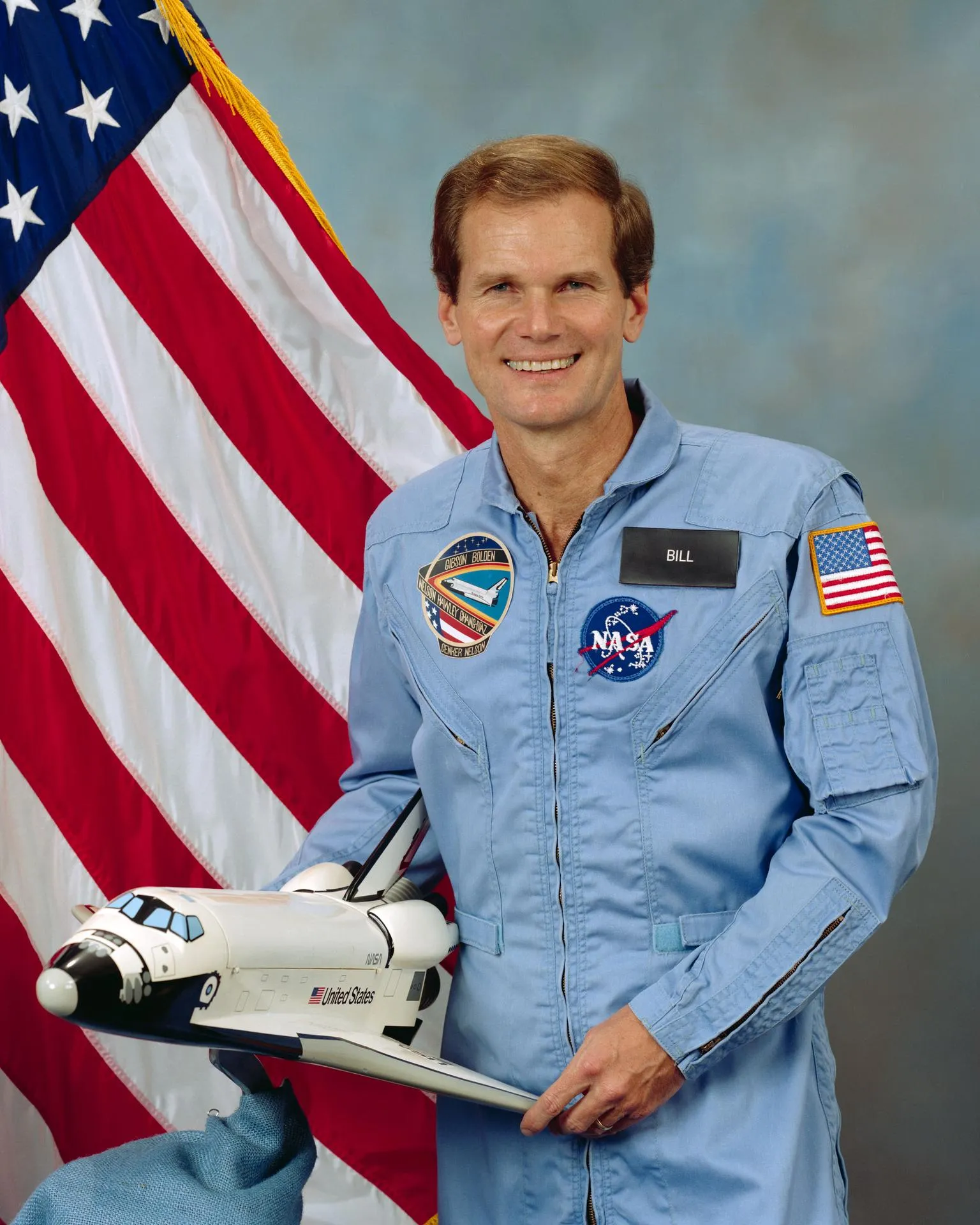
An attorney by profession, Bill Nelson got his start in politics by working as a legislative assistant to Governor Reuben Askew with his election to the state legislature in 1972. He won reelection in 1974 and 1976, and this time put him in a good position to run for Congress. In 1978, Republican Lou Frey announced that he would not run for another term. Nelson was an ideal candidate for his time and place; a man of 36 with a model American family running against a politician who although had avoided jail-time was tied to a campaign fundraising scandal in 64-year old Republican Edward Gurney. Although this Florida district had been electing Republicans since 1962, when it first elected Gurney, Democrats had a 60-40 party registration advantage (Peterson). Furthermore, Nelson was running as a conservative Democrat thus Gurney couldn’t pin the label of liberal on him. He won the election by 24 points and established a record that was moderate to moderately conservative. Nelson opposed government funding of abortion, supported the death penalty, and backed the Reagan tax cuts in 1981. However, he supported rolling them back considerably with his support of the proposed 1983 Tax Equity bill and was supportive of funding increases for domestic programs and opposed to limiting food stamps. In 1986, Nelson was the second member of Congress and the first representative to travel into space in Space Shuttle Columbia. After all, he represented Florida’s Space Coast where Cape Canaveral is located.

In 1990, he opted against running for another term for Congress to run for governor. However, Nelson had a formidable primary opponent in former Senator Lawton Chiles Jr., and miscalculated in his campaign against him when he made Chiles’ health an issue, particularly his use of Prozac to treat depression, which was made worse by his running mate suggesting that Chiles was suicidal, a suggestion Nelson disavowed (Orlando Sentinel). Running against Chiles on mental health didn’t stick to the man that Floridians had thrice elected to the Senate, and he easily prevailed.  

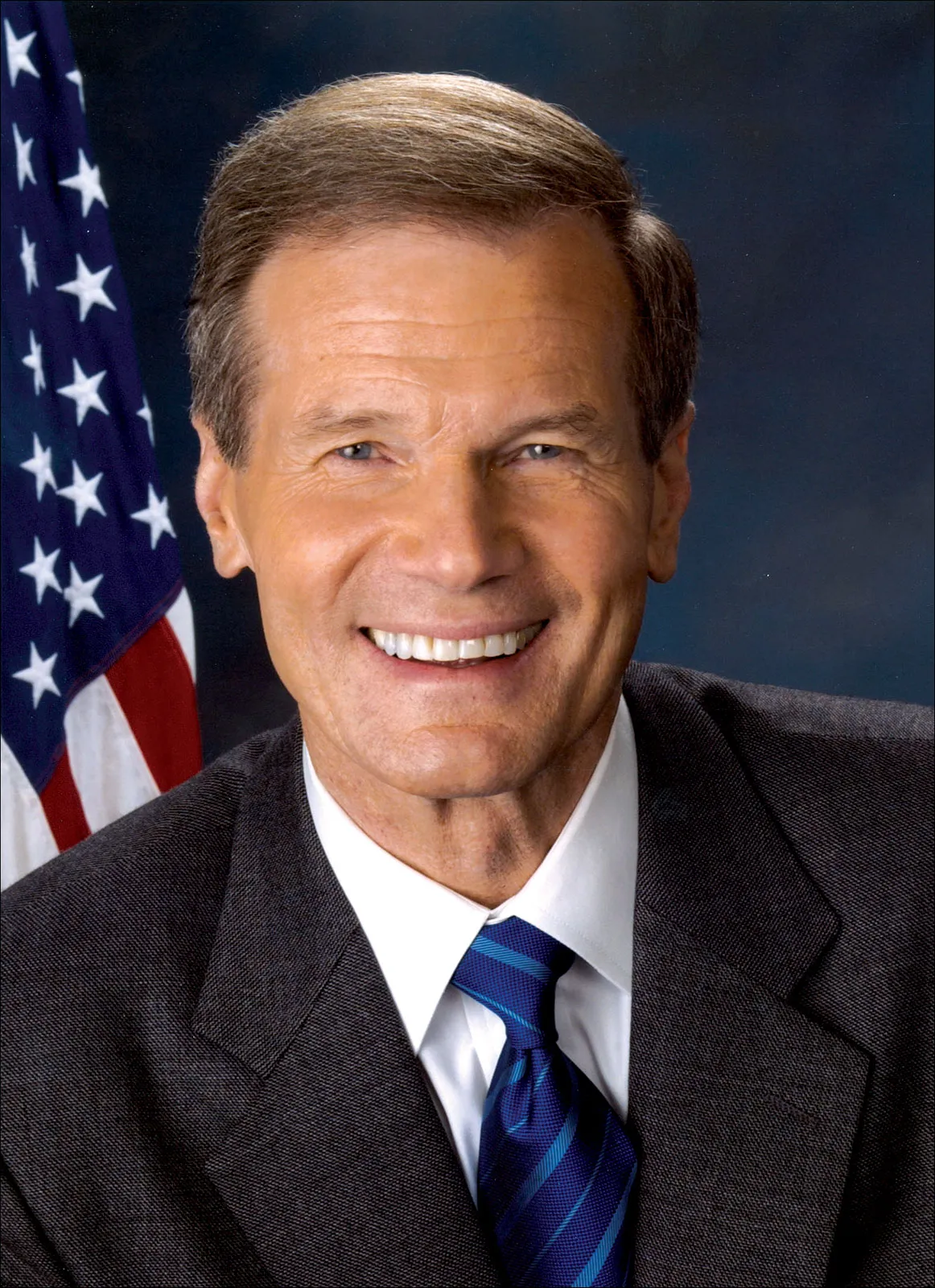
If his 1990 gubernatorial race was the end of his national career, I would be fine with the common view of him that he was a centrist or even a moderately conservative Democrat. From 1979 to 1984, he sided with the conservative Americans for Constitutional Action 63% of the time. However, Nelson’s career had quite a way to go and in 1994 the reelection of Governor Chiles also saw the election of Nelson as Treasurer, Insurance Commissioner, and Fire Marshal of Florida (yes, it is all one office). He won reelection in 1998, and his experience positioned him for a Senate run. In early 2000, Nelson resigned to run for the Senate, and just like the state’s presidential race, its Senate race was close and heated. His opponent was conservative Republican Congressman Bill McCollum, and both ran strongly negative campaigns against each other. Nelson repeatedly labeled his opponent as an extremist who would sacrifice the elderly, the poor, and the working class to coddle the rich while McCollum labeled him as “a liberal who would tax everything that moves, and some things that don’t” (Bragg). At the time, Nelson had the more solid case for the political center given his record in the House while McCollum had a pretty consistent conservative record. As political science professor Aubrey Jewitt noted, “he was known as a fairly moderate Democrat and right now that’s a good ideological place to be” (Bragg). Although Bush very narrowly officially won the state by 537 votes in one of the nation’s most controversial elections, Nelson edged out McCollum in the Senate election by 5 points.

Senator Nelson

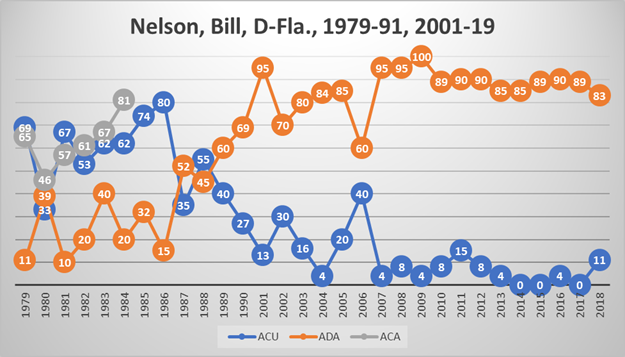
It should be noted that representing a district and representing a state can be a different ballgame and some politicians indeed have shifted left from when they represented a district as opposed to a state. Prominent examples include Senator Kirsten Gillibrand of New York who as a representative of an upstate district was pro-gun rights and now is pro-gun control and even more dramatically Charles Goodell of New York who went from moderately conservative establishment Republican to staunchly liberal anti-Vietnam War Republican in the Senate in what seems to have been an unsuccessful effort to make a Republican-Liberal Party coalition run for a full term in 1970. Indeed, the contrasts between Nelson as a representative and Nelson as a senator are considerable. Although in his first term in the Senate, you could make an argument that he seemed to represent was he was selling to Floridians, and contrary to what McCollum claimed he did vote for some tax reductions, notably ending the estate tax and extending the Bush tax cuts (although he had originally opposed them). However, in his first term he nonetheless sided with the American Conservative Union (ACU) 20% of the time and liberal Americans for Democratic Action (ADA) 79% of the time. As a representative, he had agreed with the ACU 55% of the time and ADA only 34% of the time. The 2006 election gave him a green light to be a party loyalist even more as he was reelected by 22 points not only due to a poor political climate for Republicans but also due also a weak candidate in Congresswoman Katherine Harris.

In his second term, Nelson was strongly with the liberal position and a loyalist to the agenda of the Obama Administration. He even stated his support for a “public option” for healthcare in 2009, an issue of contention among Senate Democrats (Dunkelberger). Indeed, Nelson sided with ACU 8% of the time in this term. Now wait…you might say, that’s just a conservative skew! However, he also sided with ADA positions 93% of the time! Thus, again, both conservatives and liberals agreed on where he stood on the American political spectrum. One area in which he was consistent over time on the conservative position was on favorability to free trade agreements. Furthermore, with Obama winning reelection not only nationally but also in Florida in 2012, Nelson pulled off an 11-point win. Once again, Republicans had run a weak candidate, this time in Congressman Connie Mack IV. A Florida Republican operative had said about Mack, “He’s a weak candidate. Let’s just be honest. He is a pale shadow of his father’s greatness as a politician” (Miller). Nelson’s third term represented more agreement with the Obama Administration as after all, Florida voters had opted to return him to office!

His siding with ACU and ADA differed a bit in his third term: 3% for the former and 87% for the latter. I should note that it is my opinion based on what I’ve seen of their ratings that ACU under Matt Schlapp has made their grading of politicians tougher and more oriented towards the politics of Rand Paul. However, Nelson’s loyalty to the Obama Administration was noted by journalist Ledyard King (2014) when he wrote that a new analysis showed that along with 16 other Senate Democrats he “voted in line with President Barack Obama’s positions 100 percent of the time last year”. In 2018, although Nelson in theory had the benefit of a good political environment given that this was looking to be a backlash election against Trump, he undoubtedly lacked the benefit of a weak candidate. Rick Scott was reasonably popular as Florida’s two-term governor, and better yet for the Republicans they were making inroads with Hispanic voters overall and not just increasing their support among Cuban-Americans (Ogles). Furthermore, Florida was increasingly moving to Republicans and Nelson’s loyalist record to President Obama as well as his opposition to nearly all Trump policies wasn’t playing so well in Florida now. This was highlighted with his announcement before Trump picked a Supreme Court nominee in 2018 that he expected to vote against the nominee based on protecting Roe v. Wade (Smith). The issue of abortion was yet another way in which Nelson had flipped; as a representative he had had an almost entirely anti-abortion record while as a senator, he had a record almost entirely supportive of abortion rights, only voting to prohibit taking minors across State lines without parental consent for abortions in 2006. This election was so close that it was decided by just over 10,000 votes, or 0.13% of the vote, with Scott prevailing. Nelson subsequently served as the administrator of NASA from 2021 to 2025.

In his overall Senate career, Nelson sided with ACU 10% of the time and ADA 86% of the time. Both ADA and ACU found Senator Nelson’s peak year of dissent from the liberal position as 2006, when he only sided with the liberal position on 60% of the votes they considered to be most important. Over his entire career, he sided with ACU 27% of the time and ADA 65% of the time, with his DW-Nominate score standing at -0.193. While his overall record does paint him as a moderately liberal Democrat, it makes more sense to see Representative Nelson as distinct from Senator Nelson, much like it made sense to see Representative Goodell of New York as distinct from Senator Goodell of New York.

The change of Bill Nelson overtime:

References

ADA Voting Records. Americans for Democratic Action.

Retrieved from

Bragg, R. (2000, October 18). The 2000 Campaign: A Florida Race. The New York Times.

Retrieved from

https://archive.ph/20120714153120/http://select.nytimes.com/gst/abstract.html?res=FB0712FA3C5A0C7B8DDDA90994D8404482

Chiles Says Slip in Pep Got Him Back on Prozac. (1990, August 8). Orlando Sentinel.

Retrieved from

Dunkelberger, L. (2009, October 11). Nelson says he supports public option for health care. The Gainesville Sun.

Retrieved from

https://www.gainesville.com/story/news/local/2009/10/11/nelson-says-he-supports-public-option-for-health-care/31725108007/

King, L. (2014, February 9). View from the Beltway: Nelson’s votes are parallel to Obama stance. Florida Today.

Retrieved from

https://www.floridatoday.com/story/news/local/2014/02/09/view-from-the-beltway-nelsons-votes-are-parallel-to-obama-stances/5319611/

Miller, J. (2012, June 20). Rep. Connie Mack IV Still Has Uphill Battle for Senate Seat. Roll Call.

Retrieved from

https://rollcall.com/2012/06/20/rep-connie-mack-iv-still-has-uphill-battle-for-senate-seat/

Nelson, Clarence William (Bill). Voteview.

Retrieved from

https://voteview.com/person/14651/clarence-william-bill-nelson

Ogles, J. (2019, January 13). Rick Scott pollsters show strong Hispanic support helped victory. Florida Politics.

Retrieved from

Peterson, B. (1978, September 10). Florida’s Ex-Sen. Gurney Striving to Return to Congress. The Washington Post.

Retrieved from

https://www.washingtonpost.com/archive/politics/1978/09/11/floridas-ex-sen-gurney-striving-to-return-to-congress/c5e22335-a52e-4634-bd54-07520df528e9/

Sen. Bill Nelson. American Conservative Union.

Retrieved from

http://ratings.conservative.org/people/N000032?year

Smith, A.C. (2018, July 2). Bill Nelson says he expects to vote against President Trump’s Supreme Court nominee. Miami Herald.

Retrieved from

https://www.miamiherald.com/news/politics-government/state-politics/article214206684.html

A Lot Changes: A Look at the Senate 40 Years in the Past

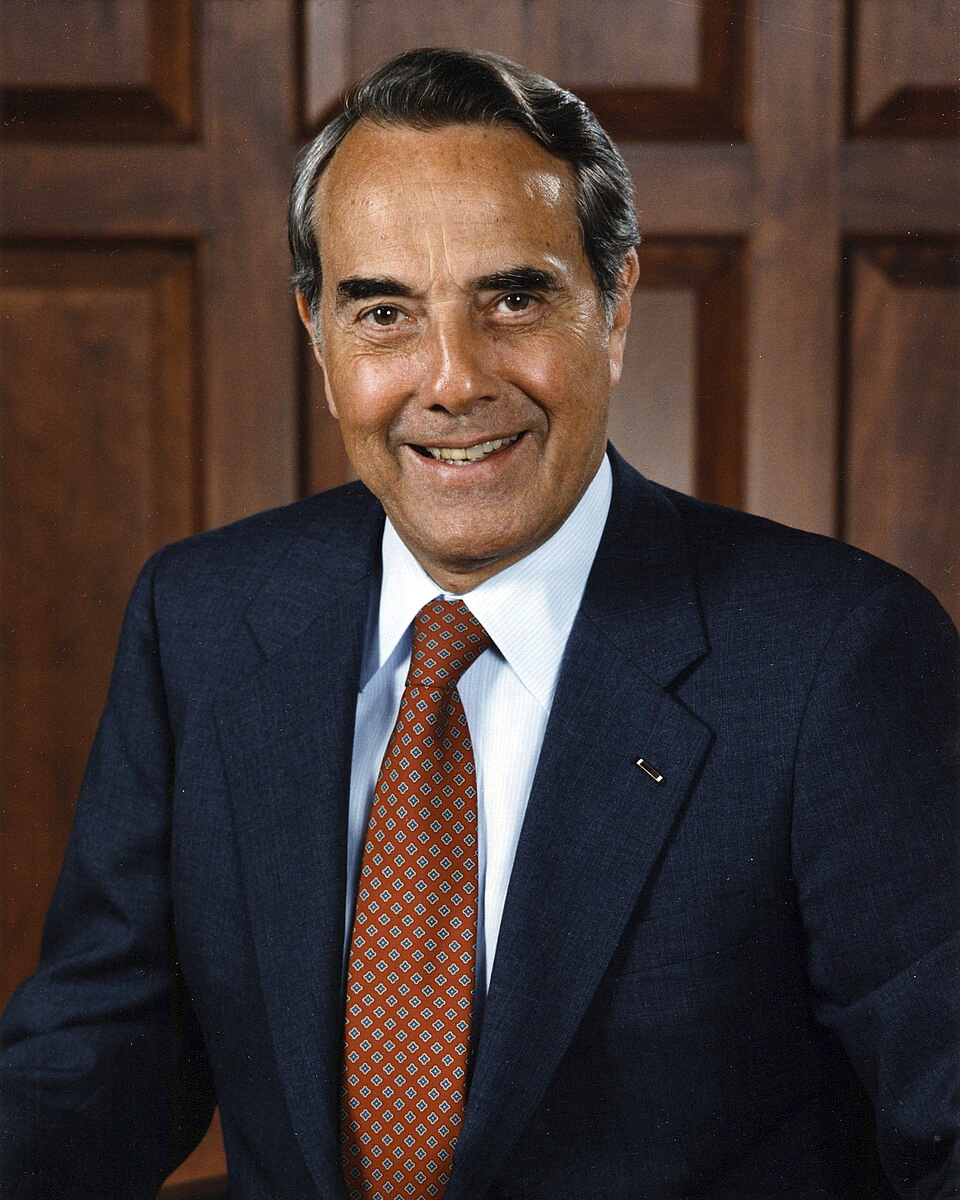
Bob Dole (R-Kan.), Senate Majority Leader

Back in 1986, Ronald Reagan is on his second term as president, having won a 49-state landslide and only narrowly losing Minnesota, the home state of his opponent, Walter Mondale. Like Trump, Reagan had the benefit of a Republican Senate although unlike Trump he never had the benefit of a Republican House. The composition of the Senate during this time presents a fascinating contrast to today. For one thing, although by this point the South is on presidents in the Republican column, it has yet to move there in its Senate composition. Today, the South’s senators are Republican save for Georgia and Virginia. In the 99th Congress, Democrats held one seat in Alabama, both of Arkansas’ seats, one of Florida’s, one of Georgia’s, both of Louisiana’s, one of Mississippi’s, one of North Carolina’s, one of South Carolina’s, both of Tennessee’s, and one of Texas’s. That’s right, in 1984 Tennessee overwhelmingly elected Al Gore to the Senate. Republicans actually hold both of Virginia’s Senate seats as back then it was a conservative state. Virginia and West Virginia have switched places since then, as both of their senators are Democrats. Another bizarre feature of this time was that Democrats held both of Nebraska’s seats! For reference, Nebraska has not voted for a Democrat for president since 1964 and its senators were among the conservative wing of the Democratic Party. Some of the social stances they held would have gotten them a quick cancellation among the base.

New England was different too, as Republicans held a seat in Connecticut, one of Maine’s, both of New Hampshire’s, one of Rhode Island’s, and one of Vermont’s. The West Coast is downright bizarre; although Democrats have held all of the West Coast states’ Senate seats since 2009, in 1985-1986 they only have California’s Alan Cranston. However, the Republicans who hold these seats would, save for Pete Wilson and perhaps Slade Gorton, be although to the right of Democrats holding these seats today, far from tolerable for the modern Republican base. In truth, 48 Senate seats are different in party affiliation between this time and now.  Kentucky at that time has freshman Senator Mitch McConnell, now in his last year of service, and the last Democrat to represent the state in the Senate in Wendell Ford. In Delaware, Joe Biden is there as a Democrat, but his colleague is Republican William Roth, who played a significant role in the crafting and passage of the Reagan tax cuts and is the Roth in the Roth IRA savings account. As hard as it may be to believe, both of Minnesota’s senators are Republican! One of them, Rudy Boschwitz, had a double-digit reelection in the same year Mondale won the state. How voters viewed the president and his party varied considerably and voters were far more willing to split their tickets than now. The states that remain the same partisan composition then as they are now are Alaska, Hawaii, Idaho, Illinois, Indiana, Kansas, Massachusetts, Michigan, New Jersey, North Carolina, South Dakota, Utah, Wisconsin, and Wyoming. However, a look at the agreement rates I have put up with the senators should indicate to you that the parties were far more ideologically diverse. For instance, many of the Southern senators would not pass muster in today’s Democratic Party. One of them, John C. Stennis of Mississippi, had first been elected to the Senate in 1947! Many of the New England Republicans would not be in today’s Republican Party; Lowell Weicker of Connecticut was a bane of Reagan Republicans and later identified as an Independent and supported Democratic candidates and even Gordon Humphrey of New Hampshire, the staunch Reagan conservative of the group, has been strongly anti-Trump in recent years. Neither John Chafee of Rhode Island or Robert Stafford of Vermont would be palatable to modern Republicans. I have below senators who served in both years of the 99th Congress and included are agreement rates from the liberal Americans for Democratic Action and the conservative American Conservative Union. These are a little bit different from their official ratings; I do not count absences either way unlike ADA, I count documented legislative pairs and opinions for, and I do not double-count votes unlike ACA. Each vote is weighted equally for position agreement.

References

ADA Today, 41(1). Americans for Democratic Action.

Retrieved from

ADA Today, 42(1). Americans for Democratic Action.

Retrieved from

Federal Ratings. American Conservative Union.

Retrieved from

http://ratings.conservative.org/congress

The FACE Act – The Adoption of the Controversial Law Being Used in the Controversial Prosecution of Don Lemon

In 1992, the Democrats won the White House for the first time since 1976, and with united government they sought to make numerous changes in the liberal direction, and one of the many issues Clinton was firmly liberal on was abortion. Since the late 1970s, a major movement of protests of abortion clinics formed, but with non-violent protests there came incidents that went beyond standard protesting, such as intimidation, criminal harassment, stalking of abortion providers, and violence. A particularly notable group perpetrating these incidents was the terrorist group Army of God, whose members have committed numerous crimes against abortion providers, including murder. The escalation of tactics as well as the March 10, 1993 murder of Dr. David Gunn by pro-life extremist Michael Griffin motivated the Democrats to push for the Freedom of Access to Clinic Entrances (FACE) Act.

While numerous of these activities were of course already illegal under state and local laws, the citations for trespass were not thought sufficient and in some jurisdictions local law enforcement was thought to be lax. Proponents also argued that the state and local authorities did not have sufficient resources to deal with the scope and scale of these incidents. The initial bill was passed in November 1993 and only covered abortion clinics, but in order to shore up additional support churches and other places of worship were added, thus creating two protected classes. In the House, the measure was sponsored by Reps. Chuck Schumer (D-N.Y.) and Constance Morella (R-Md.) while the Senate sponsor was Ted Kennedy (D-Mass.).

Rep. Louise Slaughter (D-N.Y.) justified this new law, stating, “State and local law enforcement lack the resources – and sometimes lack the will – to battle large-scale, long-term operations that include trespassing, vandalism, and assault (Congressional Record).

Rep. Jim Bunning (R-Ky.) opposed the bill, and stated in his opposition, “In the sixties, before passage of the Civil Rights Act, there were sit-ins, pray-ins and protests all around the country. Some were peaceful. Some were not. In some circles, the civil rights movement was not very popular, but Congress did not pass special laws to discourage civil rights protests because of their motivation or because of their viewpoint. He went on to say, “Yes, we should punish violence, threats of violence and intimidation. But this bill goes beyond that. It would punish people engaged in non-violent, free speech. It would create harsh new penalties for people who engage in non-violent civil disobedience” (Congressional Record).

Rep. Carolyn Maloney (D-N.Y.) in support stated, “Most people would be outraged if they were prevented from entering a supermarket – or a church or an office building or any other place – by someone who disagreed with what was going on inside. We need this Freedom of Access bill because throughout our country, there continue to be bombings, assaults, threats, and even murders by people trying to prevent people from working in or using medical facilities which offer reproductive health services. In the previous Congress, the House passed the Farm Animal and Research Facilities Protection Act, which prevents violent blockades of facilities for research animals. If we care that much about facilities for animals, we ought to care about facilities for women. The right to choose is meaningless without the access to choose.”

Rep. Lynn Schenk (D-Calif.), shall we say, poured on the Tabasco sauce in this debate when she alleged the motives of the opposition, “Their true agenda is to continue the reign of harassment, terror, and physical intimidation against women and their doctors” (Congressional Record). Would it surprise you to learn that she is a lawyer?

Rep. Chris Smith (R-N.J.), who continues to serve, had the most to say in opposition on the day of passage and in defense of abortion protestors, “The difference in what we are dealing with today are those acts of nonviolent civil disobedience, and I can tell you Mr. Speaker, if we applied the standard in this bill to those who have been involved in D.C. statehood, civil rights, women’s rights, animal rights, and a whole host of other very important causes, this particular legislation would never see the light of day on this floor. Mr. Speaker, just let me also make a very important point: that sidewalk counseling has saved tens of thousands of children throughout the last 20 years. Women, many of whom have had abortions frequently become sidewalk counselors and go to abortion clinics to speak out. These women, and I have pictures of women who have helped women through the difficult, distressful pregnancies they may be experiencing, they have helped women about to abort at that 11th hour (Congressional Record).

The bill passed the House on May 5, 1994 on a vote of 241-174 (D 201-43, R 40-131). The Senate followed up on a vote of 69-30 (D 52-3, R 17-27) a week later. Interestingly, among the Republican supporters was Mitch McConnell. The three Democratic dissenters were J. Bennett Johnston and John Breaux of Louisiana along with J. James Exon of Nebraska. None of these seats are held by Democrats today.

This law was controversial in passage as some non-violent tactics could result in jail time. For instance, in practice, one protest tactic that has resulted in jail time for offenders has been sit-ins. In particular, activist Herb Geraghty was imprisoned for doing so in Pennsylvania in 2020 and was sentenced in 2023. He was pardoned in 2025 by President Trump, and has advocated for the law’s repeal (Geraghty). It should also be noted that since passage of the law the number of violent incidents decreased surrounding abortion. I must note that it is interesting that the FACE Act is being used against Don Lemon yet the administration has made clear that it is only interested in using the FACE Act in egregious cases regarding clinics (Lucas). Selective prosecution does not seem to only been a feature of the present administration; the Biden Administration was also alleged to have used to the FACE Act selectively, in being willing to prosecute cases of attacks on abortion clinics at higher rates than attacks on pregnancy centers and churches (Kamman). That administrations, past and present, have used this law most selectively makes a case for repeal in this writer’s opinion. Earlier this year, Representative Chip Roy (R-Tex.) proposed to repeal the FACE Act.

References

A bill to amend the Public Health Service Act to permit individuals to have freedom of access to certain medical clinics and facilities, and for other purposes. Voteview.

Retrieved from

https://voteview.com/rollcall/RS1030507

Conference Report on S. 636, Freedom of Access to Clinic Entrances Act of 1994. Congressional Record, 148(53).

https://www.govinfo.gov/content/pkg/CREC-1994-05-05/html/CREC-1994-05-05-pt1-PgH40.htm

Freedom of Access to Clinics Act. Voteview.

Retrieved from

https://voteview.com/rollcall/RH1030753

Geraghty, H. (2026, February 6). I Was Jailed for 18 Months Under the FACE Act. It’s Time to Repeal This Unconstitutional Law. National Review.

Retrieved from

https://www.nationalreview.com/2026/02/i-was-jailed-for-18-months-under-the-face-act-its-time-to-repeal-this-unconstitutional-law/

Kamman, S. (2024, December 20). Biden admin. accused of failure to prosecute church attacks, ‘one sided’ FACE Act enforcement. Christian Post.

Retrieved from

https://www.christianpost.com/news/biden-admin-failed-to-prosecute-church-attacks-under-face-act.html

Lucas, R. (2026, March 9). Trump’s DOJ Limits on FACE Act enforcement fuel concern from abortion providers. NPR.

Retrieved from

https://www.npr.org/2025/03/09/g-s1-52616/abortion-face-act-access-enforcement

Bill Clinton the Moderate? The Conservative? Think Again!

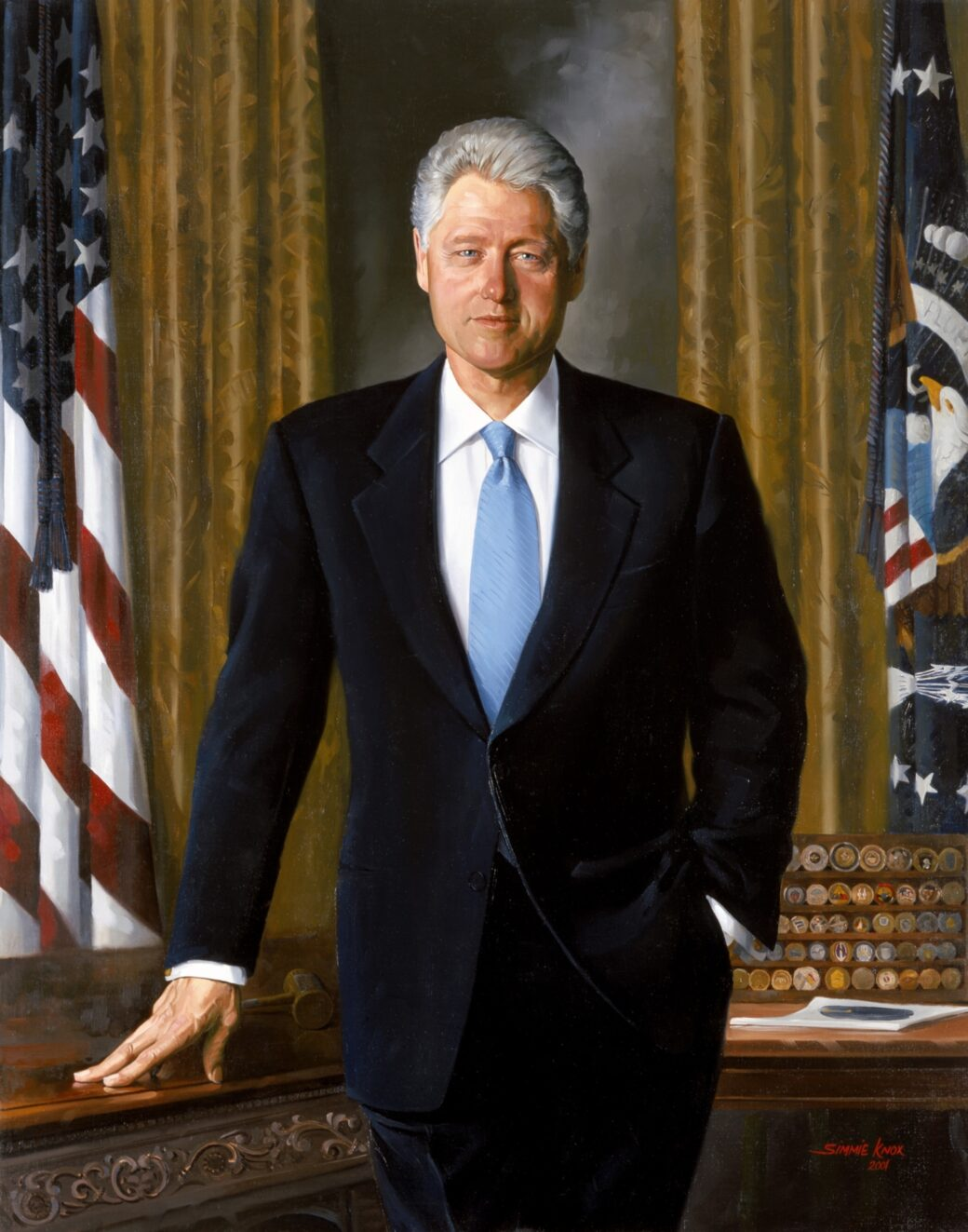
The popular perception of Bill Clinton during his presidency was that he was a moderate, and indeed to liberals looking back, he was that or even a conservative. Indeed, the term “New Democrat” came into being to describe Clinton’s form of Democratic politics and the politics of his supporters. One figure who was not a liberal who echoed this idea of him as a conservative of some sort was conservative David Harsanyi, who wrote, “Despite bringing some big liberal ideas, earthy debauchery and all manner of corruption to the Oval Office”, he “presided over a thriving economy, declared the era of big government over and signed more consequential conservative legislation than any president since – and perhaps, anyone before him” (BBC News). Today I intend to show why this take is wrong, and the traditional view of Clinton as a liberal, not a moderate or conservative, is the accurate one, and what’s more I will do so from the liberal perspective by using the votes selected as ideologically relevant by the liberal lobbying group Americans for Democratic Action.

Issues in which Bill Clinton was liberal included:

Support of and signing into law the Family and Medical Leave Act, the Motor-Voter Law, The Brady Bill, and the National Community and Service Act in 1993.

Support of and signing into law the Goals 2000 Educate America Act, adding funds for education grants to schools.

Opposed an amendment for school choice and reducing overall spending on education in 1994.

Opposing a Republican amendment to reduce domestic spending and protect defense from more cuts in 1994.

Supported banning “assault weapons”, supported an abortion clinic access bill, and a Montana Wilderness bill designating 1.6 million acres as protected wilderness.

Opposed the original welfare reform bill in 1995 (before signing another version in 1996 as it was close to election time), opposed Republican legislation to permit the creation of “company unions” without union presence.

Pro-choice in his record of preferred positions, including his veto of a “partial birth” abortion ban.

Opposition to proposed Balanced Budget and Tax Limitation Constitutional amendments.

Support of the Caesar Chavez Workplace Fairness Act and the admission of Washington D.C. as the state of New Columbia.

Opposed Republican efforts to end the estate tax, gift taxes, and the marriage penalty.

Supported hate crime legislation.

Supported campaign finance reform legislation.

Opposed income tax reduction.

Supported closing the “gun show” loophole in gun control laws.

Supported the Comprehensive Nuclear Test Ban Treaty.

Supported increasing the federal minimum wage.

Opposed the creation of education savings accounts.

Supported preferential treatment for minority-owned businesses by government in 1998.

Issues in which Bill Clinton was conservative included:

He went against ADA’s judgment in his opposition to ending funding for the superconducting super-collider project.

Clinton supported NAFTA, opposed efforts to impose steel tariffs, and supported normalizing trade relations with China.

Although his budget called for defense cuts, he opposed several additional Congressional efforts to do so, such as opposing the deletion of funds for the Trident II submarine missile, opposing cutting the Ballistic Missile Defense program, and opposing cutting funding for U.S. forces in Europe. The trade parts may be considered controversial to consider conservative today, especially in the environment of a Trump-led GOP.

Clinton’s ADA agreement rates were as follows:

Senate: 1993, 70; 1994, 100; 1995, 100; 1996, 100; 1997, 100; 1998, 90; 1999, 100; 2000, 100.  

House: 1993, 67; 1994, 64; 1995, 100; 1996, 90; 1997, 100; 1998, 100; 1999, 86; 2000, 89.

For the Senate, this translates to Clinton supporting the liberal position 56 times out of 60 that he was recorded as having a position on a vote counted by Americans for Democratic Action, while in the House he supported the liberal position 63 times out of 74. The former renders his Senate agreement rate at 93% and the latter his House agreement rate at 84%. When we combine the two, Clinton comes out supporting the liberal position 88% of the time. Not moderate, and not conservative…by liberal standards! Further backing this is Clinton’s DW-Nominate score of -0.438. Something to bear in mind, however, is that DW-Nominate scores are not as reliable for presidents as they are for members of Congress, and Clinton had a lot more selectivity in his selection of legislative issues to register an opinion on than legislators do. But, with the information we have available based on actual votes cast, Clinton comes out a liberal who makes exceptions for trade and national defense. The “New Democrat” still is supportive of unions, still supports tax increases on upper incomes, supports social liberalism, and makes an exception to what is considered liberalism in the United States here and there, primarily on trade and national defense.

References

ADA Voting Records. Americans for Democratic Action.

Retrieved from

Bill Clinton’s conservative legacy? (2014, July 7). BBC News.

Retrieved from

https://www.bbc.com/news/blogs-echochambers-28155578

Clinton, William Jefferson (Bill). Voteview.

Retrieved from

https://voteview.com/person/99909/william-jefferson-bill-clinton

“Big Ed” Johnson: Colorado’s Independent Democrat

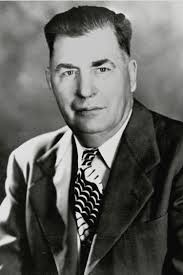
As a state, Colorado seems to be of two worlds: that of the granola-munchers and the gun-toters. For now, the granola-munchers have the edge; Colorado has not elected a Republican governor since 2002, the last time its voters chose a Republican for president was George W. Bush in 2004, and the last time its voters chose a Republican senator was in 2014. Colorado Democrats have by and large been quite far from a conservative group in recent history and the current crop is going full-bore into social liberalism in this author’s opinion. However, this was not always true of Colorado Democrats, and one figure who was a prime example was Edwin “Big Ed” Johnson (1884-1970).

Johnson grew up in Kansas and went to Nebraska for work, but in 1909, he was diagnosed with tuberculosis and advised to move to Colorado. In an age before antibiotics people were often advised to move to warmer and drier climates in an effort to cure tuberculosis, and this worked for him. He proceeded to start a political career, which started with a loss when he tried for superintendent of Moffat County schools in 1914. This would be the only race he would lose. In 1922, Johnson ran for the Colorado House and won. At the time, the Ku Klux Klan was a powerful force in the state’s politics, and he stood as an opponent. By 1930, the Klan had fallen in influence, and he was elected lieutenant governor. In 1932, Johnson ran for governor and won, serving two terms. As governor, his approach differed a bit from the New Deal, as he pushed his own programs, which included tax reduction, highway construction, balanced budgets, and civil service reform (Colorado State Archives). In 1936, Johnson easily won election to the Senate over Republican Raymond Sauter by 28 points.

As a senator, Johnson was independent of the Roosevelt Administration, and in 1940 he condemned President Roosevelt’s decision to seek a third term. He was a supporter of organized labor but also opposed his foreign policy, voting against repealing the arms embargo in 1939, the peacetime draft in 1940, Lend-Lease in 1941, and permitting both the arming of merchant ships and permitting them to enter belligerent ports just a month before Pearl Harbor. While today, such stances against a president of your party would have put him at great risk for a primary defeat, the truth is that Colorado was moving against the president; in 1940 and 1944 the state’s voters voted for Wendell Willkie and Thomas E. Dewey respectively over Roosevelt. Johnson himself was almost defeated for reelection in 1942 by Republican Governor Ralph Carr, but he had not courted popularity by standing up for the rights of Japanese-Americans, and he won another term by a point. Although often thought of as a conservative Democrat, Johnson went to bat for labor unions in his vote against the Taft-Hartley Act in 1947 and would also do so when he refused to vote to use the Taft-Hartley injunction during steel strikes in 1952. On foreign policy, Johnson’s postwar record was very mixed indeed. He voted against aid to Greece and Turkey in 1947 and only voted for the Marshall Plan the following year after supporting cutting funds. However, he would also support Point Four aid to poor nations in 1950 and at times voted for and against cuts to foreign aid. The 1948 election went much better for him, with Johnson winning almost 67% of the vote.

On March 14, 1950, Johnson denounced the affair of Roberto Rossellini and Ingrid Bergman on the floor of the Senate, and the negative publicity that followed Bergman resulted in her living in Europe for the next few years. He charged that Bergman, who had been his favorite actress, “had perpetrated an assault upon the institution of marriage” and that she was “a powerful influence for evil” and condemned Rossellini as “vile and unspeakable” and a “common love thief” (Hill). Johnson’s fiery condemnations of the two seemed to reflect a personal feeling of betrayal in the image he had of Bergman as a person. He even went as far as to propose legislation to license film performers based on personal morality (Colorado State Archives). Senator Charles Percy (R-Ill.) would apologize on behalf of the Senate for this incident in 1972. In 1952, Johnson endorsed Senator Richard Russell’s (D-Ga.) candidacy for the Democratic nomination for president and headed up his campaign, but Russell got no success outside of the South. On civil rights, he had something of a mixed record. Although he voted against Russell’s effort to undermine army desegregation in 1950, that same year he voted against ending debate on a Fair Employment Practices bill.

In 1953, Johnson was one of only two Democrats to vote against confirming Charles Bohlen as ambassador to the USSR, the push against him being spearheaded by Senator Joseph McCarthy (R-Wis.). Interestingly, he was also among a minority of senators to oppose Eisenhower’s nomination of former Congressman and public housing opponent Albert Cole (R-Kan.) as Housing Administrator. In 1954, Johnson decided against another term in the Senate as his wife, Fern, desired to return to Colorado, but surprised observers when he chose to run for governor again, which he won. In his final address, Johnson warned against committing troops to Vietnam (Colorado State Archives). His last vote as a senator had been to vote to censure Joseph McCarthy. Johnson had sided with the liberal Americans for Democratic Action from 1947 to 1954 40% of the time, and his DW-Nominate score stands as a 0.01, or more conservative than any Democrat serving in Congress today. However, his stint as governor would be limited to one term as a heart attack shortly after winning convinced him that he needed to take it easy. Despite his heart attack, Johnson did well after and persisted as a public figure after his final stint, including campaigning for the reelection of Democratic Congressman Wayne Aspinall in 1964. On May 7, 1970, Johnson was admitted to the hospital for a hernia, and underwent an operation four days later, but his condition deteriorated throughout the month, and he died on May 30th (Hill). Johnson to this day has a unique distinction in Colorado history; being the only person to serve three terms as governor and as senator. He is remembered in Colorado through the Eisenhower-Johnson Memorial Tunnel, a marvel of engineering that runs through Loveland Pass.

References

ADA Voting Records. Americans for Democratic Action.

Retrieved from

Edwin Johnson. Colorado State Archives.

Retrieved from

Hill, R. (2025, September 28). ‘Big Ed’ Johnson of Colorado. The Knoxville Focus.

Retrieved from

Johnson, Edwin Carl. Voteview.

Retrieved from

https://voteview.com/person/4949/edwin-carl-johnson