In my last post, I covered the independently liberal Stephen Young However, there was in the past a conservative faction of the state’s Democrats. The most prominent of these in the early 20th century and the most successful of the Republican 1920s was Alvin Victor Donahey (1873-1946).
He started his political career in the 1898 election, serving as the clerk of Goshen Township Board of Trustees for five years. From 1905 to 1909, he was simultaneously auditor of Tuscarawas County and on New Philadelphia’s Board of Education. Donahey won his reputation-making office in 1912 when he was elected State Auditor. Serving until 1921, he gained the nickname “Honest Vic”. According to New York Times correspondent Chailfs M. Dean (1934), “A State employee presented an itemized expense account including the cost of a meal at a Cleveland hotel. During the meal he consumed a baked potato. Donahey’s analysis of the expense account proved that he had paid thirty-five cents for a baked potato. The item was disallowed. Every farmer in Ohio cheered. Many of them were unable to obtain thirty-five cents a bushel for potatoes at the time”. Although Democrats were not always popular in Ohio, Donahey was, and was one of their biggest vote-getters.
In 1920, he ran for governor, but the odds were too long even for him in that strongly Republican year, losing by six points. However, it should be noted that he ran ahead of Democratic presidential nominee James Cox by seven points. Although Donahey’s first try in running for governor was unsuccessful, 1922 was a far better year for Democrats and he narrowly won, even as Senator Atlee Pomerene went down to defeat against Republican Congressman Simeon Fess. Donahey furthered his good reputation as governor given his strong sense of honesty as well as his independence. Such independence was expressed through his many vetoes, vetoing 76 bills in his first term in office. Bills that got vetoed included Klan-backed legislation for Bible reading in schools, making Prohibition offenders who hadn’t paid fines perform manual labor, and any tax increases (NGA). Donahey overall opposed Prohibition and how it was enforced. On one occasion, he pardoned 2,000 people convicted on such charges and did so as he saw enforcement as hitting the poor disproportionately hard (NGA). Donahey won reelection in 1924 by a stronger margin despite the year being good for Republicans nationwide. His 1926 reelection was quite close, and in 1928 he decided against another term. Donahey was briefly considered as a potential candidate for 1928, and at the Democratic National Convention he received five votes. However, with the Great Depression and Republicans becoming quite unpopular nationwide Donahey had a solid opportunity to return to public office.
In 1934, Donahey took on Senator Fess, but whether he would commit to the New Deal was uncertain to the concern of strong New Deal supporters, as in every speech he delivered he said, “I will support President Roosevelt in every proper manner” (Dean). Days before the election, it was widely believed that Donahey was going to prevail over Fess, and he did by 20 points.
Donahey as a senator, 1938.
New Deal supporters who were concerned about Donahey being a reliable voter would in time be proven correct in their concerns. In his first year he largely stuck with the Roosevelt Administration, such as casting votes for the Wagner Act and to uphold the “death sentence” clause of the Public Utilities Holding Company Act. He was more in line with the Roosevelt Administration at the time than Ohio’s other senator, Democrat Robert J. Bulkley, whose independence of the administration had included his votes against the Agricultural Adjustment Act and opposition to the “death sentence” clause. However, Donahey’s votes in opposition to the World Court presaged his foreign policy views regarding World War II. He also opposed work relief legislation, and after the 1936 election his opposition to the New Deal would grow, as he became increasingly committed to curbing spending. Donahey also opposed the “court packing plan” and the reorganization bill in 1938, certainly much to the chagrin of the president. He also opposed the Neutrality Act Amendments of 1939, which repealed the arms embargo, and opposed the peacetime draft in 1940. However, Donahey still did support the administration in some matters, such as retaining funds for the Civilian Conservation Corps and permitting the purchase of private power generating facilities by the Tennessee Valley Authority from Commonwealth & Southern. That year, he opted not to run for reelection, and he was succeeded by Republican Harold Burton. Donahey’s DW-Nominate score was a 0.107, which is quite high for a Democrat and indicated a lot of opposition to Roosevelt’s domestic agenda. Donahey did not run for office again, resuming his career in the private sector until his death on April 8, 1946.
As a state, Ohio has had a long history as a swing state in politics, and Stephen Marvin Young (1889-1984) had a long career in which he benefited from and was harmed by such shifts.
Young, a lawyer by profession, launched his political career in 1912, winning a seat in the Ohio House of Representatives in the same year that Woodrow Wilson was elected president. He would serve until 1917, when he was called to fight in World War I. The 1920s would be the political doldrums for him, as he lost a state attorney general election in 1922 and lost the Democratic primary for governor in 1930.
In 1932, Young was elected to Congress, representing the entirety of Ohio as an at-large representative. Although a supporter overall of FDR’s New Deal who voted for much of it including the Agricultural Adjustment Act, the Tennessee Valley Authority, and the National Industrial Recovery Act, he was more moderate in his voting in his early years in Congress than he would be later, indeed Congressional Quarterly described him during this time as a “moderate New Deal Democrat” (CQ Almanac, 1958). He also took a stand against popular opinion in his opposition to the Patman Bonus bill for veterans on fiscal grounds, and this would be far from the last time he would be unafraid to stand against public opinion. In 1936, Young opted to run for the Democratic gubernatorial nomination but lost to incumbent Martin Davey.
Young sought to win back one of Ohio’s at-large seats in 1938, but the winners for the two seats were Republicans George Bender and L.L. Marshall. However, in 1940 he ran again and with Bender was one of the top two. Time Magazine (1942) described him as a “New Deal enthusiast” and as Ohio’s top vote-getter for the Democrats. However, even in this “enthusiast” stage, Young nonetheless didn’t always vote in line with what New Dealers wanted, and this included his vote for the Vinson Anti-Strike Bill in 1941 and his vote against continuing the Civilian Conservation Corps in 1942. The former vote contrasts greatly with his strong pro-union record later in his career. In the 1942 election, the number of at-large seats was reduced to one, and with that year being a good one for Republicans, Young lost the election to Bender. He proceeded to resume his military service, serving from 1943 to 1946, rising in rank from major to lieutenant colonel. And he wasn’t a staff officer either; like also in his fifties Paul Howard Douglas. At the war’s end, Young was serving as military governor of the Province of Reggio Emilia in Italy.
In 1948, Young came back to Congress again by defeating Bender, as this year went sideways for the Republicans. In the 81st Congress, as a veteran of both world wars, he furiously denounced Veterans Committee Chairman John Rankin’s (D-Miss.) effort to scuttle President Truman’s proposed expansion of Social Security through a big veterans’ pension bill. Young proved a strong supporter of President Truman’s agenda, both on domestic and foreign policy. However, in 1950 the winds would shift back to the GOP, and Ohio’s at-large seat to Bender. Young would run for state attorney general in 1956, but lost to Republican William B. Saxbe, who would later serve in the Senate and briefly as the U.S. attorney general. The 1950s would also be a time in which Young would start to suffer several personal tragedies in life. In 1952, his wife of 41 years, Ruby, died of lung cancer, and one of his sons, Stephen Jr., followed in 1958 at the age of 46. His other son, Richard, would die seven years later at 42. His second wife, Rachel, who was 23 years younger than him, would nonetheless precede him in death by two years due to a car accident.
The 1958 Election: The Fall of the House of Bricker
In 1958, many Senate Republicans were up for reelection, and one of them was Ohio’s John W. Bricker. Bricker was a big name in Ohio, as he had been a popular and successful governor from 1939 to 1945, Thomas E. Dewey’s running mate in 1944, and had served in the Senate since 1946. Bricker was in many ways the antithesis of Young. He had written a proposed amendment to the Constitution, known as the Bricker Amendment, which if enacted would have considerably weakened the president’s ability to enact executive agreements. He was one of the most conservative senators; he sided with the liberal Americans for Democratic Action only 7% of the time, the conservative Americans for Constitutional Action 98% of the time from 1955 to 1958, and had a DW-Nominate score of 0.528, which made him the 4th most conservative senator in the 85th Congress (1957-1959). Many Democrats passed on running against him because they thought he was unbeatable, that is, except Stephen Young. Young had some incentive to run for the Senate in addition to his ideological opposition to Bricker; he was 69 years old, and this was likely his last chance to continue his political career.
A lot of people underestimated Young in the 1958 election because of his age and as mentioned before, Bricker was popular. Indeed, only one statewide newspaper endorsed Young. However, a “right to work” amendment, backed by Senator Bricker, was on the ballot for the state constitution, and unions went into overdrive in campaigning against it. Another favorable development for Young was him getting former President Harry S. Truman to campaign for him. Truman took a great liking to Young as he saw him as a kindred spirit; a liberal who calls a spade a spade. This, combined with the generally unfavorable environment for the Republicans in the 1958 midterms, resulted in Young’s win by 5 points.
Senator Young
In the Senate, Young had a liberal record and did not get on well with his fellow Buckeye Democrat in the Senate, Frank Lausche. Lausche, the most conservative Senate Democrat north of the Mason-Dixon line, hadn’t backed his 1958 run. Thus, Young refused to abide by the senatorial custom of having the senior senator walk the junior senator down the aisle to be sworn in to office. As Time Magazine (1962) reported, Young said of Lausche, “If Senator Lausche supported me for election, it was a well-guarded secret.”
Young was known for his acerbic answers to constituent letters that he considered abusive, stupid, ignorant, or generally repugnant. Such answers included,
“Dear Sir: It appears to me that you have been grossly misinformed, or are exceedingly stupid. Which is it?” (Lardner)
“Buster, your insults show that you are the east end of a horse going west” (Rasky).
After a constituent wrote him a nasty letter in which he finished with, “I would welcome the opportunity to have intercourse [as in discussion] with you”, he responded, “you sir, can have intercourse with yourself” (Crass).
In response to a constituent letter defending the Ohio National Guard’s conduct in killing four students at Kent State University protests, he wrote, “Only a cruel ignoramus would take the position that these four students – not one of whom was rioting or throwing stones – deserved to be killed. Also, you are a stupid, cruel jerk” (Buchanan).
He also wrote to one Ohio voter that he was “a low-down skunk and a liar” and to another that he was “lower than a snake’s tail in a wagon rut” (Buchanan).
Young also went after some prominent targets for criticism. In response to Ohio American Legion posts censuring him for speaking before the Emergency Civil Liberties Committee (a left-wing group), he responded by calling them “puffed-up patriots” and “publicity-seeking professional veterans” (Time Magazine, 1962).
Young was not afraid of blowback from these responses, rather he publicized them! It was his view that no matter who was going after him, it was fair game for him to defend himself. In 1963, he voted for the Partial Nuclear Test Ban Treaty, which banned atmospheric testing of nuclear weapons. Young considered this the single most important vote of his career. He was also greatly concerned with the less fortunate in society and thus strongly supported nearly all New Frontier legislation as well as backed Medicare every time it came up for a vote. However, he sometimes would support a cut in government spending, particularly on foreign aid. Sometimes international agencies could attract his scorn, once declaring, “The Agency for International Development must have far in excess of the usual quota of dimwits” (Rasky). One of the few exceptions he made to domestic legislation as a senator was his vote against the Domestic Service Corps in 1963. Young also opposed government subsidies to industries. This included his votes against fishing vessels in 1959 and 1960 and drydock subsidies in 1959.
Young and Civil Rights
As both a representative and a senator, Young supported civil rights legislation, including supporting strengthening amendments that weren’t adopted in the Civil Rights Act of 1960 and supported the passage of the Civil Rights Act of 1964 with no weakening amendments. However, this didn’t mean that he agreed with all the tactics of the activists of the civil rights movement. In a speech he delivered before the Senate on July 11, 1963, he expressed his strong opposition to a proposal for a mass sit-in at the offices of members of Congress by civil rights demonstrators, stating, “Citizens have a right to petition and to lobby. However, a mass invasion and demonstration is unwise and is a disorderly way to dramatize any cause. It would probably lead to rioting. Any such sit-in in the Senate Office Building or the Capitol would demonstrate contempt for the Congress and a lack of confidence in senatorial powers to reason and deliberate. It would recklessly demonstrate disregard for the dignity and integrity of the legislative branch of our Government” (Congressional Record, 11745). Ultimately, the March on Washington did occur, with Martin Luther King Jr. delivering his “I Have a Dream” speech but without the proposed sit-ins as the activists reached the same conclusion Young did about the wisdom of such tactics. The next year, Congress would pass the comprehensive Civil Rights Act of 1964.
The 1964 Election
Young was in a vulnerable position for reelection. His poison pen rubbed some voters the wrong way and his voting record was certainly to the left of the average Ohio voter. He was even at risk in the Democratic primary, as a compelling challenger stepped forward in astronaut John Glenn. However, he slipped and fell in a bathtub and suffered a head injury that forced him to bow out to recover. Glenn would be elected to the Senate in 1974. Furthermore, Republicans picked a strong contender to defeat him in at-large Republican Congressman Robert Taft Jr. Taft’s center-right politics were probably closer to the views of Ohioans than Young’s and certainly more appealing to the electorate than Goldwater’s ultra-conservatism, and the general consensus was that he was going to win the election. However, Goldwater at the top of the ticket dragged down the candidacies of numerous Republicans down ticket given his outspokenness and his uncompromising nature. Indeed, at the time only one senator exceeded him in conservatism according to the DW-Nominate scale. Goldwater ran behind many other Republicans down ticket and his candidacy likely resulted in victories for Democrats in key races that they would have otherwise lost. The Senate races in Ohio as well as Nevada were major examples, and Young prevailed by less than a point. By contrast, Johnson won in Ohio with 63% of the vote, the best performance a Democrat ever had running for president in the state.
Young: All the Way with LBJ?
Young was a strong supporter of President Johnson’s Great Society programs, voting for the Economic Opportunity Act of 1964, the Social Security Act Amendments of 1965 (established Medicare and Medicaid), federal aid to education, and the Housing and Urban Development Act. He also opposed both of Senator Dirksen’s (R-Ill.) proposed amendments to the Constitution, which if adopted would have permitted states to have one legislature proportioned based on factors other than population and permitted voluntary school prayer in schools and other public buildings.
However, Young was not always on board with President Johnson. He became an early critic of the Vietnam War in part based on inconsistencies with what he saw when he visited Vietnam and what the Johnson Administration was saying. Young also had a level of skepticism when it came to foreign policy that made his vote not guaranteed for the Kennedy and Johnson Administrations. In 1968, Young stood as a “favorite son” candidate for president but recognizing that he had no chance to win, he only submitted his name for the Ohio primary.
Young was a strong opponent of the Nixon Administration and opposed “no knock” warrants in drug cases as well as the unsuccessful Supreme Court nominations of Clement Haynsworth and G. Harrold Carswell. He also led the opposition to Nixon’s nomination of conservative Otto Otepka to the Subversive Activities Control Board, who had had a controversial tenure as the Deputy Director of the State Department’s Office of Security until he was fired by the Kennedy Administration in 1963. In 1970, Young decided that it was time to hang up his hat. Although still in good health at 81, he believed it was time for someone younger to succeed him. Young agreed with the liberal group Americans for Democratic Action, which had covered his term in the House during the Truman Administration and his Senate record, 90% of the time while he agreed with the conservative group Americans for Constitutional Action which covered his Senate record 14% of the time. Young’s DW-Nominate score, which covers his entire career, was a -0.351, which accounts for his early record as a moderate New Deal supporter and his stronger liberal record later in his career. Young’s successor was none other than the man he bested in 1964, Taft Jr. He had endorsed Taft’s opponent, Howard Metzenbaum, who had managed his 1958 Senate campaign. Young lived to see Metzenbaum defeat Taft Jr. in 1976.
Young had a strong spirit and a commitment to work that he maintained after the Senate as he believed it kept him alive. This, in addition to his daily workouts at the gym and possibly some excellent genetics from his mother (who lived to be 95), got him 95 years of life, dying on December 1, 1984, from a blood disorder. He outlived all of his siblings, and his daughter only survived him by three years.
Bonus:
Three ads in which former President Truman expresses his support for Young in 1958, ads produced by the General Pictures Corporation and provided by the Harry S. Truman Library:
References
ADA Voting Records. Americans for Democratic Action.
Crass, S. (2015, August 31). Statesmen and mischief makers: officeholders and their contributions to history from Kennedy to Reagan. Bloomington, IN: Xlibris Corporation.
Democrats: Mighty Steve Young. (1962, December 21). Time Magazine.
The 1946 election was thought of by Republicans as a repudiation of the New Deal and proceeded thusly in the 80th Congress. However, President Truman’s campaigning prowess in 1948 combined with Republican Thomas Dewey’s overly safe and bland campaign produced Democratic victory.
The 1950 election, although not producing Republican majorities, resembled in theme the sort of election they thought the 1946 midterms had been – an ideological referendum. The 1946 midterms had been primarily motivated by the scarcity of meat as well as a general fatigue with Democratic rule. In this election, the Korean War and anti-communism figured heavily. It was in 1950 in which Senator Joseph McCarthy (R-Wis.) made his famous Wheeling speech in which he spoke of a list of communists in his hand, and indeed the results were favorable in his direction. Republicans gained 26 seats from the Democrats in the House and 5 in the Senate, and although this didn’t constitute a majority, it further strengthened the Conservative Coalition, an alliance of conservative Republicans and Southern Democrats against numerous liberal Democratic legislative priorities which had already blocked most of President Truman’s Fair Deal proposals. Furthermore, several key Senate Democratic primaries resulted in the more conservative candidate winning.
Notable House Results:
In California, Republicans win back the Fresno-based 9th district with Allan O. Hunter against incumbent Cecil F. White. President Truman had specifically campaigned against the district’s Republican incumbent, Bud Gearhart, in 1948, and it contributed to his loss.
In Colorado, Republican J. Edgar Chenoweth wins back his seat in the 3rd district from John Marsalis.
In Connecticut, Republican Horace Seely-Brown regains the 2nd district seat, which he lost in the 1948 election to Democrat Chase G. Woodhouse.
In Idaho, Republican John Travers Wood wins an open seat in the 1st district. An interesting tidbit about Wood; although by this time he is an arch-conservative Republican, he had been the Socialist mayor of Coeur d’Alene almost 40 years earlier. His 1950 opponent, Gracie Pfost, would defeat him for reelection in 1952.
In Illinois, Republicans gained four seats in Cook County, including the returns of Richard B. Vail in the 2nd district and Fred Busbey in the 3rd district, who had been defeated in 1948. This was before Democrats were able to lock in dominance of Chicago with the Daley machine.
In Indiana, the Democratic gains of 1948 were reversed, with Republicans winning five seats and Democrats going back to having only two seats.
In Maryland, Republican James Devereux defeated conservative Democrat William Bolton for reelection in the 2nd district.
In Missouri, Republicans gain two seats, although far from a recovery of their 1948 losses, in which they suffered a near complete wipeout in their House delegation, with only Springfield’s Dewey Short retaining his seat. Four of the Republicans defeated in 1948 fall short of comebacks.
In Nebraska, Republican Howard Buffett (Warren’s father) wins back his Omaha-based seat he lost in 1948.
In New York, Democrats get wrecked in upstate New York, losing all but the Albany district, which has seldom voted Republican in its history. They do gain one in Long Island with Ernest Greenwood defeating Republican W. Kingsland Macy. The most notable defeat, however, is that of American Labor Party’s Vito Marcantonio. Marcantonio was a radical who had been the only member of Congress to vote against the use of force in the Korean War and was openly pro-Soviet. The Democrats and Republicans united to back Democrat James G. Donovan to defeat him.
In Ohio, four Democrats lost reelection to Republicans. The most interesting race, however, was Democrat Thomas H. Burke’s defeat for reelection in the 9th district by Independent Frazier Reams, a former Democrat who achieves victory by bashing both Democratic and Republican leadership and when accused of being a “carpetbagger” by DNC Chairman Michael Kirwan he responded by carrying a carpet bag to his campaign events.
In Oklahoma, Republicans George Schwabe and Page Belcher were elected to the 1st and 8th districts, ending the very last session of Congress in which Republicans would be unrepresented in the state.
Republicans gain two seats in Pennsylvania. However, in Philadelphia Republicans Hardie Scott and Hugh Scott come close to losing reelection. For Republicans, this presaged the 1951 Philadelphia mayoral election which would break Republican dominance in the city’s politics for good. Both Scotts would be succeeded in their seats by Democrats and only one other Republican would win a Congressional seat in Philadelphia after.
In South Carolina, Democrat Hugo Sims, as much of a liberal as one could be in South Carolina and win office at the time, lost renomination to John J. Riley.
In Tennessee, Republicans changed out both of their members of Congress in primaries; Republican maverick Dayton Phillips was defeated in the first district by longtime politician B. Carroll Reece, and party liner John Jennings was defeated in the second district by the more moderate Howard Baker Sr.
In Texas, Republican Ben H. Guill loses reelection to Democrat Walter E. Rogers. Guill had been elected in a special election after the resignation of Democrat Francis Worley.
West Virginia continues its Democratic trend, with efforts by the three Republicans who lost reelection in 1948 to make a comeback failing and former Senator Rush Holt, now a Republican, falling short in his bid against the 3rd district’s Cleveland Bailey.
In Wisconsin, Republican Charles Kersten defeats Democrat Andrew Biemiller for reelection. This would be the last time that a Republican would defeat a Democratic incumbent member of Congress from Milwaukee.
Other Notes:
This would be the last election in which no Republicans would be elected to represent Arizona, North Carolina, and Virginia in either chamber of Congress.
Although Democrats retain all their seats in North Carolina, Hamilton Jones of the 10th district coming within five points of losing is an omen for his 1952 loss to Republican Charles Jonas, who holds the seat until the Nixon Administration. Democrats do not get quite such a warning with their holds in Virginia, as Republicans would gain three seats there in 1952.
Notable Senate Results
In California, Republican Congressman Richard Nixon defeats Congresswoman Helen Gahagan Douglas in a campaign in which he compares her record to that of radical Congressman Vito Marcantonio and pushes the narrative of her as the “pink lady”.
In Connecticut, Democrat Brien McMahon is reelected over the candidacy of former Congressman Joseph Talbot, who runs a milquetoast campaign. In its special Senate election, Democrat William Benton prevails by a hair over Republican Prescott Bush, but Bush would win election to the Senate in 1952.
In Florida, liberal Democrat Claude Pepper, whose voting record and ill-advised praise of the USSR had gotten him nicknamed “Red Pepper” by his opponents, was defeated for renomination by Congressman George Smathers. Smathers wins the election overwhelmingly as Republicans are not yet competitive in Florida.
In Idaho, Senator Glen H. Taylor (D-Idaho), a staunch left-winger, was defeated for renomination in the Democratic primary by former Senator D. Worth Clark, who in turn lost the election to the extremely conservative Republican Herman Welker.
In Illinois, Senate Majority Leader Scott Lucas (D-Ill.) is defeated by former Congressman Everett Dirksen. This turns out to be a blessing in disguise for Lucas, as the strain of his office had resulted in a heart attack and his doctor had come to believe that had he won another term, he would have died in a year. Lucas instead lived until 1968.
In Maryland, Senator Millard Tydings was defeated for reelection by Republican John Marshall Butler. Senator Joseph McCarthy had a special interest in this race as Tydings had headed a committee that investigated McCarthy’s charges of subversion in government and, in a partisan vote of the committee, declared them a fraud and a hoax. Butler’s campaign thus had a lot of assistance from McCarthy’s staff.
In Missouri, the conservative trend goes the opposite way, with former Congressman Thomas Hennings defeating Republican incumbent Forrest Donnell. This indicates that Missouri’s going to be staying in the Democratic column for a while, and indeed it does; another Republican senator would not be elected from Missouri until 1976.
In New Hampshire, an effort by regular Republican Senator Styles Bridges to get fellow Republican Charles Tobey primaried falls short. Although Tobey had started out in the Senate as one of its most conservative members, his record shifted to the left after he came close to losing reelection in 1944, and his voting record only moved further to the left after his much stronger performance in the 1950 election.
In North Carolina, although the seat remains Democratic as the state is still of the “Solid South”, the primary is a fundamental battle between liberalism and conservatism, with liberal Frank Porter Graham losing his bid for a full term (he was appointed by Governor W. Scott Kerr) to conservative Willis Smith in a race that was also characterized by racist campaigning on the part of numerous Smith supporters.
In Ohio, Robert Taft, despite organized labor gunning for his defeat for the Taft-Hartley Act, is reelected solidly.
In Pennsylvania, liberal Democratic Senator Francis Myers is defeated for reelection by moderate Republican James Duff.
In South Carolina, incumbent Senator Olin Johnston survives a primary challenge from Governor Strom Thurmond. Thurmond would become Johnston’s colleague in the Senate with the 1954 election and flip to the GOP in 1964, serving until 2003, when he was 100 years old!
In South Dakota, Republican Senator Chan Gurney is defeated for renomination by Congressman Francis Case, who wins the election. The differences between the men are that Gurney is to Case’s right on domestic issues, but Case is to Gurney’s right on foreign policy, having been a non-interventionist before Pearl Harbor while Gurney had been an interventionist and having voted against the Marshall Plan while Gurney voted for.
In Utah, Senator Elbert Thomas, who had defeated Republican Reed Smoot (the Smoot of the Smoot-Hawley Tariff) in the 1932 election, was defeated for reelection by Republican Wallace Bennett. The seat has remained Republican since.
Representative John Elliott Rankin (D-Miss.) had a storied career in Washington. Although he voted with his party most of the time in the 1920s as he was a rural progressive at the time, by the Truman Administration, he was a frequent dissenter from its policies. During his first session of Congress (1921-1923), for instance, he voted with his party 87% of the time, but during the 81st Congress (1949-1951) he voted with his party only 48% of the time. Rankin’s open expressions of bigotry against numerous groups had also increased over time, which made him a lightning rod of controversy and resulted in his favor declining in a party that was increasingly supporting civil rights measures and courting black voters. In 1948, he along with many Mississippi Democrats, backed the State’s Rights Party ticket, or Dixiecrat ticket, in response to Truman’s ordering of the desegregation of the army as well as his embrace of civil rights. At the start of the next Congress, Rankin paid for his support of Strom Thurmond over Harry S. Truman as well as his bigoted conduct by being removed from the House Committee on Un-American Activities, which he had introduced the resolution to make permanent four years earlier. Rankin was now completely out of favor, but he was still by seniority rules the chairman of the Veterans Affairs Committee, and with that position as well as taking advantage of another one of the changes that occurred with the new Congress, he could potentially deal an embarrassing blow to President Truman and give the middle finger to Democratic leadership.
One of the planks that President Truman campaigned on for his 1948 election was for an expansion of the Social Security. Indeed, one of the Democratic Party planks at the Democratic National Convention reads, “We favor the extension of the Social Security program established under Democratic leadership, to provide additional protection against the hazards of old age, disability, disease or death. We believe that this program should include:
Increases in old-age and survivors’ insurance benefits by at least 50 percent, and reduction of the eligibility age for women from 65 to 60 years; extension of old-age survivors’ and unemployment insurance to all workers not now covered; insurance against loss of earnings on account of illness or disability; improved public assistance for the needy” (The American Presidency Project). Rankin saw an opportunity to scuttle this proposed expansion, and do so by a proposal that was hard for his fellow representatives to vote against: veterans’ pensions.
On January 3, 1949, Congress passed a rules change that President Truman had sought, which allowed the chairman of a committee to bring a bill to the floor that had been approved by said committee if the Rules Committee held said measure past 21 days without voting on a rule for consideration. Rankin introduced a measure that would have covered both World War I and World War II veterans that would have provided for, starting at 65, a $90 a month pension regardless of need, as well as $42 a month minimum for widows of veterans, which if enacted was estimated to have come to cost a total of $200 billion (in 1949 dollars), which was four times the amount the U.S. paid out to veterans from Revolution to 1948 (Time Magazine). The Rules Committee at the time was chaired by Adolph J. Sabath (D-Ill.), a staunch liberal and ally of the Truman Administration and he had no interest in this bill going to the floor. Thus, Rankin was able to use the rules change to bring the bill directly to the floor. This put Democrats and Republicans alike in a bind, as no member wanted to be seen as voting against veterans. As the Harvard Crimson (1949) noted, “Democratic leaders cannot require their forces to oppose the pension bill, unless they want a full-scale mutiny on their hands. The GOP is similarly tied, although Republicans can hardly deny some satisfaction at the sight of the Administration taking a licking”. Had World War I veterans only been covered, it is believed the measure would have easily passed. But adding all these World War II veterans set up the United States to pay large sums towards them for many years to come. The New Republic (1949) described the political consequences for this measure being adopted, “Had Rankin’s extravagant proposal of $90 monthly pensions for all 65-year-old veterans of World Wars I and II been approved, President Truman’s program for equitable social security could not have been considered” (7). Many Republicans certainly saw it, as did many Dixiecrats, as an opportunity to put the Truman Administration between a rock and a hard place. Despite their stated commitment to low spending, the top three House Republicans, Joe Martin of Massachusetts, Charles Halleck of Indiana, and Les Arends of Illinois were all in favor of this measure. House Ways and Means Committee ranking Republican, Dan Reed (R-N.Y.), was also for it despite his highly fiscally conservative record which had included voting against Social Security. For the measure to go down and to permit consideration of Truman’s proposed Social Security expansion, World War II veterans would need to speak against this measure, and speak against this measure several of them did. John W. Byrnes (R-Wis.) declared that “This legislation is dishonest…In ten years, our veterans will be shouldering half the nation’s tax burden…I am unalterably opposed to this bill. It is no hot potato as far as this member is concerned” (Time Magazine). The Rankin bill was substantially amended overtime from its original proposal, including only permitting such benefits for veterans who were honorably discharged. Rankin justified the expense of his bill by making a dig at foreign aid spending, “If we can spend untold billions of dollars on other countries, feeding and clothing every lazy lout from Tokyo to Timbuctu – then we can take care of our aged veterans when they are unable to care for themselves” (Time Magazine). Other members of Congress had their takes on this proposed measure:
In favor:
Edith Rogers (R-Mass.), Rankin’s Republican counterpart on the Veterans Affairs Committee, stated “I am distressed to feel that there seems to be a pushing aside of the veterans today. The war is over, but we have not taken care of them; we are not taking care of them, not for a large amount. I agree with the gentleman that this is our last opportunity, perhaps ever, to pass a pension bill for World War I veterans” (Congressional Record, 3110).
William M. Colmer (D-Miss.) stated, “It is all quite apparent now, from the debate, the motions and the amendments that are being offered by the so-called liberal bloc in this House, that their real purpose is to pull the veterans of this country into the pattern which they hope to weave for the country or the so-called Fair Deal program. It must be apparent to all now, from the utterances of these leaders of the so-called liberal bloc, that they want to put the veterans of this country into the same class as the indigent, the poor, the ne’er-do-wells, and that unfortunate class of our people generally who are forced to seek alms at the hands of their Government. They would place the veteran who risked his very life, and bared his breast in defense of his country, under social security. They would do away with the system of pensions for the veterans of the wars which has prevailed in this country since the days of the Revolutionary War. In other words, they would make no distinction whatever between the veterans and the nonveterans,” and went on to state, “…I must confess, if this constitutes liberalism, then I am just a plain old fogey who still believes that it is right, proper, and just that a country give separate, different, and distinct treatment and preference to those who are torn by their Government from their homes and families and required to risk their all as a living sacrifice upon the altar of their country” (Congressional Record, 3111).
Against:
Peter F. Mack (D-Ill.) protested the circumstances under which the bill was brought to the floor, “…I am one of the seven members who walked out of the Veterans’ Committee in the interest of the welfare of the many veterans of this country. My action was in protest against the undemocratic principles being employed in conducting the Committee on Veterans’ Affairs” and went on to state, “The Rankin bill, which was voted out of the Committee on Veterans’ Affairs, was not given adequate hearings and was discussed for only 7 minutes in the committee” (Congressional Record, 3111).
Donald Jackson (R-Calif.) noted how a rules change enabled this bill to be brought forward, “In curbing the power of the Rules Committee it appears that the administration also cut the bonds of the Frankenstein monster which lay strapped on the legislative table, a monster which now appears, licking its chops when committee chairmen sound their whistles” (Congressional Record, 3112).
Stephen M. Young (D-Ohio) stated, “…I will vote against a pension grab of this magnitude. This is the most outrageous, shameful, and untimely bill to be considered in the House of Representatives within my memory. At this time when the Soviet Union is threatening the peace of the world as an aggressor in the Hitler pattern, at a time when this Congress is compelled to appropriate $15,000,000,000 each year for our Air Force, Army, and Navy to defend this Nation, at a time when this Congress is forced to appropriate additional billions for European aid to prevent Communist infiltration into the nations of western Europe, at a time when we are all striving mightily, and spending huge sums of money to maintain the peace of the world, it is outrageous and unthinkable to give serious consideration to this stupendous pension grab” (Congressional Record, 3113).
Liberal Democrat John Carroll of Colorado, a veteran of both World Wars, took on a leading role in opposing this measure, and motioned to kill the bill. Although there was agreement to do so in private, when a public vote was demanded the motion failed. Again, many representatives were afraid of being seen as voting against veterans. The opponents of this measure did find a perfect representative to go up against Rankin; war hero Olin “Tiger” Teague (D-Tex.). Only Audie Murphy was more decorated in World War II than Teague, and it sure didn’t hurt that Teague was a Southern Democrat and not a liberal. He motioned to send Rankin’s bill back to committee for study. Teague’s motion was passed by one vote, 208-207 on March 24th. Democrats voted to kill 151-100 while Republicans voted 57-106, and the American Labor Party’s Vito Marcantonio of New York voted against killing it. Votes to kill the measure included three future presidents in Richard Nixon (R-Calif.), John F. Kennedy (D-Mass.), and Gerald Ford (R-Mich.). Although many conservatives voted to stick it to the Truman Administration, there were those old anti-New Deal hardliners who would not go along with this scheme, including Clare Hoffman (R-Mich.), James Wadsworth (R-N.Y.), John Taber (R-N.Y.), and Robert F. Rich (R-Penn.). Among Rankin’s Mississippi colleagues, only William Whittington, who was the most favorable to the Truman Administration of the representatives yet had fiscally conservative leanings, opposed his pension bill. All four Republicans had opposed Social Security in 1935. Although it was largely considered liberal to line up against this measure and thus save Truman’s Social Security expansion and not have veterans as a separate and special group among Americans, there were liberals who supported Rankin’s bill despite voting liberal on other key measures in 1949, including Cecil King (D-Calif.), who would become the House’s leading advocate for Medicare, future Senator Abe Ribicoff (D-Conn.), and future Majority Leader Mike Mansfield (D-Mont.).
The New Republic (1949) wrote after this episode, “The final vote was not the issue of pensions. It was straight party politics. John Rankin, bitterest of Dixiecrats, is eternally eager to embarrass President Truman in every way possible. This time his opposite extreme, Vito Marcantonio (ALP, N.Y.), presumably with the same intent, lined up with him. And the House Republican leadership saw the Rankin pension-grab bill a fine opportunity to put the Administration in an impossible position. Minority Whip Charlie Halleck and the ranking Republican member of the House Ways and Means Committee, Daniel Reed (R-N.Y.), both voted for the pension. When Rankin rose to speak for his boodle bill he addressed his remarks, significantly, to the Republican side of the House. The GOP, which is committed on the record to (a) a contributory social-insurance program and (b) economy, followed his lead by voting in bloc for (c), a pension program which would have ruled out both (a) and (b)” (7).
This perspective was held not only by liberals, but also some Republicans. Kentucky Irish American (1949) reported that Representative Thruston Morton (R-Ky.) had made the same allegation that Rankin and Republicans were simply out to embarrass President Truman (1). Instead of the Rankin pension bill, in 1950 the Social Security Act Amendments were passed, which increased Social Security benefits, expanded coverage, and established aid to the disabled among other provisions.
References
1948 Democratic Party Platform. The American Presidency Project.
Pensions for Veterans of World War I and World War II. (1949, March 24). The Congressional Record, 3110-3115. Washington, D.C.: Government Printing Office.
In the 1850s, many men went west to seek their fortunes through mining. Few got wealthy from it, but one of them was the politically interested Horace Austin Warner (“Haw”) Tabor (1830-1899), who became one of the richest men in Colorado.
Tabor’s political career began in 1854 with the Kansas-Nebraska Act, which repealed the Missouri Compromise. A firm opponent of slavery, he moved to Kansas to influence the territory’s vote to be a free state as part of what would become “Bleeding Kansas”. Tabor would, with vigilante John Brown, defend the town of Lawrence from an attack from pro-slavery settlers. He would serve in the Kansas legislature from 1856 to 1857. Today the valley in which he and his wife farmed in Kansas is called Tabor Valley. Tabor would move to the Colorado territory in 1859 for the Pike’s Peak gold rush and would later open up a general store in the mining town of Leadville. Incidentally, it was those who opened stores to supply the miners who tended to make the most money off silver and gold rushes. In 1877, two miners were unable to pay for their supplies at his general store, thus they instead gave him a 1/3 share of profit at the Little Pittsburg Mine. Agreeing to this proved immensely profitable for him, and that year he was elected the first mayor of Leadville.
Possibly the best year of “Haw” Tabor’s life was in 1878, which kicked off with the May 3rd discovery of massive silver deposits in the Little Pittsburg mine. This made him a multimillionaire, and he became known as “The Bonanza King of Leadville”. Although I am of the opinion that the political left overstates luck as a factor in getting wealthy, in this case, Tabor’s willingness to be compensated for his supplies for what was a mere chance at fortune resulted in his wealth. That year, he used his new wealth to construct the Tabor Opera House in only 100 days, a structure that remains standing. The town of Leadville, which he was mayor, was quite the boomtown, and in the 1880s the population and crime rose substantially. Tabor had two small armies to address such threats; the 64-man Tabor’s Highland Guard to guard his operation which wore “plaid kilts with daggers in their long red stockings; their Scottish bonnets topped off by white ostrich plumes that were held in place by buckles of pure silver” and the Tabor Light Calvary, which patrolled the city “in fancy blue coats and shiny silver helmets” with Tabor leading them with a gold-trimmed jacket (Harris). While leading this small army, he was also serving as lieutenant governor of Colorado. Tabor was ultimately able to bring the crime problem under control by hiring the feared gunfighter Mart Duggan to lead law enforcement (Durnett, 73). By 1879, his wealth was the equivalent of over $200 million. Everything was looking up for Tabor, and it would be so for a while. On January 27, 1883, Tabor was appointed to the Senate to serve the remainder of the term of Henry Teller, who had been confirmed as Secretary of the Interior, after leading enough people to march on Denver to convince the state legislature to do so (Harris). In the short time he was in the Senate, his record proved quite conservative, often backing high tariffs, with his DW-Nominate score being a 0.5. Efforts at winning election for governor afterwards, however, failed. Colorado’s governor didn’t like him, and he faced a scandal when it was discovered that he had secretly divorced his wife, Augusta (not even she knew about it!), for another woman in 1881 and had bribed the court clerk at the time to hide the evidence (Harris). This rendered him an outcast from Colorado high society, and he had to pay Augusta a large settlement. Yet, on March 1, 1883, two days before he was to leave the Senate, Tabor married his second wife, Elizabeth “Baby Doe” McCourt, and President Chester Arthur attended. As a wealthy man, although Tabor had enough sense to avoid getting swindled, he was an extravagant spender on himself and his second wife, “Baby Doe”, behavior characteristic of a man unaccustomed to handling great wealth. Because he was wealthy and the economy was good to him, he could continue doing so while continuing to grow his mining interests, acquiring numerous sites throughout the southwest, including at Aspen, Cripple Creek, Matchless, and the San Juan Mountains (Buck). However, the gravy train would come to a screeching halt in 1893.
Back to Rags
In 1893, the economy suffered a depression, the worst that it ever had up to that point. Tabor’s fortunes sank with President Cleveland’s response of signing of the repeal of the Sherman Silver Purchase Act. This meant that the U.S. Treasury was no longer obligated to purchase 4.5 million ounces of silver for coinage every month, instead reverting to the 2 to 4 million ounces of silver under the Bland-Allison Act. He had not properly invested or saved his money, having been, as mentioned before, an extravagant spender. Now, in his sixties, he returned to working in the mines. Although Tabor believed that his fortunes would rise again, they did not do so. However, he was rescued from his debts by a man he had helped in his journey to become rich in Colorado mining magnate Winfield Scott Stratton, who paid off his remaining debts and set him up with a home. Tabor then accepted an appointment as postmaster of Denver in 1898, but he wouldn’t be there long as a year later he died of appendicitis. Tabor’s funeral was attended by an estimated 10,000 Coloradoans; when he had his fortune, he was not only a profligate spender on himself and family but also on the public; he donated a lot of money for the construction of numerous buildings and improvements, thus he had been a popular citizen, even if the upper crust of society did not like him. His widow would live in a cabin outside of the Matchless mine until March 7, 1935, when she froze to death at 81 in her home during a blizzard. The Tabors have since been portrayed in the opera, “The Ballad of Baby Doe” and in the 1932 movie “Silver Dollar”.
Durnett, R.E. (2016). Mining tycoons in the age of empire, 1870-1945: entrepreneurship, high finance, politics and territorial expansion. Milton Park, UK: Routledge.
Harris, B. (2018, October 1). The Silver King of Leadville and Baby Doe. HistoryNet.
In 1916, Congress for the first time attempted to regulate child labor with the Keating-Owen Act. Sponsored by Representative Edward Keating (D-Colo.) and Senator Robert Owen (D-Okla.) and supported by President Wilson, this measure barred goods produced by the labor of youths under 14 from being sold in interstate commerce. The use of child labor had been growing overtime, and by 1900 1 in 6 children between the ages of 10 and 15 were employed (Encyclopedia.com). After the upholding of the Mann Act against “white slavery” (the interstate travel of prostitutes) by the Supreme Court, advocates of child labor regulation thought they stood a good chance of enacting a federal law. However, legal scholars differed as to whether the Constitution permitted such a measure.
Edward Keating, House sponsor of the Keating-Owen Act.
Some legislator views on the matter:
William Stiles Bennet (R-N.Y.) stated that “Most of us from New York City are going to vote for this child-labor bill because we think it is right. We have a similar law, somewhat more drastic, on the statute books of New York, and we are for this…” (Congressional Record, 2015). This highlighted the fact that many states already had child labor laws on their books, and thus the impact of this law would not be felt on New York. Indeed, it would not actually be felt on all but four states, as they had comparable or stricter laws on child labor.
James F. Byrnes (D-S.C.), who would later become a key supporter of FDR’s New Deal, stated on the matter, “…I am opposed to this bill, but in the only speech I ever made on the subject in my own State I advocated the enactment by the Legislature of South Carolina of a law prohibiting absolutely the employment of children under the age of 14 years. According to the majority report there are but four States in the Union in which this standard provision does not prevail, so that it is boiled down to a question here whether the Congress will force those four States now to progress gradually toward the adoption of that 14-year age limit” (Congressional Record, 2014).
Mahlon Garland (R-Penn.) acknowledged that opinions on the measure’s constitutionality were divided, and to this he said, “…if we are going to err, for God’s sake, let us err on the side of humanity. Let us pass this bill. And if some court declares it unconstitutional, let it do so, but let us not stand here in an attitude of fear as to what the court will do and refuse to do the thing that ought to be done” (Congressional Record, 2032).
Fred Blackmon (D-Ala.) explained his opposition in a traditional Jeffersonian sense, “While I have always been a staunch advocate of proper legislation to safeguard the interests of children who of necessity are compelled to labor in manufacturing plants, yet as a Democrat I am a firm believer in the broad principle of our Government that the States are amply capable of taking care of their own affairs, without the interference of the Federal Government” (Congressional Record, 2034).
Some interesting details in this vote:
A number of representatives who had futures as New Deal opponents were voting in favor, including:
Isaac Bacharach (R-N.J.), Fred Britten (R-Ill.), Simeon Fess (R-Ohio), John Cooper (R-Ohio), Porter Dale (R-Vt.), Carter Glass (D-Va.), Frederick Lehlbach (R-N.J.), James Parker (R-N.Y.), Louis McFadden (R-Penn.), Carl Mapes (R-Mich.), George Tinkham (R-Mass.), Allen Treadway (R-Mass.), and Bert Snell (R-N.Y.). Although George Huddleston (D-Ala.), one of the votes for, was considered a progressive in this time, he would oppose much of the New Deal. Also a “yea” vote was former Speaker of the House Joe Cannon (R-Ill.), who I have yet to find a credible historian call a liberal or progressive. Indeed, his conservatism was even voiced in this debate,
“There is much talk about social justice. Great heavens, I sometimes wonder what it means! I have sent for the dictionary and I have tried to find out what social justice is. Can any man define it? Is it to make all men equal? Is it to make all men and women equal? Is it to make all boys of equal capacity? Well, so far as I know, as a rule the man and the woman who talk most about social justice are the man and the woman who have never earned a dollar but are living on the production that they inherited. They talk about social justice. Then there is another class that talks about it. They are good people, and I am not abusing any of them, but if you will go to work and investigate you will find that two thirds of them never earned a dollar in their lives and that the other third are being subsisted by their contributions” (Congressional Record, 2023).
The most glaring detail of the House vote? With only one exception, all the nays came from the South. The exception was R. Wayne Parker (R-N.J.), a staunch reactionary who based on his record seems to have been an absolutist for states’ rights and was so by opposing Prohibition, women’s suffrage, and anti-lynching legislation. All Florida as well as North and South Carolinian representatives who voted were against.
In the Senate, although few of its members in this time would carry on to the New Deal era, James W. Wadsworth Jr. (R-N.Y.) paired for this bill. Wadsworth was an anti-New Deal absolutist, as he would vote against Social Security and the minimum wage, yet he supported this measure. So did future President Warren G. Harding (R-Ohio) and future conservative Supreme Court Justice George Sutherland (R-Utah).
Perhaps, you say, but wait? Doesn’t this vote prove that the right back then had its heartland in the South? Well, no. If we examine another vote in that session of Congress that is often also seen as a triumph for progressivism in the Adamson Act, which limited the hours of railroad workers, its House vote of passage was the nearly as commanding 239-56, except the situation with the opposition was the inverse…of the House opponents only two were from the South: Sam Sells (R-Tenn.) and Eugene Black (D-Tex.). Indeed, the only two representatives on record who voted against both the Keating-Owen Act and the Adamson Act were Parker and Black. This and the fact that child labor was far more prevalent in the South in addition to the status quo only changing in four Southern states makes it abundantly clear to me that the Keating-Owen Act is a regional rather than a left-right vote. But, does this make the Adamson Act a regional vote too? No, as the prevalence of railroads and their workers was all around the country, and Southerners generally were interested in curbing what they saw as excesses of Yankee capitalism. Furthermore, crossover support for the Adamson Act in the North was far more considerable than the Keating-Owen Act in the South. Additionally, the DW-Nominate scale on this vote clearly points to the most conservative legislators of American politics at the time voting for Keating-Owen while it simultaneously points to them voting against the Adamson Act. Other votes that put the South on the bad side of conservatism in the Wilson era included support for the excess profits tax, support for an anti-trust investigation into companies involved in food production (although there was some dissent among Southerners), opposition to increasing the size of the navy, opposing limiting the time for government control of the railroads in wartime, opposition to using a stopwatch for measuring efficiency in government workers, and opposition to the Esch-Cummins Act returning railroads to private ownership in peacetime under conditions that were on net favorable to them.
The Keating-Owen Act was challenged in the Supreme Court and overturned in 1918 in Hammer v. Dagenhart. Another effort to enact such a law also was struck down by the Supreme Court. Although the proposed Child Labor Amendment was never ratified, it was not considered needed after the enactment of the Fair Labor Standards Act in 1938 and its upholding in the Supreme Court. But what people don’t know (indeed I didn’t know this until I looked into it) that this law only changed the status quo on child labor in only four states! Indeed, such a rule could serve to help the other states against the four states in competition, thus there was every reason for support outside of the South to be so strong.
To Pass H.R. 17700 (39 Stat. 721, Sept. 3, 1916). A Bill to Establish an 8 Hour Day for Employees of Carriers Engaged in Interstate and Foreign Commerce. (P. 13608-1). Voteview.
To Pass H.R. 8234 (39 Stat. 675, Sept. 1, 1916), a Bill to Prevent Interstate Commerce in the Products of Child Labor and for Other Purposes (P. 2035-1). Voteview.
Although the most famous “Senator Douglas” from Illinois is Stephen Douglas, Abraham Lincoln’s opponent in the 1858 Senate election and 1860 presidential election who advocated for popular sovereignty on the issue of slavery and sponsored the infamous Kansas-Nebraska Act in 1854, a more recent “Senator Douglas”, one that contemporary Democrats would feel they have much more in common with, was Paul Howard Douglas (1892-1976).
As a youth, Douglas had grown up in Maine, a staunchly Republican and conservative state, and from a young age he was a rebel against such politics. Indeed, he was considered quite radical. One of his classmates at Bowdoin College, Sumner Pike, who served on the Atomic Energy Commission, recalled him as “rather to the left of Eugene V. Debs, who was tried for something about once every four years. Douglas was a radical campus leader in almost everything. If he could find a minority, he would go with it” (Time Magazine). Douglas was inspired by multiple muckrakers. His longstanding opposition to corruption derived from Lincoln Steffens’ The Shame of the Cities, his strong support for civil rights from Ray Stannard Baker’s Following the Color Line, Upton Sinclair’s The Jungle inspired his later support for consumer protection laws, and Jacob Riis’ How the Other Half Lives inspired his support for economic regulations as buffers for the working class (Bergman). Douglas advanced through academia, spending two years at Columbia and two years at Harvard. He taught at several universities before settling on the University of Chicago in 1920, where he became a popular instructor. Douglas’s lessons were highly memorable. For instance, Rose Friedman, one of his students, recalled that he demonstrated the concept of marginal utility by bringing a bag of oranges to class and toss them to his students one by one until they yelled “no more” (Bergman). His time in academia grounded his radicalism into thinking about real-world application, and he wanted to do so scientifically. In 1934, he authored his most notable work in economics in The Theory of Wages and in 1947 he would be elected president of the American Economics Association. As an economist, he was a Georgist, believing in a land tax, and he did not affiliate himself with a major political party for much of his life. Douglas found the Republican Party too conservative and the Democratic Party too corrupt. However, he advised both Republican Governor Gifford Pinchot of Pennsylvania and Democratic Governor Franklin Delano Roosevelt of New York on the issue of unemployment and would draft pension and old-age insurance laws for Illinois (Time Magazine). Although Douglas would eventually find his home in the Democratic Party, he was not there yet in the 1920s. He even wrote, “There is indeed no logical place in American life for the Democratic Party” (Time Magazine). Douglas also made a key connection with progressive Chicago attorney Harold Ickes. Together, they protested against public utilities magnate Samuel Insull for his stock manipulations (Time Magazine). In May 1930, Douglas was staunchly opposed to the Smoot-Hawley Tariff. He thus with other economists who initiated a petition, signed by 1,028 economists, urging President Herbert Hoover not to sign the Smoot-Hawley Tariff bill (Econ Journal Watch). Prioritizing party orthodoxy, Hoover did not heed the petition.
The New Deal Warms Douglas to the Democrats
Although Douglas had been an advisor to FDR, he still stuck to his socialist guns and voted for perennial Socialist presidential candidate Norman Thomas in 1932. However, Douglas would find much to like about the New Deal. He indeed found that a lot of what was in the New Deal had originated from socialist thinking (Time Magazine). Secretary of the Interior Harold Ickes would get Douglas appointed to the Consumers’ Advisory Board of the National Recovery Administration, but this was dismantled after the Supreme Court struck down the National Industrial Recovery Act in ALA Schechter Poultry Corp. v. U.S. (1935). He was involved in drafting After Douglas and his second wife, Emily Taft Douglas, visited Italy, he came to strongly oppose fascism and like much of the Western world was aghast at Mussolini’s invasion of Ethiopia, which made him drop pacifism. Interestingly, despite serving in a Democratic administration, Douglas tried to win the Republican nomination for city council and then campaigned for the winner of the primary. However, in 1939, Douglas was approached to run for the city council post as a Democrat. He agreed to do so as long as Mayor Ed Kelly respected his independence. There were many men on the city council who could already be expected to do Kelly’s bidding, and he thought supporting Douglas would benefit his credibility, thus this arrangement was acceptable. Kelly told him, “We need an anchor man on the council, someone who can inject some thought into it” (Time Magazine). Douglas attracted a lot of the university and the black vote, and won the election.
Douglas was often a gadfly on the Chicago City Council, calling for numerous reforms, including to the corrupt public school system, which other aldermen stymied. Indeed, this was often the fate of his efforts at reform, and he would tell his friends, “I have three degrees. I have been associated with intelligent and intellectual people for many years. Some of these aldermen haven’t gone through the fifth grade. But they’re the smartest bunch of bastards I ever saw grouped together” (Time Magazine). If there was a vote on the City Council in which there was one dissenter, it was most likely Douglas. In 1942, he sought the Democratic nomination for the Senate, but lost as the Kelly-Nash machine preferred someone who could be counted on to follow the machine line in Congressman Raymond McKeough, who won the primary thanks to a massive vote for him in Chicago. McKeough lost the election to incumbent Republican Senator C. Wayland “Curly” Brooks. After his primary loss, Douglas resigned from the Chicago City Council to serve in World War II, entering as a private in the Marines despite being 50 years old and having been rejected for service during World War I due to poor eyesight thanks to obtaining numerous waivers by Navy Secretary Frank Knox. He would end the war as a lieutenant colonel and won two purple hearts. Interestingly, Emily Taft Douglas managed to get elected to Federal office before he did, with her defeating At-Large Republican Congressman Stephen A. Day, who I covered in the last post.
In 1948, Douglas was interested in running for governor, but the Democratic Party organization dreaded the impact he could have on state patronage, being an independent reformer and all, thus they had him run for Senate while Adlai Stevenson III ran for governor. Initially, Douglas was not given much of a chance against the popular Senator Brooks. Brooks had a well-deserved reputation as a conservative and a non-interventionist, and such politics still had significant traction in Illinois. His record was almost down-the-line support for the Republican 80th Congress on domestic issues and he had voted against both aid to Greece and Turkey and the Marshall Plan. Douglas decided to campaign all over the state in a jeep station wagon with a loudspeaker, making 1,100 speeches over six months (Time Magazine). He campaigned against the Taft-Hartley Act (which Brooks voted for), for the Marshall Plan, for civil rights (Brooks had voted favorably on such measures), public housing (Brooks had voted against killing the Taft-Ellender-Wagner Bill, one of his few liberal turns). Brooks, believing he was too far ahead of Douglas to need to debate, dismissed his request for a Lincoln-Douglas style debate. Thus, Douglas, having no Lincoln in Senator Brooks, held the debate himself, talking to an empty chair. While talking to an empty chair has quite the potential for backfiring as it did when Clint Eastwood tried it at the 2012 Republican National Convention, it worked here. The public liked the honesty and sincerity of the man they saw on the stage. As one steelworker who witnessed the debate said of him, “That guy’s no politician. He doesn’t try to con you” (Time Magazine). Douglas pulled off what was regarded as a major upset, as he defeated Brooks by over 10 points, running ahead of President Truman.
Senator Douglas
Senator Douglas immediately became known as a liberal maverick. His most admired senators were not Democrats, rather Republican maverick Charles Tobey of New Hampshire and conservative Robert Taft of Ohio (he respected the latter’s intellect and honesty even if he often disagreed with his conclusions) and did not support President Truman’s backing of the Wagner-Murray-Dingell bill, which if enacted would have established the equivalent of Britain’s National Health Service, believing he was trying to accomplish too much at once (Time Magazine). However, from a liberal perspective, Douglas’s voting record was outstanding. He agreed with the position of the liberal Americans for Democratic Action a remarkable 96% of the time, and his DW-Nominate score was a -0.58, making him one of the most liberal senators of his day. Douglas also sided with the conservative Americans for Constitutional Action 13% of the time from 1955 and 1966. His score is a bit higher with them than you might have expected from the conservative standpoint, and this was due to him sometimes supporting spending reductions proposed by conservatives and his consistent opposition to subsidizing industries. Douglas said regarding backing a 5% spending cut across the board, “This is not a matter of liberalism v. conservatism. To be a liberal one does not have to be a wastrel”, but still considered himself a “90 percent” Fair Dealer (Time Magazine). Douglas was one of those senators who could not be swayed by Majority Leader Lyndon B. Johnson’s (D-Tex.) support for the Senate filibuster nor his weakening amendments to pass civil rights legislation. He would be involved in the crafting of Medicare, the Elementary and Secondary Education Act of 1965, the Area Redevelopment Act, and fought against conservative efforts to undo “one man, one vote” established by the Warren Court by Constitutional amendment. He would also advocate for the 18-year old vote, which was ratified in 1971. Douglas had staying power, although this was partially due to his first two elections being in good Democratic years. He was also a strong supporter of the New Frontier and Great Society programs, but this also came with a significant disagreement with liberals in his continuing support of the Vietnam War, and he would defend it after his time in the Senate. Speaking of…
The 1966 Election: Backlash
In 1966, the Democrats were facing headwinds due to both how the Vietnam War was turning but also a backlash to President Johnson’s Great Society. Furthermore, despite the most far-reaching civil rights laws having been passed since Reconstruction, there were numerous urban riots which had a negative impact on public opinion on the subject. Worse yet for Douglas, Republicans managed to score a top recruit for the 1966 midterms in the highly successful businessman Chuck Percy, who had once been one of his students.
Although Percy was also staunchly pro-civil rights and favored a good deal of the Great Society, he was seen as a preferable alternative. The age contrast couldn’t have helped Douglas either; he was now 74 years old and Percy was a comparatively young 47, highly telegenic, and his presentation was polished and intelligent. He won the election by 11.1%, an even bigger defeat for Douglas than he had handed Senator Brooks in 1948. Percy had almost certainly gotten some sympathy vote after the brutal murder of his daughter, Valerie. Percy, who I have also already covered in my RINOs series, would, like Senator Douglas, serve three terms before losing reelection. Douglas would subsequently accept a post teaching at The New School in New York City. In 1968, he sparred on the subject of limited government with Conservative MP Enoch Powell in an American Enterprise Institute hosted debate. However, his public life was curbed when he suffered his first stroke in 1969. Douglas would nonetheless manage to get his autobiography, In the Fullness of Time, published in 1972. He would suffer two more strokes before his death on September 24, 1976, at the age of 84. Senator Douglas was a figure that even if you have fundamental disagreements with his politics, you can still respect him as an honest broker who could not be bought or bossed, and if you have the cynical views that many seem to express on politics these days, that’s worth its weight in gold.
References
ADA Voting Records. Americans for Democratic Action.
In the period before World War II, the Midwest was the heartland of non-interventionism and Chicago was regarded as the capital. One of the more notable and controversial figures from the state in this period was Stephen Albion Day (1882-1950).
Day was on track to have a career in politics from the time of his birth. His father was William Rufus Day, who would become prominent as acting Secretary of State and then briefly holding the role under President William McKinley. His most prominent position was as a Supreme Court justice, having been nominated by President Theodore Roosevelt. Through his father, he was able to get a position assisting Chief Justice Melville Fuller. From 1908 until his death, Day would practice law, and he considered himself a student of the Constitution. He was also a staunch foe of the Treaty of Versailles.
In the 1920s, Day sought a political career, but what held him back was that he was a foe of Prohibition, and had been a foe as early as 1922 when he organized the Anti-Prohibition League (The Belleville News-Democrat). He stated, “I was never for the eighteenth amendment. I felt that a mandate on private morality had no place in the constitution. It broke down respect for the basic law of the land” (The Dispatch). Thus, his repeated efforts to get elected to Congress as a Republican flopped.
In 1933, Day wired his congratulations to Adolf Hitler after his election as chancellor, a questionable move at best even in that time. It is possible that he did so out of his opposition to Germany’s treatment under the Treaty of Versailles and saw Hitler as a figure who rebelled against the nation’s harshly imposed reparations. Something else to bear in mind is that Mein Kampf was available in the United States at the time but only in a censored format that excised explicitly anti-Semitic and militaristic passages, as I covered in my 2022 article, “Who Censored Mein Kampf in America?”.
In 1936, Day ran for the Republican nomination for president, although he knew he had no chance of clinching it, stating afterwards that “it was a gesture to emphasize the necessity of upholding the constitution and preserving the integrity of the Supreme Court of the United States” (The Newark Advocate). He saw that the court was potentially under threat by the Roosevelt Administration, as it had struck down numerous New Deal laws, including the Agricultural Adjustment Act and the National Industrial Recovery Act. Day’s concerns were correctly placed, as Roosevelt attempted to get “court-packing legislation” enacted, but even the strongly Democratic Senate would not accede to it in the end.
On September 7th at the Lena, Illinois festival Day predicted that if elected for a third term, FDR would get the US into war in Europe two weeks after the election and accused him of being “greedy for power” for running for a third term, and that his request for $5 billion for national defense purposes was an effort to divert attention from domestic issues (Freeport Journal-Standard). Although Roosevelt won reelection as well as Illinois, a figure who won even bigger was Republican Dwight Green, who won the gubernatorial race in a landslide and he had coattails, from which Day among others benefited. He and fellow non-interventionist Republican William G. Stratton were elected at-Large.
At the start of his time in Congress, Day pledged to support adequate defense of the United States and to oppose involvement in World War II (The Dispatch). Whether he was supportive of “adequate defense” is questionable given what his record would be, but to be sure, he was an unfailing opponent of the latter until Pearl Harbor. Day was also a foe of the New Deal, and it was hard to find a stronger opponent of FDR’s foreign policy. However, he also voted against the Vinson Anti-Strike Bill in 1941. Day was also a strong supporter of the Dies Committee out of his staunch anti-communism. The Daily Worker, the Communist Party’s newspaper, accused him of making a “Nazi speech” with anti-Semitic remarks to an audience of 2,000 on September 4, 1941 (Lapin). A non-communist source, Detroit Evening Times, had a different description of this speech. Rather than a “Nazi speech” with anti-Semitic remarks, they characterized it as an attack on Soviet Russia, President Roosevelt, and Lend-Lease Aid to the Soviets, with Day declaring, “Internationalism has become bonder and bolder. Like a serpent it has crawled into our midst. By the recent actions of our President we have been brought face to face with the most dangerous attack that has ever been made upon the welfare of the American people and their continued right to live under the blessings of our American Constitution. This serpent of international socialism is known as communism. It is the established political and economic philosophy of the Soviet Union – that same Soviet Union which has recently formed an active alliance with Britain. We shall be asked to extend that alliance to include the United States of America, at least to the extent of providing billions of dollars of the money of American taxpayers to make gifts to this same Soviet Union” (Detroit Evening Times). He and others in Congress were trying to push an amendment to eliminate aid to the USSR from Lend-Lease, but the effort overwhelmingly failed. In his pursuit of the non-interventionist cause, he got into some trouble due to his carelessness in his associations.
The Flanders Hall Connection
On August 4, 1941, reporters Drew Pearson and Robert S. Allen reported in their column The Washington Merry-Go-Round that Day had published a non-interventionist book titled “We Must Save Our Republic”. The problem? It was published through the small publisher Flanders Hall of Scotch Plains, New Jersey, an entity run by Sigfrid Hauck and financed by George Sylvester Viereck, a registered agent who received $1000 a month from Nazi Germany (Pearson and Allen). Unless Day had somehow forgotten what he was told in Pearson and Allen’s interview with him about the Nazi connections of the firm he had had about a month prior to the book’s publishing, he had done so with his eyes open (Pearson and Allen, September 1941).
They also reported that a speech that Day delivered on June 15th inspired the book, in which he called on Britain to repay its war debts. Interestingly, this speech was mimeographed and sent to newspapers from Columbia Press Service, which publicized for Viereck (Pearson and Allen). It is impossible to the escape the conclusion that Day at minimum exercised terrible judgment on this matter. The publishing rights to the book were, according to Sigfrid Hauck, sold to another firm three weeks after its publication and Flanders Hall shuttered in November 1941 (The Courier-News). Despite this unsavory connection, Day was reelected to his at-Large House seat in 1942.
During the 78th Congress, he supported banning the poll tax and although he introduced such a measure in 1943, he hadn’t done what was needed to get it considered as the Marcantonio bill was what proponents rallied behind (St. Paul Recorder). Day voted for the Marcantonio bill. He also warned against internationalism and most notably was one of 29 representatives to vote against the Fulbright Resolution in 1943, which expressed the House’s support for establishing an international peacekeeping body after the war, which would become the United Nations. On September 7th, Day condemned the push towards internationalism, stating, “internationalists are trying to edge us up to a commitment from which we cannot recede” (Freeport Journal-Standard, 1943). He supported overriding President Roosevelt’s vetoes of anti-subsidy legislation and tax relief and relentlessly opposed price controls, but also voted to sustain his veto of the Smith-Connally Act which provided a mechanism for stopping wartime strikes. Day’s overall record was in many ways staunchly to the right and extremely nationalist but was friendly to organized labor and he supported more benefits for workers in domestic war industries. His DW-Nominate score was a 0.443. 1944 was a good year for President Roosevelt in many ways; in addition to his reelection victory several outspoken foes lost reelection, and Day was one of them, losing to Democrat Emily Taft Douglas, wife of future Senator Paul Howard Douglas. Day continued his legal career, and died on January 5, 1950, after a two-month illness.
References
2,000 Hear Day Attack Russia and President. (1941, September 5). Detroit Evening Times, p. 3.


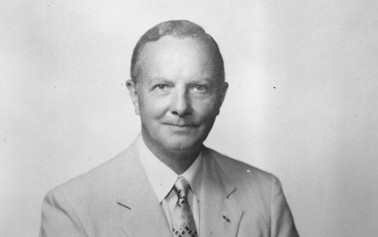

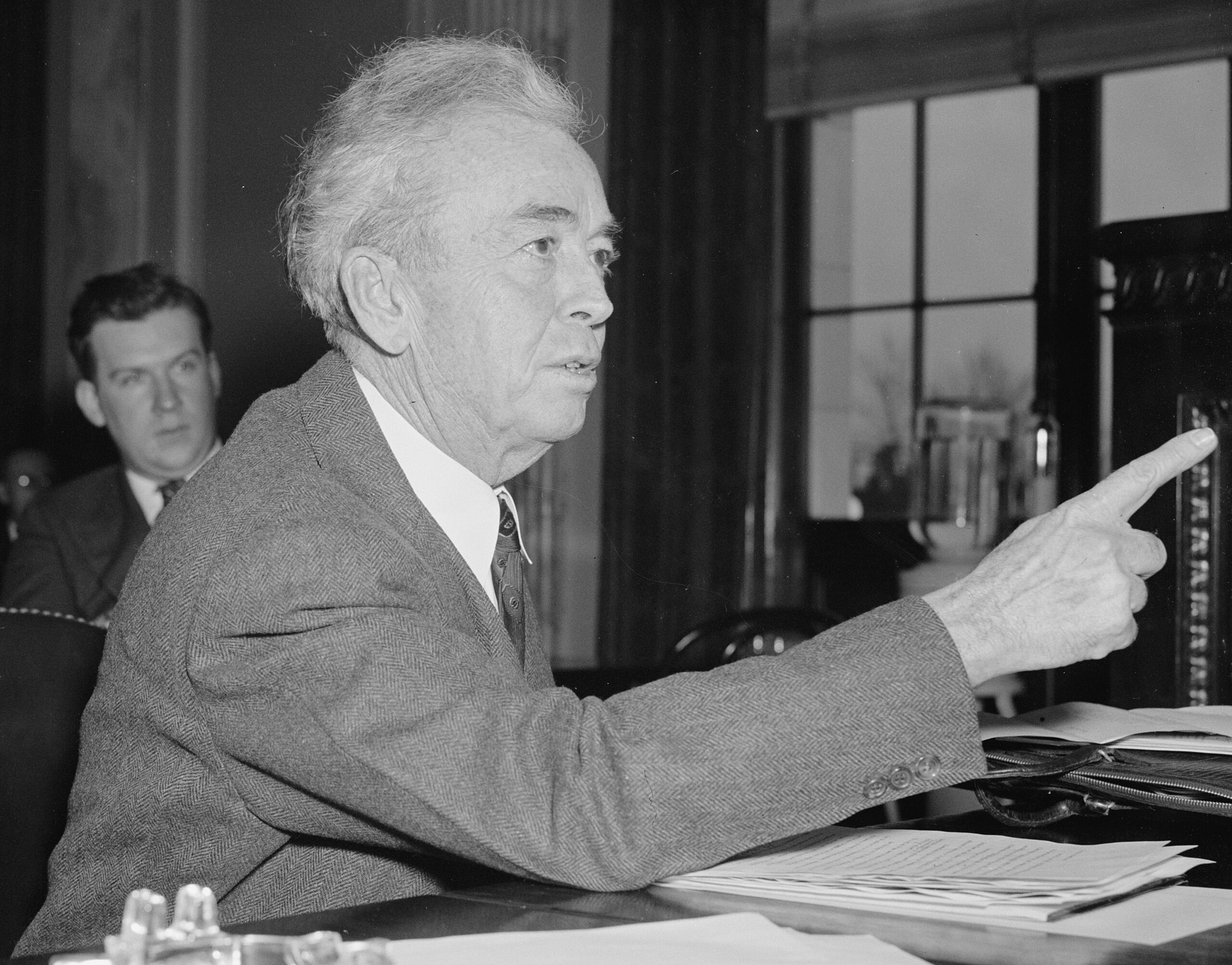
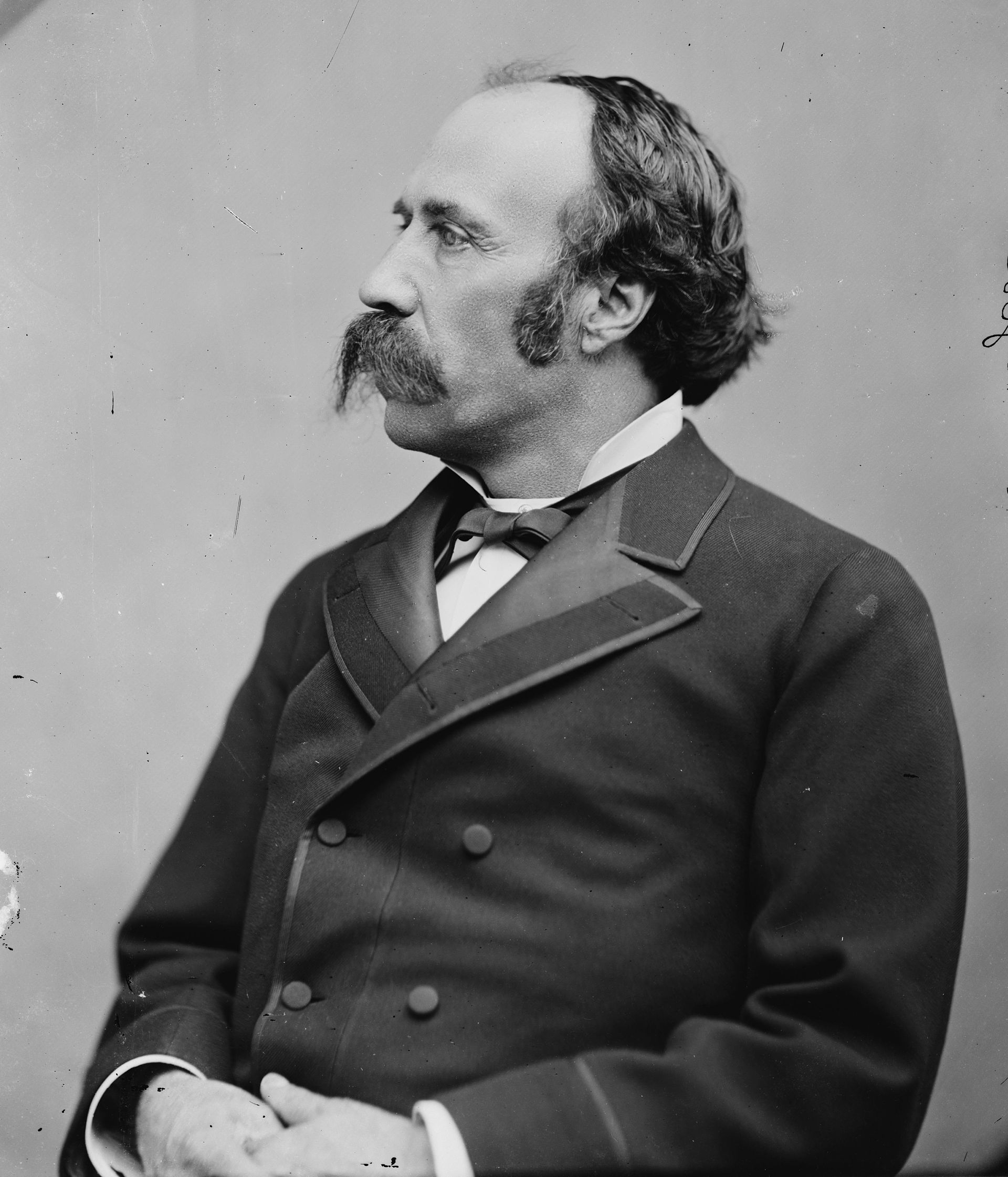

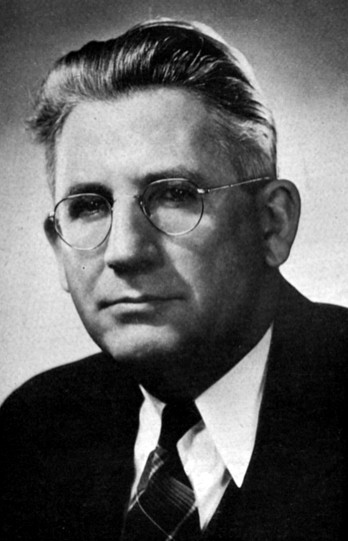
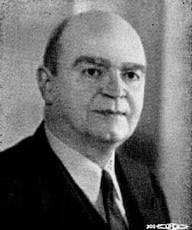

 Mad Politics: The Bizarre, Fascinating, and Unknown of American Political History