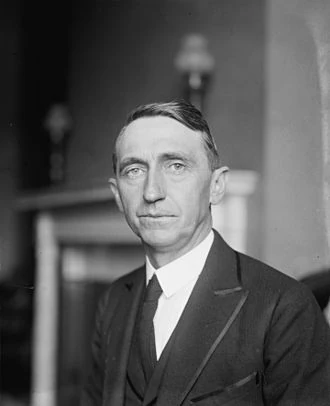
Earl Warren, Chief Justice of the Supreme Court and chairman of the Warren Commission
On November 22, 1963, the United States faced one of its greatest tragedies in the assassination of President John F. Kennedy. Although a controversial president in his day, Kennedy has since become an admired figure for Americans of many stripes. Only two days later, his assassin Lee Harvey Oswald was shot dead in the Dallas Police Garage while being transferred from city to county jail by Jack Ruby. In the wake of these events, President Lyndon B. Johnson issued Executive Order 11130 on November 29th, authorizing the creation of the President’s Commission on the Assassination of President Kennedy, which would popularly become known as the Warren Commission. Johnson was initially not for doing this, rather this was done to head off potential Senate and House investigations into the matter. The chairman was Chief Justice Earl Warren, whose tenure over the Supreme Court was highly transformative and controversial, and who had resisted multiple lobbying efforts by LBJ to place him on the commission, only being convinced to do so as Johnson foretold catastrophe if he wasn’t there. Also tapped for the committee were:
Senator Richard B. Russell (D-Ga.), chairman of the Senate Armed Services Committee and de facto leader of the Southern Democratic bloc of the Senate. He initially refused to be on the committee because he didn’t want to serve with Warren over his desegregation decisions, but the crafty fox LBJ basically voluntold him to be on the committee by publicly stating that Russell was going to be on the committee.
Senator John Sherman Cooper (R-Ky.), formerly Ambassador to India and highly respected on both sides of the aisle, one of the least partisan senators.
Representative Hale Boggs (D-La.), majority whip of the House.
Representative Gerald Ford (R-Mich.), a rising star in the GOP and chairman of the House Republican Conference.
John J. McCloy, chairman of the Council on Foreign Relations. McCloy is quite the figure, and one of the most powerful men in American politics to have never been elected to public office, as he held multiple positions of power in the government throughout his long life. I intend to write an extensive post about him one of these days.
Allen Dulles, director of the CIA, 1953-1961. Dulles was placed on the commission by LBJ to make sure that questions were not asked of CIA operatives that could expose operations.
On December 5th, the Warren Commission met for the first time to formally begin the investigation. 552 witnesses testified before the Warren Commission, including Oswald’s mother and wife, people present on the day of the assassination, President Lyndon B. Johnson and other politicians, police officers, contacts of Oswald and Ruby, CIA director John McCone and FBI director J. Edgar Hoover, and some others. Not all witness testimony proved productive. For instance, Professor Revilo P. Oliver was called to testify before the Warren Commission because of his article titled “Marxmanship in Dallas”, in which he claimed the possibility that Kennedy was assassinated because he was turning away from the communist mission. Oliver’s testimony proved both contradictory and based on speculation. However, more relevant problems would arise with the testimony of others to the committee, which will be covered in the second part. In the process of the investigation, Warren Commission staff member Arlen Specter (who would later have a 30-year career in the Senate) concluded that a single bullet went through both President Kennedy and Governor Connally, and this would become accepted in the report of the committee, although there was a lot more internal controversy than people at the time knew of the report’s release, but that will be for the second part.
On September 24, 1964, the Commission officially released its findings, exactly ten months after Oswald had been killed. The Commission reached the following major conclusions with all members signing the report:
There was no conspiracy, foreign or domestic, to kill JFK.
Lee Harvey Oswald was the sole man responsible for the assassination of JFK.
There was a single bullet fired that went through both Kennedy and Governor Connally.
Oswald had also shot Officer J.D. Tippit 45 minutes later.
Jack Ruby acted alone in murdering Lee Harvey Oswald.
At first, the public seemed to accept this conclusion. However, with time flaws and complications surrounding the committee and its work would come to public attention and the public would increasingly doubt the Warren Commission’s conclusions, as many do to this day. The next post will cover reactions, criticisms, and an overall takeaway from the Warren Commission’s views.
References
Andrews, E. (2024, August 19). 9 Things You May Not Know About the Warren Commission. History Channel.
The state of Georgia has had the benefit of having some political heavy-hitters in the Senate, most notably Richard Russell and Walter Franklin George (1878-1957). George was an attorney by profession, and he reached the prominence of serving on the state’s Supreme Court from 1917 until his resignation in 1922.
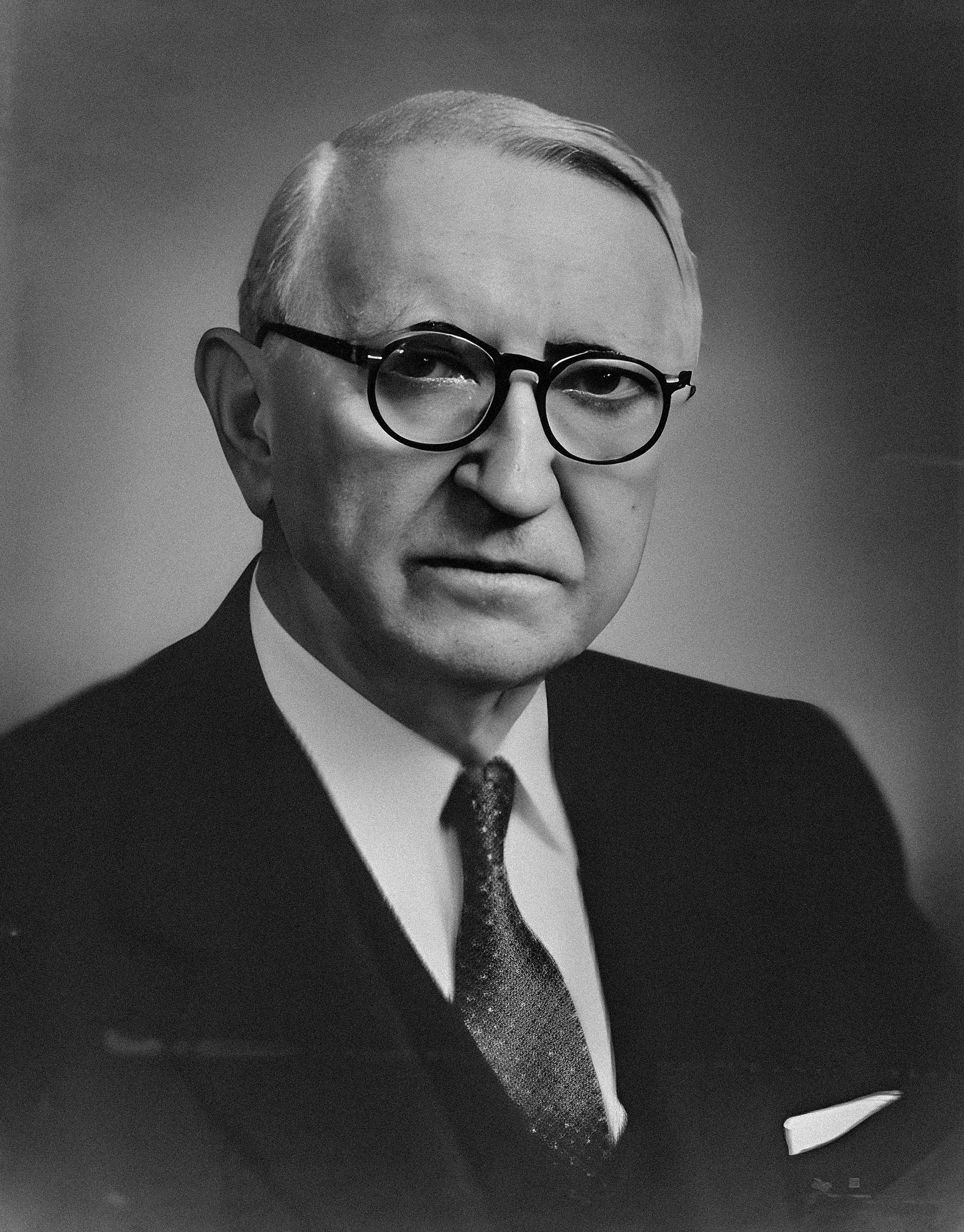
George in his early years in the Senate.
On September 26, 1922, Senator Thomas E. Watson, a fiery populist, died suddenly of a cerebral hemorrhage. Governor Thomas Hardwick, an anti-suffragist seeking to improve his political position with women, appointed Rebecca Latimer Felton to serve for a single day when the Senate was out of session, thus she cast no votes and the appointment was only symbolic. The true successor to Watson would be George. In this time, he was considered to be a liberal, and yes, in the more modern sense. The progressive The Searchlight magazine affirms this, “Among the new Senators, Dill, Wheeler, Mayfield, Copeland, and George are reported as fighting liberals, with Ferris and Ralston not far behind” (5). He undoubtedly was compared to the Republican presidents and most of the GOP’s officeholders of the day, opposing most of the policies of the Harding, Coolidge, and Hoover Administrations. This may seem rather strange given George’s historical reputation as a conservative, but there were numerous figures who were considered progressive or liberal in the 1920s who would prove a lot more conservative during the Roosevelt Administration. Indeed, among George’s positions were higher income taxes on the wealthy and backing veterans bonus legislation over President Coolidge’s veto. As a senator, he carried a respectable and dignified demeanor and even his wife, Lucy, would address him as “Senator George” (Hill). Speaking of his wife, she was something of a contrast to him. While George conveyed himself as a man of high dignity, Lucy was more down-to-earth and liked on Capitol Hill, including for her willingness to listen to and tell risqué stories (Hill). Like all other Georgia politicians of his day who won public office, George opposed all civil rights proposals, but he refrained from making race an issue in his campaigns and never promoted race hatred.
George and The New Deal
Although George had not backed FDR in the Democratic primary, he did support his 1932 campaign as well as most of the early New Deal measures, seeing in particular value in regulating the stock market with the Securities and Exchange Act, aid to agriculture through the Agricultural Adjustment Act, and the Tennessee Valley Authority. He also backed the National Industrial Recovery Act in 1933 and the Wagner Act in 1935, the latter being known as the “magna carta” of law protecting organized labor. George also supported veterans’ bonus legislation in 1935 and 1936, but this was in opposition to FDR, who wanted to hold down expenditures.
George vs. FDR
Although when he was first appointed to the Senate in 1922, George had a reputation as a progressive, by 1935 he was beginning to have some reservations about the New Deal, and he crossed FDR in his opposition to the “Death Sentence Clause” of the Public Utilities Holding Company Act and to bituminous coal regulation. He also opposed FDR’s court packing plan and his reorganization plan, the latter which critics dubbed the “dictator bill”. On August 11, 1938, Roosevelt delivered a speech in Barnesville, Georgia with George directly behind him, in which he sought to influence the Democratic primary. He stated after praising George for his intelligence and character, “Here in Georgia, my old friend, the senior Senator from the State, cannot possibly in my judgment be classified as belonging to the liberal school of thought – and, therefore, the argument that he has long served in the Senate falls by the wayside” and finished his assessment of George and politics with, “Therefore, answering the requests that have come to me from many leading citizens of Georgia that I make my position clear, I have no hesitation in saying that if I were able to vote in the September primaries in this State, I most assuredly should cast my ballot for Lawrence Camp” (The American Presidency Project). With this speech, Roosevelt, who was making an early effort at creating ideologically responsible parties, essentially read George out of the party. After the speech, George shook his hand and reportedly said, “I regret that you have taken this occasion to question my democracy. I accept the challenge” (Hill). Roosevelt had miscalculated badly on his purge effort, believing that his personal popularity in Georgia would move the needle in the primary, and George was renominated with FDR’s preferred candidate, Camp, coming in third behind Eugene Talmadge, who FDR wanted in office even less than George. With this victory, George both gained more stature in the Senate, particularly among FDR’s opponents, and subsequently opposed him more on domestic policy. FDR had made things worse for himself with this effort, and he would not attempt to meddle in primaries again. Reportedly, when someone around him remarked that Roosevelt was his own worst enemy, George remarked, “Not while I am still alive!” (Hill)
Committee Chairmanships and Influence
On November 10, 1940, Senate Foreign Relations Committee chairman Key Pittman (D-Nev.) died as a consequence of his alcoholism and George was next in line. He had come in at a rather critical time, and was chairman when FDR was pushing through Lend-Lease. Unlike on domestic policy, George was supportive of Roosevelt as his foreign policy was consistent with Wilsonian moralism and he was instrumental in pushing the measure through. However, his time on the Foreign Relations Committee would be short, and in 1941 he would reluctantly move to the chairmanship of the Senate Finance Committee, which was and is of similar importance to the Foreign Relations Committee. A confidential intelligence report on him from the British Foreign Office’s Isaiah Berlin read, “an honourable but narrow Southern Conservative, who incurred the displeasure of the New Deal in 1938 when an unsuccessful attempt to “purge” him was made by its then leaders (in particular [Edward] Flynn, [Harry] Hopkins, and [Thomas] Corcoran). This attempt increased his popularity in his State and in the Senate. He left the chairmanship of the Foreign Relations Committee in order to head the equally important Finance Committee, and is an exceedingly influential figure in the Senate, and the hope of Conservatives in many parts of the United States” (Hachey, 141-153). World War II would bring a tragedy to George and his wife, as one of their sons was a casualty. His other son, Heard, would later serve as his administrative assistant.
As chairman of the Senate Finance Committee, taxation was under his purview, and he was supportive of wartime tax relief, which FDR opposed. The final tax relief legislation would pass in 1944 over President Roosevelt’s veto, the first time a revenue bill had ever become law over a president’s veto. George would also support the Republican 80th Congress on income tax reduction, contrary to the position of the Truman Administration. He would also oppose the Roosevelt and Truman Administrations on labor policy, voting to override President Roosevelt’s veto of the Smith-Connally Labor Disputes Act in 1943 and President Truman’s veto of the Taft-Hartley Act in 1947.
Although George’s realm was in the Finance Committee, he remained a respected and influential voice on foreign affairs, and he backed the Truman Administration on Greek-Turkish aid and the Marshall Plan as did most Democrats. He also defended the latter from conservative efforts to cut the program on multiple occasions, but did not support Point IV aid, or foreign aid to poor rather than war-torn nations.
The George Amendment
In 1954, Senator John W. Bricker (R-Ohio) pushed for amending the Constitution for Congress to check the power of the presidency on foreign policy, and such a proposal was proving popular in the South. Minority Leader Lyndon B. Johnson (D-Tex.), however, was privately opposed to this measure, holding that it was “the worst bill I can think of” and asserted that it would be “the bane of every president we elect”, and was of course thinking of himself as well (Caro, 528). He thus courted Senator George to offer a substitute, and offer he did, while opposing a stronger version of the Bricker Amendment that was voted down. The Bricker Amendment as amended by George was adopted as a substitute, but its ratification failed by one vote.
George seemed to lessen in his conservatism a bit during the Eisenhower Administration if Americans for Democratic Action and Americans for Constitutional Action ratings are good measures for judging legislators, and in 1956 he sponsored a proposal to reduce the minimum age of receiving disability benefits under Social Security to 50, which was narrowly adopted 47-45. After all, George was something of a liberal on Social Security, having voted against the Knowland Amendment in 1950 which restricted the ability of the Social Security Administration to place mandatory minimums on unemployment compensation on states. By this time, George was 78 years old and looking at a strong primary challenge from former Governor Herman Talmadge, who was more willing to focus on race than George. He opted not to run for reelection given his heart condition as well as many of his supporters wavering on whether they’d vote for him in the primary (Hill). George’s DW-Nominate score, which covers his entire career, was a -0.064, which is high for a Democrat; from 1947 to 1956 he sided with the ADA position on key votes they counted 38% of the time, but only sided with the ACA position on key votes they counted 18% of the time. However, for the latter, this is a much more limited measure as they only counted votes for 1955 and 1956. George was overall his own man, his vote being one of dignified independence of presidential and party priorities. President Dwight Eisenhower subsequently selected him as the ambassador to NATO. However, it turned out to be just as well that he hadn’t run for reelection as he suffered a fatal heart attack on August 4, 1957. President Eisenhower subsequently ordered all US flags at federal buildings and other properties flown at half-mast in mourning.
References
ADA Voting Records. Americans for Democratic Action.
Hachey, T.E. (1973-1974, Winter). American Profiles on Capitol Hill: A Confidential Study for the British Foreign Office in 1943. Wisconsin Magazine of History, 57(2): 141-153.
I have covered George Wilson Malone (R-Nev.) a little bit in the past as one of Joseph McCarthy’s closest allies in the Senate, but he is rather interesting to me because of his parochial and somewhat odd record in the Senate. Malone, although known by the effeminate nickname “Molly”, was actually rather masculine, having been an amateur boxer in his youth. An interesting personal detail, a bit of a bombshell you might say, arises about him upon research. He was married since 1921 to Katie Moslander, who was fifteen years his junior. They had a daughter in 1920, when she was 15 years old! The age of consent in Nevada was 18 years old at the time (today it is 16). Professionally, Malone was a civil and hydraulic engineer, and as the state water engineer of Nevada from 1927 to 1935 he was involved in the planning and construction of the Hoover Dam. During World War II, he was an engineering consultant for the U.S. Senate.
His first try for the Senate was in 1934, and a newspaper ad for him pledged that “A Vote for George W. Malone will be a Vote For The State of Nevada, First, Last and All of the Time” (Nevada State Journal). As his Senate career later would prove, this was a truthful ad, as he would be criticized for focusing too much on the interests of Nevada. Nevada voters would not go for his pitch this time around, as Republicans were deeply unpopular generally nationwide and Key Pittman was a giant in Nevada politics. Malone would get only 33.4% of the vote. He would try for the Senate again ten years later, this time against Democrat Pat McCarran on a staunchly pro-tariff platform, but McCarran was far too powerful, and Malone was not a better alternative for liberals displeased with McCarran, and thus he netted 41.6% of the vote.
1946 – The Year of the GOP…and Malone
For Malone, third time was the charm, and it greatly helped that 1946 was an excellent year for Republicans, who had not held a legislative majority in either chamber since the Hoover Administration. Also helping was that the Democratic primary was bitter, and enough Democrats who had voted for incumbent Edward P. Carville were unwilling to back Berkeley Bunker, and Malone won with 55.6% of the vote.
In the Senate, Malone was considered an Old Guard Republican, which included support for income tax reduction, high tariffs, and a resolute opposition to internationalism. While his colleague, McCarran, had been non-interventionist before World War II, he voted for aid to Greece and Turkey as well as the Marshall Plan, this was not so with George Malone. In his career, he never met a foreign aid measure he liked, and this contributed to his low influence in the majority internationalist Senate. He opposed the Marshall Plan on the grounds that the United States was harming its international goodwill by backing European “colonial” powers (Evening Star). Malone’s strong focus on tariffs and regional issues did not help him either in influence. His parochialism resulted in Time Magazine regarding him as one of the Senate’s eight worst members in 1950 alongside Kenneth McKellar (D-Tenn.), Pat McCarran (D-Nev.), Harry P. Cain (R-Wash.), William Jenner (R-Ind.), Glen Taylor (D-Idaho), William Langer (R-N.D.), and Elmer Thomas (D-Okla.). Time Magazine’s (1950) entry read, “His Senate office is a rat’s nest of statistics on the West’s mineral resources and little else; his chair on the Senate floor is often vacant. Fifty-nine-year-old “Molly” Malone once represented the Western mining and industrial interests in the Capitol lobby; as a Senator, he still does”. One must admit, however, that foreign aid is generally far from the priorities of landlocked Nevada voters. However, Malone was not a down-the-line conservative. Contrary to what his entry on One Nevada Encyclopedia states, he was one of three Republican senators to vote against overriding President Truman’s veto of the Taft-Hartley Act and he backed extending rent control in 1950, although for the latter issue he had voted to cut funds for rent control enforcement the previous year as well as for a “local option” amendment strongly opposed by the Truman Administration. Regarding organized labor, Malone voted for the Americans for Democratic Action position on both votes counted on union reform and against the Americans for Constitutional Action position on five of five votes they counted on the subject in 1958. His record on civil rights was not terribly favorable. Although Malone voted for the Civil Rights Act of 1957 (as did all Senate Republicans), he supported both the jury trial amendment and striking 14th Amendment enforcement by the attorney general from the 1957 act, which served to water it down.
In 1950, he succeeded in killing a bill that would have permitted the interstate shipment of slot machines with an 11-hour filibuster, and after he was finished, he said, “I could still go 10 rounds and if they bring this bill up again, I’ll talk against it again” (Evening Star). That year, Malone weighed in on two civil rights issues: army desegregation and the Fair Employment Practices bill. For the former, Senator Richard Russell (D-Ga.) had managed to get an amendment in the draft bill that permitted “voluntary segregation” for drafted troops. Majority Leader Scott Lucas (D-Ill.) motioned to delete this amendment, which carried 42-29, and essentially serves as a vote to continue army desegregation. Malone voted with the majority. However, on voting to end debate on the Fair Employment Practices bill, a vote that was about breaking Southern obstruction on civil rights legislation, Malone was one of six Republican senators to vote against. Senators from the west most of the time voted against ending debate as a way of protecting themselves from what they regarded as domination from the east. Nevada senators had a state-specific motive for this, as there was always the potential threat of a federal crackdown on the casino industry.
Malone was also notable as a figure who was a pain for most senators to hear speak, as his speeches tended to be dull, verbose, and lengthy. As columnist Holmes Alexander (1950) wrote while noting that Malone did make some good points in his speeches, “Agoraphobia – fear of open spaces – does not afflict George W. Malone, junior senator from Nevada. Whenever Senator Malone takes the Senate floor, its inhabitants run for the cloakrooms and leave him there talking to the vacant seats and a fistful of Midwest isolationists. He doesn’t seem to mind. At least he’s used to it. The Nevadan always talks too long – seldom less than three hours. And he usually talks on the same subject – the bipartisan foreign policy. He is against it”. Although I hesitate to use the word “isolationist” to describe opponents of internationalism, it does seem to fit in Malone’s case. In 1956, he proposed that the United States remove all its troops from abroad and deploy them for defense in North America (Evening Star).
The cause for which Malone was identified with the most regarded one of the oldest planks in the history of the Republican Party, and that was support for high tariffs. His fundamental belief on trade was that relying on goods produced by low wages in other nations would in the long run wreck American business and labor alike (Evening Star). Malone was perhaps the staunchest protectionist in the entire Senate, going as far as to be one of only two senators to vote against a compromise extension of the Reciprocal Trade Act in 1951 that included a “peril points” (setting a floor on tariff reduction) provision GOP senators had unanimously pushed for.
The 1952 Election and the Eisenhower Years
Malone’s election in 1946 could perhaps be seen as a fluke given that he was prone to extreme stances on certain issues that set him apart from political modernity, such as trade and foreign aid. However, the Democratic primary didn’t go the way Senator Pat McCarran wanted, with Democrats voting to nominate liberal Thomas Mechling, an opponent of his machine. Thus, McCarran surreptitiously lent campaign staff and resources to Malone, and he won reelection while several of his 1946 Republican freshmen lost. As a consequence, the Senate was Republican-controlled.
Malone’s stances, while opposed to most of what President Truman stood for, were not that much better aligned with the Eisenhower Administration. In 1953, he was one of 13 senators to vote against confirming Charles Bohlen as Ambassador to the USSR, a group comprised of Joseph McCarthy and his hard-core supporters. He would support McCarthy down the line, voting against his censure and in 1957 called for striking his censure from the record. In 1956, he had a notable outburst when he leapt over a table at a British diplomat in San Francisco in response to an insult during a dignified luncheon (The Evening Star). That year, Malone was noted by internationalist Paul Hoffman as one of the troublesome senators who should be read out of the GOP, with columnist George Sokolsky (1956) writing, “Senator George Malone is opposed because no one can control him. He goes his own way really not belonging wholly to one side or another. Independence of that sort is not welcomed and although George Malone spoke well of the Russians after his visit to their country, it has not won for him the support of those in our government who prefer Zhukov to Khruschev, which is none of our business”. He could sometimes go his own way through persuasion. Majority Leader Lyndon B. Johnson (D-Tex.) would occasionally court Malone for his vote on issues he wasn’t known to be a hardliner on. Some instances of him changing his mind included on the prevailing wage for the Interstate Highway Act in 1956, having initially voted against applying the prevailing wage but then voting for it. In 1958, Malone voted against an effort to kill the anti-preemption bill being considered (I have discussed this bill in an earlier post), but then voted to send the bill back to committee for the session. He also could be persuaded to vote for some social welfare measures, including being one of six Republicans to vote for Senator Walter George’s (D-Ga.) 1956 amendment starting disability payments under Social Security at age 50, which passed 47-45. In 1958, Malone was one of only three Republicans to vote for Senator John F. Kennedy’s (D-Mass.) amendment to expand coverage of unemployment compensation and weekly payments as well as mandating 39 weeks of unemployment benefits for states.
The 1958 election year was terrible for the GOP, and Malone faced a strong challenger in Las Vegas city attorney Howard W. Cannon and did not have the benefit of Pat McCarran being around. Although Eisenhower cabinet secretaries Fred Seaton and Ezra Taft Benson backed his reelection and Malone touted his seniority as well as his opposition to a federal tax on gambling, he lost reelection to Las Vegas’s city attorney Howard Cannon, getting only 42% of the vote, being one of 12 Republican senators defeated. His DW-Nominate score was a 0.312, and his Americans for Democratic Action scores were overall low with a cumulative of 14% when counting pairs and not counting absences against, with him thrice scoring zeroes. Malone’s Americans for Constitutional Action cumulative score was, including counting pairs, a 68% based on his record from 1955 to 1958. After his time in the Senate, he would achieve a dubious distinction; being the only former senator to ever work for Willis Carto. Like Malone, Carto was a protectionist, and he brought him on as a trade expert for Liberty Lobby’s Trade Policy Committee, where he lobbied for the adoption of a “scientific tariff”. Carto would later write glowingly of Malone in his book, Populism vs. Plutocracy: The Universal Struggle, in which he praised numerous figures from American history who opposed internationalism and/or banking interests, which also included Andrew Jackson, Robert La Follette, and Robert Taft.
Malone attempted a comeback in 1960, running for Nevada’s at-Large Congressional seat held by Walter Baring, but he was easily defeated. The following year, he was diagnosed with cancer, and died on May 19, 1961, after a week of hospitalization. Although not influential, Malone was far from unpopular, as 27 of his Senate colleagues attended his funeral. One thing that is clear to me is that the current Republican Party has a far greater home for Malone than the one in his day had.
References
Alexander, H. (1950, March 8). Unheard Talk. Fort Worth Star-Telegram.
In the stead of larger-than-life characters, their key helpers get overlooked, and that is certainly the case with John Holmes Overton (1875-1948), whose time in politics was longer than that of his famous friend, Huey Long.
An attorney by profession, Overton attempted to get into office in 1918 when he ran for the Senate, but lost the primary to Edward Gay, who served only a short time before opting to call it quits. In the meantime, Overton befriended the considerably younger Huey Long of the Louisiana Public Service Commission, which if it was in any part political calculation, it was a highly intelligent one. Although Long’s first bid for governor failed in 1924, four years later he was elected. His methods of using (and abusing) his power resulted in his impeachment in 1929, and in the process, Overton served as his counsel. He defended him thusly, in language that perhaps we find familiar, “I’ve supported every governor that has been elected in Louisiana for twenty-five years, all on promises that they have made to the people. Not one of them has been able or, if able, willing to carry out what was expected of him. The present governor is throwing out of office the clique that all other governors promised to throw out. He is backed to the wall in his efforts to redeem his campaign pledge” (Long, 149). After a round robin statement was issued by a group of state senators that they wouldn’t impeach him under any circumstances, it was clear that Long would remain in office. In 1930, Overton was elected to the House for a single term, and his voting was at that time on the liberal side. As a loyal Long man, Long was sure to throw his weight in support of him in the 1932 Senate election, in which he defeated Edwin Broussard, who was of the Democratic Party’s conservative wing. It sure didn’t help Broussard that he hadn’t supported Long’s run for the Senate two years earlier. From 1933 to 1935, Overton served with Long in the Senate, and Overton mostly voted with Long, although unlike Long he voted for the Reciprocal Trade Act in 1934.
Overton’s political benefactor was assassinated in 1935, but his career survived; he was easily renominated in his own right in 1938. Incidentally, after his reelection, his record began increasingly shifting to the right. Like many Southerners during the Roosevelt Administration, Overton grew more conservative over time despite his initial support of New Deal laws. In 1939, Overton voted against the Neutrality Act Amendments, which repealed the arms embargo, thus permitting the US to trade arms with belligerent nations. However, he would support the Lend-Lease Act in 1941. By 1944, the rotund Overton was in declining health, and he initially announced that he would not run again. However, pleas to reconsider from many of his Senate colleagues as well as Governor James Noe announcing that he would run for the Senate convinced him to reconsider, and he won renomination (which was tantamount to reelection for a Democrat in Louisiana).
Overton vs. Daylight Savings Time
Of all the senators, no one was more opposed to Daylight Savings Time than John Overton. Daylight Savings Time was used inconsistently since World War I, but President Roosevelt reenacted it in 1942, which lasted until September 30, 1945 (national daylight savings time would come long-term with the Uniform Time Act of 1966). Overton in response threatened to place an ad in the lost and found section of the newspaper reading, “Lost — somewhere between sunrise and sunset, one golden hour, set with 60 diamond minutes. No reward is offered; it is lost forever” (Hill). Overton would not even in practice accept it during this time. His office’s schedule ran on what he referred to as “God’s time”, placing a sign on his office that read, “This Office Runs on God’s Time”, and this humorously made coordinating meetings with him a bit of a challenge for his fellow Louisianan Allen Ellender (Hill).
The 80th Congress and the End
In 1947, Overton attempted to have Senator Theodore Bilbo (D-Miss.) seated, which the Republican majority refused to do due to Bilbo’s publicly implying that intimidation and violence should be used to prevent blacks from voting. Although Huey Long was seen as favorable to the working man, Overton came to the conclusion that many Southerners and Republicans had…labor unions had become too powerful. To liberals, his vote for the Taft-Hartley Act was a repudiation of the working man. George S. Long, Huey Long’s brother, wrote to him that “you have quit the people who elected you to office” (Hill). In the 80th Congress, the liberal Americans for Democratic Action found that in 1947 he had voted their way 5 out of 9 times and the following year 5 out of 8 times. His overall DW-Nominate score was -0.053, which is just a hair higher than that of departing Senator Joe Manchin of West Virginia, and lower than that of Susan Collins. Per that scaling system, Overton is both to the right of all Democrats serving in Congress and to the left of all Republicans serving in Congress. Overton supported Truman’s foreign policy as well as his stance against GOP-pushed tax reductions in the 80th Congress, while opposing public housing and the nomination of David Lilienthal to head the Atomic Energy Commission. His poor health caught up with him in May 1948 when he developed an intestinal obstruction. Although he had emergency surgery, he died on the 14th.
References
Congressional Supplement. (1948). Americans for Democratic Action.
S. Res 1. White Motion That the Oath of Office be Administered to Brewster. Taft Motion to Table Overton Motion to Substitute the Name of Bilbo. Govtrack.
For the last roughly 90 years Rhode Island has been a Democratic state. This was not always so, but immigration of Irish Catholics as well as the Democratic Party gaining the ability to win Senate seats in the state thanks to direct election of senators resulted in the state’s Democratic orientation, it being the first of the New England states to become Democratic in the long term since the founding of the Republican Party. One figure, however, who defied the modern trend was John Chafee (1922-1999), although he was a different sort of Republican than those of the age of Republican dominance.
Chafee’s political career began in the 1950s, and in 1956 he won a seat in the Rhode Island House of Representatives, later being elected minority leader. He also survived the 1960 election, in which Rhode Island was Kennedy’s best performing state and many Republicans lost reelection. His status as a leader and as a survivor made him a top candidate for the upcoming gubernatorial election. In 1962, Chafee ran and narrowly won in the closest gubernatorial race in the state’s history, winning by a mere .12%. Despite the 1964 election being yet another catastrophe for Republicans in Rhode Island (LBJ won 81% of the vote there), Chafee defied this trend and won reelection with 61% of the vote, carrying all counties. He did even better in 1966, with 63% of the vote. He was a productive governor, enacting public transportation and conservation legislation, and was a supporter of civil rights measures. However, Chafee’s record as governor was marked in some cases with inconsistency, particularly on the issues of public sector unions and pensions, such as supporting collective bargaining for teachers, but not government workers, and backing retaining a minimum age requirement for receiving pensions for government workers but removing it for teachers (Frias).
Despite Chafee having won reelection so strongly in 1964 and 1966, he narrowly lost reelection in 1968 over the issue of enacting a state income tax (he was for it after being against it) and that he stopped campaigning after his 14-year-old daughter tragically died from being kicked in the head by a horse. With this loss, however, came opportunities with the incoming Nixon Administration, and he was nominated and confirmed as Secretary of the Navy, his tenure being marked by his bold decision-making. In 1972, he resigned to run for the Senate.
Chafee’s run for the Senate was a significant undertaking and one in which he actually had a chance despite the state’s Democratic orientation. The 1972 election was initially looking bad for incumbent Claiborne Pell, and he was losing in early polls. However, the Senate overall turned out to be a disappointment for Republicans despite Nixon’s landslide win, and Chafee lost by 8 points. Although Chafee was down, this was the most significant challenge Pell ever faced, and he was not out! In 1976, he tried again for the open seat being vacated by John O. Pastore, and he won.
Senator Chafee
John Chafee was a Rockefeller Republican. He was pro-choice, anti-death penalty, pro-affirmative action and busing, a supporter of strict gun control, a supporter of gay rights, opposed to school prayer, and supported the creation of the Department of Education. Chafee also was a leading advocate of environmental legislation throughout his time in office, and sponsored numerous laws on the subject, including establishing the superfund program. On foreign policy, Chafee was frequently liberal, backing foreign aid as well as the Panama Canal Treaties. Although not a rigid adherent to free market principles, he opposed the Chrysler bailout in 1979. His scores from Americans for Constitutional Action ranged from a mere 14% in 1982 to a 58% in 1984 (the last year ACA did ratings), and from the liberal Americans for Democratic Action ranged from 30% in 1995 to 90% (although this is based on not counting his favorable pair for an abortion measure) in 1988. Chafee’s DW-Nominate score is 0.084.
During the Reagan Administration, although Chafee as had almost all Republicans supported tax reduction, he opposed the portion indexing taxation to inflation and in 1984 sponsored an amendment delaying tax indexing’s implementation to 1988. On fiscal issues, Chafee could sometimes be conservative, and he supported some defense measures backed by conservatives, including backing President Reagan on his sale of Airborne Warning and Control systems to Saudi Arabia. Chafee’s independence from the national Republican Party was a winner in Rhode Island and certainly helped him narrowly win reelection in 1982. He would solidly win reelection in 1988 and 1994, the former being particularly notable as Democratic candidate Michael Dukakis won the state. Despite his frequent dissents from Republican orthodoxy, Chafee was elected chairman of the Senate Republican Conference in 1985, the third highest ranking position in party leadership, and served in this role until 1991. Although for the Supreme Court he backed William Rehnquist for chief justice and Clarence Thomas, he voted against Reagan’s nomination of Robert Bork in 1987. Some other notable votes Chafee cast included his vote for entering the Gulf War in 1991 and for NAFTA in 1993.
Chafee was, as might be expected, far from fully on board with the policies pushed with the Republican Revolution of 1994, and he had sponsored a compromise measure on healthcare which included an individual mandate. He also opposed the impeachment of President Clinton, voting against both counts. By this time, Chafee’s health was declining, and he announced on March 15, 1999, that he would not be a candidate for reelection. Before his term was up, he died on October 24th, mere weeks after being one of four Republicans to vote for the Comprehensive Nuclear Test Ban Treaty pushed by the Clinton Administration. His very last vote was for a resolution expressing the Senate’s support of Roe v. Wade. His son, Lincoln, was appointed to the Senate to succeed him, and he was elected to a full term in his own right in 2000 before losing reelection six years later to Democrat Sheldon Whitehouse. The Chafees remain the last Republicans to have been elected to the Senate from Rhode Island.
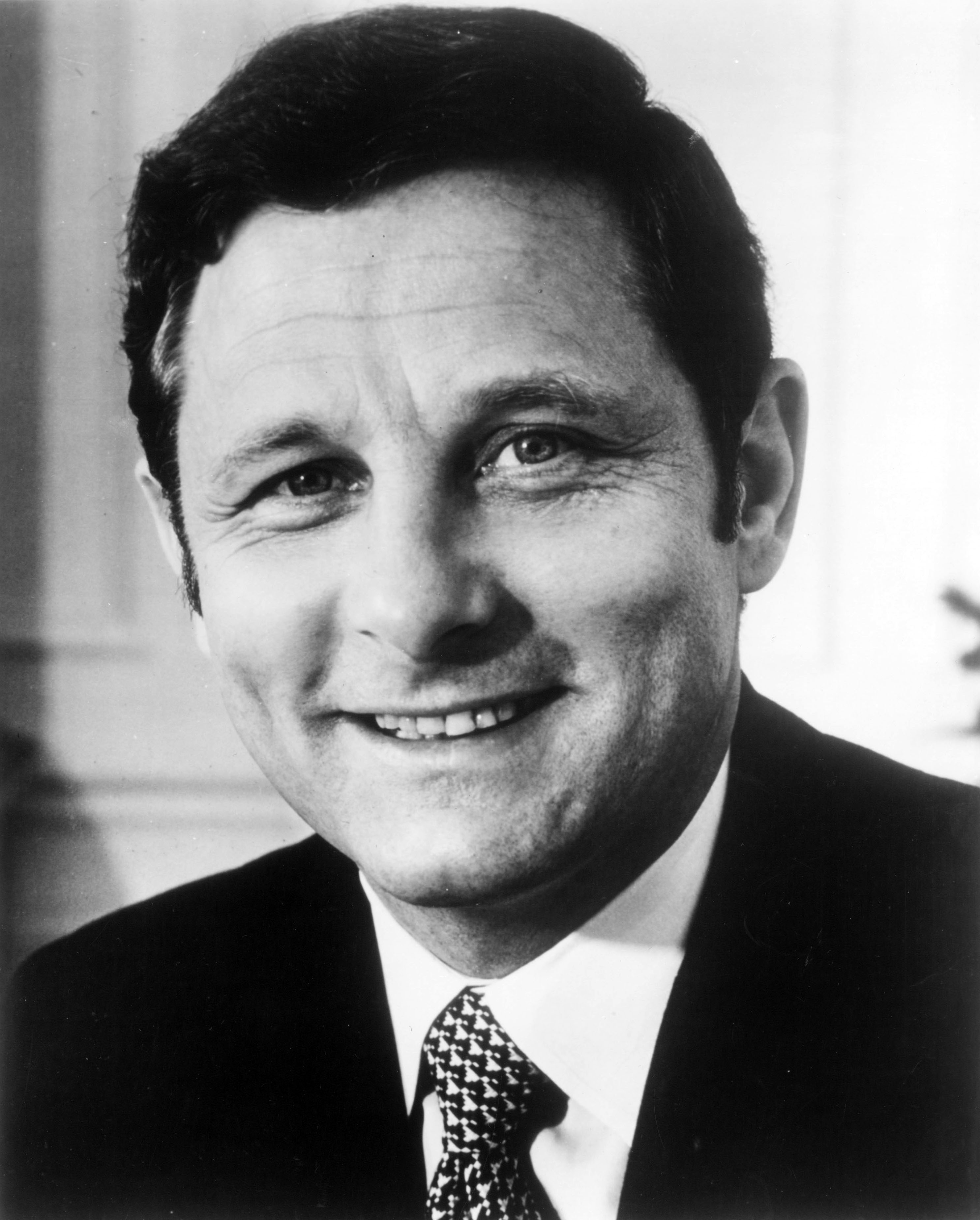
Birch Bayh (D-Ind.), the Senate sponsor of both the 1970 and 1979 efforts to scrap the Electoral College.
One thing I think Americans should be thankful for with this past election is that the popular and electoral vote went in the same direction. Although yes, I know technically that the electoral vote is what wins elections, there’s an additional sense of legitimacy if the popular vote goes the way of the electoral winner. Many people favor eliminating the Electoral College, but that requires a Constitutional change, and that is a difficult matter. This, by the way, is far from a new proposal.
Opposition to the Electoral College is older than you might think…in 1823, Senator Thomas Hart Benton of Missouri, later a founder of the Democratic Party, wrote, “Every reason which induced the convention to institute Electors has failed. They are no longer of any use, and may be dangerous to the liberties of the people” (O’Brien). Even a retired President James Madison, the father of the Constitution, had not supported maintaining the status quo of the Electoral College. He supported a district plan in which states would be divvied up into districts for presidential votes, and each district would choose its electors (O’Brien). President Andrew Jackson was the first to call for its outright abolition in favor of the popular vote. So just remember, when liberal Democrats push for the popular vote over the Electoral College, they are, in fact, acting as traditional Democrats. Some 20th century efforts to abolish or alter the Electoral College were pushed, as direct democracy grew in popularity.
In 1913, Senator Robert Owen (D-Okla.), a progressive and one of the fathers of the Federal Reserve, proposed substituting the electoral college with the popular vote, but this proposal failed on January 31st 32-36 (R 12-27, D 20-9). The Southern vote, perceived as particularly strong against changing the Electoral College, was 6-8 on this proposal. The conservative wing of the GOP overwhelmingly voted against.
In 1934, Senator George W. Norris (R-Neb.), one of the GOP’s most celebrated progressives, pushed for the popular vote of the president and vice president. He had been at the forefront of several movements towards direct democracy and was the father of the amendment to the Constitution that eliminated the “lame duck” session of Congress, and had the presidential term start on January 20th rather than March 4th. This proposal failed to achieve the necessary 2/3’s on a vote of 52-29 (D 40-9; R 11-20; FL 1-0) on May 22nd. The Southern vote was 15-5 for this proposal, the opposition making up 56% of Democratic opposition. Among the Republicans, there was a clear split with the party’s moderate to liberal wing voting for and the party’s conservative wing voting against. This was the high watermark of Southern support for scrapping the Electoral College.
1950: The Lodge-Gossett Amendment – Electoral College with No Electors
In 1950, Senator Henry Cabot Lodge Jr. (R-Mass.) and Representative Ed Gossett (D-Tex.) proposed an amendment to the Constitution that abolished electors and maintained the electoral numbering system, with electoral votes allocated proportionately to the vote. This is known as the fractional-proportional method, and everyone would have had motivation to vote in their states as the electoral vote of a state was no longer to be winner take all. Lodge, a moderate, thought this a good compromise between those who would want to abolish the electoral college and those who wanted to retain the power of states and wanted the GOP to make some headway in the South. His colleagues largely thought the same on the merits of the amendment, and it passed 64-27 (D 46-4; R 18-23) on February 1st. The Senate’s opposition, interestingly enough, consisted almost entirely of conservatives. Gossett, however, was a conservative Democrat and had some other motivations, wanting to limit the power of urban areas and of radicals and racial and ethnic minorities to push left-wing policies and civil rights bills. He expressed his views in 1949, “The Electoral College permits and invites irresponsible control and domination by small organized minority groups, within the large pivotal States. It aggravates and accentuates the building up and solidification within these States of religious, economic, and racial blocs. Small, definable, minority groups, organized religious or economic or racial lines, by voting together, can and do hold a balance of power within these pivotal States. As a result, the political strategists in both parties make special appeals to these various groups as such. These groups have become more and more politically conscious. They know their power. In many instances, they have no political alignments or philosophy as such, but are simply up for sale to the highest bidder. To encourage economic racial, and religious group consciousness and group action, is a dangerously undemocratic practice, aside from its other evil consequences” (National Popular Vote, 5-6). The timing of this amendment is interesting too, as in 1948, both major parties adopted pro-civil rights platforms, and some Southern Democrats broke away from the Democratic Party that year to back the explicitly segregationist State’s Rights Party, which ran South Carolina Governor Strom Thurmond. Given the South’s unity at the time against civil rights legislation, this would turn the South into an even more powerful voting bloc. Once Gossett’s motivations became clear, support for the amendment among Northern liberals collapsed. On July 17th, the Lodge- Gossett Amendment was easily defeated 134-210 (D 85-116; R 49-92; L 0-1; ALP 0-1). This reform proposal was not brought up again.
1956 – Electoral College Reform Debate
In 1956, reforming the Electoral College was brought up again. An effort to abolish the Electoral College and institute the popular vote fared badly in a Senate vote of 17-66 (D 16-25; R 1-41) on March 27th. After the failure of this proposal, liberal Senator Hubert Humphrey (D-Minn.) pushed a compromise reform that would award two electoral votes to the winner of each state and the rest would be proportionately represented (Goldman). This proposal was shelved on voice vote, and no proposed reform had 2/3’s support.
The Nixon Era: The Electoral College Comes Closest to Its Demise
In the 1968 election, although Richard Nixon won by 110 electoral votes he had won with less than 1% in the popular vote, and the third party candidacy of George Wallace was fully intended not to win, but rather to try to force the winner into making a deal with him. Much was also made of a faithless Nixon elector in North Carolina voting for Wallace instead. This set the stage for the consideration of the Bayh (D-Ind.)-Celler (D-N.Y.) Amendment, which if adopted would have scrapped the electoral college but not replaced it with an outright popular vote, rather a two-round system akin to how presidential elections work in France. There would be a first election, and if no duo won at least 40% of the popular vote, there would be a runoff election. The momentum for supporting this proposal was quite strong, with President Nixon as well as Speaker John W. McCormack (D-Mass.) and Minority Leader Gerald Ford (R-Mich.) in support. After a last-ditch effort by conservative Rep. David Dennis (R-Ind.) to institute a district plan was voted down 162-246 (D 62-166; R 100-80), the House passed this amendment on a vote of 339-70 (D 184-44; R 154-26) on September 18, 1969. Nearly all Democrats opposed were from the South, but interestingly two members of the Congressional Black Caucus, Charles Diggs of Michigan and Bill Clay of Missouri, also voted against. However, opposition grew when the measure reached the Senate, and there was a much less favorable climate in the Senate’s Judiciary Committee, as the chairman was James Eastland (D-Miss.) and his Republican counterpart was Nebraska’s Roman Hruska. Both men were strongly opposed to scrapping the Electoral College, and a bloc of Southern and some small state senators, notably Strom Thurmond (R-S.C.) and Carl Curtis (R-Neb.), filibustered. Two motions to end debate failed 54-36 (D 33-18; R 21-18) and 53-34 (D 34-15; R 19-19), and the proposal was scrapped after Majority Leader Mike Mansfield (D-Mont.) gave up in the midst of attempting a third, realizing he didn’t have the votes to proceed. Most of the Democratic opponents were from the South, and the Senate Republicans voting against were mostly a who’s who of its conservative wing.
1979: Jimmy Carter Supports Popular Vote
One of the presidents who supported abolishing the Electoral College was Jimmy Carter, who proposed simply a substitution of the popular vote. This proposal was debated on in the Senate as a Constitutional amendment, again sponsored by Senator Birch Bayh (D-Ind.), but there were some defections among Senate liberals for reasons that are similar to why liberal support collapsed for the Lodge-Gossett Amendment in 1950. These senators were convinced by arguments from black and Jewish groups that the Electoral College would cost them political influence, and the vote was 51-48 on July 10th, far short of the 2/3’s needed to adopt a Constitutional amendment (Weaver). Of the 22 Southern senators, only 6 supported, most of them being “New South” Democrats, a moderate to liberal sort that won with multi-racial coalitions. Another opponent of this proposal was none other than Joe Biden of Delaware.
Other proposals have been made since to abolish the Electoral College, but have not received votes, as attaining the 2/3’s majority is a highly difficult task. Instead, some other movements have been underway, including the National Popular Interstate Vote Compact to try to make the Electoral College irrelevant by granting all electoral votes to the popular vote winner, but this doesn’t go into effect until the number of states that agree to it amounts to 270 electoral votes.
What I found interesting is that although modern narratives surrounding the Electoral College that I’ve read recently seem to like to paint it as a part of historical racism that there were arguments for keeping it as a bulwark against racism. This impacted the 1950 debate on Lodge-Gossett and the 1979 effort to repeal the Electoral College. Furthermore, political journalist Theodore H. White held about scrapping the electoral college in 1970 that a direct election system would produce results that would go “brutally against our black population” and that it would “give the racists a chance” (CQ Press).
References
Electoral College Reform Victim of Senate Filibuster. CQ Press.
S.J. Res. 2. Joint Resolution Proposing an Amend. To the Constitution Providing for the Election of a Pres. And Vice-Pres. On Motion to Suspend the Rules and Pass. Govtrack.
S.J. Res. 31. Electoral Reform. Substitute Proposal to Abolish Electoral College and Elect President and Vice-President by Direct Popular Vote. Govtrack.
To Pass S.J. Res. 26, Providing for the Direct Popular Election of the President and Vice President of the United States. (Motion Failed; 2/3 Required). Govtrack.
To Recommit H.J. Res. 681, Proposing an Amendment to the Constitution Relating to the Election of the President and Vice-President, to the Committee of the Judiciary with Instructions to Report it Back Forthwith with an Amendment Incorporating the “District Plan”. Govtrack.
The Department of Government Efficiency (DOGE) is aiming to find waste, inefficiency, and areas to cut government spending. One subject that they have touched on is veterans benefits as has prospective Trump nominee to the post of Secretary of Defense Pete Hegseth. On that one from a historical perspective, they are in for one hell of a fight! Veterans’ benefits have a long history of being politically difficult to resist. In 1949, for instance, the House by only one vote rejected Veterans Affairs Committee chairman John Rankin’s (D-Miss.) measure that would have provided for a massive pension program for World War I and World War II veterans at $90 a month (or $1,193.69 in October 2024 dollars) starting at age 65 that at the same time would have served to fiscally prevent President Truman from expanding Social Security as he planned (Time Magazine). The measure’s defeat was in no small part due to the vocal opposition of certain World War II veterans in Congress, most notably Olin “Tiger” Teague of Texas, the second-highest decorated soldier of the war. Even President Roosevelt at the height of his power struggled with the issue.
Speaker Henry Rainey (D-Ill.) was perfectly willing to let the executive branch write laws and have the House rubber stamp them, but there was a fight in the early New Deal that Roosevelt lost, and not even the opposition of Speaker Rainey could overcome this, and this was on funding New Deal programs in part through cuts in veterans’ benefits.
The first New Deal law to pass, and one that actually got substantial support from conservatives, was the Economy Act, which cut spending for the purposes of making room in the budget for FDR’s New Deal programs and served to effectively repeal all laws passed after the War of the Rebellion for veterans’ pensions, granting FDR the power to restructure veterans’ benefits, and he did so by cutting benefits by over $400 million. This provoked a lot of bipartisan opposition, including from individuals thought of as progressive in this time, such as Senator Burton Wheeler (D-Mont.). On June 14, 1933, the Senate responded to FDR’s veterans’ benefits reduction with the Steiwer (R-Ore.)-Cutting (R-N.M.) amendment 51-39 (D 19-39; R 31-0; P 1-0) to the Independent Offices Appropriations bill, which if enacted into law would have only permitted Roosevelt to cut up to 25% of an individual veteran’s benefits, amounting to a maximum overall reduction between $100-160 million. Interestingly, this vote presaged further opposition to Roosevelt’s agenda in the future, most notably on foreign policy, from certain senators who were at least nominally for the New Deal at this point, including Wheeler, Pat McCarran of Nevada, and Robert R. Reynolds of North Carolina. This was also a point of contention between the flamboyant Huey Long of Louisiana and the president. Roosevelt was prepared to veto the bill if the amendment remained, but the House came to his rescue and refused to adopt Steiwer-Cutting 177-209 (D 79-201; R 93-8; FL 1-0) the following day. However, the battle was far from over on veterans’ benefits, the most hotly contested part of the Economy Act, and the House voted to increase veterans benefits to largely offset Roosevelt’s cuts. Although President Roosevelt vetoed the bill, the House overrode his veto of the bill 310 to 72 (D 209-70; R 97-2; FL 4-0) on March 27, 1934. Among Republicans, only Robert Luce and George Tinkham of Massachusetts, normally opponents of Roosevelt and the New Deal, voted against this effort. Although Majority Leader Robinson (D-Ark.) was more successful at persuading his fellow Democrats to sustain Roosevelt’s veto, his veto was overridden the following day 63-27 (D 29-27; R 33-0; FL 1-0) that same day. This would be predictive of the override of another of President Roosevelt’s vetoes, on the Patman Bonus bill. Like President Hoover before him, Roosevelt opposed the Patman Bonus bill, which permitted veterans to collect their bonuses at any time as opposed to 1945 as established by the 1924 World War Adjusted Compensation Act as a budget-busting measure. Unlike with the appropriations bill, he got some sizeable conservative Republican support for his position. Although the House overrode President Roosevelt’s veto on May 22, 1935, 322-98 (D 248-60; R 64-38; P 7-0; FL 3-0), Majority Leader Joseph Robinson (D-Ark.) was successful in getting the Senate to sustain the veto the following day 54-40 (D 41-28; R 12-12; P 1-0). However, a compromise Patman bill was pressed into 1936. This one managed to pass over President Roosevelt’s veto, with members of Congress feeling more pressure as the next election approached. The House voted to do so on January 24th 326-61 (D 249-32; R 67-29; P 7-0; FL 3-0) and the Senate voted to do so 76-19 (D 57-12; 17-7; P 1-0; FL 1-0) three days later. Although veterans’ organizations advised veterans to wait until 1945 to collect, many chose to do so right away. This measure would essentially serve as a stimulus for veterans. Roosevelt would later do quite well for veterans in his signing of the GI Bill in 1944.
References
Ortiz, S.R. (2009). Beyond the Bonus March and GI Bill: How Veteran Politics Shaped the New Deal Era. New York, NY: NYU Press.
Although there is no royalty in the United States and never can be as a matter of constitutionality (unless we decide to repeal that part of the Constitution for reasons that escape me), there have been political families who have been tremendously influential: the Kennedys, the Bushes, and the Roosevelts. Two of FDR’s sons had political careers of their own in FDR Jr. and James Roosevelt. Today I will be writing about the former, who fell far from the tree of his father in terms of political acumen.
When it came to war service, President Roosevelt was no hypocrite, and Franklin Delano Roosevelt Jr. (1914-1988) served in the war and he did so with honor. In his personal life, however, Roosevelt Jr. had issues, being married a grand total of five times. In 1948, he sought to recruit Dwight Eisenhower for the Democratic nomination, not knowing that his true sympathies lay with the Republicans. His time for public office would come in 1949.
Congressional Career
In 1949, longtime Congressman Sol Bloom, who had been chairman of the House Foreign Affairs Committee, died, and Roosevelt Jr. ran to succeed him, managing to defeat the Tammany Hall picked candidate as the Liberal candidate. Roosevelt Jr., who would win his subsequent reelections as a Democrat, was per Americans for Democratic Action a perfect liberal during his time in Congress, never having voted against a single one of the issues they regarded as a key vote. He supported public housing, price controls, foreign aid, reciprocal trade, public power, more immigration, and opposed the McCarran Internal Security Act. His DW-Nominate score was quite a low -0.619. Although Roosevelt Jr. was a perfect liberal by the standards of Americans for Democratic Action, he proved a poor member of Congress for laziness and general lack of enthusiasm for the job. Speaker Sam Rayburn of Texas would tell his brother James upon his entrance into Congress in 1955 to “not waste our time like your brother did”, and James himself would recount that Jr. “had a dreadful record in Congress. He was smart, but not smart enough. He had good ideas and the power of persuasion, but he did not put them to good use. He coasted instead of working at his job, considering it beneath him, while he aimed for higher positions. He may have had the worst attendance record of any member of those days, and it cost him those higher positions” (Roosevelt, 314). Instead of running for reelection for Congress, Roosevelt Jr. ran for attorney general, but was defeated by fellow Congressman Jacob Javits, thus being the only Democrat to lose a statewide election that year.
In 1960, he served as something of a bulldog for his friend John F. Kennedy’s campaign in the hopes that he could revive his faltering political career, and falsely insinuated during the West Virginia primary that Senator Hubert Humphrey (D-Minn.), who was also running for the nomination, had been a draft-dodger during World War II (Time Magazine). The truth was that Humphrey was not allowed to fight due to a disability, and Roosevelt would subsequently apologize. Kennedy’s win in that race tipped the primary decisively for him. Although Kennedy had initially wanted Roosevelt to be Secretary of the Navy, Defense Secretary Robert McNamara nixed the idea. Roosevelt would instead serve as Under Secretary of Commerce from 1963 to 1965. Any hope Roosevelt Jr. had of further rise died with Kennedy, although he did serve in one more federal position as head of the Equal Employment Opportunity Commission from 1965 to 1966. Roosevelt made one last bid for elective office in running for governor on the Liberal Party ticket in 1966, but he didn’t stand a snowball’s chance in hell against the powerhouse of incumbent Nelson Rockefeller.
Roosevelt would pursue business ventures for the remainder of his life, including the distribution of imported cars. He died on August 17, 1988, his 74th birthday, of lung cancer.
References
ADA Voting Records. Americans for Democratic Action.
The idea of defiance of the Supreme Court is one that seems remote in the minds of many, although the court is certainly unpopular among liberals right now, an outright defiance of any one decision still seems remote. The closest that a president came to defying the Supreme Court as far as my memory goes was if the Supreme Court had ruled against FDR in the Gold Clause Cases in 1935. They ruled for the Administration 5-4, but Roosevelt had every intention to defy the court if they ruled otherwise, and the Supreme Court had ruled against numerous New Deal laws without FDR defying their verdicts. Andrew Jackson and the state of Georgia, however, did in 1832.
Samuel A. Worcester
One of President Jackson’s priorities, which really appealed to the South at the time, was moving the five civilized tribes out of their ancestral lands to make room for settlers to farm. Although popular in the South, the issue was highly controversial, and the Whig Party was opposed. The vote in the House was exceptionally close at 102 to 97. In the meantime, the tribes had a number of white sympathizers, which included missionaries. One of these missionaries was Samuel A. Worcester, who was helping the Cherokee, and Georgia’s state government didn’t appreciate their efforts. The state in response passed a law that prohibited whites from living in tribal land unless they got a special license from Georgia’s governor and swore an oath to the state. Worcester and his fellow missionaries were subsequently arrested, convicted, and imprisoned. He appealed his imprisonment to the Supreme Court, and in 1832 they ruled 5-1 in Worcester v. Georgia that Georgia had no authority to make laws regarding Cherokee land, and that treating tribal land as separate nations was consistent with the history of treaties by the United States with the tribes. Chief Justice Marshall wrote the opinion of the court, holding that “the nations had always been considered as distinct, independent political communities, retaining their original natural rights as the undisputed possessors of the soil” (31 U.S. 515) Marshall conceded that the Cherokee had surrendered some sovereignty with treaties, that this was not sufficient for enacting such a law.
John Marshall
That was all well and good, except who was going to enforce it? Georgia refused to comply, and President Jackson refused to enforce the ruling. Although Jackson is famously reputed to have said to Brigadier General John Coffee, “John Marshall has made his decision; now let him enforce it”, what he actually said was, “The decision of the supreme court has fell still born, and they find that it cannot coerce Georgia to yield to its mandate” (Garrison). Not as defiant, memorable, or smooth, right? After intense public pressure and criticism, the missionaries were pardoned the following year, and Indian removal would proceed in the coming years in what was infamously known as the Trail of Tears. That subject undoubtedly warrants a separate post. Andrew Jackson would have greater appreciation of the Supreme Court, however, when it came to the Nullification Crisis, another subject that warrants a separate post in which South Carolina nullified two tariff laws as it found them unconstitutional, and Jackson proclaimed that South Carolina had no authority to determine constitutionality of federal legislation and that the Supreme Court had the ultimate authority on constitutionality (Rosen). The full stories of the Trail of Tears and nullification will be written about at a later date. Overall, it would be quite foreign and scandalous to us if a Supreme Court decision was actively defied and the White House would not enforce the ruling, indeed it would produce a Constitutional crisis. However, Worcester was not in vain and remains good law, thus it has served as a precedent for numerous Indian rights cases.
References
Garrison, T.A. (2004, April 27). Worcester v. Georgia. New Georgia Encyclopedia.






 Mad Politics: The Bizarre, Fascinating, and Unknown of American Political History