There are certain legislators who I regard as “links” in political eras given their longevity of service. One big example of this I have noted in the past is Joe Cannon, who served in Congress from 1873 to 1923 with only two interruptions in his service. Another is Carl Hayden, who represented Arizona in Washington first as a representative and then as a senator from the timespan of 1912 to 1969. One such figure for the Deep South is Joseph Lister Hill (1894-1984), who served in the House from 1923 to 1938, and then the Senate from 1938 to 1969.
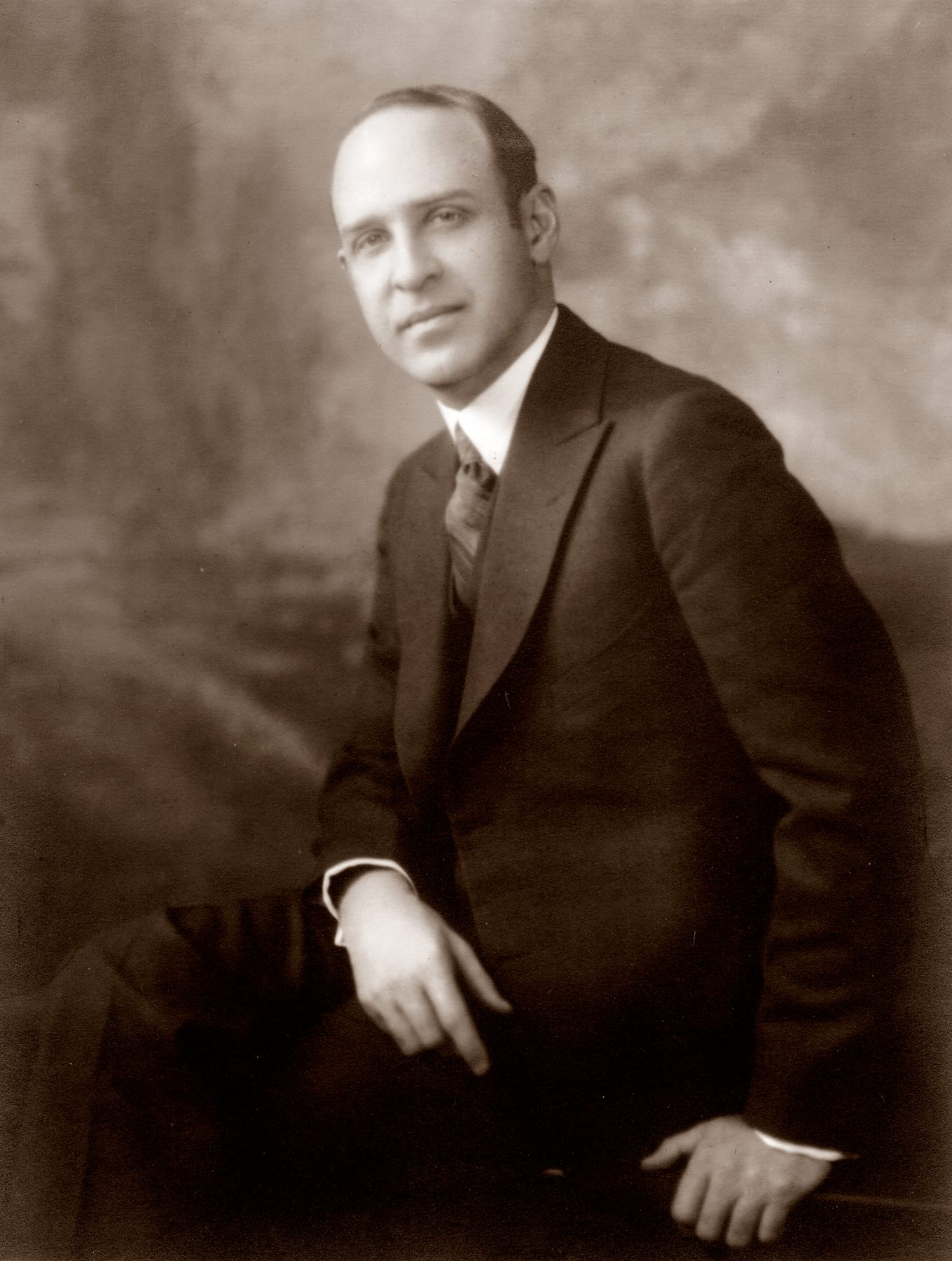
Hill was the son of prominent surgeon Dr. Luther Hill, who had been a pupil of the famous and revolutionary British surgeon, Dr. Joseph Lister. This would prove a most fitting name for him. Although Hill initially was going to follow in his father’s footsteps in medicine, he decided against it after he became nauseous to the point of having to leave the room watching his father operate (Bennett). Instead, Hill chose the legal profession, and would serve in World War I. He was well positioned for politics as his family, per Hill himself, “pretty well ran city politics in Montgomery” (Bennett). In 1923, Montgomery’s representative, John R. Tyson, died in office, and Hill succeeded him.
Hill vs. Coolidge & Hoover
Congressman Hill was a frequent opponent of the policies of Presidents Calvin Coolidge and Herbert Hoover. He supported veterans bonus legislation, supported the Howell-Barkley bill which would essentially result in closed shop for railroad workers as only unions would be representing workers on the proposed national adjustment boards to mediate labor disputes, and supported public ownership of power generation. Hill also opposed tariff increases as was expected of most Southern Democrats. During the Great Depression, he backed public works spending for the purposes of creating employment, supported government aid to agriculture, supported veterans bonus legislation, and supported a few measures to curb government expenditures.
Hill & FDR: Best Buds
During the Roosevelt Administration, Hill was a staunch supporter of the New Deal, and this continued throughout FDR’s presidency even as some Alabama politicians had second thoughts. The only New Deal measure of significance he voted against during FDR’s first term was the Guffey Coal Act in 1935, which conservatives condemned as a step towards socialism and many Southerners considered harmful to the region’s economy. As the chairman of the Military Affairs Committee, he wrote the bill creating the Tennessee Valley Authority and was among its foremost advocates throughout his career. In 1937, Hill was one of only a few Southerners in the House to support the Wage and Hours bill (for a minimum wage), which was killed in one of the first victories of a forming conservative coalition (the Fair Labor Standards Act would be passed the next year). That year, Senator Hugo Black resigned his seat as he was confirmed to the Supreme Court, and in the election to succeed him Congressman Hill faced off against former Senator Tom Heflin. Heflin ran to Hill’s right in opposition to the Wage and Hours bill and charged him with being soft on communism. However, Heflin’s age of 68 (of which he fully seemed) as well as his history of, as Time Magazine put it, “loud and bigoted clownishness”, proved too much of a liability for his return against the young (44) Lister Hill. Hill won the primary by 40,000 votes. Heflin was, contrary to his reputation, graceful in defeat, stating per his secretary, “The Lord takes care of His children and there are other things to be thankful for” (Time Magazine). Alabamians were ready for a new face in the Senate.
Senator Hill

Hill’s loyalty to FDR and the New Deal managed to land him a plum place in the 1940 Democratic National Convention, officially placing FDR’s name for nomination for a third term, however his accent was widely mocked by FDR’s opponents (Hill). He was staunchly supportive of FDR’s foreign policy, backing the 1939 repeal of the arms embargo, supporting the peacetime draft, and endorsing Lend Lease. Hill became so well regarded among his Democratic colleagues that he was elected majority whip in 1941. Although he was more supportive of Roosevelt than many Southern Democrats on domestic policy during World War II, he nonetheless supported the Smith-Connally Act in 1943 to stop wartime strikes over his veto. Hill would also buck FDR on solider voting, supporting states having control over the federal government of soldier voting, as well as oppose him on the extent of price control regarding commodities produced by Southern states.
During the Truman Administration, Hill would prove one of the most supportive of Southern Democrats. In 1947 and 1948, his Americans for Democratic Action scores were 100% as minority whip, just like they were for Minority Leader Alben Barkley of Kentucky. This included voting to sustain President Truman’s vetoes of income tax reduction and most notably of the Taft-Hartley Act, a measure to limit the recent substantial power of labor unions that got overwhelming support in the South. It was in the 80th Congress that we see Hill paired with his colleague, John Sparkman. These men were loyalists to the national Democratic Party and New Deal principles, and even though their state had voted for the Dixiecrats in 1948, they stuck with Truman. Truman’s embrace of a civil rights program and Alabama’s 1948 defection had a consequence for Hill, in that he recognized that he would not be able to serve as whip under a national Democratic Party that officially endorsed civil rights, and stepped down from leadership.
Alabama’s Democratic Party was by the 1940s divided between its conservative and liberal wings. Although federally they all, with the sole exception of Luther Patrick of Birmingham, voted the same on civil rights. However, until 1964 there was this divide that existed and, in the Senate, Hill and his colleague Sparkman were representative of those in Alabama who had opted to stay loyal to President Truman in the 1948 election instead of bolt to the State’s Rights (Dixiecrat) ticket of Strom Thurmond. Alabama had for some time been considered the most liberal state of the South due to its significant liberal presence in Hill and Sparkman in the Senate, as well as Albert Rains, Carl Elliott, Kenneth Roberts, George Huddleston Jr., and Robert Jones in the House. However, the liberalism of these legislators would be tested as younger liberals were increasingly favorable to causes that were not well received in the white South, most notably civil rights.
The Hill-Burton Act
Hill’s most notable achievement in the Senate was the Hill-Burton Act of 1946, which he sponsored with Harold Burton (R-Ohio). This law dramatically expanded the construction of hospitals in the South, and proved revolutionary in public health for Southern blacks as hospitals that received funding under the act were not allowed to deny admittance based on race, although segregation was still permitted. Southern blacks did, however, get a lot of medical attention that they previously had often been denied. However, the Hill-Burton Act had the unanticipated consequence of resulting in overbuilding hospitals in the South and not building enough in Northern urban areas. Although the law’s admission requirements for hospitals constructed under such funds remain, the law no longer provides funds as of 1997 (Health Resources & Services Administration).
Hill vs. Eisenhower
Lister Hill was in many respects an opponent of President Eisenhower. He frequently opposed him in the ways in which he was conservative, including efforts to enact free market reforms to agriculture, reduce funds for the Hill-Burton Act, and to limit the Tennessee Valley Authority. Hill also opposed him on his support for a strong civil rights bill in 1957. However, Lister Hill was supportive of President Eisenhower’s internationalism as he had been for President Truman.
Hill and Relations with Kennedy and Johnson
The 1960s would prove complicated for Senator Lister Hill regarding the politics of the national Democratic Party. Although he was supportive of John F. Kennedy’s New Frontier by and large, he voted against Medicare in 1962, as he had in 1960. Hill’s support of Kennedy would be taxing for him politically, as many Southern whites were coming to despise Kennedy for his stances on civil rights, and this was not helped for him when on September 27, 1962, President Kennedy sent 30,000 federal troops to quell the Ole Miss riot against the admission of James Meredith to the University of Mississippi.
The 1962 Midterms: The Beginning of the End of the New Deal Coalition
There were already signs of trouble in Alabama for support of the national Democrats in 1960, since the result was complicated, as five of the state’s electors voted for Kennedy and six of the state’s “uncommitted” electors voted for Virginia Senator Harry Byrd on a segregationist line. Its neighbor, Mississippi, had outright voted for Byrd.
The 1962 election seemed to have a major impact on Alabama Democrats, as this was the election in which the anti-Kennedy and militantly segregationist George Wallace was elected governor. Senators Hill and Sparkman had been keen to support most of Kennedy’s initiatives as they had FDR’s New Deal and Harry S. Truman’s Fair Deal. Hill himself had a very close call in this election as Republican James Martin, a young (for politics) and telegenic figure who ran on an anti-Kennedy platform and charged Hill with not doing enough to stop civil rights measures, came within two points of victory on an anti-Kennedy platform. By contrast, in 1956 he had easily won renomination with 68% of the vote against the extremely bigoted Rear Admiral John G. Crommelin (who would later serve on the advisory board of Willis Carto’s white supremacist group National Youth Alliance) and unanimously won reelection. Hill may have only been saved by the resolution of the Cuban Missile Crisis. The 1962 midterms would also be a portend of what would happen in 1964: Alabama’s House delegation would go from 8-0 Democrat to 5-3 Republican.
Ideology of the Later Years
Hill did not figure favorably with conservatives. In 1960, Americans for Constitutional Action rated him a 15% based on 77 votes cast from 1955 to 1959. However, by the 1960s, neither Americans for Constitutional Action or Americans for Democratic Action were happy with Hill’s record. Although Hill had previously scored 100% in 1947, 1948, and 1951 from ADA, their political emphases had shifted, and the strongly civil rights and urban direction of their emphasis was not in the direction of Alabama’s white voters.
Hill had, like with Sparkman, moved right after the 1962 midterms that saw the rise of George Wallace. In 1964, Hill as well as Sparkman vote against the Economic Opportunity Act, votes they likely wouldn’t have cast had it been proposed during the Truman Administration when Alabama voters would have been more motivated by their progressive economic stances. They both did, however, vote for programs such as the Appalachian Regional Development Act, the Elementary and Secondary Education Act, and Medicare in 1965. While it is undoubtedly true that Hill moved rightward, some proposals were present in the 1960s that simply weren’t in the days in which Americans for Democratic Action gave him 100%. For example, Warren Court decisions on civil rights and other issues had not been issued yet. Hill voted for both of Minority Leader Everett Dirksen’s (R-Ill.) proposed constitutional amendments in the Great Society Congress; to allow legislative reapportionment in one state legislative house not to be based on population alone and for school prayer. He would also, for reasons that were more political than anything else, oppose every civil rights measure. To do otherwise in his time and place would have been career suicide, the best he could do was not be a race-baiter, which he regarded as beneath him (Hill). For 1960s liberals, Hill was out of date, and for conservatives, Hill was not conservative enough. Per Americans for Constitutional Action’s standards, Hill was from 1964 to 1968 a moderate, while by Americans for Democratic Action standards, he had become a staunch conservative. By DW-Nominate, Hill scores a -0.265 based on his entire career in Congress. The New York Times reflected on Hill as “trapped by the racial history of [his] region . . . who [nevertheless] dared to be progressive on every issue except civil rights” (Hamilton).
In 1968, Hill at 74 opted not to run for reelection. Although still in good enough health to have gone for another term, the political winds were moving against him, and he faced the possibility of a difficult primary with the challenger being James B. Allen, Alabama’s conservative lieutenant governor. Allen would indeed succeed Hill. Hill would outlive his considerably younger successor in office and died on December 20, 1984, less than two weeks short of his 90th birthday.
References
Bennett, T. (1984, December 21). Former U.S. Senator Lister Hill from Alabama Dead at 89. The Atlanta Journal, 13.
Retrieved from
Dec 21, 1984, page 13 – The Atlanta Journal at Newspapers.com
Hamilton, V. (2007, March 13). Lister Hill. Encyclopedia of Alabama.
Retrieved from
Lister Hill – Encyclopedia of Alabama
Hill-Burton Free and Reduced-Cost Healthcare. Health Resources & Services Administration.
Retrieved from
Hill-Burton Free and Reduced-Cost Health Care | HRSA
Hill, Joseph Lister. Voteview.
Retrieved from
Voteview | Sen. HILL, Joseph Lister (Democrat, AL): Sen. HILL is more liberal than 61% of the 90th Senate, and more conservative than 61% of Democrats
Hill, R. Alabama Liberal: Lister Hill. The Knoxville Focus.
Retrieved from
Alabama Liberal: Lister Hill | The Knoxville Focus (knoxfocus.com)
The Congress: Victory & Defeat. (1938, January 17). Time Magazine.
Retrieved from
THE CONGRESS: Victory & Defeat | TIME
 Mad Politics: The Bizarre, Fascinating, and Unknown of American Political History