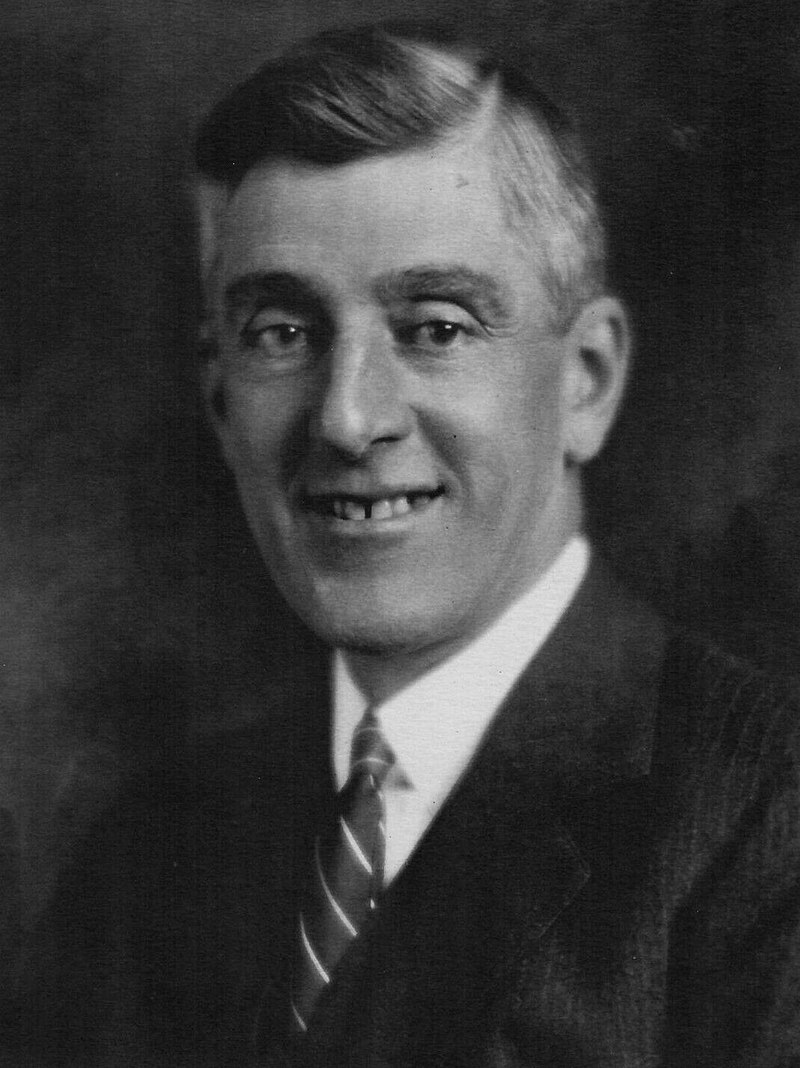
For all the disagreements out there, I think we can all agree that we live in highly disagreeable times. The “culture war” is at fever pitch, partisanship is the highest its been since the era of the War of the Rebellion, and we have numerous political figures I will charitably call publicity hounds (I have worse words for them, but I will not express them here). This is a consequence of the long-standing effort across the board to have ideologically responsible parties. Although I am inclined to also point the finger at primaries, I am not as certain about it as a factor. Primaries have produced outcomes in the GOP that I have both agreed and disagreed with on grounds of “electability”. And the truth is that there are times in which primary voters have had some great hits over the party establishment choices (Marco Rubio, Ted Cruz) and horrific misses (Christine O’Donnell, Roy Moore). One figure whose politics deeply contrast with today in tone and in ideological purity is Leverett Saltonstall (1892-1979), a Massachusetts Republican.
Saltonstall came from one of the oldest families in Massachusetts and one that had a history of political involvement; his great-grandfather Leverett Saltonstall I (1783-1845) had been a prominent Whig politician in his day. Leverett began his political career as an alderman of Newton, which led to his election to the Massachusetts House of Representatives in 1922, where from 1929 to 1937 he served as its speaker. In 1938, Saltonstall ran for governor. Jim Curley, who had been governor from 1935 to 1937, was a highly corrupt figure who had run for the office to avoid going to prison, but he had a fan base particularly among Boston’s ethnic Irish population, who held a grudge against the Boston Brahmins (wealthy WASPs). Although Saltonstall was a Brahmin, he was also of Irish descent, so he was in both worlds and could appeal to both camps. Curley blundered when he revived an old description of him by referring to him as “a man with a Harvard accent and a South Boston face”, which Saltonstall repeatedly used to his advantage, adding, “I’ll have the same face after election that I have before election” (Weeks, xiii). 1938 was a good year for Republicans and Saltonstall was the right sort of Republican, winning the election.
Saltonstall’s tenure as governor was ethically squeaky clean, a pleasant contrast to the grafting ways of Curley. He also managed to eliminate most of the state’s deficit, successfully mediated a major Teamster’s Union strike, and established an interfaith committee to curb discrimination (Blair). Saltonstall also had the benefit of having a craggy but trustworthy face. He would sometimes quote a limerick to describe his appearance,
“For beauty I am not a star.
There are others more handsome by far,
But my face, I don’t mind it,
For I am behind it,
It’s the people in front that I jar” (Blair).
In 1944, Saltonstall ran for the Senate to complete the term of Henry Cabot Lodge Jr., who had resigned to fight in World War II. By this time, he was popular with Republicans and Democrats alike and won the election with 64% of the vote, even winning the Democratic stronghold of Boston.
In the Republican 80th Congress, he supported much of the party’s conservative economic agenda, but voted internationalist and in favor of more refugees being admitted to the US. Saltonstall also supported the Taft-Ellender-Wagner housing bill, which included public housing. Although he didn’t sponsor much legislation, his contributions came in the form of adding amendments to legislation, thus he was a bit of a behind-the-scenes player (Blair). In hearings on controversial issues, Saltonstall wouldn’t ask questions meant to solicit a specific answer or to grandstand, he would do so to find out information so he could better make decisions. Despite his nickname being “Salty”, he couldn’t have been further from it. Saltonstall was known for his unfailing courtesy and manners and this made him one of the most agreeable legislators on Capitol Hill. This set him up for being part of the Republican leadership, but he had to win reelection first.
In 1948, he pulled off another win for a full term, even though President Truman won by over ten points in Massachusetts that year. In 1949, Saltonstall was elected party whip, serving until 1957. As whip, he was able to effectively appeal to both the conservative and moderate to liberal wings of the party. From 1957 to 1967, he served as the chairman of the Republican Conference.
Although an internationalist, Saltonstall voted against Point IV aid in 1950, granting foreign aid to nations on the basis of being poor rather than recovering from post-war damage. He was strongly for Eisenhower, and indeed he was one of the figures Saltonstall respected most. In 1954, he voted to censure Senator Joseph McCarthy (R-Wis.). That year, Saltonstall had a close shave against Treasurer and Receiver-General Foster Furcolo, prevailing by 1.5% in an election that lost the GOP the Senate.
While he could be conservative on numerous issues regarding budgets and organized labor, he also was supportive of increasing the minimum wage, internationalism, and opposed certain domestic anti-communist policies such as maintaining a student loyalty oath on college campuses and giving states a broad authority to crack down on subversive organizations. Americans for Constitutional Action gave him a 69% for their first ratings, which covered his record from 1955 to 1959. Saltonstall’s DW-Nominate score was a 0.175, suggesting moderation.
While in 1960 John F. Kennedy had his third best performance in Massachusetts, Saltonstall won reelection by around 13 points. Interestingly, although he remained having clean hands, his campaign manager was Chuck Colson. Colson, who would gain infamy in the Watergate Scandal as Nixon’s “hatchet man”, was ruthless and behind his boss’s back, concocted a “grassroots” movement of voters who wished to split their tickets to vote for Kennedy and Saltonstall, which surely assisted in at least the margin of his victory (Massachusetts Historical Society).
On civil rights, Saltonstall was supportive, backing both the Civil Rights Act of 1964 and the Voting Rights Act of 1965. However, he also was a supporter of state’s rights, and voted for the Anderson-Aiken Amendment to the Civil Rights Act of 1957, which struck out the section that granted the attorney general authority to initiate lawsuits in civil rights cases, which numerous senators outside the South thought went too far beyond protection of voting rights (Douglas).
Saltonstall had a mixed record on the Great Society. While he voted against the Economic Opportunity Act of 1964 and had voted against Medicare proposals in 1960, 1962, and 1964, he did vote for Medicare in 1965 and supported the Elementary and Secondary Education Act, providing federal aid to schools. In 1966, Saltonstall voted for both of Minority Leader Everett Dirksen’s (R-Ill.) proposals to amend the Constitution. First, to allow legislative districts in states to not solely be based in population, and second, to permit teacher led prayer in public schools.
Although Saltonstall was still in good health in 1966 and probably could have capably served another term, at 74 he wished to retire before he declined. As he explained, “I wanted to quit when I was still doing the job rather than just fade away in the Senate…Too many of my Senate colleagues overdid it. They stayed on too long – napping through committee hearings when they should have packed up and gone home” (Blair). Saltonstall lived 12 years after his final day in the Senate, and in 1971 published his autobiography written with Edward Weeks of Atlantic Monthly, titled Autobiography of Leverett Saltonstall; Massachusetts Governor, U.S. Senator, and Yankee Icon. He died on June 17, 1979 of congestive heart failure.
Saltonstall was the right sort of Republican that the GOP could run in Massachusetts statewide at the time, and although he certainly fits the characterization of a “Country Club Republican”, his record was golden by conservative standards compared to his Republican successor, Ed Brooke. Among the characters I have covered, I admit a great admiration for Saltonstall, even though his politics fall a bit short of mine on the conservative scale. He played the game of politics honorably and won. We should hope for the same for all our office seekers.
References
Blair, T. Saltonstall, Leverett. Harvard Square Library.
Retrieved from
Douglas, P.H. (1957, December). The Right to Vote. The Atlantic.
Retrieved from
https://www.theatlantic.com/magazine/archive/1957/12/the-right-to-vote/642205
Object of the Month: The Next Four Years. (2020, September). Massachusetts Historical Society.
Retrieved from
https://www.masshist.org/object-of-the-month/objects/september-2020
Saltonstall, Leverett. Voteview.
Retrieved from
https://www.voteview.com/person/8185/leverett-saltonstall
Weeks, E. (2015). Preface to The autobiography of Leverett Saltonstall: Massachusetts governor, U.S. senator, and Yankee icon. Lanham, MD: Rowman & Littlefield.
Retrieved from
 Mad Politics: The Bizarre, Fascinating, and Unknown of American Political History