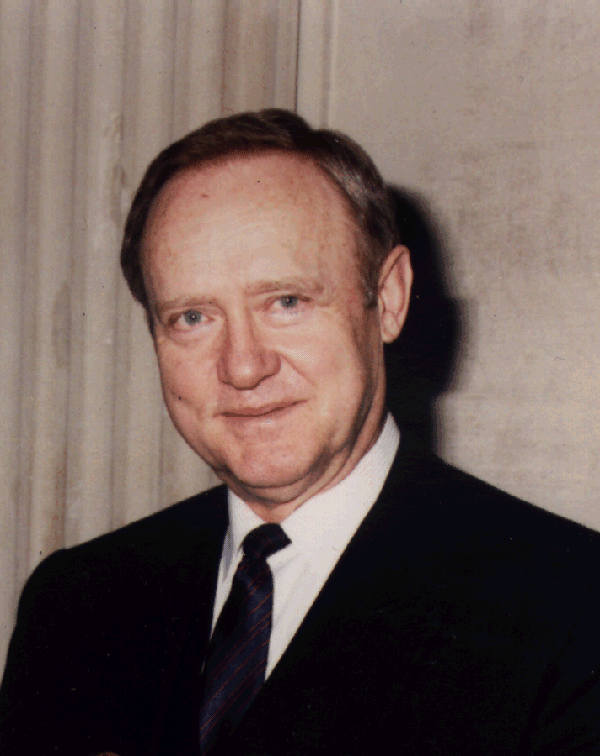
Idaho’s 1st district, which consists of the Northern part of the state including Coeur d’Alene, I find an enjoyable place to visit in the summer. The area itself has had a fascinating political transformation over time, and its politics helped inform the pull of the state. Although Idaho has for way longer been a Republican state than anything else, its politics weren’t always uniformly to the right. One of its first two senators, Fred Dubois, was a Republican who became increasingly progressive and in his second term as senator served as a Democrat. One of its most prominent senators was William Borah, an incredibly independent-minded Republican who took some positions that would strike people today as progressive (his embrace of parts of the New Deal) and others that would appear extremely conservative (opposition to Sheppard-Towner maternity aid). Democrat Glen Taylor, who served from 1945 to 1951, was extremely left-wing and was Henry Wallace’s Progressive Party running mate in 1948. From 1957 to 1981, Democrat Frank Church was one of the state’s senators, and he was no conservative. Although the state’s 2nd district has had a much longer history as a conservative district, the 1st by the 1930s became the Democratic stronghold of the state thanks to its high rates of unionization. From 1933 to 1967, Democrats held the seat for all but four years. This changed dramatically in the 1966 midterms, and the man who represented this change was James Albertus McClure (1924-2011).
Although in 1964, President Lyndon Johnson won a full term in a landslide and all states but Arizona and five Deep South states, Idaho was the state he had the worst performance in while still winning, and he did lose in the 2nd district, which was one of the few seats above the Mason-Dixon line to go from Democratic to Republican representation in Congress. Congressman Compton I. White Jr. in the 1st only won reelection with 51.7% in an excellent year for Democrats nationwide. This left him vulnerable to a challenge in a better year, a challenge by McClure, who had served as a state senator since 1961. The results would be pretty much the inverse in 1966 with McClure defeating White.
In his first term in Congress, McClure established a staunchly conservative record in opposition to the Great Society, with Americans for Constitutional Action giving him a 100% in 1967 and a 90% in 1968. His advocacy for limited government and his staunch opposition to gun control resounded well with the people of the 1st, and he easily beat back former Congressman White in a rematch in 1968 with 59.4% of the vote. Although a conservative, McClure had a sense of pragmatism and could from time-to-time vote against party line, such as his opposition to Nixon’s executive order expanding the functions of the Subversive Activities Control Board in 1971.
In 1972, Senator Leonard Jordan, at this time 73 years old, decided to call it quits. McClure ran in the primary but faced three opponents, with the toughest of them being former Congressman George Hansen, a flamboyant and even more conservative guy than McClure. However, he prevailed and in the general election faced a considerable opponent in Idaho State University President Bud Davis but prevailed by nearly 7 points. This would be his closest race in the Senate. McClure established himself as an expert in natural resources and would favor policies that encouraged a diverse range of energy production in the United States, including oil and nuclear energy. This placed him at odds with conservation groups, and Senator Gaylord Nelson (D-Wis.), a founder of Earth Day, stated, “As a general proposition, the environmental community disagreed with him about 100 percent of the time” (Brown). Indeed, McClure supported development in the west, much to the consternation of conservationists, and opposed the River of No Return Wilderness in 1980. His lifetime score from the League of Conservation Voters was an 11%. He also supported the development of electric cars and oil deregulation. As part of McClure’s focus on energy, he sought to balance out how the United States regarded the Middle East, with maintaining support of Israel while giving support to other nations in the region, including with weapons sales as pushed by both President Carter and President Reagan. He also served as something of a goodwill ambassador to the Middle East, visiting leaders at least nine times for discussions on the issues of energy and matters impacting the region, aiding the U.S. in improving relations (Woods-Davis).
On Civil Rights
McClure’s record on civil rights issues is mixed. During the Johnson Administration, he voted for the first version of the Civil Rights Act of 1968 (a measure primarily aimed at prohibiting racially motivated violence, before fair housing was added) and supported the Jury Selection and Service Act, prohibiting racial discrimination in federal jury selection. However, McClure voted against the second version of the Civil Rights Act of 1968 for its inclusion of fair housing (many Republicans opposed on grounds of freedom of contract). He would vote against the extension of the Voting Rights Act of 1965 in 1970 for its inclusion of an 18-year-old vote (this portion was struck down by the Supreme Court, resulting in the 26th Amendment) but vote to extend the act in 1975. McClure would be one of the only members of Congress to vote to extend in 1975 and vote against extending in 1982. McClure would vote against the Civil Rights Restoration Act in 1988 but also for the Fair Housing Act Amendments in 1988, which strengthened fair housing laws. He did subscribe to the conservative positions against busing as a means of desegregation and opposed affirmative action and racial quotas.
The Reagan Administration: Leading the Conservatives
In 1980, not only did Ronald Reagan win the presidency but the Republicans also won the Senate and McClure got the chairmanship of the Committee on Energy and Natural Resources. Along with Jesse Helms of North Carolina, he took the lead for the agenda for the conservative wing of the party. Peter Range (1981) described this group thusly, “They are bound by broad agreement on the so-called “profamily issues” – anti-abortion, anti-equal-rights amendment, anti-busing, pro-prayer in schools – and a free-market conservatism on economic issues. They favor limited Government spending on social programs but more for defense. They share a hawkish view of the world that favors a more assertive resistance to Soviet expansion and accepts limited human-rights abuses in the interest of supporting staunch military allies”. Curiously, 1981 and 1982 turned out to be McClure’s weakest years per ACA, scoring a 74% and a 59% respectively. This was a significant departure from the 100% he had received in 1967, 1974, and 1976. However, his 1983 and 1984 scores would be 89% and 96% respectively. Americans for Democratic Action’s lifetime average for McClure, with absences not counted against him, is a 6%. His DW-Nominate score is 0.492.
In 1984, McClure ran to replace the retiring Howard Baker Jr. of Tennessee as majority leader, but the more moderate Bob Dole (R-Kan.) won the post. That year, as he had in his last reelection, he won all counties. In 1986, McClure sponsored the Firearm Owners Protection Act with Rep. Harold Volkmer (D-Mo.), which partially rolled back the Gun Control Act of 1968 in response to criticisms by the firearms industry that enforcement methods and frequency by Bureau of Alcohol, Tobacco, and Firearms amounted to harassment and hampered their ability to do business. President Reagan signed the bill into law. That year, McClure persuaded Reagan to abandon adherence to the unratified SALT II agreement as Soviets were violating it (Associated Press).
In 1990, McClure opted not to run for another term, not wanting to stick around into his seventies and his growing disdain for what he called “wet-finger politics”, using public opinion polling rather than principles to determine political positions, and stated that it served as an “instrument of response not an instrument of leadership” (Brown, Associated Press). After his Senatorial career, McClure did what many former legislators do…lobbying! He represented Idaho interests including Idaho Power Co. and Coeur d’Alene Mine as well as supervise citizens’ committees to study deregulatory policy (Associated Press). McClure’s health began to decline when he suffered a stroke in December 2008, and he died on February 26, 2011. He was one of those figures who helped in Idaho’s move increasingly towards the Republicans and since his first election to Congress in 1966, the 1st district has only been represented by Democrats for a total of six years. The federal building and courthouse in Boise is named after McClure.
References
ADA Voting Records. Americans for Democratic Action.
Retrieved from
Brown, E. (2011, February 28). James A. McClure dies: Three-term U.S. senator from Idaho was 86. The Washington Post.
Retrieved from
Former U.S. Senator James McClure of Idaho dies. (2011, February 27). Associated Press.
Retrieved from
https://www.deseret.com/2011/2/27/20176156/former-u-s-senator-james-mcclure-of-idaho-dies
Range, P.R. (1981, February 8). Thunder From the Right. The New York Times Magazine.
Retrieved from
Senator James McClure (R). The League of Conservation Voters.
Retrieved from
https://scorecard.lcv.org/moc/james-albertus-mcclure
Woods-Davis, W. (2005). Portrait of a pragmatic conservative: Senator James A. McClure of Idaho and the politics of United States energy and Middle Eastern affairs, 1967-1990. University of Idaho.
Retrieved from
 Mad Politics: The Bizarre, Fascinating, and Unknown of American Political History